Search:taka rec

Styles
All
Gammelsæter & Marhaug - Higgs Boson

Runhild Gammelsæter and Lasse Marhaug are two Norwegian musicians/sound artists. Both started in the early 1990s music underground and have worked in many constellations with a wide range of collaborators.

Despite knowing each other for a long time, Gammelsæter and Marhaug’s first collaborative work was the “Quantum Entanglement” LP in 2014. The album ignited a collective spark that both wanted to pursue further. Still, other commitments got in the way, and the project lay dormant until Stephen O’Malley, and Greg Anderson invited them to open for Sunn O))) for a special gig in the St. James Church of Culture in Oslo in the autumn of 2019. The two gathered for a long series of rehearsals, and after the successful performance, it was clear that it was time to start working on new compositions and recordings. That process initiated in late 2019 and continued to early 2021, encompassing before and after the world went through the lockdown. The result of this long development to be heard accumulated upon their new album “Higgs Boson” on Ideologic Organ Music.

Throughout the profound process of creating “Higgs Boson”, Gammelsæter and Marhaug drew inspiration from various subjects and artists. For Marhaug, it was concepts informed by the structuralist experimental cinema of Japanese directors Takashi Ito and Toshio Matsumoto, futurist worlds of French comic book artists Philippe Druillet and Jean Moebius Giraud, landscape photography of Fay Godwin, Kåre Kivijärvi, and Tamiko Nishimura, amongst others.

It became a metaphysical juxtaposition involving Gammelsaeter’s research and lyrical ideas based on several seemingly unrelated principles. A process of association inspired by “the Glass Bead Game” by Herman Hesse. The discovery of the Higgs Boson as a confirmation of the physical universe. The work of Ernst Schrödinger on the uncertainty principle. The four forces of physics. The Force. Helplessness under armed forces - as the war sailors in World War II. The influence of magic as expressed in tarot.

Gammelsæter experiments with a boundary involving the thresholds amongst various states of focus and legibility by forensic experimentation with techniques such as exclusive expression of consonants, syllabic repetition, retrograde text vocalisations and multi-lingual layering. Her vocal inspirational sources include Sidsel Endresen, Diamanda Galas, Natacha Atlas, the choral works of Rachmaninov, and the bands Carcass and Grave.

Two worlds coming together, making the music special. Mixing hard facts with science fiction helps create a kaleidoscopic cross point between the complex realities of the past and a possible future.

“Quantum Entanglement” featured two long-form pieces centred around a prepared piano and layered voice, while “Higgs Boson” developed a much more elaborate and ambitious compositional work. Across eight parts, the two artists brought a broad palette of instrumentation and sound. Electronic and acoustic, objects and field recordings, and pipe organ define the structures of which the centre is Gammelsæter’s magnificent voice. She has become known for her legendary voice, with her vast and unique range of inflective techniques and affective colour through her 30 years creating music. In the mix, Lasse approached the instrumental elements like landscapes, then Runhild’s vocals as characters that inhabit those worlds. Often, Gammelsæter multiple characters fused with the landscape. Make them occupy space, sometimes blend into it, sometimes dominate it. Constructing and setting visual guidelines helps set focus and open possibilities.

As an album, “Higgs Boson” is direct and focused, drawing on song structures. Within these tracks are vast strata of sound, an immersive multi-dimensional depth of music. Creating a feeling of depth while working with a flat two-channel stereo format - and how dimensions of texture and distortion can help develop the illusion of a space. The album structure is a story-like arc, a malleable subjective path, set as the album traverses oblique and suggestive areas, opening the concepts for the listener to unpack as they like.

– exclusive consultation with Gammelsæter & Marhaug, edited by Stephen O’Malley, June 2022

pre-order now19.08.2022

expected to be published on 19.08.2022

20,80

Last In: 2026 years ago
Midori Takada - You Who Are Leaving To

WRWTFWW Records and MEG Museum (Geneva) are ecstatic to announce a new full length album by celebrated Japanese percussionist Midori Takada (Through The Looking Glass), in collaboration with Buddhist monks belonging to the Samgha group of the Shingon school of Koya-san, led by Reverend Syuukoh Ikawa. You Who Are Leaving To Nirvana is available on half speed mastered vinyl LP, housed in a 350gsm sleeve, with OBI, and liner notes, as well as on digipack CD.

Recorded at The Premises Studio (London) and in Tokyo in 2019,You Who are Leaving to Nirvana is a majestic work combining a suite of six Buddhist liturgical chants and a musical creation by Midori Takada. The Buddhist chants come from three types of repertoires: shomyo ("Teisan", "Unga-Bai", "Sange", "Taiyo"), but also goeika ("Kannon-Daiji") and mantra ("Hannya-Singyo").

After supervising the recording of the Buddhist chants, Midori Takada added her own compositions, with subtle layers of percussion and the melodies of her beloved marimba, giving full life to the sacred texts.

Reverend Syuukoh Ikawa explains: "Shomyo is a form of declamation of sacred esoteric texts, inherited over many generations. The power of words goes far beyond their mere pronunciation. I think there is something that words alone cannot really convey. If I recite prayers in a musical way, the feeling transmitted will be even stronger than if I say it normally, in everyday language. I think that the musicality of a work carries a hidden power that cannot be expressed in words alone. The setting of the music has an additional power for you and for those around you who listen to it. The words of a song are not just words set to music. They carry an additional hidden power that cannot be expressed in any other way. Listening to Midori Takada's musical performance, the words truly seem to come alive."

Original recordings of the Buddhist chants are held in the International Archives of Folk Music (IAFM) at the MEG Museum in Geneva.

The album sleeve features an artwork by famed Japanese sculptor Katsura Funakoshi selected by Midori Takada.

You Who Are Leaving To Nirvana is released in conjunction with Midori Takada's Cutting Branches For A Temporary Shelter, also available on LP and CD on WRWTFWW Records.

out of Stock

Order now and we will order the item for you at our supplier.

22,65

Last In: 70 days ago
Robert Takahashi Crouch & Yann Novak - Giving Water To The Dead

The four tracks that comprise Giving Water to the Dead were composed using sound materials originally recorded for the sound installation Histories of the Present, a public artwork commissioned by the City of Berkeley in 2019. But where the installation was about a melding of practices and sounds into a single gesture, Crouch and Novak wanted to take the opportunity of a split release to exploring divergent paths starting from common ground. For Giving Water to the Dead, each artist started with the same source material and plotted their own direction without direct influence from the other. As artists in a relationship and sharing a studio this was no easy feat. Despite the planned divergence the resulting tracks compliment each other, as the artists do.

Yann Novak and Robert Takahashi Crouch are a creative and romantic couple living and working in Los Angeles. Their collaborative practice incorporates field recordings, photography, and video as tools to investigate the relationship between site and subject. Their performances and installations have been presented at the AxS Festival, Pasadena; California Museum of Photography, Riverside; Desert Daze Festival, Southern California; Downtown Berkeley BART Plaza, Berkeley; Gays Hate Techno, Northern California; Hammer Museum, Los Angeles; LACMA, Los Angeles; PØST, Los Angeles; Tanya Bonakdar Gallery, New York and others. Their compositions have been published by The Tapeworm, Murmur Records, Estuary Ltd., IO Sound, and Untitled & After.

out of Stock

Order now and we will order the item for you at our supplier.

11,13

Last In: 3 years ago
Midori Takada - Cutting Branches For A Temporary Shelter

WRWTFWW Records and MEG Museum (Geneva) are honored to present the first new solo album by renowned Japanese percussionist Midori Takada (Through The Looking Glass) in 23 years, Cutting Branches From A Temporary Shelter, available on vinyl LP, housed in a 350gsm sleeve, with OBI, and liner notes, as well as on digipack CD.

Recorded in a live setting and played with instruments conserved in the collections of the MEG Museum, Cutting Branches For A Temporary Shelter is Midori Takada’s very own rendition of "Nhemamusasa", a traditional work emblematic of the musical repertoire for mbira of the Shona of Zimbabwe, well known worldwide, thanks notably to its version by Paul F. Berliner included on the famed 1973 album The Soul of Mbira.

The choice of this title by Midori Takada evokes the links between traditional African and contemporary music which are the foundation of this work, and it also translates the resolutely multicultural vision of the artist.

Midori Takada explains: "African music is remarkable for its polyrhythms. Not only are there simultaneously several rhythmic motifs, sometimes as many as ten, but furthermore it may be that the part played by each musician has its own starting point and its own pace, all combining to form a cycle. All the cycles progress at the same time according to a single metrical structure which functions as a reference point, but which is not played by any one person from beginning to end. The structure emerges out of the multi-level parts, all different. With the Shona, the musical system is based on the polymelody: one performs simultaneously several melodic lines which are superimposed, each having its own rhythmic organization. It is truly captivating. In Western classical music, one four-beat rhythm induces some precise temporal framework and regular reference points, which come on the strong beats 1 and 3. But in the logic of the Shona musical system, and in other African music, the melody can begin in the very middle of the cycle and be continued up to some other place in an autonomous manner, as if it had its own personality. It’s very rich."

The album comes with in-depth liner notes that include an interview by Midori Takada, a point of view by Zimbabwean scholar, musician and activist Forward Mazuruse, and background information on the project by Isabel Garcia Gomez and Madeleine Leclair from MEG Museum.

The sleeve features an artwork by celebrated Zimbabwean painter Portia Zvavahera.

Part of the budget for the album was donated to Forward Mazuruse’s Music For Development Foundation whose aim is to identify, nurture, and record young but underprivileged musicians in Zimbabwe.

The album is released in conjunction with Midori Takada and Shomyo of Koya-san's You Who Are Leaving To Nirvana, also available on LP and CD on WRWTFWW Records.

out of Stock

Order now and we will order the item for you at our supplier.

22,65

Last In: 3 years ago
LTJ XPERIENCE - HOT GROOVY REMIXES EP

Nuovo singolo per Luca Trevisi con il suo alias LTJ Xperience.
In questo nuovo EP sono stati raccolti quattro dei più riusciti remix prodotti da LTJ dal catalogo IRMA negli ultimi anni.

I brani non sono mai usciti su vinile prima di questa pubblicazione.
Gli artisti remixati sono: Papik & Sarah Jane Morris, The Soultrend Orchestra, Black MIghty Wax e Vasquez. Luca LTJ Trevisi (LTJ Xperience) began his dj/producer career in the 80s. As resident dj in two of the most famous Italian clubs of the time, Kinky in Bologna and Cap Creus in Imola, he was one of the first Italian jocks to spin House and to re-propose those black music, jazz and latin-bossa classics from the 70s that at the end of the same decade would have given birth to the Acid Jazz and Rare Groove movements. His first single
release in 1988, titled First Job, together with Kekkotronics, was also the first release ever on Bologna based Irma Records. It was featured in a lot of compilations of the time and entered several playlists, rapidly reaching cult status for many UK and US djs. During the early 90s LTJ delivered a couple of singles in a kind of pre-breakbeat style: Dont Stop The Sax, released all over Europe, and Funky Superfly. He also produced US singer Tameka Starrs single Going In Circles, always for Irma Records, still a classic in the downtempo/r&b field. In the second half of the nineties Luca began to produce acid jazz bands like Bossa Nostra, still today one of Irma Records main acts. Their first album had Vicky Anderson as special guest and today is still considered one of the most important European acid jazz albums. In the following years he concentrated on developing his activity as collector and rare vinyl merchant, which gave him the chance to get in touch with djs from all over the World and to discover many forgotten gems from the past years. Thanks to this experience he was able to create two extremely successful rarities series on Irma Records:

Groovy and Suono Libero. In the meanwhile LTJ started to dj outside Italy too, performing in important venues like the Blue Note and Jazz Café in London, Giant Step in New York and Montreux Jazz Festival in Switzerland. In 1999 saw the release of his first solo album under the LTJ Xperience moniker. The album was produced with the collaboration of fellow Irma artist and producer Ohm Guru and had Taka Boom and Jackson Sloan among the guests. Two of the main tracks on the album are brazil house classic Sombre Guitar and title track Moon Beat, which became a true hit of the Chill Out genre, featured in dozens of important compilations.

After making countless productions for Irma Records, including their second album When The Rain Begins To Fall (with the participation of the historic Spanish-American singer Joe Bataan), and the recents singles as ORGAN MIND / I LOVE YOU (favorite track by Larry Heard ) & ON THE FLOOR / SOUND MACHINE, LTJ is devoted almost exclusively to re-edit and reconstruct tracks from the past with the addition of sounds and rhythms in post production for labels like SUPER VALUE, SMALL WORLD DISCO, HOT GROOVY RECORDS, OH CRISTO! increasing the production of this new musical genre that is currently defined as beatdown/slo-mo, working with international labels such as Far Out Recordings, Sleazy Beats, Future Classics, E.A.R. Music For Dreams, Apersonal Music, Roam Recordings, !K7.

out of Stock

Order now and we will order the item for you at our supplier.

17,19

Last In: 12 months ago
Gu-N - Gu-N

Gu-N

Gu-N

12inchAN34
An'archives
01.07.2022

A revelatory collection of recordings from Japanese free-sound quintet Gu-N. Formed in 1994 by Fumio Kosakai (Incapacitants, Hijokaidan, C.C.C.C.) and Hidenobu Kaneda (Yuragi), alongside Ikuro Takahashi (Fushitsusha, Kousokuya, LSD March), Ryuichi Nagakubo (C.C.C.C., Yuragi), and Morihide Sawada (Yura Yura Teikoku, Marble Sheep), Gu-N played regularly at Plan-B in Tokyo, but released little during their relatively short time together. Hazy and hypnotic, their laminar improvisations, four of which appear on this untitled album, are compelling, oneiric visions for the ear.

In his liner notes for the album, Michel Henritzi writes that these Gu-N recordings situate the group within a broader trajectory of free improvisation and collective sound within Japan – Taj Mahal Travellers, East Bionic Symphonia, Marginal Consort, each of whom sprung, in many ways, from the radical vision and creativity of Takehisa Kosugi. But there’s a unique spirit here that aligns Gu-N with these predecessors, while also marking out singular territory.

Kosakai’s background in noise, via his participation in Hijokaidan and Incapacitants, can be heard in the unrelenting oscillations and heavyweight drones that purr throughout each of these four tracks. Both Kosakai and Nagakubo were members of C.C.C.C., perhaps the clearest precursors to Gu-N in their psychedelic density, though Gu-N trade in C.C.C.C.’s volcanic energy for a more tempered, sensuous exploration of tone and time.

There’s also a brutish element to Gu-N’s improvisations – see the saturated spectrum, rumbling and phasing throughout the album, and the crushing, almost Amon Düül-esque drum tattoos that Takahashi pounds out on the second track (recorded in 1998), punctuating the music from deep inside its hallucinatory murk. Elsewhere, as on the third track (one of three recorded in 1994), Kosakai’s cello scrapes out armfuls of buzz-tone as Sawada’s bouzouki trills out, elastic and vibrant, across spindrift electronics and lung-spun winds.

What’s most impressive here, though, is the way each player, formidable musicians in their own right, defers to the might of the communal and the collective. The quintet broke up in 1998, leaving behind scant recorded evidence – just one, self-titled CD, on Pataphysique, released in 1995. This LP is a most welcome addition to the small but blissful body of recorded work made public by this mysterious quintet of spirit channelers.

pre-order now01.07.2022

expected to be published on 01.07.2022

31,05

Last In: 2026 years ago
Les Rallizes Denudes & Taj Mahal Travellers - OZ Days Live 1973

Japanese experimental group Les Rallizes Denudes are the ultimate rock ‘n’ roll enigma. Sometimes referred to as Hadaka no Rallizes or even as Hadaka no Rarizu, each appellation a variant of the name “Fucked Up and Naked” which equates to being high on hard drugs, they are seen as noise-rock pioneers, yet sifting fact from fiction isn’t easy with their oddball tale. Emerging from the radical hippie communes of Kyoto during the late 1960s, the band was formed in November 1967 by university student Takashi Mizutani, taking the overamplified, distorted guitar of the Velvet Underground as a starting point. Early demo recordings apparently suffered from poor sound quality, leading the perfectionist Mizutani to retreat from the studio environment, meaning that most of the group’s output has appeared as live bootlegs, with the occasional studio demo surfacing as well. Performances were initially staged as part of avant-garde theatre, though the band’s propensity for super-loud noise soon put paid to such collaboration; the ever-changing membership saw Mizutani the only permanent force, despite his embroilment in the 1970 Red Army hijacking of a civilian Japan Airlines flight, enacted partly through bass player, Moriaki Wakabayashi, who defected to North Korea in its aftermath. Though perhaps not quite as notorious, fellow improvisational group, Taj Mahal Travellers, has a backstory of random international travels that is almost as intriguing as that of Les Rallizes; formed in 1969 by six experimental musicians and an electronic engineer, they embarked on a series of improvisational gigs across Japan, notably including an all-day marathon held at a Kanagawa beach, and made their way to Europe in 1971, where they crossed paths with Don Cherry and other likeminded practitioners. They later drove from Holland to the Pakistan border, acquiring santoors in Iran on the way to help broaden their already unpredictable repertoire. The Oz Days Live release is culled from the Oz Last Days festival held in the autumn of 1973, to benefit Tokyo’s Oz Rock Café, which had been closed following repeated drug busts. Here the Taj Mahal Travellers are suitably cosmic, their echoing jams featuring looped vocal chants, disjointed string instruments and sparse, off-kilter percussion; in contrast, the contributions from Les Rallizes are more standard examples of instrumental psychedelic rock, which veers more towards the acid rock end of the spectrum as the performance progresses.

pre-order now30.06.2022

expected to be published on 30.06.2022

23,32

Last In: 2026 years ago
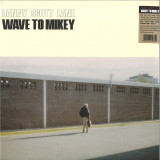
Danny Scott Lane - Wave to Mikey LP

Danny Scott Lane

Wave to Mikey LP

12inchGLOSSY011
Glossy
24.06.2022

Wave to Mikey, the fourth album from the Los Angeles-based actor, musician and photographer Danny Lane is a nocturnal, neon-lit ode to the friendships that shape us. “I made this album for my friend Mikey from back home,” Danny explains. “We were pretty much inseparable for a large part of our lives, and our musical and social minds were always in sync in a special way. Then with age, we drifted apart, especially since I moved to Los Angeles. This album is just a little wave hello to an old friend and a kindred spirit.”

Equal parts avant-garde composition, instrumental city-pop, ambient, Kankyō Ongaku (environmental music) and Fourth World music, Wave to Mikey is an impressionistic and reflective cycle of eleven richly detailed memory portraits. Throughout the album, the influence of Jon Hassell, Arthur Russell, Hiroshi Yoshimura and Yellow Magic Orchestra hangs in the air like late-night mist, adding character but never overshadowing the rhythmic ambience of Danny’s musical visions.

Wave To Mikey began as a series of sketches on analog synthesisers, guitar, sample and found percussion sketches, initially recorded in Danny’s home studio. Once he’d located the vibe, Danny called on his friends E Talley II, Solange collaborator John Carroll Kirby and Destroyer session musician Joseph Shabason, who respectively added flute, spiritual synth textures and saxophone to the record.

For Glossy Mistakes founder Mario G.R., who originally discovered Danny through his photography, Wave To Mikey captures a vivid feeling of melancholy and peace. “He's able to encapsulate emotions in a very straightforward way, either in his portrait or songs,” Mario says. “I think that's a kind of virtue or skill given to talented artists, no matter the field.”

Born and raised in Staten Island, New York, Danny began playing music with his friends when he was thirteen, before putting that passion on pause to study Fine Arts (Theatre) at Rider University in Lawrence Township in pursuit of an acting career. Acting led him to photography, after playing a photographer in a film, he was inspired to pursue the medium. Danny began shooting photos on film for magazines and lifestyle brands, spent a stint living in New York’s Chinatown neighbourhood, and eventually relocated to Los Angeles in 2017.

Four years ago, Danny started recording and releasing music under his own name, leading to the trilogy of releases that preceded Wave To Mikey, How To Empty A Cup (2019), Memory Record (2019) and CAPUT (2021). Over the course of these releases, he’s revealed himself to be a sophisticated composer and producer with a studied ear from years spent digging through record bins for ambient, experimental, new age, jazz and electronica records from around the globe, with a particular emphasis on Japan.

“Music is something that’s always been involuntary for me,” Danny reflects. “It’s unconditional, always there. It’s something I just have to do. I’ve taken breaks and it’s always gloomy when I’m not playing. I just want to get better and better and understand more and more.”

Here at Glossy Mistakes, Wave To Mikey marks our second contemporary album release, following on from Evenings by Japanese composer Metoronori. We’re proud to be able to present Danny, Metoronori and other modern musicians' work alongside reissues of classic works from Stevia aka Susumu Yokota, Akira Ito, Yuji Toriyama & Ken Morimura, and Takashi Kokubo.

Mastered by Damian Schwartz, Wave To Mikey will be released on Vinyl LP Glossy Mistakes on June 27 2022. Besides the regular black vinyl, a limited clear vinyl will be available in an edition of 100 copies. Both editions come packaged with original cover art photography shot by Danny.

out of Stock

Order now and we will order the item for you at our supplier.

24,33

Last In: 2 years ago
Various - Music from Saharan WhatsApp LP

In 2020, Sahel Sounds hosted a project called Music from Saharan WhatsApp. This series consisted of ephemeral digital EPs, documenting live performances by some of the most exciting acts in the Sahel playing music, including Nigerién techno, wedding rock, Woodabe guitar, WZN, traditional music, Mandingue music, and more.

Responding to an open call from our network of artists, musicians recorded a handful of tracks on their cellphone and sent them over the popular mobile app WhatsApp. Each session was hosted for a month on Bandcamp and sold on a sliding scale, with all profits wired directly to the musicians. After a month, the EP would disappear, replaced by another one.

Now, some of the label's favorite tracks from this series are collected for the first time outside of Bandcamp as the Music from Saharan WhatsApp compilation LP. This LP features tracks by established Sahel Sounds artists such as Etran de L'Aïr, Hama, Alkibar Jr, Amaria Hamadaler (of Les Filles de Illighadad), and artists new to the label like Bounaly and Andal Sukabe.

pre-order now10.06.2022

expected to be published on 10.06.2022

21,22

Last In: 2026 years ago
MAGOO - NOT TOO LATE / LET’S HAVE A BOOGIE 7"

The independent label Six Nine Records Ltd. UK, based in Newcastle upon Tyne, proudly presents the French boogie-funk master Magoo and his first release on the label!

Two already amazing tunes have been remixed to new heights by the sureshot hit maker Yuki “T-Groove” Takahashi and are bound to set
dancefloors on fire!

Definitely not to be missed as it is a limited UK press with full colour
printed picture cover!

out of Stock

Order now and we will order the item for you at our supplier.

18,45

Last In: 3 years ago
IURY LECH - MUSICA PARA EL FIN DE LOS CANTOS

This is a very serene, almost entracing record that seems to inhabit its very own space, between "classical" ambient music (Eno, Budd), "systems music" (Reich, Glass, Riley, Hassell), japanese kankyo ongaku (Hiroshi Yoshimura, Takashi Kokubo), even hinting at what would become 90's ambient electronica (B12, Nuron, SAWII-era Aphex Twin or the Fax +49-69/40464 label). Actually, Lech would be one of the few artists to perform at the first-ever Sonar Festival (Barcelona) back in 1994 (together with Suso Saiz, Esplendor Geometrico, Mixmaster Morris or Laurent Garnier).

A key early effort from this musician and A/V artist whose career spans well over thirty years and a miriad of works, performances and instalations: Art Futura, Sonar, ISEA, Ars Electrónica (Austria), Festival Videoformes (France), Festival de Nuevas Músicas (Madrid & Sevilla), Ciclo Experimental LEM (Barcelona), Knitting Factory (New York), The Korner (Taipei), Festival Pop Komm (Cologne-Germany), Festival Experimenta (Madrid), Festival DAFT @ Taipei (Taiwan), ART BEIJING, Festival EXIS @ Seúl (South Korea), JMAF (Tokio, Japan) or Artefact:Chernobil 33 (Kiev-Ukraine).

The Wah Wah edition has been mastered from the original tapes, reproduces the original sleeve artwork and and features an insert with photos and info.

It is a strictly limited edition of 500 copies only.

out of Stock

Order now and we will order the item for you at our supplier.

28,36

Last In: 3 years ago
TOMOKAWA, KAZUKI - A STRING OF PAPER CRANES CLENCHED BETWEEN MY LP

In a generation of musicians that came of age in postwar Japan, Kazuki Tomokawa stands as a pioneer of radical individualism, with a sound marked by shocking intimacy and blistering honesty. In his third album, A String of Paper Cranes Clenched between My Teeth, released by Harvest Records in 1977, Tomokawa creeps "ever more inward," as Kiichi Takahara writes in the record's original introductory text-embracing an attitude pervasive amongst musicians of the time who interrogated the prosaic and the profound alike, eschewing politics and society in favor of an "attitude of total self-containment." Tomokawa recorded the album over the course of a month-from August 24 to September 25, 1977-at Tokyo's famed Onkio Haus studio in the bustling Ginza district. The arrangements, accordingly, are amped up: paired with the Black Panther Orchestra, Tomokawa's "screaming philosopher" vocals find their match with the orchestra's electric guitar, bass, piano, tuba, and ground-thumping drums played by the Brain Police's Toshi Ishizuka-who appears on Tomokawa's first three records and remains his collaborator to this day. "This is Kazuki Tomokawa in the flesh," concludes Takahara. A String of Paper Cranes Clenched between My Teeth is, in Tomokawa's uncanny way, able to cut through facade and artifice in pursuit of truth. "You call that life?" he heckles, exhausted by the melodrama and nihilism of youth counterculture, "try saying you're alive!"

pre-order now13.05.2022

expected to be published on 13.05.2022

25,17

Last In: 2026 years ago
TOMOKAWA, KAZUKI - FINALLY, HIS FIRST ALBUM LP

At the tender age of twenty-five, while he was working part-time at an Italian restaurant in Tokyo's Kamata district, Kazuki Tomokawa released his debut record, fittingly titled Finally, His First Album. While he had already penned hundreds of songs, including his first single "Try Saying You're Alive!," written on a long train ride past fields and rice paddies, it was this recording that introduced Japan to one of its most unique musicians of the postwar era. Each track, as record label exec Kiichi Takahara writes in the LP's liner notes (here translated for the first time), is not a song but a "flesh-and-blood human being," birthed by the singer-songwriter and the raw, guttural cries that would become a hallmark of his incomparable sound. 1970s Japan was a time and place marked by a profound desire for authenticity amidst the onset of television and media saturation. Tomokawa arrived on the scene as a musician with "the personality of a hydrogen bomb," to borrow a phrase from his frequent collaborator Toshi Ishizuka. In an unwieldy interview included here, members of the notorious leftist band Zun? Keisatsu (Brain Police) put it bluntly: here was a man surrounded by the "disingenuous," the "wishy-washy," and the "superficial," who was delivering "real life, unvarnished." These songs are lullabies for the lost, staring not into the void but-as the fourth track declares-from inside it. Finally, His First Album is the first of three Tomokawa records to be reissued by Blank Forms Editions in conjunction with the US release of Tomokawa's memoir, Try Saying You're Alive!, the first-ever English translation of his writing. This debut captures the self-assured trademarks that Tomokawa would hone over the course of decades. Multiple tracks are performed in his native Akita dialect, a distinct and highly regional vernacular of northern Japan seldom heard outside the prefecture-and even more rarely heard in music. Tomokawa's lyrics locate profound interiority in the rituals of everyday life, and are sung against sparse folk arrangements of tender, lilting chords-a prelude to the rock and electronic stylings to come in later years. A self-proclaimed "living corpse," Tomokawa wallows, whispers, shouts, and cries, yet still, through his existential doubt, asks to be heard.

pre-order now13.05.2022

expected to be published on 13.05.2022

25,17

Last In: 2026 years ago
Deer Scout - Woodpecker

Deer Scout

Woodpecker

12inchCAK162LP
Carpark Records
13.05.2022

Dena Miller grew up on a diet of folk before spending 6 years writing and exploring projects through Philly's punk scene, Oberlin's conservatory experimentalist and NY's DIY history before arriving at her debut album 'Woodpecker' . Think Waxahatchee, Told Slant & Moldy Peaches...
Black vinyl with inner sleeve lyrics & download.

Deer Scout’s debut full length Woodpecker is a record about memory and the subconscious. And like an unforgettable dream that keeps you puzzling over its riddles for days, it’s as packed with direct symbols as it is with ruminative haze. “I approach songwriting as a process of boxing things up, or putting away a time capsule,” explains front person Dena Miller, who wrote the album over a period of six years. It’s a culminating collection of the project’s many sounds and influences to date, from Philly’s punk cooperatives to Oberlin’s conservatory experimentalism to New York’s DIY history. At the center is Miller’s assured guitar fingerpicking and boldly clear voice, firmly grounded even as it gently probes uncertain emotional and musical terrain.

Raised by two folk musicians in Yonkers, Miller began recording songs as Deer Scout her freshman year of college in Philadelphia. There, she wrote Woodpecker’s earliest song “Synesthesia” about a train ride home from a basement show: “Night in the city / Big house on the corner / Her voice has the timbre of summers ago,” recalls Miller resonantly. After Miller’s transfer to Oberlin College, Deer Scout began touring DIY venues around the country and sharing stages with favorite artists including Waxahatchee and Told Slant. The twinned intimacy and intricacy of those two influences is reflected in the carefully adventurous arrangements on Woodpecker, which features, among other contributors, bass from close collaborator Ko Takasugi-Czernowin, cello from Zuzia Weyman, drums from Madel Rafter, and guitar from Miller’s father Mark—who also wrote the song “Peace with the Damage” and originally released it with his band Spuyten Duyvil in 2011.

Many of the songs on Woodpecker were written during periods of grief or change. “I used to sing myself to sleep as a baby and I think music still plays the same role in my life—it’s a way of self-soothing or seeking comfort,” explains Miller. “But there’s also part of it that comes from wanting to connect with people." Recorded and mixed primarily by Heather Jones at So Big Auditory in Philly with overdubs by Miller at home, Woodpecker is an exercise in portraying the incommunicable. “Cup”—about a relational psychology test called “a walk in the woods” that turns encounters with symbols into meaning—uses watery arpeggios, wintry strings, and roving bass to create a liminal sonic space, optimistic but tense. “Cowboy,” with airy layers of acoustic guitar riffs and Miller’s charmingly double tracked voice, takes its little fish, big pond inspiration from the character Joe Buck in Midnight Cowboy. And “Afterthought,” with its unexpectedly bright resolutions, is about God, love, and the complexity of empathy; “Heaven isn’t watching us,” sings Miller candidly over pedal steel.

Though Woodpecker is a record about uncertainty and the unknown, it’s also about compassion and connection—as Miller was able to find over the course of writing and recording this next chapter for Deer Scout and first release for Carpark, which she’s excited to at last share with the world.

out of Stock

Order now and we will order the item for you at our supplier.

21,39

Last In: 3 years ago
TOMOKAWA, KAZUKI - STRAIGHT FROM THE THROAT LP

In the 1970s, Kazuki Tomokawa catapulted into Tokyo's avant-garde scene with his cathartic and utterly electrifying performances. Straight from the Throat, Tomokawa's second album, released in July 1976 by Harvest Records, finds the musician in his truest form: as the "screaming philosopher" he would come to be called-cynical but fair, cheeky and melancholic, and looking at the world with truth-seeking eyes. In Straight from the Throat, Tomokawa shrieks and shouts and wallows with ritualistic abandon-his avant-folk stylings are cosmic and, at times, well to ground-shaking rock. He speaks of adolescence, passing hearses, and wedding chapel cars in a poem to his younger brother, Tomoharu, and watches ice melt on the Mitane River with spring's turn. Tomokawa's sound is, as Kiichi Takahara would later dub it, "I-music": revelatory and deeply intimate songs that turn to the everyday and the interior. They are portraits of a man in search of meaning, who is taking stubborn control of his life by doing so. As he croons in "The Spring Is Here Again Song," "I'll drink till I've had my fill / And fall in love until I die."

pre-order now13.05.2022

expected to be published on 13.05.2022

25,17

Last In: 2026 years ago
Seikatsu Kojyo Iinkai - Seikatsu Kojyo Iinkai

Ferocious JP / US free jazz bomb. A rare meeting between the NYC free jazz scene and the Japanese free music scene. Old-style Gatefold LP, with rare photographs & liner notes by Alan Cummings.

Following hot on the heels of the first, mid-sixties generation of Japanese free jazz players like Kaoru Abe, Masayuki Takayanagi, Yōsuke Yamashita, Motoharu Yoshizawa, etc., an exciting second wave of younger players began to emerge in the seventies. Two of its leading members were the saxophonist Kazutoki Umezu and multi-instrumentalist Yoriyuki Harada. Both were post-war babies and immigrants to the city, Umezu from Sendai in the north and Harada from Shimane in the west. They first met as students in the clarinet department at the Kunitachi College of Music, a well-known conservatory in western Tokyo. Harada was already securing sideman gigs on bass with professional jazz groups and was active in student politics, making good use of his connections to set up jazz concerts on campus. It was around this time that the two began to play together in an improvised duo, with Umezu on clarinet and bass clarinet and Harada on piano. They also experimented with graphic scores and prepared piano.

These experiments eventually led to the creation of a trio, with a high-school student called Tetsuya Morimura on drums, that they decided to name Seikatsu Kōjyō Iinkai (Lifestyle Improvement Committee) in joking reference to the Marxist discourse of the student radicals of the time. Around 1973, Umezu and Harada decided to call it a day and go their separate ways. Umezu began playing with the Toshinori Kondo Unit and Harada with the Tadashi Yoshida Quintet. In 1974 Harada formed his own trio and began to play at jazz coffeehouses across Japan.

Then, in September 1974 Umezu travelled alone to New York, where he set about building connections with the loft jazz scene in the city. It was a fortuitous moment to arrive in New York. Rents were cheap in the Lower East Side, possibilities for squatting existed, so many musicians and artists had moved to the area. Umezu soon became known on the scene as Kappo and he started to make connections with some of the young musicians like David Murray, Arthur Blythe, and Oliver Lake. He recalls making the rounds of the lofts every evening, checking out the performances, and getting the chance to sit in with many groups including Juma Sultan’s Aboriginal Music Society and trumpeter Ted Daniel’s orchestra.

Things were going so well that Umezu wrote to Harada and invited him to come to New York. He accepted and arrived in the city in July 1975. Harada and Umezu took the opportunity to resume their artistic collaboration. Their first concert together in over two years took place on July 20th at another loft, Sunrise Studios at 122 2nd Avenue. Umezu remembers Sunrise as an unusually sunny loft with the rarest of things, a grand piano. He invited along Ahmed Abdullah, a trumpeter he had got to know while playing with Ted Daniel. Abdullah led his own group and was a long-term Sun Ra sideman. William Parker, one of the key figures in the loft jazz scene of the period, was on bass. Abdullah also brought along Rashid Sinan on drums. Sinan drummed in Abdullah’s units throughout the seventies, but he had also played on Frank Lowe’s immortal Black Beings album and collaborated with Arthur Doyle, playing on Doyle’s Alabama Feeling album. By all accounts the evening was a huge success, with speed and dynamism of Harada’s piano playing gaining him lots of support.

Since they had managed to save some money from their day jobs, Umezu and Harada decided to set up a recording session with the same line-up on August 11 at Studio We, where there was a well-equipped studio on the third floor. Umezu recalls the session as follows, Of course, we recorded our performances in one take, with zero retakes as far as I remember. On all the tracks we recorded, we moved as one unit, sharp and fast. That was the nature of Lifestyle Improvement Committee, New York Branch.

Umezu and Harada would later become known for the elements of parody and entertainment that they brought to their music, a freewheeling blend of pastiche, humour and on-stage performativity that paralleled the approaches of the Art Ensemble, Sun Ra, and Holland’s ICP. But here, on their first recordings, the humour element is not yet present. Instead, there is a febrile sense of joy in creation and connection. On the Umezu-penned “Kim”, for example, Harada opens the piece with a speedy exploration of the full-range of the keyboard, hitting hard on the bass keys to create a rhythmic bed out of which patterns begin to emerge. Umezu enters at a much slower pace, longer held notes that at first float weightlessly over the urgency of the piano before they begin in splinter and accelerate. When Parker and Sinan kick in, it’s a rollicking tempo with Parker plucking deep and hard and the left-handed Sinan skittering hard across the topside of his kit. Abdullah kicks in a glorious solo twelve minutes in, bright and breathy at once. The piece slows and grows more spacious towards the end, giving Parker a chance to showcase some arco work that shades beautifully into the air against Abdullah’s trumpet.

pre-order now06.05.2022

expected to be published on 06.05.2022

25,17

Last In: 2026 years ago
Takayanagi Masayuki New Direction for the Art - La Grima

Famed free jazz concert registration of an early New Direction for the Art performance. Recorded in 1971. Old-style Gatefold LP, with rare photographs & extensive liner notes by Alan Cummings.

The performance by Takayanagi Masayuki New Direction for the Art at the Gen’yasai festival on August 14, 1971 was an intense, bruising collision between the radical, anti-establishment politics of the period in Japan and the febrile avant-garde music that had begun to emerge a few years before. The ferocious performance that you can hear here was received with outright hostility by the audience, who responded first with catcalls and later with showers of debris that were hurled at the performers. Takayanagi though described the group’s performance to jazz magazine Swing Journal as a success, “an authentic and realistic depiction of the situation”.

In 1962, Takayanagi, bassist Kanai Hideto and painter Kageyama Isamu went on to form an AACM-style musicians’ collective called the New Century Music Research Institute. Every Friday, members gathered at Gin-Paris, a chanson bar in the fashionable Ginza district of Tokyo, to push the outer limits of jazz creativity.

But the pivotal moment for his music was the creation a new trio version of his New Directions group in August 1969, with the free bassist Yoshizawa Motoharu and a young drummer Toyozumi (Sabu) Yoshisaburō. Experiments eventually led to the creation of two basic frameworks for improvisation that Takayagi referred to as Mass Projection and Gradually Projection.

“La Grima” (tears), the piece that was played at the Gen’yasai festival, is a mass projection and listening to it, you can get a clear sense of what Takayanagi was aiming at. Mass projection involves a dense, speedy and chaotic colouring in of space that destroys the listener’s perception of time, and thus of musical development.

The ferocity of the performance of “La Grima” at the Gen’yasai Festival in Sanrizuka on August 14, 1971 was consciously grounded by Takayanagi in a particular historical moment, ripe with conflict and violence. A month after the festival, on September 16, three policemen would die during struggles at the site. This was the context that the three-day Gen’yasai Festival existed within. The line-up reflected the radical politics of the movement, with leading free jazz musicians like Takayanagi, Abe Kaoru, and Takagi Mototeru appearing alongside radical ur-punkers Zuno Keisatsu, heavy electric blues bands like Blues Creation, and Haino Keiji’s scream-jazz unit Lost Aaraaff.

New Direction for the Arts trio topped the bill on the opening day, playing an aggressive, uncompromising “mass projection” set of polyphonic improvisation. Alongside drummer Hiroshi Yamazaki and saxophonist Kenji Mori, Takayanagi soloed hard and continuously for forty minutes. This was performance as precisely calibrated metaphor: three musicians responding to the demands of the moment with instinctive force and fury, untethered by rules, leaderless yet not rudderless (the direction part of the group’s name was no accident). The piece was entitled La Grima – tears - and the fusion between the palpable anger of the performance and hopeless sadness of its title were also perfectly apt for the situation. This was a fight that the state was always going to win. Yet, by all accounts, the band’s set went down like a fart at a funeral. The band were showered with catcalls and debris throughout, and by chants of “go home” when the music finally came to an end.

However, looking back at the event in the year-end issue of Japan’s leading jazz magazine, Swing Journal, Takayanagi was surprisingly upbeat: New Directions brought a solid political consciousness to our performance and succeeded in an authentic and realistic depiction of the situation. But journalism revealed its superficiality in its inability to penetrate the core of the music. I don’t know much about anyone else, but we at least left behind a competent record.

It’s a fascinating statement in many ways. Perhaps on one-hand it can be read as stubborn, solipsistic and self-justifying, yet in conjunction with his statement in 1971 there are points that guide us towards an understanding of just what Takayanagi intended with his performance at the festival. As Kitazato Yoshiyuki has argued, it becomes an almost religious act, directed at the earth deities of the land. A union of anger, sorrow and malevolence that can be placed nowhere effective, all it can do is find expression and channeling. The forcible land seizures at Narita, the eviction of farmers from land that had been in families for generations, the destruction of communities: none of this can be prevented, not least by an artistic action. All that can be done is an attempt to mark the land itself, to soak it with the combined force of emotions and the volume of the performances, to bury something there that cannot be drowned out, even by the coming roar of jet engines.

pre-order now06.05.2022

expected to be published on 06.05.2022

25,17

Last In: 2026 years ago
Akira IFUKUBE - King Kong Escapes

- The complete 1967 Film Score by Akira Ifukube - "Element X" Radioactive Green Colored Vinyl - New artwork by Ross Murray - 12" x 12" Art Print - Heavyweight Gatefold Packaging with Matte Finish // Prepare to plunge into panic with Waxwork Records' release of KING KONG ESCAPES Original Motion Picture Score by Akira Ifukube (Godzilla, Mothra vs. Godzilla, War of the Gargantuas, & more) Directed by the king of kaiju, Ishiro Honda, KING KONG ESCAPES follows evil genius, Dr. Hu, on his mission to manipulate Kong into retrieving radioactive Element X from the North Pole. The film stars Rhodes Reason, Linda Miller, Mie Hama, & Akira Takarada. Waxwork Records is honored to release the complete original film score by Akira Ifukube (Godzilla 1954, Mothra Vs. Godzilla, Destroy All Monsters, and many others) as a deluxe vinyl album officially for the first time outside of Japan. Enjoy the dynamic orchestrations that range from tranquility to combat as King Kong fights monsters and the wicked influence of Dr. Hu. We are thrilled to present the official King Kong Escapes score with 180 gram "Element X" colored vinyl, deluxe packaging, new artwork by Ross Murray, heavyweight gatefold jackets with matte coating, a 12"x12" art print, and more!

pre-order now06.04.2022

expected to be published on 06.04.2022

56,09

Last In: 2026 years ago
MASAHIRO TAKAHASHI - FLOWERING TREE, DISTANT MOON

10 Track LP - Japanese multi-instrumentalist Masahiro Takahashi's latest album, Flowering Tree, Distant Moon, is a meditation on seasons and distance. Recorded in isolation at his temporary home studio in Toronto, following the coldest winter he’d experienced to date, this is a collection of hushed, lush color wheel electronic vignettes.

Flowering Tree, Distant Moon was created using an array of instruments including software synthesizers, granular samplers and a shruti box. The original Not Not Fun cassette run sold out quickly and this Telephone Explosion re-release will be Takahashi's first official vinyl offering.

The songs shimmer and sway, unspooling in sparkling arcs and alternating between reverie and lullaby. Inspired by blooming apple trees, gagaku music, the nostalgia of immigrants and longing for home, Flowering Tree, Distant Moon moves from soothing to surreal, a swirl of quiet melody and imagined landscapes, as transportive for its listeners as its maker.

out of Stock

Order now and we will order the item for you at our supplier.

23,49

Last In: 3 years ago
Kenny Dickenson - Les Rivières

We finally made it: BEWITH100LP! And what better way for a re-issue label to celebrate such a landmark catalogue number than to give it to a record of new music. We couldn’t resist when the artist is Official Be With Family Member Kenny Dickenson and when the music is his lovely, lovely score to French-Vietnamese artist Mai Hua's 2020 documentary film “Les Rivières”. If you enjoy the more minimal, intimate piano of the likes of Nils Frahm or John Carroll Kirby’s solo work, you’re certain to fall for this beautiful album.

Taking six years to make, Mai’s film explores what happened when she brought her dying grandmother to France, pulling together four generations of women from the same family. Kenny’s score accompanies all the pretty things, sad things, dirty, beautiful, happy, broken and reborn moments of these women’s experiences.

The whole score is built around delicate, sparkling piano motifs. At times they’re joined by cello and complemented with ambient chords and other flourishes. It’s a very particular palette that Kenny and Mai established early on, as Kenny explains: “We had agreed on a particular sonic aesthetic early on in the process - to use specific and relatively minimal instrumentation, reflecting the intimacy of the picture. So piano and cello were quite prominent in instructing a sense of space and immediacy. Until I had to get the junkyard percussion out… ”

When it comes to describing the end results, Kenny’s happy to wear his influences on his sleeve:

“When the director and I sat down for the creative meetings early in the process, we watched ‘Wolf Children’, a Japanese animation film by Mamoru Hosoda. The amazing soundtrack by Masakatsu Takagi was a launching point for me and thereafter I leaned into more modern classical composers - Reich, Sakamoto, Glass as well as Jon Hassell’s Fourth World output. Richard Reed Parry’s ‘Music for Heart and Breath’ was a good early touchstone for me and Mark Hollis’ sparse, considered and deliberate approach was a constant presence. Also labels like Ghostly, ASIP and the ubiquitous Erased Tapes should probably get a nod here too…”

We’d even suggest there’s the occasional Yann Tiersen moment in there too.

Out of sheer necessity the collaboration between Kenny and Mai continued beyond this initial creative direction. With Kenny speaking neither French nor Vietnamese, Mai acted as translator, a process that naturally lead to discussing the film beyond just what was being said in the footage. Mai herself explains just how successful this relationship felt to her: “Music plays a very important role in all my work, particularly in Les Rivières. I cried every time Kenny sent me a new composition. I felt understood in a way that words cannot describe. It was absolutely magical and I am so happy if this music can make your soul vibrate too.”

Kenny composed much of the music in London, at the same time that Mai was shooting and editing. As the film took shape and the music also evolved, another challenge presented itself when Kenny relocated to Los Angeles part way through, resulting in Arnulf Lindners beautiful cello taking on new shapes- multi sampled, played and manipulated by Kenny into new compositions.

What Kenny has put together for the film score release is definitely a “soundtrack LP”, with the music arranged to work as a proper album in its own right that should be listened to from start to finish. Indeed the album also includes a new piece “Pour Marthe” that Kenny composed in memory of Mai’s grandmother who died after the film was finished.

Kenny’s personal highlight is also ours: “When I listen back to the album as a whole now, I never want part II of the Trilogy (Belles Larmes) to end. I have fond memories of recording it and I love how the dynamic of the piece gradually evolves from falling on the ‘1 and the 3’ to the ‘1 and the 2’. It’s so short and sweet, I keep wanting it to last for longer. But it’s kind of perfect as it is.”

Pretty much our sentiment for the album as a whole.

Running a record label means we often get asked advice about pressing a record. In this case the music was too good not to offer to release it ourselves. To Kenny, having the Les Rivières score on vinyl also feels like the final part of the project.

“It’s a beautiful thing to have it on vinyl. It’s quite an intimate soundtrack so there’s something really perfect about being able to listen to it on that format. When I was a kid, my Uncle Pat who used to work at Woolworths would visit and bring random records from their record department over to us. I can remember listening to “Theme From Exodus” by Ernest Gold. I had no idea what it was about but the imagery it conjured up when listening to that record was just mind blowing to me at that age. Soundtracks can have their own life on vinyl I think, and removed from their original context is this unique format for reinvention. So I’m excited that people who haven’t (and have for that matter) seen the film can have that experience.”

This might not be a re-issue, but the Les Rivières film score album has still been given the full Be With treatment. The vinyl has been mastered by Simon Francis (under Kenny’s ever-watchful eye/ear, of course), cut by Pete Norman and pressed at Record Industry. The sleeve follows the film’s poster and other promotional material, including Lucile Gomez’s almost magical illustration.

We’re under no illusions that many people reading this will have seen “Les Rivières”, but that doesn’t really matter when it comes to listening to the score. Just on its own, Kenny’s music still captures the robustness and the delicacy of lives lived.

out of Stock

Order now and we will order the item for you at our supplier.

20,63

Last In: 3 years ago
Saikoss - Kossaiko

Saikoss

Kossaiko

12inchMULE274
Mule Musiq
18.03.2022

Soft piano notes kiss trippy electronic tones: “Kossaiko”, the only collaborative record that japanese piano player Saiko Tsukamoto and globally known electronic producer Kuniyuki Takahashi ever produced, is an unmissable profound soft classic music burner.

Together they composed and produced an eight-chapter strong deeply absorbing narrative, whose enthralling story arc dives profound into authentic drama zones, that sound like they jumped right out of a Claude Sautet movie.

Originally released in 2007 as cd only, the perfectly put together longplayer now enters the world for the first time in a vinyl edition that is tragically hip. deeply starry-eyed composi-tions full of minimalistic piano melodies that creep, twist, and dance around unobtrusive electronic notes who never call the tune, but always elevate the spectacle into higher elec-tronic spheres.

In the center of each between five- and nine-minutes long composition is the piano play of Saiko, gently hitting the keys, giving space to each note to vibrate in an endless “Pauline Oli-Veros” way, drifting until the very last sound vanish. around them, Kuniyuki plays his charming electronic tricks, opening the space for tones that sometimes pulsate, sometimes flow the ambient way.

Furthermore, occasionally a guitar notes pop up or accordion melodies cover the sorcery with a severely romantic veil.

Modern classical music, that has no fear of electronic meltdowns, that embraces digital tones while staying organic in its very inner circle.

A wise man once said: when words leave off, music begins. Those who fall for the eight poems of Saikoss will lose their speech and in return get pleased all agitations of their soul.

out of Stock

Order now and we will order the item for you at our supplier.

21,43

Last In: 3 years ago
Tristan Disco - Demonstration - Takes & Retakes

Tristan Disco was an ephemeral Japanese project led by Takayuki Shiraishi (BGM, MLD) focused on making dubbish Post-Punk.
In 1982 they elaborate a no-wave full of unrehearsed breaks and cavernous vocals. Boundless dark jamming sessions through shades, effects and reverbs always submerged by a tense nervous bassline.

On the B side Krikor delivers a hard-hitting Industrial reconstruction of "Social Dance" perfect to shatter your brain.
Retakes from the mysterious ambient artist Civilistjävel! are more brooding.
Introspection and faded horizons are the main purposes here but a glimpse of hope still glow.

out of Stock

Order now and we will order the item for you at our supplier.

15,59

Last In: 3 years ago
Towa Tei - LP

Towa Tei

LP

12inchWRWTFWW064
WRWTFWW Records
07.03.2022

Orange Vinyl

WRWTFWW Records is very happy to announce the release of the new album from legendary Deee-Lite member Towa Tei, celebrating the 30th year of his career. It is available on (orange) vinyl for the first time outside of Japan.
The album, simply titled LP features Japanese music icons Haruomi Hosono and Yukihiro Takahashi (Yellow Magic Orchestra), Yasuaki Shimizu (Kakashi), fellow METAFIVE colleagues Tomohiko Gondo and Yoshinori Sunahara, HANA, Wataru Iga, Shunji Mori, Hidefumi Ino and more.
It was mixed by famed engineer Goh Hotoda and the artwork comes from painter Tomoo Gokita.
Poppy, catchy, dancy, and very funky, Towa Tei’s 10th solo album is 100% delirious ride and a testament to the Deee-Lite member’s ever-expanding creativity, combining simplicity and experimentalism in the most feel-good ways. Indoor, outdoor, and every day of the year, this one will make you dance and smile!
This release is a collaboration between legendary Japanese label Nippon Columbia/Better Days and WRWTFWW Records.

out of Stock

Order now and we will order the item for you at our supplier.

20,97

Last In: 3 years ago
Various - Myth of the Drum. Urban Transformation

Multi-instrumentalist UMUT ÇAĞLAR (KONSTRUKT, KARKHANA), former BABA ZULA-drummer FAHRETTIN AYKUT and the Finnish saxophone player / shakuhachi specialist JONE TAKAMAKI join forces in a stunning improvised live set that blends Free Jazz with East-Asian ZEN-sounds.

The idea for "Myth Of The Drum. Urban Transformation" dates from an art exhibition in Istanbul 2017 where FAHRETTIN AYKUT exhibited an installation called "Urvban Transformation" that combined painting and music, dealing with the relation of humankind and earth which is symbolized through a tree put upside-down.. AYKUT, former drummer in the Turkish group BABA ZULA and these days a well-known architect in Turkey, asked his longtime friend UMUT CAGLAR, multi-instrumentalist in KONSTRUKT and KARKHANA, to join for an actual performance … CAGLAR on his side was in touch with JONE TAKAMAKI who has been a central figure of the Finnish Free Jazz / Avantgarde scene since the 1970s. His album "Universal Mind" (1982) is a sought-after collector's item of European Spiritual Jazz, he was a member of the group ROOMMUSHKLAHN (with RAOUL BJÖRKENHEIM a.o.) and in 1991 he joined the ECM signed Finnish jazz/rock/improv collective KRAKATAU, founded and run by RAOUL BJÖRKENHEIM, and last but not least TAKAMAKI received the first ever Pekka Pöyry Award. Besides being deeply rooted in jazz, he is also a specialist in Japanese shakuhachi and hocchiku flute playing which makes this adhoc-trio so extraordinary: repetitive drumming, shamanistic throat sounds and plenty of string and reed instruments, a constant ebb and flow of sounds and energy … neither pure jazz nor world music but a blend of both, forming a fascinating third! Meditative in its continuously pulsating rhythm, cathartic in the moments of sonic outbursts …

A few months after the Istanbul art fair performance, the trio (augmented to a quartet by ALAN WILKINSON) played 2 showsatLondon's Cafe OTO and gossip has it saying that THURSTON MOORE who attended the show confessed afterwards that he was very touched emotionally.

Credits:

All Music by Fahrettin Aykut/Umut Çağlar/Jone Takamäki.

A Konstrukt Joint.

Jone Takamäki: tenor saxophone, ney, shakuhachi, clarinet.

Umut Çağlar: guimbri, kalimba, gralla, zurna, mey, flutes.

Fahrettin Aykut: electronic percussion; drums, cymbals.

Recorded live at BantMag. Havuz/Bina in Istanbul (October 3rd, 2017) through a Tascam portable recorder.

Produced by Umut Çağlar.

Mastered & cut by Anne Traegert at D&M, Berlin

out of Stock

Order now and we will order the item for you at our supplier.

23,74

Last In: 3 years ago
Reiko Kudo and Tori Kudo - Tangerine

Reiko KudoandTori Kudo

Tangerine

12inchACOLOUR036
A Colourful Storm
17.01.2022

A Colourful Storm presents Tangerine, a collection of songs by Reiko and Tori Kudo. Recorded at Village Hototoguiss, Japan, in 2011 and 2012 and Cafe Oto, London, in 2009, Tangerine is the result of over thirty years of improvisation and intimacy between Reiko Kudo and Tori Kudo (Maher Shalal Hash Baz, Fushitsusha, Noise, Ché-SHIZU). Their live performances would welcome local musicians, neighbourhood children, friends and passersby on stage while in the studio, they have been joined by Ikuro Takahashi (LSD March) and Takashi Ueno (Tenniscoats), releasing on indie labels such as Geographic and K. A touchstone of contemporary Japanese folk minimalism and significantly the last recorded appearance of the duo. Originally released on CD by Hyotan in 2013 and presented for the first time on vinyl by A Colourful Storm. Full-colour sleeve with insert, postcard and lyrics in Japanese and English.

out of Stock

Order now and we will order the item for you at our supplier.

18,45

Last In: 4 years ago
Enitokwa - Re-Promo 2x12"

A variety of ambient and experimental cuts to be found here. A re-release of sorts, all original tracks were done by Enitokwa (Takashi Hasegawa) as rehearsal for a live performance at Tokyo - Batofar Festival in Paris in 2001 and were released on a limited CDR "promo." in 2002. All 8 tracks were recorded and mixed live in one sitting, and have been remastered, given names and pressed on heavy vinyl with a beautiful cover design by Berlin artist Nik Patrick.

The sample sources were largely inspired by records that Takashi listened to in High School - and feature two hugely well known British hands (one of whom have just reformed and have a new album out…), some old Jazz, Bossa Nova and Hawaiian records, as well as samples from ambient legends Deep Forest and Brian Eno. The result is an earthly nostalgic feel with deep moods to match the times we are living in.

The first track ‘Pop’ bursts into life with an etherial presence. ‘Ssab’ and ‘Chinese Girl Goes to Hawaiii’ have a rather filmic quality to them, whilst ‘Resonating’ seems to float over the wreckage of human activity, a post apocalyptic vision of Planet Earth. ‘Liquid Sky’ is a minimal groove which could be a sonic report from an eerie space station, which is itself a remix of Dub Sonic aka Takehito Nakazeto’s ‘Donigma Dub’.

‘Hope on Hop’ will appeal to today’s generation with its Techno and D’n’B influences, and features voices taken from Wim Wender’s ‘Paris Texas’. Track 7, ‘Mingos’ turns Gal Costa’s voice into a soaring atmospheric haze of digital memory, and the track ‘Holy Spiral’ is a combination of this one and ‘Resonating’, an ascendent 12 minute march to the release’s final close.


Takashi Hasegawa is a respected DJ, producer and live performer who plays live electronic and DJ sets regularly today in venues and festivals across Japan. He has been producing house, techno, experimental and ambient music since the 90’s - spending some of that time in the United States, including working in the music scene in the New York, before returning to Japan working as a sound engineer, A&R and producer for the famous Tokyo-based record label Club Yellow. Now based in Osaka-Fukuoka, Takashi’s music is still resonating with fellow music lovers around the world.


Now, 20 years on from its creation, this music is rediscovered and given a wider audience. The sound on ’Re-Promo’ interestingly gives an insight into the music Enitokwa is currently working on - reflecting the cyclical nature of creative output - and represents a slight departure from the swirling delicate ambient textures that you can hear in o.n.s.a and on the intricate and more musical 2069, released in 2017 and 2016 respectively.


Each track has a video accompaniment to be released in various media outlets, the label head Tom Ransom having partnered with diverse artists in Colombia, Denmark, Japan, Poland, France, Britain and China to create a wide range of visual outputs.


The release also sees two digital only remixes, one coming from London and Wigan’s enigmatic Isherwood (Edward Regan), and the other from Mat Fink - a unique DJ and up and coming producer raised in Pittsburgh and Berlin. Watch out for these…


Machines used:


Yamaha SU700

Sequential Circuits Pro One

Roland TR909

Roland TR808,

TC Electric D-Two

MAM RS3

Pedals


Remastering and additional audio treatment by Kabamix (LMD) on Dec.4.2017.

Dedicated to Takehito Nakazato (SONIC PLATE)

out of Stock

Order now and we will order the item for you at our supplier.

20,97

Last In: 2 years ago
Skymn - Doctrine

Skymn

Doctrine

12inchHYPNUS006RP
Hypnus Records
14.01.2022

- 2022 repress / generic sleeve -

In Skymn's first addition to our sacred doctrine we get to experience the hypnotic trance evoked in voodoo rituals by ancient African cults. With mud up to their knees, bonfires brazing and bone suits rattling in harmony with the beat, the congregation creates a vibe that is almost corrosive. Cannibalistic fetishism, unholy vibrations and maddening techniques of ecstasy that joins the living with the dead.

Supported by Amandra, Antonio de Angelis, Antonio Ruscito, Antonio Vazquez, Arnaud le Texier, Astronomical Telegram, Attemporal, Ben Buitendijk, BLNDR, Brendon Moeller aka Echologist, Cassegrain, Claudio PRC, Deepbass, Edit Select, Eric Cloutier, Exium, Francois X, Hector Oaks, Hironori Takahashi, I/Y, Iori, Jonas Kopp, Juho Kahilainen, Kwartz, Luigi Tozzi, Mattias Fridell, Mod21, Modvs, MTD, Ness, Nihad Tule, Nima Khak, Nobody Home, Oscar Mulero, Rasmus Hedlund, Reggy van Oers, Retina.IT, Ryuji Takeuchi, Samuli Kemppi, Shaded Explorer, Stefan Vincent, Stephanie Sykes, Svreca, Takaaki Itoh, The Noisemaker, Unam Zetineb, Victor Martinez aka. Error Etica, Vilix, Xhin and quite a few more.

out of Stock

Order now and we will order the item for you at our supplier.

9,03

Last In: 11 months ago
OGAWA & TOKORO - PLANETARY EXPLORATION

Released in 2019 in a limited edition of 50 cassettes, 'Planetary Exploration' by Ogawa & Tokoro is a handcrafted synthesizer dream sequence. Looking through an ancient oriental telescope, let us seek the future of music and Zen in this new era. When the time comes to abandon our planet, we still will be the ancestors of all humankind. Pressed to vinyl for the first time, remastered by Kuniyuki Takahashi!

out of Stock

Order now and we will order the item for you at our supplier.

25,59

Last In: 4 years ago
Akira Ifukube - Godzilla VS. Destroyah

Akira Ifukube Returns! It's 1996 AD and Toho decide to freeze their Godzilla franchise, so what better way to go out with than a nuclear meltdown, which happens in GODZILLA VS. DESTOROYAH. Directed by Takao Okawara, the epic kaiju flick has Godzilla deadlier than ever before, with the absorption of uranium sending the temperature of his nuclear reactor heart soaring, which will ignite Earth's atmosphere and kill everybody when it explodes. Oh, and there's also another kaiju on the loose, the prehistoric mutation Destoroyah. It never rains but it pours!

Returning to score GODZILLA VS. DESTOROYAH was Akira Ifukube, the man who created the Big G's sound in 1954. Fittingly, for his final film, he got to lay Godzilla to rest once again, but first brought back several of his older pieces for the mayhem, including the original Godzilla theme, with another repurposed for the amazing new Super-X3. Destoroyah also receives a terrifying theme with powerful brass, but even his strength isn't enough for Godzilla's awesome force. But with that comes the death of the Big G, and Ifukube composes a beautiful requiem for his final scene. The king is dead. Long live the king! (Charlie Brigden)

Composed by Akira Ifukube
Artwork by Wes Benscoter
Manufactured in Czech Republic

pre-order now14.01.2022

expected to be published on 14.01.2022

47,02

Last In: 2026 years ago
BLNDR - Mental Stretching

Blndr

Mental Stretching

12inchHYPNUSD2.12RP
Hypnus Records
07.01.2022

- 2021 repress / generic sleeve -

In honor of the April full moon, 2016.

Supported by Claudio PRC, Svreca, Oscar Mulero, Antonio de Angelis, Arnaud le Texier, Ben Buitendijk, Giorgio Gigli, Exium, Iori, Kwartz, Rasmus Hedlund, Reggy van Oers, Samuli Kemppi, Stefan Vincent, Stephanie Sykes, Takaaki Itoh, Vilix, Eric Cloutier, Brando Lupi, Felix Lorusso, Sam KDC, Conrad van Orton, Periskop.

out of Stock

Order now and we will order the item for you at our supplier.

8,95

Last In: 10 days ago
CHRISTOPHER WILLIAMS - FINE AS GOLD” B/W “FINE AS GOLD (T-GROOVE REMIX)

The independent label Six Nine Records Ltd. UK, based in Newcastle upon Tyne, proudly presents their first ever 12” release which contains the stunning Christopher Williams tune “Fine As Gold”!
This release is definitely worth its weight in gold, the Bronx (New
York) native Christopher Williams delivers an amazing tune and most
certainly lives up to the nickname “The modern Teddy Pendergrass”. The track is penned and produced by Stone Paxton and on the flip we are spoiled with an exquisite remix by genius Yuki “T-Groove” Takahashi.

Definitely not to be missed as it is a very limited UK press with full
colour printed picture cover!

out of Stock

Order now and we will order the item for you at our supplier.

21,43

Last In: 4 years ago
Reijiro Koroku - The Return Of Godzilla
 
50

He's back! After nine years away from the big screen, the Big G reappeared for his 30th anniversary in THE RETURN OF GODZILLA. Produced by Godzilla's creator Tomoyuki Tanaka and directed by Koji Hashimoto, the picture returns the uber-kaiju to the ultimate antagonist he was always intended to be. Watch as he devastates Tokyo after being resurrected by an underwater volcano and thrill to the dramatic and explosive musical score by Reijiro Koroku!

Having previously worked with Studio Ghibli's Hayao Miyazaki and Isao Takahata, Koroku was the perfect choice to score the Big G's triumphant return, creating no less than three themes for everybody's favourite kaiju. Listen to the rumbling low-frequencies and powerful brass attacks as he ravages a power plant and fights the Japanese Self Defence Forces (JSDF) and swoon to the love theme for Maki and Naoko. Koroku also wrote exciting pieces for the JSDF and the Super-X, a particular machine designed to fight Godzilla. Still, it's his respect and reverence for the Big G that makes THE RETURN OF GODZILLA such a success. The score ends with vocalists The Star Sisters lamenting Godzilla's disappearance, cementing the place he has in our hearts. "Take care now, Godzilla, my old friend."

pre-order now10.12.2021

expected to be published on 10.12.2021

44,24

Last In: 2026 years ago
Str4ta - The Invicta Mixtape

Brownswood Recordings are proud to presentan extension of the ever-evolving world ofSTR4TA, the brainchild of long time friends

and collaborators Gilles Peterson and JeanPaul “Bluey” Maunick. ‘The Invicta Mixtape’is a limited edition cassette format mixed

by Gilles Peterson & Sam Bhok (WorldwideFM/Stay Put). Available on pre-order from November 1st, released on December 3rd 2021

‘The Invicta Mixtape’ features an array of illustrious producers and polymaths unleashing their unique interpretations ofSTR4TA’s standout tracks. With a percussives tripped-back rework of ‘Dance Desire’ by Steve Conry & Takashi Nakazato; a funk-laced ‘Rhythm In Your Mind’ by Ashley Beadle plus Glasgow’s Nuovi Fratelli add a cosmic disco flare in the mix. Dave Lee’s rework of ‘After The Rain’. ‘Vision 9’ is reconceived by Melé’s rhythmic inventiveness & Delfonic’s virtuoso. Also iconic reworks by techno pioneer Dave Aju, the spellbinding Demus Dub& DJ veteran Greg Wilson.

The mixtape honours the importance of Radio Invicta, London’s very first soul station, which was running from the late-60s to ther mid-80s. The B-side contains the complete STR4TA album.

pre-order now03.12.2021

expected to be published on 03.12.2021

16,51

Last In: 2026 years ago
Various - Classic Productions by Surin Phaksiri: Luk Thung Gems from the 1960s-80s

This collection of 12 luk thung* songs from the 1960s-70s, all produced by Surin Phaksiri, is a superb showcase of cross-genre/multi-national fertilization, with Latin, jazz, western pop, Indian and Japanese music seamlessly melding with the musical culture of Isan (northeast Thailand), which is strongly rooted in Laotian culture; indeed, the Isan language, as featured in these songs, is a form of Laotian. Esteemed producer Surin Phaksiri, an Isan icon, always strove to drive Thai music forward, with innovative techniques and open ears, introducing international elements as well as Lao influences, including the use of the khaen. Many of the singers here, all famed and respected, have Lao roots, and it is predominantly through music that the Isan Lao-Thai culture has entered the Thai national consciousness. These lovely and joyous songs are, for the most part, previously unavailable outside of Thailand; more than half are first-time reissues. The wide range of songs here includes covers of Japanese folk and pop songs, a paean to marijuana, proto-Thai funk, a ramwong-style** dance tune, a cover of a Bollywood classic, some straight-ahead luk thung, a unique Indian-style luk thung, and a gorgeous answer song to a movie hit. An array of gems, available on vinyl and CD, with English translations of the lyrics and Soi48’s liner notes. Cover art by Shinsuke Takagi (Soi48)

* Lukthung: A musical genre whose name means ‘country person’s song’ or ‘children of the field’. The name became established in the latter half of the 1960s and now has the status of a national genre of popular song unique to Thailand. The lyrics of luk thung songs deal mainly with the rural idyll, comparisons between the city and the countryside, life in the big city and current affairs. There are certain typical traits to the music, but no official musical form.

** Ramwong: A unique form of Thai dance music, fostered as a means of promoting national pride and unity. Similar to Japanese Bon Odori, participants form a circle and dance together. The term can refer to the particular style of music, or the actual dance.

out of Stock

Order now and we will order the item for you at our supplier.

24,24

Last In: 6 years ago
Primal Code - 2099 Saga

Primal Code

2099 Saga

12inchHYPNUS031
Hypnus Records
19.11.2021

Primal Code's fifth record on Hypnus introduces a refreshing evolution of their contemporary fusion of electronic music genres.

Early support from Brando Lupi, Abstract Division, Giorgio Gigli, Samuli Kemppi, Takaaki Itoh and Ness to name a few.

out of Stock

Order now and we will order the item for you at our supplier.

13,74

Last In: 23 months ago
Various - SOMEWHERE BETWEEN: MUTANT POP

LTD. COLORED VINYL

Somewhere Between: Mutant Pop, Electronic Minimalism & Shadow Sounds of Japan 1980–1988 hovers vibe–wise between two distinct poles within Light In The Attic’s acclaimed Japan Archival Series—Kankyō Ongaku: Japanese Ambient, Environmental & New Age Music 1980–1990 and Pacific Breeze: Japanese City Pop, AOR & Boogie 1976–1986. All three albums showcase recordings produced during Japan’s soaring bubble economy of the 1980s, an era in which aesthetic visions and consumerism merged. Music echoed the nation’s prosperity and with financial abundance came the luxury to dream.

Sonically, Somewhere Between mines the midpoint between Kankyō Ongaku’s sparkling atmospherics and Pacific Breeze’s metropolitan boogie. The compilation encompasses ambient pop, underground electronics, liminal minimalism and shadow sounds—all descriptors emphasizing the hazy nature of the nebula. Out–of–focus rhythms wear ethereal accoutrements, ballads are shrouded in static, and angular drums snake skyward on transcendent tones. From the Avant–minimalism of Mkwaju Ensemble and Yoshio Ojima, to the leftfield techno-pop of Mishio Ogawa and Noriko Miyamoto (featuring members of YMO), and highlights from the groundbreaking Osaka underground label Vanity Records, these are blurry constellations defying collective categorization.

These tracks also exist in a space of transition when the major label grip on the Japanese recording market began to give way to the escalation of independents. Thanks to the idyllic economic climate and innovations in domestically–manufactured music gear, creators on the edges were empowered to focus on satisfying their artistic visions in the open headspace of home studios. While labels like Warner Music and Nippon Columbia explored new sounds through traditional channels, it was possible for Vanity, Balcony and other indie labels, not to mention self–released artists like Ojima and Naoki Asai, to publish their work via affordable media such as cassettes, 7" vinyl, and flexi–discs.

Expertly curated by Yosuke Kitazawa and Mark “Frosty” McNeill (dublab), Somewhere Between is a collection of music, much of it released for the first time outside Japan, that is bound more by energetic vibration than shared history, genre or scene. They are the sounds of transition and searching—a celebration of the freedom found in floating.

Note: The track “Days Man” by Yoshio Ojima is only available on the LP and Cassette versions.

out of Stock

Order now and we will order the item for you at our supplier.

43,49

Last In: 2 years ago
Portico Quartet - Terrain (Clear Vinyl LP)

Portico Quartet announce Terrain, a three-part suite drawing on American minimalism and ambient music alongside their own rich heritage as they explore new musical vistas

When Duncan Bellamy and Jack Wyllie – the driving force behind Portico Quartet got together in their East London studio in May 2020 and started work on the music that would become their new album, the world, or most of it, was in the midst of the first lockdown. The unique impact of the events of 2020 became the backdrop to their time composing and recording; causing them to take stock, re-think, and plot a new musical path.

Indian novelist Arundhati Roy expressed the sense of grief and rupture from the pandemic as "a portal, a gateway between one world and the next", and as they created the music that would become Terrainthey were drawn towards longer, slowly unfolding pieces, which are perhaps the most artistically free and also the most beautiful they have ever made.

These are compositions more in the lineage of Line and Shed Song (Isla/2009), Rubidium (Portico Quartet/2012) and Immediately Visible (Memory Streams/2019). Wyllie expands: "We've always had this side of the band in some form. The core of it is having a repeated pattern, around which other parts move in and out, and start to form a narrative. We used to do longer improvisations not dissimilar to this around the time of our second record Isla. On Terrain we've really dug into it and explored that form. I suppose there are obvious influences such as American minimalism, but I wasparticularly inspired by the work of Japanese composer Midori Takada. Her approach, particularly on 'Through the Looking Glass', where she moves through different worlds incorporating elements of minimalism with non-Western instruments and melodies were at the front of my mind when writing this music".

Terrain I, II & III are all subtly different, but a short rhythmic motif that repeats is the starting point in all three movements. There is a sense of a shared journey to all these pieces, they move throughdifferent worlds, with a sense of horizontal movement that lends the music real momentum. Terrain I was the first piece they worked on and it started with a hang drum pattern, improvised by Bellamy, who added cymbals and synthesiser. From there on it grew, Wyllie adding saxophone, another synthesiser section, strings. For Bellamy "It felt more like filmmaking than music making, a bricolage of conflicting, shifting signs, subtle tension and multiple narratives. Andrei Tarkovsky's 'Mirror' and British artist John Akomfrah's incredible 'Handsworth Songs' were pivotal points of reference for me." Wyllie expands the point. "There is a sense of conversation between us both, in that someone presents a musical idea, the other person responds to it with something else, which would then be responded to again... until it feels finished. These responses are often consonant with each other but there is also a dissonance to some of this work. The music slowly evolves through these shared conversations."

It is this sense of dialogue, both between the composers, and between tranquillity and a subtly unsettling melancholy, that makes Terrain such a powerful statement. One that speaks to both our interior and exterior worlds, to our own personal landscape, to our Terrain.

out of Stock

Order now and we will order the item for you at our supplier.

23,15

Last In: 4 years ago
MLD - 1983 - 1986

Mld

1983 - 1986

12inchCAM022
Camisole Records
08.10.2021

MLD (Minimal Lethal Dose) was a Japanese project lead by Takayuki Shiraishi after his first mythical release with BGM on Vanity Records in 1980. Made with the help of Jun Sonohara it was active between 1983 and 1986 in Tokyo. This compilation collects nine unpublished tracks from the original tapes and confirms his unique offbeat style ranging from Post-Punk, Dub, and Industrial.

MLD (Minimal Lethal Dose) was a Japanese project lead by Takayuki Shiraishi after his first mythical release with BGM on Vanity Records in 1980.

Made with the help of Jun Sonohara it was active between 1983 and 1986 in Tokyo.

This compilation collects nine unpublished tracks from the original tapes and confirms his unique offbeat style ranging from Post-Punk, Dub, and Industrial.

It's completed by "Perpetual Motion" and "Dynamo" previously released in 1983.

With his quirky approach, this record unveils another piece of Japanese experimental music history.

All these tracks have been carefully remastered by Krikor Kouchian.

out of Stock

Order now and we will order the item for you at our supplier.

18,11

Last In: 4 years ago
Takara - Welcome To Paradise Lost

"Ever try to escape your bedroom, but feel like you're still asleep? Ever try to wake up, but find yourself back in the dream? Ever try to take off your mask, but another one pops up beneath it? Ever try to consult your inner self, but inside your skin is merely a rotting corpse? Ever feel like every path you take is just another mobius strip leading you back to where you first began? Congratulations, welcome to the Psychocastle." – Taraka

Since the breakup of the legendary underground cult duo Prince Rama, former frontwoman Taraka has thrown herself headlong into the dark existential world of her “inner teenager," merging bastard elements of outsider-psych, post-edenic grunge, kaleidoscopic punk and post-adolescent angst to create her debut solo album.

pre-order now08.10.2021

expected to be published on 08.10.2021

25,59

Last In: 2026 years ago
São Paulo Underground & Tupperwear - Saturno Mágico

Brazilian-American power trio São Paulo Underground (Rob Mazurek, Mauricio Takara & Guilherme Granado) align their chakras with Tenerife electronic pranksters Tupperwear (Mladen Kurajica & Daniel Garcia) for an anything goes EP session of tropical jazz, Chicago post rock and general head scratching psych chants.

Recorded live in 2016 in a disused kerosene tank in Santa Cruz de Tenerife, Canary Islands after a week long residency. Now recompiled by the Keroxen label and presented here in its ripest form, certified ready for human consumption.

Each member plays multiple roles in creating Saturno Mágico’s unique organic evolving sound. Mazurek plays cornet and modular synths; Takara’s on drums, cavaquinho and electronics, whilst Granado plays keyboards, synthesizers, and sampler. Tupperwear add to the organic flow with Kurajica on various synths and keyboards whilst Garcia excels on electronics, live sampling, guitar and voices.

Another unique document from the Keroxen Label, exponential Island music and insular collaborations spilled out onto the world – so much more to come, blink it and you’ll miss!

pre-order now17.09.2021

expected to be published on 17.09.2021

13,91

Last In: 2026 years ago
Items per Page:
N/ABPM
Vinyl