2026 Repress
Whether in the studio or the club, Daphni has always been a pursuit where Dan Snaith lets the music find its own path. With Cherry this is more evident than ever, this sense of the tracks as objects with life and desires outside of Snaith’s control has now become a driving force in their creation. "There isn't anything obvious that unifies it or makes it hang together" Snaith says, "I think it was good that it was made without worrying about any of that. I just made it."
Recorded over a prolonged period, Snaith let the music go where it wanted to go. It wasn’t until he put everything he’d been tinkering with together that he realised what he had. "It's weird that when the tracks were put in what felt like the right order it took on a new coherence" he says, "where it pings quickly from one idea to the next and, at least for me, hangs together in way that feels unified. Maybe because it's hard to avoid the musical fingerprints I leave on the music I make, whether I want to or not."
The component parts have this same sense of independence, the essence of Daphni always present over music that is more free-wheeling than it’s ever been, almost escaping Snaith's grasp as it tumbles and spirals. "As is often the case when you're working quickly and intuitively, new pieces of equipment played a part" he says.
New gear and ways of working meant Snaith was able to sit at the centre of the music but let things get away from him a bit more as equipment began to make its own decisions before reeling it back in to suit his purposes, or as he puts it "getting the snake to eat its own tail".
quête:take that
- A1: Let It Go - Joaquin’s Sacred Rhythm Music Dance Version (Ft Kaidi Tatham)
- B1: Joint Purpose - Joaquin’s Teenage Music Version
- C1: In This Together - Joaquin’s Cosmic Arts Story For Bakki Sora
- D1: Joint Purpose - Joaquin’s Thee Artistic Vintage Lower East Side Nyc Squatters Dub Dub
- D2: In This Together - Joaquin’s Voices Of Innocence Version
Joe Claussell reimagines 3 tracks from Patrick Gibin's 2024 successful debut album 'Strength In Numbers' for Mother Tongue. These are not simple remixes but complete translations into the NYC legend's own language where the words Cosmic and Spiritual go hand by hand. The depth of these new versions is another testament of Joe's ability to always push the Sound to new heights!
'Let It Go' is manipulated into a dancefloor opus rich of sonic surprises and magnificent synth workouts.
'Joint Purpose' is present here in two versions, the deep and complex 'Teenage Music' mix and the thunderous 'Dub Dub' take which is exactly how it's called: an epic out of body bass experience.
'In This Together' comes in a full 15 minutes suite with tempo and mood changes which echoes the best 70's fusion and finally in a more ethereal form ('Voice Of Innocence Version') to close the double pack.
A breathtaking travel into Claussell's endless creative imagination where boundaries are won and Music is all that matters!
- A1: Yaw - Where Will You Be
- A2: Flying Lotus Feat Andreya Triana - Tea Leaf Dancers**
- A3: Les Sins - Grind**
- B1: Noir & Haze - Around (Solomun Vox)**
- B2: Julien Dyne Feat Mara Tk - Stained Glass Fresh Frozen
- B3: Jitwam - Keepyourbusinesstoyourself
- C1: Dopehead - Guttah Guttah
- C2: Talc - Robot's Return (Modern Sleepover Part 2)**
- C3: Peter Digital Orchestra - Jeux De Langues**
- C4: Jai Paul - Btstu**
- D1: Beady Belle - When My Anger Starts To Cry**
- D2: Daniel Bortz - Cuz You're The One**
- D3: Joeski Feat Jesánte - How Do I Go On**
- E1: Nightmares On Wax - Les Nuits
- E2: Slf & Merkin - Tag Team Triangle**
- E3: Lady Alma - It’s House Music
- F1: Tirogo - Disco Maniac
- F2: Kings Of Tomorrow Feat April - Fall For You (Sandy Rivera's Classic Mix)**
- F3: Soulful Session, Lynn Lockamy - Hostile Takeover **Moodymann Edit
In 2016, a year after the 50th entry in the long-running series, none other but the iconic Detroit artist, DJ and producer Moodymann stepped up to helm the next landmark edition of DJ-Kicks, his first ever multi-artist DJ mix compilation. Following !K7's 40 th anniversary, this classic DJ-Kicks mix is now being repressed on coke bottle clear vinyl.
Born Kenny Dixon Jr., Moodymann is a one-of-a-kind electronic music icon, hailing from, and wholly synonymous with the Motor City. He is an outspoken, impossibly charismatic artist who has been putting a distinctive and soulful stamp on house and techno since the early 90s. Melting together jazz, funk, soul, blues and rock in captivating ways, he is responsible for some of electronic music’s most definitive tracks, EPs and LPs on labels like Planet E, Peacefrog and his own KDJ and Mahogani Music imprints. As able to serve up the sweetest and most sensual sounds as he is the darkest and most depraved grooves, his own unique voice and stream of conscious musings infuse expertly sought-out samples for music that is decisively alive and authentic.
Across 75 minutes and 30 tracks, Moodymann does not disappoint: despite being a notorious vinyl fetishist, Dixon’s aim is to present music of quality, not to one-up fellow collectors. Rather than serving up ridiculously rare or hard- to-find records, he instead focuses on creating a libidinous, blues-drenched mood that takes in heart-breaking soul, gorgeous hip-hop and love-fuelled house.
In addition to cuts from his own creative circle, the mix features 11 exclusive Moodymann edits. Like everything Kenny Dixon Jr. touches, his DJ-Kicks showcases the taste, skill, and soul of a dance music original.
U All Disco Lovers EP gets the remix treatment with 2 extra tracks from veteran french producer Art Of Tones and young guns Floorfillers making it a 5-track EP. And once again, it’s a very hot one ! Released in july 2023, the EP received critical acclaim and has been supported by DJs like Laurent Garnier, Jamie Jones, Breakbot to quote only but a few. It’s also one of the best sellers in the Frappé Catalogue. This new remix edition is likely to rock the charts once again, with these 2 remixes of the title track « U All Disco Lovers ».
Art Of Tones delivers a funky and sexy interpretation, with all the lush production that makes his signature sound. Syncopated with additionnal female vocals, this is a beautiful piece of work from the french master.
Picking the same track, the Floorfillers take a very different artistic path for their remix, adding to the original track the electronic rawness and energy they’ve become famous for. It starts with heavy drum machines and acidy sound overlaping the original strings and building up to a mid-track climax. Impressively efficient.
Haino sings. Hasunuma plays. It’s a minimal framework, but what emerges is a boundary-blurring sonic exploration. Across the album, Haino’s voice threads through Hasunuma’s layered soundscapes built from analog synths, electric guitar, piano, field recordings, and more. Haino entered the studio with only lyrics in hand, improvising melodies in response to Hasunuma’s evolving arrangements. The result is a work of deep trust, intuition, and sonic tension.
Keiji Haino and Shuta Hasunuma’’s creative connection began in 2017 with an impromptu performance in Shibuya—Hasunuma on a Buchla modular synthesizer, Haino responding with the Japanese national anthem, “Kimigayo.” That moment sparked their unlikely collaboration.
In 2018 Haino appeared at the Hasunuma-organized event “MUSIC TODAY IN KYOTO” at Rohm Theater, alongside Nobukazu Takemura, Manami Kakudo, Elena Tutatchikova, Kukangendai among others. In September 2021 during the pandemic, the two performed "U TA" for the first time at in Shibuya. They began planning the album soon afterwards.
For the recording of U TA, Haino entered the studio with only the lyrics in hand, with no knowledge of what sounds Hasunuma would produce. Responding to Hasunuma’s music in real time, Haino composed the melodies and layered in his voice on the spot. With additional sessions at Hasunuma’s private studio and Haino’s preferred studio, the album was completed.
All melody and vocals by Keiji Haino
All instrument, written, played, arranged, mixed and produced by Shuta Hasunuma
Recorded by zak at st-robo studio, Shuta Hasunuma at Studio i.M.O and windandwindows
Mastered by Rashad Becker at clunk
Production Management: Eishin Yoshida, Kento Ono (windandwindows)
For Temporal Drift: Yosuke Kitazawa, Patrick McCarthy
Art Direction: Aiko Koike
Special Thanks to Toshihiko Kasai, Ryoichi Kiyomiya, zAk, Yumiko Ohno
license
- A1: Psycho Killer (Talking Heads)
- A2: Warm Leatherette (The Normal)
- A3: I Put A Spell On You (Screamin' Jay Hawkins)
- A4: Hamburger Lady (Throbbing Gristle)
- A5: In Dreams (Ray Orbison)
- A6: Sex Dwarf (Soft Cell)
- B1: Dancing On My Own (Robyn)
- B2: Spqr (This Heat)
- B3: Lick Or Sum (Glo Rilla)
- B4: Some Things Last A Long Time (Daniel Johnston)
- B5: Triple Sun (Coil)
- B6: Cherry Bomb (The Runaways)
On Xiu Xiu’s new covers album, Xiu Mutha Fuckin’ Xiu Vol. 1 , Jamie Stewart and Angela Seo pay homage to songs that have profoundly influenced them as music lovers and songwriters. This collection taken from the band’s ongoing Bandcamp subscription series, Xiu Mutha Fuckin’ Xiu, features tracks previously exclusive to Bandcamp, now available on vinyl and streaming for the first time. The album showcases Xiu Xiu's unique interpretations of iconic songs such as "Psycho Killer” (Talking Heads), “In Dreams” (Roy Orbison), “Some Things Last A Long Time” (Daniel Johnston), “I Put a Spell on You” (Screamin’ Jay Hawkins) and many more. These renditions are a heartfelt "thank you" to the original compositions, while simultaneously serving as a deep dive into the musicality and greatness of these influential works.
- A1: Hurts And Noises
- A2: Wake Up
- A3: I Don't Wanna Be A Rich
- A4: Terrorist Bad Heart
- A5: Provocate
- A6: Lucifer Sam (Pink Floyd)
- B1: Happy!?
- B2: So Lazy
- B3: I Feel Down
- B4: Stupido
- B5: Guilty
- B6: Caroline Says (Loo Reed)
UILTY RAZORS, BONA FIDE PUNKS.
Writings on the topic that go off in all directions, mind-numbing lectures given by academics, and testimonies, most of them heavily doctored, from those who “lived through that era”: so many people today fantasize about the early days of punk in our country… This blessed moment when no one had yet thought of flaunting a ridiculous green mohawk, taking Sid Vicious as a hero, or – even worse – making the so-called alternative scene both festive and boorish. There was no such thing in 1976 or 1977, when it wasn’t easy to get hold of the first 45s by the Pistols or the Clash. Few people were aware of what was happening on the fringes of the fringes at the time. Malcolm McLaren was virtually unknown, and having short hair made you seem strange. Who knew then that rock music, which had taken a very bad turn since the early 1970s, would once again become an essential element of liberation? That, thanks to short and fast songs, it would once again rediscover that primitive, social side that was so hated by older generations? Who knew that, besides a few loners who read the music press (it was even better if they read it in English) and frequented the right record stores? Many of these formed bands, because it was impossible to do otherwise. We quickly went from listening to the Velvet Underground to trying to play the Stooges’ intros. It’s a somewhat collective story, even though there weren’t many people to start it.
The Guilty Razors were among those who took part in this initial upheaval in Paris. They were far from being the worst. They had something special and even released a single that was well above the national average. They also had enough songs to fill an album, the one you’re holding. In everyone’s opinion, they were definitely not among the punk impostors that followed in their wake. They were, at least, genuine and credible.
Guilty Razors, Parisian punk band (1975-1978). To understand something about their somewhat linear but very energetic sound, we might need to talk about the context in which it was born and, more broadly, recall the boredom (a theme that would become capital in punk songs) coupled with the desire to blow everything off, which were the basis for the formation of bands playing a rejuvenated rock music ; about the passion for a few records by the Kinks or the early Who, by the Stooges, by the Velvet mostly, which set you apart from the crowd.
And of course, we should remember this new wave, which was promoted by a few articles in the specialized press and some cutting-edge record stores, coming from New York or London, whose small but powerful influence could be felt in Paris and in a handful of isolated places in the provinces, lulled to sleep by so many appalling things, from Tangerine Dream to President Giscard d’Estaing...
In 1975-76, French music was, as almost always, in a sorry state ; it was still dominated by Johnny Hallyday and Sylvie Vartan. Local rock music was also rather bleak, apart from Bijou and Little Bob who tried to revive this small scene with poorly sound-engineered gigs played to almost no one.
In the working class suburbs at the time, it was mainly hard rock music played to 11 that helped people forget about their gruelling shifts at the factory. Here and there, on the outskirts of major cities, you still could find a few rockers with sideburns wearing black armbands since the death of Gene Vincent, but it wasn’t a proper mass movement, just a source of real danger to anyone they came across who wasn't like them. In August 1976, a festival unlike any other took place in Mont-de-Marsan – the First European Punk Festival as the poster said – with almost as many people on stage as in the audience. Yet, on that day, a quasi historical event happened, when, under the blazing afternoon sun, a band of unknowns called The Damned made an unprecedented noise in the arena, reminiscent of the chaotic Stooges in their early adolescence. They were the first genuine punk band to perform in our country: from then on, anything was possible, almost anything seemed permissible.
It makes sense that the four+1 members of Guilty Razors, who initially amplified acoustic guitars with crappy tape recorder microphones, would adopt punk music (pronounced paink in French) naturally and instinctively, since it combines liberating noise with speed of execution and – crucially – a very healthy sense of rebellion (the protesters of May 1968 proclaimed, and it was even a slogan, that they weren’t against old people, but against what had made them grow old. In the mid-1970s, it seemed normal and obvious that old people should now ALSO be targeted!!!).
At the time, the desire to fight back, and break down authority and apathy, was either red or black, often taking the form of leafleting, tumultuous general assemblies in the schoolyard, and massive or shabby demonstrations, most of the time overflowing with an exciting vitality that sometimes turned into fights with the riot police. Indeed, soon after the end of the Vietnam War and following Pinochet’s coup in Chile, all over France, Trotskyist and anarcho-libertarian fervour was firmly entrenched among parts of the educated youth population, who were equally rebellious and troublemakers whenever they had the chance. It should also be noted that when the single "Anarchy in the UK" was first heard, even though not many of us had access to it, both the title and its explosive sound immediately resonated with some of those troublemakers crying out for ANARCHY!!! Meanwhile, the left-wing majority still equated punks with reckless young neo-Nazis. Of course, the widely circulated photos in the mainstream press of Siouxsie Sioux with her swastikas didn’t necessarily help to win over the theorists of the Great Revolution. It took Joe Strummer to introduce The Clash as an anti-racist, anti-fascist and anti-ignorance band for the rejection of old-school revolutionaries to fade a little.
The Lycée Jean-Baptiste Say at Porte d’Auteuil, despite being located in the very posh and very exclusive 16th arrondissement of Paris, didn’t escape these "committed" upheavals, which doubled as the perfect outlet for the less timid members of this generation.
“Back then, politics were fun,” says Tristam Nada, who studied there and went on to become Guilty Razors’ frontman. “Jean-Baptiste was the leftist high-school in the neighbourhood. When the far right guys from the GUD came down there, the Communist League guys from elsewhere helped us fight them off.”
Anything that could challenge authority was fair game and of course, strikes for just about any reason would lead to increasingly frequent truancy (with a definitive farewell to education that would soon follow). Tristam Nada spent his 10th and 11th unfinished grades with José Perez, who had come from Spain, where his father, a janitor, had been sentenced to death by Franco. “José steered my tastes towards solid acts such as The Who. Like most teenagers, I had previously absorbed just about everything that came my way, from Yes to Led Zeppelin to Genesis. I was exploring… And then one day, he told me that he and his brother Carlos wanted to start a rock band.” The Perez brothers already played guitar. “Of course, they were Spanish!”, jokes their singer. “Then, somewhat reluctantly, José took up the bass and we were soon joined by Jano – who called himself Jano Homicid – who took up the rhythm guitar.” Several drummers would later join this core of not easily intimidated young guys who didn’t let adversity get the better of them.
The first rehearsals of the newly named Guilty Razors took place in the bedroom of a Perez aunt. There, the three rookies tried to cover a few standards, songs that often were an integral part of their lives. During a first, short gig, in front of a bewildered audience of tough old-school rockers, they launched into a clunky version of the Velvet Underground's “Heroin”. Challenge or recklessness? A bit of both, probably… And then, step by step, their limited repertoire expanded as they decided to write their own songs, sung in a not always very accurate or academic English, but who cared about proper grammar or the right vocabulary, since what truly mattered was to make the words sound as good as possible while playing very, very fast music? And spitting out those words in a language that left no doubt as to what it conveyed mattered as well.
Trying their hand a the kind of rock music disliked by most of the neighbourhood, making noise, being fiercely provocative: they still belonged to a tiny clique who, at this very moment, had chosen to impose this difference. And there were very few places in France or elsewhere, where one could witness the first stirrings of something that wasn’t a trend yet, let alone a movement.
In the provinces, in late 1976 or early 1977, there couldn’t be more than thirty record stores that were a bit more discerning than average, where you could hear this new kind of short-haired rock music called “punk”. The old clientele, who previously had no problem coming in to buy the latest McCartney or Aerosmith LP, now felt a little less comfortable there…
In Paris, these enlightened places were quite rare and often located nex to what would become the Forum des Halles, a big shopping mall. Between three aging sex workers, a couple of second-hand clothes shops, sellers of hippie paraphernalia and small fashion designers, the good word was loudly spread in two pioneering places – propagators of what was still only a new underground movement. Historically, the first one was the Open Market, a kind of poorly, but tastefully stocked cave. Speakers blasted out the sound of sixties garage bands from the Nuggets compilation (a crucial reference for José Perez) or the badly dressed English kids of Eddie and the Hot Rods. This black-painted den was opened a few years earlier by Marc Zermati, a character who wasn’t always in a sunny disposition, but always quite radical in his (good) choices and his opinions. He founded the independent label Skydog and was one of the promoters of the Mont-de-Marsan punk festivals. Not far from there was Harry Cover, another store more in tune with the new New York scene, which was amply covered in the house fanzine, Rock News (even though it was in it that the photos of the Sex Pistols were first published in France).
It was a favorite hang-out of the Perez brothers and Tristam Nada, as the latter explained. “It’s at Harry Cover’s that we first heard the Pistols and Clash’s 45s, and after that, we decided to start writing our first songs. If they could do it, so could we!”
The sonic shocks that were “Anarchy in the UK”, “White Riot” or the Buzzcocks’s EP, “Spiral Scratch” – which Guilty Razors' sound is reminiscent of – were soon to be amplified by an unparalleled visual shock. In April 1977, right after the release of their first LP, The Clash performed at the Palais des Glaces in Paris, during a punk night organised by Marc Zermati. For many who were there, it was the gig of a lifetime…
Of course, Guilty Razors and Tristam were in the audience: “That concert was fabulous… We Parisian punks were almost all dressed in black and white, with white shirts, skinny leather ties, bikers jackets or light jackets, etc. The Clash, on the other hand, wore colourful clothes. Well, the next day, at the Gibus, you’d spot everyone who had been at this concert, but they weren’t wearing anything black, they were all wearing colours.”
It makes sense to mention the Gibus club, as Guilty Razors often played there (sometimes in front of a hostile audience). It was also the only place in Paris that regularly scheduled new Parisian or Anglo-Saxon acts, such as Generation X, Siouxsie and the Banshees, the Slits, and Johnny Thunders who would become a kind of messed-up mascot for the venue. A little later, in 1978, the Rose Bonbon – formerly the Nashville – also attracted nightly owls in search of electric thrills… In 1977, the iconic but not necessarily excellent Asphalt Jungle often played at the Gibus, sometimes sharing the bill with Metal Urbain, the only band whose aura would later transcend the French borders (“I saw them as the French Sex Pistols,” said Geoff Travis, head of their British label Rough Trade). Already established in this small scene, Metal Urbain helped the young and restless Guilty Razors who had just arrived. Guitarist for Metal Urbain Hermann Schwartz remembers it: “They were younger than us, we were a bit like their mentors even if it’s too strong a word… At least they were credible. We thought they were good, and they had good songs which reminded of the Buzzcocks that I liked a lot. But at some point, they started hanging out with the Hells Angels. That’s when we stopped following them.”
The break-up was mutual, since, Guilty Razors, for their part, were shocked when they saw a fringe element of the audience at Metal Urbain concerts who repeatedly shouted “Sieg Heil” and gave Nazi salutes. These provocations, even still minor (the bulk of the skinhead crowd would later make their presence felt during concerts), weren’t really to the liking of the Perez brothers, whose anti-fascist convictions were firmly rooted. Some things are non-negotiable.
A few months earlier (in July 1978), Guilty Razors had nevertheless opened very successfully for Metal Urbain at the Bus Palladium, a more traditonally old-school rock night-club. But, as was sometimes the case back then, the night turned into a mass brawl when suburban rockers came to “beat up punks”.
Back then, Parisian nights weren’t always sweet and serene.
So, after opening as best as they could for The Jam (their sound having been ruined by the PA system), our local heroes were – once again – met outside by a horde of greasers out to get them. “Thankfully,” says Tristam, “we were with our roadies, motorless bikers who acted as a protective barrier. We were chased in the neighbouring streets and the whole thing ended in front of a bar, with the owner coming out with a rifle…”
Although Tristam and the Perez brothers narrowly escaped various, potentially bloody, incidents, they weren’t completely innocent of wrongdoing either. They still find amusing their mugging of two strangers in the street for example (“We were broke and we simply wanted to buy tickets for the Heartbreakers concert that night,” says Tristam). It so happened that their victims were two key figures in the rock business at the time: radio presenter Alain Manneval and music publisher Philippe Constantin. They filed a complaint and sought monetary compensation, but somehow the band’s manager, the skilful but very controversial Alexis, managed to get the complaint withdrawn and Guilty Razors ended up signing with Constantin with a substantial advance.
They also signed with Polydor and the label released in 1978 their only three-track 45, featuring “I Don't Wanna be A Rich”, “Hurts and Noises” and “Provocate” (songs that exuded perpetual rebellion and an unquenchable desire for “class” confrontation). It was a very good record, but due to a lack of promotion (radio stations didn’t play French artists singing in English), it didn’t sell very well. Only 800 copies were allegedly sold and the rest of the stock was pulped… Initially, the three tracks were to be included on a LP that never came to be, since they were dropped by Polydor (“Let’s say we sometimes caused a ruckus in their offices!” laughs Tristam.) In order to perfect the long-awaited LP, the band recorded demos of other tracks. There was a cover of Pink Floyd's “Lucifer Sam” from the Syd Barrett era – proof of an enduring love for the sixties’ greats –, “Wake Up” a hangover tale and “Bad Heart” about the Baader-Meinhof gang, whose actions had a profound impact on the era and on a generation seeking extreme dissent... On the album you’re now discovering, you can also hear five previously unreleased tracks recorded a bit later during an extended and freezing stay in Madrid, in a makeshift studio with the invaluable help of a drummer also acting as sound engineer. He was both an enthusiastic old hippie and a proper whizz at sound engineering. Here too, certain influences from the fifties and sixties (Link Wray, the Troggs) are more than obvious in the band’s music.
Shortly after a final stormy and rather barbaric (on the audience’s side) “Punk night” at the Olympia in June 1978, Tristam left the band ; his bandmates continued without him for a short while.
But like most pioneering punk bands of the era, Guilty Razors eventually split up for good after three years (besides once in Spain, they’d only played in Paris). The reason for ceasing business activities were more or less the same for everyone: there were no venues outside one’s small circuit to play this kind of rock music, which was still frightening, unknown, or of little interest to most people. The chances of recording an LP were virtually null, since major labels were only signing unoriginal but reassuring sub-Téléphone clones, and the smaller ones were only interested in progressive rock or French chanson for youth clubs. And what about self-production? No one in our small safety-pinned world had thought about it yet. There wasn’t enough money to embark on that sort of venture anyway.
So yes, the early days of punk in France were truly No Future!
Dedication is Stevie Bensusen and Lashley Todd, two friends born and raised in Seattle, WA, who started singing together in high school. Their dynamic blend was undeniable and it made all the sense in the world to form a band together. And if and when the planets were somehow aligned and they were gifted with adequate financing, go into the studio and record their voices. Convinced that their unmistakable vocal blend would be better served by recording their own material (songs both written and arranged by Stevie) that would showcase their voices, both solo and together. After attending Boston's Berklee College of Music to study theory and composition, Stevie returned to Seattle with a batch of new tunes and arrangements in his portfolio. He and Lash focused on rehearsing the material and looked for a chance to take their sound into the studio. As luck would have it, someone liked their prospects enough to bankroll their studio sessions. They hired and rehearsed the top-notch players that would make up their masterful rhythm section, then booked time at now legendary Kaye-Smith Studios in Seattle to cut and mix their tracks. What came from those sessions are four powerful and sophisticated R&B performances, being made available only on the Final Bell label by Super Disco Edits. Their adventures in the unpredictable world of recorded music are now beginning to unfold. Which brings us to this moment in time when audiences in the UK can finally discover, and appreciate . . . Dedication.
- A1: Cirkus (Including Entry Of The Chameleons)
- A2: Indoor Games
- A3: Happy Family
- A4: Lady Of The Dancing Water
- B1: Prince Rupert Awakes
- B2: Bolero - The Peacocks Tale
- B3: The Battle Of Glass Tears (Including Dawn Song / Last Skirmish / Prince Rupert's Lament)
- B4: Big Top
DGM & Panegyric proudly present…
One of the highlights of the King Crimson 50th anniversary CD/Blu-ray editions to date has been King Crimson producer David Singleton’s series of Elemental Mixes as he utilises the full spectrum of available studio sessions for each album to produce very different takes on the familiar songs and pieces.
This is especially true of Lizard where the ambition of the material, the much-expanded line-up of musicians - the background of many of them in the jazz rather than the rock world - and the number of takes recorded, resulted in a large amount of material to be considered for this album.
There was enough material for David to be able to mix and produce alternate takes for every piece from the original album.
As well as giving great insight into the recordings, the nature of Elemental Mixes allows for different takes from individual musicians to be included – sometimes alongside one another - in a way that would never be considered in the formulation of the original album.
David comments that “When I was working on the Elemental mixes, I jokingly described them as ‘Lizard for those who don’t like Lizard’. They were a complete revelation. Lizard is the one album which, in its initial incarnation, never quite convinced me. And yet these Elemental mixes, with their opportunity to look ‘under the hood’ of the album, revealed something fresh, wonderful and astonishing. So, if you are a King Crimson fan, who like me, has never quite taken Lizard to your heart, then these are essential listening. And hopefully equally fascinating to those who already love the album”.
Presented as a single 200gram LP and including the complete album in Elemental Mixes form, running in the same sequence as the original album, this release showcases Lizard in a very different manner to how it’s previously been heard.
Lizard’s reputation has grown, deservedly so, in recent years as old and new audiences alike rediscovered the album, initially when it was first remixed for new Stereo and 5.1 Surround Sound editions in 2009 by Steven Wilson and then as much of it was performed live for the first time in concerts by the most recent King Crimson line-up between 2016 and 2018.
- A1: 5 More Minutes
- A2: Waiting To Begin
- A3: House Of Sin
- A4: Momentary Bliss
- A5: Escape Heaven
- B1: Angel Of Apocalypse
- B2: Enter The Void
- B3: Ruru
- B4: Ultraviolet Willows
- B5: Dogma
- B6: Believe
DOGMA marks a new beginning for Coloray. As the name suggests, the project explores the endless search for meaning in a world that does not always offer one. Across 11 tracks, the artist reflects on queer romance, grief, youthful hope, and melancholic joy. Emotional, chaotic, and imperfect, DOGMA mirrors both the artist and the messy reality of a life unfolding. Rather than forcing rigid structures, the album embraces looseness and human presence. Live recordings and improvised songwriting take center stage- every lyric was written in the moment, and the tracks remain intentionally raw to preserve their imperfections.
In this way, the album is both personal and political. It calls for belief in keeping humanity alive and for dismantling the societal dogmas that push artists away from the core of their creative identity. DOGMA is an honest journey of self-authorship, unfolding through the sounds of new wave, disco-punk, electro, and ambient music.
SuckaSide know how to twist a classic into new realms. This latest is further proof on their own self-titled label, starting with a flip of Brazilian-inspired gem. Drums gently break like waves, the vocals are intriguing spoken words, and there's a dark soul lingering in the air. On the flip is their take on downtempo delight which becomes a high speed drum & bass roller with light pads and elevating chords. The lazy trumpets from the original remain in place for that nostalgic touch.
The return of Jonne Lydén aka 53X is an exhilarating welcome for Emotional Especial with 4 more seismic analogue psychedelic jams that are becoming recognisably a unique and hypnotic statement.
Lydén’s studio time is distillation for personal contemplation and perfection just 3 releases in 5 years that are worth the wait. The heady demand for his debut ‘Synapse’ and the following ‘Zen ‘23’ on Especial (limited repress incoming!) show constant development a sound of widescreen technoscope where dub beats trance pyrotechnics and 303 mind-melt swirling in a cosmic matter.
His return takes this further his music heritage in Finland’s hardcore punk scene to finding the techno of Detroit and Berlin before submerging in synths and drum programming jamming recording and mixing these trip-out electronic journeys live.
This heavy 4/4 jack is apparent on opening Sanctuary. Like his recent outings ‘Radar’ found on the Especial 50th “sampler” release ‘Gracias Especial’ (EES050) and also ‘Simulaato’ hidden away on blink and you miss it cult label Avidya (AVI003) this is a pure undiluted bang. Straight forward heavy bass kicking charged with acid 303 and monotonic vocal insights the track is a flourishing temple a call of embrace.
The eponymous Cyan Haze showcases 53X’s cinematic finest panoramic audio and sound design creating expansive phonics. BPMs drop samples flourish around break drops and rolling bass – breathing looping shouting lifting.
Owls enlightens. Hardware rumbles cerebral a temporal universe awakening. The collage of found sound successive sequential all encased by hypnotic broken chords rolling bass and melancholic piano refrain. Meta worming braindance ecstatic tribal industrial gliding by Shiva into the night.
Dust closes apt its basement collage pounds Lydén to techno genesis. Proto-zeitgeist steppa dark room incantation pulling and expanding the fantasy to strange dreamscapes. Reincarnation and hope in 2026.
Moscow's newly emerging Noots makes debuts with an EP that dissolves genre boundaries. Ambient washes, deep house grooves, jungle echoes and experimental textures coexist in a fluid internal architecture. Field recordings, from the daily hum of Moscow's Preobrazhenskaya Ploshchad metro to a friend's impromptu garage session, weave seamlessly into the music to ground his often abstract compositions in the real world. There is beauty in the green synths of 'Sudden Shift' and a blurry psychedelic edge to the ambient pads of 'Flowing Harmony' while a standout Nookie remix takes things into silky d&b territory.
Cat Power marks 20 years since her Memphis-shaped 2006 album The Greatest with 'Redux', a three-track EP cut in Austin with Stuart Sikes and the Dirty Delta Blues band, the same crew who toured that record. Marshall salvages material linked to The Greatest's early sessions, opening with a fresh take on James Brown's 'Try Me', attempted during the original run but never finalised. She then revisits her own 'Could We' in the looser, road-worn arrangement aired on tour. The flip holds her reading of Prince's 'Nothing Compares 2 U', recorded as a nod to Teenie Hodges, the Memphis guitarist whose playing underpinned The Greatest and whose influence threaded her writing.
Summer of 2025, the UK techno community was shocked to hear of the sudden and untimely passing of one of its leading lights, James Baker, better known as ReKaB. As his light had been glowing ever brighter in recent years, with forays across the deep end of the techno spectrum, his passing was even more tragic. He had certainly found his voice, a particularly emotive, soul-tinged strain of techno building on the foundations of the 90s bastions of the form. Though bittersweet, Distant Worlds is immensely proud to present this release showcasing his personal evolution and mastery of the sound both he and the label love so much.
‘Art 4 Me’ opens with a transcendent chord progression, gradually incorporating brain piercing synth-work and chunky percussion before opening out into a perfect intersection of melancholy and euphoria. ‘Trapped In Boxes’ opts for a more introspective take on the classic techno template incorporating a Detroit palette of sound atop punchy bassline and beats.
Flip over for UK techno royalty Nuron’s take on ‘Art 4 Me’, a characteristically apposite reimagining. Teasing layers of inverted synth and percussive elements until a beautiful breakdown finally delivers that majestic chord progression. ‘Our World’ closes out this fantastic release with pure elegance; beats skitter, Detroit strings soar and cosmic pads align in timeless fashion. These are 4 tracks of deep, electro-soul music helping cement the legacy of one of the truest practitioners of the form over the last decade.
UFC is proud to present its tenth release, “Music For A Dreaming Generation”, by R.I.P. Bestia, featuring remixes by Rabbit In The Moon, a mini-album produced between 2022 and 2024, where Analog Hardware and Sampling collide to form “Everything.”
'E.X.P.A.N.S.I.V.E (Ancestral Technologies Mix)' a fusion of Electro and Nu-Skool Breaks under a choral mantle of shamanic psychedelia. 'Music For A Dreaming Generation (Dub Botanical Reaction Mix)' the original version is brutalized and reactivated with the acids of the beloved TD-3, a colliding immersion of frequencies, dreamy pads, and hypnotic melodies filtered through the cherished JP-8080. 'Law 7/2023, of March 28' a humble, reivindicative sonic tribute to animal rights, compressed breaks and charming vocals are guided by a psychedelic melody up to a “Drop” where a monstrous Bassline takes the helm, steering you into an emotionally gravitational State of Dance.
About the remixes, Rabbit in the Moon delivers this legendary Techno-Trance gem 'Music For A Dreaming Generation (Nightowl Mix)' a remix we envision as “a crushing technoid mass” that lifts you up to an epic drop before bringing you back down to the earthly realm.'(Daydream Mix)' in this version, Rabbit in the Moon reimagines the original into a “2-Step Garage” interpretation, a pure Braindance journey, with graceful arrangements fused with epic vocals and mysterious Basslines.
The combination of Todd Terry and Hard Times is synonymous in the world of House Music. The legendary DJ/Producer, a true pioneer of the genre, was among the first US artists to play at the intimate, vibrant gatherings in the North of the UK in the early ‘90s. Forever linked by "A Night In The Life," the live mix released in 1995 that set a new benchmark for mix-tapes, it is a collaboration that has continually blossomed, forging a bond that remains strong over 30 years later.
1995 also saw Todd Terry make his first impact on the label with the seminal club smash "Bounce To The Beat." Following his chart breakthrough with 'Can You Party’ in ‘88, the legendary 'The Unreleased Project’ series, which spawned club hits such as “Jumpin’”, and just a few months ahead of topping the charts with his remix of Everything But The Girl’s ‘Missing’, label boss Steve Raine seized the perfect moment to bring his friend on
board at Hard Times Records with the signing of Bounce To The Beat. "I can still remember pressing play, hearing those beats for the very first time and thinking we had big track on our hands" says Raine. "It was our second release on the label, but it would be the track that firmly placed us at the forefront of the scene, both here in the UK and globally."
Hard Times & Todd Terry now revive 'Bounce To The Beat' with a 2024 reimagining, featuring two of house music’s most exciting young stars, delivering two powerful remixes that promise to dominate dancefloors this summer and beyond.
Dutch producer and Up The Stuss label head, Chris Stussy, takes the track on a '90s- inspired journey, blending progressive strings, high-energy bassline and original vocal, for an exhilarating ride. "I remember discovering Todd’s productions back in the days when I started to dig for that 90’s sound. He’s one of the artists that inspired me massively. He has proven that he owns the art of making timeless music as his productions are still being played till this day all across the globe. To be remixing ‘Bounce To The Beat’ is something special for me personally and I tried to give it a 90’s touch with a modern twist." says Chris.
London’s own Dan Shake offers a fresh twist with a 2Step-inspired remix, featuring an Armand-esque bassline that pulsates and evolves, building to an epic crescendo that is set to ignite mass hysteria on the dancefloor.
"Bounce To The Beat was actually one of the first records I bought when I started collecting house music. So to come back 15 years later and remix this iconic track for the legendary label Hard Times was both surreal and very, very fun," shares Dan.
Two exemplary reworks of Todd Terry presents Sound Design’s 'Bounce To The Beat'. For Vinyl and Digital release on Hard Times alongside the Original and ‘Tee’s Freeze Mix.’
Take Me, I’m Yours is the first collaboration album between Alan Abrahams and Jan Jelinek. Released through the latter’s faitiche, it builds upon multi-layered vocal sketches by the former. The Paris-based artist, primarily known for his work as Portable and Bodycode, supplied Jelinek with multi-layered song sketches that the German artist subjected to a rigorous process of manipulation, excavating the ambiguities of the original material and transforming its rhythms into subtle pulses. Take Me, I’m Yours is neither a typical Abrahams record nor a classic Jelinek album—it is something third, mediating between the physicality of the voice and the abstraction of electronic sound design.
The two had crossed paths before really getting to know each other after Abrahams invited Jelinek to play at one of his Süd Electronic parties. The idea of a collaboration emerged slowly. “It started as an experiment, and over the past few years grew from a few tracks into this album,” says Abrahams. He describes recording the basic material as a “tantalizing” process, not knowing how Jelinek would transform his material, some of which was based on wordless chanting, while other tracks were working with lyrical content. However, their mutual trust allowed Jelinek to remove the harmonies, radically reduce the rhythms, and concentrate on Abrahams’ voice.
Jelinek heard something “fragile” in this voice, “moments of doubt and dark premonitions.” He points to Forever as an example. “Alan’s original song reminded me of classic vocal house, but his voice seemed to almost break,” he says. “This contradiction made the piece even bigger, because we hear a singer in the moment of an awakening.” He further accentuated such tensions through arrhythmic synth modulations and time-stretching algorithms, while also adding concrete sounds from a variety of sources. With its dedication to both transforming and amplifying the emotional qualities hidden within Abrahams’ pieces, Take Me, I’m Yours functions as a dialogue between those two singular artists.
Music springs eternal. Recognising the enduring power of timeless albums to guide us through life, Forever Records is a reissue series dedicated to rediscovering lost musical treasures from across the spectrum of head-feeding, heart-rending electronic music.
Established by Rush Hour co-founder Christiaan Macdonald and Delsin founder Marsel van der Wielen, Forever Records places heartfelt faith in a carefully curated sequence of seminal, largely forgotten records from disparate eras, scenes and spaces within electronic music history. Tipped towards the mellow and introspective, these are albums that stop time when the needle hits the groove, stirring only when it's time to flip over before you sink back into the experience. That's what albums were always meant to be about, back then, right now, always and forever.
The Release:
Striking the sweet spot between sampledelic downtempo and earth-rooted deep house, Fila Brazillia's Old Codes New Chaos is a maverick patchwork of grooves and soundscapes. Crafted in North East England in the vibrant period before chill-out was co-opted by advertising, Steve Cobby and Dave McSherry's sharp-eared funk formula remains a cult classic suite of exquisite productions spanning deep house, broken beat and ambient shot through with wry humour.
Last physically released in limited quantities in 2002, Forever Records are revisiting this 1994 gem with an extensive reissue led by a triple vinyl pressing. As well as a new LP edition of the album, there will also be a uniquely numbered, limited edition housed in a gatefold sleeve that comes with a bonus 10" featuring two previously unreleased tracks.
'Chemistry' and 'Rankine', plus an exclusive print of Catherine Brennand's watercolour painting that graces the front of the album. All editions also features liner notes by veteran music journalist John McCready.
Press response to Old Codes New Chaos:
"The album that made the world finally sit up and take notice of the avant funk grooves coming from Hull's immaculately stoned tech funk magicians." Frank Tope, Mixmag, UK 1994.
"This album… stands out a mile from most of its peers as a work of untouchable genius." Bill Brewster, DJ Mag UK 1994.
"Fila works because they fit into that no man’s land, the space in your record collection where ambient seems too much like wallpaper and house seems just too braindead for your bedroom " Frank Tope, Mixmag, UK 1994.
"Having already created the perfect desert island disc, "Mermaids" and explored the darker side of sub bass on the 17-minute extravaganza "Fila Funk", Fila Brazillia have just unleashed their moving debut LP, "Old Codes New Chaos", and to be quite honest, you'd be fool to miss out this time around." Mandi James, Melody Maker, UK 1994.
“Where Cobby and Man rip up the rulebook on the four to the floor and probably make the greatest afterhours house album in the word”. Tony Marcus, Mixmag, 1996.
Music springs eternal. Recognising the enduring power of timeless albums to guide us through life, Forever Records is a reissue series dedicated to rediscovering lost musical treasures from across the spectrum of head-feeding, heart-rending electronic music.
Established by Rush Hour co-founder Christiaan Macdonald and Delsin founder Marsel van der Wielen, Forever Records places heartfelt faith in a carefully curated sequence of seminal, largely forgotten records from disparate eras, scenes and spaces within electronic music history. Tipped towards the mellow and introspective, these are albums that stop time when the needle hits the groove, stirring only when it's time to flip over before you sink back into the experience. That's what albums were always meant to be about, back then, right now, always and forever.
The Release:
Striking the sweet spot between sampledelic downtempo and earth-rooted deep house, Fila Brazillia's Old Codes New Chaos is a maverick patchwork of grooves and soundscapes. Crafted in North East England in the vibrant period before chill-out was co-opted by advertising, Steve Cobby and Dave McSherry's sharp-eared funk formula remains a cult classic suite of exquisite productions spanning deep house, broken beat and ambient shot through with wry humour.
Last physically released in limited quantities in 2002, Forever Records are revisiting this 1994 gem with an extensive reissue led by a triple vinyl pressing. As well as a new LP edition of the album, there will also be a uniquely numbered, limited edition housed in a gatefold sleeve that comes with a bonus 10" featuring two previously unreleased tracks.
'Chemistry' and 'Rankine', plus an exclusive print of Catherine Brennand's watercolour painting that graces the front of the album. All editions also features liner notes by veteran music journalist John McCready.
Press response to Old Codes New Chaos:
"The album that made the world finally sit up and take notice of the avant funk grooves coming from Hull's immaculately stoned tech funk magicians." Frank Tope, Mixmag, UK 1994.
"This album… stands out a mile from most of its peers as a work of untouchable genius." Bill Brewster, DJ Mag UK 1994.
"Fila works because they fit into that no man’s land, the space in your record collection where ambient seems too much like wallpaper and house seems just too braindead for your bedroom " Frank Tope, Mixmag, UK 1994.
"Having already created the perfect desert island disc, "Mermaids" and explored the darker side of sub bass on the 17-minute extravaganza "Fila Funk", Fila Brazillia have just unleashed their moving debut LP, "Old Codes New Chaos", and to be quite honest, you'd be fool to miss out this time around." Mandi James, Melody Maker, UK 1994.
“Where Cobby and Man rip up the rulebook on the four to the floor and probably make the greatest afterhours house album in the word”. Tony Marcus, Mixmag, 1996.
Forever Records
Music springs eternal. Recognising the enduring power of timeless albums to guide us through life, Forever Records is a reissue series dedicated to rediscovering lost musical treasures from across the spectrum of head-feeding, heart-rending electronic music.
Established by Rush Hour co-founder Christiaan Macdonald and Delsin founder Marsel van der Wielen, Forever Records places heartfelt faith in a carefully curated sequence of seminal, largely forgotten records from disparate eras, scenes and spaces within electronic music history. Tipped towards the mellow and introspective, these are albums that stop time when the needle hits the groove, stirring only when it's time to flip over before you sink back into the experience. That's what albums were always meant to be about, back then, right now, always and forever.
The Release:
Dancing on the wildest edge of the 90s outsider techno zeitgeist while proudly independent of any so-called scene, Ov Biospheres And Sacred Grooves: A Document Ov New Edge Folk Classics is both of its time and out of time. Rooted in the experiments of electronic music pioneers, industrial culture and ethnic music from around the globe while responding to the house and techno explosion, Robbert Heynen, Reinier Brekelmans, Reinoud van den Broek and Tim Freeman's freewheeling masterpiece takes in lush electronica and murky abstraction on its singular voyage through parts unknown.
Forever Records presents an extensive reissue edition of the first 'fully released' Psychick Warriors Ov Gaia album. Originally released in 1992, this is the first time the full, previously CD-only, version of Ov Biospheres and Sacred Grooves will be pressed on vinyl. The original LP and CD artwork from the various editions released in the early 90s has been combined and designed by the band, and the audio has been remastered with their full approval. As well as a new LP edition of the album, there will also be a uniquely numbered, limited edition available housed in a gatefold sleeve that comes with a bonus 10" featuring two previously unreleased tracks.
Press response to Ov Biospheres and Sacred Grooves - A Document Ov New Edge Folk Classics:
“That’s Magick! The Psychick Warriors Ov Gaia are Holland’s best kept secret.”
Sherman, NME, UK 1992
“PWOG’s debut LP is an organic invocation rite — the soundtrack to a new world coming to life, an odyssey. Cross-cultural rhythms, ambiences and environmental samples segue into one another like a fluid relay, and unlike the majority of dance records, it never settles into a routine. It’s always evolving, always unpredictable, an indefinitely religious experience.”
John Selzer, Melody Maker, UK 1992.
"Grown men, who snorted their first ecstasy to this record, stammered with tears in their eyes about divine experiences and the cosmos, man."
Peter Erik Hillenbach, Marabo Magazine, Germany 1992.
Sacred Grooves’ introduces tribal dance music for the mind, body music leaning on the avant garde. Its ripples of sound drift through tranced out ritualistic beats into ambience and serenity resembling something akin to The Orb meeting Klaus Schulze at a brain tuning session.
Sherman, NME, UK 1992
"There's still dance for a moment, in the opening track "The Challenge," then Psychick Warriors roam the earth, where African drummers, tropical sounds, and science-fiction chords have found their place in a spiralling interplay of rhythms and sounds. A captivating, almost magical ritual." Corné Evers, Oor Magazine, Netherlands 1992.
"It's truly astonishing what these Dutchmen have come up with for their first LP. Their roots might explain the enigma, for Psychick Warriors are more in the tradition of Psychic TV than in the desolate temples of techno-house fetishists, to which they are wrongly relegated. Here, chromosomes dance, not instincts." CMK, Tip, Germany 1992.
"The transcendental essence of this album is spread throughout, with musical gravitations emerging unexpectedly from sonic experiments that are sometimes primitive, sometimes
futuristic in intention… But there is always an aura of cosmic magic that constantly puts all the parts involved in conflict and which, upon closer analysis, ends up being the main reason for the final result." Blitz Magazine, Portugal 1992.
Forever Records
Music springs eternal. Recognising the enduring power of timeless albums to guide us through life, Forever Records is a reissue series dedicated to rediscovering lost musical treasures from across the spectrum of head-feeding, heart-rending electronic music.
Established by Rush Hour co-founder Christiaan Macdonald and Delsin founder Marsel van der Wielen, Forever Records places heartfelt faith in a carefully curated sequence of seminal, largely forgotten records from disparate eras, scenes and spaces within electronic music history. Tipped towards the mellow and introspective, these are albums that stop time when the needle hits the groove, stirring only when it's time to flip over before you sink back into the experience. That's what albums were always meant to be about, back then, right now, always and forever.
The Release:
Dancing on the wildest edge of the 90s outsider techno zeitgeist while proudly independent of any so-called scene, Ov Biospheres And Sacred Grooves: A Document Ov New Edge Folk Classics is both of its time and out of time. Rooted in the experiments of electronic music pioneers, industrial culture and ethnic music from around the globe while responding to the house and techno explosion, Robbert Heynen, Reinier Brekelmans, Reinoud van den Broek and Tim Freeman's freewheeling masterpiece takes in lush electronica and murky abstraction on its singular voyage through parts unknown.
Forever Records presents an extensive reissue edition of the first 'fully released' Psychick Warriors Ov Gaia album. Originally released in 1992, this is the first time the full, previously CD-only, version of Ov Biospheres and Sacred Grooves will be pressed on vinyl. The original LP and CD artwork from the various editions released in the early 90s has been combined and designed by the band, and the audio has been remastered with their full approval. As well as a new LP edition of the album, there will also be a uniquely numbered, limited edition available housed in a gatefold sleeve that comes with a bonus 10" featuring two previously unreleased tracks.
Press response to Ov Biospheres and Sacred Grooves - A Document Ov New Edge Folk Classics:
“That’s Magick! The Psychick Warriors Ov Gaia are Holland’s best kept secret.”
Sherman, NME, UK 1992
“PWOG’s debut LP is an organic invocation rite — the soundtrack to a new world coming to life, an odyssey. Cross-cultural rhythms, ambiences and environmental samples segue into one another like a fluid relay, and unlike the majority of dance records, it never settles into a routine. It’s always evolving, always unpredictable, an indefinitely religious experience.”
John Selzer, Melody Maker, UK 1992.
"Grown men, who snorted their first ecstasy to this record, stammered with tears in their eyes about divine experiences and the cosmos, man."
Peter Erik Hillenbach, Marabo Magazine, Germany 1992.
Sacred Grooves’ introduces tribal dance music for the mind, body music leaning on the avant garde. Its ripples of sound drift through tranced out ritualistic beats into ambience and serenity resembling something akin to The Orb meeting Klaus Schulze at a brain tuning session.
Sherman, NME, UK 1992
"There's still dance for a moment, in the opening track "The Challenge," then Psychick Warriors roam the earth, where African drummers, tropical sounds, and science-fiction chords have found their place in a spiralling interplay of rhythms and sounds. A captivating, almost magical ritual." Corné Evers, Oor Magazine, Netherlands 1992.
"It's truly astonishing what these Dutchmen have come up with for their first LP. Their roots might explain the enigma, for Psychick Warriors are more in the tradition of Psychic TV than in the desolate temples of techno-house fetishists, to which they are wrongly relegated. Here, chromosomes dance, not instincts." CMK, Tip, Germany 1992.
"The transcendental essence of this album is spread throughout, with musical gravitations emerging unexpectedly from sonic experiments that are sometimes primitive, sometimes
futuristic in intention… But there is always an aura of cosmic magic that constantly puts all the parts involved in conflict and which, upon closer analysis, ends up being the main reason for the final result." Blitz Magazine, Portugal 1992.
- A | Side A
- B | Side B
Another DINTE tape curated by cult WFMU show and blogger Bodega Pop; Gary Sullivan's long-running project rooted in a passion for digging for music in bodegas and cell-phone stores across NYC's boroughs. This edition focuses in on late 1990s and early 00s hip-hop & rnb from across Southeastern Asia.
"While on a work trip to Chicago in the mid-2000s, I was craving a bowl of pho. A bit of sleuthing led me to hop on the red line "L" up to Argyle Street, ground zero of Chicago's Little Saigon. In the 1960s, Chicago restaurateur Jimmy Wong invested in property on Argyle Street with a vision to build the city's new Chinatown, a kind of mall with pagodas, trees, and reflecting pools. In 1971, the Hip Sing Association, a labor/criminal organization, established itself in the area, and along with Wong, they bought up 80% of the buildings on a three-block stretch of the street. Wong reportedly broke both hips in an accident, leaving his dream to wither; in 1979, Charlie Soo of the Asian American Small Business Association brought it back to life.
Soo expanded the area into a vibrant mix of Chinese, Vietnamese, and other Southeast Asian businesses, pushing for renovations, including an Argyle station facelift and the Taste of Argyle festival. At the time I exited the station and crossed the street to get a better look at a shop with a poster for A Vertical Ray of the Sun in the window, the area was home to some 37,000 Vietnamese residents.
Opening the door, I was gobsmacked by a cavernous Southeast Asian media store, bigger than any I'd been to in Dallas, Montreal, New York, or Seattle. I spent some time at the bins, pulling out collections by some of my then-favorite singers — Giao Linh, Khánh Ly, Phương Dung — before approaching the register to ask the young woman behind the counter if the they carried any Vietnamese rap. It was a longshot, I knew, but if such a thing existed on physical media and anyone carried it, it would be this place.
'Have you heard Vietnamese rap?' she replied, her tone of voice and facial expression betraying a comically exaggerated level of distaste. I admitted my ignorance but assured her that I had long cultivated a high threshold for cheesy pop music of all kinds and genuinely tended to like hip hop from around the world.
She rolled her eyes and pointed to an area I had missed. I walked toward a far corner of the store and knelt over a small box on the floor sparsely populated with CDs, VCDs, and cassettes. I pulled out half a dozen Vietnamese hip hop compilations and a strange-looking CD with a cavalcade of odd typefaces in a queasy multitude of colors: THAILAND RAP HIT, it boasted, with 泰國 "燒香" 勁歌金曲 below it. The information on the back provided an address in Kuala Lumpur and the titles in Thai and English translation. The first track included three simplified Chinese characters after the English-language version of the title, "The Chinese Association": 自己人.
WTF was going on here? Walking back to the register, I waved the CD, asking "What's up with this one?" She gave me a look. I placed it on the counter so she could bask in the cover's full glory. She shrugged. "I'm guessing it's Thai rap?" She looked disappointed in me when I said I'd take it.
It turned out to be a Malaysian pressing of half-Chinese Thai hip hop artist Joey Boy's third album, Fun Fun Fun from 1996, and it completely changed my sense what the genre could sound like. The rapper's self-assured, effortless, silly-but-cool rapid-fire delivery weaved in and out of the most bizarre, antic beats I'd ever heard. The six Vietnamese hip hop CDs were a mixed bag, mostly "serious" sounding mimicry of US rapping over predictable production, but the highs were very high. When I got home and listened to it all, I made a point to find as much hip hop from this part of the world as I could.
The tracks collected here provide a limited but potent reflection of the two-decade ascendency
and ultimate world-takeover of hip hop, as it displaced rock and its endless variants for millions of listeners. This not a fair and balanced overview of regional production: I've only included tracks from Cambodia, Indonesia, Myanmar, Philippines, Thailand, and Vietnam. Nor is this a biggest or most important artists collection; instead, I've tried to recapture the pure visceral thrill of that first time I heard Joey Boy, choosing bangers that sound like nothing else, from nowhere else."
—Gary Sullivan
- A1: Poetic Sands (Interlude) - Brian Jackson Feat. Wes Felton
- A2: It's Your World - Brian Jackson Feat. Raheem Devaughn, J. Ivy
- A3: We Almost Lost Detroit - Brian Jackson Feat. Moodymann
- B1: The Bottle - Brian Jackson Feat. Omar
- B2: Peace Go With You Brother - Brian Jackson Feat. Raheem Devaughn
- B3: Beautiful Dame - Brian Jackson Feat. Raquel Ra Brown
- C1: Lady Day & John Coltrane - Brian Jackson Feat. Rahsaan Patterson
- C2: The Revolution Will Not Be Televised - Brian Jackson Feat. Black Thought
- C3: Addiction (Interlude) - Brian Jackson Feat. Raquel Ra Brown
- D1: Home Is Where The Hatred Is - Brian Jackson Feat. Lisa Fischer
- D2: Madison Avenue - Brian Jackson Feat. Raheem Devaughn
- E1: Is That Jazz? - Brian Jackson Feat. Rahsaan Patterson
- E2: More Than Ever (Interlude) - Brian Jackson Feat. Raquel Ra Brown
- E3: Now More Than Ever
- E4: Home Is Where The Hatred Is
- F1: Moonshine (Live) - Brian Jackson Feat. Carl Cornwell
- F2: Racetrack In France - Brian Jackson Feat. Josh Milan, J. Ivy, Moodymann
- F3: Winter In America - Brian Jackson Feat. Rich Medina
- F4: New York City
Produced by Masters At Work (Kenny Dope and Louie Vega).
'Collaboration is stimulating, it's in my blood.' Thus speaks Brian Jackson and his philosophy for making music and it's indeed collaboration that runs through this amazing album of reimagined and revisited songs from his artistic past. Featuring artists such as Black Thought, Rahsaan Patterson, Josh Milan, Moodymann, Omar, J. Ivy and others and being produced by Masters At Work, Now More Than Ever takes the enduring classic tracks that Brian made with Gil Scott-Heron and places them in the now over nineteen tracks and across a triple vinyl LP or double CD.
Songs such as Lady Day & John Coltrane, The Revolution Will Not Be Televised, Home Is Where The Hatred Is, Winter In America, The Bottle and more soundtracked a generational movement of Black Consciousness in the 70s and 80s. As Brian says, 'This album is one way to connect to what we were about in the 70s; we were about change and this is part of the lineage of resistance. These tracks mark a period of time when resistance was essential and now a younger generation has picked them up.'
'As young men in their twenties we (Brian and Gil) just wrote about what we saw and were feeling and people interpreted these songs in ways we never thought about but as Sly stone said the song comes from me but it's for you.' This statement from Brian perfectly sums up the collaborative nature of Now More Than Ever and the relevance of these songs in a contemporary perspective can be perfectly summed up by the songs themselves. The formidable stable of artists contributing to each track and the excellent production from Louie Vega and Kenny 'Dope' Gonzalez make this album an event in itself. However, these songs are there to be enjoyed as a canon or as individual masterpieces, whether on the dancefloor or on a home system. ‘Now More Than Ever’ just has to be in everybody’s music collection.
- 01: Maria Do Carmo - Beijos São Como As Rosas
- 02: Jose Paradela D&Apos;Oliveira - Fado De Se Velha
- 03: Edmundo De Bettencourt - Crucificado
- 04: Madalena De Melo - Cantares
- 05: Luiza Baharem - Fado Mondego
- 06: Alberto Xavier Pinto - Fado Do Paraizo
- 07: Maria Victória - Fado Maria Victória Nº 1
- 08: Maria Silva - Fado Alice
- 09: Adelina Fernandes - Misérias
- 10: Estêvão Amarante - Fado Do Cauteleiro
- 11: Alfredo Marceneiro - Olhos Fatais
- 12: Ermelinda Vitória - Fado Da Minha Aldeia
- 13: Dr Lucas Junot - Triste (Fado)
- 14: Maria Alice - Quando O Meu Filho Adormece
- 15: Laura Santos - A Magia Do Fado
- 16: Joao Rocha Jor - Fado Rocha
Vinyl[21,64 €]
The definition of the word 'fado' is technically 'fate', though the Portuguese meaning bound up with this term is more complex. The music itself can be fairly closely compared with that of Greek rebetika - also the American blues or the original working-class tango music of Argentina and Uruguay - and similarly takes it's common subject matter from the various cruel realities of the world. Though perhaps what distinguishes fado in character is it's often poised acceptance of the pains of life rather than protestation or resistance - as writer Paul Vernon says "It speaks with a quiet dignity born of the realisation that any mortal desire or plan is at risk of destruction by powers beyond individual control"
Death Is Not The End compile here a spine-tingling collection of fado recordings, taken from records issued in the mid 1910s through to the 1930s. The fado's Lisbon and Coimbra variants are presented here by some of the music's earliest recorded stars - spanning a time period leading up to the emergence of the fado's all-conquering star, Amália Rodrigues.
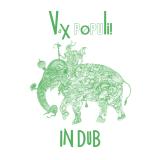
Emotional Rescue returns after a much-needed year hiatus, refreshed and ready, as it moves into its 15th year, to further explore the environs of oft-forgotten musical secrets and present them to new heads and minds.
To celebrate, the label looks back to one of its favourite collaborations, the music of French ‘Ethno-Industrialists’ Vox Populi! in presenting a truly unique EP of “In Dub”, inspired remixes by 4 fellow Paris based artists of today in Full Circle, Froid Dub, Krikor and Shelter.
“In Dub” takes a selection of songs from the series of albums reissued or compiled on Emotional Rescue and sister label, Platform 23, and gives the Master tapes to this talented ensemble to offer their own, unique dub reworks. The project explores the on-going advances in technology offered, mixed with pure talent and a respectful homage.
Formed by Axel Kyrou and including wife Mitra, as well as long-term music and art partners Pierre Jolivet aka Pacific 231 and Francis Lafont aka FR6 Man, they forged a path from obscure, drum and drum-based cassette releases on to fully realized albums and compilations on their now cult Vox Man Records.
Alexis Le Tan and Joakim’s Full Circle project starts, with their electronic dub remake of Soleyman Dub from the ‘Alternatif Réalisme’ compilation (ERC079). With releases on Good Morning Tapes, Offen and their own “Released” label, their plaudits as master diggers and producers of dubby tripped-out inspired electronics – releasing slowed Trance some 10 years before anyone else – is inspired. Tuning in and turning on the original dub into a mantra style slow-breaks (Digi)dub is the perfect experimental flavour.
Jube Man is next, a twisted, psychedelic dub out by rising stars Froid Dub. The stand-out from the ‘Magiques Creations’ release (ERC052), an album that explored Vox Populi’s furtive post-industrial period of 1984 to 1988, Jube Man was the perfect selection by the duo of François Marché and Stéphane Bodin.
Froid Dub have steadily developed their “cold” Digidub style to acclaim –
releasing a steady flow of dub inspired electronics on their own label Delodio, as well as recently appearing on sister label Emotional Response’s 10th year anniversary collection, ‘All Trades’. Their haunting, shuffling and murky acid / piano dub, with the drifting “Space Echoing” of Mitra’s vocals from the live desk mix, creates a ghostly version to effect.
Next, master mixer, producer and engineer Krikor serves a steppers remake with his “OverDub” of Zen-Dub. With a career that spans releases on Tigersushi, LIES and Soul Jazz, his sound has developed from Electro, House and Techno, to Acid, Bleep, Dancehall, Dub and touches of Gabba.
Taken from Vox Populi!’s master-opus Aither (ERC030), the first of our reissues dating back to 2016, Zen-Dub’s pacey, lo-fi dub experience is transformed and overdubbed into an incessant sound system throb, a true bass quaking “steppa”.
To close, Micro Climax is put through Shelter’s increasing avant dub exposition. Appearing on the likes of Growing Bin, Emotional Response and his own Protopost, as well for – and being in-house designer – on the much-missed Séance Centre, Alan Briand aka Shelter productions have developed from Balearic, Edits and House to explore Avant, Raga and live Dub productions.
Appearing on the recent ‘Ethniques Pyschedeliques’ compilation on Platform 23 (PLA032), in original form Micro Climax is a sprawling 10-minute ethno-dub of whispered vocals, drone and sub bass. Shelter strips it back, keeping background effects, adding live bass and percussion to create a wonky, slow, shuffling ska-lite excursion to complete a true “In Dub”.
- A1: Facts
- A2: Fuck It
- A3: Royalty
- A4: Both Ways
- A5: How Could
- B1: Usa
- B2: Let Me See
- B3: Get Paid
- B4: On My Way
- B5: It’s Goin Down
- B6: Real Life
Ten years ago, Adolph Robert Thornton Jr. planted his flag. Released on February 19, 2016, King of Memphis wasn't just a debut studio album; it was a bold declaration of independence and a flawless blueprint for self-made success. To celebrate a decade of this foundational Southern rap masterpiece, Paper Route Empire is honoring Young Dolph’s legacy with a series of exclusive, limited-edition 10th Anniversary vinyl variants.
Before King of Memphis, Dolph had already built a massive underground following through a relentless run of mixtapes. But this official debut elevated him from a local hero to a national powerhouse.
By bypassing the major label system and releasing the project entirely through his own Paper Route Empire (PRE), Dolph proved that undeniable talent, relentless hustle, and business savvy were all you needed to take the crown. The album peaked in the Top 50 of the Billboard 200, an incredible feat for a fiercely independent artist at the time, and cemented his status as a CEO who called his own shots.
King of Memphis is all killer, no filler. Over 11 tracks, Dolph's signature slow-flow delivery and larger-than-life charisma glide over heavy-hitting, trap-defining production from a legendary lineup of producers, including Mike WiLL Made-It, Zaytoven, TM88, and Cassius Jay.
With zero guest features, the project relies entirely on Dolph’s magnetic presence. From the motivational hustler's anthem "Get Paid" to the menacing confidence of "Let Me See It" and "Royalty," the album plays like a victory lap for a self-made king.
- 1: Private Symphony (Feat. Stuart Murdoch)
- 2: The Cold Collar (Feat. Gruff Rhys)
- 3: Love Is A Life That Lasts Forever (Feat. Molly Linen)
- 4: First Moonbeams Of Adulthood
- 5: Road To The Amber Room
- 6: Hachi No Su (Feat. Saya From Tenniscoats)
- 7: In Portmanteau (Feat. Field Music)
- 8: Irreparable Parables
- 9: Spectators In The Absence Of God (Feat. Kathryn Joseph)
- 10: Soul Enters The Ocean Sun Climbs Out The Sea
Pink Vinyl[26,26 €]
Very limited numbers, orders will need to be confirmed.
For his new album, Irreparable Parables, Andrew Wasylyk felt a strong desire to write a set of songs featuring an element hitherto rare in his work: the human voice. Equally strong was the conviction that he did not want to sing them himself.
The Scottish multi-instrumentalist and composer set about assembling a group of guest singers, sending out the songs to wherever they were in the world. The vocals were recorded remotely and then, like migrating birds, winged their way back to Scotland. The result is an album of great beauty which, perhaps preeminently in Wasylyk’s work, expresses the vulnerability and resilience of the human spirit.
Six singers appear on the record, represented by six songbirds illustrated on the sleeve by Clay Pipe Music’s Frances Castle. The cuckoo is a nod to Belle and Sebastian’s 2004 single ‘I’m A Cuckoo’, that band’s Stuart Murdoch being the first voice you hear on the new album. When the vocal for ‘Private Symphony #2’ arrived, says Wasylyk, “it was everything that I was looking for and more. But this is Stuart Murdoch. Of course he’s going to make something incredibly beautiful and thoughtful.”
The song lyrics were, for the most part, written by the singers. The music is Wasylyk’s creation. He navigates a sound world that lies somewhere beyond the borders of classical and jazz, ambient and abstract. It is difficult to describe, but easy to understand, which is to say to feel. That is the way Wasylyk’s work is experienced: as a feeling. It takes you back to childhood, perhaps, to feelings of comfort and safety, or to memories of walks at sunrise and sunset, or to the way a shadow falls on a particular field in a particular place at a particular time in your life. This is consoling music. That is why, though pretty, it is not merely pretty. These are songs to shore up the soul.
Wasylyk writes in a room, in his native Dundee, full of “half broken” instruments. He picks these up, plays a little, seeking an idea, a feeling, a door that lies ajar. The musical palette of Irreparable Parables includes brass and woodwind, a six-piece string section, guitar, bass, drums, vibraphone, Mellotron, Fender Rhodes, tape loops, synthesisers and percussion. The strings were arranged by the cellist Pete Harvey, a long-term collaborator.
Among the other guest vocalists are Gruff Rhys of the Super Furry Animals, Saya Ueno from Japan’s Tenniscoats and Peter Brewis from Field Music. Wasylyk himself takes the lead vocal on the title track, though a throat infection and touch of pitch-shifting have altered his singing in a way that even he, having fallen out of love with his own voice, finds acceptable.
The heart of the record can, arguably, be found in two tracks, ‘Love Is A Life That Lasts Forever’ and ‘Spectators In The Absence of God’, sung respectively by Molly Linen and Kathryn Joseph. The former, bright with trumpets, was inspired by the writing of Derek Jarman. “I was feeling deeply upset about the world and wanted to try and write some- thing that was obviously hopeful,” Wasylyk says.
‘Spectators …’ offers an emotional counterpoint. It is an “apocalyptic hymn” that seems to grapple with watching human suffering from afar, too distant to be at physical risk, but experiencing the psychological wounding, and feelings of helplessness, even complicity, that come with constant awareness of other people’s pain. “Kathryn’s a pal, I love her dearly, and she’s a brilliant artist who really feels what she writes,” Wasylyk says. “The cracked tenderness of her voice is spellbinding.”
The album closes with an instrumental piece, ‘Soul Enters The Ocean Sun Climbs Out Of The Sea’, all piano and strings, that offers a sense of resolution and ascension. A good moment, too, for Wasylyk to reflect upon the artistic companionship that he enjoyed while making this record – the songbirds that answered his call: “These humans are incredible at what they do. I’m deeply grateful and feel so lucky. It blows my mind.”
From deep within the astral planes of all that is cosmic in the Northwest and through a fog of kaleidoscopic haze emerges the latest mind-expanding music makers to arrive on Sprechen in the form of the Todmorden based Lines Of Silence.
Living amongst a hotbed of UFO activity and home to the UK's highest ever beach they combine experimental analogue and digital electronics, motorik beats, polyrhythmic improvisation and drone rock guitar explosions to create an immersive, expansive and contemporary take on psychedelia.
Their long player on Sprechen: 'Lines In Opposition !' takes the listener on a visionary aural journey across 8 tracks of electronic, shamanic soundscapes where the sounds of Krautrock exist in harmony alongside drone-esque ambient excursions through an array of synths, guitars & sequenced patterns that draw heavily on the stylings of NEU!, Aphex Twin, Kraftwerk and the musical pickings of the more esoteric sets and radio shows by Andrew Weatherall.
A truly universal listening experience to take you into a higher state of electronic music consciousness...
- C2: Back Again (Hot Toddy Remix)
- D1: Alone With You (Purple Disco Machine Remix)
- A1: Coming Home Baby (7" Edit) — Skeewiff
- A2: I Can't Give You Up — Smoove & Turrell
- A3: Ya Lookin Tight — Soopasoul
- A4: God Walked Down — The Allergies
- A5: Man Of Constant Sorrow — Skeewiff
- B1: Geno's Discotheque (Aroop Roy Remix) — Smoove & Turrell
- B2: Keep On Searching — Kraak & Smaak
- B3: Dust (Dimitri From Paris Vs. Cotonete Discomix) — Gizelle Smith
- B4: Glow — Sam Redmore
- C1: Blind Faith (Art Of Tones Extended Remix) — Izo Fitzroy
- C3: Sun Don't Shine (Sophie Lloyd Remix) — Wolfgang Valbrun
- C4: Tears (Scrimshire Remix) — Sam Redmore
- D2: Kinetic (Kraak & Smaak Remix) — Golden Girls
- D3: Speculate (Saison Remix) — Flevans
- E1: The Difference — Smoove & Turrell
- E2: Stumble (Feat. Parcels) — Kraak & Smaak
- E3: Easy Ain't Nothing (Featurecast Remix) — Ephemerals
- E4: I Feel It — The Allergies
- E5: Life Is Good (Technimatic Remix) — Ephemerals
- F1: Skyline (Kraak & Smaak Badlands Remix) — Izo Fitzroy
- F2: Wild Shadows — Flevans
- F3: Sunset Breakup — Dr Rubberfunk
- F4: You Brighten Up My Day — Hallmighty & Vanucci
Jalapeno Records are celebrating their 25th anniversary in the business. The label are marking the occasion with the release of a 3LP compilation featuring some of label boss Trevor Mac's favourite dancefloor gems from across the years. From a humble start in a basement recording studio on Holloway Road to a quarter century anniversary celebrated from their Brighton offices – Jalapeno Records has been an indie label with a mission - to bring the funk to the masses. Along the way that has taken in so many genres from chill to house, gospel to soul, breaks to drum & bass but it has all had a common thread running through it - the funk. "Twenty Five years means there are too many artists to list and this album is not supposed to be a Greatest Hits. We did that on the 20th anniversary. The album is dedicated to all of the artists that trusted us with their music and all the people who supported us along the way" says Trevor
k 11. Back Again (Hot Toddy Remix) feat. John Turrell — Kraak & Smaak
n 14. Alone with You (Purple Disco Machine Remix) [feat. Cleopold] — Kraak & Smaak
[k] 11. Back Again (Hot Toddy Remix) [feat. John Turrell] — Kraak & Smaak
[n] 14. Alone with You (Purple Disco Machine Remix) [feat. Cleopold] — Kraak & Smaak
[k] 11. Back Again (Hot Toddy Remix) [feat. John Turrell] — Kraak & Smaak
[n] 14. Alone with You (Purple Disco Machine Remix) [feat. Cleopold] — Kraak & Smaak
2025 Repress
(remastered classic incl DL card) Environ is proud to present the Metro Area 15th Anniversary Edition, Metro Area's eponymous debut album, meticulously remastered using the original source tapes and generously spread across three slabs of vinyl. The12-track triple LP and digital package combines all the songs from both the original US and licensed European releases, and features new commemorative artwork unique to this edition. In the late nineties, the budding producers Morgan Geist and Darshan Jesrani bonded over their shared love of slower tempos and '70s and '80s NYC club culture. Obsessed with record digging and the sounds they heard on late-night "club classics" radio shows—and turned off by current releases they saw as artlessly "updating" sublime disco by sampling, filtering and subjugating them with huge kick drums —the duo set out to discover how their favorite old 12" records were made. They naturally gravitated towards extended dubs of songs—full of strange mistakes and echoing backing tracks—instead of the better-known vocal versions. Lacking the big budgets and gear that made so many of their favorite classic records come together, they were forced to take a guerrilla approach. They reprogrammed their techno-oriented arsenal of secondhand synths and samplers, using novel digital recording technology to capture live instrumentation and prioritizing mood over hooks, and the resulting music was just wrong enough to sound unlike anything else being released at the time.After just four underground 12" releases, the duo—now well-known as Metro Area—released their first and only album, Metro Area, in the fall of 2002. Fifteen years later, it's time to celebrate the culmination of their shared history and inspiration once again. Environ is proud to present the Metro Area 15th Anniversary Edition, Metro Area's eponymous debut album, meticulously remastered using the original source tapes and generously spread across three slabs of vinyl. The 12-track triple LP and digital package combines all the songs from both the original US and licensed European releases, and features new commemorative artwork unique to this edition.
"Next up in Mr Bongo's Groove Merchant Records reissue series, we present the only solo album saxophonist Ramon Morris recorded as a bandleader. Having cut his teeth playing with the iconic band Art Blakey & The Jazz Messengers and working with other jazz greats, including Reuben Wilson, Shirley Scott, Rashied Ali Quintet, and Woody Shaw, 1973 saw Ramon take the step into solo territory. The resulting album Sweet Sister Funk became a certified classic and a landmark showcase of the cherished ‘70s jazz-funk sound, later sampled by the likes of DJ Premier, The Alchemist and DJ Shadow.
Originally released on Sonny Lester's iconic Groove Merchant record label and produced by Lester himself, Sweet Sister Funk is a jazz-funk masterclass. It features a slick line-up including Cecil Bridgewater on trumpet, Mickey Roker on drums, and Albert Dailey on electric piano. Rich and beautiful, the seven songs ebb and flow in energy, fusing jazz funk and soul jazz with style and swagger. There are bags of groove with Ramon and Cecil trading off on sax and trumpet in an effortless conversation throughout the LP, supplemented by brilliant solos from the rest of the players.
A gold mine of sampling material, the album includes a sublime cover version of The Stylistics' much-loved 'People Make The World Go Round', which was sampled by DJ Shadow on Blackalicious's 'Swan Lake' in 1994. Elsewhere, the percussion and bass intro of the opening track 'First Come, First Serve' is a sampler's delight - a deep, heavy groove with a fine saxophone workout by Ramon. Head to 'Don't Ask Me' and you’ll find the swinging horn intro that formed the basis of 'You Came Up' by Big Pun featuring Noreaga from 1998, whilst 'Wijinia' has echoes of ‘70s indie jazz by labels such as Strata East & Black Jazz.
Here at Mr Bongo, we are proud to be delving into the vaults of Groove Merchant Records once again, reissuing this iconic LP from Ramon Morris."
Two vocal tracks and two instrumentals. The classic EP structure reflects the class act that is Fred Ventura and Paolo Gozzetti. Italoconnection are back at the Bordello weaving their synthesizer magic. And those analogue lines are what immediately wash over the listener in “Like A Star.” Crisp percussion and sailing melodies break to a glorious hook before Ventura’s unmistakable voice takes hold. Paying homage to Moroder’s “From Here To Eternity”, Italoconnection deliver a vocoder dipped love affair as smouldering vocals pitch ever higher. The instrumental strips back all lyrics, but allows the breathy keys to remain and keep that human touch amidst the addictive chords and rich textures. Bold machine brass introduces “Make It Real.” These blasts form the melodic backbone for this ballad to self-belief where Ventura’s impassioned words are impeccably coupled with Gozzetti’s sparkling synthwork. That synthwork comes to the fore in the finale. With lyrics pared back, the machines sing a different song as that energy packed melody is charged with even more intensity. Quality through and through, as always with Italoconnection.
Dallas, Texas resident Ben Hixon is a consistent performer with a tasteful take on deep house that most often comes on this label. His final missive of the year opens up with 'Meant To Be', a nice bumpy cut with bass reverberations and glitchy percussive textures. Hi-hats tick in the background to keep time as smudged vocals burn with soul and lolloping rhythms take centre stage. 'Love Crazy' is another stripped-back sound that is dusty and gritty with bass that folds in on itself and more sprinkled analogue percussion to add extra bite.
Kicking off 2026 in style Pep Jam All Stars Vol 6 is here.
First up, Kiinjo teams with The Patchouli Brothers and Planet B for Love On The Dancefloor – a proper disco-house jam that’s all about love, groove, and good vibes. Then Hungarian duo Soneec & Soultizer hook up with Hazel Fernandes for Get Down, a feel-good floorfiller with soul and energy to spare.
On the flip, Phil Fuldner brings us Afrodesia, a sun-soaked, disco-powered groove that’s been a long time coming. And finally, Lovebirds take us back with The Path 2011, a cheeky classic that still hits just right.
Four tracks, one 12 inch loads of love for the dancefloor – enjoy!
Panthera is back at the Bordello with his most energy-packed release to date. Synthsizer Hits III is forged in the heat of Hi-NRG, the romance of italo and the daring synthesizer hooks of 1980s Europe. A thick rasping beat pounds above a juddering arpeggiator line before hedonistic surges ignite “Fumare”, an achingly addictive opener. Vocals are toyed with, used to increase the potency of the chosen machines and sounds. A circling chant infects “Lucifera” as a joyous melody takes hold of this modern Summer anthem, euphoric notes ushering in the dawn while speakers and strobe throb. There is a palpable power that permeates the 12”. “The Magic Touch” sends strings sailing skyward as rich percussive textures take root below. From this fertile ground, a sensational ode to the synthesizer flowers. Vocoder lyrics, pulsating rhythms and keys that are truly fantastical. “Toccata” finishes this analogue celebration. Slow burning with disco inflections, this finale soon shows its true colours. Daring counter melodies frolic, from the elegant and refined to the brash and broad, in this mirrorball inspired last dance.
A High-Energy Fusion of Past and Present
The collaboration between the Amsterdam and Berlinartists showcases their unique chemistry, blendingcutting-edge production techniques with a deepreverence for the genre's roots. Crafted in the shadows,Accelerate is a meeting of two minds from two citiesknown for their underground energy, each bringing theirunique influence to an exhilarating techno experience.
The reworked classics on Accelerate, which originallygraced some of the most renowned techno labelsbetween 2007 and 2012 on vinyl 12", are newly mixed,edited, and turbocharged, pushing the limits of eachtrack's original energy. All is recalibrated for a newgeneration of listeners-and they hit harder than ever.Alongside these revamped gems, Accelerate introduces
new and previously unreleased material that will takelisteners even further.
Accelerate is a relentless force that demands to be felt inall its depth.
The Éthiopiques series returns! Essential archive recordings from an extremely fruitful period in Ethiopian music.
Before “Swinging Addis” took over the world, there was Moussié Nerses Nalbandian — the Armenian-born composer who shaped modern Ethiopian music. Mentor, arranger, and pioneer, he laid the foundations of Ethio-jazz.
This Éthiopiques volume revives his forgotten legacy, recorded live by Either/ Orchestra First issue ever with new exclusive photos and in depth liner 8-page insert.
“Ethiopian jazzmen are the best musicians that we have seen so far in Africa.
They really are promising handlers of jazz instruments.”
Wilbur De Paris
(1959, after a concert in Addis Ababa)
አዲስ፡ዘመን። *Addis zèmèn* **A new era.**
The time is the mid-1950s and early 1960s, just before "Swinging Addis" bloomed – or rather boomed – onto the scene. Brass instruments are still dominant, but the advent of the electric guitar, and the very first electronic organs, are just around the corner. Rock’n'Roll, R’n’B, Soul and the Twist have not yet barged their way in. Addis Ababa is steeped in the big band atmosphere of the post-war era, with Glenn Miller's *In the* *Mood* as its world-wide theme song, neck and neck with the Latin craze that was in vogue at the same period. Life has become enjoyable once again, with the return of peace after the terrible Italian Fascist invasion of Ethiopia (1935-1941). The redeployment of modern music is part and parcel of the postwar reconstruction. *Addis zèmèn* – a new era – is the watchword of the postwar period, just as it was all across war-torn Europe.
The generation who were the young parents of baby boomers** were the first to enjoy this musical renaissance, before the baby boomers themselves took over and forever super-charged the soundtrack of the final days of imperial reign. Music is Ethiopia's most popular art form, and very often serves as the best barometer for the upsurge of energy that is critical for reconstruction. Whether it be jazz in Saint-Germain-des-Prés or the *zazous* who revolutionised both jazz and French *chanson* after the *Libération*, be it Madrid's post-Franco Movida, or Dada, the Surrealists and *les années folles* that followed World War I, the periods just after mourning and hardship always give rise to brighter and more tuneful tomorrows. Addis Ababa, as the country's capital, and the epicentre of change, was no exception to this vital rule.
**Two generations of Nalbandian musicians**
Nersès Nalbandian belonged to a family of Armenian exiles, who had moved to Ethiopia in the mid-1920s. The uncle Kevork arrived along with the fabled "*Arba Lidjotch*", the** "*40 Kids*", young Armenian orphans and musicians that the Ras Tafari had recruited when he visited Jerusalem in 1924, intending to turn their brass band into the official imperial band. If Kevork Nalbandian was the one who first opened the way of modernism, pushing innovation so far as to invent musical theatre, it was his nephew Nersès who would go on to become, from the 1940s and until his death in 1977, a pivotal figure of modern Ethiopian music and of the heights it. Going all the way back to the 1950s. Nothing less. And it is Nersès who is largely to thank for the brassy colours that so greatly contributed to the international renown of Ethiopian groove. While the younger generations today venture timidly into the genealogy of their country's modern music, often losing their way amidst a distinctly xenophobic historiographical complacency, many survivors of the imperial period are still around to bear witness and pay tribute to the essential role that "Moussié Nersès" played in the rise of Abyssinia's musical modernity.
Given the year of his birth (15 March 1915), no one knows for sure if Nersès Nalbandian was born in Aintab, today Gaziantep (Turkiye/former Ottoman Empire) or on the other side of the border in Alep, Syria... What is certain is that his family, like the entire Armenian community, was amongst the victims of the genocide perpetrated by the Turks. Alep, the place of safety – today in ruins.
Before Nersès then, there was uncle Kevork (1887-1963). For a quarter of a century, he was a whirlwind of activity in music teaching and theatrical innovation. *Guèbrè Mariam le Gondaré* (የጎንደሬ ገብረ ማርያም አጥቶ ማግኘት, 1926 EC=1934) is his most famous creation. This play included "ten Ethiopian songs" — a totally innovative approach. According to his autobiographical notes, preserved by the Nalbandian family, Kevork indicates that he composed some 50 such pieces over the course of his career. This shows just how much he understood, very early on, the critical importance of song as Ethiopia's crowning artistic form. Indeed, for Ethiopian listeners, the most important thing is the lyrics, with all their multifarious mischief, far more than a strong melody, sophisticated arrangements or even an exceptional voice. (This is also why Ethiopians by and large, and beginning with the artists and producers themselves, believed for a long time — and wrongly — that their music could not possibly be exported, and could never win over audiences abroad, who did not speak the country's languages).
Last but not least, one of Kevork's major contributions remains composing Ethiopia's first national anthem – with lyrics by Yoftahé Negussié.
Nersès Nalbandian moved to Ethiopia at the end of the 1930s, at the behest of his ground-breaking uncle. Proficient in many instruments (pretty much everything but the drums), conductor, choir director, composer, arranger, adapter, creator, piano tuner, purveyor of rented pianos,... he was above all an energetic and influential teacher. From 1946 onwards, thanks to Kevork's connexion, Nersès was appointed musical director of the Addis Ababa Municipality Band. In just a few years, Nersès transformed it into the first truly modern ensemble, thanks to the quality of his teaching, his choice of repertoire, and the sophistication of his arrangements. It was this group that would go on to become the orchestra of the Haile Selassie Theatre shortly after its inauguration in 1955, which was a major celebration of the Emperor's jubilee, marking the 25th anniversary of his on-again-off-again reign.
At some point or other in his long career, Nersès Nalbandian had a hand in the creation of just about every institutional band (Municipality Band, Police Orchestra, Imperial Bodyguard Band, Army Band, Yared Music School…), but it was with the Haile Selassie Theatre – today the National Theatre – that his abilities were most on display, up until his death in 1977. To this must be added the development of choral singing in Ethiopia, hitherto unknown, and a sort of secret garden dedicated to the memory of Armenian sacred music, and brought together in two thick, unpublished volumes. Shortly before his death (November 13, 1977), he was appointed to lead the impressive Ethiopian delegation at Festac in Lagos, Nigeria (January-February 1977).
His status as a stateless foreigner regularly excluded him from the most senior positions, in spite of the respect he commanded (and commands to this day) from the musicians of his era. Naturally gifted and largely self-taught, Nerses was tirelessly curious about new musical developments, drawing inspiration from the very first imported records, and especially from listening intensely to the musical programmes broadcast over short-wave radio – BBC *First*. A prolific composer and arranger, he was constantly mindful of formalising and integrating Ethiopian parameters (specific “musical modes”, pentatonic scale, and the dominance of ternary rhythms) into his “modernisation” of the musical culture, rather than trying to over-westernise it. It even seems very probable that *Moussié* Nerses made a decisive contribution to the development of tighter music-teaching methods, in order to revitalise musical education during this period of prodigious cultural ferment. Flying in the face of all the historiographical and musicological evidence, it is taken as sacrosanct dogma that the four musical modes or chords officially recognised today, the *qǝñǝt* or *qiñit* (ቅኝት), are every bit as millennial as Ethiopia itself. It would appear however that some streamlining of these chords actually took place in around 1960. It was only from this time onward that music teaching was structured around these four fundamental musical modes and chords: *Ambassel*, *Bati*, *Tezeta* and *Antchi Hoyé*. A historical and musical “details” that is, apparently, difficult to swallow, especially if that should honour a *foreigner*. Modern Ethiopian music has Nersès to thank for many of its standards and, to this day, it is not unusual for the National Radio to broadcast thunderous oldies that bear unmistakable traces of his outrageously groovy touch.
Blue Lake reveals his most ambitious album yet, which finds its visionary creator Jason Dungan harnessing the collective alchemy of his band, with ten spirited tracks that resonate with a powerful directness, evoking an ecological connection to the wider world.
The solo project (Blue Lake), now on its fifth album, found its name and inspiration via Don Cherry's 1974 live album, sparking a creative epiphany in Dungan, who set off on a path into his own untapped sonic world, guided by what he cited as the emotional potential found within non-lyrical composition. With a newly inspired ethos aimed toward creating direct and simple instrumental music imbued with a deep sense of feeling, Jason began combining an array of musical elements that gave rise to his highly revered album 'Sun Arcs' (2023), with its "ornate, zither-led lattices" (Pitchfork, Best New Music). Conceived in the blissful isolation of a Swedish cabin set in the woods, this was music that soundtracked spring in full bloom. Then, in contrast to the solitary approach of 'Sun Arcs', the highly lauded mini-album 'Weft' (2025) began to set the tone for a more band-oriented approach to delivering the Blue Lake sound. Jason had by this time experienced a special collective energy with his band during a swathe of live performances, which he then sought to harness and distill on 'The Animal', leading him to take the project into a traditional recording studio (The Village) and its limitless potential along with his gifted cohorts.
'The Animal' at its core vividly celebrates human collaboration and is deeply rooted in a sense of community and non-hierarchical connectivity. The group's creative alchemy transcends outwards and beyond the musicians performing together, to summon an inclusive, existential and ecological connection to the wider world and its inhabited spaces. The album contemplates the idea of the human as an animal as Dungan explains: "I'm quite fascinated in thinking about humans more as part of the animal environment and not as something that's so separated into a "human" realm, or sitting on top of a hierarchical pyramid. So the Animal is also me, or us - that we are just living, existing, in the same way as a piece of moss or a sparrow or a cow.
'The Animal' is a form of musical metamorphosis, still acoustic, yet more amplified, elevating it to new dimensions. The Blue Lake project takes on a new lease of life to encompass collaboration with Jason Dungan bound in a universal connectivity, resulting in his most ambitious album to date. A harmonious rejoicing that cements his reputation as a transformative presence in contemporary music.