quête:take that

Genres
Tout
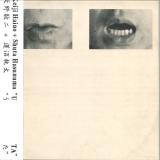
KEIJI HAINO + SHUTA HASUNUMA - U       TA

Haino sings. Hasunuma plays. It’s a minimal framework, but what emerges is a boundary-blurring sonic exploration. Across the album, Haino’s voice threads through Hasunuma’s layered soundscapes built from analog synths, electric guitar, piano, field recordings, and more. Haino entered the studio with only lyrics in hand, improvising melodies in response to Hasunuma’s evolving arrangements. The result is a work of deep trust, intuition, and sonic tension.

Keiji Haino and Shuta Hasunuma’’s creative connection began in 2017 with an impromptu performance in Shibuya—Hasunuma on a Buchla modular synthesizer, Haino responding with the Japanese national anthem, “Kimigayo.” That moment sparked their unlikely collaboration.

In 2018 Haino appeared at the Hasunuma-organized event “MUSIC TODAY IN KYOTO” at Rohm Theater, alongside Nobukazu Takemura, Manami Kakudo, Elena Tutatchikova, Kukangendai among others. In September 2021 during the pandemic, the two performed "U       TA" for the first time at in Shibuya. They began planning the album soon afterwards.

For the recording of U       TA, Haino entered the studio with only the lyrics in hand, with no knowledge of what sounds Hasunuma would produce. Responding to Hasunuma’s music in real time, Haino composed the melodies and layered in his voice on the spot. With additional sessions at Hasunuma’s private studio and Haino’s preferred studio, the album was completed.

All melody and vocals by Keiji Haino
All instrument, written, played, arranged, mixed and produced by Shuta Hasunuma
Recorded by zak at st-robo studio, Shuta Hasunuma at Studio i.M.O and windandwindows
Mastered by Rashad Becker at clunk
Production Management: Eishin Yoshida, Kento Ono (windandwindows)
For Temporal Drift: Yosuke Kitazawa, Patrick McCarthy
Art Direction: Aiko Koike
Special Thanks to Toshihiko Kasai, Ryoichi Kiyomiya, zAk, Yumiko Ohno
license

En stock

Disponible en stock et prêt pour l'expédition

26,85
Xiu Xiu - Xiu Mutha Fuckin' Xiu: Vol. 1 LP

On Xiu Xiu’s new covers album, Xiu Mutha Fuckin’ Xiu Vol. 1 , Jamie Stewart and Angela Seo pay homage to songs that have profoundly influenced them as music lovers and songwriters. This collection taken from the band’s ongoing Bandcamp subscription series, Xiu Mutha Fuckin’ Xiu, features tracks previously exclusive to Bandcamp, now available on vinyl and streaming for the first time. The album showcases Xiu Xiu's unique interpretations of iconic songs such as "Psycho Killer” (Talking Heads), “In Dreams” (Roy Orbison), “Some Things Last A Long Time” (Daniel Johnston), “I Put a Spell on You” (Screamin’ Jay Hawkins) and many more. These renditions are a heartfelt "thank you" to the original compositions, while simultaneously serving as a deep dive into the musicality and greatness of these influential works.

En stock

Disponible en stock et prêt pour l'expédition

27,52
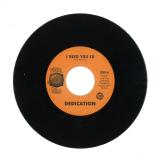
Dedication - I Need You So / I'm Falling in Love With You (7")

Dedication is Stevie Bensusen and Lashley Todd, two friends born and raised in Seattle, WA, who started singing together in high school. Their dynamic blend was undeniable and it made all the sense in the world to form a band together. And if and when the planets were somehow aligned and they were gifted with adequate financing, go into the studio and record their voices. Convinced that their unmistakable vocal blend would be better served by recording their own material (songs both written and arranged by Stevie) that would showcase their voices, both solo and together. After attending Boston's Berklee College of Music to study theory and composition, Stevie returned to Seattle with a batch of new tunes and arrangements in his portfolio. He and Lash focused on rehearsing the material and looked for a chance to take their sound into the studio. As luck would have it, someone liked their prospects enough to bankroll their studio sessions. They hired and rehearsed the top-notch players that would make up their masterful rhythm section, then booked time at now legendary Kaye-Smith Studios in Seattle to cut and mix their tracks. What came from those sessions are four powerful and sophisticated R&B performances, being made available only on the Final Bell label by Super Disco Edits. Their adventures in the unpredictable world of recorded music are now beginning to unfold. Which brings us to this moment in time when audiences in the UK can finally discover, and appreciate . . . Dedication.

En stock

Disponible en stock et prêt pour l'expédition

14,08
Dedication - You and I Together / How I Feel About You (7")

Dedication is Stevie Bensusen and Lashley Todd, two friends born and raised in Seattle, WA, who started singing together in high school. Their dynamic blend was undeniable and it made all the sense in the world to form a band together. And if and when the planets were somehow aligned and they were gifted with adequate financing, go into the studio and record their voices. Convinced that their unmistakable vocal blend would be better served by recording their own material (songs both written and arranged by Stevie) that would showcase their voices, both solo and together. After attending Boston's Berklee College of Music to study theory and composition, Stevie returned to Seattle with a batch of new tunes and arrangements in his portfolio. He and Lash focused on rehearsing the material and looked for a chance to take their sound into the studio. As luck would have it, someone liked their prospects enough to bankroll their studio sessions. They hired and rehearsed the top-notch players that would make up their masterful rhythm section, then booked time at now legendary Kaye-Smith Studios in Seattle to cut and mix their tracks. What came from those sessions are four powerful and sophisticated R&B performances, being made available only on the Final Bell label by Super Disco Edits. Their adventures in the unpredictable world of recorded music are now beginning to unfold. Which brings us to this moment in time when audiences in the UK can finally discover, and appreciate . . . Dedication.

En stock

Disponible en stock et prêt pour l'expédition

14,08
King Crimson - Lizard LP

King Crimson

Lizard LP

12inchKCLPR3
King Crimson
28.01.2026
  • A1: Cirkus (Including Entry Of The Chameleons)
  • A2: Indoor Games
  • A3: Happy Family
  • A4: Lady Of The Dancing Water
  • B1: Prince Rupert Awakes
  • B2: Bolero - The Peacocks Tale
  • B3: The Battle Of Glass Tears (Including Dawn Song / Last Skirmish / Prince Rupert's Lament)
  • B4: Big Top

DGM & Panegyric proudly present…

One of the highlights of the King Crimson 50th anniversary CD/Blu-ray editions to date has been King Crimson producer David Singleton’s series of Elemental Mixes as he utilises the full spectrum of available studio sessions for each album to produce very different takes on the familiar songs and pieces.

This is especially true of Lizard where the ambition of the material, the much-expanded line-up of musicians - the background of many of them in the jazz rather than the rock world - and the number of takes recorded, resulted in a large amount of material to be considered for this album.

There was enough material for David to be able to mix and produce alternate takes for every piece from the original album.

As well as giving great insight into the recordings, the nature of Elemental Mixes allows for different takes from individual musicians to be included – sometimes alongside one another - in a way that would never be considered in the formulation of the original album.

David comments that “When I was working on the Elemental mixes, I jokingly described them as ‘Lizard for those who don’t like Lizard’. They were a complete revelation. Lizard is the one album which, in its initial incarnation, never quite convinced me. And yet these Elemental mixes, with their opportunity to look ‘under the hood’ of the album, revealed something fresh, wonderful and astonishing. So, if you are a King Crimson fan, who like me, has never quite taken Lizard to your heart, then these are essential listening. And hopefully equally fascinating to those who already love the album”.

Presented as a single 200gram LP and including the complete album in Elemental Mixes form, running in the same sequence as the original album, this release showcases Lizard in a very different manner to how it’s previously been heard.

Lizard’s reputation has grown, deservedly so, in recent years as old and new audiences alike rediscovered the album, initially when it was first remixed for new Stereo and 5.1 Surround Sound editions in 2009 by Steven Wilson and then as much of it was performed live for the first time in concerts by the most recent King Crimson line-up between 2016 and 2018.

En stock

Disponible en stock et prêt pour l'expédition

24,16
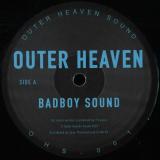
Outer Heaven - Badboy Sound / Droideka

Outer Heaven Sound is a brand new label from Outer Heaven that makes a big impression from the off with Coventry artist going big. His A-side offering 'Badboy Sound' is just that - it has a muscular, rugged low end and freewheeling siren-like sounds with devastating sub bass and rude vocal musings. It taps into jungle roots with unrelenting bass pressure that demands to be played loud. On the flip, 'Droideka' gets even more dark with a minimal take and crushing breaks that are atmospheric and dystopian with real low end broodiness and plenty of smoky atmosphere. A superb first outing.

En stock

Disponible en stock et prêt pour l'expédition

14,08
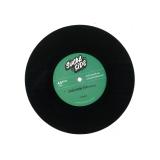
Suckaside - Underwater Love

Suckaside

Underwater Love

7"-VinylSUC004
Suckaside
27.01.2026

SuckaSide know how to twist a classic into new realms. This latest is further proof on their own self-titled label, starting with a flip of Brazilian-inspired gem. Drums gently break like waves, the vocals are intriguing spoken words, and there's a dark soul lingering in the air. On the flip is their take on downtempo delight which becomes a high speed drum & bass roller with light pads and elevating chords. The lazy trumpets from the original remain in place for that nostalgic touch.

En stock

Disponible en stock et prêt pour l'expédition

11,98
Robert Henke - Layering Buddha 2x12"

For AI-41 Astral Industries presents a vinyl reissue of Robert Henke’s multifaceted concept album ‘Layering Buddha’. An erudite masterclass on sampling and composition, ‘Layering Buddha’ encapsulates the material process of metamorphosis and a well of nascent, ever-present potentialities. This new edition comes remastered by Henke himself. 

Originally released in 2006, ‘Layering Buddha’ began with a curious encounter with the ‘Buddha Machine’ - a pocket-sized, battery powered playback device that, over the past two decades, has quietly achieved a cult status around the world. Conceived by the Beijing-based group FM3 (Christiaan Virant, Zhang Jian), the machine takes inspiration from Tibetan Buddhist prayer boxes and consists of nine sound loop compositions of varying length, which can be toggled with a single switch. Due to low production cost and manufacturing imperfections, each Buddha Machine is unique, giving slight variations in sound, pitch and duration.

Using a state of the art A/D converter Henke made high quality recordings from a single machine, providing the source material for the album. Through various processing and arrangement methods, new pieces emerged, most of them all deriving from a single source loop. The pieces were then set up on the computer as generative arrangements, living as continuously permutating structures that could theoretically go on forever - just as the loops do within the Buddha Machines… 

The final pieces featured on the album are rendered excerpts of these infinite permutations, and therefore exist as momentary views on a perpetual machinery, as opposed to closed works. Upon initial exploration, it also became a natural development to format the work into an immersive multi-speaker performance - which premiered on January 31, 2007.

Within the music, subtle artefacts and idiosyncrasies are transmuted into new realms of texture and timbre. Through the extractive hand of subtle augmentations, an array of ethereal dimensions emerge from the vast unseen ocean. Suspended in a sense of timelessness, their undulating rhythms point to a pool of endless mysteries. 

En stock

Disponible en stock et prêt pour l'expédition

28,78
Cat Power - Redux 10"

Cat Power

Redux 10"

10inchRUG1553T
Domino Records
23.01.2026

Cat Power marks 20 years since her Memphis-shaped 2006 album The Greatest with 'Redux', a three-track EP cut in Austin with Stuart Sikes and the Dirty Delta Blues band, the same crew who toured that record. Marshall salvages material linked to The Greatest's early sessions, opening with a fresh take on James Brown's 'Try Me', attempted during the original run but never finalised. She then revisits her own 'Could We' in the looser, road-worn arrangement aired on tour. The flip holds her reading of Prince's 'Nothing Compares 2 U', recorded as a nod to Teenie Hodges, the Memphis guitarist whose playing underpinned The Greatest and whose influence threaded her writing.

En stock

Disponible en stock et prêt pour l'expédition

27,94
R.I.P. Bestia - Music For A Dreaming Generation

UFC is proud to present its tenth release, “Music For A Dreaming Generation”, by R.I.P. Bestia, featuring remixes by Rabbit In The Moon, a mini-album produced between 2022 and 2024, where Analog Hardware and Sampling collide to form “Everything.”

'E.X.P.A.N.S.I.V.E (Ancestral Technologies Mix)' a fusion of Electro and Nu-Skool Breaks under a choral mantle of shamanic psychedelia. 'Music For A Dreaming Generation (Dub Botanical Reaction Mix)' the original version is brutalized and reactivated with the acids of the beloved TD-3, a colliding immersion of frequencies, dreamy pads, and hypnotic melodies filtered through the cherished JP-8080. 'Law 7/2023, of March 28' a humble, reivindicative sonic tribute to animal rights, compressed breaks and charming vocals are guided by a psychedelic melody up to a “Drop” where a monstrous Bassline takes the helm, steering you into an emotionally gravitational State of Dance.

About the remixes, Rabbit in the Moon delivers this legendary Techno-Trance gem 'Music For A Dreaming Generation (Nightowl Mix)' a remix we envision as “a crushing technoid mass” that lifts you up to an epic drop before bringing you back down to the earthly realm.'(Daydream Mix)' in this version, Rabbit in the Moon reimagines the original into a “2-Step Garage” interpretation, a pure Braindance journey, with graceful arrangements fused with epic vocals and mysterious Basslines.

En stock

Disponible en stock et prêt pour l'expédition

12,40
Various - Straight Outta Tenggara: Southeast Asian Hip-Hop, 1990s-2000s MC (TAPE)
  • A | Side A
  • B | Side B

Another DINTE tape curated by cult WFMU show and blogger Bodega Pop; Gary Sullivan's long-running project rooted in a passion for digging for music in bodegas and cell-phone stores across NYC's boroughs. This edition focuses in on late 1990s and early 00s hip-hop & rnb from across Southeastern Asia.

"While on a work trip to Chicago in the mid-2000s, I was craving a bowl of pho. A bit of sleuthing led me to hop on the red line "L" up to Argyle Street, ground zero of Chicago's Little Saigon. In the 1960s, Chicago restaurateur Jimmy Wong invested in property on Argyle Street with a vision to build the city's new Chinatown, a kind of mall with pagodas, trees, and reflecting pools. In 1971, the Hip Sing Association, a labor/criminal organization, established itself in the area, and along with Wong, they bought up 80% of the buildings on a three-block stretch of the street. Wong reportedly broke both hips in an accident, leaving his dream to wither; in 1979, Charlie Soo of the Asian American Small Business Association brought it back to life.

Soo expanded the area into a vibrant mix of Chinese, Vietnamese, and other Southeast Asian businesses, pushing for renovations, including an Argyle station facelift and the Taste of Argyle festival. At the time I exited the station and crossed the street to get a better look at a shop with a poster for A Vertical Ray of the Sun in the window, the area was home to some 37,000 Vietnamese residents.

Opening the door, I was gobsmacked by a cavernous Southeast Asian media store, bigger than any I'd been to in Dallas, Montreal, New York, or Seattle. I spent some time at the bins, pulling out collections by some of my then-favorite singers — Giao Linh, Khánh Ly, Phương Dung — before approaching the register to ask the young woman behind the counter if the they carried any Vietnamese rap. It was a longshot, I knew, but if such a thing existed on physical media and anyone carried it, it would be this place.

'Have you heard Vietnamese rap?' she replied, her tone of voice and facial expression betraying a comically exaggerated level of distaste. I admitted my ignorance but assured her that I had long cultivated a high threshold for cheesy pop music of all kinds and genuinely tended to like hip hop from around the world.

She rolled her eyes and pointed to an area I had missed. I walked toward a far corner of the store and knelt over a small box on the floor sparsely populated with CDs, VCDs, and cassettes. I pulled out half a dozen Vietnamese hip hop compilations and a strange-looking CD with a cavalcade of odd typefaces in a queasy multitude of colors: THAILAND RAP HIT, it boasted, with 泰國 "燒香" 勁歌金曲 below it. The information on the back provided an address in Kuala Lumpur and the titles in Thai and English translation. The first track included three simplified Chinese characters after the English-language version of the title, "The Chinese Association": 自己人.

WTF was going on here? Walking back to the register, I waved the CD, asking "What's up with this one?" She gave me a look. I placed it on the counter so she could bask in the cover's full glory. She shrugged. "I'm guessing it's Thai rap?" She looked disappointed in me when I said I'd take it.

It turned out to be a Malaysian pressing of half-Chinese Thai hip hop artist Joey Boy's third album, Fun Fun Fun from 1996, and it completely changed my sense what the genre could sound like. The rapper's self-assured, effortless, silly-but-cool rapid-fire delivery weaved in and out of the most bizarre, antic beats I'd ever heard. The six Vietnamese hip hop CDs were a mixed bag, mostly "serious" sounding mimicry of US rapping over predictable production, but the highs were very high. When I got home and listened to it all, I made a point to find as much hip hop from this part of the world as I could.

The tracks collected here provide a limited but potent reflection of the two-decade ascendency
and ultimate world-takeover of hip hop, as it displaced rock and its endless variants for millions of listeners. This not a fair and balanced overview of regional production: I've only included tracks from Cambodia, Indonesia, Myanmar, Philippines, Thailand, and Vietnam. Nor is this a biggest or most important artists collection; instead, I've tried to recapture the pure visceral thrill of that first time I heard Joey Boy, choosing bangers that sound like nothing else, from nowhere else."

—Gary Sullivan

En stock

Disponible en stock et prêt pour l'expédition

16,39
Various - Your Kisses Are Like Roses: Fado Recordings, 1914-1936 (TAPE)

The definition of the word 'fado' is technically 'fate', though the Portuguese meaning bound up with this term is more complex. The music itself can be fairly closely compared with that of Greek rebetika - also the American blues or the original working-class tango music of Argentina and Uruguay - and similarly takes it's common subject matter from the various cruel realities of the world. Though perhaps what distinguishes fado in character is it's often poised acceptance of the pains of life rather than protestation or resistance - as writer Paul Vernon says "It speaks with a quiet dignity born of the realisation that any mortal desire or plan is at risk of destruction by powers beyond individual control"

Death Is Not The End compile here a spine-tingling collection of fado recordings, taken from records issued in the mid 1910s through to the 1930s. The fado's Lisbon and Coimbra variants are presented here by some of the music's earliest recorded stars - spanning a time period leading up to the emergence of the fado's all-conquering star, Amália Rodrigues.

En stock

Disponible en stock et prêt pour l'expédition

16,39
Real Lies - We Will Annihilate Our Enemies

Real Lies’ new album ‘WE WILL ANNIHILATE OUR ENEMIES’ will arrive on April 16th 2025 via Tonal. The album is about taking the hand of someone you love intensely and running headlong into the chaos and noise and grinding forces that dominate modern life. It follows gilded 2024 collaborations with Mall Grab, Kettama and Drain Gang’s YEAR0001 label. Lyricist Kevin Lee Kharas and producer Patrick King created the record in their studio, hidden away under a railway bridge somewhere in London’s Zone 3. Three pictures stared down at them from the walls throughout, including an image of a young Sasha Shulgin in the relief print style of Che Guevara t-shirts sold at Camden Market, and a photo of an orbiter fairground ride in flight, taken sometime in the early 2000s. Kharas’ lyrical inspiration comes when he steps away from the tsunami of data flooding his consciousness and paces London’s rain-soaked streets late at night. “I wanted the songs on WWAOE to confront modern reality head-on, unflinching,” he explains. “I didn’t want to whine about a lost past. I didn’t want nostalgia. I wanted to learn to love the modern world, with all its horrors and futility.” After a teenhood spent playing in hardcore bands, the duo found ecstasy at a squat party for the first time, and moved to London. Since then, they’ve made music about finding romance and fun when the moon is up, becoming a cult act in the process.

En stock

Disponible en stock et prêt pour l'expédition

30,46
Various - Jalapeno Records: Twenty Five LP (3x12")
 
25

Jalapeno Records are celebrating their 25th anniversary in the business. The label are marking the occasion with the release of a 3LP compilation featuring some of label boss Trevor Mac's favourite dancefloor gems from across the years. From a humble start in a basement recording studio on Holloway Road to a quarter century anniversary celebrated from their Brighton offices – Jalapeno Records has been an indie label with a mission - to bring the funk to the masses. Along the way that has taken in so many genres from chill to house, gospel to soul, breaks to drum & bass but it has all had a common thread running through it - the funk. "Twenty Five years means there are too many artists to list and this album is not supposed to be a Greatest Hits. We did that on the 20th anniversary. The album is dedicated to all of the artists that trusted us with their music and all the people who supported us along the way" says Trevor


k 11. Back Again (Hot Toddy Remix) feat. John Turrell — Kraak & Smaak


n 14. Alone with You (Purple Disco Machine Remix) [feat. Cleopold] — Kraak & Smaak


[k] 11. Back Again (Hot Toddy Remix) [feat. John Turrell] — Kraak & Smaak


[n] 14. Alone with You (Purple Disco Machine Remix) [feat. Cleopold] — Kraak & Smaak


[k] 11. Back Again (Hot Toddy Remix) [feat. John Turrell] — Kraak & Smaak


[n] 14. Alone with You (Purple Disco Machine Remix) [feat. Cleopold] — Kraak & Smaak

En stock

Disponible en stock et prêt pour l'expédition

39,45
NORIO MAEDA TRIO - ALPHA RAY LP
  • A1: Alpha Ray
  • A2: Bye Bye Blackbird
  • A3: Maria
  • A4: Fifth Column
  • B1: Slobber
  • B2: Star Eyes
  • B3: Infinite

A torrent of brilliance released from the fingertips. The art of the piano trio by a giant of arrangement.

In 1968, Norio Maeda, the genius arranger once described as being able to “write different scores with his right and left hands at the same time,” welcomed his close musical allies Takeshi Inomata and Tatsuro Takimoto and took on the piano head-on in his first piano trio work as a pianist. This album brings together the refined melodies of the new mainstream style that led the jazz scene at the time, experimental elements using prepared piano, and even a strikingly inventive recording approach in which as many as seven microphones were placed inside the piano. With the outstanding structural power of a composer and arranger and the sharp instincts of a performer woven together at a high level, this is an important work that deserves to be engraved in the history of Japanese jazz.

pré-commande06.11.2026

il devrait être publié sur 06.11.2026

42,44
KIYOSHI SUGIMOTO - OUR TIME

Colorful, powerful and elegant. A watershed masterpiece that embraces before then and after that by Kiyoshi Sugimoto, the master of the era.

Since turning professional in 1960, Kiyoshi Sugimoto has been active in many sessions and recordings. From the latter half of the 1960s, he joined groups such as Hideo Shiraki, Akira Ishikawa, and Terumasa Hino, gaining attention and solidifying his position with leader works such as “Country Dream” and “Babylonia Wind.” This work was recorded with Akira Ishikawa, Hiromasa Suzuki, Takao Uematsu and others right after studying in America for about a year. Starting with the groovy and luscious “Our Time” and “Marmalade Sky”, the dubious keyboards of “Jones Street”, and the melancholic and beautiful “Quiet Pulse”, it can be said to be a gap between jazz rock and fusion. There are attractive songs. This work represents Sugimoto’s work in the mid-1970s.

pré-commande06.11.2026

il devrait être publié sur 06.11.2026

42,44
Ramon Morris - Sweet Sister Funk LP

[artist]Ramon Morris [/artist]

Sweet Sister Funk LP

12inchMRBLP319
Mr Bongo
20.01.2026

"Next up in Mr Bongo's Groove Merchant Records reissue series, we present the only solo album saxophonist Ramon Morris recorded as a bandleader. Having cut his teeth playing with the iconic band Art Blakey & The Jazz Messengers and working with other jazz greats, including Reuben Wilson, Shirley Scott, Rashied Ali Quintet, and Woody Shaw, 1973 saw Ramon take the step into solo territory. The resulting album Sweet Sister Funk became a certified classic and a landmark showcase of the cherished ‘70s jazz-funk sound, later sampled by the likes of DJ Premier, The Alchemist and DJ Shadow.

Originally released on Sonny Lester's iconic Groove Merchant record label and produced by Lester himself, Sweet Sister Funk is a jazz-funk masterclass. It features a slick line-up including Cecil Bridgewater on trumpet, Mickey Roker on drums, and Albert Dailey on electric piano. Rich and beautiful, the seven songs ebb and flow in energy, fusing jazz funk and soul jazz with style and swagger. There are bags of groove with Ramon and Cecil trading off on sax and trumpet in an effortless conversation throughout the LP, supplemented by brilliant solos from the rest of the players.

A gold mine of sampling material, the album includes a sublime cover version of The Stylistics' much-loved 'People Make The World Go Round', which was sampled by DJ Shadow on Blackalicious's 'Swan Lake' in 1994. Elsewhere, the percussion and bass intro of the opening track 'First Come, First Serve' is a sampler's delight - a deep, heavy groove with a fine saxophone workout by Ramon. Head to 'Don't Ask Me' and you’ll find the swinging horn intro that formed the basis of 'You Came Up' by Big Pun featuring Noreaga from 1998, whilst 'Wijinia' has echoes of ‘70s indie jazz by labels such as Strata East & Black Jazz.

Here at Mr Bongo, we are proud to be delving into the vaults of Groove Merchant Records once again, reissuing this iconic LP from Ramon Morris."

En stock

Disponible en stock et prêt pour l'expédition

26,26
Ben HIXON - Meant 2 Be 7"

Ben HIXON

Meant 2 Be 7"

7"-VinylDR7006
Dolfin US
16.01.2026

Dallas, Texas resident Ben Hixon is a consistent performer with a tasteful take on deep house that most often comes on this label. His final missive of the year opens up with 'Meant To Be', a nice bumpy cut with bass reverberations and glitchy percussive textures. Hi-hats tick in the background to keep time as smudged vocals burn with soul and lolloping rhythms take centre stage. 'Love Crazy' is another stripped-back sound that is dusty and gritty with bass that folds in on itself and more sprinkled analogue percussion to add extra bite.

En stock

Disponible en stock et prêt pour l'expédition

22,27
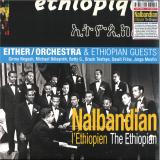
NALBANDIAN THE ETHIOPIAN & EITHER/ORCHESTRA - NALBANDIAN THE ETHIOPIAN (ETHIOPIQUES)

The Éthiopiques series returns! Essential archive recordings from an extremely fruitful period in Ethiopian music.

Before “Swinging Addis” took over the world, there was Moussié Nerses Nalbandian — the Armenian-born composer who shaped modern Ethiopian music. Mentor, arranger, and pioneer, he laid the foundations of Ethio-jazz.

This Éthiopiques volume revives his forgotten legacy, recorded live by Either/ Orchestra First issue ever with new exclusive photos and in depth liner 8-page insert.

“Ethiopian jazzmen are the best musicians that we have seen so far in Africa.
They really are promising handlers of jazz instruments.”

Wilbur De Paris
(1959, after a concert in Addis Ababa)

አዲስ፡ዘመን። *Addis zèmèn* **A new era.**
The time is the mid-1950s and early 1960s, just before "Swinging Addis" bloomed – or rather boomed – onto the scene. Brass instruments are still dominant, but the advent of the electric guitar, and the very first electronic organs, are just around the corner. Rock’n'Roll, R’n’B, Soul and the Twist have not yet barged their way in. Addis Ababa is steeped in the big band atmosphere of the post-war era, with Glenn Miller's *In the* *Mood* as its world-wide theme song, neck and neck with the Latin craze that was in vogue at the same period. Life has become enjoyable once again, with the return of peace after the terrible Italian Fascist invasion of Ethiopia (1935-1941). The redeployment of modern music is part and parcel of the postwar reconstruction. *Addis zèmèn* – a new era – is the watchword of the postwar period, just as it was all across war-torn Europe.
The generation who were the young parents of baby boomers** were the first to enjoy this musical renaissance, before the baby boomers themselves took over and forever super-charged the soundtrack of the final days of imperial reign. Music is Ethiopia's most popular art form, and very often serves as the best barometer for the upsurge of energy that is critical for reconstruction. Whether it be jazz in Saint-Germain-des-Prés or the *zazous* who revolutionised both jazz and French *chanson* after the *Libération*, be it Madrid's post-Franco Movida, or Dada, the Surrealists and *les années folles* that followed World War I, the periods just after mourning and hardship always give rise to brighter and more tuneful tomorrows. Addis Ababa, as the country's capital, and the epicentre of change, was no exception to this vital rule.

**Two generations of Nalbandian musicians**
Nersès Nalbandian belonged to a family of Armenian exiles, who had moved to Ethiopia in the mid-1920s. The uncle Kevork arrived along with the fabled "*Arba Lidjotch*", the** "*40 Kids*", young Armenian orphans and musicians that the Ras Tafari had recruited when he visited Jerusalem in 1924, intending to turn their brass band into the official imperial band. If Kevork Nalbandian was the one who first opened the way of modernism, pushing innovation so far as to invent musical theatre, it was his nephew Nersès who would go on to become, from the 1940s and until his death in 1977, a pivotal figure of modern Ethiopian music and of the heights it. Going all the way back to the 1950s. Nothing less. And it is Nersès who is largely to thank for the brassy colours that so greatly contributed to the international renown of Ethiopian groove. While the younger generations today venture timidly into the genealogy of their country's modern music, often losing their way amidst a distinctly xenophobic historiographical complacency, many survivors of the imperial period are still around to bear witness and pay tribute to the essential role that "Moussié Nersès" played in the rise of Abyssinia's musical modernity.
Given the year of his birth (15 March 1915), no one knows for sure if Nersès Nalbandian was born in Aintab, today Gaziantep (Turkiye/former Ottoman Empire) or on the other side of the border in Alep, Syria... What is certain is that his family, like the entire Armenian community, was amongst the victims of the genocide perpetrated by the Turks. Alep, the place of safety – today in ruins.
Before Nersès then, there was uncle Kevork (1887-1963). For a quarter of a century, he was a whirlwind of activity in music teaching and theatrical innovation. *Guèbrè Mariam le Gondaré* (የጎንደሬ ገብረ ማርያም አጥቶ ማግኘት, 1926 EC=1934) is his most famous creation. This play included "ten Ethiopian songs" — a totally innovative approach. According to his autobiographical notes, preserved by the Nalbandian family, Kevork indicates that he composed some 50 such pieces over the course of his career. This shows just how much he understood, very early on, the critical importance of song as Ethiopia's crowning artistic form. Indeed, for Ethiopian listeners, the most important thing is the lyrics, with all their multifarious mischief, far more than a strong melody, sophisticated arrangements or even an exceptional voice. (This is also why Ethiopians by and large, and beginning with the artists and producers themselves, believed for a long time — and wrongly — that their music could not possibly be exported, and could never win over audiences abroad, who did not speak the country's languages).

Last but not least, one of Kevork's major contributions remains composing Ethiopia's first national anthem – with lyrics by Yoftahé Negussié.
Nersès Nalbandian moved to Ethiopia at the end of the 1930s, at the behest of his ground-breaking uncle. Proficient in many instruments (pretty much everything but the drums), conductor, choir director, composer, arranger, adapter, creator, piano tuner, purveyor of rented pianos,... he was above all an energetic and influential teacher. From 1946 onwards, thanks to Kevork's connexion, Nersès was appointed musical director of the Addis Ababa Municipality Band. In just a few years, Nersès transformed it into the first truly modern ensemble, thanks to the quality of his teaching, his choice of repertoire, and the sophistication of his arrangements. It was this group that would go on to become the orchestra of the Haile Selassie Theatre shortly after its inauguration in 1955, which was a major celebration of the Emperor's jubilee, marking the 25th anniversary of his on-again-off-again reign.

At some point or other in his long career, Nersès Nalbandian had a hand in the creation of just about every institutional band (Municipality Band, Police Orchestra, Imperial Bodyguard Band, Army Band, Yared Music School…), but it was with the Haile Selassie Theatre – today the National Theatre – that his abilities were most on display, up until his death in 1977. To this must be added the development of choral singing in Ethiopia, hitherto unknown, and a sort of secret garden dedicated to the memory of Armenian sacred music, and brought together in two thick, unpublished volumes. Shortly before his death (November 13, 1977), he was appointed to lead the impressive Ethiopian delegation at Festac in Lagos, Nigeria (January-February 1977).

His status as a stateless foreigner regularly excluded him from the most senior positions, in spite of the respect he commanded (and commands to this day) from the musicians of his era. Naturally gifted and largely self-taught, Nerses was tirelessly curious about new musical developments, drawing inspiration from the very first imported records, and especially from listening intensely to the musical programmes broadcast over short-wave radio – BBC *First*. A prolific composer and arranger, he was constantly mindful of formalising and integrating Ethiopian parameters (specific “musical modes”, pentatonic scale, and the dominance of ternary rhythms) into his “modernisation” of the musical culture, rather than trying to over-westernise it. It even seems very probable that *Moussié* Nerses made a decisive contribution to the development of tighter music-teaching methods, in order to revitalise musical education during this period of prodigious cultural ferment. Flying in the face of all the historiographical and musicological evidence, it is taken as sacrosanct dogma that the four musical modes or chords officially recognised today, the *qǝñǝt* or *qiñit* (ቅኝት), are every bit as millennial as Ethiopia itself. It would appear however that some streamlining of these chords actually took place in around 1960. It was only from this time onward that music teaching was structured around these four fundamental musical modes and chords: *Ambassel*, *Bati*, *Tezeta* and *Antchi Hoyé*. A historical and musical “details” that is, apparently, difficult to swallow, especially if that should honour a *foreigner*. Modern Ethiopian music has Nersès to thank for many of its standards and, to this day, it is not unusual for the National Radio to broadcast thunderous oldies that bear unmistakable traces of his outrageously groovy touch.
En stock

Disponible en stock et prêt pour l'expédition

22,06
Blue Lake - The Animal LP

Blue Lake

The Animal LP

12inchTU014LP
Tonal Union
15.01.2026

Blue Lake reveals his most ambitious album yet, which finds its visionary creator Jason Dungan harnessing the collective alchemy of his band, with ten spirited tracks that resonate with a powerful directness, evoking an ecological connection to the wider world.

The solo project (Blue Lake), now on its fifth album, found its name and inspiration via Don Cherry's 1974 live album, sparking a creative epiphany in Dungan, who set off on a path into his own untapped sonic world, guided by what he cited as the emotional potential found within non-lyrical composition. With a newly inspired ethos aimed toward creating direct and simple instrumental music imbued with a deep sense of feeling, Jason began combining an array of musical elements that gave rise to his highly revered album 'Sun Arcs' (2023), with its "ornate, zither-led lattices" (Pitchfork, Best New Music). Conceived in the blissful isolation of a Swedish cabin set in the woods, this was music that soundtracked spring in full bloom. Then, in contrast to the solitary approach of 'Sun Arcs', the highly lauded mini-album 'Weft' (2025) began to set the tone for a more band-oriented approach to delivering the Blue Lake sound. Jason had by this time experienced a special collective energy with his band during a swathe of live performances, which he then sought to harness and distill on 'The Animal', leading him to take the project into a traditional recording studio (The Village) and its limitless potential along with his gifted cohorts.

'The Animal' at its core vividly celebrates human collaboration and is deeply rooted in a sense of community and non-hierarchical connectivity. The group's creative alchemy transcends outwards and beyond the musicians performing together, to summon an inclusive, existential and ecological connection to the wider world and its inhabited spaces. The album contemplates the idea of the human as an animal as Dungan explains: "I'm quite fascinated in thinking about humans more as part of the animal environment and not as something that's so separated into a "human" realm, or sitting on top of a hierarchical pyramid. So the Animal is also me, or us - that we are just living, existing, in the same way as a piece of moss or a sparrow or a cow.

'The Animal' is a form of musical metamorphosis, still acoustic, yet more amplified, elevating it to new dimensions. The Blue Lake project takes on a new lease of life to encompass collaboration with Jason Dungan bound in a universal connectivity, resulting in his most ambitious album to date. A harmonious rejoicing that cements his reputation as a transformative presence in contemporary music.

En stock

Disponible en stock et prêt pour l'expédition

23,32
Articles par page:
N/ABPM
Vinyl