Opaque pink vinyl LP. For fans of: Tirzah, Caroline Polachek, Erika de Casier, Oklou, Smerz. Between the ages of 2 and 18, Cora Gilroy-Ware lived in a haunted place. On the outside, this small edge of Connecticut coastline was a quintessential New England town. Yet beneath its quaint surface was a netherworld that got steadily darker over the course of those sixteen years. From a serious drug problem to environmental pollution leading to deadly illnesses, frequent suicides and an above average number of fatal accidents, something about this place was cursed. Amid this world Cora was an outsider, someone who preferred pop and RnB to the music of her peers, who mostly subscribed to the dregs of a Deadhead culture that was more nihilistic than utopian. Still, she found herself on weekends drinking in the woods with the rest of them, playing along until it was time to leave. Christmas breaks and summer months were spent across the Atlantic in a completely antithetical environment. In London, the city of her birth, Cora spent her teen years taking the bus home at dawn after raves under the railroad arches, or riding the tube to her cousin’s house in Camden. For a long time, Cora’s life was composed of these two strands—ghostly East Coast suburbia and inner-city London—which she was forced to fold in and out of one another like a two-strand French braid. She quickly learned to adapt and be whoever the particular moment demanded. Her outsider status was intensified by the fact that, being of mixed Afro-Caribbean and European descent, her family didn’t look like the others in Connecticut. In the 2000s, this meant Cora had to contend with a deeply ingrained kind of folk-racism, both conscious and unconsciously expressed. Nobody talked about these things back then, and she internalized a lot of shame. The ability to shape-shift became integral to Cora’s artistic practice. Her survival mechanism at school was to carve out her own worlds through visual art and dance. Music was less of a creative outlet than a way of life, something like a form of religion for her family, who all played instruments and saw music as the form to which all art aspires. She studied violin and learned enough guitar chords to write her first songs. Cora always wanted to be a performer, but, having moved around constantly, craved stability and independence. Eager to make her own way in the world, she began to write about painting and sculpture, which eventually led to time spent working in Naples, Italy and a day job teaching the History of Art at university level. It wasn’t until 2018 that Cora first shared her first songs with the wider world. Having collaborated and played live with Jam City (Jack Latham, who has co-produced each of her releases), she finally embarked on a solo career, which for her felt inevitable, only a matter of time. Following four acclaimed EPs—Toxic Femininity (2018), Lashes in a Landfill (2019), Dreamcatcher (2020) and Maiden No More (2021), this year will see the release of her debut album The Golden Ass. For her artist name she chose, “Fauness”: a play on the Latin faunus, a woodland god with the body of a man and the horns, ears, and legs of a goat. The feminine equivalent—fauness—is a modern invention, made up by rococo sculptors in 18th century France. Cora was drawn to this pseudonym because of its temporal layers and amalgamation of beauty and beast, which, for her, captures something of her complex personal story. an utterly individual voice in underground pop music" - The FADER // "a sparkling sweet pop ride" – NYLON // “It is hard to write a perfect pop song. It’s even harder to make it look as easy as London artist Fauness” - GUARDIAN GUIDE // Tracks 01. Lonely 02. Mystery 03. Peaches 04. Hours 05. Siena 06. Grape & Grain 07. Laura 08. High 09. Cinnamon 10. Girl In The Moon
Search:talk back
Moody Blue Vinyl. RIYL: Codeine, Mazzy Star, Bedhead, Red House Painters, Low & American Music Club. Previously unreleased 16-track recordings that predates Spain’s 1995's landmark “The Blue Moods Of Spain". Includes original studio version of "World Of Blue" featuring Petra Haden on violin. Re-mixed and re-imagined by Kramer for Shimmy-Disc. The LP “World of Blue” features Merlo Podlewski on guitar. I first met Merlo in 1994. My sister Rachel Haden, who had been working with him at the Rhino Records store in Westwood, knew I was looking for a new guitarist for my band, and introduced us. Merlo is one of those guitarists whose playing is so smooth and effortless he makes anyone feel like they can play. He had an instinctual grasp of harmony and theory, which brought a great counterpoint to the technical knowledge and finesse of lead guitarist Ken. Spain played their first official L.A. gig with Merlo at a club called Pan, which shortly thereafter changed its name to Spaceland. We opened for Beck and That Dog. We played at Spaceland a lot and at other small clubs and coffee joints like the Troy Cafe (owned by Beck’s mom), Congo Square Coffee House in Santa Monica, Alligator Lounge, and others. At a certain point that year we were ready to record our first 7” single, and I reserved some time at Poop Alley. Poop Alley didn’t seem like the ideal recording setting. The walls and floors were made of concrete, and there was no soundproofing. The mixing board was in a loft up this steep staircase with no guard rails. But it worked somehow. On the particular day we recorded basics there was a rain storm which you can clearly hear in the background. The ceiling was so high there almost wasn’t a ceiling. A steep curving staircase with no guardrail led up to a loft area where the console was located, and next to it, on a custom-built, guardrail-less ledge, a queen-sized bed where Tom slept. I paid for the session with weed I grew in my closet. We set up and it started raining. Tom put a microphone outside. After tracking was finished, Petra came over and overdubbed violin. There was a cushioned area where I remember sitting during mixdown. We stayed good friends with Tom. We recorded a couple more songs with him the following year. Tom recorded lots of bands at Poop Alley. My sisters’ band That Dog, Beck, the Rentals, Rod Poole, Tom’s band Waldo the Dog Faced Boy, and many others. There were parties in the alley. There would be a keg of beer. Everyone was well-behaved. The most dangerous it got was when Kenny asked Beck if he was a Scientologist. I remember laughter and happiness the most from those parties. Not long afterwards Tom shut down the studio. Luckily for us, the tapes still exist. On those tapes are five songs, all of which are represented here. “I Lied” and “Her Used-To-Been” were released on the 7”, the remaining three have never been released before now. I can’t remember who I sent copies of the 7” to but shortly after it came out I got a call from an A&R executive at Geffen inviting me to their offices to talk. “I love your songs,” I remember him saying to me, “but my boss David Geffen won’t let me sign you because he doesn’t know how to market you.” Eventually a label that did want to sign us got in touch with me. Restless Records, they had decent distribution, so I said to myself, “Why not?”. This eventually led to the recording that produced our debut LP “Blue Moods of Spain”. Track listing: A1. Her Used-To-Been A2. Phone Machine A3. I Lied B1. Dreaming of Love B2. World of Blue
Daniel Barenboim will turn 80 on November 15th. Warner Classics are celebrating the great musician, who has had tremendous success since the ‘60s both at the piano or conducting, with an album made in the mid-90s that is close to his heart and Argentinian origins, though aside of the classical repertoire. Tangos Among Friends - Mi Buenos Aires Querido (named after a tango by Carlos Gardel) proves again all the talent and swing Daniel Barenboim has, and has been a huge success since released by Teldec on CD in 1996.
“I spent the first nine years of my life in Argentina and only in Argentina. The rest of the world was far away. Everything Argentinian was close to my heart. The concepts of cosmopolitan existence or international thinking were not yet awakened. The air that I breathed was Buenos Aires, the language that I spoke was Spanish porteño and the rhythm to which I danced (figuratively speaking…) was the tango! My idol was Carlos Gardel. Nearly half a century later I came back not only to Argentina, not only to my childhood but especially to my Buenos Aires querido and many other wonderful melodies that make up this sentimental record.”
Daniel Barenboim – from album booklet
In an interview made in the 90s, Daniel Barenboim added: “In Argentina during the late 1940s there was no chasm between classical music and the tango, in the way there was a chasm between classical music and jazz. The tango is a basic part of Argentine popular culture; when you went to a restaurant or a party, that was the music you would hear. (…) Already as a child I was crazy about the tango. I still am.”
“The young Daniel found himself drawn to the bittersweet tales of passion, tragedy and nostalgia sung by Gardel, the tango singer and songwriter who exerted a major influence in popularizing the tango throughout the Western hemisphere and Europe. (…) Over the following decades Barenboim would regale friends at home or at parties with piano arrangements of tangos he heard in his youth. (…) Barenboim never thought of sharing his passion for tangos with the public until last year when he had returned to Buenos Aires for concerts with his Berlin Staatskapelle orchestra. At a reception he found himself talking tangos with a young Argentine. Learning of Barenboim’s interest in performing them, he offered to drum up a few local musicians with whom Barenboim could play tangos at home. That’s how he met Mederos and Console. “The first day we just played for fun,” Barenboim says. “Then we decided to make a recording. So we rehearsed for two days and made the record in one afternoon.” (…) Once he, Mederos and Console set out to record their tango program, Barenboim was surprised at how much of the characteristic tango rubato – a subtle alteration of rhythmic weight and accent – he still had at his fingertips, more than four decades after leaving Buenos Aires. That said, he insists on sharing credit for the success of the disc with his Argentine colleagues. “What they gave me was a pure sense of the tango, especially in the melodic freedom over a very strict rhythmic foundation. Performing tangos, you are constantly anticipating the downbeat or coming after it; this is part of the tradition. What I gave them was the necessity to rethink certain aspects – say, the volume and transparency of sound – so that playing tangos didn’t sound routine.”
– The Chicago Tribune, Oct. 1996
- A1: Dua Lipa - Be The One
- A2: Avicii - Hey Brother
- A3: James Bay - Hold Back The River
- A4: Jessie J - Price Tag
- A5: Niall Horan - Slow Hands
- A6: Dermot Kennedy - Power Over Me
- A7: Years & Years - King
- B1: Katy Perry - Roar
- B2: Sheppard - Geronimo
- B3: Of Monsters & Men - Little Talks
- B4: The Weeknd - Starboy
- B5: Scouting For Girls - This Ain't A Love Song
- B6: Neon Trees - Animal
- B7: Lana Del Rey - Blue Velvet
- C1: Miley Cyrus - Malibu
- C2: Axwell & Ingrosso - More Than You Know
- C3: Dnce - Cake By The Ocean
- C4: Lorde - Royals
- C5: Mike Posner - I Took A Pill In Ibiza (Seeb Remix)
- C6: Ellie Goulding - Love Me Like You Do
- C7: Hozier - Take Me To Church
- D1: Bruno Mars - Locked Out Of Heaven
- D2: Icona Pop - I Love It
- D3: Tom Walker - Leave A Light On
- D8: The Teskey Brothers - Hold Me
- D4: American Authors - Best Day Of My Life
- D5: Tove Lo - Stay High (Feat Hippie Sabotage - Habits Remix)
- D6: Sam Smith - Stay With Me
- D7: Bastille - Pompeii
The Decades Collected compilations are part of the new Collected compilation series, which is a collaboration between Universal Music and Music On Vinyl. The compilations bring together the biggest names of each decade, combined with forgotten hits and less discovered gems, giving the listener an experience of listening to their favorite tunes while uncovering new musical grounds at the same time.
Various Artists - Tens Collected features Sam Smith “Stay With Me”, Lorde “Royals”, The Weeknd “Starboy”, Dua Lipa “Be The One”, Niall Horan “Slow Hands” and Ellie Goulding “Love Me Like You Do” amongst others.
+ 10 Tracks for download
Preceded by the successive releases of lead singles "Sandcastles" and "My Mind", here comes the versatile debut full-length offering from Tel-Aviv-based producer Kadosh on Stil vor Talent, "Unanimously". Bridging the club universe with that of deeper, further immersive off-floor narratives, Kadosh entices us down a compelling path of rhythmic enlightenment and all-embracing togetherness. Casting mutable strains of EBM, house, pop and exotica entangled in one dizzying polyphony throughout the album, the Israeli vibist has us surfing our way across his musical headspace effortlessly.
From the stealth, neo-noir-like opening sequence of "Interstellar" feat. Marc Piñol to the epic Luso-Italo vibrations of "Sandcastles" feat. vocal hoodooist Abra~o, via the exquisite Afro-informed piano house and all-round atmospheric luxuriance of "My Mind" feat. Floyd Lavine and Erika Krall's supremely smooth yet characterful timbre, Kadosh swings the pendulum with constant surprise and bravura. Aside from his compositions' obvious hooking nature, there's also great lots of textural back funk to dive in at every corner. Hauntingly transporting, "From Jaffa to Frederichshain" feat. Upon You's Marco Resmann works a more jagged programming, flush with big-room reverbs and muted drums, while the slo-evolving "Pronto" feat. Emanuel Satie morphs from a low-key DJ tool into a full-fledged, melancholy-charged peak-time burner.
Bearing both Kadosh and David Mayer's signature, "1999" lets the 80s-inherited arsenal of iridescent Casio synths and lashing percussions talk in unhindered fashion, whereas "Volantage" feat. Murat Uncuoglu goes all in on the trampling kicks, sooty claps and prismatic keyboard stabs. Sensual to the fullest, "Moran" in collaboration with Rodriguez Jr. is certainly one of the album's highlights with its impeccably laid-down melange of bassy thunder and shapely Latin rhythmic backbone ushering us down an irresistibly poignant and hypnotic tunnel of sound. A joint effort with Locked Groove, "Far Too Close" is a further loopy discoid affair reminiscent of the French filtered-house scene's heyday, while the album's closer "Think it Over" feat. Stereo MC's is that perfect pop-indebted electro chugger that'll rev up any tired engine with reinvigorated, ecstasy-inducing horsepower.
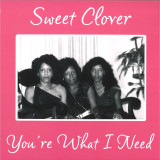
Kalita presents the first ever official reissue of Sweet Clover's highly sought-after 1979 disco single "You're What I Need', backed by an unreleased extended mix and the equally impressive 'Sweet Talk', sourced from the original master tapes.
With original copies released in a run of just 300 copies and now hitting top three-figure sums on the rare occasion that they come up for sale, Kalita finally serve up a chance to obtain this lo-fi disco masterpiece once again.
Accompanied by a never-before-seen photo of the band and liner notes based on interviews with writer and producer Willie McClain, this is another no-brainer from the Kalita camp.
“Haunting vocals backed up by an intimate guitar” -
Rolling Stone
“With its icy charms unfolding at a devastating
pace, this marks the emergence of a bold new
talent” - Clash Magazine
‘they only talk about the weather’ is an album of
acute emotional exploration. It’s Arny’s coming-ofage journey, from writing in school, staring out of
dorm room windows, being on the road, to today.
With poetic proficiency and a knack for composing
melodies that bury themselves deep into the
subconscious, Arny writes of loneliness and
existentialism with stark relatability. There’s a quiet
confidence that comes from these tracks; crystal
clear in their conception, completely honest, and
masterfully arranged.
She walks us through her relationships growing up
and her realisations about other people as well as
herself. We listen as she unpacks herself to a
backdrop of vividly painted natural landscapes.
Pink vinyl LP.
- A1: Rock This Mother
- A2: Talk To Me Girl
- A3: You Can Find Me
- A4: Check This Out
- A5: Jesus Going To Clean House
- A6: Hope You Understood
- A7: Is It What You Want
- A8: Love Is Everlasting
- A9: This Is Hip-Hop Art
- A10: Opposite Of Love
- A11: Do You Know What I Mean
- B1: Saving All My Love For You
- B2: Look Out Here I Come
- B3: Girl You Always Talking
- B4: Have A Great Day
- B5: Take My Hand
- B6: I Need Your Love
- B7: Your Town
- B8: Talk Around Town
- B9: Booty Head/Take A Little Walk
- B10: I Love My Mama
- B11: I Never Found Anyone Like You
Vinyl LP[23,49 €]
As the sun sets on a quaint East Nashville house, a young man bares a piece of his soul. Facing the camera, sporting a silky suit jacket/shirt/slacks/fingerless gloves ensemble that announces "singer" before he's even opened his mouth, Lee Tracy Johnson settles onto his stage, the front yard. He sways to the dirge-like drum machine pulse of a synth-soaked slow jam, extends his arms as if gaining his balance, and croons in affecting, fragile earnest, "I need your love… oh baby…"
Dogs in the yard next door begin barking. A mysterious cardboard robot figure, beamed in from galaxies unknown and affixed to a tree, is less vocal. Lee doesn't acknowledge either's presence. He's busy feeling it, arms and hands gesticulating. His voice rises in falsetto over the now-quiet dogs, over the ambient noise from the street that seeps into the handheld camcorder's microphone, over the recording of his own voice played back from a boombox off-camera. After six minutes the single, continuous shot ends. In this intimate creative universe there are no re-takes. There are many more music videos to shoot, and as Lee later puts it, "The first time you do it is actually the best. Because you can never get that again. You expressing yourself from within."
"I Need Your Love" dates from a lost heyday. From some time in the '80s or early '90s, when Lee Tracy (as he was known in performance) and his music partner/producer/manager Isaac Manning committed hours upon hours of their sonic and visual ideas to tape. Embracing drum machines and synthesizers – electronics that made their personal futurism palpable – they recorded exclusively at home, live in a room into a simple cassette deck. Soul, funk, electro and new wave informed their songs, yet Lee and Isaac eschewed the confinement of conventional categories and genres, preferring to let experimentation guide them.
"Anytime somebody put out a new record they had the same instruments or the same sound," explains Isaac. "So I basically wanted to find something that's really gonna stand out away from all of the rest of 'em." Their ethos meant that every idea they came up with was at least worth trying: echoed out half-rapped exhortations over frantic techno-style beats, gospel synth soul, modal electro-funk, oddball pop reinterpretations, emo AOR balladry, nods to Prince and the Fat Boys, or arrangements that might collapse mid-song into a mess of arcade game-ish blips before rallying to reach the finish line. All of it conjoined by consistent tape hiss, and most vitally, Lee's chameleonic voice, which managed to wildly shape shift and still evoke something sincere – whether toggling between falsetto and tenor exalting Jesus's return, or punctuating a melismatic romantic adlib with a succinct, "We all know how it feels to be alone."
"People think we went to a studio," says Isaac derisively. "We never went to no studio. We didn't have the money to go to no studio! We did this stuff at home. I shot videos in my front yard with whatever we could to get things together." Sometimes Isaac would just put on an instrumental record, be it "Planet Rock" or "Don't Cry For Me Argentina" (from Evita), press "record," and let Lee improvise over it, yielding peculiar love songs, would-be patriotic anthems, or Elvis Presley or Marilyn Monroe tributes. Technical limitations and a lack of professional polish never dissuaded them. They believed they were onto something.
"That struggle," Isaac says, "made that sound sound good to me."
In the parlance of modern music criticism Lee and Isaac's dizzying DIY efforts would inevitably be described as "outsider." But "outsider" carries the burden of untold additional layers of meaning if you're Black and from the South, creating on a budget, and trying to get someone, anyone within the country music capital of the world to take your vision seriously. "What category should we put it in?" Isaac asks rhetorically. "I don't know. All I know is feeling. I ain't gonna name it nothing. It's music. If it grabs your soul and touch your heart that's what it basically is supposed to do."
=
Born in 1963, the baby boy of nine siblings, Lee Tracy spent his earliest years living amidst the shotgun houses on Nashville's south side. "We was poor, man!" he says, recalling the outhouse his family used for a bathroom and the blocks of ice they kept in the kitchen to chill perishables. "But I actually don't think I really realized I was in poverty until I got grown and started thinking about it." Lee's mom worked at the Holiday Inn; his dad did whatever he had to do, from selling fruit from a horse drawn cart to bootlegging. "We didn't have much," Lee continues, "but my mother and my father got us the things we needed, the clothes on our back." By the end of the decade with the city's urban renewal programs razing entire neighborhoods to accommodate construction of the Interstate, the family moved to Edgehill Projects. Lee remembers music and art as a constant source of inspiration for he and his brothers and sisters – especially after seeing the Jackson 5 perform on Ed Sullivan. "As a small child I just knew that was what I wanted to do."
His older brother Don began musically mentoring him, introducing Lee to a variety of instruments and sounds. "He would never play one particular type of music, like R&B," says Lee. "I was surrounded by jazz, hard rock and roll, easy listening, gospel, reggae, country music; I mean I was a sponge absorbing all of that." Lee taught himself to play drums by beating on cardboard boxes, gaining a rep around the way for his timekeeping, and his singing voice. Emulating his favorites, Earth Wind & Fire and Cameo, he formed groups with other kids with era-evocative band names like Concept and TNT Connection, and emerged as the leader of disciplined rehearsals. "I made them practice," says Lee. "We practiced and practiced and practiced. Because I wanted that perfection." By high school the most accomplished of these bands would take top prize in a prominent local talent show. It was a big moment for Lee, and he felt ready to take things to the next level. But his band-mates had other ideas.
"I don't know what happened," he says, still miffed at the memory. "It must have blew they mind after we won and people started showing notice, because it's like everybody quit! I was like, where the hell did everybody go?" Lee had always made a point of interrogating prospective musicians about their intentions before joining his groups: were they really serious or just looking for a way to pick up girls? Now he understood even more the importance of finding a collaborator just as committed to the music as he was.
=
Isaac Manning had spent much of his life immersed in music and the arts – singing in the church choir with his family on Nashville's north side, writing, painting, dancing, and working various gigs within the entertainment industry. After serving in the armed forces, in the early '70s he ran The Teenage Place, a music and performance venue that catered to the local youth. But he was forced out of town when word of one of his recreational routines created a stir beyond the safe haven of his bohemian circles.
"I was growing marijuana," Isaac explains. "It wasn't no business, I was smoking it myself… I would put marijuana in scrambled eggs, cornbread and stuff." His weed use originated as a form of self-medication to combat severe tooth pain. But when he began sharing it with some of the other young people he hung out with, some of who just so happened to be the kids of Nashville politicians, the cops came calling. "When I got busted," he remembers, "they were talking about how they were gonna get rid of me because they didn't want me saying nothing about they children because of the politics and stuff. So I got my family, took two raggedy cars, and left Nashville and went to Vegas."
Out in the desert, Isaac happened to meet Chubby Checker of "The Twist" fame while the singer was gigging at The Flamingo. Impressed by Isaac's zeal, Checker invited him to go on the road with him as his tour manager/roadie/valet. The experience gave Isaac a window into a part of the entertainment world he'd never encountered – a glimpse of what a true pop act's audience looked like. "Chubby Checker, none of his shows were played for Black folks," he remembers. "All his gigs were done at high-class white people areas." Returning home after a few years with Chubby, Isaac was properly motivated to make it in Music City. He began writing songs and scouting around Nashville for local talent anywhere he could find it with an expressed goal: "Find someone who can deliver your songs the way you want 'em delivered and make people feel what you want them to feel."
One day while walking through Edgehill Projects Isaac heard someone playing the drums in a way that made him stop and take notice. "The music was so tight, just the drums made me feel like, oh I'm-a find this person," he recalls. "So I circled through the projects until I found who it was.
"That's how I met him – Lee Tracy. When I found him and he started singing and stuff, I said, ohhh, this is somebody different."
=
Theirs was a true complementary partnership: young Lee possessed the raw talent, the older Isaac the belief. "He's really the only one besides my brother and my family that really seen the potential in me," says Lee. "He made me see that I could do it."
Isaac long being a night owl, his house also made for a fertile collaborative environment – a space where there always seemed to be a new piece of his visual art on display: paintings, illustrations, and dolls and figures (including an enigmatic cardboard robot). Lee and Issac would hang out together and talk, listen to music, conjure ideas, and smoke the herb Isaac had resumed growing in his yard. "It got to where I could trust him, he could trust me," Isaac says of their bond. They also worked together for hours on drawings, spreading larges rolls of paper on the walls and sketching faces with abstract patterns and imagery: alien-like beings, tri-horned horse heads, inverted Janus-like characters where one visage blurred into the other.
Soon it became apparent that they didn't need other collaborators; self-sufficiency was the natural way forward. At Isaac's behest Lee, already fed up with dealing with band musicians, began playing around with a poly-sonic Yamaha keyboard at the local music store. "It had everything on it – trumpet, bass, drums, organ," remembers Lee. "And that's when I started recording my own stuff."
The technology afforded Lee the flexibility and independence he craved, setting him on a path other bedroom musicians and producers around the world were simultaneously following through the '80s into the early '90s. Saving up money from day jobs, he eventually supplemented the Yamaha Isaac had gotten him with Roland and Casio drum machines and a Moog. Lee was living in an apartment in Hillside at that point caring for his dad, who'd been partially paralyzed since early in life. In the evenings up in his second floor room, the music put him in a zone where he could tune out everything and lose himself in his ideas.
"Oh I loved it," he recalls. "I would really experiment with the instruments and use a lot of different sound effects. I was looking for something nobody else had. I wanted something totally different. And once I found the sound I was looking for, I would just smoke me a good joint and just let it go, hit the record button." More potent a creative stimulant than even Isaac's weed was the holistic flow and spontaneity of recording. Between sessions at Isaac's place and Lee's apartment, their volume of output quickly ballooned.
"We was always recording," says Lee. "That's why we have so much music. Even when I went to Isaac's and we start creating, I get home, my mind is racing, I gotta start creating, creating, creating. I remember there were times when I took a 90-minute tape from front to back and just filled it up."
"We never practiced," says Isaac. "See, that was just so odd about the whole thing. I could relate to him, and tell him about the songs I had ideas for and everything and stuff. And then he would bring it back or whatever, and we'd get together and put it down." Once the taskmaster hell bent on rehearsing, Lee had flipped a full 180. Perfection was no longer an aspiration, but the enemy of inspiration.
"I seen where practicing and practicing got me," says Lee. "A lot of musicians you get to playing and they gotta stop, they have to analyze the music. But while you analyzing you losing a lot of the greatness of what you creating. Stop analyzing what you play, just play! And it'll all take shape."
=
"I hope you understood the beginning of the record because this was invented from a dream I had today… (You tell me, I'll tell you, we'll figure it out together)" – Lee Tracy and Isaac Manning, "Hope You Understand"
Lee lets loose a maniacal cackle when he acknowledges that the material that he and Isaac recorded was by anyone's estimation pretty out there. It's the same laugh that commences "Hope You Understand" – a chaotic transmission that encapsulates the duality at the heart of their music: a stated desire to reach people and a compulsion to go as leftfield as they saw fit.
"We just did it," says Lee. "We cut the music on and cut loose. I don't sit around and write. I do it by listening, get a feeling, play the music, and the lyrics and stuff just come out of me."
The approach proved adaptable to interpreting other artists' material. While recording a cover of Whitney Houston's pop ballad "Saving All My Love For You," Lee played Whitney's version in his headphones as he laid down his own vocals – partially following the lyrics, partially using them as a departure point. The end result is barely recognizable compared with the original, Lee and Isaac having switched up the time signature and reinvented the melody along the way towards morphing a slick mainstream radio standard into something that sounds solely their own.
"I really used that song to get me started," says Lee. "Then I said, well I need something else, something is missing. Something just came over me. That's when I came up with 'Is It What You Want.'"
The song would become the centerpiece of Lee and Isaac's repertoire. Pushed along by a percolating metronomic Rhythm King style beat somewhere between a military march and a samba, "Is It What You Want" finds Lee pleading the sincerity of his commitment to a potential love interest embellished by vocal tics and hiccups subtlely reminiscent of his childhood hero MJ. Absent chord changes, only synth riffs gliding in and out like apparitions, the song achieves a lingering lo-fi power that leaves you feeling like it's still playing, somewhere, even after the fade out.
"I don't know, it's like a real spiritual song," Lee reflects. "But it's not just spiritual. To me the more I listen to it it's like about everything that you do in your everyday life, period. Is it what you want? Do you want a car or you don't want a car? Do you want Jesus or do you want the Devil? It's basically asking you the question. Can't nobody answer the question but you yourself."
In 1989 Lee won a lawsuit stemming from injuries sustained from a fight he'd gotten into. He took part of the settlement money and with Isaac pressed up "Saving All My Love For You" b/w "Is It What You Want" as a 45 single. Isaac christened the label One Chance Records. "Because that's all we wanted," he says with a laugh, "one chance."
Isaac sent the record out to radio stations and major labels, hoping for it to make enough noise to get picked up nationally. But the response he and Lee were hoping for never materialized. According to Isaac the closest the single got to getting played on the radio is when a disk jock from a local station made a highly unusual announcement on air: "The dude said on the radio, 107.5 – 'We are not gonna play 'Is It What You Want.' We cracked up! Wow, that's deep.
"It was a whole racist thing that was going on," he reflects. "So we just looked over and kept on going. That was it. That was about the way it goes… If you were Black and you were living in Nashville and stuff, that's the way you got treated." Isaac already knew as much from all the times he'd brought he and Lee's tapes (even their cache of country music tunes) over to Music Row to try to drum up interest to no avail.
"Isaac, he really worked his ass off," says Lee. "He probably been to every record place down on Music Row." Nashville's famed recording and music business corridor wasn't but a few blocks from where Lee grew up. Close enough, he remembers, for him to ride his bike along its back alleys and stumble upon the occasional random treasure, like a discarded box of harmonicas. Getting in through the front door, however, still felt a world away.
"I just don't think at the time our music fell into a category for them," he concedes. "It was before its time."
=
Lee stopped making music some time in the latter part of the '90s, around the time his mom passed away and life became increasingly tough to manage. "When my mother died I had a nervous breakdown," he says, "So I shut down for a long time. I was in such a sadness frame of mind. That's why nobody seen me. I had just disappeared off the map." He fell out of touch with Isaac, and in an indication of just how bad things had gotten for him, lost track of all the recordings they'd made together. Music became a distant memory.
Fortunately, Isaac kept the faith. In a self-published collection of his poetry – paeans to some of his favorite entertainment and public figures entitled Friends and Dick Clark – he'd written that he believed "music has a life of its own." But his prescience and presence of mind were truly manifested in the fact that he kept an archive of he and Lee's work. As perfectly imperfect as "Is It What You Want" now sounds in a post-Personal Space world, Lee and Isaac's lone official release was in fact just a taste. The bulk of the Is It What You Want album is culled from the pair's essentially unheard home recordings – complete songs, half-realized experiments, Isaac's blue monologues and pronouncements et al – compiled, mixed and programmed in the loose and impulsive creative spirit of their regular get-togethers from decades ago. The rest of us, it seems, may have finally caught up to them.
On the prospect of at long last reaching a wider audience, Isaac says simply, "I been trying for a long time, it feels good." Ever the survivor, he adds, "The only way I know how to make it to the top is to keep climbing. If one leg break on the ladder, hey, you gotta fix it and keep on going… That's where I be at. I'll kill death to make it out there."
For Lee it all feels akin to a personal resurrection: "It's like I was in a tomb and the tomb was opened and I'm back… Man, it feels so great. I feel like I'm gonna jump out of my skin." Success at this stage of his life, he realizes, probably means something different than what it did back when he was singing and dancing in Isaac's front yard. "What I really mean by 'making it,'" he explains isn't just the music being heard but, "the story being told."
Occasionally Lee will pull up "Is It What You Want" on YouTube on his phone, put on his headphones, and listen. He remembers the first time he heard his recorded voice. How surreal it was, how he thought to himself, "Is that really me?" What would he say to that younger version of himself now?
"I would probably tell myself, hang in there, don't give up. Keep striving for the goal. And everything will work out."
Despite what's printed on the record label, sometimes you do get more than one chance.

Balamii resident and Sticky Tapes-founder Theo Everyday arrives with a huge debut on Cheeky Sneakers, seamlessly blending the worlds of jungle, electro and trance with his signature sauce of nostalgic and futuristic hyper-funk.
Having curated the Sticky Tapes mix series and label - supporting music from artists such as Stones Taro, Om Unit, Jossy Mitsu and Lobster Theremin label head Asquith - the DJ and producer knows a thing or two about merging differing styles and energies. The Holsten FM EP plays out like a three hour club set; placing classic UK sounds at its foundation and throwing multi-coloured paint all over them.
'The Way You Feel' makes use of the pitched-vocal, SoundCloud hyper-pop aesthetic with hardcore-piano stabs and heartstring-tugging cheese wrapped within a huge low-end swinging bassline. A great lights-up tool to leave them with a smile on their face. The classic rave energy is maintained on the EP title track - a stripped-back cut of ragga jungle-step that's as meditative as it is devastating.
From golden-era rave and jungle future-mutations to heads-down club sounds, 'Every Body's Talking (Well Let's Talk)' is a strobe-light power sequence for when things are in full swing, before 90s breakbeat and trance join forces on a 'Six and Two Threes' hands-in-the-air moments.
Breaks-littered dream sequences that feel like a warm hug follow on 'Summer Lie In' - its chopped melodies and stirring atmospherics causing ripples within the pond of paradise - before 'Mod Cons' closes with a squelching cut of acid-electro on a killer digi-only exclusive.
- 1: We Will Meet In A Hurricane
- 2: Walk Through Fire (Feat. Amiee Interrupter Of The Interrupters)
- 3: Longer Days In Shorter Years
- 4: Birds Of A Feather (Feat. Ashleigh Ball)
- 5: Beyond Four Walls
- 6: Man From Cascades
- 7: Something Lost + Something Found
- 8: Shine On (Feat. Marcia From The Skints)
- 9: A Torn Jacket With Silver Lining
- 10: Margie, Do Your Best
- 11: Hard Road
- 12: Into The Black…
As this album represents a spiritual return to a foundational past, sonically this record is likewise about going back to our fundamentals and our roots; when Eon and I were two kids with guitars in a bedroom figuring out some songs. Our last album, Mass, featured so many parts. We recorded it in New Orleans at Preservation Hall with a thirteen-piece horn section, percussionists, strings, etc. For the most part, it’s tough to find any guitar on the record. So we decided to simplify and reconnect with what inspired us. We kept the ingredients limited, the palate simple. We went back to our beginnings and rediscovered the joy of just playing on an acoustic, and a bass through a small amp, with a vocal. We spent our days like we used to when we were younger. We hung out and talked about music. If it was sunny we went to the beach. We played some tennis. Then in the afternoon we might play through some ideas. If it sounded good in the front room of the house, we took it to the studio.
Hand Stamped, Hand numbered, Limited press, with insert.
An oddly familiar/familiarly odd entity floating about the relatively cohesive surface of contemporary electronic music, Belgium-via-Italy based duo Front De Cadeau has been knocking genres askew and blowing overused terminologies out of the water with unrelenting panache over the past decade. Championing a sound unmoored by vanishing trends and cross-pollinating approaches, F2C punch back in on Antinote with their anticipated debut album, “We Slowly Riot”, an 8-track mishmash of tunes previously released and not.
Bastardizing tried-and-tested rave tropes by slowing the tempo down to barely recognizable shapes and contours, Hugo Sanchez and Maurizio Ferrara dish out a new high in their ever expanding discography. Free-falling down the K-hole with no parachute on, “La Ketamine” burns slow but steady. A practically immersive dub filled with processed minutiae and vibrational drums out a mystic forest, it’s a helluva trippy post-industrial joint that unfolds, heady and empyreumatic to the bone. “We Slowly Rot” puts on offer a buggy script-like swing, adorned with F2C’s trademark blend of spoken word and jacuzzi-warm vibes, whereas “There is Something Wrong” steers us into further sizzling, syncopated groove territories through a fevered meshwork of sliced-and-diced vox samples, overheated machine talk and primitive percussions on a African Headcharge tip.
Draped in eerie, 8-bit-infused layers and Arabian Nights ambiences, “Slam is Slam” treats us to a spookily fun Oriental mix of hot-tempered darbukkahs and FX-soaked riffs. The outrageously sensual “Ouvre Ta Bouche” is a tactile invitation to get down in some dark alcove of sorts and more if you hit it off. A steely dub primed for post-party divagations, “Climate Change” slowly veers off into verbed-out industrial jazz as bars run by, while “Legal Illegal” cuts a path of acid-dipped dancehall from outer-space across the club. Last but not least, Jewish clarinets quietly move along waves of sedated bass on “Casa Gaza”, rounding it all off on a dreamy, cinematic note that serenely phases into a liquid-like roller over one solidly deeper-than-deep home stretch.
Surprise Chef’s music is based on evoking mood; their vivid arrangements utilize time and space to build soundscapes that invite the listener into their world. The quintet’s distinct sound pulls from 70s film scores, the funkier side of jazz, and the samples that form the foundation of hip hop. They push the boundaries of instrumental soul and funk with their own approach honed by countless hours in the studio, studying the masters, and perhaps most importantly, the “tyranny of distance” that dictates a unique perspective to their music. Hailing from just outside of Melbourne, Australia their first two albums, All News Is Good News and Daylight Savings amassed a die-hard fanbase and brought their sound from their home studio to every corner of the globe. The band is now signed to Big Crown Records, joining a lineage of contemporary and classic sounds that have influenced Surprise Chef’s music since their formation in 2017. Surprise Chef is Lachlan Stuckey on guitar, Jethro Curtin on keys, Carl Lindeberg on bass, Andrew Congues on drums, and Hudson Whitlock—the latest member who does it all from percussion to composing to producing. Their self proclaimed "moody shades of instrumental jazz-funk" have a bit of everything: punchy drums, infectious keys, rhythm guitar you might hear on a Studio One record, and flute lines that could be from a Blue Note session. But when you step back and take in the entirety of their sound and approach, you'll hear and see a group greater than the sum of its parts. In many ways Surprise Chef embodies the idiom "the benefits of limits." They were limited in that there weren't many people making or talking about instrumental jazz/soul/funk in Southeast Australia, let alone putting out records. This left them to develop their sound and approach in a kind of creative isolation where a small circle of friends and like-minded musicians fed off each other. "Being in Australia, being so far away, we only get glimpses and glances of this music’s origins," Stuckey says. "But hearing a label like Big Crown was one of the first times we realized you could make fresh, new soul music that wasn't super retro or just nostalgic." This approach is on full display throughout their new album Education & Recreation. Tracks like “Velodrome” pair chunky drums with an earworm synth line that has all the making of something you would find on an Ultimate Breaks & Beats compilation while numbers like “Iconoclasts” show their knack for tasteful use of space. From the crushing intro of “Suburban Breeze” to the floaty mellow bop of “Spring’s Theme” Surprise Chef has weaved together an album that takes you through peaks and valleys of emotion and provides a vivid soundtrack that will pull you deeper into your imagination. There is a beauty in the vast space for interpretation of instrumental music and they are adding a modern classic to the canon with this new album. Turn on the record and enjoy the ride, wherever it may take you.
Drift, their fifth studio album sees PIANOS BECOME THE TEETH taking
another sonic step forward to craft a musical statement that truly
transcends genres
For the recording of Drift, the band took it back to basics, starting at a familyowned cabin in the woods of Virginia, that they transformed into an analog
recording studio. The band lived together, recorded together and ate dinners
together where they would listen to the day's recordings, talk about them and pull
them apart and reworking them, creating what may be their finest album to date.
Per front man Kyle Durfey, "Something that we really took away from this
experience was just the connection we had together. We produced the record
ourselves with our longtime friend/ collaborator/ engineer Kevin Bernsten who
recorded our first two records." The recordings that the band created using
innovative recording techniques, recording 100% analog are sonically transportive
and certain to mystify and inspire generations of recording artists. All the echoes
were made with old echoplexes and tape delay, which made for a really organic
record. With Bersten's help the band was able to take some of the weirder and
more ambitious ideas they had and turned them into reality making this a
fantastic album for immersive headphone listening.
Portsmouth post punks Hallan reveal their
pulsating new single, ‘Sich Übergeben’, via Nice
Swan Records (English Teacher, Sports Team,
Courting).
The track is a study in perpetual motion, caught
between an exhilarating swagger and a drunken
lurch. Built around a spiralling, infectious synth
lead line, rolling bass and drums, and skittish
guitars, this all provides the backbone for Conor
Clements’ visceral vocal spitting.
It tells a tawdry tale, examining the propensity for
unhinged views born of banal insularity. As the
band explain: “A father hiding behind a screen, a
family watching the Queen’s jubilee and a wife
leaving her unloving husband for a new life in
Spain. We’ve seen all of these people and we
know them too.”
In 1973, a fast-talking hustler by the name of Sport played a huge part in the birth of Hip-Hop. Brought to life by Lightnin’ Rod a.k.a Jalal of The Last Poets and backed by music from Kool & The Gang, Buddy Miles, Billy Preston and more, ‘Hustlers' Convention’ is a concept album documenting the rise and fall of Sport, a street gambler who ends up in jail after a shoot-out with the police. His street tales of card games, throwing dice and chasing women influenced the Wu Tang Clan, Ice T, Public Enemy, Jungle Brothers and many more while also playing a key role in establishing rap as an accepted modern musical art form. A documentary about the album and its pivotal role in the evolution of hip hop is currently being made. The film features interviews with Chuck D, Melle Mel, KRS One, Fab 5 Freddy and more. This remastered vinyl edition is pressed on 180-gram vinyl and is packaged in a facsimile gatefold sleeve and also reproduces the illustrated inner booklet from original pressings. “this is a masterpiece of jailhouse blues and cinematic street rap... it deserves its growing reputation as a lost classic.” * * * * Uncut “a cornerstone in the development of what is now a part of global culture” Fab 5 Freddy “a verbal bible” Chuck D (Public Enemy)
Drum Chums Vol. 5 marks the arrival of Captain Attractive, an international man of mystery, head-nod hero and edit expert whose many masterpieces inspired us to pick up the scalpel in the first place.
Last seen leaving Berlin on a world tour, this legend parked the Red Motorbike outside Talking Drums HQ and treated us to a lesson in San Fran sleaze, hippie disco and MPC bump.
The A side opens with the sticky funk of 'It's More Fun 2 Make Love', a pitched-down disco cruiser extended for the tantric dance floor and mastered on an old porno VHS. Sultry, slinky and rated X.
We're always hungry after the act and graciously Captain Attractive is on hand with a donut called 'Memories' to close out the A-side, looping some sweet soul into the kind of hypnotic hip hop as house romper which defined beatdown way back when.
The Captain takes the yacht to the Med on the B1 with the super Balearic groove of 'Dreamer', an astounding combination of dexterous bass, choral vocals and rolling piano, all set to the shimmy of hippie percussion. It could be a Laurel Canyon memory, an Xtian obscurity or something much deeper, but it's definitely twelve minutes of sunset bliss - just wait until my guy flips the script after seven minutes!
The dude drops the curtain with another bitesize portion of MPC mastery, cutting up some thick wax guitar and cool keys over a swung groove for 'Ghana Do It'.
Captain Attractive taking you where you want to go.
100% Drum Fun Guaranteed.
B. Bravo (aka Adam Mori) returns to Bastard Jazz with the long-awaited follow-up to his 2017 debut LP, "Paradise," with a fresh full-length offering: "Vizionz." Replete with his signature future funk vibes, infectiously soulful grooves, and talkbox excursions, "Vizionz" sees the multifaceted artist take the classic West Coast into outer space. If B. Bravo's last album sought to get lost in paradise - enjoying the moment here and now - "Vizionz" looks forward, feet placed firmly in an established LA vibe, while the matured eyes of a veteran producer gaze keenly to the future.
"Vizionz" arrives following a slew of diverse singles, which highlight B. Bravo's stunning versatility as a songwriter, producer, and collaborator. Last year's "Lifted (What U Waiting 4)" came first, at the end of May, 2020, pairing g-funk talk-box verses and synth lines with rich vocal harmonies and a dance-floor-ready beat. Frequent collaborator Reva DeVito (Miami Horror, Kaytranada) makes a standout vocal appearance on "Fly Bye," the second single. Here, Adam surrounds Reva's vocals with ambient pads, a Dilla-inspired beat, and an irresistible bassline, while Reva's dreamily sings about getting away from it all. The final single, "Believe," sees Chuck Inglish (of the famed duo The Cool Kids) rhyme in his distinctive baritone over a bass-heavy instrumental meant to rattle some car stereos.
The singles offer a view into the rest of the album: Solo B. Bravo joints include "Moon Bounce," a talk-box boogie jam begging for late-night drives with the top down; the largely-instrumental synth improvisation, "Midnight Rider;" the upbeat "Penelope," which showcases Adam's vocal and harmonic prowess; a bumping g-funk interlude, with "Flip Out;" as well as the laid back album opener, "Da Essence."
Further vocal assists come by way of Sally Green on the flirty "10/10," and Rojai on the slow jam ""No Regrets" . Both singers have worked on B. Bravo projects in the past, with Rojai additionally joining forces with Adam to form the duo Kool Customer, whose self-titled debut album was released on Bastard Jazz in 2018. Two more hip-hop-leaning tracks are aided by Def Sound ("Back Times Two") and Nico Fasho ("Ms. Stardust"); leaning heavy into outerspace G-Funk Hip-Hop vibes.
Taken as a whole, "Vizionz" is a much needed boost of serotonin: Uncompromisingly positive, sometimes nostalgic, sometimes aspirational, but always funky. The range of styles is a testament to Adam's indelible production chops, songwriting skill, and ability to collaborate. While it has been a long 5 years since "Paradise," "Vizionz" proves more than worth the wait.
Born and raised in California, with roots in Japan, B. Bravo's signature style of Cosmic Funk and late night synth grooves have made him a favorite among DJ's, dancers, and music lovers worldwide. A tasteful producer, sought after remixer, party rocking DJ, master of the talkbox, band leader, and alumnus of the Red Bull Music Academy, Mr. Bravo is an accomplished performer both at home and abroad.
Heavily inspired by the synthesizer-enhanced R&B grooves of the late '70s and early '80s, B. Bravo debuted in 2009 with the seven-track "Analog Starship" EP. A deeper impression was made the following year with a shorter extended play, "Computa Love," the title track of which was supported by BBC DJ Benji B months prior to release. Additional strides were made with a batch of singles and EPs that followed throughout the next few years, as Bravo toured and performed at numerous festivals around the world.
His relationship with the Brooklyn tastemaker label, Bastard Jazz Recordings, began in 2016 with the 7" single "I'm For Real / Stay The Night' (which notably featured a Mr. Carmack remix of the latter). Bravo's debut solo LP quickly followed with 2017's critically acclaimed "Paradise" - which shone a light on vocalists and frequent collaborators Reva DeVito, Trailer Limon, Kissey, and Lauren Faith - with a remix album appearing six months later.
Additional solo releases have found a home on Gilles Peterson's Brownswood Recordings and Frite Nite, while production credits have appeared on releases from the legendary Blue Note Records, HW&W, All City, Friends of Friends, and Tokyo Dawn. B. Bravo has worked on projects with the likes of Salva, Mr. Carmack, Teeko, DJ Lean Rock, Reva DeVito, Lauren Faith, and Kate Stewart.
Having toured throughout the US, Latin America, Europe and Asia, he's shared the stage with performers like Erykah Badu, Flying Lotus, DāM-FunK, Hudson Mohawke, at a world-spanning range of festivals such as Detroit Electronic Music Fest, HARD LA, Northern Nights, Laneway Singapore, Sonar in Barcelona, Snowglobe, SXSW, Basscoast, Do-Over, Low End Theory, Boiler Room, and Soulection.
B. Bravo's "Vizionz" LP is out on Brooklyn's Bastard Jazz Recordings Spring, 2022.
We are proud to present he latest from Turbo Recordings Executive Honcho Tiga, a massive ode to passive-aggressive income remixed by Héctor Oaks, Der Zyklus, and Decius.
“No one wants to work their body anymore,” says the Montreal merrymaker from atop a throne in the exact shape of a digital wallet. “I get it. Who wants their surplus sweat equity vacuumed up off the dance floor by corporate parasites when the real future’s in decentralized skanking? But that’s why people in my position - the top one-percent in terms of nightlife and hospitality take-home pay - have to offer real benefits to risking it all in the clubs. I’m talking dance-move insurance, competitive drink ticket packages, and - most of all - the kind of brick-and-mortar bangers Rhythm Nation was founded upon back in 1814.”
While gratingly content with the original version, Tiga has nonetheless chosen to flood the Marketplace of Ideas with a plurality (3) of voices he feels will optimally position this release in today’s unforgiving Neo-Centrist landscape. This stunning grassfed vinyl 12” opens with a remix by Berlin-based vinyl-only DJ Héctor Oaks, who has been described as “operating at the absolute vanguard of rave.” Please remember that describing people this way is basically injecting them with Imposter Syndrome.
The release also features a remix by Der Zyklus, an alias of Gerald Donald, the epochal genius from Drexciya, Dopplereffekt, Japanese Telecom, Abstract Thought, Zerkalo, Zwischenwelt, and many other fantastic projects. Finally, Decius closes out the EP with all the British Mischief you might expect from UK luminaries from Trashmouth Records, Fat White Family, and Paranoid London.
"I’ve designed my entire life around the concept of ease,” adds Tiga. "I never wanted to work for a law firm. I wanted to make beats for a law firm. I’ve always been selfemployed, and that why my street cred’s off the street charts. And I’ve let as much of
that freedom trickle down to the audience as I can. Because when it comes to music,
there’s no such thing as an acceptable minimum wage. You gotta know that you gotta
give it all you got or you’re gonna get got.”
- A1: Tenison Stephens - Don&Apos;T Rip Me Off!
- A2: Leontine Dupree - Standing On His Word
- A3: Frankie Staton - Love One Another (Feat Speckled Rainbow)
- A4: Joe Washington &Amp; Wash - Blueberry Hill
- B1: Reno &Amp; The Chosen 3 - Soul Bagg
- B2: Don Patterson Trio - Paddy Wagon
- B3: Bill Cole - Bring It On Back To Me
- B4: Unknown Organist - Untitled
- B5: Roy Long - Mercy Mercy Mercy
- C1: Mckinley Edmonds - Hard Times
- C2: Marva Josie - I&Apos;M Satisfied
- C3: Shirley Wahls - Tell The Truth
- C4: The Echomen - Talk Is Cheap
- C5: Unknown - Damn You Sheriff Black
- D1: Rick Bowen - Snake In The Grass
- D2: 101 Gold Street Band - You Came A Long Way From St Louis
- D3: Bobbi Lane - Black And White
- D4: Dave Stockwell - I Can&Apos;T Get Enough
- D5: Delores Eiler - He Won&Apos;T Love You
** SISTER FUNK, SOUL-JAZZ and BLUE-EYED-SOUL - OBSCURE RARE GROOVES ALL THE WAY THRU! **
- the double vinyl LP comes with a full album download code
- deluxe double-gatefold LP with detailed liner notes & unseen photographs
- ALL songs appear on LP & digital for the very first-time
- sales notes by Joel Ricci (aka Lucky Brown)
When Tramp Records was founded, there really were very few ways in which the music lover could discover new music besides the traditional methods of digging, good luck, and inheritance. First there were torrent sites such as Napster and Limewire where generous collectors might digitize and upload portions of their accessions, and sometimes you could find entire radio show broadcasts of live vinyl curation made by real Disc Jockeys out there, a lot of the Deep Funk I heard for the first time in around 1999 I found this way via Disc Jockeys on radio shows from the UK, tunes were faded and mixed together and of course veiled with that unmistakable Mp3 'whoosh'. And unless you have been living as an off-grid hermit for the past 20 years, you know the rest of the story.
But though our world has changed, and even though everyone from our grandparents to our 5-year old nieces are curating their own internet playlists, I submit that the role of DJ has become even more vital, not less. We as a culture have always relied on our Disc Jockeys to introduce us to sounds that speak to their souls, to control the vibe and most importantly put forth the narrative that speaks to society as a whole. DJs are our tribal storytellers, and the music they bring us are the stories. And when a DJ like Tobias Kirmayer is telling us that story clearly and with conviction, it speaks to our souls as well.
"Countdown to...SOUL" is a compilation series that, much like Tramp Records' other critically-acclaimed comps such as Movements, Feeling Nice, and the Praise Poems Series' examines a unique facet of the Golden Era of Soul, Funk, Jazz and R&B. Perhaps, in this case the dawning of the Soul era, "proto-soul", "primitive soul", or even "pre-soul" if you will. When they were recorded, many of these tunes were still firmly ensconced in the Black Radical Jazz tradition, but there was a change in the air, something happening in the coming years that would revolutionize popular music forever. In fact, Soul had already taken over the world by the time many of these tunes were released on 45, but for various reasons, the artists and their music occupied the fringes of the idiom and therefore remained obscure. Countdown to...SOUL chronicles that beginning, that buildup, those heady moments before the lid blew off and American Black music would explode across the planet, while scouring the outskirts and tide pools for specimens that were emanating in their own respective neighborhoods and communities, so often overlooked by the American pop music machine.
Side A features barrier-breaking pioneer Frankie Staton and her message of "Love One Another" to the world that is as fresh and vital today as it was when it first came out in the late seventies. In that spirit, Tenison Stevens' appeal "Don't Rip Me Off" reminds us to treat each other as brothers and sisters.
Side B meets us at the altar of the formidable Hammond Organ with an Unknown and uncredited Organist found languishing on a one-of-a-kind unreleased acetate and moving on to explore the nexus of Soul, Bebop, and R&B with Don Patterson's "Paddy Wagon".
Side C satisfies our hunger for the blaring horn sections, big beat drums, wailing Hammonds, pleading vocals and gritty guitars of authentic Soul music (both brown and blue-eyed) with Marva Josie, Shirley Wahls and The Echomen, among others, but then takes a hard left turn into undoubtedly uncharted territory with the hybrid folk/country/soul story of Sherrif Black and poor Sally who, though she is tragically met with a terrible fate, thanks to the careful and conscientious mastering of our German engineers, the song itself remains alive and is a genuine addition to the canon.
For the remaining side, I'm gonna just let you discover this music on its own terms, as you won't find these tunes anywhere else, not on Napster, not even on Limewire, or anywhere else. I want to personally thank you for putting your trust in the DJ and for continuing to listen, study, appreciate, and share the work and mission of Tramp Records.
-Joel Ricci (May 2022)