"Nilam" folgt auf das letztjährige Album "Daughter Of A Temple", das von Gilles Peterson zum BBC 6 Music "Album of the Year" gekürt wurde. The Guardian erklärte es ebenfalls zu einem der 10 besten Alben des Jahres 2024 und lobte GANAVYAs Fähigkeit, "die Kraft der gemeinschaftlichen Harmonie zu nutzen, um etwas Tieferes als den Gesang zu berühren". Wenn man sich das bemerkenswerte "Nilam" anhört, scheint es unwahrscheinlich, dass jemals Zweifel an seiner Entstehung bestanden haben könnten. Die Stille ist so erstaunlich, die Vermittlung von Gefühlen so tiefgreifend, dass man das Gefühl hat, dass es schon immer so gedacht war. Es ist eine Feier der Bande, die uns verbinden, und möglicherweise die zärtlichste Musik, die wir dieses Jahr hören werden. Sie ist intim und ehrlich, ein ergreifender Ausdruck der Dankbarkeit für die Segnungen, die uns auf dem Boden halten, wenn wir sie nur erkennen und willkommen heißen. In der Tat könnte es direkt von der Seele auf die Stereoanlage übertragen worden sein, von der Art und Weise, wie "Not A Burden" eine Last von den Schultern der Welt nimmt, bis hin zum friedlichen "Sees Fire", mit dem sanften Groove von "Land" voller Raum, dem heiteren "Nine Jeweled Prayer" und durchweg GANAVYAs Gesang wie Wellen in einer Lagune. New York-born, Tamil Nadu-raised singer and transdisciplinarian GANAVYA - "among modern music"s most compelling vocalists," according to the Wall Street Journal - has announced details of a new album, Nilam, due May 23, 2025. It follows last year"s Daughter Of A Temple, Gilles Peterson"s BBC 6 Music Album of the Year, similarly declared one of 2024"s Top 10 Best Global Albums by The Guardian, who applauded GANAVYA"s ability to harness "the power of communal harmony to touch something deeper than song." Co-produced by Nils Frahm at LEITER Studio in Berlin"s Funkhaus complex, the new album by "the singer whose work," says the New York Times, "feels like prayer...with listeners hanging onto her every word" will be released by LEITER on vinyl and via all digital platforms. Listening to the remarkable Nilam, it seems implausible now that its inception might ever have been in doubt. So astonishing is its stillness, so profound its communication of sentiment, it feels as if it was always meant to be. A celebration of the ties that bind, and possibly the most tender-hearted music we"ll hear this year, it"s intimate and honest, a poignant expression of gratitude for the blessings which keep us grounded, if only we"ll recognise and welcome them. Indeed, it could have been transmitted directly from soul to stereo, from the way "Not A Burden" lifts a weight off the world"s shoulders to the peaceful "Sees Fire", with "Land""s gentle groove full of space, "Nine Jeweled Prayer" serenely precious, and, throughout, GANAVYA"s vocals like ripples on a lagoon.
Search:tam tam
- Huevos Rancheros/Rapid Round
- Newtonin Kanuuna
- Døpehølm
- Tessæil
Skyjoggers, the innovative band from Tampere, Finland, fuses the exhilarating elements of space rock and psychedelic soundscapes. Their music captures the essence of cosmic exploration, characterized by hypnotic riffs and an experimental approach that pushes boundaries. With a focus on dynamic performances and rich instrumental textures, Skyjoggers invites listeners on a journey through uncharted musical territories.
On ”12021 : Post-Electric Apocalypse” Skyjoggers focus on themes such as death, loss and despair. Writing of the album took place during the pandemic, forest fires in the Amazon and wars around the planet - the band took inspiration from such themes trying to channel the hard topics into something beautiful shining a ray of hope and light into the world through music. The album showcases the heaviest side of Skyjoggers heard to this day, bringing elements of black and doom metal into the band's unique mix of modern space rock.
Skyjoggers are:
Alexi Belle - guitars & effects - Juan Rico - bass, synth & vocals - Gabo Sabor - drums & vocals
- A1: Blue Swede - Hooked On A Feeling
- A2: Raspberries - Go All The Way
- A3: Norman Greenbaum - Spirit In The Sky
- A4: David Bowie - Moonage Daydream
- A5: Elvin Bishop - Fooled Around And Fell In Love
- A6: The Jackson 5 - I Want You Back
- B1 10: Cc - I'm Not In Love
- B2: Redbone - Come And Get Your Love
- B3: The Runaways - Cherry Bomb
- B4: Rupert Holmes - Escape (The Piña Colada Song)
- B5: The Five Stairsteps - O-O-H Child
- B6: Marvin Gaye And Tammi Terrell - Ain't No Mountain High Enough
- C1: Tyler Bates - The Final Battle B
- C2: Tyler Bates - Morag
- C3: Tyler Bates - Everyone's An Idiot
- C4: Tyler Bates - What A Bunch Of A-Holes
- C5: Tyler Bates - Sanctuary
- C6: Tyler Bates - The New Meat
- C7: Tyler Bates - The Pod Chase
- C8: Tyler Bates - Don't Mess With My Walkman
- C9: Tyler Bates - Losers (Bonus Track)
- D1: Tyler Bates - The Ballad Of The Nova Corps. (Instrumental)
- D2: Tyler Bates - The Klyn Escape
- D3: Tyler Bates - Groot Spores
- D6: Tyler Bates - Black Tears
- D7: Tyler Bates - A Nova Upgrade
- D4: Tyler Bates - Guardians United
- D5: Tyler Bates - The Big Blast
- A1: Blue Swede - Hooked On A Feeling
- A2: Raspberries - Go All The Way
- A3: Norman Greenbaum - Spirit In The Sky
- A4: David Bowie - Moonage Daydream
- A5: Elvin Bishop - Fooled Around And Fell In Love
- A6: The Jackson 5 - I Want You Back
- B1: 10Cc - I'm Not In Love
- B2: Redbone - Come And Get Your Love
- B3: The Runaways - Cherry Bomb
- B4: Rupert Holmes - Escape (The Piña Colada Song)
- B5: Five Stairsteps - O•O•H Child
- B6: Marvin Gaye & Tammi Terrell - Ain't No Mountain High Enough
Multi-instrumentalist and composer J.H. Burch gives new intensity to a neglected ethnographic and folklore reality: the rural Amazigh poets of the Ait Bouguemez valley of Morocco. His vision of cultural exchange led him to the vocal repertoire of the all-female Troupe Asnimer, whom for decades have been amongst the most important custodians of the various Amazigh oral art forms in the region. The Asnimer women recite in chorus songs written by numerous anonymous authors, some dating back centuries, making their tradition and a fluid and constantly evolving collective oeuvre. Each of the tribal forms has its own time and place, some like Tamawayt are poems of travel and lamentation, Timnadin of daily labour, others are sung as Sufi rites. From the Asia and the Pacific, J.H. Burch succeeds here through his knowledge of different sound traditions and a varied use of instrumentation (baglama, santur, tanpura, kamanche, organ, deyurey, electronics, percussion), and in becoming a conduit for Asnimer, frames the collaboration without distorting its ancestral and rural physiognomy. On the contrary, the songs of the Amazigh tribes of the Haut-Atlas are colored through afro-asiatic spiritual arrangements of meditative sensitivity. Limited to 200 copies.
Vinyl[22,27 €]
In the vibrant streets of Tembisa, South Africa, amidst the sprawling urbanity connecting Johannesburg and Pretoria, the story of Moskito began. Formed in 2001 by Mahlubi "Shadow" Radebe and the late Zwelakhe "Malemon" Mtshali, the group first emerged as a powerhouse of pantsula dancers. However, their undeniable passion for music soon led them down a new path_ one that would cement their place in kwaito history. Spending countless hours on the street corners of their township, where they were born and raised, Shadow and Malemon danced and sang with an infectious energy that attracted crowds. It wasn't long before the duo decided to channel their talents into a kwaito group, and after adding friends Patrick Lwane and Menzi Dlodlo, Moskito was born. (Pantsula dancing emerged in the 1950s among Black South Africans in townships and continually evolved until it became intertwined with kwaito music culture. The stylized, rapid foot movements and characteristic low-dancing became associated with kwaito as it took over South African urban culture into the early 2000s.) With limited resources, the group displayed immense creativity, recording demos using two cassette decks and instrumental tracks from other artists. They would rap and sing over an instrumental playing on one deck while the second deck records their performance. Their determination paid off when they submitted their demo to Tammy Music Publishers, who were captivated by Moskito's style. "Kwaito was the thing `in' at the time. If you did music you did kwaito. We wanted to fit in and actually it was easy," says Radebe. "We didn't have engineers in the group, so the first time in a real studio was with Percy and Thami to record Idolar." That same year, the group released their debut album, Idolar, under Tammy Music. The album was an undeniable success reaching gold status selling over 25,000 units and earning them a devoted fan base across South Africa and neighboring countries like Botswana, Swaziland, Namibia and Zimbabwe. Moskito collaborated with industry legends such as Chilly Mthiya Tshabalala, who was known for his work with Thiza and Spoke "H." They drew inspiration from Thami Mdluli a.k.a Professor Rhythm, who had dominated the disco scene back in the 80s and 90s. Mdluli helped with musical arrangements and executive produced the album and signed on producer-engineer Percy Mudau, while Shadow and Malemon took pride in composing most of their songs. Like many of the rising kwaito artists of the time, they didn't have music production or engineering backgrounds so they required support from engineers together their ideas down on tape. They were inspired from South African kwaito icons like Trompies, Mdu, Mandoza, and Arthur Mafokate, alongside international heavyweights like Snoop Doggy Dogg, Dr. Dre, 2Pac, and R. Kelly, Moskito created a sound that was uniquely theirs_a perfect blend of local flavor and global influence.
- 1: Obbakoso
- 2: Caminando
- 3: Variant
- 4: Mi Tambor
- 5: Suuru
- 6: Tarpon
Elipsis is the convergence of three musical personalities deeply rooted with one foot in the tradition and one foot in the future. Pedrito Martínez (Eric Clapton, Paul Simon, Sting, Wynton Marsalis), master percussionist, Yoruba priest, and one of the iconic voices of Cuba, seamlessly weaves Afro-Cuban tradition with an innovative approach to every project he touches. Mexico City-bred Antonio Sánchez is equally admired for his work as a solo artist (with guest appearances by people like Thom Yorke, Trent Reznor, and Dave Matthews), sideman (Michael Brecker, Chris Potter, Avishai Cohen), drummer for the Pat Metheny Group for almost two decades, and Oscar-nominated film scorer (Birdman). Michael League is best known as the founder of the 5-time Grammy-winning, Texas-born instrumental music ensemble Snarky Puppy, but has spent the majority of his career producing records by artists like David Crosby, Youssou N’Dour, Susana Baca, Silvana Estrada, and Los Muñequitos de Matanzas. The result of these three musicians is future folklore- a delicate balance of each member’s roots and the insatiable desire to push the tradition into places one can only imagine.
- Opus Imperfectus Pt.1 The Missing Chord
- By The Smokers Pole
- Name It To Tame It
- Kiddo
- Someone Else's Wannabe
- Everyday Hero
- Opus Imperfectus Pt. 2 - Maestro
"Music was his passion. His life, his love_ his all." Book-ended by the two parts that make up the album's centrepiece, "Opus Imperfectus", Maestro is Magic Pie's long-awaited 6th studio album, years in the making... "Maestro! Where did you go? People ask and I need to know." Does life imitate art, or is it the other way around? Magic Pie is a Norwegian progressive rock band formed in 2001, known for their intricate compositions, symphonic arrangements, and blend of vintage and modern influences. Highly regarded in the international prog community, Magic Pie's music explores themes of introspection, existentialism, and human emotion. Drawing inspiration from bands like Dream Theater, Genesis, Pink Floyd, Kansas, Deep Purple, Yes and many more - their music incorporates complex time signatures, lush keyboards, and dynamic guitar work, mixing elements of symphonic rock, jazz, and even folk. Fronted by the charismatic Icelandic singer and lyricist Eirikur Hauksson and "maestro-mind" & composer Kim Stenberg, Magic Pie continues to strive for higher & bigger musical conquests. "Follow your vision, fulfill your dream".
25th Anniversary Vinyl Reissue (May 2025)
A sonic time capsule wrapped in summer grooves
When Since Then first arrived in 2000, it felt like opening a window to somewhere sun-drenched and far away—a place where gentle Brazilian rhythms danced effortlessly with the pulse of deep house. Now, a quarter-century later, the album returns to vinyl for the first time, not as a relic, but as a timeless companion.
This reissue spins more than just music—it breathes new life into a moment when sound, place, and feeling merged into something unforgettable. Pooley was ahead of his time, weaving breezy South American textures into club-ready arrangements. Tracks like “900 Degrees” and “Balmes (A Better Life)” still shimmer with warmth and clarity, their melodies floating with an ease that refuses to age.
- Egy Pillanatban A Végtelen
- Levegovétel
- Atfordul
- Földet Ér
- Otthon
GREY OTTHON VINYL[24,79 €]
TÖRZS, Hungary's premier instrumental post-rock band, return with the understated sonic beauty of `Menedèk', their first new music in six years. Loosely translating as `Refuge', `Menedèk' sees the freshly bolstered trio in their element; finding shelter, comfort and joy in the act of creative collaboration whilst the storm of day to day life weathers ever on. A steadfast and admirable mission statement centred on staying true to themselves in the moment, being open to growth and documenting this process as honestly as possible has led to TÖRZS building a reputation as one of Hungary's most exciting musical collectives. Three stunning albums of organic and perfectly composed contemplation, as well as the band's transcendental live shows alongside acts including contemporaries We Lost The Sea, Oh Hiroshima, Föllakzoid and more have placed TÖRZS at the forefront of a post-rock movement that prizes the shared experience of band and listener above all else. The band's previous full-length release, 2019's `Tükor', was recorded live at Aggteleki Cseppkobarlang, a UNESCO World Heritage protected cave system, 500 metres below the Aggteleki National Park. Embracing the cave's utterly unique natural reverb almost as a fourth member led to `Tükor' receiving critical acclaim, with TÖRZS were subsequently nominated for the HEMI Music Awards 2022 and invited to perform at the likes of Moscow Music Week (2020), The Budapest Showcase Hub (2021) and 2024's Changeover Festival in Belgrade, Serbia. Whilst the intervening years have seen unprecedented change on a global scale, TÖRZS too found themselves in a state of flux. The band returned to the more traditional studio setting in 2023, working alongside long-time producer György Ligeti, in order to faithfully capture the intimate energy of songs meticulously crafted together in their small rehearsal space, a far cry from 2019's subterranean setting. However, having spent countless hours writing, orchestrating and recording the pieces that have become `Menedèk', the band's founding drummer Zsombor Lehoczky stepped away from the band and music as a whole. Where this might have been catastrophic for any other band, remaining members Soma Balázs and Dániel Nyitray soon found a connection with Tamás Szijártó, who approached TÖRZS' music with the same openness to creativity in the moment; not `performing' as such, but simply working together to produce breathtaking, musical escapism away from the daily humdrum. The album's themes of shelter, refuge and support resound clearly on lead single `Otthon'. Meaning `At Home' in Hungarian, `Otthon' serves as a de facto introduction to the record. The song's lilting groove, soaring yet soft guitar palette and the band's signature delicate dynamism all combine to invite the listener to reflect; not steering one way or another yet inviting us to close our eyes and join the flow. Elsewhere, the pounding, chiming `Levegovétel' proves TÖRZS are still staying true to their mission statement of documenting the inevitable process of change. Here the band embrace elements of post-rock's harsher, heavier side with a cacophony of driving half-time drums and distorted, open-chord guitars yet still provide brief havens of space for themselves, the song and the listener alike to breathe before the euphoric swell rises anew. Whilst TÖRZS' previous full-length effort was a spectacular collision of the band's tight-knit existence and the (literal) echo chamber of the world outside, `Menedèk' is introspective, understated and refreshingly brave in its honesty. TÖRZS have opened the doors to their inner sanctum, their rehearsal space, their songwriting process, their friendship; inviting us to live in it with them, to revel in the moment together. FOR FANS OF Godspeed You! Black Emperor, Explosions In The Sky, This Will Destroy You, Caspian, MONO, Sigur Rós
For RSD 2025 the influential band will be releasing a new double LP edition of their Nine Sevens box set of 7" records first released in 2018. Combining the run of early singles with more obscure later period tracks underlines the strength in depth that Wire had. This is pop art as art/pop and an exploration of the blank canvas of pop culture and how far that canvas can be stretched going from three minute constructs to ambient washes. The 7" single was always the ultimate artefact and statement with the A side being the band momentarily paused in time and distilled and freeze-framed into the forever with less than three minutes of electric sound. These "sevens" released from 1977 to the end of that decade, signpost the band's remarkable development from their brilliantly monochromatic early phase to the textured complexity of the almost psychedelic unzipping of their sound and vision. In some ways the compilation of Nine Sevens onto a double album makes for quite a weird documentation of the band in this period. The first disc, to some extent, follows the script of a singles / greatest hits collection but the second one goes wildly off-piste and ends up somewhere quite far from where the collection started. A conventional Greatest Hits collection, besides being conceptually a bit naff would, if strictly based on charting singles, consist of only one song! A Best Of is subjective and somewhat pointless in the age of the Spotify playlist that anyone can make. The only thing really that these tracks have in common (besides being by Wire) is that they were released or destined to be released on 7" by Wire in the period 1977-1980. - Nine Sevens is both title & elevator pitch!' Wire always understood the language of pop and also the artfulness of playing with it, deconstructing it and reassembling it into new and thrilling shapes. Decades later, these adventures into sound are like slices of delicious, perfect pop/noise and hits from a parallel universe. Track list:Side A1 Mannequin 2 Feeling Called Love 3 12XU 4 I Am the Fly5 Ex-Lion Tamer 6 Dot Dash *7 Options R * Side B 8 Outdoor Miner (single version) * 9 Practice Makes Perfect 10 A Question Of Degree * 11 Former Airline *12 Map Ref. 41ºN 93ºW Side C 1 Go Ahead * 2 Our Swimmer * 3 Midnight Bahnhof Café * 4 Second Length (Our Swimmer) **5 Catapult 30 ** Side D (154 EP) 6 Song 1 * 7 Get Down 1 + 2 * 8 Let's Panic Later *9 Small Electric Piece * * previously unreleased on vinyl album ** recorded in 1980 but not released until 2014
After the dazzling debut of their first LP "Latin Freaks", the Funkool Orchestra is back with a brand new single that anticipates the release of their second studio album. A pure adrenaline double sider 7" vinyl with two dancefloor killer tracks.
"Tengo che ffà"
A dancefloor where the sun never sets, pulsing with a Mediterranean heartbeat. Funkool Orchestra return with "Teng Che Fa", a vibrant fusion of funk, disco, and Neapolitan groove. Following their sold-out debut Latin Freaks, this Maledetta Discoteca production delivers pure feel-good energy: sweaty, euphoric and made for endless dancing under golden skies. Perfect for global grooves, nu-disco, and upbeat funk playlists.
"P-Funk (Dance with Pezz)"
A rhythm that grabs your hips and won’t let go, while you smile to the world. Funkool Orchestra set the dancefloor on fire with ‘2-P–Funk’, a percussive, Latin-infused groove drenched in funk and soul. This Maledetta Discoteca production is built for shaking and radiating pure joy, packed with irresistible horns and unstoppable rhythm. Perfect for Latin funk, soulful disco, and global grooves playlists.
FUNKOOL ORCHESTRA: Valentina Conte – Voice; Daniele Mango – Voice; Pask Bluenne – Voice; Adriano Rubino – Trumpet; Riccardo Colicchio – Saxophones; Mario Tammaro – Trombone; Enrico Pizzuti – Guitar; Mattia Leone – Keyboards; Dario 'Pezz' Gessato – Bass; Peppe Shaf – Drums; Paolo 'Batà' Bianconcini - Percussions
Recorded, mixed and mastered by Fabrizio Piccolo at Auditorium Novecento (Naples)
Graphics and Illustrations by Jack Bulgaro
- Nautilus
- Maria También
- Let's Grow
- Pimp (Version)
- Look Out (Here I Come)
- Great To Be Here
- Juicy Fruit
- 8: Th Wonder
- Murkit Gem
- All For The Cash
- Kaiso Noir
- Guess Who's Back
- Giana Sisters
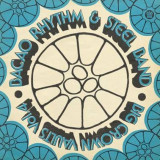
Bacao Rhythm & Steel Band, das mysteriöse Steel-Pan-Outfit aus Hamburg, machte 2024 von sich reden, als der französische Film „Anatomy of a Fall“ einen Oscar für das beste Originaldrehbuch gewann. Bacaos Cover von 50 Cents „PIMP“ war prominent in dem Film vertreten und spielte eine so große Rolle in der Handlung, dass es zum Synonym für den Erfolg des Films wurde. Später sorgten sie dafür, dass bei der Oscar-Verleihung zum ersten Mal Steel Pans im Orchestergraben auftauchten, um die Melodie zu spielen, als die Regisseurin Justine Triet die Bühne betrat, um den Preis entgegenzunehmen. All dies brachte Bacao eine Menge neuer Fans und ließ die Streaming-Zahlen von „PIMP“ auf weit über 40 Millionen steigen. Der Song erschien erstmals 2008 auf dem eigenen Mocambo-Imprint von Bandleader Bjorn Wagner und wird oft mit dem Original-Sample verwechselt, aus dem 50 Cent seinen Hit gemacht hat. Abgesehen von den Auszeichnungen und internationalem Ruhm ist „PIMP“ buchstäblich nur die Spitze des Eisbergs von Bacao. Mit vier Alben und einem großen Stapel 7"-Singles, die zu Grundnahrungsmitteln für DJs auf der ganzen Welt geworden sind, sind sie, seit sie bei Big Crown unter Vertrag stehen, sehr produktiv gewesen. Trotz der ständigen Veröffentlichungen und des umfangreichen Katalogs hat jede Aufnahmesession mehr Früchte getragen, als auf ein Album passen, so dass mehr als nur eine Handvoll Songs im Tresor lagert. „Big Crown Vaults Vol. 4“ gibt den meisten dieser Stücke eine angemessene Pressung und Veröffentlichung. Das Album beginnt mit ihrer Coverversion des Bob James Klassikers „Nautilus“, ein „Must Have“ für alle Hip-Hop- und Breakbeat-Fans. Sie bleiben auf dem Gaspedal und geben dem Khruangbin-Klassiker „Maria También“ die BRSB-Behandlung mit ihren charakteristischen basslastigen Drums, die die Energie des Stücks in eine völlig neue Dimension bringen. Berühmt dafür, bei der Neuinterpretation von Material tief in den Kisten zu wühlen, nehmen sie sich als nächstes den von J Dilla produzierten Royce Da 5'9"' Track ‚Let's Grow‘ vor. Dann gibt es „PIMP (Version)“, ursprünglich die B-Seite der Erstpressung von „PIMP“, auf der sie ihrer Originalaufnahme eine ordentliche Dub-Behandlung mit Melodica und Bandecho verpassen. Sie erhöhen das Tempo und den Funk mit „Great To Be Here“ von den Jackson 5 und tauchen mit dem Billy-Jones-Tanzflächenbrenner „Lookout Baby (Here I Come)“ wieder tief in die Dunkelheit ein. Während ein Teil des Reizes eines neuen Bacao Rhythm & Steel Band-Albums darin besteht, herauszufinden, welche Coversongs sie aufnehmen werden, ist es ebenso faszinierend zu sehen, welche originellen Melodien sie ausgearbeitet haben. „BCR Vaults Vol. 4“ enthält zwar nur ein einziges Original, „Kaiso Noir“, aber es ist ein Up-Tempo-Kracher, der wie eine Mischung aus einem B-Boy-Break und einem James-Bond-Score klingt. Diese Sammlung von Songs umfasst den Zeitraum von 2008 bis 2023 und lässt eine Vielzahl von Genres von Hip-Hop über Jazz bis hin zu Soul und Pop durch die Bacao-Linse laufen. Die Band arbeitet bereits an ihrem 5. Studioalbum, und diese Zusammenstellung dürfte die perfekte Überbrückung für die Fans sein, bis es erscheint.
Norman Westberg (guitar), Giridhar Udupa (ghatam, konnakol, khanjira, percussion) and Jacek Mazurkiewicz (double bass, electronics)An extraordinary meeting of three artists from three different musical worlds and three different continents. Norman Westberg (ex-Swans) and Jacek Mazurkiewicz have already released one album together "First Man In The Moon" in 2021 (published by the Swiss label Hallow Ground).In the new project, they are accompanied by Giridhar Udupa, an Indian master of ghatam (a clay percussion instrument that looks like a jug). The album will feature 3 long trance compositions, referring to ambient, krautrock, free jazz and Indian music.Jacek Mazurkiewicz describes the creation of this album as follows:"I met Norman Westberg while supporting the Swans tour in Poland as 3FoNIA. A few years later, during Norman's tour with Gira, we recorded a duet.The trio session took place similarly to the previous duet session during Norman's solo concert in Warsaw on the Swans tour.Recorded with Adam Toczko, a quick meeting on a day off from work.I invited Giridhar Udupa to the trio, whom I had met earlier during the period when I co-founded the band Limboski. I once invited Wacek Zimpel to play a few concerts with Giridhar. Wacek later created Saagara and I was wondering about some unusual musical context in which I would find myself with Giridhar. I was looking for an interesting sound configuration, but also a cultural one, with a different approach to creating music. I got the impression that for both Norman and Giridhar it was a fairly fresh meeting, not obvious. And on the other hand, ordinary - everyone did their own thing."Detroit guitarist Norman Westberg moved to New York in 1980 and became a part of the experimental music scene that was experiencing its golden age. Westberg himself became a permanent fixture when he joined the iconic avant-rock band Swans in 1983, and was the only member other than frontman Michael Gira to play with them for most of the band's run, both until their 1997 disbandment and his return in 2010. Westberg has also been involved with other legendary New York noise-rock acts, including Jim Thirlwell's Foetus and the post-Swans Heroine Sheiks, in which he played with Cows frontman Shannon Selberg; and in 2014, he joined the noise-rock supergroup Hidden Rifles, whose members included Mike Watt of Minutemen and Mark Shippy of U.S. Maple. Westberg's solo compositions, most often for solo guitar and a set of effects, draw on drone and post-minimalism, bringing to mind dark ambient passages from Swans albums.Giridhar Udupa is an extremely valued teacher and world-renowned artist, an Indian master of ghatam (a clay percussion instrument that looks like a jug). He was born into a family with long musical traditions. He began learning to play at the age of four, guided by his father. At the age of twelve, he already had his first performances behind him. He currently gives concerts alongside the greatest masters. He has received many prestigious awards. He performs in the USA, Spain, Canada, France, Switzerland, Germany, Oman and Kuwait. Giridhar Udupa is a member of the band of the Indian vocalist Bombay Jayashri, nominated for an Oscar for the best song for the film Life of Pi. He is one of the founders of the Layatharanga band. He also plays virtuoso other traditional instruments of South India, such as mridangam and kanjira, and is excellent at using the konnakol technique (a type of rhythmic vocalization).For three decades, the artist has been a global ambassador and icon of Carnatic music. He is the founder of The Udupa Foundation, a charity organization established in 2015 to promote Indian music, performing arts and culture. He has participated in recording dozens of albums. He is also well-known in our country thanks to his cooperation with Polish performers, which resulted in excellent artistic effects, such as the famous Indialucia - Michał Czachowski's group / project or the Saagara formation, led by Wacław Zimpel. Udupa also played on the album Lechoechoplexita, released by Leszek Hefi Wiśniewski, and on the album of the band Layatharanga, released in our country.Jacek Mazurkiewicz is interested in music in the broad sense. He puts his sounds together based on emotional impressions and pulse. Combining acoustics with electronics, he is constantly looking for a new sound. Solo as 3FoNIA, in a duet with Mikołaj Trzaska or Tomek Dąbrowski, the JMB trio with Wojtek Jachna and Jacek Buhl, in the Modular String Trio quartet, the Afrobeat quintet Faso Tamala are just some of his musical incarnations. With Patryk Zakrocki, as part of an audio mission, he massaged hundreds of pairs of ears in the Inner Ear Massage Office. He also deals with sound design, composing and producing music for films and theatre performances. He collaborated with many Polish and foreign artists.
Emerging from the suburbs of North London in the early 1990s, Hulusi was an experimental electronic music collective formed by four friends of multi-ethnic origin: Cypriot, Caribbean, Indian and English heritage. Cultivating their musical practice within very specific parameters of time and space, Hulusi instills the essence and spirit of the acid house movement (and its aftermath) that had taken much of England by storm from 1988 onwards. The ‘Dream’ EP was the collective's first release of their self-funded and limited output, offering up a categorically elusive record that could soundtrack the most esoteric and life affirming club moments, whilst simultaneously satisfying the ears and obscure desires of those found dwelling in the heavily occupied ‘chill out’ rooms and nocturnal after parties. As the emerging UK rave scene aligned with newfound accessibility of music production, the late 80s and early 90s became a fertile ground for experimental electronic music, spawning a generation of bedroom and basement producers interacting with and creating music for often the very first time. Like many, Hulusi was a musical project that connected the dots between DIY spirit, technological advancements and the burgeoning cultural phenomenon of acid house. The project operated outside of the then perceived, traditional band conventions, instead developing their sound and exchanging ideas through the format of demo tapes and floppy disks, nurturing their work through individual bedroom studios and feedback sessions. Considered a crucial and possibly defining element of the record, is Hulusi’s unconscious exploration of the groups hybrid cultural identity. Rooted in a shared desire for self-invention, the Dream EPreflects Hulusi's response to a world of rapid musical and technological change. Each track on the record draws inspiration from both Western and Eastern musical frameworks, symbolized through the record’s structure. The ‘Western Side’, featuring "Dream," echoes the ambient techno and acid house influences of early rave culture and bands like 808 State and Orbital. In contrast, the ‘Eastern Side’ of the record is highly decorated with samples, yet stripped back, through its purposeful use of organic sounds, reflecting the group's fascination with blending Western modernism with imagined Eastern themes. Despite operating in near obscurity, Hulusi - The Dream EP acts as an audible catalyst to transport the listener to a different time and place, offering a lucid snapshot into the musical and cultural explorations of the past whilst simultaneously remaining a timeless piece of music.