
10
Los Pulpitos“ are gathering their underground-water-crowd and all the depressurized party peepz for this 2nd release on Terra Magica Rec!
Dirk Leyers (Africaine 808/Closer Musik fame) teamed up with no other than Dengue Dengue Dengue’s Felipe Salmón as „Los Pulpitos“. During the pandemic heydays these two sweet’n’tiney tasty Pulpitos went down the deepwater abbys to show dem kids where the dancefloor monsters hide. Expect Candomblé-Afro-Disco-Dubtechno-Polyrythmics gone bubbeling-blub! 1960s-70s-80s-90s-Ragga-Dub-Breaks-Electronic-Cumbia-gone-Deconstructed-Club-2000UK-Mainroom hot tub rub. Leftfield-Shefield-90sExperimental-70sFunk-Psychedelic-Dubstep-UKBass-Wobble! We simply call it: “Tentacle Tech“


London-based Bread And Butter Recordings is back to serving the goods, this time with a tasty number by the always-in-shape Silat Beksi. The entitled "Special Edition" EP is the first-ever solo EP on the label, and follows four successful VA compilations that have hosted Sublee,DoubtingThomas,Costin Rp, Herck, Miroloja, Macarie, and Direkt to name a few.
Opening the games, "Just Play It!" hits hard and clean with its crispy percussions, gnarly sounds, and hefty short pads that really give a floating touch. As soon as the track goes, some bongos and extra hi-hats appear, all together into a delightful ever-evolving groove.
A2 "Hero Suit" features fluffy chords that get reverberated throughout the track, flying over a sexy and engaging bassline and tight drum patterns. Fairytale synths and overprocessed vocals join the symphony, making this one a lovely dancefloor roller.
Closing the BR005, "Jungle Meditation" sticks to its name, with the Ukrainian artist relying on his signature groovy signature sound, which this time focuses on more hypnotic moods that interlock sharply in an unpredictable or volatile manner. Proper B-side, late-night affairs.
The next two courses - BR006 & BR007 - are on the way and they will not stop surprising you. A unique and delicious sound for refined palates.

Three years after he released the incredible New Experience EP (picking up plaudits from Bill Brewster, Tim Sweeney, Laurent Garnier, Horse Meat Disco, Leo Mas & 6Music’s Tom Ravenscroft, among many more), Tokyo’s Kota Motomura returns to Hobbes Music for his debut LP, Pay It Forward. This is the first vinyl release on Hobbes Music since the much-loved ‘Aranath’ EP by Leonidas & Hobbes last Spring. While the label maintains the level of quality control for which it has become recognised, the artist continues to subvert electronic and dance music norms in his iconoclastic way on this extraordinary record.
He’s a mysterious character with an ear for idiosyncratic music that runs the gamut from ambient, exotica and jazz to disco, house and techno via post punk, new wave and funk. It’s highly original and all adds up to a confection perhaps best described as ‘Balearic’.
Album opener Paradise is a certified jazz-funk JAM. Destined for dance floors worldwide, this one’s been dropping well with DJs, Motomura demonstrating his piano chops alongside Mutsumi Takeuchi’s sax. Tropical pushes the boat in a more rhythmic direction, some pretty wild drum programming laced with more sounds of the, um, tropics, before mad vocal yelps suggest something yet more tribal. To Be Free initially resembles early 90s progressive house (pulsing bassline, synth-driven melodies), before the arrival of some new wave guitar licks a la classic Talking Heads/David Byrne and ooh ooh vocal chants take it to another dimension altogether.
B-side opener Emotion features Takeuchi again (on flute this time) and more vocal chants before things take a dramatic turn, threatening to open up into a full fanfare before calming and then bursting into wild life again with the exhortation that “C’mon, everybody dancing!” Rhythm flirts with an energy and pace more akin to a techno record: drums, drums, more drums plus a fair few yelps and chants - the kind of DJ tool that will send a simmering dance floor wild in the right hands. Flower closes things in a more melancholy style, familiar to fans of ‘Aboy’ from the New Experience EP, with plaintive acoustic guitar (performed by Akichi), birdsong and big piano chords.
Support from Bill Brewster, Leo Mas, Al Kent, Red Rack’em, Nick The Record, Phil Mison, Phat Phil Cooper, KZA, Sean Johnston (ALFOS), S/A/M, Dribbler, Joe Muggs, Monolith Cocktail and more…
‘Gonna review in MÜ mag... very fine stuff!’ JOE MUGGS
‘Will be reviewed on the blog’ MONOLITH COCKTAIL
BILL BREWSTER played Flower on the DJ History podcast #641 (25.3.22)
'I really like this album, Flower and Paradise are my favourite' LEO MAS
‘I like Paradise’ AL KENT
‘Woo this is tasty. DEFO playing on my next radio show. The label’s A&R is defo getting better and better. HM has been putting out some dope stuff and this one seems really good quality’ RED RACK’EM
‘Paradise and Flower sounding good’ NICK THE RECORD
‘Tunes sound great!’ PHIL MISON
‘Going to include Paradise and Flower on my Sunday Ibiza global radio show PHAT PHIL COOPER (Nu Northern Soul)
‘Very nice album with influences from many different genres. I especially like To Be Free with nice synths and guitar cutting, and Flower, which is a chill vibe’ KZA (Mule Musiq, Endless Flight)
'100% correct about the ALFOS potential of To Be Free!' SEAN JOHNSTON (A Love From Outer Space)
'Stunning, will fit perfectly with the vibe of my radio show’ S/A/M (Music For Dreams, DK; Playa Del Sol, Ibiza)
'Stellar work, i'll make a bet that Flowers is a Balaeric classic this summer' DRIBBLER (Breakfast Club, Ibiza)
‘It's cool in a nice smelling psycho sense, it was a very DEEP sound that I couldn't produce. Congrats!’ ALTZ (Altzmusica)
‘Paradise is my jam, it's deep, sunny and never boring. I'm interested to see how this will work on the dance floor. Overall a great album with solid composition and impressive use of live instruments!’ SOBRIETY (fka Chloé Juliette)
'Very tidy selection' ASTROJAZZ (Kelburn Garden Party, Wee Dub, Samedia Shebeen, Disco Makossa)
‘This is a lovely release. Follows on from New Experience in the best way possible. It's got lots of vibes going on but holds together as a cohesive piece of work. Love it’ JAMIE THOMSON (La Cheetah, Glasgow)
‘To Be Free is a track i could imagine Andy Weatherall playing in one of his sets at A Love From Outer Space’ KIRSTIE PATON aka She-Bang Rave Unit (Threads Radio, Radio Magnetic)

Bakey has been smashing out hit after hit this year, sharing beats cooked up with his brother, Breaka and collabing with Bristol head Sam Binga. The young producer comes back to Time Is Now, following up the best-seller Take It Further EP from last year with a tasty five tracker of UKG experimentation.
Title track, "Bring It Back", uses a playful sound palette of 00s grime that swirls into a hardcore onslaught of breaks, bassline and screeching ruffage, kicking of the record with a statement. Manchester vocalist Slay joins the party on "Vibing Season", building up in long
atmospheric chords before Slay's bars spiral into play, pacey, dirty and clever over explosive glitches and ear candy pops. Bringing it right back down to minimalism with sparing two-step, "No Name Groove" features Kasia's soulful piano echoing throughout with call-and-response sampling, a classy take on early garage tracks.
On "Reduced Vision", otherworldly sub bass chases down vocal stabs, rumbling underneath this expansive heads down number. "Poison Dart" rounds off the instant hit EP with sirens, dnb tension and ragga mc lines.

Samosa Records releases are coming thick and fast in what could be their finest year yet. Lex & Locke are the latest talent to make their Samosa debut with their ‘Pacifica’ EP – a sublime three tracker which is mouth watering from the off.
First up is Balandra. From the moment you hear the raw four to the floor drumbeat, you’re under its spell. The infectious bass riff moves the scenery around a little, whilst the subtle bongo attack teases what’s to come. And what’s coming is a funky, rolling cosmic lead synth that has no right to sound that damn sexy, no right at all. The vibe quickly grows into an interstellar journey, aided by an outrageously funky clav jam that gets inside your head. Balandra feels like the soundtrack to an ‘after dark’ undercover stakeout in a 1970s cop thriller. Detectives Lex & Locke are on the case and the evidence is compelling. A unique, 122bpm funk bomb which has the Samosa fingerprints all over it.
A2 is Cabo Pulmo – continuing the vibe of Balandra, Lex & Locke lay down some serious grooves in what initially sounds like a live funk band jamming away in the studio without a care in the world. No soon as we get into the beat and the bass, there’s an immediate switch to a swirling, bold cocktail of funk infused with a touch of jazz that belies the 124bpm tempo. The production is expertly tight; layers of synth, electric organ and punchy guitar riffs make this ideal for both the sun terrace and the dance floor. You’re under arrest, and Lex & Locke are reading you your rights!
The final track, Nine Palms has a real quirky, almost broken beat feel to it with its high-hat ride pattern and punchy bass drum. A wickedly twisted analogue organ riff is quickly introduced, which is cleverly used as both a rhythm device and the melodic platform that sets up the whole track. Lex & Locke seem to be total masters of a ‘free-style funky synth lead’, and we’re treated to another slice of this particularly tasty pie in ‘Nine Palms’. Whereas Balandra is the late-night stake-out, Nine Palms is the final act where Lex & Locke high five each other following another successful bust.
The Pacifica EP has a wonderfully intimate and assured vibe about it and is sure to feature in many a summer soundtrack. This release also proves that Samosa Records aren’t afraid to go off the beaten path occasionally - and when it’s this good we’re more than happy to follow. Grab this amazing cut of wax while you can!

The ‘Art On Ice’ EP is a tasty preview of the forthcoming ‘Ski Infinity’ LP by ‘The Steaming Jeans’: the official soundtrack for the ‘Winter Of Love’! The legendary ‘Winter Of Love’ was an athletic event of unprecedented scope and ambition held throughout the 1980s. For one beautiful decade, ice lovers from all four corners of the globe gathered at Mount Unity for two weeks of spectacular competition, dazzling snowscapes and glittering nightlife.
Contains exclusive instrumental version of ‘Art On Ice’. Limited edition of 150 copies on snowy white vinyl!

Patrick Weblin gives us this very special EP. 2 Original tracks named after his 2 sons, so a lot of time and heart has gone into making this Ep with a superb remix from IULY.B. "Tadhg's Groove" give us solid house drums,percs and hats but its the pads and bassline that gives it the movement throughout the track, taking you to another level of space and conscious. IULY.B's remix is down right tasty. It takes you on a little trip and makes you loose track of time all while grooving to this great remix. "Ollie's groove is something a bit special, big 909 kick combined with 808 tops but this time some melodic synths add a very soulful and elegant sound.
DJ Support: Kerri Chandler, Folamour, Louie Vega, Jazzy Jeff, Dimitri From Paris, David Morales, Dave Lee, The Shapeshifters, Brian Tappert, Quentin Harris, Michael Gray, Terry Hunter, Hector Romero, Tedd Patterson, Dr. Packer, Marcel Vogel, Dj Pippi and many others
Groove Culture main men Micky More and Andy Tee are once again at the controls as the label presents its' Third collection of “Groove Is In The Heart”. As with the popular imprint's various EPs, the focus is on joining the dots between organic house, revivalist disco, uplifting dancefloor soul and colourful jazz-funk. There's much to admire from start to finish, a very strong bunch including MM & AT,Gianni Bini and Angela Johnson celebratory cover of EWF swirling disco-funk ‘In The Stone', a wonderfully rolling and funky-House joint titled ‘Let The Rhythm’ from Ralph Session & Djfudge, Memi P. And Gisele Jackson tasty Feel Good Classic-house Tune “Make It On My Own” and the soulful-house warmth of Audiowhores ‘Touch The Ground' Feat. Angela Johnson.

Ever since the late 1950s bossa-nova revolution, Brazil’s influence on French music has been undeniable. Pierre Barouh, Georges Moustaki and a vast array of lesser known artists, all made the Musica Popular Brasileira (MPB) an axis of promotion at the service of a cool and metaphysical, modern and mixed Brazilian lifestyle. Some were seduced by the poetic languors of the bossa, some were looking for fun, and others just loved the American hybridization of jazz-bossa, jazz-samba.
What is bossa nova? One of its creators, Joao Gilberto said: "Its style, cadence, everything is samba. At the very start, we didn't call it bossa nova, we sang a little samba made up of a single note - Samba de uma nota so .... The discussion around the origins of bossa nova is therefore useless”. It is nevertheless useful to remember that these magnificent Brazilian songs, which the guitarist describes as samba, were shifted and balanced around improbable chords. "I like things that lean, the in-betweens that limp with grace," said Pierre Barrouh, quoting Jean Cocteau.
With emotion, arrangements for violin and supple guitar licks, bossa nova rapidly changed. A transformation that can be heard in the Tchic, tchic, French Bossa Nova 1963-1974 compilation, the result of a cultural reappropriation, which traveled through the United States and supplemented itself in France.
A musical revolution that has remained significant, bossa nova was born in Rio. From 1956 to 1961, Brazil lived through its golden years. In five years, the country had invented its modernist style. Elected president in 1956, Juscelino Kubitschek de Oliveira, an elegant man with a broad forehead, brandished a promising slogan: "Fifty years of progress in five years". He quickly got to work. Not worried about increasing debt, he launched the project for a new federal capital, Brasilia, designed by the communist architect Oscar Niemeyer. Volkswagen opened state-of-the-art factories and created the “fusquinha”, the Beetle. In Rio, the Vespa made its first appearance. The Arpoador Surf Club crew run into the “girl” from Ipanema, Helô Pinheiro - the tanned garota ("chick"), between a flower and mermaid, who at 17 walked by the Veloso bar, where the fiery author and composer, Tom Jobim and Vinicius de Moraes, were getting drunk on whiskey. From then on, bossa symbolized cool.
In 1958, Joao Gilberto recorded Chega de Saudade, which the directors of Philips denied, calling it "music for fagots". The marketing director, who believed in it, secretly pressed 3000 78-inch vinyls and distributed them at schools around Rio, creating a tidal wave.
American jazzmen then took over. In particular, trumpeter Dizzy Gillespie and guitarist Charlie Byrd. In November 1962, the Brazilian Ministry of Foreign Affairs funded a "Bossa-Nova" concert at Carnegie Hall in New York, inviting the genre’s pioneers. Unprepared, the show soon turned to disaster. But the troupe was invited to the White House by Jackie Kennedy. The first lady loved "the new beat" and in particular Maria Ninguem, a song by Carlos Lyra, later covered by Brigitte Bardot.
In Brazil, the 1964 military coup quickly ended this euphoria. The destructive atmosphere that ensued pushed many Brazilian musicians to leave, if not to exile. Thus, Tom Jobim, Sergio Mendes and Joao Gilberto arrived to the United States. In New York, Joao Gilberto met saxophonist Stan Getz. At the time, he was married to the Bahianese Astrud Weinert Gilberto, who had a German father. She had never sung before, but she knew how to speak English. Getz therefore asked her to replace her husband on The Girl From Ipanema. The Getz/Gilberto record with Tom Jobim on piano, was released in March 1964. Phil Ramone, the "pope of pop" was in charge of sound.
Bossa nova arrived in Paris through the classic “guitar-voice” channel (Pierre Barouh, Baden Powell, Moustaki…) But France loved jazz and Paris had already welcomed its American contributors. All these good people were to pass through Saint-Germain-des-Prés. The cabaret l'Escale became the Mecca of Latin American sound where one could find Pierre Barrouh and his friends, such as the Camara Trio, samba-jazz aces, whose only record was published by the Saravah label. With a band strangely called Les Masques (a band that included Nicole Croisille and Pierre Vassiliu, among others), the Camara Trio recorded an interesting Brazilian Sound, including the track Il faut tenir which is present on this tasty compilation of rarities.
Other enlightened musicians can also be found on the compilation, such as Jean-Pierre Sabar (songwriter for Hardy, Auffray, Leforestier ...) and the French pop rock organist Balthazar. In 1975, Sabar recorded Aurinkoinen Musiikkimatka on a Finnish label, which featured the crazy Vai, Vai, included on this record. We are now following the footsteps of Brazilian electronic musicians such as Sergio Mendes, Eumir Deodato or Marcos Valle who created funk and disco sounds on their keyboards and synthesizers. A style that influenced Véronique Sanson when she wrote Jusqu’à la Tombée de la nuit in 1969 for Isabelle de Funès, the niece of Louis and a great friend of Michel Berger - Sanson did end up singing this track on her 1992 Sans Regret record.
The pinnacle of exoticism and travel, Sylvia Fels’ Corto Maltese includes bongos, sea mist and ocean sounds. The title was taken from Jacky Chalard’s concept album written in 1974, Je suis vivant, mais j’ai peur (I am alive, but I am scared), based on Gilbert Deflez’s science fiction novel.
However, bossa nova extended the scope of popularity. "In the 1970s, I was a fan of Sergio Mendes, Getz / Gilberto. I fell in love with this music that I knew because I had been an orchestral singer, " explained Isabelle Aubret, who in 1971 delivered a composite record of covers by the very funky Jorge Ben, Orfeu Negro, Tom Jobim, Vinicius de Morais and Jean Ferrat. "I recorded this album for Meys Records in Paris, far from Brazil, with wonderful musicians, François Raubert, Roland Vincent, Alain Goraguer...". The latter wrote the arrangements for Casa Forte, a very percussive title borrowed from Edu Lobo, one of the initiators of the bossa who spent time in California. "Jazz and bossa came together and produced very rhythmic music. I love singing, it allows me to dream, to have fun, to feel a high on stage, and these songs brought me joy, made me swing, my singing felt like a dance.”
The world tours of French singers and their desire for the tropics, often brought them to Rio with its hills, forests, caipirinhas and tanned bodies. There are surprises though, like this Iemenja (Iemenja is the goddess of the sea in the Afro-Brazilian candomblé religion). Not unlike the composer and musician Jean-Pierre Lang, based in Sao Paulo, Claire Chevalier taught Brazil to Brazil. In 1970, the singer and painter published a 45-inch vinyl, Mon mari et mes amants (My husband and my lovers), under the improbable pseudonym of Clarinha (little Claire). She was then living in Rio, with her husband, Joël Leibovitz, who founded a band called Azimuth, and who owned a record label specialized in "sambas enredos" songs for samba school parades.
For its B side, she asked Pierre Perret to come up with lyrics for a song composed by Carlos Imperial: "Oh goddess of the sea, o goddess Iemenja, I bring a white rose to adorn your long hair ..." . "Perret came to see us, and we had fun, remembers Joël Leibovitz. We wrote Lemenja for fun, we recorded it at the Havaí studio, behind the Central do Brasil the central station. Erlon Chaves, the arranger who worked with Elis Regina, joined us" adding his share of Afro-Brazilian percussions and funky brass to the mix.
There is a common misunderstanding in Franco-Brazilian history: that bossa, admittedly hedonistic, is perceived as funny, even though the poets who wrote the texts are often philosophizing on the human condition. Its French interpreters pull it towards a carnival inspired universe, far removed from its fundamental essence. Thus, Jean Constantin covered the famous Samba da minha terra, an ode to the art of samba written by the classic Bahian composer Dorival Caymmi, renaming it with the enticing title of Pas tant de tchi tchi pompon: "On your pier there is no tchi tchi / when you arch your back, you know everything is alright ”(lyrics by Gérard Calvi). This expedited bossa aims for the absurd, but retains a certain elegance.
Indeed, Jean Constantin was not an idiot, the rather large man had a huge mustache and liked fantasy, (Les pantoufles à papa, Le pacha, inspired by cha-cha-cha-cha, salsa and jazz) but he was also the lyricist of Mon manège à moi interpreted by Edith Piaf, the composer of Mon Truc en plume by Zizi Jeanmaire and the soundtrack of François Truffaut’s 400 Blows. Le Poulpe, published in 1970, from which this bossa is extract, was arranged by Jean-Claude Vannier, an accomplice of Serge Gainsbourg’s Melody Nelson. In short: "There is enough of samba / By looking at the parasol / Because my poor cabeza / Is going to die in the sun".
Even the American actress Marpessa Down, who was at the heart of the bossa nova revolution with her role as Euridyce in Marcel Camus’ film Orfeu Negro, winner of the 1959 Cannes Palme d'or, fed the clichée with Je voudrais parler au petit cuica - "Tell me how you manage to always make people want to dance / It's true, I must admit that I cannot resist your magic" - in consequence, once can hear the cuica, a little drum inherited from the Bantu.
But bossa nova had many angles. Societal, of course, pushing actresses who were symbols of women's liberation like Brigitte Bardot, Jeanne Moreau, or Sophia Loren to engage in the exercise of accelerated bossa. In February of 1963, Sophia Loren made a record in French in Rome, Je ne t'aime plus, featuring the song De jour en jour, a bossa written by two Italians, Armando Trovajoli and Tino Fornai, which was released a little later by Barclay. Bossa accompanied the 1960s, a decade of moral liberation. Ann Sorel, who interpreted La Poupée des favellas, caused a sensation with L’amour à plusieurs, a provocative song written by Frédéric Bottom and Jean-Claude Vannier. As for the actress Andrea Parisy, she displayed her bourgeois cheekiness in Marcel Carné's Les Tricheurs before interpreting Les mains qui font du bien. And Magalie Noël, the friend of Boris Vian, who sung Johnny fais-moi mal, was hired to sing Une énorme Samba, composed by Alain Goraguer (arranger to Gainsbourg, Bobby Lapointe and Jean Ferrat) with lyrics by Frédéric Botton.
But in the end, of what wood is bossa nova made of? The answer is given by Christianne Legrand, daughter of Raymond the conductor, and sister to Michel the composer: "With me, with jà" - jà means "immediately" in Portuguese. In 1972, the singer, an expert in vocal jazz and a member of the Double Six, published Le Brésil de Christianne Legrand. Two songs included on the Tchic Tchic compilation that demonstrate how bossa, jazz, funk, rock, etc. work like a swiss army knife: the music is used to denounce broken systems, or miracles, HLM et ciné roman, Cent mille poissons dans ton filet, two songs from the O Cafona soundtrack, a successful telenovela broadcast, at the time in black and white, on TV Globo. The first was adapted in French by the fighter and friend of the Legrand tribe, Agnès Varda. The second is content with a play on words, jostling them into a summer fun.
Véronique Mortaigne

Manchester dub techno explorer Andrew Hargreaves has just dropped his new album, Objects, on Lempuyang, and now some choice cuts from it get some tasty rework action. Deadbeat's Nephilim version of 'Notions' kicks things off with underlapping kicks that cuddle and comfort. 'Ruptures' (Federsen remix) taps into the stripped-back and sparse Basic Channel template, while 'Perspectives' (Merv remix) brings more light to the EP with subtle beams piercing the surface and energising as they do so. 'Assertions' gets an Ohm & Octal Industries remix that is more heady with widescreen synth layers constantly in flux.

2026 Repress!
LIMITED EDITION SPLATTER VINYL
More Strictly Rhythm GOLD right here. An all-time, hands down, unstoppable CLASSIC record from way back - 1995 to be precise. If you don't know this record it's possible you've been in a coma, living in a cave with no electricity or have literally just arrived here on planet earth. Either way, once you hear 'Higher State Of Consciousness' you certainly won't forget it. Produced by Philly's legendary Josh Wink and released by the forward thinking A&R team at Strictly. At the time there was very little to nothing that even came close to this release. The 'Tweekin Acid Funk' mix being the highlight and the version that caught everyone's ears and captured minds worldwide across radio-waves with endless rewinds on MTV and in the clubs. Foreseeing the impending 'Breaks' boom that came around in the mid to late 90's 'Higher State...' was one of those rare moments where a record truly transcends genre boundaries and found it's way into DJ's boxes and bags on every scene. A mighty, evergreen slab of wigged out, acidic, breakbeat chaos. Essential. This one's a tasty 2017 reissue and remaster, featuring all 3 mixes, unedited, as per the original release way back when. Do not sleep.
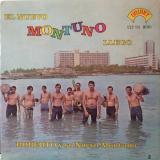
Roberto y su Nuevo Montuno recorded their first album, “El Nuevo Montuno Llegó” (1970), when Roberto Berríos was just 22 years old. This was also the debut release on Haddock’s own Uniart label. Berríos remembers that they did the recording in two sessions, splitting it up into four tracks per visit. The engineer was the famed Pedro “Pedrito” Henríquez, who recorded El Gran Combo, Roberto Roena and many others. The band had a mix of tasty, powerful originals, from Tony Cintrón’s title track that announced the band had arrived, ‘El Nuevo Montuno Llegó,’ to Quique Dávila’s mournful ‘Triste Arrabal.’ Then there was the hit Santería themed tune, ‘Llamé a Changó,’ which was a song that Quique Dávila brought to the band, but had been originally composed by Carlos Pinto, though Quique was given the credit. Dávila also composed ‘Me Queda Un Guaguancó,’ which is Roberto’s favorite song on the record (as well as a fan favorite), with Papo sounding like his friend Héctor Lavoe, and Quique Dávila’s proud manifesto declaring that Puerto Rico now had its own son montuno, ‘Oye Tu Son, Borinquen,’ featuring the pianist’s tasty but brief solo. The cover versions came from the group’s earliest period when most of their repertoire consisted of renditions of beloved but lesser known tunes, and include Louie Ramírez’s ‘Balancéate’ (a favorite of Roberto’s from Ray Barretto’s songbook), Bobby Valentín’s ‘Monina y Ramón’ (recorded during his stint with Willie Rosario), and a bolero indelibly sung by Cheo Feliciano when he was with the Joe Cuba Sextet, ‘Dichoso,’ written by Joe Cuba’s talented pianist, Nick Jiménez. Some of the arranging was done by Cintrón and some by Dávila, though Quique had some help from his old friend from El Combo Moderno, Freddie Miranda, who at that time was with Roberto Roena’s Apollo Sound. Roberto says that the arrangements of the cover tunes were made specifically to be different and more contemporary sounding than the originals. “El Nuevo Montuno Llegó” has become a legendary salsa dura classic from Puerto Rico and we are thrilled to present this first legitimately licensed and remastered vinyl reissue. It includes detailed liner notes that reveal the untold story of the band and their debut album, and rare photos.

DiscoGram rolls out another tasteful EP on their own self-title label and it's all about global disco with a Brazilian touch. 'Amigo' marries lush strings and loose percussion with call and reposes vocals and MPB vocals in Portuguese that lend a natural flair. 'Disco Samba' picks up the energy and is just that - a clap-laced and speedy groove with elegant strings and expressive vocals. 'Do Grito' means more into funk with its low slung grooves but is packed with vocals, chanting, steel drum hits and horns for a fully vivacious sound. 'Queixume' with a little more light and feathery female spirit, sunny vocals and jazzy horns. Tasty stuff.

We have sourced a whole bunch of original stock from Charles Webster's very tidy Miso label. This is one of them from 20 years ago, but the sounds still have a future edge. It's deep, dubby, minimal, but with meaningful and intricately crafted melodies that bring astral energies. Lo Rise's 'Life Goes On' is the source material for a quartet of tasty remixes. Charles Webster & Martin Iveson mix it into a fleshy, techy dub with a jazzy vocal, Dean DeCosta brings more bump to the drum and glitch to the texture, and Markus Enochson strides into classic 00s tech house. Jimpster shuts down with a sparkling and jazz-inflected dub.


Zombie Club presents a re-edition (new sleeve art) of "Mambo Calypso" another volume of sonic Caribbean Cruise. Following the approach of the first volume and understanding the Caribbean as a region is not limited to a strictly geographical demarcation but rather a demographic and cultural space where countries, islands and coastal areas may fall into a common Mare Nostrum even arrives in New Orleans. The influence of African drum and the "Cuban clave" makes different music beyond its specific components be they Latinos, Anglos or Frenchie's - look at themselves and recognize a certain family. This is not a coincidence, since the slave trade brought African music from the port of Havana to Cartagena de Indias, Nassau, Port-au-Prince, Salvador de Bahía and the southern United States. The same Blackness, the same rhythm, the same festive mood, spirit of resistance and struggle. And so, Arsenio Rodriguez can be heard without jumps next to a Calypso of Blind Blake, or a tasty Pacho Galán's coastal Cumbia crossover with Dave Bartholomew's Mambo or a Latin Swing of Lalo Guerrero, where the Dominican Merengue sounds Joseíto Mateo in line with that of its Haitian neighbor Nemour Jean Baptiste. A very spicy musical "melting pot," a gumbo of percussion and languages, to enjoy and dance. Re-board the Zombie Club Cruise, mixing different genres of Caribbean music with a high dance and rhythmic component. This selection designed for collectors, Dj's & calypsofied zombie dancers.

repress allert! Fantastic tracks, exclusive floor_shaker made in Berlin. Czeck out the >do this gig rollo gold big fun< as always. Kicking house tracks on one of the oldest and best house labels. Since 1995 label owners Cab Driver submit straight grooving goodies on their very own label.

