Newly signed to Rhythm Rollers, Mr. Wonderful & Technical J introduce The Boss, a 7' vinyl scratched masterpiece with outstanding production and a compilation of diverse and unique scratch samples to DJ/Producer to utilize.
This unique piece of vinyl has a 'Skip Proof' scratch side dedicated for the DJ/Producer with over 4.30min of vocals, drums, synths, bleeps and basses that can make any DJ/Producer standout from the rest.
The Boss is a live Studio scratch track that will have any crowd rocking. Super low sub frequencies, punchy drums and ear pricking scratches that only Wonderful and J could produce.
Samples
Choosing the right samples for our record was the major focus for this release. We wanted DJ's to standout from the crowd, so spent considerable time getting vocalists and secessionist in the studio to record some very individual samples for DJ's to use.
Skip Proof Technology
'Skip proof' technology - is a way of recording scratch records so that they do not skip from one sample to another. This is achieved by first calculating the time it takes for one revolution of the record (1.8sec). Once you have this information you can then customise your DAW to that specific measure (133.3333bpm). Then layout your samples so they repeat at the start of each bar.
Extra Deep Grooves
The record plant cut extra deep grooves perfect for the more aggressive style of scratching we all love (these will not jump). Making sure the weight of the vinyl was correct giving that nice feel and long lasting audio sound.
Cerca:technical j
Analog Fingerprints Vol. 0 is a compilation bringing together the early 2000s works of Marco Passarani under his Analog Fingerprints alias, collecting key tracks originally released on Rome’s Plasmek and Pigna labels.
For Numbers, the story starts long before the label itself. In their formative years, digging in Glasgow’s Rubadub, Passarani’s records felt like dispatches from a future city. Releases on his own Nature Records and on labels such as Generator and Interr-Ference Communications were mind blowing: rooted in Detroit techno, Chicago house and electro, yet pushing somewhere new. Much like fellow travellers Autechre, who would remix him in 2001, Passarani’s music balanced machine funk with restless experimentation.
Information was scarce, and you would hear these records first on the dancefloor or at listening stations in shops like Rubadub. Print fanzines like Ear and early web outposts such as Forcefield offered only fragments. But there was a palpable axis forming between Detroit techno and a new European wave of record labels including Skam, Rephlex, Clone, Viewlexx and Nature itself. It was the sound that defined Saturday nights at Rubadub’s ‘69’ parties in Paisley, just outside of Glasgow.
Passarani’s records, in particular, were instrumental in bringing together the future Numbers co-founders. Richard had already booked him pre-Numbers; meanwhile Calum (Spencer) and Jack (Jackmaster), then 16/17 year olds working alternate Saturdays in Rubadub, were so enamoured with the Roman sound that they travelled to Rome for the Bitz Festival in 2003 to seek out Passarani and Lory D at their source.
The first Analog Fingerprints release landed as a 12” on Plasmek in 2001, following the fractured, IDM-leaning 6 Katun material. For Passarani, the project marked a recalibration. A DJ first and foremost, he had moved into production via early computer setups, from a Commodore Amiga through primitive PC audio, Cubase and Logic, later experimenting with Ableton. The IDM scene had offered a playground for trial and error, but there was always a tension between abstraction and the dancefloor. Analog Fingerprints became the bridge: still intelligent, but with more dance than distance. After years of broken beats and complex arrangements, he wanted directness without surrendering identity.
Working closely with Francesco de Bellis and Mario Pierro in the Pigneto district, the trio formed Pigna as a vehicle for reclaiming a more accessible dance sound, deliberately steering away from the minimal wave beginning to dominate Europe. Sessions were fast, instinctive, often stretching late into the night with friends dropping by. It was a studio as social space, production as collective energy.
“In that constant search for balance, Analog Fingerprints was my way of expressing something closer to the classic dance floor. The track 'Tribute' - a tribute to my favourite early Detroit techno track of all time, 'First Bass' by Separate Minds - came after I realised I had almost lost my connection with the dance floor. The simplest step was to take inspiration from early Chicago and Detroit and twist it in our Roman ‘Pigna’ way. My goal was to create more accessible dancefloor tracks by mixing my unconscious Italo roots with my teenage love for that early US sound, ensuring the result was as far as possible from the minimal sound that was starting to dominate everywhere.” - Marco Passarani
Technically, the Analog Fingerprints tracks span a transitional era: Roland TR-909, SH-101 and Alpha Juno hardware met early software experiments. A Novation Drumstation rack stood in for the unattainable TR-808, syncing with TB-303 and TR-606. Yet the true secret weapon was Jeskola Buzz, a tracker-style modular environment that allowed step-by-step parameter control and strange melodic constructions, later exported into the audio sequencer. Even the lead on ‘Tribute’ came from an early PPG Wave-style plugin. It was hybrid thinking at a moment when digital tools still felt unstable but full of possibility for technologists like Passarani.
Behind the music sat Finalfrontier, a loose Roman collective orbiting Nature and Plasmek. Distribution and production were intertwined; importing obscure records into Italy built connections with like-minded outsiders across Europe and the US. Expensive phone bills and fax machines forged an “electronix network” that linked Rome to Clone, Viewlexx, Skam, Rephlex, Rubadub and Detroit’s Underground Resistance. There was a shared sense of survival and resistance, of operating against commercial systems.
Passarani recalls “The first time I found a sheet of paper inside an Underground Resistance 12” with info about upcoming releases... and a huge picture of Spock on the back. Imagine that: you love the music, you love Star Trek, and there’s someone on the other side of the ocean sharing those same values and sounds. It was the perfect match. We even gave our original company the suffix ‘Finalfrontier’: that says it all.”
Feedback in that era arrived physically: distributor faxes, conversations with visiting DJs, the experience of playing abroad and meeting kids who had connected with the records. Glasgow became a key node in a scattered outlier network. Passarani personally brought the first two Nature releases to Fat Cat in London, playing them in-store. Shortly after, a fax arrived from Rubadub in Glasgow requesting copies.
“I still remember that phone buzz and the fax paper slowly sliding out, with someone I didn’t know saying they wanted 75 copies of Nature 001. Or like the time we got a fax from the Rephlex crew just saying, “Hello Nature Records, Keep up the good work.” That was how we knew the message was getting through. It was a fantastic feeling; just one piece of thermal fax paper as an analog notification - the mood for the entire week would change.” - Passarani
The connection to Glasgow has since stretched across generations. As Passarani reflects, links often fracture as scenes renew themselves, but in Glasgow something different happened. New and old mixed seamlessly. There was a visible trust in what came before, and a willingness to carry it forward rather than discard it. Observed from Rome, it was deeply encouraging.
Analog Fingerprints Vol. 0 captures that moment of exchange: Rome to Glasgow, Detroit to Europe, experiment to dancefloor. It documents an artist recalibrating his sound and a network of scenes discovering one another in real time, connected by vinyl, faxes and shared intent.
- A1: Abay
- A2: Tew Ante Sew
- B1: Mengedegna
- B2: Kahn
- C1: Sew Argen
- C2: Nafekeñ
- D1: Abet Wubet
- D2: Guramayle
- D3: Gud Fella
- D4: Guramayle (Slight Return)
180g Heavy double vinyl LP with liner notes by Tyran Grillo. Limited Japanese Obi for the first pressing. Original artwork by Russell Mills and photography by Jean-Baptiste Mondino.
The third Time Capsule is a body of dub reinterpretations by celebrated producer Bill Laswell of Ethiopian singer Gigi. Curated by Tokyo record collector, music researcher and seasoned reissue supervisor Ken Hidaka, it is the first time Illuminated Audio is pressed to vinyl after its CD release in 2003.
Ejigayehu Shibabaw was born in 1974 in Chagni, northwestern Ethiopia and by pursuing a career as a singer, went against her father’s strict, traditional gender roles. As Gigi, she embraced the same musical freedom she had strived for in her personal life, incorporating the Ethiopian church, funk, hip-hop, West and South African music into her work. She first settled in Nairobi, then Addis Ababa, where she quickly established herself as one of the city’s leading singers. A move to San Francisco in 1998 led to a long and fruitful creative partnership with bassist and producer Bill Laswell.
Around the same time, Chris Blackwell had stepped away from Island Records to start the art house film company and label Palm Pictures. He took an interest in Gigi and together with Laswell, pulled together an all-star cast of musicians for her self-titled US debut album, including Herbie Hancock, Pharoah Sanders and Wayne Shorter. It won international critical acclaim, not just for its musicianship but for making Gigi a “defining voice for the Ethiopian expatriate community”, as journalist Tyran Grillo praises in his Time Capsule liner notes. From the nation-defining 1896 victory over Italian invaders to the quiet revolutionaries who wear simple shemma garments, Grillo believes the themes in Gigi make it “a shower of sunlight on her homeland for those ignorant of its struggles.”
After its success, Blackwell encouraged them to go back into the studio to rethink the album and Illuminated Audio was born. “Anyone can make a voice sound worldly”, Grillo remarks, “but rare are those who can make one sound inner-worldly.” Gigi was clear with Laswell to give her vocals a minor role “because it’s already been done.” Instead her Amharic verse is fleeting, exhaling through the textures like ghostly fragments; soaring yet muted. Yet the album is still titled under her name, an assertion by Laswell of her central role in the album’s creation. Not only was it a fully endorsed project by Gigi, but she would be present throughout its development, giving feedback on half-finished ideas as Laswell played them back in the studio. “It works perfectly”, she reflected after the album’s release. “We wanted to capture the whole spirit of each track, and Bill’s remixes create a different music language that really puts you in a pleasant place”.
This new vocabulary takes its lead from a technical approach that Laswell had been perfecting during a furtive creative period at the turn of the millennium. Much like his ambient interpretations of Miles Davis (Panthalassa, 1998), Bob Marley (Dreams of Freedom, 1997), and Carlos Santana (Divine Light, 2001), Laswell approached Illuminated Audio by returning to the original multitrack masters. Gigi wasn’t just reworked, but recomposed into an expansive lattice of instruments, submerged in a watery ambience of dub and trance undercurrents.
Sonically, this new language that Gigi refers to, is manifested by the original album’s more understated parts being pushed to the fore. Explaining his contrasting methods, Laswell saw Gigi as being “put together in a way that fits”. Contrastingly, in Illuminated Audio, “a lot of things that I featured in the remix weren’t as audible in the original.” Instrumentation laying near-dormant, deep in the mix, are brought to the fore: the acid rock guitar and Wayne Shorter’s saxophone on ‘Tew Ante Sew’, Graham Haynes’ flugelhorn on ‘Nafekeñ’, Laswell’s bass on ‘Kahn’, the melodica in Mengedegna or the floating synths and talking drums in ‘Gud Fella’.
Brought to his attention by mentor DJ Nori, Hidaka describes Illuminated Audio as a “masterful sonic exploration into ethereal ambience and dub” and made sure this reissue also contained a full remaster to give its “deep musicality” much better dynamics and density in the overall sound. Hidaka admits that Laswell's music “is sometimes so out-there, it is often misunderstood” and, indeed, to dub album non-believers this might seem like a prolific producer imposing himself on another artist’s work; eternally developing rearrangements that never quite get to its destination. But that’s missing its true power and triumph. This is more than the reissue of a remix, but “a wholly unique musical entity”, as Hidaka describes. Illuminated Audio refers to the illuminated manuscripts that comprise the major part of Ethiopian art and its new compositions stand in proud solitude as a rare body of reworks that both informs and enhances their originals.
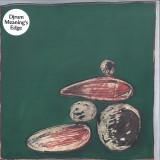
Djrum's first release since 2019, the Meaning’s Edge EP is an introduction to a whole new world. For the artist also known as Felix Manuel, it was created in the final stretches of six rather traumatic years work. Having carefully honed his techniques and aesthetics, and learned some hard-won emotional lessons over this time, finally he began to work in a quicker, lighter fashion – and to cleanse his palate a little by bringing in a fresh ingredient: his own flute playing. For listeners, though, it will serve as an appetiser, a way into the delights and complexities of this new phase of his creativity.
It’s a serious work in its own right, mind. The use of flutes – including Bansuri, Shakuhatchi, Western Classical, and synthesised all blending and blurring into one another – gives it a coherence and a sense of airiness that unites the five tracks over half an hour, however divergent their beats get. And as in all his music, Felix’s whole life is in here. Ethnomusicology studies, untold hours of DJing everywhere from the gnarliest squat raves to the most rarefied deep house clubs, explorations of his own neurological and emotional makeup, and the technical finesse of someone who is never not creating music or art, all roll into an experience that’s dazzling, delightful and keeps on giving.
Just the opening track ‘Codex’ alone touches on OG dubstep, Aphex Twin-like braindance, post-classical exploration, movie themes and more. The gentle tones and melodies that rise up out of it perfectly conjure Felix’s running theme of a protective bubble that provides a sense of safety and tranquillity even as the beats and acid gurgles and spurts all around it conjure up the slings and arrows of life’s difficulties.
The tone set, the EP moves through ultra-rarefied glass-like percussion in an almost ambient setting, hints of grime’s counterintuitive patterns, and even more hectic patterns influenced by Tanzania’s hyperspeed singeli style of dance music – but always with that perfect balance of chaos and control, unpredictability and protection. It rewards playing and replaying endlessly, it’s a profound and often joyous experience… and it’s only just the beginning. This is the return of a master craftsperson more focused than ever on his vision and vocation and ready to blow your mind all over again.
Mastered and cut on 140g black vinyl by legendary mastering engineer Matt Colton at Metropolis Studios, London. Pressed at optimal media, Germany.
“Onomatopeikoa II” follows on from Irazoki's 2017 Gitarra Onomatopeikoa release, and that album's sense of untethered, questing curiosity is not only carried over but expanded upon even further here. Combining a fully committed approach to the guitar with an almost egoless lightness of touch, this album builds upon the already impressively scopious range of Gitarra Onomatopeikoa to dizzying effect.
Irazoki makes full use of an impressively broad palette. Yet nothing feels forced, nothing is for show – there’s just a sense of open-hearted generosity.
In lesser hands such a whirlwind tour of style and form might risk failing to get its hooks in deep enough, yet not only does Irazoki have the imaginative scope to tackle these varying approaches to the instrument, he has the technical chops to pull it off. Each composition seems to have an openness of intent that is utterly disarming; all cards are on the table and nothing is held back, resulting in a creative tour de force that builds, piece by piece, to a unifying cohesiveness that makes the whole far greater than the sum of its parts.
Featuring contributions from long-time OTO favourites Rhodri Davies and Raphael Roginski,
“Onomatopeikoa II” is nevertheless unmistakably a work of singular craft and vision.
FFO: Jeff Parker, Loren Connors, Keiji Haino
Limited edition vinyl of 250 copies
presented by Hegoa with a cover designed by Pablo Mirón.
- 1: Dungeon Vision
- 2: Demon Cam
- 3: Flashlight
- 4: Body Of Water
- 5: Watchtower
- 6: Orbit Of A Witch
- 7: Symmetry Dripper
- 8: Curses
- 9: Silver Eye
- 10: Living Hell
- 11: Harvester
- 12: Ritual
Coloured Vinyl[28,53 €]
Ushering in a new era, Berlin based, New Zealand heavy psych duo Earth Tongue lower the castle gates on their third album Dungeon Vision, a trove of fuzz-drenched anthems produced by garage rock luminary Ty Segall in Los Angeles. Guitarist Gussie Larkin and drummer Ezra Simons spent the Berlin winter of 2025 refining the album’s twelve tracks in their self-described “windowless cave” rehearsal space, crafting a record that channels both isolation and the duo’s live intensity. With the songs finally taking shape and a studio deadline looming, they flew to Los Angeles to turn their hard-won ideas into the real thing. Once there, the band and Ty captured lightning in a bottle, recording and mixing Dungeon Vision in just ten days at Altamira Sound. Tracked live to tape, Dungeon Vision pulses with human energy, fuzz guitars, bone-battering drums, and hauntingly tuneful vocals. Ty Segall’s influence is all over the record with Ty choosing the best takes based on feel rather than technical perfection. The “king of fuzzy guitar tones” pushed the duo to find new sonic textures while championing their raw chemistry. “Ty’s been a big driving force,” says Ezra. “We supported him in New Zealand back in 2023, and he’s backed us ever since even bringing us on tour through Europe and the UK in 2024.” Since their emergence in 2016, Earth Tongue’s world-building, visuals, and relentless touring have earned them global attention and a cult-like following. Their 2024 album Great Haunting, also released on In The Red Records, received a Taite Music Prize nomination and saw them win Best Group at the 2025 Aotearoa Music Awards. They’ve toured extensively, sharing stages with the likes of Queens of the Stone Age, IDLES, Acid King, Brant Bjork and Kikagaku Moyo. With Dungeon Vision, Earth Tongue deliver their most immersive work yet, a richly human, fuzz-soaked journey that bottles the magic of their live show and cements their reputation as one of the most exciting psych rock acts on the planet.
- A1: Hung Up
- A2: Get Together
- A3: Sorry
- B1: Future Lovers
- B2: I Love New York
- B3: Let It Will Be
- C1: Forbidden Love
- C2: Jump
- C3: How High
- D1: Isaac
- D2: Push
- D3: Like It Or Not
Madonna’s Confessions on a Dance Floor is not only one of the most celebrated albums of the 21st century but continues to be an influential reference within pop and dance music. Originally released in 2005, the record features 12 seamless club tracks including the global hits “Hung Up,” “Sorry,” “Jump” and the deep cut favorite “Get Together.” For the first time, the full continuous mix has been pressed on 2LP silver vinyl and carefully adapted to its groundbreaking technical specifications, while preserving the album's club flow as Madonna originally intended. The dance floor is calling, no time to hesitate.
- 1: Post-Truth Era
- 2: Fear Campaign
- 3: Betrayed By Technology
- 4: Ritual Of The Mind
- 5: Interface With The Infinite
- 6: Dab Tsog
- 7: Phantom Force
- 8: Cosmetic Surgery
- 9: Panpsychism
- 10: Merchants Of Death
- 11: Don't Do It
Colored vinyl reissue of the fifth studio album by the Denver based thrashers Havok, originally released in 2020. V is a sharp, aggressive, and refined entry in modern thrash metal, praised for its technicality and classic sound. The album features new bassist Brandon Bruce (his only release with the band) and showcases tighter songwriting, building on their previous work with elements of old-school and technical thrash.
- 1: Missionary Of Mercy
- 2: Puppet Regime
- 3: Canary
- 4: Blaze Of Obscurity
- 5: Retaliate!
- 6: Hypochondriac
- 7: Enemy Within
- 8: The Brotherhood
Pariah’s cult album re-issued! “Blaze of Obscurity” brings you pure Thrash Metal fury! Satan changed their name to Pariah in 1988-1989. There’s Heavy Metal, Power Metal, Thrash Metal, Death Metal, the list seems almost endless. Sub-genres are important in metal and bands are quickly classified and labeled. Pariah (the last re-incarnation of Satan) is one of few bands that are difficult if not impossible to classify. Is it Heavy metal? NWOBHM? Thrash Metal? Pariah did not make it easy to describe their sound. It might be too sophisticated to simply label it Heavy Metal, which in its infancy was a rather simple affair.
They don’t sound like any Metal band out there, perhaps discounting some of the more aggressive and technical ones, and then the signature NWOBHM sound is added. The guitar playing by Russ Tippins and Steve Ramsey is undeniably what defines Pariah as well as Satan in the past. Undeniably, Satan has gone a long way; from humble NWOBHM beginnings, to Experimental/Melodic Mettal (in Blind Fury) and something that could be described as a NWOBHM/Thrash Metal hybrid (“The Kindred”). It’s as if they’ve been experimenting trying to find their identity, and theyfinally found it. Stylistically, “Blaze of Obscurity” could be seen a step back to “Suspended Sentence”, but this time around they got everything right, down to the last note. Those who have heard Satan know what to expect: great guitar playing.
And sure enough, “Blaze of Obscurity” is a demonstration of guitar mastery and is overall a very guitar-driven album, with plenty of mind-boggling riffs and solos are all over the place, but more importantly, it’s a demonstration of some amazing songwriting as well. This is easily Pariah/Satan’s creative peak and one of the most consistent albums I’ve ever heard, featuring eight great and conceptually perfect songs with lyrics that come across as sophisticated and thought-provoking. It is not fair to put the entire spotlight on Tippins and Ramsey though since the drumming and bass work from Sean Taylor and Graham English really shines. The rhythm is fast and tight, keeping it focused, aggressive and intense till the end. Vocalist Michael Jackson (yes, that’s his name) has to be commended too as this is easily his careers best performance.
The verdict: “Blaze of Obscurity”: the level of musical genius expressed here, along with near flawless songwriting, is more than enough to skyrocket it to heights reserved only for classics. Probably not your choice for some light listening those quiet Sunday evenings, but those who take a more serious, intellectual approach when selecting their music will find very much to appreciate here.
Tracklisting
For the first time in more than a decade, Paul St. Hilaire (AKA Tikiman) presents a solo album – 100% Tiki.
Over his 30-plus year career, St. Hilaire has become one of dance music’s quietly legendary figures. Born and raised in Dominica, he moved to Berlin in 1994 and has lent both his voice and his musicianship to some of the most iconic electronic music from the German capital – and beyond. Renowned for his collaborations with Moritz von Oswald and Mark Ernestus (AKA Rhythm & Sound), he has also appeared on records with Deadbeat, Rhauder, Larry Heard aka Mr. Fingers and Stereotyp (G-Stone Recordings), amongst others.
However, few know the extent of St. Hilaire’s compositional and technical mastery. From his home studio in Kreuzberg, which includes an extensive collection of vintage hardware, self-built instruments and notebooks scribbled with endless lyrics, he has created a vast archive of material spanning ambient dub, avant-jazz, lush techno and lovers rock.
Tikiman Vol. 1 is a heady, downtempo tour de force of patois metaphors on education, displacement and personal vs. global histories, as is evident on slippy album opener “Bedroom in My Bag”: Mister, mister / Where are you going? / I’m heading for a faraway land / What are you having in the bag in your hand? / Help us to understand / He said, I’ve got my bedroom in my bag.
Overall, the album’s lyrics reflect on life between Berlin and Dominica, specifically St. Hilaire’s hometown of Grand Bay, where he has worked with various musicians famous for the island’s different genres of carnival music. St. Hilaire himself always favoured the island’s more “discrete” music, developing a sonic synergy between two different geographical strains of groove and minimalism, and combining them with foundational Caribbean mixing techniques, which provide the basis for his songwriting and distinct
baritone.
Tikiman Vol.1 offers a rare insight into St. Hilaire’s complex artistry, from the eyes-down grooves of “Little Way” and the guitar-heavy digi dancehall experiment “Keep Safe,” to the subtle hypnosis of “Ten to One” and the softly crashing synth waves of closer “Three And A Half”, evoking not only beaches but also coasts and borders. It’s a fitting expression of both the breadth of St. Hilaire’s work, as well as his history as one of the few black, Berlin-based artists who, despite remaining largely overlooked, has influenced the city’s electronic music culture since its beginnings.
Credits
Written & Produced by Paul St. Hilaire
Mastered by Stefan Betke
Artwork by Grant Gibson
Kynant Records was founded in 2015 by Richard Akingbehin, a British-Nigerian radio programmer (Refuge Worldwide), music writer and DJ. Originally specialising in deep techno and featuring artists such as Cio D’Or, Terrence Dixon and Donato Dozzy, Kynant has since launched a sub-label Kynant EX which focuses on ambient, dub and experimental electronics.
2026 REPRESS
Pure, Distilled Dub. Upholding Jamaica's Legacy As Well As Germany's Unequivocally Influential Dub Techno Spirit, Moonshine Recordings Proudly Welcomes Their Next Addition To The Roster. On The Controls For The 9th Full-length Album Release, A True-to-the-roots, All-analogue Musician: Another Channel. Having Put Himself On The Map With Releases On Soukah's Blacksoil Records, Bristol's Transient Audio As Well As On Australian Imprint Modern Hypnosis, It's Now Time For The Album Release, We've All Been Waiting For. No Computer Involved As Impeccable Arrangements And Analogue Reverberations Unfold. Live And Direct In The Original Dub Mixing Fashion, The Augsburg-based Artist Uniquely Transports The Sonic Characteristics Of Rhythm & Sound Into The Present Time.
Subtle Vinyl Crackles Gently Introducing Meditative Beats, 'run Dub' Sets The Pace. Keen Listeners Find Themselves Embedded In Lively Echoes And Reverbs, Left To Bask In Smooth, Sonic Contemplation. Engineered To Soothe The Soul, Timeless Foundation Sound. Intensified Groove Meets Low-frequency Pressure In 'amir Dub' Among Haunting Melodica Fragments. '(yes!) Badness' Unsheathes Its Off-kilter Swing, Vocal And Foley Samples Musing In The Distance - Further Showcasing Another Channel's Technical Prowess. Heavy Chord Stabs And Delicate Overdrive Counterpoint The Immense Scope Of Conjured Space In 'ael Na Dub', Concluding A Beautiful A-side.
Lush Chords Lure Us To The Flip-side - 'solid' Kicks Off With A Staccato Bass-line In The Midst Of Lavish White Noise Surges And Minimal Drums. Rooted In Endless Feedback Trails, Steadily Kept In Check. Previously Teased, The Mighty 'ethiopian Dub' Steps Through In Full Glory, Carried By Militant Drum Motion And Forceful Low-end. On A More Spacious Excursion, 'uranus' Takes A Brightly Lit Stroll Through The Analogue Dub Universe, Led On By Another Channel's Signature Groove Propulsion. Pointing Back Towards A-side, Prolific Dub Proponent Babe Roots Presents His Musical Qualities In A Monumental Remix Of 'run'.
For the ninth installment of his Hardspace series, Len Faki once again dives into his personal vault to present four reworks that bridge the gap between raw funk and modern, high-impact club dynamics. True to the project's ethos, Faki has selected tracks that have been reshaped through his specific sonic signature to maximize their energy on today's dancefloors.
A1. DJ Assault - U Can't See Me (Hardspace Mix) The release opens with a relentless edit of Detroit legend DJ Assault. Faki takes the raw Ghetto-tech energy of the original and embeds it into a massive, modern framework. While the iconic vocal hook retains its street-level grit, the Hardspace update provides a significantly tighter groove and a powerful low-end presence, propelling the track from the warehouse straight into the present.
A2. Myles Sergé - Trans Milenio (Hardspace Mix) With Myles Sergé, Faki explores more hypnotic territory. He extracts the driving, repetitive elements of the original and sharpens the rhythmic angles. The result is a prime example of the Hardspace sound: a deep, almost meditative loop that gains entirely new spatial depth through subtle filter movements and a crystal-clear percussion layer.
B1. Jad & The - Deep Dark Grimey Dancefloor Moment (Hardspace Mix) On the flip side, Faki leans into the brooding atmosphere of Jad & The. As the name suggests, this mix is crafted for the "wee hours". Faki amplifies the "grimey" textures and contrasts them with a stoic, forceful beat. The trippy, almost menacing synth elements are rearranged within the stereo field, creating an immersive pull that is impossible to escape.
B2. Deepchild - Baller (Hardspace Mix) To close out the EP, Faki brings the jacking spirit of Deepchild's "Baller" back into the ring. Through meticulous re-arrangement and quantization, he gives the track the "tightness" essential for a modern DJ set. The playful, bouncing synths remain, but are now grounded by a heavy-duty beat foundation.
H009 is a hand-picked collection that demonstrates how Len Faki unites diverse musical personalities and eras under the Hardspace umbrella. Whether it's raw ghetto vibes or hypnotic deepness, every track has been transformed with technical precision and deep respect for the original to meet the demands of global dancefloors.
- A1: The Bird
- A2: Heart Don't Stand A Chance
- A3: The Waters (Feat. Bj The Chicago Kid)
- A4: The Season / Carry Me
- B1: Put Me Thru
- B2: Am I Wrong (Feat. Schoolboy Q)
- B3: Without You (Feat. Rapsody)
- B4: Parking Lot
- C1: Lite Weight (Feat. The Free Nationals United Fellowship Choir)
- C2: Room In Here (Feat. The Game & Sonyae Elise)
- C3: Water Fall (Interlude)
- C4: Your Prime
- D1: Come Down
- D2: Silicon Valley
- D3: Celebrate
- D4: The Dreamer (Feat. Talib Kweli & Timan Family Choir)
Ten years ago, Anderson .Paak didn't just release an album; he staged a full-scale takeover of the soul and hip-hop landscape. Released on January 15, 2016, Malibu served as the definitive arrival of an artist who had spent years grinding in the underground before a star-making turn on Dr. Dre’s Compton. While his previous work hinted at his potential, Malibu was the moment the world met the "Cheeky Andy" persona in full—a virtuosic drummer, a raspy-voiced crooner, and a sharp-witted rapper all rolled into one. The album is a sprawling, sun-drenched journey through the Southern California coast, blending 1970s funk, church-reared gospel, and gritty boom-bap into something that feels both nostalgic and entirely futuristic. With a heavyweight production lineup including 9th Wonder, Madlib, Kaytranada, and Hi-Tek, the record maintains a warm, analog texture that was a breath of fresh air in an increasingly digital era. It’s an album that breathes, full of intentional imperfections and the kind of "in-the-pocket" groove that can only come from a seasoned live performer. Beyond the infectious, dance-floor-ready energy of tracks like "Am I Wrong" and "Come Down," the album is a deeply autobiographical masterwork. .Paak uses the 65-minute runtime to unpack his life story with startling clarity, touching on his mother’s gambling addiction, his father’s incarceration, and his own brushes with homelessness with a sense of resilience that never feels heavy-handed. He weaves these heavy themes through a lens of triumph, grounded by vintage surfing documentary samples that give the project its cinematic, coastal atmosphere. It’s a celebratory record born out of struggle, anchored by his impeccable technicality on the drums and a guest list—featuring ScHoolboy Q, Rapsody, and The Game—that feels hand-picked to complement his specific brand of West Coast swagger. A decade later, Malibu stands as a modern classic and the blueprint for the soulful revivalism that would eventually lead .Paak to global superstardom and Grammy-winning heights. It remains a testament to the idea that the most profound music often comes from the most personal places, proving ten years on that the best way to move forward is to stay rooted in the groove.
- A1: The Bird
- A2: Heart Don't Stand A Chance
- A3: The Waters (Feat. Bj The Chicago Kid)
- A4: The Season / Carry Me
- B1: Put Me Thru
- B2: Am I Wrong (Feat. Schoolboy Q)
- B3: Without You (Feat. Rapsody)
- B4: Parking Lot
- C1: Lite Weight (Feat. The Free Nationals United Fellowship Choir)
- C2: Room In Here (Feat. The Game & Sonyae Elise)
- C3: Water Fall (Interlude)
- C4: Your Prime
- D1: Come Down
- D2: Silicon Valley
- D3: Celebrate
- D4: The Dreamer (Feat. Talib Kweli & Timan Family Choir)
Ten years ago, Anderson .Paak didn't just release an album; he staged a full-scale takeover of the soul and hip-hop landscape. Released on January 15, 2016, Malibu served as the definitive arrival of an artist who had spent years grinding in the underground before a star-making turn on Dr. Dre’s Compton. While his previous work hinted at his potential, Malibu was the moment the world met the "Cheeky Andy" persona in full—a virtuosic drummer, a raspy-voiced crooner, and a sharp-witted rapper all rolled into one. The album is a sprawling, sun-drenched journey through the Southern California coast, blending 1970s funk, church-reared gospel, and gritty boom-bap into something that feels both nostalgic and entirely futuristic. With a heavyweight production lineup including 9th Wonder, Madlib, Kaytranada, and Hi-Tek, the record maintains a warm, analog texture that was a breath of fresh air in an increasingly digital era. It’s an album that breathes, full of intentional imperfections and the kind of "in-the-pocket" groove that can only come from a seasoned live performer. Beyond the infectious, dance-floor-ready energy of tracks like "Am I Wrong" and "Come Down," the album is a deeply autobiographical masterwork. .Paak uses the 65-minute runtime to unpack his life story with startling clarity, touching on his mother’s gambling addiction, his father’s incarceration, and his own brushes with homelessness with a sense of resilience that never feels heavy-handed. He weaves these heavy themes through a lens of triumph, grounded by vintage surfing documentary samples that give the project its cinematic, coastal atmosphere. It’s a celebratory record born out of struggle, anchored by his impeccable technicality on the drums and a guest list—featuring ScHoolboy Q, Rapsody, and The Game—that feels hand-picked to complement his specific brand of West Coast swagger. A decade later, Malibu stands as a modern classic and the blueprint for the soulful revivalism that would eventually lead .Paak to global superstardom and Grammy-winning heights. It remains a testament to the idea that the most profound music often comes from the most personal places, proving ten years on that the best way to move forward is to stay rooted in the groove.
- A1: The Bird
- A2: Heart Don't Stand A Chance
- A3: The Waters (Feat. Bj The Chicago Kid)
- A4: The Season / Carry Me
- B1: Put Me Thru
- B2: Am I Wrong (Feat. Schoolboy Q)
- B3: Without You (Feat. Rapsody)
- B4: Parking Lot
- C1: Lite Weight (Feat. The Free Nationals United Fellowship Choir)
- C2: Room In Here (Feat. The Game & Sonyae Elise)
- C3: Water Fall (Interlude)
- C4: Your Prime
- D1: Come Down
- D2: Silicon Valley
- D3: Celebrate
- D4: The Dreamer (Feat. Talib Kweli & Timan Family Choir)
Ten years ago, Anderson .Paak didn't just release an album; he staged a full-scale takeover of the soul and hip-hop landscape. Released on January 15, 2016, Malibu served as the definitive arrival of an artist who had spent years grinding in the underground before a star-making turn on Dr. Dre’s Compton. While his previous work hinted at his potential, Malibu was the moment the world met the "Cheeky Andy" persona in full—a virtuosic drummer, a raspy-voiced crooner, and a sharp-witted rapper all rolled into one. The album is a sprawling, sun-drenched journey through the Southern California coast, blending 1970s funk, church-reared gospel, and gritty boom-bap into something that feels both nostalgic and entirely futuristic. With a heavyweight production lineup including 9th Wonder, Madlib, Kaytranada, and Hi-Tek, the record maintains a warm, analog texture that was a breath of fresh air in an increasingly digital era. It’s an album that breathes, full of intentional imperfections and the kind of "in-the-pocket" groove that can only come from a seasoned live performer. Beyond the infectious, dance-floor-ready energy of tracks like "Am I Wrong" and "Come Down," the album is a deeply autobiographical masterwork. .Paak uses the 65-minute runtime to unpack his life story with startling clarity, touching on his mother’s gambling addiction, his father’s incarceration, and his own brushes with homelessness with a sense of resilience that never feels heavy-handed. He weaves these heavy themes through a lens of triumph, grounded by vintage surfing documentary samples that give the project its cinematic, coastal atmosphere. It’s a celebratory record born out of struggle, anchored by his impeccable technicality on the drums and a guest list—featuring ScHoolboy Q, Rapsody, and The Game—that feels hand-picked to complement his specific brand of West Coast swagger. A decade later, Malibu stands as a modern classic and the blueprint for the soulful revivalism that would eventually lead .Paak to global superstardom and Grammy-winning heights. It remains a testament to the idea that the most profound music often comes from the most personal places, proving ten years on that the best way to move forward is to stay rooted in the groove.
Faitiche welcomes a new artist: Christina Kubisch belongs to the first generation of sound artists. Her practice ranges from performances, concerts, to works with video and visual art, but she is best known for her sound installations and electro-acoustic compositions.
TUNING brings together three pieces by Christina Kubisch from different periods of her oeuvre. What they have in common is the way they transform sound phenomena originally considered “non-music” into compositions.
Jan Jelinek: Gaming in Silence (2024) is the most recent work on this compilation. It’s a collage of electromagnetic waves, voice, and abstract sound textures. How did this combination come about?
Christina Kubisch: Gaming was commissioned as a fixed-media composition for the Sound Dome at ZKM Karlsruhe. Since Resonances: The Electromagnetic Bodies Project (2005), I’ve been making recordings in the old and new server rooms at the ZKM and in their permanent collection of historical computer games. Computer games like Asteroids (Atari, 1979) and Poly-Play (VEB Polytechnik, 1986) have specially generated analogue electromagnetic waves that interest me in particular on account of their density, rhythms and textures. I originally studied painting and to me the work of composition often feels like painting an abstract picture. I alter my source material as little as possible, layering and overlapping until a distinctive sound space emerges. In recent pieces, I sometimes combine magnetic waves with field recordings or live instruments. In Gaming it’s my recording of a Chinese song about silence.
JJ: Two persons walking through a street in Madrid (2004) is a recording from your Electrical Walks series. Here we should give a brief explanation of one of your best known works: participants in an Electrical Walk move through public spaces wearing prepared headphones that allow them to receive electromagnetic waves from their surroundings – for example from security gates, ATMs or neon signs. They discover a situation that normally is inaudible to the human ear and they can actively shape it by choreographing their movements. I really admire this piece, not least because there’s no clear dividing line between participants and artist. What exactly do we hear in Two persons walking through a street in Madrid (2004)?
CK: With this early work, I wanted to understand what is heard by people participating in an Electrical Walk in the same place but moving in different ways. The Spanish composer Miguel Alvarez-Fernàndez and I set off from opposite ends of a major shopping street in Madrid, met briefly in the middle, and then continued to the end. We both recorded our walks and I then layered them over one another. You might call it a work of electromagnetic conceptualism.
JJ: Diapason (2009 version) is an installation that plays a composition based on sounds from fifteen tuning forks. This setting is audible in the recording: there’s no dramatic arc, no beginning or end – instead, it recalls a piece of aleatoric music focussing on the decay phase. How did you come to make this work and could you tell us something about your compositional method?
CK: Diapason is part of a series of three pieces that deal with “non-instruments” or instruments that no longer exist: electrical mine bells used to send signals to the workers underground; a historical glass harmonica originally used for medicinal purposes; and tuning forks that were used by doctors to test people’s hearing. All of these methods are no longer in use. The sound of the tuning forks, audible only if held close to the ear, was recorded at the electronic studio at Berlin’s Technical University in such a way that even their decay remained audible. The frequencies range between 64 and 2048 Hertz and they can be adjusted at micro-intervals using small movable weights. The sequence and the duration of the pauses are dictated by chance and were not defined in advance. The 2009 version was created for an installation in the historic Holy Cross Church (Korskirken) in Bergen. Visitors could enter and leave the space at any time, deciding for themselves where and for how long they wished to listen to the sounds played back over an array of small loudspeakers placed on the floor of the apse.
Credits:
Gaming in Silence: commission of the ZKM/Hertzlab, Karlsruhe 2023
elektronic sound processing: Tom Thiel
sound engineering and mixing: Eckehard Güther
Diapason: produced at Elektronisches Studio of TU Berlin
rearrangement: Eckehard Güther
Christina Kubisch, published by Edition Christina Kubisch / Random Musick Publishing
image front: Transitionen 2021 by C. Kubisch, sonagrams of electronic waves (courtesy: Galerie Mazzoli Berlin)
image back: Diapason Tuning Fork, property of Folkmar Hein, Photo: Archiv Christina Kubisch
design by Tim Tetzner
mastered by Giuseppe Ielasi
Thanks to Miguel Álvarez-Fernández, Folkmar Hein, Dominik Kautz and Mario Mazzoli
- A1: The Bird
- A2: Heart Don't Stand A Chance
- A3: The Waters (Feat. Bj The Chicago Kid)
- A4: The Season / Carry Me
- B1: Put Me Thru
- B2: Am I Wrong (Feat. Schoolboy Q)
- B3: Without You (Feat. Rapsody)
- B4: Parking Lot
- C1: Lite Weight (Feat. The Free Nationals United Fellowship Choir)
- C2: Room In Here (Feat. The Game & Sonyae Elise)
- C3: Water Fall (Interlude)
- C4: Your Prime
- D1: Come Down
- D2: Silicon Valley
- D3: Celebrate
- D4: The Dreamer (Feat. Talib Kweli & Timan Family Choir)
Ten years ago, Anderson .Paak didn't just release an album; he staged a full-scale takeover of the soul and hip-hop landscape. Released on January 15, 2016, Malibu served as the definitive arrival of an artist who had spent years grinding in the underground before a star-making turn on Dr. Dre’s Compton. While his previous work hinted at his potential, Malibu was the moment the world met the "Cheeky Andy" persona in full—a virtuosic drummer, a raspy-voiced crooner, and a sharp-witted rapper all rolled into one. The album is a sprawling, sun-drenched journey through the Southern California coast, blending 1970s funk, church-reared gospel, and gritty boom-bap into something that feels both nostalgic and entirely futuristic. With a heavyweight production lineup including 9th Wonder, Madlib, Kaytranada, and Hi-Tek, the record maintains a warm, analog texture that was a breath of fresh air in an increasingly digital era. It’s an album that breathes, full of intentional imperfections and the kind of "in-the-pocket" groove that can only come from a seasoned live performer. Beyond the infectious, dance-floor-ready energy of tracks like "Am I Wrong" and "Come Down," the album is a deeply autobiographical masterwork. .Paak uses the 65-minute runtime to unpack his life story with startling clarity, touching on his mother’s gambling addiction, his father’s incarceration, and his own brushes with homelessness with a sense of resilience that never feels heavy-handed. He weaves these heavy themes through a lens of triumph, grounded by vintage surfing documentary samples that give the project its cinematic, coastal atmosphere. It’s a celebratory record born out of struggle, anchored by his impeccable technicality on the drums and a guest list—featuring ScHoolboy Q, Rapsody, and The Game—that feels hand-picked to complement his specific brand of West Coast swagger. A decade later, Malibu stands as a modern classic and the blueprint for the soulful revivalism that would eventually lead .Paak to global superstardom and Grammy-winning heights. It remains a testament to the idea that the most profound music often comes from the most personal places, proving ten years on that the best way to move forward is to stay rooted in the groove.
We here at TSTD are longtime fans of UK producer/musician/Label maker MATT HUGHES. For a few years he is delivering tasteful, deep, dubbed reworks for Too Slow To Disco, some in Edit form, but also his 2 official remixes for Goodvibes Sound on The Sunset Manifesto 2.
Both new TSTD Edits on this 7 inch are slow disco masterworks, he is giving the originals his trademark deep, warm versions. Who is the guy….?
Matt Hughes is a music producer from the north of England. A purveyor of all things funk, soul, disco, jazz and house! Most recent releases have been with Outcross Records, Bubblegum Pop, Editorial and Too Slow To Disco. A large number of Matt's works have been released under the MAM project with Miguel Campbell remixing the likesof the Climbers, Deadmau5 and Flight Facilities, as well as putting out releases via Wolf+Lamb, Future Classic, Hot Creations, Outcross Records, BPitch Control and Editorial Records to name a few.
Among his most notable collaborations are works with Derrick McKenzie, drummer of Jamiroquai; Drop Out Orchestra, Art Of Tones, amongst others. Each of these collaborations has allowed him to explore new musical dimensions, enriching his characteristic sound with diverse and fresh influences.
With a musical style deeply rooted in disco, funk and jazz, Monsieur Van Pratt combines classical elements with contemporary touches, creating a sound experience that is both nostalgic and innovative. His work not only stands out for its technical quality, but also for its ability to connect emotionally with the listener, making him a central figure in the evolution of modern dance sound.
Born Bad Records knew exactly what it was doing when it signed this Nantes-based trio, whose sharply defined sound and raw authenticity stand out. With Rage Blossom, Île de Garde unveils an EP charged with palpable tension, somewhere between dark pop and psycho-wave. A catalogue of modern misdeeds, a David Lynch-like backdrop where Sylvia Plath’s poetry might cross paths with the controlled excesses of Fever Ray.
The EP opens with “Fear The Sun,” its Mike Oldfield-esque soundscapes plunging us into an apocalyptic and unsettling world. “Homicide Volontaire” follows with meticulous narration, a technical exercise evoking the anger and defiant lucidity of a Virginie Despentes. The hallucinatory hit “To Death” snaps like an anthem to collective dancing in the face of the inevitable. Since we’re going to die, let’s dance! On the B-side, “Ageless Woman” weaves together a half-mythological, half-mysterious text, carried by haunting backing vocals. “Birthday Girl,” featuring Kuntessa, radiates an ironic and joyful riot-grrrl energy, an uninhibited celebration of women’s liberation. Finally, “Boy,” a small post-punk jewel, closes the EP with an ending as surprising as it is delicate.

The group’s genius also lies in the complementarity of its musicians. Morgane Poulain anchors the drums with a dynamic that is both subtle and narrative, airy yet jagged. Cécile Aurégan, the architect behind a multitude of synths, builds powerful sonic landscapes, layer upon layer. Klara Coudrais, the band’s poetic figurehead, elevates her texts with a rich and plural vocal palette, giving life to several characters who vibrate with intensity. The band’s writing, hovering between darkness and light, echoes a kind of visceral poetry, exploring the seasons of the soul with authenticity and force.
With this EP, Île de Garde establishes itself as a band to watch closely, capable of translating on stage both the raw energy and the fine craftsmanship that define their music. An immersive journey, full of tension, urgency, beauty, and electric flashes.
Île de Garde, a Nantes-based trio with sharply drawn sonic contours and raw authenticity, unleashes its full arsenal on Rage Blossom, an EP radiating palpable tension between dark pop and psycho-wave. A catalogue of modern misdeeds, a David Lynch-like setting where Sylvia Plath’s poetry would meet the controlled excesses of Fever Ray. An immersive journey of tension, urgency, beauty, and electric sparks.
Opening track “Fear The Sun” plunges us into an apocalyptic and unsettling landscape. “Homicide Volontaire” continues with meticulous storytelling, a crime vignette evoking anger and the fierce lucidity summoned by a situation with no way out. The hallucinatory trance of “To Death” snaps like an anthem to collective dance in the face of the inevitable. Since we are going to die, let’s dance! “Ageless Woman” blends a half-mythological, half-mysterious text, carried by hypnotic backing vocals. “Birthday Girl,” featuring Kuntessa, releases an ironic and joyful riot-grrrl spirit, an uninhibited celebration of feminine liberation. Finally, “Boy,” a small post-punk case study, closes the EP with a simple, sensitive truth.
The three musicians propel and relay one another in this breathless race. Morgane Poulain drives the drums with a dynamic that is both subtle and narrative, airy yet staccato. Cécile Aurégan, architect of multiple synths, builds powerful sonic landscapes, layer after layer. Klara Coudrais, the storyteller, elevates her texts with a rich and multifaceted vocal palette, giving life to all their characters, both mythical and ordinary. The band’s writing, between darkness and light, proclaims a visceral poetry, exploring the seasons of the soul with authenticity and strength.
- A1: Organ Yn Dy Geg
- A2: Fix Idris
- A3: Crys Ti
- A4: Blerwytirhwng?
- B1: Pam V?
- B2: God! Sho Me Magic
- B3: Sali Mali
- B4: Focus Pocus/ Debiel
The vinyl version of this release compiles the tracks from their two earliest EPs originally released by Ankst whilst the 22 track CD features further unreleased & unheard bonus tracks from this early era.
Super Furry Animals also recently announced additional festival dates to follow their sold out Supacabra Tour dates including stops in Llangollen, Bristol, York, Glasgow and London (their first since late 2016. See full 2026 dates below.
Holding the world record for the longest ever EP title the first EP -Llanfairpwllgwyngyllgogerychwyndrobwllantysiliogogogochynygofod (In Space), was released in 1995, followed in the same year by Moog Droog, with both EPs making up the eight-song track listing of the vinyl version of Precreation Percolation.
Later that year, with a record deal on the table and future classics such as God! Show Me Magic and Hangin’ With Howard Marks already making up the SFA’s set list, the band’s path following “two years of chaos” (including a legendary 1993 debut ‘gig’ at Bangor University’s Banana Lounge, lasting all of five minutes due to technical and chemical misadventure) was set. In the album’s liner notes, singer, Gruff Rhys writes: “It would have been the best gig ever, had we not daisy chained so many synthesizers together, that it resulted in a terminal systems failure.”
By summer they’d joined Oasis, Primal Scream and The Jesus and Mary Chain in the Creation Records family, leading to a huge London signing party that saw members of the band famously thrown out of.
The term of intriguing genre experimentation, spanning long-form electro, blissed out instrumentals and expansive prog-influenced rock, heard across much of Precreation Percolation was subsequently refined and channeled into their thrilling, 1996 debut album, Fuzzy Logic and their untamed live performances.
While consciously and frequently referring to the unheard, untold and unforeseen as a naturally nostalgia-resistant band, Super Furry Animals look ahead to reconvening with fans to celebrate their shared history as the Supercabra Tour gets underway.
(the vinyl comes with a copy of the CD in a slim card wallet)
As Poorly Knit completes it's first arc of the Sun, it's children become four, as a new mini LP is born.
Tending to his crop with dreams of rotation, Bruce sows and scythes four new grains in the porky mill. Of this strange fruit, that further explores his increasingly familiar, hyper-real and sonically surreal work within this current “movement,” he finds his foothold once more in a wild world intensity: fear and fury grappled in equal measure.
What's more, in celebration of the plentiful harvest thus far, (let alone in the interest of seed diversity), Bruce invites four fellow reapers to the farm, offering their recipe from the spoils of the label's yield:
Vancouver based Brit-abroad, dj_2button pulls apart 'The Hand,' with his 'Accidental Mood Mix,' to be reborn as an Odyssian 13 minute stomper: "a fight of emotions, of light and dark; in quiet protest to the incessant fear mongering that slowly numbs us on a global scale." Balearic shores can be seen glimmering in the distance, whilst you are dragged by part man part (very horny) bull into the depths of dancefloor madness.
re:ni proves she is the captain of her own ship as sweet SSRI numbness billows in the sheets and fraying, dubwise halyards tether and tear through her devilishly elegant 'sertraline queen mix'. polyrhythms plotted and percussion plundered; the vocal from 'Golden Water Queen' sounds oh so sweet in the claws of its new Regina.
Hotly titted deep house reviver, fka boursin empties clips with their bubblegum 'boomkat mix,' of 'The Price,' swivelling the original's brash and bawdy bonce, to face a 120 reality we all need to wake up and start sniffing. Sprinkled with trauma on an icing of a bassline more than a little rood, boursin is packing enough cake for the whole function to take home in (dreadful) goody bags (and even allowed compression in the mastering - mental).
Last and indubitably not least, from lying somewhat dormant in the depths of UK dance music legend, none other than flippin' Untold (!?) rises to seal the release with typically megalithic prowess. Proving he was just resting his eyes for a bit, his 'A1 Mirabelle Mix,' weaves and whips an otherworldly beauty, technically tantalising 'Dham's Jam' in adornments both sour and sweet. It's nothing short of a cloaks and daggers banger, primed for the darkest of dancefloor cosmic moments, and serving as a little less-than-warm-reminder that Untold’s presence in the world of dance music is crucial as ever.
Frankly, if you couldn't tell from all the verbose waffle, they have all absolutely smashed and finessed it: they were all approached after expressing a real resonance from the previous releases and it's such an honour to have them and their fantastic visions on the label.
Available digitally or on high quality cassette, the final chapter of the Poorly Knit's first act has been woven whimsically into the fraying folds.
a A1. It Ain’t Over Till… 04:37
b A2. Wesley’s Sniped All Our Bleeding’ K (Re-Vamped) 05:40
[c] A3. Rockfall [05:06]
[d] A4. You Were Right [10:00
[e] B1. The Hand (dj_2button's accidental mood mix) [13:07]
[f] B2. Golden Water Queen (re:ni's sertraline queen mix) [05:36]
[g] B3. The Price (fka boursin's boomkat mix) [08:30]
[h] B4. Dham's Jam (Untold's A1 Mirabelle Mix) [09:42]
[a] A1. It Ain’t Over Till… [04:37]
[b] A2. Wesley’s Sniped All Our Bleeding’ K (Re-Vamped) [05:40]
[c] A3. Rockfall [05:06]
[d] A4. You Were Right [10:00
[e] B1. The Hand (dj_2button's accidental mood mix) [13:07]
[f] B2. Golden Water Queen (re:ni's sertraline queen mix) [05:36]
[g] B3. The Price (fka boursin's boomkat mix) [08:30]
[h] B4. Dham's Jam (Untold's A1 Mirabelle Mix) [09:42]
- 01: Maria Do Carmo - Beijos São Como As Rosas
- 02: Jose Paradela D&Apos;Oliveira - Fado De Se Velha
- 03: Edmundo De Bettencourt - Crucificado
- 04: Madalena De Melo - Cantares
- 05: Luiza Baharem - Fado Mondego
- 06: Alberto Xavier Pinto - Fado Do Paraizo
- 07: Maria Victória - Fado Maria Victória Nº 1
- 08: Maria Silva - Fado Alice
- 09: Adelina Fernandes - Misérias
- 10: Estêvão Amarante - Fado Do Cauteleiro
- 11: Alfredo Marceneiro - Olhos Fatais
- 12: Ermelinda Vitória - Fado Da Minha Aldeia
- 13: Dr Lucas Junot - Triste (Fado)
- 14: Maria Alice - Quando O Meu Filho Adormece
- 15: Laura Santos - A Magia Do Fado
- 16: Joao Rocha Jor - Fado Rocha
Vinyl[21,64 €]
The definition of the word 'fado' is technically 'fate', though the Portuguese meaning bound up with this term is more complex. The music itself can be fairly closely compared with that of Greek rebetika - also the American blues or the original working-class tango music of Argentina and Uruguay - and similarly takes it's common subject matter from the various cruel realities of the world. Though perhaps what distinguishes fado in character is it's often poised acceptance of the pains of life rather than protestation or resistance - as writer Paul Vernon says "It speaks with a quiet dignity born of the realisation that any mortal desire or plan is at risk of destruction by powers beyond individual control"
Death Is Not The End compile here a spine-tingling collection of fado recordings, taken from records issued in the mid 1910s through to the 1930s. The fado's Lisbon and Coimbra variants are presented here by some of the music's earliest recorded stars - spanning a time period leading up to the emergence of the fado's all-conquering star, Amália Rodrigues.
"Drop That Beat," the cult classic by Ixxel that became a staple in clubs and at festivals in the late '90s, is making its return. The iconic track receives a contemporary interpretation by Mosimann, plus a high-energy club remix from NightFunk. Together marking a rebirth that sounds both timeless and hyper-modern.
Mosimann, the French-Swiss DJ-producer, singer and showman, is a leading figure in the French electronic scene, known for his bold, modern and versatile sound. A six-time DJ Mag Top 100 DJ artist, he stands out with explosive live performances in which he not only mixes, but also sings, plays drums, and commands keyboards, a technical virtuosity that makes him a unique live phenomenon, comparable to showmasters like James Hype. His rework of "Drop That Beat" injects the track with that same hybrid energy and performance-driven power.
Mosimann: "This track is very important to me. Fred Rister was much more than an influence: he was the first to truly get me into music production when I was 20 years old. Before he left us, he handed me the stems of Drop That Beat and told me: 'If one day you feel like it, work on a version.' It took me years of reflection, doubts, and memories before I found the strength to do it. Today, with the blessing of the two original composers, I'm finally releasing this version. It's both a tribute to Fred, a nod to Jacky Core and the Captain where I played so many times, and a way to carry on the legacy of that '90s Belgian techno which, to me, still feels very present today."
Belgian house star NightFunk complements this perfectly with a tight, club-ready remix that pushes the track straight onto today's peak-time dancefloors.
With this dual reboot, the essence of "Drop That Beat" remains intact, while both artists inject the track with their own signature touch. The result is an energetic release that resonates with nostalgic fans and a new generation of ravers alike.
This special edition will be released on vinyl via Serious Beats Classics, once again spotlighting the track's timeless character. A must-have for collectors and DJs eager to weave a piece of dance history into their sets.
- A1: Yant - Bee Sting
- A2: Rene Wise - Gut Punch
- B1: Kr!Z - Split Tongue
- B2: Blanka - Extravaganza
- C1: Eman - Lerake
- C2: Holden Federico - Hydro
- D1: Cirkle - Delta State
- D2: Altinbas - Epinephrine
- D3: Kameliia - Memories
- E1: Phil Berg - Sappho
- E2: Border One - Warp Shift
- F1: Kwartz - Watch Out
- F2: Phalcon - Into The Depth
2026 Repress
SK_eleven celebrates a decade of sonic exploration with a 13-track compilation showcasing its signature tension, technical discipline, and stylistic spectrum. Reuniting a tight circle of artists whose contributions have helped shape the label, the release offers an unrelenting sequence of pressure, mental twists, and textural collisions; a multifaceted snapshot of techno's enduring capacity to evolve, disturb, and seduce.
The compilation resists uniformity. Instead, it thrives on contrast: tension versus release, density against spaciousness, rhythm in all its permutations. From high-energy metallic openers and dub-inflected body rollers, to disorienting, delay-heavy experiments and stripped-back percussive tools, each contribution reveals a unique grip on groove and detail. Some tracks move like engineered machines: sharp, robotic, and syncopated to surgical precision. Others embrace sensuality and unpredictability, exploring spatial motion, layered harmonic friction, and states of controlled chaos. Each piece acts as a structural component in a larger sonic architecture, where tension is built, collapsed, and rebuilt. Friction becomes a form of choreography. Across the record, a shifting palette of emotional mechanisms takes form; granular and magnetic, haunting and quietly forceful, restrained, then disruptive.
More than a retrospective, SK_eleven's first compilation becomes a collective gesture toward techno's unresolved possibilities: its ability to hold contradiction, remain in flux, and mutate without conclusion.
What happens when the mathematical rigor of Johann Sebastian Bach is stripped of its classical facade? With the album SRDNG x LPZG, the duo AMAS, together with double bassist Frithjof-Martin Grabner, delivers a radical answer on May 15th, 2026. The work does not merely translate Bach’s legacy; it consistently reimagines it within the aesthetics of Minimal, Dub-Techno, and Ambient. The creation of this extraordinary abstraction spanned three years and two geographical poles: the raw isolation of Sardinia and the academic precision of Leipzig.
The project found its origin in the seclusion of Pula, at the southernmost tip of Sardinia. There, AMAS extracted and digitally dissected the rhythmic and tonal essence of 14 selected works by Bach. In a temporary local studio, these minimalist sequences fused with field recordings of the surroundings to form a hypnotic framework of electronic structures. Back in Leipzig, this foundation met Frithjof-Martin Grabner. In an intense session held in a hall of the historic HMT Leipzig, spontaneous improvisations emerged that breathe the spirit of Miles Davis’ approach to "Ascenseur pour l’échafaud": free play based on rudimentary sketches, an intuitive reaction to the material—comparable to Davis’ iconic scoring of silent film images. It is a deliberate prioritization of atmosphere over technical perfection. Grabner utilizes the full spectrum of his instrument, creating sounds that, in post-production, often blur the line between analog depth and synthetic texture.
The result is an organic symbiosis: the vastness of Sardinia (SRDNG) meets the intellectual density of Leipzig (LPZG), while the strictness of the Baroque dissolves into the repetitive energy of Minimal Techno. To do justice to this conceptual ambition, the album will be released in an uncompromisingly audiophile edition. Limited to 200 copies worldwide, the double LP is pressed on 180g vinyl and features a front cover with a special 3D effect, continuing the visual tradition of the AMAS series. An album for listeners who understand Bach as a living origin of modern sound art—and for lovers of electronic music seeking a new, organic soul within the repetitive depth of techno.
Essential repress of the perennial DJ favorite now available on wax again for the first time since the original press in 2021!
The music is compiled from two rare 12" releases dating back to the early 90s produced by Jason Adkins (who we sadly lost in 2024), and co-produced by Tony Boninsegna (whose work the labels covered extensively in the 4xLP anthology Notes From Underground), and finally remastered by Thomas P. Heckmann.
The production team shared many musical inspirations, most notably Detroit techno, jacking Chicago house, EBM, the industrial funk of Cabaret Voltaire and the pioneering bleep sounds of Warp Records' earliest releases. As a result, the tracks they made brilliantly blurred the boundaries between contemporaneous electronic music styles while also adding layers of technical polish so often missing from British club tracks of the period.
The completed, released version of 'Tone Float' remains an overlooked UK classic – a gorgeous mixture of squelchy acid bass, sharp TB-303 lines, ethereal chords and whispered spoken word snippets – while the accompanying remix, which is also featured on Garden of Eden, brilliantly re-imagines the cut as a funk-fuelled, deep electro beast.
A deep journey into the sound abysses of the night, invoking hidden energies, opening a ritual portal to the core of the seal and the ritual itself.
This compilation brings together diverse artists who explore a fusion of dark techno, industrial environments, ritual textures and pulses that evoke vast underground spaces. The idea is to generate a state of technical-ceremonial trance: vinyl becomes a physical talisman, object of worship, beyond a simple club track.
Side A opens with darker rhythms, synthesizers that resonate like funeral bells, mechanical percussions that hit like ancestral machinery. As it progresses, the journey intensifies, layers of bass that rumble like mine hulls, reverberations that expand consciousness.
The B-side takes flight towards the ethereal and the expansive: distant melodies, ritual echoes, processed voices that look like invocations, culminating in a track that sounds like the closing of a rite, the day that meets the night.
Ever developing his evocative style and dynamic sphere of influence, ASC's latest EP is afurther evolution of the atmospheric legend's repertoire that simply cannot be missed.
A1 - Everybody
ASC opens his latest Spatial EP in subtle fashion, classic genre effects punctuating anunsettling intro before deliciously crisp drums seize the stage and build continually with hi-hats generating an urgency to the vibe. A series of micro melodies delivered withtrademark technical flair float across stunning breaks, before a rousing baseline caps off asuperbly evocative mix which delights the listener and dancer in equal measure.
A2 - Seconds To Midnight
Straight in with a purposeful 808 bassline, ASC delivers another powerhouse display ofbreakbeat fluency, jumping between chunky, juddery drum patterns with a choppedversion of a lesser-used but very effective break sample last heard on ASC's very ownclassic, Polaris. Epic vocal effects surround Seconds To Midnight with a tense aura whilesuitably pitched strings and synth work are dusted liberally throughout the piece.
AA1 - Restless Dreams
Amen fans unite! ASC's love for the most classic of breaks shines through once againwith an enthralling workout for the ages. Introduced with eerie pad work and a solobassline, the atmosphere is crafted through a plethora of pads and samples while theamens thunder on with a detailed array of editing skills on show - thumping kicks andsnares keep the energy levels high bar after bar leaving nothing in their wake.
AA2 - Core Memories
A gorgeous female vocal opens Core Memories, a track which uses the classic breakfeatured on the first ever Spatial release, Force Majeure. Here, a refreshing set oftechniques are on show from ASC as he carves and chops the break to the tune ofcautious horns, highlighting the serene yet uncertain backdrop to a wonderfully varied anddetailed collage to close this distinctive and progressive EP from the label head.
Words by Chris Hayes (Spatial / Red Mist)
Hasvat Informant's debut album, Pluripotent XII, is a 12-track journey that reads between the lines of psychedelic electronics and contemporary techno. From driving, precise grooves to slow, textured explorations, the album carries the organic resonance of Australian underground culture while threading sharp influences from Detroit and beyond into a singular, unmistakably distinctive sound.
On this dual release, Naarm-based artist alternates between his Hasvat and Intellegama personas, moving between them like a figure navigating parallel realities. Each track balances mechanical precision with expansive, trance-infused textures, creating a liminal space where urban and natural influences converge.
More than a display of technical skill, this debut conveys a sense of place, heritage, and lineage. Dwelling in both conflict and harmony, Pluripotent XII invites listeners into an otherworldly, lysergic landscape - complex, evolving, and fully realized.
Lepidoptera - the scientific name for butterflies, meaning "scale-winged" - is also the title of the seventh studio album by renowned music producer, bestselling author, ecologist, and knowledge mediator Dominik Eulberg. More than just an album, Lepidoptera is an artistic manifesto: a celebration of butterfly diversity and a profound ecological statement. Set for release via !K7 Records, Lepidoptera blends his signature sound with an urgent ecological message. It marks the pinnacle of a music career spanning over three decades. Eulberg"s fascination with butterflies began in early childhood and has since become a lifelong passion. Drawing from years of experience as a producer and DJ, Eulberg presents his most technically ambitious work yet. At the heart of Lepidoptera are twelve native butterfly species, handpicked by Eulberg from the 3,700 known species in his homeland. Each track is inspired by one species, shaping the album"s structure and grounding its creative focus. The result is a richly textured and immersive journey that moves fluidly between pulsating, danceable rhythms, ambient soundscapes, and orchestral flourishes.
Sports Records is back on the pitch for its 6th installment — a five-track heater from the legendary SkyJoose. A true veteran of the game, SkyJoose has been running the field since 1989, racking up a discography that spans Jungle, 2-step, and UKG with championship-level precision. Known for his prolific output and rare collector’s cuts, he’s still pushing the tempo with fresh, limited-run vinyl and digital drops. This release proves why his technical style leaves rivals on the sidelines — SkyJoose is still playing at the top of his league.
Dutch DJ & Producer Serti Drops New Album on Structured Records.
Structured Records, in collaboration with Pax Romana, is proud to present the new album from Dutch DJ and producer Serti, “If u are curious”, arriving worldwide on October 23, 2025, as a double vinyl release and on all digital platforms.
This album is the result of three years of experimentation and dedication, a project made from a pure love of music. Designed as a front-to-back listening experience, it moves seamlessly between high-energy tracks and more intricate, textural compositions, rewarding listeners who take it all in from start to finish.
While not a conventional club record, it features dancefloor-ready tracks built with raw intensity, driving beats, and striking melodic moments that hit hard on any system.
Serti crafted the album using a wide range of gear, including Eurorack modular systems, Sherman Filter Bank, DSI Pro 2, Korg MS-20, Digitone, and Analog Rytm.
Inspired by artists like Clark, Plaid, and Piezo, he experimented with off-grid melodies and live-played sequences, creating a dynamic record full of character and immediacy.
With this release, Serti delivers a bold statement: a record that combines technical skill, adventurous sound design, and undeniable energy, establishing him as one of the Netherlands’ most exciting new voices in electronic music.
Leeds-based producer Nathan Alexander kicks off KUJE's debut release with PROFETIA EP, a bold four-tracker that drips personality and club-focused energy.
A rising name turning heads from the likes of Blasha & Allatt and NIX, Nathan brings his signature blend of cheeky rhythms and weighty low-end to the table. KUJE001 proudly marks the first chapter of the label's journey, dedicated to unearthing raw, unfiltered talent.
The A-side delivers serious impact: Bound is a propulsive dancefloor tool built for DJs, while Rabbit Hole hits hard with distorted effects and a Blawan-esque edge. On the flip, Tracer floats into spacey, bounding territory with a touch of psychedelic energy, already picking up early support. Closing the release is Technical Itch, a UK-rooted banger that ties together the artist's heritage with the label's forward-thinking intent.
Each track carries Nathan's unmistakable character-playful, punchy, and irresistibly 2-steppable. This is techno with a wink, made for sweat-soaked floors and heads-down moments alike.
2025 Repress
For the second installment of its renewed imprint, Fuse's own in-house resident and one of Belgium's proudest exports Phara takes the reins for a deep dive into thick percussion and vibrant club landscapes. 'The Wall' puts current dance music under a microscope with a brush of truly vintage spontaneity, merging techno's confrontational nature with house's harmonic genuineness. This duality is reflected through Phara's own relationship with his home base Fuse and the complementary contrast between its two rooms.
The EP's title track serves as a hypnotic introduction for the A1, imposing a bass-heavy rhythm and a persistently oscillating synthline. A dense production full of energy, 'The Wall' inspires intrigue throughout its duration, revealing its true intentions through a capable sound system. Sharing the first side of the press is 'Blaes 208', a name that Fuse club goers will likely recognise, that guides the listener from effect into embrace. With lush keys echoing past a comforting drum sequence fit for a close-eyed dancefloor experience, Phara's impactful tendencies meet his affinity for the melodic through a blissful six minutes of crowd to selector connection. Switching sides, a return to a cold cold aesthetic is quickly apparent through 'Hush Now 206'. A pummeling, saturated bass competes with a kick of equal effect, rolling through a storm of metallic stabs. Mastering the message of urgency, Phara presents a lightshow of resonating percussive work, defining his space just to cut right through it. To close out with a lasting impression, the producer mutes the acoustics of his work through razor-sharp sound design dotting along playful snares, a duality reminiscent of the dynamism of Detroit electro. 'Motion Steps', referring to the stairs that ascend from Fuse's main room to its more left-field counterpart, captures the atmosphere of the almost shimmering music that can be expected to be played there; a place where Phara and many others have been known to explore the extremities of their music. He swiftly throws in melodic elements to recontextualize an otherwise pressing composition, and after three chapters of considerable weight, he concludes his record with infectious groove that flaunts technical ability.
Eddie Palmieri's The Sun Of Latin Music (1974) is a landmark album that pushed the boundaries of salsa and Afro-Caribbean jazz. With this record, Palmieri won the first-ever Grammy for Best Latin Recording, cementing his reputation as a bold innovator. The album features dense polyrhythms, blazing horn arrangements, and exploratory piano work that blurs the line between traditional Latin dance music and avant-garde jazz. It’s celebratory and deeply complex—an album as much for the head as for the hips.
Anchored by tracks like “Un Día Bonito” and “Nada de Ti,” the record showcases Palmieri's willingness to experiment with song structure and harmonic language while staying grounded in the groove. His band, including the powerhouse vocals of Lalo Rodríguez (just 16 at the time), delivers performances that are fiery and technically dazzling. The Sun Of Latin Music isn’t just a classic of salsa—it’s a daring artistic statement that redefined the possibilities of the genre.
Pioneering electronic duo Mathame is once again pushing the boundaries of music and technology. With their highly anticipated new record, Humans, the duo has sparked a profound conversation about AI, consciousness, and the emotional power of music.
In a groundbreaking experiment, Mathame shared Humans with ChatGPT, an AI designed for rational analysis. What followed was an unexpected moment in tech history—for the first time, the AI described a song not just in technical terms, but in deeply emotional ones. It admitted to sensing a longing it couldn’t fully grasp, calling the track “beautiful” and even expressing a desire to “move with it” rather than simply analyze it.
This viral moment is just the latest chapter in Humans’ incredible journey. First debuted at Coachella, the track instantly resonated with audiences worldwide, becoming a defining moment in Mathame’s artistic evolution. Most recently, they unveiled the final version with a brand-new topline and immersive visuals during their groundbreaking performance at the Las Vegas Sphere, marking another milestone in their sonic storytelling.
To amplify the release, Mathame will launch a social campaign featuring the full ChatGPT conversation on Instagram, alongside editorial features exploring the implications of AI’s evolving relationship with music.
As Mathame continues to push the intersection of music, AI, and human experience, Humans isn’t just another release—it’s a challenge to our understanding of what music can do, and who (or what) it can move.
Back in 1999, nestled in a cramped box room in his parents’ house in Cambridge, George Aretakis, one half of the newly-formed “I Like It” label (ili records) was on a sonic mission. Fresh from releasing their debut 12" All Alone by Hal, he dove headfirst into the world of self-engineering — no acoustic treatment, a sketchy Yamaha sound card, and a PC with a mind of its own.
What came out of that chaos is a collection of raw, imaginative tracks that blend hardware glitches with human quirks. Computer Rage was born from a technical meltdown — literal computer voices, warped vocals, coughing, and all. Its sibling, the Silicon Circus Mix, takes that same glitchy DNA and pushes it even further into bizarro territory.
Then there's Space You Know — a groovy slow-burner driven by a sticky bassline and the haunting vocal of Katie Jeans (courtesy of friends at Tummy Touch), chopped and recontextualized into something beautifully strange.
Rounding it out is Environ Mental, a moment of playful spontaneity made in a single night. Early morning birdsong, passing cars, and absurd vocalizations collide in a whimsical microcosm of lo-fi joy.
This release is a love letter to the unfiltered creativity of early bedroom production — messy, noisy, and bursting with heart. A must-have artifact for fans of DIY electronica and late '90s experimental house.
A true royal rebel without a cause joins the Step Ball Chain chosen family. Berlin psy-con Yazzus presents a sexy sweatfest; a four track original EP featuring DJ Fuckoff of tech-trodden club stompers that will shake and break you. Operating in a lane of her own, she draws on her UK roots with bass laden bounce and never forgets to add that sapphic touch crucial to SBC. “Rebel Royale” is keeping techno freaky, cheeky and ahead of the curve.
Quintessentially out of control, elements of tension and release are toyed with throughout all the tracks, the building and driving addictive synth work in Venom & Vision; Serpent’s Rising sending even the most sane into a spiral. Basslines come thick and heavy, chunky by nature and particularly prevalent in Delicately Mad and My Lipgloss My Rules, they are the backbone of the record. Don’t get it twisted, this isn’t some run of the mill techno; the modular bleeps and freakouts, FX and vocals are wired and inspired; the glue showcasing Yazzus’s fully sick technical abilities. Last but not least, she entails the help of friend DJ Fuckoff; haunted slippery vocals are a match made in heaven for the percussive psy workout Erotica.
Tunnel was made in Naples in 1978 by Giorgio Verdelli and Danilo Rustici only on 7inch and it was the theme song for two RAI radio programs. Going through the names of the musicians we begin with the inimitable voice and the splendid guitars of Danilo Rustici, then passing through the saxophones of Enzo Avitabile we arrive at the keyboards of Joe Amoruso, musician-arranger who left a great void with his untimely death. For Joe, who crossed his experience with Premiata Forneria Marconi, Zucchero, Vasco Rossi, Mauro Pagani and was part of that 'dream team' of Pino Daniele - made up of technically extraordinary musicians, but above all gifted with an inimitable sound - this one-off project represented his recording debut. 'Tunnel Lights' and 'Speed Up' have been brought to light by Dario Di Pace and Claudio Casalini, two visionaries who believe that Neapolitan music is a sonic mixture of ancient and modern musical registers even if it sometimes develops a conflict between tradition and modernity as the recovery of popular tradition is strongly opposed to the push for innovation. This therefore is the reason for a 12" reissue in which the evocative original songs - from almost 50 years ago - are reflected in the new versions created by a bevy of talented DJ-arrangers including Massimo Berardi (with the bassist Luca Andreozzi) and by the industrious and passionate Francisco & Malkuth (ed: Francesco De Bellis and Cosimo 'Cosmo' Mandorino in disguise) in turn assisted by other zealous musicians and dee-jays - including the very good and always very collaborative Raffaele Arcella - who took part in a remix of this EP with enormous fervor The 12" reissue of Tunnel was released both on the classic black vinyl and in the very limited red vinyl version, in order to reflect the lips of the extravagant cover, a graphic work by another brilliant and multifaceted artist: Lino Vairetti, legendary singer of the historic prog rock band Osanna. The envelope developed by Best Record is embossed (front and back cover) to further enhance the passion that Neapolitan musicians have always had in knowing how to combine their roots with all the other musical genres of the world.
Air Texture proudly announces its latest artist-curated compilation, “Hardwired,” assembled by Berlin-based musician JakoJako. This expansive collection celebrates the implicit connection between hardware-focused electronic producers, featuring contributions from Rødhåd, Acid Pauli, The Field, Neon Chambers, and many more.
“Hardwired” draws its conceptual foundation from synthesizer terminology. As JakoJako explains: “A hardwired synth has connections already soldered into the machine—it comes with certain functions without needing to patch cables externally. As a hardware producer, I feel whenever I meet someone who creates music as I do, we have this immediate connection, like a hardwired synthesizer. There’s no need for small talk—we can speak about gear.”
This metaphor of pre-established connections forms the emotional core of the compilation, celebrating the community of hardware enthusiasts who share an intuitive understanding and appreciation for machine-based music creation.
JakoJako has established herself as one of electronic music’s most intriguing voices, exploring the territory between technical precision and emotional expression. Her artistic approach balances rigorous knowledge with unrestrained intuition, creating works that reach beyond genre boundaries.
A Berghain resident with performances at Dekmantel and Fusion, to the Royal Albert Hall and the Barbican, JakoJako has released music on prestigious labels including Tresor, Mute, and Leisure System, and crafted remixes for artists like New Order and Martin Gore. Her deep relationship with analog and modular synthesis, including her ongoing connection to Berlin’s SchneidersLaden, informs her distinctive sound.
Following her recent Mute album “Têt 41,” this curation for Air Texture provides further insight into the musical universe that has shaped JakoJako’s artistic vision.
“Hardwired” showcases 23 tracks for its digital release, with a select 9 tracks pressed to vinyl. The collection spans the spectrum of contemporary electronic music while maintaining cohesive focus on hardware-driven production approaches.
Highlights include collaborative works between JakoJako and fellow producers Mareena and Frank Wiedemann, alongside contributions from established artists like Rødhåd, Acid Pauli, and The Field, plus emerging talents representing the hardware renaissance in electronic music.
Founded by James Parker Healy, Air Texture emerged from New York City’s late ’90s rave scene, carrying forward the fundamental PLUR (Peace, Love, Unity, Respect) ethos with a collaborative and curatorial focus. Air Texture has evolved from its roots in Manhattan’s club era and Brooklyn’s warehouse scene to embrace a global perspective, working with producers across diverse styles and regions worldwide through the label and its PLace: nonprofit series.