Barro Music Label reaches its tenth reference with a tremendous EP in which the protagonist (even of the cover) is Nöle, the label's boss. In Electro Bloody Music, the popular DJ and producer from Pamplona delivers four original tracks accompanied by a fantastic remix by Delectro. The renowned Colombian producer, active since 2006, has released on some of the best international labels and with his 80s EBM, electro and techno influences, he is the ideal person to accompany the label boss on such an important release. As for Nöle, after the success of Mendekua, his previous work released in 2022, he does what he is the best at: dark and frenetic techno with EBM flavor, like the one he played during his long residency at Stardust and does now at Lasociación.
On the A-side of Electro Blood Music we find three originals, the first two could be included in the category of Techno Body Music while the third is more purely techno. The EP starts with BuruHilketa, a dark track with a certain experimental atmosphere endowed with an incisive synth line and disturbing vocal samples that accompany us during most of the composition. Shaktale, shares some of the atmosphere of the first track, as it also includes vocal samples and a eerie synthesizer melody quite catchy. It has quite a complex rhythm and an extremely careful production that we recommend listening with headphones to appreciate in detail. Cementerio caliente is powerufl techno track, with hypnotic synths and an acid touch and tremendously forceful. With this kick drum, you could definitely demolish a house!
On the B-side we find another original track titled Noisebuilder and the remix by Delectro. Noisebuilder, with its fat and aquatic basses starts off more techno but, little by little, it also includes EBM details. The track lives up to its name and the noise builds, little by little, layer by layer while the intensity keeps growing. With a hard-hitting beat, spiced in the background by synthesizers that help to create an atmosphere, it is one of the clearest bangers of the EP. Delectro delivers a remix a little more forceful and darker, a bombshell of pure Techno Body Music that closes this magnificent EP.
Release note: El Garaje de Frank
Search:techno pop
- Satan Mamage
- The Mould
- Everything To Die For
- Donna Like Parasites
- The Rules Of What An Earthling Can Be
- Please Be Okay (Feat. Miss Grit)
- Telephone Congee Ii
- Speak Up, Sponge
- What's The Password Baby Bird?
- Hopefulness, Hopefulness
- Telephone Congee Ii
- Sparky (Feat. Lei, E)
- In The Dot (Feat. Pickle Darling)
- Cool As A Cucumber
- ?????
As mui zyu, Hong Kong British artist Eva Liu searches for a portal, wandering between nothing and everything in her pursuit of peace. On her second full-length album nothing or something to die for she looks outward, embracing the chaos with each tentative step. mui zyu's debut album Rotten Bun for an Eggless Century saw her explore her heritage, as she dived inward to find acceptance and healing. Now, instead of searching for answers from the inside, Liu raises her head to look at the world around her. As she attempts to understand the complexities and significance of human existence, she observes apathy alongside overwhelming chaos; the technological advancements of connection with the lack of meaningful bonds and the frustrations of upholding standards set by others. nothing or something to die for tries to decipher these juxtaposing truths, holding both the weight of those trying to destroy the world with the utter futility of it all. Working with co-producer and fellow Dama Scout band member Luciano Rossi, the sonic world of nothing or something to die for encapsulates both the fleeting tranquility of serenity and the dissonance in chasing it. After all, our reality can change in an instant. Like the psychedelic tones of Ryuichi Sakamoto's Thousand Knives, the urgent techno-pop of Miharu Koshis Parallelisme or the eerie wanderings of Angelo Badalamenti's work for Twin Peaks, nothing or something to die for expertly toes the line between disorder and clarity
The artist Dennis Busch (James Din A4, Joyride, Pop Dylan, Pastor Fitzner, etc.) returns after over 12 years of electronic abstinence under his pseudonym James Din A4 with his new album Ins Licht (Into the light) on David Rauer's label Blubbernugget.
Hedonistic dissociative techno tracks meet twisted, light-drenched house anthems and are gently, yet brutally transformed into a multi-dimensional state of pure euphoria in dream-like sequences and abstractions. Here you can dance like nobody is watching and at the same time put your innerspace time travel on autopilot. This is a record as energetic as a Hi-Frequency crystal. It's 2024. Welcome to the age of I AM.
Musik & Artwork: Dennis Busch
Master & Cut: Loop-O
Jules Archive is a project founded by Marco Marzuoli and Marco Mazzei in 2016.
By employing various technologies, instruments, and approaches, the duo strives to craft a mysterious and fantastical persona named Jules. Through this persona, they aim to immerse listeners in a dreamlike atmosphere, transcending reality and dwelling in imaginary spatiotemporal dimensions.
Platonic Tales is the second chapter of Jules' journeys, more anthropocentric than the first album Adventures & Explorations (Volume 1), but equally exotic and dreamlike. The musical intention of this record was to rework a set of five (plus one) melodic tape loops, already structured in "song form”, through detailed arrangements. The treatment followed an experimental-pop-oriented production approach.
Recorded entirely at home by the artists, the music on the album features analog cassettes containing loops dating back to around 2016. The remaining arrangements were composed during the 2020 pandemic lockdown.
Several international guests collaborated on the album:
Lino Capra Vaccina, the legendary Italian percussionist/minimalist composer, and Jefre Cantu Ledesma engaged in a musical dialogue on An Ontological Novel.
Andrew Weathers contributed his voice to the tracks A Superior Truth and Exodus.
Christina Vantouz participated in Exodus and concluded the album with a string composition arranged and conducted by Minna Choi, performed by Magik*Magik Orchestra.
Recorded between Città Sant' Angelo (Pescara - Italy, 2016-2020), Francavilla (Chieti - Italy, 2020), and Firenze (2019-2020).
- A1: Pikiran Dan Kepentingan (Thoughts And Concerns)
- A2: Fenomena Demi Fenomena (From Phenomena To Phe-Nomena)
- A3: Lubuk Yang Terdalam (The Depths Of The Depths)
- A4: Manusia Oh Manusia (Human, Oh Human)
- B1: Selalu Ada Jalan Keluar (There Is Always A Way Out)
- B2: Meyakini Sebuah Jawaban (Believe In An Answer)
- B3: Kepada Cahaya Yang Menerangi Jiwa (To The Light Which Illuminates The Soul)
Born in 1977, in Malang, East Java, Wukir Suryadi began playing music for theatre at the age of 12 with the Idiot The-ater Studio, and later with the Rendra Theater Workshop. In his solo work, and as a member of Senyawa, Error Scream, Bendera Hitam Setengah, Potro Joyo and other groups, Wukir breaks the boundaries of traditional music, death metal and avant-garde performance. On this new release, “Cycle and Prayer,” recorded in 2023, he expands the edges of his unique artistic world further, by digging in to meditative improvisation, art, and community building in his home workshop in the mountains of central Java. These recordings vibrate inwards, toward the microcosmic ecologies of forests and rivers; they distort outwards, resonating with global waves of apocalyptic change that are forcing all living beings to the edges of existence on earth. The result is a meditative poem that moves, as its titles an-nounce, from phenomena to phenomena, praying that humans find a way out from the depths of the depths to the light that illuminates the soul.
An essential mode of creative work for Wukir is the creation of unique instruments, using these sound sources as “bullets of expression.” In addition to the spear-like tube zither Bambu Wukir, he has created the Solet, Enthong, Garu, Luku, Arrows, and Industrial Mutant instruments, which in addition to being used in live performance, have been exhibited in the Instrument Builders Project and the 2017 Jakarta Biennale. In the past few years, Wukir has begun to collaborate with local guitar makers, carpenters, and suppliers of native endemic wood in the mountain region of Salatiga. Using earthen bricks along with local woods (suren, coconut, mindi, and waru lengis) as building materials, he constructed a new studio and workshop space in Tingkir, where this album was made. The trees, water and air of the local environment have exerted a powerful influence in Wukir’s documentations of instrumental sound. On this recording, he uses the simple Cetta guitar, an instrument designed in Bali and made for Indonesian children and local communities of folk and popular musicians, in order to explore the different sonic characteristics of a more “normal” instrument built from local wood.
The themes of the album -- cycle and prayer -- arise from a foreboding series of meta-events that shook Indonesia and the world over the past years, following one after the other: the COVID-19 pandemic, the Ukrainian-Russian war, the Kanjuruhan Stadium tragedy in which football supporters were gassed and killed by police, revelations of govern-ment failures and corruption, the rise of personal vehicles, the increasing disturbance of natural patterns of the rainy season and other ecological cycles. “In these waves of technology and narratives of truth made for certain interests, playing a sound at a certain frequency and repeating can try to bring images and feelings to a certain point of con-sciousness,” Wukir told me. “Sound is a prayer that creates a change, whether gradual or rapid, in the behaviour of living things, to face the demands of the time, as humans struggle to live according to what they believe.” The draw-ings and sketches used for the cover spontaneously emerged alongside the recordings, as an instinctive depiction of “time and sound, nature that is outside of oneself, and nature that is within.”
Drab Majesty's third album, Modern Mirror, is a journey of self-reflection, nostalgia, love, beauty, and heartbreak told across eight addictive and emotional synth pop anthems - a seemingly classic tale delivered unblinkingly through the frame of the modern world. Elements of classic tragedy weigh heavily in the reflection of Modern Mirror in songs like "The Other Side", possessing a fundamental sound that is energetic, luminous and hopeful. Fusing the sonic aesthetics of predecessors like New Order and The Cure within the cautious instruction of Greek mythology and modern science fiction, Drab Majesty has birthed a hybrid of dreamy malaise, captured for a future moment. The first single, "Ellipsis", romantically plays up the distorted concept of courting through modern technology in a world that has yet to adapt, while on "Long Division", Deb's resounding guitar cascades around the chorus shared with No Joy frontwoman Jasamine White-Gluz, wistfully warning us against our vanity and self-obsession. Even when hope for everlasting love peeks through in "Oxytocin", a sparkling and stoic track sung by Mona D., we are firmly reminded our fleeting existence. Produced by Josh Eustis (Telefon Tel Aviv) with appearances by Jasamine White-Gluz (No Joy) and Justin Meldal-Johnson (NIN, Beck, M83, Air).
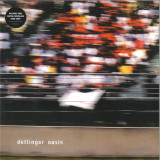
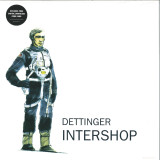
Dettinger’s Intershop and Oasis have long been held, by many fans of ambient and electronic music, to be some of the finest albums in their field. Produced by the mysterious Olaf Dettinger, about whom not much is publicly known, they were some of the earliest full-lengths released by the then-nascent Kompakt, and in many ways, they both articulated and defined the sound that would come to be known as Pop Ambient, while also existing, somehow, to the leftfield of any clearly recognisable genre.
Beautiful, sui generis works, it is a rare pleasure to see them being reissued on vinyl for a new generation of listeners to embrace. Originally released on CD only in 1999, Intershop was Kompakt’s first artist full-length. The music here simmers and broods, with opulent banks of tone marking out territory for rhythms that seem to be built from the clacking detritus of technology – hisses, thunks, knocks. Bass is deployed carefully, each drop a dubbed-out depth charge; drones spin and spiral, warping and weaving between the beats.
Oasis, released in 2000, refined the palette that Dettinger had explored on its predecessor. A blurred crusade of ambient texturology, its unassuming patterns, and subtle, incremental dynamics, admit to real beauty, and a kind of abstract sensuality that you don’t often experience with music that is, perhaps, similarly tooled, but not as poetic. Through seemingly simple gestures – whether lushly expansive repetitions, hyper-acute tremolo tones, or ear-tickling rhythms – it builds complex emotional resonance. It’s no surprise to discover Oasis is held in high esteem by artists like Panda Bear of Animal Collective, who once said of Dettinger, “For us, he was the dude.”
There is, of course, other music to know Dettinger by, too – his three excellent EPs for Kompakt, Blond (1998), Puma and Totentanz (1999), the latter of which, Michael Mayer once argued, “invented dubstep.” There is also a small, yet graceful run of compilation contributions, many of which can be found on Kompakt’s Total and Pop Ambient series. All this music has plenty to recommend it, sharing a clarity of purpose, and a rare, human warmth and depth. But Intershop and Oasis are the releases that distil Dettinger’s singular vision, and allow him, should he wish, to claim his place as a modern master of ambient and electronic music.
Dettingers Intershop und Oasis werden von vielen Fans von Ambient und elektronischer Musik seit langem als einige der besten Alben in diesem Bereich angesehen. Produziert von dem mysteriösen Olaf Dettinger, über den nicht viel bekannt ist, gehörten sie zu den ersten Alben, die von der damals aufstrebenden Plattenfirma Kompakt veröffentlicht wurden. In vielerlei Hinsicht formulierten und definierten sie den Sound, der später als Pop-Ambient bekannt werden sollte, während sie gleichzeitig irgendwie links von jedem klar erkennbaren Genre existierten.
Es ist eine seltene Freude zu sehen, dass diese wunderschönen Werke auf Vinyl wiederveröffentlicht werden, um sie einer neuen Generation von Hörern zugänglich zu machen. Ursprünglich wurde Intershop 1999 nur auf CD veröffentlicht und war Kompakts erstes komplettes Künstleralbum. Die Musik hier brodelt und brütet, mit opulenten Klangbänken, die das Territorium für Rhythmen abstecken, die aus dem klappernden Gerümpel der Technik gebaut zu sein scheinen – Zischen, Klopfen, Schaben. Der Bass wird sorgfältig eingesetzt, jeder Drop ist eine synchronisierte Tiefenladung; Drones drehen und winden sich spiralförmig und verflechten sich zwischen den Beats.
Oasis, das im Jahr 2000 erschien, verfeinerte die Palette, die Dettinger auf seinem Vorgänger erkundet hatte. Ein verschwommener Kreuzzug der Ambient-Texturologie, dessen unaufdringliche Muster und subtile, schrittweise Dynamik echte Schönheit und eine Art abstrakter Sinnlichkeit zulassen, die man nicht oft bei Musik erlebt, die vielleicht ähnlich ausgestattet, aber nicht so poetisch ist. Durch scheinbar einfache Gesten – seien es üppig ausladende Wiederholungen, hyperakute Tremolotöne oder ohrenbetäubende Rhythmen – baut sie eine komplexe emotionale Resonanz auf. Es ist keine Überraschung, dass Oasis von Künstlern wie Panda Bear von Animal Collective hoch geschätzt wird, der einmal über Dettinger sagte: “Für uns war er DER Typ”.
Es gibt natürlich auch noch andere Musik, die Dettinger bekannt macht – seine drei ausgezeichneten EPs für Kompakt, Blond (1998), Puma und Totentanz (1999), von denen letztere, wie Michael Mayer einmal kühn behauptete, “den Dubstep erfand”. Es gibt auch eine kleine, aber feine Reihe von Compilation-Beiträgen, von denen viele auf Kompakts Total- und Pop-Ambient-Serien zu finden sind. All diese Musik ist sehr empfehlenswert und zeichnet sich durch eine klare Zielsetzung und eine seltene, menschliche Wärme und Tiefe aus. Aber Intershop und Oasis sind die Veröffentlichungen, die Dettingers einzigartige Vision destillieren und es ihm ermöglichen, seinen Platz als moderner Meister der Ambient- und elektronischen Musik zu behaupten, sollte er dies wünschen.
Dettinger’s Intershop and Oasis have long been held, by many fans of ambient and electronic music, to be some of the finest albums in their field. Produced by the mysterious Olaf Dettinger, about whom not much is publicly known, they were some of the earliest full-lengths released by the then-nascent Kompakt, and in many ways, they both articulated and defined the sound that would come to be known as Pop Ambient, while also existing, somehow, to the leftfield of any clearly recognisable genre.
Beautiful, sui generis works, it is a rare pleasure to see them being reissued on vinyl for a new generation of listeners to embrace. Originally released on CD only in 1999, Intershop was Kompakt’s first artist full-length. The music here simmers and broods, with opulent banks of tone marking out territory for rhythms that seem to be built from the clacking detritus of technology – hisses, thunks, knocks. Bass is deployed carefully, each drop a dubbed-out depth charge; drones spin and spiral, warping and weaving between the beats.
Oasis, released in 2000, refined the palette that Dettinger had explored on its predecessor. A blurred crusade of ambient texturology, its unassuming patterns, and subtle, incremental dynamics, admit to real beauty, and a kind of abstract sensuality that you don’t often experience with music that is, perhaps, similarly tooled, but not as poetic. Through seemingly simple gestures – whether lushly expansive repetitions, hyper-acute tremolo tones, or ear-tickling rhythms – it builds complex emotional resonance. It’s no surprise to discover Oasis is held in high esteem by artists like Panda Bear of Animal Collective, who once said of Dettinger, “For us, he was the dude.”
There is, of course, other music to know Dettinger by, too – his three excellent EPs for Kompakt, Blond (1998), Puma and Totentanz (1999), the latter of which, Michael Mayer once argued, “invented dubstep.” There is also a small, yet graceful run of compilation contributions, many of which can be found on Kompakt’s Total and Pop Ambient series. All this music has plenty to recommend it, sharing a clarity of purpose, and a rare, human warmth and depth. But Intershop and Oasis are the releases that distil Dettinger’s singular vision, and allow him, should he wish, to claim his place as a modern master of ambient and electronic music.
Dettingers Intershop und Oasis werden von vielen Fans von Ambient und elektronischer Musik seit langem als einige der besten Alben in diesem Bereich angesehen. Produziert von dem mysteriösen Olaf Dettinger, über den nicht viel bekannt ist, gehörten sie zu den ersten Alben, die von der damals aufstrebenden Plattenfirma Kompakt veröffentlicht wurden. In vielerlei Hinsicht formulierten und definierten sie den Sound, der später als Pop-Ambient bekannt werden sollte, während sie gleichzeitig irgendwie links von jedem klar erkennbaren Genre existierten.
Es ist eine seltene Freude zu sehen, dass diese wunderschönen Werke auf Vinyl wiederveröffentlicht werden, um sie einer neuen Generation von Hörern zugänglich zu machen. Ursprünglich wurde Intershop 1999 nur auf CD veröffentlicht und war Kompakts erstes komplettes Künstleralbum. Die Musik hier brodelt und brütet, mit opulenten Klangbänken, die das Territorium für Rhythmen abstecken, die aus dem klappernden Gerümpel der Technik gebaut zu sein scheinen – Zischen, Klopfen, Schaben. Der Bass wird sorgfältig eingesetzt, jeder Drop ist eine synchronisierte Tiefenladung; Drones drehen und winden sich spiralförmig und verflechten sich zwischen den Beats.
Oasis, das im Jahr 2000 erschien, verfeinerte die Palette, die Dettinger auf seinem Vorgänger erkundet hatte. Ein verschwommener Kreuzzug der Ambient-Texturologie, dessen unaufdringliche Muster und subtile, schrittweise Dynamik echte Schönheit und eine Art abstrakter Sinnlichkeit zulassen, die man nicht oft bei Musik erlebt, die vielleicht ähnlich ausgestattet, aber nicht so poetisch ist. Durch scheinbar einfache Gesten – seien es üppig ausladende Wiederholungen, hyperakute Tremolotöne oder ohrenbetäubende Rhythmen – baut sie eine komplexe emotionale Resonanz auf. Es ist keine Überraschung, dass Oasis von Künstlern wie Panda Bear von Animal Collective hoch geschätzt wird, der einmal über Dettinger sagte: “Für uns war er DER Typ”.
Es gibt natürlich auch noch andere Musik, die Dettinger bekannt macht – seine drei ausgezeichneten EPs für Kompakt, Blond (1998), Puma und Totentanz (1999), von denen letztere, wie Michael Mayer einmal kühn behauptete, “den Dubstep erfand”. Es gibt auch eine kleine, aber feine Reihe von Compilation-Beiträgen, von denen viele auf Kompakts Total- und Pop-Ambient-Serien zu finden sind. All diese Musik ist sehr empfehlenswert und zeichnet sich durch eine klare Zielsetzung und eine seltene, menschliche Wärme und Tiefe aus. Aber Intershop und Oasis sind die Veröffentlichungen, die Dettingers einzigartige Vision destillieren und es ihm ermöglichen, seinen Platz als moderner Meister der Ambient- und elektronischen Musik zu behaupten, sollte er dies wünschen.
Green Vinyl[22,06 €]
In many ways, the music of Writhing Squares could have only originated in Philadelphia; the city itself a microcosm of creatives, go-getters, freaks & weirdos that have coalesced into a supportive & boundary-pushing crew. Former Purling Hiss bassist Daniel Provenzano & Ecstatic Vision sax-player & vocalist Kevin Nickles' first musical missive was shot forth in 2013 (the self-released CDR "Live In Space") & various singles, split releases, albums (and a double-album) later we arrive at the duo's fourth full-length "Mythology", their third for Chicago-based Trouble In Mind Records. "Mythology" picks up the pieces left shattered by their previous double-album "Chart For The Solution" and reconnects the broken shards together like Kintsugi, the ancient Japanese technique for mending broken ceramics, infusing the breaks with powdered gold. The Squares themselves are like mad-scientists, taking the ruined detritus populating junk shops & surplus outlets & constructing their own sonic laboratories in their New Jersey basements to record, mix & tweak "Mythology"s eight tracks. Their new location allowed the band to regroup, reassess & reconstruct their sound from the ground up, shearing away the cosmic excess of 2021's "Chart For The Solution" to a sharper point. Tracks like `Barbarians' & `LEM' are classic Squares; brutal, aggressive, unwavering assault of Motorhead/Stooges-inflected sci-fi punk scree, while others like `Chromatophage's mutant funk & `Cerberus's techno-slink owe a serious debt to electric-era Miles Davis or Herbie Hancock & show that the group has more to offer than bludgeoning you with sonic force. Provenzano's bass & electronics are like a tank rolling across the terrain - a gnarly construct of Hawkwind-ian headiness & `Vincebus Eruptum's snarl - uncaring of what gets in the way. Nickles' brass vacillates between Stooges-influenced sleaze, jazzy no-wave stabs, & cacophonous sonic storms, strafing the listener into oblivion. The duo are joined on "Mythology" by drummer John Schoemaker - who contributed drums to "Chart For The Solution"s epic closing track `Epilogue' - whose percussive pulse adds an organic swing to The Square's sonics, particularly on album closer "The Damned Thing"s cosmic strut. "Mythology" tackles a multitude of themes, from fantastical tales of hellhound `Cerberus' or the comic-inspired "Eternity " to `Chromatophage's colorful/evil yarn about animals that eat colors (or a Magic: The Gathering card) to the true-life influenced `Acid Rain' that deals with the uncertainty of consuming drinking water after a chemical spill in the Delaware River. Elsewhere, `Ferrell' is an homage to the late, great Ferrell "Pharaoh" Sanders & `The Damned Thing' by a short horror story penned by Ambrose Bierce about an animal whose coloring is invisible to the naked eye. Writhing Squares are in a transitional phase, mapping out a new sonic mythology for themselves after crossing the event horizon into unknown space. "Mythology" is streaming on most DSPs & released on black vinyl & limited fluorescent green vinyl (while supplies last) on April 26th, 2024.
Black Vinyl[21,22 €]
In many ways, the music of Writhing Squares could have only originated in Philadelphia; the city itself a microcosm of creatives, go-getters, freaks & weirdos that have coalesced into a supportive & boundary-pushing crew. Former Purling Hiss bassist Daniel Provenzano & Ecstatic Vision sax-player & vocalist Kevin Nickles' first musical missive was shot forth in 2013 (the self-released CDR "Live In Space") & various singles, split releases, albums (and a double-album) later we arrive at the duo's fourth full-length "Mythology", their third for Chicago-based Trouble In Mind Records. "Mythology" picks up the pieces left shattered by their previous double-album "Chart For The Solution" and reconnects the broken shards together like Kintsugi, the ancient Japanese technique for mending broken ceramics, infusing the breaks with powdered gold. The Squares themselves are like mad-scientists, taking the ruined detritus populating junk shops & surplus outlets & constructing their own sonic laboratories in their New Jersey basements to record, mix & tweak "Mythology"s eight tracks. Their new location allowed the band to regroup, reassess & reconstruct their sound from the ground up, shearing away the cosmic excess of 2021's "Chart For The Solution" to a sharper point. Tracks like `Barbarians' & `LEM' are classic Squares; brutal, aggressive, unwavering assault of Motorhead/Stooges-inflected sci-fi punk scree, while others like `Chromatophage's mutant funk & `Cerberus's techno-slink owe a serious debt to electric-era Miles Davis or Herbie Hancock & show that the group has more to offer than bludgeoning you with sonic force. Provenzano's bass & electronics are like a tank rolling across the terrain - a gnarly construct of Hawkwind-ian headiness & `Vincebus Eruptum's snarl - uncaring of what gets in the way. Nickles' brass vacillates between Stooges-influenced sleaze, jazzy no-wave stabs, & cacophonous sonic storms, strafing the listener into oblivion. The duo are joined on "Mythology" by drummer John Schoemaker - who contributed drums to "Chart For The Solution"s epic closing track `Epilogue' - whose percussive pulse adds an organic swing to The Square's sonics, particularly on album closer "The Damned Thing"s cosmic strut. "Mythology" tackles a multitude of themes, from fantastical tales of hellhound `Cerberus' or the comic-inspired "Eternity " to `Chromatophage's colorful/evil yarn about animals that eat colors (or a Magic: The Gathering card) to the true-life influenced `Acid Rain' that deals with the uncertainty of consuming drinking water after a chemical spill in the Delaware River. Elsewhere, `Ferrell' is an homage to the late, great Ferrell "Pharaoh" Sanders & `The Damned Thing' by a short horror story penned by Ambrose Bierce about an animal whose coloring is invisible to the naked eye. Writhing Squares are in a transitional phase, mapping out a new sonic mythology for themselves after crossing the event horizon into unknown space. "Mythology" is streaming on most DSPs & released on black vinyl & limited fluorescent green vinyl (while supplies last) on April 26th, 2024.
Limitierte LP-Neuauflage: rot-goldfarbenes Vinyl, inklusive eines neu gestalteten Posters zum Ausklappen. Unser Album zum 1.Mai. Zum Tag der Arbeit und für den Kater danach. Die Arbeit verändert sich. Roboter ersetzen uns. Der Kapitalismus zerbröselt. Wir brauchen einen neuen Soundtrack - aber wie klingen work songs in einer Zukunft, in der die Natur der Arbeit selbst so unsicher ist? Mit ihrem zweiten Duo-Album Never Work suchen Ariel Sharratt und Mathias Kom (von der kanadischen Garagen-Folk-Band The Burning Hell) nach Antworten. Einige Songs sind Lieder über Arbeiter, andere sind Lieder für Arbeiter, aber die meisten sind beides zugleich. Musikalisch nutzt Never Work die akustischen Elemente eines Old-School-Folk-Revivals (...Guthrie, Seeger, Dylan..) die, tongue-in-cheek, mit Billig Electronica der 80er versponnen werden. Textlich greifen sie Anregungen von Gewerkschaftsaktivisten und situationistischen Witzbolden auf. Alles in allem die richtigen Instrumente, um die sogenannte Gig-Economy, technologischen Feudalismus, Klassenkämpfe, rebellische self-service Geräte und vollautomatisierten Luxuskommunismus zu erkunden. Sharratt und Kom sind vor allem als Teil der kanadischen Garagen-Folk-Band The Burning Hell bekannt. Seit fast einem Jahrzehnt haben sie sich mit ihren smarten, von dunklem Humor geprägten Songs und ihren dynamischen Live-Shows eine solide Fangemeinde erspielt, teilweise mit Freunden im Geiste, wie Jeffrey Lewis oder The Wave Pictures 2016 legten Sharratt und Kom eine erste Pause vom Bandformat ein, um ihre erste Duo-Platte "Don't Believe The Hyperreal" aufzunehmen. Das Album belebte die Atmosphäre klassischer Pop-Folk-Duette der 60er neu und bot eine intimere Seite ihres Songwritings, darunter den Underground-Hit "Fuck The Government, I Love You". Never Work nun gibt ihrem zweifellos charmanten Duett einen neuen Dreh: weg von der Romantik hin zu selbstreflexiven, zuweilen bissigen Betrachtungen von Arbeit in unserer Gesellschaft. Das beinhaltet ihre eigene Position als Musiker, unser Selbstverständnis in einem bröckelnden System von Arbeit, sowie die Rolle des Kapitals, das uns alle weiterhin prägt, auch wenn wir selbst keins besitzen. Never Work ist eine Protest-Playlist für unsere kollektive Reise ins Vergessen oder an den Strand, ernsthaft und ironisch zugleich.
New Jackson marks his long awaited follow-up to 2017’s From Night To Night with its successor OOPS!... POP for long-time collaborators Permanent Vacation. A concise triumph in techno pop, its 9 tracks elevate his signature electronic sounds into anthemic new heights.
David Kitt is a prolific sonic polymath who’s enjoyed a colourful career making whatever he likes.
While releasing music under a vast array of aliases and collaborations for close to two and a half decades, New Jackson has remained his irregular home since 2011 for when ‘at one with the machines’. It offers a kaleidoscopic window into his love of dance music, and on his debut album under the alias From Night To Night (released in 2017 on Dublin’s All City label) he unfurled his singular vision; a dilated suite of nocturnal soul coaxed from his beloved electronic equipment with songwriter’s nous, sonically etched as blunted whispers coalesced from the dusky billows of Dublin bay. Further EPs and singles followed, alongside a beloved live show he toured globally, plus detours with his critically-lauded Garies duo (with Lumigraph) and a David Kitt solo album.
In the time since his New Jackson debut, he’s slowly distilled his studio methodology to help mine the true core of his musical self. Within this experimentation, he has stumbled upon the bounty that is OOPS!... POP, his most direct and euphoric body of work to date. Recorded across the span of five years and three different countries, Kitt has managed to transform his beloved alias into a leaner beast, tightening the screws around arrangements and songwriting to inspire an album sonically effortless in demeanour and spontaneously playful in structure and form. Aided by a stacked cast of collaborators including Rita Lynn, Donnacha Costello, Riche “Jape” Egan, Yenkee, Kean Kavanagh, Margie Jean Lewis, Meg Cronin and Fehdah, it bears the hallmarks of the studio albums of yesteryear in its dynamism and gratification while drawing on his rich bouquet of influences across a century of recorded music.
Opener SI SI SI lulls you in with its smothered vocoder’d croons and patient groove, BURNT DEEP next yields a surprising deep house turn, lit gently with casual hedonism. LIKE rewires the playbook entirely, shuffling along its minimal 80’s boogie groove with a cheeky grin, before lead single OUT OF REACH further mines the golden pastures with its glorious stuttering techno power-pop fit with that anthemic chorus. DAY IN SHOCK digi-dubs around the wonderful vocal turn of Fehdah in purest heads-down manner, then THE OK HOLE and STROBE both descend the psychedelic wormhole of anaesthetised breaks and electro with its entranced dancefloor gaze. I WANNA BE ADORED, the Madchester anthem from The Stone Roses, is then surprisingly reimagined as a lost kraut-pop robo sung classic while WITH THE NIGHT AT OUR FEET is our climactic conclusion, a mechanised symphony of dual proportions; a humane core of angelic harmonies chugging along in electro rhythm before soaring strings take us on our way.
New Jackson’s oeuvre, indeed David Kitt’s musical world, is vast; OOPS!... POP then might just be his opus across it all, a towering achievement of soaring catharsis in melody and song that soundtracks the most direct transmissions from his heart to yours
There is no in-between, neither is it only black or white - it is always, also, a question about contrast.
This is the third edit release on the newly reborn Tech-nology label.
The first was played by Luca Bacchetti at Burning Man 2023 and by Michael Meyer in his Soundcloud, radioshow - a big thanks.
The second is yet to be discovered, but mostly jazz and afro with a Minimal and Chicago touch.
The edit series is a mix between techno, which was initially the start of the label, so!
The edit series is not disco in the sense that is most popular or most accepted, this is a new way!
Making a techno approach to attack the original disco track.
Tech-nology!
This output is the third and not a secret track.
Here it is black, like the techno sound behind.
There is the basic well-known one-to-one production with extra techno breaks for your dancing
pleasure.
But the flipside, with 2 versions, is the big room killer.
There is always white noice
There is no in-between, neither is it only black or white - it is always, also, a question about contrast.
This is the third edit release on the newly reborn Tech-nology label.
The first was played by Luca Bacchetti at Burning Man 2023 and by Michael Meyer in his Soundcloud, radioshow - a big thanks.
The second is yet to be discovered, but mostly jazz and afro with a Minimal and Chicago touch.
The edit series is a mix between techno, which was initially the start of the label, so!
The edit series is not disco in the sense that is most popular or most accepted, this is a new way!
Making a techno approach to attack the original disco track.
Tech-nology!
This output is the third and not a secret track.
Here it is black, like the techno sound behind.
There is the basic well-known one-to-one production with extra techno breaks for your dancing
pleasure.
But the flipside, with 2 versions, is the big room killer.
There is always white noice
The genesis of ACID BODY MUSIC, MODULHATER's second album, took place in the anxiety-inducing atmosphere of the first confinement.
Like an outlet for the injunction to keep quiet, MODULHATER produce 10 tracks with ACID, EBM and INDUSTRIAL influences that are both explosive and raging, rigorous and cathartic analogue techno strongly influenced by the pioneers of DETROIT or the late 80s atmosphere of the NEW BEAT / EBM scene, vintage synthesizers and drum machines roar, hypnotic basslines thump, MODULHATER takes us into a dystopian universe where the dancefloor drowned in strobes is populated by cyborgs.
London-born-and-raised DJ and producer Parris has announced his new EP Passionfruit, which is to be released on 22nd March 2024 via his own co-founded label can you feel the sun. Following his stand-out 2021 album Soaked In Indigo Moonlight, described as a “masterful” take on the pop genre (Crack Magazine), Passionfruit continues Parris’ affinity for polyrhythms and bouncing synths, but diving deeper into his love for clubbing and UK soundsystems, the result is a heady house compilation.
Each track on the EP is in contention with the one before it, a counterpoint to a sonic argument; melodic bubbly pop against heavy drum and bass, morning rays of sunlight against dark and swampy rhythms. Where the title track “Passionfruit” was described by Parris as imagining the “early morning of a set with the sunrise coming through the shutters”, the very next track “Slipping, Falling, Crawling” is much like the title suggests: a sludgy, percussion-heavy track which has fun with creating melody from the beat itself, stripped back and raw intent.
“Why Can’t Rabbits Wear Cowboy Boots” and “Underwater Fantasy” are almost alternate universe club classics. “WCRWCB” takes a club-formed structure, and uses it to explore the limits polyrhythms, layering chaotically over eachother, and building through the first half of the track, until it peaks with the introduction of an explosive bassline. “Underwater Fantasy” on the surface is the straightest-sounding track to come from Parris, but the disco-style vocals fight with the beat, pushing and pulling at eachother.
Parris (aka Dwayne Parris-Robinson) has dedicated himself to club culture from an early age, never missing a week at FWD>> (the club night where a generation of bass and techno DJs made their names), and was constantly tuning into Rinse FM. Immersing himself into the distinct sound of London built the foundations of the productions we hear today, with grime and drum & bass bubbling alongside slick pop references.
Monika Enterprise welcomes a new act to her roster with Berlin based experimental pop duo Post Neo releasing their new EP. Individually known as Nicole Luján and Pauline Weh, both musicians pursued their own solo projects before forming the duo Post Neo. On “Alles Immer Wieder” they combine as more than the sum of their parts to produce 5 songs of dark and powerful experimental avant- pop which is released as an exclusive 10” vinyl.
Pauline and Nicole met making music in Berlin during the summer of 2019 and kept collaborating online, until Nicole moved to Berlin in 2022. The musicians' different musical backgrounds result in diverse intuitions which complement each other perfectly when producing tracks together - Nicole was more into synthesis and electronic music production in Mexico City while Pauline received a classical piano education in Munich before she started doing electronic music.
In 2022 they released their first EP, «do you?», which consists of five tracks that were composed and produced as an inter-continental project between Berlin and Mexico City. In autumn of that year Post Neo received a residency at Sternhagen Gut from Musicboard Berlin where they caught the ear of monika head Gudrun Gut who was so taken with their compelling mix of techno beats and dreamy melancholic atmospheres she immediately signed them to her label.
The EP’s opening and title track “Alles Immer Wieder” (trans. Everything again and again) is a reflection on repetition and monotony as transcendence in the form of sleep, dreams, work and other daily cycles. The rhythmic juxtapositions and tempo shifts make for a captivating opening track. “Ganz Schön Was Los” (trans. A lot happening) has a proper synthwave electro pop vibe while the vocals lend a little light hearted humanity to the otherwise calculated computer music aesthetic. With its fusion of synthesizers and drum machines track B1 “Die Verwirrung” (trans. The confusion) brings a sense of melancholic doom. The flow of B2 “Wenn Wir Wüssten” (trans. If we knew what would happen) is a future-focused reflection on the unidirectional movement of time's arrow. Sampled harmonies and instrumental breakdowns make it possibly the most emotive track on the EP. And the record comes to a close with “Dreh dich” (trans. Turn around) which lures us in with delicate vocals before menacing synthesizer sounds blast us into oblivion. It is an invitation to turn the record over and start listening from the beginning again.
Post Neo’s music is steeped in minimalism: at once managing to be hugely expressive and evocative while still retaining a sense of privacy and mystery for the listener to decrypt. Like all great pop music their songs are musically captivating while also conveying a strong message. As their band name suggests, Post Neo are essentially futuristic and with live shows at some of Berlin’s hottest underground venues under their belt as well as in their hometowns of Munich and Mexico City, plus the release of „Alles Immer Wieder“ in 2024, great things are in store for the electronic pop duo.
Outsider rock is no longer an invite-only endeavor with DIY touring art pop band Summer Like The Season. Their sophomore record “Aggregator" is a DM to come hang out on discord servers and twitch streams. Opening with the track “Meet Me On The Internet” this anthem is a welcoming call to summon a court of weirdos and misfits. Genre bending across the spectrum of indie rock to hyper pop, the musical musings of Summer Krinsky are an exploration of this cyborg era. As a LGBTQIA female producer, percussionist and singer, Summer fronts the band from a unique perspective in more ways than just physically behind the drum kit. Summer is an audio engineer and co-owns Atonuv, a recording studio in Detroit with bandmate Scott Murphy. She composes all of the music, playing piano, bass, guitar, drums, erhu, synths, found sounds, singing bowl, banjo, auxiliary percussion, melodica, kazoo and more on this album. Locking themselves in the studio for many months in a marathon of micro-details, Summer and Scott mixed the record to their exacting standards. The presentation of the band’s first album “Hum” was a polished product from out of thin air, finding fans in person as they toured from town to town. For this new record Summer’s goal was to allow audiences to witness, engage, and participate in a far more intimate manner. Summer live-streamed slices of the composition process, refining tracks such as “Android Hymn” and “Crosstalk” realtime on twitch. “Aggregator” is an album about nowness, living in the time of technological revolution, at the intersection of optimism and anxiety. These songs are a balance, a flip of a coin, the outcome of which is yet to be determined.
Tyler Pope's latest EP is an absolute belter, and the primary concern these four tracks are asking of you is right up front: Pay Attention to the Bass. And, honestly, with a sense low-end like what's on display here, how could you not? This new release from Pope-a dance veteran who's also known as a full-time member of LCD Soundsystem as well as a collaborator with artists like Hercules & Love Affair and Pantha Du Prince-arrives on his always eclectic Interference Pattern label, an imprint that has previously spanned left-field electronic sounds, noise rock, and avant-R&B. As such, Pay Attention to the Bass is anything but straightforward, with ricocheting rhythms and alluring textures that are as easy to get lost in as they are to move your body to.
Listeners familiar with last year's Make Each Other Happy EP, which embraced dark disco grooves and crisp percussion, will be delighted at the new curveballs on display here: "Why Must I" euphorically merges the propulsive charge of UK funky with delicious piano-house stabs, while "OKay" anchors itself around a rubbery bass line like a lost cut from the Remain In Light sessions. The flip side gets dark and dank with it, as "Close the Door" echoes with spooky clatter and dubby wobbles before sprightly vibes break through-and the closing cut "Where r they Hiding" goes full-on tunnel techno with it, conjuring a mood that recalls the haunted house music of Sandwell District as well as the cold-sweat futuristic visions of jungle. With Pay Attention to the Bass, Pope expands his sound wider than ever, and it just so happens that it's an absolute blast to listen to as well.
After achieving some decent notoriety, and not only in Italy, as an electro-pop duo (thanks mainly to the single 'Short Wave, a small 'classic' in the early years of that decade), between January 1982 and March 1983 Ruins morphed into a new five members line-up. With this fresh option, Ruins restructured the previous repertoire and produced entirely new material.
The original 4 track recording had remained largely unpublished at the time and seemed irretrievably lost. However, thanks to persistent research and with the aid of modern technology, they have been brilliantly recovered from the archives and are now available in this collection aptly titled “BRAIN FLAKES (The Lost Combo Tapes)“, bringing to light the 'explosive' blend of prog, funk, new wave, and electro-pop, that such short-lived lineup managed to create in just over a year of activity.