The deep and swinging groove is what makes Buddy Guy’s Slippin’ In so wonderful. The album earned Guy the Grammy Award for Best Contemporary Blues Album. Slippin’ In was produced and engineered by the great Eddie Kramer, who manned the board for Jimi Hendrix and many others. Guy finds his way back to the blues, with some incredible electric guitar sounds. He was backed by a stellar cast of musicians that included Stevie Ray Vaughan band mates Tommy Shannon, Reese Wynans, and Chris Layton. Some absolute blues classics and up-tempo rockers found their way to Buddy’s tracklist. He uses the blues in such a fantastic way that everything turns out to be positive. Just listen and you’ll hear what the master of blues is doing.
Suche:tell her
“Challenge” was released in 1981 on Bootleg, a record label born inside a record store in Pavia with the same name. “Challenge” keeps the original and uncompromising punk attitude alive. 3 groups: No Suicide (from the Udine province), Mercenary God (from Gemona), No Submission (from Treviso), all sick children of the industrious, rich and Christian Democratic north-eastern part of Italy. I read about them in “New Fahrenheit” (a controversial article about local rivalries, common backgrounds and eventually separate roads.) but I don’t know their music. Something tells me that “Challenge” is the record I was looking for, perhaps because of its very powerful cover with no slogans, and a circled “A”. I send the money in a sealed envelope and wait. When the package arrives, I open it, I put the record on the turntable and let the needle go. The first listen is enough to realize that this is a crucial release, a real “challenge”.
The challenge is against an indifferent market. The instrument is a sound that is already changing skin. No Suicide, Mercenary God and No Submission have nothing to do with Great Complotto, they are the other face of the northeastern underground. Punk is their background, (read “hardcore” for No Suicide) but for all of them there is a progressive detachment from the original material, including a common attitude towards the caustic sound coming from the harshest side of British wave. A classic example of “work in progress” able to generate great songs like “The Degraded Men” by No Submission (the band that later evolved into Wax Heroes), one of the peaks of Italian post-punk. Mercenary God will give birth to The Sex, while No Suicide with their tight hypnotic hardcore will disbanded soon. It’s 1981 when the rain clouds on the “Challenge” front cover seem to remind us that the wind is going to change soon.
3 bands, 11 songs, an unearthed piece of history 43 years after its first release. Thanks to this reissue, “Challenge” is now back on track. A different disc, today as then. (Luca Frazzi)
The Sex featuring members of Mercenary God and No Suicide. A mixture of different elements with a rock substrate for an uncategorized result. Another Post-Punk gem from the 80's Italian North-Eastern scene.
My adventure buddies? The silent, enigmatic Patti, former singer of the mysterious No Suicide, and the young, faithful Chris, a passionate Police fan, we met on the battlefield and he immediately became my brother. For him, learning to play the bass was a way to get close to Sting, in other words, just one step below Paradise. Patti instead played keyboards as an extension of her mysterious and glacial presence, so still and distant that the audience sometimes wondered if she was real. And then there was my fixation for the drum machine, a futuristic device which could transform the drumming sweat into an invisible, yet physical, dreamlike pulsation. A particular combination of characters and a special astral conjunction, that’s what you need to get a nucleus source of sonic emotions, and in some ways this is what we were. You could clearly feel it during the concerts. When at the end of ‘81 My Mercenary God lost their drummer and had to disband, I felt clearly that the music had already changed.
Our old 70’s rock ‘n’ roll sound was no longer representative of the day. We were like some sort of yesterday’s newspaper. Thus I Sex was born (later The Sex). According to Freudian thought that sees sexual instinct as the driving force behind every (creative or destructive) human act. And in fact we immediately started creating, destroying, assembling and deconstructing our sound. Suddenly “tomorrow became now”. It was an outburst of creative independence in the form of homemade cassettes put together with makeshift tools, at least until the arrival of the legendary 4 track recorder. I was 19 years old, Chris was only 17. Nothing more than kids after all. Yet we were already veterans, veterans of a lost war. Wise, naive, disillusioned dreamers, everything and the opposite of everything. But, above all, we were totally devoted to our creative delirium up to the point of losing touch with reality, crossing limits, breaking down barriers and almost bordering on madness. Perhaps we were just too involved, especially if in relationship with what we could receive in return. We always spread our energies as if there was no future. We unconsciously felt that we had to live in the moment, now or never, and in retrospect it really was like that, and this is why these songs exist now. Songs created with the intent to tell an inner universe that is, now as then, far from any convention.
Lovely Is Today (Edit) by Eddie Harris b/w September 13 (Edit) by Deodato | Galaxy Sound Co. — GSC4540, test pressing | Hot off the presses via the always-on-point @galaxy_sound_company crew. This will mark number 40 in the GSC45 series. Every release has been stellar, elevating it to the rarified “buy-it-on-site” status. If you love hip-hop, broken beats & top-class edits, anything w/ their stamp on it — you know it’s going to be top notch. They’ve got a bottomless discography full of that good ish, & here comes another addition to the cannon in the form of a pair of glorious jazz-funk nuggets.
Side A is an edit of “Lovely Is Today” by Eddie Harris, which is taken from his brilliant 68 soul-jazz LP “Plug Me In”. Chicagoan Harris pioneered the usage of amplified electric Varitone saxophones. It features a stellar line-up: Ron Carter (bass), Haywood Henry (baritone sax), Jodie Christian (piano), Garnet Brown (trombone), James Bossy (trumpet), Grady Tate & Richard Smith on drums, &, of course, Harris on tenor sax. Here the edit trims off the intro noise & extends the breaks recalling hip-hop songs it sampled: “2 Deep” by Gang Starr, “Intro” by Mobb Deep, “It Ain’t Hard To Tell (The Stink Mix)” by Nas, “What’s My Name Yo?” by MC Lyte, among others.
Side B is an edit of “September 13” by Deodato, taken from his self-titled jazz-funk 73 LP. Deodato, aka Eumir Deodato De Almeida, is a Brazilian artist known for his range of production work for Kool & The Gang to Björk, as well as TV & film scores & collabs w/ Milton Nascimento, Ithamara Koorax & Marcos Valle. Heads will know this one as the source for heaters like “In The House” by Pete Rock & C.L. Smooth, “Park Joint” by Camp Lo, “Epoca” by Gotan Project, “Don’t U Know” by DJ Rels aka Madlib & “Track 13” on Beat CD #2 by J Dilla.
Two sublime unreleased scores from Basil Kirchin. Need we say more.
So here we are. The next Trunk / Kirchin assignment. Basically some more unreleased music from the unpredictable and slightly chaotic Kirchin Tape Archive.
Very Limited Black Vinyl.
These tapes were labelled up as follows:
Assignment K (with lots of pencil scribbles everywhere). The Strange Affair (with lots of pen scribbles everywhere).
As usual with Basil tapes / things there is little else to go on, no tracklist, no list of musicians, no singer names, no dates or anything. I have actually tried to establish the name of the singer on the song from Side One (we have called it “Love Is To Walk Away “ as it is unnamed) but having played it to a handful of knowledgeable collectors and enthusiasts who I would count as experts in this field, no one has a clue who it might be. If you think you know please get in touch. We know who it isn’t.
We can tell you that Assignment K dates from 1968, was a film about a toy maker who has a double life as an international spy. It was directed by Val Guest, who’d just finished trying to rescue the cinematic hotchpotch that was Casino Royale - he had been brought in by the Bond producers after Peter Sellers had walked off the movie. We imagine Assignment K may have been a slightly less stressful few months of shooting. As for the Kirchin score that we have here, we can tell you very little indeed, apart from the fact that the bass player was Ron Prentice (an ex blacksmith turned musician and craftsman) who worked on several Bond scores, but we know little else. And we only know this because it says so in the academic tome “Jazz On The Screen” by David Meeker.
The Strange Affair is also from 1968, and was not only controversial but also a reasonably unsuccessful movie. Directed by David Greene who also directed, amongst other films, I Start Counting and the quite brilliant Sebastian. In this rather grubby flick a policeman called Peter Strange (played by Michael York) falls for an underage girl (played by Susan George), finds himself compromised by a pair of pornographers and gets lured into an errand for a smack gang. We can tell you little else because I have no more information about it all.
But we do know that this music has all the classic Kirchin mid-period sonic hallmarks that have always set him apart.
Let the Music Play: How R&B Fell in Love with 80s Synths is the overlooked story of how R&B, disco and funk were transformed by the explosion of music tech in the era of ghetto blasters and Ronald Reagan. It traces how pioneers like Stevie Wonder and Herbie Hancock inspired a new generation of black musicians and producers to reinvent music with a whole new set of rules.
From superstars like Prince and Sade to production geniuses like Kashif and Jam & Lewis, it tells the fascinating stories of the artists involved and how they made some of the best-loved records of the era – creating a blueprint for music today.
- A1: Please Come Out
- A2: Wicked
- B1: Working With
- IB2: N My Head
- C1: Got Your Money
- C2: Didn't You Know
- D1: Two-Door
- E1: Memory Lane
- E2: Good Girls And Boys
- F1: All I Want From You
- F2: Don't Sell Rock
- G1: What Yours
- G2: Tweets
- H1: You Check
- H2: Hero Forever
- I1: Don't Pick Up
- I2: You Don't Know Me Anymore
- J1: Tenderly With You
- J2: Now Let's Wait
Sasu Ripatti's complete "Dancefloor Classics" series. Music for imaginary dancefloors, released on Ripatti's own label Rajaton.
”Look up, into the light” she said, while the camera shutter clicked. ”Like this? Does it look holy?” His neck felt stiff. Her reply: ”Yes, just like that. What do you mean holy? Like religious? ”No, more like trying to look very far, somewhere beyond what we can see.” ”Okay, stand still, I’m going to come close to you now. The light hits your face great.” click, click, click.
He noticed her fingernails. They were not polished. Natural. Even somewhat rugged, as if something wore out the fingers slightly. What had these hands held besides the camera? What made the edges of her fingernails drift off?
He thought it’s weird to look straight into the camera. The photographer had closed her left eye, the one not looking into the lens. Then it opened, she looked up, perusing the surroundings, then she closed her eye again, then looked up, closed, looking up, very quickly. It all seemed very professional. Maybe she calculated the light, making sure it’s close to perfect. ”What will these photos look like?” – the thought popped into his head briefly. It was liberating to think it wouldn’t matter.
”What’s that song playing?” he asked. ”Wait a sec, Ol’ Dirty Bastard?” she replied. ”Oh yeah, right. But the sample?” ”Hey, could you look up again, like that. No, lower.”
New directions: ”Look out from the window, turn left.” ”My left or yours?” ”Yours, I always try to think from the direction of my model.” How professional! This is a good shoot, so natural. Should I worry about how the photos look like? No, I don’t want to. His thoughts bounced around. What would the story be like? It’s a big newspaper, everyone will read it. Maybe someone drinks coffee and eats a stroopwafel while they do it. Will they place the waffle on top of the mug for a brief while, so that it gets hot and the syrup melts a little? Then it feels wet, and you can bend the cookie.
She broke his train of thought off midway through: ”Now turn right, but look left, and slightly up, but don’t turn your face right.” ”Umm, like this? Sounds like a set of pilates instructions.” she laughed ”You do pilates?” ”Yeah, it’s hard sometimes. Have you tried?” ”No”, she said. ”I’m not good for sports that are done in groups.” ”Yeah, but in pilates you can just be inside your mind, drowning in your private thoughts.”
”What are you thinking in pilates?” she asked, taking more photos. ”Well, mostly just which way is right. And which left.” click, click.
Q&A with Sasu Ripatti:
1) Tell us something about the EP series ”Dancefloor Classics”, what’s the idea and what can we expect?
I’ve been slowly writing these sort of dance music pieces and finally curated them together for a conceptual release. I like to create music for a dancefloor that exists only in my imagination and doesn’t try to suck up to the standardized reality.
2) Your vinyl format is 10” which is quite special (as opposed to LP / 12”). Why did you choose it?
It’s my favourite format, absolutely. The size is perfect, and you can make it sound really good @ 45 rpm. And you still can make great artwork.
3) You seem interested in sampling/repurposing, what does it mean to you as an artist to approach something already existing from a new angle? How does the source material inform you about the approach to take?
I guess i could flip it around and just say I’ve outgrown synths or electronic sounds to a great extend, and having gotten rid off all my synths already good while ago I’ve used samples as my main source material a lot. It’s obvious on this series that i’ve sampled existing music, but I also sample instruments and things in the studio and resample my own library that I have built over the years, it’s quite large. To me the end result matters, not so much how I get there. Once I have something on my keyboard and play around, it’s all an instrument, though with sampling other music it becomes a really interesting and complex one as you’re possibly playing rhythm, but also harmonic content and maybe hooks or whatever, all at once.
I never sample premeditadedly, like listening to records and looking for that mindblowing 3 sec part. I just throw the cards in the air and see what lands where, just full intuition and hopefully zero mind involved, playing tons of stuff, trying things, just recording hours of stuff. Then comes the interesting part to listen to hours of mostly crazy stuff and finding that mindblowing 3 sec part.
4) What is your relationship with the dancefloor (conceptually and/or in experiences / as a performer)?
Very complicated. I have never really felt comfortable on a dancefloor but have always wanted to. There’s something in club music, in theory, that really speaks to me. It has never really materialized for me – speaking mainly from a performer’s point of view who goes to check on a dancefloor for a moment after a concert. I never have DJ’d or felt much interest towards it. But again, I love the idea and concept of DJing. As well as producing music for imaginary DJs. Lately, as in the past 10+ years, I haven’t even performed in any sort of club spaces. So my relationship to the dancefloor is quite removed and reduced, but there’s quite a bit of passion and interest left.
All tracks composed and produced by Sasu Ripatti.
Artwork & photography by Marc Hohmann.
Mastering by Stephan Mathieu for Schwebung Mastering.
Vinyl cut by SST Brueggemann.
Publishing by WARP Music Ltd.
The Vampisoul chicas are back. And for the third time. And, although collectors and connoisseurs have never stopped playing the songs by these Spanish female singers, here they are again, sounding as vibrant as they did half a century ago. Because these children of their times, the musical decades of the 60s and 70s covered by this compilation, boldly ventured into the limited spaces of freedom open to female artists back then. And they did so with attitude, in search of the right repertoire, proudly presenting new, daring personal projects often breaking away from the demure tone adopted by mainstream local female singers. And they were canny about it too. Realizing that the censors working back would just listen to the song that the record company flagged up as the listening target on the A side and not bother to flip the single over, they recorded many of their racier songs on the B side. That exciting dark side of singles, which have long tempted collectors. Lacking the freedom and visibility enjoyed today, these daring records by these female singers went as far as they could and a few managed to go beyond. The songs on this compilation tell everyday stories, narrating small socio-musical conquests revolving round the enduring theme of young love. Sass, sex, boy-girl rivalry, the defense of liberating women's fashion and, saying what women think loud and clear, all characterize these grooves. Performed in a variety of musical styles ranging from ye-yé, twist, disco, beat, popcorn, flamenco pop to Northern Soul, and, even more surprisingly, sung in an everyday, natural and self-assured tone that must have ruffled some feathers. As in previous volumes of "¡Chicas!", this third compilation includes female singers from outside Spain but whose career, their decision to sing in Spanish or their long tours and local stays, and occasionally permanent residence, meant their albums were created, recorded or produced here in Spain. It's a winning proposition for everyone. Take the band Los Bravos, four of the singers that passed through the ranks of this quintessentially Spanish group were foreigners. It's part of our open-door policy. Spain is different. In every sense. But let's get down to the serious stuff and the ritual: vinyl on the turntable and needle poised ready to play. Third volume of Vampis' ¡Chicas! series, an irresistible collection of ye-yé, twist, disco, beat, popcorn, flamenco pop and even Northern Soul! From the early 60s and in the middle of a difficult political and social context, Spanish female singers - and those who moved to Spain - disregarded conventions and overcame all barriers to be part of a music movement that shook the Spanish society of the period. Many of the 24 tracks are reissued for the first time, including very hard-to-find records. It includes extensive notes by Vicente Fabuel featuring all the original record sleeves and artist photos.
- Califia (Stone Rider) - Featuring Suzi Jane Hokom
- The Bed
- Sleep In The Grass - Featuring Ann-Margret
- Leather And Lace - Featuring Nina Lizell
- If It's Monday Morning
- The Night Before
- Bye Babe
- Victims Of The Night - Featuring Ann-Margret
- Chico - Featuring Ann-Margret
- Hey Cowboy - Featuring Nina Lizell
- No Train To Stockholm
- Won't You Tell Your Dreams
- Nobody Like You - Featuring Suzi Jane Hokom
- Trouble Maker
- What's More I Don't Need Her
- Come On Home To Me
- I Just Learned To Run
Erster Release der Light In The Attic Re-Issue Serie zu Ehren von LEE HAZLEWOOD mit Stücken von so essentiellen Alben wie ,Cowboy In Sweden". Mit Duetts mit Suzi Jane Hokom, Ann Margret und Nina Lizell. Extensive Linernotes und bisher ungesehene Photos. Mit seinem Schnurrbart und dem klingenden Bariton war LEE HAZLEWOOD einer der Stars der späten 60er Jahre. Obwohl er wahrscheinlich am bekanntesten wegen seiner Arbeit mit NANCY SINATRA ist (er schrieb ihren Megahit ,These Boots Are Made For Walking"), leistete HAZLEWOOD auch fernab dieser besonderen Glamourkönigin beachtliche Arbeit und fand später große Fans in BECK, SONIC YOUTH und JARVIS COCKER. Für den Record Store Day 2012 präsentiert Light In The Attic den Startpunkt einer Anthologie mit ,Singles, Nudes&Backsides", die LEEs beste Solosongs und Duetts seines Lee Hazlewood Industries Sublabels (LHI) versammelt. Die Serie wird sich Material von LHI widmen (das hier zum ersten Mal von den analogen Originaltapes neu gemastert wurde), zusammen mit LEEs Output bei anderen Labels, Raritäten, unveröffentlichten Schätzen und den Filmen von Torbjörn Axelman. Man muss nur das Cover anschauen: umringt von nackten Mädchen, die alle einen unechten Schnurrbart tragen, spielt HAZLEWOOD im Anzug leicht unsouverän den Playboy. Exakt wie dieses Photo zeigen auch die Songs einen gespaltenen Mann: er ist der zärtliche Romantiker, der gebrochene Loser und der zerfurchte Cowboy zugleich.
Andy Sharrocks started writing songs in 1976. He found a vehicle for these songs with punk band Accident On The East Lancs. This started out as a covers band, but Andy soon became frustrated when the other members wanted to stay that way. The band disintegrated but Andy retained the name, forming a new cutting edge four piece playing his songs. He financed their first single in 1979 on his own label Roach Records. This was a double A side as one of the sides was a ditty called We Want It Legalised. The other side was a Bo Diddley kind of groove called Tell Me What Ya Mean, which Record Collector magazine recently said sounded like a song The Strokes should cover. This line up fell apart when immediate success failed to arrive, but Andy formed another band out of the ashes of local band Wilful Damage, and the guitarist out of the original covers band. They recorded and released on Roach Records another double A sided single in 1981 as well as an album released on cassette tape on Cargo Records. The singles now exchange hands on the collectors market for over seventy pounds, the album has been rereleased on vinyl twice, once on a German label, and once on UK’s OZIT/MORPHEUS Records which came with a bonus live album The singles have been released on many punk compilations and We Want It Legalised is about to be released on a new Manchester punk compilation on Cherry Red Records. They played many free festivals including Deeply Vale three times, and did many great supports including The Fall, Tractor, Here And Now and Crass. Andy left the band in 1982 for personal reasons, and had a one single deal with I Believe In Love on the Vibes and Vibes record label in 1985. Refusing to compromise and do covers, Andy found it impossible to make a living doing his own material which was now primarily Americana, after discovering alt.country through Steve Earle and Lyle Lovett in 1985. He went on the road as a tour manager, which is where he met Hilly Briggs, who went on to produce Andy’s first solo album in 2004 called Walking In Familiar Footsteps, which featured ex Rolling Stones Guitarist Mick Taylor, Bluesband and Manfreds frontman Paul Jones and Bobby Vee’s sons Jeff and Tommy on drums and bass respectively. Andy was now living in London and was gigging regularly on his own or with a revolving circle of musicians going under the collective title of Andy Sharrocks & The Smokin’ Jackets. He played over five hundred gigs all over London and the UK. He also did many supports for Mick Taylor, Buddy Whittington, Steve Gibbons, The Strawbs, Curved Air, and supported John Mayall on a UK nationwide tour, and played the Jazz Café in Camden twice with John. He also played The Hells Angels Bulldog Bash three times, The Skegness Rock n Blues Festival, The Herelbeke Blues festival in Belgium and The Colne Blues Festival. In 2009 he released another album called Dirt with The Smokin’ Jackets, which came out to great critical acclaim. Andy is now releasing a triple album of truly magnificent UK Americana, called Country Rock n Roll n Durty Blues. Press Quotes : "Country Rock ‘n’ Roll ‘n’ Durty Blues is a sprawling album of original rock and blues which takes you from Muddy Waters to modern Americana" – Nigel Carr, Louder Than War // "Good honest earthy rock ‘n’ roll done the old fashioned way with passion and aplomb" – Mark Radcliffe, BBC // "Country Rock ‘n’ Roll effortlessly lives up to its title … and more" – Pete Feenstra, Get Ready To Rock // "As a listener it really is bloody good fun - Briticana, Americana with a very English voice
- You Look Like A Lady
- Tulsa Sunday
- Ten Or 11 Towns Ago
- Toocie And The River
- She Comes Running
- Rosacoke Street
- I Move Around
- And I Loved You Then
- Hej, Me I'm Riding
- Cold Hard Times (Outtake)
- Drums (Outtake)
- The Start (Demo)
- Suzie (Demo)
- You Look Like A Lady (Demo)
- Tulsa Sunday (Demo)
- Ten Or 11 Towns Ago (Demo)
- Toocee And The River (Demo)
- And I Loved Her Then (Demo)
- I'm Riding (Demo)
- Cold Hard Times (Demo)
- Miracle On 19Th Street (Demo)
- Peppermint Morning (Demo)
- You Look Like A Lady
- Tulsa Sunday
- Ten Or 11 Towns Ago
- She Comes Running
- Rosacoke Street
- I Move Around
- And I Loved You Then
- Hej, Me I'm Riding
- Newly Expanded Deluxe Double LP Edition! - Includes the original 1972 album, plus all of Larry Mark's acoustic demos and tracks from his unreleased 1970 LHI LP for the first time on vinyl - Previously unreleased session outtake of "Cold Hard Times" plus demos of obscure Hazlewood compositions "Drums," "The - Start," "Susie," "Miracle on 19th Street," and "Peppermint Morning" - 30 total tracks - Remastered by GRAMMYr-nominated mastering engineer John Baldwin - Liner notes by GRAMMYr-nominated reissue producer Hunter Lea including interviews with Larry Marks, Joe Cannon, Torbjörn Axelman & Suzi Jane Hokom - Lee Hazlewood comic strip, the story of 13 told through original artwork by Jess Rotter - Double LP housed in a gatefold jacket // DESCRIPTION "Pimps_ whores_ pushers_ dopers_ gangsters_ and bottom of the human chain shit-heels. Now you're probably thinking I'm writing about major record companies and their unscrupulous executives_ and lawyers. You could be right_ but this time_ YOU'RE WRONG! I'm describing the characters in my album `13' _Some I knew_ some I invented _ some are true_ some are false_ some I liked_ some I didn't. But they all had a story to tell and I told it_none of `em seem to care_ and I don't either_ have fun_" - Lee Hazlewood "He (Lee) took my voice off the album and put his voice on the album. Now don't forget these were in my keys, it was my charts, it was my everything. Lee Hazlewood was not even remotely going to be considered as an artist for this album and that's the way he wanted it." - Larry Marks The album 13 was never supposed to be a Lee Hazlewood album. It is perhaps the strangest record in one of the most varied discographies in music. The Bombastic brass heavy funk, deep blues and soul paired with Hazlewood's subterranean baritone would be best enjoyed with a tall Chivas in an off-strip seedy Vegas lounge. By 1972 Lee Hazlewood had settled in his new homeland of Sweden. His days were spent carousing, making movies with Torbjörn Axelman and releasing albums. To keep up his prolific recorded output, Lee began to mine the recently defunct LHI Records archives for material. One such gem, was an unreleased album by Larry Marks (LHI producer, artist and the voice of the first Scooby-Doo theme). Larry's concept was to take Hazlewood's strongest compositions and arrange them in a soul vibe. An album was completed, but with no distribution in America and no funding, Lee had no vehicle to release Larry's record. The tapes were taken to Sweden, Larry's voice was wiped and Hazlewood's was dubbed_ 13 was born.
Recorded over a four-week period in early 2022, Freedom Lapse is the debut solo release of Australian multi-instrumentalist and composer Adam Halliwell. A versatile improviser and lover of performance, Halliwell has been an active contributor to numerous musical communities in recent years. The release of Freedom Lapse marks an exciting stage in Halliwell’s journey as an artist with the culmination of several important musical facets that are now becoming foundational to his practice.
As Halliwell tells us, Freedom Lapse owes its genesis to an epiphanic moment experienced whilst traversing a mountainous passage in Mexico, a place where ‘the past present and future stretch out in one place’. Entranced by this environment, its colours, the villages and local life, Halliwell listened to music that inspires him (he cites Jon Hassell here). The result: ‘complete aural, visual and spiritual completeness’, a moment of discovery, he explains. Shortly after, the material that now comprises Freedom Lapse was recorded, distilling this powerful sensorial experience into a body of music that he has now invited the world to share with him.
Throughout these recordings restrained improvised phrases and melodic ideas feature, often appearing as long refrains that soar above idiosyncratic beds of fractured percussion and junkyard bass-work. This use of contrast, which is central to the work, allows Freedom Lapse to tap the lucidity-chaos juxtapositional-style that lies at the heart of all good music in the ‘fourth-world’ idiom. Halliwell’s sensitivity to dynamics, form and narrative is potent on these recordings, which allow his winding, free-improvisations the space to unfold and extend patiently. All instruments on Freedom Lapse were written and recorded by Haliwell, with additional trumpet on Cygon Dance supplied by regular-collaborator Reuben Lewis. Freedom Lapse was mixed and produced by Halliwell and Jim Rindfleish.
There are two versions of the vinyl - classic black and triple-color limited Indie Shop edition.
Both have special insert inside with the bands bio and photos.
Generacja JAZZ is a project showing a fragment of the new wave of Polish jazz, treading its own path, creating, touring and jamming across Europe. Borders don't exist - especially musical - the new generation is engaging with nightclubs, festivals and playlists. The time has now come to show its broader perspective. We created a project which involves a handful of groups that have already racked up debut albums and festival wins, as they set out on their musical odyssey. The groups also have other things in common, like their passion, originality and, for the needs of the project, age - all the artists during the recording of this album were under 30 years old. This is the new generation - the Jazz Generation.
For the Jazz Generation record we invited five bands who had already released debut albums: Immortal Onion, Klawo, Rejoin, Twoosty Mayonez and USO 9001. We also reserved two spots on the compilation for the winners of our open call competition, whereby on the basis of the jury's choice (jury: Monika Borzym, Paulina Przybysz, Envee, Wojtek Mazolewski i Marcin Groh Grośkiewicz) we met the winning bands: Kosmos and quietet.
The sleeve artist is Kornelia Nowak, who won our open call for young designers and graphic artists. Here once again we could rely on the opinion of a prestigious jury comprised of: Beata Śliwińska Barrakuz, Bovska, Maciej Animisiewasz Grochot, Grzegorz Forin Piwnicki i Marcin Groh Grośkiewicz.
Generacja JAZZ LP is also a start of the new imprint - U JAZZ ME, which will be focused on jazz from Poland.
And here are the bands from the album:
1. Immortal Onion - A band from the Tri-City playing a broad spectrum of instrumental music.
Band members: Wojtek Warmijak (percussion), Tomir Śpiołek (piano, synths), Ziemowit Klimek (Upright Bass, synths).
The band Immortal Onion has already established itself as one of the most interesting projects of the new wave of Polish jazz, and is consistently being labelled as such abroad. After two well received albums ("Ocelot of Salvation" (2017) and"XD Experience Design" (2020) U Know Me Records) they released their third album "Screens" in 2022, which was recorded with the well known Tri-City composer and saxophonist - Michał Jan Ciesielski.
The inspiration behind the band's formation were such artists as: Esbjörn Svensson, Hiromi Uehara, Tigran Hamasyan and Tosin Abasi.
The group's guiding principle from the very beginning was the fusion of often disparate musical styles, which bore "post instrumental aggressive gay pop". Despite the stylistic discrepancies, between which they swim, the group has forged its own identifiable language, characterised by complicated rhythmical structures, energetic riffs and trance beats with lyrical melodies.
The trio has performed its original material at many venues and festivals around Europe and Asia.
2. Klawo - seven adventurous adventurers from Gdańsk, who were brought together by their love for music, halvah and throwing Frisbee. Their self-named début album, released in 2022 on the local label Coastline Northern Cuts, is an amalgam of the inspirations of each of the team members and played backwards contains tips on how to reach the Kashubian pyramids. After a win at the international competition Jazz in the Park, held in Cluj-Napoca in Romania, the band began work on their second album. Meanwhile, they were also travelling the length and breadth of Poland on a mission to infect people with the idea of Baltic Funk.
3. Kosmos is a Łódż based jazz quintet. It was formed in 2020 by Pianist Stanisław Szmigero, Saxophonist Iwo Tylman and Trumpeter Jan Ostalski. However, it wasn't until 2022 that Kosmos found its true form when Kamil Gużniczak (Upright bass) and Kacper Kuta (Percussion) joined the line-up.
Their compositions are influenced by Polish yass bands, electronic music and hip-hop. Kosmos music is a mix of lyricism, space, intensity and elements of experiment.
The band members are all eccentric characters possessing different means of musical expression - looking at them, one could even argue they are a group of oddballs. Despite this, for reasons unbeknownst to themselves, the members of Kosmos complement each other on stage and form a unified artistic vision of the world around them.
Kosmos officially released their début single "Ja" in June 2023. They regularly play concerts across Poland and recently were selected as distinguished artists at JAZZiNSPIRACJE (JAZZiNSPIRATION) - a competition held during the 13th Lublin Jazz Festival.
4. Quietet (formed at the beginning of 2023) is the result of meetings between five talented musicians with a deep passion for musical creation. Its sound is a unique blend of Jazz and classical music with a hint of hard rock. The band is inspired by the Scandinavian approach to making music, which brings a characteristic atmosphere and melodies to their work. Their music captivates listeners with its originality, refined improvisations and flawless technique. Both classical and modern musical trends feed their inspiration when creating passionate and emotional compositions.
Their works are full of sound experimentation, which equally surprise and expose new musical horizons. Through their compositions, "Quietet" aims to share their emotions evoked during performances, creating a musical journey that affects and inspires.
5. Connecting jazz with electronic music in fresh interpretations, six young musicians make up the group Rejoin. The group re-formed in 2020 after a four-year break, playing their debut concert at Lotos Jazz Festival Bielska Zadymka Jazzowa. The musicians in Rejoin have performed alongside such artists as: Urszula Dudziak, Krystyna Prońko, Marcin Masecki, Szczyl, Kuba Więcek and Paulina Przybysz.
Most of the members of Rejoin are students from the Katowice Music Academy, where they also develop their own projects. Rejoin was a recipient of the Fabryki Norblin Music Masterclass Foundation scholarship.
6. Twoosty Mayonez is something your grandad would listen to with his younger sister. The non-standard approach to jazz alongside a pursuit of strange sounds, culminated in the conceptual album entitled "Carmin". The material was created by Bartosz Wolerta (percussion) and Dominik Kaniewski (bass guitar/synths). "Triceradiplodocus" tells the story of a mechanical dinosaur that lives on the yet undiscovered planet Carmin.
An autumnal treasure, East Village’s Drop Out has spent the past thirty years finding new ears to bewitch and new hearts to melt. The only album from this British four-piece, recorded and released in the early nineties, it’s long been considered one of the hidden jewels of its time, and is talked of with hushed reverence by people who know. Bob Stanley of Saint Etienne once called it “an elegy for a particular brand of eighties guitar music, sweet minor chords and Dylanesque lyrics”, which captures what makes it so special; in summarising its era, though, it also effortlessly transcends it.
Like all great guitar gangs, East Village fell together as a four-piece; having relocated from High Wycombe to London in mid ‘80s, brothers Martin and Paul Kelly on bass and guitar, set on forming a group together, were joined by John Wood (guitar) and Spencer Smith (drums). Wood and the Kellys shared writing and vocal duties; it was an ideal combination, and one of the many charms of East Village is their various song writing voices, a tip of the hat, seemingly, to the 60s folk-rock groups who influenced them.
Originally influenced by garage-rock and freakbeat, the band eventually came through via the same scene as groups like Felt, The Go-Betweens, The Weather Prophets, and Primal Scream. They’d formed as Episode Four, releasing an EP, Strike Up Matches, in 1986, which has gone on to become one of most sought after releases of the C86 era. Their first two singles as East Village, ‘Cubans In The Bluefields’ (1987) and ‘Back Between Places’ (1988), were released on Jeff Barrett’s Sub Aqua label.
When it came time to record Drop Out, East Village found a supporter in Bob Stanley, who bankrolled the album sessions until Barrett re-signed the band to his new imprint Heavenly Recordings in 1990. The album that took shape is dusky, heartfelt, lamplit, full of chiming minor chords, close harmonies, rattling organs, all buoyed by a rhythm section that moves as one, steady and elegant. There’s melancholy here, certainly, on songs like ‘What Kind Of Friend Is This’, but also pleasure and freedom, on ‘When I Wake Tomorrow’ and ‘Silver Train’. The group were obsessed with Dylan’s Eat The Document at the time, and the album’s rich with references to the film; Drop Out’s character is also somehow close to the thin wild mercury sound of Blonde On Blonde, and the lambent light of the Byrds’ Notorious Byrd Brothers.
In one of life’s gentler surprises, ‘Silver Train’ became an unexpected radio hit in Australia when released there as a single in 1993. The story of East Village seems marked by such unexpected turns and surprising events. None was more surprising for their fans at the time, though, than their onstage split in 1991, leaving an unreleased album in the can. Encouraged by Jeff Barrett the band revisited the tapes two years on and while mixing the album for its posthumous release in 1993 invited Debsey Wykes (Dolly Mixture, Coming Up Roses, Saint Etienne, Birdie) to sing the quietly devastating album closer, “Everybody Knows”, a perfect, sad-eyed sign-off.
Listening now to Drop Out, its timelessness is clear. It could have been recorded by young folk-pop hopefuls in the late sixties, taking their shot at the big time; but it could just as easily have been recorded yesterday, by a group that’s both reverent to music’s past, but forward looking in spirit and temperament. It’s that kind of album. Drop Out’s pop poetry is fully formed, with a singular charm that takes in wistfulness, romance, and good times, and a clutch of deeply moving songs that are overflowing with melody and gracefulness. It’s pretty much everything you’d want from a guitar pop record.
It's also an album that’s slowly accrued its own legend. From its stunning cover art, photographed by Juergen Teller originally for a Katherine Hammett campaign, to the ten perfectly formed songs within, Drop Out’s significance in the scheme of things is such that, a decade ago, it was given a rare 10/10 rating in Uncut magazine, who called the album “the lost classic of its era”. Drop Out comes round every decade or so, each edition introducing new fans to its understated beauty, and this latest reissue is its most elegant and deluxe yet.
The 30th anniversary edition of Drop Out lands in two formats: an LP with tip-on style jacket and four-page insert, designed to partner with the 2019 vinyl reissue of their singles and rarities compilation, Hot Rod Hotel; and a double CD, featuring an extra disc compiling the group’s early singles and alternative versions. This CD edition previously has only been available in Japan, though it now features a new, superior mix of their second single, ‘Back Between Places’. Both feature new, typically eloquent liner notes from writer Jon Savage.
The members of East Village have all gone on to do inspired things: Martin Kelly joined Jeff Barrett at Heavenly and has managed label mainstays Saint Etienne since 1993; Paul Kelly formed Birdie with Debsey Wykes, and is now a renowned film director and graphic designer; both Paul and Spencer Smith played in Saint Etienne’s live band; John Wood moved to China to teach, and released a lovely, understated folk album, Quiet Storm, in Japan in 2006. But with the hazy perfection of Drop Out, they’ve all already etched their names in the firmament.
Four essential cuts from Ghana & Cape Verde, compiled by Arp Frique...
Music is a great connector, bringing people together in many ways. On his journey in music so far, Arp Frique has been fortunate to meet many beautiful artists. The songs on this first edition of "Radio Familia" are deeply connected to the musicians he performs with. Join the music family on a trip through exciting sounds from Ghana and Cape Verde and listen to their story in both words and music.
Arp Frique never played a show without including Americo Brito’s epic song “C’est Dudu”. The song originally appeared on his album “Fidjo Di Mizeria” from 1989 but he had been performing his anthem for years and it came in many shapes and forms. After spending a lot of time in Paris, he (like many others in those days) got inspired by new records from Guadeloupe and Martinique, especially “kadans”. Incorporating latin piano motifs borrowed from salsa and merengue and a bold choice to sing in French, the song and album became an instant success for Americo in and outside the clubscene (note: DJs were not the primary source of dance music in those days, bands played all night to keep the dancers moving). The addition of C’est Dudu to this compilation became especially relevant since Americo recently passed away. Fortunately, his anthem just like all his other music will remain with us for decades to come.
While going through the archives with Americo Brito for the Radio Verde compilation, he introduced Arp Frique to a band called Imilux Star, of course again well connected with Americo. This Cape Verdean band residing in Luxemburg (where there is a substantial Cape Verdean community) definitely added a different flavor to the musical pallet the islands are famous for: heavy syncopated rhythms coming from the drum computer. They released two albums which both became very popular in their scene and the track “Yolanda” from their 1988 album “Jota Dê” got to Arp Frique’s attention too late to add to the Radio Verde comp. The band is still performing to this day in the Luxemburg-Cape Verdean live circuit.
While Arp Frique was on the road with his lead singer Mariseya, they talked much and deep about Ghanaian music (especially highlife) and he learned a lot about the community from Ghana in the Netherlands, mostly in Amsterdam and The Hague. Mariseya’s dad, Nana Adomako Nyamekye, came to see their liveshow while in the UK which was very special to them considering he is one of the highlife artists Arp Frique has grown to be very fond of. His deeply funky and bubbly bass driven song “Obra Twa Owuo” is about life and death, telling us we should all love each other as we still have life to live. Originally released on “Ano Plan” from 1982, the album is filled with philosophical advice. In his own words: “A message to all humans that something awaits us all at the end of life. Let’s live together with love.
Bnnyhunna, from the Ghanaian community in the Netherlands, joined Arp Frique’s live experience several times playing keyboards and synthesizers. His dad Elvis Kwasi Ankomah, just like him, developed a high level of musicianship while performing regularly in church. The song “Fa Wokoma Mame” (give me your heart) from his only studioalbum “Mfa Menko” released in 1995 is about showing his love to a lady but only if she puts her trust in him completely. The album talks about love, pain, relationships and life. Having worked with artists like Daddy Lumba, Nana Ampadu, Amakye Dede and many other hiplife and highlife legends, he still plays in church every week and has been doing so ever since he was 15 years young.
The Exciters began as the Masterettes, a girl group formed by high school friends Brenda Reid, Carol Johnson, Lillian Walker, and Sylvia Wilbur. A single was cut for Brooklyn’s Le Sage label before Wilbur was replaced by Brenda’s husband, Herb Rooney, and after auditioning for Leiber & Stoller, the Exciters recorded the international smash ‘Tell Him’, a song so popular that it spawned foreign language renditions. Our edition of this marvellous debut LP includes the spectacular follow-up hit, ‘Do Wah Diddy,’ another immortal nugget of irresistible pop soul. Bright, light grooves for your dancing feet!
- A1: Roscoe Robinson - You Don't Move Me No More
- A2: Lamp Sisters - No Cure For The Blues
- A3: Lh & The Memphis Sounds - Out Of Control
- A4: Marvin Preyer - Climbing Up To Love
- A5: Oscar Toney Jr - A Love That Never Grows Cold
- A6: Lee Rogers - The Same Things That Make You Laugh (Make You Cry) (Make You Cry)
- A7: Shortkuts - Your Eyes May Shine (Feat Eddie Harrison)
- A8: Bobby Womack - Take Me
- B1: James Fry - Tumblin' Down
- B2: Joe Simon - Looking Back
- B3: Lc Cooke - Half A Man
- B4: Masqueraders - Sweet Lovin' Woman
- B5: Bart Jackson - Dancing Man
- B6: Homer Banks - Foolish Hearts Break Fast
- B7: Double Soul - I Can't Use You
- B8: Terry Felton - I Don't Want To Have To Wait
- B9: Ted Ford - You're Gonna Need Me
Most southern soul fans will tell you that that the music produced in Memphis in 1967 and 1968 was the pinnacle of quality. So following on from our look at the River City’s soul output in 1967, we now turn our attention to an album covering the next year. As before, the singers here are a heady mixture of local Tennessee talent and welcome soulful guests who journeyed down south hoping that a little of the famous Memphis magic would rub off on their songs. There are soul genres to suit all tastes here – from the deepest ballads to upbeat tracks that will rock your socks off. Soul doesn’t get much better than the artists and their tunes on this LP!
- A1: The Lamb Lies Down On Broadway
- A2: Fly On A Windshield
- A3: Broadway Melody Of 1974
- A4: Cuckoo Cocoon
- B1: In The Cage
- B2: The Grand Parade Of Lifeless Packaging
- C1: Back In N.y.c
- C2: Hairless Heart
- C3: Counting Out Time
- D1: Carpet Crawlers
- D2: The Chamber Of 32 Doors
- E1: Lilywhite Lilith
- E2: The Waiting Room
- E3: Anyway
- F1: Here Comes The Supernatural Anaesthetist
- F2: The Lamia
- F3: Silent Sorrow In Empty Boats
- G1: The Colony Of Slippermen
- A) The Arrival
- B) A Visit To The Doktor
- C) The Raven
- G2: Ravine
- G3: The Light Dies Down On Broadway
- H1: Riding The Scree
- H2: In The Rapids
- H3: It
Analogue Productions (Atlantic 75 Series)
Celebrating the 75th Anniversary of Atlantic Records!
The Lamb Lies Down On Broadway — Genesis' gold-selling sixth studio album!
180-gram 45 RPM 4LP
Mastered directly from the original master tape by Chris Bellman at Bernie Grundman Mastering
Pressed at Quality Record Pressings and RTI
Tip-on old style gatefold double pocket jackets with film lamination by Stoughton Printing
Genesis' sixth studio album was released as a double album in November 1974 by Charisma Records and is the last to feature original frontman Peter Gabriel. The group's longest album to date, The Lamb Lies Down on Broadway peaked at No. 10 on the U.K. Albums Chart and No. 41 on the Billboard 200 in the U.S..
The album is a concept album and tells the surreal story, devised by Gabriel, of a young Puerto Rican named Rael who embarks on a journey through a series of strange and bizarre events in New York City.
Musically, the album is a departure from the band's previous works, incorporating a wide range of styles including progressive rock, art rock, funk, and jazz fusion. The album features complex rhythms, intricate melodies, and dense layers of instrumentation, showcasing the band's virtuosic musicianship.
The album is notable for its use of storytelling, with each track contributing to the larger narrative of Rael's journey. The lyrics are often cryptic and abstract, and the album's surreal imagery has been interpreted in a variety of ways by listeners and critics.
The Lamb Lies Down On Broadway gained acclaim in the years after its release, reaching gold certification for sales in the U.K. and U.S.. In 1978, Nick Kent wrote for NME that it "had a compelling appeal that often transcended the hoary weightiness of the mammoth concept that held the equally mammoth four sides of vinyl together." In a special edition of Q and Mojo magazines titled Pink Floyd & The Story of Prog Rock, The Lamb ranked at No. 14 in its 40 Cosmic Rock Albums list. The album came third in a list of the 10 best concept albums by Uncut magazine, where it was described as an "impressionistic, intense album" and "pure theatre (in a good way) and still Gabriel's best work." A Rolling Stone poll to rank readers' favourite progressive rock albums of all time placed The Lamb fifth in the list.
The Lamb Lies Down On Broadway is widely regarded as one of Genesis's most important and influential works, inspiring generations of progressive rock musicians.
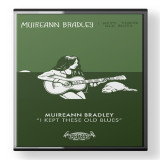
Muireann Bradley is a young blues, ragtime, roots and folk guitarist and singer based in Ballybofey in County Donegal Ireland. “This is my first album. Most of these tunes were originally recorded by the great blues men and women who were making records from the 1920s and 1930s right up in some cases to the early 1970s. I have also found inspiration for the renditions recorded here in the playing of some of the musicians who began recording this music in the 1960s and later, and who in some cases learned at the feet of the greats. Many of these guitarists played pivotal roles in the 1960s blues revival and subsequent “rediscovery” of many of the greats of country blues. I grew up steeped in these old blues in the hills overlooking the valley of the River Finn just outside the town of Ballybofey in County Donegal. My father would play this music constantly at home and wherever we went in the car and talk about it endlessly whether anyone was listening or not, telling stories about the lives of these musicians as if they were legend, mythology or the evening news. My father could of course play all this stuff on guitar, I remember watching him when I was very young and thinking “I want to be able to do that”. When I was nine he agreed to teach me and bought me my first little travel guitar. I worked hard to learn how to play but as time wore on I seemed to have less and less time to practice as I became more and more invested in the combat sports I was regularly training and competing in. Then in March 2020 the first Covid lockdowns happened and all contact sports were shut down. I was lost for a while but soon found my way back to the guitar. I was now listening, playing and practicing with a new intensity and focus. In a very serious moment, I wrote out a list of tunes I was going to learn. The first tune on that list was Blind Blake’s “Police Dog Blues”. I’m not sure now how long it took to get that arrangement together but when it was ready we videoed me performing it and posted it on YouTube. It ended up getting a lot of attention, I remember my parents being quite shocked and soon after that Josh Rosenthal got in touch… and here we are! Each individual track on this album was recorded live in the studio and represents one entire take with me singing and backing myself up on guitar simultaneously. Most are either first or second takes. Nothing has been added or taken away, no overdubs or modern recording tricks of any kind have been used at all so at least in some respects this album has been recorded in the same way as those classics of the 1920s and 1930s