This is the 1973 solo album by Ghanaian percussionist Anthony Kwaku Bah, who was given the nickname „Reebop“ by American
jazz legend Dizzie Gillespie. He passed away early at the age of 39 in Stockholm in 1983, but before made himself a name for his
works with UK 70s rock heroes TRAFFIC and German Krautrockers CAN, amongst others. If you might expect here the prototypical
Afro Beat and Afro Rock you mostly know from British bands, you will be surprised that this is only one part of the deal. Yes, there
are African elements to be found, buried somewhere in this boiling cauldron where polyrhythmic grooves are the base for jazz
improvisations by the brass section, that range from naughty swing and bebop, to freaked out free jazz and enchanting soul jazz
the way it was popular in the late 60s. The arrangements are utterly lush with so much going on here in every aspect that you
would get lost if there was no trace of melody to be discovered, but there they are and they tell you fantastic stories of exotic
places that only exist in your wildest dreams. Kwaku Bah’s rhythm patterns grab you by the horns and pull you into a world of
their own. Hypnotical, irresistible, hot and vivid. The tunes combine jazz, soul, funk and each one is constructed like a self –
contained story. One could imagine these tunes being used as library music for 70s movies from action to romance. All pieces
though are characterized by the constantly pulsating rhythm. To avoid drifting into the field of insubstantial disco dance music,
the performances witnessed here were executed with the highest possible emotional intensity and dedication. Lay back, close
your eyes and float away on a raft of sound upon the wild river of grooves and melodies. Some haunting Exotica jazz passages
with a typical „jungle“ feel get thrown in for the good measure. There are even vocals in an African language hard to identify,
which create and even more mysterious atmosphere. This is just an introduction part of another powerful speed funk groover but
the vocals stay and make this a clear standout track. Saxophone and guitars seem to have a duel here. You will not sit still while
having this tune „Iphonohimine“ coming down on you like a thunderstorm. Blues, Afro Beat, Psychedelic Rock, Funk, it can all be
found in here and the band goes wild into an everlasting improvisation that deprives you of your breath. Can this record get even better? Do not ask, just enjoy what comes next. If you think that some melodies by the giant brass section sound a bit too catchy
just reach out beyond these harmony lines and find yourself in a thicket of grooves, pulsations, bits and pieces of melody with a
dense, sultry atmosphere. Some smaller parts might make you think of cruise ship big bands and white suits, but everybody will
soon drop these and dance in their underwear for the hot blooded power funk base of the tune called „Africa“, which will take
over one’s soul and set it on fire. So clean, so nice and so filthy and dangerous at the same time, this album is a masterpiece of it’s
style. The exciting and very sensual funk rock of „Lovin‘ you baby“ with crazy fuzz guitars and a dark and haunting approach is
another reason to kneel down when you put this record onto your turntable. Great clean lead guitars give it a latin garage rock
edge Carlos Santana would commit serious crimes for. If you love bands like OSIBISA, Eric Burden & WAR, GINGER BAKER
AIRFORCE, SANTANA, Miles Davis, all around 1969 to 1973, this is what you always wanted to listen to. Grab your copy now.
Buscar:tell her
The Story Itself
On the 12th of April 1961, Yuri Gagarin was launched into orbit for the first and - so they tell us - the last time. Upon returning to Earth, Yuri became a global hero, travelling the world to tell of his adventure.
Secretly, he was plagued by strange hallucinations and a persistent glow around his vision; a cornucopia of colour in a constant corona. In 1964 - following a silent coup by Leonid Brezhnev - Yuri was banned from embarking on further manned missions into space. At first fearing madness, the cosmonaut came to see these apparitions as a signal, an invitation, a welcoming beacon from a distant lighthouse blinking across the cosmic void.
On the 27th of March 1968, aided by trusted friends within the space program, Yuri Gagarin swapped places with another cosmonaut on a secret test flight and was once more blasted into outer space. Knocked unconscious by the extreme velocity of his experimental craft, Yuri awoke a mere 15 minutes later in view not of the rapidly shrinking Earth, but an entirely alien vista; he was elsewhere...
About Tony Neptune
Tony Neptune is a multi-media persona created by the Leeds-based artist and producer Sam Jefferies who, inspired by the narrative and musical legacies of early Detroit techno culture, aims to tell a complete story for the senses through a combination of image, sound and text. Asa member of the DimensionsDJ Directory three years running, some know Jefferies for his notorious DJ sets—whether he’s playing new wave or booty bass; as Tony Neptune or Yuri; solo or alongside Mark ‘Turbo’ Turner in another peak time marathon b2b, it doesn’t take long for crowds to catch on to his deep knowledge of all things riddled with Hi-Tech Funk and Soul. But this isn’t the only storm he’s cooking up: in his visual work, Jefferies uses oil paint to unveil the surreal and celestial adventures of the original cosmonaut and space pioneer, Yuri Gagarin, capturing every aspect of their dream-like surroundings with an eye devoted to detail and depth. This painting lies at the heart of his debut EP, Reflections on a Daring
THE KILIMANJARO DARKJAZZ ENSEMBLE are a project which has always been tied to films. Films are luxurious because they dispose of all these boring, unimportant, and trivial parts of our lives. This allows them to fully control our sensations, to put us in a very specific mood. Joy and sadness are occasionally OK, endless joy or endless sadness are clinical. But there is one sensation which can be persistent and unconditionally bearable at the same time. In the absence of a better alternative, let's call it "the mood". The mood is what TKDE are aiming at. The mood.
The mood is infinite and illimitable, but not uniform and unique. On "From The Stairwell", TKDE deliver eight new incarnations of the mood. Stairwells have always been intriguing. They appear to unavoidably lead you to your destination, but they only disclose the path bit by bit. What lies far ahead of you and far beyond you is hidden in the shadows. The stairwell could just as well be infinite. You climb up this murky stairwell, passing by many doors. Every door contains a variation of the mood, a short film, a song. You open the first one, "All Is One". The evaporating mist discloses a large and empty room with a barstool in the middle. On the barstool, a chanteuse from the roaring twenties. Her voice starts to trigger vibrations of the ground, the walls start spiralling around her, but she remains untouched in the eye of the storm. Second room, "Giallo". Sly guy, telling smile, nice suit. Walking down the streets in the dusk. The ambience starts to get out of phase, the guy stumbles in horror while blending with the surrounding to a brown soup. Fourth room. "Cocaine". Naked people with pig heads crawl on the floor, on the walls, on the ceiling. They try to hopelessly suck up the white dust which covers every single piece of this room and is constantly spit out by tubes coming out of the walls. Dissonant sounds accompany the work of this desperate hive. As the people manage to counteract the tubes, fragile melodies start to overpower the dissonances. Sixth room, "Cotard Delusion". Baby morphing into a black fluid morphing into an old man which turns his eyes inwards and finds his inside to be completely empty. The journey up the stairwell, down the stairwell, continues. The pictures fill your head and make you forget where you wanted to go in the first place.
"From The Stairwell" is a surprise and a logical step at the same time. It is a surprise because the songs are far less beat-driven in comparison to TKDE's earlier works, and even contain a few hopeful tints here and there. It is a logical step because in the end each song turns to have a very diverse dramaturgic flow. This could raise the conjecture that TKDE, initially started out to make music for existing and non-existing films, wanted to incorporate the audiovisual impression completely into songs, making the films superfluous. At times, "From The Stairwell" makes you think of 60's soundtracks, but the organic feeling of those is always interwoven with mechanical elements. Altogether, every single of the numerous details present in TKDE's new songs feels to be at the right place and you can either just dive into the mood or pick one of the many aspects and enjoy it on its own - be it Gideon Kiers' beats & fx, Jason Köhnen's bass & piano, Hilary Jeffery's trombone, Charlotte Cegarra's voice & piano, Eelco Bosman's guitar, Nina Hitz' cello, Sarah Anderson's violin, or - appearing as guest musicians - Eiríkur Óli Ólafsson's trumpet and Coen Kaldeway's saxophone & bass clarinet.
- A1: Think
- A2: Please Please Please
- A3: Tell Me What I Did Wrong
- A4: I Don't Mind
- A5: I Feel That Old Feeling Coming On
- A6: The Bells
- A7: I've Got Money
- A8: Bewildered
- B1: I'll Go Crazy
- B2: Try Me
- B3: Love Don't Love Nobody
- B4: Come Over Here
- B5: And I Do Just What I Want
- B6: Lost Someone
- B7: Baby Cries Over The Ocean
- B8: Night Train
MP 4 Teruyuki Kurihara Frozen Dust
»Frozen Dust« is an album unified by the theme of »destruction« and »creation.« Inspired by the power of nature; we’ve expressed how we humans overcome the magnificent phenomena and impacts nature has on us - while it brings us joy, it can sometimes take away our lives and pleasures, We’ve incorporated this rather difficult theme by telling stories of fictional characters in the album; an adventurer in the Arctic region who confronts the threat of nature and survives between life and death, or a widow who never eases the pain of losing her sailor husband by a great storm in the Age of Discovery. »Frozen Dust« is our manifestation of »destruction« and »creation and each sound brings you the essence of it.
Reviews in The Wire, A Closer Listen, MixMag Japan, ResidentAdvisor Japan, African Paper and more
Interview in Data Wave
Der einzigartige Sound der beiden irischstämmigen Zwillingsschwestern Georgina & Una McGeough aka Song Sung aus New York klingt hypnotisch, mysteriös und hymnisch, wie von einer Girlgroup aus dem Weltraumzeitalter. Was kein Wunder ist, entstand doch ihr Debütalbum "The Ascension Is Ours" in Kooperation mit dem irischen Top-Produzenten David Holmes (Noel Gallagher, Killing Eve OST) und seinem Unloved-Duo-Partner, dem US-Filmkomponisten Keefus Ciancia (True Detectives OST), die zu Lyrics und Vocalmelodien von Song Sung die Arrangements beisteuerten.
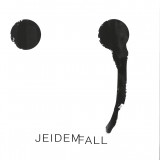
The man in the crowd is a wonderer with relaxed habits. In him the course of things and movement of the city is reproduced. The Düsseldorfer Detlef Weinrich is such a man in the crows. Some one who is constantly listening to future winds through rushes of the past. He loves the night for its free will. And his music tells stories about it. You might know him as a member of the band Kreidler. As a solo artist he goes under the name Tolouse Low Trax. And he's already got three Eps and two albums under his belt. His first solo album „Mask Talk“ thrives on a feathery beat frequency and cool new-wave-strength. His recently released piece „Corridor Plateau“, which appeared as a limited edition to accompany the exhibition „Corridor Plateau“ contains percussive electronics and Industrial sounding like its from the second industrial revolution. His third album „Jeidem Fall“, is also not from here. It sounds like music brought down to earth from the heavens. But its a dark cosmos in which there are only fleeting glimpses of light. All eight tracks were composed in a short space of time over the period of just a few months and fit together perfectly atmospherically. With a musical expressiveness that undoubtedly twists your emotions, „Jeidem Fall“ attacks the subconscious and clouds the mind. The drums have more movement that on „Mask Talk“. Along with the constant tapping of drumsticks goes melodical arpeggios dancing dark and dirty. At times longing vocals drift abstractly through the room, as on „Sa Seline“ or „Geo Scan“, without telling any obvious story.
To sound like stylistic cross references from the present and past is all just speculation for nothing on „Jeidem Fall“ really sounds like anything that has gone before. You could compare the dark minimal timbre of the drum computer aesthetic with Craig Leon's first reductive album „Nommos“. There is also a hint of the minimallist industrial of the Spanish band Esplendor Geometrico in the bubbly textures. But Tolouse Low Trax is still looking from the present into the future and filter and filters all his personal preferences through his MPC and his small synth setup to make them come alive here and now in a new way. Again Tolouse Low Trax has created a truly mysteriously vibrating drum computer music which offers hypnotic magic for the shadowy dance floor. Only a little light should illuminate the whole thing and the bodies that move above them should have no fear from threatening percussion which are displaced into a misty trance. A dark swaying shadowy mass, ideal for a journey at the end of the night and all those non-places where longing sleeps and the last romantics dance while getting drunk.
- A1: East Man & Streema - Know Like Dat
- A2: East Man & Mic Ty - Everybody Knows
- A3: East Man & Fernando Kep - Ouroboros
- A4: East Man & Lyrical Strally - Ten Ton Riddim
- A5: East Man & Ny Ny - Boys
- A6: East Man & Whack Eye - Who Am I?
- B1: East Man & Eklipse - East Man Theme (Reprise)
- B2: East Man & Darkos Strife - Wow How?
- B3: Ease Up
- B4: Look & Listen (Part 2)
- B5: Machine Gun
- B6: Hi Tek Theme
'Prole Art Threat' is producer Anthoney Hart's second LP for Planet Mu under his East Man alias, after 2018's well received debut 'Red White & Zero'. It brings together a set of MCs from all over London, Darkos and Eklipse from East London and Lyrical Strally from near Feltham who were on the first album, Ny Ny and Mic Ty also from East London, Streema and 'Vision Crew' member Whack Eye from Lewisham plus Fernando Kep, an MC from the burgeoning Brazil grime scene. They work across a cohesive set of tight riddims forged from thoughtful amalgams of grime, dancehall and drum & bass. The album takes its name from a Fall song/mission statement of the same title, the band being self-consciously working class and led by a brilliant autodidact in Mark E Smith. East Man relates that the title is to be taken as “a reflection of working-class creativity and how the establishment marginalise us and (perhaps on a subconscious level) see us as a threat.” Les Back, author of 'The Art of Listening' and 'Out of Whiteness: Color, Politics and Culture (with Vron Ware)' contributes liner notes to the record: East Man understands the force and the democracy of the mic. Listening to Prole Art Threat is like being at a dance. As the mic is passed between each of the MCs, a different tale is ‘elevated... off the map’ as Ny Ny puts it. We hear instalmentsfrom Forest Gate, Lee, Lewisham and Manor Park as these ‘lyrical gaffers’ and ’top boys and girls’ tell tough stories of life under the scrutiny of the ‘Feds’ in a brutal and divided city. The bars and rhymes document what it means to live here; from the double standards applied to the sexuality of young girls and boys to the corrosive violence of everyday life. All this is dissected without compromise. This is not just aLondon story though, the inclusion of Fernando Kep from the burgeoning Grime scene in Brazil is evidence of the outernational reach of the music. The tracks on East Man’s album explode the wilful ignorance of those who see ‘the working class’ in contemporary London as code for whiteness. This is the sound of a proletarian urban multiculture, made from Caribbean and African influences, sound system culture, pirate radio and the inexorable rhythms of Grime, Drum & Bass, Techno and Dancehall. It is the stirring of the "white" & "black" working classes who are living together and coming together on their own terms in sound. ‘Making music because you love it... what the fuck else could you do?’ as East Man says. The tracks and voices you are holding in your hands are, as a result urgent, vital, as hard nails and twice as sharp.
Siti of Unguja tells the story of pioneering women, of the ‘golden
voice’ of Siti Muharam, heiress to the singular legacy of her great
grandmother, the mother of taarab, Siti Binti Saad.
On the Corner teases this first taste of a landmark recording that the
label embarked upon two years ago on Zanzibar. Siti of Unguja has a
transformative atmosphere, brimming with romance, passion and
protest.
Zanzibar is an Island archipelago that lies 6 degrees South of the
equator and 30 miles off the East African coast out in the Indian
Ocean. Known for its spices, traditional Dhow sailing boats and being
a mercantile trading capital of Swahili culture.
The modern history of Zanzibar can be animated through the life and
legacy of one artist, Siti binti Saad. Born in 1890 in the small fishing
village of Fumba, on Unguja (Zanzibar’s largest island), she became
the first Zanzibari recording artist and her recordings sold in tens of
thousands across the swahili world.
The tracks recorded for Siti of Unguja demonstrate Siti Binti Saad’s
eclectic influence on Zanzibari taarab and her great granddaughter,
Siti Muharam imbues the compositions with feeling. Siti Muharam’s
golden voice carries the poetry and invects a timeless passion. It is
Muharam’s deep humility and love that brings the spirit of these two
women together.
With Sam Jones at the controls, taarab’s conservative layers were
opened up and given more than a little wiggle room. Under the
direction of Matona, the recording of this album paid homage to Siti
Binti Saad’s innovations by bringing back the percussive Kidumbak
style of music that originated on the streets of Zanzibar. By strippping
back the typically dense string section of taarab a space was created
for Muharam’s beguiling timbre that is gilded with emotion.
DJ Support and positive Feedback by the likes of
Laurent Garnier, Dixon, Ame, Adriatique, Ian Pooley, Timo Maas, Trikk, Frankey & Sandrino, Sacha, The Drifter, Severino (Horse Meet Disco), Alex Dallas (Zukunft Zürich),
Yør Kultura, Lehar, Denis Horvat, BOG, Echonomist, Fred Everything, Luca Bachetti, Karotte, Roberto Rodriguez…
We're happy to announce the fourth chapter of our sought-after Outbound series which also marks Lossless' second release in 2020. After two extended chapters of Outbound, fully showcasing our labels artist roster, Outbound.4 is a crisp double A-Side affair - featuring two killer Techno workouts courtesy of our French stalwart Anthony George Patrice followed up by two Deep/Dub House delights delivered by Son Dos.
Without a doubt, Berlin based frenchman Anthony George Patrice steadily adjusted and developed his sound to a higher level over the last years. His contribution on Side A - "DBZU (Eine Brücke Zum Übermenschen)" and "Crowned Eagle" exposing new artistic shades and Anthony's ability to take you on a sonic journey and soak you into his rich and driving deeper Techno soundscapes.
Side AA belongs to Son Dos - a creative power plant by two Sweden born men: Barcelona based Marco Gegenheimer and Tapia J. Arriagada living in Malta. The duo already caused a stir with their debut "Children Of Almost" on Outcast Oddity. Marco also released some great music on Studio Barnhus as one half of MLiR!
On our Outbound.4 the guys showcase two amazing cuts originated from fruitful studio jams.
The beautiful "Cala" is hypnotizing us in deep, meditative balearic territories while her powerful brother "Maffio" might have had a little testosterone injection along the way and moves us straight onto the dancefloor. Both tunes are capable to unveil their power outdoors just as much as they will in a sweaty basement!
Son Dos quoting on Anthony George Patrice's tracks:
"These songs sound like a Movie score to us, a soundtrack taking you further and further into an unexplored forest: ...you are on a mission ... chugging drums, haunting strings and rolling percussion guide you... your heartbeat intensifies, with each step that you take...
all of a sudden, the floor underneath you turns into flowing geometrical patterns and you start falling...
a voice tells you "Happiness Is A Miisunderstanding", and the fear you had leaves your mind...you connect yourself with a higher power and realise why you started this mission in the first place"
Anthony George Patrice quoting on Son Dos tracks:
"Lovely balearic yet powerful atmosphere on "Cala"… Head flies and shoes get used. All that you wish for!" ...
"Hands in the air for "Maffio"! Here comes the peaktime booming system. Simple, efficient yet super interesting and deeply rooted dance floor killer. This is ace!
French synth-pop talent Lucien & The Kimono Orchestra unveils his new solo piano album, a journey into cinematic soundscapes
Alone at the piano, Lucien takes us on a very personal album in a deep and quiet reverie. We spend a soft winter morning in his company, reminiscing about tender childhood memories.
Between previously unreleased tracks and revisited Kimono Orchestra pieces, "Piano Matinée" concludes a trilogy of recordings which have barely been released, while paving the way for a wider future. Universal, sensitive, cinematographic, the piano language spoken here by Lucien opens us to his musical world in a light that is both more authentic and accessible.
The album also tells us a personal story. That of a grandfather - an exceptional pianist but forced to give up his career when the Second World War broke out - who passed on to him a taste for music in his early childhood, before passing away.
Many years later, Lucien came across old cassette recordings of his eldest son, soon afterwards having a disturbing dream in which he swore he had had a dialogue with him and decided to go his own way. The self-taught musician spent a whole year honing his piano skills before deciding to freeze his performance in the summer of 2019 at the legendary Steinway at the Studios Saint-Germain.
Drawing freely on all his influences - jazz, funk, classical, cinema - Lucien's "Piano Matinée" is a special object, as intimate as it is melodious.
- A1: $1,000,000 War Babies - Hey Little Boy
- A2: The Invaders - I Was A Fool
- A3: D & The Sugar Cane Factory - Fade Sun Fade
- A4: The Shades - Tell Me Not To Hurt
- A5: The Werps - Voodoo Doll
- A6: Female Species - Tale Of My Lost Love
- A7: The Chayns - See It Thru
- B1: Yellow Hair - Somewhere
- B2: The Islanders - King Of The Surf
- B3: The Fastells - So Much
- B4: The Frost - Behind The Closed Doors Of Her Mind
- B5: Bob Kirk & The Word - Summer Winds
- B6: The Weejuns - Ready C'mon Now
- B7: The Shy Guys - Goodbye To You
Ten incredible albums culled from the deepest, weirdest coop of record enthusiasts ever gathered under one banner. We’ve spared no expense packaging these, pairing the idea of the Art of Compilation with living and breathing art, creating little fortune cookies baked in a factory of forgotten dreams. Video games, pyramids, trading cards, matchbooks, mazes, lottery tickets, film canisters, yearbooks, and various other exercises in design absurdity.
The lost yearbook from Louis Wayne Moody High’s graduating class of 1967, chronicling the peaks and valleys of teenage angst, lost loves, and life after summer vacation. Fourteen moody melodies of surf kings, guitar Bettys, talent show psychers, and pre-S.D.S. soft- poppers. Walls of jangly guitars, maudlin organs, and melancholy harmonies deliver the bummer to ring in the summer.
Two celebrated collaborative recordings by Croatian Amor & Varg2TM available on limited vinyl for the very first time! “Body of Water” from 2018 was the first collaboration between Croatian Amor & Varg- 5 tracks of aquatic ambient celebrating the myth of brilliant summers. It was followed in late 2019 by the lean and quick, beatdriven “Body of Carbon”. Now available together on limited vinyl presented in black disco sleeve with printed labels. "Hazmat bouquets drenched in rain, A tiny piece of coral on a chain around neck, An invitation to see the miracle in the things around us. Croatian Amor & Varg2TM together. Contemporary electronic music.
Be With hereby presents aural perfection.
Don’t let the title mislead you, “Much Too Much” by Sass has just the right amount of everything, whether you’re talking about the vocal or the instrumental. And that’s as true now as it was when it was originally released back in 1982.
In 1981 The Jack Sass Band, as they were known, were still working the NYC club circuit. Along with the likes of Change, The BB & Q Band and High Fashion, they were part of the Little Macho Music phenomenon and that’s how they ended up in an 8 track studio on 7th Avenue near 20th Street, where Little Macho recorded demos.
Produced by the band’s vocalist Mic Murphy, who also wrote the track along with fellow band member LaForrest Cope, the band needed just one session to capture “Much Too Much”. The recording studio just so happened to be run by Silvio Tancredi and when the tracks were finished he offered to put them out on his 25 West record label. The vocal version and an instrumental mix were released as a 12" the following year. Mic tells us this meant Sass “were one of the few bands to have a record release while still playing on the club circuit. So the reaction exceeded our expectations at the time”.
According to Mic “Much Too Much” was something a little different from the band’s live sound at the time, “it was more R&B smoothed out than the more funk rock we usually leaned into”. Indeed, the track glides with grace, poise and patience. The elegant, easy tempo, combined with the magnificent melody and Mic’s signature sublime vocal conjures magic. The blend of deep boogie-funk power and heavenly sweetness is both infectious and goosebump-inducing.
Over on the flip-side, the instrumental slaps harder. Without Mic’s vocal it’s just pure groove, with nothing to stop you vibing all night - the bassline, the drums and the melody still connect. Hard. Pick your side, you won’t lose.
Working directly with Mic Murphy means that the audio for this re-issue of the classic 12" comes from the original tapes. Cut at 45 RPM and released in a plain sleeve, we’ve made sure this record is well up to the job of having a permanent place in every DJ’s bag. As far as we’re concerned, this is essential stuff.
Mic told us just how much it means to him to have “Much To Much” re-issued: “It’s an amazing feeling to have something you created almost 40 years ago still have relevance and even more amazing to be considered among the Northern Soul boogie anthems. And it’s especially important to me that we’re available again on vinyl”.
- A1: Chamomile
- A2: Plum Blossom
- A3: Tuberosa
- B1: Jasmine
- B2: Orchid
- B3: Rose
- C1: Chamomile Night (Alva Noto Remodel)
- C2: Chamomile Day (Alva Noto Remodel)
- D1: Flower Protocol (Oceanic Remix)
- E1: Flower Protocol (Suzanne Kraft Remix)
- F1: Flower Protocol (Bell Towers Remix)
- F2: Flower Protocol (Laura Groves Remix)
Part I (Disc 1)
The Taiwanese artist Yutie Lee covers six Chinese folk songs about Flowers.
Tuberosa, Rose, Jasmine, Plum Blossom, Orchids & Chamomile all are odes to the beauty of the plant. The flower also being a metaphor for something we are desperately longing for, but can never quite get. However you may want to interpret the songs, they are all telling a story of something pure and indestructible. In the end nature will prevail?
Romantic thoughts created in a time long before the current state of the world.
By artificially mutating her voice, Yutie Lee successfully manages to transfer the songs into 2020s arguably much more complex, dystopian reality. She does this not without a bow to the past, prevailing something of the original songs sweet essence, even adding a layer of humour… in the end leaving the listener with a feeling of good hope.
Part II (Disc 2-3)
To complete the package Yutie Lee’s versions have been remixed by, Alva Noto, Bell Towers, Laura Groves, Oceanic and Suzanne Kraft.
"EIGHTIES LADIES"
This vocal ensemble comprised Denie Corbett, Marva Hicks, Susan Beaubian, Sylvia Striplin and Vivian Prince. In 1979 Denie had recorded a disco solo single “What You Won’t Do For Love” and was featured lead with group Station Break on another disco release “Be What You Are. Marva Hicks had recorded a debut solo single “Looking Over My Shoulder” in 1978 and would later infiltrate the modern soul world with “One Good Reason” from her 1991 self-titled debut and only solo album.
Vivian Prince recorded a boogie track “Gotta Get A Hold On You” in 1982 and of course Sylvia recorded a solo project “Give Me Your Love”, which was also reissued by 'Expansion' for 'Uno Melodic'.
As Eighties Ladies; they are best known for “Turned On To You”.
- Produced by the legendary: Roy Ayers.
Criminally unavailable, home-recorded fully digital soul JAM from 1990.
Ed and Joe Wartts, the rowdy younger brothers of acclaimed gospel singer, Andrew Wartts, go hard here with a conscious approach to love and politics; a passionate plea for a more compassionate world. Agitated bass tones cascade only to vanish under a supernatural synth lead that floats somewhere between neo soul and phantom G-funk. Ed's idiosyncratic playing and Joe's raw, emotional vocals deliver an earnest commandment for any era. Electronic instrumentation and voice mingle in a noble and metallic way, giving the track a kind of tough, sophisticated, griminess. A spectral strangeness, rising up from somewhere …
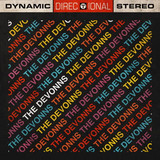
The Devonns dust off the golden age of 70's Chicago Soul with their self-titled debut album on Record Kicks. Straight from the streets of Chicago, Illinois, The Devonns (pronounced "De vaughns") are the brand new soul outfit and the latest addition of the Record Kicks' family, whose self-titled debut album that drops April 03, is an assortment of influences taking us back to the heyday of soul.
Drawing influences from bands such as The Dramatics, The Isley Brothers and Leroy Hutson, yet bringing in their own unique modern twist, influenced by artists such as Jamie Lidell and Raphael Saadiq; singer Mat Ajjarapu explains how unintentionally, the rich heritage of Chicago's history with soul music influenced him.
"The city was at the epicentre of a lot of good music back in the 50's all the way to the 80's, a lot of the labels specialising in soul were based in the Chicago and we even had our own sound known as "Chicago soul". Through several years of crate digging it surprised me how many songs I loved were recorded in this city, for example one of my favourites is this great little song by The Natural Four, produced by Leroy Hutson 'Can This Be Real', and released via Curtom Records."
The band started in 2016 after multi-instrumentalist and songwriter Mathew Ajjarapu dropped out of med school and found himself unemployed and drifting. Listening to music constantly at the time, he found inspired to put a band together and create his own music. Pairing up with some of the best musicians Chicago has to offer, he founded The Devonns: the rhythm duty is entrusted to Khalyle Hagood (bass), Ari Lindo (guitar) and Khori Wilson (drums).
Originally he wanted to focus on 50s style doo-wop, similar to The Flamingos; rich in reverb and vocal harmonies, but in the first initial practise they had it was evident the band clicked on their love of soul music from the 70s, so their music took a natural turn towards that sound, with tracks such as the Wilson Pickett-esque single 'Tell Me'.
The release took almost two years to complete as Mat explains "I am a perfectionist, I had a very specific vision in my head about how it should sound and I wasn't going to rest until I achieved it."
"This is a definitely a throwback soul record, as well as being drawn to lush and intricate arrangements of Motown, I was also inspired by the more lo-fi works of smaller labels such as Chess and Capsoul, and I wanted to capture the magic they had in those recordings in our record, as everything feels too precise nowadays" clarifies Mat.
It was thanks to his engineer Mike Hagler, who introduced him to Paul Von Mertons (Mavis Staples, Paul McCartney, Elton John) who arranges and conducts for Brian Wilson's live touring show and after a 45 minute phone conversation about what Mat wasn't keen on, on the album, he realised Paul totally understood where he was coming from.
After a few months wait for Paul to get back from touring they entered the studio with "Paul's players" and as soon as they hit record, Mat explains "I was getting chills up my neck, it was one of the happiest days of my life, and finally we had nailed it!"
Tracks such as 'Come Back; which Mat wrote in ten minutes on a $300 Daneelectro Singlecut guitar initially, came to life, with Paul's rich string arrangements and features guitarist and percussionist Ken Stringfellow (R.E.M.).
It still took a few months to get the recording process finished but finally after a torturous nineteen months they album was finally finished.
The result is an album filled with lavish arrangements and catchy melodies which take us on a nostalgic musical journey inspired by chic 70s soul, yet the band don't hesitate to add their own unique and elegant contemporary stamp to the record.
Charlotte Dos Santos exists in a lane all her own. As a fiercely independent producer, singer, composer and arranger, she takes full ownership over her art, imbuing it with feather-light vocals one moment and a rumbling piano line the next. Her warm, emotive and jazz-inflected song writing weaves seamlessly between themes of identity, womanhood and human connection.
On Harvest Time, the follow up to Cleo (2017 EP), Charlotte shows no signs of letting up. These are songs written with an honesty that can’t be neatly placed into a box. Rather, they beautifully tell a story of rebirth, growth, self-belief and empathy.
The landmark 1980 album, representing a period of consolidation for Patrice Rushen. Her studio reputation as a go-to pianist and arranger among other artists and musicians was well established and was growing exponentially. Although never originally planning a career as a solo artist, she had built this side of her work through three Prestige albums and two sophisticated soul and disco albums for Elektra, 'Patrice' and 'Pizzazz'. "I was lucky to have a group of musicians that I knew well by the time of these recording sessions," remembers Patrice. "I had my pick of really incredible players because of all of the studio work I was doing. I also played with Lee Ritenour, Harvey Mason and others almost on a weekly basis at The Baked Potato club in L.A." Tracks include the singles 'Don't Blame Me', 'Look Up!' and 'Never Gonna Give You Up'. "'Never Gonna Give You Up' came out of playing ideas at home. Bassist Freddie Washington was living with my family while he tried to get a foothold in L.A.'s music scene and that groove came out of those jams. With 'The Dream', I had been listening to Minnie Riperton's 'Come To My Garden', one of my favourite albums. With Charles Stepney's arrangements, I saw that he didn't have to use large instrumentation to be orchestral in his approach. So, 'The Dream' was a homage to that kind of writing." "After 'Posh', we had a much better idea from the performance side what was important in our music and that informed my next album, 'Straight From The Heart'. We took a little break after 'Posh' was released, although I was still writing and working regularly on scores for film and TV. That had always been my main focus in my music."