Cerca:ten for two

Generi
Tutto
Thomas Newman - Skyfall LP 2x12"
  • Grand Bazaar, Istanbul
  • Voluntary Retirement
  • New Digs
  • Severine
  • Brave New World
  • Shanghai Drive
  • Jellyfish
  • Silhouette
  • Modigliani
  • Day Wasted
  • Quartermaster
  • Someone Usually Dies
  • Komodo Dragon
  • The Bloody Shot
  • Enjoying Death
  • The Chimera
  • Close Shave
  • Health & Safety
  • Granborough Road
  • Tennyson
  • Enquiry
  • Breadcrumbs
  • Skyfall
  • Kill Them First
  • Welcome To Scotland
  • She's Mine
  • The Moors
  • Deep Water
  • Mother
  • Adrenaline

Thomas Newman became the ninth composer in the James Bond series history. His score for the 2012 movie Skyfall won the BAFTA Award for Best Film Music. In 2013, it became one of two Bond scores to be nominated for the Academy Award for Best Original Score. Skyfall (2012) is the twenty-third spy film in the James Bond film series. It features Daniel Craig in his third performance as James Bond, and Javier Bardem as Raoul Silva, the film's villain. The movie was directed by Sam Mendes and centers on Bond investigating an attack on MI6. The attack is part of a plot by former MI6 agent Raoul Silva to humiliate, discredit and kill M as revenge against her for betraying him. The film sees the return of two recurring characters to the series after an absence of two films: Q, played by Ben Whishaw, and Moneypenny, played by Naomie Harris. Skyfall is the last film of the series for Judi Dench, who played M, a role that she had played in the previous six films. Skyfall is available as a limited edition of 1500 numbered copies on translucent red coloured vinyl. This 2LP package comes in a gatefold sleeve and includes a 4-page booklet.

pre-ordina ora09.05.2025

dovrebbe essere pubblicato su 09.05.2025

43,91
Thomas Newmann - Skyfall OST 2x12"

Thomas Newman became the ninth composer in the James Bond series history. His score for Skyfall won the BAFTA Award for Best Film Music. In 2013, it became one of two Bond scores to be nominated for the Academy Award for Best Original Score. The other to be nominated was the score from The Spy Who Loved Me. Skyfall does not contain the title song performed by Adele.

Skyfall (2012) is the twenty-third spy film in the James Bond film series. It features Daniel Craig in his third performance as James Bond, and Javier Bardem as Raoul Silva, the film's villain. The movie was directed by Sam Mendes. The story centres on Bond investigating an attack on MI6. The attack is part of a plot by former MI6 agent Raoul Silva to humiliate, discredit and kill M as revenge against her for betraying him. The film sees the return of two recurring characters to the series after an absence of two films: Q, played by Ben Whishaw, and Moneypenny, played by Naomie Harris. Skyfall is the last film of the series for Judi Dench, who played M, a role that she had played in the previous six films.

The limited edition of Skyfall of 1.500 individually numbered copies is pressed on coloured (transparent & black mixed) vinyl. The package includes a big poster, a 4-page insert and 2 printed innersleeves. Both innersleeves have one hole in the middle to show James Bond on the labels. Don't forget to check the secret service inscriptions on the run out grooves.

pre-ordina ora09.05.2025

dovrebbe essere pubblicato su 09.05.2025

48,70
TAPE - PRELUDES
  • Lights Out
  • Naukluft Plateau
  • Golden Gain
  • Tangential Thoughts
  • On The Accordeon Bus
  • On The Accordeon Bus

Following a trio of quick sell out, limited lathe cut 45 to kick off 2025, Feral Child now embark on a stash of more widely available full lengths (from the likes of Lake Ruth, The Jonny Halifax Invocation and Polypores amongst others). First up is a wonderful follow up to 2023’s “Refrains” 10” EP from Swedish band TAPE. “Refrains” figured in 2 or 3 notable UK stores’ end of year polls, noticeably Monorail in Glasgow where Stephen Pastel gave it a top 3 for 2023 nomination. “Preludes” is -if anything- even more majestic and acts as a superb follow up. The record is released 11th April on Feral Child as one time pressing 10” vinyl only release, featuring beautiful artwork once more from Peter Liversidge and the calligraphic hand of Klas Augustsson. The return of Swedish trio Tape has been reassuringly slow motion. They’ve always moved at their own pace, these three peripatetic musicians – brothers Andreas and Johan Berthling, and companion Tomas Hallonsten – though it’s been over a decade since their last full-length, 2014’s Casino. Not a disappearing act, rather a break for consideration, time to explore other avenues of creativity, perhaps… But their reappearance, with the Refrains 10”, was one of 2023’s most encouraging moments; doubly so, as it was proof they’d not lost their way, at all, in the intervening nine years. The Tape modus operandi is one of deceptive simplicity and artful innocence. On Preludes, a typically right, one-word Tape title, this means five wordless songs that move between fully fleshed out, lovingly tended folk threnodies – the beautiful opener, “Lights Out”, that spins webs via simple, hypnotically repeating guitar – and textural conceits that hover, appealingly, in a kind of no-place. “Naukluft Plateau” is lovingly dappled, with ruminative piano adrift on a cascading tonal waterfall. Then, feather-fall strums of guitar meet huffing harmonium and electronic scrum on the brief “Golden Gain”. Is there a more perfect song title for Tape than “Tangential Thoughts”? It sums up the way their music, nimble and dainty but also carefully tended, lends itself to the reverie, the meander, the anfractuous. The madeleine-like power of this song’s two-chord figure allows the music to take flight: rustling organ, oscillating cymbal, droplets of percussion, a spinney of sound. And Preludes slips away “On The Accordeon Bus”: there’s something lovely about the way that title collapses transit, articulation and bellows, reflected in the see-sawing sway and glitch-like rivulets of sound that course through the song. So, Preludes, then – alive to the moment, both gentle and sturdy. A copse of tone, and a most gorgeous wool-gathering.

pre-ordina ora09.05.2025

dovrebbe essere pubblicato su 09.05.2025

20,13
Six Organs of Admittance - MariaKapel
  • Annunciation 06:12
  • Riel 04:52
  • Stone Leaf And Pond 04:11
  • Katwijk 04:01
  • Dongen 05:20
  • Tilburg 03:09
  • Maryam 04:51
  • Two Wings 04:53

Originally released on Ben Chasny's own Pavilion imprint in 2011.

"I was invited by the Incubate Festival and the city of Tilburg to participate in an artist residency where I would explore the region’s unique chapels built for the Virgin Mary. After writing the music for about six months by drawing on memories of the encounters with the chapels and using techniques inspired by Gaston Bachelard’s Poetics Of Reverie, I flew back to Tilburg to perform the music at the Incubate Festival. We recorded the evening and I released the result on my Pavilion label. Each cover was hand painted white on white in the old Pavilion style. I created a stencil and used graphite powder to make the design that is inspired by the sun imagery in Athanasius Kircher diagrams."

Roadside chapels express the identity of the inhabitants of North Brabant, a Dutch province, bordering on Belgium. Roman Catholicism has been the dominant religion in this southern part of the Netherlands since the eighth century. For about a century and a half this religion was strongly suppressed. Only when the French revolutionaries preached freedom of belief around 1800 could the people of North Brabant exercise their faith again. This was the start of a very strong emancipatory development from which a special form of the Roman Catholic faith arose that fully determined everyday life of the people here. This faith was the determining factor in life and the measure of all things. After the second Vatican Council (1962-1965) the reins of the catholic faith in Brabant were loosened as well. This was the start of a revolutionary process of secularisation. Within a decade hardly anything was left of the almighty influence of the Roman Catholic Church and this situation has lasted up to the present day.

In spite of the almightiness of the official, Vatican ruled, Roman Catholic faith, North Brabant has always and perhaps notoriously fostered an undercurrent of popular belief as well. This is a kind of belief in which elements of the official faith and age-old pre-Christian traditions are combined. Worshipping relics, holding pilgrimages and processions, the use of water from holy wells, popular art, recitations and songs, festivals, rituals, folk traditions, superstition and the like are all examples of popular devotion. These matters have strongly influenced and formed the identity of the present-day population of North Brabant. It is part of their immaterial heritage.

An obvious and still very much visible form of popular devotion are the roadside chapels. In Brabant some 400 can be found, most of which have been devoted to Mary. Chapels are small buildings in which Mary or other saints are worshipped. They can be found within villages or towns or in natural surroundings. Always at the finest spots! The beauty of the environment adds a primary religious or mystical feeling to the visitor. Local people attach great value to their chapels. In spite of the overall secularisation in society they are still at the centre of cultural and social life. Where people in North Brabant can hardly be found in the churches nowadays, this doesn’t mean at all they are no longer religious. On the contrary, religious feelings are perhaps stronger than ever, but now people have to find their own expression of them. That’s why they fall back on the age-old popular belief in which chapels play an important role. We can even witness new forms of popular belief with chapels as their focal point. An example of this is the scattering of ashes of people who have been cremated. Chapels clearly also play a role in the lives of young people. On an average five new chapels are added every year.

I have studied the popular culture and belief and the identity of the inhabitants of North Brabant for over thirty years. I have published over forty books on these subjects. In 2010 I was approached by the organisation of the Incubate Festival in the North Brabant town of Tilburg. Their request was for me to lead the American composer and guitarist Ben Chasny around a number of chapels in the province devoted to Mary. He had been invited to North Brabant to write some new compositions. Ben Chasny then chose to be inspired by these chapels and that’s how we met. I was especially curious how an American would react to something as specific and small as a roadside chapel in North Brabant, since we tend to think here of (people in) America in terms of ‘big-bigger-biggest’. Would an inhabitant of this enormous country with this prevailing culture be able to grasp and respect the identity of some 2.5 million people in North Brabant with their chapels? The answer to this question lies hidden in the compositions he made and that can be listened to on this album. Yes, Ben Chasny has been able to convert the phenomenon of a simple chapel devoted to Mary into music. The physical and the spiritual have found each other. What a beautiful world…just listen! - Paul Spapens

pre-ordina ora09.05.2025

dovrebbe essere pubblicato su 09.05.2025

22,27
UNWED SAILOR - CRUEL ENTERTAINMENT
  • Rock Candy
  • Slab City
  • Monster Collecting
  • Soft Copy
  • Love Zoo
  • Bodymod
  • Monty Donahue
  • Sad Help
  • Cruel Entertainment

Neon Pink Vinyl. For their tenth LP in a career spanning more than two decades, Tulsa's Unwed Sailor deliver their heaviest riffs, loudest squalls, and most deeply textured arrangements yet. Cruel Entertainment is a catalogue of contrasts - dissonance and harmony, hardcore crunch and post-rock grandeur, complexity and catchiness - that adds a vibrant new dimension to the second phase of their discography, spanning thus far from 2019's landmark Heavy Age up to the "vivid, starry-eyed psychedelia" (AllMusic) of 2024's Underwater Over There. Opener and lead single, "Rock Candy", roars in with a gale of feedback, pounding drums, and nimble bass, until a latticework of howling guitars ushers us into a more goth-tinged space. It's a characteristically intricate, energetic composition that flows with remarkable ease between its parts, and wastes not a moment of its three minutes. "Monster Collecting" brings a rare combination of melancholic and driving energy, reminiscent of avowed heroes New Order, but ups the ante with a tight, fastpaced rhythm section and litany of guitar lines, until opening up into a cascade of reverberating textures and tenuous sweetness. According to Ford, the title Cruel Entertainment refers to "the hardships of being an artist and musician in the crowded, imbalanced world of social media and streaming," where the completion of a new work demands that the creator also be a promoter, content strategist, and agent, among many other intensifying challenges. Pointedly drawing inspiration from noisier, rowdier bands - including Fugazi, Quicksand, and Cherubs - here they seek a much-needed catharsis in the ongoing fight to keep the creative soul intact. Second side standout, "Monty Donahue", typifies this form of release, as massive, mid-tempo percussion leads a fluid low end theme - inspired by the dual bass assault of Dianogah - and Swatzell's chords burst into shimmering nebulas across a labyrinthine arrangement that's equally loud and beautiful. Title track, "Cruel Entertainment", is a mosaic of sound for which Ford's bass provides the mortar: taut drums list between the channels, washes of guitar stretch to the horizon, and metallic heaviness punctuates the drift. There is a confident immensity here, proving that, although Unwed Sailor have witnessed a wild amount of changes in the music industry, their knack for creating complex, vital, and masterfully produced work remains untouched.

pre-ordina ora09.05.2025

dovrebbe essere pubblicato su 09.05.2025

22,27
Zoë Mc Pherson - Upside Down

Zoë Mc Pherson

Upside Down

12inchSFX10
SFX
09.05.2025

Berlin-based French-Irish multimedia artist Zoe Mc Pherson levels up on their third full-length "Pitch Blender", mangling years of experience DJing and performing live into a tight set of cybernetic soundsystem experiments that flicker between the rave and the art space.

Cast your mind back to February 2020 for a moment, when Mc Pherson released their last album "States of Fugue". The world seemed less tangled somehow, and yet Mc Pherson's precision-engineered fusion of exploratory sound design and visceral club pressure seemed to hint at a cataclysmic event none of us were really expecting. Only a few weeks after its release the world changed forever, and the majority of us were grounded - forced to consider our lives and the movement (or lack thereof) surrounding us. The philosophy of this extended time period is welded into the bones of "Pitch Blender", Mc Pherson's supple third album. They have learned plenty in the last two years, and infuse all of that anxiety and spiky emotionality into a spread of tracks that sound as powerful in headphones as they do over a well-tweaked soundsystem, soldering vocals, environmental recordings and instrumental flourishes to unpredictably pneumatic, cybernetic beats.

Anyone that's caught one of Mc Pherson's energetic live performances over the last few months will have an idea of what "Pitch Blender" is made of. They're an artist who's somehow able to match the raw energy of post-punk and no-wave music with the brain-altering potential of the best experimental club tracks, vocalizing an incongruous post-lockdown reality over beats that sound as if they're in a permanent state of flux. 'On Fire' splutters to life in a frenetic patter of drums that blur into oddly soothing hoover sounds, snaking lysergically towards a drop that's teased constantly, and never comes. We're forced to wait until 'The Spark' for that, fighting through choppy, pitch-mangled guitar and rolling beats until a gruesome kick drum forces its way through the psilocybin mists and heaving Bristol-inspired bass clonks. Backed up with just the inverted traces of recognizable breaks, this vigorous pulse lies at the heart of "Pitch Blender", the driving force that powers Mc Pherson's sound even when it's only hinted at.

'Blender' is the moment where Mc Pherson show their full hand, using crackling sound effects, ghost vocals and uneven rhythms to build a textural landscape that's so evocative you can almost taste it. Squealing modular synth effects sound like gameshow buzzers being triggered in another dimension and propel the track forward - it's club music, just about, but Mc Pherson's motivation is world-building, and their world is colorful, abstract, and dizzyingly surreal. "Obsolete user," their voice echoes over driving airlock kicks. But they take a swift left turn with 'Lamella', reducing the kinetic club rhythms to a longing simmer and letting loose with powerful vocals, intoning with robotic, gender-fluxed intensity. On 'Wait', New York City's clacking crosswalk signal - already an effective club track on its own - is transformed into a reminder to slow down, juxtaposed with booming sub-heavy kicks, acidic synths and effervescent percussion that rattles in time with the vibrations. It's foley rave, built for pure psychedelic intensity to blur the line between real life and sonic fiction.

One of the album's most galvanic tracks, 'Power Dynamics' curves a double-time rhythm around breathless HQ sound design squiggles until it hits a polyrhythmic crescendo, striking a queasy balance between rave hedonism and ritualistic hand drum energy. It all builds towards eerie closing track 'Outside' that acts as an important wind down, spotlighting Mc Pherson's ability to operate outside of the rhythmic spectrum, using cinematic scrapes and flickering neon synths to create music that's tense but never terrifying. The track feels like the end credits of a particularly bewildering movie - something between the cyberpunk dystopia of "Ghost in the Shell" and the vivid, sky-scraping beauty of "Koyaanisqatsi". Mc Pherson has managed something special with "Pitch Blender": mashing together genres with rare focus, and sharpening their engineering skills to a fine point, they've concocted an antidote to contemporary malaise - a wakeup call that's begging us to loosen our limbs and move.

non in magazzino

Ordina ora e ordineremo l'articolo per te presso il nostro fornitore.

13,03

Last In: 7 months ago
Ninety-Eight Degrees - Full Circle

Ninety-Eight Degrees

Full Circle

12inchLPXOXO0325
XOXO
09.05.2025

After more than two decades of captivating fans with their signature harmonies and timeless love songs, 98 Degrees returns with Full Circle, an album that marks a new chapter in the group's storied career. This highly anticipated release features five brand new tracks that showcase the evolution of the band’s sound, while still staying true to the essence that made them icons of the '90s and 2000s. Collaborations with powerful vocalists Katrina Velarde and Janine Teñoso bring fresh, dynamic layers to the album, with each artist adding their unique touch to these modern pop-soul anthems. In addition to the new material, Full Circle includes five of 98 Degrees' classic hits, re-recorded and remastered for a new era. These beloved tracks have been given a polished, contemporary update, with richer instrumentation and renewed vocal energy, offering both longtime fans and new listeners a fresh experience of the band’s greatest hits.

From the soulful ballads to the infectious up-tempos, Full Circle perfectly blends the familiar smooth melodies that fans know and love with a more contemporary edge. The title Full Circle reflects the journey the group has taken—from their meteoric rise in the late '90s to their ongoing passion for making music together. With their signature harmonies stronger than ever, Full Circle is a testament to 98 Degrees' enduring legacy and their commitment to creating music that resonates across generations.

pre-ordina ora09.05.2025

dovrebbe essere pubblicato su 09.05.2025

37,77
LA FLEMME - LA FETE

La Flemme

LA FETE

12inchXAGLP61
Exag Records
09.05.2025
  • La Fête
  • Oiseau
  • Laissez-Moi Tranquille
  • Marre De Vous
  • Le Petit Du Camas
  • Mer Azur
  • Tunnel
  • Demain
  • Sans Fond

La Flemme is a dynamic quartet from Marseille, blending garage pop and psychedelic vibes. Comprised of Jules, Stella, Charles, and Ronie, they formed with a goal to release their debut album, La Fête, on April 25th, With their energetic sound and introspective tracks, La Flemme embodies the raw spirit of Marseille, marking their arrival as a vibrant force in the French rock scene. "La FLEMME emerges like a colorful whirlwind on the French musical landscape, drawing its audience into a universe where garage pop sounds, psychedelic textures and undeniable nervous energy mingle. Hailing from Marseille, this group of young musicians has already left its mark on the floors of French concert halls, each having previously explored the world of music within various projects. Jules, Stella, Charles and Ronie, respectively associated with Technopolice, Flathead, Tense of Fools and Avenoir, Tessina joined forces after a lazy night, deciding to create a new musical entity together. Their initial goal was simple: to get on stage for a concert within the next two months. And the result lived up to their aspirations: catchy tunes, imbued with the frenetic energy of garage rock and the desire for psychedelic sound exploration, etched in the auditory memory of their audience. La FLEMME unveiled a self-titled debut EP in 2024, with the hit tracks "Somnifères" and "Bruxisme". They now return with an album entitled "La Fête", due April 25, 2025 on EXAG' Records. "

pre-ordina ora09.05.2025

dovrebbe essere pubblicato su 09.05.2025

26,01
FREDDIE GIBBS & MADLIB - BANDANA

FREDDIE GIBBS & MADLIB

BANDANA

12inch19075934921
Columbia
07.05.2025

Freddie Gibbs and Madlib release their new album, Bandana, via Keep Cool/RCA Records and MadlibInvazion/ESGN. The album includes previous releases "Flat Tummy Tea," "Crime Pays," and "Giannis" featuring Anderson. Paak. The album is the pair's follow up to their 2014 critically-acclaimed debut Piñata, and includes additional features from Pusha T, Killer Mike, YasiinBey, and Black Thought.

The duo's seamless collaboration juxtaposes two giant talents: Madlib,the prolific producer with a record collection spanning all genres and eras, an adept sampler, peer to the late J Dilla (his collaborator on Champion Sound and his musical soulmate), foil for DOOM, hip hop's Charlie Parker, with whom he created the landmark album Madvillainy. Freddie Gibbs, the gravel-voiced braggadocios rapper, a vocal athlete, a star-on-the-rise knocked off course who refused to give up and has since offered some of the most compelling rap music in the past ten years.


On Piñata, Madlib offered Gibbs, then a gritty street rapper from Gary, Indiana, a chance to expand his captivating storytelling, giving him the dramatic backgrounds for his brutally-honest, soul-scraping lyrics. As a pair, Freddie and Madlib exude a natural chemistry and craft an alchemical music, appealing to everyone on the hip-hop spectrum.


Freddie Gibbs and Madlib are also set to play a string of shows in the U.S. and Europe this summer, which kicked off earlier this week with a sold-out, two-night residency at The Roxy in Los Angeles. They're set to play at MoMa PS1's Warm Up series in New York, Paredes De Coura Festival in Portugal, and Made in America in Philadelphia later this summer before heading off to Europe again in the Fall. Additional dates to follow soon.

non in magazzino

Ordina ora e ordineremo l'articolo per te presso il nostro fornitore.

28,53

Last In: 44 days ago
Will Saul, Fink & James Alexander Bright - Paradise Ave

Aus Music founder Will Saul collaborates with Fink and James Alexander Bright on the final EP in the AUS200.

After music from the likes of Quantic, Dam Swindle, K-Lone and Cinithe, Will Saul brings celebrations around his label's 200th release to a close with one track alongside long-time friend Fink and one with James Alexander Bright, an artist he discovered and signed to !K7 during a 10-year stint A&Ring with the label.

Saul's music has provided the backbone of the label since day one. His club-ready EPs and more immersive, expansive albums have helped to define its melodically rich fusion of bass and house. Just as importantly, his A&R has helped it evolve over the last two decades so it remains as relevant as ever with the current generation while providing a platform for contemporary talents to shine.

First up here he links up with his old friend, singer, songwriter, guitarist and producer Fink who, as Sideshow, was behind the first-ever release on Aus back in 2006. Since then, he and Saul have continued a fruitful working relationship which now bears juicy musical fruit once more. Their 'Slo-mo Life' is six sublime minutes of deep, dubbed-out downtempo. It's powered by a prowling bassline with tender melodies and introspective chords next to subtle vocal loops that cannot fail to bliss you out. Fink then offers up a remix as Sideshow that rides on airy jungle breaks while evocative synths are smeared in painterly fashion before decaying in endless reverb to an angelic ambient sound.

British multi-hyphenate James Alexander Bright has built up a colourful body of albums and EPs that soundtrack everything from hazy daydreams to lazy afternoons in the park via dance floor trips. The singer has worked with, among others, Groove Armada’s Tom Findlay and Girls Of The Internet and always brings a lovably lo-fi and intoxicating sensibility.

'Blue' is a raw, live sound with crashing hits and broken kick patterns. Bright's nagging vocal speaks of emotional pain while shimmering chords bring the heat. Bright's remix reworks the track into a widescreen hazy breakbeat soul track that gives his vocals extra room to make their mark while the exquisite live drums from Joris Feiertag keep you moving.

non in magazzino

Ordina ora e ordineremo l'articolo per te presso il nostro fornitore.

15,55

Last In: 13 months ago
Dyslecta - Fulcrum

Dyslecta

Fulcrum

12inchTL001
Tenuous Links
29.04.2025

Following the success of his self-released Woldsman001 two-tracker, standout sets at Tresor and Unfold, and praise from the likes of RA and Mixmag, London-based Yorkshireman Dyslecta launches his new imprint, Tenuous Links.

The first release comes from Dyslecta himself in the form of ‘Fulcrum’. Four wigged-out techno cuts aimed squarely at the dance floor

The EP draws inspiration from the natural wolds surrounding his hometown in East Yorkshire. Deep, cyclic drum patterns contrast with the brash, distorted bass elements mirroring the duality of the region’s chalk quarries and glacier-carved valleys.

With the aim of pushing innovative club sounds forward, Fulcrum sets a staunch tone of what’s to come on Tenuous Links.

Coming out on super limited 12” handstamped vinyl

non in magazzino

Ordina ora e ordineremo l'articolo per te presso il nostro fornitore.

15,55

Last In: 9 months ago
Dragomir - NRV006

Dragomir

NRV006

12inchNRV006
Nervous Records
29.04.2025

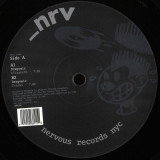
Following his appearance on _NRV001, Dragomir returns with his solo debut for the label—a deep and driving four-tracker, backed by two standout remixes from Lizz. ‘Elisabeth’ sets the tone with a tense, stripped groove that slowly uncoils across the A1, while ‘Freaks’ rides a more playful, shifty rhythm laced with micro stabs and broken vocal hints. On the flip, Lizz reshapes ‘Elisabeth’ into two distinct versions—first with the ‘Straight Remix,’ a sharp and focused reinterpretation made for the peak hours, then closing out with the ‘Disconnected Remix,’ which takes a moodier, more deconstructed approach.

non in magazzino

Ordina ora e ordineremo l'articolo per te presso il nostro fornitore.

14,08

Last In: 35 days ago
Sasha & Joseph Ashworth - HiFiHi

Sasha links up with Joseph Ashworth for epic new single 'HiFiHi' comes on Sasha's Last Night on Earth as two different versions

Sasha has been on an exceptional run of form of late, not least in collaboration with a wide range of innovative producers. His work continues to explore the most moving end of the electronic spectrum, both in terms of well-crafted grooves but also inescapable synth emotions. This time he links with Joseph Ashworth, Sound Of Outside label head and a regular on the likes of Anjunadeep, Needwant and Pets Recordings. His painstakingly crafted sound draws from a wide spectrum of influence, is rich in texture and melody and has seen him serve up indelible DJ sets all over the world.Together these studio wizards cook up 'HiFiHi' which is a sublime seven-minute trip built on bass, full of drama and tension. The silky synth lines weave in and out with rising chords and vocal motifs all enriching it with warmth and soul. After an epic build-up, fresh synth energy breaks out with trance-inducing magic and euphoric chords that bring great emotional release. The LoFiLo Mix is more mellow and with extra vulnerability in the elegant blend of synths and melodies that wash over you in a beautifully serene and escapist fashion.

non in magazzino

Ordina ora e ordineremo l'articolo per te presso il nostro fornitore.

14,08

Last In: 7 months ago
JIMI TENOR - JULY BLUE SKIES
  • July Blue Skies
  • Sky Train Baby
  • Venus Of Barsoon
  • Ikuchi
  • Summer Of Synesthesia
  • Tsicroxe

Embark on a funky synth-drenched journey as the cosmic count Jimi Tenor reunites with Timmion Records' soul architects Cold Diamond & Mink for yet another album. When placed side by side with the fellows' recent effort "Is There Love In Outer Space? "July Blue Skies" glides on a slightly more raw and mystical plane. Crafted over fiery sessions between Tenor and Cold Diamond & Mink, this vinyl release offers six soul-grasping tracks ranging from mellow groove to soundtrack funk. The album's opening title song kicks off with an extended analog synth intro which eventually develops into a sweet romantic invocation, painting a sonic canvas reminiscent of a boundless summer sky. The most vocal tune of this quite instrumental set of songs "Sky Train Baby" propels the listener on a locomotive ride through the star systems while "Venus of Barsoon" with its drum breaks and fuzz sounds blast you straight into sci fi movie funk territory. The album's B-side opens with "Ikuchi," where Tenor's always trusted flute and tenor sax take the spotlight over the slinky library beats. Closing the album we discover two single releases, the sublime "Summer Of Synesthesia" and the demonic "Tsicroxe" both completely worthy to hear sequenced inside this album as well. This album might be just the Spring jam that you needed in your life.

pre-ordina ora25.04.2025

dovrebbe essere pubblicato su 25.04.2025

21,22
CHRIS ABRAHAMS & OREN AMBARCHI & ROBBIE AVENAIM - PLACELESSNESS
  • Placelessness I
  • Placelessness Ii

Following nearly 20 years of working together as a trio, and numerous cross-collaborations in different configuration between them, Ideologic Organ presents Placelessness, the debut full-length by Chris Abrahams, Oren Ambarchi, and Robbie Avenaim, comprising two long-form works at juncture of ambient music, minimalism, rigorous experimentalism and improvisation, and machine music. Having carved distinct pathways across a diverse number of musical idioms for decades, Chris Abrahams, Oren Ambarchi, and Robbie Avenaim are each, respectively, among the most noteworthy and groundbreaking figures to have emerged from Australia's thriving experimental music scene. Ambarchi and Avenaim first encountered Abrahams when seeing the Necks - the project that has served as the primary vehicle for his singular approach to the piano since its founding in 1987 - together during the late 1980s, not long after having met in Sydney's underground music community. The pair's collaborations date back more than 35 years, criss-crossing Ambarchi's pioneering solo and ensemble work for guitar and Avenaim's visionary efforts for SARPS (Semi Automated Robotic Percussion System), robotic and kinetic extensions to his drum kit. In 2004, fate brought the three together in a trio performance at the What Is Music? Festival, the annual touring showcase of experimental music founded and run by Ambarchi and Avenaim between 1994-2012. For the nearly two decades since, Abrahams, Ambarchi, and Avenaim have intermittently reformed in exclusively live contexts, in Australia and abroad, cultivating and refining the fertile ground first tilled in that early meeting. Placelessness is the first album to present this remarkable trio's efforts in recorded form. Placelessness is the joining of three highly individualised streams, working in perfect harmony; the point at which friendship, mutual respect, and decades of creative exploration produce a singular spectrum of sound. Featuring Abrahams on piano, Ambarchi on guitar, and Avenaim on drums, the album's two sides draw on each artist's enduring dedication to long-form composition. Its two pieces, Placelessness I and Placelessness II, initially began as a single, 40 minute work, before being divided and reworked into distinct, complimentary gestures for the corresponding sides of the LP. Beginning with restrained clusters of reverberant piano tones, Placelessness I progresses at an almost glacial pace, with Abrahams' interventions increasing met by sparse responses, darting within vast ambiences, on guitar and percussion by Ambarchi and Avenaim. Remarkably conversational within its convergences of tonal, rhythmic, and textural abstraction, over the work's duration a progressive sense of tension unfurls and contracts, refusing release, as each of the ensemble's members contribute to an increasingly tangled sense of density at its resolve.While an entirely autonomous work, Placelessness II rapidly realises a distillation of the energy hinted at across the length of its predecessor. Following a luring passage of harmonious calm, Abrahams' launches into shimmering lines of repeating arpeggios, complimented at each escalation of tempo by Avenaim's machine gun fire percussion work and Ambarchi's masterful delivery of tonality and texture, as the trio collectively generate dense sheets of pointillistic ambience within which individual identity is almost lost, before slowly unspooling into unexpected abstractions and dissonances that deftly intervene with the work's inner logic and calm. What could easily be termed a maximalist take on Minimalism, Placelessness is a masterstroke of contemporary, real time composition, that blurs the boundaries between ambient music, experimentalism, free improvisation, and machine music. Drawing on Chris Abrahams, Oren Ambarchi, and Robbie Avenaim's decades of respective solo and collaborative practice, and the culmination of nearly twenty years of working together as a trio, it's two durational pieces - Placelessness I and Placelessness II - take form with a startling sense of effortlessness and grace, neither shying away from explicit beauty or rigorously tension within their forms

pre-ordina ora25.04.2025

dovrebbe essere pubblicato su 25.04.2025

26,01
VARIOUS - GATHER IN THE MUSHROOMS: THE BRITISH FOLK UNDERGROUND 1969-1975 2x12"
  • A1: Corn Rigs - Magnet & Paul Giovanni
  • A2: Morning Way - Trader Horne
  • A3: Nottanum Town - Oberon
  • A4: Graveyard - Forest
  • A5: The Skater – Midwinter
  • B1: Winter Winds - Fotheringay
  • B2: Lord And Master - Heron
  • B3: Fly High - Bridget St John
  • B4: Sheep Season - Mellow Candle
  • B5: The Bells Of Dunwich - Stone Angel *
  • C1: The Seagulls Scream - Christine Quayle
  • C2: Forest And The Shore - Keith Christmas
  • C3: Rosemary Hill - Fresh Maggots
  • C4: Fine Horseman - Anne Briggs
  • C5: The Werewolf - Barry Dransfield
  • D1: Another Day - Roy Harper
  • D2: Window Over The Bay - Vashti Bunyan
  • D3: Eleven Willows - C.o.b. (Clive's Original Band)
  • D4: The Herald - Comus

Compiled by Bob Stanley to document the acid folk scene, “Gather In The Mushrooms” was first issued in 2004 on Sanctuary as a CD-only release; it proved popular enough for a sequel entitled “Early Morning Hush” two years later.

This new edition of “Gather In The Mushrooms” contains the cream of both long-deleted compilations with a few additions – COB, Roy Harper, Fotheringay – that weren’t available to Sanctuary at the time. Though they aren’t traditional, these songs have an authenticity of their own, an autumnal atmosphere and a naivety which proved influential in the 00s neo-folk boom (Devendra Banhart, Joanna Newsom, Alasdair Roberts, Tuung et al) but impossible to replicate. For many of these acts at the end of the 60s, folk music and the hippy world that surrounded them was a way of life, a way of opting out from the Vietnam war, Angry Brigade and three-day-week early 70s. Anne Briggs lived in a caravan in Suffolk, Shelagh McDonald lived in a tent, Vashti Bunyan eschewed electricity; they weren’t part-timers. Listening to “Gather In The Mushrooms”, we are transported to a time when no one used the term post-modernist.

It may not have resonated with dyed-in-the wool political folkies, but over five decades later this music sounds very evocative of an England of yore – not necessarily one of poachers and pedlars, but one of long-haired youths in tie-dye T-shirts, bikers and hippies, acoustic guitars played in white stone cottages. Groups such as Stone Angel, Midwinter and Oberon made primitive, privately recorded folk albums; today they sound as distant and mystical as the field recordings of Alan Lomax. The sincerity and folk knowledge of a group like Forest becomes irrelevant once you hear something as eerie and evocative as ‘Graveyard’. Home-made, homely, warm as soup or chilling as a hoar frost, this is music of innocence and rare beauty.

pre-ordina ora25.04.2025

dovrebbe essere pubblicato su 25.04.2025

32,48
JOHNNY MARACA & THE MAROCKERS - LITTLE HEART
  • Little Heart
  • And These Tears
  • Hot Boy
  • Bad Girl
  • Shut Up And Play A Rock N Roll Song
  • Take It All
  • Nobody Else
  • To Be Loved By You
  • I'm In Love With Danger
  • Never Steal Your Love
  • Don't Need It
  • Sun Flower Kisses

"What's Up Rockers". Like the Big Bopper singing on "Pleasant Dreams". Twompsax's Big Beat keeper has a Little Heart. But that Heart keeps pumping. Pure love for real rock n roll. Made to incinerate cop cars and smoke cigs in the alameda tube. Tenderly and with "attitude". Torch songs and torching the rules. Johnny Thunders said "The only technical things I know are treble, volume and reverb, that's all." Johnny Maraca couldn't agree more. 12 Songs 33 RPM.

pre-ordina ora25.04.2025

dovrebbe essere pubblicato su 25.04.2025

22,65
Nick Shoulders - Okay, Crawdad

Wielding an ethereal croon and masterful whistle crafted from a lifetime chasing lizards through the Ozark hills, Nick Shoulders is a living link to roots of country music with a penchant for the absurd. Combining his family's deep ties to regional traditional singing with his years of playing to crowded street corners, Nick has sought to forge a hybridized form of raucously clever country music; born of forgotten rocky hollers and bred to confront the tensions of the 21st century South. As evidenced by his surreal album art and anachronistic songwriting, Nick’s creative output is steeped in the complicated history of his beloved home of rural Arkansas, but crafted as a conscious rebuke of country music’s blind allegiance to historical seats of power and repression. With a kind word and a mean yodel, Nick hopes to put the ‘Try’ in country.

A cry out against the withering void of listless Americana, Okay, Crawdad, is the fledgling full-length album from Nick Shoulders and company. A two-step laden dose of indignation, loss and profound elation, the album is inspired as much by the chaos and decadence of south Louisiana as it is the rural sounds of yesteryear from which it sprang. Despite a pandemic-inspired relocation to his home in the Natural State, New Orleans and its community helped meld the forces at play on the album; pitting an adherence to tradition and refusal to conform against each other with grand results. Embracing the mania of the podunk zeitgeist while seeking to enfranchise the meek, Nick Shoulders is here to stay.

pre-ordina ora25.04.2025

dovrebbe essere pubblicato su 25.04.2025

30,88
Ibex Band - Stereo Instrumental Music LP 2x12"

The Ibex Band, with Giovanni Rico and Selam Woldemariam at the creative helm, provided the musical backbone for legends like Aster Aweke, Girma Beyene, Tilahun Gessesse, Mulatu Astatke, and Mahmoud Ahmed, including the iconic album Ere Mela Mela, shaping modern Ethiopian music as we know it today. This 1976 album (Ge’ez Year 1968) played a pivotal role in that legacy and has now resurfaced to set the record straight.

There’s a tendency to talk about the seventies as a golden age of Ethiopian music. There are good reasons for that, and just as good reasons against it. However, the notion of a golden past privileges the role of Western explorers and suggests that the pinnacle of Ethiopia’s musical culture is something only a foreigner can appreciate and unearth. It downplays the complexities of Ethiopia’s culture and history, creating an artificial divide between then and now. And it underestimates the constantly evolving sound that has followed.

The legendary musical outfit The Ibex Band, later metamorphosed into The Roha Band, has played a central role in defining the sound of many of the greatest stars on the music scene of Ethiopia from the mid-seventies onwards–but their golden output has never really waned. The story of the origins of the band that provided the musical backbone for greats such as Aster Aweke, Girma Beyene, Tilahun Gessesse, backing the solo career of group member Mahmoud Ahmed as well as backing Mulatu Astatke and many others has yet to be properly told.

Two misconceptions plague the image of Ethiopian music, one is that the music is pure because it is, by some notion, unexploited, the other is that it is all traditional. To begin with, a combination of political changes between the late sixties and the mid-nineties created an environment where only the most dedicated and skilled musicians struggled on and pursued a musical career against fierce odds. The whole Ibex Band, with Giovanni Rico and Selam “Selamino” Seyoum Woldermarian at the creative helm, are arguably the origo of the vibrant scene in the mid-seventies, and the said pair are foremost responsible for not only navigating the band through troubled times, but also modernizing the 6/8 chickchicka rhythm to a contemporary form. Giovanni laid the rhythmic foundation with heavy looped basslines that reinvented traditional melodies as dance music, and with Selamino’s innovative guitar work they influenced scores of musicians from Abegaz Kibrework Shiota to Henock Temesgen. Even Giovanni’s Fender bass and Selamino’s Gibson guitar inspired younger musicians in their choice of instruments. Not only in choice of instruments but also in sound–even as the digital revolution hit Ethiopian music, a lot of popular music still took its cue from the masters from Ibex and Roha.

Ibex emerged out of the ashes of the sixties group the Soul Echos band, adding Giovanni and Selamino to their ranks and taking their cues from a slew of influences, such as Motown and The Beatles, fused with traditional music. A tighter-knit unit than most bands at the time – Ibex has remained six to seven members throughout their whole career, compared to many bands that were as large as fifteen or sixteen men strong when Ibex set out. Their playing has been viciously focused, economical yet heavy. Just a year before the recording sessions of the album in your hands, Giovanni and Selamino made a contribution to the popular musical lexicon of Ethiopia that was simply defining the popular sound: their arrangement and recording of bandmate Mahmoud Ahmed’s solo effort and real commercial breakthrough tune and eponymous album, Ere Mela Mela, from 1975.

Selamino has never limited himself to being an adroit lead guitarist, but has always been a scholar of history, and as such he has probably contributed as much to modern Ethiopian music with his guitar playing and compositions as with a deepened understanding of modern or contemporary – Zemenawi – Ethiopian music. Selamino’s contributions serve as a metaphor for those of the whole band, at one and the same time creating and defining a new, danceable and updated sound anchored in Giovanni’s bass, whilst also elevating the broader scene through their support for others on the scene and on top of that, increasing the understanding of the music.

There is an understandable desire to romanticize the musical heyday Ibex and Roha were at the forefront of, because so much of the output is sorrowfully hard to come by. Ibex creativity was nothing short of ridiculously fierce compared to many of their Western contemporaries. Based on their sheer recorded output alone they could have usurped the title “hardest working in show business” from James Brown, recording more than 250 albums or 2500 songs in the seventies and eighties. Some only surface as cassettes today, others were never given full LP release, and some are simply impossible to find today. In the light of that, it’s nothing short of a miracle that the recording Stereo Instrumental Music from 1976 (Ge’ez Year 1968) has resurfaced. Unearthed in perfect condition on a chrome cassette, this is musical history comes alive–to set the future straight. Stereo Instrumental Music was recorded in collaboration with Karl-Gustav Lundgren, a Swedish national working for the Radio Voice of the Gospel. It took two sessions at the Ras Hotel ballroom in Addis Ababa. The Ibex Band was the first band in Ethiopia to employ a four-track recorder for their recording (the first available in the country, lent by Karl-Gustav). Later the same week, Giovanni and Selamino realized that, lengthwise, the recorded material fell short of what they wished for, so they recorded four more tracks in one more session on a single-track recorder. The Ras Hotel and Ghion Hotel, where the Ibex Band held musical residencies were to Ethiopia in general and Addis Ababa in particular what Motown was to the USA and Detroit a few years earlier – a hotbed of musical creativity and showmanship.

The most astonishing thing about Ethiopian music of the last half century is how tradition and modernity are intertwined. Because of this feature, it’s kind of hard to tell when there ever was or when we are in a “golden age”. So much of music from the past has been criminally neglected, but because of the hardships in the past, it would be an oversimplification to say that said past was a golden age. Probably, the golden age is what we are approaching, because for the first time both the past and future are accessible, and the monumental contributions from before can lay a firm foundation for a thriving music scene today. The Ibex Band stands firmly in the past, present and the future. That, if anything, is golden.

The detailed history of Stereo Instrumental Music is in many ways unique. To begin with, it couldn’t have been recorded earlier (there were no four-track recorders available) and it really couldn’t have been recorded afterwards either, at least not in the years directly following, because of the toll the musical scene took from the unfavorable political climate that followed when the nascent Derg regime and rival groups tried to assert themselves, the musical equipment lent from The Voice of Gospel Radio simply disappeared from Ethiopia when the radio station folded in 1977. Karl-Gustav Lundgren,
the Swedish foreign national who assisted during the recording, worked with the Ethiopian Evangelical Church Mekane Yesus at the time, recalls how they only had about fifteen minutes to get the microphones in place for the recording as to not alert neither the management at Ras Hotel nor the authorities and most importantly, to complete the recording before the curfew came into effect at midnight. In leaping to the opportunity to use previously unavailable equipment to push their sound forward and improvising to meet the logistical challenges, the Ibex Band displayed the very avant-gardism and adaptability that explains their longevity as a band through the years. The recording of Stereo Instrumental Music is from a given time in history, but it sounds as beyond time.
Much of the energy that burst out of the scene that Stereo Instrumental Music came out of dissipated or got sidetracked during the societal changes Ethiopia went through in the 1970s and 80s. Whilst leaders might have professed to be revolutionary, the work ethic of the Ibex Band can truly be described as that. They never called it quits, but adapted, toured extensively abroad in Africa, Europe, and the Middle East, and found ways to work even in the face of the curfew that curtailed a lot of musical life. They even played major arenas in the nineteen eighties, despite said curfew and restrictions. The whole extent of their legacy has never been told, but their music speaks louder than words, so therefore… tune in to the Ibex Band’s Stereo Instrumental Music.

non in magazzino

Ordina ora e ordineremo l'articolo per te presso il nostro fornitore.

24,33

Last In: 11 months ago
Merzbow - Collection 001-010 (LP 10x1" Box + Book)
  • Collection 001 - 001 A 23:46
  • Collection 001 - 001 B 23:48
  • Collection 002 - 002 A 18:12
  • Collection 002 - 002 B 20:54
  • Collection 003 - 003 A 22:14
  • Collection 003 - 003 B1 09:33
  • Collection 003 - 003 B2 05:25
  • Collection 004 - 004 A 16:11
  • Collection 004 - 004 B1 07:08
  • Collection 004 - 004 B2 09:52
  • Collection 005 - 005 A1 08:38
  • Collection 005 - 005 A2 08:54
  • Collection 005 - 005 B1 07:14
  • Collection 005 - 005 B2 03:53
  • Collection 005 - 005 B3 03:57
  • Collection 005 - 005 B4 04:03
  • Collection 006 - 006 A1 17:35
  • Collection 006 - 006 A2 05:12
  • Collection 006 - 006 B 23:12
  • Collection 007 - Merzrock B1 + Dubbing 5 11:21
  • Collection 007 - Merzrock A1 + Anemic Pop 1 02:00
  • Collection 007 - Merzrock A1 + Anemic Pop 2 08:32
  • Collection 007 - E-Study #3-1 + Merzsolo 1 15:49
  • Collection 007 - E-Study #3-1 + Merzsolo 2 05:58
  • Collection 008 - Concrete Tape Ph#1~ 05:19
  • Collection 008 - E8 A1 + 006 A1 06:03
  • Collection 008 - Merzsolo 10/6.81 A1 10:36
  • Collection 008 - E8 B2/Concrete Tape Ph#1~ 06:28
  • Collection 008 - Sans Titre Merz 1 + Tape Loops 04:54
  • Collection 008 E6 A3 + Concrete Tape Ph#1~ 06:46
  • Collection 008 - Merzsolo 10/6.81 A5 + Violin 03:21
  • Collection 009 - N.a.m.4 + E-8 06:11
  • Collection 009 - Telecom 1/3 + N.a.m.5 17:32
  • Collection 009 - E-3-1-1 11:24
  • Collection 009 - E-3-1-2 01:50
  • Collection 009 - Tape Loop + Noise 1 (Concrete Tapes) 02:39
  • Collection 009 - Tape Loop + Noise 2 (Concrete Tapes) 04:25
  • Collection 010 - 007 B1 + Ah Corps 11:47
  • Collection 010 - E3 B2 + Ah Corps 11:28
  • Collection 010 - N.a.m.6 With Radio & Tapes 22:47

Carrying on their longstanding dedication to the seminal output of Merzbow, Urashima returns with what is unquestionably their most ambitious release to date: “Collection 001-010”, a deluxe, 10 LP vinyl box set limited to 299 copies, gathering together the entirety of the project’s first ten releases, originally released in 1981. Encountering the band in its early incarnation of the duo of Masami Akita and Kiyoshi Mizutani, raw, exposed and bristling with energy, foreshadowing numerous trajectories they would follow over the coming years, these astounding full lengths - the majority of which have never been released on vinyl - come housed in a beautifully produced, deluxe wooden box, with each LP in its own individual sleeve reproducing the original artwork, and a LP-sized 32-page book containing reproductions of artworls and collages by Masami Akita, an interview conducted by Jim O'Rourke, and liner notes penned by Lasse Marhaug, Thurston Moore, and Akita himself, amounting to what is unquestionably one of the most historically significant releases we’re likely to encounter in 2025.

Deluxe Edition of 299 copies, remastered from the original analog tapes by Masami Akita, each LP comes in its individual sleeve reproducing the original artwork, also includes a LP-sized 32-page book. ** Since its founding during the late 2000s, the Italian imprint, Urashima, has become a definitive voice in the landscape of noise. Bringing forth beautiful limited edition releases, they’ve sculpted a singular vision of one of the most vibrant and revolutionary bodies of experimental sound to have graced the globe. Among the many projects that they have supported over the decades, there has been an undeniable dedication to the output of the seminal Japanese noise outfit, Merzbow, making a significant amount of the project’s out of print back catalog available across a range of formats. Now they return with what is arguably their most stunning and ambitious release dedicated to the project to date: “Collection 001-010”, gathering the entirety of Merzbow’s first ten releases, largely privately released by the band on cassette across 1981, in a deluxe, 10 LP vinyl box set. Representing what is effectively ground zero in Japanese noise and collectively amounting to some of the most sought after releases ever produced within that movement, Urashima’s truly beautiful collection comes fully remastered by Masami Akita himself from the original tapes, presenting all but a small number in their first ever vinyl pressings, with each LP housed in its own individual sleeve reproducing the original artwork, alongside a LP-sized 32-page book containing reproductions of artworks and collages by Masami Akita, an interview conducted by Jim O'Rourke, and liner notes penned by Lasse Marhaug, Thurston Moore and Akita himself. Towering with energy and groundbreaking creative vision, within the realms of noise and experimental music, releases don’t get more monumental or historically important than this!

Merzbow came roaring onto the Tokyo scene in 1979, and remains, to this day, one of the most prolific and aggressively forward-thinking projects in experimental music. Eventually becoming the solo vehicle for the efforts of Masami Akita, in its earliest incarnation the project was the duo of Akita and Kiyoshi Mizutani, taking their name from German artist Kurt Schwitters' pre-war architectural assemblage, The Cathedral of Erotic Misery or Merzbau, and quickly set out to challenge entrenched notions of what music could be. Embracing technology and the machine, even in its earliest iterations, Merzbow pushed toward new territories of the extreme, arriving at a space of pure, unadulterated sonic onslaught that has continued, for over 40 years, to set the pace for the entire genre of noise, and has remained one of the movement’s most important, definitive voices, continuously laying the groundwork for countless artists who have followed in its wake.

When dealing with historical gestures, there’s an invertible aura surrounding original line-ups and early statements, and rightfully so. It is often within a band’s debut that we catch the purest glimpse of the raw energy and creative ferment that made them what they are. This is certainly the case when regarding the coveted early releases of Merzbow, capturing the emergence of the project in its form as the duo of Masami Akita and Kiyoshi Mizutani as they helped set the blue print from the then emerging movement of Japanese noise. Over the course of its nearly five decades of activity, Merzbow has always been noted for how prolific and ambitious the project is. This was no less the case in the very beginning. While they were active for roughly two years prior, in 1981 alone they issued ten self-released cassettes numerically titled “Collection 001-010”, albums which have both individually and collectively become holy grails in the realms of noise, with only two - “Collection 007” and “Collection 009” - ever receiving vinyl reissues prior to now.

As Lasse Marhaug deftly articulates in the newly commissioned liner notes for “Collection 001-010”, despite having been recorded in different location across a span of time, the sum total of Merzbow’s first ten releases might be best regarded as a single release to be listened to in the same, durational sitting, with the material standing well apart from what most came to expect from Merzbow, while foreshadowing numerous trajectories the project would take over the coming years. Not only do these recordings feature a vast array of instrumentation - tapes, acoustic and electric guitar, violin, drums, voice, recorder, organ, found sounds, clarinet, homemade and prepared instruments, a vast arsenal of effects and electronics, and piano, to only begin to scratch the surface - the majority of which would disappear from the project’s active sources of sound generation over the subsequent years, but there is a slow pacing and raw sense of openness and exposure that reveals strong connections to the avant-garde improvisations of groups like AMM, Musica Elettronica Viva, and Gruppo di Improvvisazione Nuova Consonanza, the psychedelia of groups like Taj Mahal Travellers and Flower Traveling band (both of whom Akita mentions having seen in youth within his interview with Jim O’Rourke), and rock in general - albeit in fully abstracted forms - unspooling as brittle, pointillistic, textural, raw and abrasive forms, that occasionally flirts with unexpected tonal sensibilities. As Marhaug describes it in his excellent liner notes: «Sonically, “Collection” sounds more sparse and stripped. It’s dry sounding, up-front, no reverb, and there’s less heavy low-end grime and thin on the signature frequency sweeps. Viewed in a 1981 context, musically, it’s more akin to what the LAFMS (Los Angeles Free Music Society) pool of artists were doing at that time than what was happening in industrial music... There’s a strong playfulness throughout, like the sound objects are being explored for the first time, without neither restraint nor hurry. Events are allowed to be fully examined before the music moves on, or simply cuts off. To a large degree, the music on “Collection” feels acoustic in nature, although a Electro-Harmonix ring-modulator features prominently throughout.»

Easily described as a rarely encountered revelation into the original and earlier documented studio sound of Merzbow, “Collection 001-010” collectively amounts to an engrossing sonic journey in its own right, while also allowing for important, often overlooked connections drawn from numerous other creative wellsprings, notably free jazz, underground rock, the output of European and Japanese avant-garde music, as well as Dada, Fluxus, and Mail Art, much of which, beyond the illumination made possible by the sounds, Jim O’Rourke’s fantastic interview with Akita, published in the booklet, further explores, offering great insights into the origins of Merzbow and the thinking behind the project, as well as aspects of the earliest days of Japanese noise.


pre-ordina ora18.04.2025

dovrebbe essere pubblicato su 18.04.2025

288,19
Articoli per pagina:
N/ABPM
Vinyl