Named for the rewind mechanism on the reel to reel tape machine on which the band tracked the album, Auto Locator coils up the chemical trails of ribbon binding old places and head spaces to our consciousness. Static and hiss leach between analog track layers, blurring the normal and paranormal to remind us that no memory is totally separate from a fiction - just like no drum track is totally separate from bass.
Over Auto Locator's ten songs, Del Paxton rip shit like a band entering their second decade of existence. On-the-nose opener "Freight Train Metaphor" throws listeners face first into the band's first album since 2017, with a syncopated pulse and arpeggiating guitar foreshadowing a record replete with punkish, serpentine composition. "Up With a Twist," the album's lead track, deals in Del Paxton's crashing punk vibrance, through which the band explores and laments the uninspired architecture of American sprawl.
Second single "Chart Reader", whose origins trace back to a psychedelic dream inspired by Wayfaring Strangers: Cosmic American Music, sees the trio dabbling in emo Americana, even featuring a nod to John Denver's "Take Me Home, Country Roads." Such unashamed references abound throughout Auto Locator, which takes further inspiration from bands like Mock Orange, Third Eye Blind, and Jimmy Eat World, all of whose influence can be heard on "Palpitations" and third single "Spiritual Gymnastics."
Cerca:ten words
A1 - Theia
Opening his Spatial account in an historic release for the label and a moniker dormant for over 25 years, JLM Productions opens the EP with Theia - a track which will take you right back to early Progression Sessions days - delicately introduced with blippy effects and hi hats, ushering in crisp metallic beats and relaxing padwork. The track develops continually with soothing melodies and amens added into the mix, resulting in a stunning and varied collage of finely tuned elements that never sound too busy to the ear - JLM Productions, welcome back!
A2 - Derealization
Changing things up while still showcasing the ability to combine a crazy level of detail into a cohesive mix, Derealization is a suspenseful, slightly moody track with JLM Productions laying down distinctive snappy breakbeats and sudden, fierce bassy hits, with tension rising from the eerie synthwork to envelop the listener throughout a track which demands repeated listens and will surely do damage on the discerning dancefloor.
AA1 - Quadrature
With a vibe reminiscent of his output in the mid-90's Reinforced era, JLM Productions drops Quadrature which takes that inspiration and brings it right up to date for Spatial in 2023, effortlessly combining synthetic breaks with understated echoing bongos, restless wavy notes and old school melodies punctuating the immersive atmosphere of the piece. This one thoroughly deserves pride of place in the "old school brand new" club.
AA2 - Translight Velocity
Continuing the old school theme, Translight Velocity quickly shows it's intent with inspired off-key notes before a lesson in joyous 90's style breakbeats leaps out of the speakers - not a single head in the room will be still with this on deck! Bouncy basslines and finely crafted drums from a variety of break samples jump around chaotically, sending your mind to the dancefloors of old in a way that feels incredibly fresh today
Words by Chris Hayes
The album represents an opportunity for the globetrotting family trio to explore their origins. TENGGER means ultimate expanded sky in Mongolian. The album finds TENGGER accepting the mood of the world, using the motion of wind and waves as sonic inspiration. TENGGER's interest in cosmology reflects in their outlook and lyrical approach.
In their words "the sound starts from the breaking dawn and circulates around until the night sky and the milky way."
Opening single "PANAPTU" offers a reverent respect to "the earth and the sky", the band write. "The sun, the rain, and the things that grow on the ground make up our bodies and soul. Both can be compared to a mirror. Humanity (on the earth) looks up at the sky; the sky looks at us Illuminate each other and influence each other. Change is happening every moment."
TPG long term friend and homeboy Ben Oyefeso pulls out a trio of double-jointed cuts for the club and not, the German producer's debut EP ‘Lagerfeuer’ packs that left-of-centre house punch that’s come to define the label throughout the previous ten releases and certainly more than just that. Cutting his lane at the junction of oddball party music and deconstructionist boogie, Oyefeso’s maiden sortie floats like a butterfly and stings like a bee. A weird, buzzing slab of body-jacking electronics that doesn’t play by the book.
An off-road bouncer of a track, the opening number ‘Matt’ has us nodding our heads to a high-in-vitamin mix of jacking house programming and erratic acid patterns gone astray. Knee deep in 303-marinated puddles of psychedelic squelch, Oyefeso keeps swinging the pendulum between a proper syncopated 4x4 motif’d framework and frantic digressions into an abstract-leaning headspace.
A2 ‘Kool’ opts for a further sliced-and-diced rhythmic line of action, generously infused with twisted Rephlexian phrases and sustained waves of micro-house clicking. Topping off that strange journey, the title-track ‘Lagerfeuer’ merges polyrhythmic intricacies with a forward-moving, earwormy kind of linear groove, all laced with a spooky baseline that stretches out into a purgatory of frankly eerie dissonances. Enough with the words, just jump on board Ben Oyefeso’s ghost train for a seriously tortuous, nonconformist ride across dance music’s jagged ridges and most secret crevasses.
BLUE COLOURED Vinyl EDITION[23,49 €]
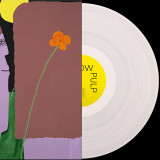
On Yard, Wisconsin-bred, Chicago-based four-piece Slow Pulp nestles comfortably into pockets of nuance, impressions, contradictions-sonics and lyrics finessed together to bottle the specific tension of a feeling you"ve never quite been able to find the right words for. In that regard, listening to Slow Pulp can feel like being in a room with someone who"s known you so long that they can read your every micro-expression and pinpoint exactly how you"re feeling before you can. Perhaps this spawns from the band"s own shared history and chemistry; in various ways, the four of them grew up-are still growing up-together. The dreamy songs of the Midwest (United States) indie rock outfit draw on moody shoegaze, hooky grunge, and intimate lo-fi fare. The band made their full-length debut with Moveys in 2020. After the downcast 2021 7" Deleted Scenes, they put the focus on hooky grunge pop for singles like 2021"s "In Too Deep" and 2023"s "Cramps". After their label debut single the band toured throughout Europe and the UK earlier this year as main support for Death Cab For Cutie. The new album "Yard" is their second full-length album and first for ANTI-.
A month after the release of his debut album as Tambores En Benirras, 2021’s fabulous Orbe Dotodo, Graham Newby’s life changed forever. After years living with a visual impairment, his sight had deteriorated so much that he was declared “registered blind”. For a man who had spent decades dividing his time between travelling, DJing, running clubs and lengthy sessions in his own studio, it was a genuinely life-changing moment.
It was against this backdrop, and the need to alter his working methods, that Ondas Horizontales, the second Tambores En Benirras album took shape. Inspired by a mixture of daydreaming, visualisation, immersion in other people’s music (escapism that provided mood enhancement, rather than a specific set of ideas) and long periods spent soaking up the sun in Ibiza, the album is the most vividly detailed, sonically colourful, and sun-soaked collection that Newby has released to date.
Newby’s declining sight forced him to stop spending long spells staring at a screen and undoubtedly slowed down the production process. Yet it also allowed him to reconnect with his emotions, appreciate the storytelling and mood-shifting potential of music, and mine mind’s eye memories of places and spaces that have meant much to him over the years.
The results are undeniably stunning. Designed with horizontal listening in mind, the set distils a range of musical and real-life inspirations –or, as he puts it, “ambient soundtracks, cosmic journeys, Balearic rhythms and poolside sessions” – into ten mesmerising and magical tracks; an undulating, slow-motion journey that’s as breath-taking as it is beguiling.
Newby sets the tone with ‘Mi Sueno Vibe En Reverb’, a swelling, slow-burn ambient masterpiece that tiptoes between hope and melancholia, before flitting between imaginary sunset soundtracks (‘Estrellas En Mastella’, where lilting pedal steel sounds, bubbling electronics and shuffling breakbeats catch the ear), kaleidoscopic sun-up beats (the gorgeous warmth of ‘Generadora De Reyos’), enveloping beatless soundscapes (‘Templos Del Sol’, a drowsy drift in becalmed waters under the heat of the mid-afternoon sun), and dubby, loved-up lusciousness (‘Mokono’).
As the album progresses, bobbing and weaving on an ocean of vibrant chords, pulsing melodies and heart-stopping melodies, there’s no sign of Newby’s inspiration waving. ‘Alma Hablando’ channels the spirit of mid-80s ‘worldbeat’ and douses it in layers of Balearic bliss, while ‘Extrensor Entragado’ recalls the head-nodding haziness of his best Gripper productions of old while combining them with the musical equivalent of a humid summer breeze. Then there’s the mood-enhancing joy of the album’s superb title track –a mission statement of sorts – and the life-affirming post trip-hop/Balearic fusion of ‘Un Placer Celestial (Reprise)’, where the influence of his old friend Aim is clearly evident.
A serious sonic step-up from its predecessor and a future Balearic classic in its’ own right, Ondas Horizontales marks the start of a new musical and personal journey for its creator. It is, in his words, not the end of an era, but the start of a new one.
Richmond's INTER ARMA, reigning masters of the slow build, continue to trace a distinctly ambitious trajectory through modern metal. Their impulses tend toward the epic, but never bloat; they meld several styles — doom, sludge, and hard psych — without coming off like dilettantes. This newest full-length, Sulphur English, finds them mining deeper in the proggy organic doom fields that made both Paradise Gallows and Sky Burial so thrilling while expanding further the on the psych-folk strain that made those albums' peaks seem so lofty. Few metal bands have ever made such effective use of acoustic instruments in truly heavy environments as INTER ARMA do; the acoustic guitar that stitches "Stillness" together is as effective as any overdriven bass; a two-minute gloomy piano-and-feedback piece titled "Observances of the Path" rolls out the carpet for "The Atavist's Meridian," an album highlight that rides a gigantic, roomy drum sound into realms akin to a murkier Paradise Lost, a more aggressive Om, and a dreamier, more stoned Kylesa all playing together at once. Few bands make music as engrossing as INTER ARMA; their lengthy, almost meditative songs rumble patiently forward until you're ready to get thrown off a bridge — and then they throw you, with great force. - Words by John Darnielle
Ronan lands on nascent X-Kalay sub-label Another Place with renewed focus and a new EP. Musing on personal crossroads, ‘Leaves of Life’ is a highly evocative contemplation on the tides of life. It’s the culmination of a personal arc having sat with the material for six years, further refining the lush, introspective sound that’s characterised his output to date.
The outcome feels similarly unhurried; a pristine, genre-spanning exploration rendered with meticulous attention to detail. Soul-bearing stuff interspersed with words of reassurance through quietly spoken vocals.
The opener strives for utopia. Carried away on a warm current, ‘Song of Surrender’ initiates with a gorgeous unfurling of life-affirming trance that begs repeat immersion. Comparatively direct, ‘Cure for Toxicity’ comes on a breaks-driven flex before a fleeting switch-up into 2-step territory.
Supple groove and jazz modalities fuel airily introspective D&B as we shift focus to title track ‘Leaves of Life’. Then, finally, Ronan closes things out with a ritual purification of sorts. Deploying more breaks but bordering on new age, ‘Sacral Dub’ exudes a soothing, massaging quality with dubby tendencies in full effect.
Expanding on the shoegaze-shaded emo that made Parannoul's To See the Next Part of the Dream so beloved by lo-fi and indie rock fans alike, After the Magic sees the anonymous auteur striving to write a follow-up as worthy of acclaim as the last.
Across the album's ten songs, Parannoul plunges yet deeper into his diverse pool of influences, coming back to the surface with a record that captures and extends the magic of its predecessor. Unexpected flashes of orchestral ambient and glitched-out electronica meld seamlessly with Parannoul's signature passages of noisy, distortion-laden shoegaze, offering a real time glimpse into the maturation
of one of indie rock's most exciting artists.
In the artist's own words, "This album is not what you expected, but what I always wanted."
A pioneer of bebop, Max Roach went on to work on many other styles of music and is generally considered alongside the most important drummers in history having worked with such musicians as Coleman Hawkins, Dizzy Gillespie, Miles Davis, Duke Ellington, Charlie Parker, Stan Getz and more! A seminal set, stretching out towards the directions Max would explore fully on the Candid, Impulse, and Fantasy labels in the 60s. Group members include Booker Little on trumpet, George Coleman on tenor, Ray Draper on tuba, and Art Davis on bass – and the lack of a piano makes for a very exciting sound!
Repressed and note new dealer price. The members of Explosions in the Sky may just be four soft-spoken guys from Texas, but on Those Who Tell the Truth Shall Die, Those Who Tell the Truth Shall Live Forever they simply tear everything apart. Combining influences from classic rock to metal to goth, the band creates instrumental soundscapes that can turn from all-out destruction to heartfelt, dreamy melodies in the blink of an eye. The result is similar to Mogwai and Godspeed a musical journey that leads listeners through the entire range of emotion without even needing words. "Greet Death" matches a crunchy Dinosaur Jr hook with warm Cure-esque bass grooves. "Moon Down" chimes and twists through ten minutes of calm night, leaving the listener with the feeling that something awesome is sure to happen. On "Have You Passed Through This Night?" one of the members of Explosions in the Sky ponders in a near-whispering Texas drawl the meaning of the world. What follows is like the climax of a tense, mind-blowing movie, driven by relentless guitars and a thundering Master of puppets Metallica drum march. "Poor Man's Memory" follows, offering some consolation in a sentimental melody. The album ends with the grand, 12-minute-long "With Tired Eyes, Tired Minds, Tired Souls, We Slept," a song that moves from Sonic Youth to Joy Division to Explosions in the Sky. Those Who Tell the Truth Shall Die, Those Who Tell the Truth Shall Live Forever is nothing short of awe-inspiring and was one of the best records of 2001. A1 Greet Death A2 Yasmin The Light A3 The Moon Is Down B1 Have You Passed Through This Night? B2 A Poor Man's Memory B3 With Tired Eyes, Tired Minds, Tired Souls, We Slept
Simply calling Curtis Harding a soul man feels reductive. Harding's voice conveys pain, pleasure, longing, tenderness, sadness and strength-a full gamut of emotions. Today his voice takes on an optimistic lilt with his his new album, If Words Were Flowers. If Words Were Flowers is Harding's first new music since 2018, a follow up to his critically acclaimed 'Face Your Fears" album. It features songs like " Hopeful" , where Harding croons with devotion over a classic soul groove, textured with infectious horn playing, background singers and modern psychedelic flourishes. Harding fuels his psychedelic sound with the essence of Soul but isn't bound by it. Instead, his songs convey an eclectic blend of genres leaping from the many musical lives he has lived from following his evangelical Gospel-singing mother on tour around the country as a child to rapping in Atlanta, forming a garage band with The Black Lips' Cole Alexander to singing back-up for Cee Lo Green. Through these experiences he fully embraces life's darkest intricacies and conjures dynamic, addictive melodies.
The tenor sax master attacks five standards and in the process produces some of
his most intense performances on record. Taped at the Van Gelder Studio in one
marathon session on July 8th 1965, this electrifying Impulse! Records debut also
featured Ray Bryant on piano and Mickey Roker on drums.
Hurry has grafted the best qualities of ‘90s bubblegum power pop—the pitch-perfect songwriting, the pop-rock sheen, the borderline saccharine vocal melodies—onto something far more raw and emotionally resonant. Don’t Look Back is striking in its tenderness and candor—approximately half of the lyrics on the record concern the deterioration of an 11- year relationship Scottoline was in, with the other half being a celebration of new love. The first words Scottoline sings, in opening track “Didn’t Have to Try,” is essentially a statement of theme: “And we’re back at the beginning / Never thought I’d see a face like that again / It attacks when we’re not ready / And I won’t play it safe this time.” This is pop music about actual feelings which means it’s automatically better than most pop music. It is challenging and addictive.
There is not a single moment on Don’t Look Back that isn’t completely drenched in melody and emotion. “Parallel Haunting” evokes the tuneful ache of golden age Evan Dando; “Little Brain” sounds like golden age Evan Dando and golden age Noel Gallagher. Don’t Look Back is, in a word, bittersweet, with melodies that feel like a jackhammer on your brain’s pleasure center and lyrics that feel like getting slapped in the heart.
Back when Eddie Bond recorded Talkin' Off The Wall for his first ever disc
in 1955, he was indeed caught up in a musical moment that was 'off the
wall' – in other words seen as highly unusual, strange, eccentric, bizarre
It was the time of the emergence of rockabilly and white rock and roll. Briefly, the
'rockin daddy from ding dong Tennessee' was hot stuff, playing shows with
Presley, Perkins, Cash and all the other singers from Memphis whose music
talked off the wall to a whole new generation. Today, it does so again.
• A rocking 14-track LP on Bear Family Records® from one of the original
Memphis rockabillies, Eddie Bond, backed up by a 25-track CD featuring original
and cover versions of some of Eddie's songs.
• Mostly from the mid-1950s, these tracks sparkle with the life and excitement of
the new rocking music.
• Eddie started and finished as a country singer, but he embraced the new
rockabilly music and he soon became the Rockin' Daddy described in his bestselling disc from 1956.
• Eddie's backing bands include two of the best guitarists of all time – Reggie
Young and Hank Garland – and they don't disappoint.
• The ten-inch LP contains one song from Eddie's first label, Ekko, six from his
rockabilly heyday on Mercury, two from his originally unissued sessions at Sun in
1958, and five tracks from local Memphis labels in the 1960s.
• The bonus CD contains also a further 11 tracks by other artists, providing
fascinating other versions of songs Eddie recorded. Artists include Sonny Fisher,
Lattie Moore, Ray Charles, and Elvis Presley.
The first legendary Pink fairies album: a real must for all psychedelia and garage fans. Contains 'Do It', 'Heavenly Man' and the manifest-track of the band: 'Uncle Harry's Last Freakout", 10 long minutes of anarchist rock, rich of feedback and acid guitars.
This really was 'proto-punk'!
The packaging is just like the original one, with an external artwork on plastic sleeve.
- A1: Lost (1 32)
- A2: Listen Here (4 18)
- A3: Hide Your Heart Away (4 52)
- B1: Send Me An Angel (4 48)
- B2: Leader Of The Band (4 29)
- B3: Yeah (4 46)
- C1: Please Help Me If You Can (4 20)
- C2: Let’s Hope Nobody Finds Us (4 42)
- C3: New Morning (5 45)
- D1: Say I Love You (4 43)
- D2: See My Way (4 01)
- D3: One More Mystery (4 49)
Lewis Taylor's legendary magnum opus: The Lost Album. "Now you're talking. That's my favourite LT album. Unlike all of the others, there isn't anything about it that embarrasses me." Straight from the genius's mouth. What can we say about this? Well, it's the most requested record ever at Be With Towers. The Lost Album was the intended follow-up to his first album but Island rejected it for fear of "confusing" the marketplace and its conception of Lewis as a soul artist. Their loss. It's a breezy sunset masterpiece.
The genesis of this incredible record needs unpicking a bit. Lewis stopped promoting the first album after a year and went home to record a completely different record that was the most un-R&B album you could probably ever hear: "I pushed in such an extreme direction the other way with what eventually became The Lost Album. It was a knee-jerk reaction to a perceived ‘trapped in R&B’ feeling I was going through at the time. Some people around me were in favour of it and others weren’t. In the end I think I lost confidence in it and did Lewis II instead." We did at least get Lewis II, which is a remarkable album, and he kept Island happy...for a bit. Not long after, Lewis was dropped. And what was to become The Lost Album could've been...er...lost. Forever.
Thankfully, however, Lewis and longtime partner Sabina Smyth revisited those scrapped demo tracks in 2003. They decided to re-arrange, re-record and then self-release them. So it was that the brand new version of The Lost Album finally dropped in late 2004. It's sheer perfection, and we don't say that lightly. The Lost Album was a fully 50/50 collaboration between Lewis and Smyth. As well as production, Sabina did a lot more writing on it, from the melody to "Listen Here" to the chord sequence for "Let's Hope Nobody Finds Us." Thankfully, Sabina is credited this time around.
No, it's not straight up "soul music" in the vein of his previous work. Yet, in its perfectly formed suite of one dozen songs, The Lost Album is dripping in soul. It's so warm, so effervescent and so alive with possibilities. It features deep, fresh imprints on well-loved, accessible sounds. It's a proper 70s style double album. Just one listen and the musical influences on The Lost Album are fairly self-explanatory, as Lewis recently told us, but it's always nice to hear that, in case we were in any doubt, he was definitely channeling Love, Yes, Brian Wilson, CSN, Laura Nyro and, of course, Todd Rundgren. The influences don't end there: "I’m particularly fond of my bass playing on that album, there’s a lot of Chris Squire going on which is cool."
Deep orchestral opener "Lost" is a sublime, harp-laced, string drenched gem, a cinematic, melancholic Axelrod-esque mini-epic that simply beguiles. Written by Smyth, it evokes Donny Hathaway's celestial "I Love The Lord, He Heard My Cry" from Extensions Of A Man. The only problem is the brief 90 seconds running time. It segues into the classic Brian Wilson-meets-power-pop-rock splendour of "Listen Here" which, with its outstanding extended harp-licked beatless intro, sounds like the younger cousin to Boston's "More Than A Feeling". We then drift into the ringing guitars of classic 70s rock anthem "Hide Your Heart Away". It's Lewis's personal favourite, "especially the multi-tracked guitar solo – I was listening to Boston at the time, which was fun." A-ha!
A new version of the heart-stopping, shoulda-been-a-massive-pop-hit "Send Me An Angel" opens Side B before the arrival of, in Lewis's completely correct words, "the clear standout, "Leader of the Band"; the perfect distillation of everything that album was trying to achieve." Soaring, piano-led Rundgren-esque power pop that makes the hairs on the back of your next stand on end. Truly, otherworldly. This is pure pop for now (and then) people. The simple jangly brilliance meets experimental prog-rock of "Yeah" sounds like simultaneously like prime CSNY and late 90s Radiohead (if they'd had a slightly more accessible bent and could write better tunes).
Oh, you wish The Beach Boys had continued writing amazing songs beyond Holland? Well, allow us to point you in the direction of the downlifting stunner "Please Help Me If You Can" and the warm textures and brilliant atmospherics of goosebump-inducer "Let’s Hope Nobody Finds Us". Words can't really describe the sheer beauty of these songs. So we'll stop trying. Just listen. Listen, listen, listen. Closing out this remarkable side of music, the accidentally Balearic "New Morning" should be blasting out at every sunrise set in Ibiza, this summer and forevermore.
The final side opens with the vaguely Beatlesey "Say I Love You". It's just classic, soaring pop-rock songwriting and should strictly be canonical. It's that good. The sassy, Stonesy swagger of "See My Way" injects enough rock'n'roll attitude to compensate for the rest of record's peace-loving, AOR sun-dappled vibe whilst album closer, "One More Mystery", emerging out of the rubble of the previous track, comes on initially like a Baroque-Pop George Harrison before piling crunching drums and screeching guitar solos atop the dreamy harmonies til close.
When asked what it means to have these records available on vinyl for the first time, Lewis is in no doubt: "It’s great and it’s really nice to be able to offer fans a different listening experience. There’s a whole other dimension with vinyl that taps into that whole nostalgia thing, well for me anyway. Something about the physical aspect of pulling it out of the sleeve and putting it on, it does tend to make you feel like you’re more engaged."
Lewis was adamant that he wanted all new artwork for The Lost Album vinyl sleeve and his brief was just the sort of classic tropical-beach-at-sunset you’d want to see on the front of a record that sounds like this. On the finished sleeve, the beach at sunset is just where we start out, before heading up through the painterly clouds and heading out into the stars. And yes, the lettering is a definite subtle nod to all those in-between-period Beach Boys bootlegs we all love. Simon Francis's sensitive mastering combines with Cicely Balston's precise cut for Alchemy at AIR Studios so the album sounds appropriately outstanding. The immaculate Record Industry double LP pressing will ensure this previously lost masterpiece stays forever found.
- A1: Daytime Tv (Rainy Miller Remix)
- A2: It’s Hard To Get To Know You (Space Afrika Ambiv)
- B1: Pigeon Flesh (Mobbs' Butcher Mix)
- B2: Love Like An Abscess (Aho Ssan Remix)
- C1: Nervous Energy (Teresa Winter Remix)
- C2: I Was Born By The Sea (Morgane Polanski Remix)
- D1: I Was Born By The Sea (Fila Brazillia Remix)
- D2: Dream About Yourself (Bonus)
Richie Culver had been waiting his whole life to record I was born by the sea. His debut album immediately and messily inscribed the artist into the canon of outsider music and experimental electronics, serving both as an arresting statement of intent and a painful reckoning with the difficult path that lead up to it, stealing one last glance back at a place he always knew he had to escape. Between grim lamentations, faded memories and anxiety attacks, all told with searing honesty and disarming openness, I was born by the sea excavates a space for hope, finding Culver digging through Humberside silt to find a world weary optimism, the raw material from which his visual and sound art is shaped. For this collection of expansions and inversions, Culver invites a collection of kindred spirits, contemporary inspirations and old heroes to wade into the salt water of his formative years spent living for impromptu raves and afterparties, connecting vivid memories of his birth place of Withernsea to artists hailing from as nearby as Preston and Bridlington, further afield, from Manchester and London, Berlin and Paris, before returning back to Hull, to where it all began.
For some, responding to I was born by the sea means diving even deeper into the record’s furthest reaches. Space Afrika clear away the pummelling loops of noise from ‘It’s hard to get to know you,’ revealing a cool and cavernous expanse in its wake. Distant chatter, previously heard as though through thin, plasterboard walls, now echoes from outside the maddening claustrophobia of the original’s Sisyphean sonics, illuminated as a dense storm cloud suspended amidst a more open scene, washed clean by a lighter rain, allowing the tender heart of the track to beat clear. London producer MOBBS stretches out ‘Pigeon Flesh’ into an epic, 10-minute, cold-sweat spiral, strung-out tension wrung from disconnected phone tones twisted in unexpected directions, snatches of Culver’s voice turned inside-out and deep fried bass threatening to tip the track over into oblivion, the build-and-release of a nervous breakdown experienced in real time. In an act of subversive self-reflection, Morgane Polanski switches one kind of ennui for another in her adaption of ‘I was born by the sea,’ swapping the sea for the city, English seaside towns in January for summer evenings in Paris and flashing lighthouses and sparkling oil rigs for the Eiffel Tower and the traffic around L’Arc de Triomphe. Even Culver finds time to revisit ‘Dream About Yourself,’ a track taken from his EP Post Traumatic Fantasy, breathing new words into its glacial drift, the half-remembered testimony of a shut-in: Woke up in the evening / Pray for me / Don’t trust anyone / Pray for algorithm. Reframed in a more melancholy light, the track’s reverberant keys even more clearly evoke a mournful nostalgia, fresh pain felt in old wounds.
Others find a parallel universe in Culver’s visceral world building. Rainy Miller flips the script with a scorched, avant-drill rework of ‘Daytime TV’, threading puncturing hi-hats and queasy low-end surge through the track’s steady ambient cascade, invoking the irresistible Preston beat magic of Miller’s own essential debut album, Desquamation. Aho Ssan melts away the crystalline textures of ‘Love Like an Abscess’ with the ominous crackle of a nascent fire, building through swathes of organic Max/MSP squelch and brittle, nails-down-chalkboard scrape, swelling and metastasising the original to spill over Culver’s desperate hymn to corporeal desire, at once flesh and not. Teresa Winter transports us an hour up the coast from Withernsea to her native Bridlington, replacing the sea wall of synthesis on ‘Nervous Energy’ with muffled ASMR murk and fever dream whispers, transforming Culver’s unflinching observations into a haunting call-and-response, filling in the blanks with her own eerie utterances, a fleeting conversation with a ghost. In a touching victory lap, Fila Brazillia, eccentric stalwarts of beloved ‘90s trip hop imprint Pork Recordings, whose performances at Hull institution The Lamp convinced a young Culver of the necessity to make his mark on club culture, resurface for their first remix in 20 years. Steve Cobby and David McSherry lead a low-slung, heartfelt stroll back through a suite of tracks from I was born by the sea, tracing a full circle saunter from Culver’s origins to his current musical practice, the sounds of his present repurposed by the sound of his youth. In a gesture that reflects the emotional complexity of the project, Fila Brazillia find joy at the end of Culver’s troubled reflection, picking out an undeniable groove in the stasis of feeling trapped in your hometown. Underlining Hull’s vital musical legacy, from Baby Mammoth to Throbbing Gristle, Cobby and McSherry demonstrate that, though there are certainly storms, by the sea there is also sun and through the fog, if you listen, you can hear a singular sound, a sound now carried by Richie Culver.
Participant is a record label and creative studio run by William Markarian-Martin and Richie Culver
On June 16th, 2023, Steven Julien and Kyle Hall return with their first EP together in ten years, CROWN. The record follows earlier EPs the duo created under their former alias Funkinevil, 2013's Ignorant and 2012's Night/Dusk. The record once again brings together two artists from opposite sides of the pond—Julien hailing from London and Hall representing Detroit—with a shared love for soul in its purest essence.
Opening "Page 1", a pitched-down vocal by James Massiah pronounces, "My plan—won't let you take it from hand." That alone could be considered the nut graph of a record about taking ownership, created by two vanguards in the electronic music scene that, a decade ago, insisted on infusing their music with soul in a commercial club circuit lacking in it.
Assembled from a few years-worth of studio jams in Julien's studio, Crown dials up the staticky warmth present on earlier Funkinevil tracks like "Dusk" and "In The Grid." Across seven songs, Funkinevil shaves off some of their tougher elements, instead shooting for pastoral melodies and funky basslines, like on "Page 2", where Vicky Flint's flute flutters sleepily over breaks and a groovy Korg synthesizer. But the atmosphere on the EP is also grander than ever—on "Page 5," Cloud's wistful melisma soars over Flint's bleating saxophone and wandering sci-fi synths.
With all this attention to funky musicality, it's only fitting that two legends specializing in the craft would land on the B-side—Däm Funk revs up "Page 3" with a slamming kick and his unmistakable coolness, and Reggie B turns "Page 5" into a sludgy, jazzy dance party.
In the words of Julien, "I think a lot of people have forgotten about what this whole thing is about. Musically, artistry and everything. So I'm happy this is what we represent on this project."
- 1: I Live A Little Lie (Acoustic)
- 2: Good Lover (Acoustic)
- 3: Easy Street (Acoustic)
- 4: Another Way (Acoustic)
- 5: I Don't Belong To You (Acoustic)
- 6: Burn That Bridge (Acoustic)
- 7: Truck Full Of Money (Acoustic)
- 8: Read About Memory (Acoustic)
- 9: Our Friend Bobby (Acoustic)
- 10: Great Escape (Acoustic)
- 11: Next Year (Acoustic)
- 12: I Ain't Ever Loved No One Feat. Tenille Townes (Acoustic)
Donovan Woods was curious: What if he re-recorded Both Ways, his acclaimed 2018 record that won him a Juno Award for contemporary roots album, and distilled its 12 songs to their bare essence? An “acoustic reimagining,” if you will. “We started from scratch,” he says, from the instrumentation to his vocals to a fresh understanding of the heartache and regret that underpinned those songs. “There are no recording elements carried over from that album. It’s all brand-new.” Woods ended up with The Other Way, his album that brims with inspired interpretations of Both Ways that are intimate yet startling in their urgency. Released on May 3, 2019 on Meant Well, this release is a reminder of why the Canadian artist has become such a sought-after songwriter whose work has been recorded by Tim McGraw (“Portland, Maine”) and Lady Antebellum’s Charles Kelley (“Leaving Nashville”), with Spotify streams approaching nearly 90 million. You’ve always been able to hear and connect with Woods’ words. But an odd sensation washes over you when the varnish is wiped off of Woods’ songs. Somehow the lyrics burrow with even greater resonance and then linger like little smoke rings. For a producer, Woods enlisted ace guitarist Todd Lombardo, who produced Woods’ song “Portland, Maine” in 2015 and wrote and played most of the guitar parts on Kacey Musgraves’ Grammy-winning Golden Hour. Woods gave Lombardo artistic license not only to change the chords and song structures but to overhaul the arrangements with acoustic instruments and Lombardo’s luminous guitar work as the centerpiece. “I think this album draws out the pain and the darkness of these songs,” Lombardo says. “The record is about loss and failure and feeling like you fucked it up, and there’s no mistaking that. You hear every single word – and feel it, too.” Coming on the heels of “Go to Her,” Woods’ first song of 2019, The Other Way is so revelatory that it makes you wonder why he didn’t try this approach sooner. “It’s always been an interesting idea to me, especially when you’re an artist like me who inherently disappoints some people anytime your sound gets bigger,” Woods says. “But a really good song is a good song in any arrangement. It’s like a beautiful hardwood floor. You can put any furniture in there, and it’s going to look good.”