A pioneer of the home recording movement, Linda Smith released several collections of delicate, bewitching solo music on cassette in the 1980s and 90s. The 2021 release of Till Another Time: 1988-1996, Captured Tracks' compilation of Smith's work, has helped bestow rightful critical acclaim to the ahead-of-her-time artist. Now, Captured Tracks dives deeper into Smith's catalog with the release of two full-length companion albums, Nothing Else Matters and I So Liked Spring, available for the first time on vinyl & streaming formats. Recorded at Smith's home in Baltimore in 1995, Nothing Else Matters chronicles the tension between the mundanity of daily life and the creative impulse: Traffic noises on the charmingly boisterous "Little To Be Won" showcase this levity, as does the addition of playful hand claps and a laugh track to her striking cover of Young Marble Giants' "Salad Days." I So Liked Spring, recorded the following year, saw Smith experimenting with the unique challenge of putting another artist's words to music. She'd come across a biography of the English poet Charlotte Mew and found her wistful poetry rife for musical interpretation. The songs on I So Liked Spring are delightfully unpredictable, full of upbeat melodies and spellbinding vocal harmonies. This is perhaps best showcased on the title track, one of Smith's most popular songs to date, a lovelorn anthem that recalls the airy melodies of early dream pop. Both of these albums showcase the mesmerizing charm of Smith's songwriting, often compared to the likes of the Velvet Underground and Laurie Anderson. Home recording technology has come a long way since Smith first began recording demos on her tape machine, but her influence reverberates through the work of today's bedroom artists. The release of these two essential albums seeks to further illuminate this connection, welcoming a new generation of listeners to the work of this trailblazing artist.
A pioneer of the home recording movement, Linda Smith released several collections of delicate, bewitching solo music on cassette in the 1980s and 90s. The 2021 release of Till Another Time: 1988-1996, Captured Tracks' compilation of Smith's work, has helped bestow rightful critical acclaim to the ahead-of-her-time artist. Now, Captured Tracks dives deeper into Smith's catalog with the release of two full-length companion albums, Nothing Else Matters and I So Liked Spring, available for the first time on vinyl & streaming formats. Recorded at Smith's home in Baltimore in 1995, Nothing Else Matters chronicles the tension between the mundanity of daily life and the creative impulse: Traffic noises on the charmingly boisterous "Little To Be Won" showcase this levity, as does the addition of playful hand claps and a laugh track to her striking cover of Young Marble Giants' "Salad Days." I So Liked Spring, recorded the following year, saw Smith experimenting with the unique challenge of putting another artist's words to music. She'd come across a biography of the English poet Charlotte Mew and found her wistful poetry rife for musical interpretation. The songs on I So Liked Spring are delightfully unpredictable, full of upbeat melodies and spellbinding vocal harmonies. This is perhaps best showcased on the title track, one of Smith's most popular songs to date, a lovelorn anthem that recalls the airy melodies of early dream pop. Both of these albums showcase the mesmerizing charm of Smith's songwriting, often compared to the likes of the Velvet Underground and Laurie Anderson. Home recording technology has come a long way since Smith first began recording demos on her tape machine, but her influence reverberates through the work of today's bedroom artists. The release of these two essential albums seeks to further illuminate this connection, welcoming a new generation of listeners to the work of this trailblazing artist.
7” vinyl single w/ colour sleeve. For Fans Of Garage Punk, Power Pop, New Wave, Cheap Trick, Dollyrots, Pretenders, Go-Gos, Kate Bush, The Muffs, The Bangles, Larkin Poe. Josie Cotton’s Kitten Robot label issues their first 45 rpm 7”, and it’s a split between two of the label’s fave ladies: Josie her own bad self and Hayley and the Crushers. Josie’s song is the title track of her latest full-length, the Crushers issue a rowdy Iggy Pop cover that is also their latest digital single, releasing on Halloween of this year. Said Thoughts Words Actions of Day of the Gun, “The result is Josie Cotton’s signature sound, both timeless and contemporary, showcasing her ability to stay true to the roots while also pushing the envelope in new directions. Day Of The Gun is a masterclass in musical creativity and musicianship where Josie Cotton’s experience, talent, and ideas have come together to create an album that is both diverse and cohesive.” Meanwhile, Faster and Louder had this to say about Hayley’s recent LP. “Modern Adult Kicks makes it sound like Hayley and the Crushers have fast-forwarded ten years since 2020. This album doesn’t wallow in misery, but it confronts some heavy stuff...all the while reminding us to keep dancing no matter what happens
Optimo (Espacio) started life as a weekly club night. It was born at The Sub Club in Glasgow on a wet, windy, wintry November Sunday night in 1997. Run by JD Twitch and partner in crime Jonnie Wilkes. Optimo was a reaction against what felt like an increasingly conservative musical soundtrack in clubs here at that time. Clubland felt as if it had become very bland and a bit too serious; it was the era of the dawn of the Superstar DJ. Clubs often felt like bastions of male energy. It seemed dance music and culture was going somewhere far, far away from where it was meant to be. The notion of fun had got lost.
It was no longer the world they had devoted ten years of their lives to already, and lots of their friends felt the same. When the opportunity came up to do a Sunday night at The Sub Club it felt like the perfect opportunity to rip it all up and start again. So they did. There was nothing in the city (or possibly anywhere) like it. As the club believed wholeheartedly in what they were doing, there was no pressure from The Sub Club to fill the club. So, they embraced the freedom. Groups of people who had never been in the same room at the same time before came together. A community of kindred spirits started to emerge.
Word spread, slowly. Lots of people checked it out. Many loved it, some hated it. The core of the Optimo idea was to embrace music they loved that might work on the dancefloor from whatever era or genre they thought felt right. It might not seem very radical now but at that time it was revolutionary.
After about a year and a half, the club went from having 100 people attending most nights to suddenly one week having 500 people turn up. It was very weird. It was as if a collective light bulb went off in people’s heads in Glasgow. From that week on, until the very last weekly Sunday night at the Sub Club, in 2010, over a decade later, it was packed.
There were 550 Sunday Optimo nights. A LOT of music was played. So, what was the music? People often find it hard to pin down exactly what Optimo is. This has been a positive but also a negative as we live in a world where people want easily defined “brand identities”. The simplest definition of the music played is “music for dancing”, which of course is a very broad definition. Even better than trying to define it in words, we have these 2 volumes of music that give a hint of what that might be.
This is not a “Best of Optimo” or a “Greatest Hits of Optimo” compilation. For people who come to, or used to come to the nights there are of course “Greatest Hits”. But, over such a long timespan they are “hits” belonging to a certain moment in time and space. Someone who came to Optimo in 1997 would have a completely different notion of the big tracks at the club to someone coming in 2003, or 2010, or today. This compilation is just a snap shot missing several genres that might make up the DNA of Optimo. There is though a broad sweep through lots of music Optimo loves, that they believe is amazing. Music that they know will rock a dancefloor, that they have played between 1997 and 2023. Of course Optimo nights were not all about rocking the dancefloor. The first hour was always a time for them to play music they loved that often was far removed from the dance. Side 1, Volume 1 of this compilation is the kind of music one might hear at the very start of an Optimo night.
Optimo have always loved a good slogan. The most long lived, and fitting Optimo slogan is "We Love Your Ears", which is in essence what it is all about to them.
out of Stock
Last delivered 2 years ago available to reorder, subject to availability
Optimo (Espacio) started life as a weekly club night. It was born at The Sub Club in Glasgow on a wet, windy, wintry November Sunday night in 1997. Run by JD Twitch and partner in crime Jonnie Wilkes. Optimo was a reaction against what felt like an increasingly conservative musical soundtrack in clubs here at that time. Clubland felt as if it had become very bland and a bit too serious; it was the era of the dawn of the Superstar DJ. Clubs often felt like bastions of male energy. It seemed dance music and culture was going somewhere far, far away from where it was meant to be. The notion of fun had got lost.
It was no longer the world they had devoted ten years of their lives to already, and lots of their friends felt the same. When the opportunity came up to do a Sunday night at The Sub Club it felt like the perfect opportunity to rip it all up and start again. So they did. There was nothing in the city (or possibly anywhere) like it. As the club believed wholeheartedly in what they were doing, there was no pressure from The Sub Club to fill the club. So, they embraced the freedom. Groups of people who had never been in the same room at the same time before came together. A community of kindred spirits started to emerge.
Word spread, slowly. Lots of people checked it out. Many loved it, some hated it. The core of the Optimo idea was to embrace music they loved that might work on the dancefloor from whatever era or genre they thought felt right. It might not seem very radical now but at that time it was revolutionary.
After about a year and a half, the club went from having 100 people attending most nights to suddenly one week having 500 people turn up. It was very weird. It was as if a collective light bulb went off in people’s heads in Glasgow. From that week on, until the very last weekly Sunday night at the Sub Club, in 2010, over a decade later, it was packed.
There were 550 Sunday Optimo nights. A LOT of music was played. So, what was the music? People often find it hard to pin down exactly what Optimo is. This has been a positive but also a negative as we live in a world where people want easily defined “brand identities”. The simplest definition of the music played is “music for dancing”, which of course is a very broad definition. Even better than trying to define it in words, we have these 2 volumes of music that give a hint of what that might be.
This is not a “Best of Optimo” or a “Greatest Hits of Optimo” compilation. For people who come to, or used to come to the nights there are of course “Greatest Hits”. But, over such a long timespan they are “hits” belonging to a certain moment in time and space. Someone who came to Optimo in 1997 would have a completely different notion of the big tracks at the club to someone coming in 2003, or 2010, or today. This compilation is just a snap shot missing several genres that might make up the DNA of Optimo. There is though a broad sweep through lots of music Optimo loves, that they believe is amazing. Music that they know will rock a dancefloor, that they have played between 1997 and 2023. Of course Optimo nights were not all about rocking the dancefloor. The first hour was always a time for them to play music they loved that often was far removed from the dance. Side 1, Volume 1 of this compilation is the kind of music one might hear at the very start of an Optimo night.
Optimo have always loved a good slogan. The most long lived, and fitting Optimo slogan is "We Love Your Ears", which is in essence what it is all about to them.
out of Stock
Last delivered 11 months ago available to reorder, subject to availability
Daniel Land's new album, "Out of Season", is his most ambitious record to date, a series of reflections on history, memory, and post-Brexit Britain, which was inspired by his return to the landscapes of his youth – the rugged, underpopulated west coast of Somerset. The album was written and partly recorded in Daniel’s studio in a static caravan, overlooking the coast, during the period when the UK was tearing itself apart over its relationship to Europe. "I didn't set out to write about Brexit", Daniel says, "I have a kind of horror of political music. But I couldn’t escape the atmosphere of the time – this strange, distorted version of ‘Englishness’ in the national psyche. I’ve always been interested in memory and nostalgia; Brexit illustrates the dangers of taking seductive, possibly false memories at face value”. Songs like “White Chalk”, “Island of Ghosts”, and the album’s title track, represent a series of attempts to reclaim an older, more peculiar idea of England which, Daniel says has been “Lost in the nationalist mythmaking of the past decades” – the island of misfits and outsiders exemplified by the works of Derek Jarman, for example, whom Daniel was rediscovering while working on the album. “I must have read 'Modern Nature' ten times over the years”, Daniel says. “What I love about Jarman is that he had a deep, abiding love for England, but it was a very complicated, critical and a very queer kind of love. That was very much my mood, going into the making of this album”. Like Jarman’s work, "Out of Season" probes national identity whilst also displaying resolutely queer themes throughout. Daniel’s voice – once described by The Guardian as "The spawn of Elizabeth Fraser and Anthony Hegarty” – is less heavily reverbed than before, bringing to the fore his often-confessional lyrics, inspired by the frankness of modern queer poets like Andrew McMillan, Seán Hewitt, and Ocean Vuong. A lyrical highlight is the gorgeous “Southern Soul”, a deceptively straightforward recounting of a decades-old hookup with a closeted guy from his hometown which, Daniel says, “Serves as a metaphor for everything I’m talking about in the album”. And in keeping with the album’s nods to the heroes of gay literature, Daniel’s self-styling of the album as a “Dream Pop Album on National Themes” deliberately references the full title of Tony Kushner’s era-defining play "Angels in America", whose central character is namechecked in the hook-laden “Lemon Boy” – a song which must surely stand as Daniel’s most deliciously pop moment yet. Lauded by Mark Radcliffe, Guy Garvey, Tom Robinson, and many others, Daniel Land makes music that, in the words of BBC Radio 1, "You can't help but think the late John Peel would have loved".
Analogue Productions (Atlantic 75 Series) Celebrating the 75th Anniversary of Atlantic Records! 180-gram 45 RPM double LP Mastered by Bernie Grundman from the original analog tape Contains Otis Redding's posthumous hit "Sittin' On the Dock Of the Bay" Appeared on Rolling Stone's 500 Greatest Albums of All Time, rated 161/500! Pressed at Quality Record Pressings Gatefold old-style "tip-on" jacket by Stoughton Printing Hybrid Mono SACD Mastered directly from the original master tape by Bernie Grundman The guts of the story are this: While on tour with the Bar-Kays in August 1967, Otis Redding's popularity was rising, and he was inundated with fans at his hotel in downtown San Francisco. Looking for a retreat, he accepted rock concert impresario Bill Graham's offer to stay at his houseboat at Waldo Point in Sausalito, California. Inspired, Redding started writing the lines, "Sittin' in the morning sun, I'll be sittin' when the evening comes" and the first verse of a song, under the abbreviated title "Dock of the Bay." He had completed his famed performance at the Monterey Pop Festival just weeks earlier. While touring in support of the albums King & Queen (a collaboration with female vocalist Carla Thomas) and Live in Europe, he continued to scribble lines of the song on napkins and hotel paper. In November of that year, he joined producer and esteemed soul guitarist Steve Cropper at the Stax recording studio in Memphis, Tennessee, to record the song. Cropper remembers: "Otis was one of those the kind of guy who had 100 ideas. ... He had been in San Francisco doing The Fillmore. And the story that I got he was renting boathouse or stayed at a boathouse or something and that's where he got the idea of the ships coming in the bay there. And that's about all he had: 'I watch the ships come in and I watch them roll away again.' I just took that... and I finished the lyrics. If you listen to the songs I collaborated with Otis, most of the lyrics are about him. ... Otis didn't really write about himself but I did. Songs like 'Mr. Pitiful,' 'Fa-Fa-Fa-Fa-Fa (Sad Song)'; they were about Otis and Otis' life. 'Dock of the Bay' was exactly that: 'I left my home in Georgia, headed for the Frisco Bay' was all about him going out to San Francisco to perform." Redding and Cropper completed the song in Memphis on Dec 7, 1967 with tragedy, unknowingly, looming. Just two days later Redding lost his life on a routine commute to a performance when the small plane he was in crashed. The other victims of the disaster were four members of the Bar-Kays — guitarist Jimmy King, tenor saxophonist Phalon Jones, organist Ronnie Caldwell, and drummer Carl Cunningham; their valet, Matthew Kelly and pilot Fraser. Cropper and bassist Donald "Duck" Dunn completed the music and melancholic lyrics of "(Sittin' On) The Dock of the Bay' which was taken from the sessions — Redding's final recorded work. Cropper added the distinct sound of seagulls and waves crashing to the background. This is what Redding had wanted to hear on the track according to Cropper who remembered Redding recalling the sounds he heard when he wrote the song on the houseboat. One of the most influential soul singers of the 1960s, Redding exemplified to many listeners the power of Southern "deep soul" — hoarse, gritty vocals, brassy arrangements, and an emotional way with both party tunes and aching ballads. At the time of his tragic death he was 26. ‘(Sittin’ On) The Dock of the Bay’ was released just a month following Redding’s death and became his only ever single to reach number one on the Billboard Hot 100 in January 1968. The album, which shared the song's title, became his largest-selling to date, peaking at No. 4 on the pop albums chart. "Dock of the Bay" was popular in countries across the world and became Redding's most successful record, selling more than 4 million copies worldwide. The song went on to win two Grammy Awards: Best R&B Song and Best Male R&B Vocal Performance. With the album, Redding confirmed himself as a talent lost far too soon. All the hallmarks of a top-notch Analogue Productions reissue are here for you to savor: Mastered directly from the original master tape by Bernie Grundman and cut at 45 RPM. Pressed on 180-gram vinyl at Quality Record Pressings, and housed in tip-on old style gatefold double pocket jackets with film lamination by Stoughton Printing.
These days we are back again in the 60s, as the world urgently needs a new peace movement.
Therefore we ultimately call everyone to hold their hands together and look into the future, - nothing describes better the message we deeply feel being part of, in the own words of Kito Jempere. For ''Let's Hold Our Hands Together'' he already called up the internationally awarded Swedish composer Adam Evald on vocals and the enigmatic Antoha MC on trumpet, backed by Public Possession artist, Eden Burns and our very own, Leonid Lipelis (check his latest 'Function As A Meaning' EP!!!), on the remix duties, Kito Jempere is the ''DJ's hero'' - selector, producer, own orchestra and band conductor (watch Boiler Room from PPF!), who has been delivering quality dance records through decades via DFA, Lo Recordings, Freerange.
Proclaimed as the ''The King Of Collaborations'' by Zweikommasieben, Kito has been working on music with together with Jimi Tenor, Red Snapper, Hard Ton, New Composers and got remixed by Palms Trax, Andras, Ruf Dug, Black Spuma and many more.
out of Stock
Last delivered 55 days ago available to reorder, subject to availability
We are thrilled to introduce the world to the innovative sounds of the Japanese improvisational music trio 'I-I'. Composed of three exceptionally talented musicians, Kazuhisa Uchihashi (guitar, daxophone, pedals), Mitsuhisa Sakaguchi (synthesizers, pedals) and Tatsuhisa Yamamoto (percussion). This dynamic ensemble has embarked on a remarkable musical journey with their homonymous debut album.
"There's no inspiration from others. We just played." With this raw and unfiltered approach to music, 'I-I' promises a unique listening experience. The album's overall sound and style can be described as completely improvised, devoid of any predetermined theme or content. Instead, the musicians rely on their deep understanding of each other's musicality to create spontaneous and captivating harmonies. This organic approach results in a tension-filled sound that challenges traditional norms.
In their own words, the musicians stated that there are no particular themes or messages they seek to convey through the songs. Their creative process is one of pure exploration, allowing their musical intuition to guide them.
'I-I' is the trio's debut album, marking the beginning of their musical journey as a collective.
Despite the complexities of spontaneous creation, the trio revealed that they faced no significant challenges during the album's production, making the creative process smooth and seamless."We hope you will listen to this album from the first track to the last track in order, as like 'Album-oriented music.' The trio hopes that listeners will fully immerse themselves in "I-I" by sitting down in front of their audio systems and playing it as loudly as possible. Their goal is to provide a unique and unforgettable musical experience that transcends traditional boundaries.
"I-I" is now available for listeners who crave the thrill of uncharted musical territory. Embrace the unexpected and embark on a sonic adventure with this groundbreaking debut album.
With its tenth record from Fortunato Durutti Marinetti, Quindi continues to celebrate songwriting and storytelling framed by curious musicality. In keeping with the label's trajectory to date, this is an album which draws on a universal human sentimentality and presents it with an uncommon flair. In the case of Toronto-based Daniel Colussi, the man behind Eight Waves In Search Of An Ocean, his melancholic poetry cuts through with a clarity which calls to mind all-time greats from Anette Peacock through to Lou Reed and Leonard Cohen.
Turin-born Colussi has drifted through various bands, guises and styles over the past 20 years, but since settling into Fortunato Durutti Marinetti as a vehicle for his songs, he's found a strong expressive impetus which transcends genre to become entirely hinged on the power of his words and melodies. The first album under this alias was a 2020 cassette album, Desire, later pressed on vinyl due to demand in tandem with the release of 2022's Memory's Fool. On each record, Colussi has found distinct arrangements of players to set the mood, ranging from gently lilting art and folk rock through to orchestrated balladry, but Eight Waves In Search Of An Ocean widens the palette of Fortunato Durutti Marinetti to create an album in which each song feels like a tale unto itself.
Colussi's renewed approach is instantly apparent as album opener 'Lightning On A Sunny Day' unfurls, informed greatly by producer Sandro Perri's input pursuing a hybrid electro-organic sound. The addition of drum machines and synths to the musical palette bring with them the strong connotations of pop while the sax and violin sounds similarly smooth and silky, and one can't help but think of John Martyn's slide into the digital sound of Sapphire or Kraftwerk's bittersweet synthetic tenderness.
Within this sound, there's still space for the energy to fluctuate according to the whims of songs. 'The Flowers' turns inward with a soft-touch composition as delicate as the petals Colussi describes falling to the floor. 'Misfit Streams' and first single 'Clerk Of Oblivion' savour the fluid, luxuriant tone of fretless bass with all the 80s connotations intact. Colussi remains the central focus whatever happens around him, in possession of the kind of unforced charisma which drives a song deep into the listener's heart. It's at once entirely his own style and yet comforting and familiar. The lyrics might sweep you into the singer's inner world, similarly to the experience listening to late 60s Tim Buckley, or you might well inhale the mellow jazziness of the harmonic movement like you would Joni Mitchell on Hejira.
The emotional direction of each track is never linear - 'Smash Your Head Against The Wall' snarls its rhythm section before the strings sow their aching beauty to cool the song's temper, winding up as a track of distinct halves jabbing at each other. "I Need You More' leaves space for spiralling flute solos and strangely stiff, militaristic drum rolls in the midst of a sweet, slightly sad synth ballad, the final wave receding back into the tidal undulations of Colussi's unique exploration of his muse.
The artist himself dubs his musical expression as "poetic jazz rock" with a sideways glance - it's not exactly poetry, far from trad jazz and it doesn't really rock, yet the tag feels uncannily like it fits, just like the curious music it's used to describe.
»In Words« is the first solo album by the Danish musician, composer, and visual artist Alexander Tillegreen. The album represents a series of varied electronic music pieces while also carrying examples of ongoing work with psychoacoustic phenomena. Composed partly of material taken from his artistic practice as an installation artist and his ongoing interdisciplinary artistic research into psychoacoustic phenomena, Tillegreen investigates subjective sonic perception and the negotiation of language. Particularly, these investigations are done through the use of the phantom word illusion, originally discovered by music psychologist Diana Deutsch. Parts of the album were conceived when Tillegreen was the first artist ever in resident at the Max Planck Institute for Empirical Aesthetics. Triggering the brain’s tendency to interpret language-based auditory illusions as meaningful information and as words within the mind of the listener, Tillegreen’s unique sound works unfold like a kaleidoscope of phonetic mirrors which render possibilities to reflect upon the listener’s own psychological and culturally situated linguistic embeddedness. Gender-distorted voice perception, speech and language borders are all challenged and thematized throughout Tillegreen’s work. The listener’s head and bodily movement drastically affect the listening and the word interpretation. Their psychological subconsciousness, recent events, memories, and expectations as well as the listener’s motion in space all become co-creative and co- composing factors in a reactive and choreographic process of listening. The polyrhythmic seriality of spatialized syllabic structures is accompanied by elements of heavy bass drops, high-frequency tensions, undulating synth lines, and hypnotic effects. Some of the many compositional potentials of the phantom word illusions are exercised and unfolded in selected tracks throughout the album. The notion of language borders is approached from an entirely different and even more “anti-logocentric” perspective on the “eponymous” closing track »Assimilate (in Words)«, where the listener experiences the struggle and collapse of interpersonal communication through conversation. Other parts of the album represent more diverse approaches to abstract electronic music. »In Words« morphs soundscapes into glacial, spherical passages of ambient backdrops, while at other times emphasizes raw tectonic blocks of hyper-panning drones that erupt into high-velocity outlets of energetic, granular fields. Tillegreen is alternating between cyclical, minimalist, hypnotic approaches and complex, glitchy polyrhythmic melodic structures that shift and melt into evocative ambiences. The phantom words and the nature of Tillegreen’s musical visions progressively demand more of the listener’s attention and represent the artist’s ongoing artistic work and scientific research into psychoacoustics and language. While »In Words« is a highly conceptual album, the musical bandwidth is extensive.
out of Stock
Last delivered 2 years ago available to reorder, subject to availability
Big Thief's music, rooted in the songs of Adrianne Lenker, paints in vivid tones "the process of harnessing pain, loss, and love, while simultaneously letting go, looking into your own eyes through someone else's, and being okay with the inevitability of death," says Adrianne.
Masterpiece, Big Thief's debut album, is -lled with characters and visceral narratives, songs that pivot in the space of a few words. Adrianne's voice and guitar playing speak of rich emotional territory with grace and insight. In her words, the record tracks "the masterpiece of existence, which is always folding into itself, people attempting to connect, to both shake themselves awake and to shake o the numbness of certain points in their life. The interpretations might be impressionistic or surrealistic, but they're grounded in simple things.'
Adrianne met her longtime musical partner, guitarist and singer, Buck Meek, in Brooklyn a few years ago, and they quickly formed a creative bond tempered by the experience of traveling and performing for months on end in old dive bars, yards, barns, and basements together. They recorded a pair of duo albums (A-Sides and B-Sides), and Adrianne showcased her songs on a solo album, Hours Were The Birds.
Now, as a full rock and roll band, with Buck on guitar, Max Oleartchik on bass, and James Krivchenia on drums, they bring a steady wildness, giving the songs an even deeper layer of nostalgia. "These guys feel like a pack of wolves at my back," says Adrianne, "they make the songs howl and bark with a fierce tenderness that gives me courage."
After spending last July in an old house that they turned into a studio on Lake Champlain with producer Andrew Sarlo, the resulting collection soars on what Big Thief fan Sharon Van Etten calls "...a real journey, with intelligent stories and twist-and-turn melodies.
With Scream If You Don’t Exist, Richie Culver metamorphoses from outsider musician to underground fixture, feeling his way from the fringes towards a growing community of musicians that have gravitated towards his singular sound world. Building upon the stark catharsis of his previous dispatches, on his sophomore album the artist draws from grimdark drone, industrial noise, experimental hip-hop and UK rave to map out a space for himself, caught between genre and discipline. While on his debut, I Was Born By The Sea, Culver took a last glimpse back at his grey, salt-flecked past while struggling towards somewhere brighter, here, he documents the process of finding fresh waters, parsing through the complexity of inhabiting a more open and optimistic place while contending with the weight of his resolve, staring hard won self-acceptance in the face. The album’s title speaks to this creative and emotional work, serving both as the foundational paradox from which the artist’s new discordant sound emerges and as a call to action, a defiant cry in the face of existential angst.
Part of this process involves visiting familiar territory with renewed focus. Macabre opener ‘Hottest Day Of The Year’ signals an unpleasant memory with crow caw, queasy, gas leak ambience and dental drill whir as Culver recalls a life lived in nihilism: “Everything is just something that happened / Reductionism, muscles spasms, a mother’s first contraction.” Yet, on Scream If You Don’t Exist, Culver’s irresistible formula for ragged machine poetry is shot through with palpable urgency. No longer listless and despairing, he finds new intricacies for these compositions, tracing a stark interplay between crushing bass excavations and penetrating vocal clarity, a contrast picked out in the delicate threads of rhythmic pulse suggesting themselves in the blunt pressure and skittering creep of ‘Weakness’, on which Culver offers up vulnerability as a tentative solution to self-described emotional constipation: “Please do / Do take my kindness for weakness / For I am weak / And that is ok.” The amniotic soundscape of ‘YOLO (then u die)’ gives way to depth charge drone and unnerving machinic improvisations, like a noise show heard from deep in the Mariana trench, while on ‘Underground Flower’ the low-end fog lifts to reveal a brighter, colder scene. “Love me for who I could be / Not who I am,” he pleads, tending gently to his own tenacious bud.
Scream If You Don’t Exist gives us a glimpse of this flower in bloom. On the album’s cursed self-help tape title track stuttering loops of off-kilter keys and childlike repetition make light of the very real risk of disappearing all-together, a nervous breakdown rendered as a malfunctioning nursery rhyme. Paranoiac anthem ‘Say 4 Sure’ introduces bit-crushed boom-bap stomp, as though hammered out on a water-logged Game Boy, swarms of loose-wire noise sparking up against guttural grunts and ragged exhalations, while ‘On The Top’ enacts a seance for the hardcore spirit, with loops of rave piano and hiccuping vocal chops pirouetting through knackered samples, air raid sirens and the ghostly crash of breakbeat cymbals. As though in response to the solitary nature of much of his musical exploration, this time, the artist invites other voices into the world of Scream If You Don’t Exist. On ‘Swollen’, the unflinching, brimstone prophecy of Billy Woods sounds clear through an expanse of spirallic bass, preaching the same frayed gospel as Culver when he issues the quietly devastating contemporary diagnosis: “Computer broke but it still works for now / That’s the best you can say for most of us anyhow,” while another fearless correspondent from the fringes, Moor Mother, brings earthbound heft to the ambient drift and obliterating barrage of ‘Restaurants,’ teasing out meaning with elongated intonation and pitch-shifted intensity.
It’s during the album’s most meditative moments that we might recognise this space Culver has found for himself for what it really is. ‘OMG They’re Gone’ follows a chopped and slowed monologue from Culver’s wife, who works as a death doula, reflecting on her own experiences with grief and the reality of living within a culture both terrified and ignorant of the process. Floating over glistening ebb, etherised croons and luminous chimes, her words stand as a prescient reminder of the power of ephemerality. Just as Culver flourishes in imperfection, here we can find enormous strength in transcience. But it’s with ‘Just Jump In,’ which unfurls like a buoyant counterpart to the sparkling oil rigs of ‘I was born by the sea’, that Culver illuminates the hopeful waters we realise we’ve been making our steady way towards. “I know now / That you loved me,” he admits, a revelation a lifetime in the making. Through the rawest reflection Culver has found a way forward, driven by an optimism drawn from a resolve to be better, to love and be loved, an admission to weakness and the discovery of a new kind of strength. “Don’t test the water,” he reassures us and himself, “just jump in.”
Scream If You Don’t Exist will be released in November 2023 by Participant, on limited edition vinyl, and digital download . The release will be accompanied by a series of films directed by Mau Morgo, Josiane M.H Pozi, William Markarian-Martin, Simon Bus, and Bruxism.
out of Stock
Last delivered 2 years ago available to reorder, subject to availability
There’s a big clue to the pacific wisdom of The Orchestra in the Sky in the artist name – Hochzeitskapelle + Japanese Friends. For this is, indeed, music based in, and resonating with, friendship, camaraderie, collaboration, and creative exchange. Across two albums – one documenting recordings from Tokyo, the other an expansive double album of sessions from Kobe – Hochzeitskapelle gather around them some of the finest voices in Japanese independent and underground pop music, like Tenniscoats, Eddie Marcon, Yuko Ikema, and Kama Aina, and explore an open field of music, full of creative encounters.
You may already know Hochzeitskapelle as the German instrumental quintet formed by members of The Notwist, Alien Ensemble, and friends from the jazz scene. Across three albums, one a collaboration with Kama Aina (2018’s Wayfaring Suite), they’ve developed a way of playing together that’s intimate and playful, rich and human; it’s a music that’s deliberately rough around the edges, and that nestles cosily into the everyday. Their relationship with Japanese indie has developed over the years, doubtless encouraged by Saya´s „Minna Miteru“, compilations series of Japanese indie pop for Morr Music. A peripatetic gang, Hochzeitskapelle also recently backed Japanese singer-songwriter Makoto Kawamoto on her new album, Hikari.
In many ways, The Orchestra in the Sky feels like the culmination of a set of ongoing cross-cultural exchanges: the Minna Miteru compilations; tours of Japan by Hochzeitskapelle and The Notwist; and indeed, Markus Acher’s Spirit Fest group with Saya and Ueno of Tenniscoats. The latter are present throughout much of The Orchestra in the Sky, and Saya’s voice is particularly winning on songs like “Tsuki no oto”, where the two outfits are joined by brass ensemble Zayaendo. There are several lovely turns from singer-songwriter Yuko Ikema, and Eddie Marcon appear twice; their songs are still beautiful, spectral acid folk, but with Hochzeitskapelle filling the details with lush, sad brass and strings.
But it’s also the potentially lesser-known names that shine through The Orchestra in the Sky, like the frail folk of Gratin Carnival; the delightful, gentle pop songs by sekifu and Zayaendo member, Kanako Numata; a trio of beautiful, stumble-drunk melodies played in swaying consort with popo. That group, along with the presence of Zayaendo, Fuigo, and Mitamurakandadan?, make strong connections with the Japanese underground’s love of brass bands, partly informed by the tradition of chindon’ya, marching bands that walk the streets of Japanese cities. They also all appeared on the recent Alien Parade Japan compilation of such groups, assembled by Acher and Saya.
All things converge, then, on The Orchestra in the Sky, a smart, spirited collection of heavenly pop songs, intimate folk melodies, lungfuls of joyous brass, deep weeping strings, and swooning sighs. The last words go to Acher himself: “Many things we did in the last years come together here and it feels like something special was captured.” We hope you like what you hear.
out of Stock
Last delivered 2 years ago available to reorder, subject to availability
A compilation of Hearn Gadbois' tracks, published here and there along the years (1983- 2020). Most of them are home recordings with very little or no diffusion, so this release tries to shed some light on these amazing compositions. A sound related to Hassell's 4th world, but developed in a very personal way (he even designs & makes some of his instruments) that feels different and goes far beyond. Using mostly acoustic instruments, Hearn combines a love of traditional trance/ecstatic rhythms with the sensibilities of an outsider artist, creating a music that is both archaic and post-modern. A really original and rare work, difficult to classify or explain... In Hearn's own words, included in the liner notes:
"The pieces compiled here tend to fall, with some overlap, into a few broad categories as near as I can tell: Mystery Psychedelic Crime Jazz (Tuba City, Flesh of the Spirit), Ayahuasca Hut Bachelor Pad Music (Night, Take the Waters, Wood), or Party Music that just fell from the sky or bubbled up through a crack in the earth (Flown Home, What the Goatherd Heard)"
As a percussionist, composer for dance and film, instrument designer/ builder, session musician and teacher, Gadbois worked with Meredith Monk, Sussan Deyhim, Gabrielle Roth, Yoko Ono, Patti Smith, Suzanne Vega, The Master Musicians of Jajouka, and Wim Wenders, to name but a few.
out of Stock
Last delivered 19 months ago available to reorder, subject to availability
Deer Tick’s debut album, ‘War Elephant’, is back (even though it never went anywhere). It is the same stellar album released in 2007 and then reissued by Partisan in 2008. This version of the album finds us returning to the original 2007 illustrated cover. This cover will become the new standard version of the album across all formats. The music and track listing remains the same.
John McCauley III wrote, arranged, played, and recorded the album at the tender age of 21. The album is full of songs wiser and more nuanced than John should have been able to produce according to natural law. The words are deliberate and heartfelt and follow the lead of singer / songwriter heroes of John’s like Townes van Zandt, Neil Young and Richie Valens.
The album concludes with a cover of the 1962 GRAMMY-winning Song Of The Year, ‘What Kind of Fool Am I’, made famous by Sammy Davis, Jr.
It can safely be said that this debut album is a genre defying classic; it’s a hook filled bar room rock album that is as connected to 90’s Seattle catchy gloom as it is to left-of-the-dial late 80’s Minneapolis and 70’s Austin honky tonk.
140g Heavy Metal Grey (gun metal grey) coloured double LP with an etching on side D, housed in a single sleeve jacket with printed insert.
Original release press included reviews from Pitchfork and The Line of Best Fit plus support from Billboard, Brooklyn Vegan, All Music and American Songwriter.
T4T LUV NRG presents “Name It”, the latest album by Oakland’s Bored Lord, aka DJ Daria. The internationally beloved producer and DJ has created a truly stunning album of impeccably produced and mixed work, each song an enticing chapter in a complexly woven story about love. This album of uninhibited, hook-laden tracks conveys a narrative of love that is not only romantic and personal, but also communal and familial— a love that refuses to limit itself to just two people, but instead spills forth into the world, embracing everyone open to its power. With her emotive, tenacious album, Bored Lord reminds us that to truly allow yourself to be enveloped in desire, you have to endure the pain that comes alongside it. You have to adapt and stretch yourself in order to experience the immense growth love has to offer. You have to believe there's more to this world than suffering and isolation. You have to look within and accept whatever you find, even if it is ugly or difficult. Love is the peace you find amidst the chaos of living, and it doesn't just fall into your lap. You have to want it. You have to be ready for it. And if you are ready, you have to name it.
As a producer known in no small part for her edits, Bored Lord presents “Name It” as a work undeniable in its artistry, completely authentic in its messaging, and absent of the industrial notion of production. The songs on “Name It” have instant hooks and each is deeply inspired by the genres Bored Lord loves—broken beat, drum n’ bass, jungle, UK bass, Florida breaks and house among them—but rather than simply reproducing, these tracks expand each genre beautifully. Daria’s technique is decidedly hardcore, with samplers, romplers and a bone dry aesthetic, each song and sound all her own. In the artist's own words “I want the industry people to be confused while the ravers understand the very moment they press play. I want to challenge everyone to name it.” And we expect that indeed they will, play after play after play. Now, close your eyes and believe there is more, more, more….
out of Stock
Last delivered 2 years ago available to reorder, subject to availability
Unknown Mortal Orchestra came to life in basements and bedrooms, the musical vision of Portlander-via-New Zealand Ruban Nielson that fused guitar-god riffs, choppy percussion, soul and funk. II, the sophomore album from UMO, emerged in an era rampant hedonism and isolationism and became the blueprint for everything Nielson has become renowned for. It was, and is, the solidification of Unknown Mortal Orchestra as an endlessly intriguing, brave and addictive band. Ten years on, it's back with an expanded edition. Written during a punishing, debauched touring schedule during which Nielson feared for both his sanity and health, II illustrates the emotional turmoil of life on the road, painting surrealist, cartoonish portraits of loneliness, love and despair. These conflicting themes are evident immediately; on the album's sleeve is an unnerving image of Janet Farrar, the famous British witch, Wiccan, author and teacher of witchcraft. The chilling refrain of opener "Into The Sun" sees Nielson deliver the line "Isolation can put a gun in your hand," softly, his words starkly intelligible above a warm, slow-burning melody that quickly brands itself onto your brain. His playful imagery ("I'm so lonely I've gotta eat my popcorn all alone") mirrors the melody, before a solo that borders on psychotropic ends II`s introduction. UMO is unafraid to dig deeper than the rest, their intoxicating, opiate groove bringing rock'n'roll's exaggerated myths to life. And as it unfolds, II does find Nielson reenergized. "One At A Time" and "Faded In The Morning" boast dizzying choruses and instrumentals; these crusty hunks could have been excavated from a lost 1960s treasure trove. "Monki" unravels over seven minutes like the yarn from a stoner's cardigan with an eye-frying pattern. "Dawn" is a minute of disconcerting noise that stands out between the nooks and crannies of the choruses, guitar solos, groove-heavy bass and drums that were recorded live by newly-recruited drummer Greg Rogove and Kody Nielson in a move away from the electronic percussion employed on album one. II closes with "Secret Xtians," a tender observational puzzle that fizzes to a satisfied end. In celebration of the album's 10th anniversary Nielson's complete collection from the II era is finally available in one compilation, and features the five acoustic tracks from the Blue EP as well as two additional B-sides. Unknown Mortal Orchestra was once Nielson's closeted concern. With an album that uses his singular musical imagination and extraordinary talent to parade his emotions with unyielding honesty, it is now a fully realized band operating at the peak of its powers ten years on.
In the corner of your vision, there’s a daydream on a mission” says Russell Edling in the beginning of “Park (Rye)”. Humming vibrations crescendo around the words floating inthe air and a listener may visualize a flower growing in fast motion, or a dog running backwards, lava flowing, children jumping rope in the evening sun. Suddenly these visions plumet and new frenetic images appear as drums, percussion, and full accompaniment burst into space. The band has arrived, a theme recurrent in Golden Apples’ new record, Bananasugarfire.
A listener might hear echoes of the Velvet Underground, Stereolab, Stone Roses, Yo La Tengo, but there is more going on than just a studied homage to indie rock’s progenitors. The themes of doubt and bewilderment found on previous albums are still present, but they are thrown into a kaleidoscope with beams of positivity, hope, and optimism.
Famous Last Words is a fully realised expansion of the dystopian futurism that has captivated audiences since CASISDEAD first announced himself in 2013. Over the past decade, he"s dipped in and out of the shadows, blessing fans with cult hits while maintaining his anonymity, shunning media attention and donning various masks; a rejection of the spotlight that"s helped to create folklore around a rapper who"s widely regarded as one of the UK"s most inventive lyricists. Famous Last Words is as much a sci-fi film as it is a rap record, a labyrinth of vice, crime and faded glamour. The listener steps through a portal into a realm narrated by CASISDEAD, whose command of storytelling drops you right into the underground of a city where he is the main character in a shady network of gangsters, girls and drug deals. However, Famous Last Words isn"t a story of bravado or posturing; much of the album deals in themes of loss, regret and paranoia, a persona constantly self-reflecting amongst the madness that surrounds him. The album features a carefully and idiosyncratically curated roll call of collaborators including Pet Shop Boys" Neil Tennant, Connie Constance, Kamio and Desire. The vocalists are immersed in CASISDEAD"s hallmark 80"s-inspired synthpop soundscapes, aided and abetted by a production cast that includes Stranger Things composer Kyle Dixon and producer, composer and Italians Do It Better label founder Johnny Jewel. Meanwhile, actors Ed Skrein and Emma Rigby"s narrative weaves through the record, amplifying the widescreen, cinematic experience.
out of Stock
Last delivered 2 years ago available to reorder, subject to availability
A tech company's "senior spirit guide" finally comes to the defense of the "financially unsuccessful" Vincent van Gogh; wonders of the natural world are reimagined as "muster points for brainstorming innovators"; the "artificial char lines" on fast-food burgers are cited as if signs of the apocalypse. For the better part of three decades, Aesop Rock has used the syntax of the moment to pinpoint the fault lines in that moment's supposedly solid foundation. With his tenth album, Integrated Tech Solutions, Aes wields insidious corporatespeak as a tool to pry that parasitic worldview away from the parts of life that truly matter. A concept album about an organization offering "lifestyle- and industry-specific applications designed to curate a desired multi-experience," Integrated Tech Solutions picks apart the charlatan language that hears app inventors put themselves on continuums starting with cavemen and continuing through da Vinci. On "Mindful Solutionism," the wheel evolves seamlessly into modern agriculture - and then into atomic bombs, Agent Orange, cigarettes, and surveillance cameras. In a rare moment of transparency, the engineers Aes give voice to sum up this spiral in just a few words: "We cannot be trusted with the stuff that we come up with." Appropriately, the album sounds like the past and future at once. Largely self-produced, Integrated Tech Solutions catches Aes at his leanest and most innovative, leveraging "SolutionismÖs careening bounce against the wistful "By the River" or the slow creep of "Salt and Pepper Squid." The effect is a record that sounds itself like an organism growing, mutating, hurtling toward profitability - and then destruction. As fans have come to expect, Aes is cuttingly funny and slyly profound at once, whether recounting a childhood restaurant run-in with Mr. T ("100 Feet Tall") or quipping, on "Pigeonometry," that "white dove is a pigeon - you motherfuckers is bigots." At the same time, Integrated Tech Solutions is working on another parallel project: tracing the sprawl of modernity and cutting directly to its core. "I've been doing laps of the lost worlds," he raps on "All City Nerve Map," sounding at once wearied and reinvigorated. "I can draw a map to the raw nerve."
out of Stock
Last delivered 2 years ago available to reorder, subject to availability
“A piece of music never truly comes to An end. Revisiting a theme illustrates this idea that life goes on.” These are the words of Wayne Shorter, uttered in 2018 upon the release of Emanon, his final opus. On this record, the octogenarian uses dusky hues to shade in the passions of his youth - drawing and science-fiction, as well as the causes he has defended all his life - the fight against ecological upheaval and structural racism. This sentiment did not fail to resonate with Julien Lourau, who has reached a stage in life where he has begun to look back over certain pages written by the man he has always considered one of the masters of his trade. Five years later, this Parisian native has also chosen to revisit his glory days, offering reworked versions of specific tracks composed by his titular elder throughout the 80s. “When I play this music, I find myself back in my teenage bedroom. These are my standards, and they remind me of autumn in Rambouillet.” At that time, after practising his scales, Julien would also play Dungeons & dragons, and immerse himself in SF as well as heroic fantasy - epic influences which are not without a certain connection to the dreamworlds Shorter conjured up, as another fan of landscapes beyond the grasp of reality.
This album features four themes taken from Atlantis, which came out in 1985, and two from Joy Ryder, released three years later. To these, he has added a composition penned at around the same time for Sportin’ Life, the penultimate LP by Weather Report. This is rounded off by a tune taken
from Native Dancer, the record which, ten years earlier, in 1975, brought together this saxophonist who learnt his trade alongside Art Blakey, before joining Miles’ second quintet, and Brazilian Milton Nascimento.
“Between Native Dancer and Atlantis, Shorter did not release anything under his own name, but he took the time and care to really perfect his writing. Upon his return, he injected a very Brazilian form of subtlety into his compositions, especially rhythmically. And from a harmonic point of view, these themes are extremely sophisticated, and reveal truly singular colours. In fact, he decided to display the score as if it constituted the liner notes of Atlantis.”
Julien Lourau is a fan of every Wayne Shorter era, from his Blue Note days, where Mr Gone defined the bases of a truly unique repertoire, all the way to his final quartet - a reference like no other. He decided to focus on this “highly electric” period, which is not necessarily Shorter’s best known, nor his most widely appreciated - despite being a unanimous reference, Shorter has nonetheless never had a direct descendent. In Lourau’s line of sight there lies a desire to focus on typically South American tonic accents which characterise this repertoire, twinned with the ambition to switch up their actual sound “by attempting to open up onto a production highly influenced by eighties fusion". However, he admits that modifying the structures of these most unique of worlds constituted a fresh challenge. “There’s this labyrinthine harmonic system where you’ve no idea how it holds together, but where it’s actually impossible to touch the slightest element without the whole edifice wavering. It is in fact a very difficult thing to achieve!”
In order to successfully transcribe all this creativity free of obstacles, Julien Lourau once again called upon the help of Mathieu Debordes. From January 2023 onwards, Mathieu endeavoured to break down all the musical elements, on paper, before creating any actual music. The record was therefore constructed on the faith of these scores, without necessarily transiting through a creative residency - just two live gigs, to make sure the setup worked. Besides Mathieu Debordes and his synthesisers, Julien Lourau has assembled an ad hoc team by his side. On the bass, according to the track, we can hear erstwhile companion Sylvain Daniel or a new acolyte on the fretless bass, Joan Eche Puig.
Stéphane Edouard, on percussion, even dives headfirst into an unlikely proto-rap of sorts, on Pearl On The Half Shell (where, on the original version, Bobby McFerrin adjusted his interventions in a rather madcap style). Aesthete and drummer Jim Hart as well as pianist Leo Jassef also figure on this release - both were present on previous project devoted to label
CTI. “At sixteen, I wanted to sound like Michael Brecker rather than Ben Webster - that was equated with modernity in those days”, adds Julien with a smile, as for him, all this rings out a little like a logical next step, a joyful immersion into the fountain of youth. And if, for this record, he plays the soprano more than ever, the saxophone Shorter set in his sights on, he never tries to replicate an unattainable ideal note by note. What would be the point?
“Wayne Shorter is not just a saxophonist’s saxophonist. In fact, I don’t know a single person who has risen to challenge of his solos. I have not done it myself either, but on the other hand, I have retained a lot of his phraseology. His way of approaching the instrument reveals a more evanescent language, a work on colour and shape. Keeping this in mind has allowed me to gravitate towards certain elements, that in hindsight, I find echoes of in my work, even in Groove Gang.” Shorter etches out these phrases, creating a groove within which Lourau had traced subtle punctuation, managing, from a highly written base, to create fresh apertures, promises of a great escape. Emblematic of this standpoint, his regal version of Ponte de Areia, originally a wonderful dialogue between Milton Nascimento and Wayne Shorter. Here, the Frenchman takes liberties with the original melodies, without ever growing distant from the original spirit, extending one section with delicacy, offering a rubato development and then a groove “like a little suite”. Julien Lourau also renews with an accomplice from last century, Magic Malik, who lends his high-pitched vocals to the track. Though they had not recorded together for more than twenty years, the two of them got on as if they had only ceased collaborating yesterday, everything flowed naturally. The track was wrapped up in just one take, much like other themes, such as opener Who Goes There where the flautist deploys smooth, enchanted and smoky wisps.
Fundamentally, reflecting of the sleeve which features a child playing with a ball, image that could symbolise the sun just as much as the moon, Julien Lourau manages to translate the ambiguous candour which characterizes Shorter’s work - solar and crepuscular at the same time, that of a visionary and poet definitively situated outside of all chronology, but with whom Julien shares surprising and ‘timely’ coincidences. Shorter was born August 25, 1933, the same day as Julien’s father, “if we take time zones into account”, and who died on Lourau’s birthday, March 2, 2023. Should we take this as a random fact? Or could we not see here the sign of a destiny connecting the agnostic Frenchman to the man who, as a fervent Buddhist, believed in the transmission of his spiritual flow ?
A tech company's "senior spirit guide" finally comes to the defense of the "financially unsuccessful" Vincent van Gogh; wonders of the natural world are reimagined as "muster points for brainstorming innovators"; the "artificial char lines" on fast-food burgers are cited as if signs of the apocalypse. For the better part of three decades, Aesop Rock has used the syntax of the moment to pinpoint the fault lines in that moment's supposedly solid foundation. With his tenth album, Integrated Tech Solutions, Aes wields insidious corporatespeak as a tool to pry that parasitic worldview away from the parts of life that truly matter.
A concept album about an organization offering "lifestyle- and industry-specific applications designed to curate a desired multi-experience," Integrated Tech Solutions picks apart the charlatan language that hears app inventors put themselves on continuums starting with cavemen and continuing through da Vinci. On "Mindful Solutionism," the wheel evolves seamlessly into modern agriculture—and then into atomic bombs, Agent Orange, cigarettes, and surveillance cameras. In a rare moment of transparency, the engineers Aes give voice to sum up this spiral in just a few words: "We cannot be trusted with the stuff that we come up with."
Appropriately, the album sounds like the past and future at once. Largely self-produced, Integrated Tech Solutions catches Aes at his leanest and most innovative, leveraging "Solutionism"'s careening bounce against the wistful "By the River" or the slow creep of "Salt and Pepper Squid." The effect is a record that sounds itself like an organism growing, mutating, hurtling toward profitability-and then destruction. As fans have come to expect, Aes is cuttingly funny and slyly profound at once, whether recounting a childhood restaurant run-in with Mr. T ("100 Feet Tall") or quipping, on "Pigeonome- try," that "white dove is a pigeon-you motherfuckers is bigots." At the same time, Integrated Tech Solutions is working on another parallel project: tracing the sprawl of modernity and cutting directly to its core. "I've been doing laps of the lost worlds," he raps on "All City Nerve Map," sounding at once wearied and reinvigorated. "I can draw a map to the raw nerve."
[f] Kyanite Toothpick [feat. Hanni El Khatib]
[k] Bermuda [feat. Lealani Teano]
[n] Forward Compatibility Engine [feat. Rob Sonic]
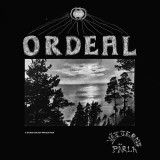
As an important agent of Gothenburg’s underground scene, Dan Johansson has been a member of several experimental harsh noise projects such as Sewer Election, and lo-fi indie folk bands like Enhet För Fri Musik and Amateur Hour. Ordeal is his latest solo output, and might as well be ashes stuck in the blast furnace's edges of his last longing career. Not by means of summing up genres or as a culmination of his musical development, but as a profound music piece weaved in his own household.
With not much more than a synthesizer, Vätterns Pärla is built by trembling, dissonant drones stained in feedback and reverberation, thickly textured by the no-fi quality of the recording, depicting a menacing atmosphere congested with heavy fumes. In Johansson's words, Ordeal "takes inspiration from the early 80’s albums of Maurizio Bianchi, filtered through a Gothenburgian no-fi bleakness. It’s an album for inner voyage, childhood memories, and places that now lost purpose and meaning”.
There's certainly intimacy and nostalgia, yet a claustrophobic, hypnotic ambiance wraps it all up in a contained and narrow space. Emphasis is put on texture rather than on detail, on color rather than on progression, on suspense rather than on conclusion. Tension varies stiffly, sometimes a drone layer dismantles and the mood seems to filter, but ragged edges are never polished. We can feel the walls and the air, which although tarnished, can be breathed in somehow. It's as if waking up in a dark room and having to recognize it with our ears and tact, testing its dimensions and its surface. The stillness in the chamber is like the stillness between gasps of storms.
Without visible stars, an enclosed share of night sky hides a heavy load of industrial debris underwater. These remnants are maybe the pearl regarding the album's title. It all can seem like a dream, a grim mechanical soundscape deafened by hefty, yet sporadic winds. Soil strives to make something grow, but sprouting is kept suspended, held by a dismal presentiment. Long shadows on the ground prove that darkness is about to befall. And as these shadows stretch, almost about to break up in a loud strike, the noise turns white.
The interstellar cosmonauts of Staatseinde create a theatrical mix of pulsing electro with nostalgic hopeful synthlines, all performed live with synthesizers, a sequencer and tantalizing vocals. From Wave to EBM, from NDW to Punk and everything else in and out of the box. It is like walking into a club meeting Kraftwerk on speed and The Sex Pistols on acid.
Their new release “De Nieuwe Golf” is characterized by dystopian prospects and hopeful sounds, confirming Staatseinde’s name as the founder of the “Neue Niederländische Welle”, in other words the New Dutch Wave.
The uplifting italo rifs in opening track “Grauw” take you on a journey through a gray world in which color cannot be taken for granted. Minimal wave track “Einzelganger” makes you feel like an outsider who can’t keep up with society. “Geef Me De Tijd” sounds like a schizophrenic dreamer swinging casually, but ending as a hard hitting track. Dystopian doom and pessimism is captured in EBM/techno floor filler “Doembeelden”. The raw West Coast Sound of Holland infused “La Haya” is a tribute to the city of The Hague which calls out on everybody to get wasted. The epic ode to space travel “Ruimtevaart Vooruit (2022 Refix)” is back in a rendition inspired by Rude66’s 2010 remix version. “Isla Inutile” is a dark and tropical delirium. In the hopeful “Alles is Weg”, Staatseinde takes you from the downfall on the way to…?
Staatseinde’s “De Nieuwe Golf” holds up a mirror to humanity…progress has not helped us any further. There is hope…but will this new wave be on time? Or is it already too late?
out of Stock
Last delivered 22 months ago available to reorder, subject to availability
William Eggleston is a famed photographer and musician credited for iconic album covers such as Spoon's Transference and Jimmy Eat World's Bleed American. 512 was inspired and recorded at the Parkview Apartments in Memphis, Tennessee where Eggleston lived for almost ten years. The apartment was full of art and inspiration: cameras, naturally, but also high-end stereo tube amplifiers and objects that you'd rush towards money in hand at your local flea market. But also a gigantic nine foot Bosendorfer grand piano and a massive grand vintage JBL theater speaker console. His home was overwhelmed by music. By recording there the album captures not just his performances, but also the vibe of the place; it often felt as though there were artists lurking in the aether listening along. His visitors over the years were no small change: Lee Friedlander, Carl Sagan, Dennis Hopper , Paul McCartney and many others came to see him and listen to his hypnotic "Musik". You can hear local traffic, a dog barking, weather; reality, in other words. But there was another space layered on top, a kind of surreality echoing his music, as you can imagine a gathering of musicians listening in, eager to join him. Thus came along 512 which features the legendary Brian Eno on bells and production from Leo Abrahams (Regina Spektor, Paul Simon, Jon Hopkins)."
William Eggleston is a famed photographer and musician credited for iconic album covers such as Spoon's Transference and Jimmy Eat World's Bleed American. 512 was inspired and recorded at the Parkview Apartments in Memphis, Tennessee where Eggleston lived for almost ten years. The apartment was full of art and inspiration: cameras, naturally, but also high-end stereo tube amplifiers and objects that you'd rush towards money in hand at your local flea market. But also a gigantic nine foot Bosendorfer grand piano and a massive grand vintage JBL theater speaker console. His home was overwhelmed by music. By recording there the album captures not just his performances, but also the vibe of the place; it often felt as though there were artists lurking in the aether listening along. His visitors over the years were no small change: Lee Friedlander, Carl Sagan, Dennis Hopper , Paul McCartney and many others came to see him and listen to his hypnotic "Musik". You can hear local traffic, a dog barking, weather; reality, in other words. But there was another space layered on top, a kind of surreality echoing his music, as you can imagine a gathering of musicians listening in, eager to join him. Thus came along 512 which features the legendary Brian Eno on bells and production from Leo Abrahams (Regina Spektor, Paul Simon, Jon Hopkins)."
Today we announce The Vinyl Collection, Vol. 2, an 11-LP boxset to follow 2021’s Vol. 1, which includes the remainder of Billy’s catalogue: Glass Houses, The Nylon Curtain, An Innocent Man, The Bridge, Storm Front, River of Dreams. It exclusively features Fantasies & Delusions & Live from Long Island on vinyl for the first time. The boxset includes a 60+ page booklet that highlights the era through photos, quotes, and an essay by Rob Tannenbaum. All albums remastered from original sources at Sterling Sound.
"The Vinyl Collection, Volume 2" vereint Billy Joels monumental erfolgreiche Alben aus dem späteren Teil seiner Karriere: "Glass Houses" (1980), "The Nylon Curtain" (1982), "An Innocent Man" (1983), "The Bridge" (1986) und "Storm Front" (1989), "River of Dreams" (1993). Außerdem gibt es 2 Titel zum ersten Mal auf Vinyl: die Doppel-LP "Fantasies & Delusions" und die 3er-LP "Live from Long Island" aus dem Jahr 1982. Alle Songs stammen von den Original-Album-Mastern, Zudem ist ein über 60-seitiges Booklet mit Billys persönlichen Anmerkungen und einem Essay von Rob Tannenbaum enthalten
Jake Muir's latest set of soft-focus, sensual electro-concrète, dissolves X-rated gay sleaze flick soundtracks into a shimmering suite of subdued orchestral flourishes and surreal cosmic psychedelia.
Back in 2020, Muir put together a 90-minute mix for Honey Soundsystem, blending tracks from Kelman Duran, DJ Olive, Daniel Lanois and Terre Thaemlitz with obliquely camp dialog samples from vintage gay porn. The idea was to represent queer sexuality in a looser, more experimental manner, grazing the super-sensory pleasure of the bathhouse experience and the illicit joy of cruising without getting too self-serious while doing it. The mix was so popular that Muir followed it up with a weightless sequel two years later, and began developing the concept into a proper album, using more samples of music and dialogue, eventually performing the piece at the esteemed GRM as part of their FOCUS #4 concerts alongside work by Eliane Radigue, Folke Rabe and Chris Watson.
Bathhouse Blues is split into two side-long pieces that wash and ripple with nervous tension and discreet salaciousness. Opening with a familiar theatre sting, there are echoes here of kosmische and experimental electronics on 'Cruisin’ 87', fashioned into puddles of syrupy, back-room ambience. Occasionally we hear lascivious words thru the fog, men mumbling to each other before sex. "That's beautiful," a voice mutters over a dusky cricket chirp on 'Pipe Dream'. "It is," another replies.
Muir's sonic treatment is suitably explicit, like a 1950s Hollywood jump-cut to a train going into a tunnel; he takes the whole-body, mutual release of queer sex and interprets it with heady gestures, peppering jazzy rhythmic frostings into basins of skewered drone and gurgling synths. His sound is coloured by the pleasure of physical touch, a mussy flux of high frequency scrapes and caresses juxtaposed with woozy, dubbed-out fondles and thrusts. Who said the GRM was buttoned up?
out of Stock
Last delivered 2 years ago available to reorder, subject to availability
“I believe that if they ever had a singing Olympics Donald and I would get (into the) top 3, if not win some gold. If you put us all together and let us have a singoff, we could hold our own with anybody from any era. That maybe sounds a little prideful, but that’s what I believe.” Phil Everly’s words to author and music historian Joe Smith will ring very true to anyone who listens to this compilation. All the tracks on it are half a century old, yet sound as fresh as ever. The fact is, that the harmonies Don and Phil brought to the charts were widely influential on a generation of pop performers on both sides of the Atlantic. For most of their recordings, Don sang the baritone and Phil the higher tenor part. Paul Simon and Art Garfunkel were just one of the acts that copied the Everlys, while Bob Dylan added to the praise by saying, ‘We owe these guys everything. They started it all.’
Named for the rewind mechanism on the reel to reel tape machine on which the band tracked the album, Auto Locator coils up the chemical trails of ribbon binding old places and head spaces to our consciousness. Static and hiss leach between analog track layers, blurring the normal and paranormal to remind us that no memory is totally separate from a fiction - just like no drum track is totally separate from bass.
Over Auto Locator's ten songs, Del Paxton rip shit like a band entering their second decade of existence. On-the-nose opener "Freight Train Metaphor" throws listeners face first into the band's first album since 2017, with a syncopated pulse and arpeggiating guitar foreshadowing a record replete with punkish, serpentine composition. "Up With a Twist," the album's lead track, deals in Del Paxton's crashing punk vibrance, through which the band explores and laments the uninspired architecture of American sprawl.
Second single "Chart Reader", whose origins trace back to a psychedelic dream inspired by Wayfaring Strangers: Cosmic American Music, sees the trio dabbling in emo Americana, even featuring a nod to John Denver's "Take Me Home, Country Roads." Such unashamed references abound throughout Auto Locator, which takes further inspiration from bands like Mock Orange, Third Eye Blind, and Jimmy Eat World, all of whose influence can be heard on "Palpitations" and third single "Spiritual Gymnastics."
The album represents an opportunity for the globetrotting family trio to explore their origins. TENGGER means ultimate expanded sky in Mongolian. The album finds TENGGER accepting the mood of the world, using the motion of wind and waves as sonic inspiration. TENGGER's interest in cosmology reflects in their outlook and lyrical approach.
In their words "the sound starts from the breaking dawn and circulates around until the night sky and the milky way."
Opening single "PANAPTU" offers a reverent respect to "the earth and the sky", the band write. "The sun, the rain, and the things that grow on the ground make up our bodies and soul. Both can be compared to a mirror. Humanity (on the earth) looks up at the sky; the sky looks at us Illuminate each other and influence each other. Change is happening every moment."
TPG long term friend and homeboy Ben Oyefeso pulls out a trio of double-jointed cuts for the club and not, the German producer's debut EP ‘Lagerfeuer’ packs that left-of-centre house punch that’s come to define the label throughout the previous ten releases and certainly more than just that. Cutting his lane at the junction of oddball party music and deconstructionist boogie, Oyefeso’s maiden sortie floats like a butterfly and stings like a bee. A weird, buzzing slab of body-jacking electronics that doesn’t play by the book.
An off-road bouncer of a track, the opening number ‘Matt’ has us nodding our heads to a high-in-vitamin mix of jacking house programming and erratic acid patterns gone astray. Knee deep in 303-marinated puddles of psychedelic squelch, Oyefeso keeps swinging the pendulum between a proper syncopated 4x4 motif’d framework and frantic digressions into an abstract-leaning headspace.
A2 ‘Kool’ opts for a further sliced-and-diced rhythmic line of action, generously infused with twisted Rephlexian phrases and sustained waves of micro-house clicking. Topping off that strange journey, the title-track ‘Lagerfeuer’ merges polyrhythmic intricacies with a forward-moving, earwormy kind of linear groove, all laced with a spooky baseline that stretches out into a purgatory of frankly eerie dissonances. Enough with the words, just jump on board Ben Oyefeso’s ghost train for a seriously tortuous, nonconformist ride across dance music’s jagged ridges and most secret crevasses.
out of Stock
Last delivered 2 years ago available to reorder, subject to availability
On Yard, Wisconsin-bred, Chicago-based four-piece Slow Pulp nestles comfortably into pockets of nuance, impressions, contradictions-sonics and lyrics finessed together to bottle the specific tension of a feeling you"ve never quite been able to find the right words for. In that regard, listening to Slow Pulp can feel like being in a room with someone who"s known you so long that they can read your every micro-expression and pinpoint exactly how you"re feeling before you can. Perhaps this spawns from the band"s own shared history and chemistry; in various ways, the four of them grew up-are still growing up-together. The dreamy songs of the Midwest (United States) indie rock outfit draw on moody shoegaze, hooky grunge, and intimate lo-fi fare. The band made their full-length debut with Moveys in 2020. After the downcast 2021 7" Deleted Scenes, they put the focus on hooky grunge pop for singles like 2021"s "In Too Deep" and 2023"s "Cramps". After their label debut single the band toured throughout Europe and the UK earlier this year as main support for Death Cab For Cutie. The new album "Yard" is their second full-length album and first for ANTI-.
A month after the release of his debut album as Tambores En Benirras, 2021’s fabulous Orbe Dotodo, Graham Newby’s life changed forever. After years living with a visual impairment, his sight had deteriorated so much that he was declared “registered blind”. For a man who had spent decades dividing his time between travelling, DJing, running clubs and lengthy sessions in his own studio, it was a genuinely life-changing moment.
It was against this backdrop, and the need to alter his working methods, that Ondas Horizontales, the second Tambores En Benirras album took shape. Inspired by a mixture of daydreaming, visualisation, immersion in other people’s music (escapism that provided mood enhancement, rather than a specific set of ideas) and long periods spent soaking up the sun in Ibiza, the album is the most vividly detailed, sonically colourful, and sun-soaked collection that Newby has released to date.
Newby’s declining sight forced him to stop spending long spells staring at a screen and undoubtedly slowed down the production process. Yet it also allowed him to reconnect with his emotions, appreciate the storytelling and mood-shifting potential of music, and mine mind’s eye memories of places and spaces that have meant much to him over the years.
The results are undeniably stunning. Designed with horizontal listening in mind, the set distils a range of musical and real-life inspirations –or, as he puts it, “ambient soundtracks, cosmic journeys, Balearic rhythms and poolside sessions” – into ten mesmerising and magical tracks; an undulating, slow-motion journey that’s as breath-taking as it is beguiling.
Newby sets the tone with ‘Mi Sueno Vibe En Reverb’, a swelling, slow-burn ambient masterpiece that tiptoes between hope and melancholia, before flitting between imaginary sunset soundtracks (‘Estrellas En Mastella’, where lilting pedal steel sounds, bubbling electronics and shuffling breakbeats catch the ear), kaleidoscopic sun-up beats (the gorgeous warmth of ‘Generadora De Reyos’), enveloping beatless soundscapes (‘Templos Del Sol’, a drowsy drift in becalmed waters under the heat of the mid-afternoon sun), and dubby, loved-up lusciousness (‘Mokono’).
As the album progresses, bobbing and weaving on an ocean of vibrant chords, pulsing melodies and heart-stopping melodies, there’s no sign of Newby’s inspiration waving. ‘Alma Hablando’ channels the spirit of mid-80s ‘worldbeat’ and douses it in layers of Balearic bliss, while ‘Extrensor Entragado’ recalls the head-nodding haziness of his best Gripper productions of old while combining them with the musical equivalent of a humid summer breeze. Then there’s the mood-enhancing joy of the album’s superb title track –a mission statement of sorts – and the life-affirming post trip-hop/Balearic fusion of ‘Un Placer Celestial (Reprise)’, where the influence of his old friend Aim is clearly evident.
A serious sonic step-up from its predecessor and a future Balearic classic in its’ own right, Ondas Horizontales marks the start of a new musical and personal journey for its creator. It is, in his words, not the end of an era, but the start of a new one.
out of Stock
Last delivered 2 years ago available to reorder, subject to availability
Richmond's INTER ARMA, reigning masters of the slow build, continue to trace a distinctly ambitious trajectory through modern metal. Their impulses tend toward the epic, but never bloat; they meld several styles — doom, sludge, and hard psych — without coming off like dilettantes. This newest full-length, Sulphur English, finds them mining deeper in the proggy organic doom fields that made both Paradise Gallows and Sky Burial so thrilling while expanding further the on the psych-folk strain that made those albums' peaks seem so lofty. Few metal bands have ever made such effective use of acoustic instruments in truly heavy environments as INTER ARMA do; the acoustic guitar that stitches "Stillness" together is as effective as any overdriven bass; a two-minute gloomy piano-and-feedback piece titled "Observances of the Path" rolls out the carpet for "The Atavist's Meridian," an album highlight that rides a gigantic, roomy drum sound into realms akin to a murkier Paradise Lost, a more aggressive Om, and a dreamier, more stoned Kylesa all playing together at once. Few bands make music as engrossing as INTER ARMA; their lengthy, almost meditative songs rumble patiently forward until you're ready to get thrown off a bridge — and then they throw you, with great force. - Words by John Darnielle
Expanding on the shoegaze-shaded emo that made Parannoul's To See the Next Part of the Dream so beloved by lo-fi and indie rock fans alike, After the Magic sees the anonymous auteur striving to write a follow-up as worthy of acclaim as the last.
Across the album's ten songs, Parannoul plunges yet deeper into his diverse pool of influences, coming back to the surface with a record that captures and extends the magic of its predecessor. Unexpected flashes of orchestral ambient and glitched-out electronica meld seamlessly with Parannoul's signature passages of noisy, distortion-laden shoegaze, offering a real time glimpse into the maturation
of one of indie rock's most exciting artists.
In the artist's own words, "This album is not what you expected, but what I always wanted."
A pioneer of bebop, Max Roach went on to work on many other styles of music and is generally considered alongside the most important drummers in history having worked with such musicians as Coleman Hawkins, Dizzy Gillespie, Miles Davis, Duke Ellington, Charlie Parker, Stan Getz and more! A seminal set, stretching out towards the directions Max would explore fully on the Candid, Impulse, and Fantasy labels in the 60s. Group members include Booker Little on trumpet, George Coleman on tenor, Ray Draper on tuba, and Art Davis on bass – and the lack of a piano makes for a very exciting sound!