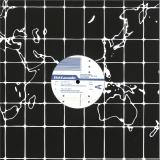
2026 Repress
The tenth edition of the Early Morning label stands as both a milestone and a statement of intent. In just a single year, its founder has reshaped theunderground dance music landscape with a catalog that redefined thepossibilities of the genre. This latest release features two new pieces thattogether form a tightly woven conceptual work spanning nearly seventeenminutes.
Guy Jhas built his reputation on reinvention. Each release feels less like acontinuation of his past and more like a step into uncharted terrain. On theopening track, Worlds Apart, he fuses an emotive core with intricate sounddesign and spatial experimentation, leading listeners into liminal states whereconsciousness and subconsciousness blur. Despite its cerebral qualities, thepiece never loses its pulse, the steady momentum thatkeeps it firmly anchoredto the dancefloor.
True tothe label's name, this is music designed for dawn, for moments of release aftera long night, for embraces on crowded floors, for the intangible bonds thatform through shared experience. The second track, Surreal, pushes further intoabstraction. While echoes of early trance, a genre that shaped Guy J during hisformative years, are evident, the piece reframes those influences through aprogressive, hypnotic, and technologically refined lens. It is this ability toblend memory with innovation that distinguishes Guy J from his peers, offeringlisteners not just music but a reimagined space in which sound itself becomesan act of discovery.
Tracklist
Cerca:terra
- A1: Aleksi Perala - Fi3Ac2502126
- A2: Conrad Van Orton - Plaintive Drift
- A3: Dynamic Forces - Ms4
- B1: Force Reaction - Mysteries Unfolding
- B2: Jeroen Search - Void Signal
- B3: Kerrie - Proxima K
- C1: Marcel Dettmann - This Is A Test
- C2: Peder Mannerfelt - The Alternate Current
- C3: Sanna Mun - The Testament
- D1: Section 6 - Phalanx
- D2: Sonic Propaganda - Triangle Maze
- D3: Ufo95 - Apollo 95
Repetitive Rhythm Research presents: FW25/26 The sound of the season? Or a tongue-in-cheek reflection on fleeting trends? Techno has always moved in cycles--styles fade in and out of focus, but true character stands the test of time. As the genre enters its fourth decade, it's fascinating to see how experimentation sometimes becomes formula, and how fresh ideas can either break the mould or quietly slide into the mainstream. This new compilation on Repetitive Rhythm Research explores exactly that tension. 12 tracks by 12 artists--ranging from rising talents to established names--each bringing their own distinct approach. This isn't your typical 'cut from the same cloth' compilation. It's a diverse journey through contemporary techno with all its depth, quirks, and raw energy. From Marcel Dettmann's dark and spooky slow-burner This Is a Test, to Peder Mannerfelt's forward-thinking Alternate Current. Force Reaction dives into trippy terrain with Mysteries Unfolding, while Sanna Mun and Dynamic Forces channel classic Detroit vibrations. Section 6 (a well-known Dutch producer) and Sonic Propaganda (aka Earwax and Rosati) deliver peak-time power. UFO95 takes you on an epic trip with Apollo95, while Conrad Van Orton's Plaintive Drift operates in a lane of its own--fast-paced, hypnotic, and emotionally rich. And then there's the ever-consistent Jeroen Search, the fierce energy of Kerrie, and the unmistakable sonic fingerprint of Aleksi Per?l?--each contributing to this wide-ranging exploration of techno's current landscape. This Fall/Winter 25/26 release isn't just another techno compilation. It's a curated statement that embraces contrast, personality, and forward momentum. Pick your favorites. Revisit the outliers. Let the rhythms unfold.
Best Intentions announces Inverse, a new 4-track EP from Melbourne-based producer and DJ; Pugilist, arriving 12 December on digital and limited white-label 12" vinyl. Marking his first release on the London imprint, Inverse sees Pugilist expanding further into the shadowy, percussive terrain he has become known for, merging future-focused techno, lo-fi industrial, and the energy of early hardcore breaks through his own atmospheric lens. The EP captures both the toughness of the dancefloor and the subtle experimentation that runs through his catalogue. A Scottish/Kiwi artist now based in Melbourne, Pugilist has built a reputation for stylistic range and rhythmic depth. His releases on Modern Hypnosis, Samurai Records, and 3024, along with the recent launch of his own imprint Ruff Kutz, demonstrate his ability to move across tempos and moods while maintaining a distinctive sonic identity. On the decks, he is celebrated for tightly curated sets, deep crates, and an array of unreleased dubs. Speaking on joining the Best Intentions roster and the inspiration behind the project, Pugilist shares: "Stoked to be joining the Best Intentions fam with 4 x retro rave rollas across the hardcore continuum, from minimalist Techno, to smoked out Electro, to krusty Hardcore and Breaks. This EP is a mix of styles which have informed my production style over the years. It is great to be putting out music with a shared vision for giving back for a greater cause. I have been a fan of the label since its inception so jumped at the chance to do a 12". I will be donating my share of profits to the Asylum Seeker Resource Centre - a wonderful Melbourne-based charity for asylum seekers here in Naarm. They do wonderful work." The EP's closing track, FKRY, a collaboration with POD, brings warped leads, stepping drum work, and old-school jungle tension into a modern, heavyweight techno frame.
- A1: Kid Loco - She's My Lover
- A2: Alex Gopher - The Child
- A3: Zero 7 Feat Sophie Barker - In The Waiting Line
- A4: Etienne De Crécy - Tempovision
- A5: Bonobo - Terrapin
- B1: Guts - Ghetto In Paradise
- B2: Quantic - Time Is The Enemy
- B3: Gotan Project Feat Cristina Vilallonga - Epoca
- B4: Jazzanova - Bohemian Sunset
- B5: Fakear - Morning In Japan
"Trip Hop Vintage Sounds" is a 2023 compilation album by Wagram Music that features various tracks from artists such as Kid Loco, Zero 7, and Etienne De Crécy. It is a collection of downtempo, atmospheric music that blends hip-hop beats with other genres like dub, soul, and jazz, characteristic of the trip-hop sound that originated in the UK in the 1990s.
Black Midi war von Anbeginn der Band ein illustres wie kreatives Tummelbecken für die Mitglieder der britischen Band - nun löst sich Geordie Greep mit seinem am 4. Oktober bei Rough Trade Records erscheinendem Solo-Debüt noch mehr von jeglichen Einschränkungen und Kompromissen! Eines der Hauptthemen von Anthony Powells Roman "A Dance to the Music of Time" ist der Kontrast zwischen jenen Charakteren, die nur von Macht getrieben werden, und jenen, die mehr mit den sinnlichen Freuden des Lebens in Einklang stehen. Unweigerlich holen die Zeit und das Schicksal jeden Protagonisten ein, und der Leser kann darüber nachdenken, ob ihr Schicksal gerechtfertigt ist oder nicht. "The New Sound" wirkt oft wie eine Wiederholung von Powells Thema, untermalt von einem schrägen - und völlig verkabelten - Palm Court Orchestra. Das Album ist mit Sicherheit eines, das den Hörer über die gesamten elf Tracks hinweg voll in seinen Bann zieht. Greep: "Ich war besorgt wegen der Länge, um nicht zu viel zu verraten. Aber ich bin es auch verdammt leid, Musik zu hören und im Voraus zu wissen, was sie bedeutet oder was sie zu tun versucht. Bei all meiner Lieblingsmusik geht es darum, dass der Hörer sich mit dem auseinandersetzt, was vor sich geht. Meine Lieblingssänger, wie Peter Hammill oder Nat King Cole, sind buchstäblich einmalig. Das liebe ich. Vor allem bei Texten, bei denen man nicht genau weiß, worum es geht, aber man weiß, dass es nicht nur abstrakte Gedanken sind."
Tom Carruthers’ talent lands on the beloved Orange Wedge Imprint. Drawing inspiration from the golden era of the early ’90s, Jealousy EP delivers five raw, floorfocused tracks that perfectly capture the spirit of classic house and techno — stripped-down, gritty, and irresistibly timeless
UK-based DJ and producer Wallace debuts on Phantasy Sound with an irresistible double A-side single, ‘Cravings (ft. Love Letters) / Concourse.’ Bubbling with sensuality and euphoria, both tracks reinforce Wallace’s burgeoning reputation as one of electronic music’s most impressive new voices, a crowning moment on Erol Alkan’s long-running label following a stellar run of singles for imprints including Cooking With Palms Trax, Rhythm Section, and Moxie's much-loved On Loop.
Led by a longing, inquisitive performance from vocalist and underground house music luminary, Love Letters, ‘Cravings’ builds from a simple throbbing bass line to an eruption of lyrical and musical joy. Exploring onset desire – risk, uncertainty, and ultimately, reward – Wallace’s deep and celebratory arrangement interweaves with Love Letters’ queer perspective to deliver universal satisfaction.
While ‘Cravings’ looks inward to find release, ‘Concourse’ goes for the jugular with a darker, more epic sensibility than Wallace has previously indulged. His flawless production touch seamlessly gifts magic to a widescreen techno epic that might not sound out of place on the terrace at Circoloco or else a field near early-nineties Frankfurt, repeatedly working his acid-oriented machines into a lather and conjuring cosmic drama from eerie, choral voices beneath a powerful groove.
South Street International return with the house goodness once again, reissuing Vick Lavender’s house anthem “The L.O.V.E. Song (From Chicago To New York)”. Originally self-released on his label Sophisticado Recordings by the Chicago producer and musician, this is one of those timeless deep house gems that’s become an underrated weapon for discerning DJs worldwide.
Lavender – known for his work with Glenn Underground as part of the legendary Strictly Jaz Unit – has been shaping deep and soulful house for over three decades, blending world music, jazz fusion, R&B and more into a sound that’s both spiritual and deeply rooted in the dancefloor. Here he brings the best of both cities into one track: the soulful musicality of Chicago, the cosmopolitan polish of New York. Warm Rhodes, fluid percussion, and vocal refrains ride over a groove that’s equally at home in a dark basement session or a sunrise terrace set.
With originals changing hands for eye-watering prices on Discogs, this official reissue makes this must have record accessible again. Lovingly remastered by The Bakehouse and presented on South Street International, This record is a must-have for fans of deep house, and anyone who believes in the eternal conversation between Chicago and New York.
- A1: One Of These Days 02 53
- A2: Magnificent Fall 04 38
- A3: Boneless (Grizzly Bear Remix) 02 53
- A4: Blank Air 04 34
- A5: Avalanche 02 33
- B1: Run Run Run (Ada Remix) 05 17
- B2: Red Room 05 22
- B3: Come In 03 43
- B4: Solo Swim 05 51
- C1: Sleep (Odd Nosdam Remix) 03 06
- C2: Intro Live From Alien Research Center 09 01
- C3: Who We Used To Be 03 31
- C4: Das Verschwinden 01 10
Magnificent Fall, The Notwist's new rarities compilation, compiles some special and wild moments from this unique German indie group's rich history. They've always snuck gorgeous songs and thrilling remixes onto split singles, extended plays, and other formats, across their career, and pieced together here – compiled thoughtfully, with sensitivity to flow and the listening experience – these thirteen selections work as a kind of ‘shadow narrative’ of The Notwist, an alternative index of the possibilities this shape-shifting group uncovered during their time together.
They've been smart to let go of chronology when sequencing Magnificent Fall, so the songs here move across phases and stages of The Notwist's career, helmed by brothers Markus and Micha Acher. This approach makes plenty of sense, as this music compiled here abstracts from two impulses – to push forward and not repeat what has come before, while building from the group's very specific musical language. Just one example: the loveliness of the instrumental “Avalanche”, from 2020's Ship, follows elegantly from the happy-sad glitch-pop of “Blank Air”, from a 2010 split with former member Martin Gretschmann's project Console. Different phases, different memberships, shared concerns.
The Notwist have always been interested in and open to community, and one of the many ways they reach out to others is through the remix. There are three here, sent back to The Notwist from different corners of the world, both aesthetically and geographically: Grizzly Bear take on “Boneless”, Ada tackles “Run Run Run”, and Odd Nosdam submerges “Sleep” in noise and clatter. Another connection, of course: Odd Nosdam is part of The Notwist's extended family, through Markus and Micha Acher's 13 & God project with fellow Anticon artists Themselves and Subtle.
So, the music on Magnificent Fall traverses varying terrain – abstract hip-hop, chamber pop, sweet and simple folk song, indietronica, free-floating improvisation. There are several unreleased songs, as well, drawn from across the group's history. Core to it all, though, the thing that makes The Notwist so singular, is the thumbprint of the Acher brothers, their gently poetic way of moving through the world and welcoming other musicians and artists into the fold, expressively and with generosity.
Historically aware without being nostalgic, Magnificent Fall is the perfect way to introduce The Notwist's reissue programme with Morr Music, too, including a box set, and the group's eight albums, documenting their three-and-a-half decades of music and community-making. Looking back to move forward? It's a very good idea.
Modularz presents its 94th release, a new full-length EP by label head and renowned producer Developer, marking another milestone in a prolific year of studio work from his base in Berlin. Following the recent release of UHFVHF—a striking collaboration with Ukrainian sound architect Stanislav Tolkachev—Developer returns with Mesmeric Movements, a project that dives deeper into his signature terrain of hypnotic techno and rhythmic storytelling.
Comprising four vinyl tracks accompanied by four exclusive digital cuts, Mesmeric Movements offers an immersive journey through layered percussive architecture, pulsating low-end frequencies, and evolving textures that reflect Developer’s enduring command of tension and groove. Each piece unfolds with precision, revealing a meticulous approach to sound design that has cemented his position as one of techno’s most consistent and visionary figures.
With Mesmeric Movements, Developer reaffirms his artistic direction—refined, powerful, and unmistakably his own—while hinting at the evolution still to come from both artist and label in the year ahead.
Iptamenos Discos kündigt Houdini an, die neue EP der Labelgründer Local Suicide. Die Platte enthält drei ihrer dunkelsten und kraftvollsten Originaltracks bis heute, ergänzt durch markante Neubearbeitungen des französischen Electroclash-Pioniers David Carretta und der aufstrebenden griechischen EBM-Kraft Alpha Sect. Die Houdini EP entstand im Berliner Studio von Local Suicide während zahlloser nächtlicher Sessions mit Skelesys in derselben kreativen Phase, die auch ihren gemeinsamen Hit Moustache, die Surface Of The Sun EP und Faster Faster auf Curses’ Next Wave Acid Punx-Compilation hervorbrachte. Das Ergebnis ist ihr bisher düsterstes Material, das ihren Technodisco-Sound in noch härteres Terrain führt - mit hypnotischen Basslines, industriellen Texturen und analogen Vintage-Synths. Damit zählt es zu den mutigsten Releases im Katalog von Iptamenos Discos. Die EP eröffnet mit Obsessions, einem Track zwischen Darkwave und Techno, aufgebaut auf einer brutalen Bassline, analogen Synths und eindringlichen, mantraartigen Vocals. Die wiederholte Zeile „Obsessions, they come and go“ spiegelt den unerbittlichen Sog des Stücks wider und unterstreicht seine klaustrophobische, sich ständig wiederholende Energie. Submission, eine Zusammenarbeit mit Langzeitkollaborateur Skelesys, steht dem in nichts nach: ein düsterer Low-End-Sound, verzerrte, stark bearbeitete Vocals und der Sprechgesang „Resistance, no submission“ durchziehen den Track wie eine Trotz-Erklärung, die Spannung in Kraft verwandelt. Der Titeltrack Houdini ist etwas zugänglicher, behält aber die gleiche schattige Atmosphäre. Unheimliche Orgelmelodien und der Text „The great Houdini, the big escape“ beschwören Transformation und Befreiung herauf, zollen dem legendären Illusionisten Tribut und verleihen der Nummer eine theatralische Note. Der französische Kult-DJ und Produzent David Carretta interpretiert Obsessions neu mit seiner unverkennbaren retro-futuristischen Handschrift. Seit den 1990ern bekannt für die Fusion von industrieller Präzision mit Italo-inspirierten Synths, hellt er den Track mit glitzernden Disco-Melodien und einer erhebenden Stimmung auf – eine Version, die sich bewusst vom dunklen Original absetzt und sofort für die Tanzfläche taugt. Der in Straßburg ansässige Alpha Sect, das Projekt des griechischen Künstlers George McCall, führt Submission in kompromisslose Dimensionen. Verwurzelt in Electro und Body Music mit Punk-Einflüssen, beginnt sein Remix als wuchtiger EBM-Stomper und entwickelt sich zu einem clubtauglichen Track, der Intensität mit Katharsis in Balance bringt.
*comes with a download code
Wata Igarashi's first album on Dekmantel is a lightning bolt of immediate, immersive and impactful techno energy that maximises his trademark tunnelling rhythms and psychoactive arpeggios with stunning results. Compared to some of his dreamier releases on labels like Midgar, The Bunker New York and Delsin, here we're treated to a more intense, hi-octane dimension to Igarashi's sound perfectly demonstrated in the wide-eyed, invigorating rush of 'Shockwave', 'Meltzone's nagging acid frenzy and 'Unleashed's delirious, pitch-bent peaks.
Precision honed and revelling in the hypnotic abandon of the loop, My Supernova is a techno album through and through, but it's also overflowing with the kind of head-melting creativity and nuanced production that Igarashi has made his own. Just lose yourself in the giddy arps of 'Supernova' — a joyous whirlpool of synths upon synths upon synths reaching fever pitch without even a hint of brute force.
Four years on from their landmark Grassroots, visionary half-time heavyweights The Untouchables return with their third album, Lost Knowledge. The duo of Kate McGill and Ajit 'Nitrox' Steyns have carved out a space in modern D&B all their own, building on a legacy that reaches back to the late 00s to keep pushing into unexplored terrain with an assured and deadly line in rhythmic intrigue and atmospheric immersion.
Lost Knowledge launches into action instantly with the high-pressure drum science and dubby splashes of 'Drunken Bells', capturing the loopy techno propulsion and rolling intensity that drives so much of the output on Samurai Music. Where The Untouchables excel is in finding variety and nuance in their relatively forbidding, pared down sound. The heads-down groove of 'Mafia Town' owes as much to dembow and dancehall as D&B, while 'Lost Knowledge' spirals out into psychoactive flurries of synth strafes and organic percussion slathered in tight-locked delay trails. There's no light relief from strident hooks or riffs, just a pure, unshakeable commitment to the power of the beat and deeply designed layers of sound shaping out the space around.
'Busy Bones' makes space for carefully deployed hints of pad tone while the snares snap out of the mix with a sharp set of teeth. 'Four Eared Demon' baits the gabber crowd with its rapid-fire 4/4 hats atop seasick creaks across the midrange, keeping subtlety and patience in the lower frequencies to maintain the signature elegance readily associated with The Untouchables. 'Phase Correlation' teases an artfully unhinged ripple of synth that stands out amongst the murky murmurs filling out the middle distance, but it's still exercised with brutal precision.
Nothing happens by accident or feels out of place - McGill and Steyns are in total control, and they demonstrate incredible range and inventive approaches within their focused style. The accent of the grooves shifts, and individual sounds carry all kinds of artefacts, yet everything gets folded into the exacting Untouchables sound with a liberal dubwise sensibility. Brimming with inspiration and immaculately produced, on Lost Knowledge their one-of-a-kind sound is stronger than ever.
2x12"[28,36 €]
The Nightlife isn’t just a single. It’s a fever dream. Honey Dijon and Chloë have built a sonic peephole into a city that only half-existed—New York’s Meatpacking District in the late ’70s, that liminal wet haze where sweat, leather, and desire commingled under streetlights that flickered like dying stars. Imagine Blade Runner rewritten by Jean Genet, but scored for bodies pressed together at 4 a.m.—that’s the terrain.
And in the marrow of this track, the ghost of Kim English’s Nitelife thrums—an invocation of the 1990s underground, those rooms where freedom was fragile but absolute. Honey Dijon doesn’t just sample it. She resuscitates it, drags it into the now, dresses it in sequins and grief, insists we dance harder because the future is burning quicker.
This isn’t nostalgia. This isn’t homage. This is ritual. A reminder that nightlife was always resistance—radical, erotic, communal. And The Nightlife is a portal, a signal flare, maybe even an omen. Something larger is coming. Consider this the first act.
Techno stalwart Mike Vinyl from Austria returns with Bloodline – a timeless, high-energy techno track that masterfully blends warmth and raw power. It’s a track that breathes – deep, rolling, and relentless – fusing emotional depth with a driving, physical intensity. With RDL, the pressure builds even further, a no-compromise peak-time tool that keeps the heat on. The release closes with Fading Lights, a slow-burning downtempo piece that drifts into atmospheric, introspective terrain.
Bringing together the elder statesman of the Zulu guitar Madala Kunene and internationally acclaimed Sibusile Xaba, kwaNTU pulls two generations of South African guitar mastery into a single point of focus. Under-represented on recordings outside of South Africa, Madala Kunene (b. 1951), the ‘King of the Zulu Guitar’, is revered as the greatest living master of the Zulu guitar tradition. Sibusile Xaba, whose collaboration with Mushroom Hour Half Hour reaches back to his first recording in 2017 (Open Letter To Adoniah/Unlearning), has garnered international acclaim for his unique voice and virtuoso guitar stylings, which bring together multiple South African guitar lineages in an original, spiritualised fusion. Collaborating with Mushroom Hour and New Soil for kwaNTU, the two players come together to weave a filigree sonic fabric which reaches down to the heartwood of Zulu guitar music but moves resolutely outward, building on the past to create a deeply rooted statement about present conditions and future travels. kwaNTU – which can be roughly translated ‘the place of the life-spirit’ – is also conclave of teacher and student, as Xaba has been taught by Kunene for the last decade. Meditative, rich and sonically sui generis, kwaNTU finds these two musicians linking up within the inimitable space of sound and spirit that they share through Kunene’s teaching.
The great masters of South African music have not all had equal exposure. For many years the generation of musicians who were exiled during apartheid took centre stage, as the regime made it very difficult for those at home to be heard. More recently, a new cohort of important voices, especially in jazz, has broken through to international consciousness. But for the generation of musicians in between – those who shone like beacons in the most difficult final years of apartheid and immediately afterward – international recognition has been slow in coming.
Madala Kunene, ‘the King of the Zulu Guitar’, is among this number. A revered figure for current generations of South African musicians, Kunene began his recording career in 1990, at the bitter end of apartheid, with a now classic self-titled LP for David Marks’ storied Third Ear imprint. Born in 1951 in Cato Manor, near Durban, he had determined to be a musician from early childhood, and by the time he first entered a recording studio he had already had a long career as a popular performer. His virtuoso absorption and transformation of the venerable Zulu maskanda guitar tradition and his richly spiritualised approach to music immediately marked him out as someone special, and in the years that followed, Kunene cemented his position as one of South Africa’s musical elders. He is without doubt the grand master of the Zulu guitar tradition, but his sound and sensibility ranges far beyond it into varied sonic terrain, and he has collaborated with a wide range of musicians both at home and abroad. Now in his mid-seventies, he remains a shining light for those that are making music in contemporary South Africa.
‘He is really an amazing person,’ says the guitarist Sibusile Xaba, who has been mentored by Kunene for over a decade, and now invites a collaboration with him on kwaNTU. ‘As a mentor, he's really powerful in showing us the way. For us to have this opportunity to make music together and have a project together is really a blessing to me.’
Xaba himself grew up in Newcastle, KwaZulu-Natal, where his mother had been in a band and his father sang in a church choir, and from early childhood Xaba played homemade tin guitars. He only later realised that music was his calling. ‘I just loved music. I was fortunate. My parents loved music. And when it was time for me to leave home and go to study outside Newcastle, I knew that music was what I wanted to do. There was no second option. It was just music.’ Moving to Pretoria to study music formally, Xaba committed himself to his craft, developing a unique style that draws on both US jazz masters such as Wes Montgomery and Jim Hall, and the rich and varied heritage of the South African guitar, from inspirational jazz players such as Allen Kwela and Enoch Mthalane, to the music of the Malombo groups and Dr. Philip Tabane (Xaba has previously collaborated with Dr. Tabane’s late son, Thabang), and the Zulu guitar tradition embodied by Kunene.
‘I was really in love with the jazz guitar, I really admired it, and I was digging a lot in that direction,’ says Xaba, recalling his first encounter with Kunene’s music, over a decade ago. ‘And then one day on my timeline, Kunene popped up, and I was like – “What's this sound?” I was so connected to it. It really touched me deep. I started checking out his records, and then I found out he's from the same region as I am, which is Zululand.’ After Kunene played a show at the Afrikan Freedom Station in Johannesburg, Xaba make contact with him, and visited him at home in Durban. They struck up a friendship, and Xaba became the elder’s student, as Kunene began to pass on his knowledge and his inimitable way of playing.
kwaNTU is a tribute to this relationship and the deep learning that has defined it. The album was recorded in Zululand in the town of Utrecht, at a cultural centre called Kwantu Village, which gives its name to the album. ‘It's such a broad word,’ Xaba says, ‘but the elders teach us that Ntu is basically an energy, almost chi, an energy, a force that all living beings have within them. It's a living energy, so kwaNTU is like, almost the place of this energy.’ The two men sequestered themselves for five days of jamming, improvising and planning, and then the session was recorded in one take over a single night, with Gontse Makhene joining on percussion and backing vocals and Fakazile on vocals. Other voices and overdubs were later added in the studio in Johannesburg.
The result is a rich and meditative recording that finds two generations in a deeply engaged dialogue. Teaching and passing on his knowledge, the elder Kunene has brought Xaba into a space of sound and knowledge that they now share; Xaba’s own practice of deep communion with nature and his dedication to his musical craft make him the perfect interlocutor for Kunene. The result is an album that foregrounds the two musicians engaged at the highest levels of responsive listening, sympathetic unity, and collaborative concentration. Bringing an elder statesman of South African music to an international listening audience for the first time in decades by pairing him with one of South Africa’s most important new voices, kwaNTU is a meeting of generations and a powerful demonstration of musical lineage and continuity.
‘Before music, there is sound,’ Xaba observes, speaking of Kunene’s unique approach to music. ‘And sound is like a common compartment…it's not restricted to particular people or particular geographic places, you know what I mean? It's sound. Everybody can hear it. So when he constructs that sound into music, I think everybody resonates with the energy behind his construction of sound into song. Here at home, we really love him for preserving our history through the guitar, through his stories as well the music, the songs that he writes. We really, really admire him.’
Heith's music has always been infused with sacred mystery, striking a delicate balance between lived experience and imagination. On Escape Lounge, his second full-length release for PAN, Heith draws inspiration from contemporary digital spirituality and interpretations of experience that are crossing over from cultural niches into the mainstream - including internetbased conspiracy theories and psychological operations. The album presents a sonic diary recorded across Milan, Berlin, London, and Stockholm, crafting a post-informational folklore while exploring new territories in personal songwriting. The title Escape Lounge, inspired by airport waiting areas, serves as a metaphorical waiting room of the mind. Its hidden passages can lead either to peril and loss or to enlightenment and kaleidoscopic mental landscapes. This liminal space echoes the mysterious realms of Twin Peaks or the viral "Backrooms" phenomenon. Within it, contributing musicians - including frequent collaborators Leonardo Rubboli, Aase Nielsen, and 33 drummer Alexander Iezzi - move like ethereal presences, creating intangible soundscapes that leave traces of post-hypnotic melancholia. Notably, the vocal contributions from Price and James K enhance the otherworldly atmosphere, their multifaceted timbres adding layers of intentional ambiguity. Throughout the album, Heith masterfully blends acoustic instruments, human voices, and digital technology along an uncharted path that references the experimental pop of 90s trip-hop, 2000s indie-folk songwriting, and lush Mediterranean psychedelia. The sounds are meticulously crafted, combining synthesizers with guitar-based compositions in a computational songwriting approach that creates a collage across eras and landscapes. Each track unveils new dimensions of this delicate hallucinogenic narrative, delivering an immersive listening experience. As reality continuously shifts, Escape Lounge emerges as both sanctuary and confinement - a space of momentary connections and endless potential. In 2025, Heith will debut a new live show and audiovisual collaboration titled 'The Talk' with James K and Günseli Yalcinkaya, commissioned and premiering at Sonar Festival, Terraforma, Nuit Sonores, and Reworks.
Skylax Records is proud to welcome one of Germany’s deepest and most respected producers to the family: Sascha Dive, with his stunning Cosmic Ritual EP, featuring house music legend Robert Owens and Zimbabwean vocal virtuoso Vusa Mkhaya. From Frankfurt to the world, Dive has spent nearly two decades carving a unique space where deep house, Detroit techno, and spiritual soul converge—this new release is a testament to that lifelong mission. On A1, Owens delivers an uplifting sermon on the irresistible "Don’t Let No One Or Nothing Stop You", a timeless piece of motivational house drenched in analog warmth. A2’s “Deep Connection To Detroit” is exactly that: a hypnotic, percussive journey into Motor City groove science. Flip the record for “Take Your Time”, another Robert Owens collab that slows things down into deeper, more introspective terrain. Then comes "Cosmic Ritual (Vocal Mix)", where Vusa Mkhaya’s voice channels ancestral energy over shimmering pads and tribal percussion—pure transcendence. Closing things off is “Ultimate Mind”, a stripped-back, late-night cut for meditative floors and after-hours revelation. All tracks are deeply rooted in the vinyl tradition, made for DJs, dancers and dreamers. With this EP, Sascha Dive reaffirms what real house music is all about: soul, message, rhythm, and ritual. Limited 12” vinyl – no repress.
Nachdem sie auf ihrem gefeierten Debütalbum ein multidimensionales Klanguniversum definiert hatten, verlassen der Komponist und Filmemacher Chris Hunt und James ,Munky" Shaffer von Korn auf EXINFINITE das Vertraute und driften in ein Reich der Rekursion, wo sie auf ein Gewirr aus gespiegelten Wurmlöchern blicken, die mit unheimlicher Mehrdeutigkeit summen. Das zweite Album von VENERA ist düsterer, heavier und perkussiver als sein Vorgänger, aber es gibt etwas Intimeres in seinen Schaltkreisen, das schwer zu definieren ist - etwas Mystisches, Geheimnisvolles und Melancholisches. Songs materialisieren sich aus dem Nichts, nur um von sauren Synthesizern aufgelöst oder von Hunts geschärften Beats durchbohrt zu werden, während Shaffers dichte, gequälte Riffs durch euphorische, zeitverzerrte Vocals von FKA twigs, Dis Fig und Chelsea Wolfe ausgeglichen werden. Nach ihrer Begegnung mit der Unendlichkeit haben VENERA nach innen geschaut, über die Grenzen der Existenz nachgedacht und ihre tiefsten Emotionen ausgegraben. VENERA entstand 2022, als Hunt und Shaffer nach Aufnahmen mit der albanischen Künstlerin Xhoana X. ihr eigenes musikalisches Terrain betraten. Das Duo improvisierte gemeinsam und experimentierte mit cineastischem, von Science-Fiction inspiriertem Sounddesign und erkannte, dass die Zusammenarbeit Potenzial hatte. So begannen sie, ihren Sound weiterzuentwickeln und zu verfeinern, wobei sie Unterstützung von Deantoni Parks, dem ehemaligen Schlagzeuger von Mars Volta, Alain Johannes von Queens of the Stone Age, dem Post-Punk-Duo VOWWS und den LA-Noise-Rock-Legenden HEALTH erhielten. Nachdem ihr Debütalbum 2023 auf Mike Pattons Label Ipecac erschienen war, setzten VENERA die Dekonstruktion und Neugestaltung ihres Songwritings fort, tauschten Eno-artige Ambient-Atmosphären gegen explosive Beats und dichte Texturen aus und fanden heraus, wie sie die von ihnen eröffnete Erzählung erweitern konnten, ohne alte Pfade zu beschreiten. Auf ,Tear" ist die neue Richtung des Duos deutlich zu hören, wenn Shaffers ursprüngliche Gitarrenklänge zu unheimlichen Widescreen-Expositionen umgestaltet werden, die Hunt mit pneumatischen Kick- und Snare-Zyklen untermalt. Unterbrochen von Luftschleusen-Zischen und leuchtenden Synthesizern, bietet der Track eine Kulisse, die VENERA kontinuierlich verwandelt und das Konzept im Laufe des Albums neu formt. Die Kult-Singer-Songwriterin Chelsea Wolfe gibt dem düsteren ,All Midnights" einen gotischen amerikanischen Touch, indem sie kraftvoll über VENERAs vakuumverpackte Rhythmen und gasförmige Synthesizer singt, und der in Berlin lebende Noisemaker Dis Fig, der bereits mit The Body und The Bug zusammengearbeitet hat, verleiht Shaffer und Hunts tape-verzerrten Industrial-Pops und -Whirrs in ,End Uncovered" hauchige, emotional vielschichtige Töne. Sie lassen squelchigen, verlangsamten Techno in okkulte Noise-Reflexionspools auf dem schlängelnden ,Asteroxylon" einfließen, und Hunt antwortet auf Shaffers hallende Zupftöne mit Nebelhorn-Stöhnen auf dem unheilvollen, nachdenklichen ,uuu773". ,EXINFINITE" baut sich kontinuierlich auf, bis es ,Caroline" erreicht, eine intensive Zusammenarbeit mit FKA Twigs, die ihre unheimlichsten Töne isoliert. Zunächst umspielt sie ihre Worte mit bedrohlichen elektrischen Verzerrungen und verstümmelten, geisterhaften Stimmen, bevor sie in einen aufgeladenen opernhaften Schrei ausbricht, dem Shaffer und Hunt mit flirrenden kybernetischen Beats und dichten Wänden aus Gitarrenlärm begegnen. Dieser Track bricht das Konzept von VENERA vollständig auf, verschmilzt das Synthetische mit dem Natürlichen und löst Dysphorie, Selbstverlust und unendliche Regression aus. So wirken der blutrünstige Lärm und die finstere Atmosphäre von ,Decreation" wie eine dissoziierte Coda. In ,EXINFINITE" werden Zerstörung und Tod nicht überwunden, sondern so lange intensiviert, bis sie sich vollständig verwandeln.