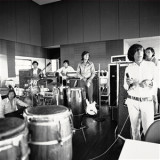
The compositions of Miłosz Kędra (b. 2001) explore synthetic sound, electroacoustic music, and self-built acoustic instruments, seeking diverse timbres, tunings, and textures. His main field of work is the pipe organ. Through minimalist motifs, he has transported the instrument’s sound beyond the church space by synthetically processing its tones. He is currently pursuing a Master’s degree in New Media Music at the Academy of Music in Poznań and recently completed a Bachelor’s degree in Electroacoustic Composition, during which he built his own pipe organ from scavenged pipes.
~ Liner notes ~
Miłosz Kędra - "their internal diapasons"
The pipes that Miłosz Kędra used to craft his own organ emulator have lived many lives. They come from churches scattered across Greater Poland—some trimmed for a more presentable façade, others left to gather dust in parish houses until, stripped of purpose, they were cast away. Their first voices have faded, their inner resonance unsettled, yet with patience, one can teach them to sound again—to sing in their altered state, to be gently coaxed out of silence.
Audiomancy—the conjuring of lost sounds—is the word that lingers when I try to grasp the lore crystallizing with Kędra’s second album.
The resolve with which the musician and composer has inhabited his self-built instrument recalls Witold Szalonek and his search for “unexploited properties of wind instruments in classical music.” Szalonek sought to map these hidden voices into a system of multiphonics, revealing over 160 on the oboe alone by 1968. Some sound eerily alike, yet emerge through distinct gestures—“a particular breath, a precise choreography of levers and apertures, the seamless fusion of the two.”
The splitting of a single note into its spectral fragments—allowing a melodic instrument to speak in two, three, even four voices at once—enabled Szalonek to bend the rigid structures of Western music. "their internal diapasons" follows a similar path: an aesthetic bypass through which Kędra taps into the sacred gravity of the church organ, only to reveal it as a domesticated echo of something far older—the primal theater of transformation. To listen closely to an instrument is to learn its flaws, to turn its imperfections into a new way of speaking.
Each of the nine compositions on "their Internal diapasons" is an invitation—to approach the material world with the intent of letting it speak beyond expectation. An instrument that is at once a sculpture, a performance, and a manifesto of voicing the discarded suggests that its creator—following the path of Didier Eribon (Returning to Reims)—might take as his motto, a principle of asceticism, Sartre’s words: “What matters is not what is made of us, but what we ourselves make of what is made of us.”
Filip Szałasek
Search:text
- I Hate
- The Cannibal
- Lurking
- Inside My Head
- Seeking Revenge
- For The Expelled Ones
- The Traders Of Anathema
- With Outlandish Desire To Disobey
- The Makhaira Of The Deceiver
- Christian Svengali
Trans Red, White, Black Marble Vinyl[34,87 €]
Seit ihrer Gründung im Jahr 1991 gehören Nightfall neben Rotting Christ und Septicflesh zu den Pionieren des griechischen Metal. Die legendäre Death-Metal-Band aus Athen klingt so rachsüchtig wie eh und je. Doch unterstützt von einer monumentalen Produktion und einer kraftvollen Botschaft ist ihr elftes Studioalbum ihr bisher düsterstes und epischstes Werk.
Wie ihre Zeitgenossen verweben Nightfall Gothic-Melodien mit geschwärztem Death Metal. Children of Eve enthält die infektiöseste Sammlung von Hooks, die die Band je geschaffen hat, dank des Mixings und Masterings von Jacob Hansen. Der maskierte Frontmann Efthimis Karadimas, bewaffnet mit Mantel und Dolch, befehligt die Leadsingle "I Hate" hinter Blastbeats, die wie ein Schwarm Pfeile fliegen.
Aber Children of Eve wäre nicht Nightfall, wenn sie nicht auch eine tiefere Botschaft hätten. Während "The Cannibal" vor göttlichem Tremolo-Picking nur so strotzt, geht es im Text darum, wie religiöse Strukturen und Fanatismus einen verschlingen können. "I hold the power / to explain your screams", heult Efthimis mit abschreckender Intensität.
FFO: Rotting Christ, Septicflesh, Behemoth, Paradise Lost, Amorphis, Moonspell
Seit ihrer Gründung im Jahr 1991 gehören Nightfall neben Rotting Christ und Septicflesh zu den Pionieren des griechischen Metal. Die legendäre Death-Metal-Band aus Athen klingt so rachsüchtig wie eh und je. Doch unterstützt von einer monumentalen Produktion und einer kraftvollen Botschaft ist ihr elftes Studioalbum ihr bisher düsterstes und epischstes Werk.
Wie ihre Zeitgenossen verweben Nightfall Gothic-Melodien mit geschwärztem Death Metal. Children of Eve enthält die infektiöseste Sammlung von Hooks, die die Band je geschaffen hat, dank des Mixings und Masterings von Jacob Hansen. Der maskierte Frontmann Efthimis Karadimas, bewaffnet mit Mantel und Dolch, befehligt die Leadsingle "I Hate" hinter Blastbeats, die wie ein Schwarm Pfeile fliegen.
Aber Children of Eve wäre nicht Nightfall, wenn sie nicht auch eine tiefere Botschaft hätten. Während "The Cannibal" vor göttlichem Tremolo-Picking nur so strotzt, geht es im Text darum, wie religiöse Strukturen und Fanatismus einen verschlingen können. "I hold the power / to explain your screams", heult Efthimis mit abschreckender Intensität.
FFO: Rotting Christ, Septicflesh, Behemoth, Paradise Lost, Amorphis, Moonspell
- A1: M E.a Group - Onda Nueva
- A2: Mr Myers - So Long
- A3: Alberto Wolf & Los Terapeutas
- A4: Ricardo Bomba - Só Sentindo O Momento
- A5: Flaire - Winter’s Gone
- B1: Dean A Crawford - Laguna
- B2: Raphael Holder - That’s Why I Listen To My Heart
- B3: Richard Bowen - Sorcery
- B4: Neal Davis - Jealous Sea
- B5: Havanna Club - Laura
Heated compilation of 81-1990 rarities.
"Club Méduse’s Charles Bals joins forces with Norman Gervais of Bayetë fame to deliver a 10-track melange of languorous seaside serenades and beach-kissed AOR slow burners/bangers.
Each song evokes wave glimmer and synthetic textures on this first drop by Beirut-via-Saint Tropez label Pocket of Light, one for the listener that’s crossed the last frontier of the registry and needs just a little more.
Is it the Baleares or the Caribbean? Is it hopeful anguish or mature happiness? And with captains like this, does it matter at all…?”
- Basho
- Sill Forms
Der Titel dieser Arbeit von Beatrice Dillon ist dem Begriff ,basho" entnommen, der von Kitaro Nishida, dem japanischen Philosophen und Vater der Kyoto-Schule, entwickelt wurde. Kitaros ,basho" bezieht sich auf einen grundlegenden Ort oder ein Feld, in dem Dinge existieren und interagieren. Dabei geht es nicht nur um einen physischen Ort, sondern um einen abstrakteren Raum, in dem alle Erfahrungen, Gedanken und Phänomene miteinander verbunden sind. In Nishidas Philosophie ist ,basho" ein dynamischer, lebendiger Ort, an dem Subjekt und Objekt, Selbst und Welt, nicht getrennt sind, sondern sich gegenseitig bedingen. Inspiriert davon entwickelt Beatrice Dillon eine Musik von komplexer Natur, die nie aufhört, sich als reine Präsentation zu konstituieren, die ständig neu belichtet wird und in jedem Moment sowohl das Objekt der Aufmerksamkeit als auch den Hörer, der darauf zielt, reaktiviert. Dillons Basho, das sowohl seine Klänge (die keinen wirklichen Ursprung oder inneren Raum haben) als auch seine Idiome aus der elektronischen Musik entlehnt, ist eine Ablenkung, eine Neuanordnung, die uns durch vertraute, aber plötzlich fremde Elemente in ein Feld des reinen Hörens zurückführt. Still Forms des japanischen Komponisten Hideki Umezawa schöpft sein Klangmaterial aus der Erforschung der Baschet-Klangstrukturen, Instrumente, die von den Brüdern Bernard und François Baschet in den 1950er Jahren entwickelt wurden und seitdem in der Welt des zeitgenössischen Musikschaffens hoch geschätzt werden. Diese Strukturen wurden 1970 auf der Weltausstellung in Osaka vorgestellt, und einige sind in Japan geblieben. In verschiedenen Aufnahmesitzungen in Japan, aber auch in Frankreich, erforscht Hideki Umezawa das faszinierende klangliche Potenzial dieser atypischen Instrumente neu, um sie in eine hochgradig beherrschte Komposition einzubinden, in der Klänge akustischen Ursprungs und elektronische Texturen aufeinander reagieren, wie in der verzerrten Reflexion der Resonatoren der Baschet-Strukturen. Still Forms ist somit eine Hommage an und eine Zeitreise durch die unglaubliche Inspirations- und Erfindungskraft dieser Klangstrukturen, aber auch ein zugespitzter Vorschlag für eine zeitgenössische elektroakustische Komposition, die sich zu erneuern weiß, ohne ihre Ursprünge zu verleugnen.
- Climbing Down
- Fixate
- Through The Cylinder
- Killing Time
- Marathon
- Cynical
- Enjoy Your Stay (Ft. Static Dress)
- Slip
- Shallow
- Take It Out
Bone Vinyl[25,17 €]
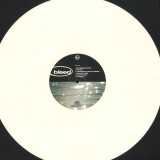
Die erste EP von Bleed, "Somebody's Closer", wurde von der Band im Jahr 2021 zunächst selbst über digitale Plattformen veröffentlicht. Obwohl die EP, die sich auf den Alt-Rock/Metal der späten 90er/frühen 00er Jahre beruft, nicht in physischer Form veröffentlicht wurde, erregte die in Dallas, Texas, ansässige Band mit ihrer hauchdünnen Verzerrung - die Spannung und Atmosphäre gleichermaßen erzeugt - großes Aufsehen und erregte über mehrere gegenseitige Verbindungen die Aufmerksamkeit von 20 Buck Spin. Das Label brachte 2022 Vinyl- und Kassetten-Editionen heraus und machte so die Musik von Bleed einem neuen Publikum und einer breiteren Öffentlichkeit bekannt. Seitdem hat sich die Vorfreude auf das Debütalbum der Band in die Höhe geschraubt - und jetzt, wo der Frühling in den Sommer übergeht, ist es endlich soweit.
Die selbstbetitelte LP von Bleed behält die melodische Schwere und die straffen Songstrukturen der EP bei, taucht aber gleichzeitig kopfüber in den ozeanischen Dunst ein und treibt ihren Sound in ein Gebiet, das eindringlicher, unerbittlicher und hypnotisch üppig ist. Die Gitarren wiegen sich in aufgestapelten Wellen von Gravitationsangst, darunter pulsieren exzentrisch übersteuerte Rhythmen, und die Stimme von Gitarrist und Sänger Ryan Hughes schwebt ein und aus, manchmal distanziert und losgelöst, manchmal aufgerissen vor Verzweiflung. Die Texte bewegen sich in Fragmenten und spielen auf Themen wie tiefe innere Kämpfe, Bewältigungsmechanismen und das Verletzen derer, die man am meisten liebt, an. Es ist Musik, die nicht so sehr Aufmerksamkeit verlangt, sondern direkt in den Blutkreislauf sickert, die Art von Album, die sich nachts um 3 Uhr in einer Endlosschleife im Hinterkopf festsetzt.
Gleich zu Beginn werden kühne Schritte unternommen, um die Authentizität von Bleeds Universum in Bezug auf seine Inspirationen und Ambitionen auszuweiten. Die Art und Weise, wie Bleed diese Songs sich entfalten lassen, hat etwas Selbstbewusstes, sie wirken sofort und haben es nicht nötig, länger als nötig zu verweilen. Das Ergebnis ist ein Album, das sich massiv und doch intim anfühlt, brutal und doch schön, vertraut und doch einzigartig. Es hinterlässt nicht nur einen Eindruck, sondern hallt noch lange nach, wenn die letzten Töne verklungen sind.
- Virtual Avenue
- Rays Of Cosmic Embers (Part I)
- Rays Of Cosmic Embers (Part Ii)
- Crack Our Codes (Prologue)
- Crack Our Codes
- The Nasty Man (Prologue)
- The Nasty Man
- The Nasty Man (Epic-Logue)
- Ones And Zeroes
- East Of Asteroid (Part I)
- East Of Asteroid (Part Ii)
East of Asteroid is the highly anticipated debut album from Norwegian progressive rock band Moonsoon. Helge Nyheim, an accomplished drummer, vocalist, and artist from Bergen, is the driving force behind Moonsoon. With decades of experience, Helge has worked with countless musicians across various genres, and his distinctive drumming and vocals lay the foundation for the band's sound. Daniel Hauge, co-songwriter, producer, and arranger, has also been instrumental in shaping the album's direction. Daniel has produced other artists in the Apollon Records roster, such as Dobbelgjenger. Known for his work as a producer, Daniel has contributed greatly to the overall sonic texture and dynamics of the album. He also mixed and mastered the album. Helge and Daniel, together with the talented guest musicians, have shaped the sonic identity of the album, blending atmospheric textures, dynamic compositions, and captivating storytelling.
Rhiannon Giddens trifft ihren ehemaligen Bandkollegen von den Carolina Chocolate Drops, Justin Robinson, wieder auf „What Did the Blackbird Say to the Crow“, einem Album mit Fiddle- und Banjomusik aus North Carolina. Das von Giddens und Joseph „Joebass“ DeJarnette produzierte Album präsentiert Giddens am Banjo und Robinson an der Fiddle. Das Duo spielt achtzehn seiner Lieblingsstücke aus North Carolina: eine Mischung aus Instrumentalstücken und Textstücken.
Viele Stücke wurden von ihrem verstorbenen Mentor, dem legendären Piedmont-Musiker Joe Thompson aus North Carolina, gelernt; eines stammt von einer anderen Musiklegende, der verstorbenen Etta Baker, von der sie ebenfalls durch das Anhören von Aufnahmen ihres Spiels lernten. Giddens und Robinson nahmen im Freien in Thompsons und Bakers Häusern in North Carolina sowie auf der ehemaligen Plantage Mill Prong House auf. Begleitet wurden sie von Naturgeräuschen, darunter zwei verschiedene Zikadenschwärme, die seit 1803 nicht mehr gleichzeitig aufgetaucht waren und so eine einzigartige Klanglandschaft schufen.
- L’mmjr
- Transit
- Casaflex (Feat. Flexfab)
- Win
- Valisa
- Kiss
- Dakchi Hani
- L’azri
- Patience (Feat. Ines)
- Rruina
With Ylh Bye Bye, Swiss-Moroccan producer Sami Galbi delivers a raw and electrifying debut album after the succes of his first single Dakchi Hani / Rruina. Merging North African folk, chaâbi, and trap with forward-thinking electronic club music, his punk energy and DIY ethos stem from years immersed in Lausanne’s underground squat scene, shaping a sound that’s both deeply personal and politically charged.
Driven by infectious North African melodic loops, heavy basslines, and percussive textures—blending bendir drums, karkabas, and analog synths—Ylh Bye Bye pulses with urgency. From high-energy dancefloor anthems to dreamy acid pop ballads, the album explores themes of migration, identity, and belonging. Galbi’s Arabic vocals oscillate between auto-tuned harmonies and spoken word, capturing the tensions of diaspora life.
Mit einem Dutzend wilder und gefeierter Alben seit Daemon Qui Fecit Terram (1996) praesentiert Hate mit dem dreizehnten Album Bellum Regiis ein noch kuehneres und aggressiveres Klangbild als je zuvor. Die neun Songs von Bellum Regiis zeigen, wie Saenger und Gitarrist ATF Sinner, Gitarrist Domin, Schlagzeuger Nar-Sil und Bassist Tiermes einen modernen Sound mit unheimlicher Atmosphaere und Tiefe formen. Produziert wurde das Album von David Castillo (Candlemass, Carcass, Dark Tranquility, Katatonia) in den Grondahl Studios in Stockholm. Textlich ist Bellum Regiis ein persoenlicheres, mehr auf die Menschheit fokussiertes Album als Rugia. Die Songs, so Gruendungsmitglied Sinner, sind eine aktuelle klangliche und visuelle Auseinandersetzung mit dem "Kampf um Macht und allem, was damit einhergeht."Hate, gegruendet 1990 in Warschau, wird als "Inbegriff von Konstanz" gefeiert und als "glatte und praezise Death-Metal-Maschine" gelobt. Seit dem 2017er Album Tremendum hat sich die Band thematisch auf die Natur und ihre Mysterien konzentriert. Wie Sinner erklaert: "Egal ob die Natur in uns, um uns herum oder aus der Ferne betrachtet - die daraus gewonnenen Perspektiven und ihre Verbindung zu verschiedenen uebergeordneten Themen haben jedes Album gepraegt." So behandelte etwa Auric Gates of Veles (2019) den Tod - insbesondere die slawische Sichtweise darauf. Sechs Jahre spaeter widmet sich Bellum Regiis der Menschheit selbst und der Frage, warum wir als Wesen so tief durch Konzepte wie Macht, Reichtum, Ruhm und Glauben motiviert sind. Das zentrale Thema ist der Kampf um Macht und alles, was damit verbunden ist.Daher auch der Albumtitel Bellum Regiis, was uebersetzt "Krieg der Koenige" oder "Koeniglicher Krieg" bedeutet. Sinner stellt sich die grossen Fragen rund um Macht - macht uns deren Erreichung abartig oder sind wir es von Natur aus? Der Titelsong bildet das Leitmotiv des Albums. "Als Song besitzt Bellum Regiis sowohl eine tiefe Melancholie als auch eine gewisse Erhabenheit", sagt Sinner. "Der Gesang von Eliza Sacharczuk (eine bekannte Saengerin und Gesangslehrerin, die ein ganzheitliches Kunstzentrum in Bialystok leitet) verleiht dem Lied ein starkes Zeitgefuehl. Ob das nun Nostalgie, Rueckblick, Reue oder Vorbereitung auf die Zukunft ist, liegt im Auge des Betrachters. Diese Kriege, diese Kaempfe gibt es seit Anbeginn unserer Existenz", erklaert der Frontmann. "Ob sie sinnlos sind oder nicht, sie sind Narben auf unserer eigenen Natur."Verkaufsargumente/Treiber (Karriere-Highlights/Fakten/Marketing-Infos):- HATE ist seit mehr als 25 Jahren eine feste Groesse im slawischen Black/Death Metal- Bellum Regiis wurde von David Castillo (Candlemass, Carcass, Dark Tranquility, Katatonia) in den Grondahl Studios in Stockholm produziert- HATE haben mehrfach durch Europa, Nordamerika, Asien und Australien getourt und auf zahlreichen Metal-Festivals weltweit gespielt- Nordamerika-Tour im Fruehjahr 2025 bestaetigt - als direkter Support von Belphegor; weitere US-Tour fuer 2026 geplant- Europatour mit Venom Inc. fuer 2025 bestaetigt; zusaetzliche Europatour in Planung fuer 2026- Tour durch Lateinamerika fuer Oktober 2025 bestaetigt- Hochwertiges Musikvideo zur ersten Single "Iphigenia" verfuegbar- Erhaeltlich auf allen digitalen Plattformen
- 1: Breath In Your Fire
- 2: Possession
- 3: Reflections (Album Version)
- 4: Dub Boy
- 5: This Is How We Lead Our Lives
- 6: Sunday Morning
- 7: Close Your Eyes
- 8: Daylight
- 9: Through The Wall Of Sound
With Short Circuit Control, Berlin electronic duo Diagram (made up of Brian Jonestown Massacre guitarist Hákon Aðalsteinsson and Fred Sunesen) re-emerges ith a refined yet unpredictable sound, a testament to resilience, collaboration, and the endless possibilities of analogue synthesis. What began as a bedroom project by Aðalsteinsson culminated in the debut album Transmission Response (2019, Fuzz Club), a raw and exploratory work that set the foundation for what was to come. When Sunesen joined, Diagram evolved into a live act, carving out a space for itself in Berlin’s underground music scene. Built on mechanical rhythms and eerie textures, their second album Short Circuit Control plays with tension and release, its analogue pulse imbued with a restless, human energy. There's a hypnotic, almost ritualistic quality to the music, where modular synths hum and crackle, beats loop and fracture, and melodies emerge like ghostly transmissions from some distant, flickering signal. The result is an album that feels both controlled and unpredictable—moody, immersive, and always teetering on the edge of something unknown. It is released on P.U.G Records, the new label from the Psychedelic Underground Generation music blog.
- Baila Mi Guaguancó
- Habana
- El Humo Y Azul
- Calle Libertad
- Misteriosa
- La Vida Es Hermosa
- Paseo De Las Misiones
- Patria Querida
- El Eterno Buscador
- Ten Cuidao
- Zunzun Baba
Rita Donte's Ritual is more than an album-it's a journey through time, memory, and sound. Rooted in her Cuban heritage yet enriched by the landscapes and influences that have shaped her path, Ritual is a luminous fusion of tradition and innovation. With the masterful production of Gustavo Guerrero (a.k.a. Augusto Bracho), the album weaves the warmth of the tres, the depth of the leona, and the rhythmic textures of jaranas into a sonic tapestry that feels both timeless and urgent. From the infectious energy of Baila mi guaguancó to the poignant nostalgia of Habana, each track is a chapter in Rita's artistic evolution. Released by Ansonia Records, Ritual is a testament to Latin music's enduring power-a bridge between past and present, Cuba and Mexico, sound and spirit.
- Psychopomp
- Sweet Relief
- Icon
To celebrate PigsX7 new album 'Death Hilarious', Rocket have reissued the bands long out of print debut album 'Feed The Rats' onto a special three colour splatter LP, so the 2025 repress comes on orange with red coloured plus black splatter on top vinyl. Playing their first gig supporting Goat at what was only the latter's second ever show, the band have gigged relentlessly with kindred spirits including The Cosmic Dead and Luminous Bodies, not to mention gracing festivals like Supernormal and Portugal's Reverence with their feral attack. This is their overwhelming first album - equal parts righteous repetition, bludgeoning brute force and Sabbathian squalor, its alchemical charge has the power to transform bleary-eyed abandon into small-hours revelation. This three-track, forty-minute monument of chaotic catharsis captures the spirit of the band's live manifestation whilst adding a level of finesse and texture. Channelling the grimy trip of Monster Magnet's pine Of God' through a prism of kraut-derived repetition and Part Chimp style bloodymindedness, the resulting hallucinatory vortex appears constantly on the realm of breaking point.Amps and brains alike, as these psychic omnivores bring seven times the joy, seven times the pain, seven times the dementia and deliverance.
- Wild World
- Hard Headed Woman
- Peace Train
- Oh Very Young
- Sitting
- Father & Son
- King Of Trees
- Where Do The Children Play?
- Lady D’arbanville
- A Bad Penny
- Bitterblue
- Another Saturday Night
Cat-O-Log Records setzt in Zusammenarbeit mit Universal Music Enterprises die Feier des 50-jährigen Jubiläum des klassischen Live-Albums von Cat Stevens, ”Saturnight” (Cat Stevens Live In Tokyo), fort.
Ursprünglich wurde das Album von A&M Records nur in Japan veröffentlicht. Jetzt ist das Live-Album in brandneuen Fromaten erhältlich. Die schwarze LP sowie die The Circle Store exklusive ”Lava Splatter” LP erscheinen in einer Klapphülle, die Texte und neue Notizen von Hallam Kite, Tourmanager Carl Miller und Bassist Bruce Lynch enthält. ”Saturnight” ist auch zum ersten Mal auf CD erhältlich, inklusive einem 16- seitigen Booklet, mit den Anmerkungen von Hallam Kite, Tourmanager Carl Miller und Bassist Bruce Lynch.
”Saturnight” wurde am 22. Juni 1974 im Nakano Sun Plaza in Tokio aufgenommen, auf der japanischen Etappe der Bamboozle Tour und war Cat Stevens’ erstes Live-Album.
- Stone
- La Pelea Del Gobernador
- Pobre Gato
- Nunca Cambias
- Nada De Nada
- Algun Dia
- Swarlb
- Sookie Sookie
- Coge Mi Mano / Gimme Little Sign
- No Time
Discover the groundbreaking sound of Los Texao, a legendary Peruvian rock band that helped shape the music scene in the 1970s. Born in the culturally rich city of Arequipa, Los Texao's journey to stardom was paved with innovation, passion, and an undeniable connection to their roots. Their music fused the energy of psychedelic rock with Latin American influences, captivating audiences across their native Peru, Los Texao's psychedelic phase was marked by experimentation with new sounds and instruments. This release comprises their complete recordings, including all their singles and also covers of some of the most influential rock bands of the era, most of them previously unavailable on vinyl. Formed in 1969, the band took their name from Arequipa's emblematic flower, the nasturtium, and made an immediate impact with their debut at a local band contest. Soon after, they recorded their first 45 RPM single, which included covers of tracks by Chilean group Los Beat 4. But it was in the early 70s when Los Texao truly found their voice. With a dynamic lineup, including the talented Fernando "Feño" Humbser and Juan Núñez on guitar, Víctor Dibán on vocals and bass, and Edgar "Chito" Manrique on drums, their musical evolution began to take shape. The addition of Julio Torres, a keyboardist and guitarist from the iconic bands Los Beatniks and Los Dig It, further elevated their sound. Los Texao's psychedelic phase was marked by experimentation with new sounds and instruments. They embraced the emerging trend of playing rock in English, despite the language barrier, and incorporated cutting-edge gear. With the help of the legendary Peruvian jazz musician Jaime Delgado Aparicio, they created hypnotic tracks like 'Algún día' and 'Nunca cambias,' capturing the essence of 70s rock with swirling textures and atmospheric vibes. But it wasn't just the melodies that set them apart - their electrifying rhythms and powerful arrangements, like those heard in 'Stone' and 'La pelea del gobernador,' showcased their refined musicianship and intense dedication. Los Texao quickly became a sensation in Peru, performing in cities like Puno, Moquegua, and Arica (Chile), and sharing stages with iconic bands like Los Shain's, Traffic Sound, and Telegraph Avenue. Their infamous hit 'La pelea del gobernador' tells a tale of generational conflict and rebellious youth, captured in a live performance that still resonates with audiences today. The band's wild live shows became the stuff of legend, with fans packing into intimate venues to experience the raw energy of their loud, unapologetic rock. In addition to their 45s, Los Texao also recorded covers of some of the most influential rock bands of the era, including Cream, Steppenwolf, and The Guess Who, showcasing their versatility and love for classic rock. Unfortunately, this session remained lost for years and some of these covers have never been available on vinyl before. Despite their growing success, Los Texao eventually disbanded in 1975 due to personal and professional challenges. But their legacy never faded.
- Push
- Like Gods We Feast
- Heart Attack
- Why Do You Do This To Me
- Rattlesnake
- Standing At The Edge
- Secrets
- ÷8X5
- Downfall
- Staring At The Sun
- Listen Up
Rotes Vinyl. Vier Jahre nach "Golden Staples" erscheint das dritte Album der Franzosen, diesmal als Kooperation von Kicking Records (F), Kidnap Music und Rookie Records. "Staring at the Sun" ist eine Ode an die Melodien des New Wave, eine Hommage an The Cure und Killing Joke, der Eckpfeiler einer Band, die mit halsbrecherischer Geschwindigkeit auf dem Highway der Unberechenbarkeit fährt. "Like Gods We Feast" oder "Secrets" fassen den fantastischen Wechsel der Gangwechsel: Hinzufügen von Loops und Synthesizern, Beharrlichkeit einer unverwüstlichen Bass/Schlagzeug-Kombination, eine Fülle kristalliner und kraftvoller Gitarren, eine Menge eindringlicher Vocals. Diese Jungs wissen, wie man gute Songs schreibt, das ist eine Tatsache. Und sie wissen auch, wie man sie zu spielen hat. Aber vor allem wissen sie, wie man ihnen eine Seele gibt, indem sie die Kraft der Klänge mit der Unmittelbarkeit von raffinierten Texten versehen. Die Texte mit klaren und kraftvollen Bildern, die sich mit radikalen Themen wie Scheitern, Einsamkeit, Isolation oder Geisteskrankheit befassen. Ein Alltag, der alles andere als einfach ist, mit einer Botschaft der Hoffnung. Wenn man Ed Scientist fragt, ob dieses Album die perfekte Mischung aus den ersten beiden Alben sein könnte, teilt der Gitarrist/Sänger diesen Standpunkt nicht: "Das würde ich nicht sagen. Ich betrachte Staring at the Sun als eine echte Weiterentwicklung unseres Stils. Mit der Hilfe von (Produzent) Santi, der eine echte Meisterleistung vollbracht hat, haben wir Dinge gewagt, die wir nie zuvor ausprobiert haben".
Following the much-lauded trio of meditations, from Woo, Davis Galvin and Graintable, that launched the series, "Cosmos" continues the label's gentle exploration of music to accompany moments of nurture and patience. This composition from E Ruscha V, once again mirrors the quiet and satisfying tending of the season ahead, creating space for contemplation and the witnessing of gradual transformation.
A multi-disciplinary artist rooted in Los Angeles, E Ruscha V approaches instruments as living entities, each with their own organic character. On Cosmos, his synthesizers breathe and pulse with natural rhythms, creating textures that emerge and recede like early morning mist in a garden. Echoing his work as a visual artist and much like gardening itself, there’s an innate understanding of when to tend and when to let things just be and evolve.
‘Cosmos’ follows a path that Ruscha began exploring with his 2018 release, "Who Are You", on Beats In Space and continued through recent works like ‘Green Mirror’ under his alias Secret Circuit and ambient pieces for the "Slow Show" performances. Each project has been a cultivation season that invites listeners to pause, observe, and connect with cycles of natural
emergence.
His work in both galleries and performance spaces – including MOCA Los Angeles, Lafayette Anticipation in Paris, and LUMA Arles – reflects this understanding of how the environment shapes experience.
A synthesis of where space, sound, and organic movement find their natural home.
- A1: Wild Wild West
- A2: When I Sleep
- A3: Ever Shrinking World
- A4: I
- A5: Low Love
- A6: Speak For Me
- B1: Ii
- B2: Sun
- B3: Stay
- B4: Iii
- B5: We Don't Need The Weather
- B6: Drip Drip Drip
Der Grammy-nominierte, New Yorker Komponist/Perkussionist Eli Keszler präsentiert sein neues, selbstbetiteltes Album. In den letzten Jahren kollaborierte Keszler mit Oneohtrix Point Never, Skrillex, Rashad Becker und Laurel Halo, komponierte die Filmsoundtracks für Olmo Schnabels "Pet Shop Days" (2023), Lotfy Nathans "Harka" (2022) und Dasha Nekrasovas "The Scary Of Sixty First" und lieferte mit Daniel Lopatin die Filmmusik für "Uncut Gems" (2019). Nach gefeierten Alben wie "Icons" (2021) und "Stadium" (2018) ist sein neuestes Werk ein freizügiger, Lynch-artiger Songzyklus, in dem Keszlers virtuose Darbietungen eine lebendige Landschaft abstrakt-elektronischer Klänge durchqueren. Das Album atmet, knarrt und seufzt auf 12 Tracks. Noir-artige Jazz-Torch-Songs machen huschenden Trommeln und filmischen, dubartigen Texturen Platz. Die Texte werden von fast unhörbaren Stimmen geflüstert und geweint, als kämen sie aus einem entfernten Raum. Mit Gastauftritten von Sängerin Sofie Royer und Saxophonist Sam Gendel.
- Pharaoh's Dance
- Bitches Brew
- Spanish Key
- John Mclaughlin
- Miles Runs The Voodoo Down
- Sanctuary
Listen to This.” As the original working title for Bitches Brew, the instruction and invitation remains to this day as the best way to approach a record that shattered conventions, altered music history, and, 55 years later, still sounds far ahead of its time. The template for jazz fusion, Bitches Brew is rightly ranked by virtually every significant outlet among the 100 greatest albums ever made. Sewn together with vibrant colors, voodoo textures, and ethereal moods, the 1970 landmark emerges with supreme detail and nonpareil feeling on Mobile Fidelity’s UltraDisc One-Step 180g 33RPM 2LP vinyl set.
Sourced from the original master tapes, strictly limited to 5,000 numbered copies, and pressed at Fidelity Record Pressing in California, this definitive-sounding 55th anniversary reissue enhances every element of a double album that established new possibilities for studio recording techniques. You’ll hear wide and deep soundstages, separation between instruments, and an extremely broad dynamic range. If ever a jazz album can be said to have gone to outer space and back, this is it.
Davis conceived Bitches Brew by having the musicians stand in a semi-circle. There, he pointed at them with vague directions for tempo, solos, and cues. The collective improvisation and interplay spawned a galaxy of melodies and grooves that were later spliced together by producer Ted Macero. Benefitting from the ultra-low noise floor and superb groove definition of this pressing, these distinct creations take shape with utmost realism. Compositions stretch across jet-black backgrounds and paint canvases laden with millions of colors and shades. Juxtaposed percussion, loose jams, and melodic segues explode with impressionistic verve.
Bitches Brew also boasts visionary artwork. By design, the lavish packaging and gorgeous presentation of the UD1S Bitches Brew set call attention to such matters. Housed in a deluxe slipcase, it features special foil-stamped jackets and faithful-to-the-original graphics that illuminate the splendor of the recording. It is made for discerning listeners who desire to fully immerse themselves in everything surrounding the album, from the images to the tones. And this is one effort where every last detail matters.
Gathering a Hall of Fame-worthy lineup of musicians and tweaking it according to his desires, Davis follows through on his idea to “put together the greatest rock and roll band you ever heard.” Central to his proposition is the presence of two (and sometimes three) drummers and two bassists, a tactical move that makes rhythms a central focus. Akin to the futuristic album cover art, the drum-driven suites head toward distant universes and uncharted territories. At once hypnotizing and grooving, they chart maverick adventures via quixotic rock, funk, and R&B elements.
A without-a-net experiment involving interchangeable double-quintet lineups, Bitches Brew explores the previously unimaginable with electrified instruments — Fender Rhodes piano, processed trumpet, dissonant guitars, and bass among them — and an emphasis on feeling over composition. Mesmerizing and soothing, jarring and smooth, overt and subtle: The music seemingly covers an entire map of emotions and sensations, and like no record before, ties together the groundbreaking creativity of the multiple disciplines that were changing popular culture at the end of the 1960s and dawn of a new decade.
Conceptually, Davis described Bitches Brew as “a novel without words” and “an incredible journey of pain, joy, sorrow, hate, passion, and love.” The vast psychedelic expanses of warped echoes, liquid reverb, and tape loops confirm such ambitious contrasts of light and dark, fear and hope. Yet the most absolute characteristic of the watershed effort lies in how it resists definitive interpretation and encourages free thought — the very principles Davis used to conceive Bitches Brew.
More About Mobile Fidelity UltraDisc One-Step and Why It Is Superior
Mobile Fidelity Sound Lab’s UltraDisc One-Step (UD1S) technique bypasses generational losses inherent to the traditional three-step plating process by removing two steps: the production of father and mother plates, which are created to yield numerous stampers from each lacquer that is cut. For UD1S plating, stampers (also called “converts”) are made directly from the lacquers. Since each lacquer yields only one stamper, multiple lacquers need to be cut. Mobile Fidelity's UD1S process produces a final LP with the lowest-possible noise floor. The removal of two steps of the plating process also reveals musical details and dynamics that would otherwise be lost due to the standard multi-step process. With UD1S, every aspect of vinyl production is optimized to produce the best-sounding vinyl album available today.
Die erste EP von Bleed, "Somebody's Closer", wurde von der Band im Jahr 2021 zunächst selbst über digitale Plattformen veröffentlicht. Obwohl die EP, die sich auf den Alt-Rock/Metal der späten 90er/frühen 00er Jahre beruft, nicht in physischer Form veröffentlicht wurde, erregte die in Dallas, Texas, ansässige Band mit ihrer hauchdünnen Verzerrung - die Spannung und Atmosphäre gleichermaßen erzeugt - großes Aufsehen und erregte über mehrere gegenseitige Verbindungen die Aufmerksamkeit von 20 Buck Spin. Das Label brachte 2022 Vinyl- und Kassetten-Editionen heraus und machte so die Musik von Bleed einem neuen Publikum und einer breiteren Öffentlichkeit bekannt. Seitdem hat sich die Vorfreude auf das Debütalbum der Band in die Höhe geschraubt - und jetzt, wo der Frühling in den Sommer übergeht, ist es endlich soweit.
Die selbstbetitelte LP von Bleed behält die melodische Schwere und die straffen Songstrukturen der EP bei, taucht aber gleichzeitig kopfüber in den ozeanischen Dunst ein und treibt ihren Sound in ein Gebiet, das eindringlicher, unerbittlicher und hypnotisch üppig ist. Die Gitarren wiegen sich in aufgestapelten Wellen von Gravitationsangst, darunter pulsieren exzentrisch übersteuerte Rhythmen, und die Stimme von Gitarrist und Sänger Ryan Hughes schwebt ein und aus, manchmal distanziert und losgelöst, manchmal aufgerissen vor Verzweiflung. Die Texte bewegen sich in Fragmenten und spielen auf Themen wie tiefe innere Kämpfe, Bewältigungsmechanismen und das Verletzen derer, die man am meisten liebt, an. Es ist Musik, die nicht so sehr Aufmerksamkeit verlangt, sondern direkt in den Blutkreislauf sickert, die Art von Album, die sich nachts um 3 Uhr in einer Endlosschleife im Hinterkopf festsetzt.
Gleich zu Beginn werden kühne Schritte unternommen, um die Authentizität von Bleeds Universum in Bezug auf seine Inspirationen und Ambitionen auszuweiten. Die Art und Weise, wie Bleed diese Songs sich entfalten lassen, hat etwas Selbstbewusstes, sie wirken sofort und haben es nicht nötig, länger als nötig zu verweilen. Das Ergebnis ist ein Album, das sich massiv und doch intim anfühlt, brutal und doch schön, vertraut und doch einzigartig. Es hinterlässt nicht nur einen Eindruck, sondern hallt noch lange nach, wenn die letzten Töne verklungen sind.