"We just wanted a kiss that makes you want to kiss..."
From a sample to the most iconic kiss in music video history… When Demon released "You Are My High" at the end of 1999, it created a frenzy. Nominated at the Victoires de la Musique and the MTV Awards, the track was on everyone’s lips—including the CSA's, which tried to censor it. 25 years later, the "You" shines brighter than ever, captivating each new generation in turn.
A Top 10 hit in France upon release and certified gold within months, "You Are My High" skyrocketed thanks to its video—three minutes of a single-shot French kiss. Briefly banned by the CSA (who quickly realized it’s hard to censor something you see in every film), the clip ended up playing non-stop on music channels, defining an entire era.
Today, the "You"—as its creator fondly calls it—is considered one of the crown jewels of French Touch 1.0 (Daft Punk, Stardust, Cassius, Modjo, The Supermen Lovers...). With nearly 150 million streams across platforms, its legacy holds strong and continues to inspire a new wave of artists. Among the most iconic reinterpretations: a lo-fi cover by Agar Agar, remixes by DJ Snake and Central Cee, the You and Me video by Disclosure and Flume, and even a Jean Paul Gaultier campaign.
Suche:thank
Nacho Marco drops Colors in Dub Vol.1—deep house soaked in warm analog dub. From the hypnotic “Midnight Blue” and its Satoshi Tomiie remix to the raw pulse of “Bumblebee Yellow” and “Electric Green,” this wax rides late-night frequencies straight from Valencia to Paris.
DJ Feedbacks :
Francois Kevorkian (Wave) : Love the Satoshi mix
Eddie Fowlkes (Detroit Wax, Rekids, Classic Music Company) : thanks
Travis Kirschbaum (Warehouse Preservation Society) : Loving this. Especially Midnight Blue!
Sascha Dive : Midnight Blue for me!!
Brothers' Vibe (Luv4Wax) : Super ep, great works!!
Radio Slave (Rekids) : Another superb ep from Phonogramme and Satoshi's mix is great.
Giles Smith : "midnight blue" is nice
Alexkid (Rawax / FUSE / NG Trax) : Totally my vibe. <3
Aleqs Notal : Yes !!
Italojohnson (Italojohnson) : Track 1 for me!
Ben Sims : Now downloading... will check asap!
Okain (Talman / Infuse / Pleasure Zone) : Electric Green is dope!
Satoshi Tomiie (Abstract Architecture) : Receiving great feedback from the dance floor!
Steffi (Dolly) : lovely release!!
Laurent Garnier : Cool tracks
DJ Bone (FURTHER) : Electric Green and Satoshi Tomiie remix work for me.
Harri (Sub Club) : lovely stuff, will play and support
Rob Pearson (Evasive Records / Sine 102.6fm) : lovely - right up my street, cheers ;-)
Felix Dickinson (Futureboogie, Rush Hour, Cynic) : Solid E.P. current fave Electric Green
Jorkes (Freeride Millenium) : lovely, thanks so much. xo
Kassian (Phonica White / Heist Recordings) : wicked
Jaye Ward (Dalston Super Store / Netil Radio) : massive quality as ever!! super deep and pulsing gear, electric green is ace! thx
Tim Sweeney (Beats In Space) : Sounds great
Chloe Caillet (Smile Records) : love this!
Stevie Cox (Sub Club) : really lush, thank you !
Raresh (ar:pi:ar) : thanks
Ame (Innervisions) : thanks
Geir Aspenes (G-Ha (Sunkissed)) : Thank u
Saoirse (Body Movements) : Super nice dubby vibes
Amotik : Very nice :)
Kai Alce (Real Soon) : Satoshi remix is hot!
Domenic Cappello (Subclub) : nice dubby house
Cee ElAssaad (ENSOULED) : Just the way I like it! dubby and groovy.
Mike Shannon (Cynosure) : Excellent work here from Valencia's finest!
For the 10th edition of Cmdrpx, we're thrilled to welcome back Yu to the label for a second release. This time, he takes us on a darker, more intense journey a bold contrast to his previous, more colorful EP. Expect hypnotic rhythms, acid driven grooves, and floor shaking energy in every track a truly captivating package designed to ignite any dancefloor. Huge thanks to the amazing DJs already supporting this release. Get ready to experience it loud in clubs around the world. Turn it up and enjoy the ride!
What can be said about Joey Beltram’s ‘Energy Flash’ that hasn’t be said already! The track still gets rinsed, week in, week out, across radio stations, clubs and festivals, testimony to the sheer importance of this techno classic.
Released originally in 1990 on the R&S Records label, ‘Beltram Vol. 1’ included the aforementioned ‘Energy Flash’, alongside three equally ground-breaking dance tracks that possibly get overshadowed by the big lead track. But tracks like ‘Subsonic Bass’ broke the mould and went on to influence a raft of rave and drum ‘n’ bass tunes, thanks in part to its use of the now legendary ‘hoover’ bass sound. The sinister acid of ‘Jazz 3033’ still sounds as fresh today as it did 33 years ago, and the menacingly titled ‘Psycho Bass’ reveals the EP’s most passive moment, as its solid breakbeat cuts through ethereal tones and chugging synths.
‘Beltram Volume 1’ has been remastered by Beau Thomas at Ten Eight Seven Mastering, and the release comes in an updated sleeve, faithfully recreating the 1990 packaging.
‘Beltram Volume 1’ by Joey Beltram is available on R&S Records from 10th February 2023.
Belgian techno tastemaker Charlotte de Witte is back with the brand new Sanctum EP containing vocals of Marion Di Napoli. The release arrives the week after this year's Amsterdam Dance Event from October 16th - 20th and just ahead of her return to LA on November 2nd, where she will play a much anticipated all night long set at City Market.
Thanks to her truly distinct sound, de Witte sits at the frontline of the global electronic music scene. She is a DJ, producer and label head who has reshaped the underground with her blend of hard, dark and driving beats and trance tinged synths. Because of this, she is in demand on all the world's biggest stages, has picked up millions of global streams, established her label and its events art as a leading source of cutting edge sounds, and hosted her own KNTXT Turbo Club during Amsterdam Dance Event this year having already played across Europe, the US, UK all summer long.
Her own productions continue to stand out with fresh ideas and spectacular sun designs defining each one. She proves that once more with this new EP which features the alluring vocals of French singer, DJ and producer Marion Di Napoli. "I fell in love with Marion's voice years ago”, Charlotte explains. “She adds a very mystical touch to all her productions that have the power to bring you in a certain trance on the dance floor. I'm beyond excited about this release, on which every track her angelic voice is present.”
Sanctum kicks off with hard and heavy drums that will rattle warehouse walls as the searching synths add a futuristic feel next to twisted acid lines and the spell bound vocals of the angelic Marion. Fourth Dimension is a moody and driving techno roller with the vocals worked into hypnotic, soulful loops that add human warmth to the hypnotic drums and icy hi-hats. It's a warm and mystical world of sound then Fugato is an evocative ambient piece with soothing and exotic vocal coos and great cinematic tension.
This is another innovative EP from the one and only Charlotte de Witte.
Haino sings. Hasunuma plays. It’s a minimal framework, but what emerges is a boundary-blurring sonic exploration. Across the album, Haino’s voice threads through Hasunuma’s layered soundscapes built from analog synths, electric guitar, piano, field recordings, and more. Haino entered the studio with only lyrics in hand, improvising melodies in response to Hasunuma’s evolving arrangements. The result is a work of deep trust, intuition, and sonic tension.
Keiji Haino and Shuta Hasunuma’’s creative connection began in 2017 with an impromptu performance in Shibuya—Hasunuma on a Buchla modular synthesizer, Haino responding with the Japanese national anthem, “Kimigayo.” That moment sparked their unlikely collaboration.
In 2018 Haino appeared at the Hasunuma-organized event “MUSIC TODAY IN KYOTO” at Rohm Theater, alongside Nobukazu Takemura, Manami Kakudo, Elena Tutatchikova, Kukangendai among others. In September 2021 during the pandemic, the two performed "U TA" for the first time at in Shibuya. They began planning the album soon afterwards.
For the recording of U TA, Haino entered the studio with only the lyrics in hand, with no knowledge of what sounds Hasunuma would produce. Responding to Hasunuma’s music in real time, Haino composed the melodies and layered in his voice on the spot. With additional sessions at Hasunuma’s private studio and Haino’s preferred studio, the album was completed.
All melody and vocals by Keiji Haino
All instrument, written, played, arranged, mixed and produced by Shuta Hasunuma
Recorded by zak at st-robo studio, Shuta Hasunuma at Studio i.M.O and windandwindows
Mastered by Rashad Becker at clunk
Production Management: Eishin Yoshida, Kento Ono (windandwindows)
For Temporal Drift: Yosuke Kitazawa, Patrick McCarthy
Art Direction: Aiko Koike
Special Thanks to Toshihiko Kasai, Ryoichi Kiyomiya, zAk, Yumiko Ohno
license
- A1: Psycho Killer (Talking Heads)
- A2: Warm Leatherette (The Normal)
- A3: I Put A Spell On You (Screamin' Jay Hawkins)
- A4: Hamburger Lady (Throbbing Gristle)
- A5: In Dreams (Ray Orbison)
- A6: Sex Dwarf (Soft Cell)
- B1: Dancing On My Own (Robyn)
- B2: Spqr (This Heat)
- B3: Lick Or Sum (Glo Rilla)
- B4: Some Things Last A Long Time (Daniel Johnston)
- B5: Triple Sun (Coil)
- B6: Cherry Bomb (The Runaways)
On Xiu Xiu’s new covers album, Xiu Mutha Fuckin’ Xiu Vol. 1 , Jamie Stewart and Angela Seo pay homage to songs that have profoundly influenced them as music lovers and songwriters. This collection taken from the band’s ongoing Bandcamp subscription series, Xiu Mutha Fuckin’ Xiu, features tracks previously exclusive to Bandcamp, now available on vinyl and streaming for the first time. The album showcases Xiu Xiu's unique interpretations of iconic songs such as "Psycho Killer” (Talking Heads), “In Dreams” (Roy Orbison), “Some Things Last A Long Time” (Daniel Johnston), “I Put a Spell on You” (Screamin’ Jay Hawkins) and many more. These renditions are a heartfelt "thank you" to the original compositions, while simultaneously serving as a deep dive into the musicality and greatness of these influential works.
American jazz keyboardist Hilton Felton, who also recorded a superb album as The Three of Us which is also being reissued right now, dropped his most classic full length A Man For All Reasons in 1980. It came on his own label and the reason it is so well thought of is that it has become a real staple of the rare groove scene thanks to how much of it get splayed by DJs and how many key collectors have it on their racks. This reissue, with an all new remastering, arrives via P-Vine with gems like the standout jazz funk gem 'Bee Bop Boogie' one of many of its tunes that are still rare groove classics.
The catalog of Discomagic’s sublabel Sensation Records is a true treasure chest of surprises. Rare gems sought after by collectors, whose prices on the secondary market often exceed €100, €200, and sometimes even €500. Once again, Vintage Pleasure Boutique reaches into this vault of highly coveted obscurities. This time, the focus is on SNS 8017.
It is one of the cult productions by Raffaele Fiume, revered, cherished and long admired mainly thanks to the distinctive vocal presence of Giusy Ravizza. Upon its original release in 1984, the record did not achieve major commercial success. However, with the resurgence of Italo disco, the rise of the internet, discussion forums, collector communities, online marketplaces and web radio stations, places where fans and collectors gathered to rediscover forgotten tracks, “Light” gradually emerged as a highly desirable, much-loved and increasingly hard-to-find title.
Once again, Vintage Pleasure Boutique steps in to meet the expectations of all those who wish to own a vinyl copy of Giusy Ravizza – “Light.” This is not the original Italian pressing with the SIAE stamp on the label, but it sounds absolutely excellent.
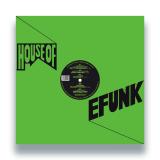
- A1: Hurts And Noises
- A2: Wake Up
- A3: I Don't Wanna Be A Rich
- A4: Terrorist Bad Heart
- A5: Provocate
- A6: Lucifer Sam (Pink Floyd)
- B1: Happy!?
- B2: So Lazy
- B3: I Feel Down
- B4: Stupido
- B5: Guilty
- B6: Caroline Says (Loo Reed)
UILTY RAZORS, BONA FIDE PUNKS.
Writings on the topic that go off in all directions, mind-numbing lectures given by academics, and testimonies, most of them heavily doctored, from those who “lived through that era”: so many people today fantasize about the early days of punk in our country… This blessed moment when no one had yet thought of flaunting a ridiculous green mohawk, taking Sid Vicious as a hero, or – even worse – making the so-called alternative scene both festive and boorish. There was no such thing in 1976 or 1977, when it wasn’t easy to get hold of the first 45s by the Pistols or the Clash. Few people were aware of what was happening on the fringes of the fringes at the time. Malcolm McLaren was virtually unknown, and having short hair made you seem strange. Who knew then that rock music, which had taken a very bad turn since the early 1970s, would once again become an essential element of liberation? That, thanks to short and fast songs, it would once again rediscover that primitive, social side that was so hated by older generations? Who knew that, besides a few loners who read the music press (it was even better if they read it in English) and frequented the right record stores? Many of these formed bands, because it was impossible to do otherwise. We quickly went from listening to the Velvet Underground to trying to play the Stooges’ intros. It’s a somewhat collective story, even though there weren’t many people to start it.
The Guilty Razors were among those who took part in this initial upheaval in Paris. They were far from being the worst. They had something special and even released a single that was well above the national average. They also had enough songs to fill an album, the one you’re holding. In everyone’s opinion, they were definitely not among the punk impostors that followed in their wake. They were, at least, genuine and credible.
Guilty Razors, Parisian punk band (1975-1978). To understand something about their somewhat linear but very energetic sound, we might need to talk about the context in which it was born and, more broadly, recall the boredom (a theme that would become capital in punk songs) coupled with the desire to blow everything off, which were the basis for the formation of bands playing a rejuvenated rock music ; about the passion for a few records by the Kinks or the early Who, by the Stooges, by the Velvet mostly, which set you apart from the crowd.
And of course, we should remember this new wave, which was promoted by a few articles in the specialized press and some cutting-edge record stores, coming from New York or London, whose small but powerful influence could be felt in Paris and in a handful of isolated places in the provinces, lulled to sleep by so many appalling things, from Tangerine Dream to President Giscard d’Estaing...
In 1975-76, French music was, as almost always, in a sorry state ; it was still dominated by Johnny Hallyday and Sylvie Vartan. Local rock music was also rather bleak, apart from Bijou and Little Bob who tried to revive this small scene with poorly sound-engineered gigs played to almost no one.
In the working class suburbs at the time, it was mainly hard rock music played to 11 that helped people forget about their gruelling shifts at the factory. Here and there, on the outskirts of major cities, you still could find a few rockers with sideburns wearing black armbands since the death of Gene Vincent, but it wasn’t a proper mass movement, just a source of real danger to anyone they came across who wasn't like them. In August 1976, a festival unlike any other took place in Mont-de-Marsan – the First European Punk Festival as the poster said – with almost as many people on stage as in the audience. Yet, on that day, a quasi historical event happened, when, under the blazing afternoon sun, a band of unknowns called The Damned made an unprecedented noise in the arena, reminiscent of the chaotic Stooges in their early adolescence. They were the first genuine punk band to perform in our country: from then on, anything was possible, almost anything seemed permissible.
It makes sense that the four+1 members of Guilty Razors, who initially amplified acoustic guitars with crappy tape recorder microphones, would adopt punk music (pronounced paink in French) naturally and instinctively, since it combines liberating noise with speed of execution and – crucially – a very healthy sense of rebellion (the protesters of May 1968 proclaimed, and it was even a slogan, that they weren’t against old people, but against what had made them grow old. In the mid-1970s, it seemed normal and obvious that old people should now ALSO be targeted!!!).
At the time, the desire to fight back, and break down authority and apathy, was either red or black, often taking the form of leafleting, tumultuous general assemblies in the schoolyard, and massive or shabby demonstrations, most of the time overflowing with an exciting vitality that sometimes turned into fights with the riot police. Indeed, soon after the end of the Vietnam War and following Pinochet’s coup in Chile, all over France, Trotskyist and anarcho-libertarian fervour was firmly entrenched among parts of the educated youth population, who were equally rebellious and troublemakers whenever they had the chance. It should also be noted that when the single "Anarchy in the UK" was first heard, even though not many of us had access to it, both the title and its explosive sound immediately resonated with some of those troublemakers crying out for ANARCHY!!! Meanwhile, the left-wing majority still equated punks with reckless young neo-Nazis. Of course, the widely circulated photos in the mainstream press of Siouxsie Sioux with her swastikas didn’t necessarily help to win over the theorists of the Great Revolution. It took Joe Strummer to introduce The Clash as an anti-racist, anti-fascist and anti-ignorance band for the rejection of old-school revolutionaries to fade a little.
The Lycée Jean-Baptiste Say at Porte d’Auteuil, despite being located in the very posh and very exclusive 16th arrondissement of Paris, didn’t escape these "committed" upheavals, which doubled as the perfect outlet for the less timid members of this generation.
“Back then, politics were fun,” says Tristam Nada, who studied there and went on to become Guilty Razors’ frontman. “Jean-Baptiste was the leftist high-school in the neighbourhood. When the far right guys from the GUD came down there, the Communist League guys from elsewhere helped us fight them off.”
Anything that could challenge authority was fair game and of course, strikes for just about any reason would lead to increasingly frequent truancy (with a definitive farewell to education that would soon follow). Tristam Nada spent his 10th and 11th unfinished grades with José Perez, who had come from Spain, where his father, a janitor, had been sentenced to death by Franco. “José steered my tastes towards solid acts such as The Who. Like most teenagers, I had previously absorbed just about everything that came my way, from Yes to Led Zeppelin to Genesis. I was exploring… And then one day, he told me that he and his brother Carlos wanted to start a rock band.” The Perez brothers already played guitar. “Of course, they were Spanish!”, jokes their singer. “Then, somewhat reluctantly, José took up the bass and we were soon joined by Jano – who called himself Jano Homicid – who took up the rhythm guitar.” Several drummers would later join this core of not easily intimidated young guys who didn’t let adversity get the better of them.
The first rehearsals of the newly named Guilty Razors took place in the bedroom of a Perez aunt. There, the three rookies tried to cover a few standards, songs that often were an integral part of their lives. During a first, short gig, in front of a bewildered audience of tough old-school rockers, they launched into a clunky version of the Velvet Underground's “Heroin”. Challenge or recklessness? A bit of both, probably… And then, step by step, their limited repertoire expanded as they decided to write their own songs, sung in a not always very accurate or academic English, but who cared about proper grammar or the right vocabulary, since what truly mattered was to make the words sound as good as possible while playing very, very fast music? And spitting out those words in a language that left no doubt as to what it conveyed mattered as well.
Trying their hand a the kind of rock music disliked by most of the neighbourhood, making noise, being fiercely provocative: they still belonged to a tiny clique who, at this very moment, had chosen to impose this difference. And there were very few places in France or elsewhere, where one could witness the first stirrings of something that wasn’t a trend yet, let alone a movement.
In the provinces, in late 1976 or early 1977, there couldn’t be more than thirty record stores that were a bit more discerning than average, where you could hear this new kind of short-haired rock music called “punk”. The old clientele, who previously had no problem coming in to buy the latest McCartney or Aerosmith LP, now felt a little less comfortable there…
In Paris, these enlightened places were quite rare and often located nex to what would become the Forum des Halles, a big shopping mall. Between three aging sex workers, a couple of second-hand clothes shops, sellers of hippie paraphernalia and small fashion designers, the good word was loudly spread in two pioneering places – propagators of what was still only a new underground movement. Historically, the first one was the Open Market, a kind of poorly, but tastefully stocked cave. Speakers blasted out the sound of sixties garage bands from the Nuggets compilation (a crucial reference for José Perez) or the badly dressed English kids of Eddie and the Hot Rods. This black-painted den was opened a few years earlier by Marc Zermati, a character who wasn’t always in a sunny disposition, but always quite radical in his (good) choices and his opinions. He founded the independent label Skydog and was one of the promoters of the Mont-de-Marsan punk festivals. Not far from there was Harry Cover, another store more in tune with the new New York scene, which was amply covered in the house fanzine, Rock News (even though it was in it that the photos of the Sex Pistols were first published in France).
It was a favorite hang-out of the Perez brothers and Tristam Nada, as the latter explained. “It’s at Harry Cover’s that we first heard the Pistols and Clash’s 45s, and after that, we decided to start writing our first songs. If they could do it, so could we!”
The sonic shocks that were “Anarchy in the UK”, “White Riot” or the Buzzcocks’s EP, “Spiral Scratch” – which Guilty Razors' sound is reminiscent of – were soon to be amplified by an unparalleled visual shock. In April 1977, right after the release of their first LP, The Clash performed at the Palais des Glaces in Paris, during a punk night organised by Marc Zermati. For many who were there, it was the gig of a lifetime…
Of course, Guilty Razors and Tristam were in the audience: “That concert was fabulous… We Parisian punks were almost all dressed in black and white, with white shirts, skinny leather ties, bikers jackets or light jackets, etc. The Clash, on the other hand, wore colourful clothes. Well, the next day, at the Gibus, you’d spot everyone who had been at this concert, but they weren’t wearing anything black, they were all wearing colours.”
It makes sense to mention the Gibus club, as Guilty Razors often played there (sometimes in front of a hostile audience). It was also the only place in Paris that regularly scheduled new Parisian or Anglo-Saxon acts, such as Generation X, Siouxsie and the Banshees, the Slits, and Johnny Thunders who would become a kind of messed-up mascot for the venue. A little later, in 1978, the Rose Bonbon – formerly the Nashville – also attracted nightly owls in search of electric thrills… In 1977, the iconic but not necessarily excellent Asphalt Jungle often played at the Gibus, sometimes sharing the bill with Metal Urbain, the only band whose aura would later transcend the French borders (“I saw them as the French Sex Pistols,” said Geoff Travis, head of their British label Rough Trade). Already established in this small scene, Metal Urbain helped the young and restless Guilty Razors who had just arrived. Guitarist for Metal Urbain Hermann Schwartz remembers it: “They were younger than us, we were a bit like their mentors even if it’s too strong a word… At least they were credible. We thought they were good, and they had good songs which reminded of the Buzzcocks that I liked a lot. But at some point, they started hanging out with the Hells Angels. That’s when we stopped following them.”
The break-up was mutual, since, Guilty Razors, for their part, were shocked when they saw a fringe element of the audience at Metal Urbain concerts who repeatedly shouted “Sieg Heil” and gave Nazi salutes. These provocations, even still minor (the bulk of the skinhead crowd would later make their presence felt during concerts), weren’t really to the liking of the Perez brothers, whose anti-fascist convictions were firmly rooted. Some things are non-negotiable.
A few months earlier (in July 1978), Guilty Razors had nevertheless opened very successfully for Metal Urbain at the Bus Palladium, a more traditonally old-school rock night-club. But, as was sometimes the case back then, the night turned into a mass brawl when suburban rockers came to “beat up punks”.
Back then, Parisian nights weren’t always sweet and serene.
So, after opening as best as they could for The Jam (their sound having been ruined by the PA system), our local heroes were – once again – met outside by a horde of greasers out to get them. “Thankfully,” says Tristam, “we were with our roadies, motorless bikers who acted as a protective barrier. We were chased in the neighbouring streets and the whole thing ended in front of a bar, with the owner coming out with a rifle…”
Although Tristam and the Perez brothers narrowly escaped various, potentially bloody, incidents, they weren’t completely innocent of wrongdoing either. They still find amusing their mugging of two strangers in the street for example (“We were broke and we simply wanted to buy tickets for the Heartbreakers concert that night,” says Tristam). It so happened that their victims were two key figures in the rock business at the time: radio presenter Alain Manneval and music publisher Philippe Constantin. They filed a complaint and sought monetary compensation, but somehow the band’s manager, the skilful but very controversial Alexis, managed to get the complaint withdrawn and Guilty Razors ended up signing with Constantin with a substantial advance.
They also signed with Polydor and the label released in 1978 their only three-track 45, featuring “I Don't Wanna be A Rich”, “Hurts and Noises” and “Provocate” (songs that exuded perpetual rebellion and an unquenchable desire for “class” confrontation). It was a very good record, but due to a lack of promotion (radio stations didn’t play French artists singing in English), it didn’t sell very well. Only 800 copies were allegedly sold and the rest of the stock was pulped… Initially, the three tracks were to be included on a LP that never came to be, since they were dropped by Polydor (“Let’s say we sometimes caused a ruckus in their offices!” laughs Tristam.) In order to perfect the long-awaited LP, the band recorded demos of other tracks. There was a cover of Pink Floyd's “Lucifer Sam” from the Syd Barrett era – proof of an enduring love for the sixties’ greats –, “Wake Up” a hangover tale and “Bad Heart” about the Baader-Meinhof gang, whose actions had a profound impact on the era and on a generation seeking extreme dissent... On the album you’re now discovering, you can also hear five previously unreleased tracks recorded a bit later during an extended and freezing stay in Madrid, in a makeshift studio with the invaluable help of a drummer also acting as sound engineer. He was both an enthusiastic old hippie and a proper whizz at sound engineering. Here too, certain influences from the fifties and sixties (Link Wray, the Troggs) are more than obvious in the band’s music.
Shortly after a final stormy and rather barbaric (on the audience’s side) “Punk night” at the Olympia in June 1978, Tristam left the band ; his bandmates continued without him for a short while.
But like most pioneering punk bands of the era, Guilty Razors eventually split up for good after three years (besides once in Spain, they’d only played in Paris). The reason for ceasing business activities were more or less the same for everyone: there were no venues outside one’s small circuit to play this kind of rock music, which was still frightening, unknown, or of little interest to most people. The chances of recording an LP were virtually null, since major labels were only signing unoriginal but reassuring sub-Téléphone clones, and the smaller ones were only interested in progressive rock or French chanson for youth clubs. And what about self-production? No one in our small safety-pinned world had thought about it yet. There wasn’t enough money to embark on that sort of venture anyway.
So yes, the early days of punk in France were truly No Future!
For years & years & years, I have been trying to get some solo music from Champa B on Future Retro London! This release has gone through so many different forms & iterations to try and accommodate getting him onto a release in some form & it's now finally here as a collaborative release with me.
I'm a huge huge fan of Champa B's tunes, especially his 93 darkside hardcore style that he previously done on releases for Modified Magic, Parallax Recordings & Green Bay Wax. I wanted so desperately to have him do some more music in that vein, but he was busy making other styles of music under his Grief alias as well as being busy with his day job to not really have the time for it.
But eventually, he was able to make some time for getting back into this style & we were able to do 2 collaborations and a solo tune each to get this done. Big thanks to him for his involvement in this release, hopefully not the last you'll see of his darker side!
- A1: Frankie Knuckles Pres Director’s Cut – The Whistle Song (Re-Directed)
- A2: Frankie Knuckles Pres Director’s Cut Feat. Jamie Principle - Your Love (Director's Cut Signature Mix)
- B1: Frankie Knuckles Pres Director’s Cut Feat. B. Slade – Get Over U (Director's Cut Mix - Sami Dee Edit)
- B2: Frankie Knuckles Pres Director’s Cut Feat. Jamie Principle – I'll Take You There (Director's Cut Classic Signature Mix)
- C1: Ashford & Simpson - Bourgie Bourgie (A Director's Cut Exclusive)
- C2: Joey Negro & The Sunburst Band Feat Donna Gardier & Diane Charlemagne – The Secret Life Of Us (Director's Cut Signature Mix)
- D1: Artful & Ridney Feat Terri Walker - Missing You (Eric Kupper’s ‘Director's Cut Tribute To Fk' Mix)
- D2: Marshall Jefferson Feat Curtis Mcclain – The House Music Anthem (Move Your Body) (Director's Cut Retro Signature Mix)
Limited Edition Transparent Black Vinyl Version - 500 Units Only
There are few people across the globe, who will have not been touched by the work of Frankie Knuckles. Forever regarded as ‘The Godfather of House’ for his unrivalled contribution to the house music we know today; what started as an underground movement in Chicago has grown to international heights thanks to Frankie. His records earned him recognition on a global scale, allowing him to work with some of the globes biggest names including the likes of Diana Ross, Whitney Houston and Michael Jackson.
Five years ago, Frankie passed away in Chicago on 31st March 2014 leaving behind one of the greatest house music legacies spanning almost four decades. Now he is commemorated by long time writing and production partner Eric Kupper. Eric, himself a seasoned DJ producer and writer, has worked on over 116 Billboard #1 Dance Records and played a pivotal role in a many of Frankie’s productions. Having both worked together for many years they established themselves at ‘Director’s Cut’ from 2011 and set about producing original releases and remixes based on the classic ‘Def Mix’ sound while sharing equal credits for their creations.
Together they re-produced and re-purpose classic cuts for modern dancefloors, with reworks including tracks from Marshall Jefferson, Ashford & Simpson, Artful & Ridney and The Sunburst Band, alongside Frankie Knuckles originals. These releases have now been brought together by Eric to feature on special album called ‘The Directors Cut Collection’ on SoSure Music. It includes the Director’s Cut reworks of Frankie’s classic cuts such as ‘Your Love’ and ‘Take You There’ with Jamie Principle, alongside Frankie’s first #1 single - ‘The Whistle Song’ on which Eric shares writing credits.
Within a multitude of classic reworks, highlights include a previously unreleased version of Ashford & Simpson’s ‘Bourgie Bourgie’ and a huge Director’s Cut Retro Signature mix of Marshall Jefferson’s The House Music Anthem (Move Your Body) featuring Curtis McClain.
The Director’s Cut Collection is a fitting tribute to commemorate the fifth anniversary of Frankie’s passing whilst giving Eric a platform to tell his side of the creative story. This album is to be released in collaboration with The Frankie Knuckles Foundation who work to continuing Frankie’s legacy well into the future.
The Éthiopiques series returns! Essential archive recordings from an extremely fruitful period in Ethiopian music.
Before “Swinging Addis” took over the world, there was Moussié Nerses Nalbandian — the Armenian-born composer who shaped modern Ethiopian music. Mentor, arranger, and pioneer, he laid the foundations of Ethio-jazz.
This Éthiopiques volume revives his forgotten legacy, recorded live by Either/ Orchestra First issue ever with new exclusive photos and in depth liner 8-page insert.
“Ethiopian jazzmen are the best musicians that we have seen so far in Africa.
They really are promising handlers of jazz instruments.”
Wilbur De Paris
(1959, after a concert in Addis Ababa)
አዲስ፡ዘመን። *Addis zèmèn* **A new era.**
The time is the mid-1950s and early 1960s, just before "Swinging Addis" bloomed – or rather boomed – onto the scene. Brass instruments are still dominant, but the advent of the electric guitar, and the very first electronic organs, are just around the corner. Rock’n'Roll, R’n’B, Soul and the Twist have not yet barged their way in. Addis Ababa is steeped in the big band atmosphere of the post-war era, with Glenn Miller's *In the* *Mood* as its world-wide theme song, neck and neck with the Latin craze that was in vogue at the same period. Life has become enjoyable once again, with the return of peace after the terrible Italian Fascist invasion of Ethiopia (1935-1941). The redeployment of modern music is part and parcel of the postwar reconstruction. *Addis zèmèn* – a new era – is the watchword of the postwar period, just as it was all across war-torn Europe.
The generation who were the young parents of baby boomers** were the first to enjoy this musical renaissance, before the baby boomers themselves took over and forever super-charged the soundtrack of the final days of imperial reign. Music is Ethiopia's most popular art form, and very often serves as the best barometer for the upsurge of energy that is critical for reconstruction. Whether it be jazz in Saint-Germain-des-Prés or the *zazous* who revolutionised both jazz and French *chanson* after the *Libération*, be it Madrid's post-Franco Movida, or Dada, the Surrealists and *les années folles* that followed World War I, the periods just after mourning and hardship always give rise to brighter and more tuneful tomorrows. Addis Ababa, as the country's capital, and the epicentre of change, was no exception to this vital rule.
**Two generations of Nalbandian musicians**
Nersès Nalbandian belonged to a family of Armenian exiles, who had moved to Ethiopia in the mid-1920s. The uncle Kevork arrived along with the fabled "*Arba Lidjotch*", the** "*40 Kids*", young Armenian orphans and musicians that the Ras Tafari had recruited when he visited Jerusalem in 1924, intending to turn their brass band into the official imperial band. If Kevork Nalbandian was the one who first opened the way of modernism, pushing innovation so far as to invent musical theatre, it was his nephew Nersès who would go on to become, from the 1940s and until his death in 1977, a pivotal figure of modern Ethiopian music and of the heights it. Going all the way back to the 1950s. Nothing less. And it is Nersès who is largely to thank for the brassy colours that so greatly contributed to the international renown of Ethiopian groove. While the younger generations today venture timidly into the genealogy of their country's modern music, often losing their way amidst a distinctly xenophobic historiographical complacency, many survivors of the imperial period are still around to bear witness and pay tribute to the essential role that "Moussié Nersès" played in the rise of Abyssinia's musical modernity.
Given the year of his birth (15 March 1915), no one knows for sure if Nersès Nalbandian was born in Aintab, today Gaziantep (Turkiye/former Ottoman Empire) or on the other side of the border in Alep, Syria... What is certain is that his family, like the entire Armenian community, was amongst the victims of the genocide perpetrated by the Turks. Alep, the place of safety – today in ruins.
Before Nersès then, there was uncle Kevork (1887-1963). For a quarter of a century, he was a whirlwind of activity in music teaching and theatrical innovation. *Guèbrè Mariam le Gondaré* (የጎንደሬ ገብረ ማርያም አጥቶ ማግኘት, 1926 EC=1934) is his most famous creation. This play included "ten Ethiopian songs" — a totally innovative approach. According to his autobiographical notes, preserved by the Nalbandian family, Kevork indicates that he composed some 50 such pieces over the course of his career. This shows just how much he understood, very early on, the critical importance of song as Ethiopia's crowning artistic form. Indeed, for Ethiopian listeners, the most important thing is the lyrics, with all their multifarious mischief, far more than a strong melody, sophisticated arrangements or even an exceptional voice. (This is also why Ethiopians by and large, and beginning with the artists and producers themselves, believed for a long time — and wrongly — that their music could not possibly be exported, and could never win over audiences abroad, who did not speak the country's languages).
Last but not least, one of Kevork's major contributions remains composing Ethiopia's first national anthem – with lyrics by Yoftahé Negussié.
Nersès Nalbandian moved to Ethiopia at the end of the 1930s, at the behest of his ground-breaking uncle. Proficient in many instruments (pretty much everything but the drums), conductor, choir director, composer, arranger, adapter, creator, piano tuner, purveyor of rented pianos,... he was above all an energetic and influential teacher. From 1946 onwards, thanks to Kevork's connexion, Nersès was appointed musical director of the Addis Ababa Municipality Band. In just a few years, Nersès transformed it into the first truly modern ensemble, thanks to the quality of his teaching, his choice of repertoire, and the sophistication of his arrangements. It was this group that would go on to become the orchestra of the Haile Selassie Theatre shortly after its inauguration in 1955, which was a major celebration of the Emperor's jubilee, marking the 25th anniversary of his on-again-off-again reign.
At some point or other in his long career, Nersès Nalbandian had a hand in the creation of just about every institutional band (Municipality Band, Police Orchestra, Imperial Bodyguard Band, Army Band, Yared Music School…), but it was with the Haile Selassie Theatre – today the National Theatre – that his abilities were most on display, up until his death in 1977. To this must be added the development of choral singing in Ethiopia, hitherto unknown, and a sort of secret garden dedicated to the memory of Armenian sacred music, and brought together in two thick, unpublished volumes. Shortly before his death (November 13, 1977), he was appointed to lead the impressive Ethiopian delegation at Festac in Lagos, Nigeria (January-February 1977).
His status as a stateless foreigner regularly excluded him from the most senior positions, in spite of the respect he commanded (and commands to this day) from the musicians of his era. Naturally gifted and largely self-taught, Nerses was tirelessly curious about new musical developments, drawing inspiration from the very first imported records, and especially from listening intensely to the musical programmes broadcast over short-wave radio – BBC *First*. A prolific composer and arranger, he was constantly mindful of formalising and integrating Ethiopian parameters (specific “musical modes”, pentatonic scale, and the dominance of ternary rhythms) into his “modernisation” of the musical culture, rather than trying to over-westernise it. It even seems very probable that *Moussié* Nerses made a decisive contribution to the development of tighter music-teaching methods, in order to revitalise musical education during this period of prodigious cultural ferment. Flying in the face of all the historiographical and musicological evidence, it is taken as sacrosanct dogma that the four musical modes or chords officially recognised today, the *qǝñǝt* or *qiñit* (ቅኝት), are every bit as millennial as Ethiopia itself. It would appear however that some streamlining of these chords actually took place in around 1960. It was only from this time onward that music teaching was structured around these four fundamental musical modes and chords: *Ambassel*, *Bati*, *Tezeta* and *Antchi Hoyé*. A historical and musical “details” that is, apparently, difficult to swallow, especially if that should honour a *foreigner*. Modern Ethiopian music has Nersès to thank for many of its standards and, to this day, it is not unusual for the National Radio to broadcast thunderous oldies that bear unmistakable traces of his outrageously groovy touch.
- A1: C’est Loin
- A2: Là Où Tu Veux (Deixa A Gira Girá)
- A3: Pas Tant De D'chichi Ponpon
- A4: Assez
- A5: Le Soleil En Haut
- A6: Tout L’or
- B1: Désillusion
- B2: Attends-Moi
- B3: O Sapo
- B4: Horssaison
- B5: Presque Rien
- B6: Vou Festejar
For his sixth solo album, Ezéchiel Pailhès returns with a new collection of songs infused by a sunny wandering spirit.
Within each of the twelve songs on SOL is a thread of melancholic happiness that has permeated much of Pailhès’ music and songwriting. He addresses love, the passing of time, hope, lost illusions, fleeting moments of grace, the temptation of forgetting, a need to escape, and desire. All this is
insulated by understated orchestrations that blend acoustic and electronic instrumentation with deft confidence.
The Portuguese and Brazilian concept of saudade—a form of melancholic longing and nostalgia— pervades, thanks in part to Pailhès decision to record the album in Rio de Janiero and to reinterpret some of the finest works of Música Popular Brasileira (MPB). In particular, he revisits a handful of
lesser known classics from the mid-century samba and bossa nova era—originally written or performed by talents including Vinícius de Moraes, João Gilberto, Tom Zé, Dorival Caymmi, João Donato, Os Tincoãs, and Ataulfo Alves.
The shift from Brazilian Portuguese to French and the decision to adapt rather than perform a straightforward cover versions, allows Pailhès to invent a form of prosody and euphony (the musicality and harmonious combination of words) that feels vibrant and unlike anything else in today’s French
chanson landscape.
“Some lyrics are simple translations from Portuguese, in what I’d call an expanded version. For others, I started from a single word or a single phrase and embroidered an entirely new text that carried me elsewhere,” explains Pailhès. “I allowed myself great interpretive freedom, while preserving the humanist dimension of the original songs. I’ve always been deeply moved by the way Brazilians transfigure reality through heightened emotion. I love this visceral and spontaneous country, which always seems to live through emotion. And above all, I love its music both popular and unifying,
bringing together all social classes. In that sense, it’s very political music, but even more so utopian, made by the people and for the people.”
On this new album, however, the French artist was keen to avoid cliché. Each song is therefore built around a carefully balanced interplay between Pailhès’ piano and synthesizers, alongside restrained arrangements of percussion, brass, bass, and cavaquinho (a small four-string plucked guitar). These parts were recorded in Rio de Janeiro with two musicians who regularly perform alongside the legendary Caetano Veloso—Kainã Do Jêje and Alberto Continentino—joined by Thomas Harres, Antônio Neves, Eduardo Neves, and Gabriel Loddo.
Since the 1960s, France and Brazil have shared a long-standing cultural and musical relationship. Some Brazilian artists, most famously Gilberto Gil, took refuge in France during the dictatorship years (1964–1985). But above all, French chanson quickly fell in love with the richness and ingenuity of
bossa nova and samba, translating and reinventing them in the language of Molière. Throughout the 1960s and 1970s, albums and hits by Henri Salvador, Georges Moustaki, Pierre Barouh, Pierre Vassiliu, and Claude Nougaro all drew from the MPB repertoire.
Fifty years later, with SOL, Ezéchiel Pailhès reinvents this rich Franco-Brazilian musical legacy, bringing to it a personality and modernity that stand confidently alongside those of his forbears.
Shep is back on his People Pleaser's label with a fourth transmission of groovy tech house that blends drive, cosmic atmospheres and just the right amount of vocal and melodic hookiness. 'Reach For The Tongs' is warm and dubby, one to get the head down and lock into. 'Pulver Zimmer' has warped synths and glassy percussion, bringing the early Terry Francis style drums to life and 'Rave Gravel Drive' gets more unhinged. The synths are wonky, the sound designs more trippy and abstract and the groove is minimal and synthetic. 'Mutzki' closes with a subtle, warming rush of low-key joy thanks to the muted chords that ride a slick groove.
- A1: Cookin’ Gumbo Feat. Juli Giuliani & Dj Swet
- A2: Krewe
- A3: The Struggle
- A4: Do It! (Skit)
- A5: Lagniappe
- A6: Lifetime Stories
- A7: Quimbombó Feat. Tumbakin
- B1: Boss Says No! Feat. Samuel Marthe
- B2: Praia De Moreré
- B3: Old School, No? (Skit)
- B4: Dave’s Groove Feat. Escandaloso Expósito
- B5: Vitamina Feat. Cecé
- B6: Thank You 02 37
Rooted in the New Orleans tradition and the essence of hip hop, Hip Horns Brass Collective unleashes its powerful sound in KREWE, their debut album. KREWE takes the brass band genre beyond its boundaries, diving into the underground with danceable rhythms like boombap and bounce, full of influences such as afrobeat, gospel and funk. The lyrics, filled with references to hip hop culture, flow in an explosive mix of English, Spanish, and Catalan, sharing their love for the tradition of rap and African American music. KREWE is a manifesto of the positive side of hip hop, a tribute to the unstoppable strength of the collective that a brass band represents in contrast to the solitude of the individual, and a homage to the legacy of hip hop and the vibrant tradition of New Orleans
Yamaha's DX series of synthesizers has long been a source of inspiration for Tom Trago. The DX7, in particular, appeals to the Dutch producer thanks to a unique sound that he describes as glassy but classic and icy'. 34 years after it went on sale - the same year as Trago was born, interestingly - the synthesizer's sound still bristles with futurist appeal.
.
Trago, who was partially trained in how to use the DX7 by studio friends Bok Bok, Sterac Electronics and Juju and Jordash, has decided to pay tribute to this most distinctive of synthesizers by using it as inspiration for Serene Waters, his first EP for Voyage Direct since 2014 epic Hidden Heart of Gold.
Across the course of five sparkling, spacey and melodious tracks, the Voyage Direct chief showcases the variety of sounds that can be teased from the DX7. Compare, for example, the delicate and rush-inducing melodies of dreamy, deep electro opener Harvest' and the two contrasting mixes of Opulent'', variations on a throbbing, futurist techno theme rich in glacial melody lines, bustling synth-bass and spacey chords. The dancefloor possibilities of the synthesizer's sound palette comes to the fore on the stripped-back Within Mix', where Trago's rolling stabs and cascading melodies are wrapped in tougher, denser drums.
The sparkling nature of the DX7's trademark sounds also come to the fore on XYZ', a crunchier and snappier electro outing that recall the effervescent brilliance of Trago's sometime label mate, Sterac Electronics. The track's combination of darting bass and mind-altering, alien electronics is as kaleidoscopic as they come.
Nestled slap bang in the centre of the EP is Red Room', where Trago manipulates his machines to get a far more psychedelic sound. While there's vibrant warmth thanks to some seductive background pads and stretched-out chords, it's the bubbling electronincs and futurist tunefulness that catches the ear. Like much of the rest of the EP, it tiptoes the fine line between poignancy and rush-inducing colourfulness.
Legendary Hiroaki Sugawara in the form of Sergio Maria Saguaro presents Rain Guitar.
Step into paradise alone to deeply savor an exotic experience.
“I first learned about this album thanks to GOKA, who built the sound system for my record shop, CELLAR RECORDS. Around 2019, it was praised by some connoisseurs, but it’s different from the so-called “popular ambient” sound that was in vogue at the time. This work is a Japanese obscure pop album created in 2002 by Hiroaki Sugawara, who goes by the name “Sergio Maria Saguaro,” mixing all types of exotic moods and completed in a secluded space. In particular, A-2 “Window with a Dog” and B-5 “Washing Machine” are truly a sonic paradise. When you put this record on your shelf, be sure to place it next to Tatsuhiko Asano’s excellent soundtrack “Following in the Footsteps of Doshin,” which was happily reissued in 2022, or Steve Hiett’s “Down On The Road By The Beach.”” -浜公氣 (Cellar Records)
“This sophisticated sound file paints natural landscapes, depicting rich and abundant scenes while floating through them, creating a world that is as beautiful as a kaleidoscope, appearing in the soundscape in a way that is always gentle, natural, and organic. It makes extensive use of four types of stringed instruments, modulators, flutes, and ethnic instruments, possessing a refined sense of elegant ambiance.” -Walearic / Gokaine Sound Research Institute
- A1: Dj Licious - In My Heart
- A2: Dj Licious & Alex Germys Feat. Alex Lucas - Magic With You
- A3: Dj Licious - One More Day
- A4: Dj Licious - Voices
- A5: Dj Licious - Beautiful Liar
- A6: Dj Licious & Sem - Always Been You
- B1: Dj Licious - Ibiza Sky
- B2: Dj Licious - Around You
- B3: Dj Licious - House On Fire
- B4: Dj Licious X Pollyanna - Million Moons
- B5: Dj Licious Feat. Armen Paul - Hope
From commanding festival mainstages to shaping the Belgian house scene with his SHOMI brand, DJ Licious has consistently delivered music that connects beyond borders. With his debut album "So Far", he brings together the highlights of his career "so far", while setting the stage for "what's next" - a sonic story of passion, persistence, and the universal power of dance music.
A Journey Through Hit Records and New Horizons
"So Far" gathers DJ Licious's biggest anthems to date, including his massive hit "Magic With You", for which he received a golden record and spent over 30 weeks in the Ultratop 50. The album also features Top 10 hits like "Hope" (with Armen Paul) (Platinum) and "Million Moons" (Gold), alongside fan favorites such as "Ibiza Sky", "Beautiful Liar", "Voices", and his latest single "One More Day."
In addition to these beloved tracks, "So Far" includes two brand-new, unreleased songs, offering listeners a glimpse into the next chapter of DJ Licious's musical journey - a seamless blend of feel-good grooves, melodic energy, and emotional depth.
"'So Far' is a reflection of everything I've experienced on this journey - the highs, the love, the dancefloors, and the people I've met along the way. It's a thank-you to everyone who's been part of it," says DJ Licious.
Ambroos De Schepper and Pepijn Gyssels became roommates when PiP moved to Brussels in 2021. Both paid close attention to each other’s musical approach and interests. One year later, Ambroos moved out. When he swung by to pick up some boxes, they decided to record something for the fun of it. Between May '23 and November '24 they continued experimenting with textures and improvisations. This collaboration has become the deepening of a friendship and a way to maintain it at the same time.
PiP: “We would have coffee or the occasional beer and everything we recorded came very organically. Ambroos would just bring his saxophone, a clarinet, some FX pedals or a weird flute. Whatever he felt like on that particular day. A few hours later he would usually be on his way again, leaving me with the recordings. I could treat them as I pleased.”
Ambroos: “I liked the idea of working with someone focussing on the physical side of music. Not so much on chords and tonality, but on texture and atmosphere. This gave me a framework with less concrete references, using words like “dark” or “busy”. I could improvise freely and we would try and catch a particular moment."
“l’Esprit de l’Escalier” is meant to be a musical meditation, opening up a continuous and detailed sound palette, aimed for the right mental state to listen with. Ambroos came up with the melody in COVID times and later in PiP’s studio, they recorded it on clarinet.
“Sans Loup” is the first jam the duo did together, after Ambroos and Lou moved out of the apartment they shared. Lou Wéry eventually found her way back to the album, as she can be heard playing the wing piano in this track.
PiP: “We recorded in the apartment we used to rent together. Since the title track and the entire album are named after Lou being absent in this dynamic, it seemed only natural to invite her in a later stage.”
“Spring Whistle” was an attempt to embed Ambroos’ musicality in dreamy textures and “Bring Back Bones” was built around an endlessly evolving krakeb recording that PiP took home from on a trip to Morocco. Both tracks are not aimed to end or evolve drastically, they just make the clock tick slower.
To conclude this release, “Velours de Tendre” is built out of a deconstructed groove and a field recording of the “Ronde van Vlaanderen”, a small reference to the countryside where PiP grew up. The reverberating chords you hear are the echoes Tijn Driessen squeezed out of an old harmonium, in a staircase of De Grote Post in Ostend.
PiP: “During a residency in De Grote Post we recorded in a staircase with a spaced pair of omni microphones. And you can take ‘spaced’ quite serious; one was positioned 5 stories higher and the other 3 stories lower.”
Sans Loup is the first vinyl to release on PiP’s label. They look alike, but none will be identical. The cover is screen printed in various combinations + a risograph insert. A highly personalized object.
credits
Released on Zitstill Records
Recorded in Brussels, Horebeke, Morocco and elsewhere, between September 2021 - November 2024
Music, mixing and production by Pepijn Gyssels
Saxophone, flute and clarinet by Ambroos De Schepper
Grand piano on “Sans Loup” by Lou Wéry
Harmonium on “Velours de Tendre” by Tijn Driessen
Mastering and lacquer cut by Anne Taegert at Dubplates & Mastering
Pressing by Objects Manufacturing
Layout and graphic design by Liselotte Van Daele & Otis Verhoeve
Photography by Willem Mevis
Special thanks to: Stijn Cools, Victor De Greef, De Grote Post
This year, we proudly celebrate 13 years of Artreform. A journey driven by our passion for music, artistry, and the timeless culture of vinyl. Our mission has always been clear - to support the artists we believe in and to present their music in the most cherished way we know - pressed on wax. Over the years, we've released more than 50 musical stories - carefully curated and brought to life on vinyl.
Each release reflects our deep love for sound, rhythm, and the spirit of artistic expression.
We're sincerely grateful to all the incredible artists who've released with us. Thank you for your talent, your trust, and for sharing a piece of yourselves through Artreform. You've helped shape not just our catalog, but our identity. And most importantly - to our followers, friends, and fellow vinyl lovers - Thank you.
You've danced with us, felt with us, and helped shape 13 unforgettable years of sound and soul. You've inspired us through the years - and you continue to do so. Your passion is the reason we keep going. To mark this milestone, we present something special:
Eight artists. Eight tracks. One timeless release.
A double vinyl EP celebrating our legacy - and sounding out our future.
Let the music play. We'll keep pressing what you love.
With love and respect, The Artreform Family!
The productions of producer Bunny'Striker'Lee were so extensive in the early to mid 1970's that labels were created just to handle his ever expanding output...
Three labels that came about during this time when Dub was King,were Jackpot,Justice and Attack.
Here we look at the Jackpot label and have compiled a collection of some of its finest dub cuts..
Jackpot records was formed in the early 70's as a subsidiary of Trojan Records to handle the Hitmaker from Jamaica Bunny'Striker'Lee
We have gathered here what we think are some of the best dubcuts from this label and era..
Hope you enjoy the set......
No Speakers scores a major coup here by signing a Detroit legend from Underground Resistance's Galaxy 2 Galaxy. This guy's shared stages with figureheads like Jeff Mills, Carl Craig and Goldie so his creds cannot be questioned. His signature fusion of jazz and electronic fire burns bright here with A-side bangers 'Layers to This' and 'Bridgehouse' primed for future classic status as well as peak-time destruction. Flip it for South London's L.A. Synthesis remix. No stranger to dropping their own iconic techno, their take twists and turns into otherworldly soundscapes. Label boss El Prevost closes the EP with a savage twist of 'Bridgehouse' that is dark and twisted in all the right ways.
DJ Feedback
Kai Alce:
"Bridgehouse is just that, a bridge to the future."
Chris Udoh:
"Bridgehouse is an exceptional cut! "
Kosh:
"Nice release."
D'Julz:
"Best EP I heard in a long time. Lovely."
Radio Slave:
"So good to see La Synthesis here !!! and another great EP. from Jon. Full support."
ICYKOF:
"This is really fun. Love the first track."
Barbara Preisinger:
"The original tracks are sounding great to me and will go into the box. Thanks a lot!"
Orlando Voorn:
"Dopeness, all killer no filler."
Okain:
"Classy stuff."
Cristi Cons:
"Very nice, thanks."
Ryan Crosson:
"El Prevost remix is great, also enjoying the la synthesis remix."
Harri:
"Nice, will play and support."
Domenic Cappello:
"Jon is Detroit royalty, love this."
DJ Hutch:
"Love this release. Bridgehouse remix is crazy."
Harvey Sutherland:
"Bridgehouse is hot, thanks!"
Colin Dale:
"Excellent EP. All the cuts rock."
Greg Gow:
"Nice soulful tracks full support."
Laurent Garnier:
"Cool deepness."
Aleqs Notal:
"Jon Dixon, always on fire!!!"
Man Power:
"Layers to this is great."
DJ Bone:
"Smooth and funky release. Very nice."
Ralph Rodriguez aka Ralph Session is a Barcelona-based NYC-born house artist who kicks off this lush new Silver Walker 12" with 'Voices Rising', a smooth and song-driven deep house cut with a summery soul and stylish female vocals that hark back to the earliest soulful OGs. DFRA & MissFly combine then for 'Thinking', which is a more percussive and steamy, intense house sound with jazzy chords. Session's 'Love's Dance Floor' (instrumental mix) then taps into smoky late-night soul vibes with meandering leads allowing your mind to get lost in the moment and DFRA's 'Kiss My Soul' closes with a more playful and jazzy sound thanks to the charming flute leads and nimble, dancing keys.
Electro don Carl Finlow dropped 'Convergence' under his Random Factor alias back in 2005. It was a definitive showcase of the talent that continues to stand him out two decades on and is completely devoid of samples. Every note is carefully crafted as part of an emotional electro-pop classic that track gained legendary status thanks to Craig Richards, who has made it a regular in his sets at Fabric and Houghton Festival. John Tejada injects glitchy textures and stuttered vocals into his rework, and this reissue includes a subtly remastered version with improved fidelity and brand-new artwork by Finlow himself.
In the late summer of 1994, Upadhmanyia (John Mackaay & Michel Rehatta) invited Leo Verhoef (LFU) to collaborate on a track. They met a few more times afterward at a power station converted into a studio in IJsselstein, The Netherlands. "Hasiya" was quickly born and was already in stores by early November 1994. John & Leo drove to house club iT in Amsterdam, where they gave the track to DJ Marcello, resulting in an iT hit! The track was quickly picked up by DJs worldwide, and Richie Hawtin used it in a live set in Denver on November 19th of that year, which can be heard on SoundCloud (Hasiya is mixed around 43:00). The track was also a huge hit on dance floors in England and Spain.
In late 1994, Hasiya appeared on a CNR Music EP titled "Welcome To The Club," along with four other hits from producers like Pete Lazonby, The Shaker, and Drum Club. A double CD of the same name followed in early 1995, released in Belgium, featuring Hasiya alongside artists like Robert Miles, Digital Express, Aura, Natural Born Grooves, and other hits of the era. In early 1995, Arcade released "House Party '95 the Kinky Klubmixx," mixed by Koen Groeneveld & Addy van der Zwan. The same CD was released in Scandinavia as "House Party '95 (5)." Hasiya flourished among the most popular house tracks of the time. The record spent three weeks in the Dance Music Mega Top 30 and peaked at number 22 around the holidays of late 1994.
For 31 years, Hasiya was only available on record, CD, tape, or YouTube. Starting November 21, 2025, it will be resurrected from the underground into the world of digital downloads and streaming. The 2025 Remaster, along with five new mixes, will be widely available, including a limited vinyl release of 350 copies. The 30 test pressings have already been received with open arms by various DJs and received immediate support from Eris Drew and Octa Octa during ADE.
Because Hasiya was created in 1994, the only available remix material is the original DAT tape, which, thankfully, was still stored in an old box in a dusty attic. Most of the sounds for the new versions have been recreated and re-recorded.
Rehatta's Reanimated Mix:
This remix - created by one of the two founders of Upadhmaniya - combines driving, percussive beats with a thrilling, progressive break featuring ascending, dizzying strings. This trick returns shortly afterward to rev things up again. An accessible remix for dance floors worldwide.
LFU 2025 Version:
This straightforward, raw techno version with a touch of acid is ready to rock dance floors. LFU's updated version of the 1994 original, which he created with Michel & John, will undoubtedly remain a head shaker from here on out.
John Consemulder Metaphysical Mix:
With a pumping groove and a funky bassline as an intro, John Consemulder's remix immediately strikes a chord. A refined and elegant approach to the original, with sounds as mysterious and exciting as the flowing lava in the 'Gruta das Torres' - a cave in the Azores - the setting where this tech-trance remix was created.
Davje Remix:
Davje's version begins with the typical club and hard-trance bassline of the late '90s. You're drawn into a trance journey where beat changes sometimes try to throw you off track. Davje's creative Hammond organ interpretation of the Hasiya theme surprises and transports you back to the hippie era by the end of his remix.
Bojcot Remix:
Junglist Bojcot creates an exciting, nuanced, and mathematical remix with a beat that feels like jungle and half-tempo. He conjures up the sounds of LFU's 2025 Version, creates a bassline that sounds like a disturbed bumblebee, and adds a surprising string section. Massive!
Break 3000 - Human Nature EP
A special collaboration with Partout records from Paris. Break 3000 digged deep in the archives for this one and found some old unreleased music on his dusted DAT tapes ranging from 1993 to 2002.
Now released for the first time ever on vinyl 12” and digital.
“Human” and “Komputerok were produced in the same project in his Maastricht bedroom studio back in 2002 and reflect to great influence artists like David Caretta and The Hacker had on his sound back then, a mix of banging Electro Clash meets EBM, 80s Proto House.
“Overdrive” opens the B-side and a window to the late 90s. This track was produced together with his classic “Plastique People” around 98/99 and was an instrumental track luckily found again, Break 3000 added a new vocal and made a fresh shorter Edit. Thanks to the excellent mastering by Salz Music this one is back in todays sound standards.
The next pearl from the past is a real favourite and is the oldest track featured on this EP. “Ambizone” was recorded back in 93/94 and marks the transition from his first musical project Amazone to becoming Break 3000. Recorded in an amazing analog studio in Venray Netherlands where Break 3000 worked on a full album.
More music will follow from these old sessions! Stay tuned.
Closing out with “Nature”, a true hommage to the early Rephlex sound and produced around 97/98. Acts like Bochum Welt, D’arcangelo and µ-Ziq had an immense influence on Break 3000 and are a reason why he started to make more electro orientated music.
All tracks mastered by Salz Mastering in Cologne.
- A1: Gusgus - Crossfade (Maceo Plex Mix)
- A2: Plaything - Into Space
- B1: Ion - W.b
- B2: Subaltern - Forever (Ledge Forever Remix)
- C1: Lykke Li - No Rest For The Wicked (Joris Voorn Remix)
- C2: The Roc Project Feat. Tina Arena - Never (Filterheadz Luv Tina Remix)
- D1: Soul Syndicate - Inside Of Me (Steel Union Remix)
- D2: Ken Laszlo Vs. Disco Dice - Hey Hey Guy (House Dub)
- D3: Icehouse - Hey Little Girl (Infusion Remix)
Since 2020, 12 Inch Lovers have been releasing new samplers every year, eagerly anticipated by collectors. These samplers have now become a staple and are easily added to vinyl collections across Europe. They offer timeless classics and rare tracks that are often hard to find elsewhere.
With Samplers 9 & 10, they surprise again with a mix of modern classics and tracks that have never been released on vinyl or are difficult to find. By adding unique and exclusive tracks, the 12 Inch Lovers samplers remain innovative and high-quality. They are a must-have for DJs, collectors, and fans of contemporary classics!
SAMPLER 10
A1) GusGus - Crossfade (Maceo Plex Remix) (Original Release 2014)
Released in 2014 on the German label KOMPAKT, this remix by Maceo Plex features Ten Walls-like horns, vocals, and pumping drums, making it a true Ibiza floorkiller. The vocals are by Konstantin Sibold. This remix was only released as a white label (Kompakt Exclusive) and has yet to have an official vinyl release. Despite this, it remains a favorite among DJs and clubbers worldwide, regularly played at festivals and clubs.
A2) Plaything - Into Space (Original Release 2001)
This groovy track, released in 2001, contains a sample from Sheila & B. Devotion's Spacer, with Nile Rodgers as one of the producers. The original trackSpacer is an iconic disco hit from the 1970s, and Plaything put a contemporary spin on this classic. The track was a hit in Belgian clubs in the early 2000s, often played by prominent DJs. It has since been released on various labels and remains a timeless favorite in the electronic music scene.
B1) Ion - W.B. (Original Release 2002)
This trance classic by DJ Ion was first released in 2002 on the Belgian label B². The track quickly became a beloved classic within the trance community. Danny Casseau, the producer behind this track, is also known for other legendary works, including the trance classic Ion 98 - Tructure, which had a significant impact on the trance scene. W.B. is a pure, old-school trance track, crafted in the way only tracks from that era were!
This vinyl is extremely rare and hard to find, making it a sought-after item for collectors and trance lovers. It is still played in the sets of DJs who cherish the older trance sound, and it fits perfectly in contemporary sets as well!
B2) Subaltern - Forever (Ledge Forever Remix) (Original Release 2007)
This club banger was released in 2007 on the French label Voices Records and was a popular track in well-known Belgian clubs like Illusion and La Rocca. The Ledge Remix added an energetic, infectious vibe that made it a true hit on the dancefloor. It received an official vinyl release in 2007, but it is now difficult to obtain. Subaltern's Forever remains an unforgettable club classic still appreciated by electronic music lovers.
C1) Lykke Li - No Rest For The Wicked (Joris Voorn Remix) (Original Release 2014)
Swedish singer-songwriter Lykke Li scored a worldwide hit with I Follow Rivers, but also had great success with the powerful track No Rest For The Wicked. The Dutch producer Joris Voorn gave his own tech-house spin to the track in his known style!
Voorn's remix keeps the atmospheric mood of the original but adds a new, dancefloor-friendly dynamic that makes it suitable for the electronic music world.
This is the first time this remix is being released on vinyl since the original release in 2014, making it a rare and desirable item for both collectors and DJs. Thanks to the powerful mix of melody and rhythm, this remix of No Rest For The Wicked remains a timeless favorite that has found its place both in clubs and in vinyl collections of music enthusiasts and DJs.
C2) The Roc Project feat. Tina Arena - Never (Filterheadz Luv Tina Remix) (Original Release 2002)
This Spanish dance track hit Europe in 2003, thanks in part to the legendary remix by the Belgian techno duo Filterheadz. Brothers Bert and Maarten Wilmaers, known for their distinctive techno sound, gave the track their own twist with strong beats and an uplifting bassline, creating a timeless club hit that was heard everywhere in the early 2000s.
The vocals by Tina Arena add an emotional layer, while the Filterheadz Luv Tina Remix has stood the test of time and still gets everyone moving. At 12 Inch Lovers parties, this track never goes unnoticed and often brings the night to a high point. This track is a must-have for both collectors and DJs who love a mix of emotion, energy, and a solid techno sound.
D1) Soul Syndicate - Inside Of Me (Steel Union Remix) (Original Release 1995)
Speaking of a trance classic, this one is a true gem! Inside Of Me was released in 1995 during the golden years of Belgian trance music on the legendary Belgian label Aquatic Records. The Steel Union Remix by Zzino is an absolute favorite among trance lovers.
With its iconic sound and unmatched energy, this track is a true ode to the Belgian trance scene. It remains an unadulterated classic that still makes an irresistible impact, not only at retro trance events but also in the sets of contemporary DJs. Since its release, this remix has been hard to find, making it an even rarer piece of trance history. A track that has stood the test of time and is a must-have for collectors and fans of old-school trance.
D2) Ken Laszlo vs. Disco Dice - Hey Hey Guy (House Dub) (Original Release 2003)
Ken Laszlo, the Italian singer who became globally famous in the 1980s with the iconic Italo-disco hit Hey Hey Guy, received a re-release in 2003 on the house label Dubmental. This version was reimagined by Disco Dice, who gave the track a fresh house vibe with a more modern sound. Belgian DJ Jean, known for his influence on the Belgian nightlife scene, introduced this track into the clubs and transformed it into a club classic.
This release, although released in 2003, is now very rare and hard to find on vinyl. It's a hidden gem that continues to withstand the test of time, making it a valuable collector's item for lovers of both Italo-disco and house.
D3) Icehouse - Hey Little Girl (Infusion Remix) (Original Release 2002)
The Australian band Icehouse released the iconic track Hey Little Girl in 1982 on the British label Chrysalis. This synth-pop track was a big hit and still remains one of the classics from the 1980s. The original track was later included in the remix album Meltdown in 2003, where the Australian duo Infusion created a contemporary electronic remix that gave the track a new dimension.
The Infusion Remix adds a modern, danceable twist to the original synth-pop sound. This version surprised both fans of the original hit and lovers of electronic music, remaining a sought-after track in DJ sets.
This track has been unavailable on vinyl since its original release in 2003, making it a rare collector's item.
- A1: Pryda - Allein
- A2: Dexter Connection - Baby Be Mine
- A3: Superfunk Feat. Ron Carroll - Lucky Star
- B1: Dave Swayze - Goldwave (24K)
- B2: Chris Bangs Feat. Rita Campbell - Warm Weather (Ibiza Beachball Vocal Mix)
- C1: Hyper Pearl - Can You Feel The Pain (Up & Vox Version)
- C2: Daniel Bovie & Roy Rox - Stop Playing With My Mind (Dub)
- D1: The Disco Freaks - Make My Dreams Reality (Chord Memory Mix)
- D2: The Mackenzie Feat. Jessy - I Am Free (Marino Stephano Club Mix)
Incl. Pryda, Dexter Connection, Superfunk feat. Ron Carroll, Dave Swayze, Chris Bangs feat. Rita Campbell, Hyper Pearl, Daniel Bovie & Roy Rox, The Disco Freaks, The Mackenzie feat. Jessy
Since 2020, 12 Inch Lovers have been releasing new samplers every year, eagerly anticipated by collectors. These samplers have now become a staple and are easily added to vinyl collections across Europe. They offer timeless classics and rare tracks that are often hard to find elsewhere.
With Samplers 9 & 10, they surprise again with a mix of modern classics and tracks that have never been released on vinyl or are difficult to find. By adding unique and exclusive tracks, the 12 Inch Lovers samplers remain innovative and high-quality. They are a must-have for DJs, collectors, and fans of contemporary classics!
SAMPLER 9
A1) Pryda - Allein (Original Release 2012)
Pryda, the legendary alter ego of Eric Prydz, has earned iconic status in the electronic music scene with his refined productions and epic tracks. Under this name, he has released several hits that have stood the test of time, including Allein. This track is a progressive house masterpiece built around a sample from Polarkreis 18's Allein Allein and is infused with the characteristic Pryda sound: grand, hypnotic, and emotionally powerful.
With its timeless and universal appeal, Pryda - Allein has captivated fans worldwide. The track is an absolute floor-filler that forms a highlight in any DJ set. Notably, this iconic track has never had a vinyl release, making this edition extra special for both collectors and lovers of true electronic music history.
A2) Dexter Connection - Baby Be Mine (Original Release 2003)
Released in 2003, this delightful groover samples Michael Jackson's Baby Be Mine and Brothers Johnson's Stomp. The track combines funky basslines with a tight, rhythmic groove that immediately invites dancing. The nostalgic vibes from the classic samples provide a familiar sound, while the modern production gives it a fresh, contemporary twist. Ideal for DJ sets where you want to get the crowd in the right mood.
A3) Superfunk feat. Ron Carroll - Lucky Star (Original Release 2000)
This track needs little introduction. Released in 2000, with soulful vocals from Ron Carroll, it quickly became an iconic hit within the house scene. Lucky Star was the breakthrough single of Superfunk, a French house group,and sold over 500,000 copies worldwide. The track reached number 42 on the UK Singles Chart and has since become a staple in house and dance sets.
With its funky basslines, catchy melody, and infectious groove, it's a perfect mix of disco, house, and soul. The track includes a sample from Chris Rea's Josephine, adding to the recognizable and nostalgic vibe. Lucky Star became not only a floor-filler but also an anthem of the French house movement, alongside acts like Daft Punk and Cassius who dominated the world in the same period.
B1) Dave Swayze - Goldwave (24K) (Original Release 1996)
This 1996 trance classic needs little introduction. Goldwave is a timeless track that continues to resonate with trance lovers, thanks to the unique combination of dreamy synths, hypnotic rhythms, and epic build-up. The track is a true ear-candy and touches anyone who hears it. Originally released in 1996 on Belgium's DiKi Records, it quickly became a classic in clubs like La Bush, Illusion, La Rocca, and many more.
To this day, Goldwave is still played in the sets of many DJs, and remains a favorite at retro trance events. The track has stood the test of time and remains a key track for fans of old-school trance. It's a piece of electronic music history that makes people dream on the dancefloor with its dreamy Goldwave.
B2) Chris Bangs feat. Rita Campbell - Warm Weather (Ibiza BeachBall Vocal Mix) (Original Release 2000)
Warm Weather by Chris Bangs feat. Rita Campbell is a summery, uplifting track that perfectly evokes the atmosphere of Ibiza. The song blends house and trance with the infectious vocals of Rita Campbell, creating a warm, relaxed vibe. The Ibiza BeachBall Vocal Mix adds a touch of Balearic energy, with a calm rhythm and melodies that immediately remind you of sunny beaches and carefree days. Originally released in 2000 on the UK label INCredible, it remains a hidden gem for many trance lovers.
C1) Hyper Pearl - Can You Feel The Pain (Up & Vox Version) (Original Release 1995)
This 1995 trance classic made a lot of noise in clubs like Illusion, La Bush, Lagoa, and At the Villa. Pure old-school trance with emotion and drive like only that era could produce. A fantastic track, produced by Carl Drake, Matt Spinner, and Zzino, originally released on Belgium's Aquatic label.
C2) Daniel Bovie & Roy Rox - Stop Playing With My Mind (Dub) (Original Release 2008)
Daniel Bovie (aka Danny Van Wouwe) is a versatile producer with dozens of tracks to his name, many of which are considered classics. This track is no exception. Originally released on the legendary Strictly Rhythm label, co-produced with Dutch producer Roy "Van Luffelen" Rox, this track quickly became a floor-filler and charted in Belgium and the Netherlands. The vocals wereprovided by the talented Nelson.
D1) The Disco Freaks - Make My Dreams Reality (Chord Memory Mix) (Original Release 1997)
Originally released on an EP by The Disco Freaks, the alter ego of producers Bart Grinaert and Lajos Meszaros. This mix, which is much stronger than the original, quickly became a club classic and was played extensively in clubs like Illusion, Carat, and Extreme. A delightful, groovy, and uplifting track that combines disco elements with house. The Chord Memory Mix adds a nostalgic touch by using warm chords, funky basslines, and uplifting percussion.
D2) The Mackenzie feat. Jessy - I Am Free (Marino Stephano Club Mix) (Original Release 1997)
I Am Free by The Mackenzie needs little introduction and is a must in every DJ and vinyl lover's collection. This mix, often played at our parties, is something special. The man behind many legendary trance classics, Marino Stephano (RIP), hasreworked this version in his unmistakable way. The remix has an energetic and captivating vibe, with deep, hypnotic beats and floating synths. A beautiful track in its original version, it continues to fascinate.
- A1: The Shapeshifters - Lola's Theme (Tripolism Remix)
- A2: Flight Facilities & Drama - Dancing On My Own
- B1: Ben Westbeech Ft. Rahh & Dames Brown - Do Me Right (Crackazat Remix)
- B2: Close Counters - I Want You
- C1: Infinity Ink X Alan Dixon - Infinity
- C2: Lovebirds - Wrap Me Up
- D1: Harry Romero, Jose Nunez, Alex Alicea & Shawnee Taylor - I Wanna Thank You
- D2: The Reflex - Weekend
- E1: Dave Lee Ft. Shawn Christopher & Black Widow - People Of All Nationz
- E2: Kiddy Smile - Spank
- F1: Melvo Baptiste Ft. Annette Bowen - Did You Pray Today (Dave Lee Redemption Mix)
- F2: Bellaire X Aaron K. Gray - Never Stop Dancing (Kelly G. Shelter Dub)
‘Made For The Dancefloor’ is Glitterbox’s first vinyl compilation since 2021’s ‘Where Love Lives’ release. Spread over three 12” with four tracks per record, ‘Made For The Dancefloor’ compiles some of the biggest and most loved releases on the Glitterbox label this year. Including the huge Tripolism remix of The Shapeshiters classic ‘Lola’s Theme’, Crackazat’s upbeat take on Ben Westbeech, big main room cuts from Harry Romero, Kiddy Smile, Dave Lee and lots more.
- A1: No Future
- A2: Twisted
- A3: Til I Beg For Mercy
- A4: Wake Up
- A5: Scene One
- B1: From Nothing To Nothing
- B2: Some Time
- B3: Your Product
- B4: Watch You Bleed
- B5: No Answers No Solutions
- C1: Lies
- C2: I Am The Labyrinth
- C3: Force Majeure
- C4: Flesh
- C5: Denial (Excerpt)
- D1: Pretender ('94 Mix)
- D2: Life Before Death ('94 Mix)
- D3: I Am The Labyrinth (A_Maze Mix)
- D4: From Nothing To Nothing (Edit)
- D5: No Answers, No Solutions (No Time)
Advanced Art was formed in Tampere, Finland, in 1985 by Jana, Pete, and Vince. Too young to be part of the first wave of Finnish groups inspired by German synth pioneers and New Romantics, they instead forged their own path and soon became pioneers themselves. For the next ten years, Advanced Art defined and dominated Finland’s small but growing electronic underground. They inspired a new generation of Finns to experiment with synthesizers, built an international cult following, and were deeply involved in the local scene—running clubs, organizing events, and performing at some of the very first warehouse parties in the country.
Although the line-up shifted over time, the group’s creative drive consistently came from the partnership between Jana, who supplied the voice and words, and Vince, who shaped the music with his machines. Together they defined the band’s distinctive blend of sharp electronics and lyrical vision.
After several cassette demos and two 7-inch singles, Advanced Art signed to Poko Rekords in 1991. The EPs Scar and Time raised their profile both at home and abroad, especially thanks to valuable exposure on MTV Europe’s 120 Minutes. Known for their perfectionism, they finally released their debut album Product in January 1993. On Product the line-up was Jana (lyrics, vocals), Vince (music, production), and Factor (percussion, studio work). Having moved through phases of synth pop, EBM, and industrial, the album showcased Vince’s vision of a unified sound and style more clearly than ever before.
Force followed in 1994, conceived as a multi-part concept album (Update / Live / Retro). Recorded with live percussionist PW joining Jana and Vince, it expanded on the groundwork of Product with new beats, ideas, and a sharper, more defined identity.
By 1995, exactly ten years after their founding, Jana and Vince decided to bring Advanced Art to a close on the band’s birthday, 13 October. Their run had been precise: one decade of creative output, ending with a legacy that laid foundations for Finland’s electronic scene.
Now, conveniently coinciding with the band’s 40th anniversary, Advanced Art present Forced Product. This double-LP set, fully remastered, features Product in its entirety, alongside the Update and Retro sections of Force, plus additional EP tracks and remixes recorded between 1991 and 1994 at “Audible Art” – less a studio than a concept, existing wherever machines and people met.
Limited to 450 copies, Forced Product comes in a gatefold sleeve with poster and sticker, offering a definitive document of Finland’s pioneering electronic cult heroes — a band that helped invent their country’s scene and left a lasting influence far beyond it.
Heavyweight groove from ERP — deep electro pressure with Microcentric on the flip, plus a killer Convextion remix. Pure machine soul for late-night heads.
DJ Feedbacks :
Pariah : amazing
Erol Alkan (Phantasy Sound) : Downloading Thanks!
Ben Sims : Now downloading... will check asap!
Luke Slater : Thanks!
Dave Clarke (white noise radio) : Seismic and well crafted, full support
Peverelist (Livity Sound) : Awesome, thanks!
Tensal (Tensal, Falling Ethicss) : great, Gerard always on point, thx
Call Super (Houndstooth) : thxxxx
Confidential Recipe (Rekids Special Projects) : great ep!
DJ Bone (FURTHER) : The Convextion remix is fire.
Monty Luke (Rekids / Black Catalogue) : solid ep
GiGi FM : <3
Jon Hester (Rekids, EDEC, Les Enfants Terribles, L.A.G.) : Fantastic EP across the board, amazing stuff!!
Jako Jako (BPitch Control, Tresor) : Schön!
Dan Beaumont (Chapter 10 / NTS) : Brilliant! love the Convextion mix
Satoshi Tomiie (Abstract Architecture) : Next level production and quality. Hats off
MoMa Ready (RAVE UNIT, HAUS of ALTR, Method 808) : great remix
Josh Wink (Ovum) : Usually good and sensual Electro from E.R.P.
Carista : love the remix of convextion
DVS1 : Thanks!
Inland : Ace! the remix is so lush! Thanks
Laurent Garnier : Ohhh whaouuuu - THIS IS SUPERB Full support
Radio Slave (Rekids) : I'm sold... This is great and I really love all the tracks.
Marcel Dettmann : thx
2562 / A Made Up Sound (Delsin, Clone) : The Convextion version is fire! Thanks :)
Bake (All Caps/Rinse FM) : love! <3
Interstellar Funk (Rush Hour) : Sounds great! Thank you
Efdemin (Dial) : Insanely good ep from the master!
Darko Esser / Tripeo (Balans / Clone) : Always good in my book, fantastic record!
Bailey Ibbs (Metafloor Records / Habits / Dansu Discs) : Make Electro Great Again!!
Nathan Jonson (Hrdvision) : rad!!!!
Uncertain (RSPX, WRKTRX, Suara) : convextion remix for me
Dj Deep (Deeply Rooted) : super nice release!
ROD / Benny Rodrigues : !!!!!
Surgeon (Dynamic Tension Records) : Great work. Love all tracks. Will play Convexion remix in my DJ sets for sure.
Steffi (Dolly) : simply grea!!!!!!
Kr!z (Token Records) : absolutely fantastic, as always
Phase Fatale (Ostgut Ton, BITE, Hospital Productions, Jealous God) : awesome!
Theo Nasa (Rekids) : WICKED!!!
Kosh (Syncrophone) : Lovely release
Subradeon (Subradeon Records) : interesting stuff! thanks for sending. Convextion rmx is my fav!
Gramrcy (Peach Discs/FTD) : Convextion remix is sick
Stephanie Sykes (Vent) : All tracks are sounding Super nice!!! TY!!! especially feeling Four Alone, so beautifully nostalgic. Cant wait to play!
Tal Fussman (Survival Tactics / Innervisions / Cod3QR / Drumpoet / Rekids) : oh yes
Richie Hawtin (M_Nus) : downloaded for r hawtin
Alan Oldham (DJ T-1000) : Super high quality electro, but the Convextion remix is the one I'm more likely to play out. Will support!
Ben UFO (Hessle Audio / Rinse FM) : convextion remix!
Truncate : Dope cuts thanks
Jonas Kopp : Excellent stuff, but this more of the pre-existent material.
The Advent : amazing stuff, digging all the tracks.. 2 - E.R.P - Microsentric my Fav..
Ste Roberts : Absolutely out of order! Anything Gerard touches turns to gold. 10/10
Joris Voorn (Spectrum) : Downloaded, thanx.
Roberto / R.M.K / Fossil Archive (Fossil Archive) : Love this!
Raffaele Attanasio (Axis) : nicee1!!!
DJ Assassin (Recode Records / Cross Section / Connaisseur) : wicked
Step onto the dancefloor and relive the golden age of club culture with the revival of Jon Pleased Wimmin’s iconic anthem “P.A.S.S.I.O.N,” brought back by Full Circle in a brand-new package of remixes. Following the success of the Tin Tin Out Mix reissue in 2023, this release features fresh reinterpretations from some of today’s most exciting names, including the legendary Demi Riquísimo and a brand new remix from Jon himself with Paul Morrell, a triple platinum selling remixer, for the likes of Ava-Max, Kelly Clarkson, All Saints & Troye Sivan.
Jon Cooper, universally known as Jon Pleased Wimmin, became a defining figure of the UK scene thanks to his flamboyant presence and finely tuned knack for getting the party started.
From his beginnings as a face on London’s late-80s dancefloors, Jon made the leap from clubgoer to DJ in 1991 with his Cabaret act The Pleased Wimmin, catching the eye of Danny Rampling and securing sets at the legendary Milk Bar. His unmistakable style, fearlessness behind the decks, and sheer love of music led to him touring the world, being voted 6th in DJ Magazines' Top 100 DJ poll and reaching Top 30 with the original release of P.A.S.S.I.O.N. He is still playing out weekly across Europe & the U.K.
With Full Circle’s revival, P.A.S.S.I.O.N bridges past and present, paying tribute to Jon’s legacy while propelling the track into a new dimension. Alongside Demi’s deep, groove-heavy rework, the package also includes a brand-new Jon Pleased Wimmin & Paul Morrell Remix, road tested by Jon this summer at Pikes & 528 Ibiza, which injects fresh energy and an edge while staying true to the spirit of the original.
This isn’t just a reissue; it’s a chance to own a piece of dance music history, reimagined for today’s floors. Grab your copy, feel the groove, and let these remixes guide you back into the feeling of where it all began.
On the streets of Berlin, it's easy to spot people who know their electronic music. You'll see curious partygoers as well as picky listeners whose appreciation isn't easy to win. Tonight, both crowds are heading to the presentation of Daniel Gardner's record. A cult album that was revived thanks to a fresh concept and a remaster. By evening, Jonny Knuppel was packed. Among the guests - a flamboyant duo that couldn't go unnoticed. Some swayed to rhythms that felt like old friends, while others - luckier ones, perhaps - were discovering an entire world for the first time. As they approached the booth, Plate leaned in with a warm smile:
The Coney Island Rhythm Band join the Sosilly gypsy family with their first track 'Dancing Down The Path' feat. Jerk. Together they deliver a party hands in the air throwback any good disco & house fan should know!
''E.R.M.B'—Contemporary disco that oozes funk thanks to its plump bassline and jaunty, clipped pianos, it's augmented by slivers of classic breakbeat goodness, vibrant strings and an earworm vocal hook and ravey piano chords combine in melancholy fashion to provide a dramatic juxtaposition. BIG!
VARIOUS ZBROYI COMPILATION ONE, opens with Orlesko’s break mix—offering a fleeting glimpse into the untamed world we are all part of. The journey deepens with a hypnotic remix by Polish underground heavyweight Gathaspar, pulling us further into its immersive pulse. The B-side shifts the atmosphere. Here, Montreal-based Maurice Giovannini delivers a crisp, clean cut that locks the dancefloor. Closing the release is a beautiful, introspective segment from Mexico’s experimental deep-sound explorer Never Alone In A Dark Room, wrapping the compilation in emotive nuance.
Thanks to the artists and everyone involved in bringing this series to life.
Death Is Not The End's mixtape-style selection of clips from tapes recorded live at soundsystems playing during London's Notting Hill Carnival between 1984 and 1988, originally broadcast on NTS Radio in August 2018, is the latest to be committed to cassette as part of their 10th anniversary series. Featuring sounds from the likes of Jamdown Rockers, Saxon, Java Nuclear Power, Killerwatt Turbotronic, Stereograph, Sir Coxsone, Volcano Express and more.
Audio sourced with the indefatigable efforts of the Who Cork The Dance crew - big thanks going out to Jayman, Ruff House, Keimo, Omar, Gee Wizz and the one Jah Humble.