Gasoil returns with GR005 – ELECTRICAL SYSTEM, a high-voltage fusion of techno, acid house, and minimal. Raw drum machines meet hypnotic synth lines and stripped-back grooves, delivering a diverse and powerful release that pushes underground boundaries while staying true to the label’s lo-fi aesthetic. A true crossover for heads who like it deep, dirty, and eclectic.
Cerca:that s
“Where Animals Play” is the second General Dynamics album, arriving two years after their successful debut LP “Weaponize Your Dreams”. This second manifestation is the logical and brutal continuation of their distinct sound; menacing vocals splayed across an array of precision sampling, destructive percussion and finessed synth work. The duo (consisting of members SARIN + QUAL) embodies, assimilates and re-interprets the ethos & defiance of industrial & cyberpunk culture, taking their approach to new, harsh extremes. Their most recent hallucinatory output is a broad rejection of the current & dominant global trajectory; one that seeks to enslave and destroy humankind via an unhinged amalgamation of fascism, deregulated capitalism & the exploitative use of emerging technology.
"Quadrilocular EP", Morgan Geist's first 12" record, originally released in 1994 on Metamorphic Recordings is remastered from the original tapes and features artwork inspired by the 1994 edition. A melodic "Midwest techno" classic, Geist composed, recorded and mixed the project on a minimal, tape-based setup in his college dorm room in Ohio. Nonetheless, the sophisticated programming and meticulous mixing techniques that would characterize his later discography were already evident.
Featuring a jacking remix by Curtin, Environ's reissue is mastered from the original tapes and features artwork inspired by the 1994 edition.
“Vox Flora Vox Fauna” is an invocation in which ECE CANLI channels the voice of Earth itself. A ritual of breath, rebirth, bone, and buried memory. Like the most transcendent moments of Dead Can Dance, the soundscapes are primitive, tribal, atmospheric, and utterly cathartic: echoes of a wounded planet, mourning and resisting at once. They unleash the raw force of Gaia, vibrating through ancient rhythms and spectral chants that seem to rise from the soil itself. In an age of collapse, this is music as prayer, protest, and purification, an elemental cry from the Mother to all who still listen. ECE CANLI “Vox Flora Vox Fauna”. Ltd. Edition Album presented in ONE-OFF truly limited edition of 100 copies lacquered pressed on 180 gr. high quality solid BLACK vinyl. Includes a printed innersleeve.
Part 2[13,66 €]
Following on from 2024's "Distant Landscapes EP" alongside Tensal, Amorphic returns (solo this time) to James Ruskin's Blueprint Records with a new ten-track album released digitally and as two four-track vinyl EPs released simultaneously.
Amorphic is a pseudonym of Scottish artist Vince Watson to explore more raw and hypnotic signatures. Launched in 2022, Amorphic has featured on labels such as Token, Symbolism and Modularz as well as the two labels Vince runs himself: Amorphic and Morph.
With almost 30 years in the industry, Vince has released over 1000 tracks, which has allowed him to work and gig with some of the very best in that time including Laurent Garnier, Richie Hawtin, Carl Craig and inthis year, Vince will release an LP with Carl Cox on his label Awesome Soundwave. As a touring musician has been able to play at some of the world's best clubs as both Amorphic and Vince Watson, including a residency at Tresor Berlin, DC10 Ibiza with Carl Cox, Berghain and Womb Tokyo as well as being a current resident of 909 Festival in Amsterdam.
earth had been watched by the keepers of the secrets for millennia.
the human experiment had evolved into chaos.
the subjects had destroyed themselves and the planet they were gifted.
a few were taken, leaving a dying planet behind.
the rest of human history was deleted.
the gods sought a new order.
the year zero...
Part 1[13,66 €]
Following on from 2024's "Distant Landscapes EP" alongside Tensal, Amorphic returns (solo this time) to James Ruskin's Blueprint Records with a new ten-track album released digitally and as two four-track vinyl EPs released simultaneously.
Amorphic is a pseudonym of Scottish artist Vince Watson to explore more raw and hypnotic signatures. Launched in 2022, Amorphic has featured on labels such as Token, Symbolism and Modularz as well as the two labels Vince runs himself: Amorphic and Morph.
With almost 30 years in the industry, Vince has released over 1000 tracks, which has allowed him to work and gig with some of the very best in that time including Laurent Garnier, Richie Hawtin, Carl Craig and in this year, Vince will release an LP with Carl Cox on his label Awesome Soundwave. As a touring musician has been able to play at some of the world's best clubs as both Amorphic and Vince Watson, including a residency at Tresor Berlin, DC10 Ibiza with Carl Cox, Berghain and Womb Tokyo as well as being a current resident of 909 Festival in Amsterdam.
earth had been watched by the keepers of the secrets for millennia.
the human experiment had evolved into chaos.
the subjects had destroyed themselves and the planet they were gifted.
a few were taken, leaving a dying planet behind.
the rest of human history was deleted.
the gods sought a new order.
the year zero...
(12" vinyl cut-out sleeve featuring the DIKI logo, coloured innersleeves, Pig&Dan remix) Early support from John Digweed, Kolsch, Pan-Pot, Nicole Moudaber, and more. Known as well for their acclaimed remix of the classic Apollo Vibes by Pole Folder & CP on Bedrock Records, Kayinda delivers a powerful and hypnotic track where progressive and melodic sounds intertwine, building an irresistible tension that captivates from the very first beat to the last.
VARIOUS ZBROYI COMPILATION ONE, opens with Orlesko’s break mix—offering a fleeting glimpse into the untamed world we are all part of. The journey deepens with a hypnotic remix by Polish underground heavyweight Gathaspar, pulling us further into its immersive pulse. The B-side shifts the atmosphere. Here, Montreal-based Maurice Giovannini delivers a crisp, clean cut that locks the dancefloor. Closing the release is a beautiful, introspective segment from Mexico’s experimental deep-sound explorer Never Alone In A Dark Room, wrapping the compilation in emotive nuance.
Thanks to the artists and everyone involved in bringing this series to life.
Pub ‘Mamor’ ep. Recorded at the start of summer 2025.
Pub executes an atmosphere of rich wandering minimal wooziness that unfolds into subtle complexity with an elegant sense of drama and complimentary harmonics.
It is to be the first of new music to be expected from the artist this year. A series of intimate live tours in obscure locations are to follow, alongside a remix for Heathered Pearls.
A record born of insurmountable joy and simultaneous profound loss; World Maker marks a time of great change for Psychonaut, both personally and musically, as the band burn away the philosophical narrative complexities of previous offerings with a searing, panoramic clarity that implores us to savour the beauty of the now as a means of leaving a legacy for the future. The traditional, three-piece line up of Belgian, psychedelic post-metal collective Psychonaut has long belied the compositional prowess, captivating narrative depth and crushing live presence of a band now operating at the forefront of forward-thinking, contemporary heavy music. Having sent a shockwave through the post-metal and prog scenes with their three times repressed Pelagic Records debut Unfold The God Man in 2020 before following it up with the transformative metaphysical complexities of 2022's Violate Consensus Reality, Psychonaut have played prestigious Belgian open-air festivals like Alcatraz, Rock Herk and Boomtown Festival as well as boutique events such as Soulcrusher, Roadburn Redux and A Colossal Weekend whilst sharing stages across Europe with the likes of Amenra, Brutus and Pelagic labelmates The Ocean and PG.Lost. The seed of World Maker took shape just as the campaign for Violate Consensus Reality came to a close, with the news that guitarist/vocalist Stefan De Graef was to become a father. This tilting of life's axis led De Graef, like most fathers-to-be, to re-assess what was really important. As such, the music he was inspired to write felt free of the band's previous philosophical and spiritual foundations and instead took the form of life lessons for his unborn son, a legacy of love in case something were ever to happen. This hopeful euphoria shines keenly throughout World Maker as an uncharacteristically optimistic warmth; from the reverberating Rhodes organ on the titular opening track and the meandering, free-jazz inspired guitar solo that introduces `Everything Else is Just The Weather' to elements of world music, electronica and the otherworldly voice of Dutch multi-instrumentalist and old friend Anthe Huybrechts (Anthe/Helion Creek) most notably on tracks like `Origins' which also features tabla, a pair of indian hand drums, as its propulsive heartbeat. Whilst Psychonaut's giant riffs, punishing polyrhythms and guttural vocal rage are more resplendent than ever, there is a wider dynamic spectrum to World Maker that sees the band proudly exploring their more delicate, intimate extremes as well as their most aggressive and abrasive. Not long after the birth of De Graef's son came the devastating news that both his own father and Psychonaut bassist/vocalist Thomas Michiels' father had been diagnosed with advanced cancers. Living day-to-day and torn between joy and grief, the band found themselves shedding the grand scope and world-shattering agenda of Violate Consensus Reality to focus on the here and now. Lead single `Endless Currents', the first full track on the album, explodes in a barrage of staccato guitar tapping but mellows to let the powerful, newly pared back lyrics ring out as a call to embrace the flow and follow joy. The song's final few words `Lead the way. / Soar. / Everlong.' double as both a greeting and a goodbye as the trio build their formidable post-metal might to a thunderous breaking point. Similarly, the pulsing, propellant `Stargazer', named so for De Graef's son being born in stargazer position, pairs delicate guitar motifs and folk-inflected optimism with huge and sprawling breakdowns as some of the band's most genre-pushing work to date; asking difficult but important questions of what happens next. It is `And You Came With Searing Light' though that most immediately exemplifies Psychonaut's redirected ambition on World Maker, as euphoria collides with blinding fury. The first track written for the album, `_Searing Light' is easily the most complex and initially wouldn't sound out of place on Violate Consensus Reality. Originally meant to be the new album's opening track; the decision to defer its impact, not to mention its compositional and dynamic gravity, speaks of a fundamental change to the band's very core. The words "Discover the world with wide eyes" recurring throughout speak as much to those having lost a part of their world as they do to those seeing it for the first time. Amidst such turbulent times, the band found strength and support within their Post-Metal community. The album was recorded and produced by the band alongside their longtime collaborator and close friend Chiaran Verheyden (Hippotraktor) with help and advice from Psychonaut's live engineer Victor, who will no doubt make this album sound just as awesome on stage. Even the artwork for World Maker was a family affair, being designed by close friend Sam Coussens of Belgian cosmic sludge metallers Pothamus. In the face of life's soaring highs and desolate lows, World Maker is direct and brave without sacrificing any of Psychonaut's raw power, creative innovation or inimitable musical depth. Where their previous full-length offerings have charted grand introspective courses through time and space, World Maker is breathtaking in its uncompromising clarity: a father singing to his newborn son as a son bids his own father farewell. FOR FANS OF Mastodon, Russian Circles, Tool, Gojira, The Ocean, Pelican, Hypno5e, Cult Of Luna, Amenra
El AMBIE—TÓN is back. The reference #002 is an exercise of Memory (Memoria), it is a place where the water blooms on the earth and the wind in the mountains. It is jungle and city. Mountain and noise. Imbalance and harmony. It is a lake in the sky, a forest between seas. A still cloud in la cordillera, a name that floats. This collaboration between Colombian Drone Mafia and Gibrana Cervantes is the beginning and end of a fragile geography, like the magic and mafia of our platanal.
But who is behind this new combo and bridge between South and Central America? CDM is the new alias of Nyksan, a Bogota-born techno-affiliated deejay and sound artist who is also one of the co-founders of TraTraTrax. From the other side, Mexican composer and violinist Gibrana Cervantes is one of the most outstanding string voices in the daring electronic music landscape in recent times. The duo's cabalistic work creates intricate and dark ambient, all woven around gut-moving sonorities. Colombian Drone Mafia dissolves the boundaries between synthesis and field recordings, crafting experimental yet primitive textures that infect listeners through the layered melodic spaces that Gibrana masters.
We cordially invite you to listen to this journey of immersive drones through vegetation and concrete jungle, music that is at times contemplative and at other times violent. Music framed between deep listening and deep boredom. A glimpse of the sound of the end.
That suspended moment when the body lies motionless, a prisoner of sleep, caught in an enigma that resists all solutions.
Sleep Paralysis dives into dark, immersive sounds, recounting an intimate and complex journey where darkness itself becomes a voice, a mirror of the soul.
Blazing onto ICONYC for its 21st release, Swiss sonic alchemist Shiffer makes a striking debut with the magnetic All I’ve Been EP. Celebrated for his emotional finesse and innate ability to connect with unexplored corners, Shiffer’s latest creation, including a lucious collaboration with Paul Brenning and capped off by Jonathan Kaspar’s trademark rework, is a tantalizing suite designed to echo in our timeless halls.
The journey begins with Shiffer & Paul Brenning’s opening manifesto, “All I’ve Been”, a track that unfurls with both confidence and caution, as if self-aware from its very first beat. Mechanical whirs and fractured frames give way to low-end swells that drive forward with an unrelenting undertow. Brenning’s unmistakable vocals start to break a warmer ground as they linger in the liminal space between today and tomorrow before slowly growing in gravitas. Suddenly, the piece begins to contort, drawing spellbinding figures as arresting arrangements and melodic flourishes allow for decompression. Imbued with a tantalizing breakdown that amplifies their exquisite use of negative space, “All I’ve Been” is a fascinating and intimate take that feels as expansive as it ever could.
The follow-up, “Urban Legends”, takes a bolder stance. Anchored by heavy drum programming that carves its place with deliberate force, the track is haunted by ghostlike vocal fragments that lend an unsettling, cinematic edge.. Out from the left field, Shiffer deploys undulating synthetics that intertwine with consummate ease as they glide under the spotlight. An alluring act that treads unhurried and unconcerned, “Urban Legends” operates at its own pace, far from the demands of a world lost in the metropolitan hustle, allowing us to bask in a lore of things that might or might never have happened.
Closing the release, ICONYC calls upon Cologne innovator Jonathan Kaspar, who delivers a singular reinterpretation of “All I’ve Been”. Immersed in iridescent textures, Kaspar layers lush, swelling pads over pulsing low frequencies, their ebb and flow punctured by flashes of distortion that spark like electric currents.. Reflective and equally immersive, Jonathan Kaspar’s take on “All I’ve Been” pushes the collaboration into a brash new terrain while retaining the spiritual ethos intact
This album is not just a homage — it’s a gentle act of remembrance. A way of tuning in to what Lucier showed us: that listening is an art in itself. A meditation on resonance, memory, and the quiet power of pure sound. Or to quote Alvin Lucier himself: “I guess I’m trying to help people hold shells up to their ears, and listen to the ocean again.”
The influence of Alvin Lucier’s work on acoustic phenomena and the interplay between sound and space is difficult to overstate. His legacy continues to echo through the work of countless composers and sound artists today. Lucier’s music is marked by a sense of childlike wonder and sonic simplicity - shifting our perception from what we hear to how we listen.
At the heart of his compositions lies the sine wave: the purest, most elemental form of sound. Clarinetist Dries Tack pays tribute to this master of minimalism with an album centered around two works Lucier composed as intimate ‘In Memoriams’ for friends. Both pieces explore a single, elegant idea: the interaction between an instrumental tone and a sine wave.
Out of that interaction, ‘beatings’ emerge — a pulsating rhythm that accelerates or decelerates as the waves draw nearer or drift apart. Though built on the same concept, the two works are like mirrored reflections of one another: In Memoriam Jon Higgins, the sine wave glides in a slow glissando while the clarinet holds steady tones. In Memoriam Stuart Marshall, it’s the clarinet that dances around a fixed sine wave.
Dries Tack is a clarinetist specializing in contemporary performance practices. He performs with ensembles such as Nadar Ensemble, Curious Chamber Players, and Ensemble Fractales. As co-artistic director of the GLoW Collective, he explores collaborative practices across artistic disciplines in the broadest sense. In addition to his ensemble work, Dries curates solo projects that offer fresh perspectives on existing repertoire or give rise to entirely new works at the intersection of composition and improvisation.
In the heart of a post-apocalyptic city, Spacelunch was making his way through the ruins, wearing a heavy armour of metal plates and flickering circuitry. Cat settled on his shoulder, listening intently to every sound. This time, they weren't just looking for an artefact — their target was the Singularity Echo, a mysterious device created right before the catastrophe. Legend had it that the scientists of the past, sensing the impending collapse, had put all their accumulated experience and knowledge together to create it. It was said that one day “Echo” would awaken and allow descendants to touch the wisdom of the ancients, learn the secrets of forgotten technologies and, perhaps, avoid the fatal mistakes of the past.
— We’ve been wandering around for how long? — muttered Cat, looking around warily. — And nothing.
— Sitting up there complaining, aren’t you? — Spacelunch grinned, deftly bypassing the debris and intertwined roots that poked out from under the asphalt.
Suddenly, a glow flashed before them, gradually taking the form of a palm-sized transparent crystal. It floated in the air, surrounded by silver lining that wove into intricate patterns, like a network of ancient runes. The symbols on its facets, flickering, cast soft reflections on the debris around them. As the professor slowly reached out his hand, the crystal shone brighter, and the low whisper of distant voices cut through the silence. Their minds were enveloped by the echoes of past events, filling their minds with images of the vanished world.
The friends froze for a moment, overwhelmed by shock and a sense of profound change.
— Well, — said Cat, not hiding his surprise. — It seems we've gotten a little smarter.
— A little? Now we have what has been lost for an era.
— So, we have a new adventure ahead of us. Where do we start?
The ghost town, once seemingly lifeless, now seemed to come to life: every collapsed building and every corner sparked with traces and clues as if the world itself was holding its breath, waiting for a sign.
An’archives is proud to present Hanabi, a compilation of material from legendary Japanese folk singer, actor and writer, Kazuki Tomokawa. Hanabi draws from Tomokawa’s three most recent albums, Vengeance Bourbon (2014), Gleaming Crayon (2016) and Going To Buy Squid (2024), all released in Japan only on the Modest Launch imprint. Pulling together highlights from these three extraordinary albums, Hanabi collects ten songs of shattering intensity, with Tomokawa performing at an ecstatic peak, a mere six decades into his musical career.
Tomokawa’s life story is one of change, risk and dedication. He appeared on the Japanese folk music circuit in the early 1970s, performing at such significant events as the legendary 1971 Folk Music Jamboree. Over the second half of the decade, he released five stunning albums that cemented his reputation as an expansive, lyrical singer-songwriter and performer whose music jack-knifed between pensive melancholy and righteous fury. His recorded output slowed in the 1980s as he became immersed in theatre, acting and painting, but his connection with the sainted Japanese label P.S.F. led to a prodigious burst of albums across the 1990s and 2000s.
Some of those albums had Tomokawa playing alongside free jazz musicians, such as his long-standing collaborator Toshiaki Ishizuka (Brain Police, Vajra, Cinorama), and late double-bass improviser Motoharu Yoshizawa. Some of that spirit can be found amidst the songs on Hanabi, leavened by a more romantic sensibility on a song like “Night Play”, where Tomokawa’s impassioned vocals and guitar swim and bob amongst a drifting string arrangement. The ferocity of “To The Dead Man” is reinforced by a guest appearance, on saxophone, by upcoming free jazz player Harutaka Mochizuki; the two spar with each other while Hiromichi Sakamoto’s cello and electronics swarm under the surface.
For those who’ve missed the three albums that Tomokawa has released across the past fifteen years – understandably so, given the relative impossibility of finding them outside of Japan – Hanabi is a welcome re-introduction to one of Japan’s most significant, poetic and quixotic folk singers and songwriters. As Michel Henritzi notes in his typically perceptive liner notes, capturing the oneiric and unique spirit of Tomokawa’s song, he is nothing less than “a poet who cries out, opening the darkness and shadows with his song, throwing handfuls of ashes from lives that have fled into the wind, to us, his fellow human beings.”
Presenting a joyous double dose of Brazilian pífano magic by João do Pife, taken from his iconic Folclore Alagoano LP and pressed for the first time on 7” vinyl. The infectious, uplifting energy of the instrumental track 'Garoto Do Pife' has been a dancefloor weapon for revered selectors such as Gilles Peterson, Cliffy and the Mr Bongo DJs, and we are proud to be reissuing it for the first time.
The pífano, pifaro or pife, which creates the distinctive melodies in these tracks, is a simple seven-hole woodwind instrument from the Northeast region of Brazil. Often made out of bamboo or taquara wood, they are rich in folkloric music tradition and paired with percussion instruments to form the Bandas de Pífanos groups, which originated from the Northeastern states of the country. "Pifeiros” such as João do Pife, Edmilson do Pífano, and Carlos Malta brought the pífano into a wider public eye through their albums and vinyl recordings.
A part of pífano maestro João do Pife’s rich legacy, these two mesmerizing and timeless tracks originate from his sought-after 1975 LP Folclore Alagoano, released on the Tropicana label. Born João Alfredo Marques dos Santos in 1943, in Riacho das Almas, João do Pife became an ambassador of Northern Brazilian culture and folklore through his music, which placed the pífano centre stage.
For this 7" issue, we have curated two of our favourite tracks from the album, 'Garoto Do Pife' and 'Homenagem a Ludugero', that exude a driving and joyous dancefloor energy. With lively accordion and organ accompaniments that weave around João do Pife's sublime pífano playing, they channel a folk spirit that will resonate deep within your soul.
As inspiration for the picture sleeve, we have adapted the original cover photo art for this 7 inch issue. João do Pife’s music, which is housed within, will sweep you away to Northeastern Brazil in an instant.
Black vinyl[13,03 €]
By the time of their second album, 1989’s ‘Unfinished Business’, EPMD were firmly cemented in the rap stratosphere. With one certified classic album under their belts, they proved they were no one-hit wonders, with the sequel possibly even better. A concise 12 tracker once again produced by the artists themselves, it saw them adhering to the ‘if it ain’t broke, don’t fix it’ maxim, while going somewhat ‘bigger’.
In other words, guests started to appear – not just on the records, but in the videos – and marketing budgets were higher. None of which watered down their sound. In fact, this is the ultimate EPMD record: a beat that’s simple but perfect, and two top-of-their-game MC’s going back and forth. But the appearance of NWA in the video for ‘The Big Payback’ hints at their reputation at the time – and at the cordial relations between coasts before the deadly beef that was to come.
‘Payback’ takes both its title and core sample from James Brown’s ‘The Payback’ from 1973, and then weaves two more JB elements with it, including the addictive stabs from ‘Baby, Here I Come’. It’s a golden track from the golden age.
The B-side is another gem from the same album, and only released before on 7” in a very rare, limited pressing. ‘So Wat Cha Sayin’ was the album’s lead single, and shows EPMD’s wide sampling palette. There’s bits of BT Express, a whole lot of Funkadelic and, brilliantly, some drums lifted from Soul II Soul’s gem from just the year before, ‘Fairplay’. Lyrically, it’s just all about threats to sucker’s MC’s – what else do you want from EPMD?
• A certified Hip Hop classic.
• Samples James Brown’s ‘The Payback’ from 1973.
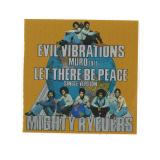
Mighty Ryeders
Let There Be Peace / Evil Vibrations (Muro edit)
Black Vinyl[21,43 €]
Although it was only reissued last year, that sold out in quick time, so now it lands once more but as a nice coloured pressing of The Mighty Ryeders' delightful single 'Let There Be Peace.' An OG is a rare and pricey collector's item and for good reasons - its scorching funk with big horns and raw rhythms. The B-side features 'Evil Vibrations' by MURO aka King Of Diggin', famously sampled by De La Soul in their brilliant 'A Roller Skating Jam Named Saturdays.' It's another timeless sound that pairs funk and soul into something as likely to get big reactions now as ever, not least because of how silky the groove is.
- 01: Tafese Tesfaye - The Dove &Amp; The Pigeon
- 02: Yetemwork Mulat - Heathen &Amp; Earth
- 03: Alemu Aga - The World Is But A Place Of Survival
- 04: Sosena Gebre Eyesus - Save Us From Our Death
- 05: Abiy Seyoum - The Last Judgement
- 06: Tafese Tesfaye - You Who Take Good Care Of Me
- 07: Sosena Gebre Eyesus - When I Say Your Name
- 08: Akalu Yossef - Who Can Doubt
- 09: Abiy Seyoum - We Are All Mortals
- 10: Yetemwork Mulat - The Second Coming Of Christ
- 11: Akalu Yossef - Our Father
- 12: Alemu Aga - Song Of Praise Played With A Plectrum
LP 2x12"[28,36 €]
The begena is a large ten-stringed lyre which is part of the traditional Amharic heritage of Ethiopia. The Amharas, who have long formed the politically and culturally dominant people of Ethiopia, mainly inhabit the central and northern part of the country. In the majority, they follow the monophysite Orthodox Tewahido Church established in the early fourth century AD.
Music plays a very important part in the life of the church. Most of the liturgy is sung and, contrary to secular music, it is accompanied by percussion instruments only. The begena occupies a special place because it is the one melodic instrument exclusively dedicated to the spiritual repertory. Because of its mythical origin, it is highly respected. Tradition holds that the begena was given to king David by God, and brought to Ethiopia by Menelik I, together with the Ark of the Covenant. It has always been the instrument of kings and nobles. Played by pious men and women of letters, it never became widespread. But it never disappeared either, not even under the Derg regime (1974-1991) which had banned the instrument.
Among Amhara string instruments, the begena is the most carefully crafted, especially with regard to the ornately sculpted crossbar. Its ten gut strings are cleaned and twisted several times. The characteristic buzzing timbre equalled by no other Amhara instrument is due to the enzirotch, that is, small bits of leather placed between each string and the bridge. This plays an important part in the sound production by creating a brief contact between the string and the upper rim of the bridge, thus modifying the vibrating properties of the string. In this manner, the spectrum of the sound is considerably enhanced (up to over 10 kHz).
The begena is a very powerful instrument, it keeps the devil thirty steps away, and its presence in the home wards off malicious spirits. Priests and preachers recommend its presence, especially during Lent (Fassika Tsom) when the Orthodox Amharas ponder their sins and repent. Because of its spiritual import, the begena generates intense emotion. According to some musicians, playing the begena brings them into direct contact with God or the Virgin Mary. The religious role of the begena is underscored by the shape of the instrument, each part symbolises an important element of the faith. The crossbar for instance, which reaches across the entire width of the instrument, represents God who is above all things. The belly which "gives birth" to the sound represents the Virgin Mary, and the ten strings recall the Ten Commandments.
Recorded by Stéphanie Weisser in Addis Ababa, Ethiopia, March 2002-December 2005.
Mastered by Renaud Millet-Lacombe.
Issued under license from VDE-Gallo, Switzerland.