We are very happy to welcome Ana Antonova to the RAWAX Family! Ana told us that the release was inspired by an unforgettable summer along the Croatian-Adriatic Coast.
We are very proud to present you this outstanding record with 3 originals plus the remix of "Mare Calmo" by the pioneer of the Croatian broken beat scene called Sven Nalis.
Search:that s
C.A.R. (Choosing Acronyms Randomly) is the musical project of Chloé Raunet, a Canadian-born, London-based artist known for her icy synths, warm vocals, and left-field pop sensibility. Drawing from post-punk, electro, and experimental songwriting, she creates music that’s both emotionally charged and sonically adventurous.
Following a five-year hiatus, C.A.R. returns with Shyana, the first single from her long-awaited fourth album, Dance at Oscar’s. Produced by Nathan Ridley, the release marks a creative rebirth: a new label, a new live formation with Joni Green, and a sound pulsing with revitalised energy. After a pandemic-induced break to focus on filmmaking — and a period of burnout and disillusionment — Raunet was ready to walk away from music altogether. But a pair of carried-over festival dates and an impromptu onstage reunion with longtime friend Joni Green unexpectedly reignited the spark. What was meant to be a farewell became the start of something new.
Shyana is a shimmering slice of machine-funk — a warped and groovy tribute to Paul Anka, filtered through C.A.R.’s surreal pop lens. A meditation on teen hysteria, pop manufacture, and the strange alchemy of early fame, the track pulses with wonky elegance and strutting confidence. One of the most playful cuts from Dance at Oscar’s, it showcases Nathan Ridley’s tight, swaggering production while capturing the album’s embrace of movement, humour, and the weirdness of cultural nostalgia.
On the B-side, Cecilia Road offers a more reflective counterpoint — a nostalgic, synth-drenched ballad built around a call-and-response vocal, throbbing melodies, and emotional tension. Intimate yet expansive, it hints at vulnerability without losing the pulse.
Artwork by Chloé Raunet, Craig Richards and Oliver Hupfau.
12th Isle ready the first of many new releases after a break over the first half of 2025. Radx is a new collaborative endeavour between label artists X.Y.R. and Vlad Dobrovolski (½ of S A D) exploring a shared appreciation of vintage 80s & 90s synthesisers, ambient-adjacent furniture music and, er, dragons. Referencing the electronica of artists such as Kim Cascone/Hydrosphere as well as the sci-fi literature of Michael Swanwick where dragons act as living machines, the pair combine various synthesis models, pedals and samplers for an album that sits somewhere firmly between each of their solo works. From the cathedralic ascension of ‘Heavenly Shepherd of Silence’ to the back-room bean bag swirls of ‘Ovgo’s Etheric Mind’ and dense, jungle-like humidity of ‘Liminal Space’, the more ambient-leaning end of the catalogue is built upon further.
The Block E.P. by A.J. Sound is the alias of two heavyweights in the scene, Arthur Smith (Artwork) and John Kennedy (Big Apple Records). First released in 1995 this blend of Techno and Acid is getting a much-deserved reissue and remaster for its 30 year anniversary. This widely desired release is a masterpiece of minimal techno. Basemental a track thrashed by Laurent Garnier for years, so much that it featured on his "Laboratoire Mix". This feature brought even more attention to this rare release. Copies on the second hand market are being sold at £40 and even more. Now Decoy Records are treating us to this much needed reissue for collectors and DJ’s alike who weren’t favoured enough the first time round to grab a copy for themselves.
Bushwacka! returns to Nu Groove with ‘House Sounds, Vol. 2’, continuing his acclaimed series on the pioneering NYC label. This four-track vinyl release sees the London underground stalwart dive deeper into his expansive sound to deliver another set of expert cuts for discerning selectors.
On the A-side, ‘Jack The Groove’ opens with a driving rhythm and irresistible bassline, while ‘Middle Channel’ flows with hypnotic polyrhythms, fusing vintage Nu Groove influences with Bushwacka!’s unmistakable touch.
Flip it over and the aptly named ‘House Muzik’ is an unfiltered homage to the genre’s raw essence. Closing this eclectic selection is ‘Two Times’, with its punchy percussion and deep synths creating a groove-laden record that’s equal parts nostalgic and forward-thinking. With ‘House Sounds, Vol. 2’ Bushwacka! delivers another essential collection for crate diggers and dancefloor newcomers alike, reaffirming his status as one of house music’s true craftsmen.
Aiden Francis steps up with his first full EP for the label—a limited 300-press release packed with four club-ready tracks that span progressive, dub, and tech. Following a trio of appearances on the label—including a standout contribution to our recent 6 Years of Portal compilation—a full EP felt inevitable. And as expected, Aiden delivers: no filler, just deep, heads-down gear built for the floor.
As a preview of the upcoming release Richie Weeks' The Love Magician Archives: Boogie & Post Disco. NYC 1980–1983 Vol. 3 on Past Due Records, we’re proud to present a killer 7” featuring two previously unreleased versions of What’s In It For Me by Hot Cargo.
Hot Cargo was a fresh project Richie Weeks was developing with Salsoul Records around 1982–83, right at the height of New York City’s Post-Disco and Boogie Funk explosion. These two versions were recorded at the legendary Right Track Studios, with an all-star lineup of top-tier disco and funk musicians.
Had it seen the light of day back then, there’s little doubt that What’s In It For Me would have become a staple at Larry Levan’s Paradise Garage—and yet another major hit in Richie Weeks’ unstoppable run.
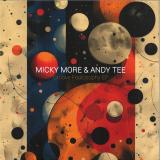
Groove Foolosophy, the new Ep of Micky More & Andy Tee. Incl. 4 tracks, on side A we find "Karma Sutra" and "Da Funk". On Side B: "Deep Into Soul" and "It Ain't Easy". We can say that side A is more soul funk disco vibes while Side B is more classic Deep House. All tracks here are produced with a touch of class where musicians play a fundamental role and create an organic groove. The quality you expect from the italian duo.
With shimmering synths, driving basslines, and cosmic rhythms, each track becomes a time machine—rooted in retro aesthetics, yet engineered for tomorrow’s dancefloors. The result is a sonic experience that’s as cinematic as it is danceable, channeling the spirit of neon-drenched nights and digital utopias alike.
Scannoir. After their previous releases as ½GOTT and GOTT on Uncanny Valley and some remixes, the duo returns with a third solo EP, marking their first appearance on the Berlin-Basel-based label Reach Another System. Their passion for EBM, Synth Pop, and New Beat comes to life with a fine array of classic drum machines and FM-synths, topped with Teutonic lyrics and archival samples. The A-side opens with a bang: "Magnet" critiques social expectations and pressures, backed by hard-hitting snares and tom fill-ins in Front 242 fashion. Next up, "Tschernobyl" warps the listener back to 1986 – a musical report of the Soviet nuclear disaster. Equally dystopian, the B-side hymn "Matrix Leben" depicts life inside a structured system that continually shapes and restricts us. The final track "7 Minuten" pushes the limits of restless staccato EBM madness. Mission accomplished!
Swiss label keepitgoing. returns with La Buena Muerte, a three-tracker uniting Ricardo Villalobos & Washington Miranda, Siddhartha, and Wata with Jorge González of Los Updates — a cross-section of Chile’s most vital electronic voices brought together on one record.
The EP opens with Bajo Tierra – Mis Juguetes, a ten-minute drift of slow-burning minimalism where Villalobos’ elastic modular textures and patient rhythmic detail entwine with Miranda’s hypnotic vocal, processed and stretched into new shapes and forms — a continuation of the deep, organic dialogues the pair first explored on De Cada Uno in 2022. On the flip, Siddhartha – Poema 4 slides into minimal electro and broken beat territory, sparse yet restless. Razor-sharp drums and pulsing bass unfold through dynamic structures that thrives on tension and space where a menacing voice cuts through with insistence. Closing the record, Wata – El Soul de Los Que Sobran (feat. Jorge González) brings González’s unmistakable voice into Wata’s playful framework, a looser, rather light-hearted cut where percussion and gentle melodies expand the palette and connect the EP back to Chile’s rich electronic lineage.
With artwork by Damian Schopf, brother of Martin Schopf aka Dandy Jack, La Buena Muerte stands as a collective statement of Chilean experimentalism — free of borders, rooted in collaboration, and tuned for the floor.
Avenue 66 opens Series 33 with a Düsseldorf–Lyon connection.
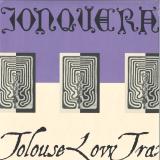
Jonquera first encountered Tolouse Low Trax a decade ago in a small Lyon club. That night, his hypnotic slow-motion set was cut short, yet it left a lasting imprint. The Düsseldorf artist’s mechanical psychedelia, and the influence of the Salon collective have been a constant touchstone for
Jonquera, even inspiring playful “Düsselcore” edits in his Tera Octe days.
After several LPs, Jonquera returns to the EP format with Cause & Utility / Tales of Decay. Built from improvised drum, bass, and vocal recordings, the tracks are reworked through heavy looping and acoustic treatment, a method inspired by his recent live shows. Cause & Utility revolves around the
abstract idea of two dogs as concepts, enriched by the earthy drone of a hurdy-gurdy. Tales of Decay paints a surreal image of a house losing its rooms like a body shedding parts.
The MPC sorcerer Tolouse Low Trax, aka Detlef Weinrich, brings his Düsseldorf circuitry and autobahn funk with two tracks of pure rhythm apparition. Amp is a quintessential Tolouse Low Trax cut, built on concealed rhythmic structures, swampy bass lines, and fragments of radio and voice
samples. The piece extends his exploration of how art can mirror the flow of inner-city traffic; drifting without a clear climax. Solid Rock echoes this idea, first conceived as a variation on Amp where particles repeat themselves. The result is distinct yet conceptually linked, evoking the
density of a crowded neighboring city: beginning in apparent disarray before locking into an abstract, hypnotic funk.
Series 33 begins with the convergence of Jonquera’s looping experiments and Tolouse Low Trax’s mechanical psychedelia, a dialogue between Lyon and Düsseldorf.
Unsung I returns to TGP with his second solo EP, delivering a deep techno journey of hypnotic grooves and immersive textures. The release also features two reinterpretations: Shoal introduce an acidic bassline that fuses atmosphere with dancefloor energy, while Midnight Traffic brings a sharper, groove-focused edge.
The journey continues. Ral 1.2 marks the second chapter of the Ral Series project, a sonic odyssey free from any market constraints. This EP features three tracks: one is a powerful, dancefloor-oriented tool, while the other two are more arpeggiated, with a focus on immersive, listening-focused soundscapes. Prepare yourself for a journey that crosses different sonic landscapes, from fast and powerful rhythms to more minimal and introspective passages.
Shhh. The command to be quiet is not just part of the title of one of the two sprawling compositions on this pioneering album. It's also an apt metaphor for the relaxed hypnotism and spaced-out atmosphere that define In a Silent Way, a record that pushes the boundaries of studio possibilities, artist-producer relationships, and rock-jazz chasms. Recognized as Miles Davis' first full-on fusion effort and part of his "electric" era, the 1969 landmark claims a Who's Who line-up that sends the music into an ethereal stratosphere.
Mastered from the original master tapes and pressed at RTI, this unsurpassed 180g LP edition lifts the veil on the cutting-edge assembly process that created the pair of lengthy suites. Helmed by three electric instruments, the bevelled compositions melt away all preconceived notions of "jazz," ˜rock," and "ambience," following a loose theory Davis dubbed "New Directions."
Few albums are so delicately textured. And on Mobile Fidelity's meticulous reissue, such sulcate elements pour over ink-black backgrounds on a canyon-wide soundstage. In particular, Tony Williams' inventive percussive touch – he causes the cymbals to shimmer as a pieces of silver tend to do when exposed to sunlight – is broadcast with lifelike three-dimensional qualities, the panoramic view extending to Davis' nocturnal trumpet, Wayne Shorter's ribbon-unfurling saxophone, Dave Holland's extrapolative bass, and the mosaic of keys.
If the record's only accomplishment is its introduction of guitarist John McLaughlin to the world, it alone would be enough. Yet In a Silent Way continues to bedazzle, puzzle, and inspire for myriad reasons – not the least of which is the seemingly telepathic communicative methods employed by the group's members. The line-up is great on paper, but, if it's even possible, the octet sounds even better in practice, with the instruments and tonalities conjoining in avant-garde communion like hyper-sensitive tentacles exploring the stippled landscapes of an undiscovered planet.
Diverting from expectation, tubular grooves twist, turn, and spin, sometimes piling atop of each other, always shying away from structure and melody. Ellipsoidal solos provide hesitant guidance, ranging from Chick Corea's Fender Rhodes phrases to Davis' decorative spirals. And as colour is the primary unit of currency on Davis' Sketches of Spain, laid-back episodes, geometric spaces, and quiet sensuality reign here, with the set's maverick reputation attained via musings on solitude rather than explosions of noise.
Controversial for the period, the heavily edited production of In a Silent Way blew open the once-locked doors on what producer's could attempt – and how artists could assist them. Knitted together as one would construct a cross-hatched quilt, songs contain grafts of repeat passages that provide unifying structure and experimental continuity. What a statement.
Lontra is the new project from Brazilian born, Colombian based producer, and musician, Guille Katorzi. The inspiration and influences for this particular project were drawn from diverse sources, including disco, house, Nigerian boogie & afrobeat.
The instrumentals were and produced in Bogotá with Guille laying down the guitar & bass parts which the songs were built upon. After sending the demos to vocalist Sir Jean (Voilaaa/Sir Jean & NMB Afrobeat Experience), with an invitation to collaborate, he was thrilled to receive a warm response to the songs from Sir Jean and so travelled to France in 2023 to record vocals in the singers' home town of Lyon. Returning to Bogotá, a selection of top brass musicians contributed their blazing horns to the project.
Opening up the EP, "Money, Money" serves up a lively disco beat with percussive Afrobeat highlights, funky guitar licks & Afrobeat inspired horn parts, backed by an irresistibly groovy bassline, setting the scene for Sir Jean's lyrical warning "money cannot buy your soul".
Dropping some of the Afrobeat accents and staying closer to the centre line, "Life Is Movement" is a dancefloor focused track where Katorzi's guitar hook pairs with a restless bassline over which Sir Jean's vocal delivery shines. The flipside begins with a sensuous overture on "Mysterious". A loose Afro-beat & guitar syncopation provides an inviting space for the horn section's refrains and solos. The arrangement allows plenty of room for the listener to become intoxicated by the groove, before Sir Jean opens his heart with the emotive ode to someone we learn of only as..."Mysterious".
Closing out proceedings is a more driving club track. The Lyon & The Hunter... where Sir Jean sings a warning wrapped in metaphors while Lontra throws down a club focused punch that deftly dances between funk, house and afro flavours while the scorching horns set the lot aflame.
The culmination of different inspirations and intonations imbues the project with a vivacity and richness in colour that reflects the multi-cultural assembly of players. Canopy is delighted to welcome the talent of Lontra to the family and are happy to say that this is the first in a number of exciting projects that this artist is serving up
An elusive cult gem resurfaces through Glossy Mistakes. Originally released in 1986, L'Empire Des Sons is an otherworldly blend of synth pop, folk experimentation, and cinematic percussive layers-dreamlike, poetic, and wildly ahead of its time. L'Empire Des Sons was a fleeting yet powerful transmission from the fringes of the French underground-an album that blurred genre lines and evaded easy classification. Fusing experimental folk, lo-fi synth pop, and avant-garde textures, the record exists in its own sonic universe: poetic, layered, and fiercely independent. Formed in Saint-Étienne by percussionist and composer Dominique Lentin (Dagon, Fille Qui Mousse) and first-time vocalist Bipé Redon, L'Empire Des Sons emerged from the vibrant DIY spirit of the early 1980s. Their paths crossed during the interdisciplinary project L'Opéra Quotidien, and what followed was an intuitive, deeply collaborative process. "I would bring in lyrics and my voice," Bipé recalled, "and Dominique would shape the music around the atmosphere or rhythm suggested by the words." The result is a collection of songs that feel both meticulously constructed and completely free. Ethnic percussion, marimbas, xylophones, and synthesizers dance around Bipé's surreal, fragmented lyrics-little sonic postcards from imagined worlds. There's a theatricality here, but it never feels forced; rather, it's playful, intimate, and raw. Despite their inventiveness, L'Empire Des Sons remained a well-kept secret-circulating only in select avant-garde circles and eventually becoming an extremely sought-after collector's item. Now, thanks to Glossy Mistakes, this lost artifact returns to the world with new life: remastered from the original tapes, pressed on vinyl for the first time with extended liner notes. L'Empire Des Sons was never meant to be boxed in. Like the quote from Brian Eno that opens their liner notes-"For the world to be interesting, you have to be manipulating it all the time"-their music resists stasis. It evolves, shifts, surprises. And now, it finally gets the audience it always deserved.
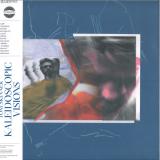
Drummer-composer Tom Skinner announces Kaleidoscopic Visions, his second solo album, out 26th September 2025 via Brownswood Recordings and International Anthem
Kaleidoscopic Visions unfolds across two distinct sonic landscapes. Side A presents entirely instrumental compositions performed by Skinner's live Bishara band—bassist Tom Herbert, cellist Kareem Dayes, and Robert Stillman and Chelsea Carmichael on various woodwinds and reeds—with electric guitar on two tracks courtesy of Portishead's Adrian Utley. A drummer-composer bringing his wealth of experience to bear on the role of bandleader, Skinner composed primarily on guitar, embracing the freedom that came with writing on his secondary instrument.
These compositions include "Auster," dedicated to late novelist Paul Auster, and "Margaret Anne," which honours Skinner's mother Anne Shasby, a former classical concert pianist prodigy who abandoned her own promising career in the face of systemic misogyny, only to impart on her son what Skinner calls "the gift of music."
Skinner’s musical world opens further on Side B, where a collection of poised vocal collaborations stretch out from jazz and improvisation towards a more dream-like, soulful sound. The centerpiece is "The Maxim," a ten-minute collaboration with Grammy Award-winning Meshell Ndegeocello, a dubby, spacious meditation on life and death, delivered with a free-spirited grace. For Skinner, working with Ndegeocello—whom he first saw at Glastonbury as a teenager in 1994—represents a full-circle moment, indicative of the indirect paths and inspirational detours that have shaped his life.
The album goes on to feature South Carolina-based singer Contour (Khari Lucas) who appears on the low-lit soul ballad ‘Logue’, and closes with ‘See How They Run’, featuring London keyboardist-vocalist Yaffra (Jonathan Geyevu). It is the album’s most overtly lyrical track, an articulate exposition of jazz-inflected spoken word that speaks not only to the genre-fluid nature of the music but the breadth of Skinner’s palette.
This should come as no surprise. On Kaleidoscopic Visions, one of London’s most vital musical figures gives us a sparkling glimpse of the multi-coloured lens through which his unique sound is now refracting.
A favourite selector for many within the underground, UK-born, Ibiza-based Miller has built a reputation for his hypnotic, low-end-led productions and seamless ability to weave obscure rhythmic patterns into immersive DJ sets. Founder of the Real Gang collective, he honed his craft as a resident at Ibiza institutions The Zoo Project and Ibiza Underground, where his dynamic, vinyl-focused style earned him recognition as a key player in the island’s grassroots scene. This natural progression has since led to the launch of Tomodachi, his new club, an intimate space that refl ects his artistic ethos and evolving infl uence on the island.
Harley Maxwell, meanwhile, brings a raw energy to the project, blending his sharp vocal delivery and lyrical edge with Miller’s meticulous production style. Their collaborative debut at fabric, during Miller’s all-night set, showcased a shared ability to push conventional boundaries, as they provided a fi rst glimpse into the music that would in turn become ‘Caviar’.
The EP opens with the title cut, a stripped-back yet infectious roller that glides between deep basslines, textured percussion, and subtle melodic fl ourishes. ‘How It Runs’ follows with its sharp drum work, zippy synths, and a playful groove built for the dancefl oor. Rounding off the release, the vinyl-only ‘Dreaming Experience’ sees Miller step out solo as he delves into deeper territories with hazy atmospherics, creating a tripped-out late-night journey. Arriving at a pivotal moment for both artists, their ‘Caviar’ EP signals a bold debut on FUSE – a label celebrated for its commitment to forward-thinking club music.
Ahead of the release of Hollie Cook’s fifth studio album, Shy Girl, the anthemic, feel-good title track and rootsy chugging ‘Frontline’ take either side of a 7” single.
Woven with tight grooves, beautiful vocals and catchy melodies, Hollie’s forthcoming album hears her more confident and open to vulnerability than ever before. The title track of the album ‘Shy Girl’ is a buoyant and elastic slice of lovers rock. It was written in a moment of spontaneous intuition, and bubbles with a charisma and positivity that Cook radiates. “I’m not a natural show-off,” Cook explains. “The Shy Girl theme is me. It’s just about being my most vulnerable self and being as true to the music that love as possible.” Doused in Hollie’s signature “tropical pop” sound, ‘Shy Girl’ is grounded in a vibrant bassline and classic off-beat reggae guitar struts. Hollie’s dreamy vocals radiate warmth and tenderness in equal measure, adding to the song’s soft-hued embrace.
The deep roots flavour of ‘Frontline’ takes the B side. Complete with raking electric guitar lines, a dubby bassline and weighty horn section, it’s a powerful cut that’s both ethereal and empowering. Wearing her heart on her sleeve with this beautifully melancholic piece of songwriting, Hollie opens up through her lyrics with an emotional depth and striking honesty.