After being part of the inner circle of the ESHU family for many many years, finally it's time for Yasin Engwer's solo debut EP. His first contributions date from 2012 when SYS released their first EP on ESHU, the production trio consisting of Sinan Alakus, Steven Siwalette and Yasin. Also a recent collaboration with Jocelyn was released on ESHU and he's an important part of the mega producer crew Dilated Pupils that has been releasing beats since 2014. His long going career and hard work now finally gets rewarded with his own Onyx EP. A carefully curated club pack of razor sharp, minimalistic dub house. It's been selected by digging through 10 years of unfinished beats on long lost hard drives. And of course, it also includes collabs with his SYS crew and fellow Nijmegen producer Space Ventura. It's a classy collection of dub driven, forward pushing, tech grooves in typical ESHU fashion. An EP that's been long overdue, but perfect on time.
Search:the abyss
A future classic - a project resurrected from a collaborative effort of the minds of late and great tastemaker and creator Mike Huckaby & Echospace's, Stephen Hitchell. Coming up on over 15 years since this project was conceived while working together on the Model 500 "Starlight" remix project back in 2008, this project truly captures a beautiful moment in time. During this period there was something magical in the air, a creative synergy and understanding of all things deep! The original mix (2008) results from a few sequences and patterns developed out of Wavetable ideas Mike was creating for a sample library he was curating at the time. The sweeps and transients found in these lofi wavetables truly add to the Detroit sound Mike's legacy was built upon, always staying true to his roots. After a few projects together (and more forthcoming) another collaboration was born with SF based (via Glasgow) producer, Federsen who simply put gives us a deeper than deep tribal stomper we're certain Huck would be dropping at peak hour! On the flip, cv313 + federsen reunite to surf Mike's wavetables once more, creating an addictive hook with a sick DETROIT saw bass deeper than the ocean floor! Intrusion's Dub closes out the EP and sends the listener deeper into the abyss, offering sonic designs from another planet, dubbed out into eternal bliss! We truly hope this project resonates and captures some of Mike's creative spirit and sound design. This 12" is a tribute to a true Detroit hero who's contributions to music and the culture are few and far between, a true legend.
R.I.P. HUCK
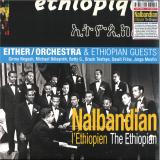
The Éthiopiques series returns! Essential archive recordings from an extremely fruitful period in Ethiopian music.
Before “Swinging Addis” took over the world, there was Moussié Nerses Nalbandian — the Armenian-born composer who shaped modern Ethiopian music. Mentor, arranger, and pioneer, he laid the foundations of Ethio-jazz.
This Éthiopiques volume revives his forgotten legacy, recorded live by Either/ Orchestra First issue ever with new exclusive photos and in depth liner 8-page insert.
“Ethiopian jazzmen are the best musicians that we have seen so far in Africa.
They really are promising handlers of jazz instruments.”
Wilbur De Paris
(1959, after a concert in Addis Ababa)
አዲስ፡ዘመን። *Addis zèmèn* **A new era.**
The time is the mid-1950s and early 1960s, just before "Swinging Addis" bloomed – or rather boomed – onto the scene. Brass instruments are still dominant, but the advent of the electric guitar, and the very first electronic organs, are just around the corner. Rock’n'Roll, R’n’B, Soul and the Twist have not yet barged their way in. Addis Ababa is steeped in the big band atmosphere of the post-war era, with Glenn Miller's *In the* *Mood* as its world-wide theme song, neck and neck with the Latin craze that was in vogue at the same period. Life has become enjoyable once again, with the return of peace after the terrible Italian Fascist invasion of Ethiopia (1935-1941). The redeployment of modern music is part and parcel of the postwar reconstruction. *Addis zèmèn* – a new era – is the watchword of the postwar period, just as it was all across war-torn Europe.
The generation who were the young parents of baby boomers** were the first to enjoy this musical renaissance, before the baby boomers themselves took over and forever super-charged the soundtrack of the final days of imperial reign. Music is Ethiopia's most popular art form, and very often serves as the best barometer for the upsurge of energy that is critical for reconstruction. Whether it be jazz in Saint-Germain-des-Prés or the *zazous* who revolutionised both jazz and French *chanson* after the *Libération*, be it Madrid's post-Franco Movida, or Dada, the Surrealists and *les années folles* that followed World War I, the periods just after mourning and hardship always give rise to brighter and more tuneful tomorrows. Addis Ababa, as the country's capital, and the epicentre of change, was no exception to this vital rule.
**Two generations of Nalbandian musicians**
Nersès Nalbandian belonged to a family of Armenian exiles, who had moved to Ethiopia in the mid-1920s. The uncle Kevork arrived along with the fabled "*Arba Lidjotch*", the** "*40 Kids*", young Armenian orphans and musicians that the Ras Tafari had recruited when he visited Jerusalem in 1924, intending to turn their brass band into the official imperial band. If Kevork Nalbandian was the one who first opened the way of modernism, pushing innovation so far as to invent musical theatre, it was his nephew Nersès who would go on to become, from the 1940s and until his death in 1977, a pivotal figure of modern Ethiopian music and of the heights it. Going all the way back to the 1950s. Nothing less. And it is Nersès who is largely to thank for the brassy colours that so greatly contributed to the international renown of Ethiopian groove. While the younger generations today venture timidly into the genealogy of their country's modern music, often losing their way amidst a distinctly xenophobic historiographical complacency, many survivors of the imperial period are still around to bear witness and pay tribute to the essential role that "Moussié Nersès" played in the rise of Abyssinia's musical modernity.
Given the year of his birth (15 March 1915), no one knows for sure if Nersès Nalbandian was born in Aintab, today Gaziantep (Turkiye/former Ottoman Empire) or on the other side of the border in Alep, Syria... What is certain is that his family, like the entire Armenian community, was amongst the victims of the genocide perpetrated by the Turks. Alep, the place of safety – today in ruins.
Before Nersès then, there was uncle Kevork (1887-1963). For a quarter of a century, he was a whirlwind of activity in music teaching and theatrical innovation. *Guèbrè Mariam le Gondaré* (የጎንደሬ ገብረ ማርያም አጥቶ ማግኘት, 1926 EC=1934) is his most famous creation. This play included "ten Ethiopian songs" — a totally innovative approach. According to his autobiographical notes, preserved by the Nalbandian family, Kevork indicates that he composed some 50 such pieces over the course of his career. This shows just how much he understood, very early on, the critical importance of song as Ethiopia's crowning artistic form. Indeed, for Ethiopian listeners, the most important thing is the lyrics, with all their multifarious mischief, far more than a strong melody, sophisticated arrangements or even an exceptional voice. (This is also why Ethiopians by and large, and beginning with the artists and producers themselves, believed for a long time — and wrongly — that their music could not possibly be exported, and could never win over audiences abroad, who did not speak the country's languages).
Last but not least, one of Kevork's major contributions remains composing Ethiopia's first national anthem – with lyrics by Yoftahé Negussié.
Nersès Nalbandian moved to Ethiopia at the end of the 1930s, at the behest of his ground-breaking uncle. Proficient in many instruments (pretty much everything but the drums), conductor, choir director, composer, arranger, adapter, creator, piano tuner, purveyor of rented pianos,... he was above all an energetic and influential teacher. From 1946 onwards, thanks to Kevork's connexion, Nersès was appointed musical director of the Addis Ababa Municipality Band. In just a few years, Nersès transformed it into the first truly modern ensemble, thanks to the quality of his teaching, his choice of repertoire, and the sophistication of his arrangements. It was this group that would go on to become the orchestra of the Haile Selassie Theatre shortly after its inauguration in 1955, which was a major celebration of the Emperor's jubilee, marking the 25th anniversary of his on-again-off-again reign.
At some point or other in his long career, Nersès Nalbandian had a hand in the creation of just about every institutional band (Municipality Band, Police Orchestra, Imperial Bodyguard Band, Army Band, Yared Music School…), but it was with the Haile Selassie Theatre – today the National Theatre – that his abilities were most on display, up until his death in 1977. To this must be added the development of choral singing in Ethiopia, hitherto unknown, and a sort of secret garden dedicated to the memory of Armenian sacred music, and brought together in two thick, unpublished volumes. Shortly before his death (November 13, 1977), he was appointed to lead the impressive Ethiopian delegation at Festac in Lagos, Nigeria (January-February 1977).
His status as a stateless foreigner regularly excluded him from the most senior positions, in spite of the respect he commanded (and commands to this day) from the musicians of his era. Naturally gifted and largely self-taught, Nerses was tirelessly curious about new musical developments, drawing inspiration from the very first imported records, and especially from listening intensely to the musical programmes broadcast over short-wave radio – BBC *First*. A prolific composer and arranger, he was constantly mindful of formalising and integrating Ethiopian parameters (specific “musical modes”, pentatonic scale, and the dominance of ternary rhythms) into his “modernisation” of the musical culture, rather than trying to over-westernise it. It even seems very probable that *Moussié* Nerses made a decisive contribution to the development of tighter music-teaching methods, in order to revitalise musical education during this period of prodigious cultural ferment. Flying in the face of all the historiographical and musicological evidence, it is taken as sacrosanct dogma that the four musical modes or chords officially recognised today, the *qǝñǝt* or *qiñit* (ቅኝት), are every bit as millennial as Ethiopia itself. It would appear however that some streamlining of these chords actually took place in around 1960. It was only from this time onward that music teaching was structured around these four fundamental musical modes and chords: *Ambassel*, *Bati*, *Tezeta* and *Antchi Hoyé*. A historical and musical “details” that is, apparently, difficult to swallow, especially if that should honour a *foreigner*. Modern Ethiopian music has Nersès to thank for many of its standards and, to this day, it is not unusual for the National Radio to broadcast thunderous oldies that bear unmistakable traces of his outrageously groovy touch.
After over a decade away from making music, Greek-born musician and composer Giannis Gogos is back. It was the turmoil of the pandemic that allowed him to reconnect with making music after years working in photography and now he's combining analogue and digital sound with intricate melodies and plenty of keyboards, glockenspiel, kalimba and guitars. This latest album is enhanced by oodles of delay and reverb effects and makes for an ethereal journey inspired by Henry Corbin's Man of Light in Iranian Sufism. It explores light as a symbol of divine presence through serene, introspective soundscapes.
A deep journey into the sound abysses of the night, invoking hidden energies, opening a ritual portal to the core of the seal and the ritual itself.
This compilation brings together diverse artists who explore a fusion of dark techno, industrial environments, ritual textures and pulses that evoke vast underground spaces. The idea is to generate a state of technical-ceremonial trance: vinyl becomes a physical talisman, object of worship, beyond a simple club track.
Side A opens with darker rhythms, synthesizers that resonate like funeral bells, mechanical percussions that hit like ancestral machinery. As it progresses, the journey intensifies, layers of bass that rumble like mine hulls, reverberations that expand consciousness.
The B-side takes flight towards the ethereal and the expansive: distant melodies, ritual echoes, processed voices that look like invocations, culminating in a track that sounds like the closing of a rite, the day that meets the night.
All art carries politics, even when it dreams. This album imagines a utopian offshoot of Detroit techno where rhythm grows wild beyond the grind of so-called "business techno." Longtime Kimochi Sound ally SW. continues to carve his own path in that regard, having evolved from early UD remixes to his acclaimed 2020 solo release. Here he merges heady atmosphere with crooked retro-futurist grooves to build worlds that falter between optimism and unease. It's partly surreal, partly idealistic, fully immersive and evocative techno from another dimension.
Following a promising debut, Cosada returns with its second release, “Astral Destiny” a four-track, vinyl-only EP from label head Laseech. Inspired by the peaceful yet rugged nature of life on the Adriatic, the record blends calm atmospheres with a raw, textured edge. EP opens with the title track on A1 — a warm, transportive deep house journey. A2, “Dreams,” blends lush pads and broken beats with a soulful voice from Swaylo, delivering a dreamy, introspective mood. On the B-side, “Abyss” explores bold, abstract sound design and experimental club rhythms. Closing the EP, B2’s “Evolving Depths” is a slow-burning, downtempo song rich in atmosphere and deep groove. A refined and versatile release, showcasing Laseech’s range while marking another strong chapter in Cosada’s growing catalog.
Emily Jeanne returns with Past Through Desire, the second release on her quỳnh imprint. Four advanced experiments in tripped-out rhythms, kinetic crossroads through the lunar-lit abyss.
What blossomed with quỳnh’s debut Call Of The Sea, now further develops with follow up Past Through Desire. The second edition on Emily Jeanne’s imprint truly clarifies her sound, an emblematic swirl of experimental nodes bunched tight into a nocturnal bouquet.
Twice Not Nice shimmers within its percussive hive, a psychedelic wormhole that furrows taut towards the circular infinite. Vague Gestures cuts sharper, a snarling stepper etched finely into its minimalist holding pattern for a proper skank-out. On the flip, Fire Lily marches a stranger; a psychoactive chant summoning the percussive half time with an eerie glint. Closer Traversal returns to the dimly lit dancefloor path, writhing around in slippery configurations until the broken loop reaches its end. A mesmerising second instalment from Emily Jeanne and her quỳnh stable.
Ritual Dance - is a sound journey, where futurism and the obsolete merge into a new world. Arash & Quasar (truth and star) - is a duo of electronic producers, friends, DJs, rare record collectors and artists, Pavel Grachev and Vitaly Zhul'kov. Their approach for music making compiles elements of various cultures and eras, resulting in fresh and trippy sonic labyrinths. The title track puts the listener in a state of trance and wild fields, where shaman dance moves take over the existense. Powerful percussion, rich synth textures and traditional instruments are mixed in one. 'Acid Krishna' extends the trip, adding acid basslines and meditative flavour. A true morning anthem of a proper rave trip. 'Lokum' is exploring the deepness of the East through melodies, that sweeten up your adventure away from the daily reality. The flip side starts with 'Opium', where slow beats suck you in the abyss more and more. 'Truth & Star' - is an energy exchange ceremony, where Arash & Quasar become rhythm wizards and dictate how you move and feel, just like snakes dance to the magic flute... The Truth refers to the inner awakening and The Star is the symbol of the external shine. 'Desert' is the final chapter of the trip, evolving into eternity, just like a caravan dissolves in the endless desert, hot air and the blue night... Besides studio work, Arash & Quasar share videos of their own trips and adventures via Youtube-chanel, called DIG LOTO. Together with their best friend, the portative Vestax Handy Trax vinyl player, they search for rare records in remote destinations.
Following up a string of releases on labels such as Mana, Sun Ark, Orange Milk Records and Abyss, Other People are honoured to present the new album Fobia by Argentinian musician and sound artist aylu, real name Ailin Grad. Inspired in part of Grad's many collaborative projects over the last few years, Fobia sees her collecting and rearranging the music and sounds fostered within these to create an intimate, spiritually charged album that turns personal struggle into collective resistance and resilience. What initially started as a way for Grad to process her own experiences with agora- and claustrophobia, and an attempt to navigate feelings of shame and a perceived demand to keep these feelings bottled up and hidden from the world, she began to realise how mental health struggles are not isolated incidents but part of broader systems of collective suffering and injustice. “It took a long time for me to discover that my issues were part of a system that produces these kinds of symptoms and that it takes a lot of courage to find a way around them. I have the feeling that more and more people suffer from these kind of things in some way or another, and what was at first taught as something you should be silent about and keep private, I discovered that the more you talk about it and share it with people you trust, the more you realise that it’s part of something much bigger.” This tension and constant pull between fear and joy, light and dark, is present throughout the album. From the strained breathing featured in opening track Yodo echoing the suffocating feeling from claustrophobia interspersed with the lighter textures of Obelisco Elysium and Prospero offering up a sense of relief, to the almost cacophonous, immersive soundscapes of El Sol Mal, mirroring the complex, often contradictory emotions when navigating mental health challenges. Fobia invites listeners to move through pain with honesty, finding strength in shared experiences.
GET OUT OF HERE!
Zarkoff brings it all:
– A cry to battle
– An ode to the abyss
– A sacriligious chant
INVOLUCIJA recruits vocalist & poet Zarkoff from Sumerian Fleet to deliver razor-sharp justice. You can label it EBM, industrial techno or even futuristic math-rock – we just call it Balkan Body Music.
“And after a line, another line” (Serbo-Croatian: I poslije linije, linija) is a flippant reference to Yugoslvia’s nostalgic lament ‘And after Tito – Tito!’ Oh how the ethical goalposts of the past are moved, again and again.
As Zarkoff warns: don’t turn your back on the golden youth!
/// Berlin labels aufnahme + wiedergabe and INVOLUCIJA·ORG connect again for another split-label release // INVOLUCIJA is an experimental post-industrial collaboration with artists from ex-Yugoslavian countries, started by Michel Morin (Sneak-Thief / Polygamy Boys) and Lucija Invo. ///
UK electro wizard Plant43 marks his 20th year in the game in the only way he knows how: with another wonderful album, his 10th overall. It comes on his own now five year strong Plant43 Recordings and as he continues to lay it down with his regular performances at Tresor. Feeding The Machines is full of signature excellence, from the lithe rhythms of 'Information Decay' to the jittery drums and introspective chords of 'Anthropomorphic Algorithms' via the dark, hurried urgency of the paranoid 'Absolute Inertia'. This is another long player that is as adventurous as it is emotive and cinematic.
AB[15,08 €]
This is the gloriously remastered version of an all time classic: Dj Excel's "Just When You Thought It Was Safe".
This EP featured brand new remixesfrom the likes of The Criminal Minds, Abyss, and Dj Stephano!
This is the single, and it comes with the old skool style artwork and plain black sleeve!
generic sleeve 2025 repress
Oxygeno returns to his label Lost Verses with Pure Devotion, an EP that fuses hypnotic, raw, and relentless techno with a satirical and defiant critique of the Churchs values.
Side A opens with Soul Absorption, a track with a heavy low end, absorbing synths, and an atmosphere that plunges you into a deep abyss. Next comes Haunted, which takes the darkness further with a haunting, psychotic synth sequence and a heart-rending bassline that keeps you on your toes.
On the B-side, Infectious delves into shadowy territory with a modulated synth line that simulates something infectious and consuming. Finally, The Weight Of Guilt closes the EP with the heaviest and most aggressive track. Thunderous percussion and a crushing bassline capture the intensity and gravity reflected in its title.
Pure Devotion is a sonic journey designed for the dancefloor, where the body moves to the beat while the mind ponders and grapples with the ideas woven into each track.