The year is 1995, Italy has just witnessed the biggest corruption scandal in its history, a new sound is thriving in the underground.
Far from the idyllic atmospheres of Dream House, “Location EP” by mysterious producer Universe City (moniker of Michael Preti) erupts like an earthquake on the dance floors of a shattered country: telluric textures, metallic echoes, a state hypnosis induced by volcanic tension.
A new genre was born, Progressive Trance, and this was just the beginning..
Cerca:the access
- 1: Waited Too Long
- 2: Flames Up
- 3: Firing Squad
- 4: Traffic Mule
- 5: 23 Kings Crossing
- 6: Heavy Head
- 7: Give Me Back My Golden Arm
- 8: Sidewinder
- 9: The Invitation
The Funeral Pudding originally came out as a CD-only release on the Dutch label Brinkman to promote Thinking Fellers Union Local 282’s 1994 European tour. For the domestic release, the band chose Chicago’s Ajax Records—which had already released two TFUL282 singles in 1990—to press a 12-inch mini-LP. Comprising a selection of songs masterfully recorded and produced by Greg Freeman right after the sessions that yielded 1993’s Admonishing The Bishops EP, The Funeral Pudding could be thought of as a sister release to that EP; indeed, the band originally considered combining tracks from both sessions into a single album. Had it been released, that record would’ve followed the pattern of the previous album in which the band’s pop and avant-garde leanings are yoked together cheek by jowl. Instead, Admonishing showcases the band at its most accessible while The Funeral Pudding flaunts their more expansive, abrasive and absurdist side without forfeiting the earlier EP’s miraculously high standards for songwriting and sonic clarity. What makes The Funeral Pudding a unique feather in the Fellers’ cap is that most of the tracks are sung by bassist Anne Eickelberg and guitarist Hugh Swarts—a notable departure from the Davies / Hageman vocal dominance on most of the other albums. With Eickelberg’s soaring vocals leading the proceedings, tracks like “Waited Too Long” and “Heavy Head” are some of the most beloved in the band’s discography. And “23 Kings Crossing” is a whiplashinducing psych / prog stunner that adds another metric ton to the burden of proof demonstrating that TFUL282 was creating some of the most thrilling, enduring and sonically autonomous music of its era.
- 1: Versailles (Porte De Versailles) - The Modern Jazz Quartet (3.27)
- 2: Angel Eyes - The Modern Jazz Quartet (3.53)
- 3: Fontessa - The Modern Jazz Quartet (11.16)
- 4: Over The Rainbow - The Modern Jazz Quartet (3.57)
- 5: Bluesology - The Modern Jazz Quartet (.09)
- 6: Willow Weep For Me - The Modern Jazz Quartet (4.52)
- 7: Woody N You - The Modern Jazz Quartet (4.26)
The Modern Jazz Quartet, known for its sophisticated and elegant approach to jazz, consisted of pianist John Lewis, vibraphonist Milt Jackson, bassist Percy Heath, and drummer Connie Kay
Here are Some key points about the album: "Fontessa" is regarded as one of the Quartet's essential recordings, praised for its elegant performances and refned compositions. The album refects the commitment to creating jazz that is both accessible and artistically ambitious. Critics and jazz enthusiasts often highlight the interplay between Milt Jackson's vibraphone and John Lewis's piano, supported by the solid rhythm section of Percy Heath and Connie Kay. The title track "Fontessa" is a suite in several movements, showcasing the band's ability to merge different musical themes seamlessly; the album includes notable covers such as "Angel Eyes," "Willow Weep for Me," and "Over the Rainbow" all of which are given the Modern Jazz Quartet unique treatment with a mix of lush harmonies and sophisticated improvisation. The album, released in 1956, signifcantly contributed to the evolution of jazz by demonstrating that it could be a serious, artful genre capable of sophisticated expression. The Modern Jazz Quartet infuence extends beyond jazz to classical and popular music, and "Fontessa" remains a testament to their innovative spirit and enduring appeal, a key album in their discography, exemplifying their unique sound and artistic vision.
Emerging from their subterranean recording studio The House of Vibes, The Grip Weeds have delivered a tour-de-force with Soul Bender, their ninth full-length studio album and their first newly-recorded original tracks since 2019's Trip Around The Sun. This astonishing record finds the band pushing their recording, arranging and songwriting skills into new and evocative territory. On Soul Bender, The Grip Weeds continue to expand: Musical and sonic experimentation abounds, resulting in a record that is bigger and more dramatic than ever; melodically inventive, yet accessible with lyrical imagery and hooks firing at you from all directions. Most impressive of all is that The Grip Weeds are entirely self-contained: From production, engineering, mixing and artwork, Soul Bender represents a complete and total vision of intent. If you like the fearless bold intensity of rock from the classic era yet reimagined for the 21st Century, Soul Bender is for you. Heard on Sirius XM's The Underground Garage, The Beatles Channel and indie/commercial radio worldwide.
Standard redefined The professional RMX-95 4+1 channel club mixer blurs the lines between analogue workflow and digital technology. The RMX-95 is a cutting-edge, extraordinarily versatile creative tool thanks to its dual-USB 2.0 interface, redesigned effects section, optional MIDI mapping of all controls and smooth integration of the djay Pro DJ software. The club mixer has a familiar and user-friendly interface, making it suitable for both professional and hobby DJs.
Surgical sound manipulation in every detail Will you go for ''Classic'' or ''Kill''? The RMX-95's 3-band EQ can be adjusted to allow maximum sound control for unique results. Echo, Reverb, Flanger, Phaser, Vinyl Brake, Loop Roll, Noise, Pitch Shift, Delay, Ping Pong Delay, Tape Delay, Bit Crusher and Transformer are just some of the many studio-quality effects included in the brand-new Beat FX unit. The dedicated FX frequency control (LPF/HPF) lets you apply the effects to a specific frequency range for a more unique sound. And that's not all: Each channel also features a bipolar filter unit (LPF and HPF) with real-time resonance adjustment. This allows for even more complex sound productions. Two digital displays show parameter changes in real time for precise control that goes beyond hearing. Connections galore The RMX-95 also excels in terms of connectivity: Four CD, two line, and two phono inputs are available on the four input channels. The separate microphone channel has two microphone connections (1 x jack, 1 x jack/XLR combination jack) and an additional AUX input. The master output offers RCA or balanced XLR cable connections. The booth output has two jack connections for stereo operation. However, it can also be used in mono mode.
A recording device can be connected to the Rec output via RCA jacks to record DJ sets regardless of the master output level. Last but not least, the DJ mixer has two jacks for headphones. Crisp cuts and smooth blending The adjustable curve of all faders provides DJs with the creative flexibility they want while mixing. Turntablists and scratch wizzards can also upgrade the crossfader with the contactless RMX innoFADER. Maximum flexibility: dual-USB audio interface Superior 24-bit sound quality is provided by the ten inputs and outputs of the high-quality dual-USB 2.0 interface. The two USB ports allow smooth transitions between DJs and maximum flexibility when using different setups in a single club night. In addition, the active USB hub enables the connection of additional USB devices. Fully digital architecture The RMX-95's digital architecture transforms the DJ mixer into an individually mappable MIDI controller. As part of this, the setup menu provides a wealth of customisable options, such as EQ frequency range, Neural Mix EQ mode, audio interface routing, and zone routing for the booth output. DVS-enabled for djay Pro & Neural Mix The RMX-95 works with Algoriddim djay Pro via plug and play. The DJ app's ground-breaking Neural Mix function lets you isolate beats, melodies, and vocals in the mix in real time. The RMX-95 supports djay Pro's advanced DVS integration with Mac, PC, iPhone and iPad.
The DJ software is also compatible with streaming services like Apple Music, Tidal, SoundCloud, Beatport and Beatsource. Indestructible design The club mixer's sleek black metal surface is not only eye-catching but also highly durable. The solid metal housing and hard-wearing metal shafts in all of the built-in potentiometers and switches provide a long service life, even with heavy club use. An internet connection and a separate Apple Music, Tidal, Beatport, Beatsource or SoundCloud subscription is required to use this service.
Professional 4+1-channel DJ club mixer - DUAL 10 In/Out USB 2.0 audio interface with superb, 24-bit sound quality
New Beat FX unit with multiple effects in studio quality: Echo, Reverb, Flanger, Phaser, Vinyl Brake, Loop Roll, Noise, Pitch Shift, Delay, Ping Pong Delay, Tape Delay, Bit Crusher,Transformer - FX frequency control (LPF/HPF) for manipulating effects in selected frequency band -
Sound filters: Bi-polar filter unit with LPF and HPF - Realtime resonance control for channel filters - Active USB hub to connect USB accessories
3-band EQ with adjustable behaviour (classic/kill) -
Two digital displays showing real-time information of parameter changes -
Digital mixer architecture with extensive adjustment options - Extensive setup menu, including:
- EQ frequency range (low, high)
- Neural Mix EQ mode
- Audio interface routing
- Booth output zone routing (matrix)
- Cue solo option
- RMX innoFADER compatible
- Adjustable linefader and crossfader curves
- MIDI-compatible control elements
- 2x High-retention USB 2.0 port, especially durable
- 2x Headphone outputs via 6.3/3.5 mm stereo jack with split cue
- 2x Mic inputs with dedicated MIC ON button
- Booth output in stereo or mono
- High-quality and hard-wearing, pure black metallic finish
- Sturdy construction in a metal housing with bolted metal shafts
- Kensington lock to secure the device
- Incl. instruction manual, power cord and USB cable
- Frequency Range: 20 Hz - 20 kHz +2/-3dB - Inputs: 7x line RCA, 2x phono RCA, 1x mic combo-XLR/jack, 1x mic 6.3mm jack (TR), 2x USB port - Outputs: master XLR (balanced), master RCA (unbalanced), booth (TRS) (balanced), rec RCA (unbalanced), 1x headphones 6.3mm jack, 1x headphones 3.5mm jack - EQ range classic at 70 Hz, 1 kHz, 13 kHz: -26 dB/+9 dB - EQ range isolator at 70 Hz, 1 kHz, 13 kHz: -90 dB (total kill)/+9 dB - EQ range mic at 100 Hz, 10 kHz: -12 dB/+ 12dB - EQ headphones at 100 Hz, 10 kHz: -29dB - Power Source: AC100-240V, 50/60Hz - Power Consumption: 29 W - Dimensions: 322(W) x 387(D) x 107.5(H) mm - Weight: 6.8 kg
dimensions (LxWxH) in mm
445x442x153
dimensions outerbox in mm
460x452x327
“(Cheer-Accident have) earned a reputation for extreme left turns - following collections of complex, metallic art rock with albums stuffed with piano-driven balladry cementing a practice of defying expectations that’s endured for more than three or four decades, depending on when you recognize as the group's actual genesis” - THE WIRE
From Cheer-Accident's liner notes: It’s weird to have so few words to say about our best album to date, but… well…
Our Best Album? Out of 26?
That’s not nothing.
What makes it “our best?” Is it the songs? Is it the production? Is it the convergence of those two elements? What if we added “accessibility?” It is, after all, a pop album. You know, very much in the same way that “The Why Album” and “What Sequel?” are. In fact, we very nearly named it “Now What”, viewing it as the final installment in this pop trilogy.
But that started to feel wrong, because: Why get locked into a “series” every time we happen to lean on the more melodic and concise aspect of what we do?
You know, and the thing is, this isn’t any kind of “return.” This is something new. Though it certainly shares DNA with the aforementioned What/Why releases, it also very much incorporates the rock and dissonance and experimentation present in many of our other forays. Maybe this is simply where we landed. Maybe this is what we are now. Maybe we’ve finally found the combination of ingredients that so perfectly synthesize as our aesthetic that there’s no need to go on from here. Maybe we’ve stopped. Maybe we’re done. Maybe we’ve finally found that sweet spot between the “adventurous” and the “palatable,” and we now intend to rest on our laurels.
What an Admission that would be.
- All I Really Want
- You Oughta Know
- Perfect
- Hand In My Pocket
- Right Through You
- Forgiven
- You Learn
- Head Over Feet
- Mary Jane
- Ironic
- Not The Doctor
- Wake Up
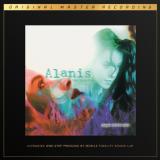
When Alanis Morissette took direct aim at an ex who wronged her on the eviscerating “You Oughta Know” in 1995, everything about the Top 10 song communicated it wasn’t the usual narrative about love gone south. Or the typical wounded singer wallowing in self pity. Morissette, and both the lead single from and her entire American major-label debut — the profoundly personal Jagged Little Pill — represented a sea change. They kickstarted a movement, one whose impact continues to echo throughout the mainstream nearly three decades later.
Ranked the 69th Greatest Album of All Time by Rolling Stone, included on the Rock and Roll Hall of Fame’s list of 200 Definitive Albums, and featured in several books about essential albums, Jagged Little Pill remains more than a blockbuster that has sold more than 17 million copies in the U.S. and 33 million units worldwide. It’s a statement, an attitude, a soundtrack for anyone seeking inspiration, an outlet, or permission to be themselves.
Sourced from the original master tapes, pressed at Fidelity Record Pressing on MoFi SuperVinyl, and strictly limited to 4,000 numbered copies, Mobile Fidelity’s UltraDisc One-Step 180g 45RPM 2LP box set of Jagged Little Pill presents the landmark effort in audiophile-grade sound for the first time. A key part of the record’s appeal and accessibility — Glen Ballard’s smooth production, touches that help Morissette’s exposed-nerve fare seem more accessible and melodic — comes through on this special 30th anniversary edition with an openness, presence, and dynamic explosiveness that make the vocalist’s songs that much more real and visceral.
The singer’s distinctive mezzo-soprano deliveries — the octave-rippling highs, dark-hued lows, dramatic crescendos, belted choruses, wispy reflections, occasional yodels — resonate with full-range ardor and depth. As crucial as anything on the record, Morissette’s confessional words take center stage like never before. Ditto the instrumentation and atmospherics that form the magnetic backgrounds of the songs. Key in on the contributions from Red Hot Chili Peppers Dave Navarro and Flea on “You Oughta Know” to Tom Petty & the Heartbreakers' co-founder Benmont Tench’s organ playing on six tracks.
The deluxe packaging of Mobile Fidelity’s Jagged Little Pill UD1S set underscores the work’s distinguished status. Housed in a slipcase, the LPs come in special foil-stamped jackets with faithful-to-the-original graphics that illuminate the splendor of the recording. Benefitting from an ultra-low noise floor, superior groove definition, and dead-quiet surfaces, this UD1S reissue is for listeners who prize sound quality and desire to engage themselves in everything involved with the album, including the now-iconic cover art that juxtaposes two portraits of the then-21-year-old singer-songwriter and features typewriter font.
That script — which suggests a raw, blood-on-the-floor document created without modern aids like spell check or language correction — hints at the heightened level of unvarnished intimacy, honesty, and catharsis Morissette offers throughout Jagged Little Pill. Named after a phrase uttered on the astute “You Learn,” the album explores the frank emotions, inherent contradictions, and wishful desires people feel everyday but are often too afraid to express. Morissette displays no such fear or shyness.
Akin to a woman reading from a diary, Morissette leaves nothing to the imagination as she skewers hypocrisy during the poignant “Forgiven,” seeks recompense on the vengeful “You Oughta Know,” and spills her guts on the soul-purging “All I Really Want.” For all the anger and bile ascribed to the singer and record, Jagged Little Pill is incredibly healthy and upbeat. Morissette uses the catchy pop-rock frameworks and moody ambience to suss out situations, to learn, to give hope. There’s the clever yearning of “Hand in My Pocket”; wry contrarianism of “Ironic”; kind-heartedness of “Hand over Feet”; the live-and-let-live spirit of “You Learn” – all positive and amiable.
Throughout Jagged Little Pill, the ever-approachable Morissette connects with listeners who recognize themselves in her — and has an intelligent conversation with anyone who wants to participate. It seemed almost everyone did. In addition to the mammoth sales that make the effort the 17th-best-selling album in American history, Jagged Little Pill collected four Grammy Awards, two American Music Awards, three Billboard Music Awards, and eight Juno Awards. In 2018, the record became the basis for a musical that netted 15 Tony nominations on Broadway.
Ironic? Anything but. Jagged Little Pill transcends generations, gender, and trends. As Morissette sings on the opening “All I Really Want,”, the album represents “deliverance” — “a place to find common ground.”
Following Stab Breaks and Crystal Blue Cuts, a chilling new theme emerges this time inspired by the legendary horror icon Chucky, the killer doll with razor-sharp punchlines. This record is a full on tribute to the story and voices of the film’s unforgettable characters. Side A delivers a loaded sound bank packed with eerie samples, while Side B features six skip-proof scratch tracks designed for seamless performance. Also included is a download card giving you digital access to the full record, plus four exclusive bonus beats available for free download.
YES! Originally released in 2000, Mark de Clive-Lowe's Six Degrees captures the early essence of what would later be known as broken beat, club-jazz and future soul; bridging the sounds of 70s jazz-fusion, jungle, hip-hop, house and Afro-Cuban rhythms. With fender rhodes, synths and an MPC2000 at the core of his production, de Clive-Lowe blended live musicianship with beat-driven sensibilities in a way that was ahead of its time.
Originally released in New Zealand via Kog Transmissions, the album found its way onto the global stage when Universal Jazz UK picked it up. Now, 25 years later, Be With is proud to present a special anniversary vinyl reissue, celebrating a landmark album that laid the foundation for an international career spanning continents, collaborations, and countless musical evolutions. Limited to just 400 copies for the world, these are gonna fly.
In 1998, a 23-year-old Mark de Clive-Lowe set off on a year-long journey that would shape his career and musical identity. Fuelled by an insatiable curiosity and a grant from New Zealand supporting emerging artists, he traveled across the globe — digging through record stores in San Francisco, immersing himself in the rhythms of Havana, collaborating in London’s underground studios and experiencing the jazz legacy of New York. Along the way, he crossed paths with pioneers, mentors and kindred spirits who would deeply influence his sound.
Six Degrees is the sonic diary of that transformative year — a musical world tour distilled into one groundbreaking album. It's both a snapshot of a pivotal moment in de Clive-Lowe’s life and a timeless statement of creative exploration.
The jazzy jungle vibes of "Roundtrip" opens proceedings, inspired by de Clive-Lowe's deep love of drum & bass. It kicks off with a rhythm pattern picked up in Havana, combined with Lonnie Liston Smith-style Rhodes textures and a rolling jungle breakbeat. Sublime. Up next, "La Zorra" is a moving tribute to the folkloric 6/8 rhythms he was surrounded by in Cuba. Afro-Cuban music had a huge impact on his sound and this track reflects those deep grooves brilliantly. Hip-hop has also been a major influence since de Clive-Lowe's teenage years and Manuel Bundy’s scratches bring an essential turntable element to "Melodious Funk", giving it that raw boom-bap edge.
Underground favourite "El Día Perfecto" came about by de Clive-Lowe wanting to write something as catchy as Incognito’s "Colibri", combined with his deep love for Lonnie Liston Smith. Effortless as it sounds, it pretty much wrote itself, seemingly. "Cosmic Echoes" is a nod to house music, but on the chiller side. Named after Lonnie Liston Smith’s band, with bouncy bass, a steady 4/4 groove and chopped tabla percussion, the mood this track conjures up is special. The deeply soulful "Day By Day" became the biggest track from the album, partly thanks to DJ Spinna’s remix and Café del Mar featuring it on their compilation. Cherie Mathieson’s vocals shine here. The lyric came to de Clive-Lowe while hanging out at Cause Célèbre in Auckland: “Day by day, side by side, hand in hand, no turning back.”
"Restless" is a jazz-funk jam built on a classic drum break, heavily influenced by Roy Ayers and the Mizell Brothers. Named in homage to Phil Asher’s Restless Soul moniker, his impact on de Clive-Lowe's journey can’t be overstated. Following on, "Mindscape" is a darker, rawer drum & bass track. The chopped-up drum break and moody synths channel everything he loved about the deeper, more atmospheric side of the genre. "Control" continues the jungle influence — this one’s all about the heavy grooves and deep bass, inspired by nights out listening to Jumping Jack Frost and Grooverider in packed basement clubs.
"Por La Mañana" is a musical snapshot of walking the Malecón in Havana in the morning sun. The city had such a profound impact on de Clive-Lowe and this track captures some of that energy and movement. Penultimate gem "Motherland" is a nod to his Japanese heritage. The melody draws from Japanese scales, shifting between moody introspection and uplifting harmony. Built on a chopped live drum break he recorded in Tokyo years earlier. We end with "El Día Perfecto (Reprise)", a stripped-down reprise featuring percussion, vocoder, Rhodes and synths — leaving the listener with a warm, uplifting final moment.
Speaking to Be With, de Clive Lowe explained just how much celebrating the 25-year anniversary of this album means to him: "Since then, I’ve released so much more music, but Six Degrees still resonates — it captures a really special moment in my life. A turning point, a fork in the road that ultimately changed everything. It’s amazing to reflect on where this journey has taken me, and I’m incredibly grateful for it. I still remember the night I finished "El Día Perfecto". I took a minidisc of it to my friend Cian’s DJ set at Galatos in Auckland. He plugged it in, and I watched the dancefloor move to something I’d just created hours earlier — it was a magical moment.
When Six Degrees was first released, the internet was still in its early days. There was no YouTube, no streaming, no instant global access to new sounds. The album was my way of bringing together all the music and places I had experienced over that year, blending them into something uniquely mine. It introduced me to listeners around the world and opened the doors to a career that would take me to more countries, collaborations and experiences than I ever imagined.
25 years later, I’m so grateful for everything this record set in motion. It’s a document of a moment in time, but it still feels alive — and I’m thrilled to share it again in this special anniversary edition."
Mastering for this 25 year vinyl edition was overseen by Be With regular Simon Francis and it was cut by the esteemed Cicely Balston at Abbey Road Studios to be pressed in the Netherlands by Record Industry. The original artwork has been lovingly brought back to life by de Clive-Lowe himself, with updated liner notes written specially for this landmark reissue.
After the explosive Comme à la radio, infused with the free jazz energy of the Art Ensemble of Chicago, Brigitte Fontaine and Areski Belkacem released six albums together or separately between 1972 and 1977. Their music, often stripped down to voice, guitar, and percussion-or performed a cappella-stood in stark contrast to the orchestrated French pop of the time. This minimalist and spontaneous approach highlighted the poetic power of the lyrics and the intimacy of the melodies, earning them recognition in the counterculture and underground scenes. By the end of the 1970s, Fontaine sought to make her work more visible without losing its originality. The Baraka album marked this transitional moment, initially recorded in a home studio without external musicians. Its title (meaning "blessing" in Arabic) hinted at a desire for success. Mixing introspection, absurd humor, and bold stylistic choices, the album was technically ambitious, featuring stereo duets and layered vocals, and lyrically rich, tackling everything from metaphysical themes to playful nonsense. However, the project ultimately veered off course. After moving the recordings to the massive Studio Davout and bringing in producer and guitarist Martial "Mimi" Lorenzini, the album lost its original intimacy. Overproduced arrangements clashed with the simplicity of Fontaine and Belkacem's initial intent, resulting in an album-renamed Les églantines sont peut-être formidables-that the artists later disowned, refusing to allow its commercial release. Recently rediscovered demo tapes, stripped of their bombastic layers, reveal the raw, emotional core of the songs-showcasing the duo's voices with a rare authenticity. These recordings bridge a missing link in their discography, between their experimental lo-fi years and their later, more accessible work. Decades on, Fontaine and Belkacem remain defiant originals, never settling into a formula, always evolving, and continuing to shake the foundations of French chanson.
- A1: Hey, Uh-What You Say Come On
- A2: The Golden Rod
- A3: Keep On Walking
- A4: You & Me My Love
- A5: The Third Eye
- B1: It Ain't Your Sign (It's Your Mind)
- B2: People & The World
- B3: Everybody Loves The Sunshine
- B4: Tongue Power
- B5: Lonesome Cowboy
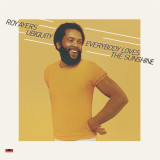
In "Everybody Loves the Sunshine" (1976), Roy Ayers seamlessly blends genres, creating a timeless sound that continues to influence musicians and DJs around the world. He makes the vibraphone the central instrument, a jazz-funk approach that defines his unique style. Over time, the album has remained an essential reference in Roy Ayers' discography and in the history of 70s Black music. Summertime soul classic! 180g vinyl.
In 1976, legendary musician and composer Roy Ayers released one of the most iconic albums of his career: "Everybody Loves the Sunshine." This album not only solidified Ayers as a key figure in the world of jazz-funk but also marked a milestone in soul music and contemporary jazz. It features a sophisticated blend of irresistible grooves, smooth melodies, and a unique sound that has endured over the years, becoming a reference for multiple generations of musicians and listeners.
By the mid-70s, Ayers had already established his reputation with his band, Roy Ayers Ubiquity, and his distinctive use of the vibraphone, which became his personal trademark. However, with this album, Ayers ventured into a smoother, more accessible sound, partly in response to the rise of disco music and the growing interest in more experimental sounds within the music scene. Throughout its ten tracks, Ayers managed to create a sonic atmosphere that evoked both the warmth of summer and the sophistication of jazz from that era, set against a backdrop of modern soul. The production was carried out by Ayers himself, along with his producer and friend, David R. Williams, and features the wonderful sound of Phillip Woo's Fender Rhodes and the powerful energy of the rest of the band, achieving an unmistakable authenticity and freshness. Some of its most well-known songs include the title track, ‘Everybody Loves the Sunshine,’ ‘The Golden Rod,’ and ‘The Third Eye,’ which quickly became classics of jazz-funk and soul. This album is crucial in Roy Ayers' career, as it demonstrates his ability to remain relevant and creative in an ever-changing music industry. Over the years, "Everybody Loves the Sunshine" has become a cult album, frequently featured in DJ sets by artists like Gilles Peterson, Theo Parrish, and Lefto. Summertime soul classic!
The Ottawa composer/performer and head of Black Bough Records plays every instrument on his CST debut: an accessibly avant-garde work of dark/ambient modern chamber music. Mark Molnar has been a linchpin of the Ottawa experimental music scene for over two decades, spanning contemporary classical, electroacoustic, industrial/noise, and improv. As a string player in a wide range of projects, an organizer and curator of innumerable shows, and via his own avantgarde label Black Bough Records, Molnar's unflagging contributions to independent music culture in Canada's capital city have been significant. EXO is his Constellation debut: a remarkable and bracing suite of post-classical composition on which Molnar plays every instrument. Meticulously self-recorded, primarily with strings, harp, and piano, EXO balances thematic melodicism, polytonality, and dissonance across three elegiac pieces of exquisitely expressive dynamism. This is exacting modern chamber music that blends formal and harmonic complexity with a solemn emotive sensibility accessible to a broad audience. Listeners that yearn for some edge and disquietude in a landscape of often all-too-approachable post-classical music should find EXO eminently worth their time and attention. While Molnar is a highly trained string player, and studied music under Aubrey Wolfe, microtonality with James Tenney, and composition with R. Murray Schafer, his trajectory has been entirely and intentionally outside the academy, signalling a socio-artistic commitment to DIY culture, forged from an early passion for the sonic worlds of post-hardcore, post-punk, no-wave, free improv, power electronics, and other independent/underground musics. His classically-informed works have been described as "tense currents of musical modernism invigorated with punk's raw vitality." EXO carries an undercurrent influenced by dark industrial and ambient metal in particular, with microphones purposely placed to pick up the low-end frequencies of the piano body, and of a bass drum positioned as a resonant skin in the acoustic space; an electroacoustic strategy organically meshed to the crisply defined and pristinely recorded pointillisms and polychords of strings, harp, and piano, which feed into this noisefloor of crepuscular sub-bass disquietude and decay. It's a production aesthetic that lends EXO a distinct undertow of tension and feeling, a sort of roiling maximalism where the chamber instrumentation traces arcs and waves of form and flow as if drawn from a dark, impervious ocean below. It also reinforces the profound hermeticism of Molnar's process, as a forbiddingly solitary creative act of immersion and navigation. The album artwork, featuring semiabstract stills of the sea by British photographer Ed Allen, further reifies this metaphor. The album's opening piece 'Sub Luna' (and its shortest at 8 minutes) showcases Molnar's adeptness at naturalistic and flowing complexity: tight cascades of climbing and descending chordal clusters hold their polytonal densities for various durations, yielding to more clarified harmonic suspensions and motifs, as melodic themes led primarily by violins in the higher registers provide a fractured lyricism. Molnar says: "the opening and closing figures of this piece act as opposing shorelines; the shorelines provide a reliable expression of range and key signature, and the tides come in and swallow them up, the motion of a body that addresses the relationship between states of lucidity and melodic figures." On 'Terre Sacer' everything happens in soupier waters, as a slow and doleful theme, anchored by grinding bass notes, circles in a gyre of dark resonances, until glistening strings gradually ascend to enrobe a plaintive and gently harrowing single-voiced ostinato over the composition's final third. Molnar's drone, ambient, minimalist, and goth-industrial influences are on display here. Side Two of EXO features the 18-minute multi-movement 'pallida Mors' (pale death): a waterfall of heterophony introduces dense chordal movements where strings are recorded and mixed to evoke pipe organ, in the album's most overtly dissonant and (anti)liturgical sequence. This gives way to ever more open and fragile spaces, before a resurgence of dark clusters and noise treatments introduces a final repeating piano coda, shrouded in devastated bass resonance, settling into what Molnar calls "a meditative hollow." Constellation is honoured to release this work by Mark Molnar, a longtime fellow-traveler whose selfless and boundlessly generous activities as an independent arts enabler sometimes obscure his own accomplished and uncompromising artistry. We trust EXO can help shed some much deserved light on this fine composer. Thanks for listening.
- Reflexion
- One And All
- Undercurrents
- A Game Of Chess, A Game Of Chance
- The Summer Girls
- Her Key Is Minor
- Inflexion
- Into The Woods
Drag City and Yoga Records are delighted to return to the music of Matthew Young. Following Recurring Dreams (1981, reissued 2014) and Traveler"s Advisory (1986, reissued 2010), Undercurrents (2025) collects eight oddly dissimilar pieces that somehow fit together perfectly. Ranging from heady synthesizer experiments to earthy dulcimer meditations, Undercurrents is unique enough to be called outsider while still occupying a musical world accessible to fans of many genres. Composed and recorded over the span of several decades, Undercurrents displays the wide range of Young"s various sonic pallets: similar to Recurring Dreams, the electronic landscapes meander coherently, and much like Traveler"s Advisory, the album skews from the nearly algorithmic computer music of side one to the moving pastoral folk of the second.
- Proceed To Memory
- Glide
- Drawstring
- Sherman
- His Phase
- Diminished
- True North
- A Request
- Denslow, You Idiot!
- Sediment
Colored vinyl repress of last Pinback album, originally released in 2012. On one hand, their fifth album, Information Retrieved, is the logical and accessible realization of a sound Pinback have been developing and refining for over a decade. However, that consistency that we've taken for granted is what makes Information Retrieved such a euphoric surprise; their finest and most fully realized album, a dozen years deep into a career that includes bona fide modern classics like "Good To Sea" and Summer In Abaddon. Simply put, this is better than we ever could have expected. They could have coasted on automatic pilot to another lauded album that likely would have made it onto plenty of year-end lists, but instead they shot the moon, and the result is a major triumph. The touchstones are still there: Zach Smith's stunningly unique bass guitar acrobatics driving both rhythm and melody in lock-step unison; the incredible immediacy of Rob Crow's voice that could make a phone book sound compelling; and the musical and lyrical interplay between the two of them that made Pinback so special in the first place. The difference now is their exquisite control over dynamics and a greater emotional resonance throughout. It's the most complete and soulful Pinback album by a fair distance, the finest moment in the career of a band whose unfettered brilliance we've come to count on, but will never again take for granted. For Fan of The xx, Deerhunter, Built To Spill, Broken Social Scene
- Bleed
- Seven Steps To Hell
- The Four Seasons - Summer
- Alien Hip Hop
- Andromeda
- Ode To Joy (Vocal)
- Pick Up The Pieces
- The Devil's Staircase
- Ode To Joy (Instrumental)
Übercode Ouvre is the eagerly awaited album from Panzerballett, a unique jazz-metal quintet that fuses intricate metal riffs with jazz improvisation, humor, and high-level musicianship. The album pushes genre boundaries, featuring contributions from legendary drummers Virgil Donati, Marco Minnemann, Anika Nilles, Morgan Ågren, and others. It offers a thrilling listening experience for jazz fusion and progressive metal enthusiasts alike. Included are covers like "Bleed" from Meshuggah, "Alien Hip Hop" from Virgil Donati; re-imaginations of classical pieces like Beethoven's "Ode to Joy" and Vivaldi's "Summer"; as well as originals like "Seven Steps To Hell". They all showcase the band's blend of complex rhythms, virtuosic drumming, and unconventional arrangements. The album's diversity makes it stand out in the progressive metal and jazz scenes. Panzerballett, led by guitarist Jan Zehrfeld, has earned a cult following for their "Headbanging with Brain" approach to music, delivering not only technically advanced compositions but also humorous, organic reconstructions of well-known pieces. Their live performances are legendary for their energy and complexity, and Übercode Ouvre is poised to continue that legacy with tracks that balance intense technicality with an accessible groove. Übercode Ouvre is a musical journey and a perfect workout for developing brain-muscle connections with its meticulously constructed beats. If you want to experience one of the most innovative bands in progressive jazz and metal, having this album is a chance to own a piece of modern music history that challenges the boundaries of what metal can be and how jazz can speak to the heavy music world. Übercode Ouvre is the highly anticipated jazz-metal album by Panzerballett. A world-class line-up pushes genre boundaries more than ever. FFO The Aristocrats, Virgil Donati, Marco Minnemann, progressive metal etc, features legendary drummers Virgil Donati & Marco Minnemann
- A1: What Are The Odds
- A2: Your Wish Is Granted
- A3: The Persona
- A4: My Name On The Marquee
- A5: Déjà Vu
- B1: Stepping Stones
- B2: Every Dog Has It’s Day
- B3: Wind Phone
Singer-songwriter Dan Arsenault’s avant-garde music infuses classic progressive rock and modern hard rock vibes - crafting himself a unique style of accessible songs that truly inspires the listeners. Born and raised in Atlantic Canada - home of many diverse artists, Dan’s taste in music genre greatly varied in his adult life, you can surely spot many of his style influences in his songs, ranging from early progressive rock to modern rock. His lyrical metaphor style along his punched-in odd signature moments, brings a strange complexity to the songs always leaving you discovering something new in each playbacks.
Dan’s first official released music arrived in 2021, with his first full length instrumental album ‘Eminence’ which was nominated for recording of the year at the MNB Awards 2021 and was highly accepted by the progressive music
community and qualified as a hidden jewel. Dan’s new concept album, ‘Signs point to Yes’, will truly showcase his passionate composing and producing skills, through the story journey of a kid on his quest for musical stardom and
happiness, featuring elite artists like Joe Calderone (Arch Echo), Jemma Heigis and Danny Bourgeois.
- A1: Décidément
- A2: Arrête De Faire Comme Si
- A3: Les Voisins Du Dessous
- A4: ?
- A5: Céline
- A6: Mouillé
- A7: Jour De Fête
- B1: Articule!
- B2: À Quelques Grammes Près
- B3: Décrocher
- B4: Monique
- B5: Cordialement
- B6: C'est Quand Même Bizarre
After his critically acclaimed EP LOOP (national press coverage, playlist support, a sold-out tour with Odezenne, opening for Zaho de Sagazan and Pomme, winner of the 2024 iNOUïS of Printemps de Bourges), Jean unveils an ambitious and cohesive debut album, conceived as a complete work of art. Created without guest features or compromise, this 12-track record delves deep into introspective songwriting, raw yet poetic, at the crossroads of rap, melancholic pop, and modern French chanson. Jean isn’t trying to please, he exposes himself with no filter.
The album stands out for its strong narrative and visual identity, where each track plays like a film sequence, a resurfacing memory. It explores universal themes: love, solitude, escape, addiction, aging, through a deeply personal and always lucid lens. The imagery reflects this universe: the album cover, shot in a movie theater, introduces an ambiguous character, somewhere between absurdity and allegory, perhaps a manifestation of the artist’s inner demon. A disturbing yet familiar presence, intentionally open to interpretation, like a key without a lock.
Musically, the album spans multiple aesthetics without losing its coherence: each track asserts a distinct tone and balance. Jean positions himself within a new, demanding francophone scene, free from cynicism or affectation. He delivers a unique, sincere project, both accessible and profound, that invites listeners to experience it in one sitting, from start to finish.
"Sebastian Mullaert has always favoured the long arc: of tracks, of creative cycles, of artistic trust. His next chapter unfolds in the form of a new vinyl only label, born in close collaboration with Ulf Eriksson - his longtime friend, ally and the steady pulse behind Kontra Musik, a label that's been both home and launchpad for many of Mullaert's most vital releases. K-Files is built on two foundations: singularity and multiplicity. Every release will present a single track refracted through three or four different versions - each one approaching the core idea from a distinct creative angle. These are tools not just for DJs, but for listeners who hear dance music as more than just rhythm - as mood, as exploration, as transformation. The first release, K-FILES 01, sets the tone: deep, dubby, and spacious, it invites patience and immersion. But like all good rituals, the process will shift. Future releases are already poised to explore other territories: sharper energies, stranger grooves, unexpected colours. In a world increasingly defined by instant access and digital saturation, K-Files stands intentionally apart - a slower offering. A return to physicality, to process, to the tactile rituals of listening, selecting, and playing music with care. K-Files is a sublabel for those who play records not just to move bodies, but to open space. A platform for sonic evolution, variation, and perspective. A place where dance music is not pinned down - but opened up. Each record will be released exclusively on vinyl."