A split release on Nation's sublabel, Kode. Two exclusive tracks from Transformation & Beau Wanzer..
Transformation:
This 2nd document of their time in the makeshift studio for another 15 minute psychedelic slo-trip continuing steps in creativity, gaining access to various pieces of musical equipment, hitting the garage, practicing and recording in hopes of making it, entitled "Sketch 4"
Beau Wanzer:
Beau Wanzer returns to Nation on a split release with Transformation. Over the past year Wanzer's output has been fueled by deformed synths, grim vocals, and hard hitting drums more suited for dungeon dance floors than heady home listenings. For his next release he offers an icy subdued drum machine workout. 'Oklahoma 3' was recorded in the winter of 2009 while visiting his parent's house over the holidays. A combination of roland drum machines, sampled jazz tones, and ambient atmospheres the track sets a tone for a bleak winter in the countryside.
quête:the access
It's A Funny Old World, And Yet Again, The Black Dog Have Provided The Soundtrack. Our Fast-approaching Dystopia Has Been Envisioned And Documented By The Band For Decades. Now, The Black Dog's Two New Albums, Post -truth And Black Daisy Wheel, Translate Their Growing Horror Into Some Of Their Most Accessible And Impactful Music, Translating Our Manufactured Reality Into High Energy Dancefloor Constructions On Post -truth, And Reflective Ambient Excursions On Black Daisy Wheel. Long Familiar With The Tropes And Pitfalls Of Esoteric Undergrounds, In Both The Pre- And Post Internet Eras, The Black Dog Have Ventured Deep Into Contemporary Conspiratorial Cultures With A Trenchantly Critical Eye. In The 80s, Conspiracy Theories Were A Tonic For A Sceptical Mind, A Stimulant To Agile Thinking. Today, They Have Become The Stock In Trade Of Mainstream Political Influence. The Scene Has Morphed Into A Rabbit Hole Where Nothing Is 'really' Real, Everything Is A Hoax, And Everyone Is Out To Get You. The Mindset Is Beyond Paranoid, The Discourse So Far Post-fact That Only Opinion And Assumed Identity Matter. Arguing Against Proven Science Is A Part Of The Entry Criteria, And Wilful Pedantry Its Standard Currency. The Impact On Mental Health Is Corrosive: Fear, Uncertainty And Doubt Multiply And Replicate Until The Most Ridiculous Theories Are Invented To Explain The Most Basic Things: Tarmac, Banana Skins, Duvets. Auto-suggestion Is Rife, Where Willing Victims Drink Bleach (mms) At The Behest Of Youtube Videos, Flat-earthers Are Taken Seriously, And The Manufactured Fearful Believe They Are Being Gang-stalked For Finding Monsters On Pixelated Screens. The Distinction Between The Real World And The World Of An Auto-hoaxer Is So Blurred That Reality Melts Away; You're Only Ever One Personal Detail Away From Being Doxxed, At Which Point Reality Bites Back, Hard. You Couldn't Make It Up, Even Though That Is Exactly What The Conspiratorial Fringe (now One Sharp Corner From The Mainstream) Always Do. The Fact That There Are Real People Involved In This Scene Creates A Real Sense Of Pathos And Anger Which Is Deeply Embedded In The Music On These Two Albums. As Soon As You Start Engaging With People In The So-called 'truth Movement', One Minute It's Painful, But The Next Can Be Genuinely Funny; These Are People Who Are Both On Edge And Upon The Edge Of A Larger Social And Political Reality That, For Worse And For (even) Worse, Defines Our Times. Hence These Two Very Different Albums. Black Daisy Wheel Is Reflective, Often Intense, Frequently Compassionate; While Post -truth Was Written While The Black Dog Was Fully Engaged With People Whose Paranoia Was In Full Swing. Welcome To Our Disinformation.
Limited To 500 Copies - 180g
It's A Funny Old World, And Yet Again, The Black Dog Have Provided The Soundtrack. Our Fast-approaching Dystopia Has Been Envisioned And Documented By The Band For Decades. Now, The Black Dog's Two New Albums, Post -truth And Black Daisy Wheel, Translate Their Growing Horror Into Some Of Their Most Accessible And Impactful Music, Translating Our Manufactured Reality Into High Energy Dancefloor Constructions On Post -truth, And Reflective Ambient Excursions On Black Daisy Wheel.
Long Familiar With The Tropes And Pitfalls Of Esoteric Undergrounds, In Both The Pre- And Post Internet Eras, The Black Dog Have Ventured Deep Into Contemporary Conspiratorial Cultures With A Trenchantly Critical Eye. In The 80s, Conspiracy Theories Were A Tonic For A Sceptical Mind, A Stimulant To Agile Thinking. Today, They Have Become The Stock In Trade Of Mainstream Political Influence. The Scene Has Morphed Into A Rabbit Hole Where Nothing Is 'really' Real, Everything Is A Hoax, And Everyone Is Out To Get You. The Mindset Is Beyond Paranoid, The Discourse So Far Post-fact That Only Opinion And Assumed Identity Matter. Arguing Against Proven Science Is A Part Of The Entry Criteria, And Wilful Pedantry Its Standard Currency. The Impact On Mental Health Is Corrosive: Fear, Uncertainty And Doubt Multiply And Replicate Until The Most Ridiculous Theories Are Invented To Explain The Most Basic Things: Tarmac, Banana Skins, Duvets. Auto-suggestion Is Rife, Where Willing Victims Drink Bleach (mms) At The Behest Of Youtube Videos, Flat-earthers Are Taken Seriously, And The Manufactured Fearful Believe They Are Being Gang-stalked For Finding Monsters On Pixelated Screens. The Distinction Between The Real World And The World Of An Auto-hoaxer Is So Blurred That Reality Melts Away; You're Only Ever One Personal Detail Away From Being Doxxed, At Which Point Reality Bites Back, Hard.
You Couldn't Make It Up, Even Though That Is Exactly What The Conspiratorial Fringe (now One Sharp Corner From The Mainstream) Always Do. The Fact That There Are Real People Involved In This Scene Creates A Real Sense Of Pathos And Anger Which Is Deeply Embedded In The Music On These Two Albums. As Soon As You Start Engaging With People In The So-called 'truth Movement', One Minute It's Painful, But The Next Can Be Genuinely Funny; These Are People Who Are Both On Edge And Upon The Edge Of A Larger Social And Political Reality That, For Worse And For (even) Worse, Defines Our Times. Hence These Two Very Different Albums. Black Daisy Wheel Is Reflective, Often Intense, Frequently Compassionate; While Post -truth Was Written While The Black Dog Was Fully Engaged With People Whose Paranoia Was In Full Swing.
Welcome To Our Disinformation.
Limited To 500 Copies - 180g
Audio-visual artists Soundwalk Collective were granted exclusive access to the personal archive of the groundbreaking filmmaker and present their ambitious New Album and Remix EP: What We Leave Behind released on 18th & 25th May 2018.
The NYC and Berlin based group were invited to aurally explore the archive of the seminal French director Jean-Luc Godard and release their interpretations in an innovative new album What We Leave Behind. Drawing on Godard's personal collection of shot film, reel- to-reels and historical ephemera, the recordings reveal the moments before and after the camera rolls, from stage directions and on-set asides to rehearsals, false stars and outtakes.
'There are boxes filled with sounds, words, chaos, and also silence. For Godard sound is a musical composition and when I began listening to the tapes and heard his voice between takes, it was like little bits of life...each sound has its own value. It has always been part of our working practice to venture into untapped sonic territories, discover the poetics behind them, and explore how we (as humans) relate to it, it is part of a larger discourse.' - Stephan Crasneancki, Soundwalk Collective
Revealing much insight to the director's process and personality, the 6-track album will be followed by a remix EP, featuring unique reworks from Ricardo Villalobos, Jan Jelinek and Petre Inspirescu.
What We Leave Behind, and the subsequent remix EP, arrive 50 years to the day that the the Cannes Film Festival, 1968, was closed after Jean-Luc Godard, Francois Truffaut and Claude Lelouche, publicly announced their closing of the festival in solidarity with workers and students protesting across the country.
The LP features a conversation between Stephan Crasneanscki, of Soundwalk Collective, and Franc¸ois Musy, Jean-Luc Godard's sound engineer, printed on a translucent paper insert. The LP and Remix EP both contain imagery taken by Stephan Crasneanscki of the archives, which he has also filmed to create a series of mesmeric short music videos of original and remix tracks.
An international genre-bending group of artist-musicians with studios in New York City and Berlin, the three members of Soundwalk Collective (Stephan Crasneanscki, Simone Merli, and Kamran Sadeghi) formed in Manhattan to produce concept albums, sound installations, and live performances, and have worked with a diverse range of collaborators, from Nan Goldin and Patti Smith to Berghain and Zaha Hadid.
Repress
Machines redefined and shaped the way we make music and gave access to new sounds. Enabling the availability of music instruments to a wider spectrum of artists gave birth to many genres and sound aesthetics. The sound of Roland machines from the 80's have had a huge influence on underground music and is outstandingly beautiful. Therefore this very first Talking Machines v.a. is dedicated to the synthesizer Roland SH-101.
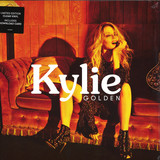
Limited Edition Clear Vinyl
Includes 12' Vinyl and Deluxe CD album, 30 page hard back book
Now that I've been to Nashville,' Kylie Minogue says with audible affection, I understand. It's like some sort of musical ley-line...'
Golden, Kylie's fourteenth studio album, is the result of an intensive working trip to the home of Country music, a city whose influence lingered on long after the pop legend and her team returned to London to finish the record: We definitely brought a bit of Nashville back with us,' she states. The album is a vibrant hybrid, blending Kylie's familiar pop-dance sound with an unmistakeable Tennessee twang. It was Jamie Nelson, Kylie's long-serving A&R man, who first came up with the concept of incorporating a Country element' into Kylie's tried-and-trusted style. That idea sat there for a little while, with Minogue and her team initially unsure about how to bring it to life. Then, when Grammy-winning songwriter Amy Wadge's publisher suggested Kylie should come over to collaborate in Nashville, a city Kylie had previously never visited, something clicked. You know when you're so excited about something,' she recalls, that you repeat it an octave higher and double the decibels I was like that. 'Nashville! Yes! Of course I would!'. I hoped it would help the album to reveal itself. I thought 'If I don't get it in Nashville, I'm not going to get it anywhere.''
Kylie's Nashville trip involved working alongside two key writers, both with homes in the city. One was British-born songwriter Steve McEwan (whose credits include huge Country hits for Keith Urban, Kenny Chesney and Carrie Underwood), and the other was the aforementioned Amy Wadge, another Brit (best known for her mega-selling work with Ed Sheeran). It was then a truly international project: Golden was mainly created with African-German producer Sky Adams and a list of contributors including Jesse Frasure, Eg White, Jon Green, Biff Stannard, Samuel Dixon, Danny Shah and Lindsay Rimes, and there's a duet with English singer Jack Savoretti.
However, the album's agenda-setting lead single Dancing was, significantly, first demoed with Nathan Chapman, the man who guided Taylor Swift's transition from Country starlet to Pop megastar. If anyone knows how to mix those two genres, Chapman does. Nathan was the only actual Nashvillean I worked with. He's got a huge studio in his house, which is probably due to his success with Taylor... there's plenty of platinum discs of her, and others on his walls.' There's something of the spirit of Peggy Lee's Is That All There Is, of Dylan Thomas' Do Not Go Gentle Into That Good Night, even of Liza Minnelli's Cabaret about Dancing, a song which not only opens the album but sets out its stall, providing a microcosm of what is to come. You've got the lyrical edge, that Country feel, mixed with some sampling of the voice and electronic elements, so it does what it says on the label. And I love that it's called 'Dancing', it's immediately accessible and seemingly so obvious, but there's depth within the song.'
The experience of simply being in Nashville was an overwhelming one, before Kylie had even arrived. Once I knew I was going to Nashville, people talked about the place with such enthusiasm. They said without doubt I would love it and, I would come back with songs. They were sending lists of restaurants, coffee shops and bars. It really was a beautiful and genuine response and it felt like I was about to have a life changing experience and in a way, I did.' The reality came as something of a surprise, when she found a far more modern metropolis than the vintage one she'd envisaged. I thought it would be like New Orleans: little houses and bars, with music spilling out onto the street. It reminded me more of Melbourne: apartment blocks going up everywhere! The main strip, Broadway, where the honky tonk bars are, that's where the street was filled with music and it was just amazing.' Mainly, Minogue remembers the heat and humidity. It was 100 degrees. It was like it was raining with no rain.' She also relished the chance to wander around unrecognised, visit a few venerable music bars and soak in the atmosphere. I didn't get to the Grand Ole Opry or the music museums but I managed to go to a couple of the institutions there like The Bluebird Cafe and The Listening Room, and just by being there, through some kind of osmosis, you get this rejuvenated respect for The Song, and the writing of The Song. There's no hoo-hah around it. There's a singer-songwriter there, talking about the song and singing the song, to an audience who are there to listen. Although, I have to confess I was guilty of starting to clap too soon during a long pause at the end of one of the songs. The guy made a bit of a joke out of it and got a laugh from it, but I thought 'Of all people in the audience, no...''
It's probably no coincidence, therefore, that every track on Golden is a Kylie co-write, making it arguably her most personal album to date. The end of 2016 was not a good time for me,' she says, referring to well-documented personal upheavals, so when I started working on the album in 2017, it was, in many ways, a great escape. Making this album was a kind of saviour. I'd been through some turmoil and was quite fragile when I started work on it, but being able to express myself in the studio made quick work of regaining my sense of self. Writing about various aspects of my life, the highs and lows, with a real sense of knowing and of truth. And irony. And joy!'
The songwriting process allowed Kylie to get a few things out of her system. Initially, she admits, it was cathartic, but it also wasn't very good. I think I was writing too literally. But I reached a point where I was writing about the bigger-picture, and that was a breakthrough. It made way for songs like Stop Me From Falling and One Last Kiss. It also meant I had enough distance to write an autobiographical song, like A Lifetime To Repair, with a certain amount of humour. The countdown in that song: 'Six-five-four-three, too many times...'. I don't know if that will be a single, but I can just imagine a girl with framed pictures of past boyfriends, and kind of going 'Oh god, when am I going to get this right'' When she listens back to Golden, Kylie can vividly hear the Nashville in it. It is, she'll agree, probably the first time that a Kylie album has sounded like the place it was made. You wouldn't normally relate my songs to the cities. Can't Get You Out Of My Head sounds more like Outer Space than London. But Shelby '68, for example, was written in London but it was done with Nashville in mind. It's about my Dad's car, and my brother recorded Dad driving it! I don't think I'd have written a number of the songs, including Shelby '68 and Radio On without having had that Nashville experience.'
The latter, she says, is about music being the one to save you.' Throwing herself into the making of the record, she says, crystallised that idea. If there's one love that will always be there for you, it's music. Well, it is for me, anyway.' That song, in particular, carries nostalgic echoes of the golden age of Country, as heard through Medium Wave transistors and tinny home stereos in the distant past. Like any child of the Seventies, Kylie had a basic grounding in Country music, mainly absorbed from older family members. My Step-Grandfather was born in Kentucky and though he lived most of his adult life in Australia, he never stopped listening to his beloved Country artists.' If there's any classic Country singer whose imprint can be heard on Golden, it's Dolly Parton.
Kylie saw Dolly live for the first time at the end of 2016, at the Hollywood Bowl. It was like seeing the light,' she beams. It was incredible. Everyone, whether they know it or not, is a Dolly Parton fan. When I was in Nashville, I did pick up a T-shirt that said 'What Would Dolly Do' Maybe that should be my mantra.' And, whether consciously or otherwise, there's a timbre and trill to Kylie's vocals on Radio On that is distinctly Parton-esque. My delivery is quite different on this album,' she says. A lot of things are 'sung' less. The first time I did that was with Where The Wild Roses Grow. On the day I met Nick Cave, when I recorded my vocals, he said 'Just sing it less. Talk it through, tell the story.' This album wasn't quite to that extreme, but a lot of the songs were done in fewer takes, to just capture the moment and keep imperfections that add to the song. I remember on my last album, a lot of producers were trying to take out literally every vibrato they heard. And that's not natural to my voice. I mean, I can make myself sound like a robot, but it's nice to sound like a human!' Working within the Country genre also gave Kylie permission to write in the Nashville vernacular. Because we were going there, I wasn't afraid to have lines like 'When he's fallen off the wagon we'd still dance to our favourite slow song', 'Ten sheets to the wind, I was all confused', 'I'll take the ride if it's your rodeo'. The challenge of bringing a Country element to the album made the process feel very fresh to me, kind of like starting over. I started to look at writing a different way, singing a different way.'
If ever Kylie lost confidence in the Country-Pop concept, and found herself pondering This is great, but back in the real world - my real world - how will this work', Jamie Nelson was there to badger her into sticking to the path. We found a way to make it a hybrid with what we'll call my 'usual' sound. It had to stay 'pop' enough to stay authentic to me, but country enough to be a new sound for this album. The closer we zoomed in, and the more we honed it, I knew Jamie was right. We sacrificed good songs that weren't right for this album, because we wanted it to be as cohesive as possible. The songs that were hitting the mark were these ones, so we decided to be strong, and that's how we wrapped up the album. What he said, that stuck with me, was that 'I'd hate to get to the end of this and really wish we'd gone for it.'' Having worked with Kylie for so long, Nelson was able to put this latest shift of direction into perspective. He said 'You've traditionally done it throughout your career. You had your PWL time, then you did a complete turn when you went to deConstruction, then another complete turn with Spinning Around, and R&B dance-pop, and then another turn with Can't Get You Out Of My Head, icy synth-pop, and this is another one.' He was right. It felt like the right time to have a change sonically. New label, new stories to tell, and a new decade almost upon me.'
Kylie Minogue will, it's scarcely believable, turn 50 this year. This looming milestone is partly behind the album's title, and title track. I had this line that I wanted to use: 'We're not young, we're not old, we're golden' because I'm asked so often about being my age in this industry. This year, I'll be 50. And I get it, I get the interest, but I don't know how to answer it. And that line, for my personal satisfaction, says it as succinctly as possible. We can't be anyone else, we can't be younger or older than we are, we can only be ourselves. We're golden. And the album title, Golden, reflects all of this. I liked the idea of everyone being golden, shining in their own way. The sun shines in daylight, the moon shines in darkness. Wherever we are in life, we are still golden.' One of the album's shiniest moments is Raining Glitter, an exuberant banger which ventures closest to Kylie's traditional dance-pop comfort zone. Eg White, who is one of the producers and writers and a great character, was talking about disco one day. I said 'I love disco, but you know the brief.' We needed to be going down the Country lane, so to speak. But we managed to bring them both together. When I wrote it, I was thinking about the Jacksons video for Can You Feel It where they're sprinkling glitter over everyone. And I think there's a Donna Summer record that's got that feel to it. I think that's my job: I basically leave a trail of glitter after every show I do anyway.'
Kylie is looking forward to the challenge of incorporating the Golden material into her live shows. Mixing these songs in with my existing catalogue is going to be fun. And it could be fun to do some of those songs with just a guitar. It'll make my acoustic set interesting...'Her incredibly loyal fans - to whom one Golden song, Sincerely Yours, is intended as a love letter' - will, she believes, have no problem with her latest stylistic shift. My audience have been with me on the journey, so I shouldn't be afraid that they won't come with me on this part. I've had fun with it, and I'm sure they will too.'
The time spent making Golden has, Kylie says, been a time of creative and personal renewal. I've met some amazing people, truly inspiring writers and musicians. My passion for music has never gone away, but it's got bigger and stronger.' And if there's an overriding theme to the record, it is one of acceptance. We're all human and it's OK to make mistakes, get it wrong, to want to run, to want to belong, to love, to dream. To be ourselves.'
I was able to both lose and find myself whilst making this album.'
Originally released on Prestige in 1957, this is the third LP from NYC street performer and avant garde/minimalist composer Moondog. Perhaps the least accessible of his early releases, this album is made up of percussive jams, usually on instruments of his own creation, street sounds, poetry, and Far East melodies, despite opening with a swinging number that is, oddly, the most bizarre thing on the album. Another classic from Moondog reissued with its original Andy Warhol artwork. Limited edition of 1,000 on purple and green starburst vinyl.
Darkmatter Inc. is an overlay network that can only be accessed with a specific mindset, configuration, or authorization, often using non-standard communications protocols and ports.
Hoary is one of the top secret places deliberately hidden by the big G coming to the surface as readable information.
* THE No.1 Wigan Casino and Northern Soul anthem
* THE most valuable record in the world
* THE first ever legal reissue, outside of Motown
* THE last record ever played at Wigan Casino
EXACTLY 40 years ago the original copy of Do I Love You' arrived on these shores and, for the first time the true identity of its author and performer was revealed.
The story of the world's most valuable record has been told many times and perhaps most authoritatively by Tim Brown in his book 'Wigan Casino Years'. In brief, here are the salient facts...
The tale begins in 1976 when Northern Soul pioneer Simon Soussan gained access to the Motown archive in Los Angeles where he discovered, and purloined, the original, promotional 45. At the time Soussan was the main source for rare Northern Soul that debuted at the famed Wigan Casino, and in due course he sent an acetate of the track to the club covered up as by Eddie Foster. It was an instant hit with the Casino dancers and soon attained exalted status.
By 1978 Soussan had turned his back on Northern Soul and sent his entire collection to the UK to be sold piecemeal. The original label of the disc was now revealed as the Motown subsidiary 'Soul' and the artist was the Motown writer Frank Wilson. The 45 was sold to record collector Jonathon Woodliffe for the handsome sum of £250. After the near collapse of Northern Soul in 1981 Woodliffe's attentions turned to Jazz/Funk and he traded the disc to former Wigan DJ Kev Roberts for £500's worth of disco twelves!
For 9 long years the legendary record languished in a frame on the wall of Roberts' Staffordshire home until a pending divorce prompted the sale to collector Tim Brown for, at the time, the unheard of sum of £5,000. It remains the property of Tim Brown to this day, the pinnacle of a lifetime of record collecting.
In 1997 Detroit producer, Frank Murphy, sold his entire record collection to Anglo-American, a company owned by Martin Koppel and the aforementioned Tim Brown. Lo and behold, a second copy of Do I Love You' was found and subsequently sold to Scottish DJ Kenny Burrell for an inflated sum of £15,000. In 2008, Burrell's copy was auctioned for a staggering figure in excess of £25,000 making history and further cementing the iconic status of the world's most collectable 45.
Today Do I Love You' has transceneded the strange world of Northen Soul and has become enshrined in the wider public's concsiousness due to mainstream radio play, TV advertising (most recently the 'Happy Egg Co.') and in 2017 an appearance on the country's most popular TV show Strictly Come Dancing.
Now you too can own a copy of Do I Love You'...
Dekmantel regular Matrixxman returns with the third, and final instalment in the Sector series, Part III: Polyphony. In this triptych, the producer from San Fransisco sets out to highlight the key components behind the sounds and style of techno, exploring the range within the confines of a particular limitation. Following Parts I and II, which looked at Rhythm, and Acid, Charles McCloud Duff charters the realm of Polyphony with four, meticulously produced techno tracks, expanding his repertoire of cult, dancefloor music.Polyphony refers to the simultaneous combining of many notes in a musical sequence. In electronic music, this specifically refers to the role of the synthesiser - such as the Minimoog, ARP Odyssey, which can produce different pitches simultaneously. Polyphony has been an integral characteristic of the genre's sound for over a quarter of a century, and can be heard in many key records, living a the sonic forefront of these four tracks. 'Sector Series: III Polyphony' provides an exercise in melody and polyphony. Throughout the EP, swaggering rhythms are inter-washed with a sea of multi-melodious, reverberated notation. 'Initiation' resonates with the grandiosity, and harsh claustrophobia of early Underground Resistance. 'Access Granted', drives hard with pulsing effects, with a dystopic, rhythmic cacophony of euphony. 'Desert Planet' plays around with a differing tempo, imagining a more fantastical vision of music, echoing back to earlier Plastikman productions, using a vast sonic spectrum to conjure up a colour palette of alien imagery. 'Horizon' rounds things off; a track that builds on minimalism with a progressive composition, allowing the polyphonics to drive the track, harnessing the adept production qualities that Matrixxman has come to be recognised for.
The current resurgence of jazz in all its' forms has certainly been impossible to ignore in recent times - from the chart-bound, mainstream crooning of Gregory Porter, to the left field 'jazz not jazz' soundscapes of Kamasi Washington, Moses Boyd, Nubya Garcia and Snarky Puppy proves this is a worldwide phenomenon. One artist who has been been ploughing this furrow in the southern hemisphere for longer than most is Lance Ferguson. As the driving force behind The Bamboos, Cookin' On 3 Burners, Lanu, and the Black Feeling series, these are the varied and versatile projects on which he has built an enviable reputation.
Menagerie 'They Shall Inherit' saw the light of day in 2012 (Tru Thoughts Records) and established the fact that jazz of the contemporary type could reach back to it's essential roots and present itself, refreshed and vital for a contemporary audience.
Lance himself explains: "The Arrow Of Time' draws its inspiration conceptually from the themes of space exploration, human evolution and the future of humankind. It's pretty big stuff to be underpinning an album of modal Jazz tunes - but the main message is one of hope, and I hope that comes across in the music"
Late 2017 saw the 2 track album sampler 'Evolution/Arrow Of Time' create a genuine buzz of anticipation, being playlisted on Jazz FM, and also supported by Jamie Cullum (BBC Radio 2) and both Don Letts & Gilles Peterson on their BBC 6 Music shows - having as it does the spirit of deep jazz, but combining an accessible sound that reached way beyond the usual jazz hungry audience - due in one part to Evolution's immensely catchy hooks, with the voice of Fallon Williams focusing the listeners attention on the philosophical themes Lance highlighted above. Now the album, laid out in its' entirety can be experienced, attempting to encapsulate the music with the written word feels like a somewhat futile exercise, so it is best to consider Lance Fergusons' final thoughts about its inspiration, influences and ongoing appeal.
"The sound of record labels like Strata East, Tribe and Black Jazz has been a massive influence on Menagerie. To me that sound is timeless, exciting and just as vibrant as a musical format in 2018 - and the proof is that we're hearing more and more young musicians embracing it"
A first-ever collection of the highly sought after and largely previously unheard recordings of the one of Turkish pop and rocks best kept secrets - featuring the two rare has hen's teeth 1 Numara 7' singles (which fetch in excessive of £200 on certain internet auction sites) - including a previously unreleased extended version of Evren The missing component in the history of Turkish pop and one of the earliest exponents of Turkish electronic music alongside Ilhan Mimaroglu and Bülent Arel, Gökçen Kaynatan electrified the rock and roll scene of the late 50s/early 60s - sending teenagers wild with his custom built guitars and back lines - helping charge the climate for the birth of Anatolian rock. Then, from the sanctuary of his private studio, he revolutionised the industry with his pioneering use of electronics whilst hanging the sonic wallpaper in the living rooms of an entire generation of telly addicts as in house composer of choice for Turkey's first national television channel TRT 1. Despite having a modest discography of only four 7' singles to his name his influence is a major current that flows through over 50 years of Turkish pop culture. Compiled with unparalleled access to his private studio vault, Finders Keepers proudly presents the first-ever collection of Gökçen Kaynatan's pioneering early electronic works. Featuring a selection of his experimental pop and rock recordings dating from as early as the 1968 it features both of the highly sought after 1 Numara singles - including a never before heard extended version of Evren - as well as previously unheard archive material and songs recorded for and broadcast exclusively on TRT 1 - most of them never to be repeated. In helping Gökçen end his self-imposed 44-year exile from the record industry we can now share with you the first of these important recordings from a genuine maverick who helped shape the face of modern Turkish music, as well as shedding some light on the rise of one of Anatolian rock and pops must fruitful and experimental periods that began with the arrival (and subsequent explosion) of domestic synthesisers on the Turkish scene.
Professor Rhythm is the production moniker of South African music man Thami Mdluli. Throughout the 1980's, Mdluli was member of chart-topping groups Taboo and CJB, playing bubblegum pop to stadiums. Mdluli became an in-demand producer for influential artists (like Sox and Sensations, among many others) and in-house producer for important record companies like Eric Frisch and Tusk. During the early '80s, Mdluli projects usually featured an instrumental dance track. These hot instrumentals became rather popular. Fans demanded to hear more of these backing tracks without vocals, he says, so Mdluli began to make solo instrumental albums in 1985 as Professor Rhythm. He got the name before the recordings began, from fans, and positive momentum from audiences and other musicians drove him to invest himself in a full-on solo project. It was the era just before the end of apartheid and house music hadn't taken over yet. There wasn't instrumental electronic music yet in South Afric a. As the '80s came to a close, that was about to change. Professor Rhythm productions mirror the evolution of dance music in South Africa. They grew out of the bubblegum mold - which itself stems from band's channeling influences like Kool & the Gang and the Commodores - into something based on music for the club. His early instrumental recordings First Time Around and Professor 3 mostly distilled R&B, mbaqanga and bubblegum grooves into vocal-less pieces for the dance floor. Musically, these were a success and commercially the albums all went gold. There were countless bubblegum albums flooding the marketplace, with nearly disposable vocalists backed by mostly similar-sounding rhythm tracks. Most of the lyrical content was light and apolitical. But the keyboards used formed the musical basis for what would come next. By the time Professor 4 and this recording Bafana Bafana - the name references South Africa's national soccer team - were released in the mid-1990s, k waito had fully emerged. Access to instruments and freedom of expression helped its rise in influence among youth. According to Mdluli, "Once Mandela was released from prison and people felt more free to express themselves and move around town, kwaito was becoming the thing." Lyrically, kwaito championed the local township lingo while adapting "international music," house music, into the local context. "International Music," as house music and early kwaito were interchangeably known, in many ways reflects the sounds coming from America. But South Africans made it their own. Today, the largest part of the music industry is occupied by house music and its relatives.
On October, 20, 2017, ambient shoegaze duo Aris Kindt launch the new Kingdoms imprint with their second album, Swann and Odette. Picking up where their first record (2015's Floods) leaves off, Swann and Odette is an evolutionary leap forward for the duo. The sonic palette is deeper, the grooves more sparse and the melodies are given more room to seep deep within a mix so expansive it feels almost tactile. This is heady, opulent stuff. The album is immaculately produced and cunningly arranged to sidestep easy classification while not sacrificing accessibility and authentic feeling. Aris Kindt is the collaborative project of Gabe Hedrick and Francis Harris (Scissor and Thread). Harris has previously released the albums Leland (2012) and Minutes of Sleep (2014), both of which have been lauded for (their) extensive use of live instruments, a contrasting feature to his work done before' (last.fm, 2016). Building on this approach, Hedrick adds his own sonic signature in effects-laden layers of electric guitar and modular synthesizer. Collectively, the album swells and reverberates to create a seamless interplay of synths and instrumentation cast loose from their origins and awash in oceanic delay.
Optimo Music is delighted to release a first album by Fantastic Twins (formerly known as The Twins). We'll let them tell you the story behind this inspired and beguiling record -
Obakodomo (Au Balcon Du Monde) is a soundtrack I created for a piece of contemporary dance, performed by two dancers for a young audience from the age of 4. It is the story of an imaginary journey in Antartica where two explorers go on an adventure. They encounter a colony of penguins and will progressively learn to understand their habits and respect their environment. Essentially, Au Balcon Du Monde is a metaphor of how to exist next to each other, how to share a territory, how to learn to live together and share resources.
The scenography and stage accessories were designed in a minimalistic and non-obvious form to leave all the space for imagination. The penguins were made of translucent material to provide light effects and were programmed to move in a swaying motion, allowing interaction with the dancers and the music. LED system could be wireless piloted.
With the soundtrack, I wanted to create an atmosphere that would immediately transport the children into this terra nova - a poetical space, like a cold sphere, where the strange meets the frightening and the playful. Translating the immense vs the small, the far-off vs the near, the collective vs the individual, the strange vs the familiar or the cold vs the heat. My intention was to follow the thread of the story in a narrative, yet non-caricatural way. Music for children doesn't have to be 'childish'. Children love to be scared or even just challenged. They love to love and react instantly to what they hear through their emotions. Ultimately, the soundtrack aims to provide different levels of 'reading' so that it becomes something more universal. So we, adults, just have to accept the invitation.
Osaka, not being Japan's capital city, has a history of producing some unique underground movements and artists. Without the attention or the funds Tokyo artists may have access to, Osakan artists over the years have had to make their own way with raw innovation.Iku Sakan, an electronic musician and DJ from Osaka, has spent most of the last decade living in Berlin. Prior to that, he was active in the underground club scene of Kyoto & Osaka. A previous unit was Sakan & Senju (with Muneomi Senju of The Boredoms). Together, they produced a 15 copy handmade edition of their music on CDr. Iku personally handed a copy to Karlheinz Stockhausen, when he was visiting Tokyo for his last festival appearance in Japan.Sakan began playing steel drum at the Görlizer park in Berlin, Tori Kudo of Maher Shalal Hash Baz then invited him to accompany the band. Immersing himself in the international DIY / noise / improv scene back in Berlin, he became active as an improviser, DJ and promoter, and has since worked with Sun Araw, Anders Lauge Meldgaard, Pekka Airaksinen, Günter Schickert, and Damo Suzuki.Playing and improvising, touring and DJing, has led to his sound, a kind of metaphysical music, with circular rhythms and an emotive, melodic feel. He combines analogue and digital devices (Omnichord, Roland MC303, and a DIY electronic doll synth. made by his friend Stephane Shibatsuji-Perrin in Tokyo), and pre-recorded materials, mixing and merging all four signals into one mixer (no MIDI sync.), through an effect pedal. When recording, he usually lets these devices run until something clicks. Then he records and starts to improvise, like he's playing an imaginary instrument, entering a timeless region where track length loses its meaning.2017 has seen some of Sakan's Berlin recordings released, initially on two tapes: 'Human Wave Music', for Natural Sciences, and 'Cepheidian' for Planet Almanac. The two track long player 'Prism in Us All' on Japan Blues' imprint is his first LP. His on/off-world sound, part kalimba, part gamelan, part E2-E4 - and at the same time, none of them. A hypnotic, musical mantra, centring the spirit, and resonating with the harmonics of the spheres.Prism In Us All' is the second release on Japan Blues' eponymous imprint, after featuring the album on his NTS show in January.300 copies only, in silk-screened sleeve.
LTD 140g 10" grape juice vinyl MAIDM is made up of musical pioneers Aim and Mikey D.O.N.
Locked in the lab for as long as it took, they're now set to share the first fruits of this miraculous merger. Presented on tasty 10' grape juice vinyl, MAIDM's opening statement boasts two hard hitting hip-hop home-runs, Tun Up Di Heat (Party Banger) and B-Boy Shit.Tun Up Di Heat (Party Banger) is an earth-quaking, bass speaker shaking introduction to how nice they are. A beatific blend of head down hip hop and funky, floor-filling accessibility, Tun Up... is the perfect introduction to MAIDM and it's precision manifesto.Flip to the flip side for second track B-Boy Shit, a track that eschews concession to commerce and takes no prisoners through minimalistic murk and hyper-aggressive vocals. Long forgotten legends are name-checked, old scores are settled, the dirty break-beat rolls on and hip-hop gains a fresh new anthem.
MAIDM - Imagine the possibilities...
Jacy Bozzi Italian DJ, composer and arranger. He is the founder of Home Of House Records. Deeply devoted to the Old School Sound (88-94) of classic Italian house. He was picked up to feature on both of YOUNG MARCO's Welcome To Paradise compilations and released the SUPERB Somewhere In The Tapes EP on the insanely good Kalahari Oyster Cult label. DJ Haus had access to a world of lost DATS and dug out 4 super deep Italian house master pieces, real composition, no lazy sampling, just pure MIDI house music from Italy.
Introducing Revlux™. With products and accessories for the entire family, Revlux has grown from a humble lifestyle brand into a multinational, multi-sector corporation with divisions in aerospace, terraforming, deep space networking, food and beverage, and experimental computer science.With the partnership of the Revlux Global Launch Customer, Cosmic Tones, this sampling of Revlux products offers a selection of the Revlux line for your consideration. The products enclosed here are:
RV-50 ready for future expansion
Backwards compatible with full legacy support
Backed by the Cosmic Tones network and CTPA insured
We hope you'll find our products as enjoyable to use as they were to make. With support options in all major galaxies and a dedicated team for the Local Group, we're here for you.
Don't shoot me, I'm only the piano player.
The Scene: The Welsh mountains, remote and harsh, a special place. A good place to produce a special album. The characters: Volker Bertelmann in his friend Adam Fuests' studio, equipped with only a piano and a laptop. The Project: To record a album of piano music. Title: Hauschka.
Piano music is highly personal music, which is the reason why piano solo albums occupy a particular place of importance in a musician's work - not that Volker Bertelmann wants to hype his first foray to that extent, hence the pseudonym. Nevertheless Hauschka is personal music, simply because it has accompanied him for so long, because it has always been there in some shape or form, because it has always been important. The title points to the fact that it is dealing with something of import, not just a few finger exercises or background ivory-tinkling.
Substantial' is a snapshot of a life spent with the black and white keys, and is simultaneously both moment and history, thought and feeling, yet without turning into a unduly meaningful concept album. Rather, Substantial' is based upon the least conceptual of all concepts: Improvisation. Each track is based upon an opening sequence, the theme of which is extended, modulated and varied with, as far as form or length is concerned, no specific objective in mind. What has come out is music of a differing, well, substance: Eleven atmospheric pieces in which a variety of different techniques overlap and rhythmical images with narrative depth unfold, in which further instruments, such as double bass or vibraphone make a fleeting appearance, at once lending a hint of pop, but at no time detracting from the piano as central instrument, in which experimental and electronic music is accessed without compromising the directness and ease of the improvisational approach.
The confluence of Bertelmann's multiple musical personality can be apprehended here: Whilst the pop-oriented musician plays the melody, the electronic producer gently experiments with sounds, leaving the pianist quite literally to manipulate the piano, - plucking the strings with a plectrum, dampening them or bowing them lengthways to achieve a variety of percussive effects. Following the recording, the tracks were adapted, supplemented and finalized. Using multi-tracking, up to four piano tracks were superimposed, electronic sounds from the laptop added, as well Stefan Schneider's bass (Mapstation, To Rococo Rot, Music A.M.) on three tracks.