After their monumental rise from mask-sporting weirdos to forefathers of a new generation of mainstream metal, many wondered how or if Slipknot would manage to top their blistering self-titled debut, and its malevolent follow-up, 'Iowa.'
Hindsight paints doubts in curious colours, as 'Vol 3: The Subliminal Verses' is now regarded as one of the nine's most expansive, dynamic, and universally acclaimed works.
From the caustic anthem, 'Duality' to the surprisingly accessible 'Before I Forget', the collective managed the impressive feat of honing their craft to appeal to a wider audience while sacrificing little of the unbridled angst of their earlier projects.
Hearing frontman Corey Taylor let his guard down for gentle and hypnotic cuts like 'Circle' and 'Vermillion, Pt. 2', offered entirely new insights into a group known for their brutal intensity and little else. There's still plenty of that on display, with the venomous ode to their fanbase, 'Pulse Of The Maggots', ringing true with its abrasive composition.
Finally reissued alongside its predecessors, there's never been a more ideal time to finally lock down this seminal trilogy that would introduce, shock and cement Slipknot as legends of their own kind for decades to come.
Cerca:the access
Helsinki quartet OK:KO releases their third album "Liesu" with We Jazz Records on 15 April. The band, led by drummer/composer Okko Saastamoinen and including saxophonist Jarno Tikka, pianist Toomas Keski-Säntti and bassist Mikael Saastamoinen (of Superpostion & Linda Fredriksson "Juniper") is a scene favourite in Finland and has recently garnered some international attention with their melodic, dynamic and original approach. The OK:KO sound is adventurous yet accessible, and contemporary yet rooted in the lineage of acoustic small group jazz.
When listening to OK:KO, you can feel that their influences also come from out of the musical realm. After all, isn't this just how it should be? Making music from your own life. Here, you can tell that the landscape of rural Finland, its poetic, at times even melancholy beauty, is ever present. It's folk song country. But don't be fooled, these guys form a real flesh and blood jazz band. That means that the music just starts when the first note hits, and onwards from there, we're in for a wild ride.
Whether punchy like on "Anima", solemn like on "Arvo", or just trekking out there a skiing lane of their own like on "Vanhatie", what you'll get is pure OK:KO. Melodic, interactive, honest and forward-reaching contemporary jazz music. That is something we appreciate – a lot!
Vinyl editions available on opaque white / black vinyl, with inside-out 3mm spine sleeve and a polylined black inner sleeve.
"We Are Power", Galaxian's first album in over a decade, cuts a new path. On this Foul-Up and Shipwrec joint release, Kastner presents a rumination on the confrontation and power clash between humankind, nature, the spiritual and mechanistic industrial growth societies. What is authentic power? What is granted power? What is innate natural power? How is power accessed, wielded, utilised, felt? On this album the blistering beats and razor-edged rhythms that characterise the Glaswegian's productions have been softened, the menace melted, the angst soothed (well almost.) Across eleven tracks, distinct audio vistas are surveyed. The human form takes centre stage from the opening monologue of "Out of Balance" with the entire record searching for balance between humankind, nature, orthodox culture & the machine. At times the machine wins. "We Are Power" is a corruption of voice, samples chopped, sliced and fed into controllers and sequencers to produce a dense decibel wall. That wall grows ever higher in the terrifying drone of "Anatomy of a Modern Lie." At other points, a perfect symmetry between artist and tool is found. The racing interchanges and pulses of "Universal Truths" give rise to dawning reprises and warmth. For those after an electro fix, Galaxian abides. The speed snares of "Messianic Delusions" or dripping drums of "Fields of Meaning" are soaked in the history of machine music, yet they are grander in their delivery and more nuanced in their composition. Fresh territories are explored, the playful solar dreams of "Without Form" or the cinematic grandeur of "In Reverse". This album is unmistakable Galaxian, it marks a high-point and brings with it a culmination of intense expression.
Matir Gaan is a collaboration between young Bengali migrant, Mohammed After Hussain and Italian electronic artist, Andrea Rusconi (aka Paq). The resulting album delightfully combines the ancient folk songs of Md After's homeland with Paq's cosmic synth exotica.
Mohammed After Hussain escaped Bangladesh in 2015 and arrived in Italy in 2017 after a long and dangerous journey across the Mediterranean from the violence he found in Libya. In Italy he found safety and hospitality as an asylum seeker in Rimini's Associazione Ardea, where Andrea is involved with 'Ardea Recordings' - a project aiming to create an archive of songs, stories and sounds by some of the people who spent some time with Ardea's refugee programme.
Md After was invited to sing and play the folk and village songs he knew on the harmonium and pakhawaj (two headed drum) while Andrea immersed himself in the songs providing a bed of warm Crumar synth and Veena drones to create a finished album of totally uniquela renditions of the mystic Baul folk songs known so well by people across the Bangla speaking regions of India.
The Bauls are a famous group of wandering minstrels from the region of Bengal whose culture is derived from the teachings of the early Sufi mystics and Hindu Fakhirs. The Baul devotees are considered to be mad, or possessed, with the love of God. While transcending religion the Baul compositions celebrate celestial and earthly love and expound the key philosophy of “Deha tatta” or truth in the body, epitomised by the aphorism “whatever is in the universe is in the body”. They reach for divinity here in this world and they seek to access it through music and dance. They seek spirituality in the music, they live fo r the music, wandering from village to village offering ecstatic sound waves in exchange for sustenance. Their presence remains an important part of village life in Bangladesh, and this is why Md After knows the songs despite the fact he would not consider himself part of the Baul ascetic tradition.
We hope you'll enjoy this wonderfully psychedelic album, with its unique interpretations of these ancient mystic songs from the earth.
Comes with a printed inner sleeve featuring sleeve notes and lyric translations by Brian P. Heilman
MODULAR CUISINE is an event, a vinyl, a charity auction.
The 140gr. black vinyl contains the exclusive “Modular Cuisine” sticker, and from the front QR code you will directly access the full stream of the release.
•ACID CASTELLO “analogue-infused electro and crafty acid sounds”
•ANDY MORELLO “unique merge of dub, ambient and experimental electronic music”
•IDRA “charming ambient soundscapes”
•JOAO CESER “deeply atmospheric dance”
•VOSM “solid and sweet rhythms”
- A1: Ryuichi Sakamoto - The End Of Asia
- A2: Mariah - Shinzo No Tobira
- A3: Chika Asamoto - Self Control
- A4: Jun Fukamachi - Treasure Hunter
- B1: Yumi Murata - Watashi No Bus
- B2: Hitomi 'Penny' Tohyama - Rainy Driver
- B3: Yumi Seino - La Maison Est En Ruine
- B4: Kyoko Furuya - Tokyo
- C1: Kazue Itoh - Chinatown Rose
- C2: Kazumi Watanabe - Tokyo Joe
- C3: Juicy Fruits - Jenie Gets Amgry
- C4: Haruo Chikada & Vibra-Tones - Soul Life
- D1: Colored Music - Heartbeat
- D2: Akira Sakata - Room
- D3: Yasuaki Shimizu - Semi Tori No Hi
- D4: Shigeo Sekito - The Word Ii
Repress!
A MAJOR EXPLORATION OF TOKYO'S CUTTING EDGE 80S SOUND THROUGH THE MUSIC OF CULT JAPANESE LABEL NIPPON COLUMBIA AND ITS BETTER DAYS IMPRINT, SELECTED BY BRITISH RADIO PRESENTER AND DJ NICK LUSCOMBE.
‘Tokyo Dreaming’ is a superb selection picked from the highly collectible Nippon Columbia label and its Better Days sub-label. For the occasion, we’ve teamed up with journalist and Japanese music expert Nick Luscombe who was granted rare access to the much-guarded Nippon Columbia's vaults for a masterful selection encapsulating the fascinating sound of Tokyo in the late 70s and 80s. The selection mixes electro, synth-pop, funk and ambient and features such artists as Ryuichi Sakamoto, Mariah, Shigeo Sekito, Juicy Fruits, Hitomi "Penny" Tohyama and Yumi Murata. The tracklist includes many sought-after rarities and hidden gems which have never been released outside of Japan and the set has been newly remastered by Nippon Columbia. The album has been designed by famed London-based designer Optigram and is annotated by Nick.
Nippon Columbia, one of Japan's oldest music labels is also one of its most collectible thanks to its sub-label Better Days which, in the late 70s, became a hotbed for Tokyo's new generation of pop artists eager to experiment with ambient, electro and funk. Armed with a string of new Japanese-made synthesizers and drum machines that would soon take the world by storm, they made cutting-edge music, which has since become highly sought-after by a new generation of Japanese music lovers. Nick Luscombe, who has long been a leading advocate of Japanese music from this era, has handpicked a selection of some of the sharpest music released on these labels at the time.
According to Nick, “Tokyo Dreaming is a look back to an incredible era of Japanese music, that still sounds and feels like the future. It was a moment when brand-new music tech from Japan helped forge new ideas and experiments that permeated pop, soul and jazz and helped create new forms of music including electro and techno. The perfect meeting point that would help create a new soundtrack for modern living.“
?The selection starts with "The End of Asia" by Ryuichi Sakamoto from his 1978 ground-breaking debut "Thousand Knives Of" (reissued last year by Wewantsounds). The track became a staple of Sakamoto's and YMO's live shows and was even re-recorded by the group for their 1980 album 'X Multiplies'. The track is followed by Mariah's cult Armenian folk flavoured synth pop classic "Shinzo No Tobira" (1983), which first spread outside of Japan when the Scottish DJ duo Optimo started playing the track regularly at their shows.
?Chika Asamoto's "Self Control" (1988) and Jun Fukamachi's "Treasure Hunter" (1985) are perfect songs in the synth-pop canon, while Yumi Murata's rendition of Akiko Yano's "Watashi No Bus" and Hitomi "Penny" Tohyama's "Rainy Driver" both from 1981, move closer towards the slicker, funkier sound of City Pop.
?'Tokyo Dreaming' superbly showcases the breadth of 80s Japanese music and the way electro pop was a playing ground for musicians to experiment with many styles, as showcased by Akira Sakata's dub-enfused "Room" from 1980, Kazumi Watanabe's discoid "Tokyo Joe" (1980) and Juicy Fruits' "kawai" robotic Techno pop song "Jenie Gets Angry".
?The selection flows effortlessly between many shades of synth and ends with two cult classics in the form of Yasuaki Shimizu's "Semi Tori No Hi" and Shigeo Sekito's ambient-jazz masterpiece "The Word II" from his highly sought-after album "Kareinaru Electone (The Word) Vol.2" which, although recorded in 1975, perfectly announces the synth revolution to come. Tokyo Dreaming showcases the groundbreaking sounds of a city turned giant sonic lab which was restlessly inventing the music of the future.
Nick Luscombe is a highly respected and in-demand music influencer who discovers great music from all over the world and shares it internationally through his many radio shows and DJ sets. He has been in charge of music selection for various radio programs since 1999, and from 2010 - 2019, was the DJ for the popular BBC Radio music program "Late Junction”. He has also curated and presented music shows for Monocle and British Airways radio stations. He has worked as both Chief Music Editor at iTunes and Director of Music at London’s Institute of Contemporary Art, and is the founder of MSCTY.
For its new release, the Parisian crew Discomatin picked a lesser known banger of the boogie era, Maudit DJ by Clara Capri. Produced in Belgium by Jay Alansky with lyrics
written by his sidekick Jacques Duvall, this EP brings together an Italo discoesque bassline surrounded by shiny synths and irresistible guitar licks. On top of that, Clara Capri sings
with a high-pitched voice. Maudit DJ is a real celebration of the nightlife. Fortunately, it’s brought here with all 3 versions transferred from the original tape masters: the extended “Version Longue” with its great introduction sounding like strong early house, the shorter “Version 45 Tours” if you’re in a hurry and, last but not least, the instrumental version for those too shy to play the vocals. But let’s head back to the 80’s: Jay Alansky
and Jacques Duvall are having a real success. They just produced famous Belgium female artist Lio’s first hits and have access to Dan Lacksman’s studio in Brussels - member of Telex with Marc Moulin. During this euphoric period, they met Clara Capri, a young Italian girl really crazy about Disco, swearing only by Giorgio Moroder or Chic. Her two buddies decide to concoct her a real hymn to the dancefloor. For them it sounds like the perfect
time, considering the duo always dreamed of being like a shadow production team, just like Motown’s very own Holland-Dozier-Holland. With a great care to the production and the
sound and with the best technologies from the era, they managed to create this French dance music attempt, at a moment when nobody was speaking about French Touch.
Thanks to Discomatin, it’s now available to the real connoisseurs with an exclusive insert which contains lyrics, again with fantastic illustrations from french artist Camille de Cussac.
Vinyl 6[8,36 €]
We are so happy and proud to embark Ambient Noise Level on the Mfd Ship for the 5th release! A.N.L. is a project from our dear friend Daniel Sanchez, who has recently been exploring new sonic territories, fetching sounds from the deepest corners of his universe. He produced a masterpiece of an EP/mini album with seven ambient, dub infused tracks, ear candy all the way. Enjoy!
Box Set[110,71 €]
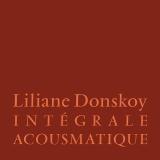
Metaphon is pleased to present this première edition, which brings together a near-complete collection of the acousmatic works of Liliane Donskoy, recorded in the 1970s and 1980s.
Liliane Donskoy (*1933) is a French, classically trained pianist, music teacher, and composer of both instrumental and acousmatic music. She began her musical training at an early age, undertaking private piano studies with Yves Nat at the age of thirteen, shortly after the Second World War. During the 1960s and 1970s, she pursued advanced studies with prominent figures of twentieth-century music, including Darius Milhaud, Olivier Messiaen, Pierre Schaeffer, and Guy Reibel, and participated in courses led by Karlheinz Stockhausen, Luciano Berio, György Ligeti, and Iannis Xenakis.
Despite this extensive and diverse training, Donskoy encountered limited institutional and professional opportunities to fully realize her artistic vision. A decisive turning point occurred in 1977, when she gained access to the facilities of the Institute of Psychoacoustics and Electronic Music (IPEM) in Ghent. There, she realized and completed the majority of her acousmatic compositions.
Donskoy’s oeuvre is characterized by a high degree of structural complexity, precision, and expressive intensity. Her work reflects a pronounced and distinctive artistic temperament, manifested through a rigorous exploration of sound material and form. Notwithstanding its artistic significance, her music has remained largely unknown, as her compositions were neither widely circulated nor formally released, leading to their relative obscurity until the present publication.
slipcase edition[63,24 €]
Metaphon is pleased to present this première edition, which brings together a near-complete collection of the acousmatic works of Liliane Donskoy, recorded in the 1970s and 1980s.
Liliane Donskoy (*1933) is a French, classically trained pianist, music teacher, and composer of both instrumental and acousmatic music. She began her musical training at an early age, undertaking private piano studies with Yves Nat at the age of thirteen, shortly after the Second World War. During the 1960s and 1970s, she pursued advanced studies with prominent figures of twentieth-century music, including Darius Milhaud, Olivier Messiaen, Pierre Schaeffer, and Guy Reibel, and participated in courses led by Karlheinz Stockhausen, Luciano Berio, György Ligeti, and Iannis Xenakis.
Despite this extensive and diverse training, Donskoy encountered limited institutional and professional opportunities to fully realize her artistic vision. A decisive turning point occurred in 1977, when she gained access to the facilities of the Institute of Psychoacoustics and Electronic Music (IPEM) in Ghent. There, she realized and completed the majority of her acousmatic compositions.
Donskoy’s oeuvre is characterized by a high degree of structural complexity, precision, and expressive intensity. Her work reflects a pronounced and distinctive artistic temperament, manifested through a rigorous exploration of sound material and form. Notwithstanding its artistic significance, her music has remained largely unknown, as her compositions were neither widely circulated nor formally released, leading to their relative obscurity until the present publication.
Analog Tara’s Life of the Mother is a sonic meditation on the depth, expansiveness, complexity, and power that this phrase holds. This album is made from layers of generative processes and interactions with them. Analog Tara uses a Zillion sequencer and Xone mixer as system guides, and sounds of the ARP 2500, Jealous Heart, Access Virus, Oberheim OB-6, Jomox XBase, Moog DFAM, and more to create a compelling electronic narrative.
Composed, recorded + mixed by Tara Rodgers. Mastered by Piper Payne, assisted by Colby Gustafson, at Neato Mastering in Nashville, TN. Art by Jackie Milad, She Goes Ancient, mixed media, 2019.
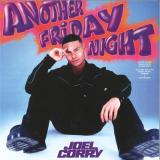
- A1: Another Friday Night
- A2: Head & Heart Feat Mnek
- A3: Bed Feat Raye & David Guetta
- A4: Out Out Feat Jax Jones, Charli Xcx & Saweetie
- A5: Desire Feat Icona Pop & Rain Radio
- A6: Dance Around It Feat Caity Baser
- A7: Do U Want Me Baby? Feat Billen Ted & Elphi
- B1: 0800 Heaven Feat Nathan Dawe & Ella Henderson
- B2: Lionheart Feat Tom Grennan
- B3: History Feat Becky Hill
- B4: Sorry
- B5: Lonely
- B6: I Wish Feat Mabel
- B7: What Would You Do? Feat David Guetta & Bryson Tiller
Black[29,37 €]
On 6th October, multi BRIT-nominated DJ/producer Joel Corry releases his debut album, ‘Another Friday Night’ via Asylum / Atlantic Records, with the pre-order going live on the 18th August.
To be released on both vinyl & CD, as well as via streaming/download, ‘Another Friday Night’ is a collection of Joel’s most iconic records of the last five years, including breakthrough hit ‘Sorry’, ‘Lonely’, multi-platinum UK #1 single ‘Head & Heart’ ft. MNEK, ‘BED’ w/ RAYE & David Guetta, ‘OUT OUT’ w/ Jax Jones, Charli XCX & Saweetie, plus fresh 2023 cuts like ‘Dance Around It’ with Caity Baser and the anthemic ‘0800 HEAVEN’ with Nathan Dawe & Ella Henderson, ‘Another Friday Night’ toasts a remarkable run of releases that’s seen Joel become one of the UK’s biggest and most impactful dance acts.
“My debut album ‘Another Friday Night’ is the biggest moment of my life”, says Joel Corry. “Everything I have dreamed about and worked so hard for has come together with the release of this record. It has been an incredible journey and I am so proud to have reached this moment in my career. I want the songs to make people feel good and bring happiness to their days, and the album includes everyone’s favourite bangers from over the years, as well as some really exciting new material. This is the ultimate Joel Corry playlist, perfect for Another Friday Night.”
Ahead of the release of ‘Another Friday Night’ on October 6th, Joel has also announced a special headline show at London’s Ministry Of Sound on Friday 29th September – his first London headline date since playing at former 5000-cap venue, Printworks, in autumn 2021.
Fans who pre-order ‘Another Friday Night’ will be granted early pre-sale access to tickets on August 24th, before general sale opens on August 25th
- 2026 repress -
Planet Rhythm proudly kicks off its brand new ORIGINALS series with a heavyweight reissue of classic DJ Misjah cuts - essential gems that shaped the hard-edged techno sound of the mid-90s. Remastered with care and pressed on high-quality vinyl, these tracks capture the raw energy and relentless groove that made DJ Misjah a household name in underground techno circles. An unmissable chance for collectors and fans of authentic underground techno to own a piece of techno history, fully restored and ready to devastate dancefloors once again.
UILTY RAZORS, BONA FIDE PUNKS.
Writings on the topic that go off in all directions, mind-numbing lectures given by academics, and testimonies, most of them heavily doctored, from those who “lived through that era”: so many people today fantasize about the early days of punk in our country… This blessed moment when no one had yet thought of flaunting a ridiculous green mohawk, taking Sid Vicious as a hero, or – even worse – making the so-called alternative scene both festive and boorish. There was no such thing in 1976 or 1977, when it wasn’t easy to get hold of the first 45s by the Pistols or the Clash. Few people were aware of what was happening on the fringes of the fringes at the time. Malcolm McLaren was virtually unknown, and having short hair made you seem strange. Who knew then that rock music, which had taken a very bad turn since the early 1970s, would once again become an essential element of liberation? That, thanks to short and fast songs, it would once again rediscover that primitive, social side that was so hated by older generations? Who knew that, besides a few loners who read the music press (it was even better if they read it in English) and frequented the right record stores? Many of these formed bands, because it was impossible to do otherwise. We quickly went from listening to the Velvet Underground to trying to play the Stooges’ intros. It’s a somewhat collective story, even though there weren’t many people to start it.
The Guilty Razors were among those who took part in this initial upheaval in Paris. They were far from being the worst. They had something special and even released a single that was well above the national average. They also had enough songs to fill an album, the one you’re holding. In everyone’s opinion, they were definitely not among the punk impostors that followed in their wake. They were, at least, genuine and credible.
Guilty Razors, Parisian punk band (1975-1978). To understand something about their somewhat linear but very energetic sound, we might need to talk about the context in which it was born and, more broadly, recall the boredom (a theme that would become capital in punk songs) coupled with the desire to blow everything off, which were the basis for the formation of bands playing a rejuvenated rock music ; about the passion for a few records by the Kinks or the early Who, by the Stooges, by the Velvet mostly, which set you apart from the crowd.
And of course, we should remember this new wave, which was promoted by a few articles in the specialized press and some cutting-edge record stores, coming from New York or London, whose small but powerful influence could be felt in Paris and in a handful of isolated places in the provinces, lulled to sleep by so many appalling things, from Tangerine Dream to President Giscard d’Estaing...
In 1975-76, French music was, as almost always, in a sorry state ; it was still dominated by Johnny Hallyday and Sylvie Vartan. Local rock music was also rather bleak, apart from Bijou and Little Bob who tried to revive this small scene with poorly sound-engineered gigs played to almost no one.
In the working class suburbs at the time, it was mainly hard rock music played to 11 that helped people forget about their gruelling shifts at the factory. Here and there, on the outskirts of major cities, you still could find a few rockers with sideburns wearing black armbands since the death of Gene Vincent, but it wasn’t a proper mass movement, just a source of real danger to anyone they came across who wasn't like them. In August 1976, a festival unlike any other took place in Mont-de-Marsan – the First European Punk Festival as the poster said – with almost as many people on stage as in the audience. Yet, on that day, a quasi historical event happened, when, under the blazing afternoon sun, a band of unknowns called The Damned made an unprecedented noise in the arena, reminiscent of the chaotic Stooges in their early adolescence. They were the first genuine punk band to perform in our country: from then on, anything was possible, almost anything seemed permissible.
It makes sense that the four+1 members of Guilty Razors, who initially amplified acoustic guitars with crappy tape recorder microphones, would adopt punk music (pronounced paink in French) naturally and instinctively, since it combines liberating noise with speed of execution and – crucially – a very healthy sense of rebellion (the protesters of May 1968 proclaimed, and it was even a slogan, that they weren’t against old people, but against what had made them grow old. In the mid-1970s, it seemed normal and obvious that old people should now ALSO be targeted!!!).
At the time, the desire to fight back, and break down authority and apathy, was either red or black, often taking the form of leafleting, tumultuous general assemblies in the schoolyard, and massive or shabby demonstrations, most of the time overflowing with an exciting vitality that sometimes turned into fights with the riot police. Indeed, soon after the end of the Vietnam War and following Pinochet’s coup in Chile, all over France, Trotskyist and anarcho-libertarian fervour was firmly entrenched among parts of the educated youth population, who were equally rebellious and troublemakers whenever they had the chance. It should also be noted that when the single "Anarchy in the UK" was first heard, even though not many of us had access to it, both the title and its explosive sound immediately resonated with some of those troublemakers crying out for ANARCHY!!! Meanwhile, the left-wing majority still equated punks with reckless young neo-Nazis. Of course, the widely circulated photos in the mainstream press of Siouxsie Sioux with her swastikas didn’t necessarily help to win over the theorists of the Great Revolution. It took Joe Strummer to introduce The Clash as an anti-racist, anti-fascist and anti-ignorance band for the rejection of old-school revolutionaries to fade a little.
The Lycée Jean-Baptiste Say at Porte d’Auteuil, despite being located in the very posh and very exclusive 16th arrondissement of Paris, didn’t escape these "committed" upheavals, which doubled as the perfect outlet for the less timid members of this generation.
“Back then, politics were fun,” says Tristam Nada, who studied there and went on to become Guilty Razors’ frontman. “Jean-Baptiste was the leftist high-school in the neighbourhood. When the far right guys from the GUD came down there, the Communist League guys from elsewhere helped us fight them off.”
Anything that could challenge authority was fair game and of course, strikes for just about any reason would lead to increasingly frequent truancy (with a definitive farewell to education that would soon follow). Tristam Nada spent his 10th and 11th unfinished grades with José Perez, who had come from Spain, where his father, a janitor, had been sentenced to death by Franco. “José steered my tastes towards solid acts such as The Who. Like most teenagers, I had previously absorbed just about everything that came my way, from Yes to Led Zeppelin to Genesis. I was exploring… And then one day, he told me that he and his brother Carlos wanted to start a rock band.” The Perez brothers already played guitar. “Of course, they were Spanish!”, jokes their singer. “Then, somewhat reluctantly, José took up the bass and we were soon joined by Jano – who called himself Jano Homicid – who took up the rhythm guitar.” Several drummers would later join this core of not easily intimidated young guys who didn’t let adversity get the better of them.
The first rehearsals of the newly named Guilty Razors took place in the bedroom of a Perez aunt. There, the three rookies tried to cover a few standards, songs that often were an integral part of their lives. During a first, short gig, in front of a bewildered audience of tough old-school rockers, they launched into a clunky version of the Velvet Underground's “Heroin”. Challenge or recklessness? A bit of both, probably… And then, step by step, their limited repertoire expanded as they decided to write their own songs, sung in a not always very accurate or academic English, but who cared about proper grammar or the right vocabulary, since what truly mattered was to make the words sound as good as possible while playing very, very fast music? And spitting out those words in a language that left no doubt as to what it conveyed mattered as well.
Trying their hand a the kind of rock music disliked by most of the neighbourhood, making noise, being fiercely provocative: they still belonged to a tiny clique who, at this very moment, had chosen to impose this difference. And there were very few places in France or elsewhere, where one could witness the first stirrings of something that wasn’t a trend yet, let alone a movement.
In the provinces, in late 1976 or early 1977, there couldn’t be more than thirty record stores that were a bit more discerning than average, where you could hear this new kind of short-haired rock music called “punk”. The old clientele, who previously had no problem coming in to buy the latest McCartney or Aerosmith LP, now felt a little less comfortable there…
In Paris, these enlightened places were quite rare and often located nex to what would become the Forum des Halles, a big shopping mall. Between three aging sex workers, a couple of second-hand clothes shops, sellers of hippie paraphernalia and small fashion designers, the good word was loudly spread in two pioneering places – propagators of what was still only a new underground movement. Historically, the first one was the Open Market, a kind of poorly, but tastefully stocked cave. Speakers blasted out the sound of sixties garage bands from the Nuggets compilation (a crucial reference for José Perez) or the badly dressed English kids of Eddie and the Hot Rods. This black-painted den was opened a few years earlier by Marc Zermati, a character who wasn’t always in a sunny disposition, but always quite radical in his (good) choices and his opinions. He founded the independent label Skydog and was one of the promoters of the Mont-de-Marsan punk festivals. Not far from there was Harry Cover, another store more in tune with the new New York scene, which was amply covered in the house fanzine, Rock News (even though it was in it that the photos of the Sex Pistols were first published in France).
It was a favorite hang-out of the Perez brothers and Tristam Nada, as the latter explained. “It’s at Harry Cover’s that we first heard the Pistols and Clash’s 45s, and after that, we decided to start writing our first songs. If they could do it, so could we!”
The sonic shocks that were “Anarchy in the UK”, “White Riot” or the Buzzcocks’s EP, “Spiral Scratch” – which Guilty Razors' sound is reminiscent of – were soon to be amplified by an unparalleled visual shock. In April 1977, right after the release of their first LP, The Clash performed at the Palais des Glaces in Paris, during a punk night organised by Marc Zermati. For many who were there, it was the gig of a lifetime…
Of course, Guilty Razors and Tristam were in the audience: “That concert was fabulous… We Parisian punks were almost all dressed in black and white, with white shirts, skinny leather ties, bikers jackets or light jackets, etc. The Clash, on the other hand, wore colourful clothes. Well, the next day, at the Gibus, you’d spot everyone who had been at this concert, but they weren’t wearing anything black, they were all wearing colours.”
It makes sense to mention the Gibus club, as Guilty Razors often played there (sometimes in front of a hostile audience). It was also the only place in Paris that regularly scheduled new Parisian or Anglo-Saxon acts, such as Generation X, Siouxsie and the Banshees, the Slits, and Johnny Thunders who would become a kind of messed-up mascot for the venue. A little later, in 1978, the Rose Bonbon – formerly the Nashville – also attracted nightly owls in search of electric thrills… In 1977, the iconic but not necessarily excellent Asphalt Jungle often played at the Gibus, sometimes sharing the bill with Metal Urbain, the only band whose aura would later transcend the French borders (“I saw them as the French Sex Pistols,” said Geoff Travis, head of their British label Rough Trade). Already established in this small scene, Metal Urbain helped the young and restless Guilty Razors who had just arrived. Guitarist for Metal Urbain Hermann Schwartz remembers it: “They were younger than us, we were a bit like their mentors even if it’s too strong a word… At least they were credible. We thought they were good, and they had good songs which reminded of the Buzzcocks that I liked a lot. But at some point, they started hanging out with the Hells Angels. That’s when we stopped following them.”
The break-up was mutual, since, Guilty Razors, for their part, were shocked when they saw a fringe element of the audience at Metal Urbain concerts who repeatedly shouted “Sieg Heil” and gave Nazi salutes. These provocations, even still minor (the bulk of the skinhead crowd would later make their presence felt during concerts), weren’t really to the liking of the Perez brothers, whose anti-fascist convictions were firmly rooted. Some things are non-negotiable.
A few months earlier (in July 1978), Guilty Razors had nevertheless opened very successfully for Metal Urbain at the Bus Palladium, a more traditonally old-school rock night-club. But, as was sometimes the case back then, the night turned into a mass brawl when suburban rockers came to “beat up punks”.
Back then, Parisian nights weren’t always sweet and serene.
So, after opening as best as they could for The Jam (their sound having been ruined by the PA system), our local heroes were – once again – met outside by a horde of greasers out to get them. “Thankfully,” says Tristam, “we were with our roadies, motorless bikers who acted as a protective barrier. We were chased in the neighbouring streets and the whole thing ended in front of a bar, with the owner coming out with a rifle…”
Although Tristam and the Perez brothers narrowly escaped various, potentially bloody, incidents, they weren’t completely innocent of wrongdoing either. They still find amusing their mugging of two strangers in the street for example (“We were broke and we simply wanted to buy tickets for the Heartbreakers concert that night,” says Tristam). It so happened that their victims were two key figures in the rock business at the time: radio presenter Alain Manneval and music publisher Philippe Constantin. They filed a complaint and sought monetary compensation, but somehow the band’s manager, the skilful but very controversial Alexis, managed to get the complaint withdrawn and Guilty Razors ended up signing with Constantin with a substantial advance.
They also signed with Polydor and the label released in 1978 their only three-track 45, featuring “I Don't Wanna be A Rich”, “Hurts and Noises” and “Provocate” (songs that exuded perpetual rebellion and an unquenchable desire for “class” confrontation). It was a very good record, but due to a lack of promotion (radio stations didn’t play French artists singing in English), it didn’t sell very well. Only 800 copies were allegedly sold and the rest of the stock was pulped… Initially, the three tracks were to be included on a LP that never came to be, since they were dropped by Polydor (“Let’s say we sometimes caused a ruckus in their offices!” laughs Tristam.) In order to perfect the long-awaited LP, the band recorded demos of other tracks. There was a cover of Pink Floyd's “Lucifer Sam” from the Syd Barrett era – proof of an enduring love for the sixties’ greats –, “Wake Up” a hangover tale and “Bad Heart” about the Baader-Meinhof gang, whose actions had a profound impact on the era and on a generation seeking extreme dissent... On the album you’re now discovering, you can also hear five previously unreleased tracks recorded a bit later during an extended and freezing stay in Madrid, in a makeshift studio with the invaluable help of a drummer also acting as sound engineer. He was both an enthusiastic old hippie and a proper whizz at sound engineering. Here too, certain influences from the fifties and sixties (Link Wray, the Troggs) are more than obvious in the band’s music.
Shortly after a final stormy and rather barbaric (on the audience’s side) “Punk night” at the Olympia in June 1978, Tristam left the band ; his bandmates continued without him for a short while.
But like most pioneering punk bands of the era, Guilty Razors eventually split up for good after three years (besides once in Spain, they’d only played in Paris). The reason for ceasing business activities were more or less the same for everyone: there were no venues outside one’s small circuit to play this kind of rock music, which was still frightening, unknown, or of little interest to most people. The chances of recording an LP were virtually null, since major labels were only signing unoriginal but reassuring sub-Téléphone clones, and the smaller ones were only interested in progressive rock or French chanson for youth clubs. And what about self-production? No one in our small safety-pinned world had thought about it yet. There wasn’t enough money to embark on that sort of venture anyway.
So yes, the early days of punk in France were truly No Future!
As Nathan Fake rises from the nocturnal subterranea and rave catharsis of his previous records, on Evaporator, he resurfaces into the domain of daylight, bringing a tangible sense of air rushing against your face, of big skies, and endless landscapes.
The idea of pop accessibility that trickled into 2023’s Crystal Vision is refracted here through the prism of sweeping ambient, deep electronica, and trance uplift. Evaporator is Fake’s idea of “airy daytime music”, with each track a different barometer reading across the album’s varying atmospheres, which range from vibrant sunbursts, bracing rainscapes, and fine mists of clement melodics. “It’s not overtly confrontational electronic club music,” states Fake. “It’s quite pleasant, it’s accessible. As I was progressing through making the tracklist, I called it a daytime album. It doesn’t feel like an afterparty album.” For the past decade Fake has been gingerly introducing collaborations with heroes and friends alike into his lone, idiosyncratic working process.
Border Community alumni Dextro AKA Ewan Mackenzie transmutes his ferocious drumming for Pigs Pigs Pigs Pigs Pigs Pigs Pigs into the blurred choral thump of ‘Baltasound’. ‘Orbiting Meadows’, meanwhile, is his second collaboration with Clark, an eerily idyllic duet where microtonal 18EDO piano clangs slowly twirl around wailing pads. Evaporator marks the junction point of old technology and ever fresh creativity for Nathan. The trusty “dinosaur” age software, particularly Cubase VST5, that has powered two decades of music is rarely updated. “I used to sort of feel a bit ashamed of using such old software, and then I kind of had an epiphany – that’s just how I work”, comments Fake. “That’s just how I play. I’m very fond of these old tools, and I get the most joy out of them, but now I’ve incorporated new technology too.” When an artist accumulates so much synergy with their instrument, music making becomes instinctual. By Fake’s account, much of Evaporator just fell into place. The album title arrived randomly in his head (“it felt completely perfect. Airy.”), ideas looped and developed until things locked into place and just felt right. ‘The Ice House’ is a fleeting glimpse of the sonic world he taps into in this creative state, its glassy FM synths built around a counterpoint between rough-hewn crystalline arpeggios and sparse yet gravitas-bearing bass. “That riff I just wrote out on the keyboard, I just played it forever and ever and ever.
The original track ended up being really short. Here you go, and it’s gone!” These unplanned channellings of sound call forth records from Fake’s past while he looks ahead, perhaps getting at the very essence of his musicianship. The opener ‘Aiwa’ (“the breeziest,” he muses) reminds of the introspection that characterised Providence, excited by the fire and grit of Steam Days’ textural experiments, its chunky slams and clatters surging into a flood of harmonic buzzing as they reach out for old wisdom. ‘Hypercube’ stampedes in a similar chronological confluence, infusing an incessant synth line reminiscent of the golden age of rave with the crackling, ecstatic energy of modern festival anthems. Like the vaporisation of liquid to particles, everything that Evaporator presents has a mutant desire to be amorphous. Sounds rarely settle; the irradiated garage beat of ‘Bialystok’ is pitched downwards to driving, rebounding effect, while ‘You’ll Find a Way’ warps static into shivering energy, cinematic synth strings building anticipation into a gradual gush of chords. This translates into a more expansive stereo field than Fake has explored before.
‘Slow Yamaha’ saves the wildest, most kinetic transformations for last with a cornucopia of crispy melodies and fried drums; a sibilance of cymbals on the left, a susurrus of shakers on the right, and kaleidoscopic lasers pulsing and fizzing all around. Evaporation culminating in pure excited atoms.
- A1: Tuesday At The Pond
- A2: Cape Cod Cottage
- A3: Sunlight Through The Leaves
- A4: Where Else
- A5: New Dreams
- A6: Up
- A7: Discovery At The Beach Mr Ocn5
- A8: Three
- A9: Theme
- A10: Snowing
- B1: Retirement
- B2: Your Bliss
- B3: Overgrown Garden
- B4: Heat
- B5: Natalie
- B6: Greeting Visual
- B7: Miss Her
- B8: Lullaby
- B9: West Coast
- B10: Memories
Welcome to the world of Edward Blankman, a retired dentist who wrote elegant, minimalist jazz in obscurity circa 1970. At least that’s the story.
In truth, Edward Blankman’s Cape Cod Cottage is the 2021 concept album from Echo Park composer Brendan Eder.
A tender, wistful follow up to 2020’s To Mix With Time, the Cape Cod Cottage sound evokes the spirit of Erik Satie, Miles Davis with Gil Evans, and Stevie Wonder, balanced with the accessibility of 1960s lounge-exotica. Eder’s characteristic arrangements are crafted to reflect the past, without losing the innovative quality of his modern ear.
Eder created Blankman’s story to channel his own grief, with bittersweet tenderness. Read the liner notes, and you’ll be transported to the quiet shores of Cape Cod, where a lonely retiree mourns his late wife, Natalie, with walks in nature and evenings at his Wurlitzer.
The story is brought to life with a meticulously crafted package sporting classic liner notes, faux 1970s photographs documenting Edward with the musicians (taken during the actual session), a make-believe jazz label, and a commissioned oil painting of Edward’s cottage. Eder spent over a year rendering the compositions and charts according to his vision.
Eder brought together a dream line up with a ton of chemistry for the project; drummer Christian Euman (Jacob Collier), saxophonist Josh Johnson (Jeff Parker, Leon Bridges), and bassist Alex Boneham (Billy Childs), who all studied together at the Hancock Institute of Jazz. Rounding out the group is flutist Sarah Robinson, a recurring player in Eder’s ensemble, and Edward Blankman (Brendan) on the Wurlitzer.
The cast was booked for a single date with coveted engineer Michael Harris (Kamasi Washington, Angel Olsen, Fleet Foxes) at famed Electro-Vox Recording Studios. To create realism for Edward’s story, the charts were purposefully withheld from the musicians until they arrived at the studio. The result is an authentic and natural performance delivered by players at the top of their game, captured on pristine vintage equipment including the legendary Neve-8028 console.
- A1: Shake
- A2: Freedom
- A3: Closer
- B1: Quiet Power
- B2: Colorblind
- B3: Love By The Hour
Lush Life is the Sonar Kollektiv debut EP by German singer, songwriter and multi-instrumentalist Flo Naegeli.
Originally hailing from the Bavarian forests of southeastern Germany, Naegeli began his musical journey at the age of seven as a folk accordionist, later switching to electric guitar and developing a disciplined approach to songwriting and musicianship that led to formal music studies and a professional career. After moving to eastern Germany, he gradually stepped away from band projects to focus on solo work, embracing self-production tools to realise a sound that blends soulful songwriting with warm, organic instrumentation.
Written and largely recorded by Naegeli himself, Lush Life is a deeply personal yet accessible collection of songs reflecting on fatherhood, family relationships and friendship.
- A1: Full Blood Count Analyzer
- A2: Automated Instrument Rinse System
- A3: Mri Scanner
- A4: Anaesthetic Machine
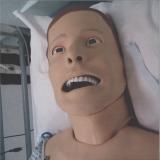
- A5: Meti Human Patient Simulator - Mannequin Breathing
- A6: Simman Essential Mannequin
- A7: Cardiac Monitor
- A8: Lee Silverman Voice Treatment
- A9: Haemoglobin A1C Analyzer
- A10: Anaesthetic Machine 2
- A11: Infusion Pump (Alaris Plus)
- A12: Heater Fan
- A13: Phacoemulsifier – Suction And Ultrasound During Cataract Surgery (Two Perspectives)
- A14: Robotic Pharmacy - Manually Restocking Supplies
- A15: Ct Scanner
- A16: Pharmacy Label Printer
- A17: Dialysis Machine
- A18: Draeger Oxylog 3000 Plus
- B1: Meti Human Patient Simulator – Powering Up Of Bellows That Control Mannequin&Apos;S Artificial Lungs
- B2: Orthopantomograph Op 2000
- B3: Helium Cooler For Mri Scanner
- B4: Coagulation Analyzer
- B5: Meti Hps Mannequin
- B6: Ophthalmology
- B7: Sysmex Sp1000I Automated Slide-Maker
- B8: Agv (Automatic Guided Vehicle)
- B9: Ultrasound Scanner
- B10: Operating Theatre
- B11: Beckman Coulter Access 2 Analyzer
- B12: Geiger Counter (Berthold L4)
- B13: Automated Mailroom (Opex Mail Matrix)
- B14: Wall Mounted Suction Unit
- B15: Dialysis Machine 2
Tape[13,66 €]
Death Is Not The End reissue Mark Vernon's sought-after 2013 collection Sounds of a Modern Hospital on vinyl & cassette formats.
Whilst every effort has been made to record the subject in as great a degree of isolation as possible, the sound recordings you will hear on this record were made in a real working hospital and not under controlled conditions. Therefore, on occasion, you may hear some unavoidable background noise, conversations and other extraneous sounds.
All recordings were made by Mark Vernon at Forth Valley Royal Hospital, Larbert, Stirling Community Hospital and Falkirk Community Hospital between 2011 and 2013.
Tip! Next amazing 4 tracker on Andrey Pushkarevs label Luck Of Access. You probably haven’t heard about Konstantin Smirnov yet, and that makes us even more excited to share this release! We, at Luck of Access, love the feeling of discovering hidden gems, and this release is full of it. Konstantin Smirnov masterfully combines raw techno, ambient & electro in his “On My Mind” EP, which includes a beautiful rework from the legendary Satoshi Tomiie – enjoy the trip!
- Crimson Rain
- Bound To Fall
- Black Smoke
- Calling Your Name
- Attergangar
- The Thrill
- Stillferd
- The Silence
- Ride On
- Spread Like Wildfire
Norwegian hard rock band Gjenferd returns with their second album, Black Smoke Rising. Black Smoke Rising takes the band to a new level, building on the strengths of their debut while pushing the sound in a more direct and accessible direction. The album delivers stronger songs, sharper hooks and a tighter overall approach, without losing the darker edge that has defined Gjenferd from the start. Guitars and organ are at the core of the sound, driving solid riffs and catchy vocal lines with a clear pop sensibility beneath the heaviness. The band's debut album received strong reviews both nationally and internationally, including 4. place on Doom Charts in May 2024. Gjenferd draws inspiration from classic heavy rock acts such as Black Sabbath and Deep Purple, combined with a modern hard rock approach influenced by Ghost and Hällas. They're known for energetic live performances, including appearances at festivals such as Desertfest Oslo.