The Petersons’ were a vocal trio from Waycross, GA, their performing name came from their founder, lead vocalist and drummer Kenneth Peterson, along with Keyboard player Salem Chatman and vocalist/bassist Johnny Members. The trio regularly performed shows along America’s East Coast, and it was while working in Philadelphia during early 1973 that the group answered an advertisement in Billboard Magazine quote “Masters Turned Down? We Are Looking for New Acts to Sign, Contact Omega Sound Productions, Philadelphia, PA”.
Omega Sound was a fledgling independent Recording Company formed by Frank Fioravanti a budding songwriter and former Encyclopedia Britannica Salesman for the initial purpose of find some extra work for the musicians of The Philadelphia Orchestra who were looking to earn some side money. As a result of answering the Billboard advertisement ‘The Petersons’ found themselves booked into Frank Virtue’s recording studio to record two Fioravanti and the late Alan Felder penned songs, the up-tempo “What’s It Gonna Be” backed by the melodic “Just What I’ve Been Looking For” Mel Omega (1833). With the release failing to make much noise, The Petersons returned to their native Georgia where they continuing to perform and record but under the group name of ‘Toll Darkness’. Fast forward circa 30 years and a couple of copies of this obscure Mel Omega 45 was introduced into the UK by Soul Bowl’s John Anderson where they gained belated recognition initially at the Soul Essence Weekenders through resident DJ Steve Guarnori with “Just What I’ve Been Looking For” being his chosen side. These initial copies had a paper sticker on them crediting the Artist as ‘Toll Darkness’ but the subsequent find of further copies with no sticker coverings, revealed the real artist to be ‘The Petersons’, intriguing? The reason behind the differing artist names is reputedly assumed to be that Ken Peterson took some copies of the Mel Omega 45 back to Georgia and pasted the ‘Toll Darkness’ group name stickers over the Petersons label credits to enable him to sell them at shows with his other ‘Toll Darkness’ 45 “Party/Love Makes Me Do Foolish Things on Alpha Records. The up-tempo backing track of The Peterson’s “What’s It Gonna Be” was a Frank Virtue arrangement that he had great faith in, hence it’s usage on plethora of other Philly artists recordings, i.e. Fred Mark, Liza Mae, Michael Christian, Cody Michaels etc over different record labels, Melomega, Concept, Fox Century Plaza and Merben.
Frank Fioravanti also founded the Sound Gems label which brought us the timeless classic “Your My Main Squeeze” recorded on the New Beford, MA group ‘Crystal Motion’. Omega Sound’s most notable achievement would be William DeVaughn’s 1974 hit “Be Thankful For What You Got”.
Cerca:the act
- A1: Free Form (Feat. Lojii, Ill Camille)
- A2: How I Live (Feat. Lil B, Vic Spencer)
- A3: For The Family (Feat. Awon)
- A4: Daybreaks (Interlude)
- A5: Running (Feat. Pink Siifu)
- A6: Out Of Time (Feat. Ill Camille)
- A7: Black Sabbath (Feat. Billy Woods, Tha God Fahim)
- A8: Change The World (Feat. Moruf)
- B1: Peace (Feat. Yungmorpheus)
- B2: For You (Feat. Moruf)
- B3: The Last Of Us (Feat. Quelle Chris)
- B4: Count Your Blessings (Feat. Lojii)
- B5: Pgo (Feat. Oliver The 2Nd)
- B6: Stories (Feat. J’von, Vuyo)
- B7: Recuperating (Feat. Gabe ‘Nandez, Fly Anakin)
- B8: Discipline 74 (Interlude)
- B9: Holler Back (Feat. Kooley High)
Album packaging features 24pt reverse board jackets and illustrated inner board sleeves, with silver printed center labels. All artwork created by acclaimed designer, Håvard Gjelseth. Ol’ Burger Beats’s new opus, 74: Out of Time, is a multifaceted and stunning exploration of sounds and eras. In addition to every track being produced at 74 beats per minute, the album harks back to the year 1974; particularly the music, the records, the activism, the artwork, and the aesthetics. But it’s also incredibly current, as the Out of Time portion of the title very much refers to the present. It promotes a sense of urgency in the face of current affairs such as the COVID-19 pandemic, climate change, as well as contentious politics sweeping across the US and Europe. Beyond those deeply resonating elements to the record, 74: Out of Time is a truly gorgeous representation of hip-hop through the lens of the Norwegian composer, which is undoubtedly his most ambitious undertaking to date. Using 74bpm as his basis, he constructs sublime, jazzy instrumentals that feature some of hip-hop’s finest emcees and vocalists. And to say they all gel perfectly together is an understatement—and it would be underselling OBB’s meticulous approach here. Each song blends seamlessly from one to the next spread across the album’s 17 tracks, with the help from a standout supporting cast that includes Fly Anakin, Awon, Quelle Chris, Pink Siifu, Yungmorpheus, Lojii, billy woods, Tha God Fahim, Vic Spencer and Vuyo, among several others. “An avid record collector, the producer's first release was 2014's High Rhodes which led to comparisons to his heroes such as J Dilla, Madlib and Pete Rock.” Okayafrica // “With music teachers for parents, it was perhaps inevitable that Ole-Birger Neergård would follow their path and become a student of the game.” Passion of the Weiss
>
Brooklyn underground rap heroes Tanya Morgan drop a two-track heatrock of a 7-inch that lights up dancefloors while maintaining their true-school status with clever wordplay and progressive beats.
Since breaking on to the blog-era rap scene in 2006 with their debut LPMoonlightingand solidifying their status in 2009 with the now-legendaryBrooklynati, Tanya Morgan has represented the best of underground hip-hop. Your favorite rapper's favorite group, they combine trademark witty wordplay with tough, headnodding beats that demand rewinds and repeat listens. Bouncing back in recent years withRubber Souland other one-off cuts, the duo of Donwill and Von Pea has teamed with producer 6th Sense and quietly set about building the next chapter of their rock-solid legacy.
"Move It Or Lose It" is the latest manifestation of Tanya Morgan, a cut that is neither throwback nor trend chasing, but does double duty on the dancefloor as well as a headphone banger. Irresistibly funky, with Mathien's guitar and vocal the icing on top, and riding at a perfect tempo to get dancers bubbling, it got immediate attention from DJs when the group teased the digital version online.
The double A-side single continues on the flip with "Don't Look Up," another grown-man rap (as Von Pea asks, "How you want the old me acting brand new?") set to 6th Sense's progressive uptempo beat that recalls Q-Tip's adventurous recent productions, and featuring Mia Jae on vocals driving the chorus. Donwill's commentary on getting older and wiser in the music industry hits home to any of us who've been around the block: "Slow growth while the roots spread / Somebody said rap group's dead / They prolly wrote it as a sponsored ad."
Both cuts are primed to move feet and represent the continued lineage of quality underground hip-hop, proudly coming straight from the heart of Brooklyn as a collab with BK-based indy vinyl masters Names You Can Trust.
Hittin your decks in 4 weeks time on a Cannonball Records' 7"/45rpm, “U need me” by the LA Propinquity surfaces as part of a body of productions initially meant to be put out all together on an album. As often seen, for many reasons this didn’t happen and we are offered the privilege to release it on our flagship label first time ever. A modern soul dancerof the highest order out of a couple of premium recording studios in Los Angeles (included Hit City West with award winning engineer Avi Kipperat the controls) by the hands of Maestro Sanifu Hall and his Aljoni Music Co. featuring what could easily be defined the L.A. Dream Team of musicians, to include the infectious groove of drummer supreme James Gadson (previously featured also on our long sold outs with Mike James Kirkland) and many other stellar players from the area. I know I’m a weirdo so, to my taste, the most remarkable stuff sits on the flipside. Sanifu’s slick instrumental arrangement enriched by the flute of Todd Del Giudice, seamlessly in and out from the verses, makes it a sublime slice of original Soul Jazz from the late 70’s. Actually we really struggled to put this version on the back up side of this release as, with that hint of west coast fusion, it’d be worth a main side on its own. Just listen to both versions, judge by your excellent selves and make your move accordingly. Full links and presale details on our website for your consideration. ***The full cover above is an artwork done exclusively for digital & social media promotion.
Rain and experimental music have had an interesting connection for decades. Under the umbrella of American film music promotion, Hanns Eisler was already looking for "Vierzehn Arten, den Regen zu beschreiben” (fourteen ways to describe the rain) in 1941. A good 20 years later, The Cascades interpreted the periodicity of rain as a rhythm of mourning. For the Beatles ("If the rain falls, they run and hide their heads"), the precipitation inspired the band to use backward running tapes. However, it seems that there has always been a lot of rainfall in popular music. In the early seventies, David Toop and Paul Burwell even had a band project with the great name Rain In The Face...
That was a long time ago and today, rain, which in the age of climate catastrophe mainly occurs as heavy rain or an enervating endless loop, has lost a great deal of its inspiring quality. Perhaps as a reminder of the musical quality of rain, but knowing full well that it can only be enjoyed in theory, Razen call their new album "Rain Without Rain". In the music of the Brussels collective led by the two multi-instrumentalists Brecht Ameel and Kim Delcour, it certainly pours down on the roofs. In fact, the album opens with the sound of pouring rain before we hear the sequence of an oscillator played through a guitar amp on the first track „Lazy, Lazy Eye“.
The album is the captivating result of an one-night mobile studio field recording in an abandoned pedestrian tunnel in the centre of Düsseldorf, and it is finding beauty with brutal(ist) means: recorder, oscillator, guitar amp and reverberation, two musicians and four microphones, early electronics versus Early Music. “Suicide meet Hildegard von Bingen”, as Stefan Schneider, who recorded the session, admits. “Ghostly occurrences”, he adds.
Brecht Ameel states: “We do put a lot of weight and care on acoustics. On some of our recordings, the room acts as another band member, or as the main ‘mixing board’. Most of the albums we have recorded so far are not mixed in the traditional sense: they are simply „captured”, and we let the room decide what is left on the tapes. The studio recordings, then, give us the possibility of bringing other elements to the fore; precision of interplay, or tiny variations in breathing.”
The group Razen exists since 2010 and has since released numerous records on labels such as KRAAK, Marionette and Hands In The Dark. "Rain Without Rain" is their debut on the Düsseldorf label TAL. If there has been an increased international interest in experimental music from Belgium in recent years, this is not least due to musician collectives such as Razen. In terms of its electro-folkloristic intensity and instrumentation, Razen's music is quite unique worldwide. What does Razen actually mean? “We took the word from a poem by Paul Van Ostaijen, not specifically because of its meaning but because of the way it looked on paper”, Ameel explains. “But the meaning goes in the direction of ‘thundering / raging / speeding’ … although we prefer playing with a strong notion of restraint, building our world from (and with) silence.”
Olaf Karnik, Köln 2024
returning, dream’ is the second album from Paradise Cinema – the‘Fourth World’ inspired project led by multi-instrumentalist Jack Wyllie (Portico Quartet/Szun Waves). While Wyllie’s other projects move between tightknit electronica, widescreen minimalism and improvised ambient sounds, ‘returning, dream’ contains nods to Jon Hassell, Terry Riley, Don Cherry and Midori Takada as well as more contemporary electronic, ambient and non-western music and even draws inspiration from physics and science fiction.
The first, eponymous, Paradise Cinema record, released in 2020, was recorded in Dakar (Wyllie lived in Senegal for a while in the late 2010s) and featured the dense rhythms of Mbalax music combining with Wyllie’s textural saxophone and synth playing, but here he takes a step into the unknown:
The music is no longer built primarily around the rumbling
propulsiveness of Mbalax, but takes its inspiration from the Many-Worlds Interpretation of quantum mechanics, which suggests that there are many different worlds that branch off from our own. Wyllie explains: “It is an imagining of what music could be like in a different time and space, ancient and futuristic from everywhere and nowhere at once. I was listening to a lot of physics podcasts when I created this record. I loved the many-worlds interpretation of quantum mechanics; about the multiple paths we are taking each time a quantum decision is taken. The different worlds then splitting off like branches on a tree. I could imagine different histories and worlds and multiple versions of myself, others and even other societies existing. In this album I’ve dug into these ideas andattempted to make music that would come from those different spaces, trying to poke my finger through to the other selves and stories. Effectively a form of composed science fiction, the music is an idea of what might be occurring or have occurred on a branch of the tree in a different world. But I like to think the tracks might actually have been composed somewhere or sometime.”
Created in London by Jack Wyllie with additional recordings from Dakar and Sydney, ‘returning, dream’ blends sounds that do not typically live together. It features Khadim Mbaye (sabar drums) and Tons Sambe (tama drums) who provide the dense Sengalese rhythms, plus Szun Waves colleague Laurence Pike, also on drums.
Iconoclastic Buddhist Línjì Yìxuán once remarked, "The miracle is not to walk on water. The miracle is to walk on earth." This profound statement serves as a reminder of the sheer beauty of our planet. We often take for granted the ground beneath our feet and the simple wonders that our ecosystem supports. Everyday activities like walking under a blue sky, feeling the breeze on our skin, or listening to a songbird's melody remind us that Earth is a precious host offering endless marvels.
"Breath," the latest album by Bordeaux-based producer Franck Zaragoza under his Ocoeur project, is a heart-felt tribute to these earthly wonders. This album, perhaps his most sincere and ambitious to date, comprises seven tracks that reflect Zaragoza's deep appreciation for the world around us. "Breath" is tranquil, peaceful, and meditative, yet its expansive, cinematic scope evokes vivid images of Earth's stunning landscapes. The album is both elegantly captivating and a poignant call for peace on our planet.
With "Breath," Zaragoza elevates his Ocoeur project to new heights, celebrating the marvels of the physical world around us.
On August 16, Toronto-based musician and producer David Psutka aka ACT! (fka Egyptrixx / Anamai / Ceramic TL) will release his latest project ‘Face to Face, Day by Day’ for his own Halocline Trance imprint.
This is is Psutka’s third album proper as ACT! following the release of the “sonic mixtape” ‘Universalist’ in 2018 and the augmented reality soundtrack ‘Grey Matter AR’ in 2021; a series of Snapchat filters created by artist Karen Vanderborght and soundtracked by ACT! which explored the poetic and existential potential of AR and social media.
“Aesthetic accidents in the periphery of the ‘work’ can be the message. In 2018, at an Egyptrixx concert at Bagni Misteriosi de Teatro Franco Parenti - a gorgeous, sprawling outdoor pool theatre in Milan - I had a clarifying moment. Gigs around then had mostly been in pummelling, dark music venues, so I wasn't prepared for this expansive space (and the thoughtful work of the organisers who had layered sheets of plastic film on the pool to parallel eco-materialist themes from a previous album). It was the midday soundcheck that struck me most - brittle digital sounds from the set echoed off the colonial Milanese facades and ricocheted down the Via Carlo Botta, pinging off buildings in the distance and clashing with the noise of traffic, tourists and whatever else. It was a strange, collisionist moment, and a reminder that my essential approach to music is, above all, a preoccupation with the materiality of sound.
Everything on Face to Face, Day by Day began as an improvisation. Openness to accidents and the emotional complexity that comes from centering them in composition has become important to my work, and helps the music go beyond the possibility of what is playable, imaginable. I also wanted to channel adventurous solo pop records of the 1970’s and 80’s, like Yasuaki Shimizu, Jon + Vangelis and Stevie Wonder. These came from an interesting era in commercial music as studio production techniques became increasingly formalised as compositional devices, like AMS RMX16 percussion sounds and early digital stereo effects.
Like many musicians, I’ve been travelling and performing less since the pandemic and as a result, have wanted studio sessions to feel more collaborative and improvisational. There were great writing and recording sessions for this album. Vox, synth, sax and guitar jams - much of what ended up on the record isn’t edited much, if at all. I jammed a sm57 into Colin Fisher’s sax bell and created feedback loops using various preamps and distortion units. The clunky sounds were sampled and used as percussion elements. I also had a great synth jam session with Jeremy Greenspan at Barton Building Studio in Hamilton, which was recorded by filmmaker Liz Adler.
I’ve had a few months to sit with this album and see clear throughlines connecting it to previous projects. There are aspects of the experiential and structuralist sound design ideas from the EGYPTRIXX records; and also some arrangement tricks borrowed from ANAMAI - specifically, the use of interruptionist sound events. Perhaps most of all, it feels connected to the Ceramic TL + Ipek Gorgun record ‘Perfect Lung’ and its splattered take on musical complexity. “ (David Psutka)
In addition to ACT!, Psutka has released music with numerous projects including Anamai, Egyptrixx and Ceramic TL, he has collaborated widely with artists such as Junior Boys, Ipek Gorgun, and Kuedo as well as Jessy Lanza (2016) and an official remix for Massive Attack’s ‘Hymn of the Big Wheel (2012). The contributions on this album, from Robin Dann and Ben Gunning, reflect the deeply collaborative nature of the Halocline Trance label and the Toronto creative scene more broadly.
Many of Psutka’s releases have received critical acclaim from media outlets such as Pitchfork, Exclaim, The Quietus and Resident Advisor. As a live performer, he has toured extensively including performing at Sonar Festival, Roskilde, Mutek, MOMA PS1 Warm-UP and CTM Festival. He’s also presented sound installations at various institutions such as Galeria Civica Commune di Modena, and Art Gallery of Ontario (AGO).
In 2015, Psutka launched Halocline Trance as a home for his various sound projects, events and collaborations. Now a creative collective and label, it has grown to include a diverse array of artists including Casey MQ, Xuan Ye, Myst Milano, Colin Fisher and others. The label is described as “genre-agnostic” and conceptually open, supporting work across a wide spectrum of creative fields including soundtrack recording, AR design and traditional artist albums. Their impeccable roster also includes, theorist/improviser Eldritch Priest, and AR/VR artist Karen Vanderborght. In recent years, Halocline Trance has established itself as a platform that facilitates many of Canada’s most exciting creative music projects. Many of the releases have received critical acclaim from outlets including Pitchfork, Exclaim, Bandcamp and Resident Advisor.
This is the first reissue of the “Piece Of The Action” LP since 1973, and the CD has bonus tracks with everything Bobby Hutton recorded between 1969 and 1974. Everything taken from the original master stapes and restored.
Bobby Hutton is from Detroit, Michigan and began his career after winning a talent show at the 20 Grand nightclub. In 1971 he performed on the very first nationally aired Soul Train TV programme. He cites Jackie Wilson as his biggest influence. He began writing under his real name Harold Hutton, then Billy Davis at Chess Records persuaded the change to Bobby Hutton. He had decided not to pursue a career at Motown, and after one single for Checker, then another at Blue Rock (a subsidiary of Mercury) he moved to the Philips label for the huge Northern Soul favourite, “Come See What's Left Of Me" which was first played at the Stafford All-Nighters back in1985, covered up as Casanova Brown. Talents that produced and arranged for Bobby during those Blue Rock/Philips sessions include Donny Hathaway and Joshie Jo Armstead, and in fact it was with Jo that Bobby co-wrote that Northern Soul classic.
The Philips tracks are all on the CD as bonus tracks to the Piece Of The Action” album for ABC Records in 1973.
Produced by Dee Ervin, there are several fine tracks to enjoy but surely none better than the Gary Wright-penned “Lend A Hand” which became one of the biggest 'modern' Northern Soul tracks of all-time after spins at venues like the Highland Room at the Blackpool Mecca and Wigan Casino. The track was first championed by DJ Colin Curtis in 1974.
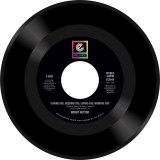
The album is beautifully produced with vocal accompaniments from artists including Patti Hamilton of The Lovelites, Jean Plum, Mikki Farrow and Frankie Karl. It received great reviews at the time and that persuaded ABC to release a non-album follow-up 45 produced by the brilliant McKinley Jackson and Reginald Dozier credited “Loving You, Wanting You, Needing You, Wanting You”/'Watch Where You’re Going” which is an elusive, highly sought-after single by soul collectors worldwide (now an Expansion 7” reissue).
In 2007, Bobby was honoured as he was voted the best singer in Chicago, quite an achievement and something that Bobby is quite rightly very proud of
The true test of originality for any musician comes when you hear an instrument being played and you instantly know who’s playing it. For electric guitarists, certainly Hendrix qualifies; Page and Clapton, too. Maybe Eddie Van Halen before the legion of imitators. You probably have your own list, but to us, standing toe-to-toe (or pick-to-pick) with those legends is Television guitarist and solo artist Tom Verlaine. His self-taught, jazz-influenced style, largely devoid of effects, and vibrato tone (oh, that tone!) makes any Verlaine solo unmistakably a Verlaine solo. That he was quite an accomplished, idiosyncratic songwriter is just a bonus. Real Gone Music is very, very proud to announce that we have arranged with the Verlaine estate to release Tom’s last three solo albums on LP; Songs and Other Things was the last record he released, in the same year (2006) as the all-instrumental Around. As the title indicates, this was indeed a return to lyrics and vocals, the first record with “songs” since 1990’s The Wonder (although the first track, “A Parade in Littleton”—one of the “Other Things”—is a low-key, funky instrumental that would have been home on a late Talking Heads album). The time off clearly allowed Verlaine to build up a strong cache of compositions, with “Nice Actress” and “The Earth Is in the Sky” among the highlights. The record also marks a welcome return of Verlaine’s enigmatic lyrics, which as always prompt head scratching while somehow making intuitive sense. But in the end, it’s the amazing guitar work—ably supported by Fred Smith of Television fame and Jay Dee Daugherty of The Patti Smith Group among others—that elevates Songs and Other Things to essential status, worthy of its exalted position as the final release of Tom Verlaine’s career. Bassist and original engineer Patrick Derivaz has mastered the album for its vinyl debut; Verlaine’s long-time partner Jutta Koether contributes notes. Teal vinyl pressing!
Bobby Hutton is from Detroit, Michigan. In 1971 he performed on the very first nationally aired Soul Train TV programme. He recorded with Phillips (the in-demand “Come See What’s left Of Me” now a separate 7” release), then ABC where her recorded his LP “Piece Of the Action” (released by Expansion on LP/CD) including “Lend A Hand”, the other separate 7” side on Expansion). The two tracks on this 7” (which feature as bonus tracks on the Expansion CD reissue of “Piece Of The Action”) were first released back-to-back in 1974 on the ABC label. Both songs are co-written and produced by McKinley Jackson, key to songs for Lamont Dozier, Freda Payne and The Four Tops at ABC in the early to mid-70s. The other co-writer is the Grammy Award winning Reggie Dozier, brother to Lamont Dozier. This 7” has not been reissued for 40 years, and an original copy on Discogs will set you back £200 in the UK.
After years of visiting graveyards, combing through haunted houses, and pursuing (heh heh) dead ends, we finally tracked down the rights to the legendary Frankie Stein and His Ghouls series! Why did we risk life, limb, and livelihood to find these records? Well, first of all, long-time Real Goners know we LOVE these campy ‘60s takes on horror rock—witness our previous macabre moves into the Zacherle, Munsters and Groovie Goolies franchises. But there’s something extra special about these Frankie Stein and His Ghouls records. You wouldn’t think that Halloween records released by a subsidiary (Power Records) of a children’s specialty label (Peter Pan Records) would be so…er…visceral, but these records are definitely the most out there of their kind. And there might be a reason for that…you see, it has been revealed that the Power label enlisted the aid of some very, very interesting musicians for some of its projects. For instance, the imprint’s 1966 album Batman and Robin by The Sensational Guitars of Dan and Dale was actually produced by Tom Wilson of Bob Dylan, Velvet Underground, and Mothers of Invention fame—and the band was made up free jazz legend Sun Ra and members of The Blues Project! Which has led to all sorts of speculation about who Frankie Stein and His Ghouls actually were; among the names bandied about are guitarist Duane Eddy, jazz saxophonist Max Greger, and, yes, Sun Ra and the Blues Project again. At any rate, prepare yourself for frenetic rock-and-twist workouts punctuated by deranged howls and shattering sound effects. And with a back story like this, it’s no wonder original copies of these albums sell for downright horrifying prices…here come the last two for a truly fiendish finale!
Recorded in 2014, Mid-City Island is the first ever project to be released from Moses Sumney. Moses recorded the entire EP from his apartment in Mid-City, Los Angeles straight to cassette on a four-track recorder that TV on the Radio's Dave Sitek lent him. To mark the 10 year anniversary of Mid-City Island, Moses kept good on a promise he made to himself all those years ago, broke and starting out - that he would press it to vinyl in a decade. Reflecting back on that period, Moses says "Mid-City, Los Angeles was more of a concept than a place. Seemingly nobody had ever heard of it, and yet it was the geographic center of the city. Living there felt analogous to my disposition as a 'rising' Angeleno - highly visible and invisible at the same time. I sat on my bedroom floor and wrote 'Plastic.' Throughout his 10-year career, Moses Sumney has consistently evaded definition as an act of duty: technicolor self-directed videos and monochrome clothes; Art Rock and Black Classical; blowing into Fashion Weeks from a small town in North Carolina; seemingly infinite collaborators, but one staggering voice. Consistent across the worlds of music, fashion, and film is his assertion that the undefinable still exists and dwelling in it is an act of resistance.
Coming out on September 6th on Sharptone Records, Sundiver is Boston Manor’s fifth album and one that represents a glimmering dawn for the Blackpool five-piece. Grown from a seedbed of optimism and sobriety, the LP celebrates new beginnings, second chances and rebirth. With two members recently stepping into fatherhood, hope is baked into every note. “Datura came out of these really dark few years over the hangover of the pandemic,” Henry reflects. “I'd been struggling a lot with drinking and not taking care of myself and bad mental health and stuff. We wanted Sundiver to be the next morning of the following day.” He explains that it feels good this time round to write through the lens of positivity. “The themes began to emerge, of rebirth, spring, dawn, sunshine and then other elements just started to fit into that.” It was during the making of Sundiver that Henry found out he was going to be a dad. This album is a significant one for the band. Originally coming out of the emo and pop punk scene, they’ve explored sonics and genres throughout their career, taken risks and achieved more than they could ever had dreamed of. They’ve grown up as Boston Manor – their lives and the world changing around them. They’re now taking stock, at a crossroads of the band they were and the band they could be.
While writing the album, they revisited the bands that shaped them in the late 90s and early 00s. “I was listening to the music I loved when I was a teenager and I just thought, why don't we make music like our favourite bands?”, guitarist Mike Cuniff remembers with a smile. “So we brought our interests to the table that way. Y2K kind of vibe. There are elements of Deftones, there are elements of Portishead in there, some Garbage, The Cardigans.” He laughs and adds NSYNC to the list of inspirations. From this cocktail of classics comes a dynamic and ambitious record, rich with depth, groove and more hooks than Peter Pan’s nightmares. Lyrics that foxtrot from parallel universes to personal growth, vivid dreamscapes to raw grief. Individually they’re single strokes full of meaning and magic. Together they’re a landscape.
Container (out Feb 15th) is the first single and it’s them at their best – impassioned and infectious. “This song is about the stagnancy of life creeping up on you & how that can bring about change.,” Henry explains, citing Ocean Song by US band Daughters as an inspiration.
The concept of the butterfly effect is present on Sundiver – how small actions can lead to big changes. This is no clearer than on their second single, Sliding Doors (out April 5th). It has the golden sound of late 90s Lollapalooza rock – think Smashing Pumpkins - rebooted with crisp 2024 production and a potent heaviness. In the lyrics Henry wonders, what if?, pondering on what could be. The idea that there are infinite versions of you whose lives splinter off in different directions at every decision you make. That there’s another you out there somewhere right now reading this sentence, and another me writing it. “So much is down to chance and circumstance,” Henry says. “You might catch that train and your life totally changes. Or you might miss it and things stay the way they are.”
Heat Me Up (out May 30th) is defiant and victorious, the audio equivalent of quitting your shit job and driving into the hot summer sun with a head full of dreams. “The lyrics are about love and gratitude,” Henry shares. “Another theme on the record is just appreciating what you have. It’s about not taking for granted the things that you've been afforded.”
There was some natural magic in the creation of Sundiver. They worked with their usual producer, Larry Hibbitt, and engineer, Alex O’Donovan, but instead of recording in London again they ended up in the green pastures of Welwyn Garden City. “Because Larry lives out in the countryside now, it was a way different environment and way different experience recording this time,” Mike remembers. “That contributed a lot to the brighter sound of the record.” The daily barbecues they had during their recording sessions imbued the process with harmony – five old friends spending quality time together and making quality music.
However, the album is by no means one-note. Birthing this new world they’ve created wasn’t without it’s pain, and that can be heard in the heavier moments on Sundiver. What Is Taken Will Never Be Lost is the most-stripped back on the album, a slow rock number seasoned with the downtempo Portishead influence. The heartfelt lyrics are Henry’s way of processing the loss of his grandfather, who died in a hospice last year(?). “It was just fucking horrible. It was always cold when I went there and they were always trying to get rid of me. The song title, What Was Taken Can Ever Be Lost, is the idea of his memory fading at the time because of dementia.” Henry goes onto explain that shoeboxes of photographs, diaries and a legacy is what he’s left behind. “He lived a really rich life and it has really impacted me and my father. His legacy is etched into the fabric of history in a very small way.” This song continues the connection between his grandfather and the band, as his painted face is emblazoned on the cover of the very first Boston Manor EP, Driftwood. As well as emotionally heavy themes, there’s heaviness in the music of Sundiver too. The closing song, Oil In My Blood, descends into an intense shoegaze outro with Debbie Gough from Heriot screaming hellfire. It’s in moments like this that the band show us aggression and fury can be as much a part of positive change as quiet introspection. The last lyrics of the song, “It resets and starts again,” leaves us in contemplation as the final chord rings out.
Touring the US, Europe and Japan over the years makes for an impressive CV, but if you know anything about Boston Manor you’ll know that they’re all about their hometown. Their choice to work with Blackpool-based photographer Nick Barkworth is testament to that. They’ve been working with him since the pandemic. “He captures Blackpool in a light that really reflects the weirdness and quirkiness of the town,” Henry says.” He's got a really good way of presenting that.” For the Sundiver cover, Nick photographed a 30ft tall abstract glass sculpture made by the local artist John Ditchfield. A striking and bewitching monolith that’s familiar to them but unusual to most people. “It has such kind of a gravity and power to it,” Henry describes the sculpture which stands in a field just outside of the seaside town. “It reminds me of either an explosion or a star or a supernova. To me it represents new life, power and radiance.” Boston Manor have got a knack for that - connecting the otherworldly and the everyday, the stars and the streets.
They’re a band known for using their music to make bigger statements about society. This time round they’re harnessing the uplifting power of music, and the communion it creates, as an antidote to the daily doom and isolation. “It seems like absolute chaos out there at the moment,” Henry says. “You’ve got Gaza and Israel, you've got Russia, you've got the fact that 40% of the world is going to have an election this year and increasingly most governments are leaning very far to the Right. The internet is dividing everybody, people are getting poorer and more desperate. It's really, really scary.” They considered trying to tackle the weight of it all in their music. “We could’ve written Welcome to the Neighbourhood on steroids, where it's just absolute darkness and misery”. He’s referring to their 2018 concept album that deals with class, inequality and the bleaker side of Blackpool. “But I think it's really important to write something that people can be immersed in and find some sort of solace in. Somewhere they can escape to from the modern day pressures and everything that’s going on. We’re all in this together.”
Reissue
'Find Me Finding You', the new album from the new organization called the Laetitia Sadier Source Ensemble, manages to strike new chords while touching familiar keys in the song of life.
From its percolating opening beat, 'Find Me Finding You' locates new systems within the sound-universe of Laetitia Sadier. This in itself isn't a surprise - Laetitia has relentlessly followed her music through different dynamics and into a variety of dimensions over the course of four solo albums since 2010 (not to forget her three albums with Monade and the long era of Stereolab) - but the nature of the construction here stands distinctly apart from her recent albums. Laetitia was inspired by a mind's-eye envisaging of geometric forms and their possible permutations. As she sought to replicate the shapes in music, this guided the process of assembly for the album.
Part of the freshness of 'Find Me Finding You' comes from working and playing within the Source Ensemble and exploring new sound combinations via a set of youthful and evolving musical relationships. Laetitia recognized the energy of the tracks in their initial form and sought to preserve their vitality by not retaking too many performances - instead, the rawness in the tracks was retained and refined at the mixing stage, maintaining an edge throughout. When we hear synth lines diving, lifting and drifting, unusual guitar textures, the plucked sound of flat wound bass strings or the bottomless pulsing of bass pedals stepping out of the mix with an exquisite vibrancy, this is the sound of the Source Ensemble.
A key to Laetitia's music is her use of vocal arrangements. Throughout 'Finding Me Finding You' the shifting accompaniment creates space to bring this element gloriously forward. Arranged by Laetitia with Joe Watson and Jeff Parker making string charts that were subsequently transposed to vocal parts for several songs, richly arranged choirs of voices provide depth along with the thrilling presence of extra breath in the sound. Laetitia's community-politic is well-served by the groups of voices lending support to the machining of the song craft, providing additional uplift to her quintessentially forward-facing viewpoint - as well as massed voices from three different countries sharing space in harmony.
Working in collaboration is Laetita's tradition and a key to this album's view on being free together. The designation of Source Collective implies a new togetherness phase, alongside long time collaborators Emmanuel Mario and Xavi Munoz, keyboard and flutes parts played by David Thayer (Little Tornados) were essential contributions, as well as further keys, synths and electronics from Phil M FU and several intense guitar sequences from Mason le Long. Chris A Cummings (aka Marker Starling, Laetitia's favourite composer) graciously wrote 'Deep Background' for her. The duet with Hot Chip's Alexis Taylor on 'Love Captive' (not to mention Rob Mazurek's distinctive coronet playing) gives voice to an ideological cornerstone of 'Find Me Finding You'
Black Truffle is thrilled to present a Song for two Mothers / Occam IX the first ever solo release from Laetitia Sonami. Born in France in 1957, Sonami studied with Éliane Radigue in Paris before moving to California in 1978 to study electronic music at Mills College, going on to make important innovations in the field of live electronics interfaces and multi-media performance. Sonami is perhaps most closely associated with one of her inventions, the Lady’s Glove, an arm-length tailored glove fitted with movement sensors allowing the performer fluidly to control digital sound parameters and processing, as well as motors, lights and video playback. Having performed with the Lady’s Glove for 25 years, Sonami retired it in 2016, turning her attention to the interface/instrument heard and pictured here, the Spring Sprye.
In Sonami’s own description, “The Spring Spyre is composed of three thin springs that are attached to reverb tank pickups, mounted on a metal ring. The audio generated when the springs are touched, rubbed or struck is analyzed in Max/MSP. The extracted features are then used to train machine learning models in Wekinator and Rapidmax and control the audio synthesis in real time. We never actually hear the springs.” After decades of aversion to documenting her work on recordings, a Song for two Mothers / Occam IX treats listeners to two side-long performances with the Spring Spyre: the very first piece developed for the instrument and the most recent, the two contrasting remarkably in sound palette, energy and form. A Song for two Mothers (2023) spins an intricate web of rippling synthetic burbles, rapid sweeps and fizzing textures. Performed in real time with the sensitive and partly uncontrollable Spring Sprye ("a bit tyrannical," Sonami calls it), the music is delicate yet chaotic. Abrupt gestures hover against a backdrop of silence, "devoid of spatial or temporal direction". After several minutes, the sound-world becomes metallic and percussive, tapping and ticking in pointillistic flurries before a wavering harmonic cloud emerges, sprinkled with resonant drips and pops.
Occam IX is a radically different proposition. At the outset of Sonami’s exploration of the Spring Sprye, she asked her former teacher Éliane Radigue to compose a piece for it—and her: like all of Radigue’s work since she ceased working with analogue electronics at the beginning of the 21st century, Occam IX is written not only for an instrument but also for a particular performer. These scores are developed verbally, through meetings and conversations between performer and composer; each is grounded in an image (usually kept from listeners, to avoid influencing their experience); all magnify the subtlest acoustic phenomena and require great commitment and patience from the performer. Sonami’s is one of the few Occam pieces to make use of electronics, bringing it closer to Radigue’s famous longform pieces for ARP 2500. Beginning from a rumbling low tone, the listener is gradually immersed in slowly lapping waves of synthetic tones, eventually thinning out into delicate bell-like pings against a background of white noise, reminiscent of one of the most beautiful sections of Kyema from the Trilogie de la Morte.
Accompanied by notes from Sonami, her longtime collaborator Paul DeMarinis, and Radigue, and illustrated with scores, photographs and images of the Spring Spyre, a Song for two Mothers / Occam IX is an essential document celebrating an under-recognised pioneer of electronic music and performance.
- Prologue
- Main Title
- Dead Vampires
- Survival
- The States
- Dead Vampires (Taken Away)
- Pit Smoke
- Goes For Supplies
- Killing Vampires
- Wife Gone
- To The Cemetery
- Face From The Grave
- Sunrise
- New Discovery
- Vampires Iron Stakes
- Dog Is Hurt
- Buries The Dog6
- Girl's Existence
- Injection Needle
- Girl Infected
- Transfusion
- Vampire Bop
- To The Chapel
- Beside Casket
- Watching Home Movie
- Retrospect
- Baby's Room
- Smoke
- Taking The Dead
- Still Troubled
- The Deserted Lab
- Death Of Baby
- Raging Inferno
- Transfusion A Success
- Iron Lancers Attack
- After The Last Man
- Last Man Shot (93X)
- Last Man Shot
- End Title
- Besides Casket #2
- Fights Off Vampires #2
- Finds Vampires At House #2
- Face From The Grave #2
- End Title #2
- Fights Off Vampires
- Finds Vampires At House
Rob Zombie and Waxwork Records have partnered to release an exclusive, curated line of classic Horror movie soundtracks! “Rob Zombie Presents” features several never-before-released film soundtracks that were personally selected by the singer, songwriter, and filmmaker.
“I have always been a huge fan of movie soundtracks. So I jumped at the opportunity to work with Waxwork on this project.” Says Zombie, “I can’t wait to release these albums. So many of these films are greatly under appreciated and, they all contain such great music. So, to be able to release these deluxe packages is a dream come true.“ - Rob Zombie
Rob Zombie and Waxwork Records are thrilled to announce the debut vinyl release of THE LAST MAN ON EARTH Original Motion Picture Score by Paul Sawtell & Bert Shefter. The Last Man On Earth is a 1964 post-apocalyptic science fiction horror film based on the 1954 novel I Am Legend by Richard Matheson. Starring Vincent Price, the plot follows Dr. Robert Morgan (Price) who lives in a world where the human population is infected by a plague that has turned them into undead, vampiric creatures that cannot stand sunlight, fear mirrors, and are repelled by garlic. Every day, Morgan follows a routine where he marks days off the calendaqr and sets out to hunt the vampires, killing as many as he can and then burning the bodies.
After working together on the successful release of the official soundtracks to Zombie’s films House of 1000 Corpses, The Devils Rejects, 3 From Hell, The Lords of Salem, Halloween 1 & 2, and The Munsters, Zombie explored other ways to collaborate with Waxwork in an effort to unearth, re-master, and release classic, left-of-center Horror soundtracks from films that he is a life-long fan of. The line of soundtracks features deluxe packaging, heavyweight colored vinyl, new artwork by prominent Horror illustrator Graham Humphreys, liner notes and interviews conducted by Rob Zombie with filmmakers and actors. Titles include premiere releases of Spider Baby, Carnival Of Souls, The Last Man On Earth, The House On Haunted Hill, The Legend of the Seven Golden Vampires, and many selections from the HAMMER film library.
Kato Hideki's Statement: "The Walk is the first collaboration between me and my brother from another mother, Kramer. We started working together in the late summer in 2023, discussing the thematics and the sonic palette of the album. We shared strong connections with the writings by Robert Walser and Basho - both of them walked, dreamed, lived and died on the road. Ambient music was our natural plane for us to transduce the power of their literature into our music as signifiers. Neither of us imagined just to make 'another ambient record', nor a direct translation of their writings. My instinct was to use various modal colors with modulation - slow yet structured music that sounds deceivingly similar to ambient music. Kramer's genius was apparent to me: his ability to elaborate the music as a composer / musician with his keen ears; to frame the album conceptually, sonically and musically as a producer. What you hear in this album is a true collaboration between two artists who trusted each other to let the music transcend. Here you have it, enjoy YOUR walk - dream, live and die well!" Kato Hideki - Brooklyn, NY on April 3rd, 2024 Kramer's Statement: "Sometime in the latter 20th Century, I became aware of the art of The Brothers Quay, two American animators living in London and making the most beautiful works of art I'd ever experienced in cinema. I noted that some of their work was inspired by_ 'the writings of Robert Walser'. Fast forward to 2024 and I have now read every word there was to read (translated into English) by this unique Swiss-German writer. I'd waited decades to find the right 'environment' in which to create music in dedication to this great prose writer and poet, and in 2023, I found that it was not 'the right environment' that I'd been waiting for, but rather, the right collaborator. Kato Hideki and his extraordinary work as composer for film, dance and just about every other creative discipline you can imagine, was equally as inspiring to me for this project as the words and worlds of Walser and Basho. Our journey in collaborative composition began all over the global map, but arrived at the same physical endpoint, and at the very same point in time. I'm not sure that I would even be interested in music at all, unless there were other artists to partner with as I worked. Working alone means Nothing to me. This months-long act of co-creation i have shared with Kato for "THE WALK" has made me as happy to be alive as Walser and Basho were so happy to be alive while on their walks, as evidenced by their extraordinary descriptive powers, knowing that the world around them - so simple yet so very complex - made life so wondrous, and so well worth the sometimes seemingly insurmountable struggles of finding a way to survive Today, so that we might try again Tomorrow." - Kramer, April 9, 2024 (Asheville, NC)
• The return of the award-winning 2009 release • Available on CD and limited-edition translucent red LP • On tour throughout 2024 Since 1999, the GRAMMY-nominated southern rock band NEEDTOBREATHE have quietly emerged as a dynamic force in music, from independently releasing their first album in 2001 to finding themselves playing arenas and receiving nominations for multiple Dove Awards, Grammys, and Billboard Music Awards. After releasing two successful albums, Daylight and The Heat, on Atlantic Records, the band their third album, The Outsiders, in 2009. The record quickly put them on the map, peaking at #20 on the Billboard 200 and at #2 on the Hot Christian Albums charts. The first single, “Lay ’Em Down,” reached #4 on the Hot Christian Songs chart, and other tracks crossed over to Triple A (“Something Beautiful” #12) and the Alternative charts (“Hurricane” #29). AllMusic gave the album four stars, claiming it “offers up another collection of sweeping, reverent rock songs [and] flirts with touches of roots rock and traditional gospel, from the title track's powerful Southern stomp to the sheer power of Bear Rinehart's voice." The Outsiders won the Dove Award for Rock/Contemporary Album Of The Year, and “Lay ’Em Down” landed honors as Rock/Contemporary Recorded Song Of The Year.
Two years later, the band would be on tour as the opening act for Taylor Swift’s Speak Now world tour, as well as performing alongside acts including Tim McGraw and Train. Since the release of this landmark album, NEEDTOBREATHE have reached arena-sized proportions, headlining iconic venues such as Bridgestone Arena in Nashville, TN, and four sold out shows at Red Rocks Amphitheaters in Morrison, CO. The band most recently performed at the 2024 CMA Awards in Austin, TX, with Jordan Davis, whom they also recorded an episode of CMT Crossroads with. Now, over fifteen years since The Outsiders was released and brought the band to greater heights, NEEDTOBREATHE are re-pressing the long sold-out record for the first time ever on translucent red vinyl.