The next remix installment from Psychemagik’s LP, “I Feel How This Night Should Look”, comes from longtime mates and sonic colleagues, Warehouse Preservation Society, and esteemed dancefloor cornerstone, Bushwacka.
W.P.S., the mutant duo from Los Angeles, have cropped up remixes and originals with reckless abandon these past years, and here, transform the Psychemagik source material into a breakbeat-infused act of nuclear fission, striking out the gate with heavy rhythms that meltdown into a steady hypnotic groove, all accompanied by dubbed vocal stabs and poignant arpeggios.
Bushwacka's remix of Valley Of Paradise has echoes of some of his earlier signature works. Centered breaks and floating pads guide through his cosmic rendition, whilst still retaining a strong melodic anchor from the original track, and glued together with a thick bouncing bassline - a trip for sure!
Cerca:the act
In the vast musical archive that is Roman Flügel’s discography, Ro70 holds a special place. Written, performed and produced between January and July 1995, it is his debut album as a full-fledged solo artist. Enquired and inspired by a certain David Moufang from Heidelberg, who used to share a classroom with Jörn Elling Wuttke at the SAE Institute and revealed himself to be an Acid Jesus fan and also of the Roman IV 12“ project, it seemed like a good fit for his (and Jonas Grossmann’s) Source Records label.
In the days before file sharing that meant going back and forth with various DATs in his mom’s Volkswagen Polo Fox for actual listening sessions between Darmstadt and Heidelberg. The time was as special and idiosyncratic one as was the sound of Source Records and of course Ro 70 itself. While the rave-olution was ready to eat its kids with the commercial outlook of former underground phenomena looked bright and the scene’s prophecy seemed grim, enterprises like Source and artist like Roman Flügel were defying any competition out of those corners with their own means.
Listening back to the ten tracks of Ro 70, it proves them, their taste and artistic vision right. Probably still being put into the ambient, downtempo, electronica or chill out sections of most record shops, this music could have been made, relished and cherished anytime between 1995 and now. Made in Roman’s home studio in his parent’s house or in the Klangfabrik studio in Egelsbach, this was made for before or after the rave – or for people who din’t want to have to do anything with it at all. His signature is all over it. Well balanced soundscapes with an almost uncanny presence and clarity. Bittersweet symphonies that doesn’t seem to be in an inferior position to modern classical or electronic studies.
It is also a very personal testament to a time in the artists’s life that was ready to get caught in the maelstrom of the oscillating techno city called Frankfurt am Main and its halcyon days between the Delirium record shop, Sven Väth’s marathon sets, the early days of the label triumvirate Playhouse, Klang & Ongaku. In a musical journal without lyrics, those memories will have to stay pantomimic and private. All for the better, that we can at least still listen to them.
- A1: Itsame
- A2: Fwd Re: Late (Ref : Karoshi)
- A3: Morning Narcomnastics
- B1: Prove Ur Not A Robot
- B2: (G)Raveyard Tools
- B3: Re Laps (Roll With Id)
- B4: Reptikon 7
- B5: A Star Is Bored
- C1: Prove Ur Not A Rowboat
- C2: Evening Narcomnastics
- C3: F1 Halo
- C4: Consent
- C5: Tracing Rays
- D1: Ad Interim
- D2: Medal Headz
- D3: Brothers
- D4: No Fair (42T)
On his sophomore album “ITSAME” on FILM, Brainwaltzera navigates the turbulent waters of personal crossroads with cautious optimism for an uncertain future.
Drawing comparisons with his debut full-length Poly-Ana , an equally introspective album that explores broader conceptual themes, the artist hesitantly describes the new record as a very personal affair. Acting as a kind of “journal” of the last four years of his life, each of
the 17 tracks directly relate to events and experiences that transpired during their composition
Chris Imler likes to play drums standing up. He‘s the dandy with the killer offbeat, or, as one major German newspaper once put it, the "Grand Seigneur of the Berlin Underground". He has been making his mark on countless Berlin musical affairs since long before the fall of the Wall, with The Golden Showers, Peaches, Oum Shatt, Driver &Driver, Die Türen, Jens Friebe, to name but a few. He has also been perfoming across Europe as a solo artist for the past decade.
In "Operation Schönheit" (German for "Operation Beauty"), he has recorded his most, well, beautiful album to date. But Benedikt Frey's warm production subverts its own beauty with a multitude of clanking and ingling synth sounds, making the work very much about the cosmetic surgery it performs on itself. It's all in the tradition of the more experimental and electronic side of post-punk in which Imler and his unique groove are rooted. It doesn't take insider knowledge of Berlin's post-punk underground to realise that that Imler groove consists of rhythm that sings, vocals that dance and a look that fits, as illustrated by "Disappoint Me", his latest video: https://youtu.be/YeVJ75ljjB8
Elsewhere - such as in "Movies" - the rhythm sings, less electronically reduced, into the acoustics of an old, high-ceilinged Berlin apartment; metal clatters, a zither trembles and Imler plays with the metronome. Sometimes he moves ahead of time, sometimes trails behind it. He always manages to be in his very own groove, which carries everything along. And this is precisely the essence of the Imler rhythm, which lends itself to being applied to the very rhythm of life: Stretch and compress your time and loop it according to your own groove! Optimise nothing but feel everything! And dance to it! Even when contemplating everyday information overload, as Imler's high-speed mumbling suggests in the hectic yet smooth opening track "Temperature".
But being the ultimate night owl he is, Imler manages to make even the odd bout of paranoia seem like a good thing: like some kind of krauty, groovy B-horror-soundtrack-inflected high-pressure environment, "Whip Me" is a cross between Conrad Schnitzler and Bauhaus. In the title track, whose lyrics were written together with Jens Friebe, he intones: "You want to be something greater / You break your leg / When it heals again / You break it again" and sounds like the most gleeful fatalist you can imagine. Because in his city, one can still lose oneself better than anywhere else - a night easily becomes a whole universe that can be traversed, marvelled at and played with, and one might find one's old self again only when hearing "church bells" and "small birds singing". At least that's how Imler illustrates it in "Emptiness full of stars", and it seems likely that those "stars" are the human companions of the Berlin night in question.
And so once again Imler becomes Berlin's most important cultural ambassador: that scene of the eternally, and somehow successfully, failing creatures of the night, once the envy of the international postmodern bohème, has, despite many claims to the contrary, not been completely "optimised away", and its attitude to life is perfectly summed up in Imler's groove. And, of course, his look. "Schau Hin" (German for "Look!"), he sings in the track of the same name, masterfully dubbed out with the help of Melbourne's Leo James.
Quite right! Look - and listen.
Yours, Johannes von Weizsäcker (The Chap)
- A1: Steady Eddie Steady
- A2: Killing Time
- A3: Citinite
- A4: Wastelife
- A5: Silver Blades
- B1: Silver Blades A Deeper Cut
- B2: Sodium Pentathol Negative
- B3: (The) Innocent (The)
- B4: Red, Green & Gold
- B5: Fiction Factory
- C1: Do It In The Dark
- C2: Steady Eddie Steady
- C3: Emotional Blackmail
- C4: Bad Move
- C5: Let Go
- D1: Don't Take Drugs, I Don't Tell Lies
- D2: We're The Fashion
- D3: Small People
- D4: Bike Boys
- D5: The Naff All Tango
- D6: Killing Time
During 1978 to 1980, Fashion released one album and a handful of indie club hit singles mixing Punk & Reggae vibes. They toured the US extensively supporting The Police in 1979. Limited Edition of 800 copies 2LP set with printed inner bags. All tracks completely remastered. Contains every studio recording of the first lineup of Fashion including US singles. Includes unreleased tracks. Liner notes from lead singer & Guitarist Luke Sky. Fashion went through several line-up overhauls during its initial existence between 1978 and 1984. John Mulligan (synthesiser, bass) and Dik Davis' (drums) were constants, but the band's frontman changed with each of the band's three albums. Post-punk years: Fàshiön Music Fashion was formed originally as Fàshiön Music, in Birmingham, England, in 1978, and consisted of John Mulligan (bass, synthesizer), Dik Davis (drums), and Al James (vocals, guitar). James became known as Luke Sky, or simply Luke or Lûke (short for "Luke Skyscraper" - a reference to the Star Wars character Luke Skywalker and the fact that James was tall and thin), while John Mulligan was known simply as Mulligan and Dik Davis simply as Dïk (or "Dik Mamba" on their debut single). In 1978, they also founded their own Fàshiön Music label; from this point forward, the band was generally (though not completely consistently) identified as Fashion, as distinct from the name of their self-owned label. Fashion released their first two singles ("Steady Eddie Steady" and "Citinite") as independent issues on the UK in November 1978 and June 1979 respectively. The group was quickly picked up by I.R.S., who put out a third single in the US in September 1979, "The Innocent". Their sound was varied, playing punk, post-punk and indie repertoire, although Mulligan at that time also had a synthesizer which later characterized the future synthpop years of the band. Still signed to I.R.S., in 1979 they recorded and released their first album, Product Perfect. All three members were credited as having written the songs collectively. Between 1978 and 1980, Fashion played shows with performers such as Toyah Willcox, UB40, Hazel O'Connor, & Billy Idol, who later became well known. A then-recently formed Duran Duran opened their shows; they toured the UK with U2, both the UK and US with The Police, and opened for The B-52's on their first British tour. In March 1980, no longer associated with I.R.S., Fashion released their "Silver Blades" single, again on their own Fàshiön Music label. Later in 1980 they also released one more song, "Let Go", on a Birmingham bands compilation called Bouncing in the Red (EMI). In June 1980, after a last gig in London with U2, Luke James left the band, and later moved to the United States.
Cassandra Jenkins' An Overview on Phenomenal Nature emerged from the blue earlier this year. With pandemic unknowns and political upheaval leaving most at frayed ends, the New York-born musician’s assuring voice and expansive fresh take on songwriting created a much needed reflective space for listeners worldwide. As 2021 comes to a close, Jenkins revisits those flowing textures and refrains with (An Overview On) An Overview On Phenomenal Nature, a collection of previously unreleased sonic sketches, initial run-throughs, demos, and sound recordings from the cutting room floor that provided the scaffolding for what became one of this year’s most critically acclaimed albums.
When Jenkins visited Josh Kaufman’s studio this summer, they opened up their original sessions to uncover the ideas that were shed in the creative process. The new collection, (An Overview On) An Overview On Phenomenal Nature, isn’t merely a retrospective; it acts as a clear-eyed addendum as well as a compelling origin story, coming to life as a subconscious companion to the original album.
First takes of “New Bikini” and “Hailey” are born from opposite starting points; while “New Bikini” began as an airy alto meander, “Hailey”’s origins lie in an upbeat dance track. On “Crosshairs (Interlude),” Jenkins’ pitched vocal delivers a straight monotone, recasting the format as poetry with music highlighting her words, and “Ambiguous Norway (Instrumental)” lifts the ambient nature of the mournful song into glimmering waves. The demo version of “Michelangelo” contains alternate lyrics “I’m Michelangelo, a Teenage Mutant Ninja Turtle,” a lost contrast to the later verse where Jenkins’ likens herself to the sculptor. On “Hard Drive (Security Guard),” we join Jenkins as she listens to a passionate museum guard whose promised “overview” of the exhibit on view builds into a monologue of observations on art, politics, feminism and the human condition. This candid interaction evolved into the cornerstone and title of Jenkins’ album.
Before they decided to make an album together, Jenkins brought Kaufman a song called “American Spirits.”The dusky ballad takes us to the Texas plains via a voicemail from the payphone of a county jail (“Miss Cassandra”). Cassandra sings, “Time here burns through the sunsets / Like you and a pack of American Spirits” over warm instrumentation with a vocal delivery that reinforces Jenkins’ unwavering tenderness towards her subjects.
(An Overview On) An Overview On Phenomenal Nature bookends Cassandra Jenkins' musical output this year with nuance, coloring in the corners, and giving us another window into her ever-expanding world of chance encounters, experiences, and sonic textures. They glimmer like the sun’s changing patterns on the wall as a new day gets going.
Very limited new repress coming, note new price. It’s unusual for an act to hit its peak after four decades. Yet here it is. The band’s climb to become Britain’s most dazzling live band - shows are played at full energy without the breaks lesser combos need to breathe, drink or chatter – was unexpected, and public awakening to their humour, skill and brilliance demands revision of post-punk history. The Nightingales emerge as the industrious ant to their peers’ workshy grasshopper personae, appearing victoriously at the finish line to puzzled realisations that they’d ever even been in the race. The Nightingales have notoriously had a new label for each new album, a fact which might reasonably call for consumer caution, but they don’t fit in with anything like a scene, they speak their own musical language, and while they bust out slogans about being “slightly superior to others of their ilk” . . . the truth is, they have no ilk. Faust’s Hans-Joachim Irmler adds keyboards and The Lovely Eggs’ Holly Blackwell’s languid voice features on one song, but the album’s real shock is that the band has now gelled to an unspoken, nearly psychic interplay. Captain Beefheart, one of Robert Lloyd’s musical heroes, is best known for the difficult-but-classic Trout Mask Replica, and like that album, this one contains nary a ‘hit’, yet here every song sticks in the brain and grooves . . . outclassing Beefheart’s masterpiece with its effortless charm. John Peel noted, “Their performances will serve to confirm their excellence when we are far enough distanced from the 1980s to look at the period rationally and other, infinitely better known, bands stand revealed as charlatans". It’s doubtful he would have bothered with such a pre-emptive defence if he’d been able to witness the explosive growth of the band during their second incarnation. Perish The Thought will be promoted by a far-flung tour, from Scotland to Serbia, with some dates already sold out. Guest supports include Stewart Lee, The Wolfhounds and Near Jazz Experience. Several videos for songs from the album were made.
Some things take time to happen, some things perhaps take a bit longer than they should but, finally, we are delighted to present an issue of the iconic, and sought-after, Brazilian album 'Alucinolândia' by Zito Righi e Seu Conjunto from 1969.
The trippy, surrealist 60s cover design with hands holding eyeballs is somewhat confusing. Rather than the stoner acid rock record that the art may suggest, 'Alucinolândia' is actually a quintessential 60s gem, mixing samba, MPB, bossa nova, quirky organ-led mod-jazz groovers and easy-listening crooners with a relaxed cool swagger.
Zito Righi aka Isidoro Righi, the Brazilian saxophonist, instrumentalist, conductor and composer brought together an illustrious cast for this masterpiece, including the much-loved vocalist Sônia Santos. Sônia delivers a masterclass on the album's opener, and maybe its crown-jewel 'Poema Ritmico Do Malandro’. The song is fierce and driving with an enticing funk intro that bursts into a Samba / Batucada workout. A real monster that works magic on the dancefloor. Sônia would later re-visit this track in 1971 on a recording for Copacabana Records, which Mr Bongo released as part of the Brazil45 series. The Brazilian songwriter Roberval penned three tracks on the record, including another highlight and the far too short 'Birimbau'; a catchy Brazilian jazzy-samba dancer at its finest. Other musicians include the drummer Fernando who also recorded with the greats Dila & Guilherme Coutinho.
The fact the record was released in 1969 meant it was probably a bit out of step with its contemporaries in comparison to the works of artists such as Os Mutantes, Gilberto Gil et al. The core of 'Alucinolândia' is that of a more optimistic early to mid-sixties party feelgood vibe rather than the angsty, psychedelia, and rebellion of the Tropicália movement. Over 50 years since its release, the work can finally be judged on its own merit; and what a beauty it is.
American blackened Electro-Industrial Act 6th Circle is back with new LP "The Idle Construct", another masterful forty-minute crucible of insurgent post-industrial darkness laced with haunting atmospheres and seismic, disorienting beats. Officially licensed from Sonic Groove Records, "The Idle Construct" is 6th Circle's most tenebrous and atmospheric release to date, seeing its first ever proper release on a physical format worldwide via Sentient Ruin as a limited edition black vinyl pressing, after its initial and so far digital-only release in 2021. "The Idle Construct" sees 6th Circle further evolve and deconstruct its dark sonic canvas, pushing its foreboding atmospheres and anachronistic grooves deeper into lightless realms, and taking the listener further into a dark future dystopia of bitter disillusionment and grim alienation. The dark flame of defining acts like Skinny Puppy, Front Line Assembly, and :Wumpscut:, burns more vigorously than ever within these ten caustic tracks of industrial insurrection, but what defines 6th Circle's unrivaled approach to the craft is not so much its masterful evocation of an unrivaled past glory, rather the fearless exploration of its still unaccomplished and uncharted possibilities in the present. Facing us is a dark electro-industrial beast levitating from the void and pulsing with the wrath of a dark age lurking ahead. A work which projects the genre into the future with spasms of sheer experimentalism and exploration, fusing themes and visions of the occult, magick, evil, darkness, political unrest, violence, chaos and the supernatural into a monstrous synthetic labyrinth of sound
- A1: The Hill
- A2: Church Boots
- A3: Bass Pro Hat
- A4: Anything Cold
- A5: Angels
- A6: Half Of Me" (Feat Riley Green)
- A7: Bring The Bar
- A8: Paradise
- B1: Death Row" (Feat Tyler Hubbard & Russell Dickerson)
- B2: Mama's Front Door
- B3: Slow Down Summer
- B4: Simple As A Song
- B5: Us Someday
- B6: Somebody Like Me
- B7: Where We Started" (With Katy Perry)
"Ten years after signing his first record deal with Big Machine Label Group’s The Valory Music Co., arena-packing superstar Thomas Rhett — dubbed “the most reliable maker of No. 1 singles in country music” (Variety) — has five studio albums, 18 MULTI-PLATINUM and GOLD-certified No. 1 hits, 12 BILLION streams and the longest current active streak of consecutive No. 1s in the format (Mediabase/Country Aircheck Chart). He has been honoured with eight ACM Awards including Entertainer of the Year, two CMA Awards, five GRAMMY® Awards nominations, plus trophies from the CMT Music Awards, Billboard Awards and iHeartRadio Awards, in addition to being recognized with two CMA Triple Play awards for penning three No. 1 songs within a 12-month period. Thomas Rhett is delivering his sixth studio album WHERE WE STARTED on April 1. Inspired by his return to the road, the set marks a similar return to his in-the-moment mix of tempo, transcendent romance and tip-of-the-spearsonic trailblazing, as Country’s resident good-life philosopher.
RADIO: BBC Radio 2, Absolute Radio Country, CountryLine Radio, Downtown Country, Smooth Country
PRESS: MTV UK, The Express feature, Why Now, 1883, Atwood, Darkus, Maverick, country specialist outlets, UK bio written by Lisa Verrico (The Times)
SOCIALS: TW: 2.4M, FB: 2.4M, IG: 4.4M, TikTok: 802.5K
Available as a 2 LP black vinyl."
Back in May 2019, Vancouver trio Corner Boys released their sole album… and promptly split a few months later. In retrospect, they couldn’t have known that the album’s title (‘Waiting For 2020’) would soon seem grimly ironic - and we all know why, right? No reason to go over all that shit again. But while the past two years have at least seen drummer/songwriter Patrick McEachnie staying active across two essential records with hardcore heroes Chain Whip, lockdown saw him switching roles. Basically, he bought a guitar and made an excellent record all on his lonesome, and as followers of his other projects will have come to expect, it’s fucking excellent. ‘Glad To Be Forgotten’ is the debut album by Pack Rat - in some ways you can see some level of crossover with Corner Boys in its manic energy and dedication to hooks (cuts like ‘Next Time Hit Me’ and ‘My Own Reality’ are so damn catchy, you could be forgiven for thinking you’ve already been listening to ‘em on repeat for the past 20 years). Familiar reference points show up (the melodies of the Pointed Sticks; the garage-slanted rifferama of Rudi or The Undertones) while a tinny budget synth keeps things ticking along nicely, just to remind you that this is a homespun DIY project. But honestly, this has the feel of a fully fleshed-out project and leaves you desperate for another fix of its sweet’n’sour tang. For anyone who loves the collision point between ‘New Rose’, powerpop sunshine and sheer rock’n’roll exuberance, this is essential. For everyone else, this is surely the gateway to all of that good stuff. You want to hear the tunes that’ll star on future generations’ equivalents to the Killed By Death comps? That’ll set your pulse soaring and your pogo muscles into overdrive? That’ll remind you of why this punk rock business still feels worth dedicating your life to, even after all this time? Hey, Pack Rat’s got ‘em. Now do your part
- A1: The Pressure
- A2: Death Row East
- A3: 40 Side
- A4: Epmd 2 (Feat. Eminem & Epmd)
- A5: Rare
- A6: Yktv (Feat. A Boogie Wit Da Hoodie & Yg)
- A7: Store Run
- A8: Moments
- B1: Nobody (Feat. Ms. Lauryn Hill)
- B2: No Phony Love (Feat. Charlie Wilson)
- B3: Brunch On Sundays (Feat. Blxst)
- B4: Count Me In
- B5: Composure (Feat. Hit-Boy)
- B6: My Bible
- B7: Nas Is Good
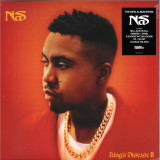
Nas King's Disease II Album Following the Grammy Award winning album, King’s Disease, the king returns to his throne with the second coming, King’s Disease II. The star-studded project offers tacit game on life, love, and loss, uplifting through action and lived experience in a way only Nas can. This is a body of work for the fans, for the day 1’s that contributed to the legacy. Alongside the decorated production savant, Hit-Boy, Nas remains rooted in lyrical prophetism while proving that he constantly reinvents the wheel. The sequel to last year’s King’s Disease features Ms. Lauryn Hill, Eminem, EPMD, Hit-Boy, Charlie Wilson, YG and more.
Features new collaborations with Laraaji, Janie Cowan, Masayoshi Fujita, Qasim Naqvi, Brad Weber, Hanna Benn, and PRINTtEXT. A coproduction of Anchorage Museum, National Geographic Society, and Temporary Residence Ltd. What does the Earth sound like? In Stations, the 10th volume in the Field Works series, producer Stuart Hyatt approaches that question with a team of scientists working on the EarthScope experiment. Using sophisticated ground recording
devices, Field Works has created a new type of music in which human voices sing along with the actual voice of the Earth. Stations features an all-star ensemble of vocalists and instrumentalists, including Hanna Benn, Janie Cowan, Masayoshi Fujita, Stuart Hyatt, Laraaji, Qasim Naqvi, and Brad Weber. The deluxe vinyl edition includes a bonus digital album of peer reviews by Deantoni Parks, Green-House, Olga Wojciechowska, Afrodeutsche, Nathan Fake, Ben Chatwin, Sophia Loizou, Amulets, Penelope Trappes, and Alva Noto. Stations was commissioned by The Anchorage Museum and The National Geographic Society. “For those interested in the intersection between field recordings and music, this is a must-have.” A Closer Listen // “A beguiling and quietly astonishing piece of work.”
Die „britischen Eagles“ sind im Anflug. Am 15. Oktober erschien„Enjoy The Ride“, das neue Werk der
Frontm3n!
Das zweite Studioalbum von Peter Howarth (The Hollies), Pete Lincoln (Ex-The Sweet) und Mick Wilson (Ex-10cc) beeindruckt mit tollen Melodien, eindrucksvollem Harmoniegesang, frischem Sound und feinstem Songwriting!
Anders als bei ihrem 2018er Debutalbum, als das Star-Trio den Fans in der Mehrzahl noch tolle NeuArrangements der Mega-Hits ihrer „alten“ Bands servierten, enthält die neue Scheibe zwölf nagelneue,
selbstgeschriebene und von Mick Wilson fein produzierte Songs, die dennoch 1:1 nach Frontm3n klingen und auch Fans von Toto und den Eagles komplett auf ihre Kosten kommen lassen. - Jetzt auch als 2LP!
Transparent blue[30,21 €]
Deluxe Moon Phase version includes a gatefold sleeve, poster and an extra track on a flexidisc.
Unlearning, the breathtaking debut from Glasgow’s Walt Disco, is steeped in metamorphoses, a stage show in two acts. It covers flings and romances, identities and bodies and change, profound familial love, and - of course - Hollywood glamour. The album plays out like a musical, with an emotional arc and even an instrumental interlude, winkingly titled ‘The Costume Change’.
While the themes of the album are universally relatable, Walt Disco’s gift is in the unique experience of discovery and heartbreak between queer people - something that frontperson James explores in depth on songs such as ‘Weightless’, ‘Be An Actor’ and ‘Hold Yourself As High As Her’. In Walt Disco’s eyes, it’s never too late to become what you might have been and there are plenty of possibilities to explore on Unlearning.
- A1: Love Makes The World Go Round ~ Deon Jackson
- A2: I’ve Arrived ~ Steve Flanagan
- A3: There’s Nothing Else To Say ~ The Incredibles
- A4: A Slice Of Pie ~ Jewel Akens
- A5: Girl Watcher ~ The O’kaysions
- A6: Hey Girl Don’t Bother Me ~ The Tams
- B1: Exit Loneliness, Enter Love ~ Tommy Mosley
- B2: The Snake ~ Al Wilson
- B3: Love Makes A Woman ~ Barbara Acklin
- B4: Lucky Is My Name ~ Bruce Cloud
- B5: The Duck ~ Jackie Lee
- B6: It’s Your Voodoo Working ~ Charles Sheffield
This collection is drawn from throughout the 60's, though it does not
entirely fit the commonly held belief that Northern Soul records are all
ultra-rarities, because half of the tracks here actually were major hits in the US, and four of them were top twenty entries! Included among the twelve artists are people who maintained long careers, some who had great success as writers, and one who went on to have a major No 1 in the seventies. We finish with Charles Sheffield (aka Mad Dog or Prince Charles) and his 1961 gem It’s Your Voodoo Working. A well known track among some classic hits and some perhaps lesser known songs, which is the nature of this must-have collection.
- A1: Better Use Your Hand
- B1: Gonna Fix You Good
“Little” Anthony Gourdine and the Imperials were originally a late Fifties U.S. doo-wop group who had a million-selling hit with their first single “Tears On My Pillow” in 1958. More hits followed, into the Sixties, including “I’m On The Outside Looking In”, “Goin’ Out Of My Head” and “Hurt So Bad”. But, our two chosen sides from 1966: “Better Use Your Head” and “Gonna Fix You Good (Everytime You’re Bad)” taken from the album Payin’ Our Dues failed to cause a stir at the time. Both earned U.K. releases on United Artists but would have to wait a further ten years before seeing any U.K. chart action, peaking at #42 when reissued back-to-back on U.A.’s Silver Spotlight Series. However, both sides became undergound Northern Soul favourites, first at Manchesters Twisted Wheel when “…Fix You Good” filled the floor and later, in 1975, when “Better Use Your Head” packed the ballroom at the legendary Wigan Casino.
Recorded in 1991 by the quintet of vocalist Billie Ray Martin and Birmingham-based electronic musicians Brian Nordhoff, Joe Stevens, Les Fleming and Roberto Cimarosti, Electribal Soul was conceived as the sequel to the band’s 1990 debut album, Electribal Memories.
Electribal Memories had yielded the hits ‘Talking With Myself’ and ‘Tell Me When The Fever Ended’ and pushed Electribe 101 to the forefront of a crossover electronic scene that fused dance music with pop savvy. They were snapped up by Phonogram, managed by Tom Watkins and hailed as “the next band to meet the Queen” by i-D. The band took the coveted support slot for Depeche Mode on their epochal World Violation tour and supported Erasure at Milton Keynes Bowl. Seen as the next big thing, everything pointed toward enduring critical success for Electribe 101, and the band settled into putting their second album together.
“There was a degree of confidence among us when we came to write the second album,” recalls Billie Ray Martin. “To me, the songs we put down sound like some of our finest moments.” More immediately lush and warm than the dancefloor-friendly structures of Electribal Memories, the clue to the sound of Electribal Soul lies in the second word in its title: soul. Songs like the aching sensuality of opening track ‘Insatiable Love’ or the emboldened defiance of ‘Moving Downtown’ showcase Billie Ray Martin’s distinctive vocal range as it moves from haunting quiet to dramatic, euphoric rapture. Lyrics from ‘Moving Downtown’ had found their way into ‘Pimps, Pushers, Prostitutes’ by S’Express, and the song would appear as ‘Running Around Town’ on Martin’s 1996 solo album. The strikingproduction on the version of the song presented on Electribal Soul suggests classic late sixties soul influences, such as those of legendary Motown producer Norman Whitfield, with the long shadow cast by Kraftwerk never being far away.
‘Deadline For My Memories’, the song that provided the title for Martin’s first solo album, was originally intended for the second Electribe 101 album. Its lyrics document a sense of freedom and liberation from the darkness of a bad relationship, accompanied by jazzy piano and organ sounds over a quiet rhythm and discrete electronics. In contrast, ‘A Sigh Won’t Do’ finds Martin in soothing vocal mode, despite its devastating message about the final ending of a strained relationship, her lyrics framed by restrained and subtle beats and sounds.
To spend time with Martin’s voice on Electribal Soul is to find yourself moved deep into the ordinarily impenetrable emotional corners of your own psyche. “I was into big ballads at the time and listening to all kinds of US and UK singers, and I was also young enough to want to prove myself as a belter of ballads,” explains Martin of the classic soul edge the album showcased.
Electribal Soul heads into darker territory with ‘Hands Up And Amen’. Originally written by Martin in Berlin in the period before moving to London and forming Electribe 101, the song was then perfected and enhanced by the band’s production nous. ‘Hands Up And Amen’ savagely documents the mugging of a woman in Queens, NY at gunpoint, only to resolve itself with a middle section that nods reverently toward gospel tradition. The song coalesces around a regimented break and burbling synths, finally ending with layers of urgent synth sounds.
Meanwhile, a cover of Throbbing Gristle’s ‘Persuasion’ takes us into a seedy world of sexual coercion and creepy infatuation, predating Martin’s chilling version of the track with progressive house unit Spooky two years later. Supported by a minimal, nagging rhythm and barely-fluctuating sounds, Electribe 101’s take on ‘Persuasion’ makes for uneasy listening, even though Martin manages to inject a sort of twisted sympathy for the protagonist as the song progresses.
That Electribe 101 were as comfortable offering complicated, nuanced tracks like ‘Persuasion’ alongside pop house bangers like ‘Space Oasis’ – written by Billie Ray Martin with Martin King before Electribe 101 was formed – is testament to the way the band wove their way effortlessly through electronic music reference points. Framed by light, jazzy piano melodies and string sounds, the energy of ‘Space Oasis’ soars so high that it could easily reach the moon, while highlighting how well-suited Martin’s voice has always been to club music. We hear the same reminder of her dance music credentials on ‘True Memories Of My World’, finding her describing a Hollywood actress who reflects on being used by directors to sell her ‘tears’.
Hooking up with the Birmingham-based Nordhoff, Stevens, Fleming and Cimarosti after placing a Melody Maker ad in 1988 (“Soul rebel seeks musicians – genius only”), it was clear that Martin had found a group that recognised the unique power and importance of her voice. Having worked with genres as diverse as reggae, rock and R&B, the four producers proved to be perfect collaborators, presenting carefully-sculpted backdrops that emphasised the towering emotional dexterity of her voice.
“Listening back to these tracks now, I was reminded of what a bunch of great musicians they were,” says Martin. “They had a rule that if a part still sounded good after a day or two then it could stay. If it bothered the vocals, it would go.” Even more so than on Electribal Memories, Electribal Soul places Martin at the captivating centre of these pieces, surrounding her voice with everything from dubby rhythms to chunky R&B beats to nascent trip hop breaks; wiry, acid-hued synths uncoil gently without ever dominating, while horn samples and lush, disco-inflected strings provide a rich, naturalistic accompaniment for Martin’s emotional outpourings.
The band finished mixing the album at London’s Olympic Studios in 1991. They were assisted by Apollo 440’s Howard Gray on production duties for ‘Deadline For My Memories’, ‘Insatiable Love’ and ‘Space Oasis’, with Gray supported by talented engineer Al Stone. Pre-release promo tapes were issued and an enthusiastic energy started to build around the band’s anticipated second album.
It was not meant to be. Against a backdrop of a worsening relationship with Tom Watkins, and a disinterested Phonogram, instead of receiving a positive reaction to the new tracks, Electribe 101 were swiftly dropped by their label. Electribal Soul languished, unreleased, and the band yielded to pressures that had been building and split up. After collaborating with Spooky and The Grid, Billie Ray Martin went on to release her seminal debut solo album in 1996, with it securing the era-defining hit ‘Your Loving Arms’, while the other group members continued to work together as The Groove Corporation.
Thirty years after the songs were recorded, we’re now finally able to hear what the second and final chapter of Electribe 101’s story sounded like. Electribal Soul shows that the band had really only just got started when they dropped their first album in 1990. Heard only by a select and privileged few, what followed elevated the band’s music to a completely new level, making Electribal Soul musical buried treasure of the most precious and rare variety.
Electribal Soul will be released on LP, CD and digital formats on 18th February 2022 through Electribal Records. The physical formats include extensive liner notes from Billie Ray Martin, and the album sleeve features unseen archive photographs by Lewis Mulatero from the original 1990 sessions with the band that were never used in the sleeve designs for Electribal Memories.
- A1: Marie Knight - That's No Way To Treat A Girl
- A2: Jack Montgomery - Dearly Beloved
- A3: J. B. Troy - Live On
- A4: Porgy & The Monarchs - My Heart Cries For You
- A5: Freddie Chavez - They'll Never Know Why
- A6: Clarence Reid - I'm Your Yes Man
- A7: Lou Lawton - Knick Knack Patty Wack
- A8: The Gentlemen Four - You Can't Keep A Good Man Down
- A9: Betty Moorer - Speed Up
- B1: The Masqueraders - Do You Love Me Baby
- B2: The Ivories - Please Stay
- B3: Leslie Uggams - Love Is A Good Foundation
- B4: Lord Thunder - Thunder
- B5: Maxine Brown - Let Me Give You My Lovin'
- B6: Billy Thompson - Black-Eyed Girl
- B7: Chuck Jackson - Hand It Over
- B8: Stanley Mitchell - Get It Baby
- B9: The Platters - With This Ring
WELCOME to the third volume in our Wigan Casino mini-series exploring the diverse playlist of the world's No.1 Northern Soul venue. The 23rd September 2018 marks the 45th Anniversary of the super club and we have selected 18 tracks that we hope capture the unique atmosphere of the huge ballroom and the mesmerizing dance moves that held us spellbound all those years ago.
WIGAN CASINO finally closed its doors in December 1981 after eight long years of weekly All-Nighters, during which time it came to define Northern Soul. The term had, of course, been coined years earlier, but it was the Casino Soul Club that established the style of music and the scene to the wider public.
The Casino transformed the Northern Soul scene into a mass youth movement with its own sound track, uniform, cultural icons and a 100,000 strong membership. In reality, the stereotype of moustachioed young men in baggy trousers and vest tops, festooned with sew-on patches, was actually quite short lived. Northern Soul was ever evolving and as the Seventies progressed so did the music and the fashion, embracing soulful-disco and jazz-funk. Today, 45 years on, it is still evolving and attracts followers from all over the globe to its international Weekenders and Festivals. Right On!