Emotional Especial returns to the music of Peter Reilly aka Persian, with a second EP diving into his extensive catalogue to celebrate this cult artist and evaluate his recent decision to retire from music production.
For over 20 years Reilly has been an exemplary electronic producer, a producer’s producer, a DJs producer, releasing over 50 EPs that crossed genres, from Breaks to Digidub, Electro to Garage, House to Jungle and on and on.
If this release is to act as an epitaph, then its exploration of Reilly’s wonderful programming, sampling and understanding of emotions is laid bare. Spread across a series of self-released edits hidden within limited run EPs, Questions appeared as something akin to beats interludes, across numerous releases over the last 10 years.
Bringing the best versions together on one EP, Questions 1, 2, 5, 3 and 7 have been re-edited, extended and sequenced into a continuous mix especially for this finale. Starting with the ambient breaks of Questions 1, this is a Balearic beginning where bubbling acid meets haunting refrain, before segueing effortlessly into the sunrise breaks of Questions 2. A nod to Carl Craig’s classic Incognito remix, the solo keys add a touch of jazz to a glide by shooting melody.
Side 2 rises. Question 5 heralds a half stepper Dub bassline riding the Amen breaks, the now familiar Brando sample, a wormhole in your brain that ties the EP together, joining the dots as strings float skywards, allowing Questions 3 break it all back down. Herbie Handcock inspired Funk Boogie beat, shouts out to his own Existence To Resistance label, leads to the pure ambient closing of Questions 7. A showcase again of Persian’s multi-genre dexterity and maybe, just maybe brings an influential music chapter to a close.
Cerca:the act
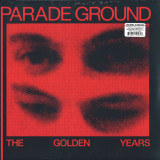
Parade Ground has always been the duo of brothers Jean-Marc and Pierre Pauly from Brussels, Belgium formed in 1981. Taking cues from Post-Punk, Coldwave, Dada and Surrealism, Parade Ground channeled suffering, tension and rage through pulsing synthesizers, skeletal guitar, severe bass and Jean-Marc’s expressive vocals as the most melodic and emotional instrument. The Golden Years is an 11-song, career-spanning collection of Parade Ground’s long out-of-print 7” and 12” singles as well as rare compilation tracks from the pioneers of electronic body music created during 1982-1988.
Parade Ground first appeared on the Nationale Rockmeeting LP in 1982, striking straight to the heart with the passionate plea “I Shut My Eyes.” Later that year the brothers met Daniel B. and Patrick Codenys of Front 242 beginning a collaborative partnership that continues to present day. In 1983 they released their debut 3-song 7” EP Moan On The Sly on the New Dance label, musically a hybrid of Joy Division and Fad Gadget. 1984 brought further explorations into the world of electronic body music with the 3-song Man In A Trance EP and 2 tracks on the live concert compilation Mask Promotion both records released on Front 242's Mask Music label. The following year the single Took Advantage/Moral Support 12” was released incorporating then, state-of-the-art modular synthesizers programmed by Daniel B. and back-up vocals from Flo Sullivan (A Formal Sigh, Shiny Two Shiny). Then in 1987 the brothers collaborated with Colin Newman of British post-punk band Wire, who produced and lent his vocals, guitars and keyboards to two songs ("Moans"/"Action Replay") while Daniel B. produced flipside "Gold Rush" on the Dual Perspective EP that stands alongside 80s anthems from Tears for Fears, Modern English, Echo & The Bunnymen. Finally in 1988 their debut album Cut Up was released on Play It Again Sam Records and featured the singles Strange World and Hollywood. In 1993 the brothers wrote and composed the vocals on two Front 242 albums Up Evil and Off. After 15 years of silence the boys released their second album Rosary in 2007 and continue to write new material and tour with their extensive catalog of dark dance classics. Each LP includes a 6-page press kit with lyrics, discography, photos and liner notes by Daniel B. of Front 242. The history of Belgian electronic music would not be complete without a trip through “The Golden Years” of Parade Ground.
ascha Funke is creating a long overdue monument to an almost forgotten cultural artefact of the GDR: the ‘Germina Speeder’ was the only skateboard made in East Germany before reunification and was launched in 1986. It was produced by VEB Schokoladen-Verarbeitungsmaschinen (a state-owned chocolate processing machine factory) in Wernigerode and was therefore affectionately known as the ‘chocolate board’. However, it was hardly suitable for actual skateboarding due to technical inadequacies. It is not known whether Sascha himself owned such a board, but the tracks on the ‘Germina Speeder’ EP definitely roll better than the original. The opener ‘Blaupunkt’ breathes the euphoric spirit of the legendary Berlin club ‘E-Werk’, while the title track would have been more at home at the ‘Dubmission’ parties in the Turbine. Sascha leaves the 90s behind with radiant positivism; ‘Bo Knows’ sounds more like a 2000s open air at Café Schönbrunn. The EP closes with ‘Mastermind’, a high-octane psy-proghouse banger that, like all four tracks, quotes the past but still has both feet on today’s dance floors. Or rather, is dancing. 4:1 for love!
Sascha Funke setzt einem nahezu vergessenen Kulturgut der DDR ein längst überfälliges Denkmal: Der “Germina Speeder” war vor der Wende das einzige in Ostdeutschland hergestellte Skateboard und kam im Jahre 1986 auf den Markt. Es war ein Erzeugnis des VEB Schokoladen-Verarbeitungsmaschinen aus Wernigerode und wurde daher liebevoll auch als “Schoko-Board” bezeichnet. Zum eigentlichen Skateboardfahren war es allerdings aufgrund von technischen Unzulänglichkeiten kaum zu gebrauchen. Ob Sascha selbst ein solches Board besaß ist nicht überliefert, aber die Tracks auf der “Germina Speeder” EP rollen allemal besser als das Original. Der Opener “Blaupunkt” atmet den euphorischen Geist des legendären Berliner Clubs “E-Werk”, während der Titeltrack eher bei den “Dubmission” Parties in der Turbine gelaufen wäre. Mit strahlendem Positivismus verlässt Sascha die 90er; “Bo Knows” klingt eher nach einem 2000er Open Air am Café Schönbrunn im Volkspark Friedrichshain. Die EP schließt mit “Mastermind”, einem hochoktanigen Psy-Proghouse Knaller, der wie alle vier Tracks zwar das Vergangene zitiert, aber dennoch mit beiden Füßen auf den Tanzflächen von heute steht. Beziehungsweise tanzt. 4:1 für die Liebe!
Over three years in the making, Needle Mythology Records is delighted to announce a super deluxe, expanded remastered reissue of The Lilac Time’s 1991 masterpiece, Astronauts. Released as a triple vinyl, triple CD or single vinyl, only 1000 copies of each format will be produced, there will be no further pressings. Both the 3LP and 3CD editions will come with an extensive 11,000 word oral history of Astronauts and liner notes by Needle Mythology co-founder and longtime Stephen Duffy fan, Pete Paphides.
All three albums including a 2024 remaster, a collection of works in progress entitled‘Softened By Rain The Making Of Astronauts’ and a live compilation ‘Any Road Up The Lilac Time Live 1990/91’ have been mastered for vinyl by Miles Showell at Abbey Roadand will be housed in a triple gatefold sleeve with a colour inner sleeve and new artwork for each disc, which has been especially created by designer Mike Storey. The main sleeve for Astronauts itself will replicate the original artwork but with the four distinctive “blobs” rendered in a red “foil” texture. In addition to these three disc sets, 1000 single vinyl remastered copies of Astronauts will also be made available, in a cherry red vinyl edition to match the outer sleeve.
With the shoegaze and baggy movements at their zenith, The Lilac Time’s fourth album was released at a moment when the left-field music zeitgeist was shaped by the nascent shoegaze, baggy and grunge movements. Whilst Astronauts conformed to none of those trends, neither was it the record Stephen had in his head when he finally finished working on it. We’ll never know how that record would have sounded, but it’s hard to imagine a better version of the album he did end up making. The songwriter who brought ‘A Taste of Honey’ and ‘Hats Off, Here Comes The Girl’ into the world envisaged the sort of choruses that would jump from the single speaker of your favourite transistor and lodge themselves into the collective memory bank.
But while he really was writing some of his most beautiful melodies, Astronauts is a family of songs that demands to be kept together in the sundazed cloud of inspiration that created it. It constitutes a partial retreat from the outwardfacing utopianism of its predecessors, choosing instead to dwell on the journey taken to get to this point. That this is an audibly different band to the pastoral expeditionaries of the group’s previous releases is almost entirely down to the departure of Nick Duffy and the arrival of Sagat Guirey. Suddenly, accordions, banjos and mandolins are out; jazz guitar is in. Sagat’s filigree work on the outro of ‘A Taste for Honey’ acts as a sublime parting shot to a lyric which acts as a wiser, wistful companion piece to Stephen’s 1985 solo hit ‘Kiss Me’, something tantamount to the camera retreating to reveal the years elapsed between the time depicted and the present day. The distance between the carefree youth of pop stardom and the first intimations of mortality can be measured between the first and second verses of the quietly devastating ‘Madresfield’; from the depiction of the deserted cricket pavilion obscured by fresh snowfall to the sudden shift in perspective from subject to protagonist: ‘No one ever told me/That killing time is harmful/For time cannot recover/What soon the ground will offer.’ For all of that, however, the resulting album didn’t correspond to the vision its creator had for it. At a loss as to what to do with it, Stephen surrendered Astronauts to Creation with no plans to promote or draw attention to it. The consciousness shift of which Stephen had hoped The Lilac Time might be a precursor hadn’t happened. Or, rather, it had – but it had happened elsewhere, in the Haçienda and Shoom and in Ibiza. Not on the hills of Herefordshire. In a nod to that sea change, Stephen handed over one song, ‘Dreaming’ to Hypnotone, who
The album SATO was made by the Ukrainian Crimean Tatar pianist and composer Usein Bekirov.
SATO was created during the difficult wartime for Usein’s motherland Ukraine and for the author himself.
Despite circumstances, the compositions of SATO express the ideas of the beauty and revival of Ukrainian music, a part of which is Crimean Tatar folklore.
The uniqueness of the release is caused both by the concept of the album and by the performers' star crew.
The jazz sound of the compositions of SATO is directed to the stylistic course of ethno-jazz and world music.
Rhythms and melodies of colorful Crimean Tatar folk music became the main source of inspiration in the creation of the album.
We can find both Usein's original author's themes, skillfully stylized to the oriental sound,
and referenced to the classic jazz vocabulary in its juicy riffs and grooves with features of fusion and funk music.
The name of the album reflected the inheritance of generations through music.
Sato is not only a folk instrument but also the name of the first Crimean Tatar jazz band, which made the first jazz arrangements of Crimean Tatar songs.
The music of this band became the basic musical experience of Usein Bekirov, because one of the members of the group was his father Riza Bekirov, to whom the album is dedicated.
The author and producer of the album is Usein Bekirov - Ukrainian pianist, composer, arranger, sound producer, and author of music for a number of films and theater performances.
Usein Bekirov cooperates with both foreign and Ukrainian musicians of the highest rank.
This is evidenced by the participants of the album Sato: Dennis Chambers, Randy Brecker, James Genus, Mike Stern, Ada Rovatti (USA), Hadrien Feraud (France), and Cenk Erdogan (Turkey).
Each performer reinterprets the author's material of Usein Bekirov through the prism of his own experience, character, and manner of performance, which was expressed in the daring stylistic combinations within a jazz style.
A special role in the creation of the album was taken by the participants of the recordings, especially, legendary jazzmen Dennis Chambers, Randy Brecker, James Genus, Mike Stern.
Their ideological and creative support became an important part of the creativity process.
Musicians expressed their impressions in small addresses for the audience.
One of the reviews of the musicians:
"The process of recording compositions was really exciting! This music reflects Usein's national origin and sense of his native culture.
It is full of real emotions. Actually, this music is quite difficult, but it is very well written and produced!
I sincerely hope you will notice this album, which also took part in Dennis Chambers, James Genus, Mike Stern, Ada Rovatti, and others.
I think it's going to be a really special album, can't wait to hear the final version.
When you hear about the premiere, I highly recommend listening to this new album created by Usein Bekirov.
It will be great!" Randy Brecker
Legendary French DJ and producer The Hacker debuts on Radio Slave’s Rekids with the ‘Laser & Smoke’ EP on 21st February 2025. The two-track ‘Laser & Smoke’ EP harkens back to The Hacker’s early 90s roots in Detroit-inspired Electro & Techno. First, he starts with ‘Turborave’, a tasteful, bleepy cut with an unignorable bassline and muted dub chords that wash over its snappy groove. ‘Turborave’ is the kind of heads-down, lose-yourself dancefloor moment for the later hours before ‘Harmonia’ sees The Hacker play with high-voltage cables on the B-side. Charged-up zaps and zippy acid call and respond while bodied drum hits keep the rhythm moving, whistles and pads occasionally joining in.
Pioneering DJ and producer The Hacker is renowned for being a leading proponent of Electroclash in the early 2000s, his Techno and EBM-infused sound, and iconic collaborations with Miss Kittin. With releases on labels like Dark Entries, Mannequin Records, and Turbo, as well as remixes for Air, Soft Cell, Dave Clarke, and Front 242, The Hacker remains a vital force in electronic music. He now adds Radio Slave’s Rekids to his extensive discography for the first time via the ‘Laser & Smoke EP.
Radio Slave’s Rekids was founded in 2006 and has since spawned successful offshoots with the Techno-focused Rekids Special Projects in 2017 and its newest sublabel, REK’D, in 2024. With Matt Edwards as the sole A&R, Rekids has been crucial in developing early artist careers and has become a haven for established acts operating in House and adjacent genres, having recently featured the likes of Harry Romero, Hilit Kolet, William Kiss, Bushwacka, Mathias Kaden, Tiger Stripes, Tal Fussman, and many more.
Oversized custom cut LP jackets (13” / 33.02 cm width)
Silkscreened with bespoke iridescent citrus green ink by Mark Rice
Short story by Natalia Zuluaga
Flexi 7”:
steaming mescaline (extended mix by bad lsd trips)
Citrus green metallic foil stamp
Pressed in full stereo
Edition of 150
I.
bad lsd trips is the collaborative duo of makers doris dana and domingo castillo flores. Respectively the two have fostered practices that have sprawled out through various approaches and, whether in the lanes of the musical or the contemporary arts, the phenomenology of the social and inclusive prevails. On ultrafest, this motif continues through the psychedelia of its eight time-defying recordings, welcoming the listener into an open temporal architecture of the stereo field as a signifier of environment. It is worth noting that the group began collaborating in Miami, Florida with longer form improvisations recorded to a stereo cassette deck. In these recordings, the paved geographical sprawl and oceanic view permeated the approach to amassing long swaths of sound material. Listening back on that work at the time of this writing, each track feels as though one is walking into an active space, arriving to an event already in full swing and finding your place inside of it. On ultrafest (this album) something different occurs. The space and events are built around you as you move through the record.
II.
The name of the album is ultrafest, which should effectively provoke your mind's eye the imagery of young people dancing, salivating, grinding, and imbibing chemical compounds to the perversely formalized musical genres of “Electronic Dance Music” and latter-era Dubstep often heard in European Uber rides and energy drink commercials. A far distance from the icy and machinic reverie of Techno’s finest rave eras or the notable historical contributions of Miami’s cerebral producers to IDM’s global output, ultrafest is a libidinal catharsis as festival scaled to a multinational corporation of hedonistic excess. The festival has been a hallmark of Miami cultural industry production and optical enticement for tourism, purportedly bringing in nearly a billion dollars in revenue to the city since 2012. Scores of documentation exist wherein this decadent escapism leaves the concertgoer, usually in some neon garment on a near nude body potentially adorned with fluffy faux fur leg warmers, facing a comedown from the combination of volume, sun, dehydration, and methylenedioxy-methylamphetamine. This MDMA experience characterizes an aspect of the way bad lsd trips employs vocals and pitch on this album. The detached, high octaved longing of a high pitched vocal is decoupled from its typical auditory body of song. High-pass clicks and pops touch the (h)air on the back of the neck, promising goosebumps and teasing towards euphoric rushes of dopamine, yet also exist decoupled from the body of song. As the dopamine depletes and the sun imposes itself, Miami’s downtown of skeleton real estate is your company as you meander towards your parked vehicle to rest your fatigued senses, elevated heart rate, and quench the need for air conditioning on your skin. The immediacy of bombastic social immersion to architectural alienation palpable here.
III...
- Nick Klein
With an intrigue for a particular niche of old UK hardcore which takes cues from Sheffield bleep ambience, heady rave futurism and soft, almost new age synth pads, Blank Mind presents ‘Lost Paradise: Blissed Out Hardcore 91-94’. Though the records gathered for the compilation span a short three-year period and bridge the gap between scenes, the collection manages to find a sweet spot where the influence of Warp’s Artificial Intelligence, back room chill out sonics and the nascent jungle boom meet with elements of Italian piano house and slower breakbeat cuts.
Opting to focus on atmosphere to highlight shared connections; in this case the duality of often serene and calming soundscapes with frenzied breaks and bass (see Hedgehog Affair’s ‘Parameters’ and Luxury’s ‘Twirl’ respectively); Lost Paradise is a formidable collection of tracks plucked from a thriving time for British dance music experimentation. The general themes of ascension and escapism channelled through digital samplers are also inescapably linked to a turbulent time in politics, beginning in the post-Thatcher years and culminating in the year the harshest anti-rave Criminal Justice Act came into force.
Initially building the compilation around DJ Mayhem’s track ‘Inesse’, Blank Mind label founder Sam Purcell and Amsterdam based producer Tammo Hesselink began a process of swapping favourites and deep cuts to spread across this 2x12” doublepack. The compilation avoids any obvious centrepieces through masterful sequencing, allowing for moments of refrain and tempo changes in a way that helps add to their overall vision of what this music is and can be; “We wanted to frame hardcore in a different light, looking at this idea of ecstasy through the traditional meaning of the word and exploring that symbolism”. By drawing from what some might consider the softer edges of the movement, the pair offer a look into the relevance of these tracks in the contemporary era, where the past years have seen both an explosion in popularity of old ambient/new-age music and a certified jungle revival.
- A1: Bobby Womack - Across 110Th Street
- A2: Samuel L Jackson & Robert Deniro - Beaumont's Lament
- A3: Brothers Johnson - Strawberry Letter 23
- A4: Samuel L Jackson & Robert Deniro - Melanie, Simone And Sheronda
- A5: Bill Withers - Who Is He (And What Is He To You?)
- A6: Johnny Cash - Tennessee Stud
- A7: Bloodstone - Natural High
- A8: Pam Grier - Long Time Woman
- B1: No Artist - Council Gargle - Detroit 9000
- B2: Foxy Brown - (Holy Matrimony) Letter To The Firm
- B3: Randy Crawford - Street Life
- B4: The Delfonics - Didn't I Blow Your Mind This Time
- B5: The Grass Roots - Midnight Confessions
- B6: Minnie Riperton - Inside My Love
- B7: Samuel L Jackson, Robert Deniro* & Bridget Fonda - Just Ask Melanie Voice Actor - Bridget Fonda, Robert Deniro*, Samuel L. Jackson
- B8: Vampire Sound Inc - The Lions And The Cucumber
- B9: Elliot Easton's Tiki Gods - Monte Carlo Nights
Dear Friends, Shouldn’t we all take a moment to reect on ourselves from time to time, break away from habits, and venture down new paths? Simon Hinter, widely recognised as a house producer with releases on renowned labels such as Freerange, Quintessentials, and Kerri Chandler’s Madhouse Records, is now daring to explore something new with us, while embracing something old: Drum’n’Bass is his great old love, now rekindled with his Confusion EP.
Unsurprisingly, this comes with intense emotions, and the four tracks of the EP oscillate between profound euphoria and melancholia. You can sense both, the beginning and the end of a party night at the same time. These tracks, however, defy the current listening habits shaped by the need for instant grati¬cation. Instead, they are an ode to the loop. Here, the mind is invited to engage, to actively listen and perceptually complete the experience. We hope you enjoy this rollercoaster of emotions! Sincerly yours, Brombért P.S.: The physical release comes with handcrafted, screen-printed artwork by the fabulous graphic artist Zatina Kessl
Inspired by "slow and quiet life on the southern coasts of England", the debut from CVOIA - a new collaboration between producers and Captured Visions label founders Adam O'Hara and Tom Parker - offers gorgeously lolloping, lazy beats and expansive, cinematic orchestration. There's the brittle, slow motion breakbeats and woozy instrumentation of the duo's original, then remixes from four of their favourite acts: Awakened Souls, Inhmost, Jack Lever and Synkro. All the tracks are about as strenuous as an afternoon on the beach, and equally nourishing, with Synkro's rich, synth-soaked near-ambient mix a dramatic, undisputed highlight. Jack Never's Northern Mix, meanwhile, wouldn't sound out of place nestled somewhere in Mo'Wax's first dozen or so releases. High praise indeed, but much deserved.
Longcut Records thrives on the transformative power of music. Discover concept albums that tell stories of journeys, struggles and raw emotions. Find your next soundtrack to let your mind wander or join us in our social activism, amplifying the voices that deserve to be heard. Just like our emblem—a spirited dachshund in motion—we embody relentless energy and a rebellious spirit against mainstream music. Mind us, but our true heartbeat resonates most powerfully with modern composition, ambient, techno, jazz, and experimental sounds.
Semi Delicious kick start 2025 with a very special EP from Amsterdam based producer D Stone. Following a slew of releases on labels like 803 Crystal Grooves and Cecille he delivers a killer 4-tracker that epitomises his deep, percussive house productions. Teeming with superb sampling, rolling drum grooves and basslines that’ll keep the dance flowing!
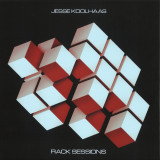
The history of electronic music has been defined by a handful of key synth manufacturers. Iconic brands, like Roland, Yamaha, Sequential Circuits and others, have pushed boundaries and blazed trails. But what gives each synthesizer its own unique sound? What makes one synthesizer sound distinctly different from another? And, what would happen if you only used one synthesizer to create a track? The major players of electronics are the building blocks for this music machine homage.
Rack Sessions takes one synth and gives it the spotlight, the instrument is the star. The style pursued corresponds to the unique sound of the chosen piece of equipment. Looming silver screen grandeur for “The D (Roland D-550)”, stargazing elegance with “Bell Hope (Yamaha TX81Z) or gentle rolling nostalgia for “MiR (Korg M1R)”, each work is the product of the tool selected. Beats take a backseat on the flip. Open highways and burgeoning dawns are conjured in “802 Nights (Yamaha TX802)” as the listener is transported to the expertly crafted tones of the 1980s. Koolhaas chooses his elements with subtlety, adding colour to his palette to create deeply evocative works. Attack ships cruise in the spatial “SOB (Oberheim Matrix-6)” before the stalker hunts the sodden streets of “MC202’s Act Like They Don’t Know (Roland MC-202)”.
The result is an album that is utterly distinctive. An immersive audio journey that guides the listener deep into the sounds of these very special synthsizers and the broad influences of this new talent.
Revolutionary DJ and producer Matador presents his exciting debut release for Hot Creations Wildside this July. It features two contrasting tracks that stay true to the ethos of the label synonymous with White Isle hedonism.
Wildside opens with spirited percussion of shakers and snare rolls, reverberating into a fuzzy and infectious bassline groove. The playful sample is looped over crazy effects and bright keys, before dropping into a final crescendo that will have feet stomping in unison. Sweet Release retains a classic deep house sound with dreamy chords and lush synth. The track develops with warm sub-bass, piano, arpeggiation and soulful vocals, resulting in a summertime anthem.
Matador has made his mark on the electronic music world since the very beginning, producing a BBC Radio 1 Essential Mix, becoming a brand ambassador for MODEL 1 and featuring in Resident Advisor’s ‘Top 20 Live Acts’ for three years in the early part of his career. In 2016 he launched his label RUKUS, releasing music from emerging and established artists alike. Spanning genres and formats he has made music for Sky TV and British Airways, his vinyl-only series Cyclone is firmly rooted in techno, whilst the stream only album Tuesday presents an exquisite take on ambient. His collaboration with Zurich’s Tonhalle Orchestra again highlighted his dexterity as a truly authentic musician. 2020 sees the launch of Matador’s podcast series focusing on studio gear and featuring interviews with touring artists. His new live performance ‘Live 2.0’ is also forthcoming and will feature hotly anticipated new music.
After Dull Boy Johnny's previous release, a double EP with a tropical A-side and an erotic B-side, this time the three gentlemen are out on the dance floor. After all, the neighbours decided as much.
Unlike the recordings of their previous work that took place abroad, this time they stayed in a steamy attic room in Belgium, where guitarist and producer Jan built a studio. Unable to record at night because of neighbours who did not (yet) appreciate Dull Boy Johnny's music, they dove into Antwerp's nightlife.
The group's previous work took you on a cinematic journey where every musical nuance takes you to a specific setting. Be it an erotic seventies scene, a beach party in the Bahamas, or a blood-curdling chase in the Wild West, Dull Boy Johnny covers it all. Nard Houdmeyers, Rik De Bal and Jan found each other in a shared interest in film genres such as blaxploitation, neo-noir and spaghetti westerns. And therefore also the artists inherent to these genres such as Isaac Hayes, Curtis Mayfield and Ennio Morricone. Dull Boy Johnny's conceptual approach to music can be traced back to this passion for cinema.
For the new EP, however, they traded that cosy movie-watching for turbulent nightlife (the angry neighbours, you know). Besides, it was about time to get their inspiration in the flesh. Dull Boy Johnny immersed himself in the pulses, flashes and swell of downtown Antwerp. Thunder chasing crept under their skin and then into their guitars. In grandfatherly fashion, they then turned to composing, first with just bass, guitar and vocals. In that small lineup and with the sounds of the night still reverberating in their minds, the first pieces of the puzzle were laid out. After that, the sound was opened up and a solid rhythm boost was added. This defined the catchy, up-tempo nature of the upcoming EP that centres on themes of dancing, flirting and partying. Expect rousing riffs, catchy hooks and swinging rhythms. Details were meticulously laid out and bricked into the songs with delicate grouting. The fine polishing of the songs was done with patient finesse and a constant attitude to serve the song. With songs like Suspicion, She Can Groove and Dynamite, it is immediately clear that the gentlemen got their mustard from the club: action, party and spunk! All without losing their typical sensuality.
Despite the different working methods for the third EP, there are a lot of recurring elements that define Johnny's fresh sound. The essence? Catchy high vocals contrasted with a sensual baritone voice, carried by a groovy bass and rhythm section. Around it, the details that give the songs the right atmosphere swirl.
Dull Boy Johnny's music prefers to function as a soundtrack to your own imagination. As you listen, you are invited to wander through the various landscapes of their musical world, regularly giving a nod to the more lustful side of your brain. The songs have already been praised for their compelling melodies and irresistible energy.
With this release, Dull Boy Johnny proves their ability to create timeless music that both touches the soul and moves the body. So surrender to Dull Boy Johnny's punchy grooves and dance the night away. Long live the neighbours!
1. Watermelon Man
This track version actually came from an improvisation that Allesandro IIona (Keys) made on a live show at RonnieScott's at the start of the year. I think we were were having some issues with one of the monitors on stage and it juststarted making this beeping sound. Then I remember Alleh just came in with that piano riffat the start and the rest was history. This one of thefirst tracks we recorded for the EP and I'm super pleased with how this one turned out. Afterseeing Herbie Hancock live for thefirst time the year before, this felt like the perfect tribute to him!
2. Mandible
The majority of the writing on this album was done at my studio space in Hither Green, where I am every tuesday! I usethis space to record but mainly a space to develop my art. So this EP all came from a few sessions there. We all haveour own creative things going on so it was really great to collaborate as a band and trash out some ideas we had.Mandible is one of my favourite tracks on the EP. It's very simple but leaves us a lot of space to explore some more freeimprovisation. I think in some of my previous recorded music I was more focused on creating well crafted music withgreat melodies and harmony. Whereas here there's a bit more focus on playing as a group and being more explorative inimprovisation. We also didn't have a melody for this track until a week before the recording! Sometimes it just takes awhile tofind that melody or it might just pop into your head one day.
3. Slum
This is a tune that was actually written by myself in 2017/18. Round about that time, I had been playing at a jam night ata warehouse unit in Limehouse called Unit 31. The night was ran by Pianist Raffy Bushman and Drummer Sam Michnikand was focused on hiphop and Jazz fusion. We would usually play a set of instrumental music before it opened up forvocalists and other instrumentalists to come and jam. It was a great place to try out new ideas, so I wrote this tune for itbut we never recorded it. It was really nice to revisit this tune and get it recorded properly at 'That SoundStudios' (Seven Sisters). This track is all about dynamics and a slow build throughout. Descending to more chaos at theend!
4. Red Pistachio
For thefirst two sessions we wrote with a different bass player to Edmondo Cicchetti who is on the recordings. A greatbass player and friend of mine Tom Driessler. This track started kinda exactly how it starts on the record, with that basshook. I'm very influenced by Christian Scott Atunde Adjuah and his melodic writing. Particularly on his album 'StretchMusic'. So this felt really inspired by that album. The chords don't really move around too much until the solo sectionwhere it becomes more like a blues. Then Allesandro get's a bit more loose at the end with the descending sequence.
5. Jerome arrived Late
Quite simply we started writing this tune before Jerome (Drums) arrived late. In the recording session we were a bitundecided about what to do in the solo section. We tried out a few different options before we eventually landed onfeaturing Gabriele Pribetti on Sax. I'm really into his solo on this as it's rhythmically and dynamically really exciting. As Imixed the record it was also a great solo to mess with and run through lots of different plug-ins. There's some weirddelays and phasing going on that and I added some octaves too in places.
While they’ve been active for more than two decades, it’s only been in recent years that the Berlin and New York based contemporary sonic arts platform, Soundwalk Collective, has begun to gather the accolades and attention that they rightfully deserve. Firmly rooted within a multi-disciplinary practice that engages the narrative potential of sound within the contexts of visual art, dance, music and film, as well as tapping anthropological, ethnographic, and psycho-geographic research, they’ve gained great note for collaborations with Jean-Luc Goddard, Nan Goldin, Sasha Waltz, Charlotte Gainsbourg, and numerous others.
Building on the back of 2023’s brilliant “All the Beauty and the Bloodshed”, Soundwalk Collective now returns with “Khandroma”, one of their most fascinating and singular endeavours to date, which re-engages their enduring creative partnerships with Patti Smith. Issued by Ubi Kū, a brand new imprint founded by the Italian Buddhist Union dedicated to the relationships between Buddhist cultures, music, and sound, across the album’s stunning two sides this incredible ensemble draws inspiration from and conjures Tibetan deities, the Himalayan Plateau, the valleys of Nepal and the highest peaks where the most ancient Buddhist temples reside, culminating as a sprawling sonic tapestry like little else. Issued as a beautifully produced, limited edition vinyl LP and CD, mixed and mastered by Giuseppe Ielasi, complete with a booklet featuring liner note essays penned by Chiara Bellini and Filippo Lunardo, and images by Stephan Crasneanscki, it’s hands down among our favourite releases by Soundwalk Collective to date and not to be missed!
An international experimental sound art collective founded in 2001 by the artists Stephan Crasneanscki, who was joined in 2008 by producer Simone Merli, Soundwalk Collective is a contemporary sonic arts platform, featuring a rotating constellation of artists and musicians, that, in vastly varied number of ways, has continuously explored the remarkable potential of sound within the contexts of visual art, dance, music and film, offering particular emphasis to anthropological, ethnographic, and psycho-geographic research, examining conceptual, literary or artistic themes. In addition to their many collaborations and accolades that attend to an increased ambitious catalog of releases, they scored Laura Poitras’ film, “All the Beauty and the Bloodshed”, which won the Golden Lion at the 2022 Venice Film Festival, as well performed and exhibited at Berghain, CTM Festival, documenta, Manifesta, New Museum, and Centre Pompidou, where they notably opened “Evidence”, a exhibition with Patti Smith comprising an audio-visual journey from the work of French poets Arthur Rimbaud, Antonin Artaud and René Daumal. While Soundwalk Collective’s output and use of sonority - sometimes original composition and others manipulated archival recordings - and context is varied, the project’s endeavours are unified by a focus on sound as material that is both tactile and poetic, pursuing layered narratives that address ideas of memory, time, love and loss. Their latest, “Khandroma”, enlisting Patti Smith’s contribution on one of its tracks, stands among the most exciting and rich of these explorations yet.
Perhaps the best way of approaching “Khandroma” is through Soundwalk Collective’s longstanding focus on the discipline of psycho-geography - a practice that interrogates the impact of an environment’s embedded histories and meanings on the psychology of the present - as well as the group’s integration of observations of nature, and uses of non-linear narrative, as a vehicle for recording and the synthesis of meaning. Like previous projects that have encountered them traveling extensively across the world, occupying diverse environments for long periods of investigation and fieldwork, during which they source materials for subsequent works, the material roots of “Khandroma” are a body of field recordings made by Crasneanscki, Francisco López, and Merli at altitudes between 2,760 and 4,500 meters, in varying locations across Upper Mustang during 2016.
Drawing the album’s title from the Tibetan feminine deity who reigns the skies, the album’s two compositions weave a stunning sonic tapestry from collaged sounds of nature, bells, drones, unplaceable tones and vocals, and in the case of its second piece, “Chasing the Demon”, the voice of Patti Smith, culminating as a deeply emotive and imagistic expanse that taps something far more profound than any of its single parts. As the collective states: “the album traces the continuous morphing of the wind into sound expressions. The Himalayan Plateau seems designed to amplify and echo the encounter of the breaths, the prayers, and the chants emerging from around and within those temples; amid the sounding of bells, the turning of prayer wheels, and the billowing of flags. A resonant musical body that we recorded so as to capture its boundless mutations; an unstoppable force that cries, whispers, and blows through and over stones, wood, empty halls and monastic robes, etching an ever-changing sonic landscape onto the surfaces it encounters.”
Immersive, stunningly beautiful, and haunting, “Khandroma” draws the ancient and distant into the consciousness of the present, close to home, bordering on the profound. Issued by Ubi Kū as a beautifully produced, limited edition vinyl LP and CD, mixed and mastered by Giuseppe Ielasi, complete with a booklet featuring liner note essays penned by Chiara Bellini and Filippo Lunardo, and images by Stephan Crasneanscki, we can’t recommend it enough.
After his furious comeback, STARTER frontman Francis Foss has fallen in love. In “True Love”, one of the two new tracks on the upcoming maxi-single, he sings about the most overwhelming of all feelings. “Love is and always will be the most beautiful thing in the world,” says the young-at-heart Francis with conviction.
But when you turn the orange record over, you quickly realize: “Vision on My Mind” sounds more melancholic, darker. “Being in love has its mysterious side,” Francis explains. “Dreams and reality often go hand in hand. Especially when the full moon rises over New York.
Behind this production is once again the Swiss duo VISION, who brought STARTER back to life with “Future Shock”. For “True Love” they were able to use a demo tape by Reto Keller, alias “Gary Gray”, who was active for STARTER from 1985-1989. The result is an exciting mix of genres in the experimental style of the 80s.
The 12″ double A-side maxi single “True Love/Vision on My Mind” by STARTER is strictly limited to 300 copies and is pressed on orange transparent vinyl. It comes in a disco sleeve (opening at the top) and is protected by a sturdy plastic cover.
‘Belgium is too small for pianist Alex Koo’ – De Tijd
‘Stunningly original’ – Downbeat Jazz Magazine
‘Fabulous technique, sounding downright genius at times.’ – London Jazz News
‘When listening, Keith Jarrett’s name came to mind several times. Not because Koo’s playing is similar to that of the American master, but because it is of the same exceptionally high level.’ – Trouw
‘Koo’s compositions and playing are absolutely world class.’ – Written in Music
The son of a Belgian missionary sent to Japan in the seventies and a Japanese peace activist, pianist and composer Alex Koo refuses to be boxed into any traditional category. As the renowned German Jazzthetik magazine put it, "Alex Koo defies categorization."
With ten uniquely personal tracks, Blame It on My Chromosomes is more than a musical statement; it is a form of self-therapy. "The only way not to spiral into depression as a jazz musician nowadays is to vent and lose yourself in the music," Koo shares. "Music needs a purpose beyond self-promotion. For me, it's about accepting who I am and letting go of anything else."
Featuring celebrated trumpeter Ambrose Akinmusire on two tracks, Blame It on My Chromosomes highlights Koo's fearless versatility. One of these tracks, "Jonass," is dedicated to Koo's childhood friend who tragically passed away, adding a deeply personal layer to the album. "When we were kids, we would skate and do stupid things with shopping carts, inspired by Jackass," Koo recalls. "That's why we called Jonas 'Jonass'-he had the biggest smile you could imagine, his laugh was contagious, yet he also was the most reckless one among us."
Koo, praised as "stunningly original" (Downbeat Jazz Magazine), is known for creating music that transcends genre boundaries, blending jazz, indie, contemporary classical and film music with innovative freedom. A native of rural West-Flanders, Belgium, he began his musical journey as a classical piano prodigy at the age of five. In his teens, he developed a passion for jazz and improvisation, earning praise from jazz legends such as Kurt Elling, Kenny Werner, and Brad Mehldau. Koo has even been described as "of the same rare high level as Keith Jarrett" (Trouw). His 2019 album, Appleblueseagreen, featuring Mark Turner and Ralph Alessi, was included in Downbeat's Best Albums of the Year.
Alongside Koo, Blame It on My Chromosomes features his longstanding trio, whose fearless interplay brings the album's narrative to life. The trio, with Koo on piano, Dré Pallemaerts on drums, and Lennart Heyndels on bass, represents the very best of the Belgian jazz scene. Their intuitive chemistry and artistry are the driving force behind the album's emotive power, with special guest Ambrose Akinmusire adding a transcendent layer on two standout tracks.