Wewantsounds it delighted to announce a deluxe reissue of Frank Foster's 'The Loud Minority' LP. Released on Bob Shad's Mainstream Records in 1972, it's a landmark album and one of the key political works of the 70s. Featuring an all-star cast of superb musicians including Elvin Jones, Stanley Clarke, Airto, Cecil Bridgewater and Marvin 'Hannibal' Peterson, it is also Dee Dee Bridgewater's earliest full recordings. This special edition includes a 20-page booklet featuring amazing unseen session photos recently unearthed, an introduction by Judd and Mia Apatow (Shad's grandchildren), an essay by British journalist Kevin Le Gendre and an exclusive interview of Cecil and Dee Dee Bridgewater by Paul Bowler. The album's original artwork as been recreated with original photos and the audio newly remastered from the original tapes.
When he recorded "The Loud Minority" in 1972 for Bob Shad's Mainstream Records, Frank Foster had been a solid sax player for nearly twenty years, playing with the likes of Donald Byrd, Thelonious Monk and The Count Basie Orchestra. For this special session, he gathered a stellar line up of old fellow musicians like Elvin Jones and Harold Mabern and young turks including Stanley Clarke, 'Hannibal' Marvin Peterson, Cecil and Dee Dee Bridgewater. Cecil Bridgewater remembers: "Frank, his thing was, any group that he had he wanted to give young musicians a chance." As usual for Mainstream sessions, the studio was booked for two days and the record was cut live, supervised by Bob Shad's trusted men, arranger Ernie Wilkins and engineer Carmine Rubino.
What came out of these two days is now the stuff of legend, four long funky jams fuelled by two distinct line ups playing simultaneously augmented with a powerful 6-piece brass section led by Foster. The album kicks off with the anthemic "The Loud Minority" (sampled by United Future Organization and DJ Shadow) with its long brass introduction followed by Dee Dee Bridgewater fiery poem, a politically charged statement expressing the fight for civil rights, before the whole group comes together for a funky explosion clocking at 14 minutes. "That was a period where we were really into our African consciousness" reminisces Dee Dee in the interview.
The album continues with the funky uptempo "Requiem for Dusty" while "J.P.'s Thing" adopts a slightly more spiritual feel, with a beautiful Fender Rhodes solo and Foster's soprano sax improvisation. The album ends with "E.W. Beautiful People", a long dreamy improvisation climaxing with Dee Dee Bridgewater's poignant vocals.
The Loud Minority is a key militant jazz manifesto and one of the landmark jazz funk albums of the 20th Century. The album was recorded in two days but its legacy lives on and still resonates loudly in the BLM days. Wewantsounds is delighted to reissue this major works with newly remastered audio and a deluxe 20-page booklet full of breathtaking unseen session photos and insightful texts telling the whole story of this superb album.
New super-groovy one-off pressing purple double-vinyl very limited edition of Miami Sound 2 housed in gatefold sleeve, complete with two full-colour inner sleeves containing extensive text and exclusive photography from TK Records in-house photographer Larry Warmoth. Soul Jazz Records’ Miami Sound 2 is a superlative collection of 70s soul, funk, disco and boogie featuring tracks from legendary artists such as Betty Wright, Timmy Thomas, Gwen McRae, Milton Wright, T-Connection and many more, all released on the mighty TK Records musical empire based in Miami, Florida.
Throughout the 1970s founder Henry Stone’s TK Records rose up to be one of the most important forces in black music, successfully pioneering the evolution in musical fashions from the early gritty funk and soul at the start of the decade to the arrival of disco in the mid-70s. This album is a rollercoaster journey across soul, funk, disco and boogie, a party-rocking dancefloor-filling collection of monster tracks that includes million-selling hits such as Betty Wright’s classic ‘Clean Up Woman’, Timmy Thomas’s ‘Why Can’t We Live Together’, T-Connection’s ‘Do What You Wanna Do’, anthemic rare groove club hits including Gwen McCrae’s massive ‘All This Love I’m Giving’ and Milton Wright’s ‘Keep It Up’, plus a host of hard-to-find gems and rarities from the likes of Raw Soul Express, Chocolate Clay, Beginning of the End, Robert Moore, Clarence Reid, Little Beaver, Paulette Reeves and many more. TK Records functioned more like a close-knit family than a typical record company. Based in the industrial Hialeah district of Miami, music man Henry Stone surrounded himself with a host of creative artists, musicians, songwriters and producers who created an immediately identifiable TK sound as well as making musical stars out of many of its artists
Kaiso Power is a collection of rare jazz, calypso and percussive gems from Trinidad and Tobago from the revolutionary generation of the 1970s, bringing radical new political vision and reclaiming ancient spiritual consciousness through music. At the dawn of the 70s a shift was taking place all around the world. The streets of Port of Spain thronged with Black Power marches, trade union demonstrations and Carnival protest bands - one epicentre in a growing global exchange of ideologies and strategies among Pan Africanist circles in Jamaica, Guyana, London, New York, Montreal, Lagos, Accra and beyond. And when the meetings were over, the revolution moved to the cramped secret dance halls, the Carnival fetes, the steelband yards. The music always had a sharp edge. Searing commentary has always been part of the various types of music in Trinidad, and in the absence of lyrics, the defiant use of the drum maintains the resistance, as well as the re-framing of the playing of European instruments to the needs of the message. Lancelot Layne, Delano Abdul Malik De Coteau, Andre Tanker, Clive Zanda, Mansa Musa were more than artists, they were teachers, community workers and advocates for justice. These recordings are as raw as an all-night Carnival jam, the horns loud, the percussion ringing out, the bass dripping with joy and rebellion. Under the modern influences is a solid rhythm, an unbroken connection to Africa, the songs and keys and cadences brought across the middle passage. These songs are a peep into the untapped treasures of a revolutionary generation, looking at the world with fresh eyes and believing that music was a central part of the mission to build consciousness and regain confidence.
out of Stock
Last delivered 29 days ago available to reorder, subject to availability
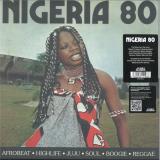
Strut presents Nigeria 80, the next essential chapter in the legendary Nigeria 70 series, diving deep into the explosive sound world of 1980s Nigeria.
Following the global impact of 2001's Nigeria 70, which helped introduce rare Nigerian recordings to international audiences, Nigeria 80 continues the journey, unearthing a rich, restless, and wildly creative decade of music from Lagos to Enugu. Despite economic instability and restrictive political conditions in the 1980's, Nigeria’s music industry flourished, driven by a growing network of independent labels such as Tabansi and Phonodisk, which championed local artists and expanded creative freedom. The 1980s also marked a significant rise in visibility for female artists, with trailblazers like Onyeka Onwenu helping to reshape the landscape and open doors for a new generation of performers, writers, and producers.
Nigeria 80 showcases the extraordinary breadth of this era, with all tracks reissued here for the first time. The compilation brings together essential recordings from across Nigeria’s musical spectrum: highlife greats Victor Uwaifo and Nico Mbarga appear alongside Paulson Kalu, whose personal favourite “Akugbue Nwa Ewu” stands out as a prime example of the style. Prince David Bull’s “Soko Soko” (later reinterpreted in Starboy’s Afrobeats hit “Soco”) features as a key touchpoint between eras. Segun Adewale delivers a driving juju workout, while Lekan Animashaun, longtime bandleader of Africa 70, contributes a late-era Afrobeat classic produced in collaboration with Fela Kuti.
The compilation also highlights more experimental and hybrid sounds, from I.C. Rock’s proto–hip hop gem “Advice” to Evi-Edna Ogholi’s self-produced reggae statement “The World”. The set closes with “Apama” by Ibealaoke Chukwukeziri, the “Apama Boy” from Achi in eastern Nigeria, featuring hypnotic vocals and percussion from his Anaedeonu band.
Nigeria 80 is available as a black vinyl 2LP housed in a gatefold sleeve or CD digipak, which includes a 16-page booklet with artist photos and liner notes by Francis Gooding. Compiled by Duncan Brooker. Audio restoration by See Why Audio. Mastered by The Carvery.
out of Stock
Last delivered 37 days ago available to reorder, subject to availability
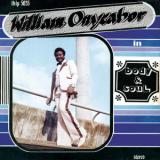
William Onyeabor was born outside Enugu, a small, rural town in Eastern Nigeria, he created his own genre of African electronic funk in the late 70s and early 80s, making music completely unique for his time. Today, he is reaching cult status among a growing list of admirers, including everyone from Damon Albarn and Hot Chip to Carl Craig and Madlib, with some likening him to the Kraftwerk of West Africa, or a precursor to LCD Soundsystem.
Among the crate-digging few that knew of him, he is considered a complete myth. While he has never performed live and almost never given interviews, his fantastical biography is scattered and has to this day not been verified. And he refused to speak about anything regarding the past.
According to various rumors, he left home following the Biafran War and went to study cinematography in the Soviet Union, returning in the mid-70s to start his own film company and record label, Wilfilms. He then self-released eight remarkable records from 1978-1985. He wrote and produced everything on his own, and possibly played every instrument himself. Then, at some point of his life, he became born again and denounced his earlier music, deciding it is something he would never speak about.
*The Mood Mosaic Vol. 12 – Mondo Porno* returns in a special new edition. This cult
compilation explores the sensual, cinematic side of rare groove, bringing together
funk, soul, erotic lounge, psych-funk and afro-funk through a selection of rare tracks
by artists including Chakachas, The Afro Rhythm Group, Bill “Ravi” Harris, Rita
Cadillac and South African Combo.
Fully remastered and expanded with a previously unreleased track, the reissue comes
as a double LP on white vinyl and includes an exclusive 50 × 70 cm poster.
A collector’s edition created for lovers of irresistible grooves, vintage sounds and cult
cinema.
In Walter Benjamin’s seminal essay “Art in the Age of Mechanical Reproduction”, he posits that the aura of art objects is destroyed by the ability to photographically reproduce them. When you had to make a pilgrimage to a work it remained elusive, charged, ever distant; but when you can easily see a reproduction, such aura dissipates. What Benjamin did not anticipate is that in the age of AI and the frictionless fount of digital content, we have imbued mechanical and analog means of media production with aura. Film cameras from the last 100 years are in high demand (the point and shoot Olympus Mju I featured in Wim Wenders film Perfect Days still sells for $200), vinyl sales continue to grow year by year, 35mm and 70mm film screenings have become aura-drenched events people travel across country for, and as to the world of vintage and analog synthesizers, when a friend asked for the price on the Yamaha CS-80 synth used on Toto’s “Africa”, the answer was a cool $60,000.
Despite the ability to simulate almost any synthesizer on a computer, the original physical units retain their mystique. Perhaps this lies in the physical process, many of these synths are temperamental and difficult to fully utilize, and the effort and ingenuity can be felt in ways that will always be absent from easy digital simulacra. Perhaps there is an aura in their imperfection, as Brian Eno wrote: “Whatever you now find weird, ugly, uncomfortable and nasty about a new medium will surely become its signature. CD distortion, the jitteriness of digital video, the crap sound of 8-bit - all of these will be cherished and emulated as soon as they can be avoided.” Some may call this nostalgia, but such sonic imperfections are the sounds of humans interacting with the physical world, and it is understandable to feel a pang of emotion and attachment in a time of exponential alienation.
Marche 22 was recorded over a week at the Museo Del Synth Marchigiano in Macerata, Italy. The museum is filled with rare and obscure synths (especially CRB, GEM & Elka) as well as salvaged materials from a nearby shuttered Farfisa organ factory, including MARS, an unfinished realtime audio processing application developed by IRIS - similar to the now well known MAX/MSP. Kyle Dixon and Michael Stein play a suite of pieces that encompasses the last sixty years of synthesizer music—there are nods to Cluster, Tangerine Dream, Jean Michel Jarre, and Morton Subotnick. Dixon and Stein are like jazz masters playing the American songbook with their own riffs and quotations. What shines through in these varied works that are sometimes rhythmic, sometimes melancholic, and sometimes both, is a soul, a spirit, an emotion vibrating through the tones like the charge of coming rain or the thrum of a distant train on the tracks. - Neil Fauerso
BBE Music’s celebrated J Jazz compilation series reaches its fifth and final volume in early 2026, culminating in a track list that maintains the exceptionally high standard first set with volume one back in 2018. This final volume features a selection of tracks that is as diverse as it is deep, reflecting the rich and varied Japanese jazz scene that spanned from the late 1960s to the late 1980s, a golden era of innovation and creativity. J Jazz volume 5 sees compilers Tony Higgins and Mike Peden dig ever deeper into their respective record collections to reveal tracks that encompass myriad styles including white hot jazz funk fusion from Toshiyuki Honda (Eastern Legacy) and Mikio Masuda (Sonic Barrier), super rare ethnic jazz crossover by Christal Zone - their one-off 45 promo release from 1971, Rai Rai, a deconstructed and abstract jazz classic by Yasuhiro Kohno with his solo piano rendition of My Favourite Things, and Mile and Half’s skin-tearing, shredding freak-out from their mega rare private press album.
A track that is so relentless, it leaves the listener in need of oxygen and a Valium. These hand-picked selections sit alongside other specially chosen numbers that embrace hard-driving samba (Seiichi Nakumura’s Judy’s Samba), epic head-nodding soul jazz (Masaru Imada’s World Line), psychedelic private press fusion (Aoyama Gakuin 101’s Fervor), angular post-bop tear-ups (Akira Miyazawa’s Nijimasu), intense and insistent fusion (Motohiko Hino’s Olive Step), serene cinematic pianism (Hideo Ichikawa’s On the Trade Wind) and tripped-out hallucinogenic tribal funky jazz (Masahiko Sato’s Garandoh’s Africa to Africa). Most of the tracks on this collection are being reissued for the first time, many of them only available previously on extremely limited and mega-rare private press or independent releases. J Jazz volume 5 is a fitting end to a compilation series that helped create a new audience and appreciation of Japanese jazz Some of the albums the tracks are drawn from are featured in the large format book J Jazz: Modern and Free Jazz from Japan 1954-1988, by Tony Higgins and Mike Peden, published by BBE Music in 2024. With almost 7000 words of extensive sleeve notes, J Jazz volume 5 comes in a triple 180g vinyl set inside a deluxe gatefold sleeve with obi strip, and comes with a 4-page insert, with photographs from the renowned Tokyo Jazz Joints project. It is also available as a double CD and digital download. Mastered at the Grammy-nominated Carvery Studio by Frank Merritt, this latest collection is a worthy successor to the preceding four volumes that set the bar so high. The J Jazz series is curated for BBE Music by Tony Higgins and Mike Peden.
out of Stock
Last delivered 67 days ago available to reorder, subject to availability
For nearly four decades, since its founding during the mid 1980s, the Belgian imprint, Sub Rosa, has continuously plumbed the depths of numerous, radical creative histories, assembling a catalog of releases that has almost no equivalent, while remaining nearly impossible to nail down. That said, for most of its run, Sub Rosa has been primarily recognized for its rigorous explorations of the lesser explored shadows of experimental sound practice (sound-art, sound-poetry, early electronic and electroacoustic music, free-improvisation, etc.), delivering a remarkable body of artifacts that have collectively helped to rewrite history in their wake. While it's always been impossible to anticipate where the label might take us next, threading their catalog are plenty of releases that throw further wrenches in the cogs, expanding our understanding of what they pursue, as in the case of a handful of titles, appearing as early as the 1980s, dedicated to ethnographic field-recordings from various parts of the world. Among the most striking and celebrated of these was 2017's Ethiopian Urban And Tribal Music: Mindanoo Mistiru / Gold From Wax, comprising an astounding body of recordings made by Ragnar Johnson and Ralph Harrisson in Ethiopia during 1971, reissuing material originally released by Lyrichord the following year. Now, Sub Rosa returns to the incredible work embarked upon by the pair and captured on that same trip with Ethiopian Musics 1971, comprising the recordings originally released by Ocora shortly after their completion, expanded in this edition to include an entire disc of never before released music. Widely regarded as some of the most important field-recordings ever made of indigenous Ethiopian folk music (as captivating and intoxicating as they are revelatory: providing insights into the roots of the country's singular traditions of popular music and jazz that have come to be celebrated the world over), this incredible collection is issued by Sub Rosa in a beautifully produced 2LP edition, complemented by a four page insert providing detailed descriptions of each song, as well as notes by the ethnomusicologists and recordists, as well as a 2CD edition, with a twelve page booklet. Insanely good and absolutely essential for any fan of field-recording, ethnomusicology, the music of Ethiopia, or the label's mission at large. Once again, Sub Rosa has defied our expectations and delivered a remarkably important intervention in the history of recorded sound.
Located in the Horn of Africa region of East Africa, few cultures are distinctly singular, while being so diverse (containing 80 distinct ethnic groups who speak 70 languages and 200 dialects) as that of Ethiopia. The home to some of the oldest surviving sects of Judaism, Christianity, and Islam (each contributing important aspects of its collective cultural body), particularly the country's culinary and musical traditions have become celebrated the world over, and (generally speaking) feel entirely independent of those of its neighbors. Given this, it's unsurprising that, during the summer of 1971, the young ethnographer, Ragnar Johnson, accompanied by Ralph Harrisson, traveled to Ethiopia to begin his brief career as a field recording ethnomusicologist, capturing material on reels of magnetic tape that would be subsequently released across three LPs for Lyrichord and Ocora, respectively, coming to form a cornerstone of documentation and study of the country's many indigenous musical traditions, as well as providing wide, global access to them for the first time. While Johnson's recording career was relatively brief, ending toward the end of the decade when he began to focus more on teaching in UK universities, with a focus on the anthropology of art and social anthropology, his impact on the field was lasting. Between 1971 and 1979, in addition to those he made in Ethiopia, he made hugely significant recordings in Yemen (also issued by Lyrichord before being reissued by Sub Rosa) and Papua New Guinea, which were originally released by David Toop's Quartz Publications to wide celebration, before being revisited by Ideologic Organ in 2023.
While it's worth noting that commercial releases of ethnomusicological recordings by labels like Folkways, Lyrichord, and Ocora were still in their relatively early days when he entered the field, Johnson's recordings quickly stood apart for their vivid qualities and clarity of space, allowing them to stand the test of time. As he later stated: "I used a Uher Report L stereo tape recorder, BASF quarter inch tapes at a recording speed of seven and a half inches per second with two directional microphones mounted to record an isosceles triangle of stereo sound," he reveals. "The location of the microphones and musicians was critical. The musicians were fully informed of all aspects of the recording process."
Johnson's recordings are extremely vivid, there is a clear sense of space and the cries of the flutes exist across the entire stereo field. It's a reflection of Johnson's skill as a field recordist that his recordings continue to be reissued over forty years later. "I used a Uher Report L stereo tape recorder, BASF quarter inch tapes at a recording speed of seven and a half inches per second with two directional microphones mounted to record an isosceles triangle of stereo sound," he reveals. "The location of the microphones and musicians was critical. The musicians were fully informed of all aspects of the recording process… I used to enjoy being in the moment and hearing something wonderful despite the stress of the vigilance required to ensure that the recordings were accomplished according to plan. The responsibility is to record and document the music as effectively as possible so that it has been preserved for posterity. It is better to actually record music than to sit in a seminar room debating the ethics of recording music." It is this very ethos and sense of clarity that can be encountered across the length of Ethiopian Musics 1971.
For the sake of clarity, the two LPs of material that comprise Ethiopian Musics 1971 should be regarded as a single body of recordings alongside those made in Ethiopia by Ragnar Johnson and Ralph Harrisson during the summer of 1971 (previously issued by Lyrichord and reissued by Sub Rosa), and as two that have, until now, remained historically distinct. The first LP gathers that material released by Ocora during the early 1970s on Musiques Ethiopiennes, while the second comprises (as far as we can tell) twelve never before issued recordings, expanding the journey and making this the definitive edition of the release with its incredible total of 23 recordings of songs, allowing it ever greater scope to achieve the recordists' modus operandi of capturing the broadest and most diverse cross section of Ethiopia's many musical cultures, ranging from different forms of urban music captured in Addis Ababa, documenting largely orally transmitted idioms within which lyrical content is given greater emphasis than the instrumental components (played on masenko fiddles, craar and bagana lyres, washint flutes and kabaro drums), to folk idioms hailing from the Danakil desert and the border regions with Sudan and Kenya. There are songs sung and played in bars, divination chants, laments, dances, Christian songs, and Amharic sung poetry, to only begin to scratch the surface.
Ethiopian Musics 1971 is one of those rare albums where each musical moment is pure, intoxicating gold, while also being greater through the sum of its parts. There are the many songs, forming a rich tapestry of remarkable range across the respective two LPs/CDs (moments that wondrously flirt with sonic abstraction; hypnotic rhythms; pulsing chant; melodies that, in structural arrangement and tonal combination, help us reframe how such a thing might be understood, and a great deal more), each imbued with a remarkable directness and emotive sensibility, and there is the stunning quality of these recordings themselves, transporting each sound to our ears as though we intimately share its creator's space, while being imbued with the pure heart and remarkable spirit with which they were made. As we said before, it's little wonder, once heard, why these recordings and this music feels as fresh and relevant (enduring more than 50 years) today as when they were made. Once again, Sub Rosa has raised the bar with this essential addition to the incredible work that Ragnar Johnson and Ralph Harrisson did back in Ethiopia during 1971, radically expanding our access to the sounds that they captured with these stunning, beautifully produced 2LP and 2CD editions. Absolutely engrossing from the first sounding to the last, this one can't be missed.
Strut proudly presents the first-ever reissue of a landmark 1974 Ghanaian highlife classic Sikyi Highlife by Dr K. Gyasi & His Noble Kings, originally released on Essiebons.
A defining recording of the era, Sikyi Highlife bridges tradition and innovation at a pivotal moment in Ghanaian music. Deeply rooted in the classic 1950s–’60s highlife sound, K. Gyasi drew inspiration from the ancient sikyi drum-dance of the Akan people of southern Ghana, shaping the album’s rhythms around its distinctive pulse.
The vocal arrangements echo the traditional Akan modal style, grounding the music firmly in Ghana’s cultural heritage. Yet Sikyi Highlife is equally forward-thinking. As electric guitars became standard in highlife during the 1960s, the 1970s ushered in further experimentation. The Noble Kings broke new ground as the first highlife guitar band to incorporate keyboards and a full horn section into their sound, expanding the genre’s sonic possibilities while retaining its rootsy spirit.
Gyasi’s approach was part of a broader indigenisation movement among Ghana’s electric highlife bands in the post-independence era. Inspired by the nation’s ‘African Personality’ ethos and reinforced by Afrocentric messages arriving from American soul and funk, artists began reclaiming traditional forms within modern arrangements. Contemporaries included Koo Nimo, who revived the older palmwine style, and drummer Nii Ashitey, whose Wulomei band pioneered a folklorised Ga highlife sound from 1973.
Like many musicians of his generation, Gyasi was a passionate supporter of Ghana’s independence movement. In 1963, he travelled as a musical ambassador alongside Ghana’s first president, Kwame Nkrumah, performing across North Africa and the USSR and carrying Ghanaian culture onto the world stage.
The Noble Kings’ mid-’70s line-up featured some of the country’s finest musicians, including guitarist Eric Agyeman (who led the band at the time), Thomas Frimpong on drums and vocals, Ernest Honny on organ, and bassist Ralph Karikari - who was renowned for his innovative technique of translating the rhythms and tonal language of the traditional talking drum onto electric bass.
Upon its original release, Sikyi Highlife became one of the biggest-selling albums of the 1970s for Essiebons, earning Gyasi the affectionate honorary title of “Dr” from his devoted fans. Today, the album remains an evergreen classic, still cherished across Ghana and beyond.
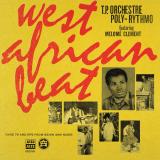
For the last few years Acid Jazz has been the proud custodian of the Albarika Store legacy. Hailing from the small but culturally-significant state of Benin, the label was operational from the late-‘60s until the early ‘80s, and was home to some of the finest, deepest, rawest West African cuts ever. A font of local and regional music, infused with contemporary Western influences, the beating heart of the Albarika sound was the mighty T.P. Orchestre Poly-Rythmo, who in various guises released dozens of recordings for the label, under the leadership of Mêlomé Clément. The intoxicating originality of their sound stems from their combination of folkloric and sacred rhythms of the region, with the modernist sound of soukous, afrobeat, soul and funk. Recorded at EMI Studios in Lagos, these recordings have a unique high fidelity and have been a target for grail-hunting record collectors for decades. For this incredible 2LP collection, Dean Rudland and David Hill compile the Poly-Rythmo 45 releases; 7” single and EP sides lost to the seeds of time. Until now. Brought together for the first time, presented in a beautiful wide spine layout, the 2 LPs present a snapshot of some of the group’s finest work from the ‘70s, their distinctive beat already honed. The printed inner sleeves include images of the rare and collectable original labels and sleeves, along with sleeve notes by Francis Gooding
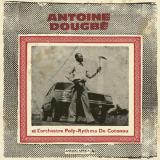
The prolific Benin-based Afrobeat legends Orchestre Poly-Rythmo de Cotonou return with a spectacular compilation alongside the enigmatic Antoine Dougbe, the self-styled 'Devil's Prime Minister.' This 12-track collection is the sound of the influential band at their peak and merging circular guitars, hypnotic synths, Afro-Cuban grooves and Cavacha rhythms into an unstoppable whirlwind of energy. Dougbe is an inventive songwriter and supplied compositions that the Poly-Rythmo arranged and performed here so they could lay down music that is fierce, mystical and rhythmically complex, as they always do. Few records convey the power of Benin's late 70s scene like this.
out of Stock
Last delivered 3 months ago available to reorder, subject to availability
Repress of the 1 st album of the fresh Afro funk sensation ! Recorded on analog equipment in Lyon in 2014 !
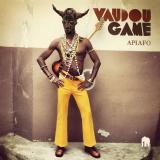
Peter Solo is a singer and composer born in Aného-Glidji, Togo, the birthplace of the Guin tribe and a major site of the Voodoo culture. He was raised with this tradition’s values of respect for all forms of life and the environment. With his new band, Vaudou Game, Peter Solo claims, and spreads this spiritual and musical heritage. Chants are at the heart of the Voodoo practice, but for times immemorial, harmonic instruments have never accompanied them. No balafon, no kora - only the “skins” support the singers. However, in 2012, Peter, along with his band based in Lyon, France, decided to explore and codify the musical scales that are found in sacred or profane songs of Beninese and Togolese Voodoo so they can be played easily on modern instruments. Peter composed the album Apiafo, using the two main musical scales of this tradition. The first musical scale on Apiafo leans towards raw Funk with a sound similar to the famous 70’s bands, L’Orchestre Poly Rythmo De Cotonou and El Rego. Funk, is the skeletal structure of this record, and provided the opportunity for Peter to invite his uncle, Roger Damawuzan - the famous pioneer of the 70s Soul scene - on two tracks. Their collaboration on “Pas Contente” is a highlight on this 100% analog album. Apiafo was entirely recorded, mixed and mastered with old tapes and vintage instruments. The second scale, which had never before been transposed for instruments, evokes deeper feelings and a sacred ambiance. The moving song Ata, an invocation to a supreme divinity is another highlight of this record. Even if some can recognize similarities between this scale and Ethiopian scales, they are in fact different. Peter, the only African band member, introduced the other musicians to the universal values of Voodoo and he taught them his native language. On the recording of Apiafo and during their live performances, the musicians all sing and answer Peter in the Mina language. The strive for authenticity, the analog sound and vintage looks don’t mean that Vaudou Game is looking backwards. This is Togolese funk, born in the post-colonial era but that never before explored its ancient roots so deeply and proudly.
Released in 1970 the band's only album, the extraordinary Afreaka!, demonstrates their excellence in playing psychedelic soul, dub- heavy funk, progressive rock, afrojazz and black acid rock. Demon Fuzz these days are amongst the most bootlegged and sampled bands from the early 70s British underground. It was a Billboard "4- STAR" selection in June 1971.
The band's name means "devil's children or bad policemen". They originally played soul, but the music they heard during a trip to Morocco lead to a change in their style to what has been described as a blend of funk, rock, jazz, and African music. Afreaka! is now available as a limited edition of 2000 individually numbered copies on purple translucent coloured vinyl. The sleeve has a nice linen laminate finish
Brixton Heights Records proudly presents the brand new single ‘Am I the Same Man?’, a soulful roots-reggae gem featuring a heavyweight all-star lineup including: Mafia & Fluxy on drum and bass respectively, the Ital Horns on brass, Gussie Clarke on mastering and Gaudi on falsetto vocals + BVs, dub mixing, piano and co-production alongside The Brixton Heights Orchestra.
Drawing inspiration from the timeless instrumental groove ‘Soulful Strut’ by Young-Holt Unlimited, the track channels vintage soul through a deep lovers-rock lens. A fresh and earnest reinterpretation of Barbara Acklin’s 1968 classic ‘Am I the Same Girl?’, this version flips the narrative with an adaptation on the lyrics voiced by none other than Gaudi singing in falsetto, resulting with a smooth, dub-infused love song that combines classic soul and international reggae into a modern masterpiece.
Gaudi is not stranger to falsetto-singing and backing vocals, in fact he has lent his distinctive vocal talent to albums by reggae giants such as Steel Pulse, Horace Andy, Lee “Scratch” Perry, Don Letts, Johnny Clarke, Mad Professor, Hollie Cook, Michael Rose, Creation Rebel, Africa Unite, Awa Fall, African Head Charge, Lion D & Capleton.
Mixed and co-produced by Gaudi at his Metatron Studio in London UK and mastered by Gussie Clarke at Anchor Studios in Kingston Jamaica, ‘Am I the Same Man?’ is more than a cover version, it’s a heartfelt transformation that captures the emotional core of the original song while creating a whole new vibe that speaks to today’s lovers and soul seekers alike.
The B-side presents a meticulously crafted dub version by Gaudi, produced exclusively with analogue equipment and vintage studio hardware. The mix brings forward the intricacies of the original instrumentation and enhances the lyrical elements through spacious delays and warm, analogue textures. Last but not least, in order to maintain the highest level of authenticity and an organic sonic texture, all recordings were done at 432Hz, tuned to resonate naturally.
This record is a tribute to one of the greatest funk and soul singers of all time: James Brown, also known as “The Godfather of Soul.” Undoubtedly, he was a true icon of African-American music in the 1960s and 70s.
As the leader of bands like The Famous Flames and The J.B.’s, Brown was renowned for his electrifying energy on stage.
This song moves between soul and reggae, keeping the pulse of both genres alive. It features a heavy groove full of rhythmic and melodic arrangements, with strings as the main source of color and a vocal performance charged with power and charisma.
Finally, the lyrics have been adapted to better reflect our current reality, while preserving the spirit of homage and renewal.
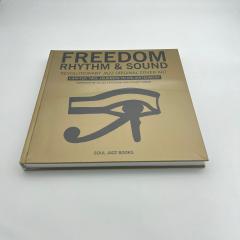
Freedom, Rhythm and Sound showcases the stunning graphic works of independently published jazz record cover designs in the 1960s, 70s, 80s and beyond, from radical jazz musicians such as Sun Ra, John Coltrane, Pharoah Sanders, The Art Ensemble of Chicago and others. This second Freedom, Rhythm and Sound book is a new ‘chapter’, featuring hundreds more unique, rare and beautiful jazz record cover designs.
This book documents the continued development in jazz as African-American artists set out on new journeys to enlightenment, heading out into Europe at the end of the 1960s. The artwork of these (often self-produced) record cover designs during this era reflected their radical agenda, spiritual awareness and singular search for musical and personal freedoms. From raw, DIY aesthetics to lyrical and poetic illustrations, sometimes containing futuristic worlds and ancient landscapes, the designs are always bold, strikingly graphic, and most importantly capture the spirit of the music, giving them a unique beauty. The book also includes sections on African-American poets and writers, Civil Rights and Black Power Movement leaders (Martin Luther King, Malcolm X) and early musical pioneers (Yusef Lateef, Max Roach, Art Blakey and others), all of which helped influence and shape the world of radical and spiritual jazz from the 1960s and onwards to its rebirth today. Since the 1980s, Gilles Peterson has been a pivotal figure in the club scene, renowned for his genre-defying approach to music with jazz at its core. As one of the UK’s most iconic DJs, he has spent over 40 years shaping music trends as a radio presenter, club DJ, producer, and festival curator.
He hosts a flagship show on BBC Radio 6 Music and, in 2016, launched Worldwide FM. He is founder of the Worldwide Festival in the South of France and We Out Here festival in the UK. He runs the label Brownswood Recordings, dedicated to discovering and promoting new talent and bringing fresh voices to the global stage. Stuart Baker founded Soul Jazz Records in 1992. For more than 30 years the record company has released over 500 records covering a genre-defying array of non-mainstream musical worlds – Jazz, Reggae, Punk, Latin, Brazilian, Disco, African, Gospel, Acid House and more.
In 2017, part of Stuart Baker’s jazz record collection (much of which appears in Freedom, Rhythm and Sound) was featured and displayed as part of the Soul of a Nation: Art in the Age of Black Power exhibition at Tate Modern in London, and subsequently at The Broad in Los Angeles (2019) and Brooklyn Museum (2019). Soul Jazz Books launched in 2007, a similarly diverse and critically acclaimed publishing house with graphic art, culture and photography titles that include ‘Voguing and The House Ballroom Scene of New York’, ‘Dancehall – The Rise of Jamaican Dancehall Culture’, ‘Yo! The Early Days of Hip-Hop’, ‘Freedom, Rhythm and Sound – Revolutionary Jazz Cover Art 1965-83’, ‘Punk 45 – The Singles Cover Art of Punk 1976-80’ and others. Reviews of the first Freedom, Rhythm and Sound: “A remarkable book” The New Yorker “If there can be such a thing as a revolutionary coffee table book, Freedom Rhythm & Sound is it―a chance to wallow in the Afrocentric visual language of the non-mainstream black jazz vinyl of this extraordinary fertile and creative period.” Eye “Like the uncompromising music they represent, all the covers broadcast a sense of bold, brazen ideology” Pitchfork “A definitive account of a complex passage of cultural upheaval.” The Independent “For decades, no one was sure how to refer to this extraordinary music.
Calling it ‘fire music’ does justice to its incandescent spirit, still burning from the pages of a book that preserves the memory of a special time.” The Guardian “These sleeves are the original independent legacy to America’s premier art form – Jazz. In terms of African-American cultural expression they are part of a long line of thought that was charged in the 1960s by John Coltrane, Martin Luther King, Ornette Coleman, Malcolm X and others” The Wire “A hefty compendium of radical jazz cover art” Mojo
This album is a compilation of hard-to-find 7" singles released in Kenya by the Audio Productions stable in the first half of the 1980s and most have never been released outside of East Africa.
Amongst others, it features artists such as Super Wanyika, led by the legendary vocalist Issa Juma, originally from Tanzania, who played a pivotal role in the Kenyan club scene in the late 1970s and early 1980s. Also featured is Orchestra Shika Shika, a Congolese band based in Nairobi, who recorded more than 70 singles for a host of labels. Their track included here, " Diana" is one of their very best and was the title track of their album released in 1983; featuring the sublime vocals of Jimmy Monimambo and Lovy Longomba.
We hope you enjoy this deep dive into these lost sounds from Kenya's rumba and benga scene!
(The LP also comes with a free CD featuring additional material)
This debut album captures Massive Dread at an early stage of his career when he was starting to make a name for himself as a unique voice in reggae. The production has that classic late-70s roots vibe—deep basslines, steady drum rhythms, and dub influences mixed with Massive Dread’s distinctive vocal style.
The album contains a mix of vocal tracks and deejay toasting, showcasing Massive Dread’s versatility. His style helped bridge the gap between the roots reggae era and the rising dancehall movement.
180-gram Vinyl incl. insert with sleeve notes.
Musicians
Drums: Lowell ‘Sly’ Dunbar
Bass Guitar: Robert ‘Robbie’ Shakespeare
Lead Guitar: Winston ‘Bo Peep’ Bowen
Organ: Ansel ‘Pinkie’ Collins
For its first vinyl release, Shakshouka Records proudly presents the first ever reissue of the Algerian Kabyle band Syphax, a 7-inch featuring two irresistible disco gems that set the dancefloor alight while channeling a kaleidoscope of psychedelic textures and North African Amazigh spirit.
Born in exile on the outskirts of Paris, Syphax fused psychedelic rock, funk, and North African rhythms with the lyricism of Amazigh poetry and the rebellious energy of the 1970s. This record pairs the celebratory "Thamghra" meaning "party" in Amazigh and originally featured on their long-forgotten LP, with the disco-infused "Skate Dance," released years before skate culture spread across the globe and a testament to the band's cutting edge.
Remastered by Nick Robbins and compiled by Cheb Mimo, this reissue restores the bold sound of Syphax: a voice of diaspora, freedom, and boundless creativity.
out of Stock
Last delivered 8 months ago available to reorder, subject to availability
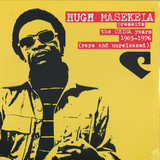
The Chisa Years: 1965-1975 (Rare and Unreleased) is a compilation album by South African jazz trumpeter Hugh Masekela. The album consists of 14 rare or forgotten tracks recorded by Stewart Levine and Hugh Masekela from 1965 to 1975 when they ran their own Chisa Records label.Thom Jurek of Allmusic wrote 'In sum, there isn't a weak moment on this entire collection. It's appeal is wide and deep and one can only hope this is the first of many volumes of this material to appear. BBE Records has done a stellar job in making this slab available.' Dan Nishimoto of the Prefix Magazine stated 'The compilation focuses on Masekela's original idea of 'African American Music.' From the early experiments of the Zulus (a group featuring M'Bulu) in mixing doo-wop, rhythm & blues and South African gospel and the mbaqanga/'Grazing in the Grass'-style work of the generically named Johannesburg Street Band to the clearly Fela-influenced Ojah (Masekela's band in the mid-'70s, consisting of players from Ghana and Nigeria) and the readyfor-primetime belting of M'Bulu, each track reveals a multi-pronged effort to find and challenge the notion(s) of how African and American cultural forms could interact.'
Upon release in 1971, Africa’s Blood was the first record Lee “Scratch” Perry released under his own name, although his band
The Upsetters do appear on most of the tracks. If any album serves as a good peak into what was happening in Jamaican music
in the early 70s, Africa’s Blood is the way to go.
A limited edition of 1000 individually numbered copies of this reissue will be pressed on purple coloured vinyl,
which makes the record look as vibrant as it sounds.
"Hasabe" is a thoughtfully curated collection of Ethio-groove recordings from one of the overlooked pioneers of 1970s Addis Ababa's vibrant music scene-Ayalew Mesfin and his Black Lion Band. Expect trap drum kits, jazz big-band styled horn sections, funky guitars played through wah wah and fuzz pedals- all seasoned with a unique Ethiopian touch_ For many, the music created in 1970s Ethiopia will sound both familiar and alien: while the trappings of '70s Ethiopian music carry some aspects that those in the West will easily identify with-trap drum kits, jazz big-band styled horn sections, guitars played through wah wah and fuzz pedals-the Ethiopian style of singing, and the modes in which the musicians move, may confound. Perhaps some who have delved into the instrumental Ethio-Jazz of Mulatu Astatke-a well-known Ethiopian musical export, relatively unknown in his homeland-will have a context in which to engage this great compilation of '70s Ethiopian music by Ayalew Mesfin. The music Mesfin created with his Black Lion Band is amongst the funkiest to arise from Addis Ababa; his recording career, captured in nearly two dozen 7" singles and numerous reel-to-reel tapes, shows the strata of the most fertile decade in Ethiopia's 20th century recording industry, when records were pressed constantly by both independent upstarts and corporate behemoths, even if they were only distributed within the confines of the unconquerable East African nation. Ayalew was forced underground by the Derg regime that took control of the country in 1974. Until recently, only four of Ayalew Mesfin's tracks had been reissued, appearing in the well-known "Éthiopiques" series. "Hasabe", a carefully curated collection of his singles, marks the first comprehensive release of this powerful and long-overlooked body of work by an artist whose originality and resistance defined a genre: Ethio-groove. More than four decades later, this album offers the rare opportunity to rediscover a vital and beautiful chapter in global music history. We are now reissuing "Hasabe" once again thanks to a collaboration with Now Again. Pressed on 180g vinyl.
Chris Hontos und Aaron Anderson sind sowohl als Nuke Watch als auch als ihre auf Samples basierenden Cousins Beat Detectives tätig. Die Detectives sind das, was The Beatnuts unter dem Einfluss einer experimentellen dissoziativen Droge produzieren würden, während Nuke Watch eine freie Improvisationsband ist, die keinen Grund sieht, zu quietschen, und an Vergnügen glaubt. Das neue Album von Nuke Watch, "Grave New World", ist ihr zehntes seit Beginn des Projekts im Jahr 2020. Diese Musik taucht ein, kollidiert und quillt aus einer Tasche heraus, der Sound einer elektrischen Welt, die sich selbst mulcht. Modulare Synthesizer breiten sich wie Cordyceps in Räumen voller Bass, Saxophon und Handtrommeln aus und hinterlassen einen neuen, verseuchten Raum: leuchtend, sicher und verrückt. Diese Musik wurde mit Instrumenten gespielt, ein Großteil davon komplett live. Die meisten Tracks sind Aufnahmen von Hontos und Anderson mit ein oder zwei weiteren Musikern, es handelt sich also größtenteils um Trio-Aufnahmen. Man ist versucht, Grave New World als Fusion zu bezeichnen, aber das trifft es nicht ganz. Otto Willbergs Bassspiel ist so versiert, dass es Giganten wie Percy Jones und Jaco heraufbeschwört, und Leonard King nähert sich dem Bass ein wenig wie jemand aus Felas Africa 70. Die drei verarbeiteten Blasinstrumente - Zack Stafford an der verarbeiteten Flöte, Christopher Farstad am MIDI-Blasinstrument und Cole Pulice am verarbeiteten Saxophon - bringen die Musik in die Nähe des Jazz, obwohl keine der Kompositionen der Band wirklich nach Jazz klingt. Outtakes aus der Star Wars Foley-Datenbank? Eine berührungsempfindliche Multimedia-Gewächshausausstellung, die von einer Kindergartengruppe übernommen wurde? Eine Zoom-Session mit Latenzproblemen, verursacht durch Musiker auf fünf verschiedenen Kontinenten? "Grave New World" könnte man als Weltmusik bezeichnen, in dem Sinne, dass, wenn man die Welt zu einem Trichter zusammenfalten, schütteln und alle auf einen Teller voller Menschen rutschen lassen würde, mit denen sie nicht aufgewachsen sind, sie am Ende vielleicht genau das hier produzieren würden. - Sasha Frere-Jones, 2025
In Guadeloupe, many people think that jazz and ka music are like a ring and a finger. To some extent, the same could be said about so called Latin music and the music played in the French West Indies.
Both aesthetics were born in the Caribbean and bear so many connections that they can easily be considered cousins. In constant dialogue, there are lots of examples of their fruitful alliance and have been for a while. The English country dance that used to be practiced in European lounges came to be called kadrille in Martinique and contradanza in Cuba. They both featured additional percussion instruments inherited from the transatlantic deportation. Drawing from shared feelings about the same traumatized identity – later to be creolized – it would be hard not to assume that they were meant to inspire each other. The golden age of the orchestras that graced the Pigalle nights during the interwar period further proves the point. As soon as the 1930s, Havana-born Don Barreto naturally mixed danzón and biguine music in a combo based at Melody's Bar. In the following decade, Félix Valvert, a conductor who was born and raised in Basse-Terre in Guadelupe, also worked wonders in Montparnasse with La Coupole, which was an orchestra made up of eclectic musicians. Afro- Caribbean performers of various origins were often hired on rhythm and brass sections in jazz bands, which used to enliven the typical French balls of the capital. In the 1930s and onwards, Rico’s Creole Band was one of them.
Martinican violinist-clarinettist Ernest Léardée, who would become the king of biguine music as well as the main figure of French Uncle Ben's TV commercials (a dark stigma of post-colonial stereotypes), had musicians from the whole Caribbean sphere play at his Bal Blomet – and they all enchanted "ces Zazous-là" (according the words of Léardée's biguine-calypso piece). In les Antilles (French for French West Indies), music history started to speed up in the 1950s, when trade expanded and radio stations grew bigger. The Guadelupean and Martiniquais youth tuned in their old galena radio sets to South American and Caribbean music. As for the women traders, les pacotilleuses, they bought and sold goods across different islands (the "passing of items through various hands" was thought to be most pleasurable) and brought back countless sounds in their luggage. Such was the case of Madame Balthazar, who once returned from Puerto Rico with the first 45rpm and 33rpm to ever enter Martinique.
Out of this adventure was created the famous Martinican label La Maison des Merengues, a music business she opened and undertook with her husband and which proved to be a major landmark. At the end of the 1950s, in Puerto Rico, Marius Cultier competed in the Piano International Contest playing a version of Monk's Round 'Midnight. He won the first prize and this distinction foreshadowed everything that was to come. Cultier, the heretic Monk of jazz, was quickly praised for writing superb melodies, always tinged with a twist that conferred a unique sound to his music. It didn't take long for the gifted self-taught musician to get to play with Los Cubanos, making a name for himself thanks to his impressive maestria on merengues.
The rest is history. Besides, in the late 1950s, Frantz Charles-Denis, born into the upper middle class in Saint-Pierre and better known by his first name Francisco, went back home after working at La Cabane Cubaine – a club located rue Fontaine where he had caught the Latin fever. Francisco's music was therefore heavily marked by his Cuban cousins' influence, which gave the combos he led a specific style and also led to renewal. Things were swinging hard in La Savane, located in the main square in Fort-de-France. He set up the Shango club close by and tested out the biguine lélé there, a new music formula spiced up with Latin rhythms. Soon afterwards, fate had him fly to Puerto Rico and Venezuela.
As for percussionist Henri Guédon (percussions were only a part of his many talents), he was born in Fort-de-France in May 22nd 1944, the day marking the celebration of the abolition of slavery. As an old man, he could remember that in " his father's Teppaz, a lot of hectic 6/8 music was constantly playing...". In the opening lines of his Lettre à Dizzy, a small illustrated collection of writings published by Del Arco, he highlighted the huge impact that cubop had on him as a teenage boy, around 1960. He eventually turned out to be the lider maximo in La Contesta, a big band steeped in Latin jazz. He was also the one who originated the word zouk to describe music which brought the sound of the New York barrio to Paris. It was the culmination of a journey that started in Sainte-Marie: "a mythical place for bélé, the equivalent of Cuban guaguancó". In the early 1960s, the tertiary economy developed to the detriment of agriculture. Yet rural life was where roots music emerged in Martinique and in Guadeloupe.
Record companies played a major part in the process of Latin versions sweeping across the islands – before reaching everywhere else. Producer Célini, boss of the great Aux Ondes label, and Marcel Mavounzy, both the head of Émeraude records - a firm which was founded in 1953 - as well as the brother of famous saxophonist Robert Mavounzy, were big names to bear in mind. Although there were many of them - all of whom are featured on this record - Henri Debs was definitely the major figure in the recording adventure. He proved to be so influential that he even got compared to Berry Gordy. In the mid 1950s, when he acquired his first Teppaz, he worked on his first compositions: a bolero and a chachacha. Then, he became the one man who made people discover Caribbean music, from calypso to merengue. He was among the first ones to rush out to San Juan, Puerto Rico, to buy records and distribute them through a store run by one of his brothers in Fort-de-France. He had members of the Fania All Star come and perform there, which he was madly proud about. He was also the first one to pay attention to Haitian music, such as compas direct and various other rhythms which would soon flood the market. As a result, many of the combos hitting his legendary studio would end up boosted by widespread "Afro-Latin" rhythms. However, he never denied his identity: gwo ka drums were given a major role, although they were instruments which had long been banned from the "official" music spheres. The present selection bears witness to such a creative swarming. Here are fourteen tracks of untimely yet unprecedented cross-fertilization: all types of music rooted in the Creole archipelago have found their way, whatsoever, to the tracklisting. Whether originating from the city or being more rural, they all go back to what Edouard Glissant, in an interview about the place of West Indian music in the Afro-American scope, called "the trace of singing, the one which got erased by slavery." "It is so in jazz, but also in reggae, calypso, biguine, salsa... This trace also manifests through the drums, whether Guadelupean, Dominican, Jamaican or Cuban... None of them being quite the same. They all point to the idea of a trace, seeking it out and connecting to each other through it. This is the hallmark of the African diaspora: its ability to create something new, in relation to itself, out of a trace. It may be the memory of a rhythm, the crafting of a drum, a means of expression which doesn't resort to an old language but to the modalities of it." The opening track features one of the emblematic orchestras of this aesthetic identity, criscrossing many music types from the archipelago. The 1974 Ray Barretto guajira – Ray Barretto was a major New York drummer influenced by Charlie Parker and Chano Pozzo – is magnificently performed by Malavoi, a legendary Fayolais group (i.e from Fort-de-France). Additionally, the compilation ends on a piece by Los Martiniqueños de Francisco. It symbolically closes the circle as it is a genuine potomitan of Martinique culture which also functions as a tireless campaigner for Afro-Caribbean music. Practicing the danmyé rounds (a kind of capoeiria) to the rhythm of the bèlè drum, it delivers a terrific Caterete, a kind of champeta of Afro- Colombian obedience which was originally composed by Colombian Fabián Ramón Veloz Fernández for the group Wgenda Kenya. The icing on the cake is Brazilian Marku Ribas, who found refuge in Martinique in the early 1970s, bringing his singing to the last trance-inducing track. These two "versions" convey the whole tone of a selection composed of rarities and classics of the tropicalized genre, swarming with tonic accents and convoluted rhythms. It is the sort of cocktail that the West Indians never failed to spice up with their own ingredients. For instance, the Los Caraïbes cover of Dónde, a famous Cuban theme composed by producer Ernesto Duarte Brito, has a typical violin and features renowned Martinique singer Joby Valente and his piquant voice.
The track used to be – or so we think – their only existing 45rpm. The meaningful Amor en chachachá by L'Ensemble Tropicana, a band which included Haitian musicians among whom was composer and leader Michel Desgrotte, also recalls how Latin music was pervasive in the tropics in the mid-1960s. They were the ones keeping people dancing at Le Cocoteraie in Guadelupe and La Bananeraie in Martinique. Around the same time, another "foreign" band, Congolese Freddy Mars N'Kounkou's Ryco Jazz, achieved some success on both islands by covering Latin jazz classics – such as their adaptation of Wachi Wara, a "soul sauce" by Dizzy Gillespie and Chano Pozo whose interweaving of strings and percussions can have anyone hit the dancefloor. How can you resist Dap Pinian indeed, a powerful guaguancó by Eugene Balthazar, performed by the Tropicana Orchestra and published by the Martinique-founded La Maison des Merengues? It also acts as a symbol of the maelstrom at work. Going by the name Paco et L'orchestre Cachunga, Roger Jaffory used to play guaguancó too: his Fania-inspired Oye mi consejo is one example of his style. Baila!!!!! Dancing was also one of the Kings' focus points. Oriza is a Puerto Rican bomba and a "classic" originally composed by Nuevayorquino trumpeter Ernie Agosto, which reserves major space for brasses, giving it a special sheen.
Emerging from the New York barrios crucible was also La Perfecta, a Martinique group originating from Trinidad, whose name directly references the totemic Eddie Palmieri figure as well as his own band, also called La Perfecta. Here they borrow Toumbadora from Colombian producer and composer Efraín Lancheros and interpret it by emphasizing percussions, which set fire to the track even more than the wind instruments. The same goes for Martinique's Super Jaguars, who use Tatalibaba – a composition by Cuban guitarist Florencio "Picolo" Santana which was made famous by Celia Cruz & La Sonora Matencera – as a pretext for sending their cadences into a frenzy. In a more typically salsa vein, the Super Combo, a famous Guadelupean orchestra from Pointe-Noire that was formed around the Desplan family and had Roger Plonquitte and Elie Bianay on board, adapt Serana, a theme by Roberto Angleró Pepín, a Puerto Rican composer, singer and musician also known for his song Soy Boricua. Here again, their vision comes close to surpassing the original. In the 1970s, L'Ensemble Abricot provided a handful of tracks of different syles, hence reaching the pinnacle of the art of achieving variety and giving pleasure. They played boleros, biguines, compas direct, guaguancó and even a good old boogaloo - the type they wanted to keep close to their hearts for ever, "pour toujours", as they sang along together in one of their songs. Léon Bertide's Martinican ensemble excelled at the boogaloo which had been composed by Puerto Rican saxophonist Hector Santos for the legendary El Gran Combo.
Three years later, in 1972, Henri Guédon, with the help of Paul Rosine on the vibraphone, tackled the Bilongo made famous by Eddie Palmieri. Such a classic!!!!! And so were the Aiglons, the band from Guadelupe: choosing to execute Pensando en tí, a composition by Dominican Aniceto Batista, on a cooler tempo than the original, they noticeably used a wonderfully (un)tuned keyboard in place of the accordion. On the high-value collectible single – the first one released by Les Aiglons under the Duli Disc label – there is a sticker classifying the track under the generic name "Afro". Now that is what we call a symbol. Jacques Denis
out of Stock
Last delivered 7 months ago available to reorder, subject to availability
Amoul Bayi Records continues its mission of discovering and showcasing West African artists. After introducing talents such as Daba Makourejah and Saah Karim, the Dakar-based label returns with a new release from one of the most soulful
voices in Gambian reggae: Royal Philosopher.
"Thank You Jah" is a song of gratitude, carried by the emotive and distinctive voice of Royal Philosopher. With humility, he expresses his thankfulness for the talent he has received, the path he has walked, and the strength that has guided him along the way.
Built on a dynamic Digi Roots riddim produced by Yared and mixed by Rootical45, the track provides the perfect space for his voice to shine. The refrain – “Thank you Jah for giving I talent” – echoes like a personal prayer and a universal message, able to resonate beyond belief systems.
Royal Philosopher is a Gambian singer whose powerful and precious voice is shaped by spirituality, African heritage, and musical commitment.
Born in Banjul, he first discovered his vocal gift in a church choir, where he developed a heartfelt and sincere expression. He fell in love with reggae through the voice of Garnett Silk, whose intensity and devotion deeply influenced his path. He began his journey with the group The Royal Family, before pursuing a solo career, releasing music with consistency and authenticity.
Today, he presents "Thank You Jah", a single produced by Amoul Bayi Records, imbued with gratitude and faith, true to his artistic vision: sincere, elevated, and deeply connected.
Designed both for turntables and streaming platforms, the single will be released in digital format and on 7" vinyl. The artwork is by renowned Senegalese graffiti artist King Mow.
out of Stock
Last delivered 13 months ago available to reorder, subject to availability
Founded in 1966, The Beachers is a group whose music is inspired by Caribbean rhythms and Panama’s musical tradition. Calypso, salsa and bolero are part of the unique Beachers sound, whose popularity peaked in the 70s during what is known as “The Golden Era of National Combos”. The Beachers have released 13 albums and more than 30 singles to their name, on prestigious Panamanian record labels like Tamayo, Loyola, or Sally Ruth Records, teaming up with other Calypso legends such as Lord Cobra.
The Beachers are still current and relevant, with five of the original members performing constantly through Panama and the world. Their energy and spirit is felt in the joy, rhythm and flavor of their songs.
Lloyd Gallimore, the band’s musical director since its foundation, and renowned producer Billy Herron have been working together on this new album, commemorating the group’s 50-year career.
This recording relives The Beachers’s magical trajectory and features collaborations with popular Panamanian musicians, a work that displays a sonic landscape filled with the history and legacy of Panama’s Calypso. It’s a tropical musical fantasy whose Caribbean influence has transcended time.
out of Stock
Last delivered 14 months ago available to reorder, subject to availability
Pioneering British electronic musician Mark Van Hoen is set to release his latest solo album, The Eternal Present, on 23 May 2025 via Dell'Orso, a remarkable collection of tracks spanning nearly three decades of recordings from 1998 to 2024.
The Eternal Present embodies its philosophical title, inspired by Joseph Campbell's concept that "Eternity isn't some later time... Eternity is that dimension of here and now that all thinking in temporal terms cuts off." The album explores music as the ultimate expression of existing in the present moment, transcending time and creating a sonic experience that is simultaneously "spectral, ghostly, melodic, harmonic, and decayed."
An influential contemporary of Aphex Twin, Autechre, LFO and Boards of Canada, Van Hoen is best known for his solo work as Locust in the mid-'90s, which helped push post-rave electronic music into newly challenging realms. His extensive discography spans releases on influential labels including R&S, Touch, and Editions Mego. Van Hoen has worked on numerous collaborations throughout his career, including with Nick Holton and Neil Halstead of Slowdive under the moniker Black Hearted Brother—their album Stars Are Our Home was released in 2013.
The Eternal Present continues the lineage of Van Hoen's most significant works, with artwork by Ian Anderson (Designers Republic) reflecting the album's "eternal present" concept with a mysterious visual approach, allowing listeners to form their own imaginary landscapes. The mastering by Stefan Betke (Pole) enhances this document of the evolution of the artist over the years as he continues to hone his signature sound. Using a host of instruments including analogue synthesisers and employing various recording approaches, Van Hoen's equipment changed dramatically over the years—from early DSP processing used on his first solo record on Apollo ‘Playing With Time’ to various synthesisers, modular systems, tape machines, and digital workstations—contributing to the album's rich sonic diversity.
Throughout The Eternal Present, ideas are woven together through spoken word quotations and abstract vocals featuring notable collaborations from Rachel Goswell on the Slowdive cover "Shine" (from 1998), Megan Mitchell (Cruel Diagonals) on "Somewhere", and session vocalists Clare Dove and Dorothy Takev on "No-One Leave" and "It's Not You (In A Way)" respectively. The use of cleverly assembled vocal samples from an "undisclosed but very famous female vocalist" on "Multiplex" (2016) and the indistinct vocalisations on the Cabaret Voltaire-influenced "Only Me" (2017), constantly challenges and disorientates the listener through fluctuating, ever-changing musical elements.
The album was recorded across multiple locations including Somerset, London, Los Angeles, and New York—even beginning compositions during flights and in airport lounges—reflecting Van Hoen's changing personal circumstances, environments, and situations throughout the years.
Of Indian-Jamaican descent, Van Hoen was born and raised in England, absorbing diverse musical influences from his neighbors—African-Jamaican on one side and Punjabi Indian on the other. "Each family played their own music frequently, and I absorbed it." His musical foundations include Brian Eno, Kraftwerk, OMD, Tangerine Dream, Japan, Cabaret Voltaire, and Cocteau Twins, later finding inspiration in My Bloody Valentine, LFO, and '90s producers Robert Leiner and CJ Bolland.
These eclectic influences are evident on The Eternal Present, which contains snapshots of different periods in his life, with changing circumstances across decades creating a variety of textures and sounds. As Mark explains: "It holds the same sonic signature as many of my solo releases and early Locust albums. It's a natural development that has taken place in the last few decades. It's even related to the earliest music I made as a teenager, although perhaps more sophisticated."
“What a remarkably affecting, majestically broad and captivating work it is..what strikes you most is the album’s myriad diversity. Outstanding” (Electronic Sound)
“Whether channelling mid- 70’s Eno, early Aphex Twin or Neu! his vivid sounds shimmer with emotional weight” (Mojo 4*)
"Musically, Van Hoen belongs to a distinguished family tree. Originally influenced by the likes of Brian Eno and Tangerine Dream, and later presaging both Autechre's glitch and Boards of Canada's pastoral IDM." (Pitchfork)
out of Stock
Last delivered 12 months ago available to reorder, subject to availability
Following the success of his debut album Echoes of Prayer - featuring singles like Communicate, Calm Waters, and Silent Chaos - Ghanaian-Dutch artist Bnnyhunna announces the album's first-ever vinyl release, set for May 30, 2025, via the renowned Belgian label Sdban Ultra.
Originally released digitally in October 2024, Echoes of Prayer stands as a deeply personal and spiritual work that reflects Bnnyhunna's faith, his early experiences growing up in church, and his West African heritage. Every track on the album serves as a form of prayer, a conversation with God. The album showcases his ability to weave poetic lyrics, vivid visuals, and captivating melodies, creating an immersive experience that resonates on a spiritual and emotional level.
Bnnyhunna's signature fusion of jazz, hip-hop, gospel, and Afro rhythms highlights his versatility and musical integrity. Next to the the warm jazz textures of Calm Waters, the vibrant Afrobeat pulse of Communicate, and the soulful, piano-driven Silent Chaos, Echoes of Prayer also blends elements of '70s P-Funk grooves, gospel harmonies, and modern hip-hop rhythms. Each song represents a different facet of Bnnyhunna's artistic vision. Tracks like SHOULD'VE BEEN YOU carry nostalgic R&B undertones, while Sum Love brings gospel-infused choir arrangements that recall sacred spaces. Interludes such asAvanti add moments of intimacy and reflection through gentle guitar lines.
The album's diverse sound is elevated by collaborations with The Cavemen, who lend their signature highlife revival, and Jembaa Groove, who contribute with West African-inspired rhythms.
His debut project EP SINTHA, released in 2021, quickly established Bnnyhunna as a rising talent, leading to collaborations with artists like Asake, Rimon, and José James. He gained momentum by selling out his first headline show, which included a surprise performance from Kokoroko, and receiving global recognition from platforms like Highsnobiety, VICE, and Complex, as well as performing at prestigious festivals such as North Sea Jazz and Montreux Jazz. Bnnyhunna challenges conventional music by engaging all the senses through photography, videography, and poetry.
The release of Echoes of Prayer follows a year of significant achievements for Bnnyhunna. In2024, he performed for Highsnobiety at Paris Fashion Week, appeared at prestigious festivals such as Dekmantel and Zwarte Cross, and played a standout performance at the Steam Down Weekly series in London. Additionally, he composed an original score for the Dutch National Opera and won the Edison Pop Award, one of the most prestigious music awards in the Netherlands (often referred to as the Dutch Grammys), in the Soul/R&B/Funk category.
With the vinyl release of Echoes of Prayer, Bnnyhunna offers fans a tangible, collectible edition of his powerful debut. The release via Sdban Ultra invites listeners to experience the full depth of his sound in its most intimate and analog form yet.
out of Stock
Last delivered 8 months ago available to reorder, subject to availability
During the course of his career, the legendary creator of Afrobeat Fela Kuti used his music to lament social injustices and political corruption in his native Nigeria. His music, a compelling blend of American funk and West African highlife, often locked into spellbinding grooves that seemed to go on forever. Yet that was the point: to fall deep into the rhythm and dance away the hardship. While this impacted Nigeria and the entire world, it also affected Fela’s son Femi and his son Made, both of whom carry his legacy as torchbearers for change. On February 5th 2021, Partisan Records, home to Fela’s catalog, will release two albums from Femi and Made — both very much in the tradition of Fela’s music, but with different scopes. Femi’s album, Stop The Hate, radiates the unique Afrobeat sound that he has forged throughout his long career, affirming the sharply political conviction that his father would’ve claimed in the 1960s, ‘70s and ‘80s. Made’s album, For(e)ward, is a modern and progressive freedom manifesto, pushing boundaries of the subgenre even further. Made also performs every instrument on the album. Together they will be packaged into a double album called Legacy + that, when taken as a whole, bolsters the rich musical heritage of the Kuti name. Yet this isn’t just about honoring Fela, it’s also personal for Femi and Made, a father and son with deep creative synergy. Most importantly, the project finds these men coming together in the name of family. “This is probably the most important part of my life right now,” Femi says. “I’m happy because he’s not copying me. He has found his voice. What other joy could a father want than to experience this in his lifetime?”
Inspired by the Zamrock movement of the 1970s, Immy Owusu & Sensible J’s swirling psych/afro/funk EP ‘Spiritual War’ is a rowdy, boisterous selection of songs about injustice, insanity, and the inanity of modern life in the burning house that is late capitalism. Owusu, a Ghanaian Australian singer and multi-instrumentalist, bonded with South African Australian drummer, beatmaker, and producer Sensible J (Sampa The Great, Cool Out Sun, Remi) over a shared love of the raw sounds of 70s African music, in particular Zamrock artists like Witch and Amanaz, and cooked up the EP in J’s iconic House Of Beige studio. Immy played guitar, percussion, and miscellaneous instruments, including the recorder, as well as vocals, while J provided drums, bass, and keys, and a roster of guests added vocals.
20 years after its release, Jarring Effects reissues Opus Incertum! The debut album from High Tone, an instrumental dub band (guitar, bass, drums, keyboards and turntables) that transcends the boundaries of the genre. Able to incorporate all kinds of influences, from 70s Jamaican dub to electronic music, with a touch of ethnic sounds and world music, to produce their own music and sonic atmospheres. Jungle intros, oriental samples, discreet scratches, all contribute to creating a warm sound that is deeply organic and emotionally vibrant.
out of Stock
Last delivered 17 months ago available to reorder, subject to availability
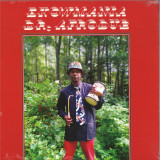
Seminal Afro-dub album "Dr. Afrodub" by Ghanaian Ekowmania aka Ekow Alabi Savage. The drummer, percussionist and singer who's played with Jimi Tenor & Kabukabu for more than 20 years explores the fields of classic Roots Reggae, Afro and Dub as well as uptempo modern African rhythms and ballads. This Jimi Tenor produced album is an expansion of Ekowmania's tribute song to Kwame Nkrumah (which is also released as 7" with different versions) and Tenor's electronic loops, which they developed into a full album in guitar player Lauri Kallio's country side studio in Kiikala, Finland. The album kicks off with a very heavy, club-ready and UK reggae-styled album mix of "Kwame Nkrumah", following up with 200% intensity on the voodooesque rhythm explosions of "Twerk Your Mind", then taking a 360 degree turn with the smoothness and laidback vibes of "Kiikala Reggae". Throughout its 9 cuts "Dr. Afrodub" always approach the balance of beautiful song writing and intensity in rhythm and melody, visiting the excellent and classically crafted 70's Roots tune "Dub Souljah", the upfront & tempo-fueled "Lagos Heavy" and ending with DJ Sotofett's mix of the albums ballad "Me Know".
CUT WITH EXCELLENCE BY TIMMION CUTTING LAB IN HELSINKI FINLAND.
out of Stock
Last delivered 28 days ago available to reorder, subject to availability
A MASSIVE speaker-smashing release, decades overdue. It's been bootlegged - shamefully so, many times over the years - but finally we present the first ever officially licensed reissue of this truly special Afro-disco-not-disco LP from 1979. A favourite of Harvey, Antal, Young Marco and, er, every great DJ to ever play deep records ever, basically. It's not hard to see - or, indeed, *feel* why.
Gem after gem of relentless, irresistibly funky gold, it's an incredibly revelatory album with endlessly complex drum patterns and basslines to dive into, throughout. Truly, this is uniquely FIRE music, unlike anything else you've ever heard, based on Gwo ka music from the gorgeous islands of Guadeloupe and Martinique. A thrilling synthesis of primal, hypnotic drums - the most tribal of percussive elements high in the mix throughout - with the loping synth pyrotechnics of, amongst a whole host of other greats, Wally Badarou and bass power of disco funk don Sauveur Mallia (Arpadys, Spatial & Co.)
Originally released on the seminal French label Barclay, you'd be hard pressed to even find an original copy in nice condition anywhere, let alone for a reasonable price, so it's high time an officially licensed, remastered reissue came around. It's just the latest in a long line of Be With reissues where the music sounds like the - drop-dead dazzling - cover. This here is a true drum attack. BUY ON SIGHT!
Tumblack was a short-lived project, produced and arranged by electronic wizard Yves Hayat and it can certainly be regarded as one of the first examples of Zouk, mixing powerful disco-funk arrangements with Gwo ka, traditional music from Guadeloupe. Gwo ka is an Antillean Creole term for "big drum". You can say that again! It refers to both a family of hand drums and the music played with them, which is a major part of Guadeloupean folk music.Whilst the first side is credited to the exceptional Tumblack band, the flip is given over to "Tumblack & Friends". These weren't just any old friends. Oh no, they were the absolute cream of the French scene (think Arpadys, Voyage, Le Club, Giant, CCPP, Synthesis, Swing Family) such as Sauveur Mallia, Wally Badarou, Marc Chantereau on percussion, Slim Pezin on guitar and Jean-Paul Batailley and Pierre Alain-Dahan handling drum duties.
The urgent, frantic "Fracas" gets things moving straight away with a cavalcade of drums and percussive funk before giving way to the stratospheric "Invocation", one of the album's many, many highlights. It's effectively one long heavenly drum break, a really hard, raw, tribal drum workout without a whole lot else going on - and all the better for it! One to make you sweat, no question. Up next, "Jubilé" is announced with a bellowing accapella voice, chanting the titular name before the heaviest of kicks smashes out your system and lulls you into an absolute state of bliss for nearly 6 minutes. Whoooooosh! Rounding out the sensational A-Side, "Vaudou" is a scratchy, funky patterned drum workout which - yep, yet again - absolutely slays your neck muscles, making them snap and contract in extraordinary fashion. TURN IT UP!
Ushering in the B-Side, the brief, fidgety, African chant-funk of "Parlement" segues seamlessly, beautifully into "Waka", an overwhelmingly rich gem of percussive funk. You do not want this to end, once it hits its stride. For maximum heavenly drum pleasure, you'd need to go a long way than the moment "Waka" feels like it's fading out before it kick-drum-blend into the mighty "Caraïba (Intro)". It's just staggeringly good. It's a minute-long layered drum prelude to the gigantic track which follows. Indeed, "Caraïba" is arguably the best loved and most well-known cut off the LP. And with good reason...featuring that Mallia bass, warm Rhodes and clavs, synth magic, memorably alto sax lines and, of course, tribal chanting.
Another mighty super-ahead-of-its-time classic, the bouncing bass heavy synth funk of "Chunga Funk" deploys Mallia and Wally Badarou (on Mini Moog) exceptionally well. I mean, come on, that bassline is just ridiculous. Try not to move to this one. This extraordinary record closes out with the more traditional Gwo ka sounds of "Bateau La Passé", the tribal chorus making the hairs on the back of your neck stand up.
Tumblack really is a gorgeous late-70s disco-not-disco essential. It's an absolute MONSTER that will completely blow you away; and, yes, it's as compelling and trance-inducing as the cover. The audio for Tumblack has been carefully remastered by Be With regular Simon Francis, ensuring it sounds better than ever. Cicely Balston's expert skills have made sure nothing is lost in the cut whilst the records have been pressed to the highest possible standard at Record Industry in Holland. The cover of Tumblack is so iconic and we sought special permission from original artist Hélène Majera to recreate this at Be With HQ. It absolutely zings off the print and serves as the perfect finishing touch to this long overdue re-issue.
out of Stock
Last delivered 13 months ago available to reorder, subject to availability
SPACE ECHO RETURNS WITH A DOUBLE FUNK-FUELED MESSAGE: ‘WHAT’S WRONG WITH YOUR MIND’ & AGOSTA’S REMIX OF ‘ECHOES OF AFRICA’
While awaiting the production of their new album The Invisible Session, Space Echo makes a bold return with the release of their new single ‘What’s Wrong With Your Mind’—a supercharged funk statement aimed at the war-driven forces that destabilize lives and communities.
Blending irresistible funk rhythms with downtempo grooves, ‘What’s Wrong with Your Mind’ is an invitation to reflect and introspect. The track’s infectious groove is elevated by the masterful trombone work of Gianluca Petrella, channeling a pure Fred Wesley-esque funk energy. Meanwhile, commanding choral arrangements in the spirit of 1970s funk bands drive the song’s message home, creating an immersive experience that stimulates both mind and body. This is more than just a song—it’s a call to shift perspectives and challenge the forces that divide us.
Alongside the single, Agosta presents a powerful remix of 'Mother Forgive Us' from The Invisible Session's previous album 'Echoes Of Africa', transforming the track into a futuristic electronic afro-funk odyssey. Infused with tribal percussion, pulsating electronic textures, and deep-rooted African musical influences, the remix is a high-energy fusion of past and future. Its hypnotic rhythm captivates the body and soul, while soaring synths and driving basslines create a dynamic interplay of tradition and innovation.
Lyrically, the remix carries a poignant message: ‘Mother Earth, forgive us for what we have not done and are not doing’. This plea underscores the urgency of climate action and the disconnection from nature that defines modern life. It’s both a lament and a rallying cry—an appeal for awareness and transformation.
out of Stock
Last delivered 16 months ago available to reorder, subject to availability
ANAN is a project born from the musical inspiration of DJs Roberto Agosta and Massimo Napoli (Galathea). The name ANAN comes simply from the repetition of the initials of their surnames.
Their new single ‘Naif’ blends African musical roots with a European groove and celebrates the cultural fusion of modern times and explores sounds that transcend borders. Imagine listening to Fatoumata Diawara or Ali Farka Touré meeting St. Germain or Bonobo
This track opens with a pulsating rhythm, featuring traditional instruments, percussion, and the vocal performance of Kadi Koulibaly from Burkina Faso.
Koulibaly manages to convey a sense of joy and vitality, evoking soundscapes rich with texture and dynamic motion. The melody is skilfully combined with electronic and jazz elements, creating an aural experience that invites you to dance. In short ‘Naif’ is a celebration of cultural fusion, an invitation to indulge in rhythm and explore sounds that transcend boundaries.
out of Stock
Last delivered 17 months ago available to reorder, subject to availability
After appearing with Archie Shepp at the landmark Pan-African Cultural festival in Algiers in 1969, African-American trumpeter-cornetist Clifford Thornton recorded a set of his own compositions in Paris later that year. The result was Ketchaoua, an important political and spiritual as well as musical statement that reflected the inspiration that he took from Islam. Indeed, the title of the album refers to the awe-inspiring mosque in Algiers.
Clifford Thornton’s superb band comprised his compatriots, saxophonists Archie Shepp and Arthur Jones, drummer Sunny Murray, trombonist Grachan Moncur III, pianist Dave Burrell, and bassist Earl Freeman, as well as French bassist Beb Guérin. Together they brought energy and ingenuity to the leader’s compositions, which were characterized by vivid atmospheres, exploratory, mysterious sounds and haunting themes. And the song titles conveyed an important social and cultural message. Pieces such as ‘Brotherhood’ pointed to the sense of unity and kinship that African-American artists felt with the citizens they encountered on their journey to North Africa and Europe.
This newly remastered deluxe edition of Ketchaoua provides an opportunity to hear one of the major entries in Clifford Thornton’s relatively small yet nonetheless highly impressive discography. It is an album that marks him out as a figure in the avant- garde movement of the late 60s and early 70s who deserves far wider recognition.
Our debut single with Senpolya was born out of desire to create some modern Russian pop infused with references to the 80s dance music. While making 80s-inspired tunes is popular nowadays, this decade means different things to different people: be it A-ha and Modern Talking or African boogie and Chicago house. But we ended up making neither one nor the other.
The crowd who contributed to this release is absolutely legendary. Each time I listen to it and think of them, a new dimension opens up in my mind, adding up some deeper layers of context Ive immersed myself in over the past few years.
An italian producer and bass player Marco Boccamazzo created the first remix. By adding bass guitar and strings, he took the track back by another ten years.
DJ Popinjay, an alter ego of a tropical disco master who wishes to remain anonymous, provided the second rework.
The third remix or more like an essentially an entirely new track, comes from Sonestrose, a duo consisting of Andrey Algorithmic, an art director of Moscow Powerhouse, and Alexander Basian, the studio's sound engineer.
Ignat Akimov, also known as DJ Pecan and an art director of Esthetic Joys Embassy, crafted the fourth hallucinogenic remix, which spans from acid house with Indian drums to cool jazz sound.
Lipelis and Scruscru help me in making some key decisions about the tracks structure, arrangement, and mixing.
Ilya Varankin made a photo of us (on film!) and Nikita Demin designed the cover picture inspired by Daptone Records.
At last, I want to thank my wife, Masha Dostoewskaya, without whose love and patience I wouldn't have been able to see this project to an end.
out of Stock
Last delivered 19 months ago available to reorder, subject to availability
Vibraphone and keyboard player, master arranger and bandleader, Mulatu Astatke is one of the all-time greats of Ethiopian music and the creator of his own original music form, Ethio jazz. Through the acclaimed Ethiopiques album series and through featuring on the soundtrack to the Jim Jarmusch film Broken Flowers, his music has belatedly reached a global audience and a new, younger generation of fans. In November of last year, he recorded an inspired new album with London psych jazz band The Heliocentrics for Strut's 'Inspiration Information' studio collaboration series. Now, Strut are proud to present, for the first time anywhere, the definitive Mulatu career retrospective covering his landmark 60's and 70's recordings.
Mulatu is a true pioneer of African music. He was the first Ethiopian musician of his generation to travel extensively and to record abroad - he studied in the UK in Wales and at Trinity College Of Music in London, cutting his teeth on the buoyant London jazz scene of the early 60's. He became the first African student to attend Harvard and he lived and recorded in New York, developing a unique sound that fused Western jazz with traditional Ethiopian melodies.
Tracing the progression of his Ethio jazz experiments with full access to all of the labels for whom he recorded, Mulatu Astatke: New York-AddisLondon is the essential Mulatu. Covering his first recordings in the UK during 1965, his groundbreaking fusions for the small Worthy label in New York and his key '70s recordings back in Addis on Amha, Phillips and Axum, the album features comprehensive sleeve notes by Miles Cleret, boss of the excellent Soundway Records imprint, and rare, previously unseen photos from Mulatu's personal archive.
Special edition repress of the groundbreaking ‘Nigeria 70’ compilation, now available on translucent green vinyl 3LP to celebrate the label’s 25th Anniversary.
Originally released in 2001, the collection set the benchmark for a new generation of archive labels and releases mining the vaults for rare Afro funk and Afro jazz fusions and helped to paint the wider picture of the 1970s Lagos scene beyond Fela Kuti's catalogue for a legion of soul, funk and dance music enthusiasts. Check!
out of Stock
Last delivered 20 months ago available to reorder, subject to availability