From his heart-racing productions to resounding mixes and live sets, Alliance Club founder OTON has found his distinct voice mixing tantalising vocals and compelling grooves, translating his love for music from many influences. After several releases on his own label, OTON now septs up with four playful, wide-eyed tracks that mix well known classics with a maximalist approach.
Who said we didn't need another Beyonce edit? OTON proves us all wrong with his club stomping take on 'Baby Boy' culminating in music that has serious dance floor momentum, while keeping things uplifting and memorable. Madonna's iconic 'Frozen' then plays out against the backdrop of acid leads and electro flavoured breakbeat; the overall sound design feels poignant and the lyrics add dramatic melancholy in a cathartic end to the record's A side.
OTON doubles down on our dopamine receptors with 'Hump'. The tracks' propulsive bass and fast moving kick drums are submerged in pink hued synths that move like lasers before 'Juicy' closes the show with a jittery workout that could be used to make any crowd get down.
Buscar:the alliance
recut and repressed !
Summer is here, and we at OFF are proud to be once again a steady provider of sunny vibes with this lovely 2-track EP.
Purple Disco Machine from Dresden, Germany step up to the plate with a soul/disco-infused house tune with a driving flow and a killer beat, one made both for the club and the beach.
Second track comes from praised producer James Silk, from Liverpool, already familiar to the likes of Defected or Exploited, who delivers a west coast influenced deep house tune with an inspiring breakdown and a groove that will make everyone smile.
Another hit from OFF aimed straight to the soul!
---- Malente & Teenage Mutants - Blow My Mind
After the immense success of chart topper 'Hanging On' (Co-produced with Andre Crom), Teenage Mutants (Stil Vor Talent, Nurvous) makes yet another promising collaborating alliance with german superstar Malente (No Brainer, Defected, Fool's Gold, Southern Fried) to provide another hit single of huge proportions.
'Blow My Mind' is a nu-disco influenced funk bomb with a rocking synth bassline and hypnotic vocoder vocals that create a deep and spacey atmosphere. Another quality OFF installment destined to take dancefloors all over the world on a deep funky trip!
Dominik Marz and brothers Radial Gaze team up for this four-track outing on TAU. Both acts have been steadily building their reputations on the underground, maintaining a high level of consistency and captivating dance floors across the planet. The trio have already worked together, dropping ‘Trans’ on Mexican label Duro in 2021. Now they’re back with a full EP, demonstrating the full force of their alliance.
Charlotte de Witte continues her fantastic year with brand new EP, Asura, on her KNTXT label. All three of the tracks on this release will be exclusively included in her BBC Radio 1 Essential Mix, which is scheduled to be broadcasted on 18th of September.
As well as being back on the road and serving up her high-intensity DJ sets at the world's best clubs and festivals, Charlotte has also been busy in other areas. She has forged a new alliance with Apple Music and is now curating multiple exclusive mix series including a monthly KNTXT Residency Mix and KNTXT Active, which sees the Belgian artist and her label further investigate the connections between high-performance music, sports and BPMs. She has recently remixed the hugely influential trance classic 'The Age Of Love' by Age Of Love' alongside Enrico Sangiuliano and continues to A&R essential new tunes for the label.
Says Charlotte of this EP, "with Asura EP I’m trying to give you a little insight into my musical influences by going back to my roots. We’re speaking about a young Charlotte who, about 12 / 13 years ago, got indulged in the world of electronic music by going to her first underground clubs and raves. From electro and techno to acid core and hardcore to psytrance. This EP flirts with the soundscapes of the latter."
This EP finds Charlotte delve deep into her own past in electronic music with plenty of psychedelic influences. Opener Asura is a brightly lit techno track with big chords that bring the colour. They are sleek and metallic and sure to get hands in the air, with acid sounds and rumbling bass all adding extra weight and depth to this fantastic opener. 'Soma' is another dramatic and psychedelic track with hard-edged drums pounding away beneath celestial chords. They are mysterious and emotive and bring colour to the darkness. Last of all comes another big, psytrance-tinged and emotional roller coaster in 'Stigma' with its all-consuming techno groove and bass that sounds like it's fired from a machine gun. After an acidic breakdown, the drums roll again and even the biggest festival crowd is sure to be swept away.
Charlotte de Witte leads from the front once more with her standout new Asura EP.
first release of french duo "creative swing alliance" on endless flight.
creative swing alliance is pablo valentine and steven joyce ames.
pablo is running mcde label.there are three killer beatdown house stuff. if you are following the sound of motor city drum ensemble or dj nature, you will definetly love this release.
Blisterhead ist eine der verstecktesten Perlen der europäischen Punkrock-Szene. Die Band wurde 1999 in den kleinen Städten Falköping und Skövde in Schweden gegründet. Im Laufe der Jahre hat sich die Band einen Ruf für Beständigkeit und Leidenschaft aufgebaut und fünf Alben sowie drei EPs über renommierte Indie-Labels wie Kob Records, Mad Butcher Records, Laketown Records und Alleycat Records veröffentlicht. Mit Tourneen durch mehr als 15 Länder in ganz Europa hat Blisterhead die Bühne mit legendären Acts wie Millencolin, Toy Dolls, Mad Sin, GBH und Bombshell Rocks geteilt. Bekannt für ihre energiegeladenen und messerscharfen Live-Auftritte, gelten sie oft als eine der zuverlässigsten und fesselndsten Live-Bands der europäischen Punkszene. Musikalisch liefert Blisterhead eine einzigartige Mischung aus Punkrock und rohem Rock'n'Roll, angetrieben von unglaublich starken Refrains und mitreißenden Melodien, die dem Zuhörer noch lange nach dem Ende der Songs im Gedächtnis bleiben. Blisterhead kehren nun mit ihrem sechsten Album "Where We Belong" auf Sunny Bastards Records zurück und destillieren alles, was die Band ausmacht: große, hymnische Refrains, einen wilden Cocktail aus Punkrock und Rock'n'Roll und eine live aufgenommene Energie, die Ehrlichkeit, Schweiß und Adrenalin direkt aus den Lautsprechern strömen lässt. Mit jedem Hören entfalten sich neue Hooks und Melodien, die zeigen, wie viel Tiefe unter der rohen Kraft steckt. Dieses Mal ließ sich die Band stark von Legenden wie US Bombs, The Humpers und Rancid inspirieren und verband den rohen amerikanischen Punk-Angriff mit der Härte und Melodie des klassischen englischen Punks der 80er Jahre. Das Ergebnis ist ein Sound, der sowohl zeitlos als auch eindringlich wirkt, den Wurzeln des Punk treu bleibt und gleichzeitig mit voller Geschwindigkeit vorwärtsprescht
- Where We Belong
- Not The Living Not The Dead
- Holy Moly
- The Wild One
- El Diablo
- Wake Up
- Red Light
- Cheerio To The World
- Up The Cross
- Trainwreck
- The Holy Alliance
- Fighting For Lucifer
GREEN W/ DUSTY BLACK SPLATTER VINYL[21,43 €]
LTD PINK/WHITE/BLACK SWIRL VINYL[21,43 €]
Blisterhead ist eine der verstecktesten Perlen der europäischen Punkrock-Szene. Die Band wurde 1999 in den kleinen Städten Falköping und Skövde in Schweden gegründet. Im Laufe der Jahre hat sich die Band einen Ruf für Beständigkeit und Leidenschaft aufgebaut und fünf Alben sowie drei EPs über renommierte Indie-Labels wie Kob Records, Mad Butcher Records, Laketown Records und Alleycat Records veröffentlicht. Mit Tourneen durch mehr als 15 Länder in ganz Europa hat Blisterhead die Bühne mit legendären Acts wie Millencolin, Toy Dolls, Mad Sin, GBH und Bombshell Rocks geteilt. Bekannt für ihre energiegeladenen und messerscharfen Live-Auftritte, gelten sie oft als eine der zuverlässigsten und fesselndsten Live-Bands der europäischen Punkszene. Musikalisch liefert Blisterhead eine einzigartige Mischung aus Punkrock und rohem Rock'n'Roll, angetrieben von unglaublich starken Refrains und mitreißenden Melodien, die dem Zuhörer noch lange nach dem Ende der Songs im Gedächtnis bleiben. Blisterhead kehren nun mit ihrem sechsten Album "Where We Belong" auf Sunny Bastards Records zurück und destillieren alles, was die Band ausmacht: große, hymnische Refrains, einen wilden Cocktail aus Punkrock und Rock'n'Roll und eine live aufgenommene Energie, die Ehrlichkeit, Schweiß und Adrenalin direkt aus den Lautsprechern strömen lässt. Mit jedem Hören entfalten sich neue Hooks und Melodien, die zeigen, wie viel Tiefe unter der rohen Kraft steckt. Dieses Mal ließ sich die Band stark von Legenden wie US Bombs, The Humpers und Rancid inspirieren und verband den rohen amerikanischen Punk-Angriff mit der Härte und Melodie des klassischen englischen Punks der 80er Jahre. Das Ergebnis ist ein Sound, der sowohl zeitlos als auch eindringlich wirkt, den Wurzeln des Punk treu bleibt und gleichzeitig mit voller Geschwindigkeit vorwärtsprescht
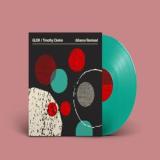
For its first release of 2026, Bytes revisits the impeccable 2024 collaboration between Andy Bell (RIDE/Oasis), recording under his electronic alter ego GLOK, and the producer and Insult to Injury label boss Timothy Clerkin. Along for the ride are an impressive cohort of musical talent - bdrmm, Richard Sen, Tom Sharkett (WH Lung), Legowelt, Xylitol and FROID Dub - who all deliver exceptional and unique interpretations of the tracks.
- 1: The Song Of Yamato-Minzoku
- 2: Free Fight
- 3: The Thrilling Corner
- 4: Ellen David
- 5: Yellow Monk
- 6: La Pasionaria
- 7: Nbagi
- 8: Monster's Teardrops
- 9: Another Country
BBE Music’s acclaimed J Jazz Masterclass returns with its 20th release, a super rare private press from one of the more laudable female jazz figures of Japan, saxophonist and composer Sachi Hayasaka, together with her band, Stir Up! Released in 1988 on the private label Mobys, Free Fight was Hayasaka’s debut album and announced the arrival of an essential and primal force onto the Japanese jazz scene. Part free jazz, part post-bop, and part heavy groove, Free Fight is one of the most varied yet engaging albums BBE Music has reissued in the J Jazz Masterclass Series, showcasing Hayasaka’s inventive and muscular playing as well as her highly original and surprising compositional powers. Given the album’s eclectic yet cohesive sound, it’s no surprise that it originally found a home at Mobys, the label established by esteemed jazz critic and promoter Teruto Soejima. Mobys only issued a handful of albums from some of the leading free and open players including J Jazz Masterclass alumnus, pianist Aki Takase, as well as free jazz guitar icon Masayuki Takayanagi, and free jazz figureheads Itaru Oki and the great Masahiko Satoh. Born in Tokyo in 1960, Hayasaka took lessons from saxophonist and recording artist Toki Hidefumi and fully immersed herself in the jazz life, working part-time at various jazz kissas including Peter-Cat, a kissa managed by novelist Haruki Murakami. She has performed regularly across Japan at venues like the famous Pit Inn and formed a strong alliance with the classic Tokyo jazz kissa Paper Moon, which continues to this day. Heavily influenced by players such as Roland Kirk, David Murray and Ornette Coleman, Hayasaka has played with free jazz legend Yosuke Yamashita and performed around the world (as well as up Mount Fuji!). In the late 1980s she moved to New York for several years and worked with notable musicians including drummer Pheeroan akLaff and pianist Cliff Korman. She has recorded a number of albums to her name for Japanese jazz labels such as Three Blind Mice and Kitty as well as leading European imprints such as Enja.
- A1: Robert Pico - Le Chien Fidèle
- A2: Annie Girardot - La Femme Faux Cils
- A3: Spauv Georges - Je Suis L'état
- A4: Zoé - Zoé
- A5: Jacques Da Sylva - Fou
- A6: Valentin - Je Suis Un Vagabond
- A7: Jacques Malia - Histoire De Gitan
- A8: Bernard Jamet - Raison Legale
- B1: Jean-Pierre Lebort - Barbara Au Chapeau Rose
- B2: Les Concentrés - Fils De Dégénérés
- B3: Les Missiles - Publicité
- B4: Hegessipe - Le Credi D'hegessipe
- B5: Marechalement Votre - Ethero Disco
- B6: Mamlouk - Decollez Les
- B7: Mozaique - L'amour Nu
- B8: Jean-Marc Garrigues - Je Dis Non
- B9: Penuel - Astronef 328
The journey through French-speaking pop archives continues with this fifth volume, packed with fuzz, gimmicks, and dissent. Far from the charts, the selected tracks display a great creative freedom, often backed by corrosive humor. Welcome to the surprising, kaleidoscopic, and colorful world of the late sixties and early seventies, Wizzz!
Born in Montauban, Robert Pico stumbled into music by chance when he met René Vaneste, then artistic director at Pathé-Marconi. René brought him to Paris to record his first 45 RPM EP in 1964. A year later, Pierre Perret introduced him to Vogue, where he recorded his second album with Claude Nougaro’s orchestra. Sylvie Vartan then introduced him to RCA, where he recorded four singles, including the astonishing "Chien Fidèle," a track backed by a hair-rising fuzz guitar. Alongside his solo career, he also composed for other artists like Alain Delon (the song was recorded but remains unreleased), Magali Noël, Bourvil, and Georges Guétary. In the Paris of the sixties, he mingled with Mireille Darc, Elsa Martinelli, Marie Laforêt, France Gall, Françoise Hardy, Petula Clark, Régine, Dani, Serge Gainsbourg, Joe Dassin, Franck Fernandel, Charles Level, and Roland Vincent. Despite his efforts and winning a Grand Prix Sacem for his final record, Robert Pico didn’t achieve the expected success in show business and decided to leave Paris and return to the Southwest, where he devoted himself to writing. He is the author of 23 books (including Delon et Compagnie, Jean-Marc Savary Editions 2025, a memoir about his youth and his many encounters). Today, he is relieved to never have become a celebrity and devotes himself to his work with passion.
In 1969, the Franco-Italian movie Erotissimo was released, directed by Gérard Pirès (who later directed Taxi in 1998, written and produced by Luc Besson). This pop comedy features Annie Girardot, Jean Yanne, Francis Blanche, Serge Gainsbourg, Nicole Croisille, Jacques Martin, and Patrick Topaloff. The soundtrack was written by Michel Polnareff and William Sheller, with lyrics by Jean-Lou Dabadie. "La Femme Faux-cils," performed by Annie Girardot. It recounts the feelings of a rich CEO's wife who seeks to develop her sex appeal under the influence of advertisement and magazines. Groovy, sparkling and light, this track, with ITS lush arrangements humorously critiques consumer society and feminine beauty standards.
“Je suis l’Etat” (1967) is the flagship track of the first EP by singer-songwriter Spauv Georges, aka Georges Larriaga, better known as Jim Larriaga (1941-2022). Born into a family of bakers, the young man was initially planning to become a hairdresser when he discovered English-speaking music through Elvis Presley and the Beatles. After this revelation, he decided he would become a songwriter and gave himself five years to succeed. He recorded his first two EP’s independently for RCA under the pseudonym Spauv Georges; meaning “that poor George”, a nickname given to him by the mother of her friend Jean-Pierre Prévotat (future drummer of the Players, Triangle, or Johnny Hallyday). Portraying a depressed and eccentric young man, Spauv Georges created corrosive and amusing songs that didn’t reach a wide audience, despite a TV appearance with Jean-Christophe Averty.
Supported by his loyal friend and fellow songwriter Jean-Max Rivière, Georges Larriaga met the future singer Carlos in the early '70s, then Sylvie Vartan’s assistant. He wrote songs for Carlos, including the popular "La vie est belle," "Y’a des indiens partout," and "La cantine", which went onto become a huge hit in 1972. He also composed for Claude François (“Anne-Marie”, 1971), Charlotte Julian (“Fleur de province”, 1972), helped launch child singer Roméo (who sold 4 million records), and later wrote the hit "Pas besoin d’éducation sexuelle" (1975) for the young Julie Bataille. In 1971, Jim recorded an album for Disc'Az: “L’univers étrange et fou de Jim Larriaga”, which featured pop gems like “La maison de mon père”.
The story of the song "Zoé" began when Pierre Dorsay, artistic director at Vogue Records, asked Swiss singer and musician Pierre Alain to write a song for a new female singer. The inspiration came when he realized that Zoé (the artist's name) was also the name of France's first atomic battery, created in 1948, which consisted of uranium oxide immersed in heavy water! The lyrics reflect a bubbling energy that must be handled with caution, while the instrumentation echoes this atomic theme, notably with the use of a theremin.
Zoé’s career lasted only as long as a single 45 RPM, but it seems Christine Fontane was the vocalist behind this pseudonym, who is known for several EPs, a good "popcorn" album in 1964, and a handful of children’s singles in the '70s. Regardless, the photograph on the cover is of a different girl entirely.
Later, Pierre Alain continued his career, writing songs for himself, Marie Laforêt, Danièle Licari, Alice Dona, Arlette Zola (3rd place in Eurovision 1982), and achieving multiple gold and platinum records in Canada. Also an inventor with several patents, president of the Romande Academy, and head of the French Alliance in Geneva, he now composes atonal music, books, and poetry. Moreover, he is also the host of "Les Mardis de Pierre Alain" at "Le P'tit Music'Hohl" in Geneva.
Filled with oriental choruses and fuzz guitar, "Fou" is from Jacques Da Sylva's only EP released by Vogue in 1967. Despite the quality of this recording, all traces of this singer disappear after this first effort.
Valentin is a baroque pop singer born in Belgium. He is the songwriter and composer of most of the tracks on his three singles released in the late 60s in Canada. A legend says that he reincarnated himself as Jacky Valentin during the 1970s for a rock'n'roll revival career in Belgium, but his older brother sadly debunked this story. Valentin's first two singles were arranged by Claude Rogen, a Parisian session pianist who had come to Canada to promote the song “Mister A Gogo”, a cover of David Bowie’s “Laughing Gnome”, adapted by singer Delphine, his wife at the time. Far from his usual network, Claude Rogen arranged music for Polydor, including the arrangements for “Je suis un vagabond” in 1969, a jerk tune with string arrangements and a furious optimism.
Jacques Malia wrote, composed, and recorded his only 45 EP for Festival in 1966. “Histoire de gitan” is an incredible beat track with bohemian scat that tells the story of a gypsy musician who came to Paris to make it in the Music-Hall, to no avail. The hero of the song and its author probably shared a similar fate, as Jacques Malia faded into anonymity after this remarkable attempt.
Bernard Jamet recorded two EPs for Barclay in the late sixties and co-wrote several songs with Christine Pilzer, Pascal Danel, and prolific songwriters Michel Delancray and Mya Simile. The track “Raison Légale” (1968), his masterpiece, immerses the listener in a courtroom right when a murderer is being judged, with jerk rhythm and free arrangements. A unique, paranoid, judicial, and psychedelic oddity.
Jean-Pierre Lebrot-Millers started his career in show business in 1967 as a singer and songwriter for the Philips label. After three singles, he wrote several songs of a new kind with his friend Pierre Halioche, in the midst of the sexual liberation movement and the democratization of drugs. With provocative lyrics, “Les filles du hasard” and “Barbara au Chapeau Rose” were released on a Philips singles in 1968. The character of Barbara was inspired by a queen of Parisian nightlife during the psychedelic years: model Charlotte Martin, who dated Eric Clapton from 1965 to 1968, then Jimmy Page from 1970 to 1983. Jean-Claude Petit’s arrangements, with a table-filled intro, soul brass, and Hendrixian guitar, emphasize the flamboyance of a hedonistic and sexy character, whose dog is named Junkie because “Junkie est un nom exquis”! The track was recorded live in three takes with a full orchestra.
Upon its release, the record was censored by Europe 1 and RTL due to its references to drug use. Jean-Pierre Lebrot was then banned from the airwaves and later dismissed by his record label. He changed his artist name to Jean-Pierre Millers, while his companion Pierre Halioche became D. Dolby for a new dreamy composition, “Chilla”, which Jean-Pierre produced himself with arrangements by Jean Musy. Once again, the song was immediately censored everywhere. After this setback, he decided to stop singing and started taking on odd jobs to support his Swedish wife and their son until the day he met Jean-Pierre Martin, then production manager at Decca, who had worked with Manu Dibango. Martin offered Jean-Pierre Lebrot-Millers, then employed at Rank Xerox, the position of artistic director at Decca. He accepted and became, a year later, promotion director (radio, press, TV). He worked on Julio Iglesias’s first album for Decca, which became a massive hit and allowed him to meet Claude Carrère. The latter asked him to write new songs and find their performers, much like a “talent scout.” It’s through him that Jean-Pierre discovered Julie Pietri and Corinne Hermès. He composed “Ma Pompadour” for Ringo, Sheila’s husband, and took the microphone again for the syncope hit “Rendez-Vous” in 1982.
That same year, Jean-Pierre Lebrot-Millers tried to release a track for which he had heavily gone into debt: “Si la vie est un cadeau”. Having recorded it in London, he presented it to numerous professionals, all of whom refused to get involved. The same thing happened with Antenne 2 and the Sacem when he proposed the song as France’s entry for Eurovision. He then met Haïm Saban, who was producing cartoon soundtracks and had just launched the Goldorak theme song. Saban, having listened to the song, declared it had the potential to become a hit. He sent Jean-Pierre and Corinne Hermès to meet the CEO of the Luxembourg radio and television network. The latter received them, asked to hear a verse and chorus a cappella in his office, and immediately hired them to represent Luxembourg at Eurovision 1983. They reworked the arrangements and recorded a new version with Haïm Saban as co-producer. The song ended up winning Eurovision 1983, a great comeback for our hero. He continued producing and hung out with the band Nacash in Belgium when a couple came to introduce their daughter for an impromptu audition in a hotel room. The girl sang “Les démons de minuit” while dancing to a radio cassette. Impressed, he had her take singing lessons for a year and composed a song for her (for which he had the melody and title, but no lyrics). This required him to go on the hunt for a lyricist, who ended up being Guy Carlier. They recorded the song, which was initially a ballad, at Bernard Estardy’s CBE studio, and gave the singer a new name: Melody. They showed the song around their industry network without success. Later, Estardy called Jean-Pierre to suggest changing the rhythm and making it pop-rock. Orlando, Dalida’s brother, liked the result and decided to co-produce the track. “Y’a pas que les grands qui rêvent » became a classic hit. The song has since been covered by Juliette Armanet (as a ballad, like the original) and Valentina.
Born into an aristocratic Breton family, Hervé Mettais-Cartier worked as a DJ at Queen Kiss, a nightclub in Poitiers, where he formed the band Les Concentrés with Michel (an actor) and Christian (a radio technician). Together, they created a repertoire of whimsical songs (“Ma bique est morte”, “J’suis un salaud”, “Fils de dégénéré”...) that they performed on stage dressed in white (in homage to “concentrated milk”). They performed at Bliboquet and Olympia in 1968 for the 10th edition of the “Relais de la chanson Française” organized by L’Humanité-Dimanche and Nous les Garçons et les Filles, sponsored by Pepsi Cola. Winners in the author-composer category, alongside Danish singer Dorte, their visibility allowed them to record a 45, and appear on television in Jean-Christophe Averty’s show. The A-side of the disc features Bruno le ravageur, a casatchok dedicated to Bruno Caquatrix, the director of Olympia, nicknamed in the song “Coq Atroce” or “croque-actrices”. The B-side is dedicated to “Fils de dégénéré”, a quirky tribute to Hervé's aristocratic roots, mixing absurdity with sophisticated vocal harmonies.
After Les Concentrés, Hervé Mettais-Cartier formed the duo La Paire et sa Bêtise with his friend Olivier Robert. They performed in Parisian cabarets and toured with Pierre Vassiliu. In the late 1970s, Hervé began a solo career. He recorded two albums for the Motors label in 1978 and 1979, which did not achieve their anticipated success due to lack of promotion. In 1980, he met Bernadette, with whom he started a family and created a “Chansons à voir” (songs to see) show that he performed until his death at the end of 2024.
Publicité comes from the final EP by the Missiles (Ducretet Thomson, 1966), a disc that also includes “La (nouvelle) guerre de cent ans”, featured on Volume 4 of our Wizzz! series. Please refer to the booklet for the story of the band.
“He’s 1.82 meters tall, 28 years old, weighs 135 kg, is black and Belgian”: this is the description of singer Hegesippe on the back of his sole single (Decca, 1967). He appears on the album cover wearing a Greek toga, like a hippie gag – we are at the end of the year 1967. In “Le crédo d’Hegesippe”, this former bodyguard of Antoine and the Charlots plays the delightful card of the thick brute converted to Flower-Power and non-violence, with arrangements by Jean-Daniel Mercier, aka Paul Mille.
“Ethéro-disco” was released on a promotional record for clients of the Maréchal company (Liège, Belgium) for the New Year 1979. Over a funky rhythm, celebrity impersonations (Brigitte Bardot, Jacques Dutronc, Fernandel…) deliver an enigmatic text about pharmaceutical products like ether, bismuth, and aspartate. The track was composed by Dan Sarravah (responsible for Joanna's “Hold-up inusité” featured on Wizzz! Volume 3) and Tony Talado, who was also a singer (one 45 in 1967), songwriter (with over a dozen credits between 1964 and 1985 in various styles from surf music to disco), author (Devenez Végétarien, Dricot Editions, 1985), ad designer, and psychologist.
Décollez-les is on the A-side of Mamlouk's only single, a pseudonym for Marsel Hurten, who is known for his work on several EPs in the late sixties, as well as composing music for Hervé Vilard’s “Capri, c’est fini”, Claude Channes' “La Haine”, Annie Philippe’s “On m’a toujours dit”, and Nancy Holloway’s “Panne de Cœur”.
This strange song, with Afrobeat horns and absurd dialogues between a chef and his kitchen staff, is the result of a collaboration between Marsel Hurten and one of his neighbors, a photographer from Pavillon-sous-Bois (93), where the musician settled after returning from the Algerian War. A music video was shot to promote the record.
Marsel Hurten was born in Tourcoing (59) into a musical family. At a young age, he joined the brass band founded by his grandfather, playing the piston before studying trumpet at the conservatory, as well as teaching himself how to play the guitar. As an orchestra musician, he toured in France, Belgium, Germany, and England. He released a series of solo 45’s between 1965 and 1968 for the DMF and Az labels before stopping recording to focus on working for other artists (Gilles Olivier, Noëlle Cordier…).
“L’amour nu” (Vogue, 1971) is the work of the short-lived Belgian band Mozaïque. The track, written by singer Jacques Albin, closely resembles another of his compositions, “Carré Blanc”, which he recorded in 1969 for Disc’AZ.
Represented by the Lumi Son micro-label based in Marignane (Côte d'Azur), Jean-Marc Garrigues released two 45 RPMs in the late sixties, defending the French jerk sound. The song “Je dis Non” is a short, joyful ode to youth, pop music, and rebellion.
Songwriter and performer Jacques Penuel released three singles. The first one, “Astronef 328” (Fontana, 1969), features a dizzying series of chords punctuated by sound effects, a sci-fi story, and arrangements by Jean-Claude Vannier.
We would like to sincerely thank Pierre Alain, Moon Blaha, Marsel Hurten, Bastien Larriaga, Jean-Pierre Lebrot-Millers, Bernadette Mettais-Cartier, Robert Pico, Olivier Robert, Claude Rogen, Micky Segura.
"Guerra Total Na Boca Do Lixo" is CAVEIRAS' new album, to be released on February 13, 2026. The album will include 12 brand new tracks, displaying the usual mix of punk aggression, batucada rhythms, industrial / noise bravado and bass music.
---------------------
CAVEIRAS deal in obsessive rhythms and low frequencies, infusing punk with Afro-Brazilian vibes. Their spiritual birth can be traced back to a visit to Favela Rocinha: while watching two young boys improvise a batucada with a bucket and a bin, band members became obsessed with the possibility of an occult alliance between Rio de Janeiro and Einstürzende Neubauten’s Berlin. Back home, Caveiras made a blood oath, vowing to channel the dark side of samba. Armed with an electric bass, scrap percussions and a machine-gunning sampler, they began to butcher Brazilian standards with a wild and iconoclastic attitude. Claves and rhythms of the Brazilian tradition are heavily treated through electro-acoustic techniques, dub-oriented bass lines strip melody down to the bone, while screams cross the line separating punk’s rants from Quimbanda’s curses.
Gainax’ alliance, “oyster sunrise”, had their base a couple light-years off the galactic ice ring. Unassumingly sitting in-between shelves of hyperspace artillery was a black sturdy box, with aluminium details revealing it’s conventionally terrestrial design. Stuck to the box was a label tracing it back to recon-mission-3.31 with a hand-written note that read “destiny’s best FFriend”
Recon Mission 3.31 was the last of a series of top-secret visits to a remote-community of terrestrials who had abandoned the global hegemony. Defined by their abrasive aesthetic but warm nature these self-defined spiritualists welcomed Gainax’ legion with caution. This courageous openness was part of their hopeful prophecy, one that saw the terror of Project-ST as an essential step in the global awakening.
Hand Stamped & Numbered (limited to 300 copies)
- The House With The Red Door
- Enthralled
- The Chamber Of Breathtaking Delights
- Consorting With The Devil
- What Once Was Shall Be Again And What Is Shall Be No More
- Apocrypha Through The Keyhole
- Hell On Earth New Eden
- Behind The Green Door
The story of Suffering began in the UK's West Midlands in 2012 and since those nascent days they have released a nefarious collection of occult black metal offerings, beginning with their debut album, 11, in 2018 and most recently the Symphonies: Diabolis EP in 2024. They have also built a reputation for intense, diabolical live performances, appearing alongside the likes of Esoteric, Ghost Bath, and Mol. The band recently signed with infamous label, Apocalyptic Witchcraft, with label founder Conor Droney describing Suffering's music as "dark, unflinching, and deeply atmospheric, exactly what we stand for." And now the first fruits of that new alliance are about to be unveiled, in the shadowed form of Things Seen But Always Hidden. Things Seen But Always Hidden is an enveloping nightmarish journey through temptation and spiritual destruction, an immersion in contrasting states of terror and ecstasy - it bewilders, consumes and possesses the power to change and scar. Each song seeps into the next, binding them into a grimoire of dehumanising ritual, yet they exist as powerful individual entities. There is 'Enthralled', constructed from classic black metal riffs and raw vocal exhortations_and something more, something imperceptible but profoundly affecting; 'What Once Was Shall Be Again And What Is Shall Be No More', a glimpse beyond the veil, a fall down the endless paths of inherited memory that binds you to this album, this place constructed from arcane sound; the fear filled and imperious 'Hell On Earth New Eden', driven by a ravenous, unholy hunger_each chapter in this tome of unmaking and desecration will burn itself into your mind. A fusion of blackest metal, ritualistic doom and unsettling, distressing atmosphere Things Seen But Always Hidden will never leave you, no matter where you run. The way to Things Seen But Always Hidden will be revealed by Apocalyptic Witchcraft on November 28th. But remember, once you have set foot on this path there is no way back_
- Ramblin' Rose
- London Boys
- These Boots Are Made For Walking
- M.i.a
- The Harder They Come
- Endless Party
- I'd Much Rather Be With The Boys
- I'll Go Crazy
- Hey Thanks
- The Courageous Cat
- Just Because I'm White/Bright Lights Big City
- Around And Around
- The Harder They Come
- Ten Commandments Of Love
- Like A Rolling Stone
- Endless Party
- Do You Love Me?
- London Boys (Max's, May 1980)
- I'd Much Rather Be With The Boys (Max's, May 1980)
- Endless Party (Max's, May 1980)
- Just Because I'm White/Bright Lights Big City (Max's, M
- Like A Rolling Stone (Max's, May 1980)
In 1979, Johnny Thunders, renowned Heartbreakers and New York Dolls guitarist, teamed up with Wayne Kramer, the legendary guitarist of Detroit"s seminal MC5, to form "GANG WAR" - an alliance that lasted the best part of a year. Johnny had just released his So Alone album, and Wayne was not long out of jail after serving two of four years for a coke bust. Although Gang War released no records and were without a label - at the time they were an underground act - in retrospect the collaboration is looked on as a "rock fantasy" supergroup. These live Toronto, Boston & New York recordings bear testimony to this unique partnership between two celebrated rock guitar icons.
- A1: Hi-Lo - Feverish (Original Mix)
- A2: Jeremiah - The Wanna Do Track (Unreleased Extended Mix)
- B1: Jeremiah - Sun (Original Mix)
- B2: Hi-Lo - Pieces (Original Mix)
- C1: Jeremiah - In Your Eyes (Unreleased Extended Mix)
- C2: The Last Disco Superstars - True Experience (12” Mix)
- D1: Hi-Lo - Another One (Original Mix)
- D2: Jeremiah - Only Dubbin' On My 808 (Original Mix)
- E1: Hi-Lo - He Didn’t Know (Original Mix)
- F1: Jeremiah - Dope Eyes (Extended Mix)
Founded in early 1995, Grow! quickly established itself as a key player in the underground house music scene. The label was created by Christian Mahringer (aka Jeremiah) along with Michael Peter (Duke) and Martin Retschitzegger (Tin). Together, they released a steady stream of 12" records, often under various pseudonyms, focusing entirely on the music rather than individual profiles.
While Grow! remained their main creative outlet, the founders were also active beyond the label: Mahringer released music on Chez Damier’s Balance Alliance and the renowned Chicago label Guidance, while Peter and Retschitzegger collaborated on records for Daniel Bell’s 7th City and Robert Hood’s influential M-Plant label, and also launched their own imprint, Central.
This new compilation presents a first carefully curated selection of the most notable tracks from the label’s catalog, alongside previously unreleased versions. All tracks were edited and remastered from the original tape recordings. It offers a deep dive into the raw, analog-driven sound that defined Grow!’s identity.
With its consistent focus on quality, anonymity, and artistic integrity, Grow! Records has left a lasting impression far beyond Austria’s borders. This release is both a celebration and a rediscovery of one of the country’s most respected underground imprints.
Stepback Records is proud to announce the highly anticipated release of Jacksonville's new 12" vinyl, Oracle Memory EP.
Jacksonville is an electronic artist whose work spans multiple genres, creating music that’s designed for clubs and dance floors. With previous releases on labels such as Atmospheric Exsistence and Chez Damiers Balance Alliance imprint Jacksonvilles roots run deep.
With Oracle Memory EP, Jacksonville takes listeners on a journey of low end perfection, blending elements of house, electro and bass music genres.
Produced by Chris Lyth (Jacksonville), Oracle Memory EP was crafted with vinyl in mind with an analog warmth throughout each track. Likewise master and cut comes courtesy of Optimum in Bristol for the absolute best sound quality possible.
This is techno stripped to its core - uncompromising, visceral, and engineered for shadowed, late night dancefloors. SOU002 stamps a serious script in the South Signatures arc. Deep reverberations, modular overdrive, chorus tight grooves. Two masters unite for the Coordinated Beatdown EP - a relentless barrage of analog grit and machine smarts. Together: expect seismic kicks, electro acid tension, and flawless modulation.
- War Is Coming
- Battle Of Brothers
- Bjorn's Choice
- Vikings Return Home
- Rollo's Trial
- Ragnar Says Goodbye To Gyda
- Rollo Tries To Regain Ragnar's Trust
- Vikings Attacked
- Jarl Borg Attacks Kattegat
- Ragnar Reunites With Family
- Ragnar, Bjorn Sneak Into Kattegat
- Battle For Kattegat
- Jarl Borg And Ragnar Make Peace
- Aslaug In Pain
- Ragnar Describes The Blood Eagle
- Ragnar Meets Ingstad
- Aslaug Gives Birth
- Athelwulf Is Ambushed
- Athelstan Translates Scrolls
- Vikings Retreat
- Vikings Mourn Their Dead
- Porunn's Metaphorical Swim
- Horik Propositions Floki
- Horik Asks Floki To Kill
- Erlendur Shown Sword Of Kings
- Horik's Forces Attack
- Killing Horik - King Ragnar
- Horik Watches Game
- Feeding Rollo Poison Mushrooms
Following the success of the first season’s release, the official soundtrack to Vikings Season 2 returns to vinyl with another immersive chapter in the saga. Composed by Emmy Award-winner Trevor Morris (The Tudors, The Borgias, Dragon Age: Inquisition), this score continues to build the series' signature atmosphere. From pulse-pounding battle themes to introspective, ambient textures, the music reflects the growing scale and complexity of Ragnar's world as alliances shift and empires collide. For this second season of Vikings, Trevor Morris collaborated with Einar Selvik from the band Wardruna. The soundtrack features original music by Einar as well as co-compositions together with Trevor. Vikings (Music From Season Two) is available as a limited edition of 750 numbered copies on red coloured vinyl. This 2LP package includes a 4-page booklet with pictures and liner notes by Trevor Morris.
- 1: L'alliance Des Rats
- 2: Entwined Concondrum
- 3: Diapsalmata
- 4: Eros N
- 5: The Renouncer
- 1: L'alliance Des Rats
- 2: Entwined Concondrum
- 3: Diapsalmata
- 4: Eros N
- 5: The Renouncer
- 1: L'alliance Des Rats
- 2: Entwined Concondrum
- 3: Diapsalmata
- 4: Eros N
- 5: The Renouncer
Written and performed entirely by ELLiS
D himself (aka Ellis Dickson) at Hackney Road studios with Shuta Shinoda (Hot Chip,
Jenny Beth), 'Spill' is a seven song jetstream ofrocket-fuelled, goth-tinged glam-punk,
infested with 21st century paranoia:
"The Spill EP is a not so subtle expression of conflict between personality and
character", Ellis explains, "An uneasy alliance of nervous apprehension and joyful
abandon. Throwing myself dramatically onto the funeral pyre one moment, only to get up
and frantically twist my limbs about the next."
The brainchild of drummer-turned-solo musician Ellis Dickson, ELLiS.D has garnered a
growing reputation in the past 12 months for a tireless touring schedule and
increasingly electric live shows, recently described as"one of the most exhilarating live
sets I've seen in months."byFar Out Magazine.
Backed by continuously shifting set of Brighton musicians - in addition to playing
drums across the world with Fat Dog andJohnny Borrell's Jealous Nostril project - his
solo show has performed with the likes ofRazorlight (at Brighton Dome and Eventim
Apollo) The Goa Express , Flip Top Head , Melts , Plantoid, Vinyl Williams , Youth
SectorandThe DSM IV.
- A1: Malavoi - Te Traigo Guajira
- A2: Los Caraibes - Donde
- A3: Tropicana - Amor En Chachacha
- A4: Ryco Jazz - Wachi Wara
- A5: Eugene Balthazar - Dap Pignan
- A6: Roger Jaffort - Oye Mi Consejo
- A7: Les Kings - Oriza
- B1: Les Supers Jaguars - Tatalibaba
- B2: Super Combo De Pointe A Pitre - Serrana
- B3: L'ensemble Abricot - Se Quedo Boogaloo
- B4: Henri Guedon - Bilonga
- B5: Les Aiglons - Pensando En Ti
- B6: Los Martiniquenos - Caterate
In Guadeloupe, many people think that jazz and ka music are like a ring and a finger. To some extent, the same could be said about so called Latin music and the music played in the French West Indies.
Both aesthetics were born in the Caribbean and bear so many connections that they can easily be considered cousins. In constant dialogue, there are lots of examples of their fruitful alliance and have been for a while. The English country dance that used to be practiced in European lounges came to be called kadrille in Martinique and contradanza in Cuba. They both featured additional percussion instruments inherited from the transatlantic deportation. Drawing from shared feelings about the same traumatized identity – later to be creolized – it would be hard not to assume that they were meant to inspire each other. The golden age of the orchestras that graced the Pigalle nights during the interwar period further proves the point. As soon as the 1930s, Havana-born Don Barreto naturally mixed danzón and biguine music in a combo based at Melody's Bar. In the following decade, Félix Valvert, a conductor who was born and raised in Basse-Terre in Guadelupe, also worked wonders in Montparnasse with La Coupole, which was an orchestra made up of eclectic musicians. Afro- Caribbean performers of various origins were often hired on rhythm and brass sections in jazz bands, which used to enliven the typical French balls of the capital. In the 1930s and onwards, Rico’s Creole Band was one of them.
Martinican violinist-clarinettist Ernest Léardée, who would become the king of biguine music as well as the main figure of French Uncle Ben's TV commercials (a dark stigma of post-colonial stereotypes), had musicians from the whole Caribbean sphere play at his Bal Blomet – and they all enchanted "ces Zazous-là" (according the words of Léardée's biguine-calypso piece). In les Antilles (French for French West Indies), music history started to speed up in the 1950s, when trade expanded and radio stations grew bigger. The Guadelupean and Martiniquais youth tuned in their old galena radio sets to South American and Caribbean music. As for the women traders, les pacotilleuses, they bought and sold goods across different islands (the "passing of items through various hands" was thought to be most pleasurable) and brought back countless sounds in their luggage. Such was the case of Madame Balthazar, who once returned from Puerto Rico with the first 45rpm and 33rpm to ever enter Martinique.
Out of this adventure was created the famous Martinican label La Maison des Merengues, a music business she opened and undertook with her husband and which proved to be a major landmark. At the end of the 1950s, in Puerto Rico, Marius Cultier competed in the Piano International Contest playing a version of Monk's Round 'Midnight. He won the first prize and this distinction foreshadowed everything that was to come. Cultier, the heretic Monk of jazz, was quickly praised for writing superb melodies, always tinged with a twist that conferred a unique sound to his music. It didn't take long for the gifted self-taught musician to get to play with Los Cubanos, making a name for himself thanks to his impressive maestria on merengues.
The rest is history. Besides, in the late 1950s, Frantz Charles-Denis, born into the upper middle class in Saint-Pierre and better known by his first name Francisco, went back home after working at La Cabane Cubaine – a club located rue Fontaine where he had caught the Latin fever. Francisco's music was therefore heavily marked by his Cuban cousins' influence, which gave the combos he led a specific style and also led to renewal. Things were swinging hard in La Savane, located in the main square in Fort-de-France. He set up the Shango club close by and tested out the biguine lélé there, a new music formula spiced up with Latin rhythms. Soon afterwards, fate had him fly to Puerto Rico and Venezuela.
As for percussionist Henri Guédon (percussions were only a part of his many talents), he was born in Fort-de-France in May 22nd 1944, the day marking the celebration of the abolition of slavery. As an old man, he could remember that in " his father's Teppaz, a lot of hectic 6/8 music was constantly playing...". In the opening lines of his Lettre à Dizzy, a small illustrated collection of writings published by Del Arco, he highlighted the huge impact that cubop had on him as a teenage boy, around 1960. He eventually turned out to be the lider maximo in La Contesta, a big band steeped in Latin jazz. He was also the one who originated the word zouk to describe music which brought the sound of the New York barrio to Paris. It was the culmination of a journey that started in Sainte-Marie: "a mythical place for bélé, the equivalent of Cuban guaguancó". In the early 1960s, the tertiary economy developed to the detriment of agriculture. Yet rural life was where roots music emerged in Martinique and in Guadeloupe.
Record companies played a major part in the process of Latin versions sweeping across the islands – before reaching everywhere else. Producer Célini, boss of the great Aux Ondes label, and Marcel Mavounzy, both the head of Émeraude records - a firm which was founded in 1953 - as well as the brother of famous saxophonist Robert Mavounzy, were big names to bear in mind. Although there were many of them - all of whom are featured on this record - Henri Debs was definitely the major figure in the recording adventure. He proved to be so influential that he even got compared to Berry Gordy. In the mid 1950s, when he acquired his first Teppaz, he worked on his first compositions: a bolero and a chachacha. Then, he became the one man who made people discover Caribbean music, from calypso to merengue. He was among the first ones to rush out to San Juan, Puerto Rico, to buy records and distribute them through a store run by one of his brothers in Fort-de-France. He had members of the Fania All Star come and perform there, which he was madly proud about. He was also the first one to pay attention to Haitian music, such as compas direct and various other rhythms which would soon flood the market. As a result, many of the combos hitting his legendary studio would end up boosted by widespread "Afro-Latin" rhythms. However, he never denied his identity: gwo ka drums were given a major role, although they were instruments which had long been banned from the "official" music spheres. The present selection bears witness to such a creative swarming. Here are fourteen tracks of untimely yet unprecedented cross-fertilization: all types of music rooted in the Creole archipelago have found their way, whatsoever, to the tracklisting. Whether originating from the city or being more rural, they all go back to what Edouard Glissant, in an interview about the place of West Indian music in the Afro-American scope, called "the trace of singing, the one which got erased by slavery." "It is so in jazz, but also in reggae, calypso, biguine, salsa... This trace also manifests through the drums, whether Guadelupean, Dominican, Jamaican or Cuban... None of them being quite the same. They all point to the idea of a trace, seeking it out and connecting to each other through it. This is the hallmark of the African diaspora: its ability to create something new, in relation to itself, out of a trace. It may be the memory of a rhythm, the crafting of a drum, a means of expression which doesn't resort to an old language but to the modalities of it." The opening track features one of the emblematic orchestras of this aesthetic identity, criscrossing many music types from the archipelago. The 1974 Ray Barretto guajira – Ray Barretto was a major New York drummer influenced by Charlie Parker and Chano Pozzo – is magnificently performed by Malavoi, a legendary Fayolais group (i.e from Fort-de-France). Additionally, the compilation ends on a piece by Los Martiniqueños de Francisco. It symbolically closes the circle as it is a genuine potomitan of Martinique culture which also functions as a tireless campaigner for Afro-Caribbean music. Practicing the danmyé rounds (a kind of capoeiria) to the rhythm of the bèlè drum, it delivers a terrific Caterete, a kind of champeta of Afro- Colombian obedience which was originally composed by Colombian Fabián Ramón Veloz Fernández for the group Wgenda Kenya. The icing on the cake is Brazilian Marku Ribas, who found refuge in Martinique in the early 1970s, bringing his singing to the last trance-inducing track. These two "versions" convey the whole tone of a selection composed of rarities and classics of the tropicalized genre, swarming with tonic accents and convoluted rhythms. It is the sort of cocktail that the West Indians never failed to spice up with their own ingredients. For instance, the Los Caraïbes cover of Dónde, a famous Cuban theme composed by producer Ernesto Duarte Brito, has a typical violin and features renowned Martinique singer Joby Valente and his piquant voice.
The track used to be – or so we think – their only existing 45rpm. The meaningful Amor en chachachá by L'Ensemble Tropicana, a band which included Haitian musicians among whom was composer and leader Michel Desgrotte, also recalls how Latin music was pervasive in the tropics in the mid-1960s. They were the ones keeping people dancing at Le Cocoteraie in Guadelupe and La Bananeraie in Martinique. Around the same time, another "foreign" band, Congolese Freddy Mars N'Kounkou's Ryco Jazz, achieved some success on both islands by covering Latin jazz classics – such as their adaptation of Wachi Wara, a "soul sauce" by Dizzy Gillespie and Chano Pozo whose interweaving of strings and percussions can have anyone hit the dancefloor. How can you resist Dap Pinian indeed, a powerful guaguancó by Eugene Balthazar, performed by the Tropicana Orchestra and published by the Martinique-founded La Maison des Merengues? It also acts as a symbol of the maelstrom at work. Going by the name Paco et L'orchestre Cachunga, Roger Jaffory used to play guaguancó too: his Fania-inspired Oye mi consejo is one example of his style. Baila!!!!! Dancing was also one of the Kings' focus points. Oriza is a Puerto Rican bomba and a "classic" originally composed by Nuevayorquino trumpeter Ernie Agosto, which reserves major space for brasses, giving it a special sheen.
Emerging from the New York barrios crucible was also La Perfecta, a Martinique group originating from Trinidad, whose name directly references the totemic Eddie Palmieri figure as well as his own band, also called La Perfecta. Here they borrow Toumbadora from Colombian producer and composer Efraín Lancheros and interpret it by emphasizing percussions, which set fire to the track even more than the wind instruments. The same goes for Martinique's Super Jaguars, who use Tatalibaba – a composition by Cuban guitarist Florencio "Picolo" Santana which was made famous by Celia Cruz & La Sonora Matencera – as a pretext for sending their cadences into a frenzy. In a more typically salsa vein, the Super Combo, a famous Guadelupean orchestra from Pointe-Noire that was formed around the Desplan family and had Roger Plonquitte and Elie Bianay on board, adapt Serana, a theme by Roberto Angleró Pepín, a Puerto Rican composer, singer and musician also known for his song Soy Boricua. Here again, their vision comes close to surpassing the original. In the 1970s, L'Ensemble Abricot provided a handful of tracks of different syles, hence reaching the pinnacle of the art of achieving variety and giving pleasure. They played boleros, biguines, compas direct, guaguancó and even a good old boogaloo - the type they wanted to keep close to their hearts for ever, "pour toujours", as they sang along together in one of their songs. Léon Bertide's Martinican ensemble excelled at the boogaloo which had been composed by Puerto Rican saxophonist Hector Santos for the legendary El Gran Combo.
Three years later, in 1972, Henri Guédon, with the help of Paul Rosine on the vibraphone, tackled the Bilongo made famous by Eddie Palmieri. Such a classic!!!!! And so were the Aiglons, the band from Guadelupe: choosing to execute Pensando en tí, a composition by Dominican Aniceto Batista, on a cooler tempo than the original, they noticeably used a wonderfully (un)tuned keyboard in place of the accordion. On the high-value collectible single – the first one released by Les Aiglons under the Duli Disc label – there is a sticker classifying the track under the generic name "Afro". Now that is what we call a symbol. Jacques Denis
An adversarial network of ideas, electronic post-punk trio The Wants welcome the possibility that embracing friction can give rise to something cathartic and unexpected. Formed by Madison Velding- VanDam and Jason Gates in 2017, and with the addition of Yasmeen Night in 2021, The Wants' sound is defined by the push and pull of its members' processes: floating rhythms upheaving grounded songwriting, pulsing synths overwhelming live instrumentation. Their new record, Bastard, is an evolution of many of the seeds planted in their debut record, Container (2020), with a refined sense of acerbic emotional urgency and sonic experimentation. Drawing from a deep well of influences across decades and genres, The Wants forge an unlikely alliance of sounds that feels both radical and inevitable. Velding- VanDam channels both the raw power and snark of Public Image Ltd. and The Smiths' romance, while Gates draws intensity from bands like Bauhaus and Throbbing Gristle, and inspiration from experimental techno. Night's sound bridges inspiration from '90s alternative rock like Smashing Pumpkins and Garbage between the nocturnal trip-hop atmosphere of Massive Attack. The result sits in its own category—too raw to be pure electronic music, too mechanised to be straight rock— drawing favorable comparisons to early PIL and contemporaries like Model/Actriz while remaining distinctly their own beast.
- A1: Eyeroll (Feat Elvin Brandhi) (4 01)
- A2: Malikan (Feat Abdullah Miniawy) (4 08)
- A3: Move On (Feat Iceboy Violet) (3 44)
- A4: 99 Favor Taste (Feat Juliana Huxtable) (0 57)
- A5: Nontrival Differential (Feat Elvin Brandhi) (4 25)
- A6: Partygoodtime (Feat Ledef) (0 09)
- B1: Cut Cut Quote (Feat Elvin Brandhi) (4 22)
- B2: Pique (4 26)
- B3: If The City Burns I Will Not Run (Feat Abdullah Miniawy & James Ginzburg) (3 23)
- B4: Hasty Revisionism (3 14)
- B5: Lacrymaturity (2 43)
Black Vinyl LP. The world has changed, we shouldn't try and pretend otherwise. While we were shut away in isolation our routines shifted, social patterns evolved, and our hopes and dreams were twisted into cobwebs we're still trying to wipe from our fingers. Ziúr tentatively approached this on her last album Antifate, an ambitious and complex hybrid pop fever dream that looked back to a Medieval escapist fantasy as the scent of revolution seemed to hum in the air. But when restrictions were eased, she found herself staring down a discombobulated society that had trapped itself in a spiral of microwaved nostalgia and detached, narcotic repetition. Eyeroll then is Ziúr's musical panacea, a tincture to wake us from our creative slumber and prompt external connection and reflection. It's a polyphonous hex that demands human interaction, and Ziúr's hand-picked alliance of collaborators - Elvin Brandhi, Abdullah Miniawy, Iceboy Violet, Juliana Huxtable, Ledef, and James Ginzburg - each provide distinct voices that together herald a bewildering sonic epoch. Ziúr's palette had to evolve to match the scope of the project, but it was pure necessity that informed the album's defining tone. Recording mostly at night, Ziúr was conscious of the noise she was making so developed a unique way to record organic percussion. Using a set of rototoms - low profile tunable drums - she scratched, scraped and gently tapped the skins to build up the undulating and unstable rhythmic backdrop for each track. It's the first sound we hear on the opener 'Eyeroll', rattling like lost marbles against Elvin Brandhi's primal croaks and screams. And when Brandhi's twisted articulations form words, Ziúr matches the energy with chaotic thuds and serrated blasts of saturated electronics. "I roll the shittiest cigarette," she squeals like she's about to start a mosh pit at Paris's GRM Studios. Without pause, Abdullah Miniawy takes over on 'Malikan', building on the promise of material with Simo Cell, Carl Gari and HVAD with corrosive trumpet blasts and charged, politically incendiary Arabic vocals. Inspired by pre-Islamic poetry and the Qu'ranic chanters he heard growing up in Saudi Arabia and Egypt, he spins labyrinthine stories that cross between the worlds, breaking down physical and spiritual borders simultaneously. Miniawy's scope is expanded even further on his second collaboration, 'If The City Burns I Will Not Run'. "If it rains and the city drowns," he utters over gaseous electronics, "I will not run away, but I will be anxious for the heart of one close to me." After a supple vocal turn from Manchester's Iceboy Violet on 'Move On' and a surreal interlude from poet- DJ-artist-theorist Juliana Huxtable on '99 Favor Taste', Brandhi returns with two more hyperactive collaborations: ,'Nontrivial Differential' and 'Cut Cut Quote'. On the former she slices into Ziúr's skeletal jazz eruptions, screaming and crooning interchangeably, fluxing between the rap battle and the cabaret. The latter is completely different meanwhile, with Brandhi settling into her role as front-woman and groaning dizzying improvised passages that sound like grunge crossed with psychedelic no-wave. Brandhi's spiky musical history has prepared her well for this collaboration; she's a prolific producer and has been using her voice spontaneously since debuting with father-daughter improv duo Yeah You in the mid 2020s. She's found an ideal foil in Ziúr, a producer who matches her restless energy and willingness to bend formality, and leaves an indelible mark on Eyeroll. But the album's most tender moments are from Ziúr herself, who winds the album down on 'Hasty Revisionism', growling over collapsible beats and cascading strings, and comes to an unexpected conclusion with country coda 'Lacrymaturity'. Its feverish amalgamation of country music and euphoric, experimental electronics might seem incongruous at first, but in context with the rest of the album is the only possible conclusion. With Eyeroll Ziúr is making a firm statement about togetherness, humanity, and the renewal of hope when all seems lost. By bringing together such a wide but philosophically harmonic team of collaborators, she's conducted a body of work that speaks to the creative fringe in no uncertain terms. Now's the time to throw away what you think you know, and build bridges you didn't think you need. Now's the time for action. She may have spent her entire career avoiding the solipsistic trappings of "queer art", but by assembling a communal statement that questions so many normative assumptions about music, politics, and beyond, Ziúr has chanced upon her queerest album yet. Cringe? Eyeroll.
- Ousia 2:33
- What It Takes 3:24
- Disinheritance 1:13
- Agathon 3:03
- Determined Outcome 2:13
- Misology 1:50
- Afterworld Alliance 2:47
- Palinodes 0:33
- Backhanded Cloud 1:26
- Glorious You 1:50
- For Raymond Scott 0:35
- Matronymic 0:58
- The Red Desert 2:54
- Conciliation 1:20
- Ataraxia 1:13
- The Unlimited 2:15
- The Runaround 3:35
- Climb That Mountain 3:00
- Captain Praxis 2:14
- Eudaimonia 2:20
- The Lydian Ring
- 1: There Will Be Trouble
- 2: Porkchop Express
- 3: If It Bleeds
- 4: The Destroyer
- 5: Love At First Death
- 6: Plain Zero
- 7: Obey
- 8: Get To The Party
- 9: Let Off Some Steam
- 10: H.i.s.s
- 11: A Good Day To Die
- 12: The Wrong Arm Of The Law
Spawned on the day the earth stood still, COFFIN FEEDER is an unholy alliance between veterans in the Belgian metal and hardcore scene. A delirious and furious combo featuring members of Aborted, Leng Tch’e, When Plagues Collide and Fleddy Melculy spew forth a high energy blend of groove laden death metal, grind and hardcore. Though all members are from Belgium, they are from three different regions within Belgium and speak three different dialects, so the members have to convene in plain English in order to be able to understand each other. Now if that's not heavy, you don't know what is. Since its inception in 2021, COFFIN FEEDER unleashed 2 EP’s (‘Stereo Homicide’, ‘Over the top’) and played a ton of club shows through Europe. With already some a list festivals in Europe under their belt such as Brutal Assault & Summer Breeze, the band is continuing to take names and kick ass worldwide. The band didn’t sit still and as soon as they put the finishing hands on their debut full length album, they immediatly twent on tour with Benighted & Baest throughout Europe in November 2024 and already scheduled on several European festivals next year: Alcatraz, Summer Breeze, Deathfeast, … In comes BIG TROUBLE, the first full length album by these miscreants was mixed and mastered by none less than Dave Otero (Aborted, Archspire, Cattle Decapitation,...) and features blistering cinematic soundscapes provided by Spencer Creaghan (Aborted, Carnifex). 35 minutes of pummelling, devastating and action packed groovy death metal that will make your ears bleed for more. The artwork has been provided by Dan Goldsworthy (Heathen, Xentrix, Corpsegrinder, Aborted, Chimaira, Sepultura,...) and contains more 80’s action movie references than your now defunct Blockbuster video. If you thought that was enough to flatten everything in their path, the album features some very exclusive guests: Mark Hunter of Chimaira, Ben Duerr of Shadow of Intent and Julien Truchan of Benighted. Ready to curb stomp everyone in their town, COFFIN FEEDER inked a deal with Listenable Records to dominate. You’ve been warned. BIG TROUBLE is coming!
- A1: Searchin' Ft. Jem Cooke
- A2: Falling Down - Totally Enormous Estinct Dinosaurs & A-Trak
- B1: Y Don't U
- C1: Alive Ft. Bloom Twins
- C2: R U Dreaming? Ft. Mathew Jonson
- D1: So Low Ft. Zoe Kypri
- D2: La Hija De Juan Simon Ft. Mëstiza
- E1: Warrior Dance Ft. Jojo Abot
- F1: Sunrise Generation Ft. Fink
- F2: Force Ft. Jojo Abot
Audio alchemist Damian Lazarus continues to redefine the boundaries of electronic music with his fifth studio album, ‘Magickal’.
Renowned for his unparalleled ability to craft transformative sonic journeys, Damian Lazarus is a master of rhythm, melody, and vibration—a true pioneer among his generation’s visionary artists. Damian’s broad depth of experience encompasses a variety of disciplines: tastemaker, selector, label owner, A&R and a Grammy-nominated artist in his own right - each informed by his unique ear for sound. He is chief wizard of the hugely influential and culture-defining Crosstown Rebels label, a globally renowned DJ with a penchant for exotic outdoor locations and a highly regarded recording artist with four albums and a plethora of solo cuts, collaborations and remixes in his sprawling discography.
With his fifth album, ‘Magickal’, Damian steps into his next evolutionary phase, combining his newly found sobriety with a more mature outlook while still pushing boundaries and creating unforgettable moments. At the root of it all is the magical power of togetherness and human connection that only music can facilitate. Driven by this core ethos, Damian continues on his mission to share his heartfelt music, taking the dance floor into unexplored realms of experience, facilitating moments of transcendence, bliss and pure, unadulterated magic.
Damian Lazarus, the avant-garde architect of spiritually nourishing sounds, is joined by a stellar lineup of collaborators on his latest excursion. It’s imaginative and mystical, rhythmically captivating and daring in its own way, as is typical of Damian’s approach. Taking consideration of his past, the album references his previous work to create a tapestry of compositions that tap into the energy of key moments from his discography. Drawing on his existing catalogue creates cohesive through lines and thematically serves as a continuation of previous stories. November’s single, ‘Sunrise Generation’, for instance, works as a companion to ‘Vermillion’, which was recorded by Damian with his band The Ancient Moons and vocalist Moses Sumney back in 2015. ‘Sunrise Generation’, featuring the beautiful vocals of Fink, was Damian’s first major release since his Grammy-nominated 2021 collaboration ‘Don’t Be Afraid’ with Diplo and Jungle, and continues to take inspiration from global gatherings at solstice and those moments of collective awe at sunrise.
Indeed, the album’s themes of mental elevation and psychedelic sonic journeys are evident throughout. Damian channels this energy through tracks like the soulful ‘So Low’, featuring the incredible Zoe Kypri, and the luminous ‘Searchin’, with Jem Cooke, whose collaboration with Damian dates back to ‘Flourish’ (2020) and lead single ‘Into The Sun’. Uplifting is the operative word here, as Damian aims straight for our hearts and inner selves, stripping away the layers to take us on a trip inwards, and out into the ether all at once. There’s a clear nod to Damian’s appreciation of amapiano when he teams up with Ghanaian interdisciplinary healer Jojo Abot on ‘Warrior Dance’. Old friend and inspirer Mathew Jonson brings his virtuoso touch to ‘Are You Dreaming?’, while TEED and A-Trak form an awesome alliance for ‘Falling Down’ with its heartrending vocals. ‘Alive’ features the Bloom Twins, and also additional production from acclaimed producer Mark Ralph, who incidentally worked on Damian’s debut album ‘Smoke The Monster Out’ in 2009 and forms another throughline to the past. ‘Alive’ blends pop sensibilities and song structure with Damian’s inimitable sound - and could become one of Damian’s biggest moments to date. ‘La Hija De Juan Simon’ delves into the Latin energy synonymous with vibrancy and self-expression as Damian teams up with acclaimed Spanish flamenco-influenced duo Mëstiza. On a solo tip, he rolls out with the eight-minute-plus soulful funk flex ‘Why Don’t U’.
In a suitably aligned instance of serendipity, the arrival of ‘Magickal’ comes at a pivotal period in Damian’s life, just as it has been with previous album concepts. Albums made and released during big shifts in his life speak to the correlation between growth, personal evolution, creativity, catharsis and sharing that process musically. The last album ‘Flourish’, for instance, was recorded and released in the space of a few months during the first summer of the global pandemic. As a result, there’s a kind of vulnerability in the music, a subtle story that’s being told with emotional touchpoints that will be relevant to anyone listening. The universal human experience and spectrum of emotions are things almost everyone can relate to. With the enhanced clarity of his sobriety, Damian’s compositions embody the uplifting nature of simply being alive, connected and unified in our love for music and one another.
Day Zero, Damian’s iconic annual festival, is intrinsically linked to ‘Magickal’. It’s the setting for his imagination when producing the music, it’s the launchpad for each year’s kaleidoscopic adventures around the world, and this year’s edition will be the backdrop to the release of ‘Magickal’. As the pinnacle of Damian’s annual experiences, Day Zero marks a vital milestone for his artistry, an extension of his inner realm, carefully curated and created for his global family of lovers and dancers to revel in the awe-inspiring beauty of Mother Nature. Central to the ethos of Day Zero is its sustainability practices and deep consideration for the locality within which it is held. Connections with local elders embolden its depth, cultivating a strongly aligned purpose with the ritual, customs and energy of the land and its people.
‘Magickal’ will be released in the same week as Day Zero, tying the two projects together in a neat dovetail. 12 years since it started, Day Zero continues to play a significant role in the music Damian makes, curates and plays. For him, it’s the epitome of his vision: a stunning natural setting, the very best party people from around the world, an unparalleled lineup of friends and family, high production values, eco-centric policies and music from another dimension. With these interdimensional transmissions, Damian channels his inner alchemist, which, in turn, permeates into the vibrational framework of ‘Magickal’.
Never one to adhere to convention, Damian has opted for a disruptive album release. ‘Magickal’ is to be kept under wraps and then announced and released on Crosstown Rebels on 8th January 2025, bypassing the modern trend of prolonged single drops and ‘tombstone’ album releases. ‘Magickal’ is the embodiment of Damian and his intentional, against-the-grain approach and reinforces the album as a complete artistic statement, offering listeners the full cohesive experience from the very beginning. This is a return to the album as the pinnacle moment and not the afterthought. Singles, edits and remixes will follow the ‘Magickal album’ release, and, of course, there will be a world tour to promote the album (including Glastonbury and Coachella) and a chance to present the album in exciting, innovative and unique ways.
Forever dreaming, a sincere student of magic, new and old, social sorcerer, lover of nature and master of musical wizardry, Damian Lazarus is a potent force. With ‘Magickal’, he reaffirms his place as one of electronic music’s most influential figures, taking listeners on a profound journey into sound, spirit, and connection.
2025 Repress
"Hydroplane reinstate their formidable 1997 debut of sublime guitar atmospherics, fragile lyricism and droning incidentals with an overdue vinyl and digital reissue.
An offshoot of the now-féted The Cat’s Miaow, the trio formed after drummer Cameron Smith decamped to London, charting new territory with tape loops, manipulated samples and a borrowed Jupiter 4 in the wake of Endtroducing. Adopting a handle that Dean Wareham once considered calling Luna, Hydroplane intended to only ever release Excerpts From Forthcoming LP, a single-sided 7” sonic collage, before imploding in mystery. Their label however insisted they deliver their taunted album. From the comfort of a Brunswick flat, they continued to record soaring melodies and restrained song structures to 4-track, sculpting dramatic Radiophonic Workshop cues weighted in reverb and near-perfect dream pop lead by Kerrie Bolton’s empyrean vocals.
Bored of industry expectation and largely ignored by local audiences, the reluctant performers followed the way of The Cannanes and formed meaningful overseas alliances by mail and phone, securing releases on Michigan outpost Drive-In and Broadcast launching pad Wurlitzer Jukebox. Championed by John Peel with twenty spins on his converted Radio One slot and even polling in Festive Fifty of 1997, the humble three-piece still walked to their neighbourhood shops undetected.
- A1: Makin' Moves
- A2: Las Olas
- A3: The Grifter
- A4: Mother Earth
- A5: Freddie
- B1: Don't Trip
- B2: The Alliance
- B3: The Lemon Groove
- B4: Gemini
- B5: Contemplation
- B6: Corporatocracy
MAROON VINYL[23,49 €]
Im Lateinischen bedeutet das Wort Gemini "zwei zusammen" oder "Zwillinge". Astrologisch gesehen sind Zwillinge unter anderem dafür bekannt, dass sie neugierig und vielseitig sind. Für die 9-köpfige (meist) instrumentale Combo The Sure Fire Soul Ensemble aus San Diego waren Jazz und Funk schon immer die beiden Genres, die sie konsequent und effektiv miteinander verschmolzen haben und die das Fundament ihres Sounds bilden. Mit ihrer stilistischen Neugier und Vielseitigkeit haben sie dieses Fundament auf ihrem neuen 11-Song-Longplayer für Colemine Records weiter ausgebaut. Aufgenommen zwischen Ende 2021 und Anfang 2024 im The Kitchen II in ihrer Heimat Lemon Grove, Kalifornien, lenken SFSE ihre ,introspektive Partymusik" in neue klangliche Gefilde. Während ihr Breakbeat-lastiger Funk-Soul-Jazz immer noch der Eckpfeiler ihres Sounds ist, wie er in Stücken wie ,Makin' Moves", ,TheGrifter" und ,Don't Trip" zum Ausdruck kommt, haben sie begonnen, mehr und mehr Einflüsse von Library-Musik-Labels wie KPM Music, spirituell orientierten Jazz-Labels wie Tribe & Black Jazz Records und exotisch angehauchten Jazz-Künstlern wie Cal Tjader und Dorothy Ashby aufzunehmen. Jetzt lehnen sie sich mehr an den ,introspektiven" Teil ihres Sounds an, insbesondere bei ,Mother Earth", ,Freddie" und dem Titeltrack, und beschwören die Geister von Freddie Hubbard, Phil Ranelin, Wendell Harrison, Bubbha Thomas, Chester Thompson und sogar Cannonball Adderley in seiner kopflastigsten und kosmischsten Zeit herauf (hören Sie sich Adderleys Alben ,Soul Zodiac" und ,Soul of The Bible" als Referenz an). ,Corporatocracy" geht noch einen Schritt weiter mit einem ausgedehnten Tabla-Solo, das auf der perkussiven Welle reitet, bevor es in seinen funkgetriebenen, modalen Vibe übergeht. In der aktuellen Besetzung mit Tim Felten an den Tasten, Jake Najor am Schlagzeug, Omar Lopez am Bass, Kiko Cornejo Jr. an Conga/Percussion, Aquiles ,Lito" Magana an der Gitarre, Wili Fleming an der Posaune, Sheryll Felten an der Percussion, und Jesse Audelo und Travis Klein am Saxophon und an der Flöte. SFSE bleibt dem Funk treu, traut sich aber auch, neue Wege zu gehen, die sie bisher noch nicht beschritten haben, und betritt damit faszinierendes Neuland in ihrem Gesamtsound.
Einige nannten Studio, das Projekt der schwedischen Musiker Dan Lissvik und Rasmus Hägg, "das fehlende Glied zwischen The Cure und Lindstrom", Pitchfork hörte Durutti Column und Can, als das Duo sich als Teil einer sich locker entwickelnden Szene entfaltete - zunächst neben dem Label Service (Jens Lekman, The Whitest Boy Alive) und später Sincerely Yours (The Tough Alliance, jj) - und den Boom der 2010er Jahre an der Schnittstelle von elektronischer und psychedelischer Musik, angeführt von Indie-Größen wie Caribou, Four Tet und Darkside, vorwegnahm. "West Coast, ihr bahnbrechendes Debüt aus dem Jahr 2006, fängt eine ferne Romantik der Balearen ein, die auf Krautrock, Disco, Dub und Afrobeat trifft, mit Pop-Lyrik aus dem New Wave, modernisiert von zwei Göteborger Kunsthochschulabsolventen. Sie zitieren DJ Screw, J Dilla und Joy Division sowie fühe 80s Live-DJ-Sets von Beppe Loda, DJ Mozart und Baldelli. Damals auf Vinyl gepresst in limitierter Auflage über ihr eigenes Information-Label und bis heute auf den meisten Streaming-Diensten nicht zu finden. Im Nachglühen des Albums im Jahr 2007 verschwanden Studio hinter einem Berg von Remix-Anfragen (darunter ein Remix für Kylie Minogue, der veröffentlicht wurde) und der Bürokratie des Labels. Eine erweiterte Version des Albums erschien unter dem Titel "Yearbook 1" auf CD und erreichte Platz 23 der Pitchfork-Jahresliste der Top-Alben des Jahres 2007. "West Coast" landete schließlich auf Platz 57 auf der "Best Albums of the Decade"-Liste von FACT Magazine.
Mirae Arts proudly presents The Way I Am and The Way You Yawn, the debut album from Katsunori Sawa under his KWARP alias. This six-track release explores the fleeting nature of youth and the weariness of aging, blending Sawa’s experimental roots with fresh, modular synthesizer-driven soundscapes.
From the forward-driving hi-hats and alien voices of "Frog FM" to the mechanical aggression of "Ultra," the album offers an imaginative auditory journey. Highlights include the playful chaos of "PlayStation" and the metallic rhythms of "Metal Gear."
About Katsunori Sawa: First emerging on the scene in 2008 as EOC with his debut on the UK-based Ai Records, Sawa has steadily built a reputation for innovation and collaboration within the underground music community. He co-founded the influential 10 Label and has paired his talents with an array of respected artists, including Yuji Kondo (as Steven Porter), Martsman (under the moniker Bokeh), and DJ Nobu (Nobusawa). These alliances have birthed releases on prestigious labels like Kynant Records, SNTS, and Token.
Creating his sound in a hidden studio set within a striking Tadao Ando-designed building, Sawa crafts a sonic landscape that fuses rhythmic noise with pulsating bottom-end rave abstractions. His work reached new heights with an album on Opal Tapes, making him the label’s first Japanese artist and firmly establishing his place in the global music conversation. His tracks have even been woven into the sets of electronic stalwarts such as Aphex Twin.
* Artwork by Jesse Osborne-Lanthier
Einige nannten Studio, das Projekt der schwedischen Musiker Dan Lissvik und Rasmus Hägg, "das fehlende Glied zwischen The Cure und Lindstrom", Pitchfork hörte Durutti Column und Can, als das Duo sich als Teil einer sich locker entwickelnden Szene entfaltete - zunächst neben dem Label Service (Jens Lekman, The Whitest Boy Alive) und später Sincerely Yours (The Tough Alliance, jj) - und den Boom der 2010er Jahre an der Schnittstelle von elektronischer und psychedelischer Musik, angeführt von Indie-Größen wie Caribou, Four Tet und Darkside, vorwegnahm. "West Coast, ihr bahnbrechendes Debüt aus dem Jahr 2006, fängt eine ferne Romantik der Balearen ein, die auf Krautrock, Disco, Dub und Afrobeat trifft, mit Pop-Lyrik aus dem New Wave, modernisiert von zwei Göteborger Kunsthochschulabsolventen. Sie zitieren DJ Screw, J Dilla und Joy Division sowie fühe 80s Live-DJ-Sets von Beppe Loda, DJ Mozart und Baldelli. Damals auf Vinyl gepresst in limitierter Auflage über ihr eigenes Information-Label und bis heute auf den meisten Streaming-Diensten nicht zu finden. Im Nachglühen des Albums im Jahr 2007 verschwanden Studio hinter einem Berg von Remix-Anfragen (darunter ein Remix für Kylie Minogue, der veröffentlicht wurde) und der Bürokratie des Labels. Eine erweiterte Version des Albums erschien unter dem Titel "Yearbook 1" auf CD und erreichte Platz 23 der Pitchfork-Jahresliste der Top-Alben des Jahres 2007. "West Coast" landete schließlich auf Platz 57 auf der "Best Albums of the Decade"-Liste von FACT Magazine.
- 1: Power Train
- 2: No Pain, No Gain
- 3: Battle Cry
- 4: Megatrue
- 5: My Epic Dragon
- 6: Thunder Power
- 7: A Story In The Night
- 8: Go Higher
- 9: Victorious
- 10: Alliance Anthem
- A1: Dream Dance Alliance - Fly Away - Longflight Mix
- A2: Cosmic Gate - Flatline - Kyau & Albert Remix
- A3: Chris Campell - Tonight - Original Mix
- B1: Pulsedriver - Superstar - Extended Mix
- B2: Armin Van Buuren Feat Vanvelzen - Broken Tonight - Original Mix
- B3: Kyau & Albert - I Love You - Cosmic Gate Extended Remix
- C1: Fragma - Forever And A Day - Extended Version
- C2: Michael Mind - Gotta Let You Go - Club Mix
- C3: Chicane - Come Back - Original Club Mix
- D1: Master Blaster - Until The End - Monday 2 Friday Remix
- D2: Mark 'Oh - Scatman - Clubmix
- D3: Swedish House Mafia - One - Original Mix
Dream Dance Vol. 53-96 fasst die stärksten Titel der ehemaligen CD Ausgaben zusammen.Diese 2 LPs in hervorragender Klangqualität sind ein begehrtes Sammlerobjekt, nicht nur für Liebhaber der Kultserie "Dream Dance".Diesmal mit dabei sind Cosmic Gate, Pulsedriver, Armin van Buuren, Fragma, Mark `Oh, Master Blaster, Michael Mind, Chicane, Swedish House Mafia, Kyau & Albert, Chris Campell und natürlich Dream Dance Alliance.Alle Titel in den langen Original/Extended, oder Club Mixen. Auch perfekt zum Auflegen im Club!
Studio, the influential project of Swedish musicians Dan Lissvik and Rasmus Hägg, presents their legendary 2006 debut in remastered form, in partnership with Ghostly International. Available in limited edition "Fog Machine Vinyl", CD, and cassette. "One of the finest pieces of electronic music you'll hear this year.” - The Guardian (2006). Included in year-end best-of write-ups by Pitchfork, FACT Magazine, and Rough Trade. Physical copies have long been out of print for West Coast, and the album has also been notably absent from most streaming services until now.
“Somehow, I knew I wanted to make a conceptual record that, although only imaginary at that point, could represent or define how our city sounded,” says Lissvik of Gothenburg's influence on West Coast. Some called Studio, the project of Swedish musicians Dan Lissvik and Rasmus Hägg, “the missing link between The Cure and Lindstrøm,” Pitchfork heard Durutti Column and Can, as the duo’s story became swept up in a loosely developing scene — adjacent first to the label Service (Jens Lekman, The Whitest Boy Alive) and later Sincerely Yours (The Tough Alliance, jj) — and a precursor to the 2010s boom at the axis of electronic and psychedelic music guided by indie greats like Caribou, Four Tet, and Darkside.
West Coast, their seminal 2006 debut, captured a faraway romanticism of Balearic brushed up against Krautrock, disco, dub, and afrobeat, with pop lyricism lifted from new wave, all made modern by two art school grads in Gothenburg. First pressed in a small vinyl-only run via their own Information label, the album has been notably absent from most streaming services, and the internet’s record of its initial impact is all but fossilized from a bygone blog era, while its sound is simply untraceable to any one moment in music.
Outside of three 7” releases, they’d keep the music to themselves for several more years. In 2005, Hägg remembers, “We got our degrees and were kicked out of our studio spaces so all these recordings were just piled up. A year later we dusted them off and started to deconstruct and assemble them in a more drawn-out fashion.” In the same breadth, they cite DJ Screw, J Dilla, and Joy Division, along with early ‘80s European live DJ sets from the likes of Beppe Loda, Dj Mozart, and Baldelli as reference points.
“The anything-goes mentality was very encouraging and was a big cornerstone to the Studio sound,” says Hägg. “But there’s so much more to the picture, we were not that young then and had lots of musical baggage in our suitcases, the new thing was that we finally let it all come through, not bound by any borders that was often the case with music identity in Sweden during the 90s.” In the afterglow of the record’s 2007 reception, Studio receded from view, clouded behind a mountain of remix requests (including one for Kylie Minogue that saw release) and label bureaucracy. “It’s easy to wish we would have done some proper recordings of our own instead,” Hägg reflects. But both artists, now well into respective careers beyond Studio, have come to peace with West Coast as their most enduring effort together. Lissvik adds, “It serves as a good reminder for me to keep to that decision and promise and to continue exploring and growing