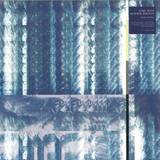
Alex from Tokyo presents new label world famous debut release from Tokyo Black Star - Edo Express EP out in October, 2015
Paris-born, Tokyo-raised, New York-based international eclectic French DJ, music producer and sound designer Alex from Tokyo is very excited to announce the October 2015 launch of his record label 'world famous" with a new Tokyo Black Star EP (the first release in three years)!
The four different straight up house music club tracks here on the "Edo Express EP" showcase Alex from Tokyo's versatile and funky DJ style and come from a very special fun jam session that took place in January 2015 at Isao's Tokyo Black Star and phonon studio with the help of their great musician/analog equipment otaku friend Kenichi Takagi leading to Kenichi san officially becoming the third Tokyo Black Star member, bringing along some of his favorite old, new and handmade (modular) synths into the mix.
The stunning artwork for the release is done by long-time collaborator the very talented New York based Japanese artist Tomokazu Matsuyama, who has been creating the Tokyo Black Star visual identity since their first release on Innversions in 2005.
Working in harmony with music partner and sound/mastering engineer Isao Kumano in Tokyo, Alex from Tokyo formed Tokyo Black Star in 2000 while remixing Big Moses feat. Jan'elle's house classic "For you" for Kerri Chandler's label Bassmental records. Since then Tokyo Black Star has released five EPs including the first-ever release on high-profile Berlin label Innversions (the "Psyche Dance EP," 2005) and their full length debut album 'Black Ships' (April 2009, also on Innervisions), an EP on DJ Deep's Deeply Rooted House label and remixes for artists like Tony Allen (P-Vine records Japan, 1999), Carl Craig (Psyche 'Neurotic Behavior' on Planet E, 2011), Phenomenal Handclap Band (Tummy Touch Records, 2013), Bing Ji Ling (Lovemonk), and Kuniyuki (mule music), and among others.
Always looking for new challenges and sonic adventures, in the summer of 2010 the Tokyo Black Star duo were joined by top Japanese audio professionals at Isao's studio in Tokyo, leading to the creation of a new 'revolutionary' audio brand called phonon , which makes exceptional pro-audio equipment for studio and DJ use.
Tokyo Black Star's last release, in 2013, was a special musical contribution called "X" for a unique celebratory 10th anniversary compilation for Yohji Yamamoto and Adidas fashion brand Y-3. Alex from Tokyo co-directed the exclusive compilation
world famous will be presenting a wide range of dance floor and eclectic music by Tokyo Black Star, Alex from Tokyo's collaborative projects with other artists and his affiliated japanese and international connections! Mastering for all releases will be done by Isao Kumano.
Buscar:the analog music project
Toby Tobias has been responsible for some fine quality music over the past 10 years with labels such as Rekids, Nang, Let's Play House and Quintessentials all dropping his unique brand of raw, analogue house and techno. A DJ's DJ who always seems to pull out a lesser known gem and make it sound like a classic, Toby knows his music as well as his studio, inside out. We've been proud to deliver three EP's from him on Delusions but we all felt the time was right for a full length, especially considering that 7 years have passed since his debut LP Space Shuffle on Rekids. Toby fully embraced the scope and breadth that an LP affords a producer, holing up in his Hackney studio and losing himself in his machines. Rising Son is the result of those sessions and it's brilliant!
From the opening machine funk of The Wonder featuring vocals from Atwell we can hear that Toby is quite sure about the direction he's taken for the LP. 808 beats bring vintage electro vibes whilst Atwell's vocal hints at the golden era of Chicago house, adding a soulful touch to the rigid groove. Love Affair continues the theme of off-world utopia where the droids have a heart and soul and sing torch songs of love lost, the Moroder-esque influences bringing a retro sheen to the LP. As we continue through tracks such as Sloflava and Sending Signals we find blissful, downtempo jams which perfectly soundtrack this imagined night time world which Toby seems so happy to immerse himself and his listeners in.
I Robot follows, providing the one cover version on the LP from the Alan Parsons Project as well as being an LP defining focal point. A track which shows that when the machines are working for you, it could just be a perfect world. But Broken Computer soon shows us what can happen when things go wrong. Incidentally, this is from a genuine computer crash which Toby managed to capture using his phone. A beautiful glitch in the system which spewed out such a mournful noise and a very happy accident that would be completely impossible to create if you set out to try.
As we continue we're treated to the likes of Friday Analogue Jam, Whisper It and Weird Danger, all echoing bleeps, squelching bass notes, heavenly pads and precision beats. In some ways we get a feeling of a land that time forgot, in others something of sublime beauty and futurism. That Toby can paint pictures with his music in this way speaks volumes, knowing instinctively when to draw out a mood or feeling or flip things on their head to command your attention and beg another listen. And another.....
* Jon Gurd's Birth Right EP is the first material from the Portsmouth based Techno producer in more than 2
years since his ventures on Octopus recordings, 8 Sided Dice and Quartz. The EP therefore indicates an
audible step change not just in the approach to production but also in the mindset and emotive feeling
behind each texture and layer. Having emerged unscathed from a traumatic family related drama Jon
communicates a tortuous and re-evaluated life message across all 3 tracks, and is dedicated to his brother
with a hidden meaning conveying, Tomorrow Is - Promised - To No One'.
* Dissecting the EP further the educated are blessed with field recordings, analogue rumbling and modular
synthesis exiting from almost 24 months of lab driven experimentation. No real process has been applied or
extant formulae followed and the EP's resounding success is that this now exudes what Jon feels' innately
rather than what the industry wants, therefore the journey, endless noise making and experimentation gives
a balanced and exciting offering. Jon comments seriously my process for producing this has been all over
the place, literally stumbling on shit, slipping over my own creative vomit, workflow went out the studio
window on day one'.
* Having spent two years asking himself why he makes music, I think on first listen of Birth Right EP we will all begin to empathise why. Remixes kindly provided by Messrs Dave Clarke and Ancestral Voices (new project from Liam Blackburn formerly Indigo / Akkord).
* A long time-friend and recording partner of Alan Fitzpatrick, as well as one third of Mister Woo with Dave from Reset Robot, Jon Gurd is best known for his work on the likes of Octopus Recordings, 8 Sided Dice and Quartz. Abundant with field recordings, analogue rumbling and modular synthesis, his latest signing to Derelicht is a result of almost 24 months of lab driven experimentation, and marks an auspicious return from a musical hiatus that stemmed from a personal tragedy. From the off, 'Tomorrow Is' is a driving piece of techno complete with sinister undertones and menacing atmospherics, meanwhile 'Promised' focuses on a low-slung groove as tantalising synths operate on top. The last original, 'To No One', then exhibits a deeper vibe with ebbing pads and spectral chords. Dave Clarke's decadent rendition of 'Promised' ups the tempo whilst demonstrating commanding kicks, until Ancestral Voices, the new project from Liam Blackburn (Indigo / Akkord), strips back the beats of 'To No One' for a subdued subterranean workout.
* Press / Promotion: 3 x Co-ordinated PR Campaigns (In House campaign by Derelicht, Dispersion PR and EPM Music, 100 vinyl hand-distributed to leading editors, artists and tastemakers. Key editorials through Resident Advisor, Inverted Audio, Ran$om Note, Beat Vision, Slate The Disco, Magnetic Magazine, DJ Mag, Noise Porn, Mind Grub Audio, Portals, Elevated Culture. 1 x videos produced to support Dave Clarke remix
Tiefschwarz - 'Just Beautiful!'
Alan Fitzpatrick - Yeah massively into this, will play a lot. Thanks for sending.
Dustin Zahn - Feeling the original of "To No One." the chord/pads are hitting the right spot for me this morning! The remix is also a nice take on the original
Baikal - to no one and Derelicht are dope
Kirk Degiorgio - Dave's mix for me!
Bas Mooy - yep! A1 for me mate!
Ben Sims - a1 is the cut for me, heavy and heady but still has the groove
Benjamin Damage - Thanks for sending this, top work!
Bryan Chapman - really feeling this EP, fav is the Ancestral Voices remix, that downbeat vibe
Bryan Zentz - Wonderful, moody, and emotive...LOVE it
Carlo Lio - Actually feeling all of them. Something for every time of the night. Can see myself playing a few of these for sure
Lo Shea - Tomorrow is sick! Dave Clarke's remix is dope too.
The enigmatic Amara Touré from Guinée Conakry finally getting a well deserved compilation showcasing all of the 10 songs ever released between 1973 and 1980. Cuban influenced music of a different kind featuring amazing spaced-out guitar works!! Analog Africa compiles a complete collection of Amara Touré's Afro-Cuban compositions, originally released between 1973 and 1980."Lamento Cubana and Temedy are the two finest Afro-Cuban compositions ever recorded. As if they were played in a smokey, poorly lit ballroom where dark rum was sipped ever so slowly" - Vikram Sohonie - Ostinato Records
Analog Africa to release a compilation by Amara Toure, the enigmatic Afro-Cuban musician from Guinea-Conakry, showcasing all of the 10 songs he ever released between 1973 and 1980.
"Latin music, is it really foreign to us Africans I don't think so. Listen to the drums, to the rhythm. It all seems very close to us - it feels like it's our own culture," declared enigmatic singer Amara Toure. It is the late 50s, and Senegal is going crazy to the groove of Son Montuno and Patchanga. Brought to West Africa by Cuban sailors in the early 40s, these styles were immediately adopted by a flourishing music scene that did not hesitate to embrace the Caribbean sound, mixed it with their own Folklore, and, in the process, created something new. Through the unique cultural fusion of West African and Caribbean influences, Latin music took on a new and unique sound - the format was reinvented. Producer Ibra Kasseì and his Miami nightclub acted as the spearheads of this movement. They brought a breath of fresh air into Dakar's nightlife, further energising one of West Africa's most exciting cities. The demand for ballroom parties and live acts exploded, attracting numerous musicians from surrounding countries. One of the musicians who answered this call was percussionist and singer Amara Toureì, from Guinea-Conakry. Spotted by Kasseì while performing with Dexter Johnson, Toureì was asked if he would like to be part of a new project. Little did he know that this project would become a phenomenon.Immensely important for the development of Senegalese modern music, Le Star Band de Dakar, led by Mady Konate, became a sort of musical incubator and workshop, where many musicians learned and practiced their trade before moving on to become stars in their own right. Toureì's talent on percussion was undeniable, but it was his powerful and raw voice that captivated the producer. The fascinating way Toure interpreted Cuban music was unparalleled, and it was this feature that encouraged Kasse to recruit the unknown artist.
Although already brimming with incredible talent, Amara Toure's joining of Le Star Band de Dakar in 1958 began the band's meteoric rise to the top. The band quickly became Dakar's number one orchestra, and it cemented the reputation of the Miami nightclub as the hottest spot in the country. The place was packed nightly, and Dakar was boiling.
Amara Toure's Senegalese adventure lasted for ten years when he received an irrefutable offer and in 1968, joined by a few talented Senegalese musicians, headed to Cameroon and immediately formed the Black and White ensemble. Many live gigs later and it was time for the first songs to be recorded. A total of three singles were produced between 1973 and 1976. These singles, representing the first six songs on this compilation, fully epitomise and distill the essence of what Toureì had learned during his career. His Mandingue roots fused with the Senegalese sound that he had mastered - the perfect foundation for the Toureì's Cuban interpretations.
If Toure's intention was to create the most sensual music ever recorded in Africa, he might very well have reached this goal. The musicians on the recording sound like they are playing in a smokey, poorly lit juke joint, where dark rum was sipped ever so slowly, and the pulse of the music took up a life of its own. How many couples have danced, swayed, and melted together to the distinct sound of Amara Toure Nobody can say for sure ...
Amara Toureì's success poured across the borders of Cameroon, and in 1980 he went to Libreville, Gabon, to team up with the powerful Orchestre Massako. Toureì recorded an LP at that time which is hailed by many music aficionados as one of the very best African albums. The songs from that LP are the last four on this compilation. It took only ten songs for Amara Toureì to become a legend. These ten treasures, representing Toure ìs complete discography, have been carefully re-mastered from original session tapes and vinyl records, and will be released by Analog Africa on 22 June 2015. After the release of his LP in 1980, Toureì seems to have disappeared. Apparently he was last seen in Cameroon but it is unknown if he is still alive today. His music though is definitely alive.
The Furnace Series is a two-part compilation of music inspired by a special room in the Montréal apartment shared by Booma Collective from 2012-2014. When venues to throw parties became scarce, Booma used this room leading to the fire escape in the back of the apartment - known as The Furnace - as a space for small gatherings among close friends. The Furnace Series is a collection of memories of those intimate parties and impromptu jam sessions.
Part one features four tracks by Booma Collective founders and friends, beginning with 'Psyche' - a hypnotic, dub-techno inspired composition with oscillating, piercing sounds, evoking whistling flurries. Solpara's 'Garden in the Furnace' echoes the hollowed-out concrete architecture of The Furnace itself, filling up then emptying its atmosphere with layered drum machines and ghostly voices. 'CF01 is the result of feedback experimentation carefully arranged into a slow tribal jam.. Oren Ratowsky. producer of Booma Collective's first vinyl release, rounds off the B side with 'Gorby', an eleven and a half minute exploration of his mastery of analog synthesizers.
This EP was made during a period where my whole outlook on everything was transforming. The Voidloss project started as an investigation, I was conducting a lot of research and study on the mind, the occult, on different thought modes, and the Voidloss project represented this. The idea was about a leap in to the void. A leap of abandonment into the dark, with total acceptance, total commitment. The idea was to lose myself to the void. This was mainly a spiritual journey for me, and could be best explained by 3 things, the void of Miyamoto Musashi from Go Rin No Sho, The concept of the Tao from the writings of Lao Tzu, and the concept of the abyss from the works of Aleister Crowley. Part of this journey deep inside the self was frightening and horrific, the total loss of self, of all identity and ego, and part of it was beautiful and enlightening. I wanted the music to reflect this, and I wanted the music to change as I changed, as I went to and through all these interesting places. In essence this was about freedom. So fast forward some years and I felt I had sharpened my mind quite effectively, the music had twisted and changed and flowed with me. At the point I began making the music for this EP, I had grown quite angry with the amount of conformity I was perceiving in life. Politically, socially, musically, there was this drive of conformity in the world. I think part of it, and only a part, comes from the prevalence of social media, the need to belong and to be liked, the idea of judging yourself and your works through the perception of others. Musically I felt that within techno there was a tendency for the music to fit within a set of confines dictated by fashion and hype, and this was reducing the diversity of the music, it seemed also that the practices of commercial music were seeping in to techno as the music became more popular. Hype and business driven decisions, brand building and so on. I always felt techno was more about art, and I began to get frustrated. Equally I felt that politically there was less and less choice, as all decisions seemed to lead to the same outcomes. I became more interested in the concept of anarchism, of the idea that government was no longer needed. I have always in my life had a drive to question everything. I've always been 'naughty' and rebellious and done things my way, to my advantage or my disadvantage, I could never accept being anything other than myself all the way. If everyone walks in one direction, I will walk the other way, even if it takes me over the edge of a precipice, just to see what is there. All this stuff influences my music, and during the period of making this EP I was angry, kicking against the things I no longer liked or wanted, screaming dissent. There is a lot of anger and rage, and of course rebellion. I wanted the music to capture that unbridled fury you have when you are in your late teens, when you just start learning about yourself and you start rebelling and questioning things around the time the world is really pushing you to conform. I was soundtracking my own philosophical riot. Previous to this my Voidloss stuff had been more introverted, more pensive and melancholy, more self destructive, more cerebral. For this new music I wanted something more immediate but without being too obvious. In terms of the choices I made I still leaned more towards broken rhythms for beat structure. I find it very difficult to do anything interesting with 4x4 kicks any more, it's too rigid for me, it limits my freedom. I like the looseness you get from more 'drummer' like beats, I guess probably because I have been playing drums all my life. The challenge is to get the same rolling power from broken rhythms as you get from 4 to the floor. It's not easy, there is a ridiculous amount of trial and error and the rejection percentage is high. I also was trying to use less 'synthy' sounds. I wanted to try to take a more acousmatic approach to sound design. With the current modular synth revival in techno I was hearing a lot of 'old' synth sounds re-emerging, and this didn't seem like a progression to me. I wanted to make sounds that were hard to source for the listener, where they weren't sure if it was synth or real world sample, digital or analogue. This involved a lot of experimentation. My process involved a lot of field recording, especially with contact microphones, which open up a whole new world of interesting sounds. You are effectively recording sounds through objects in the environment, 'hearing' the world as these objects hear them, I was using guitars, feedback loops, handmade instruments as well. So I was combining this with different synthesis, granular synthesis, sample synthesis, physical modelling, FM synthesis and of course analogue. Everything was reprocessed and re-synthesised, I tried hard to obscure the source and make something new as much as possible. The stuff on this EP was part of my live PA for some time, so as I learned how the music worked live I could go back and make changes, sometimes the environment I was playing in transformed the sound as well, and so I would try to go back an incorporate this in to the music. For remixes I wanted to choose artists that I respected for their vision as well as for their output, so my list of people I wanted was extremely short. Inigo Kennedy has always been an artist I have respected greatly. His music has always been unique to himself, he remains outside of fashions and trends even though his name has become very big recently. He takes risks with his work, experimenting and exploring, yet remaining relevant to the club, and just tirelessly forging ahead, seemingly for the sake of art above all else. And he's just a really nice guy to deal with. His remix is everything I expected it to be in that it is the unexpected. Regis is another artist who forges his own path in music, you cant really even begin to discuss the avantgarde in techno without including his name, he is one of the foundation stones for artistry and the outsider mentality in techno. His music is always unique to his own vision, and along with it comes an interesting artistic philosophy taking in situationism, post punk and industrial ideology and a good dose of tricksterism ala PT Barnum, all of which comes out in his music and the way it is presented. The man is a truly singular force and it is an honour to have him on this record. Overall the concept here is that of rebellion and dissent. Of asking questions, following your own path, of maintaining some place in yourself that burns like a forest fire.
Whether or not I have succeeded I guess is down to the listener, I'm never happy with my music, I keep wanting to move forwards, or somewhere else, and am constantly trying and failing to capture some essence of perfection. But like Bukowski said
'It's the only good fight there is'
Objektivity is starting the year with launching the long-awaited vinyl-only sub-label called OBJ Analogue. As the name says, the concept behind this is that in order to make the record, it has to be totally hardware based: No plug-ins! Objektivity head-honcho Dennis Ferrer says: "The OBJ Analogue is a special project for me and is dear to my heart because I love analogue gear, vinyl, and hardware, so I keep that side of me happy."
The first OBJ Analogue release is coming by VIVa Music's Steve Lawler, who delivered a very rough two-track EP called - Inna State / Recuperate", produced with the Roland 808, 909 and 606 drum machines. The bass lines are recorded and played from Moog Voyager and the piano on - Recuperate" is coming from Emu Orchestra Rack Mount. Completely analogue!
Make sure you get your hands on the vinyl as there will be only a few limited copies out.
Scuba Death is Ricardo Donoso's alter ego. With more of a focus on analog sound, percussion, sampling, and location recordings, there is an organic undercurrent on Scuba Death recordings that isn't as prevalent in his solo work. This music is rich in atmosphere while still tethered to the deeper ideas that Donoso often explores in his work. Treatises on fear and deathanxiety, the underlining thematic framework for the project, run rampant throughout these claustrophobic electronic passages, and teeter on the edge of being oppressive. Nitrogen Narcosis marks the first full length and strongest statement in the Scuba Death repertoire after the privately issued, ruthless 'Demon Seed' twelve inch back in 2011. The album alternates between surprising lethargic dance inflections all nestled between 75 & 100 bpm, the normal resting heart rate for adults, and the more conceptual, numbnessinducing pieces like '50-70 Meters' and 'Nociception.' Sequencing plays an integral role on Nitrogen Narcosis as the listener is suddenly thrust into the darkest reaches of the ocean after dark alley grooves are sucked into an aquatic abyss. For a project named after Donoso's neardrowning experience in the South Atlantic when he was younger, there's an impressive amount of reflection & vulnerability present - the field recordings that permeate throughout the album were captured at the same location the undertow caught hold of him that bright Summer day 20 years prior. An inner battle between paranoia and euphoria is played out in wellconceived, precision sonics on Nitrogen Narcosis as Donoso reminds us to look back, break through the surface and go deeper.
Cute Heels is the solo project of Bogota´ born, experimental producer Victor Lenis. Since the early 2000's Lenis has been working on a myriad of electronic projects, including the management of the labels Black Leather Records and Romance Moderne, in his current home of Brussels. Drawing on the influences of the radical punk scene that surrounded him growing up in Columbia while nurturing his passion for synthesizers and drum machines, Lenis developed the broody, gloomy brand of electro-techno that is Cute Heels. Deemed by Juan Atkins as ''the new blood and spirit for the next step in techno music'' Cute Heels has released various digital only releases over the years, as well as his first vinyl release, an EP on Gooiland Elektro. His debut album Spiritual, rides the line between cold electro-techno and left field electronic body music. Inspired by equal parts Liaisons Dangereuses and Drexciya, Spiritual takes the listener on a journey over 8 tracks and 40 minutes of music. Listening to "Spiritual" you can see why. The songs on this full length reveal a sublime influence from Detroit techno, early Chicago house and new wave; advanced electronics for the dance floor, pumping and sophisticated. The album was recorded and mixed by Victor at Sensorium Studio in Zagreb, Croatia in November 2013. Each song has been mastered for vinyl at Fantasy Studios in Berkeley by George Horn. Each LP is packaged in a custom-made jacket by our in-house designer Eloise Leigh and incorporates the geometry of analog synthesizers and celestial rose patterns.
The third in the Modular Techno series from live analogue artist and Freerotation organiser Steevio.
After 15 years of producing techno live on hardware, in 2009 Steevio began building a dedicated machine on which he could totally improvise an entire techno performance from a blank canvas that far surpassed anything he could do with his previous setup of drum machines and synthesizers. Steevio's modular is 100% analogue; there is no computer involved, there are no memories to save sounds or sequencing patterns, and everything is improvised in real time..
Volumes 1 and 2 of the series were just a taster of what was to come, and were the early experimentations on Steevio's newly built machine. Steevio records everything he does, especially during the intense practice sessions for live gigs. All the music in the series are out-takes from these practice sessions, and the tracks from Volume 3 and the forthcoming Volume 4 all come from a three day period in practice for a recent live gig at Delete, Bournemouth, UK.
Volume 3 continues from where Volume 2 left off but delivered with more confidence and a deeper more hypnotic feel. Steevio continues to develop his skills and fine tunes his unique instrument in this dedicated 'for life' project.
'Moonshine Heater' is the debut release from Marlowe, a new studio and live project from Laurent Bovey (AKA Laps). The title track is a crisp and melodious piece, the mechanical groove bubbling with dubby FX and heavy synth shots against the hypnotizing melody. On the flip, 'My Minds Mine' comes in a darker shade, paranoid synth sweeps and a brassy analogue riff weaves around a minimal yet funky drum arrangement. Another great groove from Marlowe, and capturing that classic early Cadenza sound perfectly. Wrapping up the release is 'Power Plant', another detailed and precise mood piece, deep and unique, taking it's time to build and take effect. Marlowe does not deal with 'bomb tracks', these are sophisticated tracks for the more discerning music fan. Marlowe AKA Laurent Bovey has amassed an impressive catalogue of work since the mid-2000s, solo and as part of Digitaline. Releases on Cadenza, Smallville and Cityfox have set the standards for minimal electronic music.
Vae Victis can't hide their love and passion for raw house and techno. On this 5th release there is another fine selection of hybrids between styles perfectly expressing their love for genre bending music. Durant exsists out of a small collective of producers with main roles for Steve Murphy, Die Roh and Lucretio, alongside Blawan. "The Dove Ultimatum", a 4 tracks ep of punchy analogue electronic music! On the a-side lay General Motors and At Ten, 2 broken beat electro techno tracks a la Drexciya showing the hardest and most experimental side of the project. While on the flip the trio bring things on a housier field, though staying loyal to the a-side vibe by delivering 2 dark and obsessive raw house tracks.
Support:
Ben UFO, Analogue Cops, Truss a.k.a. MPIA3, Tessela, Happa, Herva...
Diva is a project which explores the outer regions of techno's psyche - combining the trippy sensuality of Chris & Cosey with the brutalist analogue aesthetic of the likes of Robert Hood or Liasons Dangereuses.
Inspired by the vocal histrionics of strobe lit sirens such as Loleatta Holloway and Jocelyn Brown, Diva calls on the protean roots of basement club music. Lead track 'Paris Stabbing' is a stunning excursion into motor city madness, abstracted disco vocals clash with a broken digi-arpeggio and hooverish bass break down, whilst the flip side 'But I've Never' imposes a detuned synth siren over an industrial bass sequence and sp1200 piano stabs to eerie effect. Also included is the 'Paris Stabbing (Beats)' which pares down the original, adding detuned melodic percussion into a minimalist after hours tool.
freshly repressed!
Leisure System, the collective, label and famed Berghain club night of four years standing, is back with their third release from co-founder and resident, Sam Barker. Known for its genre-defiant lineups, Leisure System's quarterly residency has consistently brought together artists with varying styles. Flying Lotus, Autechre, Afrika Hitech, Jackmaster, Surgeon, Jimmy Edgar, Blawan, 808 State, Dopplereffekt, Clark, Machinedrum, Surgeon, Venetian Snares, Objekt and Egyptian Lover have all graced the decks, showing off the collective's commitment to the exploration of new and experimental sounds in EDM. The development of the label, and now this release from Barker, is no exception. After discovering computers and raves in the late '90s, Barker began making tracks at age 13, building up a sizable collection of vintage analogue synths, paving the way for his future solo work and collaborations with artists like Tim Exile, Clark, Shitmat, Scotch Egg, The Field, Leafcutter John and Jimmy Edgar. Shortly after his 2007 move to Berlin, Barker began collaborating with fellow Berghain resident nd_baumecker, resulting in their ongoing project Barker & Baumecker. Their first EP 'Candyflip', was released on Ostgut Ton in 2010, followed up by a live show tour throughout Europe. The duo is currently readying their second EP and have a long player due out in August 2012. For this new solo EP, mastered by electronic music legend Pole, Barker presents a creative three-track lesson in diversity and highlights Leisure System's ever-evolving aural curiosity. The opener and title track 'Like An Animal' is a number that builds and builds, quickly changing course and mutating into a percussive and texturized melting pot of sounds. Up next the hypnotic 'I Feel', which is filled with moody pads and syncopated breakbeat rhythms, paving the way for the mechanical, yet smooth half-step rhythm of 'Hot Lover'. Siimilar to the collective, this offering pushes boundaries and mirrors the progressive ideals of the collective. Just like Leisure System's first two 12's from Pixelord and Eprom in 2011, Barker's 'Like An Animal' EP is a clear statement of the label's simple and distinct commitment : to be a platform for timeless, thrilling and soulful dance music in the fields of house, techno and electronica, disregarding media hype and genre borders. In keeping with this clear sonic manifesto, Leisure System's design aesthetic is equally individual, with all vinyl releases housed in deluxe die-cut jackets.
Three releases deep now, Shadow Play transports us back to the nineties with this extra special collection of music from UK wizard Scott Edward. The Bristolian producer dropped a killer series of tracks from 1993 onwards, using a variety of aliases to explore the realms of the techno universe. It's an honour for Shadow Play to be able to rerelease one of Scott's classics, 'Access Activist', alongside three previously unreleased cuts from the same era. We hope you enjoy these classic examples of British underground techno...On the A-side it's the Scott Edward alias that handles matters, going straight in with the title track 'Access Activist', a mesmerising journey into analogue hyperspace. His flair for composition and arrangement really comes through on this opening track, and leads us nicely into 'All Is Lost', a nifty slice of paranoid techno with a jittery rhythm and a pervasive air of mystery.On the flip Scott's Ultra-Modern Art moniker is at the controls and the change in style is immediately apparent. Gone is the cosmic atmosphere and in its place is a funky, jazzy retro sound. The old equipment gives every sound its authentic identity, which filters through to the final track 'Brave New World' - a jaunty number, which uses acid licks, an optimistic b-line and sweet percussion to provide a delightful end to the project.
“Trash Can Lamb” is a new solo album from Akron, OH-based multi instrumentalist Keith Freund. For the better part of twenty years, Freund has been producing intimate, shape-shifting music on his own and as part of collaborative projects such as Trouble Books, Lemon Quartet, and Aqueduct Ensemble. Here, he concocts a heady, homespun broth of analog synthesis, bit-reduced sampling, piano, standup bass, saxophone, and location recordings, arriving at a loose and evocative set of songs. Throughout the album, we hear 8-bit experimental delays mangling airy acoustic materials, denaturalizing them into primitive loop structures while retaining their golden-hued, melodic cores. The sputters, hisses, and croaks of handmade electronics nuzzle up to wistful piano and saxophone ruminations; the pure pandemonium of chaotic triangle wave patching and filtered noise settles into the serenity of a backyard dusk full of spring peepers (or maybe they’re crickets…). It’s in the space between the ragtag and rough-hewn and the romantic and yearning that Freund situates these compositions; it’s a peek inside a workshop that sits atop the trees, branches scraping on the windows, bluejays who just won’t knock it off, a table fan spinning slower and slower, its cheap blades covered in dust.
All music by Keith Freund, with contributions by Linda Lejsovka, G.S. Schray, Steve Clements, and Corey Farrow.
Mastered by Kassian Troyer at D&M.
Art/design by Alex McCullough and Felix Luke.