repress
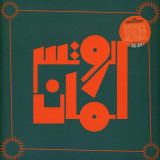
Mohamed Abdel Wahab wrote another big score for Om Kalsoum in 1972. In “Laylet Hob” (A Night of Love) we hear Arabic music and poetry in perfect symbiosis. The rich and lengthy instrumental intro is just a precursor of the emotion present in this song. The talent of the composer is underlined by how he utilises the traditional style of singing poetry in a more open and creative way. Abdel Wahab’s infusing of long and groovy interludes with varied tonality, rhythmical patterns and an overall unique approach, carries Om Kalsoum’s powerful voice and brings the song to an incredible climax. In this way, he gives more colour and depth to the music and the skilled soloists in the orchestra are finally able to breathe. Sensual rhythms, breaks and breathtaking solos of accordeon, guitar (Omar Khorshid), violin and organ (Hany Mehanna), have ensured this song is an all-time classic for belly dance routines. Souma Records thought it was time to re-release this monument on a high quality vinyl format, together with a repress of “Enta Omri”, another classic song by Souma.
Поиск:the arab
Все
Svart Records to release new album by rising stars of eclectic heavy rock, Messa on the 11th of March 2022. Messa’s rising trajectory hits the stratosphere on their immense new album “Close”. Soaring up out of the Italian Doom Rock underground in 2014, Messa have been rapidly garnering a frenzied throng of devotees, in thrall to their monumental and broad-ranging sound craft. Releasing two widely celebrated cult records, the latest of which “Feast For Water” in 2018 was a critical breakthrough success, with Rolling Stone calling the whole album “captivating, wringing maximum drama out of its savvy stylistic clash,” Messa have had everyone on tenterhooks, waiting for what was next. New album “Close” draws us further into Messa’s spellbinding textures and immersive dynamics. Described as “Stevie Nicks fronting Black Sabbath,” singer Sara’s colossal voice omnipotently carries the listener on an emotional rollercoaster ride where the sonic cauldron of Iommi guitars gives way to Arabian oudh and progressive solos in a masterful style-clash that well befits Messa’s incendiary reputation. The hushed Fender Rhodes piano intro on opener “Suspended,” picks up where Messa left off on their previous album “Feast For Water” but then collapses gloriously into Jazz guitar and widescreen impassioned crushing riffs, lighting our way for the odyssey ahead. The scene is set magnificently for the journey that “Close” expertly takes the listener on, with Messa’s obvious care and passion for the album as a pilgrimage of sonic experience. Heavyweight tracks like “If You Want Her To Be Taken” or “0=2” are modern Doom Rock classics that expertly upgrade and leave the genre reeling in their wake. “Pilgrim” and “Orphalese” are woven with tapestries of Mediterranean sounds where oudh and eastern chord phrasings expand Messa’s cinematic palette with a panache that is all their own. Atmospheric and grandiose belters like “Rubedo” and “Dark Horse” build into an almost limitless climax of discord and harmony where blast beats and saxophones descend into a thrilling cacophony that’s a masterclass in artful cutting edge Doom. Referencing bands like Dead Can Dance, Swans and Om, Messa have created an album where song, experience and atmosphere are focused into a crystalline modus where high art flawlessly embraces good old fashioned riff-worship. Transcending the occult and noir-tinted atmospheres of their past works, “Close” confidently weaves Messa’s multifarious influences into a singular breath-taking sound that leaves the listener enthralled. Perfection or something extremely close, Messa’s “Close” is not just a Metal record, but it’s definitely one of the best things to break out of the confines of Metal in a long time.
King Gizzard & The Lizard Wizard are repressing their sixteenth album, K.G. n 2010. In the wake of a global pandemic, it’s a collection of songs that saw the six members of the band retreating to their own homes scattered around Melbourne, Australia to compose and record remotely. But have no fear! Not a drop of that unnamed alchemical something that makes this band so special is missing. This is the Gizz firing on all sonic cylinders, for if ever a band were built to swiftly adapt to adverse circumstance then it is them. Hell, on paper Covid-19, with its monstrous yet unseen face, ecological implications and new language, even sounds like an abandoned concept for a King Gizzard & the Lizard Wizard album.
Truth be told, the practicalities of the creation of K.G. is a side-issue. It is the contents and the sheer visceral power of music that matters. Music that will live on long after a virus has passed. Back in 2017 the band released Flying Microtonal Banana, now one of their most highly regarded albums. That it was the first of five released by the band that year and was only part the story – a story made all the remarkable by the fact it was recorded using a microtonal musical scale that requires quarter tone tunings, on instruments custom-made for the occasion. It spawned a plethora of live favourites such as ‘Rattlesnake’, ‘Sleep Drifter’, ‘Nuclear Fusion’ and ‘Billabong Valley’ and showed the wider world that the Gizz paint from a palette that extends far beyond the musical colours of western rock. Here were songs in tunings more common in traditional Turkish or Arabic music.
“FMB was one of the purest and most enjoyable recording experiences we’ve had, and the ideas just kept coming” explains de facto band leader and multi-instrumentalist Stu Mackenzie. “But we didn’t think we would play it live as the music dictated a new medium that requires different instruments, new flight cases and so. It was a liberating studio-based experiment which surprisingly translated seamlessly and spawned some of favourite songs to play live.”
So now they return to the microtonal tunings on K.G., an album best described as a pure distillation of the King Gizzard sound, one that cherry picks the best aspects of previous albums and contorts them into new shapes and via defiantly non-Western rock scales. There’s walk-on theme song ‘K.G.L.W’, the celestial disco-funk of ‘Intrasport’, the righteous life-giving staccato rock of ‘Ontology’, epic stoner-sludge closer ‘The Hungry Wolf Of Fate’, which ends the album in abrupt burst of white noise. All come together to represent the next-level of the expanding Gizz sound.
K.G. is both a stand-alone work and also part of a bigger musical picture. More news on that shall be forthcoming – fans of the band know by now that King Gizzard don’t do things by halves. If music were organic matter, then their albums are ever-changing entities: initial highlights are often superseded on further exploration, favourite tracks replaced by less obvious moments, while riffs or bursts of noise from four or five albums back might suddenly rear their heads again.
Sababa 5 sharpens their euphoric Middle Eastern psych sound into an infectious four-track EP, featuring vocal revelation Shiran Tzfira, recorded here for the very first time. Together they reinterpret the traditional Yemenite songs of Shiran’s childhood into modern and irresistible blends of disco, funk, boogie, pop, and rock.
Tel Aviv based four-piece Sababa 5 is a supergroup of musicians from the local scene, steeped in psych rock, funk, the traditional Yemenite music that gave birth to popular Mizrahi Israeli music, and traditions from across the Mediterranean and the Middle East that have long blended into one another. Between them, they have played with everyone from the Hoodna Orchestra, Tigris, and Kutiman Orchestra to widely known vocalists such as Gili Yalo, Ester Rada, and Liraz Charhi.
Sababa 5’s catchy instrumentals and popular songs such as “Tokyo Midnight” have gained attention from the likes of BBC 6 Radio Music’s Gilles Peterson, Cerys Mathews, and Gideon Coe, Rashad “Ringo” Smith, and France’s leading purveyor of alternative sounds, Radio Nova.
Growing up in a traditional Yemenite Jewish household, Shiran Tzfira was heavily influenced by both the Jewish and Arabic traditional songs that play a major role in Yemenite culture. But her soulful, soft, yet powerful voice betrays a love of not only singers of Yemenite heritage, such as Ofra Haza and Balqees but also Western artists such as Stevie Wonder and Erykah Badu. Subsequently, Shiran has gained many fans in the Arab world, especially in Yemen, where she has been dubbed the Israeli Balqees”.
Limited edition 300 copies. Sababa 5’s debut single features the talented Japanese singer and belly dancer Yurika. The two songs - Crossroad of Love (Ai no Kousaten) and Blue Universe (Aoi Sekai) – blend Yurika's dreamy vocals and texts with the band's 70's sensibility and Israeli soul music. As the band plays a mediterranean groove of both Israeli and Arabic origins, Yurika's Japanese lyrics float effortlessly on top. Sababa 5 and Yurika met in the summer of 2017, when Yurika was in Israel for an internship at the Orly Portal Dance Company. Yurika, performing at the time as a belly dancer with Boom Pam and Ouzo Bazooka, wrote lyrics in Japanese for two melodies composed by Sababa 5 guitarist Ilan Smilan. Both songs on the single are love songs, love that is both personal and universal. The combination of lyrics in Japanese, Yurika's gossamer vocals influenced by the Kayokyoku style and the Israeli sound of Sababa 5 creates a unique and interesting sound. Yurika (vocals), Ilan Smilan (guitar), Amir Sadot (bass) In the recording Lior Romano (keyboards) and Assan (drums).
ABOUT SABABA 5 Sababa 5 was formed in 2016 by Amir Sadot and Ilan Smilan, both members of TIGRIS band and the Hoodna Orchestra. The four members of Sababa 5 are already well known for their work with some of Tel Aviv's top artists/vocalists such as Gili Yalo, Liraz Cherchi, Sari and Reno, Ester Rada and Kutiman - to name but a few. With influences that range from Wrecking Crew and The Funk Brothers recordings from the 60's, to analog Middle Eastern music from the 70's, the sound of the band constantly evolves around different genres and rhythms. Yet, in its core, Sababa 5 remains very much a groove-centric band. The main source of inspiration for the band are "lehakot ketzev" (beat groups) from Israel that played innovative combinations of psychedelic rock mixed with Mediterranean Arab music during the 60’s and 70's. The fusion of East and West, along with the new spirit brought by the band members, creates a unique mix of styles that comes together into a new and original work. The band is currently working on a new instrumental album alongside the production of new songs for local singers. ABOUT YURIKA Born in the Chiba district on the eastern outskirts of Tokyo, Yurika began her journey towards belly dancing at the tender age of five, taking up lessons in jazz dance. After high-school, she applied for belly dancing lessons almost by chance - yet as she quickly fell in love with the music and the nature of the movements, Yurika knew this is what she was meant to do. Before long, Yurika began traveling around the Middle East, learning belly dancing in different cities and countries like Egypt, Morocco and Turkey. Whilst in Turkey, she met the famous Istanbul-New York based female darbuka player Raquy Danziger - who later invited her to perform in Israel. Once in Israel, Yurika began studying with Orly Portal, a master of contemporary folklore dance. After finishing her studies with Orly, Yurika remained in Tel Aviv and joined bands like Boom Pam and Ouzo Bazooka as a dancer. In her work with Sababa 5, Yurika is featured as a vocalist for the first time.
More than 20 years after its release, Arab Strap’s second album is reissued on vinyl.
Philophobia was recorded on the outskirts of Glasgow in the early incarnation of CHEM19 Studios with engineer/producer Paul Savage & at Cava Studios in Glasgow with engineer Geoff Allan.
Initially released in 1998, it was the follow up to the band’s 1996 debut The Week Never Starts Round Here. Instrumentally ambitious, Philophobia is adorned with sepulchral guitar, trumpet, cello & Scottish rainfall, providing a most beautiful backdrop to Aidan Moffat’s bold lyrical presentation as he articulates experiences most of us are too embarrassed to even think about; confessional, intimate, insightful and hilarious, ‘Philophobia’ remains a literate & musical revelation. ‘Philophobia’ - (from Greek "φιλέω-φιλώ" (love) and "φοβία" (phobia)), is the fear of falling in love / emotional attachment.
- A1: Mais - Meeting Riddim
- A2: Halynsky - Dangerous Feat Mama C
- A3: Pinchado - Pinchado Mix Los Mirlos-Don Agucho
- A4: Jean Paul Dub - Le Secret De L'atlandub - Ft Vanesa
- A5: Vladimir Tokarev - Eksperimentalski Dubstepski Remix
- B1: Autonomaton - The Clock Dub
- B2: Abu Ama - Arabxo
- B3: Nieve Volcanica - Tarkadub (Original Mix)
- B4: Taiki Ozawa - Taiki Ozawa
- B5: Nieve Volcanica - Tungurahua
- B6: Pinchado - Danza Chaquense
Superb LP from Helecho Dub featuring Monkey Tool and Marasm. A collection of deviant dub from south Argentina, France, Japan, Belgium, Germany …. Superb international collab with a common aim : Deviant Dub ! Noise or acoustic, roots or electro... nothing is clear here... In this kind of dub grey aera loads of creativity, ideas and futuristic sounds... Not an easy record for sure ! Probably better like that init ?
Diving once more into the forgotten corners of the electronic Spanish music scene from the 80’s and early 90’s, Soundway reissue Scan Man’s full single Arabian. Bringing together a Furious Five retro styled bounce & rhyme and a bite of UK street soul, the track is taken from Soundway’s hugely popular compilation Ritmo Fantasía. Expect soulful American expat rap layered over sitarlike sounds, and a tumbling, rattling, 808 pattern. Along with the original track and instrumental, DJs Trujillo and Ray Mang serve a souped up instrumental primed for modern dancefloors.
Recorded at the CEV Studios in Madrid, Arabian was the first composition and production of Marcos Manzanares to get an official release. Using an Ensoniq Mirage Sampler (one of the early, affordable synth samplers), and with Stephen Sutton providing the vocals for the track, he first made his entry into the Spanish music scene. A short while later he would go onto make a career for him self under the name of Tension808.
- 1: Into The Light (Edit Version)
- 2: Saiyidi Dub
- 3: Tribal Dervish Union Of Souls
- 4: Arab Quarter
- 5: Arid Land
- 6: Mother Of Nature
- 7: Tribute To Hasni
- 8: Ancient Vibrations
- 9: Spirit Of The Nile
- 10: Canaanite Call
- 11: Serengeti
Deluxe double 12'' vinyl housed in a 2 pantone sleeve Including insert with liner notes Akuphone is pleased to present the first compilation dedicated to musician John Bolloten, aka The Rootsman. As a precocious punk, he formed his first band, State Oppression, in his teens. Yet he is best known for his dub music, a genre that gave him international recognition. Largely influenced by the rhythms of North Africa and the Middle East, he built his musical identity around samples from these regional repertoires. His encounter with Bryn Jones - better known as Muslimgauze - further defined his artistic path. This selection offers an overview of his work from 1996 to 1998, a prolific period when Into The Light, 52 Days To Timbuktu, Union Of Souls (with Celtarabia) and Distant Voices (with Pachakuti) were released. A visionary production that predicted today's growing international predilection for the musical heritage of the MENA regions. The compilation is enriched with an explanatory preface by Mabrouk Hosni Ibn Aleya and illustrated with rare archival photos- all of which are contained in a superb jacket designed by the artist Ghiya Haydar.
The dawn of Symphonic Therion glooming at the horizon, yet still drenched in Dark Metal execution! Though it was their fourth full-length, and we had been given a sampling of their symphonic/gothic direction with “Symphony Masses: Ho Drakon Ho Megas”, “Lepaca Kliffoth” might remain the most memorable masterpiece of the band’s career along the follow-up “Theli”. A transitional phase between the band’s Death Metal roots and the hybrid of symphonic, gothic metal which they would carry forward for the rest of their career. This is an extremely dark album. The band retains their fascination with obscure occult magick and prophecies within the lyrics, and the music revolves around killer mid-paced Metal riffs drenched in the vocal libations of Christofer Johnsson. The album starts off strongly with “The Wings of the Hydra”, and from there on the serpent has snaked about your spine. An addictive piece with an obvious Celtic Frost influence, chanting vocals, simple synth tones and arabesque guitar melodies which evoke the mythical age of the song’s namesake. The album’s ‘hit single’, “The Beauty in Black” is glorious and gothic, it uses a pair of operatic vocalists (male and female), a sort of predecessor to the revolving door of guest musicians the band would use on their later albums. Other excellent tracks include the charging “Riders of Theli”, the crushing doom of “Black” which would have fit almost perfectly on “Into the Pandemonium”. The rest of the album is equally dark and enchanting, with other standouts being the title track and “Evocation of Vovin”. Synthesizers, flutes multiple vocalists, and the core of the band are all clear and precise throughout, yet it still carries a very raw and dark, ominous tone to it which trumps the later studio efforts. This may not be quite as symphonic as many Therion fans demand of their material in recent years, but it clearly marks the point where this band transformed from a innovative Death Metal band into the Gods of Gothic Metal. There are very few parallels to something like this, and it belongs in the collection of any fan of quality Occult Metal.
Graeme Martin and Liam Karima made the new pet deaths album to be
both explored and sat with
In age of dull disconnection and constant refreshing, unhappy ending, the London
duo's second full- length effort, was deliberately and acutely considered to be a
journey of its own; nine new songs but one whole immersive piece for the listener
to climb inside, in the quiet of reflection, in the sobering commute to and
from.Following on from the sparkling celestial folk of the band's 2019 debut To
the Top of the Hill, unhappy ending is the next step in pet deaths' somewhat
remarkable journey. Setting out to make their new album, the band had one
question in the forefront of their collective mind: Is life an unhappy ending, or do
we become part of a bigger movement to more positive things?
Across the album's nine tracks, this conundrum is explored in many and
meaningful ways, their subtle take on melancholic folk- pop conjuring a
bewitching atmosphere that hangs over every inch of the album. unhappy ending
thrives within the world it creates for itself, one of distinctive colours and shapes
that feel intimate and familiar but always slightly off- kilter, as if you've
momentarily stepped into someone else's dream. It sings of love and loss and the
unwieldy connection between those two things, in ways that feel quietly radiant
and beguiling, caught in an alluring contrast. Recorded at a residential studio in
Oxfordshire which they used as a retreat from the business of London – fleshedout and toyed with over time with their acclaimed producer Ian Davenport
(Slowdive, Gaz Coombes, Radiohead's Philip Selway) who encouraged the duo to
lean into the wilder parts of their creativity. Inspired, musically, by the spiritual
moments of Alice Coltrane, the freeness of Miles' 'Bitches Brew', with a sprinkling
of Talk Talk's 'Spirit Of Eden' in its colourful unravelling, unhappy ending is an
enveloping experience, touching upon universal themes but all shone through the
lens of Karima's signature perspective.
Tour in May & June in support of the release - dates in Newcastle, London, Bristol,
Manchester & Sheffield.
Pet Deaths previously supported the likes of Elbow and Arab Strap.
Support from So Young Magazine, Chris Hawkins (BBC 6 Music), DIY Mag, Clash,
Huw Stephens (BBC Radio 1)
Black vinyl[22,65 €]
2LP[36,56 €]
Turquoise and Black splatter vinyl[27,69 €]
Gold LP[25,63 €]
Forest Green Vinyl[39,08 €]
Red / Blue Splatter Vinyl[29,37 €]
Black Vinyl[29,37 €]
Vinyl[35,92 €]
Clear Vinyl[28,53 €]
Clear Vinyl[30,21 €]
LP[30,21 €]
LP2[38,87 €]
Black Vinyl[29,37 €]
Creme White Vinyl[31,89 €]
Clear Green Vinyl[31,89 €]
Lavender Marble[30,63 €]
Yellow w/ red & black splatter[30,63 €]
Black VInyl[30,21 €]
Cassette[15,08 €]
Black Vinyl[33,19 €]
Tidewater Tri Color Vinyl[34,87 €]
Available on vinyl for the first time since it's original CD-only release in 2007. Tenor saxophonist Fred Anderson and drummer Hamid Drake had the closest of relationships, as close as a father and son might have. Their communication was at a higher level musically and emotionally. The music on this album reflects not only their masterful musical skills, but a conversation in music that is exceptionally powerful and unique. For From the River to the Ocean, they assembled a band consisting of fellow Chicagoans to record the most relaxed, perfectly balanced album they made together. It may seem hyperbolic to call From the River to the Ocean Fred Anderson's greatest album, but the empathy and cohesiveness of the ensemble, coupled with the saxophonist's brilliant, searching improvisations, makes it a powerful contender. From the River to the Ocean is an especially varied outing, ranging from Anderson's classic set-closing blues "Strut Time" to the meditative, spiritual, modal track "For Brother Thompson," dedicated to the late trumpeter Malachi Thompson and featuring bassist Harrison Bankhead on brooding piano and Drake chanting in Arabic. The record's title track and the closer, "Sakti/Shiva," find bassist Josh Abrams laying down an astounding bed on guimbri, the threestringed Moroccan acoustic bass familiar to fans of Gnawa music. Another of the album's delights is guitarist Jeff Parker, well known Jazz guitarist as well as member of Tortoise. Here, Parker displays an immense sensitivity and melodic genius, sharing solo spotlight with Bankhead's cello on "From the River to the Ocean" and sculpting a stunning array of shapes on the group's swinging take on Anderson's "Planet E." Underneath it all is Hamid Drake, an intensely creative soul continuing to challenge himself. Drake's growth is not measured in how many different instruments he plays - indeed, he's scaled back his arsenal over the years - but in the depth and musicality of his feeling. On this record he is remarkably light and airy, playing with tremendous delicacy and clarity. Propulsion can be introduced without a pneumatic drill, and Drake instigates an avalanche of rolling forward momentum on the opening moments, inspiring the two basses and guitarist to move, to make something moving, and in turn to further inspire Fred Anderson to some of his most forceful and imaginative playing ever documented. If the individual is a small receptacle of expressivity, a mountain spring if you will, then it is in ideal settings like this one that the springs join forces, turning into streams, then bigger and bigger tributaries, finally swelling into rivers that open into the oceanic creative waterways. Thank goodness Anderson and Drake tapped into that wellspring, drawing directly from the source
Black vinyl[22,65 €]
2LP[36,56 €]
Turquoise and Black splatter vinyl[27,69 €]
Gold LP[25,63 €]
Black Vinyl[26,85 €]
Red / Blue Splatter Vinyl[29,37 €]
Black Vinyl[29,37 €]
Vinyl[35,92 €]
Clear Vinyl[28,53 €]
Clear Vinyl[30,21 €]
LP[30,21 €]
LP2[38,87 €]
Black Vinyl[29,37 €]
Creme White Vinyl[31,89 €]
Clear Green Vinyl[31,89 €]
Lavender Marble[30,63 €]
Yellow w/ red & black splatter[30,63 €]
Black VInyl[30,21 €]
Cassette[15,08 €]
Black Vinyl[33,19 €]
Tidewater Tri Color Vinyl[34,87 €]
Available on vinyl for the first time since it's original CD-only release in 2007. Tenor saxophonist Fred Anderson and drummer Hamid Drake had the closest of relationships, as close as a father and son might have. Their communication was at a higher level musically and emotionally. The music on this album reflects not only their masterful musical skills, but a conversation in music that is exceptionally powerful and unique. For From the River to the Ocean, they assembled a band consisting of fellow Chicagoans to record the most relaxed, perfectly balanced album they made together. It may seem hyperbolic to call From the River to the Ocean Fred Anderson's greatest album, but the empathy and cohesiveness of the ensemble, coupled with the saxophonist's brilliant, searching improvisations, makes it a powerful contender. From the River to the Ocean is an especially varied outing, ranging from Anderson's classic set-closing blues "Strut Time" to the meditative, spiritual, modal track "For Brother Thompson," dedicated to the late trumpeter Malachi Thompson and featuring bassist Harrison Bankhead on brooding piano and Drake chanting in Arabic. The record's title track and the closer, "Sakti/Shiva," find bassist Josh Abrams laying down an astounding bed on guimbri, the threestringed Moroccan acoustic bass familiar to fans of Gnawa music. Another of the album's delights is guitarist Jeff Parker, well known Jazz guitarist as well as member of Tortoise. Here, Parker displays an immense sensitivity and melodic genius, sharing solo spotlight with Bankhead's cello on "From the River to the Ocean" and sculpting a stunning array of shapes on the group's swinging take on Anderson's "Planet E." Underneath it all is Hamid Drake, an intensely creative soul continuing to challenge himself. Drake's growth is not measured in how many different instruments he plays - indeed, he's scaled back his arsenal over the years - but in the depth and musicality of his feeling. On this record he is remarkably light and airy, playing with tremendous delicacy and clarity. Propulsion can be introduced without a pneumatic drill, and Drake instigates an avalanche of rolling forward momentum on the opening moments, inspiring the two basses and guitarist to move, to make something moving, and in turn to further inspire Fred Anderson to some of his most forceful and imaginative playing ever documented. If the individual is a small receptacle of expressivity, a mountain spring if you will, then it is in ideal settings like this one that the springs join forces, turning into streams, then bigger and bigger tributaries, finally swelling into rivers that open into the oceanic creative waterways. Thank goodness Anderson and Drake tapped into that wellspring, drawing directly from the source
“Sounds Like Freedom” is the second release from LA-based record label, Domanda Music. It was recorded in September 2021 in Verona, Italy and conceived by bass player Rosa Brunello with notable contributions from UK Jazz star Yazz Ahmed, Arabic experimental music pioneer Maurice Louca and Italian drumming sensation Marco Frattini. Each track is the result of spontaneous improvisations, which have been lovingly post-produced by Rosa Brunello herself and label founder Tommaso Cappellato.
Rosa Brunello is an Italian bass player and composer whose skills range from free radical improvisations to electric rock, dub and modern mainstream. She loves to blend acoustic and electronic sounds in order to challenge the boundaries between genres and live up to her motto of music without borders.
An absolutely legendary album from Lebanon by Issam Hajali’s group Ferkat Al Ard, “Oghneya” stands out as one of the great musical gems of the Arab world. A groundbreaking release from 1978 that represents the meeting point of Arab, jazz, folk and Brazilian styles with the talent of Ziad Rahbani, who did the albums arrangements. Filled with a variety of sounds and genres, from Baroque Pop to Psych-Folk to flashes of Bossa Nova, Tropicalia and MPB, “Oghneya” is like if Arthur Verocai took a trip to Beirut in the 70’s to record an album.
In 2015 we heard Ferkat Al Ard’s music for the first time, a Lebanese trio compromised of Issam Hajali, Toufic Farroukh and Elia Saba. It was a stunningly unique release that blends traditional Arabic elements, jazz and Brazilian rhythms hand in hand with poetic-yet-politically engaged lyrics. The band was active in the left-wing movement of Lebanon of the time and they communicated their political ideas candidly through their songwriting.
In our mind the idea was to see whether Issam was interested in re-releasing “Oghneya.” He was not opposed to it, but also made it clear that it was not his priority for a first project. He suggested we start with his first album, before Ferkat Al Ard was formed, “Mouasalat Ila Jacad El Ard,” which was recorded in 1977 in Paris together with his friend Roger Fakhr (whose work we have been privileged to re-release in the meantime as well.) “Mouasalat Ila Jacad El Ard” is melancholic, stripped-down, guitar-based folk intertwined with jazz-fused breaks, and the unique sound of the santour glistens through. While the music is very accessible, some song structures are rather atypical, neglecting common patterns of verse, hook, verse, hook. The lyrics mostly trace back to the poetic work of Palestinian author Samih El Kasem, with one song also written by Issam, who composed the music for the whole album.
We re-released Issam’s “Mouasalat Ila Jacad El Ard” in 2019 to a great reception, with positive reviews all over the place and an ongoing appreciation for the album. This meant it was time for us to undertake an “Oghneya” re-release again!
If you compare “Mouasalat Ila Jacad El Ard” and “Oghneya,” one apparent distinction is the strong Brazilian influence in the music. Issam Hajali explained that you can already hear traces of this influence on his debut, but it’s “Oghneya” where this musical relationship really peaks. Lebanon and Brazil have had a strong connection for nearly a century due to the continuous flow of immigrants from one country to the other. Today, Brazil has the largest Lebanese diaspora in the world, the “Brasilibanês”. The migratory route was not a one-way street, however, and some Lebanese returned to their home country, taking recordings of the music they learned to love in Brazil with them. They were followed by Brazilian musicians who visited primarily Beirut during the 1960’s and the first half of the 1970’s, just like many other musicians from around the world. In these years between the independence and the beginning of the civil war, Beirut became even more of a cultural center and regional hub than it already was.
Bossa Nova, at that time, was one of the defining sounds of Brazilian popular music. Issam Hajali remembers hearing it at a bar in Beirut’s Hamra district in 1974, which hosted musicians from Brazil playing the occasional gig. When Issam had returned from Paris in 1976 he got to know Ziad Rahbani, son of Fairouz, who had a shared passion with Issam for a lot of things, among them Brazilian music. Issam showed him some of the tracks he was working on, and Ziad agreed to help with arranging. The music that evolved from this cooperation between Ferkat Al Ard and Ziad Rahbani’s arrangement is, to put it lightly, outstanding. Issam’s singing is embedded into the uniquely beautiful string arrangements backed by the band’s poignant, swinging groove. The lyrics of the songs on “Oghneya” are based on poems by Mahmoud Darwish, Samih Al Qasem and Tawfiq Ziad, three pillars of Palestinian poetry within the last century, and their influence on “Oghneya” was itself a strong political statement during the Lebanese war.
“Oghneya” was eventually released in 1978 by the band themselves on cassette tapes. Finding a blank tape that fit the playing time proved to be impossible during the war so they needed to open up the case of each cassette to physically cut down the tape and customize it to the playing time. The album was well received, though some cultural critics deemed it too “occidental” in its sound. While the cassette was circulating, Ziad Rahbani started a label called Zida, together with Khatchik Mardirian. They decided to help the band with a re-release on vinyl in 1979, a year after “Oghneya” was originally released on cassette.
Sadly, there are two tracks from the original release of “Oghneya” that did not make it onto the reissue. “Ghfyara Ghaza” was replaced by the song “Juma’a 6 Hziran.” while “Huloul” was taken off without a replacement. This happened as a precondition from the band for this reissue to happen. We would have loved to include all tracks, but the decision ranged between having either a reissue like the one we put out or no reissue at all. Thus, an easy choice for us.
As always both vinyl and CD come with an extensive booklet with an interview with Issam as well as unseen photos from the recording sessions.
Hassan Ideddir’s 1989 single “Atfalouna” sees an expanded repress courtesy of Dark Entries. Born to Berber parents in Morocco, Ideddir began making music at the age of 10 after being discovered singing in the stairwell by his school’s headmaster. Encouraged by his peers, he began playing concerts, and his status grew. In 1987, he played a string of sold-out concerts in Casablanca, Rabat, and Marrakesh, in support of a children’s charity. The success of these concerts secured him a record deal, and he went to Paris to record his debut single “Atfalouna” in 1988.
Released in 1989 on WEA, “Atfalouna” is a dense slab of multi-genre pop. An opening wash of digital synths and reverberant vocals quickly falls away to a cascade of orchestra hits and pulsing electronic drums; the monotone chant-rap of a female chorus collides with Ideddir’s soaring melismatic vocals, pleading against the injustice and hunger in the world. While Hip-Hop and New Beat borrowed tropes from Arabic music, “Atfalouna” inverts the gesture, resituating orchestra hits and sampling techniques within a Moroccan music framework. A shorter instrumental version follows, which preserves the female vocals. Also included are two tracks not on the original 12”. “Ibina” is a moody, downtempo instrumental that sounds like a cult Italo B-side. The record closes with “Ydouchababe”, an electro number driven by funky guitars, electronic claps, huge horn riff. Here, Ideddir sings of a youth festival honoring Hassan II, former king of Morocco.
All songs were remastered by George Horn. The sleeve is a replica of the original 12” cover art, featuring Ideddir set in a cheeky collage of clocks, columns, and camels. Also included is a postcard with a photo of Hassan, as well as lyrics in both Arabic and English. We will be donating 100% of proceeds from this release to Sphere who provide support to the young queer community across Ukraine and the Palestine Children's Relief Fund who help provide urgent humanitarian care for Gaza's children.
Unique fusion of the Indian and Egyptian music cultures devised by Baligh Hamdi, the most prominent of all modern composers in the Arab-speaking world. Hamdi, who penned dozens of hit compositions for Umm Kulthum, Abdel Halim Hafez, Warda and Sabah amongst others, also shaped the future of Arabic music in a way that's difficult to overestimate.
Directed by Hamdi, the renowned Indian sitar player Magid Khan joins the Egyptian musicians of Abdel Halim Hafez's orchestra in re-reading some of Hamdi's compositions from a new perspective – here sitar and tabla dance together with arghoul, ney and other Arabic instruments.
An east-meets-east masterpiece in which Hamdi once again pushed the boundaries of Arabic music in his tireless quest for a broader, more global reach.
Tropical Horses has been a figure of the Parisian underground for a little decade. After almost mistakenly seducing young talent runners who had only understood his music at its brightest, the boy released the very dark "Mirador" on Anywave in 2016, a hybrid between malevolent pop, walls of sound and assumed madness.
Since then, this great loner has never stopped rising to the hard, alone with his loopers, in intense and rough concerts while finely mixing extra-western grooves and melodies to his art. From these 5 years of maturation and opening results Fever, haunted, joyful and overpowering record.
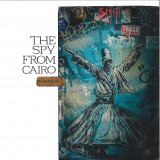
The Spy from Cairo (aka Moreno "Zeb" Visini) returns with his 5th studio album on Wonderwheel Recordings: "Animamundi" features some special collaborations from his travels & live shows from over the past few years. The album reflects the move from his home in NYC to his mother's home in a quiet village in Italy to take care of her in her older age. It's been a difficult transition with Italy's challenging experience with the pandemic, including some of the strictest measures enforced on the public. He recalls by stating "This album was conceived between 2020 and 2021 in Italy, between lockdowns, restrictions, and various pandemic mandates. Its message is of hope and positivity - a reminder that we are all spiritual beings… Free spiritual beings… and that freedom can't be broken."
"Animamundi" is a reconfirmation that The Spy from Cairo overcomes all obstacles & delivers a diverse progression of his iconic "Arabadub" sound, with the help of collaborators like Andalucian vocalist Carmen Estevez, Mexican vocalist Mambe Rodriguez on the heavy hitting "Criminal," Egyptian vocalist Adii Small on "Beautiful Baraka," and former touring band member, the multi-instrumentalist and vocalist Fatima Gozlan from Hungary. The music can vary from heavy deep electronic synths and live eastern instrumentation with Zeb playing oud, saz, chiftelli, bass, percussion, and other instruments, all along giving it his signature dub mixing style.
The songs take inspiration from a wide range of musical traditions and cultures, including Turkish (on "Cosmic Pasha," "Qanun in Dub" – using the qanun, an instrument popular across the Middle East, with a sound between the European harp and a dulcimer – and "Black Sea," which utilises a typical Dabke melody), Egyptian ("Mizmirized," sampling riffs from a mizmar), Indian ("Seeds of Culture), and Sufi ("Divination," a devotional composition), fusing these reference points with healthy doses of cumbia, funk, reggae, psychedelic, and dub. Thematically, "Animamundi" deals with some of the struggles Zeb – and all of us – have faced the last two years, through the lens of his personal experiences. Yet, the tone of the record manages to remain positive, like an uplifting dance through the world's sounds; after all, "Animamundi" means "soul of the world" in Greek. With album art by Sam Angeli and layout design by Marcial Arts, this beautiful album is a truly well-rounded worldwide collaboration.
"Animamundi" will be released digitally on March 4th, 2022, with the LP to follow shortly after.