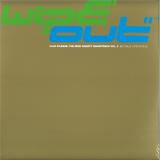
Following a hotly tipped first instalment, the Family Trip series continues with a second VA RIDE19 featuring artists from the Magic Carpet family, celebrating five years of the label. In contrast to the first record, Disc 2 steers us into deeper, clubbier territory with bold basslines, chuggy goodness and mesmerising atmospherics. True to form, there’s an understated wild card on the B2, offering a transcendent cruise to the 5th dimension. Strap in!
Suche:the arc
The third instalment in the Disco Pogo Tribute series celebrates the best electronic post-punk band on the planet, LCD Soundsystem.
This follows the hugely successful Disco Pogo Tribute books on Daft Punk and Aphex Twin that have been reprinted numerous times.
As with both previous books the people behind Disco Pogo have a long-standing relationship with James Murphy, LCD Soundsystem and the wider DFA crew which gives them a unique insight into the band.
The book is edited by Disco Pogo editor Jim Butler and features interviews, essays and features from the best music journalists working today, alongside a timeline, family tree, gear and gig lists. There are also archive LCD Soundsystem features from Jockey Slut and Dummy magazine.
The book features an iconic cover portrait of James Murphy by unofficial/official LCD photographer Ruvan Wijesooriya, plus a huge amount of exclusive, never-before-seen photography from Ruvan, Tim Soter, Tim Saccenti and other photographers who have been close to LCD since the very beginning of their career.
The book is hardback, even chunkier than the previous books at 308 pages and is beautifully designed and printed with a (sound of) silver ribbon and spine cloth.
The book is the same size and format as the two previous books and will sit perfectly alongside them on any music lover's bookshelf.
- A1: Seki Taneko - Akemi&Apos;S Poems
- A2: Kusunoki Shigeo - Longing For The Shadow
- A3: Yayoi Tanaka - Sad Gull
- A4: Akasaka Koume - Please Forgive Me
- A5: Ichimaru - If You Go Down The Tenryū
- A6: Mitsuko Nemoto - Cosmos Elegy
- A7: Ichirō Fujiyama - Tokyo Daughter
- A8: Chiyako Sato - Skyscraper
- A9: Yayoi Tanaka - The Dream Is Short Lived
- B1: Ichirō Fujiyama &Amp; Masao Koga - Is Sake Tears Or Sighs?
- B2: Otomaru - Yoneyama Sanri
- B3: Hamako Watanabe - I Don&Apos;T Forget
- B4: Akasaka Koume - Asama Smoke
- B5: Yoshio Tabata - Farewell Ship
- B6: Ichirō Fujiyama - Farewell Youth
- B7: Kouta Katsutaro - Stand Up Tomorrow
DEATH043[10,04 €]
Emerging during the early stages of the recording industry in Japan, the ryūkōka style adopted western classical, blues & jazz elements into traditional and classical Japanese music.
This collection of 1920s & 30s ryūkōka recordings follows on from the Kouta Katsutaro tape we put out a couple of years back, and further captures the hauntingly unique sound of a cultural merging that was starting to reflect itself via popular song, ahead of the widespread influence of western pop music during post-war US occupation.
"Death Is Not The End are on a mission to expand the musical archive, with compilations of everything from Jamaican doo wop to pirate radio idents and adverts weaving new threads into the history of music. Longing For The Shadow: Ryūkōka Recordings, 1921-1939 goes back to the beginnings of the recording industry in Japan, and a style merging traditional Japanese forms with western pop and classical. Swooning orchestrations and prominent vocals capture some of the melodrama and bombast found in US and European music of the time, but beds of plucked and strummed instruments give an ordered elegance, tying it firmly to Hogaku tradition. Not much has been written about Ryūkōka, and a 2017 book by Hiromu Nagahara gives some clue as to why, arguing that although popular with the public, it was dismissed by critics both for its adoption of western sounds and its dwelling on Japanese traditional styles. Close to a century later, those are some of the qualities that make this compilation so fascinating." - The Quietus
REPRESS
Back in 2019 we released Arctor's EP "Soulless" on 12" vinyl. It was an instant underground hit and sold out in a flash. Three wild years later and we've had it repressed. Good news for anyone balking at the enormous Discogs prices for a preowned copy. This modern electro classic should fit nicely into any dance music head's collection.
- A1: Who Is Tyler Durden?
- A2: Homework
- A3: What Is Fight Club?
- A4: Single Serving Jack
- B1: Corporate World
- B2: Psycho Boy Jack
- B3: Hessel, Raymond K
- B4: Medula Oblongata
- C1: Jack's Smirking Revenge
- C2: Stealing Fat
- C3: Chemical Burn
- C4: Marla
- D1: Commissioner Castration
- D2: Space Monkeys
- D3: Finding The Bomb
- D4: This Is Your Life Feat Tyler Durden
The Fight Club (Original Motion Picture Score) was composed by The Dust Brothers and released in 1999. The album features 16 instrumental tracks that follow the film’s narrative arc. It was nominated for a Brit Award for Best Soundtrack in 2000. The track This Is Your Life features vocals by Tyler Durden (Brad Pitt) and became a cult favorite.
2026 Repress
Slam rework Nitzer Ebb, Silent Breed, DK8, Terrence Fixmer and more for the final installment of their Archive Edit series.
Soma label heads Slam curate a specially designed package of tracks to finalize their Archive Edit project that sees them delve deep into Techno's past to bring some of the genre's best tracks into the modern age. The Archive Edit project started as a way for Slam to showcase and share the many different edits that had made their way into their DJ sets over the last few years.
The pairing of Stuart McMillan & Orde Meikle have both raided their extensive collections, picking out tracks that have defined countless sets over their career. Tracks from luminaries such as Nitzer Ebb, Thomas P Heckmann (as Silent Breed), Damon Wild & Terrence Fixmer have been re-edited alongside some of Slam's own unreleased material, showcasing the duo's current sound; one that naturally evolves, matures and demonstrates why the duo have been at the forefront of the global scene since its inception.
- B2: Grazia Vitale – Poi (1975)
- D4: Daniel Sentacruz Ensemble – Vivo Solo Con Te (1982)
- A1: Cinzia Peloso – Sciogli Le Catene (1980)
- A2: Linda’s Night – Cucciolona (19??)
- A3: Daniela Guerci – Non Ti Resisto Più (1979)
- A4: La Comune Idea – Cuore Di Serpente (1981)
- B1: Tony Ferri – Stella D’oriente (1979)
- B3: Sara Bongiovanni – Casablanca (1985)
- B4: Solimar – Veliero (1980)
- B5: Coscarella & Polimeno - Station To Station 2025 (2025)
- C1: Cap – Alla Porta Del Tempo (1982)
- C2: Francisca – Non Dico No (1983)
- C3: Hyper Drive Band – Hyper Mix (1985)
- C4: Linnel Jones – We’ll Cry Out (1986)
- D1: Jairo – Night Woman (1985)
- D2: Ilaria Berlato – Vincerò (1985)
- D3: Alex P.i. – Free Love (1985)
- D5: Miro – Tu Non Lo Sai (1984)
Everyone knows the story of American disco.
But few are aware that, between the late 1960s and the late 1980s, Italy wrote a parallel one — spontaneous, surprising, and incredibly creative.
It is a story that spans two distinct seasons: the Italian disco of the 1970s — melodic, handmade, sometimes naïve yet always original — and the emerging Italo Disco of the 1980s, electronic, futuristic, and lightheartedly projected toward the future.
Two different languages, yet both driven by the same desire for freedom and modernity. Discoteca Sound — Italian Discoteca Underground 1975–1986 brings together 18 rare tracks — including two previously unreleased — that tell this story of transition: from the orchestral and sentimental disco of Italian dance halls to the synthetic and visionary sound of the first drum machines.
A journey through private archives, local labels, regional studios, and forgotten voices — the sonic map of a country that has always danced, but to its own rhythm. From Mediterranean disco to the first Italo Disco, from the dim lights of provincial dance halls to the early home synthesizers, each track opens a window onto an Italy that dreamed of the dance floor as a universal language of connection during the brief season of revolutionary utopias.
This compilation celebrates ten years of work by Disco Segreta — a decade dedicated to the research, recovery, and appreciation of Italian disco and electronic culture. An act of justice owed to all those artists who had their moment yet were never remembered by history — bringing back to light an essential, still too little known part of our musical heritage.
Because dancing today remains, more than ever, a living act of memory.
Limited edition 2LP, features 2 previously unreleased tracks and a new 2025 version of Coscarella & Polimeno – Station to Station.
f Grazia Vitale – Poi (1975) Previously Unreleased
q Daniel Sentacruz Ensemble – Vivo Solo Con Te (1982) Previously Unreleased
f Grazia Vitale – Poi (1975) Previously Unreleased
q Daniel Sentacruz Ensemble – Vivo Solo Con Te (1982) Previously Unreleased
f B2. Grazia Vitale – Poi (1975) Previously Unreleased
q D4. Daniel Sentacruz Ensemble – Vivo Solo Con Te (1982) [Previously Unreleased]
[f] B2. Grazia Vitale – Poi (1975) [Previously Unreleased]
[q] D4. Daniel Sentacruz Ensemble – Vivo Solo Con Te (1982) [Previously Unreleased]
[f] B2. Grazia Vitale – Poi (1975) [Previously Unreleased]
[q] D4. Daniel Sentacruz Ensemble – Vivo Solo Con Te (1982) [Previously Unreleased]
Blue Lake reveals his most ambitious album yet, which finds its visionary creator Jason Dungan harnessing the collective alchemy of his band, with ten spirited tracks that resonate with a powerful directness, evoking an ecological connection to the wider world.
The solo project (Blue Lake), now on its fifth album, found its name and inspiration via Don Cherry's 1974 live album, sparking a creative epiphany in Dungan, who set off on a path into his own untapped sonic world, guided by what he cited as the emotional potential found within non-lyrical composition. With a newly inspired ethos aimed toward creating direct and simple instrumental music imbued with a deep sense of feeling, Jason began combining an array of musical elements that gave rise to his highly revered album 'Sun Arcs' (2023), with its "ornate, zither-led lattices" (Pitchfork, Best New Music). Conceived in the blissful isolation of a Swedish cabin set in the woods, this was music that soundtracked spring in full bloom. Then, in contrast to the solitary approach of 'Sun Arcs', the highly lauded mini-album 'Weft' (2025) began to set the tone for a more band-oriented approach to delivering the Blue Lake sound. Jason had by this time experienced a special collective energy with his band during a swathe of live performances, which he then sought to harness and distill on 'The Animal', leading him to take the project into a traditional recording studio (The Village) and its limitless potential along with his gifted cohorts.
'The Animal' at its core vividly celebrates human collaboration and is deeply rooted in a sense of community and non-hierarchical connectivity. The group's creative alchemy transcends outwards and beyond the musicians performing together, to summon an inclusive, existential and ecological connection to the wider world and its inhabited spaces. The album contemplates the idea of the human as an animal as Dungan explains: "I'm quite fascinated in thinking about humans more as part of the animal environment and not as something that's so separated into a "human" realm, or sitting on top of a hierarchical pyramid. So the Animal is also me, or us - that we are just living, existing, in the same way as a piece of moss or a sparrow or a cow.
'The Animal' is a form of musical metamorphosis, still acoustic, yet more amplified, elevating it to new dimensions. The Blue Lake project takes on a new lease of life to encompass collaboration with Jason Dungan bound in a universal connectivity, resulting in his most ambitious album to date. A harmonious rejoicing that cements his reputation as a transformative presence in contemporary music.
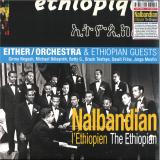
The Éthiopiques series returns! Essential archive recordings from an extremely fruitful period in Ethiopian music.
Before “Swinging Addis” took over the world, there was Moussié Nerses Nalbandian — the Armenian-born composer who shaped modern Ethiopian music. Mentor, arranger, and pioneer, he laid the foundations of Ethio-jazz.
This Éthiopiques volume revives his forgotten legacy, recorded live by Either/ Orchestra First issue ever with new exclusive photos and in depth liner 8-page insert.
“Ethiopian jazzmen are the best musicians that we have seen so far in Africa.
They really are promising handlers of jazz instruments.”
Wilbur De Paris
(1959, after a concert in Addis Ababa)
አዲስ፡ዘመን። *Addis zèmèn* **A new era.**
The time is the mid-1950s and early 1960s, just before "Swinging Addis" bloomed – or rather boomed – onto the scene. Brass instruments are still dominant, but the advent of the electric guitar, and the very first electronic organs, are just around the corner. Rock’n'Roll, R’n’B, Soul and the Twist have not yet barged their way in. Addis Ababa is steeped in the big band atmosphere of the post-war era, with Glenn Miller's *In the* *Mood* as its world-wide theme song, neck and neck with the Latin craze that was in vogue at the same period. Life has become enjoyable once again, with the return of peace after the terrible Italian Fascist invasion of Ethiopia (1935-1941). The redeployment of modern music is part and parcel of the postwar reconstruction. *Addis zèmèn* – a new era – is the watchword of the postwar period, just as it was all across war-torn Europe.
The generation who were the young parents of baby boomers** were the first to enjoy this musical renaissance, before the baby boomers themselves took over and forever super-charged the soundtrack of the final days of imperial reign. Music is Ethiopia's most popular art form, and very often serves as the best barometer for the upsurge of energy that is critical for reconstruction. Whether it be jazz in Saint-Germain-des-Prés or the *zazous* who revolutionised both jazz and French *chanson* after the *Libération*, be it Madrid's post-Franco Movida, or Dada, the Surrealists and *les années folles* that followed World War I, the periods just after mourning and hardship always give rise to brighter and more tuneful tomorrows. Addis Ababa, as the country's capital, and the epicentre of change, was no exception to this vital rule.
**Two generations of Nalbandian musicians**
Nersès Nalbandian belonged to a family of Armenian exiles, who had moved to Ethiopia in the mid-1920s. The uncle Kevork arrived along with the fabled "*Arba Lidjotch*", the** "*40 Kids*", young Armenian orphans and musicians that the Ras Tafari had recruited when he visited Jerusalem in 1924, intending to turn their brass band into the official imperial band. If Kevork Nalbandian was the one who first opened the way of modernism, pushing innovation so far as to invent musical theatre, it was his nephew Nersès who would go on to become, from the 1940s and until his death in 1977, a pivotal figure of modern Ethiopian music and of the heights it. Going all the way back to the 1950s. Nothing less. And it is Nersès who is largely to thank for the brassy colours that so greatly contributed to the international renown of Ethiopian groove. While the younger generations today venture timidly into the genealogy of their country's modern music, often losing their way amidst a distinctly xenophobic historiographical complacency, many survivors of the imperial period are still around to bear witness and pay tribute to the essential role that "Moussié Nersès" played in the rise of Abyssinia's musical modernity.
Given the year of his birth (15 March 1915), no one knows for sure if Nersès Nalbandian was born in Aintab, today Gaziantep (Turkiye/former Ottoman Empire) or on the other side of the border in Alep, Syria... What is certain is that his family, like the entire Armenian community, was amongst the victims of the genocide perpetrated by the Turks. Alep, the place of safety – today in ruins.
Before Nersès then, there was uncle Kevork (1887-1963). For a quarter of a century, he was a whirlwind of activity in music teaching and theatrical innovation. *Guèbrè Mariam le Gondaré* (የጎንደሬ ገብረ ማርያም አጥቶ ማግኘት, 1926 EC=1934) is his most famous creation. This play included "ten Ethiopian songs" — a totally innovative approach. According to his autobiographical notes, preserved by the Nalbandian family, Kevork indicates that he composed some 50 such pieces over the course of his career. This shows just how much he understood, very early on, the critical importance of song as Ethiopia's crowning artistic form. Indeed, for Ethiopian listeners, the most important thing is the lyrics, with all their multifarious mischief, far more than a strong melody, sophisticated arrangements or even an exceptional voice. (This is also why Ethiopians by and large, and beginning with the artists and producers themselves, believed for a long time — and wrongly — that their music could not possibly be exported, and could never win over audiences abroad, who did not speak the country's languages).
Last but not least, one of Kevork's major contributions remains composing Ethiopia's first national anthem – with lyrics by Yoftahé Negussié.
Nersès Nalbandian moved to Ethiopia at the end of the 1930s, at the behest of his ground-breaking uncle. Proficient in many instruments (pretty much everything but the drums), conductor, choir director, composer, arranger, adapter, creator, piano tuner, purveyor of rented pianos,... he was above all an energetic and influential teacher. From 1946 onwards, thanks to Kevork's connexion, Nersès was appointed musical director of the Addis Ababa Municipality Band. In just a few years, Nersès transformed it into the first truly modern ensemble, thanks to the quality of his teaching, his choice of repertoire, and the sophistication of his arrangements. It was this group that would go on to become the orchestra of the Haile Selassie Theatre shortly after its inauguration in 1955, which was a major celebration of the Emperor's jubilee, marking the 25th anniversary of his on-again-off-again reign.
At some point or other in his long career, Nersès Nalbandian had a hand in the creation of just about every institutional band (Municipality Band, Police Orchestra, Imperial Bodyguard Band, Army Band, Yared Music School…), but it was with the Haile Selassie Theatre – today the National Theatre – that his abilities were most on display, up until his death in 1977. To this must be added the development of choral singing in Ethiopia, hitherto unknown, and a sort of secret garden dedicated to the memory of Armenian sacred music, and brought together in two thick, unpublished volumes. Shortly before his death (November 13, 1977), he was appointed to lead the impressive Ethiopian delegation at Festac in Lagos, Nigeria (January-February 1977).
His status as a stateless foreigner regularly excluded him from the most senior positions, in spite of the respect he commanded (and commands to this day) from the musicians of his era. Naturally gifted and largely self-taught, Nerses was tirelessly curious about new musical developments, drawing inspiration from the very first imported records, and especially from listening intensely to the musical programmes broadcast over short-wave radio – BBC *First*. A prolific composer and arranger, he was constantly mindful of formalising and integrating Ethiopian parameters (specific “musical modes”, pentatonic scale, and the dominance of ternary rhythms) into his “modernisation” of the musical culture, rather than trying to over-westernise it. It even seems very probable that *Moussié* Nerses made a decisive contribution to the development of tighter music-teaching methods, in order to revitalise musical education during this period of prodigious cultural ferment. Flying in the face of all the historiographical and musicological evidence, it is taken as sacrosanct dogma that the four musical modes or chords officially recognised today, the *qǝñǝt* or *qiñit* (ቅኝት), are every bit as millennial as Ethiopia itself. It would appear however that some streamlining of these chords actually took place in around 1960. It was only from this time onward that music teaching was structured around these four fundamental musical modes and chords: *Ambassel*, *Bati*, *Tezeta* and *Antchi Hoyé*. A historical and musical “details” that is, apparently, difficult to swallow, especially if that should honour a *foreigner*. Modern Ethiopian music has Nersès to thank for many of its standards and, to this day, it is not unusual for the National Radio to broadcast thunderous oldies that bear unmistakable traces of his outrageously groovy touch.
A stunning 7" release from Jazzamor featuring a speedy bossa cover of Jamiroquai's breakthrough hit!
This 7-inch couples two carefully selected tracks from the archives of veteran German music unit Jazzamor.
Side A is a speedy bossa cover of "Space Cowboy," the 1994 breakthrough global hit by Jamiroquai, originally featured on Jazzamor's 2004 album A Piece Of My Heart. Side B includes an uptempo bossa track from their 2002 debut album Lazy Sunday Afternoon. The arrangement features the charmingly delicate vocals of Bettina Mischke, combined with Roland Grosch's acoustic guitar and percussion, layered into a Brazilian-inspired electronic sound with an elegant touch.
- A1: Yant - Bee Sting
- A2: Rene Wise - Gut Punch
- B1: Kr!Z - Split Tongue
- B2: Blanka - Extravaganza
- C1: Eman - Lerake
- C2: Holden Federico - Hydro
- D1: Cirkle - Delta State
- D2: Altinbas - Epinephrine
- D3: Kameliia - Memories
- E1: Phil Berg - Sappho
- E2: Border One - Warp Shift
- F1: Kwartz - Watch Out
- F2: Phalcon - Into The Depth
2026 Repress
SK_eleven celebrates a decade of sonic exploration with a 13-track compilation showcasing its signature tension, technical discipline, and stylistic spectrum. Reuniting a tight circle of artists whose contributions have helped shape the label, the release offers an unrelenting sequence of pressure, mental twists, and textural collisions; a multifaceted snapshot of techno's enduring capacity to evolve, disturb, and seduce.
The compilation resists uniformity. Instead, it thrives on contrast: tension versus release, density against spaciousness, rhythm in all its permutations. From high-energy metallic openers and dub-inflected body rollers, to disorienting, delay-heavy experiments and stripped-back percussive tools, each contribution reveals a unique grip on groove and detail. Some tracks move like engineered machines: sharp, robotic, and syncopated to surgical precision. Others embrace sensuality and unpredictability, exploring spatial motion, layered harmonic friction, and states of controlled chaos. Each piece acts as a structural component in a larger sonic architecture, where tension is built, collapsed, and rebuilt. Friction becomes a form of choreography. Across the record, a shifting palette of emotional mechanisms takes form; granular and magnetic, haunting and quietly forceful, restrained, then disruptive.
More than a retrospective, SK_eleven's first compilation becomes a collective gesture toward techno's unresolved possibilities: its ability to hold contradiction, remain in flux, and mutate without conclusion.
- A1: Intro
- A2: My Cosmos Is Mine
- A3: Wagging Tongue
- A4: Walking In My Shoes
- A5: It’s No Good
- A6: Sister Of Night
- A7: In Your Room
- B1: Everything Counts
- B2: Precious
- B3: Speak To Me
- B4: Home
- B5: Soul With Me
- B6: Ghosts Again
- B7: I Feel You
- C1: A Pain That I’m Used To
- C2: World In My Eyes
- C3: Wrong
- C4: Stripped
- C5: John The Revelator
- C6: Enjoy The Silence
- C7: Waiting For The Night
- D1: Just Can’t Get Enough
- D2: Never Let Me Down Again
- D3: Personal Jesus
- D6: Give Yourself To Me (Bonustrack Aus Den „Memento Mori“-Sessions )
- D7: In The End (Bonustrack Aus Den „Memento Mori“-Sessions ))
- D4: Survive (Bonustrack Aus Den „Memento Mori“-Sessions )
- D5: Life 2 0 (Bonustrack Aus Den „Memento Mori“-Sessions )
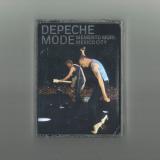
»Memento Mori: Mexico City« ist eine über zweistündige Liveaufnahme von Depeche Modes drei ausverkauften Konzerten im legendären Foro Sol Stadion in Mexiko-Stadt aus dem September 2023 und wird durch vier bisher unveröffentlichte Studioaufnahmen von den »Memento Mori«-Sessions ergänzt.
Die CD-Konfiguration enthält das Livealbum und Bonustracks auf zwei CDs sowie ein 16-seitiges Booklet mit Livefotos von den Shows.
Dieses Livealbum erscheint parallel zu Depeche Modes neuem Film »Depeche Mode: M«, der während der Shows in Mexiko-Stadt aufgenommen wurde. Der Film wurde konzipiert und umgesetzt vom vielfach ausgezeichneten mexikanischen Filmemacher und Regisseur Fernando Frías. Während »Depeche Mode: M« packende Konzertmitschnitte mit stimmungsvollen Nebeneindrücken und ausgesuchtem Archivmaterial vereint, wird gleichzeitig die tiefgreifende Verbindung zwischen Musik und Vergänglichkeit innerhalb der mexikanischen Tradition veranschaulicht. Die Blu-ray- und DVD-Konfiguration von »Depeche Mode: M« enthält zusätzlich das schon erwähnte Livealbum »Memento Mori: Mexico City« sowie einen abendfüllenden Konzertfilm.
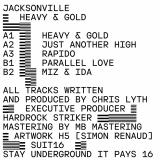
Jacksonville returns with Heavy & Gold, a powerful five-track EP rooted in the raw energy of underground house and analog machine funk. Produced by Chris Lyth, the record blends Chicago-influenced drum programming, hypnotic basslines and deep melodic textures into a set of highly functional DJ cuts built for the dancefloor. The EP moves between muscular jack tracks and deeper hypnotic moments, balancing driving groove architecture with subtle emotional tension. Heavy & Gold opens with the title track, a dense and rolling house cut driven by heavy drums and warm synth layers, before Just Another High delivers a tighter, more stripped-down groove with classic underground swing. Rapido pushes the energy further with a direct, rhythmic workout built for peak-time transitions. On the flip side, Parallel Love expands into a deeper and more atmospheric territory with evolving textures and hypnotic momentum, while closing track Miz & Ida delivers a long, hypnotic groove combining analog warmth and late-night dancefloor pressure. True to the Skylax philosophy, this release focuses on timeless groove design rather than trends, offering DJs and collectors a record built to last in the bag for years. Written and produced by Chris Lyth with executive production by Hardrock Striker and artwork by H5 (Simon Renaud), Heavy & Gold continues the Skylax tradition of uncompromising underground house music.
- A1: Scratch Pad 1
- A2: Messij Received
- A3: God's Gift
- A4: Tentative
- B1: Canada 2048
- B2: Wiped Out
- B3: Body In Motion (Body Plus Mix)
- B4: Onyx (Dark Side Of The Moon)
- C1: Messij Received (Wstwgbe Mix)
- C2: Canada (Drunken Auslander Mix)
- C3: Tentative (Woffenfum Mix)
- D1: Messij (Bobbing Boat Mix)
- D2: Body In Motion (Timeless Techno Mix)
- D3: Doh-T (Am / Fm Mix)
- E1: 95 Future Echoes
- E2: Turbine
- E3: Pencil Neck
- E4: Messij 2005 (New Science Mix)
- F1: Canada (Tim Reaper Remix)
- F2: Messij (Sherelle's Messij In A Bottle Hardcore Remix)
- F3: Doh-T (Mantra Remix)
- F4: Canada (Niknak Remix)
The legacy of wipE′out′′ has transcended time and cemented itself as a true transgenerational phenomenon. Launched in 1995, it didn’t just revolutionise the gaming industry, it created a bridge between the gaming ecosystem and the raver community. Its futuristic aesthetics and forward-thinking sound left a mark not only on mainstream audiences but also on the most demanding corners of the underground.
Decades later, the game’s impact is still alive. The release in 2023 of The Zero Gravity Soundtrack on Lapsus Records proved once again that wipE′out′′’s accompanying audio will go down in history as much more than just an anti-gravity racing game soundtrack.
This is why we decided to go deeper into the slipstream and build the second volume you’re now holding in your hands. Drawn from the original archives of Tim Wright, aka CoLD SToRAGE, this new collection surfaces unreleased cuts, pieces that couldn’t fit on the first edition, and a suite of self-authored ambient reworks that translate pure velocity into wide-screen atmospherics engineered for the long straights, the drone of airbrakes, the blue hour between checkpoints. It also reconnects the circuit, gathering selections and variants tied to later chapters of the saga — wipE′out′′ HD and wipE′out′′ Pure — plus alternative mixes that, until now, only existed in the Sega Saturn dimension of the franchise.
Finally, the material takes a leap into the future in the hands of four remixers especially chosen for this release: Tim Reaper, SHERELLE, Mantra, and NikNak, who collectively forge links between CoLD SToRAGE’s pioneering musical vision, the sound world of the game, and the contemporary breakbeats and drum & bass vanguard.
Expect the DNA you remember — accelerated breaks, trance-vector synths, jungle influences, sub-bass rumbling neatly beneath the craft’s hull, and at times even echoes of classic hardstyle — now revealed with new angles and air. The previously unheard material carries the same aerodynamic design sense that made these tracks feel faster than the track map itself, while the ambient versions open the field of view with melodies hovering at the lip of overdrive. Without a doubt, here you’ll find a strong sense of nostalgia. But this isn’t just nostalgia; it’s also proof that this sound world continues to evolve when you ease off the throttle.
For the faithful — crate-digging ravers, speed-run obsessives, and design nerds — this is an essential expansion pack: compiling rarities, restoring context, and reframing the emotional core of wipE′out′′ for late nights and early mornings alike. Bridging memory and momentum, club and console, rush and afterglow. Strap in.
Detailed tracklist, with annotations by Tim Wright aka CoLD SToRAGE
· Scratch Pad 1: “This track was composed using incomplete tracks that were developed around the time of the first wipE′out′′. It’s so long because it was used for a marathon-length Psygnosis promotional video.”
· Messij Received: “Messij was a firm favourite with wipE′out′′ fans, so it made sense that there’d be more where that came from — this was one of those re-workings.”
· God’s Gift: “I was always very fond of Erasure’s track Love to Hate You with the canned crowd FX sounds. God’s Gift was a tongue-in-cheek reference to how some musicians think they are just that. This was way before I even played live as CoLD SToRAGE.”
· Tentative: “I wasn’t sure about introducing some wacky beats and distorted sounds into one of the tracks, because it was kinda heading away from the other tracks, hence Tentative — but it turned out OK.”
· Canada 2048: “When wipE′out′′ 2048 was launched I decided to re-make Canada as a kind of tribute, but in a slightly new-tech, laid-back way, using Propellerhead Reason and all software synths.”
· Wiped Out: “Based on a few riffs from a MIDI file unused at the time of the original wipE′out′′ game compositions, this featured on my debut album MELT.”
· Body in Motion (Body Plus Mix): “A more trippy interpretation of Body in Motion that featured on non PlayStation versions of the game e.g. Sega Saturn.”
· Onyx (“Dark Side of the Moon”): “Onyx was my sole contribution to wipE′out′′ Pure on the Sony PSP handheld gaming console. This version was something I developed in a darker style, that eventually erupts into a crescendo.”
· Messij Received (WSTWGBE Mix): “Like I say, Messij was a hit with most wipE′out′′ fans, so when I was asked to compose more music for non-PlayStation versions, I adapted this tune into a parallel-universe version for PC and Sega Saturn. By the way, WSTWGBE refers to Who Said This Was Going To Be Easy?”
· Canada (Drunken Ausländer Mix): “In early 2018 I released a fresh album called Ch'illout′′, a re-working of many of my wipE′out′′ tracks in an ambient, Sunday-morning vibe style — it was a few years’ work, here and there.”
· Tentative (Woffenfum Mix): “Another chilled re-working of one of my wipE′out′′ tracks, the mix named with a nod to a good friend of mine, Carl Woffenden — someone who I've worked with for many years in the games industry.”
· Messij (Bobbing Boat Mix): “A nice cheesy computer blip-blop start belies its deep and upbeat chilled-out melodic finale.”
· Body in Motion (Timeless Techno Mix): “Another classic track given the chilled-out vibe mix, as featured originally on my Ch'illout′′ album. This one’s a really trippy, deep-space take on the original.”
· DOH-T (AM / FM Mix): “The idea with this chilled-out mix was to imagine all the melodic parts of this varied track being broadcast on terrestrial radio, so each theme drifts in and out through the radio static.”
· ’95 Future Echoes: “Originally developed as a companion album for wipE′out′′ HD, this track actually has its roots in a tiny loop of a song that never progressed to anything special back in the mid-’90s when I was composing for the original game.”
· Turbine: “Also from my wipE′out′′ HD album, it leans heavily into the upbeat, uplifting tunes from the original game, but also steals a bit of vibe and energy from The Prodigy, with those distorted flute sounds.”
· Pencil Neck: “This excerpt from my wipE′out′′ HD album features lots of sounds centre-stage and forward from Propellerhead Reason’s Subtractor virtual synth. I learned to love this more than my JD-800!”
· Messij 2005 (New Science Mix): “Yet another take on the track that still raises a smile, this time through a mix of samples from the original and Propellerhead Reason — the ‘new science’ when compared to an Amiga 1200 running Bars and Pipes.”
Influences and inspirations come from far and wide. Sometimes they can be household names or pioneers. Other times, they can be lesser-known outfits; less known, but no less influential. Futuro belong to the latter category for Italo Moderni.
Javier and Raúl are two Spanish synthesizer sorcerers who are steeped in the traditions of italo disco and the analogue sounds of the 1980s. While Italo Moderni was still in its infancy, Futuro were a shining light with a young upstart by the name of Adrian Marth even making videos for their tracks. From these beginnings, a mutual respect and friendship developed. Now, the circle is complete with the six tracks making their way onto Accidenti; an EP that marks Futuro’s debut on Italo Moderni.
The collection showcases the breadth of Futuro’s sound. With all instrumentation played through classic analogue machines, the six works journey through neon-streaked city nights, deep uncharted jungle and sun-kissed beaches. Drawing on the music of Rimini, silver screen soundtracks and arcade innocence, this is an EP that remembers and reimagines the 1980s. Intent is immediately set, with the tense and textured “L’assalto” delivering movie score synth stabs alongside crisp percussion. “Matador” is pure elegance, panpipe playfulness countered by glacial refrains and shimmering key shifts. “Iguazu” transports the listener to the wildlife and wilderness of the Amazon; cascading chords glisten as the canopy sings. Futuro takes to the skies with the sonorous swoops of “Il sogno dell’aviatore” before the lovelorn landing of “Fantasma d’amore”, a sumptuous synthesizer serenade of unrequited romance. To close, we’re firmly on the ground for “Sotto le stelle.” Under these sparkling stars, glimmering notes glow with warmth in a finale fitting for such an EP.
And, it is fitting to finally have Futuro on Italo Moderni. A group that has inspired and will continue to do so well into the future. An accidental discovery, mutual respect and a partnership rooted in a love of synthesizers has brought Accidenti into being.
Architectural - Santa Compana - Fanzine TR 002 Fanzine TR continues its journey with Santa Compana, the second chapter of the label.
Behind this project is Architectural, the acclaimed alias of one of techno's most influential figures: Reeko.
This four-track release fuses Reeko's signature sound with the vision of his alter ego, shaping a techno that is both powerful and atmospheric. Don't miss out on your copy and get ready for the official release.
Artwork by Burgalego
Masters by Human Mastering
Underradar – Obscurative Series (Vinyl Launch)
Underradar, an Indonesian label, proudly presents its first vinyl release from the Obscurative Series, a sonic journey into the depths of Techno Soul, Hypnotic Techno, and Dub Techno with a classic yet fresh atmosphere. Each track is carefully crafted with attention to groove, texture, and mood, creating a mesmerizing experience from the first beat to the last. Led by Ecilo, the Soulful Architect, as label head, Underradar asserts its vision: exploring techno that is obscure, soulful, and timeless. This vinyl is more than just a recording—it is a musical manifesto celebrating the depth and beauty of techno.
- A1: Sergio De Prado - Determination Father's Message (Ragebound Version) 01:20
- A2: Ryuichi Nitta - On The Way To The Moonlight Duel 02 20
- A3: Kaori Nakabai - Find Your Inner Peace 02 38
- A4: Sergio De Prado - Burning Again 02 45
- A5: Kenji's Theme 02 08
- A6: Sergio De Prado - Lurking In The Forest 02 06
- A7: Sergio De Prado - Finding Your Way Up 01 40
- A8: Sergio De Prado - Up In The Cedar Trees 02 30
- A9: Ryuichi Nitta - Monster Attack! 01 51
- B1: Sergio De Prado - Black Spider Clan Hq 02 59
- B2: Sergio De Prado - Kumori's Theme 03 35
- B3: Sergio De Prado - The Tamashi Kunai 01 37
- B4: Sergio De Prado - Infernal Ride 03 31
- B5: Sergio De Prado - Kû No Tani's Theme 03 23
- B6: Sergio De Prado - Entwined Fates 02 51
- B7: Keiji Yamagishi - Ragebound 02 10
- C1: Sergio De Prado - Unbreakable Determination (Ragebound Version) 03 03
- C2: Sergio De Prado - Into The Caves 02 22
- C3: Sergio De Prado - Chase! 01 10
- C4: Sergio De Prado - Odawara Castle 01 55
- C5: Sergio De Prado - Fighting Rhyvashi! 02 51
- C6: Sergio De Prado - Slice And Crush! 03 01
- C7: Sergio De Prado - Isolated Battleship 02 04
- C8: Sergio De Prado - Mysterious Woman (Ragebound Version) 01 27
- C9: Keiji Yamagishi - Monstrosity! 02 17
- D1: Sergio De Prado - Lies - Truth 02 20
- D2: Sergio De Prado - More Than Humans 02 37
- D3: Sergio De Prado - Bravery On The Clutches (Ragebound Version) 01:58
- D4: Sergio De Prado - Jagäzk's Battle 04 10
- D5: Sergio De Prado - Requiem (Ragebound Version) 02 44
- D6: Sergio De Prado - Homesickness 01 41
- D7: Hitomitoi - Kaze No Chronicle 05 14
Kid Katana Records teamed up with Dotemu, The Game Kitchen and KOEI TECMO GAMES, to bring you the highly anticipated NINJA GAIDEN: Ragebound OST on vinyl.
The physical edition is a 2LP designed in close relationship with the game's creative team:
- 2 colored vinyls: transparent blue & magenta, matching the cover art & the color-code of the two protagonists
- exclusive poster with extended credits & liner notes giving insights from the game’s creative team and featured artists
This album illustrates the incredible return to the saga's origins, embodied by Ryu Hayabusa's disciple Kenji Mozu and The Black Spider Clan Kunoichi Kumori, both united to repel the sudden onslaught of demons. It takes players back to its roots: a side-scrolling, brutally precise action-platformer set between the events of the first three episodes of the NINJA GAIDEN 8-bit era. The game’s OST blends different genres: rock, retro tunes and action-packed arcade music that respect the IP music legacy while modernizing it.
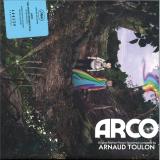
The soundtrack for the animated film Arco (directed by Ugo Bienvenu, winner of the Annecy 2025 Crystal Award for Best Feature Film, also presented at the Cannes Film Festival) was composed by Arnaud Toulon. Between orchestral flourishes and delicate electronic touches, he composes immersive, sensitive, and luminous music that evokes the great scores of Joe Hisaishi while asserting a resolutely contemporary identity.
Conceived as a true sonic journey, the soundtrack accompanies Arco's temporal wanderings with rare cinematic intensity. Each piece oscillates between poetry and dramatic tension, making this work an experience in its own right, to be discovered far beyond the images.
Awarded the Sacem Prize for original music for feature films in Annecy, this soundtrack is already establishing itself as a landmark piece of contemporary animated cinema.
A time capsule of Long Island boogie-funk history – officially reissued for the first time!
Founded in 1978 in Amityville, Long Island, VAP Records (Virgin Archer Production) became a cult independent label known for its infectious dance grooves, soulful vocals, and DJ-friendly 12” singles that lit up clubs from New York to beyond. Now, for the very first time, the label’s most iconic tracks are compiled on vinyl in one explosive package.
What’s inside?
This “final edition” includes the best of VAP’s rare 1979–1983 output, with tracks from the label’s flagship act Final Edition (“No Limit”, “Betcha Can’t Love Just One”, “We’re Moving On Straight Ahead”), alongside club favorite Broadway – “Let’s Make It”, plus deep gems from Kevin Keys, Jazzee, and Olivia McClurkin.
Why is this essential?
• “Betcha Can’t Love Just One” gained legendary status after appearing on General Hospital and HBO’s How to Make It in America.
• Armand Van Helden’s old-school remake of Final Edition’s B-side “I Can Do It Anyway You Want” went viral, surpassing 10+ million views on YouTube, proving these grooves still ignite dancefloors.
• Original VAP 12” singles are impossible to find and often sell for hundreds of dollars. This reissue brings those classics back, mastered from the original tapes.
Collectors, DJs, and boogie enthusiasts – this one is for you. With its blend of raw disco energy, soul-drenched vocals, and timeless funk, Best of VAP Records – Final Edition is not just a compilation, but a celebration of a family-run label whose legacy shaped the underground dance scene.