Hard Times and DJ Spen go back decades. The Baltimore house veteran has long been a fixture at the label’s parties, on the remixes, and now under his Muthafunkaz alias he cements the bond with a set that’s as much a time capsule as it is a renewal. The Muthafunking Hard Times EP revisits a clutch of Spen’s early-to-mid-2000s jams that, till now, have never been committed to wax. True to form, Spen hasn’t simply dusted them off: he’s remastered, refreshed, and imbued them with a 2025 gleam, bridging past and present in one irresistible sweep.
The A-side opens with the Funkee Kole Cappin’ Mix of 2008’s “(You Make Me Say) Woah!”, a gospel-fired stormer whose call-and-response vocals climb skyward while a cheeky Fab Four nod keeps things buoyant. “Holy Ghost” follows in its Holy Spirit incarnation, wringing church-floor catharsis from tribal percussion and sanctified chants - a blast of kinetic, almost Faya Combo-like fervor.
Flip the record and you’re hit with the swing and strut of 2010’s “Gotta Hold On Me,” Spen’s Vocal Mix turning horns and jazzy drums into a pure adrenaline surge. The closer, “Doin’ The Best I Can,” is a tonal shift: harmonica and guitar sketches circling loose-limbed beats, equal parts after-hours reverie and Sunday-morning balm.
Too vibrant, too joyous, too Spen not to press - The Muthafunking Hard Times EP isn’t just archival housekeeping. It’s an affirmation of what house music does best: uplift, electrify, and remind you that, even decades on, the spirit still moves.
Поиск:the arc
Все
- A1: 303 Force - House U Tonight (Vocal)
- A2: Desert Storm - Scoraig 93
- B1: The Sound Vandals - On Your Way (Deep Mix)
- B2: The Beloved - Pablo (Special K Dub)
- C1: Bizarre Tracks - Sensory Delights
- C2: L.u.p.o. - Hell Or Heaven (Extended Mix)
- D1: Jetstream - Seriously (F.u.s.e. Remix)
- D2: Bass Bumpers - Touche Me (Factory Dub)
File under house, breakbeat, techno and warehouse rave music. The Mental Groove Classic series returns with a treasure trove of rare and hard to find tracks plucked from the personal collection of label founder Olivier Ducret, a pivotal figure in Switzerland's acid house and rave-era party scene.
The compilation is inspired by a moment in time when musical boundaries were being redrawn in a wave of carefree optimism and the freedom that fueled new rave scenes across Europe and beyond.
The Mental Groove Classics series returns with a treasure trove of rare and hard-to-find tracks plucked from the personal collection of label founder Olivier Ducret, a pivotal figure in Switzerland's acid house and rave-era party scene.
On Volumes Two and Three of the series released last year, Olivier Ducret (founder of Mental Groove and Musique Pour La Danse, half of WRWTFWW) takes us back to the turn of the '90s. It was a time when he was promoting parties in fields, squats, forests, warehouses and former factoriesin and around Geneva, all while working behind the counter of a record shop called Mental Groove. While others in Switzerland's emerging dance music scene gravitated towards trance and garage, Olivier and his crew opted for a sound focused on bass, breaks, and techno. This unique approach was inspired by their regular trips to clubs, raves, and record shops in the UK. Drawing directly from his own record box and a memory bank full of euphoric dancefloor moments, this fourth installment sees Olivier reaching for more cuts of near-mythical rarity, genuinely overlooked gems, and undeniably brilliant classics - each selection has left a long-lasting impression on the local raving landscape. It's an autobiographical audio document, a historical archive, and a personal musical statement all rolled into one. The compilation is inspired by a moment in time when musical boundaries were being redrawn, if not exploded, in a wave of carefree optimism and thefreedom that fueled new rave scenes across Europe and far beyond.
Original artwork by Mark Wigan, co-owner of Soho's Brain Club and an artist of early British club culture.
WVLT is the newest sonic addition from WNDFRM (Portland-based, Tim Westcott), an album of eight distinct explorations exploring the many facets of experimental IDM.
Tim Westcott’s practice is rooted in an acute, nearly forensic attention to sound. Subtle tones, sculpted drones, and lean percussive gestures, always pursued with a patient ear and obsession with sound design.
With previous releases on Prologue, Home Normal, and Dragon’s Eye Recordings, and several live performances at Mutek, a new album from Tim is a rare yet welcome occurrence. The conceptual approach for WVLT began in 2021, mixing synths with drum machines and granular processing. Lightly arced structures slip between gates of rhythm, shifting pulses, translucent washes, and disquieting residue. There’s a precision to the hesitation and an insistence in the space between notes, a deft balance of raw improvisation and sculpted quietude.
An exercise in immediacy and response, each track builds and unspools, like form in fleeting motion, driven by the moment’s tonal contrasts, micro‑rhythmic interplay, and slight gestures that alter entire planes of listening. It’s minimal without sparsity, intense without density.
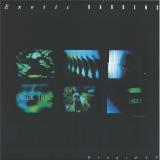
Emotional Response is delighted to present the debut EP of Aaron Coyes (Peaking Lights / Leisure Connection) new project, as Exotic Gardens. An additional music universe as his love of dub expands to include new wave, goth and acid psychedelics across 5 catchy, bass heavy songs.
While the continuing journey of his duo band, Peaking Lights, with his wife Indra, earns plaudits and fans alike, his early years as a one-man lysergic music polymath that saw his youth in punk and hardcore bands, expanded during a mid-90s burst of “living in San Francisco” creative expansion, devouring music, genres, and influences for life.
Started as a sub-project to Peaking Lights and his personal dub excursions, Exotic Gardens pollinates a rich tapestry. Recording through the pandemic in their then home in Amsterdam, before being archived, assembled, and completed following the move back ‘home’ to the West Coast, California.
Re-embracing that love of his inner goth, the analogue warmth is all there, now featuring Coyes’ dub-languidity of stripped drum machines, widescreen bass, haunting guitar lines and an almost idle voice to peddle true, raw songs.
Combined, the pop layer of hooks and tight grooves instantly catch you. Opener and EP title, Drugs & TV is the perfect anthem for the Exotic Gardens sound, before the “dubwave” of Last Of The Light and Tonite shimmer that yearning melancholy of youth.
In the almost 10 minute dub house opus Organize Your Movement an appreciation and understanding of the psychoactive properties of the Roland 303 and 909, they also hark to a love of Industrial / Noise bands, a lineage from the death pulse of his cult project Rahdunes through to Sound Design and Sound System culture to the pop-dub psychedelics with Indra, now melded here to include a dark assault, whispering invocations and pulsing pads.
To close, Turn It On is a roaming multi-genre evocation, an exotic end from this constant troubadour, cassette junkie, record dealer, sound system builder, always looking to get back on the road, to live to roam.
“I turn it on, you lose your mind’.
Spiritual World's first archival 12" vinyl release from the UK’s free festival dub pioneers.
The Ullulators, an experimental dub and world music ensemble from Bath, UK, have long been associated with the UK’s free festival movement, tracing their creative lineage back to the mid-1980s. For the first time ever, two pivotal tracks from their early cassette-only discography—“Simply Conscious Dub” and “Eternal
Now”—are being issued on 12” vinyl, marking the first archival release on Spiritual World.
The A-side, “Simply Conscious Dub”, originally featured on the 1986 cassette Beyond the Gates of Ull, exemplifies the band’s signature fusion of weighty dub rhythms with expansive and euphoric electronics.
In contrast, the B-side, “Eternal Now”, drawn from the 1985 cassette Share a Calm with the Ullulators, ventures into more introspective sonic territory. Built on minimalist structures and ambient textures, it evokes the kosmische tradition and aligns with the spatial sensibilities of Manuel Göttsching’s E2-E4.
Together, these tracks not only showcase the group’s wide stylistic range but also underscore their forward-thinking approach to genre hybridity. This release stands as a unique document of a formative era in the
evolution of UK underground, dub, and ambient music.
Black Truffle is pleased to announce Melopea, presenting two new pieces highlighting the incredible voice of Amelia Cuni (1958-2024), the great Italian singer, based in Berlin in later life, whose mastery of the classical Indian dhrupad developed in parallel with a commitment to contemporary experimental approaches. After two stunning archival releases documenting traditional dhrupad performances in India in the 1990s (BT079 and BT092), the two side-long pieces here embody the freedom with which Cuni explored new contexts and settings for her singing.
Both make use of a long recording of Cuni singing the pentatonic Raag Bhoop (or Bhopali) made in 2012 by her partner Werner Durand in Berlin. ‘Melopea’ began from Cuni and Durand’s superimposition of this recording with violinist Silvia Tarozzi and cellist Deborah Walker’s performance of Éliane Radigue’s ‘Occam River II’. Inspired by the beauty of this chance encounter (and other experiments with non-synchronous collaboration during the pandemic years), Tarozzi and Walker recorded independently, without hearing Cuni’s voice but ‘having her present in memory’. Tarozzi and Walker’s bowed strings places Cuni’s magisterial performance in a new context, emphasising, as Radigue commented upon hearing the initial layering of her piece with Cuni’s voice, a shared ‘searching toward the partials, overtones, these natural constituents of acoustical sounds in their richness’. Beginning with whispered bowed harmonics, the violin and cello swap the stability of dhrupad’s traditional tanpura drone for a slowly evolving, uneasy web of harmonic interactions recalling some of Harley Gaber’s work, sometimes sitting on dissonances for long periods or allowing changing interference patterns to come to the fore. Primarily focusing on her lower register, Cuni’s performance demonstrates her mastery of microtonal pitch subtleties, elegant sweeping glissandi and meditatively unhurried pacing.
The continuation of the same recording by Cuni forms the foundation of ‘Bhoop-Murchana’, with Anthea Caddy on cello and Werner Durand on soprano saxophone. In contrast to the randomised layering of the first piece, here Durand and Caddy have carefully selected pitches based on the raag Cuni sings, using the ‘Murchana’ form, which uses the constituent notes of the raag as tonics of new raags, retaining the same interval structure. Both players who have developed tones of striking depth and harmonic purity on their instruments, Caddy and Durand’s patient long tones are simultaneously rigorously grounded in the physical properties of sound and possessed of an immaterial, floating quality. Combined with Cuni’s voice and, near the piece’s end, her contributions on hammered and plucked tanpura, the effect borders on miraculous. To surrender to this music is like slipping into an onsen pool, feeling the instantaneous release of every tension. Accompanied by liner notes from Durand, Tarozzi and Walker, Melopea is both a moving tribute to the profound art of Amelia Cuni and, for the uninitiated, a perfect introduction to it.
MCRV017 – Transient States. Feedback is an evocative four-track compilation that captures the deep essence of dub techno—equally suited for the dancefloor and for immersive, focused listening. Label veterans Eric Louis, Genning, Osman Oz, SUBMINIMAL (with a Tvardovsky remix), and Etzu Mahkayah all contribute. From the very first listen, the EP draws in discerning ears with its richness and detail.
Each track unfolds smoothly, evoking deep emotional textures and building a sensuous, introspective atmosphere. The release moves from subtle cues to vast sonic terrains, weaving through warm harmonics and resonant low-end thumps that captivate the body as much as the mind.
These tracks are ideal for transitional moments in a DJ set, yet stand strong on their own. Whether elevating the narrative arc, introducing mid-set tension, or closing a journey with emotional depth, each piece functions as a zealous tool for navigating sensation—crafted not just for movement, but for lasting memory.
Transient States exudes quiet power beneath a deliberate veil of restraint. Emotionally charged, sonically rich, and full of nuance, this release is a standout addition to any selector’s arsenal.
Limited edition
Scannoir. After their previous releases as ½GOTT and GOTT on Uncanny Valley and some remixes, the duo returns with a third solo EP, marking their first appearance on the Berlin-Basel-based label Reach Another System. Their passion for EBM, Synth Pop, and New Beat comes to life with a fine array of classic drum machines and FM-synths, topped with Teutonic lyrics and archival samples. The A-side opens with a bang: "Magnet" critiques social expectations and pressures, backed by hard-hitting snares and tom fill-ins in Front 242 fashion. Next up, "Tschernobyl" warps the listener back to 1986 – a musical report of the Soviet nuclear disaster. Equally dystopian, the B-side hymn "Matrix Leben" depicts life inside a structured system that continually shapes and restricts us. The final track "7 Minuten" pushes the limits of restless staccato EBM madness. Mission accomplished!
This is the story of a Telegram audio message suddenly poured and cast into the materiality of a vinyl record. Is it a correspondence archive? Above all, it’s a field recording, a moment bit torn from everydayness, where Androo found some fresh air in a church in Sardinia and started playing the organ. Next we’re in Naples, and Androo is playing a tiny instrument as we can hear sporadically the street hum in the background. This was all recorded on an already too old iPhone during the summer of 2023. As always, oscillating between heterogeneous elements, the album builds bridges between a radical and strangely romantic musique concrète (so slightly reminiscent of particular Luc Ferrari pieces), drawing inspirations from American minimalism, as well as traditional Sardinian music (which Androo listens to every morning), and a special kind of gospel-modal-jazz. Mostly, this is a very personal album (or its script), the fragments of a journey with no makeup. This is what it is.
credits
produced, played, recorded, mixed by androo
As a preview of the upcoming release Richie Weeks' The Love Magician Archives: Boogie & Post Disco. NYC 1980–1983 Vol. 3 on Past Due Records, we’re proud to present a killer 7” featuring two previously unreleased versions of What’s In It For Me by Hot Cargo.
Hot Cargo was a fresh project Richie Weeks was developing with Salsoul Records around 1982–83, right at the height of New York City’s Post-Disco and Boogie Funk explosion. These two versions were recorded at the legendary Right Track Studios, with an all-star lineup of top-tier disco and funk musicians.
Had it seen the light of day back then, there’s little doubt that What’s In It For Me would have become a staple at Larry Levan’s Paradise Garage—and yet another major hit in Richie Weeks’ unstoppable run.
The magic of A Vision of Panorama returns with the new album Serene Architect — a meditative yet rhythmic journey through luminous musical structures. This is a record about space: physical, internal, emotional.
Known for his soft Balearic touch, coastal synths, and an almost telepathic sense of groove, A Vision of Panorama offers something more here — a designed world where every sound functions as a piece of sonic architecture.
The album features tracks previously released on the legendary Café del Mar — On Avance, Baby Konyawa, Rumbabuena, Golden Sand, Neon Whispers - now reimagined in exclusive versions created specifically for vinyl. These new interpretations sound deeper and more expansive, subtly reinforcing the album’s architectural concept: to renew the familiar without destroying its essence. Architecture of calm, harmony in motion - Serene Architect designs sound for open skies and slow dances beneath the sun.
Exit were a five-piece ensemble of journeymen musicians from the lone star state of Texas who came together in the early 1980’s to record a handful of popular local 45’s including two Football-mania songs. The groups line-up consisted of lead guitarist and vocalist Clennis High, rhythm guitarist Lonnie Jones, his brother Johnny K. Jones the groups keyboardist, bassist Frank Houston Jr and George Oliver on Drums.
Clennis High, a promising Football player with a flair for playing the guitar began his early musical career while attending Wheatley High school. Aged 17, Clennis played on several Crazy Cajun, Huey P Meaux’s recording sessions for Eugene Gamble and Barbara Lynn. Further recording sessions on Roy Head followed before he accepted an invitation by his neighborhood friend Willie Parnell to play alongside a group of fellow students in a band called ‘The Drells’. ‘The Drells’ had been founded by Archie Bell in 1966 pulling together neighborhood friends James Wise, base singer Cornelius Fuller, Billy Butler, Willie Parnell joined later by Archie’s brother Lee Bell. Clennis would play with ‘Archie & The Drells’ through their time on Skipper Lee Frazier’s Ovide label often accompanied by the ‘Texas Southern University Toronadoes’ where they scored a hit with the dance instruction song “Tighten Up” which on the strength of Atlantic Records picked the group up. Clennis played on all 3 of the Drells studio albums “Tighten Up”, “I Can’t Stop Dancing” and There’s Gonna Be A Showdown” under Gamble and Huff’s tutelage before quitting to return home to complete his degree. He continued to play with several local Houston bands including the Cold Four who recorded the sort after “Love And Care/Low Riden” (Drells).
Clennis later formed ‘The Reality Band’ with his friend Jerald Grey which introduced him to George Oliver and Frank Houston Jr. Occasionally ‘The Reality Band’ played with other groups, one group in particular (which Jerald previously knew) being an outfit from Conroe, Texas called the ’58 Engineers.
‘The 58 Engineers’ were founded by Johnny and Lonnie Jones, taking their name from the Army unit Johnny served with during his time in the service. By 1973 having grown to 8 members the group entered the studio to record the highly collectable and popular funk outing “The Funky Fly (Part1 & 2)” on their own Bryant Records label (Bryant being the Jones brother’s mother’s maiden name).
As members of the ‘58 Engineers’ moved on, the Jones brothers found themselves working more and more with the ‘Reality Band’ so when Jerald Grey too later moved on the remaining ‘Reality Band’ members Clennis, George and Frank having grown fond of the two “Country Brothers from Conroe” as they affectionally called the Jones’s made the decision to continue working with them, which led to the foundation of the group, Exit.
During 1980 the recently formed Exit recorded the first of their two Football -mania songs but it is from the groups 1981 release “Success/One More Hour” (Dat-Tex 105) that Soul Junction have taken the splendid ballad “One More Hour” to pair with the flipside of the groups third release “The Little Green Monster” (Dal-Tex 106) which is now highly regarded and sort after by sweet soul/lowrider connoisseurs alike. Both of these songs have been put back-to-back to feature on Soul Junction’s forthcoming September 45 release.
Proud to present you our third RETROFUTUR compilation, including 6 tracks by our most regular artists.
Endrik Schroeder opens the ball with the pure warehouse banger “Automated” ! The track’s sonic intensity never falters, driven by a relentless rhythmic structure and saturated synthetic textures. The modulated layers and the syncopated break recreate the visceral urgency worthy of the underground raves of the 90s.
With “Happy End,” Brandski distils a contagious euphoria, designed to set the dancefloor ablaze with collective joy. A leading figure of the Italian-French new wave, he creates a track as jubilant as it is unstoppable, where rhythmic mastery flirts with festive instinct. An invitation to luminous abandon: arms raised, shared smiles, communion guaranteed.
With “Eldorado” John Lord Fonda reaffirms his status as a key ambassador of French techno on the international scene. The track unfolds a relentless, extremely tense groove, where darkness becomes driving tension. A rigorous, almost martial sound signature, serving an uncompromising vision.
“White Light” by Panthera is a polished track that transports us on a euphoric journey. The heavy, incisive kick blends with atmospheric layers and heady arpeggios, creating a constant tension that culminates in thunderous drops. The whole thing is supported by a deep, vibrant bassline, typical of the 90s rave scene.
Once again, Berlin’s My Secret Playground stands out as the architect of a muscular German nu-disco, flirting with the boundaries of techno. “Don’t Panic” combines percussive pulses and dark tension, while distilling subtle reminiscences of the disco aesthetic. A masterful sonic hybrid, between retro hedonism and contemporary intensity.
Club Mayz delivers a masterful closing performance with “Tonight I Have To Hide”, an electro track fueled by the raw heritage of Detroit techno and the dark textures of EBM. The track combines dramatic tension and synthetic precision in a nocturnal and introspective aesthetic.
Archeo Recordings is a record label. Old, lost, obscure and forgotten gems and a boundless focus on the new Balearic scene for a wider audience of collectors, DJs and music lovers. All releases are limited edition. This release is the second in a series of EPs on which the label's favourite contemporaries pay homage to past masters for ‘10 Year Anniversary’. 4 new Remixes: limited edition on black vinyl (AR032). With the first volume still singing out both in our ears and on our turntables, Archeo Recordings lifts the veil on the second chapter of its celebratory EP series - another shimmering tribute to the timeless and the timely. Once again, the torch is passed to a new ensemble of sonic sculptors, who delve into the archives and emerge with reimagined treasures, equal parts reverence and reinvention. Philosopher and musical polymath Riccardo Giagni made his name as a cultural curator for RAI TV and radio, before lending his expertise in ethnomusicology as a studio musician and songwriter. Originally released to little fanfare and long overlooked until its Archeo reissue in 2019, his 1988 debut LP Kaunis Maa is a masterwork of Balearic ethno-jazz - a guitar-led journey through imagined geographies and dreamt-up dialects. Its closing track, Passeggera, pairs Mediterranean nylon with synth halos, sampled percussion, and the unplaceable vocals of Matia Bazar’s Antonella Ruggiero, singing not in language but in emotion. Now, Claremont 56’s Paul Murphy aka Mudd lends his gentle hand to the piece, reworking its al fresco fusion into something even more languorous. Highlighting the South American sway hinted at in the original, Mudd introduces jazzy synth flourishes, airy percussion, and occasional organ bass, casting the piece anew as a hammock-swung hymn - less a remix than a relocation, from the hills of Lazio to the lush gardens of Mudd’s imagination.
Originally released in 1995, Open Systems EP by Astrocat returns in a remastered reissue that reintroduces one of the most refined and forward-thinking releases from the underground electronic scene.
Blending futuristic electro, alien breakbeats, and hi-tech ambient textures, the EP remains a bold exploration of sonic architecture—timeless in its vision, and still resonant in today’s electronic landscape.
This new wax is the usual Orange Wedge way to connect past innovation with today’s listeners.
Picking up where the Atonement Selected retrospect from last year left off, more previously CD-only material from the extensive Atone archive has been added. Aimed a little more at the dancefloor, the tracks on this twelve faultlessly maintain the balance between the Dubby and loved up House spirit that Atone embraces so well. Artwork by Allsizes.
After two albums inspired by vast northern landscapes, the forces of nature, and an ever-present sense of duality, Glass Museum shifts gears. The Brussels-based group-originally formed in 2016 by pianist Antoine Flipo and drummer Martin Grégoire-welcomes bassist Issam Labbene as an official third member, opening up a richer, more immersive sound and setting its sights on the rhythms of the modern city.
A true turning point in Glass Museum's career, the new album 4N4LOG CITY twists the codes of electronic music, explores the depths of jazz, and asserts its eclecticism through a fresh and infectious groove.
Signed to the forward-thinking Belgian label Sdban Records, the group shapes its identity within the vaulted ceilings of Volta, a creative hub in Brussels frequented by the vanguard of Belgium's "new scene." Sharing space with acts like ECHT!, Lander & Adriaan, and Tukan, the band continues to push its boundaries through collaboration and reinvention.
Recorded between the French countryside of Drôme, the industrial edges of Brussels, and Volta, 4N4LOG CITY features striking guest appearances. Swiss drummer Arthur Hnatek-known for his work with Tigran Hamasyan and Erik Truffaz, and praised by Gilles Peterson and Laurent Garnier-drives the opener "GATE 1" into hypnotic, krautrock-inspired territory. Meanwhile, rising vocalist JDS lends soulful grace to "Call Me Names", evoking the emotive textures and elegance of vintage soul-jazz reminiscent of the likes of Jordan Rakei or Tom Misch & Yussef Dayes.
Without abandoning their melodic roots and foundational approach, the trio takes daring steps into new terrain. The experimental centerpiece "III" explores the piano as a textural and rhythmic force, drifting between ambient and breakbeat. Elsewhere, the gritty "VAN GLAS"-a hip-hop-tinged track featuring rapper JAZZ BRAK of STIKSTOF-the band ventures far beyond their comfort zone, injecting streetwise lyricism in their mix of electronics and jazz.
Fueled by the heartbeat of the city, 4N4LOG CITY captures the mechanical ebb and flow beneath concrete towers-the anonymous rhythms of daily life moving over the asphalt, and the fleeting, meaningful connections made along the way. Produced by Antoine Flipo and mixed by Elsa Grelot (Avalanche Kaito), the album stands at the intersection of human emotion and urban architecture-a post-modern, deeply cinematic work that asserts Glass Museum's place at the cutting edge of European music.
- A1: The Sound Of Something Ending
- A2: The Sutras Of Patanjali
- A3: The Veil & The Prophecy Of The Spiritual Man
- B1: The Magic Key
- B2: The All Is Mind
- B3: Temple Wide Open
- C1: Relentless (1991 Dub)
- C2: Blessings From The Arch Angel Aaliyah
- C3: Everything Flows Out & In
- D1: I Am The Calling Of Me
- D2: In The Pursuit Of Madness - Hieroglyphic Being
- D3: Held Together By Impulses Of Desire
"THE SOUND OF SOMETHING ENDING" In a sea of disposable cookie cutter music HIEROGLYPHIC BEING continues to be a singular voice in the crowd. The 12 track album deftly maps the intersection of house, techno, and EBM, while maintaining the curiosity of free jazz & the DIY of punk.
- A1: Init
- A2: Forked Reality
- A3: As Alive As You Need Me To Be
- A4: Echoes
- A5: This Changes Everything
- B1: In The Image Of
- B2: I Know You Can Feel It
- B3: Permanence
- B4: Infiltrator
- B5: 100% Expendable
- B6: Still Remains
- C1: Who Wants To Live Forever?
- C2: Building Better Worlds
- C3: Target Identified
- C4: Daemonize
- C5: Empathetic Response
- D1: What Have You Done?
- D2: A Question Of Trust
- D3: Ghost In The Machine
- D4: No Going Back
- D5: Nemesis
- D6: New Directive
- D7: Out In The World
- D8: Shadow Over Me
Nine Inch Nails returns with over 70 minutes of new music for the motion picture TRON: Ares, the first soundtrack / score work from Trent Reznor and Atticus Ross that will live under the Nine Inch Nails moniker; consisting of all original music, complete at 24 tracks. Reznor and Ross bring their Grammy and Oscar-winning sonic vision to the Grid, crafting a soundtrack that hums with menace, melancholy, and momentum. More than an album, its architecture in sound: pulsating synths, distorted textures, and haunting melodies that rewire the TRON universe from the inside out. It is the collision of analog soul and digital dread—a score that doesn't just accompany the film, it possesses it.