Eastenderz highly anticipated sub-label Belief continues to grow with the third EP in the series.
More groove-driven tracks made for the dancefloor.
Highlighting the freshest of talents, alongside producers who have been on the radar for a while.
We belief.
DJ support,
EAST END DUBS, JESSE MAAS, ARCHIE HAMILTON
Buscar:the arc
- A1: Psalm 34 4
- A2: Metatron, Archangel Of Kether
- A3: Raziel, Archangel Of Chokmah
- A4: Tzadkiel, Archangel Of Chesed
- A5: Tzaphkiel, Archangel Of Binah
- A6: Kamael, Archangel Of Geburah
- A7: Gabriel, Archangel Of Yesod
- A8: Michael, Archangel Of Hod
- B1: Raphael, Archangel Of Tiphareth
- B2: Haniel, Archangel Of Netzach
- B3: The Sun
- B4: Sandalphon, Archangel Of Malkuth
- B5: Anu/Enlil/Enki (The Way Of Anu) (The Way Of Anu)
John Bence can be described as a Savant in the world of Avant-Garde classical composition, and puts his mastery on full display in his newest release with Thrill Jockey. Archangels is a deep dive into the world and soundscape that Bence carefully crafts to offer a glimpse of the divine. Raised in Bristol"s burgeoning underground electronic music scene and a graduate of the Royal Birmingham Conservatoire, John Bence manages to employ compositional complexity to manifest potent emotions. Bence"s acclaimed early works focused on the human experience, charting the composer"s own experiences with addiction and alcoholism in both stark minimalism and caustic noise eruptions. Having written Archangels two years into his recovery, Bence deftly threads together gauzy electronic atmospheres, brooding orchestral passages, and minimalist piano meditations Throughout his work, he manages to finely sew together Gregorian chant, orchestral arrangements, rippling synthesizers, and field recordings to reveal new surprises at every turn. Archangels is a compelling addition to contemporary composition by an artist unbound by classical traditions.
In 1975, under the oppressive air of military dictatorship in Brazil, brothers Lelo and Zé Eduardo Nazario invited bassist Zeca Assumpção to join their musical experiments in a basement under Sao Paulo’s Teodoro Sampaio Street. As teenagers, the trio had already been playing together in Hermeto Pascoal’s Grupo, alongside guitarist Toninho Horta and saxophonist Nivaldo Ornelas, and it was while working together under Hermeto’s direction that the Paulista rhythm section (as they were then known) began to realise their own potential.
With many nightclubs and venues closed in the mid-70s and government censors dictating the output of radio, TV and art galleries, many Brazilian artists fled during the years of dictatorship. But underground, Grupo Um were fusing avant garde ideals with contemporary jazz and Afro Brazilian rhythm; making phenomenally free and expressive music - in stark contrast to the sterile, conservative conditions being imposed above ground.
Just like Hermeto Pascoal’s Viajando Com O Som from the following year, Starting Point was recorded over two days at Vice-Versa Studios, by revered engineer Renato Viola. The studio was one of the best in Sao Paulo and musicians communicated with engineers through cameras and a monitor, allowing the group complete immersion in the process. They also made use of the studio’s hemispherical tiled room, which served as an acoustic reverberation chamber.
The album begins with Zé Eduardo Nazario’s thunderous drum solo on “Porão da Teodoro”, before clearing the clouds with the lone Berimbau which opens “Onze Por Oito”. Built around a hypnotic electric bass line, heady Fender Rhodes improvisations, and more rip-roaring drums, it’s a rapturous, electrifying freak-jam in 11/8.
Like some invertebrate deep-sea curiosity, the free-form “Organica” is made up of Lelo Nazario’s playfully eerie prepared piano, with Zé Eduardo’s percussion flurries darting around Assumpçao’s double bass. The equally non-conformist, percussion-only piece “Jardim Candida” features many of Zé Eduardo’s home-made instruments, including a long saw blade played with vibraphone sticks and violin bow. While working with Hermeto, Zé Eduardo famously built his own all-in-one percussion set-up known as the “Barraca de Percussão” (Percussion Tent) - the first of its kind in Brazil, which he would also use on Hermeto Pascoal’s Viajando Com O Som and throughout his career.
“Suite Orquidea Negra'' (Black Orchid Suite) was written by Lelo Nazario as the score for an imaginary movie - the story of a rare, black orchid which produced a substance meant to cure all diseases, but which had mysteriously disappeared from the laboratory… “As a screenplay it’s not very good” reflects Lelo in jest, “but the music ended up being very interesting, the way its parts are chained to one another carries a little of the mystery I imagined for the movie.”
The album closes with the triumphant “Cortejo dos Reis Negros” (Procession of Black Kings) - a groovy variation on the Maracatu rhythm, with a two-note bassline underpinning piano improvisations, exultant wordless vocals, cuicas, slide-whistles and a very special guest appearance from Zé’s dog Bolinha.
Starting Point was to mark the inception of one of Brazil’s most daring instrumental groups. Their debut now sits in the lofty echelon of otherworldly 70s Brazilian music, alongside the likes of Marcos Resende & Index’s self-titled debut, Cesar Mariano & Cia’s Sao Paulo Brasil, Azymuth’s debut and indeed Hermeto Pascoal’s Viajando Com O Som. But just like all of those titles, which were either shelved or largely ignored at the time, Grupo Um - so radically ahead of their time - struggled to find a label to release their debut album. So Lelo kept the tapes safe in his archives, which is where they sat for almost half a century. Finally, almost fifty years later, this mesmerising piece of history is here, and it was only the beginning...
Grupo Um’s Starting Point will be released by Far Out Recordings, on vinyl LP, with an insert featuring unseen photos and liner notes by the Nazario brothers, as well as a CD on 17th February 2023.
Derek Carr, one of the most creative Techno producers in recent years, was kind enough to give an exclusive access to his production hard-drive and share some amazing music with Pariter. After few months of digging, Derek and label head Yossi Amoyal put together a very exciting and extended compilation.
This beautiful 4x12” gatefold set inc. 16 rare and unreleased cuts that were written sometime between the late 90’s and early 00’s. Here you will find some of the best, strong recordings of the Irish mastermind, raw 909 grooves, hypnotic acid lines and beautiful Detroit-influenced melodies.
An essential compilation of Derek Carr and Sushitech sub label - Pariter. Monstrous!
Having been given the seal of approval from Rolling Stone, NME, TheFace, Danny Howard (TOTW), Jack Saunders (TOTW), Zane Lowe, Mary Anne Hobbs, Matt Wilkinson and more. An artist on the rise and poised to soon be one of the world’s most recognisable names, in the last year alone, Nia has won a MOBO award for ‘Best Electronic/Dance Act’, the NME Award for ‘Best Producer’, been hotly tipped by BBC Radio 1 Dance as a ‘Future Star’ and Spotify as their ‘Our Generation’ cover star. With additional accolades such as #3 in the BBC Sound of 2023 Poll and a Brit nomination for the ‘Rising Star award’. Alongside her cover debut on one of the world’s most prestigious dance music publications, Mixmag, Nia Archives has been given the seal of approval from tastemakers across the board from British Vogue, Pitchfork, The Fader, i-D and CRACK. Sunrise Bang Ur Head Against The Wall is available across retail on Limited Edition Red Vinyl and will be released on Friday 10th March. This game changing EP features ‘Biana’, ‘So Tell Me’ and brand new single ‘Conveniency’ released on Friday 3rd Feb.
We've been writing new material as a trio since the first lockdown in the spring of 2020.
An organic and electro-acoustic impulse that translates both mine and Eliete's need of self-archiving,
re-inventing and auto-cannibalising Tetine's past, present and
future in order to explore other aural
landscapes and modes of composing intuitively, while at the same time, re-experiencing moments of our
trajectory as a hybrid organism.
Music For Breathing was born as a respiratory, meditative, and improvisatory piece of DIY
tropical-mutant-punk "chamber music" written for cello, voice, piano, organ and electronics.
The work responds to the suspended acts of breathing and vertigos experienced in contemporary polluted
environments in political, social and philosophical transitions, whilst investigating the
secret ontologies of inanimate objects and architectures, as well
as the echoes and ethics of modes of operating things.
Recorded during the intense period of heatwaves that hit London between July and August 2022, in
a small studio set up in our flat's kitchen - so that we could capture the acoustic instrumentation
(in particular, for the recording of cellos) without much
noise interference from the street -
this vinyl version of the album comprises of 5 distinct yet complementary reflective movements.
Musically and lyrically, it explores the atmospherics and syntaxes of time and space, voice, rhythm,
as well as themes such as hearing loss, menopause, pollution and respiration. It builds an expanded suite of unexpected
electro-acoustic textures through repetition, minimalistic motives, simple melodies, chromatic
developments, free counterpoint and atonalism. Conceived as an ode to the poetics of slowness,
the sounds you hear give continuity to the music we composed for the performance-film
The Ether - Prelude No.1 over the first lockdown in 2020 as it simultaneously explores the warmth,
melodiousness and power of the cello in conjunction with electronics.
Music For Breathing evokes this transitory moment: a place and time where language runs out,
communication and information lose their functions, sound and meaning do not correspond. Facts do not correspond to contexts. Spaced Out in Paradise. The last degree of the structure, the
loss of memory. The lost voice.
The album also features our 12-year-old daughter Yoko Afi on cello and vocals. It reflects
a period of free sound experimentation influenced both by romantic composers of the late
19th / early 20th centuries and contemporary electronic music. The pieces you hear were composed, arranged, and recorded
with the joy and melancholy of "those who do not know". In other words, "with the arrogance
of a second childhood" as Derek Jarman once put it. 'Agile and candid as a child'(1).
1) Manifesto da Poesia Pau-Brasil, Oswald de Andrade, Correio da Manhã, 18 de Março de 1924.
The very first initial Minimum Success Records release features the legacy of some finest mix of breakbeat, gabber & hardcore influenced tracks with some ghetto touch produced in the studio sessions between 1993-1997 by the duo Amalgam 5 at West 20 Studio in Turku, Finland. Well after a decade being buried in the deepest master tapes archives these tracks are finally seeing a daylight and becoming available on a beautifully designed vinyl release by Bank™.
Featuring music from a lost tape of devotional keyboard jams, field recordings of migrating birds, mysterious bells, meditative noise and crooked new beat/EBM, made god-knows-when and subsequently discovered in a Thessaloniki charity shop years later. It now somehow finds its way to vinyl, newly mastered by Rashad Becker, and sounding like a lost Hype Williams x Muslimgauze madness.
Originally discovered in a musty charity shop by Live Adult Entertainment, and issued in minuscule numbers on CD in ’21, Christian Love Forum’s raverential debut ‘Naked Light’ documents the fraternal post-church jams of siblings, Scott, Kiro and N•X, plus their mate Steve, who would regularly channel the light and pain of Sunday mass sermons into their ecclesiastic crud.
As previously heard on their blink ’n miss ‘Unconditional Love’ tape, the trio express their higher purpose thru ribboning microtonal keyboard jams that sound like Gurdjieff with a Casio and a knackered drum machine after too much sacramental wine. They hit the strangest, most affective seam of religious cinematic epic soundtracks, gnarled noise and clandestine Belgian new beat that seriously pushes our buttons, sounding quite unlike anything in the contemporary sphere, but eerily also echoing sentiments explored on record by James Leyland Kirby or Bryn Jones.
Now reshuffled and clad in custom artwork, ‘Naked Light’ is unveiled to believers and skeptics as a definitive article of faith. The lord works in mysterious ways within, manifest in stages of sun-bleached post-church field recordings, whirligig melodies, blown-out bouzouki and choral tape howls and a Béla Tarr soundtrack-like campanology on the A-side, before letting their passions flow in ‘Wicked City (Parts I-IV)’; a spellbinding side-long collage of slurred synths, neo-noir hardbeat rhythms and speaking-in-tongues vox recalling V/Vm’s new beat apocrypha as much as bits from Hype Williams’ hypnagogic ‘One Nation’, thee dustiest gooches of Dirk Desaever’s archive, or even aspects of Rat Heart at his cruddiest.
‘Naked Light’ rarely fails to induce uncontrolled eye movement in susceptible skulls, destined to become an occult hit with lapsed churchgoers, new beat fiends and anyone missing the enigma and ineffable flavour of ‘00s underground noise tapes in this auspicious year of AD2023.
2026 Repress
Kerri Chandler delivers ‘Lost & Found Vol.2’ this March, marking the second instalment of the series which focuses on tracks from his archives.
Kerri Chandler’s Kaoz Theory unveiled the label bosses ‘Spaces & Places’ LP in 2022, showcasing Kerri’s globetrotting career of the past few decades and featuring recordings produced on the dance floors of many leading clubs such as DC10, Sub Club, Rex, Printworks and more.
Here the label kicks off 2023 with a glimpse into Chandler’s archived material, offering up four cuts in his inimitable, iconic style.
‘Fluff Rehab’ leads the way and see Kerri offering up crisp drums, spiralling dub stabs and fluttering low-end pulsations throughout.
‘What If’ follows and tips the focus over to a more soulful feel, fusing a wandering bass line and airy textures with vocal chants, choppy keys, and a gritty drum groove.
‘Who Are You (Main Vox)’ then opens the B-side, retaining a similarly soul drenched feel, bringing Kerri’s own harmonious vocals into the mix alongside a crunchy, swinging rhythm and jazzy elements.
‘Dem Joy Ride’ rounds out the EP next, flipping the switch to a funk-infused, organic feel as brass lines, hypnotic keys, dynamic drums, and guitar licks collide across an ever unfolding five and a half minutes.
Following the success of BLF001, Eastenderz highly anticipated sub-label Belief lets loose the second EP in the series.
Continue to expect consistent groove-driven tracks, made for the dancefloor. Highlighting the freshest of talents, alongside producers who have been on the radar for a while.
We belief.
DJ Support:
EAST END DUBS
ROSSI.
ARCHIE HAMILTON
Dynamite cuts release a first-time masterpiece The George Semper Music Archives & Dynamite Cuts Records
“Knowbody’s Gonna Love You” is a masterpiece vocal demo written by George Semper almost 50 years ago. Lost and almost forgotten, lying dormant on a master tape recorded late 60s. Such a wonderful and fresh song, perfect swing and groove.
Finding this demo completed the puzzle with an unknown one-off press acetate record. That was within Georges collection, now we know he had wrote it. The acetate was titled “Knowbody’s Gonna Love You” Joanne. With a little more investigation Joanne became the lesser known soul singer Joanne Vent. She recorded one LP on the label A&M back in the late 60s, which just happened to be the same time George worked for the label… One off press limited edition x400 copies with heavy card sleeve
- A1: Mlo - Birds & Flutes
- A2: Pulusha - Isolation (Part Two)
- A3: Space Time Continuum - Fluresence
- B1: David Moufang - Sergio Leone's Wet Dream
- B2: La Synthesis - Frozen Tundra (Dub)
- C1: Richard H Kirk - Oneski
- C2: A Positive Life - The Calling (Loved'ub Mix)
- D1: Sideral - Mare Nostrum
- D2: Primitive Painter - Levitation
- D3: Sun Electric - Love 2 Love
- E1: Lfo - Helen
- E2: Dubtribe Sound System - Sunshine's Theme (Sunshine Remix)
- E3: Human Mesh Dance - 8 (Infinit) (Infinit)
- F1: Link - Arcadian (Global Communication Remix)
- F2: The Arc - Orphic Mysteries
- F3: Bedouin Ascent - Joyriding Iii
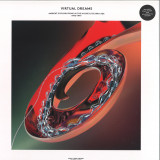
Music From Memory is delighted to be turning 50 with a special release: MFM050 - V/A - Virtual Dreams: Ambient Explorations In The House & Techno Age, 1993-1997 (3xLP/2xCD). The first in a series of compilations, alongside more in depth artist-focused releases, Virtual Dreams will delve into music produced during the 1990’s that redefined the boundaries of ‘Ambient’. This was music that explored the possibilities of Ambient music within a new setting, created often by House & Techno music producers for a world beyond dance floors but made very much with the pre and post-clubbing listener in mind.
When House and Techno exploded out of America in the mid 1980s a whole generation was redefined not only musically but also culturally and chemically speaking. Peaking, quite literally, with a second ‘Summer of Love’ in 1988, millions of young people across the world would experience the life-changing ups of a brave new world but with it of course came the downs; enter the concept of a ‘Chill-out’ room. Whilst early Chill-out rooms lacked a specific sound and were often soundtracked by music such as reggae and soul, slowly young Techno and House producers themselves would become increasingly interested in developing a futuristic ‘Ambient’ soundtrack to a world beyond the thud of the main room.
‘Ambient’ in this new age now though had sharper teeth than in Brian Eno's key text for ‘Music for Airports’, instead here the sounds were the mode of transport rather than the backdrop. While the melodies were pretty, the soundscape steered away from the pastoral, dreaming of outer-space and technology as opening up exciting new dimensions. Much like in the first Summer Of Love; the musicians were again exploring psychedelic, mind-altering and transcendental possibilities of music. And also much as in the first Summer Of Love, a psychedelic visual language would accompany the music. Though now the tracks could be accompanied by music videos, utilising early CGI techniques, they would look almost entirely to the future: envisioning technology, nature and humanity intertwined in a new Utopian future. Virtual Dreams of a better world.
From Ambient and early Chill-out classics, to lesser known one-off projects, as well as Ambient deviations by some of House and Techno’s leading producers, Volume One of Virtual Dreams features tracks by Bedouin Ascent, LA Synthesis, LFO, Marc Hollander, Mark Pritchard & Kirsty Hawkshaw, Richard H. Kirk and more.
To celebrate our 50th release the first 1000 copies include a holographic 'Virtual Dreams' sticker plus a special insert poster with artwork by Victoria Pacheco and design by Steele Bonus.
Mystical, minimal house offering hailing from South Africa in the mid-2000s courtesy of Cape Town indie labels Sharp-Flat and Roastin' Records.
RockArt was a hybrid-electro performance art project that emerged during a golden age for electronic music in the Cape, the post-Y2K scene spurred by the maverick African Dope record label that marked the rise of cult outsiders Felix Laband and Tudor Watkins Jones. Harnessing the combined powers of seasoned jazz musicians Hilton Schilder and Alex van Heerden, RockArt cooked up a signature futurist formula laced with musical bows and voice samples that was unmistakably indigenous. Intended as a companion to the group's Future Cape album of 2006, House was conceived as a long-form soundscape of tribal electronica that could stand alone on its own merits but also provide a backdrop for live instrumental improvisation. The project was shelved following the untimely death of Alex van Heerden in 2009 but emerges from Hilton Schilder's archive as a reminder of the duo's profound collaborative alchemy.
Running at 28 minutes over two sides of 12-inch maxi cut at 45RPM, House is available as a boutique vinyl offering with a psychedelic art sleeve pressed in a first edition of 300 copies.
Franco Esse is the moniker of Francesco Semproni, who in the late 60s began working as a music and recording assistant in major recording studios in Rome, Italy. He started out at Dirmaphone (then located in Via Pola) under sound engineer Gianni Fornari, before following him to the Emmequattro studios in Viale Mazzini, which at the time were the headquarters of Edipan, the record label founded by composer and conductor Bruno Nicolai after parting ways with friend and fellow composer Ennio Morricone.
Semproni tried to become a singer-songwriter in the early 80s, when he recorded a number of demos with the session musicians who gravitated around the studios. None of these demos was ever released though, for reasons that are still unclear today – his thorny and stubborn personality may have been a factor, since it apparently made him reluctant to compromise with the major record labels of the time.
The unsuccessful efforts to launch his solo artist career led to a personal crisis, and Franco Esse eventually quit music to go to work as a sales assistant in a toyshop in Rome's Prati neighbourhood.
Today he seems to have vanished without a trace, but after extensive research, we managed to dig some of his demos out of an abandoned archive and miraculously bring back to life two semi-instrumental tracks he recorded in 1983.
Both of them reveal Franco Esse as a refined musician with a reserved personality, an almost minimalist approach to lyric-writing, and a strongly cinematic synth-pop style that is in line with the musical trends of the time and gives a nod to the soundtracks of Fabio Liberatori, falling somewhere in between slow-wave and new-romantic.
These two ballads would have been the perfect soundtrack to cold winter nights in the early 80s, with snowflakes floating down on ski slopes, people clad in puffy down jackets, and music pouring into headphones from walkmans kept in back jean pockets.
SAISEI founder Junki Inoue continues his vital archival work uncovering the riches of Japan’s distinctive electronic music scene and bringing them to new audiences around the world.
The PMA EP compiles four dynamic tracks recorded around 30 years ago by the duo of Shigeru Nakamura (drums/vocals) and Mikio Kato (synths) aka B-2DEP’T.
Nakamura and Kato’s first album as B-2DEP’T, Products Plus, appeared on cassette in 1993 on Trigger Records, the predecessor label to Transonic (given a retrospective on SAIS004). Its bright yellow and blue retro-futurist artwork – which is echoed in the design for this reissue on SAISEI – matched the sounds held within: inventive, out-of-the-box dance music blending overseas influences with an idiosyncratic Japanese sensibility.
Two tracks from Products Plus appear on this EP, All tracks re-edited by Junki Inoue and regular collaborator Yuzo Iwata for vinyl extended play and available now for the first time on vinyl. ‘Clockwork Giant Panda’ appearing in a version co-produced with Yoshinori Sunahara (ex - Denki Groove), merges a breezy US house groove and bassline with twinkling, almost parodic Japanese keys that act as a kind of meta commentary on Western perceptions of Japan (a concept pioneered by Yellow Magic Orchestra). The two parts of ‘BSMH’, or Body Sonic Mental Health from ‘Products Plus’, were originally remixed by Daishi Hisakawa of Tanzmuzik, who draws on darker sounds from Europe and the UK: restless Depeche Mode synth harmonies spiral above a pacy EBM pulse, with robot vocals intoning the titular slogan. The package is completed by the unreleased track ‘PMA’, whose driving, bass-heavy mood falls somewhere between Sheffield bleep and the ambient techno of early Biosphere.
SAISEI is a Japanese word which translates to ‘reproduction’ and ‘to play’ (as in playing records). Japanese culture is widely known for its traditional nature just as much as it is for being forward into the future and this label’s concept does justice to exactly that. Having started digging for records as early as 16 years old, Inoue delved into productions from 1990s Japan to uncover these native gems. SAISEI’s core concept is to recapture and reintroduce unique pieces of Japanese electronic music onto vinyl, to an audience it never reached before as most of this music was only released in Japan.
Green Splatter Vinyl
Attention… There has been a sighting of an unidentified spinning object in the area. It’s splattered green and black, waxy, 12 inch in diameter and contains two extremely dangerous peak time recordings that have been causing destruction on dancefloors the world over. Proceed with caution, as these are two super slick takes on tracks you may or may not have heard before, you’re mind is at risk of reaching pure euphoria.
DJ Support: Marco Carola, Sepp, Arapu, Nu Zao, Bodeler, Ben Sterling, Archie Hamilton, Rossi.
In the wake of a 2020 edition of Movement in the City's second album Black Teardrops (1981), Sharp-Flat Records returns with a prequel by way of a reissue of the band's self-titled debut from 1979.
As the 1970s were drawing to a close, the epic Black Disco studio project with its signature pairing of drum machine and organ had run it course. After delivering a killer trilogy of cosmic lounge outings dating back to 1975, the group yearned for funkier grooves and the core trio of composer Pops Mohamed on organ with Basil Coetzee on tenor sax and Sipho Gumede on bass decided to hire a drummer and rebrand as Movement in the City. In contrast with the New Age detachment of Black Disco, Movement in the City was conceptually grounded in the bleak social realism depicted on its photographic album covers and leaned into the vivid sensibilities of library music from the era. Blending Cape jazz with funk and soul, the group's output evokes a soundtrack for South African city life at the outset of the 1980s while nodding allegorically to the subterranean movements that were in the course of shaking the cage for political change.
With its cast of jazz fusion all-stars, Movement in the City is the manifesto of a band in transition - a bold and slick first offering that delivers a modern South African sound capable of both the funky exuberances of "Mister Lucky" as well as the down-home pathos of "Blue Sunday." Restored from its original tape masters and released in partnership with As-Shams Archive and Pops Mohamed, this rare artefact of South African jazz history is back in print for the very first time since its original 1979 release.
''Fact & Fiction" The second Tranquil Eyes album delivers poignant & exciting synthwave songs. Drenched in an eternal 80s feel, well crafted & complete.Tranquil Eyes is a Dutch minimal synth band formed in 1982. Lex Grauwen and Paul Oosterbaan had worked together for about 8 years before they formed the band. They decided to turn their back to stage performances and started experimenting with home-taping. Using an array of electronics, they recorded a great amount of songs and made a fine selection on Walks. Their first and only release. Today, after digging into the archives, a lot of restoring, recording & re-mastering, there�s Fact & Fiction. The album is an extension to the Walks album both in genre and in spirit. Comprising a selection of lost tracks, compilation only releases, unreleased songs and even two newly recorded songs, Fact & Fiction gives a great view on the bands musical abilities & influences over the years.
The light is at the end of the tunnel. The light is shining bright because of love. The love is the answer to the darkness + the remedy for the experience which might bring unclearness and letting drown in the metaphorical swamp which every single human has felt during the journey they are on. The EP by the Switzerland based mastermind Dan Piu is dedicated to the love and to the love only. The tracks that were produced from the artist’s creative inflow are from the year 1995 to our present days and are telling the story of hope and compassion. Starting from A side we have a demonstrative rollercoaster which is ‘Selfish War Machine’ gracing before the ‘Made in Japan’ which is inspired by the early arcade machines and the ethos they were bringing with them. Side B starts with seductive house number straight up from the year 1995, followed by Robotic tool ‘Robota’ and finishing off on the perfect and soul caressing track going by the name ‘Equinox of Ceres’. This precise body of work which has found its home with Sakskøbing is pure and direct message of love, in a way when things are seem bleak the light can be sparked again. The answer how this spark gets obtained is the four-letter word which is mentioned frequently in this text
Swell Maps / Television Personalities affiliated C86-era indie pop rescued from sheer obscurity and thrust into semi-obscurity by FELT. The Catburgers were a short-lived Scottish group, this recording initially primed for release on Dan Treacy’s Dreamworld imprint yet placed on the perennial backburner as so many creative projects inevitably are.
Soundcloud uploads dating back over a decade ago and the odd blog/twitter post aside, the group seemingly lived on only in the memories of those who happened to catch them on the Edinburgh scene back in the day. Until now! With the help of the National Sound Archives, the original master tape containing these three tracks has been rebaked, cut and mastered for seven-inch.
‘Holiday House’ sounds immediately at home in the Postcard Records nexus, the influence of 1980 particularly tangible. Slower paced and with a touch more melancholy than its companions, the song sounds both in and out of time, as if some young teens raised on a hand-me-down diet of Pastels CDs might have laid it down yesterday.
Jowe Head of Swell Maps joins the group for ‘The Acid Tree’, whilst EP closer ‘Diving For The Brick’ sees the band ruminating on weak knees, sore lungs and stinging eyes down at the local swimming pool.
Accompanying the release is the original demo tape predating this record, recorded at The Rocking Horse Studios in Bathgate in Autumn 1986. The demo is restored from a tape copy owned by journalist Simon Reynolds and contains some of the tracks that made it onto the 7".