High-quality FERRO cassette tapes, printed on 160g premium paper.
Release info
New SEQMENTS release includes an amazing remix by Dante Archipiélago, also known as Mwamwa. As the first remix to arrive, it immediately set the tone for the series. Based in Mexico, Dante is a very talented producer with releases on labels such as Secuencias Temporal, Circular Limited, and Sygnth. His sound is very modern, with playful breakbeats and rich rhythmic tribal elements, carefully crafted into one beautiful cohesive whole.
Поиск:the arc
Все
Up Ya Archives returns with its first release of 2026, ‘Northern Step’, from Manchester-based jungle producer & DJ Worsleyy. The track arrives ahead of his upcoming EP of the same name slated for a 13th March release via Up Ya Archives Records.
Fuelled by crisp, tightly swung drums and a smooth, rolling bassline, ‘Northern Step’ is a salute to its junglist roots. Drawing from the Manchester rave records he was introduced to by his dad, and with the help of legendary Mancunion music mixologist Chimpo, Worsleyy channels those early warehouse energies and pairs them with his own progressive and futuristic lens. It’s heritage and evolution colliding, rooted, forward-thinking and built for sweat-drenched dance floors.
When speaking about ‘Northern Step’, Worlseyy said:
“Northern Step is a proper nod to the junglist past with the lush floaty vocals, calculated drum choppage, a smooth rolling bassline and Chimpo hopping on to drive forward the sound of the North.”
Worsleyy is a familiar face across the UK circuit, having played sets at The Warehouse Project and supporting Nia Archives on her 2024 UK tour in Manchester. Drawing from UK rave lineage and contemporary club sounds, his productions balance nostalgia with futurism, channelling the energy of Manchester’s acid raves. His tracks have travelled far beyond UK borders, spun by the scenes most forward-thinking tastemakers like DJ SWISHA, Sherelle, Pete Cannon, and Nia Archives on dancefloors around the world. Worsleyy’s rise has been as visible as it is audible — bold, bass-driven, and impossible to ignore.
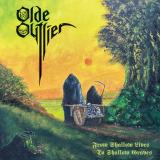
In many ways, OLDE OUTLIER rise from the legacy of Australia’s late Innsmouth — a cult band whose 2014 debut Consumed by Elder Sign endures as an underground classic. The connection is more than symbolic: guitarist Askew, vocalist Appleton, and bassist Greenbank all passed through Innsmouth’s ranks, while Beau Dyer now leads this new incarnation after years spent shaping the sound of Innsmouth and the earlier project Grenade.
From Shallow Lives to Shallow Graves marks OLDE OUTLIER’s recorded debut, a four-track, thirty-five-minute descent into their own cavernous realm. While faint echoes of Innsmouth’s inspirations — Armoured Angel and early Samael — linger, the band draw from a broader and far more obscure constellation. Shades of Amon Goeth, Martyrium, Head of the Demon, and Florida’s Equinox collide with the spectral drift of Ophthalamia and early Katatonia and Tiamat, all eroded and blackened into something untraceable.
Despite these depths, OLDE OUTLIER avoid any sense of technical indulgence. Their sound carries a rough, deliberate simplicity — a raw and smoky power that pushes each of the four long tracks forward with unhurried certainty. The songwriting unfolds through patient repetition and subtle shifts, allowing motifs to seep into place and gradually hypnotise. Appleton’s low gutturals bring a grim, expressive edge reminiscent of early Septic Flesh or Thou Art Lord, while the more open, lead-driven riffing imparts a distinctly archaic heavy metal aura that separates this band from their origins.
At many moments, that union of grit and atmosphere surpasses even Innsmouth’s achievements. Accented by well-placed clean and chorused guitar lines, From Shallow Lives to Shallow Graves becomes an immersive and strangely timeless work — a glimpse into an ancient, dimly lit world where OLDE OUTLIER feel less like a new formation and more like something unearthed from a forgotten past.
Finland's GRAVETAKER are a duo of Lunatik and Atavistic Mouth. Taking inspiration from Soulside Journey-era Darkthrone and Katharsis among other things, the band drag death metal back to its ambitious and obscure roots with their first recording, Sheer Lunacy. With five tracks clocking over 35 minutes, each song has taken a form of its own, fully realized but effectively part of a greater (w)hole. From mesmerizing acoustic intros to divebombs casting their screams over blastbeats, crazed hysteria to somber fields and back again, all wrapped in a swirling-yet-mossy recording, Sheer Lunacy is hard to categorize in any specific subgenre popular to this age and day; GRAVETAKER would be violently antagonistic if they actually cared about the nowadays scene. A true testament to a schizophrenic approach to songwriting and wielding true Metal of Death, IRON BONEHEAD now makes this archaic tome available on vinyl for full analog possession.
Meticulously assembled from a good 15 years' worth of source material, Cong Burn boss John Howes' second Paperclip Minimiser transmission proliferates its predecessor's network of turn-of-the-millennium aesthetics and concepts, bringing us closer to the lost future promised by the mid-digital age. If the debut album rooted itself in 2006, using an era-specific rig to activate its vintage Winamp-ready sound, 'II' pushes the clock forward just a little, recycling an unreleased album that Howes engineered in various locations across the north of England, starting way back in 2011. Working quickly and methodically with his homebrewed "DIY DAW" system, Howes improvised live using the record's bank of sounds, transforming the skittering bio-electronic rhythms, bitcrushed modem whines and inclement Lancs soundscapes into a suite of sleek, bass heavy steppers.
Howes has refined his setup and process over the years to function as an antithesis of contemporary production logic, a system that he can use easily to retreat from the excessive layering, overdubbing and editing that plagues modern electronic music. With only limited separate channels in each track, 'II' sounds both archaic and strangely novel. Showing respect to the early days of techno, when stone-cold classics were jammed out live using just a drum machine, a sampler and a couple of synths, Howes simultaneously acknowledges the promise of the transition to a digital future, as nascent algorithmic technology began to rehydrate stale rhythmic and melodic patterns. Fabricating its wrinkled cyberpunk landscape from shovelware blips and whines, spacious environmental echoes and lustrous, plasticky FM hits, 'II' is dense but never congested. It's a reminder that bass music thrives when it's given the room it needs to breathe.
2LP 180gm heavyweight 45 RPM Audiophile Edition, Featuring a half speed remaster by Miles Showell at Abbey Road Studios, Housed in polylined inners, Printed insert with sleevenote. The Alan Parsons Project"s multi-million selling album The Turn of a Friendly Card (1980), their celebrated prog pop tour de force, is reissued in a variety of formats, including this 2LP heavyweight, 45 RPM Audiophile edition. Expertly cut by Miles Showell at Abbey Road Studios on a customised Neumann VMS 80 lathe at half speed using high-resolution archive transfers taken from Eric Woolfson"s rarely played, mint condition duplicate masters run at the time of the original sessions in 1980. Like other Alan Parsons Project albums, there were a variety of different lead vocalists employed including Chris Rainbow, Lenny Zakatek, Elmer Gantry as well as Eric Woolfson himself. Plus, a selection of session musicians such as guitarists Ian Bairnson and David Paton and drummer Stuart Elliott with arrangements by Andrew Powell.
2LP 180gm heavyweight 45 RPM Audiophile Edition, Featuring a half speed remaster by Miles Showell at Abbey Road Studios, Housed in polylined inners, Printed insert with sleevenote. The Alan Parsons Project"s million selling album Ammonia Avenue (1984), is re-issued in a variety of formats including this 2LP heavyweight, 45 RPM Audiophile edition. Expertly cut by Miles Showell at Abbey Road Studios on a customised Neumann VMS 80 lathe at half speed using a 1:1 archive transfer from the original SONY 1610 format digital mastertape recorded in 1984. Like other Alan Parsons Project albums, there were a variety of different lead vocalists employed including Chris Rainbow, Colin Blunstone, Lenny Zakatek as well as Eric Woolfson himself. Plus, a selection of session musicians such as guitarists Ian Bairnson and David Paton and drummer Stuart Elliott with arrangements by Andrew Powell.
- A1: Dun
- A2: Sleep
- A3: Make My Feat Big Krit & Dice Raw
- A4: One Time Feat Phonte & Dice Raw
- A5: Kool On Feat Greg Porn & Truck North
- A6: The Otherside Feat Bilal Olivier & Greg Porn
- B1: Stomp Feat Greg Porn
- B2: Lighthouse Feat Dice Raw
- B3: I Remember
- B4: Tip The Scale Feat Dice Raw
- B5: Redford (For Yia-Yia & Pappou) (Redford Suite)
- B6: Possibility (2Nd Movement)
- B7: Will To Power (3Rd Movement)
- B8: Finality (4Th Movement)
Undun is the story of a man, Redford Stevens, dying in reverse, rewinding from the moment he became a statistic and hitting the points in his life where he's at his most self-aware. That he's a criminal who got caught up in the familiar street-hustle trappings that the modern media's documented countless times is a pivotal detail-- it's hit at an angle that seems to emphasize the futile inevitability of it all. His life could be any number of misdirected narratives that ends with a toe tag, and what details listeners learn about him are hazy, buried under archetypal turns of fate and decisive struggles. That this protagonist is a fictionalized composite of a handful of real people, filtered through a matter-of-fact narrative that splits character ambivalence with journalistic impartiality, only makes his lack of direction and the failure of any real closure stand out even more. "Lotta niggas go to prison," Dice Raw states on "Tip the Scale", "how many come out Malcolm X?"
So the Roots' latest album isn't a sprawling, rise-and-fall crime story, not a condemnation or a veneration of a man living outside the law, not a bullet-riddled grand guignol heavy on explicit details of soldiers getting cut down. It's a character study of a man whose existential crisis ends only with his death-- a death gone largely unspecified, the glamor and tragedy washed over with a doomed resignation. That's a hard thing to pull off, even for a band as given to deep-thinking concepts as the Roots are. And when your main lyrical catalyst is Black Thought-- a man more given to allusions than direct statements-- it's likely that it'll take a while for the full scope of Undun to really sink in.
If and when it does, it might strike listeners as a bit skeletal: omit the mood-setting instrumental bookends, including a brief, four-part orchestral suite that builds off Sufjan Stevens' "Redford (For Yia-Yia and Pappou)", and you've got maybe a half hour's worth of material. By ?uestlove's accounts, writing Redford's story introduced the headaches and challenges that come with scriptwriting into their songwriting, and what's left on Undun is the end result of frequent revisions and rewrites that attempt to reconcile character, theme, and continuity. If it comes at the expense of nuance, it's not always obvious: There's an easy-to-trace narrative line from Redford's acceptance of his fate ("Sleep") to his acknowledgement of how close it's approaching ("Make My"), back through declarations of aggravated toughness ("One Time"), and celebratory fatalism ("Kool On"), along ups and downs that juxtapose motivation ("Stomp") and helplessness ("Lighthouse"). When the vocal portion of the album ends with two of the bleakest sets of verses in the Roots discography, peaking with the estrangement of "I Remember" and the desperation of "Tip the Scale", Undun reveals itself as a story where a man's actual death isn't quite as tragic as the circumstances that pushed him to it.
Detroit sisters The Jones Girls were a hugely popular part of Philadelphia's PIR stable throughout the 1970's and 80's.
They cut numerous sides for the label aided by the incredible production and arrangements of the infamous Gamble and Huff hit machine.
'Night over Egypt' is surely one of their most enduring, evergreen tracks. As popular today with people as it was on it's 1981 release.
A record that truly transcended genre boundaries and touched people from all walks of life and of all taste persuasions, it is a true soul classic. Often imitated yet never bettered! It's no wonder the 12" has always been sought after, sometimes commanding collectors prices on the used vinyl marketplace. The flipside 'Love don't ever say goodbye' is a sultry, Dexter Wansell produced slow-jam that ticks all the right boxes! One for the lovers out there, pure quiet storm business.
This is a fully legit reissue, made in conjunction with Above Board distribution and Sony music, sourced from their vaults using original source material and remastered and repressed to the highest standard for 2018 and featuring all original 1981 PIR label artwork.
Here's your chance to own yet another essential stone cold classic from the archives!
A label long synonymous with raw, off-centre electronics and uncompromising club tools, Bjarki’s bbbbbb recors welcomes a producer whose approach feels cut from the same cloth, London’s Henry Greenleaf. In an era where functionality often outweighs feeling, ‘Brawn’ is a record that doesn’t court approval; it insists on impact. Built for high-pressure systems and low ceilings, it channels force not as spectacle, but as design.
Greenleaf’s catalogue to date, spanning labels such as Par Avion, YUKU, and ARTS, sketches a restless trajectory between precision and collapse. His productions operate where rhythm becomes architecture: kicks land like poured concrete, subs buckle and flex beneath shifting percussive grids, and textures are stretched until they fray at the edges. Sound is treated as a physical material, layered and stress-tested, reshaped until the familiar mutates into something tactile and strange.
Across the EP, that philosophy takes full form. A1 ‘Brawn’ sets the tone with dense, piston-like drums and tightly coiled low-end pressure, balancing brute force with meticulous spatial control. ‘Jump Up To Be’ follows with a more fractured swing, percussive shards ricocheting across a framework that feels perpetually on the verge of rupture. On the flip, ‘Gawk’ strips things back to skeletal components, carving negative space between distorted pulses and menacing, warped rhythmic figures, before ‘UNTUNTUNT’ closes the record in driving fashion, delivering a raw, functional workout that reduces the groove to its bluntest, most hypnotic form.
True to the label’s ethos, ‘Brawn’ doesn’t chase trends or smooth its edges. It folds air and pressure into motion, pares club music down to its working parts, and leaves room for spontaneous chaos to erupt within the grid; moments where structure splinters, energy misbehaves, and control gives way just enough to keep things volatile. Engineered yet unpredictable, utilitarian yet unruly, the EP embodies the tension, unpredictability, and uniqueness that have long defined bbbbbb recors.
- A1: It Hurts Me So
- A2: So Tell The Girl That I'm Back In Town
- A3: The Girl I Love Is Gone
- B1: Skeletal
- B2: I'm Older Now
- B3: Extended Beats
- B4: Tell Me Like It Is
- B5: I Fantasize Of You
- B6: Mana Mana Mana Mana
Whiskey is the 1996 debut album by Jay-Jay Johanson. An exciting mix of trip hop, nu jazz and drum 'n' bass; all with the amazing vocals of Jay-Jay himself. Key tracks like ""So Tell the Girls That I Am Back in Town"" and ""It Hurts Me So"" showcase his ability to fuse smooth, lounge-like vocals with electronic beats and lush instrumentation. Whiskey received critical acclaim for its emotive depth and unique style, establishing Johanson as a compelling figure in the late Nineties music scene. This album is a must for anyone who enjoys Moloko, Tricky, Archive and Lamb.
Developer returns to his personal vinyl imprint Developer Archive with the label’s 17th release, continuing a focused exploration of raw, hypnotic techno built for physical spaces. Known globally as the driving force behind Modularz, Developer uses the Archive series as a more direct and uncompromising outlet—stripped back, functional, and deeply immersive.
This latest release locks into groove-based cuts powered by tension and restraint, where repetition becomes ritual and subtle shifts create sustained drama. The rhythms are dense and forward-moving, designed to work equally well in the pressure of a warehouse or the precision of a darkened club.
With Developer Archive 17, Developer reinforces his commitment to vinyl as a medium and to techno as a tool for controlled intensity—music that doesn’t chase trends, but instead sharpens its purpose with each release.
The first resonant space Zosha Warpeha played in was the Emanuel Vigeland Museum in Oslo, Norway. Built as a mausoleum, its walls reach up into a gradual archway, creating an environment where sound expands and reverberates for twelve seconds before decaying into silence. Warpeha was greeted only by dim lights when she entered, and it wasn’t until she had spent several minutes listening that she was able to make out the frescoes that covered every inch of the room: graphic depictions of the cycle of life from conception through death. As the sound of her Hardanger d’amore encountered the walls and these slowly emerging scenes, they obscured its point of origin in both time and space, augmenting its own life cycle. The experience sat in the back of her mind over the next several years as she developed her own patient style of composition and performance, one that comes into full bloom on her new album I grow accustomed to the dark.
When Warpeha was selected as an artist in residence at Brooklyn’s ISSUE Project Room in 2025, she saw it as an opportunity to more intentionally explore how her music might fill a room with ample natural reverb. I grow accustomed to the dark documents two single-take solo performances for Hardanger d’amore and voice at IPR, with both pieces composed in a unique tuning system developed to interact with the space itself. Listeners can trace resonance from the contact of the bow on gut strings into the body of the instrument, its five sympathetic strings offering another layer of refraction, before the sound is thrown about the cavity of the room. The echoes emerge like a photographic double exposure, or wisps of smoke that linger in the air, creating ghostly harmonic convergences that blur the line between what is there and not-there. Sound begins to act like light, a synesthetic alchemy that transforms drones into beams and ornamental trills into flickers.
Both side-long compositions, “filament” and “visual purple,” exemplify a duality that animates Warpeha’s music: an expressive, individualistic style that draws on extensive knowledge of her instrument’s history in folk traditions, and an austere, devotional quality maintained by focus and precision. Though very different in character and structure, both pieces evolve slowly through numerous repetitive phrases, passages of stillness, and bursts of intensity. “filament” opens with a cycle of delicate melodic fragments played and sung around a drone before blossoming into an outpouring of swooping arpeggios, harmonics flying from the strings like sparks off a bonfire. The disorienting pulsation of harmonic beating forms the core of “visual purple,” the close-tone dissonance building to a swarm of open strings ringing boldly throughout the space. After the knotty tones reach their climax, the piece collapses into studied quietude, hushed, but without any drop in intensity.
When Warpeha first visited the Vigeland Museum in 2019, she was in Oslo to deepen her relationship to the Hardanger fiddle through the study of Norwegian traditional music, which is primarily passed down aurally. The experience of learning songs by ear, not only internalizing the tune but also absorbing the techniques and tonalities by listening, was a crucial step in her development as a composer. The years since have seen her sharpen those skills as a prolific member of the New York avant-garde and improvised music communities. Warpeha’s music encourages listeners to join her in this journey, to listen closely with each repeated phrase and through each dramatic shift. Like the frescoes on Vigeland’s walls, with time and intention, the depth of I grow accustomed to the dark comes on like a revelation.
Igor Tamerlan is a stranger in his own land. Born in 1954 the Hague and spent most formative years in Paris, Igor suddenly had the urge to relocate to Bali in 1986. “I want to settle in Indonesia and marry a local girl,” he told his sister shortly before flying out.
His next journey would be as audacious as his time in the Fifth Republic. Born from a prominent Indonesian expatriate family in Paris with ties to Indonesia’s first prime minister Sutan Sjahrir, Igor earned a degree in architecture at Ecole nationale supe´rieure d’architecture de Paris-La Villette.
He could have been a brilliant architect or a political scientist (he was accepted to Sciences Po), but his passion for music distracted him from his academic works. He was after all named after Russian composer Igor Stravinsky.
During his brief stint at Sciences Po, Igor spent most of times hanging out at recording studios and rub shoulders with the likes of singer-songwriter Jean-Jacques Goldman and Michel Polnaref. He had a brief encounter with The Rolling Stones at the Cha^teau de Thoiry studio in the early 1970s.
But Igor’s musical education and his occidental eyes appeared to be ill-suited for Indonesia. His first record, titled Langkah Pertama (First Step) on the mainstream label Musica was met with a shrug and was a commercial dud. An experimental record blending the influence of Spanish motifs, Francophile production and a whiff of hip hop and ska was seen by critics as being too alien. His sarcasm-laden lyrics and his biting critique of excessive materialism among the upper tier of Indonesia’s nouveau riche in the album was met with confusion from the audience. He was just too far ahead of his time.
He left the label Musica – or may had been dropped – soon after Langkah Pertama and decided to go independent. He then relocated to Bali and set up a state-of-the-art recording studio in Sanur, across the street from Southeast Asia’s first boutique hotel where luminaries like Mick Jagger, David Bowie, Sting, Yoko Ono and Ringo Starr stayed for their holiday.
From the studio, Igor recording everything from the sounds waterfalls, geckos, minibuses to motorized rickshaw and mix them with hip hop, jazz, electronica, dub and Balinese gamelan. A visionary, Igor was the first musician to use MIDI, which started to be available globally in the early 1980s.
On paper, songs like “Bali Vanilli” should not work, a mish mash of disparate elements mentioned above, sung in three languages, Balinese, English and Bahasa Indonesia while tackling the subject of overtourism. The song was also the first to introduce rap to an unsuspecting audience. But for some strange reason “Bali Vanilli” became a sensation and overnight Igor became household name. And in 1987, long before overtourism was an issue, Igor broached the subject to a national audience in Indonesia on the possible destruction of nature and culture from tourism.
Ever an iconoclast, Igor decided to step out of the limelight following the success of “Bali Vanilli” and in early 1990s he relocated to Indonesia’s cultural capital, Yogyakarta. Here, he worked on some more experimental music while juggling as music video director. He passed away in 2018 at the age of 64.
The 10 songs in this compilation, Bali Vanilli: Experimental Pop from Paradise Island (1987-1991), are some of Igor’s best works, music that would have gone into obscurity had it not been for the diligent work of film director Alfred Pasifico Ginting, who managed to track down some of the master tapes while researching on a documentary on the musician.
These recordings have never before been released outside of Indonesia. Igor would have been proud with this reissue project.
- 01: Bunny&Apos;S Pie (Feat. Bruce Johnson, John Abercrombie &Amp; Chip White)
- 02: Trial N. 5 (Feat. Bruce Johnson, John Abercrombie &Amp; Chip White)
- 03: Dimenticare Stanca (Feat. Bruce Johnson, John Abercrombie &Amp; Chip White)
- 04: Katcharpari (Feat. Bruce Johnson, John Abercrombie &Amp; Chip White)
- 05: Fluid Connection (Feat. Bruce Johnson, John Abercrombie &Amp; Chip White)
- 06: Cheerin&Apos; Cherry (Feat. Bruce Johnson, John Abercrombie &Amp; Chip White)
- 07: Peace (Feat. Bruce Johnson, John Abercrombie &Amp; Chip White)
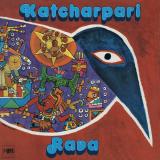
The breakthrough album. Enrico Rava's second solo record, recorded in Milan in January 1973 and released on the German BASF label, is nothing less than a cornerstone of Italian jazz-rock - the record that caught Manfred Eicher's attention and opened the doors to ECM. Rava himself has called it his breakthrough, and history proved him right.
The lineup is killer: John Abercrombie on guitar, Bruce Johnson on bass, Chip White on drums. Four musicians operating at the absolute peak of early seventies fusion energy - electric, cosmopolitan, burning with that particular fire that only existed in that brief window when jazz met rock and nobody knew the rules yet. Abercrombie, already on his way to becoming one of the most distinctive voices in electric jazz guitar, delivers some of his most ferocious early work here. White's drumming is relentless, pushing the music forward with an intensity that never lets up.
If Miles' Bitches Brew-era speaks to you, if Ian Carr's Nucleus gets you moving, if you know Sun Ra's Lanquidity and Don Cherry's Relativity Suite by heart - this is essential listening. Rava's vision was already fully formed: South American rhythms, Mediterranean warmth, free jazz ferocity, rock power - all flowing together without borders or categories. By the early seventies, Rava had absorbed everything - the New Thing, the European free scene, the electric revolution coming out of Miles' studio - and forged something entirely his own.
The seven tracks cover serious ground. "Bunny's Pie" introduces the music with an almost cosmic atmosphere of suspense, hovering in that liminal space before it trails off into the up-tempo vibrant frenzy of "Trial N. 5" - Abercrombie and Rava trading swirling solos at full intensity, the rhythm section locked in tight. "Dimenticare Stanca" moves from Rava's expressive balladic intro into pure funk, guitar and trumpet steering over the rhythmic drive with absolute confidence. The title track carries the lyrical feel and cadence of an Incan-Peruvian folksong - that cosmopolitan spirit made audible. "Fluid Connection" rides a funky bass riff into fusion heaven, with standout trumpet and guitar solos that build and release with perfect tension. "Cheerin' Cherry" pays homage to the great Don Cherry - Rava's spiritual mentor and fellow traveler in world music - exploring a North African soundscape that points toward the global jazz to come. Johnson's "Peace" closes the album with a minute and a half of serene, blissful calm - a moment of stillness after the storm.
This audiophile reissue - cut from the original masters, pressed by Pallas in Germany on 180gm vinyl, housed in a thick laminated hand-glued gatefold - does full justice to an album that remains a collector's holy grail.
Don't sleep on this one. Limited Edition.
- A1: Rimouski
- A2: Saint Laurent
- A3: Iceberg
- A4: Bug Featuring Craig Walker
- B1: Sternic
- B2: Catastrophe
- B3: Reef Featuring Aur
- B4: Continent Plastique Featuring Oxmo Puccino
- B5: Delusion Featuring Craig Walker
Featuring a prestigious line-up of guests, the album Sonars brings together iconic voices alongside Maxime Dangles and Tommy Rizzitelli: Oxmo Puccino (Continent plastique), Craig Walker, former lead singer of Archive & Power of Dreams (Bug and Delusion), and Aur (Reef).
Conceived during the Art/Science project of the same name, Sonars draws inspiration from reflections on ecology and the shifting biodiversity of our oceans and rivers. It was in Rimouski, on the shores of Quebec’s Saint Lawrence River, that the duo immersed themselves in the imagery and sensations that breathe life into this record. The result is a collection of breathless, driving tracks—a masterly fusion of machines and drums where organic textures meet the urgency of the climate crisis.
Tape Source’s Romain Da Silva Santos further enriches the album with his guitar work, while the visual identity is graced by the work of photographer Jean Gaumy, whose iconic photography features on the cover.
- World Of Trouble
- Hellbent On Colorado
- Loud And Clear
- Carolina
- The Wicked
- Plains Of Ohio
- Cincinnati
- Runaway Horse
- Overtime
- Funeral Singer
- Our Lady
- Eastern Bluebird
Inspired by the long tradition of radical country and folk artists, longtime friends Sally Buice and Molly Rochelson use their passion for literature and storytelling to craft an album that reckons with the current global fever pitch. The album's 12 introspective, thematically and sonically layered tracks chart a transformative pilgrimage through an inextricably connected world. A woman desperate to save her community from a gas pipeline in "Plains of Ohio," a devout grandmother traveling across the world to Yugoslavia in search of the Virgin Mary in "Our Lady," and a trouble- making Bible College misfit in "Loud and Clear" are just a few of the archetypes listeners meet.
The Cincinnati-based duo cut their teeth as teens busking on Market Square in Knoxville, TN. Produced by Eli LoPinto (Chris Stapleton), the duo opted for a bigger sound and the result is a bonafide, left-of-center indie country record. Path of Totality does not shy away from the weight of political strife and catastrophe, opting instead to boldly confront it, bringing to bear the power to unite us all.
Brendan Eder follows up minimalist 70s-jazz concept with new ambient-classical album, THERAPY. Brendan Eder is a Los Angeles composer and drummer best-known for his eponymous genre-bending ensemble of woodwinds, drumset, and bass; as well as his film scoring work, most notably on four short films for director Ari Aster. On March 3, 2023 Eder released his third album, THERAPY, a collection of meditative woodwind arrangements recorded primarily at Church of the Good Shepherd in Arcadia, California.
The quest for THERAPY came during a period of deep spiritual curiosity. Eder was avidly watching testimonies of near death experience survivors (NDEs), pouring over books of Theosophical artwork and philosophy, and
processing experiences of grief, uncertainty and spirituality.
Eder wanted to explore the threshold between the spiritual and physical dimensions, and create music that could evoke its shape and texture — a theme further illustrated in the original album artwork and single covers by Adam Rabinowitz. Eder felt he must be on to something when, on a whim, he looked up the tempo of a piece he was calling “137 Riddle.” Turned out to be “the most important number in the world” in theoretical physics, as well as a provocative number in Jewish mysticism.
Since 2020, Eder's cover of Aphex Twin's “#20 (Lichen)” has garnered over two million streams. Appropriately, THERAPY delivers two new Aphex Twin arrangements alongside eight original pieces.
Maintaining his track record of recording the best musicians Eder can find, THERAPY features special guests Nailah Hunter (harp), Henry Solomon (saxophone), and Ethan Haman on The Newberry Memorial Organ at Yale University.
»Low Tide, Hi Grypus!« is the new live-iteration of JC Leisure as JC Leisure Group. Documenting an encounter and a communication between human improvisers and atlantic grey seals. The record presents responsive improvisation as a form of cross-species collaboration.
The project began on Porthdinllaen, Wales, where Leisure recorded seal vocalisations from a local colony at low tide. Back in their Liverpool studio, Leisure developed a performance system that translates human musical gestures – pitch, timbre, rhythm, density, presence - into triggers for these seal expressions. The resulting system is dual-active, as in it simultaneously acts and is acted upon in the horizontal instance. It creates a new-music non-linear threshold that cannot be replicated.
»Low Tide, Hi Grypus!« was recorded live at 1210 Berlin and captures one instance of this concept. Local improvisers were invited to encounter the performance system. Recorded in one take, pedal-steel, woodwinds, strings, piano, organ, and electronics gradually learn to listen and respond to the marine voices. This interspecific group moves from intimate duets (that's human, seal) into full ensemble works (humans, seals) over the course of one night.
Rather than treating field recordings as static material, the extensive seal archive functions as an active collaborator: shaping form, pacing, and interaction in real-time. Now that’s marine biology meets human communication!
JC Leisure has previously released work on Sun Ark, Warm Winters Ltd, Not Not Fun and collaboratively with Dialect as Raft of Trash. He has composed a radio play commissioned and broadcast by BBC Radio.