Music is liquid architecture!
Kirik & Alia Palant sign our 5th release alongside our good friends Vern and Cojoc in their remix duties!
Buscar:the architect
Carved out from between the cracks of life over a 2 year period, Low Flung presents his eighth full length album ‘The Wheel’. Together, the 11 tracks provide a space to process and sit with difficult change. This takes the form of microscopic minimalist landscapes. Presented in both audio and physical form as micro grooves on a 12” vinyl.
At times the sound wanders and walks, other times it remains still, clear and precise. The omni-present artifacts found in ‘The Wheel’ are left to breathe a different life during each listen. Drones act like familiar trails losing their path as space transforms like a breeze over a table of sand. Hyper focused spores evolve around blurred waves of time. Electronic tones are captured flowing to the rhythm of a decaying natural world.
‘The Wheel’ is a patchwork of sonic experiments made using modular synthesis, fixed architecture synthesis, Buchla Music Easel (replica), outboard effects, cassette manipulation techniques, samplers and field recordings taken along the texturally rich and historically questionable eastern coastline of Australia.
The tracks have been composed with a materiality that embraces the acoustics of different listening environments. Much like mood, this means each listening experience is unique due to the natural acoustics of your listening space. The sounds on this album embrace this phenomena, creating a rich, visceral listening experience that slowly scratches away at discrete moments of time
Rather than attempting to traverse new sonic fields of experimentation in ‘The Wheel’, the album touches on the various spaces Danny has explored over the past ten years as an Audio Visual artist. Although technically eighth, it would be more fitting to say this album draws a clear line from ‘Blow Waves (2018)’ to ‘Outside The Circle (2020)’ to become the third and final chapter in the expanded non linear, unintentional landscape series. Serendipitous that each was conceived over 2 year periods of time.
While the key focus is sitting with difficult change, this album is also a celebration of any moment you might find yourself in. Good, bad, easy or hard, this album is an attempt to help with feeling content wherever you are along your path. With each cycle a new context.
"We find ourselves venturing into the depths of a rugged terrain. In our hands, we hold stones and minerals, each possessing its own distinct texture, weight, and sonic potential. It is through the artistic touch and through the musical instruments that these earthly treasures, once dormant, are awaken to life." — Sara Oswald + Feldermelder
The 3rd collaboration of prolific cellist Sara Oswald and electronic musician Feldermelder evokes captivating sensations that oscillate between impending doom and hope. The albums' sonic journey is highly immersive, transporting the listener from one cerebral landscape to another. The transformative nature of metallic elements being integrated in sustained orchestral tones weaves the sonic tapestry, resulting in a captivating experience for the listeners. The organic sounding — reminiscent of minerals' timbres — brings a touch of brightness and a distinctive edge, while the orchestral harmonic structures lend a sense of grandeur and continuity. The origins of this music remain enigmatic, while the tracks of the album gradually unveil concealed aspects and the hidden truth.
One can step into a realm where melodies are reborn, as Sara Oswald's cello spins tales and emotions burst forth. Nature's eternal splendor intertwines with the essence of music, as she infuses harmonies with the soul of mountains. Vibrant hues come alive with delicate strokes, and cascading notes resonate with a select few. Feldermelder conjures profound echoes that swirl like ancient whispers of the earth's primordial past. He sculpts textures, from fragmented glitches to expansive atmospheres, that warp the fabric of reality. The two musicians merge together harmoniously, blending the acoustic and electronic worlds into a transcendent unity. This fusion of contrasting elements adds a unique and intriguing quality to the music. The cello's warmth merges with pulsating electronic beats, creating a symphony of contrasts and sonic upheaval. Each composition is woven in intricate layers, combining electroacoustic architecture with delicate precision. A subtle balance of chaos and control permeates the music as it meanders through the labyrinth of the mind. The soundscape unfolds like a grand tapestry, distant echoes murmuring like grains of sand.
Trained in baroque cello and advocating improvised music, Sara Oswald is the perfect match for sound artist and electronic musician Feldermelder. She plays solo, composes for film and theatre and collaborates with musicians like The Young Gods, Pascal Auberson, Sophie Hunger and Julian Sartorius. Feldermelder is a polymathic creative whose artistry spans composition, sound design, installation and code. He is co-founders of -OUS and part of Encor.studio, a collective of artists who specialise in creating immersive audio-visual installations. Through his work, he explores the idea of secrecy and its impact on our lives, using music and sound to create a thought-provoking and immersive experience for his audience.
Sampled by Jay-Z and Dr Dre, Italian band Calibro 35 announces the release of the new album NOUVELLES AVENTURES. The album will be available abroad on limited edition Crystal Clear vinyl next June 30th via Record Kicks.
Italian cult cinematic combo Calibro 35 are back with their new studio album NOUVELLES AVENTURES. The new album will be available abroad on a limited edition Crystal Clear Gatefold LP on June 30th, distributed worldwide via Record Kicks. The crystal clear vinyl edition is a Record Kicks exclusive and is limited to 1000 copies, which makes it an instant collector's item.
After last year's Scacco Al Maestro, the 2 tribute-albums dedicated to "il maestro" Ennio Morricone, followed by the "Calibro 35 plays Morricone" tour and the releasing of the ost of TV drama series Blanca, Calibro 35 are back with NOUVELLES AVENTURES, a new studio album of original material. NOUVELLES AVENTURES was recorded in Naples at Auditorium Novecento, the former Phonotype Records, one of the most legendary and fascinating Italian recording studios. The new LP sees the group making full use of their knowledge and resources, refined and enriched over the years, back to making "Calibro's music": a unique mix of funk, progressive rock, alternative jazz and wide-spectrum cinematic music the public has known them for in fifteen years of career.
"After a couple of intense and stimulating years playing Morricone and writing music for the TV drama Blanca", Calibro 35 said, "we had a great desire to make new inspired music. To do so, we left home and we shut ourselves up in the splendid space-time capsule that is the Auditorium Novecento studio. The result is a series of musical voyages in which we concentrated all our artistic and human experiences. As in Verne's imaginary and extraordinary journeys, we explored distant places where we had never been before. We then happened to return to more familiar shores and discover them with new eyes without realizing it. We borrowed the title NOUVELLES AVENTURES from György Ligeti, precisely because after fifteen years of building ourselves, we are ready for new adventures".
NOUVELLES AVENTURES was anticipated by the first extract "EXTRAORDINAIRE", an almost 6-minute song that once again confirms the band's aptitude for the exploration of unpredictable sound territories: a music that, on one hand sounds liquid and abstract, while on the other, it cuts through the psychedelic mists, with a complex architecture.
Described by Rolling Stone as "the most fascinating, retro-maniac and genuine thing that has happened to Italy in the past few years", Milan-based Calibro 35 enjoy a worldwide reputation as one of the coolest independent bands around. Active since 2007, during their long career they were sampled by Dr. Dre on Compton ("One Shot One Kill" feat. Snoop Dogg), Jay Z ("Picasso Baby"), The Child of Lov & Damon Albarn ("One Day") and Demigodz ("The Summer Of Sam"). They played major venues and festivals all over Europe and as unique musicians they collaborated with, amongst others: PJ Harvey, Mike Patton, John Parish, Stewart Copeland and Rokia Traoré.
Suburban Architecture continue their series of now highly collectible 4 track EP releases with their 5th offering, 'Turning Point'. Following in the footsteps of 2022's 'Exploration' EP, this new collection once again draws heavily on influences from the jazzier, atmospheric strains of mid to late 90s Drum & Bass. Putting their own spin on sounds rooted in this golden era of dance music, the Turning Point EP delivers more of the London duo's trademark warm atmospheric production and Jungle-adjacent drum programming at a variety of tempos.
Opening track 'The Drifter' pulls no punches - Jazz Fusion flutes and delicate arps float over dreamy pads before giving way to a smashing Amen track, creating a classic roller with enough punch to hold a dancefloor. Title track 'Turning Point' delves further into Jazz Fusion sonics: underpinned by lush Rhodes, intricate drum programming sets the scene for a rousing vocal refrain and an atmospheric blend of flutes and horns. 'The Believer' delivers a similar blend of instrumentation, this time adding muted horns to the mix, building to a motivating, Soulful vocal hook. Closing out the EP 'Memoriam' lowers the tempo with a slo-mo roller placing deep, atmospheric pads and unexpected subtle guitar licks over a punchy, rolling drum track.
The third vinyl release from Seattle/LA imprint Rhizome Records comes from label cofounder Kristijan Risteski aka Kinjo. Previous productions from Kinjo include a single on sublabel Rhizome Forms and a 3-track release on SF’s P.U.N.C.H.I.S. With his first vinyl pressing, Kinjo perfects a signature deep vibe while recruiting the talents of Uruguay’s Z@p and Romanian Dragomir for a pair of remixes.
“Marxian” rolls out a techy percussive architecture along with the alluring yet dissonant call of dystopian synths. The subsurface layers crackle and shift, revealing a never-ending array of sophisticated effects.
Z@p provides the remix on side A, wasting no time to transform the original with his moody yet playful excavation. An expertly crafted electro pulse supercharges the alluring tones of the original to unleash a dance floor ready weapon.
Side B features a long form remix treatment by Romanian minimal technician Dragomir. At over 13 minutes, Dragomir’s interpretation extends the original’s chemistry across a vast landscape, carefully examining each element. A deeply psychedelic gem, the Dragomir remix synthesizes afterhours aesthetics with the dark side of jazz.
The gifted Puerto Rican-American drummer and percussionist Willie Bobo was one of the architects of Latin Jazz. Following mentorship from Machito and Mongo Santamaria, Bobo played with Tito Puente, Cal Tjader, and Herbie Mann, before going solo. Bobo’s Beat is a sure-fire winner from 1962 with excellent support from trumpeter Clark Terry, saxophonist Joe Farrell and keyboardist Frank Anderson, a fully three-dimensional set with fine jazz nuances. It shows that Bobo never accepted less than the best from his counterparts, and there are some bossa nova covers mixed in with the driving Latin originals too. An essential work!
re:discovery records is proud to release for the first time, a vinyl edition of 'Two Zeroes' by Grain for it's 25th anniversary.
Grain was a west coast project that emerged out of the psychedelic music and art scenes in Los Angeles in the early 1990s. After a few of their tracks were featured on the key chill out compilations United State of Ambience 1&2 and Excursions in Ambience
and many local live performances, they released two ep's on local labels. Shortly after in 1998, 'Two Zeroes' the full length project appeared. A west coast chill out classic that unfortunately did not get much disribution outside the west coast let alone to the world.
To classify this album is very hard. Think early Jammin Unit with a touch of the Orb and dash of west coast breakbeat and chill out styles and you still can't fully pin it down. A unique album that sonically, was leaps and bounds ahead of most albums in this style thanks to sound designer, audio instalation architect, scientist and artist Jimmy Johnson along with illustrator and fellow sonic artist Peter Ehrlich. Featured on double vinyl with updated artwork by the original designer, Kevin Hanley and presented on beautiful gatefold with a shimmering silver vinyl to match. This could be one of the discoveries of the year for those that have never heard this album. Dare to Dream with us.
- A1: More Than Abstract Hip-Hop (Mounika Remix)
- A2: Final Round (The Architect Remix)
- A3: Betty (Scratch Bandits Crew Remix)
- B1: Nuday Feat Andrre (Feat Andrre - Souleance Remix)
- B2: The Lsa Theme (Kognitif Remix)
- B3: Favelas (La Fine Equipe Remix)
- C1: Straight Murder (Feat Asm & Miscellaneaous - Senbei Remix)
- C2: Un Jour Comme Un Autre (Moderator Remix)
- C3: Too Shy To Dance (Feat Astrid Van Peeterssen - Al'tarba Remix)
- D1: Stay In Your Lane (Feat Miscellaneous - Dj Vadim Remix)
- D2: Avant (Proleter Remix)
- D3: Kolata (Izem Remix)
- D4: Qu'attendez-Vous De Moi? (L'orange Remix)
Degiheugi presents his new project “Remixed Treasures”. A project that bears its name well. Like seabed adventurers, the remixers have been asked to rework in their own way some of the most significant tracks of a career spanning more than 20 years.
Starring L’Orange, Moderator, Souleance, iZem, The Architect, Senbei, Al Tarba, Mounika, DJ Vadim, La Fine Equipe, Kognitif, ProleteR and Scratch Bandits Crew, the XXL cast of this impressive crossover melts genres (hip-hop, electro, ambient, drum & bass, jazz…) and brings together no less than 13 beatmakers from different scenes and generations.
Asphalt Records second output is a forward thinking, hardcore continuum friendly take on the grittier side of industrial techno from Birmingham by the neighbourhood's new pestilent squathouse residents NeonDemon. This EP has its roots buried deep in seamless concrete foundations scaffolded by Mick Harris, via Surgeon & Regis inspired techno half-times, while pushing tech-step’s most asphyxiating soundscapes to sheer schizophrenia (i.e Guided by Whispers). The grime influxed club architectures (Pattern Down), the weightless demonic punk industrial attitude reminiscent of Throbbing Gristle (Pentastar) and the dark humor embedded in this 12’ (Pandeirada de Tella Remix) make Stains EP the perfect soundtrack for today’s apocalyptic contemporary events. Mastered as usual by Jason Goz at Transition, pressed in thick asphaltic 180g and wrapped in our usual pavement-black outer sleeve.
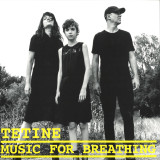
We've been writing new material as a trio since the first lockdown in the spring of 2020.
An organic and electro-acoustic impulse that translates both mine and Eliete's need of self-archiving,
re-inventing and auto-cannibalising Tetine's past, present and
future in order to explore other aural
landscapes and modes of composing intuitively, while at the same time, re-experiencing moments of our
trajectory as a hybrid organism.
Music For Breathing was born as a respiratory, meditative, and improvisatory piece of DIY
tropical-mutant-punk "chamber music" written for cello, voice, piano, organ and electronics.
The work responds to the suspended acts of breathing and vertigos experienced in contemporary polluted
environments in political, social and philosophical transitions, whilst investigating the
secret ontologies of inanimate objects and architectures, as well
as the echoes and ethics of modes of operating things.
Recorded during the intense period of heatwaves that hit London between July and August 2022, in
a small studio set up in our flat's kitchen - so that we could capture the acoustic instrumentation
(in particular, for the recording of cellos) without much
noise interference from the street -
this vinyl version of the album comprises of 5 distinct yet complementary reflective movements.
Musically and lyrically, it explores the atmospherics and syntaxes of time and space, voice, rhythm,
as well as themes such as hearing loss, menopause, pollution and respiration. It builds an expanded suite of unexpected
electro-acoustic textures through repetition, minimalistic motives, simple melodies, chromatic
developments, free counterpoint and atonalism. Conceived as an ode to the poetics of slowness,
the sounds you hear give continuity to the music we composed for the performance-film
The Ether - Prelude No.1 over the first lockdown in 2020 as it simultaneously explores the warmth,
melodiousness and power of the cello in conjunction with electronics.
Music For Breathing evokes this transitory moment: a place and time where language runs out,
communication and information lose their functions, sound and meaning do not correspond. Facts do not correspond to contexts. Spaced Out in Paradise. The last degree of the structure, the
loss of memory. The lost voice.
The album also features our 12-year-old daughter Yoko Afi on cello and vocals. It reflects
a period of free sound experimentation influenced both by romantic composers of the late
19th / early 20th centuries and contemporary electronic music. The pieces you hear were composed, arranged, and recorded
with the joy and melancholy of "those who do not know". In other words, "with the arrogance
of a second childhood" as Derek Jarman once put it. 'Agile and candid as a child'(1).
1) Manifesto da Poesia Pau-Brasil, Oswald de Andrade, Correio da Manhã, 18 de Março de 1924.
Repressed !
Early February 2011: Decided to make an album inspired by the Japanese post-war economic miracle. While searching for more information I found an old photo of the Mihama nuclear plant. The fact that this futuristic-looking plant was situated in such a beautiful spot so close to the sea made me curious. Are they safe when it comes to earthquakes and tsunamis? Further reading revealed that many of these plants are situated in earthquake-prone areas, some of them are even located next to shores that had been hit in the past by tsunamis. A photo of Mihama made me narrow down my focus only to Japanese nuclear plants. I wanted to make a soundtrack to some of them, concentrating on the architecture, design and localizations, but also questioning the potential radiation danger (a cooling system being destroyed by a landslide or earthquake, etc). As the head of the Nuclear and Industrial Safety Agency said the plants were so well designed that "such a situation is practically impossible." The album was finished on February 13th. On March 17th I received the following message from a FB friend: "Geir, some time ago you asked people for a photo of a Japanese nuclear powerplant. Is this going to be the sleeve of your new coming album? But more importantly: how did you actually predict the future?"
“N-Plants is a master craftsman's reaffirmation of a fundamental but lapsed tenet of electronic ambient: You set up a conversation between the machines, and then you step out of the way.”
Brian Howe — Pitchfork
Music expression leads to the opening of massive portals, so sound waves generate connection to other dimensions within time and space. When the vortex unlocks, we are transported into the realm of sensation and freedom.
This Chilean Duo, Etro Hahn & Herman Saiz architect the alchemy of sounds to dissolve the limits of the linear mind.
Raising this release to another level is Romania’s finest talent, Herck, infusing his unique sound with his remix for Stargate.
Andromeda label boss VID brings his Romanian minimal house vibes for the pristine remix for Looking Glass.
Tehran-born, NY based brothers Mohammad and Mehdi collaborate with Ian McDonnell, a.k.a. Eomac on a new record entitled "Patience of a Traitor". Inspired by the traditional bath houses in their native Tehran, the brothers say: "This record speaks to preserving the things that are timeless, through revisiting the past. The traditional Persian bath house — its architecture, the role it played in keeping, building community, the bathing rituals — served as our ultimate symbol. Now we drink from one cup, and fill the jar with the other."
Saint Abdullah is the moniker of Mohammad and Mehdi, New York based Iranian-Canadian brothers working across sound. Inspired by Iran’s religious, political and cultural history, the project was formed out of “a deep frustration with the way the West perceives – and treats – Muslims and the Islamic faith”. They aim to “challenge stereotypes and act as a conduit between unnecessary enemies”. They have released on labels such as Purple Tape Pedigree, Cassauna, Psychic Liberation, Important Records and Room40. Ian McDonnell, a.k.a.
Eomac, is a composer, producer, DJ and label owner. He has released genre-spanning music via The Trilogy Tapes, Stroboscopic Artefacts, Bedouin Records, Killekill, his own Eotrax imprint and the iconic label Planet Mu with his 2021 album, 'Cracks'. His music draws from obscure samples and raw sound design in an ongoing search for musical and collective unity through intense, visceral music for body and soul.
Steyoyoke Recordings is proud to unveil an 8 track album commemorating 10 years in this dynamic and intriguing industry. As each year comes to an inevitable close, it is customary to ride the winds of change, give thanks for what has transpired, grow, and prepare for a rebirth. Putting aside the past, we welcome in a year of unbridled progress, and with our minds, hearts, and souls wide open, we look to the future of what it means to be spiritual architects through OUR ethereal resonant frequencies.
This Anniversary Anthology is a powerful representation of Steyoyoke’s past, present, and future. The monumental works of Soul Button, Monarke, Browncoat, Grammik, Nick Devon, Haffenfold, MPathy, and Darko Milosevic resonate on all that is ethereal techno, from vintage broody and mysterious leads, to hypnotic and groovy basslines, to soaring, hopeful, and emotional atmospheres and ambiances.
(180 gram pressing, black vinyl) Musique Pour La Danse presents CRON aka TODD SINES 'Scalable Architectures', the classic 1995 EP remastered. For fans of Dopplereffekt, Drexciya, Keith Tucker, Mid-West Electro A highly sought after EP equally blowing your mind and the floor. Cron is a project where Todd Sines focused on his long-running passion for electro music by exploring a specific set of machines composed of a Synton Vocoder SPX216, a Yamaha DX 100 and an Arp Avatar in a vibe completely different from his .xtrak alias or productions released under his own name.
The record visual presentation was equally important as it features 3-D objects created Todd Sines through intentional misuse of mathematical functions, creating unique forms and 'scalable architectures'.
Please find the complete 1995 liner notes below for more informations. Comprising of an intro + five highly danceable futuristic electro tracks of deep, sharp-edged electric grooves and hypnotic warm cuts that are each an exploration of a 'less is more' approach to production.
" Modularz returns with a new release. the return of the limited project - Dead Architect Series " Portfolio Two
focusing the entire release on Historic Architectural marvels and attempting to release tracks fueled by how they have influenced each of the producers and redistributing the energy through the language of techno.
Somewhere close to Manchester’s ever changing city centre, as the sun fades and peeks through the newest glass facade, you’ll find Shaking Hand. One part in shadow, the other basking in prisms of light as they sketch out their own sonic landscapes in the dusty redbrick mill they call home. One that is just about clinging on from the encroaching developments that surround them.
Against this back-drop where buildings are constantly torn down & built back again, the three piece craft away. Pulling from early post-rock, and 90s US alternative rock, crafting their own brand of Northwest-emo. Assembling something new, yet nostalgic. Looking ahead towards the transforming horizon. Shaking Hand’s music is built on tension and release – quiets that stretch, louds that overwhelm. Repetition that feels both hypnotic and destabilising.
The band’s musical DNA runs through experimental guitar outfits like Women, Slint, Sonic Youth, Pavement, and Ulrika Spacek, balanced with the melodic sensibility of Big Thief and the dynamic intimacy of Yo La Tengo. Their compositions push against structure: sudden jolts of tempo, polyrhythms that almost fall apart, and riffs that unravel into something fragile or ecstatic. Yet, as Ellis notes, there’s an underlying warmth too: “Like walking through an empty city late at night but catching flickers of life in the buildings you pass.”
Early ideas like ‘Night Owl’ and ‘Sundance’ grew out of George’s lockdown “bedroom years,” where new tunings (open E, drop D, and stranger Pavement-inspired set-ups) opened up uncharted textures. Later, in grim rehearsal rooms, the murky epic ‘Cable Ties’ and the hypnotic ‘Mantras’ absorbed the gloom and grit of the band’s surroundings.
The album was recorded with producer David Pye (Wild Beasts, Teenage Fanclub) at Nave Studios in Leeds, housed in a converted church. “The live room was huge and perfect for capturing our sound,” says George. Determined to bottle their onstage energy, the band tracked the foundations live, layering vocals and guitars later. Soviet-era microphones, odd mic placements, and even phone-recorded demos fed into the mix. “You’ve got to watch out for David though,” Freddie laughs. “He made me play four tambourines in one hand, really hurt, man.”
Lyrically, the record drifts between abstraction and lived moments. George’s words often spill out instinctively, words falling into place before their meaning becomes clear. “A lot of the lyrics look like they’re buried in abstraction,” he says, “but when I look back I can see what they were about — whether that’s an emotional response at the time or just an observation of what was happening around me”. There’s contrast at the heart of it all – optimism vs. doubt, the lightness of youth vs. the monotony of work, a city in constant redevelopment vs. the people drifting through it.
The album artwork is taken from unused plans for the 1970s redevelopment of Los Angeles by architect Ray Kappe, entitled ‘People Movers’. Hypothetical buildings for real people, it feels a complement to the band’s own constructions. One thing’s for sure, Shaking Hand’s debut is built to last.
Igor Tamerlan is a stranger in his own land. Born in 1954 the Hague and spent most formative years in Paris, Igor suddenly had the urge to relocate to Bali in 1986. “I want to settle in Indonesia and marry a local girl,” he told his sister shortly before flying out.
His next journey would be as audacious as his time in the Fifth Republic. Born from a prominent Indonesian expatriate family in Paris with ties to Indonesia’s first prime minister Sutan Sjahrir, Igor earned a degree in architecture at Ecole nationale supe´rieure d’architecture de Paris-La Villette.
He could have been a brilliant architect or a political scientist (he was accepted to Sciences Po), but his passion for music distracted him from his academic works. He was after all named after Russian composer Igor Stravinsky.
During his brief stint at Sciences Po, Igor spent most of times hanging out at recording studios and rub shoulders with the likes of singer-songwriter Jean-Jacques Goldman and Michel Polnaref. He had a brief encounter with The Rolling Stones at the Cha^teau de Thoiry studio in the early 1970s.
But Igor’s musical education and his occidental eyes appeared to be ill-suited for Indonesia. His first record, titled Langkah Pertama (First Step) on the mainstream label Musica was met with a shrug and was a commercial dud. An experimental record blending the influence of Spanish motifs, Francophile production and a whiff of hip hop and ska was seen by critics as being too alien. His sarcasm-laden lyrics and his biting critique of excessive materialism among the upper tier of Indonesia’s nouveau riche in the album was met with confusion from the audience. He was just too far ahead of his time.
He left the label Musica – or may had been dropped – soon after Langkah Pertama and decided to go independent. He then relocated to Bali and set up a state-of-the-art recording studio in Sanur, across the street from Southeast Asia’s first boutique hotel where luminaries like Mick Jagger, David Bowie, Sting, Yoko Ono and Ringo Starr stayed for their holiday.
From the studio, Igor recording everything from the sounds waterfalls, geckos, minibuses to motorized rickshaw and mix them with hip hop, jazz, electronica, dub and Balinese gamelan. A visionary, Igor was the first musician to use MIDI, which started to be available globally in the early 1980s.
On paper, songs like “Bali Vanilli” should not work, a mish mash of disparate elements mentioned above, sung in three languages, Balinese, English and Bahasa Indonesia while tackling the subject of overtourism. The song was also the first to introduce rap to an unsuspecting audience. But for some strange reason “Bali Vanilli” became a sensation and overnight Igor became household name. And in 1987, long before overtourism was an issue, Igor broached the subject to a national audience in Indonesia on the possible destruction of nature and culture from tourism.
Ever an iconoclast, Igor decided to step out of the limelight following the success of “Bali Vanilli” and in early 1990s he relocated to Indonesia’s cultural capital, Yogyakarta. Here, he worked on some more experimental music while juggling as music video director. He passed away in 2018 at the age of 64.
The 10 songs in this compilation, Bali Vanilli: Experimental Pop from Paradise Island (1987-1991), are some of Igor’s best works, music that would have gone into obscurity had it not been for the diligent work of film director Alfred Pasifico Ginting, who managed to track down some of the master tapes while researching on a documentary on the musician.
These recordings have never before been released outside of Indonesia. Igor would have been proud with this reissue project.
Early Dj plays from Louie Vega, Dj Sneak & Carl Cox!
Brand new vinyl-exclusive music for 2026 from 4 legends of electronic music.
Teachers is a new series from Only Cuts showing love and respect to the architects of our sound.
5th release from the Only Cuts label run by Sydney maestros, Mo’funk & Encee
All new music from these Teachers, Dj Sneak returns with one of his best works in a long time with ‘Hear The Music’ Todd Terry appears under his ‘House of Gypsies’ alias with a horn driven percussive groover. Junior Sanchez with a brilliantly produced Wham flip & The Stanton Warriors come at it with an anthem used in their live sets, appearing for the 1st time on vinyl!
- A1: Live Excerpt From Eavesdrop Festival 2024 - Rashad Becker
- A2: Live Excerpt From Eavesdrop Festival 2024 - Mariam Rezaei
- A3: Live Excerpt From Eavesdrop Festival 2024 - Audrey Chen & Hugo Esquinca
- A4: Live Excerpt From Eavesdrop Festival 2024 - Nima Aghiani
- A5: Mouthpiece - Lottie Sebes
- B1: Live Excerpt From Eavesdrop Festival 2024 - Nina Garcia
- B2: Approaching Chaos - Jasmine Guffond
- B3: Live Excerpt From Eavesdrop Festival 2024 - Ilpo Väisänen
- B4: Special Occasion - Mat Pogo
Benefit compilation with exclusive tracks from live performances & installations at eavesdrop festival 2024. All revenues go to charities providing medical aid and food sovereignty in Gaza.
In november 2024, eavesdrop festival presented its 3rd edition of contemporary electronic music and sound art, taking place in the striking architectural setting of silent green’s Betonhalle in Berlin. ”to eavesdrop” - is invoked as a mode of listening intently, attentively and with curiosity. With its ongoing commitment to adventurous listening cultures, the festival brought together a top-notch line-up of Berlin based and international artists, who share a common practice in electronic sound composition whilst spanning a diversity of inter-related contemporary tendencies. Whether it’s multi-award winning Mariam Razaei’s exceptional turntablism, Ilpo Väisänen’s legendary DIY analogue electronics, Jasmine Guffond’s generative sound installation, Nina Garcia’s extraordinary electric guitar manipulations, Lottie Sebes’ AI voice synthesis or Rashad Becker’s idiosyncratic synthesizer explorations, to name a few, eavesdrop invited listeners to consider, from multiple perspectives, new social and technical developments in international music and sound cultures.
This compilation documents those 2 nights with 9 exclusive tracks - 7 live performances and 2 stereo mixes from multi-channel installations, edited by the festival’s curator / organizer Jasmine Guffond, with a total running time of approx. 78 minutes. All revenues will go to charities providing medical aid and food sovereignty in Gaza: Medical Aid For Palestinians & Thamra.
Electro as its best! SS001 marks the first transmission from Serpiente Sounds, a debut 12" split that keeps it lean, direct, and floor-focused. Viewtiful Joe handles the A-side with two cuts that balance Electro snap and Detroit discipline: clean drum architecture, crisp low-end, and synth lines that feel both futuristic and functional. On the flip, Subversive brings two late-night weapons with a colder edge and a deeper swing. SS001 is a debut statement with zero filler, a compact toolkit of Electro/Detroit tools for the booth.
WRWTFWW Records is delighted to announce the first-ever vinyl release of Art Form I, the overlooked 1997 compilation from Tokyo’s cult imprint FORM@ RECORDS, now available as a limited edition double LP housed in a heavyweight sleeve as part of the ongoing collaborative series between the Swiss and Japanese labels.
Originally issued only on CD, Art Form I is a fascinating deep dive into the rich and singular world of late ’90s Tokyo electronic music—an inspired collection of timeless IDM, techno, ambient, and electronica experiments. Showcasing a roster of visionary underground artists including fan-favorite Virgo (Landform Code, Remnants), the compilation maps the innovative spirit of the era: emotional machine music, intricate rhythmic architecture, mind-expanding textures, and the soulful heart that serves as the solid foundation of everything FORM@ RECORDS.
Art Form I reminds of the pioneering explorations from Warp’s Artificial Intelligence series, B12, The Black Dog, Ken Ishii, and early Carl Craig, all while maintaining its own distinctive local identity. This long-awaited vinyl edition offers listeners a fully immersive rediscovery of a pivotal moment in underground music.
Following the acclaimed reissues of Virgo’s Landform Code (1998) and Remnants (1999), the simultaneous releases of Art Form I and Art Form 2 (1998) continue the archival collaboration between WRWTFWW Records and FORM@ RECORDS, with a forthcoming vinyl edition of remix collection Re-Form Ver-1.0 (1999) to follow.
B. Chamber (Stratum A), by B. Close, is the first full length solo release by Los Angeles-based multi-disciplinary artist Brian Close. The first of two volumes assembled from some thirteen hours of music produced by Close while residing in Connecticut from 2021-2025, B. Chamber (Stratum A) offers a vivid, fractal afterimage of a prolific, specific time and space in the artist’s oeuvre.
After leaving New York City early in the pandemic to a farmhouse in the countryside with dedicated spaces for multiple sound stations, Close developed an intensive daily practice of melding with the machines. The vast, pastoral backdrop of rural CT provided inspiration and contrast for his ongoing investigations into dynamic, poly-rhythmic electronic music. The sounds on B. Chamber (Stratum A) range from the machine-modeling of acoustic instruments and natural environments to the utterly unhuman, spinning on the axis between crystalline, pointillist precision and shifty blown-cone distortion. Close’s atypical interpretations of rhythm, noise and other undefined musics land in a hybrid zone of their own.
Throughout B. Chamber (Stratum A), Close’s productions are in perpetual motion. Foxtrot’s shifting hi-hats and disembodied voices rise like cicadas propelled by glitching machines and tangled rhythms, Many Drive draws momentum from dubby stabs and twinkling atmospherics. Character Community’s nimble, drifting snares and erratic static are uplifted by swelling synths, and Mpan’s modular mining forgoes drums but is no less propulsive for it. Acre Voices’ seasick pads and deft drum patterns tap an energizing nerve, and closer 5D Bow’s ambush of pummeling machine gun fire spirals into the tryptamine palace and emerges completely rinsed and refreshed.
Equally powerful in the club as in the outdoors, in the headphones eyes closed or on the move, B. Chamber (Stratum A) grants an immersive temporary trip on B. Close’s unique wavelength, with Stratum B to complete the picture in the summer of 2026.
RIYL - Mark Fell, muay thai, Vladislav Delay, gaming, Errorsmith, modular synthesizer.
+++++
Brian Close (b. 1979, NYC) uses the cold logic of mathematics to trigger states of total sensory displacement. Close co-founded multiple AV studios to explore the "hypnotic"—a ritualistic practice of motional-graphism and improvisational sound. His work is a study in synesthesia and the architecture of trance, using geometric precision to dissolve the sense of time. It is a digital-visceral experience built on heavy logic, designed for large-scale immersion and timelessness.
Close is one half of Georgia who have released records on Palto Flats, Firecracker Recordings, Meakusma, Youth, OOH-Sounds and EM Records, and have a long-running residency on NTS.
B. Chamber was written, produced and mixed by Brian Close.
Mastered by Rashad Becker.
Artwork by Brian Close.
First ever official reissue of the 1992 digital heater ‘Slow Down’ by Villette Holmes. Produced by the late Cedrica Anthony Hamilton, better known as Soljie, this release captures a master at work.
A veteran engineer at the iconic Channel One Recording Studio, Soljie’s innovative approach at the mixing desk made him a giant of the reggae and dancehall scenes. He was the sonic architect behind many hits of the era, notably serving as the mixing engineer for Shabba Ranks’ seminal Grammy winning albums As Raw As Ever and Xtra Naked. In 1990, he launched his eponymous label, Soljie Records, which became a vehicle for his own distinct productions.
‘Slow Down’ is a quintessential Digi Dub production, balancing a heavy, driving rhythm with strong melodic hooks and a dreamy crossover feel that transcends the genre. Licensed from Soljie’s son, Chioke Hamilton, this reissue comprises the original version and Dub, alongside a previously unreleased Extended version.
Pressed on 140g vinyl and housed in a striking 3mm spine, full colour disco sleeve designed by Bradley Pinkerton.
Technokunst Records returns for a second chapter in the Split Series, pairing long-time friends Reeko and Claudio PRC for a package of highly effective grainy Techno excursions. This meeting is a perfectly weighted exchange with two originals and two reinterpretations shared between them.
The opener ‘Grainphase’ is a slowly morphing textural work building towards a masterfully executed release of energy in the latter half of the track. Reeko’s version reshapes the main elements and reveals a harder spine beneath the original’s fluid architecture. Flipping the record gives way to Reeko’s original, a tour de force in sound design. ‘Tierra De Nadie’ paints a desolate and hazy surface filled with glitched recordings of alien language. Finally, Claudio’s rework is built in a similarly dark tone but with an increase of visibility, drifting aboveground.
Mastered by Artefacts Mastering and cut by Simon at The Exchange. The artwork is based on a digitally scanned painting on canvas by Technokunst’s own Dorka Berkes.
180gr pink & blue mixed coloured vinyl in poly sleeve w/ art print insert, LTD — 200 copies.
Technokunst Records returns for a second chapter in the Split Series, pairing long-time friends Reeko and Claudio PRC for a package of highly effective grainy Techno excursions. This meeting is a perfectly weighted exchange with two originals and two reinterpretations shared between them.
The opener ‘Grainphase’ is a slowly morphing textural work building towards a masterfully executed release of energy in the latter half of the track. Reeko’s version reshapes the main elements and reveals a harder spine beneath the original’s fluid architecture. Flipping the record gives way to Reeko’s original, a tour de force in sound design. ‘Tierra De Nadie’ paints a desolate and hazy surface filled with glitched recordings of alien language. Finally, Claudio’s rework is built in a similarly dark tone but with an increase of visibility, drifting aboveground.
Mastered by Artefacts Mastering and cut by Simon at The Exchange. The artwork is based on a digitally scanned painting on canvas by Technokunst’s own Dorka Berkes.
Luciano Cilio was born in Naples, Italy, in 1950. He studied music and architecture and, in the late '60s, collaborated with local artist Alan Sorrenti, American expat Shawn Phillips and various avant-garde theater groups. A virtuoso guitarist and self-taught composer, Cilio released only one LP before his untimely death at the age of 33.
Dialoghi Del Presente (1977) is a work like no other, one that sounds both ancient and ahead of its time. Produced by Renato Marengo, it features a series of muted tableaux for strings, woodwinds, guitar, chorus, piano and percussion. Cilio carves out a space where subtle, repetitive phrases yield – almost imperceptibly – to breathtaking silence.
As Jim O'Rourke writes, "These recordings sound as if they were to please no one but himself; they feel self-contained, introspective, and determined ... You can feel in the music a sort of necessity that can be rarely found, like in This Heat's debut or Nick Drake's Pink Moon."
While each subsequent "quadro" grows slightly more abstract, Cilio draws the listener into an expansive, pastoral soundscape. The closing piece, "Interludio," begins with a plaintive guitar, which is joined by haunting strings and woodwinds before concluding, poignantly, as the album began, with Cilio and his guitar, alone once more.
Superior Viaduct's edition reproduces the original sleeve design. Recommended for fans of Johann Johannsson, Talk Talk's Spirit of Eden, Arvo Part and Popol Vuh.
- A1: Infinite Nuggets
- A2: Fun Is Always Brilliant
- A3: Employee
- A4: Springfield Library Haunting
- A5: Drumming On A Tree With Fm
- A6: Potatoes In The Basement Bin
- A7: Fungal Free 2023
- A8: Green Stuff
- B1: Architecture Days
- B2: Munchies And A Pen
- B3: Guildford Awkward
- B4: No Pavement Story
- B5: Worst Jobs In History
- B6: Unfinished Rock ‘N’ Roll Tattoo
- B7: A Bit Of Paper
- B8: So Inspired, So Done In
8-page lyric / drawing booklet, glossy poster, download card (inc. mp3s), white inner paper bags, sticker on cover.
After 7 strange years of relative silence, and 13 years of being a band, Dog Chocolate have returned with ‘So Inspired, So Done In’. Their fourth album is their most focused, cohesive and song-y yet. They still sound like a bin full of wasps, but now the bin has double-cream or a Viennetta or something at the bottom. While many of the 16 songs on here barely make it past the 3-minute mark, each one is bursting with all the textures and colours of an office cupboard: full of old sweets, fluorescent markers, and multiple ways to fix paper together.
Thematically, a lot of ground is covered, with songs tackling subject matter as diverse as overheard conversations, healing fungal toenails, the Rogerian concept of the Actualising Tendency, bronze age living conditions, dreaming songs into being and human-plant relations. Work (and anti-work) is a recurring theme, as is artistic inspiration and burnout. Dog Chocolate revel in the mundane and incidental, to explore bigger, existential questions. Recorded and mixed by POZI’s Toby Burroughs and mastered by Sofia Lopes, ‘So Inspired, So Done In’ charts a long and confusing period in the band’s collective life, marked by major life changes, losses and shifts, colouring the band’s trademark frantic, daft and anxious energy with a contemplative glaze. Dog Chocolate continue to investigate their internal and external landscapes with playful curiosity, frustration, silliness and empathy.
Pre/history of the band: In the early 2000’s Andrew (vocals), Rob (guitar, vocals) and Matthew (guitar, vocals) played together as teenagers in South-East London-based maximalist, costumed surrealist punk band Yeborobo. They met drummer Jonathan playing with his instrument-swapping masked band Limn at art space Utrophia in Deptford. Later, when both bands had split, Dog Chocolate formed with a shared desire to make a band that was simpler than their theatrical past: small amps and light guitars, no more than 2 drums at any one time, a keyboard no longer than a ruler and a shared ethos… “it’s about giving a shit, but at the same time not giving a shit, but not ‘whatever’, not giving up never!”. The band floated the term “pencilcase punk” to describe their jumbled, colourful, dense and instant music.
Dog Chocolate built on this early scrappiness, bedding into their sound over several albums. Their first “Or” (2014) was a split with Ravioli Me Away, soon followed by “Snack Fans” (2016) and “Moody Balloon Baby” (2018). Along the way they played gigs with bands as wide ranging as Deerhoof, No Age, Dry Cleaning, Palm, Daniel Wakeford, Shopping and Pozi.
With a tendency to converse with each other both lyrically and musically cultivated over many years, the members of Dog Chocolate bounce off each other, respectfully disagree, try to make each other laugh and share some of their most vulnerable feelings with each other. ‘So Inspired, So Done In’ is their own unique offering during these unsteady times: a language of friendship translated into songs.
Shrouded in myth and working quietly at the edges of modern composition, the enigmatic Anichy & Lyemn announces the release of their newest recording on the esteemed Swiss imprint Fabrique d'Instruments—a new label championing radical, visionary sound.
This deeply affecting work unfurls as a meditation on impermanence, memory, and the slow unravelling of time. Across its extended movements, they create a sound world that is at once symphonic in scale and intimate in breath, echoing the aching resonance of William Basinski’s The Disintegration Loops, the spectral drift of The Caretaker, and the luminous stillness of Gavin Bryars.
Strings sigh, distant sounds dissolve, and tape-worn melodies return like half-remembered dreams. It is music that feels remembered more than heard—a fragile architecture built from erosion, decay, and the stubborn persistence of beauty.
Adding to its mystique, the record features previously unheard collaborations with a legendary British minimalist composer, whose identity remains deliberately withheld. These rare sessions—long thought lost to time—reveal the artist exploring harmonic minimalism with a disarming tenderness, the composer’s unmistakable signature woven delicately through Anichy & Lyemn’s drifting orchestral shadows.
At a moment when the world feels increasingly unmoored, this record arrives as a quiet monument to what slips away, and what remains.
Artist is available for very limited interviews.
- A1: Give It To Me Baby
- A2: Ghetto Life
- B1: Make Love To Me
- B2: Mr. Policeman
- C1: Super Freak
- C2: Fire And Desire
- D1: Call Me Up
- D2: Below The Funk (Pass The J)
Rick James Blends Brazen Attitude, Fearless Sexuality, and Shrewd Charisma on Street Songs:
Punk-Funk Album Aims for the Hips and Head, Includes the Timeless Hit “Super Freak”
Sourced from the Original Master Tapes and Strictly Limited to 4,000 Numbered Copies:
Mobile Fidelity’s 180g 45RPM 2LP Set Presents 1981 Smash in Audiophile Sound for the First Time
1/4” / 30 IPS analogue master to DSD 256 to analogue console to lathe
“Punk funk” was a relatively unknown concept before 1981. But once Street Songs took the charts by storm that year, the world soon knew about what became Rick James’ signature style. And how. True to its name, Street Songs blends outspoken sexuality, brazen attitude, and edgy commentary amid contagious R&B-fueled arrangements that simultaneously aim for the hips, head, and various nether regions. And it’s never sounded better.
Sourced from the original master tapes, strictly limited to 4,000 numbered copies, pressed at Fidelity Record Pressing, and housed in a Stoughton gatefold jacket, Mobile Fidelity’s 180g 45RPM 2LP set presents James’ platinum-certified effort in audiophile quality for the first time. Playing with crisp dynamics, lively textures, airy headroom, and revealing clarity, this collectible edition of the record that stayed at the No. 1 spot on the R&B Album Charts for 20 weeks invites you to get closer to music that beckons you to turn your space into a private dance floor.
Then again, you’ll likely be so taken by how the taut bass lines, snappy rhythms, and four-on-the-floor beats — all rendered in stunning detail and with full-bodied architecture — come across with such accuracy and presence, you might stay pinned to your seat. On this pressing, the soundstaging, imaging, and lit-fuse energy of Street Songs reach new heights. Everything from the rubbery feel of the guitar lines to the depth of James’ temperature-raising vocals to the scale of the horn charts emerges as if James and his ace session crew set up in your room.
The Buffalo native and his ensemble waste no time getting their message across. On the album-opening “Give It to Me Baby,” James and company lay down a mix of sleek funk and pulsing disco that practically activates the bright lights of a discotheque and stimulates the libido of anyone within earshot. Having reached No. 1 on the Billboard Hot Soul charts, the song is pure sex — and just one of the carnal delights on a record that embraces the subject as fearlessly as James does his identity.
Of course, the most famous of James’ erotic excursions — the timeless “Super Freak” — hit No. 1 on Hot Dance Club Play charts, No. 16 on the Hot 100, and, later, No. 153 on Rolling Stone’s list of the Top 500 Songs of All Time. Bolstered by a quavering keyboard theme and electro riffs, the much-sampled track worms itself inside your muscles with smile-inducing subject matter, gliding vocals, nimble movements, a hot tenor-saxophone solo, and backing vocals by the Temptations.
The iconic Motown group isn’t the only celebrated guest artist on the Grammy-nominated Street Songs. James’ then-labelmate, Stevie Wonder, lends harmonica to the frank sociopolitical narrative on “Mr. Policeman,” a protest tune that also manages to stroll ’n’ strut via simmering organ, staggering brass accents, and James’ gritty vocal performance. In addition to contributing backing vocals on several cuts, Teena Marie turns in one of the album’s signature moments on “Fire and Desire,” a romantic old-school duet with James that impresses with smoothness, sensitivity, and smokiness.
High-profile colleagues aside, James remains the undisputed star, a figure whose leather-and-latex attire, braided hair, and natural swagger made him misunderstood by some in the mainstream and embraced by everyone in the know as a true original. As a testament to his magnetism and skills, his charisma and rawness seemingly seep through every note, whether on the balladic sweep of the risqué “Make Love to Me” or strident, poke-and-prod persuasion of the moonwalking “Call Me Up.”
On the closing “Below the Funk (Pass the J),” an uptempo autobiographical tale that addresses the visionary musician’s second-favorite love, the singer acknowledges his upbringing and inseparable connection with his roots — an homage to where he began and a toast to where he’s gone.
Rick James, keepin’ it real on Street Songs, still as real as it gets.
"deathcrash’s third album, Somersaults, glimmers with an everyday euphoria. The London-based slowcore/ post-rock quartet has always had an affinity for building worlds only to crush them. From their breakout EP, People thought my windows were stars (2021), through two critically acclaimed studio albums, Return (2022) and Less (2023), they have been both the architects and the destroyers, the creationists and the ones manning the flood barrier. But, recorded between Black Box Studio in the Loire Valley and Haggerston’s Holy Mountain, Somersaults is almost joyful.
Its ten tracks are more vocal heavy than any of the band’s catalogue – think Mark Linkous via The Kinks – but lyrically, Somersaults resists revelation. For all its abrasion, phrases appear half-swallowed, broken off at the edge of meaning, consumed by the smaller textures of living. “Thirty, no career, it fucking worries me / And doing the band doesn’t help,” Banks sings in ‘NYC’. But, “This life is the best life,” he finishes in ‘CMC’ on top of the ambient white noise of an office printer, thankful that the band is still there, “still making noise in the doorway.”
Their role as caretakers of Duster, Low and Codeine’s slowcore lineage is all across Somersaults – songs scud to a narcotic crawl, sound monolithic and inwards before spotlighting a crystalline nothing. Cathartic builds are muddied with tenderness, the bass a heavy grounding, the drums an exhausted heartbeat grasping for air. But more so than ever, even the silence feels collaborative – a gesture of communal trust – friends celebrating the room they’ve made for each other’s ghosts, and some of the biggest, brightest songs they’ve made to date."
Vitamin Of The Moon launches as the new label and artistic platform of Toulouse-born, Berlin-based producer Lenny Mailleau, also known as one half of Zendid. The Question marks both its inaugural statement and Lenny’s first release under the new imprint. It is a focused, groove-driven record that moves between house, dub, techno, minimal, and space-disco. The tracks are delivered with quiet confidence, sophistication, and clear dancefloor intent.
The opener, “The Question,” establishes a taut, hypnotic framework. It features crisp 707 drums, syncopated movement, disco-tinged basslines, and a subtle, paranoid tension that relentlessly draws the floor in. “Saturday Déboch” stretches the energy further. It is built for late-night or early-morning moments when time dissolves into rhythm, using dub-inflected textures, highly detailed spatial echoes, and a patient, locomotive four-to-the-floor drive. On the flip, “Schönleinstrasse Caval” sharpens the architecture with stripped-back techno percussion and a rolling, functional pulse, clearly shaped by Mailleau’s time on Berlin floors. Closing the EP, “La Femme” (ft. Ariachi) adds a warmer, more playful and emotive layer by weaving vocal fragments and melodic accents around a minimal-tech core.
With The Question, Lenny Mailleau introduces Vitamin Of The Moon through restraint and clarity — positioning it as an extension of his personal language and refined club sensibility. A first chapter that honours minimalism’s roots while quietly pushing it forward, proving once more that focus, rhythm and atmosphere remain central to imagining contemporary club music.
- 1: Fanjiry
- 2: Alohotsy
- 3: Sikilony
- 4: Kalavabitiky
- 5: Zongoya
- 6: Zipo Tralala
- 7: Tsapatsapao
- 8: Roro Soa
- 9: Alakarabo
After decades spent shaping the sound of southern Madagascar and becoming one of the defining voices of tsapiky, Damily returns with Fanjiry, his most intimate and focused record to date. Known for electrifying village ceremonies and carrying the fever of Toliara across continents, he takes a sharp turn — not away from trance, but deeper into its core.
Recorded in just three days at Studio Black Box with analog wizard Peter Deimel, Fanjiry strips the tsapiky band down to a single guitar and a single heartbeat. Damily plays alone, yet fills the space completely — bass, rhythm, melody, pulse, and breath merging into a dense and vibrating sound. Every riff is architecture, every harmonic a door opening onto memory, childhood landscapes, and nights where music heals, binds, and exhausts the dark.
There is no nostalgia here, no museum of tradition. Fanjiry is a new frontier for tsapiky: raw, precise, suspended between earth and sky, born from craft and necessity. The title — the last star before dawn — captures its essence: a quiet moment before the world awakens, where a single guitar can hold an entire history and still point forward.
- Fanjiry
- Alohotsy
- Sikilony
- Kalavabitiky
- Zongoya
- Zipo Tralala
- Tsapatsapao
- Roro Soa
- Alakarabo
After decades spent shaping the sound of southern Madagascar and becoming one of the defining voices of tsapiky, Damily returns with Fanjiry, his most intimate and focused record to date. Known for electrifying village ceremonies and carrying the fever of Toliara across continents, he takes a sharp turn - not away from trance, but deeper into its core. Recorded in just three days at Studio Black Box with analog wizard Peter Deimel, Fanjiry strips the tsapiky band down to a single guitar and a single heartbeat. Damily plays alone, yet fills the space completely - bass, rhythm, melody, pulse, and breath merging into a dense and vibrating sound. Every riff is architecture, every harmonic a door opening onto memory, childhood landscapes, and nights where music heals, binds, and exhausts the dark. There is no nostalgia here, no museum of tradition. Fanjiry is a new frontier for tsapiky: raw, precise, suspended between earth and sky, born from craft and necessity. The title - the last star before dawn - captures its essence: a quiet moment before the world awakens, where a single guitar can hold an entire history and still point forward.
- Silence = Compliance
- Ignite
- Ally Or Alibi
- The Static
- Architects Of Comfort
- Garbage Day
- 129:
- Toxic Routine
- Exist
- Tolerance For Ambivalence
- Bullshit Revolution
- Back To My Gut
Schneller, technischer und politisch aufgeladener Punkrock mit scharfen Riffs, detailreicher und intensiver Schlagzeugarbeit und starken Melodien - angetrieben von der unverwechselbaren Stimme der Sängerin. Mit ihrem neuen Album Take Care präsentieren sich Melonball vielseitiger, schneller und emotionaler denn je. Die Band aus Nürnberg verbindet gesellschafts- und politisch relevante Themen mit sehr persönlichen Momenten. Musikalisch präsentiert sich die Band direkt und zugleich instrumental ausgefeilt: facettenreiche Arrangements treffen auf Melodien, die sich einprägen. Die Produktion bleibt bewusst roh - ohne Schnickschnack, unmittelbar und greifbar. Dadurch treten die Stärken von Melonball klarer denn je hervor: der charakteristische, ehrliche Gesang, aufgenommen ohne große Nachbearbeitung, die eingängigen Hooks und die präzise Balance aus spielerischer Technik und Melodie.
Taroug is the solo project by drummer and electronic music producer Tarek Zarroug with roots in the suburbs of the Tunisian desert and having grown up in Germany. Following the release of his 2020 EP, "Perpetual," as well as a number of notable remixes for artists such as Archive, Taroug has continued to refine his musical aesthetic.
Taroug's debut album Darts & Kites, set to be released on Denovali Records, draws inspiration from the Penrose tiling and explores themes of change and transformation. Fascinated from the pattern's unending possibilities, Taroug incorporated its infinite permutations not only into the album's nine tracks, but also in the cover art design. Darts & Kites showcases a blending of genres and styles, resulting in a sonic landscape, that is both hunting and beautiful. Experimental and abstract soundscapes are enriched by oriental influences, collected field recordings, pulsating dark beats and hypnotic vocals.
The album also features the contributions of other notable artists, including Beate Wolff's cello performance on Jewels I. Benedikt Koch's saxophone adds a sense of controlled chaos with delayed and swelling notes to the track Deguech, while Timo Schieber's piano provides a crucial element of the album's title track, Darts & Kites. Niklas Genschel lends his vocals to Queen of Carthage, which also features the saz playing of Abdallah Abozekry.
Created in collaboration with architect and designer Marie Brosius, the album artwork captures different ornaments reflecting the album's content. Darts & Kites is a mosaic of sound, blending together elements of unfamiliar and familiar.
- Illuminance
- Ame, Hikari
- In Colours
- Warped In Red
- Rainwalk
- Blue Horizon
- Aurora
- Before The Silence
- Oto, Kioku
- Was It A Dream
The artistry of Midori Hirano lives in the resonance between sonic and visual worlds. Over her distinguished career the Berlin-based, Kyoto-born composer, pianist, and synthesist has crafted a distinctive voice straddling the spheres of classical music and harmonies with abstraction and invention. In addition to works under her own name, Hirano has released dynamic experiments under her MimiCof moniker as well as composed for film, television, art exhibitions and architectural expos. Hirano has also been a prolific collaborator, working with CoH, Brueder Selke, Nils Mosh, Teodor Wolgers, Ben Lukas Boysen & Paul Emmerich, SPECIMENS, Mami Sakurai, Atsuko Hatano, and more, contributing to dozens of releases. Hirano is acclaimed for crafting emotive works that stimulate all the senses with impressionism, or painting with sound. OTONOMA is the culmination of her work synthesizing these elements and highlights her acumen as a practiced and intuitive artist. The album infuses Hirano"s more classical sense of harmony on the piano with the endless textural possibilities of synthesizers.
A chance meeting in Mexico City set Points of Inaccessibility into motion. When Ibero-American composer Rafael Anton Irisarri crossed paths with Dutch media artist Jaco Schilp at MUTEK in 2024, a conversation about how technology shapes perception revealed an unexpected common ground. Schilp invited Irisarri to a spring 2025 residency at Uncloud, the Utrecht-based collective he co-founded, where Irisarri's sound began to take form amid an environment shaped by Schilp’s visual research.
The Uncloud studio was located inside the former Pieter Baan Centre, a forensic psychiatric prison where suspects of violent crimes were once confined. Its long history of silence and containment shaped the atmosphere in which the project developed. Within this setting, Irisarri coaxed long bowed-guitar tones through a network of pedals and looping systems. The raw gestures thickened into a vaporous and architectural field of sound. Schilp processed the material through a custom point-cloud software patch that produced images in continuous flux. The visuals flickered, dissolved and reformed like memories that resist coherence, functioning as a digital Rorschach that reflected the observer’s own perception.
Amid these spectral echoes, the project evolved into an examination of how the past persists within present signals. Memory endures as residue and interference, continually shaping perception even when its source has faded.
Schilp’s visual process required a continuous stream of sound in real time. Irisarri improvised throughout the residency, generating material that allowed the visuals to develop in parallel. Once back in his New York studio, he began shaping the recordings by carving pathways through the improvisations and mapping selected passages into MIDI. This process allowed him to build outward from the bowed-guitar material with minimal overdubs, adding Prophet 5 textures, Moog bass and strings that expanded the harmonic field while keeping the original performances at the center. To refine the structure, Abul Mogard provided editorial input, working with Irisarri’s stems to guide transitions and strengthen the overall pacing. The material, originally created under conditions of immediacy and constraint, evolved into a fully realized work through careful revision, patience and sustained reworking.
The title engages the geographic concept of the Poles of Inaccessibility, locations defined solely by their distance from all surrounding points. Irisarri adapts this idea to the conditions of digital life, where new forms of inaccessibility arise through the informational enclosures that structure perception. What appears to be a fully connected network often produces a deeper kind of separation, one shaped by the filtering logic of the systems that mediate experience. In this sense, the digital sphere mirrors its geographic counterpart. We inhabit spaces saturated with signals, yet the possibility of genuine contact becomes increasingly remote.
At its core, Points of Inaccessibility considers what can be understood as the new rituals of capitalist realism. Irisarri uses the term digital shamanism to describe the forms of simulated connection that organize contemporary life. These systems promise comfort through algorithms, influencers and AI interlocutors, yet they often reproduce the same conditions that generate loneliness in the first place. What appears as connection becomes the echo of connection, a sequence of gestures that imitate solidarity while withholding it. Like the geographic poles, these rituals are defined by distance. They pull us into environments where everything is illuminated, yet meaningful proximity becomes increasingly rare. In this sense, the work approaches a hauntology of the present, a reflection on futures that have stalled and intimacies that have been thinned by the algorithmic infrastructures that surround us.
This thematic tension unfolds across the album’s four movements. Faded Ghosts of Clouds introduces the work with textures that rise and dissipate in slow cycles, creating an atmosphere that resists clear definition. Breaking the Unison occupies a pivotal position in the sequence and focuses on the moment when the individual and the system fall out of alignment. Its shifting patterns trace the scattering of signals that once suggested connection, revealing the instability at the heart of contemporary perception. Signals from a Distant Afterglow forms the center of the album and features vocals by Karen Vogt, whose presence enters the sound field like a fragile transmission shaped by distance and delay. The closing piece, Memory Strands, follows motifs that appear, recede and briefly intersect before returning to quiet. Across these movements, the album outlines a landscape in which emergence and disappearance continually inform one another.
Listening to Points of Inaccessibility is an encounter with a sound field that is constantly in flux. Elements surface briefly, shift position and recede, creating a sense of motion that resists stable interpretation. The music moves between closeness and vastness, carrying traces of memory while withholding a clear point of resolution.
The album’s visual identity completes the project’s conceptual arc. In Mexico City, where Irisarri and Schilp first met, Daniel Castrejón transformed stills from Schilp’s point-cloud visuals into the cover image. The final artwork captures a single suspended frame of the digital material, a moment extracted from a field that is normally in constant motion. Its surface recalls the texture and abstraction found in the work of Catalan artist Antoni Tàpies, where material presence and erasure coexist within the same plane.
What emerges is a work that examines the tension between technological systems and human presence. Points of Inaccessibility asks whether connection is still possible within environments shaped by mediation and delay, or whether we have become isolated points within the very networks that promise proximity. What possibilities for relation persist within environments organized by algorithms and interruption? And how are we meant to understand presence when so much of it is constructed at a distance?
Points of Inaccessibility will be released on BioVinyl on February 6, 2026, with audiovisual performances planned throughout 2026.
Mastered by Stephan Mathieu
Artwork by Jaco Schilp
Design and layout by Daniel Castrejón
Artist photo by Iulia Alexandra Magheru.