Mt Joy's climb into the musical stratosphere owes a great deal to their
highly energetic and passionate live performances
They've sold out room after room across the country, have toured with arena acts
like The Lumineers, among many others, and fans the world over flock to their
shows. So when the coronavirus pandemic sidelined the touring industry, Mt. Joy
felt the effects in a significant way. Fast forward to May 22, 2021: artists and fans
alike are finally emerging, and Mt. Joy steps on the stage at Red Rocks
Amphitheatre, playing the biggest show on record since live music began to open
back up. Live At Red Rocks showcases the band's spirited performance in front of
the sold- out Colorado crowd, and the energy felt from the audience's thrill of
experiencing live music again is unmistakable, even through the air waves
Suche:the audience
Stunning second album from Royal Headache and 2015's underground pop sensation. Royal Headache's follow-up, retains that swagger, pop hooks and grace but adds extra romance and instant appeal. The amount of emotion and range of Shogun's vocals and the whip-smart counterpoint provided by the band - drummer Shortty, guitarist Law, and bassist Joe - present a dash through decades of pop history, recombining not just the music but all of the feelings of pain and joy elicited from audiences, supercharged and ready to explode once more. Shogun's voice and lyrics aren't so much a secret weapon in Royal Headache's arsenal as they are the front line, happiness and hurt soaring above the songs, driving home all the feelings within. For fans of the Buzzcocks, The Strokes first album, Marked Men and The Undertones.
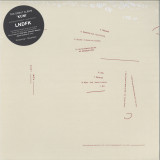
LNDFK (aka Linda Feki) presents her ground-breaking debut album, "Kuni" on Brooklyn-based Bastard Jazz Recordings. Undeniably on the rise after her 2019 breakout performance at Primavera Sound, LNDFK has already caught the attention of Pitchfork, Rolling Stone, Clash Magazine, Noisey, and Brooklyn Vegan (among many others) while being championed by the likes of Gilles Peterson, Tom Ravenscroft, and Jamz Supernova & landing spots on tastemaker playlists like Spotify's "Pollen" and "Fresh Finds."
"Kuni" is a spellbinding exploration of dichotomies: Love & Death (Eros & Thanatos), Flower & Fire, Delicacy & Violence, Poetry & Realism, Purification & Destruction. These opposites are reified in the 10-track LPs multifarious and multifaceted sounds, elegantly meandering through a variety of styles and genres, spearheaded by Linda and features the production wizardry of Darrio Bassolino who co-wrote the album.
"Kuni" opens with "Hana-bi," an ambient instrumental piece that sets the tone for the album. Inspired by the Takeshi Kitano 1997 film of the same name – particularly Joe Hisaishi's stunning soundtrack, as well as Kitano's paintings which appear in the film. "Hana-bi" expresses the dialoguing opposites of flowers and fire, the first of many dichotomous representations throughout the album. "Takeshi" acts as an extension and to "Hana-bi," albeit one of opposing sound, with its driving, highly syncopated drums (which reappear throughout "Kuni") – à la Karriem Riggins, Questlove, or Yussef Dayes – frenetic bass line, and jazz chords. Linda's sultry voice is interspersed, initially jumping around in scat fashion, being triggered as if a sample, before her lyrics come in; her vocals are used like an additional instrument, adding to the song's rich texture. "Kuni" truly hits its stride with the next song, "Smoke – a moon or a button" (its title lifted from the 1959 book by Ruth Krauss and Remy Charlip), which is structured like a jazz standard yet flows into neo-soul territory sonically with those prodigious drums a highlight once again.
LNDFK touches on experimental hip hop in two songs on the record (both of which were released as singles in 2021): "Don't Know I'm Dead or Not (feat. Chester Watson)" – track #4 – and "How Do We Know We're Alive (feat. Pink Siifu)" – track #9. Although they embrace a more hip hop-leaning sound, these songs by no means shy away from the exploratory theme, and feature two of the alt-rap scenes rising stars with Chester Watson and Pink Siifu who offer provocatively impressing verses, combining dense word play with unconventional flows. While these tracks may first appear to be outliers on the album, they are undeniably in tune with "Kuni's" message and sonic palette, acting as testaments to LNDFK's willingness to explore and experiment.
Meanwhile, "Ku" – the third and last single before the album release – furthers the pre-established future soul sound while meandering through nu jazz and left-field electronic. Inspired by the graphic novel and film, "Sin City," and its female assassin protagonist Miho, "Ku" is a musical interpretation of Miho's story, incorporating both her beauty – the first half of the song – and murderous tendencies – the second half – to create a stunning juxtaposition, culminating in an ambient finale that suggests the character's vulnerability and inner peace. The song gracefully bridges the gap between Hiatus Kaiyote-esque songwriting, Dilla's rhythmic syncopation, and Thundercat's instrumental prowess (LNDFK has shared a stage Brainfeeder labelmate Kamasi Washington).
Mixed in throughout "Kuni" are a series of instrumental pieces that function as something akin to an interlude. The aforementioned intro, "Hana-bi," and the album closer "se mi stacco da te, mi strappo tutto:" act as bookends, while "Om" indicates the half-way mark, and "Ktm" sees Jason Lindner add his sound the album. These tracks are the ambient foundation of "Kuni," representing the thematic duality of the work. Clocking in at only 24 minutes, "Kuni" packs an astonishingly diverse array of sounds, styles, and themes, all while showcasing virtuosic musicianship and instrumental prowess.
Appearing on "Hana-bi" and "Ktm," renowned international artists Asa-Chang and Jason Lindner add an additional perspective to "Kuni": Asa-Chang on "Hana-bi," and Jason Lindner on "Ktm." Asa-Chang - famously of the Japanese avant-garde group Asa-Chang & Junray - provides vocals and percussion to an alternate version of the instrumental opener, while the acclaimed keyboardist Jason Lindner offers his synth expertise on "Ktm." These features highlight the spirit of collaboration found in LNDFK's music, always willing to try out new ways of working.
LNDFK is a singer and songwriter, born of two cultures – an Italian mother and Arab father. She grew up in Naples, away from her father, the Sahara, her homeland and traditions, which has helped nourish the desire to rediscover – through art – an engagement to her roots. Her music melts with jazz, neo-soul and hip-hop influences, filtered through her experiences and sensibility.
Her first EP, "Lust Blue," was composed with the artistic production of Dario Bass and released by Feelin' Music; after that she released several singles that saw international radio support (BBC, NTS, Wordwide FM) and gained a massive audience on digital platforms. Together with her band, she toured around Europe, performing alongside such notable artists as Kamasi Washington and Mndsgn, among others. Most recently she toured Italy, and performed at Primavera Sound Festival 2019 in Barcelona.
"Kuni," is due out on NYC label Bastard Jazz Recordings in February, 2022, while the vinyl LP will follow shortly after.
Melodies International are glad to be back, starting off 2022 with their new reissue 12” comprising two big big club soul/disco classic versions of “I’ve Got My Second Wind”. Out late March/early April, vinyl only!
Lead singer Al Johnson and Tom Fauntleroy, two US soul & R&B greats who founded their first band at University in Washington D.C. originally wrote and released the song on Johnson’s first solo independent album “Peaceful” in 1978. They’d later go on to rerecord the track for Johnson’s follow up album on major label CBS “Back For More” which introduced the song to a wider audience and is the version featured here on this 12”
Tata Vega, American singer from New York would go on to cover the track that same year. Starting her career in the 60s featuring in musicals and performing with various groups, she got signed to Motown by Berry Gordy on the spot who was in the audience at a concert one of Vega’s groups was performing at. Tata Vega’s version of “I’ve Got My Second Wind”, in duet with soul singer George Curtis Cameron was originally released on her fourth solo album on Motown, “Givin’ All My Love”. Reissued and now available on loud 12” for the first time!
Remastered from the tapes by the great Matt Colton, pressed in Italy at Mother Tongue, comes in printed inner and outer sleeves, out late March / early April, play loud!
Famed free jazz concert registration of an early New Direction for the Art performance. Recorded in 1971. Old-style Gatefold LP, with rare photographs & extensive liner notes by Alan Cummings.
The performance by Takayanagi Masayuki New Direction for the Art at the Gen’yasai festival on August 14, 1971 was an intense, bruising collision between the radical, anti-establishment politics of the period in Japan and the febrile avant-garde music that had begun to emerge a few years before. The ferocious performance that you can hear here was received with outright hostility by the audience, who responded first with catcalls and later with showers of debris that were hurled at the performers. Takayanagi though described the group’s performance to jazz magazine Swing Journal as a success, “an authentic and realistic depiction of the situation”.
In 1962, Takayanagi, bassist Kanai Hideto and painter Kageyama Isamu went on to form an AACM-style musicians’ collective called the New Century Music Research Institute. Every Friday, members gathered at Gin-Paris, a chanson bar in the fashionable Ginza district of Tokyo, to push the outer limits of jazz creativity.
But the pivotal moment for his music was the creation a new trio version of his New Directions group in August 1969, with the free bassist Yoshizawa Motoharu and a young drummer Toyozumi (Sabu) Yoshisaburō. Experiments eventually led to the creation of two basic frameworks for improvisation that Takayagi referred to as Mass Projection and Gradually Projection.
“La Grima” (tears), the piece that was played at the Gen’yasai festival, is a mass projection and listening to it, you can get a clear sense of what Takayanagi was aiming at. Mass projection involves a dense, speedy and chaotic colouring in of space that destroys the listener’s perception of time, and thus of musical development.
The ferocity of the performance of “La Grima” at the Gen’yasai Festival in Sanrizuka on August 14, 1971 was consciously grounded by Takayanagi in a particular historical moment, ripe with conflict and violence. A month after the festival, on September 16, three policemen would die during struggles at the site. This was the context that the three-day Gen’yasai Festival existed within. The line-up reflected the radical politics of the movement, with leading free jazz musicians like Takayanagi, Abe Kaoru, and Takagi Mototeru appearing alongside radical ur-punkers Zuno Keisatsu, heavy electric blues bands like Blues Creation, and Haino Keiji’s scream-jazz unit Lost Aaraaff.
New Direction for the Arts trio topped the bill on the opening day, playing an aggressive, uncompromising “mass projection” set of polyphonic improvisation. Alongside drummer Hiroshi Yamazaki and saxophonist Kenji Mori, Takayanagi soloed hard and continuously for forty minutes. This was performance as precisely calibrated metaphor: three musicians responding to the demands of the moment with instinctive force and fury, untethered by rules, leaderless yet not rudderless (the direction part of the group’s name was no accident). The piece was entitled La Grima – tears - and the fusion between the palpable anger of the performance and hopeless sadness of its title were also perfectly apt for the situation. This was a fight that the state was always going to win. Yet, by all accounts, the band’s set went down like a fart at a funeral. The band were showered with catcalls and debris throughout, and by chants of “go home” when the music finally came to an end.
However, looking back at the event in the year-end issue of Japan’s leading jazz magazine, Swing Journal, Takayanagi was surprisingly upbeat: New Directions brought a solid political consciousness to our performance and succeeded in an authentic and realistic depiction of the situation. But journalism revealed its superficiality in its inability to penetrate the core of the music. I don’t know much about anyone else, but we at least left behind a competent record.
It’s a fascinating statement in many ways. Perhaps on one-hand it can be read as stubborn, solipsistic and self-justifying, yet in conjunction with his statement in 1971 there are points that guide us towards an understanding of just what Takayanagi intended with his performance at the festival. As Kitazato Yoshiyuki has argued, it becomes an almost religious act, directed at the earth deities of the land. A union of anger, sorrow and malevolence that can be placed nowhere effective, all it can do is find expression and channeling. The forcible land seizures at Narita, the eviction of farmers from land that had been in families for generations, the destruction of communities: none of this can be prevented, not least by an artistic action. All that can be done is an attempt to mark the land itself, to soak it with the combined force of emotions and the volume of the performances, to bury something there that cannot be drowned out, even by the coming roar of jet engines.
The Diva Faïrouz.
Her real name Nouhad Haddad, she was born in the Zokak el Blat district of Beirut. The eldest of a modest Maronite family, she developed a passion for singing very early on. Her parents are too poor to afford the luxury of a radio, so she spends most of her time listening, her ear glued to the wall, to the neighbors. Nouhad quickly memorizes the songs she hears and gives a few samples at parties organized by her school. It was there that she seduced her comrades with her vocal abilities and that she was noticed in 1947 by the composer Mohammed Fleyfel.
The echo of his velvety voice reaches Halim el Roumi, talent scout, renowned singer-songwriter and director of Lebanese Radio, who asks to audition him immediately. Literally fascinated, el Roumi introduced him to the choir of Radio Beirut, baptized it with the name of Faïrouz and became its appointed composer. Then, he introduces her to Assi el Rahbani, a young avant-garde composer who, in the company of his brother Mansour, wishes to renew a Lebanese song under profound Egyptian influence.
The teenager Faïrouz succumbed to the personal charm of Assi, whom she married in 1954, and to that of his compositions (the model couple of Arab song would be separated by the death of their husband in 1986). The heavenly trio causes, from the publication of its first titles, a real musical revolution. Traditionalists howl at sacrilege and distortion while sympathizers of the rejuvenation and modernization of Lebanese folklore, weary of insipid refrains and pale copies, show their enthusiasm.
In 1957, Faïrouz opened the International Festival of Baalbek (a locality mentioned in one of his flagship titles) and sang in the middle of the six columns of the Roman temple. This initial encounter with his audience, who warmly welcomed him, earned him the nickname "seventh column". Faced with this fabulous galloping success, the Rahbanis are stepping up their offensive and courageously playing the card of constant innovation. They wrote for Faïrouz musical sketches, operettas and, from 1962 to 1976, about fifteen sung plays in which she plays the role of a woman in love with Love, the true, the pure, the innocent. , and that of hope. She also appears in a few films but she quickly interrupts her cinematic odyssey.
It is still and always one of the major references of Arabic song and many of its titles, such as "Bint el Chalabia", are hummed as much by the new generation as by the old.
- A1: Double Trouble (Tiësto’s Euro 90S Tribute Remix) - Will Ferrell, My Marianne, Tiësto
- A2: Lion Of Love - Erik Mjönes
- A3: Coolin’ With Da Homies - Savan Kotecha
- A4: Volcano Man - Will Ferrell, My Marianne
- A5: Jaja Ding Dong - Will Ferrell, My Marianne
- A6: In The Mirror - Demi Lovato
- A7: Happy - Will Ferrell, My Marianne
- A8: Song-A-Long: “Believe”, “Ray Of Light”, “Waterloo” , “Ne Partez Pas Sans Moi”, And “I Gotta Feeling” - John Lundvik, Anna Odobescu, Bilal Hassani, Loreen, Jessy Matador, Petra Nielsen, Will Ferrell, Jamala, Erik Mjönes, Rachel Mcadams, Molly Sandén, Elina Nechayeva, Conchita Wurst, Netta, Alana Da Fonseca
- A9: Running With The Wolves - Courtney Jenaé, Adam Grahn
- A10: Fool Moon - Anteros
- B1: Hit My Itch - Antonio Sol, David Loucks, Taylor Lindersmith, Nicole Leonti
- B2: Come And Play (Masquerade) - Petra Nielsen
- B3: Amar Pelos Dois - Salvador Sobral
- B4: Husavik (My Hometown) - Will Ferrell, My Marianne
- B5: Double Trouble (Film Version) - Will Ferrell, My Marianne
- B6: Eurovision Suite - Atli Örvarsson
Eurovision Song Contest: The Story of Fire Saga is a 2020 American musical comedy film directed by David Dobkin and written by Will Ferrell and Andrew Steele. The film follows Icelandic singers Lars Erickssong and Sigrit Ericksdóttir (Ferrell and Rachel McAdams) as they are given the chance to represent their country at the Eurovision Song Contest. Pierce Brosnan, Dan Stevens, and Demi Lovato also star.
“Volcano Man” was the first song released from the album and features vocals from Will Ferrell and Swedish singer Molly Sandén (credited as My Marianne). Towards the middle of the film, as the characters of Lars and Sigrit get fully immersed in the Eurovision magic, the audience is treated to a “Song-A-Long”, producers mash-up iconic pop classics into a celebratory party anthem. Cher transitions into Madonna, which transitions into homages to the aforementioned ABBA and Celine Dion, capped off with a little from The Black Eyed Peas. The cherries on top are vocal cameos from Eurovision champions: Conchita, Netta, Jamala, Loreen, and Alexander Rybak. The album also features the cult hit “Jaja Ding Dong”.
The soundtrack has been nominated for Best Compilation Soundtrack For Visual Media at the upcoming 63rd Annual Grammy Awards.
Eurovision Song Contest: The Story Of Fire Saga is available as a limited edition of 1000 individually numbered copies on “Lion Of Love” pink coloured vinyl. The package includes a 4-page booklet and printed innersleeve with movie stills.
‘Wax Limousine’ is the third solo album from London’s Wesley Gonzalez. Set for release on 18th March via Moshi Moshi Records, the record is the follow up to last year’s critically acclaimed ‘Appalling Human’ and finds the indie stalwart delivering his most personal album to date, via a collection of 12 irresistible pop songs. The announcement arrives alongside the title track, which received its first play from Marc Riley on 6Music and its accompanying video, the second to be revealed from the record following ‘Greater Expectations’, released earlier this year. In support of the release, Gonzalez heads out on tour this November, headlining Electrowerkz on 25th and supporting Young Knives across the country (full dates below).
With its truly eclectic range of musical influences drawing on Gonzalez’s ever developing sonic palette, the album’s uplifting sound juxtaposes its themes, documenting the end of a long-term relationship and the overwhelming experience of dealing with a family member’s cancer diagnosis and subsequent treatment. ‘Wax Limousine’ navigates these hurdles with a razor-sharp wit and often brutally perceptive self-awareness, nowhere more so than on the new single. Inspired by both 'Faithless' by Scritti Politti and Aretha Franklin, it is Gonzalez’s version of an 80’s gospel song and, as he explains, written at a crucial point over the last 12 months
“This was written right after the breakup and cancer diagnosis. It was that early stage of a breakup where you can't really understand what went wrong for you or for your ex. There was resentment for the extreme change I had suddenly found myself in, and I was asking what it really was I did wrong. The title Wax Limousine came from old phrases like "as useless as an ashtray on a motorbike". I was trying to express how useless I felt within every situation that had just arrived at my doorstep.”
Wesley Gonzalez first made a name for himself as the leader of Let's Wrestle, whose tuneful and eccentric punk earned critical accolades and a devoted audience with three albums, including 2011’s Steve Albini produced ‘Nursing Home’. Gonzalez wasted little time forging his own path and quickly assembled a live band for his solo work, expanding upon the guitar-driven music of his former band, with an interesting concoction of classic 70’s pop, soul, and indie rock. Gonzalez released his debut solo record ‘Excellent Musician’ in 2017, then the follow up ‘Appalling Human’ in June 2020 through Moshi Moshi Records.
In the past few years, Clarice Jensen has forged her own path. Recently, her focus has shifted to film scoring, successfully recording work for three feature films between 2020 and 2021. At the same time, Clarice continues to serve as artistic director of the American Contemporary Music Ensemble, while continually collaborating with an impressive array of musicians, such as Max Richter, Björk and Stars of the Lid, to name a few.
That being said, it was her 2019 tape release on Geographic North, »Drone Studies«, that initially caught the attention of a wider audience, with the work showcasing a compelling assembly of deeply immersive drones, and elegantly orchestrated compositions, in which neoclassical elements collide with electric density.
Three years later, the work has lost none of its innovative character and appeal. It also documents a turning point in Clarice's career, one where her classically trained background started to converged and overlap with her interests in improvisational electronics and drone music. As a result, the aptly titled »Drone Studies« shows Clarice at her most exploratory, introspective, and daring, channeling her areas of interest into a collage of richly textured timbers and cello movements of sublime tension.
Now for the first time, the original album can be experienced through an expanded vinyl reissue, mastered by Rafael Anton Irisarri, and carefully adjusted for vinyl by Ian Hawgood. The new reissue also features an additional track by Clarice called »Platonic Solids 2«, which was originally conceived around the same time as »Drone Studies«, and which has now been made available exclusively for the vinyl edition.
We hope that this new reissue will aid in introducing Clarice's groundbreaking »Drone Studies« to a new crowd of listeners through this expanded edition.
After a series of self-released vinyl singles, PM Warson emerged in 2021 with the album "True Story", combing elements of vintage R'n'B and Soul with an authenticity and energy that appealed fans and critics alike. Breakout single "(Don't) Hold Me Down" had surfaced initially among soul collectors, before finding a wider audience, first on a Fred Perry editorial, and then on mainstream European radio. Having tipped the album on his Funk & Soul Show, the BBC's Craig Charles also included the single on his popular "Trunk of Funk" compilation series. Not one to wait around, despite the various challenges of the pandemic, Warson returns, just over a year on, with his second offering: "Dig Deep Repeat".
While his debut record waited in line at the pressing plant, he began trying out ideas at a makeshift studio in an industrial storage space in Stoke Newington. As lockdown was lifted enough to bring in his rhythm section, a new set of tunes started to emerge. Despite a growing thirst following his first release, there was little opportunity to play live, with social and travel restrictions remaining in place on-and-off throughout the year. It became clear that his best way through was to make another LP. He expanded the operation, bringing in players, working to an 8-track recorder to forge a new record. Subsequent sessions at Gizzard Recording also produced a direct-to-tape session for Blues Kitchen.
On "Dig Deep Repeat" he further explores his vocabulary, with elements of 60s rock and soul, shades of New Wave, and some cosmic colors beneath the moody blues. It's a direct and focused LP, presenting an artist on the move, two albums deep, with time to make up for.
- A1: Three King Fishers
- A2: Love Is Blue
- A3: Theme From Valley Of The Dolls
- A4: Bacchanal
- A5: Sunshine Superman
- B1: Some Velvet Morning
- B2: The Look Of Love
- B3: Divided City
- B4: Theme From Valley Of The Dolls (Single Version)
- B5: Sunshine Superman (Single Version)
- B6: The Look Of Love (Single Version)
- B7: Bacchanal (Single Version)
The long-awaited reissue of this rare Eastern and psychedelic Jazz LP by the famous Hungarian guitarist, originally
released in 1968. For the first time and as extended Edition with four bonus tracks: radio version from 1968/69 7”
singles 7”. Deluxe 6-sided Digipak CD with 20 page booklet and Gatefold Vinyl comes with long, exclusively written
inner notes by the famous researcher and biographer Douglas Payne.
“The performances on this LP have a restrained, introspective quality. Szabo’s work is lyrical, rather economical, and
somewhat angular, and his tone is warm and glowing.” – Harvey Pekar, DownBeat
“Gabor Szabo is at the musical zenith of his career. This album could rank as his best to date.” - Billboard
“But for sheer lyrical beauty, few players are in Szabo’s class. His startling use of dissonance is a delight, too, and
time and again he will alter a final phrase just slightly, totally reorienting a familiar tune.” – Alan Heineman, DownBeat
“This is definitely one of my ‘go to’ Gabor albums.” Mike Stax, Ugly Things
"Gabor Szabo’s Bacchanal documents one of the earliest and finest examples of what was then known as “jazz rock.”
Years before this new jazz style evolved – or devolved, according to some – into “fusion,” jazz rock was mostly
fashioned by younger jazz players whose ears were open to the emerging sounds coming out of rock and roll,
especially those of the Beatles and, later, Jimi Hendrix. " - Douglas Payne
After recording four albums for Impulse in 1967, the distinctive guitarist Gabor Szabo cut three strongest records for
the Skye label in 1968-1969: "1969", "Dreams" and "Bacchanal" all of them became a legendary classic. This time
EBALUNGA!!! are rediscovers "Bacchanal". Szabo's regular group of the era is heard on record for the last time:
guitarist Jimmy Stewart, bassist Louis Kabok, drummer Jim Keltner and percussionist Hal Gordon. With the exception
of two Szabo originals, the material is comprised of current pop tunes including two songs by Donovan, "Love Is Blue,"
"The Look of Love" and "Theme from the Valley of the Dolls."
Gabor Szabo was one of the most original guitarists to emerge in the 1960s, mixing his Hungarian folk music heritage
with a deep love of jazz and creating a distinctive, largely self-taught sound.
Born in Budapest, on March 8, 1936, Szabo was inspired by a Roy Rogers cowboy movie to begin playing guitar when
he was 14 and often played in dinner clubs and covert jam sessions while still living in his hometown. He escaped
from his country at age 20 on the eve of the Communist uprising and eventually made his way to America, settling
with his family in California.
He attended Berklee College (1958-1960) and in 1961 joined Chico Hamilton's innovative quintet featuring Charles
Lloyd. Urged by Hamilton, Szabo crafted a most distinctive sound; as agile on intricate, nearly-free runs as he was
able to sound inspired during melodic passages. Szabo left the Hamilton group in 1965 to leave his mark on the popjazz of the Gary McFarland quintet and the energy music of Charles Lloyd's fiery and underrated quartet featuring Ron
Carter and Tony Williams.Szabo initiated a solo career in 1966, recording the exceptional album, Spellbinder, which yielded many inspired
moments and "Gypsy Queen," the song Santana turned into a huge hit in 1970. Szabo formed an innovative quintet
(1967-1969) featuring the brilliant, classically trained guitarist Jimmy Stewart and recorded many notable albums
during the late '60s. The emergence of rock music (especially George Harrison, Eric Clapton, and Jimi Hendrix) found
Szabo experimenting with feedback and more commercially oriented forms of jazz.
During the '70s, Szabo regularly performed along the West Coast, hypnotizing audiences with his enchanting,
spellbinding style. From 1970, he locked into a commercial groove, even though records like Mizrab occasionally
revealed his seamless jazz, pop, Gypsy, Indian, and Asian fusions. Szabo had revisited his homeland several times
during the '70s, finding opportunities to perform brilliantly with native talents. He was hospitalized during his final visit
and died in 1982, just short of his 46th birthday.
Re-mastering by: Ray Staff at Air Mastering, Lyndhurst Hall, London
Charles Tolliver / Music Inc ‘Live In Tokyo 1973’ 180g Vinyl (Pure Pleasure) 5/5
It’s incredible to witness this resurgence of Strata-East’s recordings over the last few years – an appreciation for the label’s ground-breaking approach to music-making, backed by a phenomenal catalogue, continues to attract listeners both new as well as its devoted faithful once again giving rise to its revered and cult-like status. The label’s return to prominence and its subsequent reintroduction to new audiences has been aided, in no small part, by reissues like these – Pure Pleasure as a prime example of a label that lovingly curates these treasured releases, repackaging them for vinyl enthusiasts the world over.
There’s certainly a keen eye that goes into the joyous task of plunging through the Strata-East vaults and although Charles Tolliver and Music Inc’s ‘Live in Tokyo 1973’ isn’t as forgotten a treasure as previous Pure Pleasure reissues of projects like Stanley Cowell’s ‘Such Great Friends’ may be, it’s no less of an incredible project to revisit in this way.
Recorded 7th December 1973, the fifth album by trumpeter Charles Tolliver and his quartet of musicians comprising Music Inc performed a 50-minute set in Tokyo’s Yubinchokin Hall. The performance was initially released through Strata-East the following year and would even be revisited a further time by Mosaic Records in 2005 as part of a three-disc box set – all of this a true testament to the masters of the craft gracing the stage on this night.
Despite the slew of releases with Music Inc, Tolliver boasts an incredible resume that has seen him perform alongside luminaries including Horace Silver, Andrew Hill, Roy Ayers, Gary Bartz amongst others. Born in Jacksonville, Florida, and raised in New York from the age of 10 years old, Tolliver’s inspired contributions to jazz couldn’t be celebrated enough – from his innumerable successes as a musician in his own right to his achievements as co-founder of Strata along with Stanley Cowell. Despite neither having any formal or business training, Tolliver and Cowell’s pioneering efforts positioned them as beacons for being an independent, black-owned success story.
With the Music Inc quartet comprised of bassist Clint Houston, drummer Clifford Barbaro and Stanley Cowell on piano, Tolliver and company present a set of five compositions including tracks from the pen of the trumpeter himself (‘Drought’ and ‘Stretch’) as well as a heralded rendition of ‘Round Midnight’ initially composed by Thelonious Monk. Kicking the project off with the exquisite slow build of ‘Drought’ which starts with Tolliver’s trumpet holding court on centre stage while the glorious crescendo builds around him. ‘Stretch’ eschews in another high-energy number before making way to the sublime lament of ‘Truth’.
‘Live in Tokyo 1973’ is certainly a project that has been afforded its due reverence over the years but once again, an exceptional performance from Charles Tolliver and Music Inc benefits from an unrivalled presentation at the hands of Pure Pleasure. By Imran Mirza/ukvibe.org - est.1993
Bloc Party return with their forthcoming sixth studio album Alpha Games, due 29 April 2022 via Infectious / BMG. Alpha Games is the band’s first studio album since 2016’s Hymns, and the first Bloc Party album written and recorded as this four piece; adding the musicality of Justin Harris (bass) and the unbridled energy and power of Louise Bartle on the drums to capture the spark of their live shows and to deliver the most exciting Bloc Party album yet.
Alpha Games, produced by Nick Launay & Adam Greenspan (Nick Cave, Yeah Yeah Yeahs, IDLES), includes new single Traps, which sees the band returning to the raucous, high-octane sound of their earliest work in an outburst of propulsive post-punk. The album’s 12 tracks veer from the intense and confrontational (Traps, Day Drinker) to melodic and introspective (If We Get Caught, By Any Means Necessary), and marks a new and important chapter in one of music’s most important voices in Kele Okereke and important bands in Bloc Party.
“Alpha Games was conceived on the road, playing in front of amazing crowds on our last tour and then brought to life with the fire and the frustrations of 2020,” says Kele Okereke on Bloc Party’s first new album in seven years.
“We wanted to can what was happening at those massive gigs in 2019, to showcase what Louise can do, what Russell is capable of and most importantly the electricity coming off the audience. We knew that Nick & Adam were the right choice of producers to do that and the result feels like fire in a bottle.”
World Circuit Records has made its reputation by producing some of the finest albums of the past three decades. The label is best known for the Grammy-winning Buena Vista Social Club album (and associated solo artists Ibrahim Ferrer, Omara Portuondo and Rubén González), which is the biggest selling world music album of all time and has contributed to the phenomenal rise in popularity of Cuban, as well as Latin American, music.
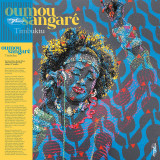
World Circuit is also home to a number of revered African artists including the late Tony Allen (whose Afrobeat-jazz collaboration with Hugh Masekela ‘Rejoice’ was released to great critical acclaim in March 2020), iconic blues pioneer Ali Farka Touré (whose classic Grammy-winning ‘Talking Timbuktu’ album, recorded with Ry Cooder, brought the label early international acclaim), Malian divas and social activists Oumou Sangaré and Fatoumata Diawara, master kora player Toumani Diabaté, the illustrious Orchestra Baobab and musical iconoclast Cheikh Lô.
With 25th Anniversary celebrations of Buena Vista Social Club under way throughout 2021 and 2022, World Circuit are planning further brand new releases in 2022 and beyond, continuing to bring diverse, genre-defying music to a wider audience.
'Life' by the Family of Swede from Oakland was featured on their 2020 'Family Album' long player and was the most popular song on the album with it's prophetic lyrical content of human existence. We believe that the song deserves a wider and audience hence the release on 7" vinyl. The flip features an edit of the song 'Mellow' which was not featured on the album and exclusive to this release.
- A1: Silvestre Montez Y Sus Guantanameros - El Avispón
- A2: Los Orientales De Paramonga - Lobos Al Escape
- A3: Los Destellos - Pasión Oriental
- A4: Grupo Celeste - Viento
- A5: Los Mirlos - Cabalgando Con Ella
- A6: Manzanita Y Su Conjunto - Arre Caballito
- B1: Los Mirlos - El Escape
- B2: Los Wembler's De Iquitos - Un Silbido Amoroso
- B3: Los Destellos - La Ardillita
- B4: Los Beltons - Cumbia Pop
- B5: Los Beta 5 - Beteando
- B6: Los Galax - Lamento De Un Galax
- B7: Aniceto Y Sus Fabulosos - Mi Gran Noche
- C1: Juaneco Y Su Combo - Mujer Hilandera
- C2: Los Sander's De Ñaña - El Tramboyito
- C3: Los Beta 5 - La Danza De La Tortuga
- C4: Los Destellos - Guajira Sicodélica
- C5: Los Orientales De Paramonga - Captura De Lobos
- C6: Los Diablos Rojos - Malambo
- D1: Los Átomos De Paramonga - El Trencito
- D2: Los Beta 5 - La Jorobita
- D3: Los Ecos - Aquí En La Fiesta (I Don't Want To Spoil The Party)
- D4: Los Demonios De Corocochay - La Chichera
- D5: Los Demonios Del Mantaro - Liliana
- D6: Los Mirlos - Lamento En La Selva
Peruvian cumbia, also know as "chicha", brings together tropical music styles from Colombia and Cuba, Western influences such as 60s beat and psychedelic rock, and mixes them with indigenous melodies from the Amazonian jungle and traditional Andean songs. The result is a unique and vibrant style of music which reverberates with life. Vampisoul's compilation includes tracks by the most important bands of the genre. Peruvian cumbia is currently being rediscovered by new audiences and there exists a thriving club and live venue scene in cities like New York, London and Madrid.
36-page booklet with extensive liner notes in English and Spanish plus photos and memorabilia.
There is a tendency within modern electronica to pigeonhole and categorise, to package music into easily digestible formulae. In direct revolt comes Dutch artist Satori and his new album Dreamin’ Colours, released globally April 22nd, 2022, on renowned imprint Crosstown Rebels. Recorded at the esteemed Sonic Vista Studios in Ibiza, the nine-track LP has been greatly anticipated off the back of its proceeding’s singles: Yellow Blue Bus ft. Laska, Lalai ft. Ariana Vafadari and most recently Gin Song.
An ethereal, swirling body of work, Dreamin’ Colours is rich in texture, colour and imagination. Satori stretches himself out through languorous, mystical explorations of both the digital and the analogue elements of music, the result a beautifully conspired collection of world music, steeped in electronic and Balkan roots, and straddling a multitude of genres from blues and indie electronic to opera, folk and beyond.
Colourful Dream begins proceedings, taking the form of a gently-building opener. From the pluck of a guitar string to hypnotic flute-like elements, we soon arrive at the enchanting world of Lalai ft. Ariana Vafadari. Recorded in a four-hundred-year-old water well, it showcases the transcendent sound with which Satori has become best known, meandering through rustling hats and tribal-like drum patterns whilst the dulcet tones of Ariana shimmer softly throughout.
Tuti ft. Kalima takes on a harder edge, with gritty drum patterns opening into melancholic chords early on. Kalima’s vocals add an emotive touch to the piece, paving the way for Moj Dilbere: a euphoric cut that feels tribal and reflective in one.
We land at a similarly ethereal soundscape on The Gin Song ft. Mybaby, as star-like synths pulse alongside punchy percussion before Yellow Blue Bus ft. Laska takes its place. It begins with real-life ambience, made up of sounds recorded live in Ibiza as a bus passes and birds chirp merrily in the background. This swiftly gives way to a guitar-flecked bassline, opening neatly into the vocal offerings of both Satori and Laska.
Troublemaker ft. El Mundo retains an inherent melodic quality, progressing through poignant strings and whispering kick-hat combos. Powerful and poignant, the mesmeric sounds of Ora Dea and Moshe meander subtly into Lonely Boy (Redux) ft. Hugo Oak. The closing saga brings things to a wonderfully subdued finish, rounding off the album on a wholeheartedly calming note.
Although raised in the Netherlands, where commercial electronic music is of course king, on Dreamin’ Colours it is undeniably Satori’s Balkan heritage that layers his production with dreamy, ethereal, Eastern European influences. The album’s overriding voice lies in his exultant celebration of Eastern European music, weaving vibrant threads of its earthy, melodic, rhythmic sounds into his thick musical tapestry. Written during the pandemic and driven by the ache of separated love, the album is, Satori says, his most personal yet.
From holding down an eighteen-month residency at Heart, Ibiza to having nearly four-hundred-thousand listeners on Spotify each month, Satori is a truly worldwide artist in today’s electronic music scene. Having been championed by Damian Lazarus early on in his career, he has emerged as a must-see live act for fans from all corners of the globe. November 2021 marked the start of his USA tour, where his Maktub concept adorned some of the country’s most iconic clubbing institutions, whilst his discography speaks for itself, with a plethora of acclaimed releases on labels including Crosstown Rebels, Sol Selectas and DGTL Records to name a few. As Dreamin’ Colours introduces him to an ever-growing audience, Satori remains one of the most exhilarating, untamed and truly authentic forces in music.
One of the plus points of being in the reissue business, is that some records are easier to license then to try and find a copy of! Sky's The Limit's incredible "Don't Be Afraid" is a case in point.
Released on the tiny J.M.J. label in 1976, this was essentially a private pressing by the group and was more likely to have been given away at gigs rather than sold through record shops. It's incredibly rare - an original these days is around the £750-£800 mark and that's if you're lucky enough to see one. All for good reason though. "Don't Be Afraid" is a prime slice of vintage Jazz-Funk. The vocal side shows off Sky's The Limit's vocal prowess with gorgeous harmonies over an insistent groove.
However, the big attraction on this double-sider, is the incredibly hypnotic instrumental workout with a fantastic Patrick Adam's like free-form synth making the instrumental almost another song. One of the dreamiest Jazz-Funk instrumentals you'll ever hear. As per usual, this will be a very in-demand release from the word go. This can be played on progressive dancefloors everywhere and will almost certainly appeal to different crowds and audiences.
Perhaps one of the most enigmatic of artists on the Rare Soul scene must be Flame N' King aka Oscar Wayne Richardson Jr, who ran his various labels independently since the mid ‘60s. It was a surprise when the group surfaced again with a fantastic uptempo New York dance track in 1976 on the tiny N.Y.C.S. records. "Ho Happy Day" found immediate favour with the Modern Soul crowd, but it took the next 30 years for it to eventually become a Modern Soul anthem and cross over to a wider audience.
These days "Ho Happy Day" can be heard at numerous venues across the world and is a bigger floor-filler now than it was back in the 1970s. We're delighted to finally re-issue this classic on the original N.Y.C.S. imprint and watch it find even more audiences in 2022. An original copy will cost circa £250 these days, so there's already a heavy demand for this long-awaited re-issue
Following on from the incredible success of 2020's "Teasin' You Again", we're proud to follow that up with one of Willie Tee's greatest double-siders and one of his very rarest 45s. Welcome to the incredible "First Taste Of Hurt" backed with "I'm Having So Much Fun".
This record was first discovered in Los Angeles in 1976 primarily for "I'm Having So Much Fun" which drew interest from the Northern Soul crowd, but then "First Taste Of Hurt" started catching on in wider circles. These days "First Taste Of Hurt" is the key side with a truly international audience across several scenes. An original Gatur copy of this will set you back £5000 and even the UK Grapevine reissue will cost you the best part of £100 these days. Expect another across-the-board Willie Tee smash which will match perfectly with "Teasin' You Again" and sell to many audiences.