Felix Lee has created a world for his debut album “Inna Daze“, a kind of post-human environment where the sun never really rises and everything is lit with a burnt out glow. These are survival ballads for the near future, whose vocals, mutated to fit into this setting, drift in a haze of dissociation. Musically, at first glance, it's sparse and minimal but with continued immersion, subtle iridescent-light shadows shimmer around grainy colour, sub bass rises through kicks and snares retooled from their surroundings, not so much refixed as decaying. Felix has been here before in his incarnation as Lexxi, making his debut appearance on Total Freedom’s 2012 “Blasting Voice“ compilation, and as a co-producer on Elysia Crampton's “Demon City“ album. He then went on to release his first instrumental EP “5TARB01” in 2016 on his own imprint Endless. He also runs an NTS show of the same name, along with previously holding raves, cross pollinating and interacting with the vanguard of the electronic underground. The punky crunch of those earlier releases is reflected in tracks like “Smoke” made with long time collaborator and southside resident Kamixlo. These club moments inevitably give way to the vocals, conveying a feeling of loss and renewal. Intended to exist both inside and outside the club, it's an electronic music that at times feels like a skeletal take on shoegaze, solidifying that feeling with the intense rising synths of the album closer “Slow Decay“.
Inna Daze's features include Drain Gang members Ecco2k and Whitearmor, Yayoyanoh, Quantum Natives' Oxhy, and Gaika, as well as Felix making his debut as a vocalist, his voice filtered through effects to give it a slippery, steam-like texture, echoing around the songs, giving them a second skin of sensed abstraction. One of the most thoughtful and interesting debuts of 2019, “Inna Daze“ beckons the listener into its simultaneously toxic and beautiful sound-world. Keeping enough distance to provoke more questions than answers, the album unfolds in a different way on every listen.
Search:the ball
Alexander Pletnev started an entirely new journey under his own name two years ago. Release after release on forward thinking and respected labels like Media Fury, KUMP, Fleeting Wax, SZE and Hard Fist, he has built a solid discography of incredible diversity - from percussive DJ tools to viscous synthetic EBM to dreamy weirdness.
His latest EP titled Voranto Bros is a long awaited return to Le Temps Perdu and the prime example of refined musical storytelling. Title track is a cinematic tale, a sound novel about two migrant brothers hitting the shores of USA in the dawn of XXth century to became vicious gangsters, broken souls ruling the night of NYC. Dusty tape hiss, off kilter percussions and melodies all alternate to later sink under the weight of heavy drums. While Hope They Wont Come Back is a severe instrumental ballad with low drums, talking bass lines and noisy guitar riffs - five minutes inside confused man's mind.
On a remix front, Cocktail D'Amore's head honchos Discodromo strip Voranto Bros down to bear bones to deliver EBM style dance floor burner. And Harold Boué aka Abstraxion aka Lion's Drums of Biologic Records fame delivers menacing remix for Hope They Won't Come Back, a dark & mystic journey, which unwinds slowly and builds up to unexpected climax.
50 years ago, a young Panamanian singer by the name of Ralph Weeks, who a few years prior had cut his teeth in the US music landscape with the group Johnny & The Expressions, self-produced and independently released a record with an absolute monster of a soul ballad called "Something Deep Inside." It was a song that Weeks had come up with on the spot during one of many gigs in the heart of Brooklyn's Prospect Heights, at the time a cultural hub and community for many Panamanians living in the borough. Along with his group, The Telecasters, Weeks often played at a Panamanian-owned club in the neighborhood called 4 Star's (STA4R's) which would independently sponsor the release of the tune on a 7-inch single.
Fast forward to 2019, where a serendipitous meeting between Ralph Weeks and Names You Can Trust turned into a solid formation of musical synchronicity, bonded over a shared belief in musical fusion, a weaving of musical threads that was similarly the foundation of that earlier era in Panama. It's a fusion that has become a constant theme throughout the Names You Can Trust catalog in the last 10 years, connecting the dots from NY, the Caribbean and Latin America. An immediate plan was put into motion: return Weeks to a studio atmosphere that had eluded him in the preceding decades, a vibe and live musical presence that would be reminiscent of his time recording with The Telecasters and The Exciters in Panama.
In the ultimate tribute to Weeks and that foundation, NYCT label mates Combo Lulo unpacked the 50-year old original tune and refashioned it into a timeless rocksteady ballad. It was an opportunity for Weeks to acquaint himself with a new band and a new generation of musical talent. Ultimately, it was an unexpected chance for Weeks to reconnect to the music he wrote one fateful evening in a Brooklyn club. For Combo Lulo, Names You Can Trust, and now the rest of his musical admirers, it's a chance to hear how gracefully Weeks' voice has aged, still silky smooth with those beloved falsetto runs, sweet and rounded like a barrel-aged añejo rum. It's a testament to the timelessness of Weeks' original music, and certainly another reminder of how far and wide even the smallest of musical blips can spread.
Presented as a double-sided bilingual 45 single, both versions of Weeks' classic tune, "Algo Muy Profundo" and "Something Deep Inside," have been formatted in the traditional Jamaican style, skillfully cut live and mixed under the guidance of NYCT and Combo Lulo's talented musicians. It's a tribute to a brilliant record and an unsung architect of Latin American sweet soul, but also a love letter to a very particular NY-Caribbean fusion that theoretically could have happened 50 years ago, depending on the borough you resided in. After all, there was always something deep inside. Comes with NYCT / STA4R'S Company Sleeve & Liner Notes.
Sometimes in soul music history it has seemed that record producers couldn't get enough of a certain backing track, churning out singles after another, chasing for a hit that never came. The latter doesn't really apply to Pratt & Moody's "Lost Lost Lost", which just recently broke 1 million Youtube plays. While stacking up fame in the lowrider soul scene, this beat ballad also caught the ear of the West Coast record collector and dj Mike Noriega, who decided to write fresh lyrics to accompany its instrumental.
"Wondering" that came as a result was brought to life by the singer and industry insider Gerald McCauley, who turned his soul inside out for the performance. In the past McCauley has worked as a musician, A&R man for example in a project involving George Benson and Al Jarreau and even produced a book and documentary on the history of the Fender Rhodes electric piano. Here he slips comfortably into the Cold Diamond & Mink groove, squeezing every drop of heartache on tape.
This version continues the story of "Lost Lost Lost" so gracefully that one can only wonder, if there are more to come. Who will be the next poor soul to sink into this deceivingly blissful bed of roses, filled with piano, drums and slide guitar?
Inland is Vanessa Wagner’s continuation of the exploration of the minimalist composers register to complete the solo continuum of the Statea released in 2016 with the Mexican producer Murcof. Inland highlights a set of pieces, mostly rare or unavailable to date (Moondog, Nico Muhly, William Susman, Bryce Dessner, Gavin Bryars...) and some other well known (Philip Glass, Wim Mertens, Michael Nyman) that Vanessa Wagner performs with her classic pianist background and velvet sound.
Lucie Antunes is a French classically trained drummer and percussionist, inspired by the pioneers of minimalism. Her debut album SERGEÏ is a tour de force of eclectic music that leaves the listener amazed, almost hooked up in Lucie’s magnetic spiral of sounds. The eclecticism that pervades SERGEÏ is shown by Lucie ability to create labyrinths of sounds through the use of unconventional instruments such as marimba, vibraphones, celesta, tubular balls, glockenspiel and ondes Martenot.
Sergei is a statement of freedom. The same childish freedom that we run behind and that we desperately seek. Lucie, with SERGEÏ, achieves her freedom and builds on it, the artist that she is with no compromises but only with the determined ambition to break the boundaries, to shake genres and to make the eyes smile.
A Colourful Storm compiles three tracks from the vaults of R. Campana & D. Reggi, two producers active in the early 2000's who released EP's on First Cut and, more notably, Groovepressure (home to Stopouts, A² and Robin Ball). Three-track EP revived from a period of European underground club music where breaks, electro and tech-house merged into unexpected new forms. Remastered by Mike Grinser at Manmade Mastering, Berlin.
The 9th release on Omena LTD features Steve Mahon aka Embezzlement Society. With appearances on labels such as Banofee Pies, Roots For Bloom Records and Tenderpark, to name but a few, Steven is carving out his own sound, blending rhythms and deep chords with a brilliant touch.
One of the best Soul Ballads out there, end of story, with a price to match if you want the O.G, but why bother, we got the Juice cut straight from the tapes. This is a track I like to drop bang in the middle of the evening out the blue to slow things down before taking it back up, never fails. 500 only, no repress.
Swedish composer and multimedia artist Marcus Fjellström's debut Miasmah release follows two critically acclaimed full length albums on Lampse (2006's 'Gebrauchsmusik' and 2005's 'Exercises In Estrangement'). In addition Marcus has had several commissioned works requested, leading to him working with, among others, the Swedish Royal Ballet, the Scottish Chamber Orchestra, numerous ensembles, soloists and filmmakers including 'Salad Fingers' creator David Firth. Currently based in Berlin, Fjellström's compositions often combine aspects of modern classical composition and arrangement and more avant forms of music, be that acoustic or electronic.
'Schattenspieler' (which translates as 'Shadowplayer') takes the form of eleven compositions which explore ambience and melody, texture and silence. Haunting synth and orchestral instrument-based audio constructions, flowing from one moment to the next - the fleeting ghosts of Fjellström's melodies rise, only to be buried under a claustrophobic clutter of percussion and creaking background noise. These pieces do indeed feel like you're listening to something more implied than obviously stated, as if Fjellström wants only to expose us to the shadow of the music - the implication being perhaps a more terrifying experience than to be confronted outright…listen to 'Schattenspieler' and you may find your mind starts to play tricks on you…
The undeniably Angelo Badalamenti-esque descending synth strings of opening track 'The Disjointed', lay the foundations for Fjellström's 'Schattenspieler' album; music resting somewhere between the unsettling horror soundtracks of Jerry Goldsmith, the elevating melodies of Cliff Martinez, and the subtle audio constructions of Miasmah label mates Kreng and Jacaszek. Marcus' wide ranging abilities in composition and his willingness to let go of accepted form and function makes 'Schattenspieler' a perfect choice of release for the Miasmah label. The suspense laden 'Antichrist Architechture Management', with its harrowing and tense undertones, weaving synth lines and a wash of static hiss and flicker, is a particular standout track. Despite it's a strangely oppressive sound, shafts of light grace 'Schattenspieler'; pieces such as 'Untitled 090616' find gorgeous melodies are boxed in by unsettling arrangements and sparse background ambience. There is a coldness to many of these compositions - not without emotion, but somehow remorseless. 'Schattenspieler' is, for the main part, a defiantly bleak journey.
Vinyl edition ltd. to 300 copies, purple vinyl, incl. 8-page 12" booklet with drawings by Marcus Fjellström.
- A1: Reanimation Music
- A2: War Music, 1St Perspective
- A3: Fairytale Music, 1St Perspective
- A4: Dance Music, 1St Perspective
- A5: Death Music, 1St Perspective
- A6: Dance Music, 2Nd Perspective
- B1: War Music, 2Nd Perspective
- B2: Festivity Music
- B3: Art Music
- B4: Fairytale Music, 2Nd Perspective
- B5: Consolation Music
- B6: War Music, 3Rd Perspective
- B7: Death Music, 2Nd Perspective
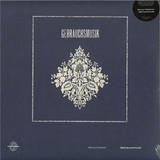
Marcus Fjellström's second album Gebrauchsmusik, initially released a decade and a half ago, is a bizarre sound document that deserves a closer look. Listening back to it now only re-confirms the unique mind of the Swedish composer, who sadly died in September 2017, only 37 years old.
"Gebrauchsmusik" is German for 'Utility Music', and his second excursion into post-classical experimentation is exactly that; thirteen tracks with each one written to suit a certain theme. War, art, festivity, sadness, death and resurrection are all interpreted by Fjellström in his unique style, taking a classical framework and distorting, confusing and manipulating them into far fetching scenarios that is only limited by ones own imagination.
Marcus worked with the Swedish Royal Ballet, the Scottish Chamber Orchestra and Sinfonietta Cracovia as well as numerous other orchestras, ensembles and soloists, artists and filmmakers. He spent the last half year of his life scoring the AMC series The Terror. In his works, Marcus often aimed to combine opposites so that they don’t contradict each other, but rather fuse into a natural, third element - “High” and “low” culture, the naïve and the sophisticated, good and bad taste. These are all elements that comfortably blend together in his works. Musical influences range from electronic acts such as Aphex Twin and Autechre to 20th century composers such as György Ligeti and John Cage. Further influences include impressionist composers Maurice Ravel and Claude Debussy as well as film music composers Bernard Herrmann, Angelo Badalamenti and Zdeněk Liška.
Vinyl edition ltd. to 300 copies, incl. 8-page 12" booklet with drawings by Marcus Fjellström.
Legião Urbana is the self-titled debut album by Brazilian rock band Legião Urbana. It was released on 1 January 1985.
Though the band was not a punk outfit, their first album shows the influence of British punk bands from the same time period, particularly single "Geração Coca-Cola", whose fast-paced acoustic guitar rhythm is heavily reminiscent of Buzzcocks. The album was not successful as whole upon release, but it spawned several hit singles, namely "Será", "Ainda É Cedo" and "Geração Coca-Cola". Synthesizer-laden ballad "Por Enquanto" is one of the band's most covered songs, as is "Será".
In 2007, the Brazilian edition of Rolling Stone magazine elected Legião Urbana as the 40th greatest Brazilian album of all time.
Jatinder Singh Durhailay and David Edren released Tea Notes as a cassette back in April of 2018. London-based Jatinder Singh Durhailay is a painter and student of Indian Classical music. He has trained in both the sitar and the Hindi singing technique, Dhrupad. He also plays two traditional Sikh instruments; the bowed, stringed Dilruba and Taus. Poetic Pastel Press issued his solo debut, The Last Ballad Of Mardana, in 2017. David Edren`s expertise lies with machines and modular synthesis. His Kosmische and New Age-Inspired electronics have featured on numerous cassettes, and compilations, produced for imprints from the current Belgian underground, such as Jj Funhouse, Social Harmony, and Ultra Eczema. These recordings appearing, since the turn of the millennium, either under his own name, or the moniker DSR Lines. Jatinder and David’s collaboration, Tea Notes, is a celebration, a meditation, on both the beverage, and the communal time shared imbibing. The coming together to partake in its ritual. Each of the six tracks represents a different infusion. The opening piece is a tribute to semi-oxidised Oolong, from China`s Wuyi Mountains, with hammered dulcimer-like glissando. Gongs shimmering, gently crashing, as if signaling a change in the weather. A calm of thin, stretched synths and Ai angels introduces Tulsi from India. The Holy Basil of Hinduism, used in the worship of Vishnu, Krishna, and Rama. A traditional herb of Ayurveda and Siddha medicine. Automated arpeggiated sequences raising a vibrating wall of hallucinatory sound. Pairing swooning strings with a racing robot heart. Ceylon is a modern twist on the classical raga. Serving to tell the story of a tea smuggled into Sri Lanka in the 19th century. Plants stolen from South West China, where the brew had been enjoyed since the days of the Shang Dynasty (1766 to 1122 BC). The contraband founding fresh industry in its new home when the indigenous coffee crops failed. Muted organ and sleepy, treated sine wave microtones describe Kava, the Polynesian fireweed root, whose extract serves as both sedative and euphoriant.Shincha are the first young leaves of the season. Picked in Southern Japan and steamed to prevent oxidization, retain their flavour and green / gold colour. Their musical counterpart finds Edren establishing an ecclesiastical drone, while Durhailay`s strings chart an ancient romantic ache. Sonic stars shine. Singing out to the infinite, the universe, before dissolving into knots of Radiophonic Workshop noise.Melodies treated with subtle sustain and delay denote Pu-Ehr, from the Yunnan province. The only truly fermented black tea - made distinctive by the action of bacteria, moulds, and yeasts. Its musical themes hovering in the vapour trails, the atmospheres, they themselves create. Spiraling, soaring, reaching for the heavens, while pretty music box glitches - tiny chimes turned in on themselves. Catching, reflecting, like light at play on fresh running water. (words: Robert Harris)
Athens of the North is very pleased to introduce part two of our nod to the world of library. This time round Greg Foat journeys into the world of synthesis with good friend James Thorpe. This new LP was recorded in the old Bees Studio on the Isle of Wight earlier this year,a special, different piece of work which I was delighted to receive on ¼ inch tape without warning. Greg's output continues to be prolific without ever tiring, he never plays it safe and is always looking forward whilst having an ear for our musical heritage.
Sometimes you know it’s coming, sometimes it’s unexpected, but the time to hang your boots will always come. It’s better when you have total control, even better if you end up on a high (or on a low). After seven years of sonic interferences, calibrating the soundscape of field recordings and helping to recreate the old sounds of today, Gonzo is retiring from music. It’s a goodbye, yeah, and a well-crafted one.
But “Ruído(s)” doesn’t sound like an intentional one. You won’t listen to it on any of the thirteen tracks that scavenge for a solution in the space between ambient music and field recordings. You won’t feel it in the intense connection between human and natural sounds and how sometimes everything oscillates in opposite states of mind. You won’t even read it in the intense, but subtle, humor present in some of the pieces. You won’t, because it’s not an intentional goodbye. You only know it is, because you’re reading this.
What is it then? It’s a celebration of random sound. How can you experience something scholastic and, simultaneously, deeply hilarious? Just think about the amazing triad formed by “A Fuga dos Grilos”, “Degredado(s)” and “Cantiga Parva”. First, you’re blessed with six minutes that build up on the idea that sound can be an intense religious experience, echoes going back and forth to create a fantastic Boiler Room feeling (one populated with raving Gonzos doing dabs in front of the camera) that eventually ends up with a cinematic touch: someone saying the title of the song out loud. One second after we are into the Flying Lizards world, with two songs that shake any pretentious seriousness of the previous track.
Is it serious or not? It is. But it doesn’t have to be. In “Ruído(s)” Gonzo recounts pop/electronic history through field recordings and weird-soft beats. More than compiling his seven-year history, Gonzo is more worried to understand where he’s leaving his ideas, Caretaker style. Speaking of Caretaker, Leyland Kirby should think about reviving Caretaker and do a whole album around “Brilhante Cortejo”: it’s haunted ballroom in a ‘cracked’ nutshell.
As the album progresses and the need to revisit it grows, it becomes clearer(?) that “Ruído(s)” is more than an artist self-indulging on his work – in a very good manner. It’s also a condensed catalog of Portuguese music and its sounds, a circular trip down the memory lane of a forgotten country and its landscape. “Ruído(s)” is a goodbye to a country and its traditions. It does it without sulking but with the most respectful loud laugh - the Gonzo way.
Vegan straight edge outfit SECT unites vocalist Chris Colohan (Cursed, Burning Love, Left For Dead), guitarists James Chang (Catharsis, Undying) and Scott Crouse (Earth Crisis, The Path Of Resistance), bassist Steve Hart (Day Of Suffering), and drummer Andy Hurley (Racetraitor, The Damned Things). .
The result is a caustic, riotous, belligerent style of vile hardcore fed by a boundless well of socio-political vitriol. Blood of Beasts was recorded with Kurt Ballou at GodCity Studios and mastered by Alan Douches at West West Side Music.
.
"Blood of the Beasts" is ten reflections on the myth of progress, the new old tribalism, the single face of all subjugations, the broken promise of automation, love, loss & obsolescence set against the dying light of a better tomorrow.
For their 4th vinyl release, Voyage Funktastique called up one of their close collaborator, Lee Funksta. The Amsterdam resident delivers a stellar double sider, teaming up with L.A. talkbox prodigy B.Bravo on the slapper "The Formula", while on the flip side, he's joining forces with Future Soul Legend Reggie B, delivering a Minneapolis-esque dark ballad "What U Wanna Do".
More like a hidden vault of electronic treasures than your usual prolific label, ICON OF DESIRE suddenly resurfaces for a special limited 12″.
“Origin” features three tracks from the label’s founder Andrea ‘passEnger’ Di Maggio, showcasing abstract synthetic funk, lush electronic ballads and emotional, dystopic electro.
“Origin” was supposed to be the first record of the label, then somehow the plans changed until the label rescued the tracks for this release.
200 copies pressed with hand stamped and numbered sleeve.
FILE UNDER: jazz, modal jazz, spiritual jazz
- 2xLP gatefold- 180g pressing- free download card
With 20 years passing since his first foray into recorded jazz, Nat Birchall now ranks as one of the premier saxophonists of his generation. With several highly acclaimed albums in the locker, he now returns with his most ambitious project yet – a tribute to the legend that is Yusef Lateef.
"The Storyteller - A Musical Tribute to Yusef Lateef"
"When Jazzman Gerald first mentioned to me the idea of doing an album as a tribute to the jazz giant Dr Yusef A. Lateef, my first thought was "Where on earth do I start?" Lateef was such a colossus of music, and his scope so broad, that I couldn't hope to begin to cover his musical universe. He was a master of the tenor saxophone, a master of the flute, a master ballad player, a master blues player. Not to mention his skills as a composer and arranger and of course his exploration and use of musical methodology and instruments from all over the world."
"I've always been a great admirer of Lateef, and the challenge was intriguing, so I decided to give it go. We interpreted some of his own compositions (Brother John, Morning & Ching Miau) as well as some compositions by others that he made his own by careful arrangement and interpretation (Love Theme from Spartacus, Ringo Oiwake). I also wrote some original songs that, while certainly not written in his style, might be said to fall into his very broad approach to music making."
"I also wanted to utilise as many different instruments as possible, something I hadn't explored too much until this album. So it was a nice opportunity to finally get around to playing some of the many small instruments I've collected over the years; the Turkish zurna, the mbira from Zimbabwe, the balaphon from Mali and the arghul from Egypt. We have also tried to use varied time signatures in the music, so we have songs in 3/4, 5/4 and 7/4 time, as well as the standard 4/4."
"Ultimately the best music tells a story to the listener and takes them to places they might not have imagined themselves. Yusef Lateef certainly did that, and as such was a master storyteller."
Nat Birchall
Philippe Cam is the Thomas Pynchon of the electronic music world. Little is known about him and only a couple of pictures have been put online since he emerged on this planet to write his first and only album18 years ago. We know he worked as a sailor and that’s it. If you dig deeper you might find out that he worked as a DJ in the beginning of the 90ies in Brussels and began to study electronic music there and also began to write music for theaters and ballets.
The American distributor Forced Exposure once wrote that about him: „Philipe Cam is a star in his own field. He is among the few people who have succeeded to write hypnotic dance music without a conventional beat still conveying a thrilling, dramatic feel. Cam has developed an accurate, intense and complex formula of modulation-techno. Starting with music similar to Pan Sonic in 1996, his music turned towards a more elegant form of minimal music. Abstract soundtracks lead to an organic form of music, which was equally influenced by modern techno as Wolfgang Voigt's Studio 1/Gas or Basic Channel/Maurizio. Cam's music corresponds heavily to the Cologne scene, where his music is appreciated and played throughout the clubs by the likes of Michael Mayer, Tobias Thomas and various other DJs as well as experimental djs from the A-musik corner.“
So what’s new with his music? Basically the art of filtering is still his passion. Maybe he can be less associated with techno and the themes of his new tracks emerge in a more distinctive pattern? Well that’s hard to say, we would comment the energy of his early techno days in Brussels have returned here in a fierce way with some oft he tracks. The rhythmic movements are classy and stick with you. Whereas other tracks look for a distinctive relaxation of some kind.
We are releasing the album as a double clear vinyl with cover art by Yvette Klein who also designed the cover for his Philippe Cam’s album 18 years ago. Graphics for "Rotterdam" come from Cologne designer Daniela Thiel. We also would like to thank the cultural department of Cologne for supporting us to finance the album and to see the artistic value in this piece of minimalism.
The album kicks off with the mellow and soothing "Cocoa Beach". A Gentle beat that moves like bodies swaying in the hot summer sun. The clock moves a step forward and then a step backward as evolution takes a rest.
"Manga" feels like an acceleration to the moon, the contemplative moments come in spurts and hide in the intervals of the chords which are on the loose. Philippe Cam is the most energetic person in the world when it comes to core activity, this is head banging stuff for the ambient lounge.
"Short Summer" is a heavy and violent recognition. As intensive as it is it knows when to stop and disappear. In the ear and brain of the listeners it leaves an indisputable echo which lingers on for minutes. We suggest not to make a pause but jump directly into "Vermillions Sands".
What can be said about into "Vermillions Sands"? Be prepared some Terry Riley might lure around the corner to offer you some oranges on a silver plate, but don’t eat them. This is luring and beautiful at the same time. Maybe the best ambient track ever written and yet who can ever venture to say that without making a fool of himself. "Vermillions Sands" comes in waves and they could be longer we think.
"Rotterdam" the home of Philippe Cam for a long time but not anymore. He moved away. So that changes the perspective. But when was the track written? "Rotterdam" seems mechanical and rusty and spooky and divided. This arrangement is very different to all the other tracks so far and is almost dub in style but way more fractured. A steady stop and go emerges. But the longer it runs the better it gets. At minute 6 the brain resets itself and tries to grasp what has happened so far, reconstruction as a result of its own phantasmic imagination and hardly true at all, wonderful. Applause included!
Here comes "Bis", a short episode of a track and before we can comment on it, it is already over.
"The Game" is a mule of a track. It has a quiet stubborn sequence that bites and kicks you in the back without any change in near sight. We can hear a voice whispering, which sounds like a miniature vocoder featuring the voice of a child calling out - never stopping. This is treadmill to some extend but starts to breathe towards the middle of the track and slowly changes perspective. In fact there are some changes taking place here which go beyond a sound design that works heavily on the stereo image. Stick with it and the experience will be a great one.
"Ultimate Fly For Halloway" somehow orchestrates how you might feel after you climbed a 8000 meter high mountain and reached the top. A rejoicing off a special kind. Lava for the ears. No cheerleader murder plot sorry.
"Last Track" is a perfect example of a true minimalistic pice of music that manages to make contact with other genres and does this with elegance, determination and a lot of soul.
key selling points: The key selling point is the fact that Philippe Cam once was referred to as one of the main protagonists of the minimal music scene along with Wolfgang Voigt's Studio 1/Gas and Basic Channel/Maurizio. A true artist with a vision which is very rare.
Philippe Cam has picked up the sound he was famous for but has developed it further without selling out to any genre and expectation that rules our daily business.
Exactly this is the strength of the album to create a vivid world of impressions by using instruments in a whole different way than all software developers would suggest.
"Rotterdam" is a piece of art that can set off a firework when you listen to it and it owes nothing to anyone.