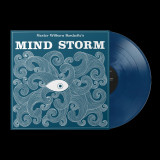
On 1977's Mind Storm, the final album made prior to his emphatic retirement, Burchette employed "pink sound," a phenomenon known in acoustical science to open the mind to thrilling psychic revelations, setting down two side-long pieces forming a reflecting crystal ball for squalls of deep br ain imagery.
Suche:the ball
- A1: James Clay - New Delhi
- A2: Werner-Rosengren Swedish Jazz Quartet - Bombastica
- A3: Sal Nistico Quintet - Ariscene
- B1: Frank Strozier - The Crystal Ball
- B2: Cannonball Adderley Sextet - Primitivo
- B3: Blue Mitchell - Turquoise
- C1: Sonny Red - The Mode
- C2: Clifford Jordan - Sunrise In Mexico
- C3: Lee Konitz Quintet - Thumb Under
- D1: Mccoy Tyner - Valley Of Life
- D2: Joe Henderson - Earth (Feat Alice Coltrane)
Vol.8 PT2[26,01 €]
Vol.9[22,14 €]
Vol.1[23,49 €]
Vol.13 PT2[23,40 €]
Vol.13 PT1[23,49 €]
Vol.15[26,47 €]
Since 2008 our Spiritual Jazz series has presented unlimited horizons. Each album celebrates the rich tradition of African-American songs based on the belief in a higher force than oneself and has also focused on geographical areas, such as Europe or Japan, thus recognizing that these territories have immense cultural riches. Religions, like Islam, whose musical traditions have vivid Arabic and North African resonances, have also been highlighted. The stylistic range of all the above is wide.
Yet historic record labels, from Blue Note and Impulse! to Prestige and Steeplechase, have also featured because their catalogues are musical treasure troves that could not be more relevant to Spiritual Jazz, even though they issued vast amounts of music between the late '30s and present day, that have not been confined to any one school.
Spiritual Jazz 16 is a focus on Riverside and its associated sister labels. Riverside itself was founded in 1953 by Orrin Keepnews and Bill Grauer, and became an important purveyor in that decade and beyond of what would be marketed as of modern jazz. That coinage was itself an amorphous, umbrella term that essentially created a demarcation from the vocabulary of pre-war classic jazz and inter-war big band swing, thus recognizing that improvising artists were breaking new creative ground that would subsequently give rise to a flurry of sub-genres, for example bebop, hard bop, cool, modal and Latin jazz. And it's from this multiplicity of sub-genres that we choose the deepest, most vibrant selections that the vast, pan-generational catalogue of Keepnews & Grauer has to offer
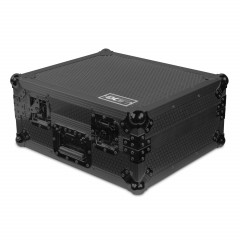
UDG Ultimate Flight Case Multi Format Turntable Black MK2 not only transport your complete set up easily & securely, but also facilitates devices to be setup within minutes. With these premium features incoporated, the UDG Ultimate Flight cases provide premium professional quality in a very stylish modern black colored combination.
Fits: Technics SL-1200MK7, Reloop RP-8000MK2, Denon DJ VL12 Prime, Pioneer PLX-1000, Audio Technica LP120XUSB, or similar size turntables
Specification
Specification
EAN 8718969212762
Color Black
Weight 7,80 kg / 17.16 lbs
Outer Dimensions (W x H x D) 51.1 x 42.6 x 23 cm | 20.1 x 16.7 x 9.1 inch
Inner Dimensions (W x H x D) 45.1 x 38.6 x 7.8 cm | 17.7 x 15.2 x 3.1 inch
Material Heavy duty construction of 9 mm thick plywood
Protection Extra-wide black solid aluminum profiles
Secure stacking due to stackable ball corners
Sturdy construction
Full padded interior keeps controller well-protected
High density diamond embossed EVA foam protective padding
Extra's Laminated in a black finish with a honeycomb/hexagonal "Stage Grip" pattern
Fits Technics SL-1200MK7, SL-1200GR, SL-1200GAE, SL-1210GR
Pioneer PLX-1000
Denon DJ VL12 Prime
Reloop RP-8000MK2, RP-7000MK2, RP-4000MK2, RP-2000MK2, RP-1000MK2
Stanton ST-150, STR8.150, T.52, T.55 USB, T.62, T.92 USB
Vestax PDX-3000
Numark TTX
Audio Technica LP120-USB, LP1240-USB, LP120XUSB, LP1240-USBXP, LP140XP, LP3, LP5, LP7, LPW40WN
American Audio Power Drive 2.2
Mixars LTA, STA
or similar size turntables
And accessories
"The debut longplayer from Washington, DC-based Ekko Astral is a complex mesh of bubblegum noise punk and no-wave art rock that holds an elastic space for the knotty, tangled horrors of living in the imperial core. Their songs thrash with intense, necessary defiance against codified gender-based violence, their distortion and sibilance a direct response to the dangers outside our front doors.
pink balloons opener “head empty blues” specifically bites back against the terrors of the normative male gaze that dominates so much of American culture. Over a post-punk passage that plays call and response with a wall of harsh noise, frontwoman Jael Holzman belts playfully morbid details of the head-exploding anxieties that haunt her daily: “is it bon eye-ver or bon iver? / i don’t care / i’ve got stalkers outside / not going out tonight / gonna sit and take pics / in my underwear.”
Holzman formed the band in 2021 with best friend Liam Hughes (guitar), and eventually rounded out the band’s lineup with Miri Tyler (drums), Guinevere Tully (bass), and Sam Elmore (guitar). Ekko Astral’s local scene quickly welcomed the band for their wildly fierce live presence, emboldened by the community-building message behind the band’s mascara mosh pit brand.
Ultimately, Ekko Astral are here to uplift, a mission exemplified by the frenetic and bewitching pre-release singles “baethoven” and “devorah,” cornerstones of pink balloons in both style and theme. The former serves as a reminder to keep your larger than life personality in a world that wants to downsize you, where the latter proclaims urgent solidarity with missing and murdered people. Such crucial messages of upliftment are the foundation of pink balloons, and, by extension Ekko Astral, whose thrashing debut leaves no stone of solidarity unturned."
‘Empires into Sand’ is the first album of new material from Normil Hawaiians in 40 years. The group first refined their sound during the early 80s, hitting on a pastoral experimentalism that drew on ambient drone, motorik impulse and post-punk pep.
‘Empires into Sand’ came together in the familiar manner of their original three albums, with improvisation and nuance informing the blueprint of the tracks. It was with the official release of this last record ‘Return of the Ranters’ (originally recorded in 1984/85, but then unconsciously shelved) in 2015 by Upset The Rhythm that led to the group reconnecting with the intention of playing music together again. Normil Hawaiians played a launch show for that ‘lost album’ and followed that up with more concerts, including an appearance at Supernormal, a residency at the Edinburgh Festival, gigs at Cafe OTO. They were even chosen by Richard Dawson to perform with him in London.
Throughout this time, Normil Hawaiians revisited their original songs for live performance. However for a group always so interested in evolving their sound, it came as no surprise that they shirked at the idea of a faithful retread. The band pushed their songs into new inventive dimensions, still progressive at core, but now imbued with a cosmic uncanny. A cinematic approach that was always quietly present has come to the fore. The quaint weirdness of folk song, the humanity of communal practice and the group’s ecological mindedness have all found a place in Normil Hawaiians’ current sound world.
When Normil Hawaiians write and record music they prefer to gather in a remote location and live together for a while, such is their communal ethos. Being far-flung across the UK, the Family Hawaii (numbering seven key members) decided to encamp to Tayinloan, a small village on the west coast of the Kintyre peninsula in Scotland. They set up their own studio in an isolated, windswept house overlooking the sea and started the tape rolling. Noel Blanden from the band explains the process neatly: “we set up and began playing, slowly and patiently, allowing the music to take its own shape based on where we were staying and our ongoing friendship. We recorded for days, capturing everything. A lot of new and rich ideas began to emerge”.
Normil Hawaiians took their time to develop these threads at their own pace, allowing songs to mutate and settle over months. Simon Marchant deftly produced and recorded the album whilst also performing in the band, this marked the first time the band had total control of their own sound. The last few years has seen the band reconvene in Herne Bay, Faversham, London and Leith to record new parts, constantly responding to the changing form of these quietly spectral songs of defiance.
‘Empires into Sand’ incorporates samples from old rehearsals and live music into the new finished pieces, this is in continuum with their previous records. Snippets of sound from the static of short wave radio and satellite transmissions also embellish the work. In fact the whole album is stitched together with interludes, creating an acutely immersive 45 minutes. ‘Exiles’ opens the album amid swirling atmospheres, synth flights and recordings of Vilnis Egle (father of Zinta Egle from the band) retelling his experience of fleeing his home in Latvia during Soviet occupation in 1942. George Bikandy also features on this track talking about his flight from Syria in 2014. ‘Ghosts of Ballochroy’ is a winding river of a song featuring a lively discourse in Scots courtesy of Rodney Relax. There’s a commitment to truth telling present across this hopeful album populated with angels, incoming tides, long shadows and the rose-washed sun. “From our broken windscreen, we feel the breeze” soars Guy Smith triumphantly over the driving beat of ‘Waterfalls : Bedford 330’. ‘Big City Sky’ flutters and sparkles with rapid synth runs, tape-looped drums and Jimmy Miller’s commanding vocal. With ‘In The Stone’ Zinta’s melody is deliberately jagged and blunt, exaggerated by octave-layered vocals and interjections from Guy.
This is thought-provoking, boundary-bothering music. Honest in intent, a solidarity of vision. The album’s title is derived from a poem by band member Mark Tyler, who sadly passed away during the recording process and the transience of life is felt heavily throughout. Noel best coins the group’s wish for the album: “we wanted to create an album that acknowledges our history and also reflects who we are today. We remained true to ourselves and we wanted to make something beautiful without removing the edges.” ‘Empires into Sand’ certainly does that, it’s an echo from the past, an echo from the future.
"Remembering is not the opposite of forgetting," Casey MQ sings at the start of Later that day, the day before, or the day before that, his new LP and Ghostly International debut. It's a phrase fittingly misremembered from something the LA-based, Canadian-born composer came upon as he spiraled into unconscious and subconscious-led writing sessions at the piano. Casey's known for his 2020 breakthrough release babycasey, which gave voice to songs seen through the lens of childhood, various film score work and collaborations with artists such as Oklou (who returns here), Eartheater, and Vagabon. His gifts as a producer and songwriter are rooted in textural world-building and the excavation of personal truth. With Later that day... he questions what is true entirely, understanding our mind's tendency to bend and project onto pictures of the past. Across vivid, baroque pop balladry, Casey MQ reorients his recording project and point of view under the notion that memories are malleable. All the joy, pain, love, and loss housed within remembrance is open to interpretation and deconstruction, which he does deftly, with curiosity and complete artistic freedom. "It's a memory album," Casey puts it simply, winding up for the deeper unpacking, "and it might be a breakup album, too_there are more questions than answers." Engaging his dreams and sitting with sheet music at his newly acquired piano, he looked to new and old inspirations including the works of Claude Debussy, Joni Mitchell, and Joe Hisaishi's beloved Studio Ghibli film scores. "Since I was young, I always wanted to write a piano album." babycasey's studied electronic sound isn't wholly abandoned on Later that day... instead, it comes through like an atmosphere, giving Casey's more spacious, minimal arrangements a distinct luster and sheen. The textures and tones shift from song to song as if mirroring the way our minds constantly recontextualize, remember, and forget. Cathartic opener "Grey Gardens" _ its title derived from a dream abstractly related to the Toronto restaurant, but not the 1975 film, which he cites as another coincidental false memory _ presents the record's plaintive, haunted feeling. "Even if not reading into lyrics, sonically I wanted it to feel like you're being pulled into a universe. Not fantasy or otherworldly per se, something more tangible, of the body and mind," Casey says. "Hearing it back, I realized this track was the key to unlocking it." His tender falsetto hovers above ambient washes and echoed keys, each word falling carefully in the crevices. "Asleep At The Wheel" unfolds on arpeggiated synth before a burst of symphonic color; the synth returns inverted to harmonize with the outro, "I love a car crash, I love a story, I love a memory, I swear it's real..." Casey leans into digital imagination on the warm, introspective "Me I Think I Found It." Subdued, stuttered percussion underscores the singer as he cycles through pixelated imagery _ screenshots, smiles, streetlights _ searching for higher meaning through love. Built on ascendent chord distortions, "Dying Til I'm Born" gives the record one of its boldest pulses of emotion. The back half stretches out; "Is This Only Water" is sparse and foggy, "Baby Voice" is intimate and desperate for something to remain. "Words For Love" grooves on guitar, and "Tennisman9" aches in heartbreak. French musician Marylou Mayniel, aka Oklou, appears as the collection's only guest for the closing duet, "The Make Believe," a bright and buoyant send-off that gives Later that day... both a sense of resolve and cyclical-motion. "We are young, under the sun," they sing together, a parting image brimming with lightness.
Are you ready to hear the best live band of the early ‘70s? We at Real Gone Music have been privileged and proud to release Fanny’s four classic Reprise albums, each a tuneful testament as to why they were the first all- female band signed to a major label. But there has always been a piece missing from the Fanny fable; for while the band hooked up with big-time producers and engineers like Richard Perry, Todd Rundgren, and Geoff Emerick, their studio albums never really were able to capture the sheer excitement they could generate in concert. However, buried away in a vault thousands of miles away from their Los Angeles base there long lay a recording that could make the Fanny myth a reality, one that could provide the emphatic answer as to why these four ladies were the hottest ticket on the Sunset Strip during the early ‘70s. Now, over 50 years later, its time—and their time—has come. Live on Beat-Club ’71-’72 presents the two sets Fanny recorded for the German TV show, mastered by Mike Milchner of Sonic Vision from hi-res mono files taken from the original videotape. Aside from the incendiary and incredibly tight performances, what immediately becomes apparent is that all four of these women were powerhouses in her own right. June Millington’s stringbending Les Paul wizardry, her sister Jean’s driving, melodic bass lines and Janis Joplin-esque vocals, Nickey Barclay’s intricate yet somehow rocking keyboard work, and Alice de Buhr’s precise, piston-like drumming punctuated by ferocious fills—put together Fanny was an overwhelming display of talent, Yet somehow, as these shows reveal, live they were greater than the sum of their parts. That’s why getting these recordings released has long been a crusade for Alice, and why June tells the story in the accompanying liner notes (which feature contributions from June, Jean, and Alice) that the engineer who was assigned to do the transfers of all the Beat-Club material told her that their material was the best in the vault, better even than Hendrix. We are releasing this invaluable archival recording on juicy peach vinyl and on CD with a bonus track of the soundcheck to boot. Essential for a full understanding of ‘70s rock!
Los York's became the epitome of Peruvian garage sound. 'Abrázame' features a beat-influenced go-go twang guitar garage psych tone throughout and the unique voice of the iconic frontman of the band resulting an irresistible Latin garage hipshaker! Set the dance floor on fire with this first time 45 reissue of the Latin garage anthem 'Abrázame'! Los York's became the epitome of Peruvian garage sound, and the kings of the multi-group concerts which teenagers flocked to on Saturday and Sunday mornings in Lima's main movie theaters. The group was in tune with the youth from popular districts who were gradually turning morning concerts into dynamic gigs as the fashion for solo rock-ballads waned and garage sounds by bands like Los Shain's, Los Derbys, Los Juniors, Los Flyers and, of course, Los York's took over. Their supportive fans would follow them to every gig. After releasing their three first singles on MAG, featuring covers of popular hits, it took them a year to turn their ideas into songs for their first LP that was successfully released at Christmas in 1967. The original version of 'Abrázame' was included in this album and also released as a single. Although clearly based on Don Covay & The Goodtimers' r&b classic 'Mercy Mercy', the recording features a beat influenced go-go twang guitar garage psych tone throughout and the unique voice of the iconic frontman of the band, Pablo Luna, resulting an irresistible Latin garage hipshaker! A rawer, fuzzier version of the same song was released one year later and renamed as 'Abrázame baby'. How cool and handy is to have both versions together on one single artifact? Set the dance floor on fire with this first time 45 reissue of the Latin garage anthem 'Abrázame'!
Multi-talented US punk, Jeff Rosenstock releases fourth album on Specialist Subject Records (UK /EU) & Polyvinyl (Worldwide)! NO DREAM comes at a time of unparalleled chaos and confusion, division and despair, the depths of which would have been impossible to predict when much of it was being written over the course of the last few years. And yet the record feels prescient, unexpectedly and uniquely suited for this moment. Newly settled in Los Angeles after a lifetime on the East Coast (namely Brooklyn by way of Long Island), Rosenstock recorded NO DREAM with Jack Shirley (Deafheaven, Hard Girls, Joyce Manor) at Oakland's Atomic Garden, and even took on mixing duties alongside Shirley for the first time. Opting to stay off the computer "even more than usual" and record to tape with outboard gear, the result is a lived-in sound that gives each song its own individual voice and organic energy. After building a cult following with the acerbic ska-punk of the Arrogant Sons of Bitches and DIY heroics of Bomb the Music Industry!, Rosenstock's first proper solo record, 2015's We Cool?, was a step into uncharted territory, fully untethered from genre and expectation. Followed by 2016's WORRY. and the surprise New Year's Day launch of POST- in the early hours of 2018, Rosenstock was facing down that least punk of opportunities: a career playing music. Having taken some time away from his work as a solo artist to recalibrate and reset over the last year, Rosenstock stayed busy playing alongside Mikey Erg, recording and touring with the Bruce Lee Band, releasing a Neil Young covers record with frequent collaborator Laura Stevenson, reissuing two of his own out-of-print early albums, compiling a live album which was recorded during a run of four sold-out shows at Bowery Ballroom, making a 76 page photo book, and scoring over 80 episodes of the Cartoon Network series Craig of the Creek. In fully returning to his own voice, it's no surprise that Rosenstock's output has never been more eclectic, reflected across NO DREAM's 13 songs.
Instant appeal for fans of quirky downtempo soul. Instrumental version on the B-side. Fresh collaboration between singular vocalist/musician and the Cold Diamond & Mink band. The musical Oroza bloodline just seems to keep pumping soul music from Finland for the world to hear. Now it's time for Franka to step to the stage and she comes out from the gate swinging with a sublime beat ballad "Indecision". Backed by the faithful Timmion Records house band Cold Diamond & Mink, Franka's folk jazzy vocal stylings seep into fertile ground. Building from the intro drum roll to the rootsy organ-led groove Franka jumps on the beat with a Joni Mitchell twist and it's immediately apparent that we're in for a treat. The vocal glides effortlessly between firm and delicate tones, perfectly underlining the lyrical content. Franka takes her time in setting the scene, holding a veil before the fact that we're actually listening to a love song. If all you're looking for is good songwriting with a soulful backbeat, with Franka Oroza you'll get a unique voice to boot. This is another sure shot for all fans of independent downtempo soul from the Timmion stable.
GATECREEPER return with their highly anticipated new album Deserted. The new album, a furious mix of snarling guitars and driving, rhythmic pummeling takes death metal from its 80's Floridian roots and 90's Swedish expansion straight into the here and now. In fact, the vanguard of death metal in 2019 can be found under Arizona’s searing sun. That’s where GATECREEPER members—Chase Mason, guitarist Eric Wagner, bassist Sean Mears, drummer Matt Arrebollo and guitarist Nate Garrett—make their homes. Of course, the band nodded to their scorching home state with the title of their 2016 full-length debut, Sonoran Depravation. The theme continues on Deserted, which boasts songs like “Sweltering Madness,” “Boiled Over” and the double-meaning title track. You can hear the results on “From The Ashes,” a crushing cut primed for the European festival circuit. Over on side two, “Boiled Over” fuses classic BOLT THROWER with the pulverizing power grooves of sludge titans CROWBAR. Album closer “Absence Of Light” upholds GATECREEPER's tradition of finishing their records with a deathly doom dirge. Deserted was recorded at Homewrecker Studios in Tucson, where GATECREEPER co-produced the album with engineer Ryan Bram. CONVERGE guitarist Kurt Ballou handled the mix at Godcity in Salem, MA, and Brad Boatright mastered the album at Audiosiege in Portland, OR. Deserted’s hallucinatory cover art was created by Brad Moore (TOMB MOLD, MORPHEUS DESCENDS, and more.)
Instant appeal for fans of quirky downtempo soul. Instrumental version on the B-side. Fresh collaboration between singular vocalist/musician and the Cold Diamond & Mink band. The musical Oroza bloodline just seems to keep pumping soul music from Finland for the world to hear. Now it's time for Franka to step to the stage and she comes out from the gate swinging with a sublime beat ballad "Indecision". Backed by the faithful Timmion Records house band Cold Diamond & Mink, Franka's folk jazzy vocal stylings seep into fertile ground. Building from the intro drum roll to the rootsy organ-led groove Franka jumps on the beat with a Joni Mitchell twist and it's immediately apparent that we're in for a treat. The vocal glides effortlessly between firm and delicate tones, perfectly underlining the lyrical content. Franka takes her time in setting the scene, holding a veil before the fact that we're actually listening to a love song. If all you're looking for is good songwriting with a soulful backbeat, with Franka Oroza you'll get a unique voice to boot. This is another sure shot for all fans of independent downtempo soul from the Timmion stable.
Fifth solo album from saxophonist Julius Gabriel. Born out of new sounds and rhythms that the musician discovered during the pandemic, “Tales From The Subterranean” embodies a blend of primal energy and inventive exploration across twelve tracks. The opener “Time Riding” sets the mood, a tearing rhythm that sounds like a frenetic tap dance. It invites you to move and when you get to “Footworks” you are all set up, merging saxophone finger percussion with a continuous siren whisper emanating from the instrument, provoking euphoria, fear and satisfaction all at once. Moving on, you start to understand the sense of discovery behind the record and the needs Julius had, like to construct a saxophone with drone capabilities and closer to an idea of natural sound. “Hailing From The Mountains” has a meditative tone; “Westward At Sundown” feels like a ballad. Born from darkness yet radiating with newfound light, “Tales from the Subterranean“ stands as a testament to the resilience of artistic expression. It is primal music.
All music composed and performed by Julius Gabriel on electroacoustic tenor saxophone and twin soprano saxophone.
The drone-pop consternations of Ekin Fil emerge through vaporous tone and forlorn, distant song, as if plucked from a dream. These exist on their own accord, moving with their own internal logic of an emotion heaviness that belies any the passing observation of this as mere shoegazing ambience. Her songs, her compositions find themselves adjacent the fragmented etherealization of Elisabeth Fraser's voice from a forgotten scene of a particular David Lynch film, as a ASMR trigger for Proustian recollection. Something profound. Something hidden. Something desolately sad.
The Helen Scarsdale Agency has had the pleasure of witnessing Ekin's continued development, maturation, and growth as a composer, having released now seven of her magnificent, under-the-radar gems. Her slow burning, dejected ballads continue to draw from the deep well of sorrow, with varying frequencies and intensities of bitter light poking through. Loves lost. A world broken. All is not hopeless, but there is a considerable amount of shit to wade through.
Sleepwalkers embraces a familiar set of metaphors in her work, that of narcolepsy and the unsettled state of existence between sleep and being awake. But she stretches herself with a set of compositions that run parallel to the work of Tim Hecker as in the gravitation soft-noise of "Stone Cold" or to a slow motion serialism that punctuates the ambient crawl of her ambitious "Gone Gone." Recommended for fans of Grouper, Rafael Anton Irisarri, A.C. Marias, and Carla dal Forno.
Roy Orbison was an American singer, songwriter, and musician known for his impassioned singing style, complex song structures, and dark, emotional ballads. Orbison's music is mostly in the rock genre and his most successful periods were in the early 1960s and the late 1980s. He performed with minimal motion and in black clothes, matching his dyed black hair and dark sunglasses. His nicknames were "The Caruso of Rock" and "The Big O". On this LP a selection of his 60’s hit singles including "Only the Lonely", "Running Scared", the ballad "Crying", the swinging rockabilly "Ooby Dooby", and "The Great Pretender”.
Piezo’s Ansia imprint returns for its 8th outing ‘Imago’, inviting Berlin’s Unity Vega for a split EP of uptempo dancefloor explorations that mine that fertile space between footwork, drum’n’bass, dancehall and experimental contemporary club sonics.
Unity Vega leads the charge with ‘No Body No Mind’ - a waterlogged darkside skanker that sits somewhere between the half-stepping jungle of the UVB-76 crew and the kind of oddball dancehall deconstructions often peddled by Ansia's extended circles.
Appearing again on the flip, Vega ups his pace on ‘Set Em’ - a nervy footwork roller that pits gully hip-hop vocal chops against rising bell chords and washes of delayed noise. Think Rashad dubbed out by Kevin Martin and you’re in the right ballpark.
Label head Piezo’s contributions continue along similar lines, albeit in his own unmistakable style. ‘Toughts, Heavy’ also finds the midpoint between d’n’b and dembow, this time marrying a gurgling acid bassline with a euphoric-turned-paranoiac trance lead.
Up next, ‘Nel Frigo Ah’ strips things back to the raw, banging basics: a looping vocal call pinned down by a frenetic crescendoing drum workout.
To close, Japanese legend Foodman delivers a pots-and-pans rework of ‘Thoughts, Heavy’ - a true curveball tool for the adventurous DJs amongst us.
The three howler monkeys of NAG strike back with their new album “Boys Of Europe”. They debuted in 2016 as an exciting breath of basement-smelling air. Their moderately original alternative cement mix of the filthiest of punk, the truest of hardcore, and the evilest of metal was very well received. Then came gigs and tours around Europe before the second album was released in 2018, to raving reviews too, ofcourse. But then there was dead silence. For a long time. Now they’ve finally returned from obscurity with ten perfected and mighty NAG-tunes. Indeed, their hair has become greyer, and their backs hurt more, but there’s no way you can tell. They still sound like raging Norwegian teenagers. NAG has stayed true to their original ‘crust punk black metal’ formula, and the new album is as hard, fast and straightforward as anything they’ve done before.
Arizona newcomers GATECREEPER deliver 9 monstrous songs of low-end, old-school death metal on their savage debut album 'Sonoran Depravation'. Having devastated the underground since their formation less than three years ago, GATECREEPER now unleash their first full-length, produced by Ryan Bram at Homewrecker Studios and mixed by Kurt Ballou (Converge, Nails, Black Breath) at God City Studios. 'Sonoran Depravation' tears and chugs through 30+ minutes of crusty, doom-soaked death metal at its most infectious and uncompromising with a massive sound that calls to mind the classic Swedish buzz-saw attack of Dismember and Grave mixed with the impeccable groove of Obituary and Bolt Thrower. GATECREEPER are here to carry the death metal torch for a new generation and will shake your foundation to its core.