The history of house and disco music is full of gospel soul singers creating anthemic bangers for the dance floor. Annie and the Caldwells, a family band from West Point, Mississippi, are the latest to join their ranks.
============================
This collection — featuring remixes from musclecars, Kornél Kovács, Alexis Taylor (of Hot Chip), and disco icons Nicky Siano and Justin Strauss — follows the release of the Caldwells’ wildly acclaimed debut Can’t Lose My (Soul) Luaka Bop, Spring 2025. Hailed as “a masterpiece” by The Guardian (★★★★★), and one of the best albums of the year by The Times, MOJO, UNCUT, and The Economist, Can’t Lose My (Soul) found fans all over the world — like Sir Elton John, who called their album “A great, great record that I insist you go out and buy.”
“I was blown away when I first heard the original version of ‘Wrong’,” says Kornel Kovács, whose remix of “Wrong” appears on this white label. “Deborah’s voice floored me, as well as the background singers. One of the greatest vocal performances I’ve heard, let alone worked with. The result is a club-ready take that’s become a highlight in my recent DJ sets.”
Producers Brandon Weems and Craig Handfield (of musclecars) had a similar experience when they heard the family for the first time: “We quickly fell in love with the groovy bassline and the choir vocals,” said Craig. “We thought it’d be fitting to put our own spin on it, while paying homage to those jive brothers from Tulsa. The uplifting keys paired with the punch of the drums, rounded out with that organ…this one is sure to bring a joyful noise!”
Annie Caldwell and her family have since performed in more than twenty countries on four continents, and recently made a star turn on the UK's preeminent music program Later... with Jools Holland. They’re hitting the road again in 2026. Watch this space.
[c] Wrong [You Dropped a Bomb] - Extended Wooden Dance Floor Mix (A Nicky Siano Production) 6:48
Buscar:the best of house
UILTY RAZORS, BONA FIDE PUNKS.
Writings on the topic that go off in all directions, mind-numbing lectures given by academics, and testimonies, most of them heavily doctored, from those who “lived through that era”: so many people today fantasize about the early days of punk in our country… This blessed moment when no one had yet thought of flaunting a ridiculous green mohawk, taking Sid Vicious as a hero, or – even worse – making the so-called alternative scene both festive and boorish. There was no such thing in 1976 or 1977, when it wasn’t easy to get hold of the first 45s by the Pistols or the Clash. Few people were aware of what was happening on the fringes of the fringes at the time. Malcolm McLaren was virtually unknown, and having short hair made you seem strange. Who knew then that rock music, which had taken a very bad turn since the early 1970s, would once again become an essential element of liberation? That, thanks to short and fast songs, it would once again rediscover that primitive, social side that was so hated by older generations? Who knew that, besides a few loners who read the music press (it was even better if they read it in English) and frequented the right record stores? Many of these formed bands, because it was impossible to do otherwise. We quickly went from listening to the Velvet Underground to trying to play the Stooges’ intros. It’s a somewhat collective story, even though there weren’t many people to start it.
The Guilty Razors were among those who took part in this initial upheaval in Paris. They were far from being the worst. They had something special and even released a single that was well above the national average. They also had enough songs to fill an album, the one you’re holding. In everyone’s opinion, they were definitely not among the punk impostors that followed in their wake. They were, at least, genuine and credible.
Guilty Razors, Parisian punk band (1975-1978). To understand something about their somewhat linear but very energetic sound, we might need to talk about the context in which it was born and, more broadly, recall the boredom (a theme that would become capital in punk songs) coupled with the desire to blow everything off, which were the basis for the formation of bands playing a rejuvenated rock music ; about the passion for a few records by the Kinks or the early Who, by the Stooges, by the Velvet mostly, which set you apart from the crowd.
And of course, we should remember this new wave, which was promoted by a few articles in the specialized press and some cutting-edge record stores, coming from New York or London, whose small but powerful influence could be felt in Paris and in a handful of isolated places in the provinces, lulled to sleep by so many appalling things, from Tangerine Dream to President Giscard d’Estaing...
In 1975-76, French music was, as almost always, in a sorry state ; it was still dominated by Johnny Hallyday and Sylvie Vartan. Local rock music was also rather bleak, apart from Bijou and Little Bob who tried to revive this small scene with poorly sound-engineered gigs played to almost no one.
In the working class suburbs at the time, it was mainly hard rock music played to 11 that helped people forget about their gruelling shifts at the factory. Here and there, on the outskirts of major cities, you still could find a few rockers with sideburns wearing black armbands since the death of Gene Vincent, but it wasn’t a proper mass movement, just a source of real danger to anyone they came across who wasn't like them. In August 1976, a festival unlike any other took place in Mont-de-Marsan – the First European Punk Festival as the poster said – with almost as many people on stage as in the audience. Yet, on that day, a quasi historical event happened, when, under the blazing afternoon sun, a band of unknowns called The Damned made an unprecedented noise in the arena, reminiscent of the chaotic Stooges in their early adolescence. They were the first genuine punk band to perform in our country: from then on, anything was possible, almost anything seemed permissible.
It makes sense that the four+1 members of Guilty Razors, who initially amplified acoustic guitars with crappy tape recorder microphones, would adopt punk music (pronounced paink in French) naturally and instinctively, since it combines liberating noise with speed of execution and – crucially – a very healthy sense of rebellion (the protesters of May 1968 proclaimed, and it was even a slogan, that they weren’t against old people, but against what had made them grow old. In the mid-1970s, it seemed normal and obvious that old people should now ALSO be targeted!!!).
At the time, the desire to fight back, and break down authority and apathy, was either red or black, often taking the form of leafleting, tumultuous general assemblies in the schoolyard, and massive or shabby demonstrations, most of the time overflowing with an exciting vitality that sometimes turned into fights with the riot police. Indeed, soon after the end of the Vietnam War and following Pinochet’s coup in Chile, all over France, Trotskyist and anarcho-libertarian fervour was firmly entrenched among parts of the educated youth population, who were equally rebellious and troublemakers whenever they had the chance. It should also be noted that when the single "Anarchy in the UK" was first heard, even though not many of us had access to it, both the title and its explosive sound immediately resonated with some of those troublemakers crying out for ANARCHY!!! Meanwhile, the left-wing majority still equated punks with reckless young neo-Nazis. Of course, the widely circulated photos in the mainstream press of Siouxsie Sioux with her swastikas didn’t necessarily help to win over the theorists of the Great Revolution. It took Joe Strummer to introduce The Clash as an anti-racist, anti-fascist and anti-ignorance band for the rejection of old-school revolutionaries to fade a little.
The Lycée Jean-Baptiste Say at Porte d’Auteuil, despite being located in the very posh and very exclusive 16th arrondissement of Paris, didn’t escape these "committed" upheavals, which doubled as the perfect outlet for the less timid members of this generation.
“Back then, politics were fun,” says Tristam Nada, who studied there and went on to become Guilty Razors’ frontman. “Jean-Baptiste was the leftist high-school in the neighbourhood. When the far right guys from the GUD came down there, the Communist League guys from elsewhere helped us fight them off.”
Anything that could challenge authority was fair game and of course, strikes for just about any reason would lead to increasingly frequent truancy (with a definitive farewell to education that would soon follow). Tristam Nada spent his 10th and 11th unfinished grades with José Perez, who had come from Spain, where his father, a janitor, had been sentenced to death by Franco. “José steered my tastes towards solid acts such as The Who. Like most teenagers, I had previously absorbed just about everything that came my way, from Yes to Led Zeppelin to Genesis. I was exploring… And then one day, he told me that he and his brother Carlos wanted to start a rock band.” The Perez brothers already played guitar. “Of course, they were Spanish!”, jokes their singer. “Then, somewhat reluctantly, José took up the bass and we were soon joined by Jano – who called himself Jano Homicid – who took up the rhythm guitar.” Several drummers would later join this core of not easily intimidated young guys who didn’t let adversity get the better of them.
The first rehearsals of the newly named Guilty Razors took place in the bedroom of a Perez aunt. There, the three rookies tried to cover a few standards, songs that often were an integral part of their lives. During a first, short gig, in front of a bewildered audience of tough old-school rockers, they launched into a clunky version of the Velvet Underground's “Heroin”. Challenge or recklessness? A bit of both, probably… And then, step by step, their limited repertoire expanded as they decided to write their own songs, sung in a not always very accurate or academic English, but who cared about proper grammar or the right vocabulary, since what truly mattered was to make the words sound as good as possible while playing very, very fast music? And spitting out those words in a language that left no doubt as to what it conveyed mattered as well.
Trying their hand a the kind of rock music disliked by most of the neighbourhood, making noise, being fiercely provocative: they still belonged to a tiny clique who, at this very moment, had chosen to impose this difference. And there were very few places in France or elsewhere, where one could witness the first stirrings of something that wasn’t a trend yet, let alone a movement.
In the provinces, in late 1976 or early 1977, there couldn’t be more than thirty record stores that were a bit more discerning than average, where you could hear this new kind of short-haired rock music called “punk”. The old clientele, who previously had no problem coming in to buy the latest McCartney or Aerosmith LP, now felt a little less comfortable there…
In Paris, these enlightened places were quite rare and often located nex to what would become the Forum des Halles, a big shopping mall. Between three aging sex workers, a couple of second-hand clothes shops, sellers of hippie paraphernalia and small fashion designers, the good word was loudly spread in two pioneering places – propagators of what was still only a new underground movement. Historically, the first one was the Open Market, a kind of poorly, but tastefully stocked cave. Speakers blasted out the sound of sixties garage bands from the Nuggets compilation (a crucial reference for José Perez) or the badly dressed English kids of Eddie and the Hot Rods. This black-painted den was opened a few years earlier by Marc Zermati, a character who wasn’t always in a sunny disposition, but always quite radical in his (good) choices and his opinions. He founded the independent label Skydog and was one of the promoters of the Mont-de-Marsan punk festivals. Not far from there was Harry Cover, another store more in tune with the new New York scene, which was amply covered in the house fanzine, Rock News (even though it was in it that the photos of the Sex Pistols were first published in France).
It was a favorite hang-out of the Perez brothers and Tristam Nada, as the latter explained. “It’s at Harry Cover’s that we first heard the Pistols and Clash’s 45s, and after that, we decided to start writing our first songs. If they could do it, so could we!”
The sonic shocks that were “Anarchy in the UK”, “White Riot” or the Buzzcocks’s EP, “Spiral Scratch” – which Guilty Razors' sound is reminiscent of – were soon to be amplified by an unparalleled visual shock. In April 1977, right after the release of their first LP, The Clash performed at the Palais des Glaces in Paris, during a punk night organised by Marc Zermati. For many who were there, it was the gig of a lifetime…
Of course, Guilty Razors and Tristam were in the audience: “That concert was fabulous… We Parisian punks were almost all dressed in black and white, with white shirts, skinny leather ties, bikers jackets or light jackets, etc. The Clash, on the other hand, wore colourful clothes. Well, the next day, at the Gibus, you’d spot everyone who had been at this concert, but they weren’t wearing anything black, they were all wearing colours.”
It makes sense to mention the Gibus club, as Guilty Razors often played there (sometimes in front of a hostile audience). It was also the only place in Paris that regularly scheduled new Parisian or Anglo-Saxon acts, such as Generation X, Siouxsie and the Banshees, the Slits, and Johnny Thunders who would become a kind of messed-up mascot for the venue. A little later, in 1978, the Rose Bonbon – formerly the Nashville – also attracted nightly owls in search of electric thrills… In 1977, the iconic but not necessarily excellent Asphalt Jungle often played at the Gibus, sometimes sharing the bill with Metal Urbain, the only band whose aura would later transcend the French borders (“I saw them as the French Sex Pistols,” said Geoff Travis, head of their British label Rough Trade). Already established in this small scene, Metal Urbain helped the young and restless Guilty Razors who had just arrived. Guitarist for Metal Urbain Hermann Schwartz remembers it: “They were younger than us, we were a bit like their mentors even if it’s too strong a word… At least they were credible. We thought they were good, and they had good songs which reminded of the Buzzcocks that I liked a lot. But at some point, they started hanging out with the Hells Angels. That’s when we stopped following them.”
The break-up was mutual, since, Guilty Razors, for their part, were shocked when they saw a fringe element of the audience at Metal Urbain concerts who repeatedly shouted “Sieg Heil” and gave Nazi salutes. These provocations, even still minor (the bulk of the skinhead crowd would later make their presence felt during concerts), weren’t really to the liking of the Perez brothers, whose anti-fascist convictions were firmly rooted. Some things are non-negotiable.
A few months earlier (in July 1978), Guilty Razors had nevertheless opened very successfully for Metal Urbain at the Bus Palladium, a more traditonally old-school rock night-club. But, as was sometimes the case back then, the night turned into a mass brawl when suburban rockers came to “beat up punks”.
Back then, Parisian nights weren’t always sweet and serene.
So, after opening as best as they could for The Jam (their sound having been ruined by the PA system), our local heroes were – once again – met outside by a horde of greasers out to get them. “Thankfully,” says Tristam, “we were with our roadies, motorless bikers who acted as a protective barrier. We were chased in the neighbouring streets and the whole thing ended in front of a bar, with the owner coming out with a rifle…”
Although Tristam and the Perez brothers narrowly escaped various, potentially bloody, incidents, they weren’t completely innocent of wrongdoing either. They still find amusing their mugging of two strangers in the street for example (“We were broke and we simply wanted to buy tickets for the Heartbreakers concert that night,” says Tristam). It so happened that their victims were two key figures in the rock business at the time: radio presenter Alain Manneval and music publisher Philippe Constantin. They filed a complaint and sought monetary compensation, but somehow the band’s manager, the skilful but very controversial Alexis, managed to get the complaint withdrawn and Guilty Razors ended up signing with Constantin with a substantial advance.
They also signed with Polydor and the label released in 1978 their only three-track 45, featuring “I Don't Wanna be A Rich”, “Hurts and Noises” and “Provocate” (songs that exuded perpetual rebellion and an unquenchable desire for “class” confrontation). It was a very good record, but due to a lack of promotion (radio stations didn’t play French artists singing in English), it didn’t sell very well. Only 800 copies were allegedly sold and the rest of the stock was pulped… Initially, the three tracks were to be included on a LP that never came to be, since they were dropped by Polydor (“Let’s say we sometimes caused a ruckus in their offices!” laughs Tristam.) In order to perfect the long-awaited LP, the band recorded demos of other tracks. There was a cover of Pink Floyd's “Lucifer Sam” from the Syd Barrett era – proof of an enduring love for the sixties’ greats –, “Wake Up” a hangover tale and “Bad Heart” about the Baader-Meinhof gang, whose actions had a profound impact on the era and on a generation seeking extreme dissent... On the album you’re now discovering, you can also hear five previously unreleased tracks recorded a bit later during an extended and freezing stay in Madrid, in a makeshift studio with the invaluable help of a drummer also acting as sound engineer. He was both an enthusiastic old hippie and a proper whizz at sound engineering. Here too, certain influences from the fifties and sixties (Link Wray, the Troggs) are more than obvious in the band’s music.
Shortly after a final stormy and rather barbaric (on the audience’s side) “Punk night” at the Olympia in June 1978, Tristam left the band ; his bandmates continued without him for a short while.
But like most pioneering punk bands of the era, Guilty Razors eventually split up for good after three years (besides once in Spain, they’d only played in Paris). The reason for ceasing business activities were more or less the same for everyone: there were no venues outside one’s small circuit to play this kind of rock music, which was still frightening, unknown, or of little interest to most people. The chances of recording an LP were virtually null, since major labels were only signing unoriginal but reassuring sub-Téléphone clones, and the smaller ones were only interested in progressive rock or French chanson for youth clubs. And what about self-production? No one in our small safety-pinned world had thought about it yet. There wasn’t enough money to embark on that sort of venture anyway.
So yes, the early days of punk in France were truly No Future!
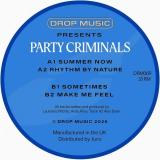
Andy Riley and Laurence Ritchie are Drop Music accomplices; the label is a natural outgrowth of yesterday's Smokescreen Soundsystem, one of the oldest and best-respected UK crews to endorse (sound-) systems thinking. In case you don't know, remember this: they were early 90s stanchions of pressure-dropping UK house heft. This rare new reissue hears their hugely in-demand classic 'Party Criminals' return to fully swung, gatecrashing mode. And boy, weren't they just. Their fourth ever Drop drop, it first surfaced in 1999 and turned instant heads for its crystalline blue inners and jacking, organic sound, not to mention a cameo from fellow duo Freaked on the A2's 'Rhythm By Nature'. But our favourite has to be 'Make Me Feel' with its soft-attack hi-hats, not tapping, more fizzing like metal leaf against the ears.
- A1: Ismistik - Cassis
- A2: Acid Junkies Feat The Doctor - Telephone Terror
- B1: China White - No Sell Out
- B2: Greyhawk - Epidemic Future
- B3: Storm - Takaru
- C1: Hexagone Burning - Trash Floor
- C2: Phase Phorce - Complications
- D1: Mike Dearborn - Raw Acid
- D2: Mike Dearborn - Outer Limits (Trance Mixx)
- D2: Planet Gong - Eight Miles High
- E1: Group X - Tranze X
- E2: Edge Of Motion - La Orilla
- F1: Random Xs - Aftermath V1 2
- F2: Miss Djax - Killer Train
Delsin is pleased to announce an extensive compilation series combing through the catalogue of landmark Dutch techno label Djax-Up-Beats. The series, curated by Rush Hour co-founder Christiaan Macdonald, launches with a look at the label's legacy in the development of acid music through the 90s. In total, this first entry in the Djax-Up-Beats 1990-2005 series comprises 20 tracks, presented as a main triple-vinyl album plus two additional 12" EPs. The compilation also features all-new illustrations from Alan Oldham, the Detroit-rooted visual artist who gave Djax-Up-Beats a distinctive visual identity from very early on, and design by Lost Communication. Each volume of the series also features liner notes from music journalist Oli Warwick. Crucially, every track featured on the series has been carefully mastered by Johanz Westerman, bringing the best out of tracks that often had very little post-production treatment before they were originally pressed to wax. Volume 1 - The Acid Trip focuses on an area the label is best known for - acid house and techno. After the pioneering breakthroughs Chicago-based producers made with the Roland TB-303 in the late 1980s, acid music creation was starting to become more widespread when Djax-Up started in late 1990. The rebellious, rave-ready sound was an instant draw for label founder Miss Djax, and so her label ended up reflecting the development of acid as it spread from the Chicago roots across the world. Volume 1 - The Acid Trip looks at the diverse approaches to acid taken by artists on Djax-Up. Tracks on the compilation include an early outing from Ludovic 'St Germain' Navarre and Bjorn Torske's Ismistik alias, as well as Dutch pioneers such as Edge Of Motion, Spasms, Random XS and Acid Junkies, and Chicago heavyweights Mike Dearborn and Gene Hunt. With five more, equally extensive, volumes to come in this series, Djax-Up-Beats 1990-2005 is a thorough exploration of a true totem of techno culture - a renegade label that operated on its own terms and carried surprises and slammers in equal measure.
REPRESS ON SILVER VINYL . COMES WITH 24”x24” POSTER + DOWNLOAD CARD + GATEFOLD JACKET.
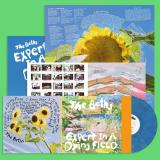
On The Beths’ album Expert In A Dying Field, Elizabeth Stokes’ songwriting positions her somewhere between being a novelist and a documentarian. The songs collected here are autobiographical, but they’re also character sketches of relationships – platonic, familial, romantic – and more importantly, their aftermaths. The shapes and ghosts left in absences. The question that hangs in the air: what do you do with how intimately versed you’ve become in a person, once they’re gone from your life?
The third LP from the New Zealand quartet houses 12 jewels of tight, guitar-heavy songs that worm their way into your head, an incandescent collision of power-pop and skuzz. With Expert, The Beths wanted to make an album meant to be experienced live, for both the listeners and themselves. They wanted it to be fun -- to hear, to play -- in spite of the prickling anxiety throughout the lyrics, the fear of change and struggle to cope.
Most of Expert was recorded at guitarist Jonathan Pearce’s studio on Karangahape Road in Tāmaki Makaurau, Aotearoa (Auckland, New Zealand) -- and sometimes in the building's cavernous stairwell at 1am -- toward the end of 2021, until they were interrupted by a four-month national lockdown. They traded notes remotely for months, songwriting from afar and fleshing out the arrangements alone, the first time they’d written together in such a way. The following February, The Beths left the country for the first time in more than two years to tour across the US, and simultaneously finish mixing the album on the road. That latter half felt more collaborative, with everyone on-hand to trade notes in real time, until it all culminated in a chaotic three-day studio mad-dash in Los Angeles. There, Expert finally became the record they were hearing in their heads.
Expert is an extension of the same skuzzy palette the band has built across their catalog, pop hooks embedded in incisive indie rock. The album’s title track “Expert In A Dying Field” introduces the thesis for the record: “How does it feel to be an expert in a dying field? How do you know it’s over when you can’t let go?” Stokes asks. “Love is learned over time ‘til you’re an expert in a dying field.”
The rest is a capsule of The Beths’ most electrifying and exciting output, a sonic spectrum: “Your Side” is a forlorn and sincere love song, emotive; while “Silence is Golden,” with its propulsive drum line and stop-start staccato of a guitar line winding up and down, is one of the band’s sharpest and most driving. “When You Know You Know” skews a bit groovier, pure pop and a natural addition to the band’s live set. “Knees Deep” was written last minute, but yields one of the best guitar lines on Expert. There’s a certain chaos across the 12 tracks, the palpable joy of playing music with long-time friends colliding with the raw nerves of pain.
Stokes strings it all together through her singular songwriting lens, earnest and self-effacing, zeroing in on the granules of doubt and how they snowball. Did I do the wrong thing? Or did you? And are we still good people at the end of it? She isn’t interested in villains, but instead interested in just telling the story. That insecurity and thoughtfulness, translated into universality and understanding, has been the guiding light of The Beths’ output since 2016. In the face of pain, there’s no dwelling on internal anguish - instead, through The Beths’ music, our shortcomings are met with acceptance. And Expert In A Dying Field is the most tactile that tenderness has been.
- A1: Bells
- A2: St James St
- A3: The House Shook
- A4: Stay Six
- B1: Roulette Systems
- B2: Warms Chords
- B3: Own Up
- B4: We Lie Half The Time
- B5: Unorchestrated (Live)
Hey Mercedes, formed from members of Chicago's emo band Braid, included Bob Nanna, Todd Bell, Mark Dawursk, and Damon Atkinson. They debuted with a self-titled EP (Polyvinyl Records) in 2000 and followed up with extensive touring and two full-length albums: Everynight Fire Works (Vagrant Records) in 2001 and Loses Control (Vagrant Records) in 2003 along with two more EP's: The Weekend EP (Vagrant Records) in 2002 and Unorchestrated (Grand Theft Autumn) in 2004. Dawursk left at the end of 2001 and was replaced by Mike Shumaker. After 359 shows and several releases, the band disbanded in April 2005. They played a reunion show in 2007 and celebrated the 15th anniversary of Everynight Fire Works in 2016 with a remastered re-release and select live performances. In 2025, the band made their live comeback at Las Vegas's second annual Best Friends Forever Festival and will continue to play more shows in 2026. In March 2026, Polyvinyl Records will reissue the complete Hey Mercedes catalog. With several EPs and albums currently out of print, this release will provide Hey Mercedes fans with the opportunity to obtain every Hey Mercedes title on vinyl.
- 1: A Mess Of Stress
- 2: Best Laid Plans
- 3: Square House
- 4: Quietly
- 5: Space Age Eyes
- 6: Naked Air
- 7: Horrorful Heights
- 8: Draining The Bad Blood
- 9: A Simple Pursuit
- 10: Hiss
- 1: Animal Man
- 2: Romany Blue
- 3: Mossbacks' Dream
- 4: Buffaloed
- 5: Silver Insects
- 6: That's Your Lot
- 7: Sink Estate
- 8: I'm Gonna Drag You Into My World
- 9: Momma Bear
- 10: King For A Day
Horrorful Heights markiert ein beeindruckendes neues Kapitel im umfangreichen Werk von The Bevis Frond und zeigt die anhaltende Kreativität des Songwriters, Gitarristen und Frontmanns Nick Saloman, der nun in ein weiteres Jahrzehnt als Musiker startet. Seit langem als eine der markantesten Stimmen des britischen Underground-Rock etabliert, verfeinert Saloman weiterhin die Qualitäten der Band aus melodischer Psychedelia, drahtigen Gitarrenepen und Songwriter-Kunst. Einer der zugänglichsten Einstiege in die Bevis Frond Welt, welcher alle Stärken zu einem zusammenhängenden, lebendigen Ganzen vereint. Das Album bewegt sich fließend zwischen klirrendem Psych-Pop, schweren Gitarrenriffs und pastoralen Träumereien. Die Bandbreite des Albums ist groß, aber klar definiert. "Draining The Bad Blood" erinnert an den klassischen Bevis-Frond-Stil melodisch inspirierten Gitarrenpops der 60er Jahre, "Space Age Eyes", eine prägnante neunminütige Odyssee, verweist auf die transzendentalen Erkundungen des elektrischen Miles Davis der 70er Jahre. Der mit Sitar untermalte Titeltrack driftet durch rauchige Psychedelia mit mehrstimmigem Gesang und geschichteten Tablas - ein liebevolles Echo der Headshop-Mystik, mit der Saloman während der gesamten Bandgeschichte gespielt hat. An anderer Stelle verbindet "Mossback's Dream" lysergische Leads mit der treibenden Energie des amerikanischen Hardcore der 80er Jahre und schafft so einen Hybrid, der sowohl zeitlos als auch völlig eigenständig wirkt. Weitere Höhepunkte sind das von den Byrds beeinflusste "Buffaloed", das wirbelnde "Silver Insects" und "That's Your Lot", ein rasantes Feuerwerk melancholischer Euphorie und einer der unmittelbarsten Songs des Albums. Obwohl eklektisch anmutend, ist es ein fokussiertes Porträt von The Bevis Frond im Jahr 2025 - vital, melodisch und frei von Nostalgie. Saloman beschreibt die Sammlung ganz einfach: die besten Songs, die er in den letzten Jahren geschrieben hat, entstanden ohne Zwang und ganz instinktiv. Das Ergebnis ist ein Höhepunkt aus der Spätphase einer der stillsten einflussreichen Underground-Bands Großbritanniens.
"Nachpressung als limitiertes gelbes Vinyl! Das in Australien gegründete und in LA ansässige Duo VOWWS meldet sich mit „I'll Fill Your House With an Army“ zurück, ihrem bisher ehrgeizigsten und am besten umgesetzten Album.
„I'll Fill Your House With an Army“ (2025) ist der Höhepunkt der kühnsten Ideen der Band und zeigt, wie VOWWS, bestehend aus Rizz und Matt James, ihre charakteristische „Death-Pop“-Ästhetik vertiefen: eine genreübergreifende Mischung aus industrieller Elektronik, alternativem Rock, cineastischer Nostalgie und melancholischer Pop-Sensibilität. Co-produziert von Billy Howerdel (A Perfect Circle) und mit Gastauftritten von Josh Freese (A Perfect Circle, NIN, Devo) und James „Munky“ Shaffer (KORN), ist das Album eine Reise durch Sehnsucht, Entfremdung und die surreale Schönheit des Chaos.
Dieses Album zeigt perfekt die dynamische Bandbreite des Duos: von verzerrter Intimität bis hin zu gewaltigen Klangattacken reflektieren VOWWS ein zerbrochenes Spiegelbild des modernen Zustands - romantisch, aber desillusioniert, viszeral und doch seltsam erhebend.
Nachdem sie sich durch Touren mit den Deftones, Twin Temple und Poppy bereits eine kultige Fangemeinde erspielt haben und gerade einen bahnbrechenden Live-Auftritt im Golden Gate Park neben System of a Down und The Mars Volta absolviert haben, sind VOWWS bereit, ihr Vermächtnis mit dieser Veröffentlichung zu zementieren. Ihr künstlerisches Ethos, unbeugsam in einer Ära der Wegwerfbarkeit, hat sie auch in die Welt der High Fashion geführt, wo sie mit Comme des Garçons, Givenchy und Byredo zusammenarbeiten.
- A1: From A Drop, A Flame
- A2: Korunim
- A3: One Drop Remained
- A4: The Veiled Sea
- A5: Unpredictable And Joyous
- B1: Swimming In The Sky
- B2: The Lost Grotto
- B3: Ghost Warriors
- C1: Shadow Tundra
- C2: Dreaming Of Vengeance
- C3: A City Where None Live
- D1: Sacred River
- D2: The Perfect Wave
- D3: Sword Of The Sea
Austin Wintory's third collaboration with Giant Squid and creative director Matt Nava, Sword of the Sea, sees it's soundtrack surfing onto vinyl.
The music has been specially mastered for vinyl and is pressed to heavyweight discs, all housed in a deluxe gatefold sleeve. Illustrator Elaine Lee has created original artwork that flows from the front cover to the back.
Nominated for Best Score Soundtrack for Video Games and Other Interactive Media at the 68th GRAMMY Awards, Sword of the Sea is an aesthetic successor to thatgamecompany's Journey and Giant Squid's ABZÛ and The Pathless. The album is a mellifluous musical adventure, resonating immaculately with the game's sense of flow and beauty. Piano, synthesisers, strings, wind, and choral elements collaborate with, and cascade over one another, always with a purposeful momentum. Harmonically, pieces carry the listener along a gently undulating path, punctuated by unexpected chord changes - jagged little musical surprises that hint at the game's deeper mysteries.
Soloists Kristin 'Field of Reeds' Naigus, Tina Guo, Malukah, Paul Cartwright and Tom Strahle elevate the score with soaring performances, while ensembles including London Voices and the Phoenix Boys Choir enrich the texture of the enveloping compositions.
This fresh release fuses house, trance, and garage, showcasing the young producer's remarkable versatility and skill. Nomad seamlessly combines the best elements of modern house with a nostalgic, old-school touch-featuring euphoric breakdowns, captivating vocals, and thumping basslines. It's a standout creation that marks a pivotal moment in Shuffa's rising career in the dance music scene.
- Sun Dogs
- Sanibel
- Farewell, Little Island
- Misty Step
- Dragline Silk
- Hinterland I
- Hinterland Ii
- Hinterland Iii
- Well Of The World
- Under The Oak
- Bronze Age
- Valley Of Blue
Cassette[14,08 €]
Als Green-House beschäftigen sich die Musiker Olive Ardizoni und Michael Flanagan mit der menschlichen Natur und der natürlichen Welt durch eine freudige, dynamische Synthese. Frequenzen und Ausdrucksformen werden wie eine Tarnung übereinandergelegt, und ihr tiefgründiger, vielschichtiger kollaborativer Prozess beginnt mit einem der beiden Künstler: Ardizoni fühlt sich oft zur Melodie hingezogen, Flanagan zur Harmonie. Die Kraft liegt darin, wie ihre Ideen sich miteinander verflechten und eine Tiefe erreichen, die größer ist als die Summe ihrer Teile. Für ihre erste LP mit ihrem neuen Label Ghostly International entwickelt Green-House ihre lebendige Instrumentalmusik weiter und verfeinert sie mit unbekannten, genreübergreifenden Freiheiten und Bewegungen, einer aktiveren, perkussiven und emotionsgeladenen Energie, die durch fließende Klänge und weitläufige Aussichten gekennzeichnet ist. Hinterlands stimmt sich mit einer rebellischen, radikalen Aufrichtigkeit auf die Schönheit der Welt ein. Seit 2020 hat das Duo mit einer Reihe von gefeierten Veröffentlichungen über das einflussreiche Label Leaving Records aus Los Angeles seine Neugier für Umgebungen weiterverfolgt und nach organischen und fernen Räumen gesucht. Seit 2020 hat das Duo in einer Reihe von gefeierten Veröffentlichungen über das wegweisende Label Leaving Records aus Los Angeles seine Neugierde für Umgebungen ausgelebt und mit organischen und synthetischen Instrumenten, hochauflösendem Sounddesign und ,eigenwilligen Melodien, die mit der geduldigen und methodischen Hand eines Gärtners geschaffen wurden", wie Pitchfork schreibt, nach inneren und fernen Räumen gesucht. Green-House lässt sich nicht eindeutig in eine einzige Kategorie einordnen. Ardizoni und Flanagan stehen nicht im Einklang mit New-Age-Ideologien oder Spiritualität, und das Label ,Ambient" erscheint angesichts all dessen, was in ihren Songs vor sich geht, zunehmend eingeschränkt. Green-House lässt sich nicht eindeutig einer einzigen Kategorie zuordnen. Ardizoni und Flanagan stehen nicht im Einklang mit New-Age-Ideologien oder Spiritualität, und die Bezeichnung ,Ambient" erscheint zunehmend eingeschränkt angesichts all dessen, was in ihren Songs vor sich geht, die auf ihrem neuen Album eher in Richtung IDM oder sogar moderne Klassik tendieren. Was bleibt, ist ein offenes Gefühl des Staunens, ,die Idee, bestimmte Emotionen in der Musik zu legitimieren, die in der Kunst oft nicht ernst genommen werden, wie Glück und Freude", sagt Ardizoni, dessen eklektische Persönlichkeit auch ohne Texte zum Vorschein kommt.
- 1: Spirit Salient
- 2: The Rebel Duke
- 3: Wrecked
- 4: Valiant Heart
- 5: Prince Of This World
- 6: Time Is Out Of
- 7: Joint
- 8: My Throbbing Heart Shall Rock Thee
- 9: Ours Is The Fall
- 10: Sweet Remembrencer
- 11: I Am Thine
It's hard to fathom Martin Bramah's trajectory from his beginnings as a guitarist/writer behind two crazily influential postpunk albums - The Fall's Live At The Witch Trials and Blue Orchids' The Greatest Hit (Money Mountain) (vocalist on the latter too, of course) - then nearly three decades of sporadic-at-best activity, offering releases just frequently enough to remind fans of his peculiar brilliance . . . before another stay in the void. Chalk it up to what you want - Mark E. Smith's utter usurpation of The Fall, his split from partner Una Baines after Blue Orchids' debut, the vague collapse of rash experimentation in `underground' music as early `80s nu-pop and American college rock diluted any real spirit, a few failed attempts at working with with Mark again . . . and maybe just life getting in the way. A sense of lost opportunities isn't tough to justify. Inasmuch as Martin was originally the singer for The Fall - Mark began as guitarist but couldn't play! - and given that the group's mythology was born in an era before that gang of Mancunian misfits had even thought of playing, it's high irony that 49 years after The Fall began, Martin has both become wildly prolific and the leader of a band with more rights of inheritance to The Fall's credibility than any other living person could justify . . .yet the band isn't remarkable for that as it is for the range and wealth extent of their collective powers and talent: two great and original guitarists, three of the UK's most daringly-skilled drummers, a genuine bass legend, and a brilliant spare Blue Orchid guitarist. Four albums in, the HOUSE Of ALL is getting ambitious, with each album a subtle improvement on the last, forging a path away from their pasts without denying a thing. Inklings differs from the first three for not having being largely improvised at first, with sounds, rhythm, groove and melody later forged into songs. They rehearsed! They had fun doing it! They're going on an extended tour! There were even extra tracks! We'll leave it to fans and critics to sit down and analyse the specifics of it all, but Steve, Si, Pete, Phil, Karl and Martin have made a bold and powerful album unlike any other you'll hear in 2026 . . . stately, majestic, bold and worthy of a group of real survivors. In perverse form, the album will be officially announced and preceded by a song not on the album!
Igor Tamerlan is a stranger in his own land. Born in 1954 the Hague and spent most formative years in Paris, Igor suddenly had the urge to relocate to Bali in 1986. “I want to settle in Indonesia and marry a local girl,” he told his sister shortly before flying out.
His next journey would be as audacious as his time in the Fifth Republic. Born from a prominent Indonesian expatriate family in Paris with ties to Indonesia’s first prime minister Sutan Sjahrir, Igor earned a degree in architecture at Ecole nationale supe´rieure d’architecture de Paris-La Villette.
He could have been a brilliant architect or a political scientist (he was accepted to Sciences Po), but his passion for music distracted him from his academic works. He was after all named after Russian composer Igor Stravinsky.
During his brief stint at Sciences Po, Igor spent most of times hanging out at recording studios and rub shoulders with the likes of singer-songwriter Jean-Jacques Goldman and Michel Polnaref. He had a brief encounter with The Rolling Stones at the Cha^teau de Thoiry studio in the early 1970s.
But Igor’s musical education and his occidental eyes appeared to be ill-suited for Indonesia. His first record, titled Langkah Pertama (First Step) on the mainstream label Musica was met with a shrug and was a commercial dud. An experimental record blending the influence of Spanish motifs, Francophile production and a whiff of hip hop and ska was seen by critics as being too alien. His sarcasm-laden lyrics and his biting critique of excessive materialism among the upper tier of Indonesia’s nouveau riche in the album was met with confusion from the audience. He was just too far ahead of his time.
He left the label Musica – or may had been dropped – soon after Langkah Pertama and decided to go independent. He then relocated to Bali and set up a state-of-the-art recording studio in Sanur, across the street from Southeast Asia’s first boutique hotel where luminaries like Mick Jagger, David Bowie, Sting, Yoko Ono and Ringo Starr stayed for their holiday.
From the studio, Igor recording everything from the sounds waterfalls, geckos, minibuses to motorized rickshaw and mix them with hip hop, jazz, electronica, dub and Balinese gamelan. A visionary, Igor was the first musician to use MIDI, which started to be available globally in the early 1980s.
On paper, songs like “Bali Vanilli” should not work, a mish mash of disparate elements mentioned above, sung in three languages, Balinese, English and Bahasa Indonesia while tackling the subject of overtourism. The song was also the first to introduce rap to an unsuspecting audience. But for some strange reason “Bali Vanilli” became a sensation and overnight Igor became household name. And in 1987, long before overtourism was an issue, Igor broached the subject to a national audience in Indonesia on the possible destruction of nature and culture from tourism.
Ever an iconoclast, Igor decided to step out of the limelight following the success of “Bali Vanilli” and in early 1990s he relocated to Indonesia’s cultural capital, Yogyakarta. Here, he worked on some more experimental music while juggling as music video director. He passed away in 2018 at the age of 64.
The 10 songs in this compilation, Bali Vanilli: Experimental Pop from Paradise Island (1987-1991), are some of Igor’s best works, music that would have gone into obscurity had it not been for the diligent work of film director Alfred Pasifico Ginting, who managed to track down some of the master tapes while researching on a documentary on the musician.
These recordings have never before been released outside of Indonesia. Igor would have been proud with this reissue project.
- A1: Housebroken
- A2: Baby Babee
- A3: Best Thing
- A4: Holy Water
- A5: There She Was
- A6: Cremation
- A7: Glad It's Night
- A8 64: Malibu
- A9: Stay With Free
- A10: Mojave Desert Romance
- A11: Otto
- A12: Hellz Bellz
- A13: Pain Is The Name Of Your Game
- A14: A Bird In Hand
- B1: Popping Trunk
- B2: Cosmic Unconsciousness
- B3: Supreme Cremee
- B4: Blangg
- B5: Where I'm Coming From
- B6: Soo Sweet
- B7: Believe (In Me)
- B8: Traffic Lights
- B9: Dreamin
- B10: The Whole Thing
- B11 75: Eldorado
- B12: Lite's Out
- B13: Hunger Strike
- B14: Somewhere Over There
- B15: Left Hanging
- B16: The Repo Code
Following in the steps of last year's mysterious "Beyond the Garage" 12 inch, L.I.E.S. throws another curveball with a 30 track continuous LP from veteran West Coast producers, Vinny+Charlie. Each side running 20 minutes, this can best be described as a smoked out, haze filled afterparty beat tape on wax. Obscure samples, dusty sp-12 crushed beats, head nodding loops, sweet low rider soul..chopped, sped up, slowed down and ready to wreck your system. Limited edition white label housed in a lp jacket with custom art by LA artist SOB STORY. 300 copies worldwide.
MARCO FRATTY - MARCO FLASH - ALEX TIME EP VOL. 4
is the continuation of the Audio Music World project,
which brings together the best productions available on the
digital market, produced
by its founder Marco Fratty, an active member of the historic
HouseDance group FPI Project.
Specifically, the Electro-Funk influence that characterizes
these productions is the
cornerstone that has made this new sound a trend among
adult audiences who have always followed a certain style of
music.
- A1: Orchestral Manoeuvres In The Dark– Telegraph
- A2: Blancmange– That's Love, That It Is
- A3: China Crisis– Tragedy And Mystery
- A4: Adam Ant– Strip
- A5: Divine– Love Reaction
- A6: Yello – I Love You
- A7: Talk Talk– My Foolish Friend
- A8: Japan– Canton (Live)
- B1: Fun Boy Three– The More I See (The Less I Believe)
- B2: Tracie*– Give It Some Emotion
- B3: The Teardrop Explodes– You Disappear From View
- B4: Xtc– Love On A Farmboy's Wages
- B5: The Stranglers– Midnight Summer Dream
- B6: The Kinks– Don't Forget To Dance
- B7: Mari Wilson– Cry Me A River
- C1: Bauhaus– Lagartija Nick
- C2: Marc And The Mambas– Black Heart
- C3: The Glove– Like An Animal
- C4: Freur– Doot Doot
- C5: The B-52'S– Song For A Future Generation
- C6: Wall Of Voodoo– Mexican Radio
- C7: Joe Jackson– Breaking Us In Two
- D1: Oliver Cheatham– Get Down Saturday Night
- D2: Rockers Revenge– The Harder They Come
- D3: Freeez– Pop Goes My Love
- D4: Malcolm Mclaren– Soweto
- D5: Culture Club– I'll Tumble 4 Ya
- D6: The Belle Stars– Indian Summer
- D7: Level 42– Out Of Sight Out Of Mind
- D8: Daryl Hall & John Oates– One On One
- E1: Sparks & Jane Wiedlin– Cool Places
- E2: The Romantics– Talking In Your Sleep
- E3: The Fixx– Saved By Zero
- E4: The Motels– Suddenly Last Summer
- E5: Modern English– I Melt With You
- E6: Missing Persons– Walking In L A
- E7: Naked Eyes– Always Something There To Remind Me
- E8: Taco– Puttin' On The Ritz
- F1: Electric Light Orchestra– Secret Messages
- F2: Men At Work– Overkill
- F3: Pat Benatar– Little Too Late
- F4: Journey– Separate Ways (Worlds Apart)
- F5: Styx– Mr Roboto
- F6: Giorgio Moroder & Joe Esposito– Lady, Lady
- F7: Stephen Bishop– It Might Be You
Celebrating the first year of ‘NOW That’s What I Call Music’ – 1983. ‘Now Yearbook’ presents a stellar selection of 1983’s biggest and best hits… 80 huge chart hits from the year, alongside enduring and well-loved classics on 4 CDs. 1983 saw British artists achieving unprecedented success across the world with ‘Every Breath You Take’ from The Police being the year’s biggest seller in the U.S., and ‘Karma Chameleon’ from Culture Club being the top seller in the U.K. Breakthrough acts, achieving their first big hits – all here – include a staggering line-up of future superstars: U2, Eurythmics, Wham!, Paul Young, The Style Council, Marillion and Thompson Twins, to name a few..' Released on a LTD 4CD SET: This will be a limited run of 5000 4CD units housed in ‘hard-back book’ packaging and featuring a 28-page booklet that includes an overview of the chart music of 1983, a track by track guide including chart stats and fun facts, a selection of original picture sleeves and a quiz. 2CD Standard set and also a limited edition of 3000 units, pressed on 3LP translucent red vinyl...
Placid aka Paul Wise is the operator in chief at ‘We’re Going Deep’ – an online community and record label born out of a lifelong love affair with the many shades of electronic rhythm, and an obsession for collecting records since 1988. With a mission to share and release new music via his We’re Going Deep and We’re Going Back imprints, you’ll find only the best in underground Acid, Electro, IDM, Techno and House for the dance floor and your listening pleasure.
Up next in the label series, We’re Going Deep is excited to welcome 4 tracks of fresh material from pivotal electronic music maker Gerard Hanson, under his much prized E.R.P. alias. Renown for keeping his profile below the radar and letting the machines do all the talking for him. Hanson’s work as a producer has been much coveted since his debut back in the mid 90s as Convextion. Hailing from Dallas, Texas, he has become something of a hero in the underground Electro community. His work as E.R.P. has left a huge impression on labels such as Frustrated Funk, Bleep43 and Semantica over the years. Renown for his distinctive shimmering machine funk aesthetic, he ably summons the outer reaches of deep space listening thanks to his innate mastery of brooding, sci-fi soundscapes that few can equal.
Following releases for Apnea and Synchrophone, Hanson lifts off with a heartfelt tribute to our recently departed friend James Baker on ‘One4ReKab’. Ascending with the pulse of a steady kick drum, precision snares take hold as whispered vocals seep in and out of consciousness. Underpinned by trademark angular bass tones, soaring strings inject a deep sense of foreboding as all the parts fuse with a fierce glow. Stepping things a notch back as the sonic trajectory levels out, ‘Onward’ takes a more contemplative stance in a fusion of hypnotic drum programming that leads the fray whilst subtle arpeggios flow, all whilst wistful melodies wind you in.
Over on the flipside, Hanson revisits his 2008 composition “Multipole Vector” to launch yet another interstellar cruise by mission in the shape of “Multipole Vector II”. Leading with the simplest of bass progressions and metronomic beat programming, twinkling synth elements reach across the void as chords sweep to and fro to powerful effect. Ending out on the uplifting yet almost IDM inflected tones of “Self Unemployed”, this low tempo air rounds the EP off on an equally captivating note filled with playful charm, that makes this collection of music all the more pleasing.
- A1: Heartbreak Hotel
- A2: My Baby Left Me
- A3: Blue Suede Shoes
- A4: So Glad You're Mine
- A5: Tutti Frutti
- A6: One-Sided Love Affair
- A7: Love Me
- A8: Anyplace Is Paradise
- A9: Paralyzed
- A10: Ready Teddy
- A11: Too Much
- A12: Hound Dog
- B1: Anyway You Want Me (That's How I Will Be)
- B2: Don't Be Cruel
- B3: Lawdy, Miss Clawdy
- B4: Shake, Rattle And Roll (Alternate Take 8)
- B5: I Want You, I Need You, I Love You
- B6: Rip It Up
- B7: Heartbreak Hotel (Alternate Take 5)
- B8: I Got A Woman
- B9: I Was The One
- B10: Money Honey
After being out of print for a good number of years, we are making 15 titles out of our Elvis Presley back catalogue available again between August 2025 and February 2026. Each title will see two different editions: one on regular-coloured vinyl and one very limited on mix-coloured, marbled vinyl, both housed in deluxe sleeves with a linen look and feel.
Elvis 56 is a compilation originally released in 1996 containing 22 of Elvis' best tracks from his first year at RCA: five singles with five B-sides, five songs from his debut and six from his second LP plus a previously unreleased alternate take of "Heartbreak Hotel". That means we see "Hound Dog", "Don't Be Cruel", "Blue Suede Shoes"; quintessential tunes that cemented Presley's status as a true rock and roll icon.
Elvis 56 is available as a limited edition of 2500 individually numbered copies on clear & black marble vinyl and includes a 4-page booklet.
- A1: Paul Kalkbrenner - No Goodbye
- A2: Water World - Give Me Love
- B1: Panoramic - Colors
- B2: Natasha Bedingfield - Pocketful Of Sunshine (Stonebridge Club Remix)
- C1: Y-Traxx - Mystery Land (Fred Baker Vs Mr Sam's Magical Mystery Dub Mix)
- C2: Weiss - Feel My Needs
- D1: The Killers - Mr. Brightside (Jacques Lu Cont's Thin White Duke Mix)
- D2: Sia - Drink To Get Drunk (Different Gear Remix)
Since 2020, 12 Inch Lovers have been releasing new samplers every year, eagerly anticipated by collectors. These samplers have now become a staple and are easily added to vinyl collections across Europe. They offer timeless classics and rare tracks that are often hard to find elsewhere.
With Samplers 11 & 12, they surprise again with a mix of modern classics and tracks that have never been released on vinyl or are difficult to find. By adding unique and exclusive tracks, the 12 Inch Lovers samplers remain innovative and high-quality. They are a must-have for DJs, collectors, and fans of contemporary classics!
SAMPLER 11
A1) Paul Kalkbrenner - No Goodbye (2019)
Berlin techno producer Paul Kalkbrenner became world-famous with his 2008 hit Sky & Sand. Since then, he has released one record after another and performed all over the world in the biggest venues and at the most renowned festivals. No Goodbye is one of his more recent hits, released in the summer of 2019.
The track was created using an a cappella he received on a demo tape while on tour. He was immediately inspired by the vocal and built his own sound and production around it. Interestingly, Kalkbrenner rarely uses vocals, but for No Goodbye he collaborated with Australian singer Chiara Hunter, giving the track a unique and instantly recognisable character. The result is a stylish, dance-floor-friendly track with a rolling house groove that quickly became a modern classic on dance floors worldwide.
A2) Water World - Give Me Love (2000)
This trance classic by Water World appeared in 2000 on the French label Adequat Records and is the perfect tune for a sunny summer evening. Warm melodies and pulsing beats instantly create that beach feeling, as if you were dancing with your feet in the sand. The record recalls Beachball by Nalin & Kane, sharing the same dreamy, sun-drenched vibe.
Behind Water World were producers Laurent David and Frédéric De Backer-names well known to many trance fans. In the nineties De Backer was active with projects such as Global Trance Mission (Dream Mission) and Y-Traxx, the trio that released the 1997 classic Mystery Land.
Give Me Love clearly bears their combined signature: euphoric, warm and melodic, with a timeless build that perfectly balances emotion and energy. The track was released on vinyl as part of Trance E.P. Vol. 01 and remains a fixture in retro-trance sets to this day.
B1) Panoramic - Colors (1996)
Colors by Panoramic is a Belgian trance classic released in 1996 on the legendary label XTC Records, a sub-label of Bonzai Records. Panoramic was a collaboration between Belgian techno icon Marco Bailey and Mauro Mirisola. The duo, also known under playful aliases such as The Coke Man & Sniff, released an EP featuring two powerful trance tracks.
We chose Colors, a tune with pure Belgian trance DNA: driving rhythm, dreamy synths and a catchy female vocal. The combination of Bailey's production expertise and Mirisola's creative touch resulted in a timeless track that still appears in many classic playlists.
B2) Natasha Bedingfield - Pocketful Of Sunshine (StoneBridge Club Remix) (2008)
British singer-songwriter Natasha Bedingfield released the album Pocketful of Sunshine in 2008, featuring the title track as a single. The original pop version became a major hit in North America, reaching the Top 5 in the US. Swedish DJ and producer StoneBridge (Sten Hallström) reworked the song into a groovy house version, released in the summer of 2008.
StoneBridge gave the upbeat pop tune a club-ready beat and an infectious piano riff that made it shine on dance floors worldwide. It was not his first time transforming pop into house gold-he had already achieved global fame with his remix of Robin S - Show Me Love (1992), one of the greatest house anthems of all time. He also remixed Sia - The Girl You Lost to Cocaine in 2008, another club favourite.
The StoneBridge Club Remix of Pocketful of Sunshine appeared on a special remix EP in July 2008 and was played endlessly in clubs-by us too, in the venues where we performed. The result is a timeless, sun-soaked house classic thatmakes sitting still impossible.
C1) Y-Traxx - Mystery Land (Fred Baker vs Mr Sam's Magical Mystery Dub Mix) (original release 1995)
Y-Traxx was a nineties trance project by DJs Laurent David and Fred Baker. This trance classic first appeared in 1995 as a B-side but gained real attention when it featured on a Paul Oakenfold mix album. Thanks to that success it received an official re-release in 1998 on the respected French label FFRR (Full Frequency Range Recordings).
In 2003 an excellent remix by Mr. Sam & Fred Baker followed on the Nebula label. That version is highly sought after on vinyl by trance collectors, and we are proud to feature it on our new sampler.
C2) Weiss - Feel My Needs (2018)
Feel My Needs by British producer Weiss (alias Richard Dinsdale) is the tune with that unmistakable old-school piano and catchy vocal that instantly pulls you onto the dance floor. Released in May 2018on the UK label Toolroom Records, the track is pure feel-good house with a modern touch. From the very first piano riff, hands go up in the air.
Toolroom even called it a "future anthem" for the summer of 2018, and indeed Feel My Needs became a huge floor-filler. The record charted high on global dance lists and gained massive popularity at festivals and clubs that year. With its warm piano chords, tight beat and soulful vocal, this is a modern house classic that will stay in the collective club memory for a long time.
D1) The Killers - Mr. Brightside (Jacques Lu Cont's Thin White Duke Mix) (2005)
American band The Killers formed in 2001 and scored a massive hit a few years later with Mr Brightside. Taken from their debut album Hot Fuss (2004), it became their biggest and best-known track-a true rock-pop anthem.
In 2005 the song was given an electronic twist when renowned producer and remixer Jacques Lu Cont (the alias of Stuart Price) created an eight-minute dance version titled Mr Brightside (Jacques Lu Cont's Thin White Duke Mix). This remix replaced the raw rock energy with a more progressive and electronic vibe, driven by a steady beat and long build-up.
The track found a second life in club culture and quickly became a dance-floor favourite. For vinyl collectors it was an instant must-have, and to this day it stands as the perfect party closer. The Killers themselves loved it so much that they often used the remix live as an outro, followed by the original version. A remix that perfectly bridged rock and club culture-and has since become a genuine classic.
D2) Sia - Drink To Get Drunk (Different Gear Remix) (2001)
The legendary ice-cube sleeve says it all: Drink to Get Drunk was a huge club hit in the early 2000s. Released in 2001 on the UK label INCredible, a sub-label of Sony Music, it was a collaboration between British DJ duo DifferentGear (Gino Scaletti & Quinn Whalley) and singer Sia.
The producers took Sia's original song Drink to Get Drunk from her album Healing Is Difficult and gave it a complete transformation, keeping her distinctive vocal and placing it over a hypnotic progressive-house groove.
The combination of Sia's unmistakable voice and the deep, driving production hit hard: the track became hugely popular in Belgian clubs and turned into an anthem of its time. In Belgium it even reached number one in the dance chart in early 2001, and it also performed strongly in the UK and the Netherlands.
To this day it remains a nostalgic crowd-pleaser that perfectly captures the atmosphere of the early 2000s.