Oxford band Low Island announce their new album, bird, produced by Grizzly Bear’s Chris Taylor on label Emotional Interference. Recorded at the legendary La Frette Studios, bird is an album as brash as it is tender, exploring the struggle to find freedom and presence in an increasingly automated world.
The result is an album where Jay’s guitars and synths screech with unhinged anger as much as they wail with anguish; Lively’s bass dances frantically whilst swimming underneath the songs with an effortless beauty; Higginbottom’s drums are as deft as they are punishing; Posada’s voice as frail as it is resilient.
These emotional polarities speak to the heart of bird: a coming to terms with the overwhelming breadth of experience in the modern world, trapped as we are in our own bodies. How do we act in the face of this? Do we try to reach beyond ourselves? Wish to be saved or transformed? Retreat inwards? Or embrace things as they are? These are the questions that haunt bird in its search for freedom and presence.
quête:the bird experience
'Quiet Pieces' initiates Abul Mogard’s personal imprint Soft Echoes with a definitive self-portrait of calm, contemplative, and discreet inner landscapes made audible. It is the first solo album on vinyl in four years. RIYL Alessandro Cortini, William Basinski, The Caretaker.
While sifting through archived material left idle from earlier projects, a chance encounter with a late uncle’s trove of beloved 78rpm classical and opera records prompted the reworking and completion of what would eventually become the album. Spinning dusty records at 33 and 45rpm, Abul Mogard recombined their enduring spectres with unfinished sketches from his archive. The resulting soundscape blurs distinctions between his memories and those of another, exquisitely short-circuiting the senses with its waking, dream-like lucidity.
This was a process I hadn’t explored in my earlier works. I began sampling brief moments from these records, altering them with studio effects and playing them at slower speeds. In many cases, I wasn’t entirely sure how the original music sounded. These fragments, once further processed, became a source of inspiration for my new compositions. Over time, I realised that the old pieces from the archive and the new material derived from the samples naturally complemented each other.”
The resulting pieces hover over a threshold, a liminal space that harmonises the old and older material. Voluminous waves of quiet and loud undulate between consonance and dissonance, conjuring imagery of a decaying grandeur that humanity’s decadence has surrendered to the elements. Abul Mogard’s seemingly abandoned yet vast landscapes are nevertheless intimate with timbral frissons of red-lined distortion. Elusive, yet as tangible as sea spray or smog, they affect the olfactory senses with a rarified, synesthetic quality that modestly engages one’s emotional register – a hypnotic, distinguishing feature long hailed as one of the hallmarks of his work. A fidelity to memory and dream recall is sensitively probed in the journey from the stately symphonic stasis of 'Following a dream' to the almost industrial, untethered brutality evoked by a looming silhouette that’s never fully visible in 'Constantly slipping away', culminating in the foreboding coda of 'Like a bird'. Those pieces appear to shield the album’s sentimental core, where the tempestuous play of light and shadow of 'In a studded procession' escalates to breathtaking, panoramic climax, while 'Through whispers' evokes an out-of-body-like experience encountered with visceral poignancy.
Looking back, Mogard notes an unexpected influence: “I realise being inspired by Phill Niblock, whose work I had barely known at the time but explored after his passing in 2024. His album 'Boston Tenor Index' changed the way I approached dissonance. It encouraged me to push my sound further, to the edge of a space where I began to feel uncomfortable.”
The album artwork, created by longtime collaborator Marja de Sanctis, features a photograph taken at the Temple of Jupiter Anxur, an archaeological site overlooking the Mediterranean Sea. Captured with an iPhone, the image traces the residual presence of construction techniques and architectural forms of the Romans, where material history is transcribed through contemporary tools. The convergence of ancient and modern technology aims to reverberate the site’s lasting spiritual presence – an echo persisting in what is now perceived as a quiet, emptied space. The spiral gestures towards infinity and light. Past and present dissolve into one another, reflecting 'Quiet Pieces' meditation on sound, memory, and time.
RIYL Alessandro Cortini, William Basinski, The Caretaker
A Chaos Of Flowers is an album that builds on their ferocious 2023 album nature morte. BIG|BRAVE"s music has been described as massive minimalism. Their fusillades of textural distortion and feedback emphasize their music"s frayed edges as much as its all-encompassing weight. The potency of the trio"s work is their singular artistry combining elements of traditional folk techniques and a modern deconstruction of guitar music. Gain, feedback, and amplitude are essential. For A Chaos Of Flowers guitarist/vocalist Robin Wattie drew heavily on the poems of artists whom Wattie found kinship in, their words resonant with experiences of those often sidelined by cultural norms. "I discovered that most poems from folk traditions or in the public domain seem to be by men - to which I could not quite relate. In my search, I rediscovered some of my favorite works and poets," says Wattie. Guitarist Mathieu Ball and drummer Tasy Hudson help Wattie shape poetry into pieces as dense and impenetrable as they are vulnerable. BIG|BRAVE achieve their colossal sound through minimalist approaches, a deft understanding of dynamics and an inventive employment of percussion and distortion. The trio reconceptualize what it is to be heavy or minimal, challenging perceptions with their illumination of painfully overlooked perspectives. Guest guitarist Marisa Anderson lends earthen, blues-inflected atmospheres to the album, where guitarist Tashi Dorji and saxophonist Patrick Shiroishi amplify the squall. Working closely with frequent collaborator and producer/engineer Seth Manchester, the internal tumult of Wattie"s voice rings out in warbles, haunting echoes, and unearthly harmonies across bold immense walls of distortion. BIG|BRAVE have collaborated with metal monsters The Body on a previous Thrill Jockey release, Leaving None But Small Birds, and have toured internationally with bands like SUMAC, Godspeed You! Black Emperor, SUNN O))), and Lingua Ignota. As they continue to ascend in their journey as pioneers in the contemporary metal scene, it"s safe to say that BIG|BRAVE are here to stay.
Four Seasons in Kyoto’ marks the final chapter of The Kyoto Connection’s Ambient Japanese trilogy, following Postcards (2018) and The Flower, The Bird and The Mountain(2022). Like its predecessors, this album pays homage to the pioneering ambient and environmental music movements of 1980s and 1990s Japan.
The album unfolds as the imagined soundtrack to life in a quiet rural village, where nature and tradition shape the rhythm of everyday existence. Across 14 evocative compositions, The Kyoto Connection captures the essence of Japan’s ever-changing seasons, weaving together delicate melodies and immersive soundscapes. With contributions from friends and fans in Japan, Four Seasons in Kyoto is both a tribute and a transportive listening experience from producer Facundo Arena, the composer and producer behind The Kyoto Connection.
With Four Seasons in Kyoto, Facundo Arena continues his deep exploration of Japanese ambient and environmental music, blending his long-standing admiration for Kyoto’s cultural heritage with a sound that feels both nostalgic and timeless. While Postcards was an instinctive homage and The Flower, The Bird and The Mountain drew from real Kyoto field recordings, this final chapter in the trilogy leans further into the imagined, an intimate portrait of an unseen yet deeply felt Japan.
Recorded using a mix of vintage synths, delicate acoustic instrumentation, and subtle electronic textures, Four Seasons in Kyoto refines The Kyoto Connection’s signature approach. Organic soundscapes and drifting melodies mirror the slow change of seasons, evoking the impermanence central to Japanese aesthetics. The result is a record that seamlessly bridges the natural and the synthetic, memory and imagination, a fitting conclusion to a journey that began with an algorithmic discovery and blossomed into a rich sonic world of its own.
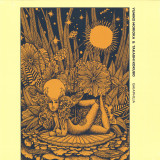
Japanese artists Yumiko Morioka and Takashi Kokubo unite for Gaiaphilia, a journey through ambient soundscapes that seamlessly blends Morioka’s graceful piano compositions with Kokubo’s immersive field recordings and atmospheric synthesisers.
This collaboration brings together two of Japan’s most influential pioneers in ambient and new age music, each with decades of groundbreaking work. Morioka, celebrated for her 1987 album Resonance—reissued to critical acclaim by Métron Records—infuses her introspective playing with Kokubo’s vivid environmental textures, creating a dialogue between nature and melody.
After releasing Resonance, Morioka stepped away from music, moving to America to raise her family. For years, her work was quietly cherished by fans, only gaining wider recognition with its reissue in 2020. A devastating wildfire destroyed her California home seven years ago, prompting her return to Tokyo where she became a chocolatier before rediscovering her passion for the piano in recent years, playing live shows and making new recordings.
Takashi Kokubo’s legendary discography spans over 30 years, and has found wider acclaim in recent years via YouTube algorithms and bootleg uploads, wracking up tens of millions of plays. Yet he is probably best known for his sound design work, specifically the Japanese earthquake alert sound as well as credit card payment jingles - his creations are pervasive in Japanese society.
“From our love and concern for our planet, we both offer a unique sensibility and spirit of inquiry which we express through our music.”
Rooted in shared philosophical interests, Gaiaphilia reflects a profound reverence for nature’s resilience and harmony. Themes of Gaia, Mother Earth’s renewal, and the interconnectedness of life are central, with inspirations drawn from cosmology, sacred geometry, and Japan’s mystical Katakamuna tradition. The album invites listeners into a meditative space where sound mirrors the delicate balance of the natural world.
A master of sound design, Kokubo enhances this vision with his distinctive field recordings, captured using a self-made binaural microphone shaped like a crash test dummy’s head. From the jungles of Borneo to the gentle rhythm of ocean waves, Kokubo’s globe-spanning recordings transform into immersive soundscapes that perfectly complement Morioka’s introspective piano compositions.
“The title, Gaiaphilia, is a newly created word to encompass our love and respect for nature and life, this feeling is the theme we hoped to express.”
Released on Métron Records on 12/03/25 and with artwork from Ventral Is Golden, Gaiaphilia marks a remarkable new chapter for Morioka and Kokubo. Recorded at Kokubo’s log house studio named Studio Ion in Yamanashi, their collaboration offers listeners a deeply emotional and transcendent experience, rooted in the timeless beauty of Japan’s natural landscapes.
- A1: Montego Bay - Everything (Paradise Mix) 04 59
- A2: Atelier - Got To Live Together (Club Mix) 06 06
- A3: Golem - Music Sensations 04 56
- B1: The True Underground Sound Of Rome Feat. Stefano Di Carlo - Gladiators 05 26
- B2: Eagle Parade - I Believe 04 26
- C1: Dj Le Roi - Bocachica (Detroit Version) 05 28
- C2: Green Baize - Synthetic Rhythm 01 41
- C3: M.c.j. Feat. Sima - Sexitivity (Deep Mix) 05 30
- D1: Kwanzaa Posse Feat. Funk Master Sweat - Wicked Funk (Afro Ambient Mix) 06 31
- D2: Progetto Tribale - The Bird Of Paradise 06 29
- D3: Mbg - The Quite 06 59
Vol 1[28,99 €]
Googling “paradise house”, the first results to pop up are an endless list of European b&b’s with whitewashed lime façades, all of them promising “…an unmatched travel experience a few steps from the sea”. Next, a little further down, are the institutional websites of a few select semi-luxury retirement homes (no photos shown, but lots of stock images of smiling nurses with reassuring looks). To find the “paradise house” we’re after, we have to scroll even further down. Much further down.
It feels like yesterday, and at the same time it seems like a million years ago. The Eighties had just ended, and it was still unclear what to expect from the Nineties. Mobile phones that were not the size of a briefcase and did not cost as much as a car? A frightening economic crisis? The guitar-rock revival?! Certainly, the best place to observe that moment of transition was the dancefloor. Truly epochal transformations were happening there. From America, within a short distance one from the other, two revolutionary new musical styles had arrived: the first one sounded a bit like an “on a budget” version of the best Seventies disco-music – Philly sound made with a set of piano-bar keyboards! – the other was even more sparse, futuristic and extraterrestrial. It was a music with a quite distinct “physical” component, which at the same time, to be fully grasped, seemed to call for the knotty theories of certain French post-modern philosophers: Gilles Deleuze, Félix Guattari, Paul Virilio... Both those genres – we would learn shortly after – were born in the black communities of Chicago and Detroit, although listening to those vinyl 12” (often wrapped in generic white covers, and with little indication in the label) you could not easily guess whether behind them there was a black boy from somewhere in the Usa, or a girl from Berlin, or a pale kid from a Cornish coastal town.
Quickly, similar sounds began to show up from all corners of Europe. A thousand variations of the same intuition: leaner, less lean, happier, slightly less intoxicated, more broken, slower, faster, much faster... Boom! From the dancefloors – the London ones at least, whose chronicles we eagerly read every month in the pages of The Face and i-D – came tales of a new generation of clubbers who had completely stopped “dressing up” to go dancing; of hot tempered hooligans bursting into tears and hugging everyone under the strobe lights as the notes of Strings of Life rose up through the fumes of dry ice (certain “smiling” pills were also involved, sure). At this point, however, we must move on to Switzerland.
In Switzerland, in the quiet and diligent town of Lugano, between the 1980s and 1990s there was a club called “Morandi”. Its hot night was on Wednesdays, when the audience also came from Milan, Como, Varese and Zurich. Legend goes that, one night, none less than Prince and Sheila E were spotted hiding among the sofas, on a day-off of the Italian dates of the Nude Tour… The Wednesday resident and superstar was an Italian dj with an exotic name: Don Carlos. The soundtrack he devised was a mixture of Chicago, Detroit, the most progressive R&B and certain forgotten classics of old disco music: practically, what the Paradise Garage in New York might have sounded like had it not closed in 1987. In between, Don Carlos also managed to squeeze in some tracks he had worked on in his studio on Lago Maggiore. One in particular: a track that was rather slow compared to the BPM in fashion at the time, but which was a perfect bridge between house and R&B. The title was Alone: Don Carlos would explain years later that it had to be intended both in the English meaning of “by itself” and like the Italian word meaning “halo”. That wasn’t the only double entendre about the song, anyway. Its own very deep nature was, indeed, double. On the one hand, Alone was built around an angelic keyboard pattern and a romantic piano riff that took you straight to heaven; on the other, it showcased enough electronic squelches (plus a sax part that sounded like it had been dissolved by acid rain) to pigeonhole the tune into the “junk modernity” section, aka the hallmark of all the most innovative sounds of the time: music that sounded like it was hand-crafted from the scraps of glittering overground pop.
No one knows who was the first to call it “paradise house”, nor when it happened. Alternative definitions on the same topic one happened to hear included “ambient house”, “dream house”, “Mediterranean progressive”… but of course none were as good (and alluring) as “paradise house”. What is certain is that such inclination for sounds that were in equal measure angelic and neurotic, romantic and unaffective, quickly became the trademark of the second generation of Italian house. Music that seemed shyly equidistant from all the rhythmic and electronic revolutions that had happened up to that moment (“Music perfectly adept at going nowhere slowly” as noted by English journalist Craig McLean in a legendary field report for Blah Blah Blah magazine). Music that to a inattentive ear might have sounded as anonymous as a snapshot of a random group of passers-by at 10AM in the centre of any major city, but perfectly described the (slow) awakening in the real world after the universal love binge of the so-called Second Summer of Love.
For a brief but unforgettable season, in Italy “paradise house” was the official soundtrack of interminable weekends spent inside the car, darting from one club to another, cutting the peninsula from North to centre, from East to West coast in pursuit of the latest after-hours disco, trading kilometres per hour with beats per minute: practically, a new New Year’s Eve every Friday and Saturday night. This too was no small transformation, as well as a shock for an adult Italy that was encountering for the first time – thanks to its sons and daughters – the wild side of industrial modernity. The clubbers of the so-called “fuoriorario” scene were the balls gone mad in the pinball machine most feared by newspapers, magazines and TV pundits. What they did each and every weekend, apart from going crazy to the sound of the current white labels, was linking distant geographical points and non-places (thank you Marc Augé!) – old dance halls, farmhouses and business centres – transformed for one night into house music heaven. As Marco D’Eramo wrote in his 1995 essay on Chicago, Il maiale e il grattacielo: “Four-wheeled capitalism distorts our age-old image of the city, it allows the suburbs to be connected to each other, whereas before they were connected only by the centre (…) It makes possible a metropolitan area without a metropolis, without a city centre, without downtown. The periphery is no longer a periphery of any centre, but is self-centred”.
“Paradise house” perfectly understood all of this and turned it into a sort of cyber-blues that didn’t even need words, and unexpectedly brought back a drop of melancholic (post?)-humanity within a world that by then – as we would wholly realise in the decades to come – was fully inhuman and heartless. A world where we were all alone, and surrounded by a sinister yellowish halo, like a neon at the end of its life cycle. But, for one night at least, happy."
- 01: Black Fairy Meets Johnny (Live)
- 02: Please Give Me Some Magic (Live)
- 03: Black Fairy Meets Black Bird (Live)
- 04: Tell Them They Are Beautiful (Live)
- 05: Travel To Afrika-Instrumental (Live)
- 06: Black Fairy Meets Queen Mother (Live)
- 07: Afrika&Apos;S My Home (Live)
- 08: Black Land Of The Nile (Live)
- 09: Trip To America (Live)
- 10: Go Down Moses (Live)
- 11: Did You Feed My Cow (Live)
- 12: The Streets Of Harlem (Live)
- 13: Afrikan Children (Live)
- 14: Black Men Can Be Beautiful (Live)
- 15: Black Fairy (Live)
- 16: Eulogy For Black Fairy (Live)
- 17: Black Fairy Returns (Live)
- 18: Hey, Black Child (Live)
- 19: Johnny &Amp; Black Fairy (Live)
Black Fairy is a fairy tale, but not in the traditional sense. When writing this play, i did not want to re-create the types of fantasies which are so common in Childrens theater. There is no kind of magic that can relieve black children from the oppression that retards their development. However, i do feel giving them a better understanding of their heritage can help them achieve their true potential. And those of us who are concerned with their development should try to expose them to knowledge that gives them a positive sense of identity. Although i do feel a chldren's play should be entertaining, I also feel it should be educational. Also, because there are so few children's plays which reflect the black experience, I wanted to write a play that Black children could identify with.
"Black Fairy" is a musical drama about a black fairy who lacks pride in herself and feels she has to offer Black children. But when she meets Black Bird and Queen Mother (Who take her to ancient Egypt, East Afrika, a southern slave plantation and the streets of Harlem) she begins toget a better understanding of her heritage. Her journey through the past enables Black Fairy to meet Aesop, Brer Rabbit, Brer Fox, Uncle Remus, Stag-o-lee, Leadbelly and many other characters in Black folklore and Black history. At the end of her journey, Black fairy realizes that "Being Black is nothing to be ashamed of" and is then able to share her knowledge with other Black children. Even though Black Fairy doesn't completely resolve her dilemma, having a knowledge of her heritage does give her more confidence to cope with the future.
During ther summer of 1974 "Black Fairy" was performed for over four thousand children in Chicago. And, in April of 1975, it played to over two thousand children in Detroit at Mercy College.
"Black Fairy" is the only the first of many children's plays we hope to produce at the Better Boys Foundation. There is an Afrikan proverb which says: "Children are the reward of life". We at Better Boys Foundationm are dedicated to this belief, and feel that helping childrren to appreciate their heritage is one means of showing our concern for their development.
After his father and other close relatives died in a short period, singer, composer and multi-instrumentalist Asa Horvitz wanted a musical language to evoke our metaphysical and tangible experiences with loss. Horvitz and a team of friends assembled a dataset of over 150 texts from throughout history that dealt with grief and fed them through a custom Natural Language Processing AI system. Based on the cryptic text that resulted, they created a music-theatre production which toured in Europe and is presented here as a series of standout recordings from the project’s long genesis. GHOST’s compositions started as vocal improvisations led by Horvitz and bassist/singer-songwriter Carmen Quill, accompanied by Ariadne Randall and Bryan West (processing, synths, viola da gamba, etc). Later, Horvitz’s uncle—esteemed pianist and composer Wayne Horvitz—interpolated additional passages. Recalling (at turns) Robert Ashley’s spoken-word operas, Arthur Russell’s vaporous pop song, medieval music, outre hip-hop, and the undulations of Einstein on the Beach, the music remains soulful despite its partially systematized means of production. GHOST derives its strength from its empathetic perspective, tracking the tidal patterns that underpin our grief without attempting to fabricate their logic.
– Winston Cook Wilson
- A1: Killing Strangers
- A2: Deep Six
- A3: Third Day Of A Seven Day Binge
- B1: The Mephistopheles Of Los Angeles
- B2: Warship My Wreck
- B3: Slave Only Dreams To Be King
- B4: The Devil Beneath My Feet
- C1: Birds Of Hell Awaiting
- C2: Cupid Carries A Gun
- C3: Odds Of Even
- D1: Day 3
- D2: Fated, Faithful, Fatal
- D3: Fall Of The House Of Death
Marilyn Manson"s ninth studio album, "The Pale Emperor", is available as a White 2LP housed in a Gatefold Sleeve and a 12" photo art print. This iconic record marked Manson"s return to the forefront of the music scene with its highest opening week sales since "Eat Me, Drink Me" (2007). Topping Billboard"s Hard Rock Albums chart and achieving chart-topping success throughout Europe, "The Pale Emperor" solidified Manson"s status as a rock icon. Featuring hit singles like "Third Day Of A Seven Day Binge" and "Deep Six," the vinyl edition of "The Pale Emperor" offers a tangible glimpse into Manson"s monumental achievement. This is a must-have for collectors and music enthusiasts alike. Experience the electrifying resurgence of Marilyn Manson"s commercial dominance and relive the unparalleled success of "The Pale Emperor".
- A1: Progetto Tribale - The Sweep
- A2: Onirico - Echo Giomini
- A3: Open Spaces - Artist In Wonderland
- B1: Alex Neri – The Wizard (Hot Funky Version)
- B2: M C.j. Feat. Sima - To Yourself Be Free - Instrumental Mix Energy Prod
- B3: Mato Grosso - Titanic Expande
- C1: Dreamatic - I Can Feel It (Part 1)
- C2: Carol Bailey - Understand Me Free Your Mind (Dream Piano Remix)
- C3: The True Underground Sound Of Rome - Secret Doctrine
- D1: Don Carlos - Boy
- D2: Lazy Bird – Jazzy Doll (Odyssey Dub)
Vol 2[28,99 €]
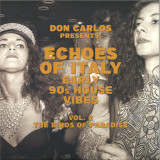
Volume 1 of this expertly curated project of 90s Italian House - put together by Don Carlos.
If Paradise was half as nice… by Fabio De Luca.
Googling “paradise house”, the first results to pop up are an endless list of European b&b’s with whitewashed lime façades, all of them promising “…an unmatched travel experience a few steps from the sea”. Next, a little further down, are the institutional websites of a few select semi-luxury retirement homes (no photos shown, but lots of stock images of smiling nurses with reassuring looks). To find the “paradise house” we’re after, we have to scroll even further down. Much further down.
It feels like yesterday, and at the same time it seems like a million years ago. The Eighties had just ended, and it was still unclear what to expect from the Nineties. Mobile phones that were not the size of a briefcase and did not cost as much as a car? A frightening economic crisis? The guitar-rock revival?! Certainly, the best place to observe that moment of transition was the dancefloor. Truly epochal transformations were happening there. From America, within a short distance one from the other, two revolutionary new musical styles had arrived: the first one sounded a bit like an “on a budget” version of the best Seventies disco-music – Philly sound made with a set of piano-bar keyboards! – the other was even more sparse, futuristic and extraterrestrial. It was a music with a quite distinct “physical” component, which at the same time, to be fully grasped, seemed to call for the knotty theories of certain French post-modern philosophers: Gilles Deleuze, Félix Guattari, Paul Virilio... Both those genres – we would learn shortly after – were born in the black communities of Chicago and Detroit, although listening to those vinyl 12” (often wrapped in generic white covers, and with little indication in the label) you could not easily guess whether behind them there was a black boy from somewhere in the Usa, or a girl from Berlin, or a pale kid from a Cornish coastal town.
Quickly, similar sounds began to show up from all corners of Europe. A thousand variations of the same intuition: leaner, less lean, happier, slightly less intoxicated, more broken, slower, faster, much faster... Boom! From the dancefloors – the London ones at least, whose chronicles we eagerly read every month in the pages of The Face and i-D – came tales of a new generation of clubbers who had completely stopped “dressing up” to go dancing; of hot tempered hooligans bursting into tears and hugging everyone under the strobe lights as the notes of Strings of Life rose up through the fumes of dry ice (certain “smiling” pills were also involved, sure). At this point, however, we must move on to Switzerland.
In Switzerland, in the quiet and diligent town of Lugano, between the 1980s and 1990s there was a club called “Morandi”. Its hot night was on Wednesdays, when the audience also came from Milan, Como, Varese and Zurich. Legend goes that, one night, none less than Prince and Sheila E were spotted hiding among the sofas, on a day-off of the Italian dates of the Nude Tour… The Wednesday resident and superstar was an Italian dj with an exotic name: Don Carlos. The soundtrack he devised was a mixture of Chicago, Detroit, the most progressive R&B and certain forgotten classics of old disco music: practically, what the Paradise Garage in New York might have sounded like had it not closed in 1987. In between, Don Carlos also managed to squeeze in some tracks he had worked on in his studio on Lago Maggiore. One in particular: a track that was rather slow compared to the BPM in fashion at the time, but which was a perfect bridge between house and R&B. The title was Alone: Don Carlos would explain years later that it had to be intended both in the English meaning of “by itself” and like the Italian word meaning “halo”. That wasn’t the only double entendre about the song, anyway. Its own very deep nature was, indeed, double. On the one hand, Alone was built around an angelic keyboard pattern and a romantic piano riff that took you straight to heaven; on the other, it showcased enough electronic squelches (plus a sax part that sounded like it had been dissolved by acid rain) to pigeonhole the tune into the “junk modernity” section, aka the hallmark of all the most innovative sounds of the time: music that sounded like it was hand-crafted from the scraps of glittering overground pop.
No one knows who was the first to call it “paradise house”, nor when it happened. Alternative definitions on the same topic one happened to hear included “ambient house”, “dream house”, “Mediterranean progressive”… but of course none were as good (and alluring) as “paradise house”. What is certain is that such inclination for sounds that were in equal measure angelic and neurotic, romantic and unaffective, quickly became the trademark of the second generation of Italian house. Music that seemed shyly equidistant from all the rhythmic and electronic revolutions that had happened up to that moment (“Music perfectly adept at going nowhere slowly” as noted by English journalist Craig McLean in a legendary field report for Blah Blah Blah magazine). Music that to a inattentive ear might have sounded as anonymous as a snapshot of a random group of passers-by at 10AM in the centre of any major city, but perfectly described the (slow) awakening in the real world after the universal love binge of the so-called Second Summer of Love.
For a brief but unforgettable season, in Italy “paradise house” was the official soundtrack of interminable weekends spent inside the car, darting from one club to another, cutting the peninsula from North to centre, from East to West coast in pursuit of the latest after-hours disco, trading kilometres per hour with beats per minute: practically, a new New Year’s Eve every Friday and Saturday night. This too was no small transformation, as well as a shock for an adult Italy that was encountering for the first time – thanks to its sons and daughters – the wild side of industrial modernity. The clubbers of the so-called “fuoriorario” scene were the balls gone mad in the pinball machine most feared by newspapers, magazines and TV pundits. What they did each and every weekend, apart from going crazy to the sound of the current white labels, was linking distant geographical points and non-places (thank you Marc Augé!) – old dance halls, farmhouses and business centres – transformed for one night into house music heaven. As Marco D’Eramo wrote in his 1995 essay on Chicago, Il maiale e il grattacielo: “Four-wheeled capitalism distorts our age-old image of the city, it allows the suburbs to be connected to each other, whereas before they were connected only by the centre (…) It makes possible a metropolitan area without a metropolis, without a city centre, without downtown. The periphery is no longer a periphery of any centre, but is self-centred”.
“Paradise house” perfectly understood all of this and turned it into a sort of cyber-blues that didn’t even need words, and unexpectedly brought back a drop of melancholic (post?)-humanity within a world that by then – as we would wholly realise in the decades to come – was fully inhuman and heartless. A world where we were all alone, and surrounded by a sinister yellowish halo, like a neon at the end of its life cycle. But, for one night at least, happy.
’之 / OF is a word that can be used as a preposition to express the relationship between a part and a whole. It is an unfinished tone, a broken sentence, a start and a whole. It is sustainable, full of potentials and longings.’’
London based performance and sound artist Li Yilei shared an experience familiar to many migrants during the past year of COVID-19 chaos. With their UK visa set to expire, and family back in China, Li made a last-minute dash to return to their nation of birth. Able to board one of the last few flights to China during the initial turmoil of the coronavirus outbreak, Li made it back to Shanghai for a two-week stint in a quarantine hotel.
Though Li had already begun creating OF, the reality of the pandemic began to seep into the recordings. Each of the 12 tracks is a study in horology, using metaphorical sound transcriptions and atmospheric extractions to focus on the temporal relationship between experience and surroundings. Li’s awareness of their own understanding of time became increasingly heightened during quarantine and the emotional involvement found within these new realities informed many of the sounds created.
‘’I tried to portray each song as a short, scattered poem - a moment that I captured to represent each hour.’’
Composed using analogue synthesisers, vocal samples, field recordings and string instruments such as the violin and guqin, Li indulges in moments of grief, panic, healing, cessation, melancholy, vastness, hope, joy and emptiness as they explore the acoustic relations between humans and the many forces of nature.
The art of the Song Dynasty, with its ancient traditions of poetry and timekeeping, were also great sources of inspiration for the album - whilst paintings from the period, specifically those of flowers and birds, are common themes throughout the tracks. Indeed, it is within the vastness of time that the album artwork comes to relevance. The eighth emperor of the Song Dynasty, Huizong, was a revered artist and a scene from his work ‘Finches and Bamboo’ adorns the album cover.
Bluish Green was 15 + years in the making, passively percolating bi-coastly in the background of three family members' lives, waiting for the perfect opportunity to present itself. That moment came in January 2024 when Ball Sisters & N1_Sound settled into the Spiritual World home base of Studio Z in Toronto, Canada. What started as three casually blissful days, resulted in a debut album, combining a unique blend of dub, neo soul, ambient & downtempo. Bluish Green sits halfway between a low-key dance floor and late night back room.
The album was almost entirely created live in the studio with very little discussion, conversation or conscious direction. There were no goals or future plans, just mutual appreciation for the moment. Repeat takes were few and far between, with the group moving fluidly from one track to the next. This preservation of emotion and human touch is deeply embedded into the music, allowing the listener to share in the raw moments that were experienced while Bluish Green was organically taking shape.
Sonic themes of the natural world run throughout the five song, 30 minute album. “R U 4 Real” welcomes the listener into T3AL’s unique ecosystem with intimate cicade-esque shakers. A reverberous güiro frog (acquired on a family trip one year ago) and synthesized ocean waves create an ambient wetland on the album's 8 minute instrument track “Frog Legacy ''. Bluish Green comes to a shimmering close on “Flip That Switch” with dubbed out crystalline slide-flute melodies resembling ocean birds that fade into an iridescent horizon.
Digital drum patterns skip & stride around contemplative circular lyrical themes on four of the five album tracks, while spatial flute melodies simultaneously spin just under the surface. The bass guitar on Bluish Green is a continuous harmonic support system, repeating on a different tectonic rotation, much slower and deeper, offering familiar footing that stops the listener from drifting out in the rippling undertow of analogue delay feedback.
“R U 4 Real”?... A question that T3AL revisits frequently when thinking of the surreal weekend that resulted in the trio’s debut album, Bluish Green
- A1: Thomas Almqvist - Lullaby For Zak
- A2: Lewis Taylor - Cherry Blossom
- A3: Mic Murphy - Salon Du Chocolat
- A4: 52Nd Street - I'd Fallen In Love (With The Wrong Kind)
- A5: Coastlines - Hot Wind
- B1: Maston - Joyride
- B2: Kenny Dickenson - Stupid Rain
- B3: The Autumn Defense - Bluebirds Fall
- B4: Stimulator Jones - Aquarius-Pisces Cusp
- B5: Andre Cymone - Sex Love Experience
Housed together in a stunning 380gsm board slipcase with a matt laminate soft touch finish and a UV spot varnish on the beloved Be With logo, we proudly present the Be With 10 Years record and book package.
Record contains 10 exclusive never-before-on-vinyl tracks from 10 Be With family members. 310mm square softcover book printed on a 350gsm woodfree uncoated board. Book block printed on 120gsm Dadong Lucky Bird woodfree uncoated paper. 140gram vinyl with a 380gsm jacket. 1000 copies only for the world, no repress!
Eclectic Beats Music release number 7 is Fradinho’s “Tropicafrica EP”, inspired by Ghana’s Highlife music.
On the A-side, Fradinho delivers two original Broken Beat tracks: “Tropicafrica”, which also names the EP, is a journey into a slower syncopated Highlife guitar track, with a lovely progressive harmony and guitar picks. “Highlife” has a more upbeat atmosphere, still with the Highlife guitars on a happy vibe and a faster beat structure.
On the B-side, there’s 2 distinct quality remixes:
Sun 793 delivers a journey into a darker, futuristic, yet contemplating sonic bruk experience, with lush keys contrasting with the overall deep feeling of their “Tropicafrica” remix.
Mr. Bird also remixes the track “Tropicafrica”, in a cross-genre fusion between house and broken beat, adding some vocal elements and brass, that results in this uplifting remix.
Cindy is to release a new six song EP called Swan Lake on 4th October via Tough Love. The title isn't a nod to the folktale or ballet in any real way, but to the fact that it all has ended up in the collective imagination as an object, vaguely recognizable, a little suggestive, and mostly blank. Karina Gill, Cindy's songwriter, likes to make use of that kind of resonance to connect sound and experience. The six songs on this EP continue the stripped-down habits of previous Cindy releases, while adding a few departures and left-turns. Cindy likes to work at the essentials and the elements here say exactly what's needed. In other ways, these songs present a soft filigree that's unusual for their recordings. Oli Lipton (Now, Violent Change) on guitar and Will Smith (Now) on bass play counterpoint melodies to Gill's structures. Staizsh Rodrigues (Children Maybe Later, Almond Joy, Peace Frog) sings vocal harmonies that both offset and deepen Gill's voice and delivery. There are playful drums by Mike Ramos (Tony Jay, Sad Eyed Beatniks) and coolly elaborate guitar lines from Stanley Martinez (Famous Mammals, Violent Change, Non Plus Temps). Gill's songs strike this balance too: almost nonchalant reporting tied up in unexpected knots. A ride in an elevator connects up with questions about peace and/or the nature of things; the title track wonders about associative thinking and associative feeling; The Bell is an account of one of those times when everything makes sense but you can't explain it; and there's the scene of a party viewed with admiration for how friends can love each other. As Gill herself says: "People have told me that they can't quite identify my influences. Me neither. The foundational layers of music of the past and my past have been metabolized like breakfast and turned into more me, sorry to say. But I experience the music of people I'm connected with and it impacts me in the moment. There's the music I'm around - April Magazine, Sad Eyed Beatniks, Violent Change, Katsy Pline, collaborating with Mike on Flowertown - that I can feel a direct line from. Then there's music that is being made far away but feels close, like Lewsberg, specifically, for this EP. "
- A1: Kirk And The Jerks, To Be A Hero
- A2: Sub Society, Hokus Montage
- A3: Kirk And The Jerks, One Way To Do It
- A4: Wonderful Broken Thing, Roam Around
- A5: The Cry, Alone
- A6: Voluntários Da Pátria, O Homem Que Eu Amo
- A7: Wonderful Broken Thing, Birds Fly So High
- A8: Kirk And The Jerks, Hang On To The Dream
- A9: Figure Ground, Intro
- B1: Kirk And The Jerks, Gun And A Tear
- B2: The Cry, Twist Of Faith
- B3: Sub Society, A Whole Lot Less
- B4: Wonderful Broken Thing, We Don’t Touch
- B5: Wonderful Broken Thing, Trains
- B6: D J. Dex/Mt, Am Rap
- B7: Potential Threat, Self Inflicted Pain
- B8: Johnny Monster, Witch Doctor
- B9: Wonderful Broken Thing, Is This What You Wanted
In the early 1990s, before the era of social media dominance, skateboarding culture found its voice through magazines and VHS video releases, notably from brands like Santa Cruz and Powell Peralta. These videos not only shaped the skateboarding world but also influenced creativity across various industries worldwide.
In 1988 and 1989, two groundbreaking videos, "Shackle Me Not" and "Hokus Pokus," emerged from the fledgling skateboard company: H-Street, unleashed a seismic shift in street skateboarding. These videos are revered as iconic masterpieces, celebrated for their innovative skateboarding sequences and unforgettable soundtracks.
“What’s particularly interesting about Hokus Pokus was its soundtrack, largely comprised of demo cassettes, unsigned artists, and bands with loose ties to the brand. Some of the songs were goofy, others almost anthemic, and few sounded of their time. Perhaps it was the repetition or the fact that Matt Hensley could have skated to the sounds of a broken oven and it would have been iconic, but the songs in Hokus Pokus became a secret handshake for the hardcore—people who really gave a shit about skateboarding’s culture not just the act”.
Artless / Anthony Pappalardo
“When we were filming for Shackle Me Not we were still a brand new company and hardly anybody knew who we were and it was so brand new. I was so busy skating and I noticed there was like a movement in skateboarding, you could feel there was a change in the way, in the tide, not just white H-Street but with every company. I think that video, the H-Street video was saw raw, with the crazy music, and you know, just the wackiness of all of it, I think that feeling went out into the world, and kids everywhere understood you don’t need to live 20mn away from Del Mar to actually be part of what’s happening. I think that just opened up the world of skateboarding to more people”
Matt Hensley – Pro skater and Floggin Molly band member.
Fast forward 35 years, and H-Street, in collaboration with Paris (France) based label Stereo Ronin Records, embarks on a momentous project to release special edition vinyl soundtracks from these seminal videos. This exclusive release features meticulously remastered tracks, including new versions and previously unreleased gems on vinyl, making it a treasure trove for any skateboarding enthusiast.
Curated from bands like Kirk & The Jerks, Sub Society, Wonderful Broken Thing, Voluntários da Pátria and The Cry, representing the golden era of skateboarding music, this album promises an unparalleled experience for fans of Punk Rock, Indy Rock, and of course, skateboarding.
Working alongside RTM Studio in Paris, Stereo Ronin Records has undertaken a remastering journey, ensuring that this vinyl edition delivers a truly unique sonic experience, capturing the essence of a bygone era while resonating with contemporary audiences.
Aboriginal Australian blues, country, and gospel by the great Kankawa Nagarra, Queen of the Bandaral Ngadu Delta. These intimate recordings introduce the world outside Australia to Kankawa Nagarra, a beloved Walmatjarri Elder, teacher, human rights advocate, and environmental activist. Born in the traditional lands of the Gooniyandi and Walmatjarri peoples of North Western Australia, Kankawa grew up with the tribal songs at cultural ceremonies. When she was taken from her family to the mission, she was taught hymns and Gospel songs with the choir. On the pastoral lease where she was sent to work, Country music was everywhere. She first heard rock and roll on the station gramophone. But it wasn't until many years later her musical journey truly began, when she stopped to listen to a busker outside a shop in Derby, Western Australia. It was the first time she'd heard the blues, and it awakened something in her. Through it, she found a medium to express all her thoughts and feelings, and it inspired her to turn these into songs. The empathy of her message extends from those she sees struggling around her to the entire planet being ravaged for profit. These twelve tracks, recorded live near her home of Wangkatjungka, WA, offer a cross-section of Kankawa's entire musical experience - shifting gracefully between musical styles, languages, and moods, backed by the buzz of night bugs and call of daytime birds. In turns humorous, warm, and real about the hardships of life and the pillage of the land she holds dear, the record is the closest thing you can get to spending time with the great Kankawa herself. We are extremely grateful to release this record alongside Flippin Yeah Records and in collaboration with Kankawa Nagarra. High-quality vinyl comes with a four-page booklet featuring translations, stories, and track notes by the artist.
Brighton based three-piece Jopy, led by songwriter Jo Parnell, release their debut EP on Goo Records. Featuring six tracks including recent singles Head Hunters Pub & Grub and Graveyard Romance, the Planet Zombie EP showcases the band's B52s/Cramps influenced glam punk sound chocker with incendiary punk riffs and frantically infectious choruses.
Full of macabre joy, the EP sees Parnell celebrate her queerness through fantastical camp-horror fictions via Marc Bolan-esque vocals rolled into one blood-curdlingly gleeful package. Tracing these songs' deeply personal origins, Parnell says: “I want to write songs that people can relate to and feel seen by without having to relive the more difficult aspects of their journeys. This is why I chose to convey my experiences in the form of fun, campy horror stories.”
At once a spiritually-charged journey and a shit-kicking party record, American Cream Band comes to Quindi covering all the bases.
American Cream Band was formed by Twin-Cities musician Nathan Nelson around 10 years ago, taking the form of improvised live shows and albums Frankensteined from these sessions into exultant, fully-formed records you can sink your teeth into. The trick with improvised music is to start with intentions, however abstract they might be, and Nelson leads his rolling cast of collaborators into the creative fray with subtle guidance which drives the impulsive musical moment forward.
The band's previous records have manifested on labels like Moon Glyph and Medium Sound, and now Presents arrives in a freewheeling flash of snappy new wave, skronky sax, call and response sass and some krautrock-minded sonic cosmology. The album came together in December 2021, when Nelson took ten musicians to legendary studio Pachyderm in Cannon Falls, Minnesota. Living together, eating together, and with Nelson quietly setting up his low-key magick intentions around Jupiter's planetary frequency and the studio's abundance of elephant statues and carpets, they laid down some drum-heavy sessions that became the building blocks of the record.
'Taste What We Taste' is the perfect example of an exuberant groove pounded on skins as a vessel for a joyous get-down, with the singers and players free to freak out on top. Nelson remains at the centre of the melee, throwing half-sardonic, half-heartfelt calls out for connection. 'Banana' celebrates nonsense and holds down the most serious of beats - a disco-not-disco deadeye dripping in late night sleaze and lysergic potential. On 'Royal Tears', the jagged guitar chops call back to Gang Of Four, while the hot n' heavy sax from Cole Pulice baits James Chance and all the other angular New York un-jazz misfits.
Amongst his other implied intentions for the recordings, Nelson wanted to channel opposites, not least the distinct male-female energies in his vocal sparring with the girls on assistance duties. It wouldn't be right to call them backing singers as they shoot back at his punchy mantras, bringing a certain fierce femininity that tips its hat to The B-52's Cindy Wilson and Kate Pierson, not to mention iconic post-punk bands like Au Pairs, Delta 5 and Bush Tetras.
There's space for the dreamier kosmische which has crept into the American Cream oeuvre in the past, as 'Sirens' opens the album up in a swirling pond of rag tag percussion and molten synths. 'Words Would Handcuff Us' cools the whole riotous assembly down in unmoored perfection, a strung-out Bossa nova seance dusted with celestial drips from analogue spaceships.
Equally treading the line between light and dark, conscious and unconscious, the sacred and profane, Presents is a life-affirming, creep-under-the-skin listening experience - a joyously transient chapter in the evolution of American Cream Band.