The full-length debut from Bendigo Fletcher, Fits of Laughter is a collection of moments both enchanted and mundane, sorrowful and ecstatic: basking in the beauty of a glorious lightning storm, waking with a strand of your beloved’s hair happily caught in your mouth, drinking malt liquor while bingeing “The X-Files” on a lonesome Saturday night. As lead songwriter for the Louisville, KY-based band, frontman Ryan Anderson crafts the patchwork poetry of his lyrics by serenely observing the world around him, often while working his grocery-store day job or walking aimlessly in nature (a practice partly borrowed from the late poet Mary Oliver). When matched with Bendigo Fletcher’s gorgeously jangly collision of country and folk-rock and dreamy psychedelia, the result is a batch of story-songs graced with so much raw humanity, wildly offbeat humor, and a transcendent sense of wonder.
True to its spirit of purposeful wandering, Fits of Laughter unfolds in a wayward yet lushly detailed sound, embroidered with everything from crystalline harmonies to blistering guitar riffs to heady drum-machine beats. For help in forging the album’s ragged elegance, Bendigo Fletcher worked with producer Ken Coomer (the original drummer for Wilco and Uncle Tupelo), whom Anderson met in a flash of strange serendipity. Soon after he’d connected with Coomer via phone and bonded over a shared affection for Pink Floyd’s Obscured by Clouds, the band headed to Nashville to record in Coomer’s garage studio, laying down the album’s eight songs in nine frenetic days.
In keeping with the regional perspective that defines much of folk and country music, Fits of Laughter ponders certain paradoxes inherent in the band’s homeland. “In Kentucky there’s a long-running frustration of tradition and stubbornness versus progress,” says Anderson. “On one side you’re looking at things like the coal industry or Mitch McConnell, but then there’s also a feeling of togetherness and a fuck-the-man attitude and a loving desire for everyone to be left alone.” Referring to Fits of Laughter as a coming-of-age album, Anderson also examines a more internal conflict throughout the songs, including his choice to abandon his medical-school aspirations in favor of pursuing a career in music. “The title’s really about the spectrum of emotions I’ve felt on the way to finding what makes me feel like I’m living truthfully, rather than holding onto what I think other people’s expectations are of me,” he says. “It’s a phrase that bridges all of those emotions—everything from joy to hysteria.”
quête:the blue match
Composer, multi-instrumentalist, poet, griot, improviser and community
leader William Parker presents a pair of brand new trio albums which further expound on his limitless vision.
One of the iconic and enduring music leaders to emerge in the world over the
last half century, William Parker continues to raise the bar higher.
‘Mayan Space Station’ is his first electric guitar trio album, and features Parker
on bass, alongside Ava Mendoza (electric guitar), and Gerald Cleaver (drums).
Cosmic multi-hued blues, perfect for space and time travel. The unparalleled
rhythmic firmament created by Parker & Cleaver is matched by Mendoza in full
flight. All of the promise imagined by a trio recording of these musicians with
compositions by Parker is delivered to the fullest.
Mendoza’s prodigious talents have illuminated many projects and recordings
as both leader and collaborator over the past decade. As is certainly clear here,
she is committed to bringing expressivity, energy and a wide sonic range to the
music. Gerald Cleaver is an exceptionally gifted poet of drum sound who can
play in the deepest of pockets and manifest all manner of sound to perfectly fit
contours within the most open of forms.
Cleaver & Parker have worked closely on numerous projects, notably within the
nonpareil full-improvising trio, Farmers By Nature, together with Craig Taborn.
William Parker is in vibrant grandmaster blossom here on double bass - in both
pizzicato & bow-as-prism modes.
William Parker: bass, compositions,
Ava Mendoza: electric guitar,
Gerald Cleaver: drums
- 1: Road To Avalon
- 2: Click Click Domino (Feat. Marcus King)
- 3: Line On The Page
- 4: Raining For You
- 5: Little Liars
- 6: Deep River (Feat. Marcus King)
- 7: Heartworn Traders
- 8: Calico Coming Down
- 9: Learn To Love You Better
- 10: Long Gone & Heartworn (Feat. Jake Kiszka)
- 11: Mountain Lion Blues
- 12: Sing A Hallelujah
- 13: Has My Midnight Begun
For nearly two straight years following the release of their critically acclaimed debut, Chasing Lights, Ida Mae lived on the road, crisscrossing the US from coast to coast as they performed hundreds of dates with everyone from Willie Nelson and Alison Krauss to Marcus King and Greta Van Fleet. And while those shows were certainly formative for the electrifying British duo, it was what happened in between — the countless hours spent driving through small towns and big cities, past sprawling suburbs and forgotten ghost towns, across rolling plains and snow-capped mountains — that truly laid the groundwork for the band’s transportive new album, Click Click Domino. Written primarily in the backseat of a moving car, the record embodies all the momentum and possibility of the great American unknown, offering up a series of cinematic vignettes full of hope and disappointment, promise and regret, connection and loneliness. The songs on Click Click Domino are raw and direct, fueled by an innovative mix of vintage instruments and modern electronics, and the performances are loose and exhilarating to match, drawing on early rock and roll, classic country, British folk, and 50’s soul to forge a sound that’s equal parts Alan Lomax field recording and 21st century garage band. Turpin and Jean produced the album themselves, recording primarily on their own in their adopted hometown of Nashville during the COVID-19 pandemic, and while the collection is certainly bolstered by appearances from high profile guests like Marcus King, Greta Van Fleet’s Jake Kiszka, and Ethan Johns, the heart and soul of the record remains Ida Mae’s intoxicating chemistry, which has never felt more vibrant, ambitious, or self-assured. Now married, Turpin and Jean first met a little over a decade ago while attending university in Bath. The pair bonded immediately over their love for the sounds of bygone eras, and they quickly earned rave reviews everywhere from the BBC to the NME with their raucous first group, Kill It Kid. Starting over fresh as a duo named for Sonny Terry and Brownie McGhee’s “Ida Mae,” the first song they ever harmonized on, Turpin and Jean relocated to Nashville in 2019 and released Chasing Lights to similarly widespread critical acclaim. Rolling Stone hailed the album’s “stomping swirl of blues and guitar-heavy Americana,” while The Independent lauded its “retro lustre” and “impressive experimentation,” and NPR’s Heavy Rotation called it “tightly drawn, harmonic and hypnotic.” The music helped the earn the duo a slew of support dates with the likes of Greta Van Fleet, The Marcus King Band, Blackberry Smoke, Josh Ritter, Rodrigo y Gabriela, and The Lone Bellow, as well as performances at Bonnaroo, the Telluride Blues & Brews Festival, the Philadelphia Folk Festival, Germany’s Reeperbahn Festival, and Switzerland’s Zermatt Unplugged.
Not Waving renders his pop soul on a definitive album opus ‘How To Leave Your Body’, starcrossed with guest appearances by Jim O’Rourke, Jonnine Standish, Marie Davidson, Spivak and Mark
Lanegan
An escapist parable for the times, Alessio Natalizia marks a career high with his most sensitive production and songwriting illuminated by a coterie of notable collaborators. Its 11 songs deal with the necessity of friendship, the fragility of loss and spiritual transcendence via a spectrum of strategies that ultimately arrive at a mutual conclusion: love is the message. It packs sample amounts of nostalgia into a fantasy sequence of elegiac pop, skewed rave and midnight lullabies that fine-tune over 20 years of devotion to his craft, perfectly matching experimental restlessness with enduring pop appeal.
Perhaps unavoidably, circumstances had a hand in the creation of ‘How To Leave Your Body’, forcing Natalizia to work with collaborators remotely. Yet the strength of his bonds bleeds through in the album’s handful of poignant vocal pieces, none more so than the hushed intimacy of Marie Davidson on the bewitching downbeat trance hymn ‘Hold On’, but also in the bruised blush of ‘My Sway’ featuring Jonnine’s spine-tracing lilt over hovering organ and dembow bumps, while the hook-up with Mark Lanegan once again yields bittersweet fruit on ‘Last Time Leaving Home Part 2’, with gravelly blues vox diffused into detuned, miasmic cello that really tugs.
Effortless and made for rinsing, the whole album is testament to the humility and pathos of Natalizia’s oeuvre, which has gotten better with age. It plays out like a lovingly crafted mixtape, decanting all original material with a classic cadence and fleeting play of styles, from aerial jazz notes in ‘You Are Always Younger Than The Future’, to the gnawing club grind of ‘Define Normal’, a noisily gurning ‘Self-Portrait’, and the lushly resolved admittance of ‘My Best Is Good Enough.’
Comparisons don’t really work with this one, it’s just Not Waving.
After two UK #1 albums, 2 million album sales and an array of international acclaim, you might’ve thought you knew what to expect from Royal Blood. Those preconceptions were shattered when they released ‘Trouble’s Coming’ last summer. Hitting a melting pot of fiery rock riffs and danceable beats, they delivered something fresh, unexpected and yet entirely in tune with what they’d forged their reputation with.
The reaction was phenomenal, with highlights including 20 million streams, a premiere as Annie Mac’s Hottest Record and a run on Radio 1’s A-list and earned alternative radio support and media attention across the globe. In short, Royal Blood are primed to be bigger than ever before. That feat is set to be realised when they release their eagerly anticipated third album ‘Typhoons’ on April 30th via Warner Records.
When Mike Kerr and Ben Thatcher sat down to talk about making a new album, they knew what they wanted to achieve. It involved a conscious return to their roots, back when they had made music that was influenced by Daft Punk, Justice, and Philippe Zdar of Cassius. It also called for a similar back-to-basics approach to what had made their self-titled debut album so thrilling, visceral and original.
“We sort of stumbled on this sound, and it was immediately fun to play,” recalls Kerr. “That’s what sparked the creativity on the new album, the chasing of that feeling. It’s weird, though - if you think back to ‘Figure it Out’, it kind of contains the embryo of this album. We realised that we didn’t have to completely destroy what we’d created so far; we just had to shift it, change it. On paper, it’s a small reinvention. But when you hear it, it sounds so fresh.”
Those traits pulsate throughout the new single and title track. Kerr’s spiralling bass riff casts an hypnotic allure as it grows in intensity, while his vocals switch at will between a raw rock roar and a soulful falsetto. It’s underpinned by Thatcher’s thundering beats, his taut rhythms infused with groove-laden hi-hats.
After setting the tone with ‘Trouble’s Coming’, the album opens in breathless, take-no-prisoners style with the fierce metallic grooves of ‘Who Needs Friends’ hitting an early visceral peak. Royal Blood further reference their fresh array of influences by deploying vocodered vocals on ‘Million & One’ before dynamically switching between the biggest contrasts of their sound with ‘Limbo’. Already a fan favourite having been a regular during the duo’s 2019 shows, ‘Boilermaker’ lives up to its reputation and is more than matched by ‘Mad Visions’, which evokes a hyper-aggressive Prince. It ends with a final surprise in the shape of the stark piano ballad ‘All We Have Is Now’, a vulnerable and revealing reminder to live in the moment.
That song’s unguarded sentiments gives the album a redemptive finale. Whether directly or allusively, the album focuses on exploring the flipside of success that they’ve experienced. It comes from the realisation that success is much more complicated than it seems and that having the time to regain perspective is a precious commodity which becomes ever more elusive. The situation called for reflection and change, which Kerr addressed in Las Vegas. He downed an espresso martini and declared it to be his last drink, and soon discovered that his new-found sobriety would have a positive impact upon his creativity and life as a whole.
That new approach manifested itself in the duo’s decision to produce the majority of ‘Typhoons’ themselves. ‘Boilermaker’ was produced by Queens of the Stone Age frontman Josh Homme, the two bands having first connected when Royal Blood supported them on a huge North American tour. Meanwhile, the multiple Grammy Award winner Paul Epworth produced ‘Who Needs Friends’ and contributed additional production to ‘Trouble’s Coming’.
Blue Coloured Vinyl
JOAO SELVA returns with a second album, a true hymn to creoleness and tropicalism, embued with flavors of funk, jazz and disco. An exhuberant travelogue diary featuring some shiny souls such as the sprightly Flavia Coelho and the multiinstrumentalist producer Patchworks (Voilaaa, The Dynamics, David Walters, Mr President, Taggy Matcher). Cast off on a thrilling musical cruise with this Brazilian nomadic spirit, sailing freely on the mythical Black Atlantic.
Bill MacKay and Nathan Bowles’ debut is well titled: keys are what they play
and keys unlock things too. Their trad bonafides are balanced with
inquisitive playing that adds surprise as a formal songwriting and arranging
tool. Spirited 21st Century folk music made of equal parts bluegrass,
classical, country, gospel and improv.
‘Keys’ is, on first blush, a collection of guitar and banjo duets - but from the
opening moment, it is clear that Bill and Nathan’s agreed-upon duo is a
living organism, growing as it goes. Behind the stately figures of ‘Idumea’, a
19th Century southern hymnal played out on their stringed instruments, a
low organ drone hums persistently, signalling that this music, while coming
from traditional places, is asking more of itself, seeking sparks of inspiration
to light the path forward.
Bill and Nathan met a few years back, if time has any meaning. It didn’t
seem to at the time - after the first night they hung out, it seemed as if
they’d known each other for a while already. A year later, in 2018, they
were booked as a duo at Cropped Out. Preparing for the show involved a
correspondence exchanging lots of provisional ideas, thoughts and music
back and forth from Chicago to Durham NC, then dashing through the ideas
again on the festival grounds an hour before the show. From this seemingly
hectic preparation, their playing that night was remarkably serene, a
spiritual treatise clothed in the casual and natural manner of the proverbial
porch, or in this case, riverside-jam, as the stage literally straddled the edge
of the Ohio River. It was a stellar, simpatico first moment that asked for
more moments like it.
After several more sets the following year, they felt ready to roll tape (as the
saying goes) and chose to do so in Chicago, with Nick Broste at The Shape
Shoppe. Again, an easy rapport prevailed, allowing them to work through
their collected ideas quickly and freely, with the moments of spontaneous
decision that can come only with comfort and trust in each other’s presence.
Throughout ‘Keys’, Bill and Nathan propel their power-folk engine with intent
and feeling, joy and solemnity, as images of wariness, wonder, anger,
deliberation, forgiveness, trust and devotion rise up from the music and roll
it forward into the unknown, a place we can sense both players are happy
to go.
Eight of the ten songs featured are originals, with the other two coming
from different centuries to this one. The diversity of song is matched by the
instrumentation: in addition to Bill’s guitar and Nathan’s banjo, they add
voice, piano, percussion, pump organ, requinto and electric organ to the
richness and rusticity, the traditionalism and open space of the
compositions.
“A good piece of rocking jazz, miles away from an academic approach but with a good shot of euphoric guitar and down-to-earth energy instead.
Here the band “”Tini Thomsen MaxSax”” brings its own nuanced,
powerfully stylistic sophistication.
”Just moving up a gear,” says Tini Thomsen. One woman and one saxophone - a match made in heaven! In the hands of Katharina ”Tini” Thomsen, the baritone saxophone - a rather massive, heavy instrument, after all - attains a sonic beauty definitely worth listening to.
The spectrum ranges from robust, resounding rhythms to versatile melody parts and fast-paced, earthy solos and - occasionally! - on to excursions into the more tender and balladesque. Considering that the instrument is a rarity among male musicians, the combination, Thomsen & ”Bari” holds membership - both nationally and internationally - to a small and exclusive group of such ”duos”.
It is even more fortunate that, in Nigel Hitchcock on alto saxophone, she has found the perfect counterpart not only musically, but privately as well.”
Distressed of sound and disturbed of subject matter, “Down-Faced Doll” sees the classic indie outfit connect with their dark-sides to deliver a cacophonous alt/folk stomp unlike anything they’ve released before. Based on a chilling true story told through the eyes of a discarded toy, its lyrics like clues, begin to lay evidence to a scene enough to turn anyone’s blood blue.
As vocalist Ian H. says:
“By far the most disturbing song I’ve ever written. Some songs seem to have a strange compelling energy which no one can rightly claim authorship to. They ‘write themselves’ but of course a great deal of working and shaping occurs too… A true story - well the first two verses are. The last two verses are my attempt to imagine “how did it ever get to this”…”
Customised with discomposing Eastern-inspired guitar riffs and clamouring percussive rhythms, “Down-Faced Doll” instils an unshakable feeling of paranoia, pursuit and unsease to match its haunting storyline. “Ewan and Stephen immediately tuned into its unsettling vibrations to create sounds and dark corners as you are unwillingly dragged through the scenario.” Ian adds.
Created & produced by Bradford (Ian Hodgson, Ewan Butler & Stephen Street), “Down-Faced Doll” was mixed by Stephen Street (Blur/New Order/ Kaiser Chiefs) and mastered by John Davies. It is taken from what will be Bradford’s first new studio album in over three decades: ‘Bright Hours’ - set for release early-on in 2021.
Bradford are a revered indie band formed in Blackburn in 1988. Championed by Morrissey, the band earned a cult status with their acclaimed debut album 'Shouting Quietly' in 1990, a record as-produced at the time by Stephen Street. Touring with the likes of Joe Strummer, The Sugarcubes, Morrissey and more, the band burned brightly and brilliantly. Fading away against the neon glow of the Madchester era, the band split in 1991.
Fast forward to 2018 and a re-mastered 30 song collection entitled ‘Thirty Years Of Shouting Quietly’ was released on Turntable Friend Records. The album was re-appraised as a 'lost English classic'. This rekindling of belief slowly re-ignited the magic and chemistry that always existed between the band now Ian H and Ewan Butler and Stephen Street. So much so, that Stephen decided to join forces with them and become a fully fledged member of the band.
With a new look line-up on illuminating form, as a trio Bradford have lovingly crafted a jewel of a new album: ‘Bright Hours’ to be released early in 2021.
Directly following “Like Water”, their latest single “Down-Faced Doll” is a definitive signal that ‘Bright Hours’ will be every bit worth the long wait...
Abbey Lincoln, often remembered for her seminal work with Max Roach, was a powerful performer and indeed one of the greatest Jazz voices of all time. "Straight Ahead" stands as one her best albums. Lincoln is matched here by a ultra-stellar line up including Jazz masters such as Booker Little — trumpet, Julian Priester — trombone Eric Dolphy — alto saxophone, bass clarinet, flute, Walter Benton and Coleman Hawkins — tenor saxophone, Mal Waldron — piano, Art Davis — bass, Max Roach — drums, Roger Sanders and Robert Whitley — congas. "Straight Ahead" is the perfect combination between Lincoln 's strong "Afro-Blue" tone singing, conscious lyrics and angular modern Jazz arrangements. Recorded in New York in a one-off studio session held on February 22, 1961 and released by Candid Records in the same year, the album includes highlights such as Oscar Brown jr's "When Malindy Sings", Thelonious Monk's "Blue Monk", Billie Holiday and Mal Waldron's "Left Alone" and "African Lady" a Randy Weston composition based on lyrics by the great writer Langston Hughes.
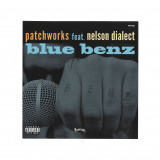
Favorite Recordings presents an exclusive collaboration between French producer Bruno ‘Patchworks’ Hovart (Voilaaa, Mr President, Taggy Matcher, …) and Australian NYC-based rapper and poet Nelson Dialect. The two artists met two years ago after Nelson’s gig in Lyon and, of course, they discussed and seriously planned to collaborate one day, both having an everliving love for early nineties hip hop. Then came the quarantine and Covid-19 with Patchworks locked in Lyon, Nelson Dialect in NYC: it seemed to be the right time to do it. A few months later and they finally drop Blue Benz, the result of their long distance collaboration, coming as a beautiful 7inch filled with proper Jazz & Soul Hip Hop vibes.
On A side, « Blue Benz » reminds indeed the best feelings of the nineties hip-hop with its infectious slapped bass rhythm and subtle Rhodes chords, all fiiting perfectly with Nelson Dialect’s serious flow!
On B Side, « Jazzy Blue Benz » offers an alternate take on the same groove, focusing more on the electric guitar gentle slides with a more percussive beat and horns arrangements with a proper NYC jazz
feeling.
From Adelaide, Australia, Nelson Dialect now lives in New York working with Bronx label Red Apples 45 started by AG of DITC and Ray West. Making music since he was 16, he has received critical acclaim for his work with producer Must Volkoff and their most recent album Magnetism. Before moving to New York, Nelson toured extensively in Australia supporting some of the biggest international Hip Hop acts including Mobb Deep, Lupe Fiasco, Ghostface Killah, GZA, RZA, Pharoahe Monch and DJ Premier among many more. He just released a new album Opal Mind with French producer NuTone.
- A1: Can't We Be Friends?
- A2: Isn't This A Lovely Day?
- A3: Moonlight In Vermont
- A4: They Can't Take That Away From Me
- A5: Under A Blanket Of Blue
- A6: Tenderly
- B1: A Foggy Day
- B2: Stars Fell On Alabama
- B3: Cheek To Cheek
- B4: The Nearness Of You
- B5: April In Paris
- C1: Don't Be That Way
- C2: Makin' Whoopee
- C3: They All Laughed
- C4: Comes Love
- C5: Autumn In New York
- D1: Let's Do It
- D2: Stompin' At The Savoy
- D3: I Won't Dance
- D4: Gee, Baby, Ain't I Good To You?
- E1: Let's Call The Whole Thing Off
- E2: These Foolish Things
- E3: I've Got My Love To Keep Me Warm
- E4: Willow Weep For Me
- E5: I'm Putting All My Eggs In One Basket
- F1: A Fine Romance
- F2: Ill Wind
- F3: Love Is Here To Stay
- F4: I Get A Kick Out Of You
- F5: Learnin' The Blues
Waxtime Boxset Series Ella Fitzgerald & Louis Armstrong - The Essential Albums ‘Ella & Louis’ and ‘Ella & Louis Again’ Louis Armstrong and Ella Fitzgerald were capable of producing magic that few jazz singers could match.
Their infrequent studio collaborations yielded true masterpieces. After cutting several sides backed by big bands for Decca in the late forties and early fifties, Ella and Louis were summoned by producer Norman Granz in 1956-57 to make three albums that would become legendary jazz classics. This 3-LP set compiles their two complete small group albums, Ella & Louis (Verve MGV4003) and the 2LP set Ella & Louis Again (Verve MGV4006-2).
Ella & Louis *****Down Beat “Ella & Louis is one of the very, very few albums to have been issued in this era of the LP flood that is sure to endure for decades.” (Nat Hentoff) Voted number 636 in Colin Larkin’s All Time Top 1000 Albums
Ella & Louis Again (2lp Set) ***** Down Beat “This set is more relaxed and more successful than their previous cooperative venture. It can hardly fail to break sales records for them both.” (Leonard Feather)
After releasing two records with the quintet Fazer, German guitarist Paul Brändle presents his solo debut on Squama Recordings.
Paul's minimalist compositions move in slow-motion between Straight Ahead Jazz, Folk, and Blues, only subtly disclosing their musical origins.
The album was recorded in Vienna during the annual 'Hundstage', a period in the summer during which the whole city succumbs to the sweltering heat. Short on oxygen, but not on ideas, Paul created 9 tracks of soothing excellence that are worth calming down for.
- A1: Red-Key - While New
- A2: Ray Martin - Supergama
- A3: J Tenafly - You
- A4: Nick Wilson - Sugestion
- A5: Blas & His Friends - Todo Tu
- A6: Conjunto Olivino - Cataluna Rag
- A7: El Conjunto De Rafael Martinez - Ritual Song
- B1: Conjunto Nueva Onda - Chacal Blues
- B2: Greg Segura Y Su Orquesta - Safari
- B3: Jorge Enrique - Siero Pop
- B4: Orquesta Miramar - Sagitario
- B5: Dany Roy & His Band - Intermision Pop
- B6: Sarr Incony - Afro Special
- B7: Mesie Bato - Amanecer
· This compilation features the rarest and unknown instrumental tracks of that Funky Groove early sound.
· Light music along with wind section and keyboard ready to hit the dance-floor, that we call Spanish-Grooves.
· Composers, musicians & arrangers like Gregorio García Segura, Rafael Martínez, Antonio Barco, Antonio Latorre, Jaime Botey, etc.
During the 70's, an important number of orchestras and dance bands popped up in our country but not many of them released their own songs or covers on vinyl, so we can’t say that our music library has bulky volumes, rather it’s just the opposite.
You have to dig deep in the catalogue of obscure record labels to find some quality pieces, which we will usually attribute to Tinglado 13, Conjunto Nueva Onda, The Matches, Conjunto Don Pelegrin, Rafael Martínez, Carlos de Ros, Salgado y su Grupo, Mesié Bató, Pedro González, Jorge Enrique. Most orchestras played bossa nova, soul, some lounge and easy listening, and a usual mix of light music with wind section and keyboards, something like “spanish-soul” or “rhythm'n'blues-pasodoble”.
It was a time when the bands survived playing shows with a repertoire based, mostly, on Spanish popular songs and international hits.
Many artists recorded with nicknames, many others used licensed songs paying rights to the original authors and some orchestras changed their names when they pressed their records, in an attempt to appear modern or simply for pure commercial purposes, that's why it is difficult to trace accurately the musical path of many of these artists. This scene was especially intense in Aragon and Catalonia, where a bunch of labels emerged, often simply as platforms for bands to promote their own music.
This compilation aims to discover to a wider audience some of the most sought-after instrumental gems by discjokeys and disco music collectors, eager for soul, groove and hot sounds.
- A1: Gregorio Garcia Segura - Harlem Pop
- A2: Los Brandis Con Maria Nevada - Life's Song
- A3: Lin Barto - Sax Pop
- A4: Blas & His Friends - Supermarket
- A5: Jorge Enrique - Go Go
- A6: Roberto Serrano - Retorno
- A7: Rafael Martinez - Funny Comics
- A8: Orquesta A Latorre - Hotel Don Felipe
- A9: Orquesta Miramar - Pop Song
- A10: Conjunto Nueva Onda - A Su Aire
- A11: Ramon Gil - Mercurio
- A12: Mesie Bato - Violeta
- A13: Red-Key - Morning
- A14: Unidades - Caballo Salvaje
· This compilation features the rarest and unknown instrumental tracks of that Funky Groove early sound.
· Light music along with wind section and keyboard ready to hit the dance-floor, that we call Spanish-Grooves.
· Composers, musicians & arrangers like Gregorio García Segura, Rafael Martínez, Antonio Barco, Antonio Latorre, Jaime Botey, etc.
During the 70's, an important number of orchestras and dance bands popped up in our country but not many of them released their own songs or covers on vinyl, so we can’t say that our music library has bulky volumes, rather it’s just the opposite.
You have to dig deep in the catalogue of obscure record labels to find some quality pieces, which we will usually attribute to Tinglado 13, Conjunto Nueva Onda, The Matches, Conjunto Don Pelegrin, Rafael Martínez, Carlos de Ros, Salgado y su Grupo, Mesié Bató, Pedro González, Jorge Enrique.
Most orchestras played bossa nova, soul, some lounge and easy listening, and a usual mix of light music with wind section and keyboards, something like “spanish-soul” or “rhythm'n'blues-pasodoble”.
It was a time when the bands survived playing shows with a repertoire based, mostly, on Spanish popular songs and international hits.
Many artists recorded with nicknames, many others used licensed songs paying rights to the original authors and some orchestras changed their names when they pressed their records, in an attempt to appear modern or simply for pure commercial purposes, that's why it is difficult to trace accurately the musical path of many of these artists. This scene was especially intense in Aragon and Catalonia, where a bunch of labels emerged, often simply as platforms for bands to promote their own music.
This compilation aims to discover to a wider audience some of the most sought-after instrumental gems by discjokeys and disco music collectors, eager for soul, groove and hot sounds.
One of the best Soul Ballads out there, end of story, with a price to match if you want the O.G, but why bother, we got the Juice cut straight from the tapes. This is a track I like to drop bang in the middle of the evening out the blue to slow things down before taking it back up, never fails. 500 only, no repress.
- A1: Joan Baez - House Of The Rising Sun
- A2: The Band - The Weight
- A3: Mungo Jerry - In The Summertime
- A4: James Carr - The Dark End Of The Street
- A5: Lee Hazlewood With Duane Eddy & His Orchestra - The Girl On Death Row
- A6: Al Green - The Letter
- A7: Status Quo - Pictures Of Matchstick Men
- B1: Bob Dylan - Highway 51 Blues
- B2: Canned Heat - On The Road Again
- B3: Donovan - You\\'Re Gonna Need Somebody On Your Bond
- B4: Fleetwood Mac - Man Of The World (1998 - Remaster)
- B5: Consortium - All The Love In The World
- B6: The Tremeloes - Here Comes My Baby
- B7: Tim Hardin - Reason To Believe
French modern-classical quartet astrïd return on May 10th with the first part of a new release entitled A Porthole.
Conceptually the two records work in unison, focusing on portholes into the abyss, with part one delving into the depths of the deep sea. The tracks are named after various strains of seaweed, the artwork depicting dark waves and uncertainty. Part two will follow in a years time and will turn its attention to the night sky and constellations.
A Porthole continues astrïd’s signature style of billowing guitars, strings and woodwind. Each element intertwined with another, linked perfectly together through restrained jazz-tinged percussion. 2017’s highly-acclaimed release ‘Through the Sparkle’ with renowned pianist Rachel Grimes (of Rachels) set the bar extremely high for this release but astrïd have matched the depth, melody and quality of that record here.
Part one of this journey features some sublime compositions with Cyril Secq’s expressive and bold guitar playing carrying the pieces into chamber music territory, joined seamlessly by a variety of other instruments that swell and soar and fit perfectly into the story being told. Everything seems to have its place, nothing is overplayed or out of step here, there is an organic nature to the way this quartet plays and interacts with one another as melodies circle back and fade away in the same beautiful breath.
A Porthole is a deeply charming record, exercising glorious, nuanced refrain and offering a sort of hope rarely found in music these days.
• Aqua blue vinyl - limited to 300 copies w/ download code
• The album was mastered by Harris Newman (Godspeed You! Black Emperor, Tindersticks etc)
• The artwork is extracted from an original one of a kind monotype print by Gizeh overlord Richard Knox.
Dean Zepherin is truly a producer who has managed to find his lane and appeal.
Born and raised in London - a suitably eclectic city for a man of his musical persuasion - he is renowned for his consistently genre-pushing productions.
In other words, a perfect match for Local Talk, a label not afraid to go beyond the classic 4/4 sound and explore different styles within house music.
Opening track Blue Moon is an organic, warm and enveloping chunk of deep house bliss and there's no doubt that Dean loves his house served with with plenty of horns.
Next up is Flying High, a jazzy uptempo house cut smothered in expansive percussions, trading organ and trumpet solos over elastic synth lines.
Music that speaks to the senses
- A1: Emad Youssef - Al Bareedo Ana (The One I Love)
- A2: Abdel El Aziz Al Mubarak - Ma Kunta Aarif Yarait (I Wish I Had Known)
- B1: Kamal Tarbas - Min Ozzalna Seebak Seeb (Forget Those That Divide Us)
- B2: Madjzoub Ounsa - Arraid Arraid Ya Ahal (Love, Love Family)
- B3: Khojali Osman - Malo Law Safeetna Inta (What If You Resolve What's Between Us)
- C1: Zaidan Ibrahim - Ma Hammak Azabna (You Don't Care About My Suffering) (Live)
- C2: Saied Khalifa - Igd Allooli (The Pearl Necklace)
- C3: Taj Makki - Ma Aarfeen Nagool Shino! (We Don't Know What To Say!)
- D1: Hanan Bulu Bulu - Alamy Wa Shagiya (My Pain And Suffering) (Live)
- D2: Abdelmoniem Ekhaldi - Droob A Shoag (Paths To Love)
- D3: Samira Dunia - Galbi La Tahwa Tani (My Heart, Don't Fall In Love Again)
- E1: Mohammed Wardi - Al Sourah (The Photo)
- E2: Abdullah Abdelkader - Al Zaman Zamanak (It's Your Time)
- F1: Mustafa Modawi & Ibrahim El Hassan - Al Wilaid Al Daif (The Youth Who Came As A Guest)
- F2: Ibrahim El Kashif - Elhabeeb Wain (Where Is My Sweetheart)
- F3: Mohammed Wardi - Al Mursal (The Messenger)
In Sudan, the political and cultural are inseparable. In 1989, a coup brought a hardline religious government to power. Music was violently condemned. Many musicians and artists were persecuted, tortured, forced to flee into exile — and even murdered, ending one of the most beloved music eras in all of Africa and largely denying Sudan's gifted instrumentalists, singers, and poets, from strutting their creative heritage on the global stage.
What came before in a special era that protected and promoted the arts was one of the richest music scenes anywhere in the world. Although Sudanese styles are endlessly diverse, this compilation celebrates the golden sound of the capital, Khartoum. Each chapter of the cosmopolitan city's tumultuous musical story is covered through 16 tracks: from the hypnotic violin and accordion-driven orchestral music of the 1970s that captured the ears and hearts of Africa and the Arabic-speaking world, to the synthesizer and drum machine music of the 1980s, and the music produced in exile in the 1990s. The deep kicks of tum tum and Nubian rhythms keep the sound infectious.
Sudan of old had music everywhere: roving sound systems and ubiquitous bands and orchestras kept Khartoum's sharply dressed youth on their feet. Live music was integral to cultural life, producing a catalog of concert recordings. In small arenas and large outdoor venues, musical royalty of the day built Khartoum's reputation as ground zero for innovation and technique that inspired a continent.
Musicians in Ethiopia and Somalia frequently point to Sudan's biggest golden era stars as idols. Mention Mohammed Wardi — a legendary Sudanese singer and activist akin to Fela Kuti in stature and impact in his music and politics — and they often look to the heavens. A popular story is of one man from Mali who walked for three months across the Sahel to Sudan because the father of the woman he wanted to marry would only allow it if he got him a signed cassette from Wardi himself. Saied Khalifa is said to be the one of the few singers to make Ethiopian emperor Haile Selassie smile.
Such is the stature of Sudanese singers and the reputation of Sudanese music, particularly in the "Sudanic Belt," a cultural zone that stretches from Djibouti all the way west to Mauritania, covering much of the Sahara and the Sahel, lands where Sudanese artists are household names and Sudanese poems are regularly used as lyrics until today to produce the latest hits. Sudanese cassettes often sold more in Cameroon and Nigeria than at home.
But years of anti-music sentiment have made recordings in Sudan difficult to source. Ostinato's team traveled to Ethiopia, Somalia, Djibouti, and Egypt in search of the timeless cultural artifacts that hold the story of one of Africa's most mesmerizing cultures. That these cassette tape and vinyl recordings were mainly found in Sudan's neighbors is a testament to Sudanese music's widespread appeal.
With our Sudanese partner and co-compiler Tamador Sheikh Eldin Gibreel, a once famous poet and actress in '70s Khartoum, Ostinato's fifth album, following our Grammy-nominated "Sweet As Broken Dates," revives the enchanting harmonies, haunting melodies, and relentless rhythms of Sudan's brightest years, fully restored, remastered and packaged luxuriously in a triple LP gatefold and double CD bookcase to match the regal repute of Sudanese music.
A 20,000-word liner note booklet gives voice to the singers silenced by an oppressive regime.
Take a sail down the Blue and White Nile as they pass through Khartoum, carrying with them an ancient history and a never-ending stream of poems and songs. It takes two Niles to sing a melody.