Cerca:the body
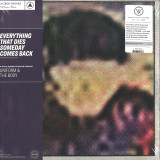
On the heels of their monolithic collaborative LP Mental Wounds Not Healing, the collaboration between industrial-noise post-everything bands Uniform & The Body returns with a second entry, Everything That Dies Someday Comes Back. Comprised of an amalgam of abrasive influence that spans Swans-y dirge and purge, Whitehouse’s clenched-jaw noise, middle-period Ministry’s penchant for metallic post-industrial everything, New Order’s nose for melodic emotionality, and Juicy J-inspired beats, Uniform & The Body’s approach delves deeper down the rabbit hole than before, igniting a sonic world of terror and bliss poised to grip the throats of fans yet again. Prepare for a record that the band self-describes as “the middle ground between Robyn and Corrupted, but weirder.”
Much like the collective’s bombastic debut, Everything was built over a series of collaborative sessions with Seth Manchester at Machines with Magnets in Rhode Island, mixing industrial-influenced synths, squalls of harsh noise, manipulated guitar, oodles of samples along with hard rock-inspired riffs, saccharine pop, and the alternately antagonistic and harrowing vocals of Michael Berdan
- Intro
- Dark Depths And Surface Tension
- Existence Is Not A Solo Sport
- It's A Shit Business, Glad I'm Out Of It
- Ain't No Such Thing As Civilised, It's Man So In Love With Greed
- Lore Of The Land
- Qvc Hands
- Momentary Masters Of A Fraction Of A Dot
- The Enclosed The Common Land And Built A Fucking Lawn
- A Birthright Sham, A Downright Shame
- Spare Me The Pleasant Trees
- Outro
Human Leather have always been a ferocious live act, unbelievably loud for a 2 piece. Their gigs are often an overwhelming wall of sludge, howls and amphetamine-addled drums, with spectators flying joyously around the pit. Previous recordings did full justice to the impact of the live show; however, the second helping is something else. On Here Comes the Mind, There Goes the Body the sludge is still present, rising, and lapping at your ankles, but there's a new clarity showing off exactly how f*cking good those riffs are. There are ear worm riffs for days, shout along vocals that roar, shriek and reform into a Greek chorus, drums that thump you repeatedly in the chest and then the whole thing vanishes in just under 30 minutes, leaving you bruised, deafened and with Some Questions about your life. Squint your ears a bit and you'll hear the influences of bands like Karp, Torche and Big Business but they're thrown into a much crustier stew. The lyrics span a variety of political issues, not limited to the landed gentry, global warming and consumerist harbingers of doom. Importantly the songs are also not afraid to discuss class issues (unlike many political bands who you suspect have a much sturdier security net). While this could easily feel preachy, every line is delivered with the knowing wink of the underdog and good humour (I am going to smile every time I think of "clod damn" or "QVC Hands" staring up at me from the lyric sheet), and the vibes are as they've always been in difficult times - "we know we're fucked, tonight we mosh, tomorrow we march". And what is the point of a revolution you can't dance to? Speaking of dancing, the final track features an honest-to-god dance beat, acid squelches and disembodied vocal samples, pointing to an alternative universe in which Human Leather are a heavy electroclash band. Here comes the record of the year, bring what is left of your eardrums. You didn't need that body anyway
- Abody
- A Curse
- Empty Hearth
- Even The Saints Knew Their Hour Of Failure And Loss
- Song Of Sarin, The Brave
- Ruiner
- Lathspell I Name You
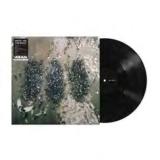
LTD Clear Vinyl[31,72 €]
Originally released in 2010, "The Body"s All The Waters Of The Earth Turn To Blood" is a watershed album that changed the landscape of heavy music. Buoyed by the eclectic cast of musicians, from the undeniably potent collaboration with The Assembly of Light Choir as led by now longtime The Body collaborator Chrissy Wolpert, to guest contributors that include members of Dead Times, Fang Island, Lichens (aka Robert Aiki Aubrey Lowe), Human Beast, and many more. The album"s singularly bleak, yet beautiful atmosphere not only set the tone for The Body"s career in breaking the mold, but set a new standard for what extreme music could do.
The Body & Dis Fig are a natural pair. Each has pioneered instantly recognizable worlds of sound all their own that defy any traditional categorizations or boundaries. The Body, Lee Buford and Chip King, continually challenge any conventional conception of metal, collaborating with myriad artists and from the folk-leanings of their work with BIG|BRAVE to their groundbreaking work with the Assembly of Light Choir to the intensity of their collaborations with OAA or Thou. Dis Fig, aka Felicia Chen, pushes electronic music into dark extremes, from warped DJ sets to, avant production. From being a member of Tianzhuo Chen"s performance-art series TRANCE, to being the vocalist with The Bug. The Body and Dis Fig find kinship in reimagining what it means to make "heavy music". Their debut Orchards of a Futile Heaven is the perfect synthesis of two forces, twisting melodicism and intoxicating rhythms, layering a dense miasma of distortion with intense beats, and a soaring voice clawing its way towards absolution. Orchards of a Futile Heaven affirms The Body & Dis Fig"s distinct and unified tastes as skilled sound sculptors who have an exceptional ability to make deeply affecting music, bracing as it is touching, harrowing as it is awe-inspiring. Together, the three have harnessed their expansive artistry to make music that is profoundly emotional, and staggering in its beauty.
Known for the monolithic force of their music and their inventive production techniques, The Body"s albums are benchmarks in the expansion and evolution of heavy music. Tightly packed with deceptively nuanced arrangements and exhilarating, challenging distortion, their compositions are possessed of an unmistakably singular sound. The Crying Out of Things is no exception; a culmination of all that The Body have done before, highlighting their mastery of dynamic and monumental music that pushes toward the unmistakable sound of oblivion The Body have produced a wealth of groundbreaking collaborations with the likes of Full of Hell, Thou, Uniform, BIG|BRAVE, OAA, and Dis Fig. The duo"s benchmark albums have, over the past 2 decades, changed the perceptions and directions of heavy music. The Crying Out of Things" embrace of noise is a comprehensive display of the multitude of expressions possible with abrasive sound, a skill that The Body have pioneered and refined. "I think for us the key to the way we use noise is, it"s not the only element," says Buford. "You"ve gotta really listen if you"re into noise. But it also has to have dynamics. Where, say, BIG|BRAVE (who have a similar ethos) expresses it in this more intellectual, minimalist way, The Body comes from an instinctual, maximalist way. We"re trying to cover it ALL." The Body stand alone in their ability to connect disparate influences and collaborators into a wholly original, potent and singular work. Alongside producer/engineer Seth Manchester, the duo"s voracious and omnivorous musical appetites have pushed the studio as an instrument into new avenues to conjure profound feelings from the music. The Crying Out of Things cements The Body"s place as a leader of heavy new music, their boundless creativity, their defining ability to convey anguish, created with a visceral clarity to devastating impact.
Auf seinem zweiten und zugleich letzten Album für Impulse! Records ging der Trompeter in die Vollen: mit
einer erstklassig besetzten und von Wayne Shorter geleiteten größeren Formation, die gelegentlich Streicherverstärkung erhielt, und einem abwechslungsreichen Repertoire, das nahtlos Standards mit Originalen
von Hubbard verknüpfte.
The Body & Dis Fig are a natural pair. Each has pioneered instantly recognizable worlds of sound all their own that defy any traditional categorizations or boundaries. The Body, Lee Buford and Chip King, continually challenge any conventional conception of metal, collaborating with myriad artists and from the folk-leanings of their work with BIG|BRAVE to their groundbreaking work with the Assembly of Light Choir to the intensity of their collaborations with OAA or Thou. Dis Fig, aka Felicia Chen, pushes electronic music into dark extremes, from warped DJ sets to avant production, from being a member of Tianzhuo Chen’s performance-art series TRANCE to being the vocalist with The Bug. The Body and Dis Fig find kinship in reimagining what it means to make “heavy music”. Their debut Orchards of a Futile Heaven is the perfect synthesis of two forces, twisting melodicism and intoxicating rhythms, layering a dense miasma of distortion with intense beats and a soaring voice clawing its way towards absolution.
Orchards of a Futile Heaven’s walls of sputtering texture and tectonic booms are soaked in the reverence and melancholy of sacred spaces brought to life by palpable intensity by Chen’s voice. Crafted during a time of personal fragility, the album’s devastating force lies beyond any of the expected noise and abrasive textures typically associated with both The Body & Dis Fig. Suffused with a raw vulnerability and a longing for catharsis, Chen’s voice searches for escape in the midst of oppressive atmospheres as if determined to find relief from guilt. “Eternal Hours” patiently unfurls waves of surprising sounds, whispered undulations that are punctuated by sudden crashes, all beneath Chen’s haunting harmonies. “Dissent, Shame” evokes grief and shame with a minimalist drone dirge that gradually builds to an enchanting choral passage. King’s guitar on “Holy Lance” matches the uncanny drone of Chen’s accordion in an all-consuming blast, Chen’s voice transforming the moment from anguish to defiance and empowerment. The album’s arc finishes with “Coils of Kaa” acting as a kind of propulsive exorcism, breaking through a suffocating air before the funeral procession of “Back to the Water” lays the album to rest.
While sampling has long been essential to each, The Body & Dis Fig deftly meld their differing approaches to sampling and creating extreme sounds until the boundaries are entirely blurred. The two found kinship in their desire to find new avenues to make heavy music that looked beyond tropes of metal and electronic music by merging the two. “I always wanted the heavier stuff but I also didn’t really like heavier guitar music,” says Buford. “None of it really felt quite heavy enough to me. A human can’t be as heavy as a machine.” Chen counters, “I love the balance. You could never connect to just a machine as well as you could a human. Which is why the combination is so potent for me. I don’t want to hide. I think nothing connects you more empathetically than another human's voice.”
Orchards of a Futile Heaven affirms The Body & Dis Fig as skilled sound sculptors who have an exceptional ability to make deeply affecting music, bracing as it is touching, harrowing as it is awe-inspiring. Together, the two have harnessed their expansive artistry to make music that is profoundly emotional, and staggering in its beauty.
The Body & Dis Fig are a natural pair. Each has pioneered instantly recognizable worlds of sound all their own that defy any traditional categorizations or boundaries. The Body, Lee Buford and Chip King, continually challenge any conventional conception of metal, collaborating with myriad artists and from the folk-leanings of their work with BIG|BRAVE to their groundbreaking work with the Assembly of Light Choir to the intensity of their collaborations with OAA or Thou. Dis Fig, aka Felicia Chen, pushes electronic music into dark extremes, from warped DJ sets to, avant production. From being a member of Tianzhuo Chen"s performance-art series TRANCE, to being the vocalist with The Bug. The Body and Dis Fig find kinship in reimagining what it means to make "heavy music". Their debut Orchards of a Futile Heaven is the perfect synthesis of two forces, twisting melodicism and intoxicating rhythms, layering a dense miasma of distortion with intense beats, and a soaring voice clawing its way towards absolution. Orchards of a Futile Heaven affirms The Body & Dis Fig"s distinct and unified tastes as skilled sound sculptors who have an exceptional ability to make deeply affecting music, bracing as it is touching, harrowing as it is awe-inspiring. Together, the three have harnessed their expansive artistry to make music that is profoundly emotional, and staggering in its beauty.
- A1: The Return Of The Crazy One
- A2: Doo Woo You
- A3: Holly Wanstaho
- A4: Bran Nu Swetta
- B1: Body-Hats (Part One)
- B2: Dope-A-Delic (Do-U-B-Leeve-In-D-Flo?)
- B3: Intermission
- B4: Wussup With The Luv
- C1: Digital Lover
- C2: Carry The Way (Along Time)
- C3: Body-Hats (Part Two)
- C4: Circus Entrance
- C5: Jerkit Circus
- C6: Circus Exit (The After-Nut)
- D1: Shake & Bake
- D2: Body-Hats (Part Three)
- D3: Do Ya Like It Dirty?
- D4: Bran Nu Sweat This Beat
- D5: Wheee!
Art As Catharsis präsentiert die neue EP der australischen Metaller Tired Minds – eine schlammgetränkte Portion metallischer Post-Hardcore. Mit düsteren Instrumentaltracks, leidenschaftlicher Lyrik und spannungsgeladenen Kompositionen offenbart 'The Body Is A Burden' die Wertschätzung der Band für Acts wie Converge, Touché Amore, La Dispute und Cult Leader. In vielerlei Hinsicht fühlt sich die EP wie ein Liebesbrief an einige der besten melodischen Heavy-Acts der letzten zwei Jahrzehnte an, obwohl sie mit einer Eindringlichkeit und Intensität vorgetragen wird, die zeigt, dass Tired Minds auf der Höhe ihres Könnens sind.
I Shall Die Here / Earth Triumphant is an expanded edition of the fourth full-length album by The Body, first released to widespread acclaim, and terror, in 2014. Sharing their moribund vision with Bobby Krlic, aka The Haxan Cloak, the tried and true sound of The Body is shred to pieces on I Shall Die Here, mutilated by process and re-animated in a spectral state by the collaboration.
This double album set is expanded with the previously unreleased Earth Triumphant, a full-length companion album that would become I Shall Die Here, showcasing The Body's brutality in its most primal form. With both albums revisited by The Body and Seth Manchester at Machines With Magnets and remastered by Matt Colton at Metropolis Studios, this is the definitive edition of a shocking classic of unbridled bleakness and innovation. Formed by drummer Lee Buford and guitarist Chip King in Little Rock, Arkansas in 1999, The Body soon relocated to Providence, Rhode Island. The duo remained in Providence for a decade before moving west to their current home of Portland, Oregon. Their debut self-titled album (Moganano, 2003) and on the widely-acclaimed, classification curtailing of All the Waters of the Earth Turn to Blood (At A Loss, 2011) readied the band for even more experimentations. The employment of the Assembly of Light Choir's classical chorales on All the Waters, alongside more industrial music techniques such as vocal sampling and drum programming, prompted RVNG to inquire with King and Buford which darker corners of the electronic universe they were presumably interested in exploring.

The undertaking of I Shall Die Here was aided by Seth Manchester and Keith Souza, The Body's long standing engineer and creative collaborator, and noted producer Bobby Krlic. Krlic's own work as The Haxan Cloak struck a similarly despairing chord to The Body with the celebrated Excavation (Tri Angle, 2013), itself a minimalist evocation of the afterlife. I Shall Die Here shares similar nether space with the morbidly deviating darkness of Excavation, but remains sculpturally frozen in a sort of earthen purgatory.
The Body's musical approach, engraved by Buford's colossal beats and King's mad howl and bass-bladed guitar dirge, became something even more terrifying with Krlic's post-mortem ambiences serving as both baseline and outer limit. I Shall Die Here sonically serrates the remains of metal's already unidentifiable corpse and splays it amid tormented voices in shadow. This expanded edition gives us a window into the creation of a classic with the inclusion of its in utero twin, Earth Triumphant. Recorded as a nearly finished album by Buford and King before The Haxan Cloak's transformation, it stands as a raw statement of intent, the original DNA for what would soon mutate into something wholly new.
Fans of I Shall Die Here will find familiar sonic fragments in a more primitive state - like seeing an out-of-context photograph of a family member taken well before you knew them - but the album stands on its own in its minimalist brutality, a natural bridge to what The Body was soon to become. The Body's I Shall Die Here / Earth Triumphant will be released in digital and vinyl formats on June 30, 2023. On behalf of The Body, The Haxan Cloak, and RVNG Intl., a portion of the proceeds from this release will benefit Intransitive, an organization that works to advance the cause of Trans liberation in Arkansas through art, education, advocacy, organizing and culture in order to create effective systemic change and on-the-ground impact.
I Shall Die Here / Earth Triumphant is an expanded edition of the fourth full-length album by The Body, first released to widespread acclaim, and terror, in 2014. Sharing their moribund vision with Bobby Krlic, aka The Haxan Cloak, the tried and true sound of The Body is shred to pieces on I Shall Die Here, mutilated by process and re-animated in a spectral state by the collaboration.
This double album set is expanded with the previously unreleased Earth Triumphant, a full-length companion album that would become I Shall Die Here, showcasing The Body's brutality in its most primal form. With both albums revisited by The Body and Seth Manchester at Machines With Magnets and remastered by Matt Colton at Metropolis Studios, this is the definitive edition of a shocking classic of unbridled bleakness and innovation. Formed by drummer Lee Buford and guitarist Chip King in Little Rock, Arkansas in 1999, The Body soon relocated to Providence, Rhode Island. The duo remained in Providence for a decade before moving west to their current home of Portland, Oregon. Their debut self-titled album (Moganano, 2003) and on the widely-acclaimed, classification curtailing of All the Waters of the Earth Turn to Blood (At A Loss, 2011) readied the band for even more experimentations. The employment of the Assembly of Light Choir's classical chorales on All the Waters, alongside more industrial music techniques such as vocal sampling and drum programming, prompted RVNG to inquire with King and Buford which darker corners of the electronic universe they were presumably interested in exploring.
The undertaking of I Shall Die Here was aided by Seth Manchester and Keith Souza, The Body's long standing engineer and creative collaborator, and noted producer Bobby Krlic. Krlic's own work as The Haxan Cloak struck a similarly despairing chord to The Body with the celebrated Excavation (Tri Angle, 2013), itself a minimalist evocation of the afterlife. I Shall Die Here shares similar nether space with the morbidly deviating darkness of Excavation, but remains sculpturally frozen in a sort of earthen purgatory.
The Body's musical approach, engraved by Buford's colossal beats and King's mad howl and bass-bladed guitar dirge, became something even more terrifying with Krlic's post-mortem ambiences serving as both baseline and outer limit. I Shall Die Here sonically serrates the remains of metal's already unidentifiable corpse and splays it amid tormented voices in shadow. This expanded edition gives us a window into the creation of a classic with the inclusion of its in utero twin, Earth Triumphant. Recorded as a nearly finished album by Buford and King before The Haxan Cloak's transformation, it stands as a raw statement of intent, the original DNA for what would soon mutate into something wholly new.
Fans of I Shall Die Here will find familiar sonic fragments in a more primitive state - like seeing an out-of-context photograph of a family member taken well before you knew them - but the album stands on its own in its minimalist brutality, a natural bridge to what The Body was soon to become. The Body's I Shall Die Here / Earth Triumphant will be released in digital and vinyl formats on June 30, 2023. On behalf of The Body, The Haxan Cloak, and RVNG Intl., a portion of the proceeds from this release will benefit Intransitive, an organization that works to advance the cause of Trans liberation in Arkansas through art, education, advocacy, organizing and culture in order to create effective systemic change and on-the-ground impact.
Show Me The Body ist ein in New York City ansässiges Hardcore-Trio, bestehend aus Julian Cashwan Pratt (Gründer; Banjo und Gesang), Harlan Steed (Gründer; Bass) und Jackie McDermott (derzeitiger
Schlagzeuger). Die Band organisiert seit 2015 nicht-traditionelle DIY-Räume für Jugendliche in New York und hat diese Arbeit seither durch ihre zeremoniellen Live-Shows, die Punk-/Hip-Hop-Mischtouren und
ihre CORPUS NYC-Plattform auf eine globale Bekanntheit ausgeweitet. ”Trouble the Water” ist der Höhepunkt von fast einem Jahrzehnt des Kampfes gegen die Gleichgültigkeit von New York City; zugleich eine Aufforderung an eine gleichgesinnte globale Gemeinschaft, die Alchemie der Familienbildung zu fördern.
Trouble The Water wurde komplett in den CORPUS Studios in Long Island City mit dem Metal-Veteranen Arthur Rizk (Code Orange, Power Trip, Ghostemane, Turnstile, Candy, Xibalba, Pissed Jeans) aufgenommen und von Studio-Mitbegründer Aidan Bradley mitproduziert.
Limited edition reissue of this legendary, rare and dreamy electronic ambient new age album.
Originally created and released in a small edition in Japan back in 1987 by the mysterious musician/ magician Shiho. The album features floating shimmering synthesizer textures. It's unique and extra ordinarily serene with shifting tone colors and spatial textures bringing the listener to a special magic place. It's as beautiful as it captivating. There's also a haunting edge to parts of the album sounding like what could originally have influenced David Lynch and Angelo Badalamenti when they composed the soundtrack to the original Twin Peaks series. Shiho who loves to make improvisational music began studying classic piano at the age of five. She says she gets inspiration from the celestial realms but she never considers melody. She draws a musical picture. Creativity is the unfolding of the unknown realms within the self. Through our chosen ways of expression, each of us is daily creating a unique universe, a unique environment.
The universe created by each and every being in endless repetition are messages of the universe. The breath of this music, expressed from my present environment, flowing through a myriad of places as environmental music is my expression of The Body Is A Message Of The Universe. Part of the album also saw a limited US CD release in the late 1980s which is hard to come by today.
Although Shiho Yabuki continued her career in Japan, both as a musician and magician and became a pioneer of healing music in Asia, for most western listeners it was like Shiho was one of those mysterious artists who puts out an album and then is never heard from again.
Tracks: Tomoshibi / Samadhi / Winterland / Tenshingoso (Earth, Wind, Fire, Water and Spirit) / Forestland / Tawamure/Cosmic Dance / Energy Flow/Ki No Nagare (The Way Of The Energy Flow)
The journey from trauma to healing and understanding inspired Andrew Oda’s beautiful new album: »Back To The Body«. More delicate and plaintive than his previous work, but no less adventurous in its broad palette of synthetic and acoustic sounds, this music is the topography of a descent into the wisdom of the body, “as frightening and unsafe as it may feel” as the composer puts it. A sweet piano, a gently plucked guitar, and a mournful cello sit alongside garbled synth melodies, rustling field recordings, and sweeping cosmic backdrops throughout, a mimic of the counterintuitive harmony of sensations that meet the traumatised body.
The Body has been an iconic force in heavy music for over 2 de- cades with a long history of collaborations. Recent collaborators include BUMMER, Full of Hell, Thou, Uniform. Lee Buford from The Body is also in Manslaughter 777 and Sightless Pit. BIG| BRAVE have a singular voice in heavy music, honed over 5 albums The Body and BIG|BRAVE are both bands possessed with an unequaled ability to convey overwhelming weight with simplicity, repetition, and detailed sonic atmospheres; artists who continue to alter the definition of what it means to be a heavy band. The Body are consistently prolific while increasingly ambitious as untethered producers and collaborators. BIG|BRAVE shape sound with dense waves of guitar and feedback, minimalist and hypnotic crashes, and emotionally exacting vocal melodies. In collaboration, The Body and BIG|BRAVE shift the gravity of their compositions to woven layers of percussion and unspooling guitars that sprawl through stark frameworks of earthy folk. Their debut collaborative album Leaving None But Small Birds distills the two ensembles" pioneering approach to heavy music into psalms for the forgotten, threnodies of lost love, and odes to vengeance. Typical to The Body"s creative process, Leaving None But Small Birds was composed almost entirely in the studio at Machine With Magnets with engineer/producer Seth Manchester. The Body and BIG|BRAVE aimed to challenge themselves to craft a fully realized and cohesive work that strayed outside the boundaries of the music they make individually. The Body"s Lee Buford set up the initial challenge: collaborating to make an album that evoked the country and folk roots of The Band. BIG|BRAVE"s Robin Wattie compiled lyrics and melodic lines from across Appalachian, Canadian, and English hymns and folk songs. Select phrases were then reworked and precisely arranged to center the experiences of marginalized characters, victims of hardship, and those yearning for love within each story. The despair and empowerment of these traditional tunes draw remarkable parallels with each group"s focus on championing people often cast aside in history. The Body and BIG|BRAVE, following a folk tradition, make each song their own through shifts in perspective and a synthesis of passages from kindred tales. BIG|BRAVE"s roots as a minimalist folk band and The Body"s love of old-time, country blues, and folk music enable the quintet to strike a formidable balance between sorrowful lamentation and uplifting resolve to weighty effect. Leaving None But Small Birds thatches together two monumental innovative forces that render the emotionally profound with lucid, devastating vitality
Entitled "The Body Remembers", this 14 song collection is a well rounded
combination of dance/pop, pop/rock, and ballads including a re-imagined version
of her mega-hit 'Lost In Your Eyes' with Joey McIntyre.
Her musical contributors on this new release range from Grammy award winning
DJ Tracy Young, to Emmy Award winning composer/ producer/ Cinderella
drummer Fred Coury, Former Guns n Roses guitarist DJ Ashba and, iconic mixers
Josh Gudwin and Brian Malouf. This album marks the debut of 19 year old
musical prodigy Sean Thomas. This recent Berkley graduate is Debbie's
producing partner on the majority of songs.
The Body and BIG|BRAVE are both bands possessed with an
unequalled ability to convey overwhelming weight with
simplicity, repetition and detailed sonic atmospheres; artists who
continue to alter the definition of what it means to be a heavy
band.
The Body are consistently prolific while increasingly ambitious
as untethered producers and collaborators. BIG|BRAVE shape
sound with dense waves of guitar and feedback, minimalist and
hypnotic crashes and emotionally exacting vocal melodies. In
collaboration, The Body and BIG|BRAVE shift the gravity of
their compositions to woven layers of percussion and
unspooling guitars that sprawl through stark frameworks of
earthy folk.
Their debut collaborative album, ‘Leaving None But Small Birds’
distils the two ensembles’ pioneering approach to heavy music
into psalms for the forgotten, threnodies of lost love and odes to
vengeance.
Recorded, mixed and produced by Seth Manchester at
Machines With Magnets (Liturgy, Battles, Mdou Moctar) and
mastered by Heba Kadry (Björk, David Bowie).
“Emotionally coherent but tricky to categorize. BIG|BRAVE are
the sound of the raw unconscious, turned up loud.” - Pitchfork
“The Body have become one of the most interesting and difficult
to pin down groups in extreme music.” - Rolling Stone
CD in gatefold packaging with lyrics.
LP packaged with digital download card and inner sleeve with
lyrics.
Available to independent retailers on ‘LEVON’ (greenish clear)
coloured vinyl.
Cover features artwork by Bo Orr (also created artwork and
videos for Full of Hell and The Body).
Over the course of two decades The Body - Lee Buford and Chip
King - have consistently challenged assumptions and defied
categorization, redefining what it means to be a heavy band.
On ‘I’ve Seen All I Need To See’, they test the boundaries of the
studio to explore the extremes and microtonality of distortion to
find its maximal impact.
Their most incisively bleak album to date, a towering monolith of
noise, Buford’s booming, resolute drums paired with King’s
obliterated guitar and howl.
Course, bristling distortion contorts every instrument, with
samples of spoken word, cymbals, toms and King’s already
noxious tone emerging from layers of feedback.
Features guests Ben Eberle (Sandworm) and Chrissy Wolpert
(Assembly of Light Choir).
Recorded with long time engineer Seth Manchester at Machines
with Magnets (Lightning Bolt, Battles, Daughters) and mastered by
Matt Colton (Sumac, Brian Eno, Uniform, Sunn O)))).
Available on CD, metallic silver vinyl and black vinyl. LP formats
include digital download code.
The Body have collaborated with many, including Full Of Hell,
Thou, Uniform and Bummer.
“The distortion has this ability to envelope you, and not push you
away. It has this strange kind of beautiful timbre... once you give
into the sheer power of it, and let it take you on a ride then it
becomes this whole other kind of sonic experience.” - Matt Colton
The Body have continued to mould their sound into something
even more devastating, gorgeous and terrifying... As a whole, The
Body’s discography is, and will continue to be, without peer.” -
Metal Injection “Some of the most captivating heavy music around right now.” - Rolling Stone
Over the course of two decades The Body - Lee Buford and Chip
King - have consistently challenged assumptions and defied
categorization, redefining what it means to be a heavy band.
On ‘I’ve Seen All I Need To See’, they test the boundaries of the
studio to explore the extremes and microtonality of distortion to
find its maximal impact.
Their most incisively bleak album to date, a towering monolith of
noise, Buford’s booming, resolute drums paired with King’s
obliterated guitar and howl.
Course, bristling distortion contorts every instrument, with
samples of spoken word, cymbals, toms and King’s already
noxious tone emerging from layers of feedback.
Features guests Ben Eberle (Sandworm) and Chrissy Wolpert
(Assembly of Light Choir).
Recorded with long time engineer Seth Manchester at Machines
with Magnets (Lightning Bolt, Battles, Daughters) and mastered by
Matt Colton (Sumac, Brian Eno, Uniform, Sunn O)))).
Available on CD, metallic silver vinyl and black vinyl. LP formats
include digital download code.
The Body have collaborated with many, including Full Of Hell,
Thou, Uniform and Bummer.
“The distortion has this ability to envelope you, and not push you
away. It has this strange kind of beautiful timbre... once you give
into the sheer power of it, and let it take you on a ride then it
becomes this whole other kind of sonic experience.” - Matt Colton
The Body have continued to mould their sound into something
even more devastating, gorgeous and terrifying... As a whole, The
Body’s discography is, and will continue to be, without peer.” -
Metal Injection “Some of the most captivating heavy music around right now.” - Rolling Stone
The Body is a prolific musical force whose creativity is matched only by the astonishing weight of their sound. Duo Lee Buford and Chip King have established their own musical language that reimagines how rhythm, dynamics, and sonics can shape or dismantle song structure. Over the course of two decades, the duo has consistently challenged assumptions and defied categorization, redefining what it means to be a heavy band. On their new album, The Body are again pushing limits and testing the boundaries of the studio to explore the extremes and microtonality of distortion to find its maximal impact. I've Seen All I Need To See is The Body at their most incisively bleak, a towering monolith of noise.
A new collaborative EP from Dwayne Parris and Joseph Richmond Seaton, a.k.a. Call Super
I took a trip to see something sublime. There was no need to satisfy, nothing to fill. I just wanted to look. If only you knew what these forms meant to me, we could fill this dead room with talk. They’ve been there for so long, floating, bending the space, sculptural hymns to colour a vacant spirit. In some time, like you and me, they will be lost.
What are the best non-physical landfills for discarded thought? Do waves transition between naturally occurring substrates and audio signals? Does adrenal fatigue and replenishment in the human brain relate to cycles of euphoria and dysphoria in music? What is the mental effect of visual versus aural repetition? Is all music fictional? Can the language of objects and memories impregnate sound? Are bodies out of fashion? What is the music production equivalent to a green screen in film? What is the best non-physical preservation method for sound? Is film editing a way of ordering memories? Is repetition therapeutic? Are all films fictional? Have physical forms slipped into obsolescence? Did Erik Satie have an anxiety disorder? Is background music parasympathetic? Are physical players more virtuosic than virtual instruments? Is thought finite? Is physical music a fetish? Is reality fictional? What is the most elegant way to float between corporeal and ethereal forms? Do memories deteriorate and fade like audio signals exposed to the elements? Can thought exist without the body?
For the dance film essay - The Body as Archive Gregor Schwellenbach chose a simple yet radical approach: he created a kind of catalog of sounds, clearly structured, presented with sobriety and boldness. The sounds are not embedded in the familiar frame of rhythm-harmony-melody, rather, they are introduced smoothly, presented one after the other, sometimes going together, then standing alone. It is a sensual approach, at the same time executed strictly systematically. Or vice versa: Schwellenbach's composition is strictly systematical, giving maximum space for sensuality and the unfolding of sounds.
Schwellenbach strives to create a system that doesn't become rigid, by treating the material gently and with sincerity.
In composing - The Body as Archive he sets clear rules: everything is played by hand, he only uses instruments he plays himself: Keyboards (Rhodes, piano, synthesizer) and double bass. Almost all material is played in the same key, the chords can be used in any combination, everything fits to everything. The ten parts of - The Body as Archive , mastered by Taylor Deupree, could be played all at the same time without sounding cacophonous.
Everything is pure presence, a gently woven stream of elegance and attentiveness. The organization of sounds - usually an action of preparation, didactic and discipline - turns into poetry.
Restive Plaggona is the music project of the Corfu-based artist Dimitris Doukas -also producing under Matriarchy Roots, Leftina Osha and Plaggona-. After releasing a series of cassettes in different labels along 2016 and 2017 -including his own Several Minor Promises- 'Leaving The Body' arrives as an electronic composition of beats and synthesizer bodies disguised as a sense of provocation and mystery. Each of the seven pieces offers more than a smattering of interesting textures separated by spans of great decline, but a master class of permutations in-between accompanying sounds, stretching rhythms and viscera-and- violence noises. Driven by a deeply expressive narrative, Restive Plaggona makes a strong statement about
his post-industrial vision adding technoid inclinations in a delightful dystopian world.
- A1: Prelude; The City; Marion & Sam; Temptation
- A2: Flight; The Patrol Car; The Car Lot; The Package; The Rainstorm
- A3: Hotel Room; The Window; The Parlour; The Madhouse; The Peephole
- B1: The Bathroom; The Murder; The Body; The Office; The Curtain; The Water; The Car; The Swamp
- B2: The Search; The Shadow; Phone Booth; The Prch; The Stairs; The Knife
- B3: The Search; The First Floor; Cabin 10; Cabin 1
- B4: The Hill; The Bedroom; The Toys; The Cellar; Discovery; Finale
Early support by: Marcel Dettmann, Takaaki Itoh, Gary Beck, DVS1, Adam Beyer, Randomer, Jeroen Search, Speedy J, Jonas Kopp, Tommy Four Seven,Slam, Mosca, Psyk, Paul Mac, NX1, Manni Dee, Progression, Scalameriya, Thomas Hessler, Juho Kusti, Ryuji Takeuchi, Mr Jones, ANFS, Dustin Zahn, Kyle Geiger, Joton, Paul Birken, Hector Oaks, Charlton, Dario Zenker, Kwartz, Dimi Angelis, Drvg Cvltvre, Stranger, Mikael Jonasson, Arnaud le Textier, Dax J, Jerome Hill, 3.14, Pfirter, Echologist, Darko Esser, Tripeo, Endlec, Stenny, Clouds, I/Y, Rivet, Henning Baer, Dave Tarrida, Rolf Mulder, W.I.R.E, SHDW, Pacou, Patrick DSP, Ansome, Sebastian Krenzlin, Rebekah, Gareth Wild, Domenico Crisci, Perc, Setaoc Mass, J.Tijn, Radial, Aiken, The Black Dog, Ness, Developer, Exium, Sawf, Joseph Capriati, Svreca, Shards, Truss, Truncate, Myler, Inigo Kennedy, Advanced Human, Operator
- A1: Fairytale Of New York
- A2: Sally Maclennane
- A3: Dirty Old Town
- A4: The Irish Rover
- A5: A Pair Of Brown Eyes
- A6: Streams Of Whiskey
- A7: A Rainy Night In Soho
- B1: Fiesta
- B2: Rain Street
- B3: Misty Morning, Albert Bridge
- B4: White City
- B5: Thousands Are Sailing
- B6: The Broad Majestic Shannon
- B7: The Body Of An American
Music From Memory hit it just right yet again- this time it's Richenel from the Netherlands who's lost tracks get the dusting off. 6 tracks of funkified lo fi bliss.. TIP!
MFM is proud to announce the first Dutch artist on Music From Memory and our first release of 2017. MFM017 will be a six track EP from Richenel. Richenel's first album 'La Diferencia' was released on the obscure Dutch cassette label Fetisj in 1982. Recorded amongst the turmoiled punk and squatter scene of Amsterdam by musicians who had all connected through the Rietveld art academy, the 'La Diferencia' sessions reflect a unique mix of punk aesthetics with a synthesized 'bedroom' funkiness. Following on from this obscure release, Richenel would go on to record a number of successful albums and hit singles in the Netherlands and beyond. The six track EP holds a selection of tracks from the original cassette as well as alternative versions and two previously unreleased songs. More Fetisj news to follow.
Disciplined, curated and healed EP by The Flip.
ADULT. '20 years ODD.'
Over the course of the last two decades, Detroit-based duo ADULT. (Nicola Kuperus and Adam Lee Miller) have released six albums and nineteen EPs and singles across some of our favorite labels: Mute, Ghostly International, Thrill Jockey, Clone Records, Third Man Records, and their own label, the revered Ersatz Audio. November 1998 marked their first release: the five-song 12" 'Dispassionate Furniture'. This September, twenty years later, Dais Records is proud to announce ADULT.'s seventh full length album: THIS BEHAVIOR.
The album began as 23 demos written and recorded in a remote cabin in the woods of Northern Michigan during the dead of winter. In total isolation, and with a reduced amount of gear (a modified version of their live setup) on the cabin's kitchen table, the duo were completely immersed in an incessant inescapable studio of their own making - looping, repetitive analogue sequences grinding away day and night. At the end of the intense demo session, a handful of peers were enlisted by the band for the difficult task of paring down the demos into the final album.
The result is 10 tracks of uncompromising dark electronics, showcasing ADULT.'s return to aggressive and energetic dancefloor mastery. Album opener 'This Behavior' alongside the follow-up 'Violent Shakes' (which ascends into synths wailing like warning sirens over Kuperus's commanding vocals) set the stage for an on-edge listen, while the heartbreaking 'Silent Exchange' unfolds as a beautiful sad synth dirge. 'Perversions of Humankind' breaks the mood - driving the listener into a slow and low groove before the frantic album midpoint of 'Irregular Pleasure'. 'Does The Body Know' is the album's post-punk anthem, with irresistible singalong 'we're out of order - we're undefined!' The latter half of the album drives forward with 'On The Edge (You Put Me...)' and 'Lick Out The Content', refusing rest and demanding movement and response. 'Everything & Nothing' emerges slowly from sparkling synth textures, snowballing with nervous energy into an acid techno stomper before the album comes to a close on the icy landscape of 'In All The Debris', a goose-bump inducing slow electronic mantra that closes the curtain on a massive album.
Artist statement on the album's writing process:
'It's confounding how often we negate the importance of disconnecting, getting weird, getting lost. Discomfort and joy intertwined. Day to day, theatrical self-presentation set to rest in our frantic social world. Public becomes private, almost too private. Looking out into frozen woods as you deliver your vocals. For who For what Taking walks along icy shorelines as you try to overcome writer's block, as you try to overcome yourself. Not seeing anyone for days and weeks on end. Overwhelming thoughts and feelings come rushing in; anxiety, fear, purpose, banality, futility of task, power structures, power struggles, pointlessness, collapse.You're faced to face yourself. Your awareness is heightened. You are neither here nor there. You are in a liminal state As you work in this isolated cabin your windows become mirrors.'
"Are we distortions. Are we distortions, perversions of humankind.Are we distortions. Are we distortions, twisted somewhere in time."