Mr Bongo proudly presents the debut album from Tasmania-born, Melbourne-based, Finn Rees. Gliding across a swirling palette of saturated hues, Dawn Is A Melody feels vintage yet vibrant, new but familiar at the same time. A spiritual, deep and textured jazz record, tipping its hat to greats from the past, capturing memories and reformulating them into new ideas with the help of some of Melbourne’s finest talent.
Expert keys player for the likes of 30/70 and Elle Shimada, alongside one-half of Close Counters, this debut LP was Finn’s conscious departure from the realm of groove-based jazz. Instead, Dawn Is A Melody places the piano and arrangements centre stage, giving Finn and his fellow Melbourne crew freedom to explore the spaces in between, new emotions and alternate soundscapes.
In Finn’s own words: “My intention with Dawn Is A Melody was to create a world; a microcosm of colour. Something rich and beautiful that allowed the melodies and compositions to reach their full potential. It was driven by hope, curiosity and the search for beauty and reassurance in this ever-changing world. The emotion behind the music is really about the journey of life, growing up and changing, as well as my relationship with Tasmania’s natural landscapes where I grew up, a part of the world that is incredibly unique and beautiful.”
The album arcs between opening, middle and end. Beginning with the optimism of ‘Looking Up’ and ‘Lagoon’, the former a celestial, string and harp marbled slice of positivity, the latter a spiritual journey of exuberance and hope, Finn’s fingers dancing across the ‘70s Yamaha grand piano. From there the songs blossom outwards with the cinematic soulful journey of ‘It’s Behind Me Now’ and Brazilian-inspired ‘Expansion’, as the divine ‘Crossing’ signals a transition to a new realm. The energy is transformed from the rich cosmic textures to a more intimate and personal feeling with ‘Ablaze’, ‘Between Spaces’ and ‘As It Passes’ which blissfully fades down to simply piano and strings to close out the record.
Recorded at Rolling Stock in Collingwood, Melbourne, Henry Jenkins was drafted in as recording and mix engineer, his minimal vintage mic setups giving a live aesthetic and warmth to the arrangements. Lucky Pereira and Blakely McLean Davies form the rock-solid rhythm section, with a hand-picked line-up of other Melbourne talent on display, including Cheryl Durongpitikul on tenor sax, Siwei Wong on harp, Audrey Powne on trumpet and Allysha Joy on vocals to name only a few.
Plotting a course from Alice Coltrane, through Herbie Hancock, to Arthur Verocai, this is a debut nourished by the past but firmly made in the present. A record unable to be age-stamped, casting ambiguity as to when, what era and by whom it has been crafted. Like a vintage lens capturing a current scene, Dawn Is A Melody is warm and familiar yet focused on the here now.
Buscar:the bongo hop
- 1: Forró Violento (Instrumental)
- 2: Grão De Areia
- 3: Não Vou Reclamar De Deus
- 4: Toda Beleza
- 5: Put@Ria!
- 6: Rubelía
- 7: Posso Dizer
- 8: Vinheta As Palavras I
- 9: As Palavras
- 10: Forró Violento
- 11: Torto Arado
- 12: Lua De Garrafa
- 13: Na Mão Do Palhaço
- 14: Doutor Albieri
- 15: Samba De Amanda E Té
- 16: Amor De Mãe
- 17: Vinheta As Palavras Ii
- 18: Assum Preto
- 19: Forró No Escuro
- 20: Toda Beleza (Pelos Loirinhos)
Black Vinyl[26,68 €]
Some albums are game-changers in a genre. Take OutKast's Speakerboxxx / The Love Below or Primal Scream's Screamadelica, they observe, study, and then flip what an album can mean to a genre or moment in time.
From the very first listen of Rubel’s Latin Grammy-nominated third album As Palavras, Vol. 1 & 2, you can feel its transformative force for the MPB genre. Here we see one of Rio’s brightest stars, fusing the contemporary with the classic, soaking up the richness of Brazil’s musical heritage. The result is a marauding 20-track epic, incorporating traditional styles such as forró, MPB, pagode and samba with modern baile funk, rasteirinha and hip-hop.
The album exudes a sense of freedom and creativity, playfully and provocatively juggling the familiar with the forward-thinking. The tracks are divided across two records, navigating feelings of love, heartbreak and discovery, whilst balancing themes of violence, passion, irony and affection. Collaborating with some of the country’s most esteemed artists such as Gabriel do Borel, Liniker, Luedji Luna, Tim Bernardes and Ana Caetano, Rubel takes this fusion of styles, subjects and flavours to the global stage.
The grand, forró-blending, choral opener, ‘Forró Violento (Instrumental)’ sets the tone for the album, with references and links between tradition and modernity everywhere to be seen. From the Ana Frango Elétrico produced, funk flexing, samba-soul brilliance of ‘Não Vou Reclamar de Deus’, to the album’s title cut ‘As Palavras’, in collaboration with Tim Bernardes, that melds MPB influences with electronic elements and hip-hop touches.
Across both sides of the album, Rubel’s story-telling gift is given space to shine. ‘Torto Arado’ featuring Liniker and Luedji Luna, beautifully references the racial injustice, tragedy, hope and ambition found in one the most celebrated Brazilian novels of recent times by Itamar Vieira Júnior. Elsewhere, ‘Na Mão do Palhaço’ manifests a satirical march about a suicidal conservative middle-aged man, who is rescued by the miracle of the carnival.
At times the album is gentle and intimate with tracks like ‘Toda Beleza’ featuring Bala Desejo, or the ode to friendship ‘Lua de Garrafa’, composed with the legendary Milton Nascimento. At others, the grooves hit harder, with sounds from the favelas laced within. ‘Put@ria!’, explores the universe of baile funk, with BK’ and MC Carol trading off on the mic, as ‘Rubelía’ moves between reggaeton, funk, and hip hop. The latter is a tribute to a key influence of the album, Spanish star Rosalía and her parallel mix of current with classic.
Ultimately though the beauty of this album lies in its concept. In the midst of a country divided, ‘As Palavras Vol. 1 & 2’ sets out to bring together genres and generations, grounded in rhythms and words that have helped define Brazil through the ages.
- A1: Get Down • A2. The Cross • A3. Made You Look
- B1: Last Real Nigga Alive
- B2: Zone Out (Feat. Bravehearts)
- B3: Hey Nas (Feat. Claudette Ortiz & Kelis) • B4. I Can
- C1: Book Of Rhymes
- C2: Thugz Mansion (N.y.) (Feat. 2Pac & J. Phoenix)
- C3: Mastermind • C4. Warrior Song (Feat. Alicia Keys)
- D1: Revolutionary Warfare (Feat. Lake) • D2. Dance
- D3: Heaven (Feat. Jully Black)
Repress! PRESSED ON BLUE & WHITE SWIRL VINYL! Housed In A High Gloss Jacket With Each LP Tucked Into A Printed Inner Sleeve
Nasir "Nas" Jones' 2001 record Stillmatic was considered a major comeback for the 90s rap icon. It signalled a return to the gritty, urban chaos of his acclaimed debut album, after releasing record after record of gradually more mainstream material, and Nas' return to prominence in the highest echelons of hip-hop. In spite of this newfound critical clout, Stillmatic's release did nothing to squash his then ongoing feud with fellow New Yorker Jay-Z, who had gone so far as to challenge Nas to a pay-per-view rap battle. A challenge Nas rejected, stating "If Jay-Z wants to battle, he should drop his album the same day I do and let the people decide." Nas fans never would get the no-holds barred lyrical battle with Jay-Z many had speculated. What they got instead was one of Nas' most personal and introspective releases to date in 2002. Not long after Stillmatic's release, Nas spent much of his time away from the limelight to tend to his ill mother, who would pass on from breast cancer in 2002. His experiences with his mother's mortality as well as the fallout of his feud with Jay-Z, who continued to produce diss tracks as Nas tended to his mother, would inspire much of the lyrical material on his next record. God's Son was released in December of 2002, and like Stillmatic before it, was subject to major critical acclaim. On God's Son, Nas effectively took the battle-hardened demeanor he had cultivated and tore it down across 14 tracks that were emotionally insular, though still dusted in urban grit, and still finding time to shoot back at Jay-Z's potshots on tracks like "Last Real Nigga Alive" and "Mastermind." Assisting Nas was a slew of top-tier producers like The Alchemist, Eminem, Ron Browz, and Salaam Remi, over samples of James Brown, the Incredible Bongo Band, Fela Kuti, and Beethoven, and guest vocals from Alicia Keys, Kelis, Claudette Ortiz of City High, and even a posthumous 2Pac.
- A1: Forro Violento (Instrumental)
- A2: Grao De Areia
- A3: Nao Vou Reclamar De Deus
- A4: Toda Beleza
- A5: Put@Ria!
- B1: Rubelia
- B2: Posso Dizer
- B3: Vinheta As Palavras
- B4: As Palavras
- B5: Forro Violento
- C1: Torto Arado
- C2: Lua De Garrafa
- C3: Na Mao Do Palhaco
- C4: Doutor Albieri
- C5: Samba De Amanda E Te
- D1: Amor De Mae
- D2: Vinheta As Palavras Ii
- D3: Assum Preto
- D4: Forro No Escuro
- D5: Toda Beleza (Pelos Loirinhos)
Pink Vinyl[29,96 €]
Some albums are game-changers in a genre. Take OutKast's Speakerboxxx / The Love Below or Primal Scream's Screamadelica, they observe, study, and then flip what an album can mean to a genre or moment in time.
From the very first listen of Rubel’s Latin Grammy-nominated third album As Palavras, Vol. 1 & 2, you can feel its transformative force for the MPB genre. Here we see one of Rio’s brightest stars, fusing the contemporary with the classic, soaking up the richness of Brazil’s musical heritage. The result is a marauding 20-track epic, incorporating traditional styles such as forró, MPB, pagode and samba with modern baile funk, rasteirinha and hip-hop.
The album exudes a sense of freedom and creativity, playfully and provocatively juggling the familiar with the forward-thinking. The tracks are divided across two records, navigating feelings of love, heartbreak and discovery, whilst balancing themes of violence, passion, irony and affection. Collaborating with some of the country’s most esteemed artists such as Gabriel do Borel, Liniker, Luedji Luna, Tim Bernardes and Ana Caetano, Rubel takes this fusion of styles, subjects and flavours to the global stage.
The grand, forró-blending, choral opener, ‘Forró Violento (Instrumental)’ sets the tone for the album, with references and links between tradition and modernity everywhere to be seen. From the Ana Frango Elétrico produced, funk flexing, samba-soul brilliance of ‘Não Vou Reclamar de Deus’, to the album’s title cut ‘As Palavras’, in collaboration with Tim Bernardes, that melds MPB influences with electronic elements and hip-hop touches.
Across both sides of the album, Rubel’s story-telling gift is given space to shine. ‘Torto Arado’ featuring Liniker and Luedji Luna, beautifully references the racial injustice, tragedy, hope and ambition found in one the most celebrated Brazilian novels of recent times by Itamar Vieira Júnior. Elsewhere, ‘Na Mão do Palhaço’ manifests a satirical march about a suicidal conservative middle-aged man, who is rescued by the miracle of the carnival.
At times the album is gentle and intimate with tracks like ‘Toda Beleza’ featuring Bala Desejo, or the ode to friendship ‘Lua de Garrafa’, composed with the legendary Milton Nascimento. At others, the grooves hit harder, with sounds from the favelas laced within. ‘Put@ria!’, explores the universe of baile funk, with BK’ and MC Carol trading off on the mic, as ‘Rubelía’ moves between reggaeton, funk, and hip hop. The latter is a tribute to a key influence of the album, Spanish star Rosalía and her parallel mix of current with classic.
Ultimately though the beauty of this album lies in its concept. In the midst of a country divided, ‘As Palavras Vol. 1 & 2’ sets out to bring together genres and generations, grounded in rhythms and words that have helped define Brazil through the ages.
The second in our Mr Bongo series opening the vault on classic recordings from the fabled Groove Merchant Records catalogue. This time the spotlight turns to the Hammond B3 organ maestro Lonnie Smith, as we proudly present a reissue of his cosmic jazz-funk journey, ‘Afro-Desia’.
Originally released in 1975, this much-loved album was produced by Groove Merchant label owner Sonny Lester and features the mysterious 'Compliments Of A Friend' on guitar. Considering Smith was part of George Benson’s quartet in the ‘60s, that not so discreet veil appears to have been lifted on who this ‘friend’ might be. However, presumably due to contractual reasons, Benson had to remain covert for this recording. The lineup doesn’t stop there though, with the likes of legendary bassist Ron Carter and Grammy award winning saxophonist Joe Lavano joining the outfit.
An album of two parts, the first side sees Lonnie Smith in a spaced-out, cosmic jazz funk setting. The opener 'Afrodesia' is a funk flexing, steamy groover. Greg Hopkins and Lavano trading off on trumpet and sax respectively, as that bassline walks its way over fluttering jazz percussion and off-kilter electronics. 'Spirits Free' is an epic 15-minute free-wheeling jazz-funk workout. A mind melting trip that rises and falls, in parts spacey and serene, with Smith’s organ playing complimented by stretched out horns. Before long it opens out into unconstrained fluid sections that do its title proud. Pure ‘70s jazz-funk at its most stellar.
Side B takes a more classic soul-jazz flavour, with touches of Latin spice. 'Straight To The Point' kicks off with a carnival zing, full-frontal horn and organ lines providing a fiery party punch. It’s a swinging jazz cut that used to receive spins by DJs at Russ Dewbury's Jazz Room's sessions in Brighton in the ‘90s.
Finally, 'Favors' and 'The Awakening' close out the release. Two sure shot, quintessential Lonnie Smith firing Hammond grooves. Each conjuring up images of packed out, smokey jazz bar jams, every player letting loose with masterful improv sections to whip the crowd up into a frenzy.
A truly wonderful album, and an archetypal release showcasing the height of jazz musician excellence from this era.
Proudly presenting a new series of Mr Bongo reissues exploring the incredible back catalogue of Sonny Lester’s iconic Groove Merchant record label. First up, the spellbinding funk-fuelled, soul jazz album ‘Simba’, by guitar maestro O'Donel Levy.
Baltimore-born, Levy was already well regarded as one of the best up-and-coming jazz guitarists at the time of Simba’s release. Having toured with George Benson and Jimmy McGriff, as well as featuring on McGriff’s Black Pearl album on Blue Note, he went on to sign with Sonny Lester’s Groove Merchant. Produced by Lester himself and recorded over two back-to-back days of sessions in 1973, Simba features a who's who of ‘70s session players. The album features the legendary studio drummer Steve Gadd, Cecil Bridgewater on Flugelhorn, bass by Tony Levin and arrangements by Manny Albam.
A masterclass in tight yet effortlessly funk-driven rhythms, the tracks showcase these musicians at their zenith. Album opener 'Bad, Bad, Simba' wouldn’t have been out of place on a Lalo Schifrin ‘70s car chase soundtrack. Levy's playing is brilliant, bright and slick, with an infectiously exuberant energy that is complimented perfectly by Gadd's supreme drumming. ‘Playhouse' serves up another vibrant offering, Wah Wah guitars, horns and flutes duelling it out in a fast-paced fashion.
The cinematic thread continues throughout, yet with the tempo taken down a notch. 'Sierra Lonely' and ‘Sad, Sad, Simba’ head into lush ballad territory, with superb arrangements by Albam and beautiful playing by Collins and Bridgewater on Flugelhorn. Here Levy shines without taking any limelight, as the players synergize to a relaxed perfection. ‘Nigerian Knights’ closes the album flawlessly, showcasing once more Levy’s understated yet magnetic flow on the guitar.
Every track on ‘Simba’ is a winner. As with CTI Recordings of the same era, the feel and textures of Sonny Lester's productions have that pre-emptive, hip-hop aesthetic, which later producers would rework and reimagine. This album is expertly balanced, deftly arranged and magically executed, ebbing and flowing with a cool buoyancy that just grooves and grooves.
- A1: Still River Flow (Generalisation Dub) Phoenix (Crooked Goth)
- A2: Oxygen (Ruf Dug Remix)
- B1: Ballad Of San Marino (Mang Dynasty Remix) Still River Flow (Begin Remix)
- B2: Where The Leaves Are Falling (Brown Fang Remix) Across The Street (Generalisation Dub)
- C1: Phoenix (X-Press 2 On Fire Remix)
- C2: Oxygen (Flying Mojito Bros Refrito)
- D1: The Ballad Of San Marino (Chris Coco Extended Dub Version)
Original[24,16 €]
Love Makes Magic, the debut LP by JIM - aka Jim Baron of Crazy P & Ron Basejam notoriety - was released in June 2023 and the album has connected with an ever growing number of fans; lured in by great songs, Laurel Canyon singer-songwriter acoustics, 60’s psychedelic folk-rock, a dash of Balearic, discoid funk and a healthy dose of yacht-rock.
The album was voted Album of the Year in the Bill Brewster Furtive 50 chart for 2023 - like a Balearic BAFTAs - and Still River Flow (Generalisation Dub) came 2nd in the tracks of the year... which was nice.
Disco Pogo, Piccadilly Records and Mr Bongo all gave the LP honourable mention in their end of year charts too.
As you’d expect with an artist who has 25 years of dance music connections the accompanying remixes weren’t bad either... Crooked Man, Ruf Dug, Flying Mojito Brothers and Generalisation all came up with fine reinterpretations. Luke Unabomber hailed The Crooked Goth version of Phoenix as his track of the year. The vinyl run of the Crooked Mixes sold out in record time.
As the remixes racked up we considered collecting them together for a remix LP. And so here we are...
presenting Love Makes Magic - The Remixes.
The five aforementioned mixes will be joined by five brand new ones from X-Press 2, Mang Dynasty, Chris Coco, Begin ( James Holroyd) and Brown Fang. Spanning pumping club bangers, perfect sunsets soundtracks and left-field electronica.
We love them.
We hope you do too..
Minas 'Num Dia Azul' is a sublime slice of private press bossa nova meets jazzy MPB perfection. Warm and bubbling with youthful spirit, the music is simultaneously loose in swagger, yet slick and tight. The album was originally released in 1983 and reflects the great music coming out of Rio at the time, yet 'Num Dia Azul' wasn't recorded in Rio, but actually in the USA.
Recorded in North Carolina just after Patricia and Orlando Haddad had graduated from the North Carolina School of the Arts, the record was only released for the Brazilian market on their own Blueazul Records imprint. As with most private press labels, they could only afford to have it pressed in small quantities. To add to its later obscurity, hundreds of copies were also destroyed in a house fire. They say cream always rises to the top, and fast forward to the 2010s, the word amongst collectors and DJs was spreading about this mythical under-the-radar recording. People from across the globe were contacting Patricia and Orlando for more information, hoping to secure themselves a copy. Luckily the original tapes had remained with the artists and were in great condition, so in 2016 the pair ran a successful Kickstarter campaign to have it remastered and repressed.
For this Mr Bongo 2023 re-issue, we have tried to keep it as close to the original 1983 version as possible, both in the packaging and audio presentation. The CD version comes with bonus tracks. We are super proud to keep Patricia and Orlando's serene recordings in the circulation that they deserve to be. One for fans of Brazilian artists such as Burnier & Cartier, Edu Lobo and Joyce. We are sure those fans will lose themselves in the alluring textures of 'Num Dia Azul'
EP compilation of essential UK house cuts recorded between 1987 - 1990. TIP!
Before British house and techno found its’ distinctive groove at the turn of the 1990s, one act led the way: Bang The Party, a trio who emerged from London’s vibrant underground party scene in the mid 1980s and proved, beyond any doubt, that UK producers could make music every bit as magical as the pioneering productions put forward by their counterparts in Chicago, Detroit and New York.
By the time long-running DJs and party promoters Kid Batchelor and Leslie Lawrence joined forces with trained engineer Keith Franklin at legendary North-West London reggae studio Addis Ababa in 1987, they’d spent years as DIY dance music activists in Britain’s capital city. They channelled these experiences and their love of imported house and techno sounds into a new project, Bang The Party, in the process becoming the first British act to appear on Transmat, a reflection of the quality and authenticity of their music.
The latest Rush Hour Reissue Series release offers a snapshot of some of the numerous gems nestled in the Bang The Party catalogue, delivering a much-deserved celebration of one of Britain’s most significant early acid house collectives. It features four fully remastered cuts recorded and released between 1987 and 1990 – on-point and far-sighted club workouts that sound as fresh and timeless now as they did when Britain was sweltering under its infamous ‘second summer of love’.
Fittingly, the EP begins with ‘I Feel Good All Over’, the group’s ground-breaking debut single. Dedicated to their home city and one of the earliest UK interpretations of house music, the track exists in the grey area between Chicago house and New York ‘garage house’ – all jaunty organ stabs, jacking Windy City beats, restless bass and soulful vocalizations. ‘Jacques Theme’, which follows, originally nestled on the B-side of that single release. An early, acid-flecked expression of hip-house with a British twist, breakdance-friendly bongo patterns and a dose of Larry Heard-inspired deep house dreaminess, the track remains an under-appreciated classic whose rap verses reflect the popularity of hip-hop in London at the time.
1988’s ‘Release Your Body’, Bang The Party’s most celebrated early release, was reissued in the United States by Transmat, reflecting the strong working relationship between Derrick May and Kool Kat Records’ Neil Rushton. A hypnotising affair propelled forwards by sweat-soaked drum machine beats, jacking fills and an addictive bassline, the track offers another near perfect distillation of the band’s Black American musical influences while delivering something genuinely new and fresh.
Rounding off the EP is a choice cut from Bang The Party’s sought after 1990 album Back To Prison. Doused in the star-lit synth sounds of the Motor City with jaunty organ stabs inspired by the kind of New Jersey jams championed at East Orange institution Club Zanzibar, ‘Let It Rip’ is a superb slice of deep house soul featuring a lead vocal every bit as emotive as anything laid down by Robert Owens. Like the rest of Bang The Party’s output, it has stood the time better than anything laid down by their London contemporaries.
- A1: Billy Boomer - I Like What She’s Doing
- A2: P.j. City - Straight Forward (Non-Stop)
- A3: Maxwell - Realize
- A4: Cecil Lyde - I’ll Make It On My Own
- B1: Mixed Generation Enterprize - Take To The Sky
- B2: Mark Meadows - You And Me
- B3: Alice Cohen & Fun City - Save The Best ‘Til Last
- C1: Banda 22 - A Luz Que Brilha Meu Viver
- C2: Zé Da Lata - Mistério Brilhante
- C3: Rogers Mitchell - Dame Solamente Amor
- C4: The Eleventh Commandment - Then I Reach Satisfaction (Vinyl Only)
- D1: Billy Boomer - You Can’t Hide
- D2: Freedom - High On You
- D3: The Lost Family - Blow My Mind
- D4: The Family Tree – As
Black Vinyl[25,63 €]
Compiling the follow-up to a very successful first album is always a tricky task, but just 12 months since the release of volume one in the 'With Love' series, miche has excelled himself once again with another glorious, deep dive into the world of rare soul. 15 tracks of independently released music, created by magnificent artists with stories to tell and primed for rediscovery.
The ambition to celebrate under-the-radar artists has remained, but instead of a facsimile of volume one, what we have here is a selection shaped by life changes. Volume two is for the dancers; still soulful, still ultra-rare and slept-on records from the USA, Chile, Brazil and beyond, but the dynamics of the collection have shifted slightly. It represents a move from being immersed in a week in week out environment of beautiful, soulful music in a cosy, dimly lit hi-fi bar to playing livelier, more energetic, dancefloor-focused music in nightclubs. This volume will get you on your feet, make you move and unleash whatever it is that makes you get down.
One of the jewels in the crown of this compilation is a joyous, anthemic gospel version of Stevie Wonder's 'As' by The Family Tree (a project produced by the fantastic Julius Brockington). We are also treated to a rare and sought-after Pennsylvanian funk / AOR bomb by Maxwell, a stunning modern soul tune 'High On You' by Freedom, and self-released Brazilian 45s by Banda 22 and Zé Da Lata. P.J. City's 'Straight Forward (Non-Stop)' is gospel-disco perfection, and we also have 'Dame Solamente Amor’, a sublime, soul beauty from Chile by Rogers Mitchell. Many of these artists featured in this compilation aren't household names, but they deserve their moment to shine, to be heard, loved and appreciated for their artistry.
As Miche says it, “I hope this compilation helps in some way to keep this glorious music alive and play a part in connecting generations of music lovers from the worldwide soul family. As always, it has been made ‘With Love’.”
In the 1950s and 60s, the blues was the dominant form of Black vernacular music throughout Texas and the surrounding areas In segregated neighborhoods, community members gathered in saloons, dancehalls, and each other's homes to hear their neighbors sing their stories of sorrow, heartbreak, jubilation, and triumph. Robert "Mack" McCormick, an academically untrained but fanatical devotee of the blues, stepped into this world and became one of its most devout advocates and documentarians. By photographing Black and Latino Texans and their neighborhoods, as well as recording and interviewing musicians, many of whom never stepped foot into a proper recording studio, McCormick endeared and eventually embedded himself into these communities. By the time he died in 2015, McCormick had amassed a collection of 590 reels of sound recordings and 165 boxes of manuscripts, original interviews and research notes, thousands of photographs and negatives, playbills, and posters. Because McCormick never published or released most of these materials, his collection became a thing of legend and intense speculation among scholars, blues aficionados, and musicians alike. 'Playing for the Man at the Door..' is the first compilation of music drawn from this fabled collection, which indelibly documents a pivotal moment in African American history. It features never- before- heard performances not only from musicians who became icons in their own right, including Lightnin' Hopkins and Mance Lipscomb, but also, crucially, performers whose names may be unfamiliar to even the most devoted blues fans and scholars. Newly mastered recordings and accompanying photographs bring to life many of these forgotten figures: offering insight into their lives and illuminating in new, enlightening ways their joys and anguish, deep social connections, distinctive voices, and cultural networks. The collection spans gospel, ragtime, country blues dirges, the unclassifiable music of George "Bongo Joe" Coleman, and more, showing that no community, no matter how tight knit, is monolithic. Accompanying the music is a 128- page book, which contains breathtaking photographs by McCormick and his associates, as well as contextual essays by producers Jeff Place and John Troutman on McCormick's life, and by musicians Mark Puryear and Dom Flemons on some of the marginalized communities throughout "Greater Texas" to which McCormick devoted his life's work.
- A1: The Carver Area High School Seniors - Get Live '83 (The Senior Rap)
- A2: Mike T - Do It Any Way You Wanna
- B1: Chapter Iii - Real Rocking Groove (Rap & Breaks)
- B2: Sinister Two - Rock It, Don't Stop It
- C1: Sangria - To The Beat Y'all
- C2: Funky Four Plus One More - Rappin' And Rocking The House
- C3: The Just Four - Girls Of The World (Genius Rap & Breaks)
- D1: Eye Beta Rock - Super Rock Body Shock
- D2: Funky Constellation - Street Talk (Madam Rapper)
- E1: Kool Kyle The Starchild - Do You Like That Funky Beat (Ahh Beat, Beat)
- E2: The Just Four - Jam To Remember
- F1: Grandmaster Flash And The Furious Five - Super Rappin' No 2
- F2: Silver Star - Eei Eei O
- A1: Magic's Trick - Magic's Rap - Mono (7")
- B1: Magic's Trick - Magic's Rap - Stereo (7")
Yo! Boombox is the new instalment of Soul Jazz Records’ Boombox series on the early days of hip-hop on vinyl and features some of the many innovative underground first-wave of early rap and disco rap records made in the USA in the period 1979-83.
The album includes the first releases of seminal groups such as Grandmaster Flash & The Furious Five and The Funky Four Plus One More through to a host of rarities and little-known obscurities such as the Carver Area High School band’s ‘Get Live 83’, an awesome record made at a Chicago high school.
The album is released as a deluxe triple LP complete with 3x full inner sleeves of extensive sleeve notes, exclusive photography and original label artwork. There is also a very-limited one-pressing only special deluxe version that comes with an extra bonus super-rare 7” single of ‘Magic’s Rap’ by Magic’s Trick, aka ex-marine Magic Fraga, a record that was only ever available on US military bases!
Yo! Boombox also features the stunning photography of Sophie Bramly, one of a very select group of photographers (alongside Henry Chalfant, Martha Cooper, and Joe Conzo) who were allowed full access to document the exciting early days of hip-hop in New York.
These first exuberant wave of innocent, upbeat, party-on-the-block rap records were the first to try and create the sounds heard in community centres, block parties and street jams that first took place in the Bronx in the mid-1970s. Where the first DJs – Flash, Kool Herc and Bambaataa – were back-spinning, mixing and scratching together now classic breakbeat records like The Incredible Bongo Band’s Apache or Babe Ruth’s The Mexican, these first pre-sampling rap records were all made using live bands, often replaying then current disco tunes.
As Chic’s ‘Good Times’ was to ‘Rappers’ Delight’, the songs here feature then-current dancefloor hits such as the Tom Tom Club’s ‘Genius of Love’, Cheryl Lynn’s ‘To Be Real’, MFSB’s ‘Love Is the Message’ while MCs rapped over the top, creating a unique new sound. In fact, the links between disco and rap date back earlier to the ‘party style’ MCing of figures such as the legendary DJ Hollywood or radio DJs like Frankie Crocker.
This new Soul Jazz Records collection
celebrates these first old-school rap
records, bringing together rare, classic
and obscure tracks released in the
early days of rap.
Mixed Coloured Vinyl
The duo of Parisian DJs and producers, Cléon & Jazzy Pidjay, are back under the name Last Bongo In Paris, with a new 7 inch full of Latin Funk & Jazz Funk atmosphere... With raw drums, heavy breaks and a jazzy flavor, these 3 tracks should quickly become a hit for all groovers and dancefloors!!
Cléon & Jazzy Pidjay have long been united by their love of hip-hop music and culture. DJ Cleon is one of the best French producers of breakdance fight music, also respected as a fine wax seeker, mixing all kinds of music, like disco, funk, soul, jazz, breakbeat, hip -hop and older and newer. recordings.
Alongside his pal Jazzy Pidjay and his great production and mixing skills, they give new dancefloor life to hidden and forgotten musical treasures, through funky uptempo tracks.
Das Solo Debütalbum einer der wohl einflussreichsten, innovativsten und produktivsten Schlagzeuger zeitgenössischer Musik.
Die 13 Stücke umfassende Sammlung ist das Ergebnis einer 40-jährigen Karriere, in der Lombardo als Mitbegründer von Slayer bekannt wurde, zwei GRAMMY-Awards erhielt und sein Repertoire über alle Genres hinweg erweiterte. Der in Havanna geborene Lombardo arbeitete unter anderem mit Mike Patton und Fantômas zusammen, dem von der Kritik verehrten John Zorn, dem experimentellen Hip-Hop-Künstler DJ Spooky und den wiederauferstandenen Punk-Ikonen The Misfits.
Der Aufnahmeprozess für das filmmusikähnliche 'drum album' hatte ein einfaches Mantra: Schlagzeug musste Schlagzeug sein. Das Anfang 2022 von Lombardos Sohn David A. Lombardo abgemischte, selbst produzierte Album enthält eine große Konzert-Bass Drum, eine Pauke, einen Flügel und eine Schar von Shakern, Maracas, chinesischen und symphonischen Gongs, indianischen Trommeln, Congas, Timbales, Bongos, Batás, Holzblöcken, Djembes, Ibos, Darbukas, Octobans, Cajóns und Becken.
Das Solo Debütalbum einer der wohl einflussreichsten, innovativsten und produktivsten Schlagzeuger zeitgenössischer Musik.
Die 13 Stücke umfassende Sammlung ist das Ergebnis einer 40-jährigen Karriere, in der Lombardo als Mitbegründer von Slayer bekannt wurde, zwei GRAMMY-Awards erhielt und sein Repertoire über alle Genres hinweg erweiterte. Der in Havanna geborene Lombardo arbeitete unter anderem mit Mike Patton und Fantômas zusammen, dem von der Kritik verehrten John Zorn, dem experimentellen Hip-Hop-Künstler DJ Spooky und den wiederauferstandenen Punk-Ikonen The Misfits.
Der Aufnahmeprozess für das filmmusikähnliche 'drum album' hatte ein einfaches Mantra: Schlagzeug musste Schlagzeug sein. Das Anfang 2022 von Lombardos Sohn David A. Lombardo abgemischte, selbst produzierte Album enthält eine große Konzert-Bass Drum, eine Pauke, einen Flügel und eine Schar von Shakern, Maracas, chinesischen und symphonischen Gongs, indianischen Trommeln, Congas, Timbales, Bongos, Batás, Holzblöcken, Djembes, Ibos, Darbukas, Octobans, Cajóns und Becken.
- A1: Petit A Petit (Feat Agnès Hélène) 4 20
- A2: Man Bo Diak (Feat Amatah Keo) 5 06
- A3: Femme Qui Danse (Feat Pat Kalla) 4 11
- A4: Bas Les Masques (Feat Charly Sanga) 4 14
- A5: Oh Ma Cherie (Petit À Petit Part 2) (Feat Agnès Hélène & Charly Sanga) 3 39
- B1: Love Is Jokin (Feat Pat Kalla) 4 35
- B2: Metissage (Feat Sana Bob) 4 24
- B3: Kinkeliba (Feat Jy Cooly) 3 33
- B4: Electro Highlife (Instrumental) 5 10
- B5: T’es Haut (Instrumental) 4 18
After Joao Selva, Dowdelin, The Bongo Hop, Underdog Records continue their exploration of the Black Atlantic with IREKE.Ecstatic brass, 70’s keyboards, elastic guitars, round bass and world percussion: from this sonic heritage, Ireke makes a unique fusion, enhanced by the audacious contribution of his dub science, and a few electronic touches
IREKE
Ireke? Sugar cane in Yoruba. Like her, the duo loves tropical climates and intoxicating rhythms, quick to liberate the bodies gathered on a dancefloor. Afrobeat urgency, funk suppleness, dub alchemy, highlife jubilation: with Tropikadelic, Ireke summons the heritage of the masters and the audacity of machines to give life to new sonic territories. At the crossroads. For the love of groove.
From the West, with their ears to the Black Atlantic, Julien Gervaix and Damien Tes- son are both children of the collective and of improvisation, playgrounds for these complete multi-instrumentalists.
The first one puts his talents of arranger-saxophonist at the service of the Nantes collective Soulshine and of numerous formations - in turn funk or rhythm’n blues - where swinging is the rule.This is notably the case of the afrobeat group Walko, in which Julien Gervaix had the honour of sharing the stage and the studio for several years with Kiala Nzavotunga, guitarist extraordinaire for Fela Kuti and Egypt 80. Meanwhile, Damien Tesson was being trained as a dubmaster-guitarist-arranger at the reggae roots school with the digital option of the Vendée collective Shi Fu Mi Temple.This initiation led Damien Tesson to join, among others, the Nantes-based group BIBA (Bingy Band) and then to collaborate with Jideh High Elements, a key figure on the international dub scene, Roberto Sanchez and the team of his Lone Ark Studio, as well as Sana Bob, a famous reggae singer from Burkina Faso.And then, life being well done, the paths of Julien Gervaix and Damien Tesson ended up crossing within the jazz-funk combo Playtime, before meeting again in the Vendée a few years later.
With an obvious tropism for Afro-Latin grooves, tropical colours, electronic tricks and furious swaying, the two musicians create Ireke like a glass of well arranged rum. Here’s to us, here’s to you! As if guided by the spirit of the plant, Ireke toasts the immense richness of these danceable rhythms, true generators of life, connection and energy.
Like Legba, the Yoruba orisha of intersections and crossroads, Ireke thrives in the between worlds.Aware of the lineage of goldsmiths who preceded them, Ireke
knows his classics and humbly draws inspiration for Tropikadelic from the musical genius of Pat Thomas, Poly-rythmo Orchestra, King Tubby,Tony Allen, Fela Kuti, Maître Gazonga, Ernesto Djédjé or the Vikings of Guadeloupe. Ecstatic brass, 70’s keyboards, elastic guitars, round bass and world percussion: from this sonic heritage, Ireke makes a unique fusion, enhanced by the audacious contribution of his dub science, and a few electronic touches patiently flushed out in the studio - which the duo considers as an instrument in its own right.
Finally, to give voice to his compositions, on Tropikadelic, Ireke calls upon an army of serious enthusiasts, each member of which has come up with his or her own lyrics. Thus, alongside Ireke, we find the groove griot Pat Kalla (“Femme qui Danse”,“Love Is Jokin”), the Franco-Laotian reggaeman Amatah Keo (“Man Bo Diak”), the Vendée- based Agnès Hélène (“Petit à Petit”,“Oh Ma Chérie”) and Charly Sanga (“Bas Les Masques”,“Oh Ma Chérie”), the Burkinabè lion Sana Bob (“Métissage”) as well as the Nantes soulman Jy Cooly (“Kinkeliba”).
For the duo, music is above all a collective practice, an active liberation, a rhythmic approach to letting go, a source of communicative joy... In short, groove is the weap- on! And Ireke knows how to use it.
This one takes us back! We originally reissued Waltel Branco's 'Meu Balanço' in 1995, it was one of the first releases to come out on Mr Bongo. It is a much-requested title with original copies becoming ever more-scarce and the price tag increasingly rising, so it feels fitting to present this stunning record once again for all to enjoy.
Waltel Branco was born in Paranaguá, Brazil in 1929 and died in Rio de Janeiro in 2018. During his triumphant career he accumulated an impressive musical portfolio. A true maestro who from the 1950s onwards appeared on productions as a guitarist, writer, conductor, composer, and arranger. He worked with some of the greats of Brazilian music including Elis Regina, Dom Um Romao, Bossa Três, Marcos Valle and Tony Bizarro to name just a few.
'Meu Balanço' was originally released on CBS Records Brazil in 1975. It is Brazilian big band, orchestrated jazz-funk at its finest. Echoing the library and film productions created in Europe and the USA at the time, it also displays the hallmarks of Waltel’s heritage with distinct threads of Brazilian flavour running throughout. The musicians on the record include under-the-radar players that were the backbone of the Brazilian music industry in the 1970s including Luizão Maia on bass, Edmundo Maciel on trombone and Paulinho Braga on drums.
The album flirts between jazz-funk, cinematic library excursions, breaks and beats, easy-listening, and 70s cop show instrumentals. It is a breezy ride into Waltel's world, wonderfully nostalgic and of another time and place, yet snippets of the production echo the beats of contemporary hip-hop iconic artists such as Madlib, knxwledge and The Alchemist.
- A1: Tommy Mccook & The Supersonics - Kansas City
- A2: Bongo Man Byfield - Bongo Man
- A3: The Techniques - What'cha Gonna Do
- A4: Eric Monty Morris - If I Didn´t Love You
- A5: Trevor & The Maytones - Everyday Is Like A Holiday
- A6: The Uniques - Just A Mirage
- A7: Patsy Todd - Retreat Song
- B1: Roland Alphonso & The Beverley's All-Stars - Charade
- B2: Lee Perry - Something You've Got
- B3: The Upsetters & Count Prince Miller - Mule Train
- B4: Alton Ellis - Trying To Reach My Goal
- B5: Harry J. All Stars - Je T'aime
- B6: Ken Boothe - Is It Because I'm Black
- B7: The Messengers - Crowded City
In the 1950s, Jamaican dancehall regulars were crazy about the haunting sounds of American Rhythm & Blues. But in the mid-1950s, Rock 'n' Roll began to replace RnB in America, and Jamaican dancehall owners like Duke Reid and Clement Dodd turned to local musicians to record their own versions of American RnB.
The trend of covering foreign hits exploded during the Ska heyday of the early 60s and continued through the Rocksteady and Reggay eras. Jamaican musicians have covered virtually every genre of music, from jazz and rock to film scores, television soundtracks, pop, classical music and more. Over the years, they have also recorded many "versions" of already existing covers. Cover of cover of cover…
Admittedly, some of these covers were futile but many were sublime as this new and eclectic collection of Ska, Rocksteady and Reggay nuggets, compiled by the very competent and very charming D.J. Héléa, brilliantly demonstrates. Attention we are here "undercover", there are no well-known covers. Some of the tracks selected are rare, others unknown or forgotten - but all are excellent and blended in an impeccable mix, in line with previous the Harlem Shuffle compilations... All Killer, No Filler!
REGGAY UNDERCOVER is an exciting musical kaleidoscope of Jamaican and Reggae music from the early 60s through to the mid 70s.
We hope you will enjoy listening to this album as much as we had composing it for you.
All aboard for REGGAY UNDERCOVER!
If you find the time, please come and stay a while in abracadabra’s beautiful neighbourhood; a magically wonky wonderland where strangers leave as friends to a block party soundtrack as eclectic as it is infectious. The California duo’s album shapes & colors is a dazzling collage of psych-fuelled synthscapes and contemporary Baroque-pop of anti-capitalist movements and escapism, precisely pieced around their own working lives in a blue-collar town.
In the heart of Oakland’s industrial Jingletown above a former auto-repair shop in what was once a mechanics’ break room where poker rounds ensued, Hannah Skelton (Vocals, Synthesizers) and Chris Niles, (Bass, Synthesizers) constructed the angular 80s-tinged anthems (think John Hughes montages to Talking Heads) of their new album, to positively offset the pandemic’s amplification of dysfunctional society. “It reflects our current reality: a huge mess that is systematically broken but isn’t entirely lost,” Hannah tells. “We’re inviting listeners to conjure up every drop of hope and willpower left inside them, pour that into the giant vat of anger and frustration bubbling inside us all, and with this potion collectively enact the necessary change to bring love and light into this dark space.”
When Covid forced Hannah from her salon in San Francisco to become a backyard mobile hairdresser, what she saw inspired them both and the lyrical foundations for their new record. “I’d drive to mansions and people would complain about how hard the pandemic had been next to their swimming pool and tennis courts.” First meeting after the album’s co-producer Jason Kick (Mild High Club, Sonny and the Sunsets) recruited the pair for a Halloween band covering Eurythmics’ art-rock debut ‘In The Garden,’ the pair hit it off and shapes & colors is a product of the years that followed. It combines Chris’ own rhythmic demos following years on the road touring and opening for Amon Tobin, Matthew Dear and Generationals in Maus Haus with Hannah’s lyrical musings honed from project Cassiopeia, so even when topics are as heavy as the beats, they’re met with luminously positive arrangements of hope and warmth.
The by-product of a psychedelic New Year’s Eve escaping a monotonous 2020 reality, the title track itself captures fireworks over East Oakland as viewed from the pair’s couch whilst listening to Mort Garson’s Plantasia for 6 hours straight. The daydream collage of ‘inyo county’ is “a little souvenir taking me back into the bottled-up essence of a slow lazy morning, waking up in bed far from home,” Hannah tells recalling those enforced stay-at-home days. “It fell out of me because I was craving that blissful flavour.” Meanwhile ‘dawn of the age of aquarius’s new parallel reality evolved from a happy accident when their demos had reset to a drone which Jason reworked into a Laurie Anderson-esque breathy vocoder effect. Even bloops and beeps from a forgotten recording session at the Vintage Synthesizer Museum in Emeryville can be heard, where the pair used Mini Moog, Fairlight EMI and ARP 2600 to arrange their sound into shapes whilst distortion and dirt from mixing on 1979 Neve 5313 Console added to the recordings’ color.
Casting a brighter rainbow still, in all its pastel-hued glory, Hannah, also illustrated a self-portrait of the band for the album artwork. “It reflects our makeshift recording studio to encapsulate all aspects of that time and space,” she shares of their abode where, over an intense two-week period and fuelled by the aroma of fermenting vino from the winery below, their single chord, bass and drum-heavy, groove-first momentum took them on an unexpected journey whilst the next-door couple would fire pizzas in their yard and a grandfather across the road would sweep the street clean. “We’d drink coffee and start the day, consistently working, without interruption,” Chris tells of finding their flow. “The loft is a cool space with skylights, tall ceilings and no shared walls so we could be as loud as we wanted to be.”
Just as well. Diving into decades of electronica and crunchy sound effects, field recordings and animal sounds, blended with an infectious Latin influence, shapes & colors is bolstered by live percussionists Greg Poneris (drums), K. Dylan Edrich (Vocals, Percussion: congas, bongos, chimes, cow bells and wood blocks, tone drum and tri-tone whistle) and Tom Smith (Guitar, Synthesizers, Vocals).
NIMBY crews grab those earplugs now. abracadabra is your new noisy neighbour, and there’s no turning this party down.
Rubinho E Mauro Assumpção's 'Perfeitamente, Justamente Quando Cheguei' has to be up there as one of the finest Brazilian-psych-folk-MPB records we know. Unfortunately, it's very hard to find in the wild; even on digging trips to Brazil, an original copy rarely shows up, and when it does, it comes with a hefty price tag.
This highly sought-after rarity was released on the Brazilian label Tapecar Records in 1972 and is the one and only album by the sensational pairing of Rubinho and Mauro Assumpção. Effortlessly blending folk, MPB, funky-psych, rock, and relaxed, swaggering samba, this record ought to be heralded as a true Brazilian classic. However, maybe due to its scarcity and the previous reissue predominantly being only available to the Brazilian market, it has not had a chance to fully shine and find the wider audience it deserves. Through our reissue we hope to put things right. Fans of records by Milton Nascimento and Lô Borges are sure to enjoy the same magic and allure in 'Perfeitamente, Justamente Quando Cheguei'.
In addition to being the album’s songwriters, Mauro Assumpção took on the role of producer and Rubinho was co-producer as well as playing piano, organ, acoustic guitar and performing vocals. The record features the drummer Gegê who worked with Milton Nascimento, Edu Lobo, Nana Caymmi, Dom Um Romão and more. It also features guitarist Rick Ferreira, who played with Erasmo Carlos, Gal Costa and other greats. Rounding off the players on the album are Darcy Da Cruz and Formiga who have graced many a fine recording on horns.
'Perfeitamente, Justamente Quando Cheguei' is a truly stunning work that washes over you with beauty. Delve in and savour.
Reflecting upon their new album Different Bridges, Nutrients discovered a
time capsule from the dullest days of the pandemic
The 10 hopeful songs manage to sonically sound as optimistic as their lyrics.
Unbeknownst to the band, they were composing an ode to the way life had once
been. Lyrically, Teeple subconsciously penned love letters to everything he had
taken for granted: parties, air travel, even just meeting new people. The band's
sun-drenched guitars continue to jingle and jangle on Different Bridges, yet this
time around, other ingredients are in the spotlight. Sean McKee's basslines
ecstatically bounce around on the album's title track opener, while Iulia Ciobanu's
ghostly harmonies and tense keys soar on the jazzy, lounge pop bop Nauseous.
Ben Fukuzawa's steady cadence and vivacious fills animate tracks like the spritely
closer, Kool Kat '22. Saxophone by guest Emily Steinwall shimmers alongside the
buoyant congas, bongos, and triangle added by percussionist Juan Carlos
Medrano. Still, guitar work on songs like the wordplay-adorned I and the nostalgic
House Fire Painting sturdily underpin Taylor Teeple and Will Hunter's smooth
songwriting. Compositionally, the band has freshened up forgotten cliches from
'70s soft rock and '80s new wave and incorporated them into a signature sound
listeners first discovered on their self- titled debut. Some of the more oblique
noodling may bring to mind bands like Steely Dan, while certain funk-lite grooves
evoke British pop groups like Orange Juice or Haircut 100. Contemporarily,
Different Bridges would likely find fans in listeners of fellow Canadians TOPS,
Video Age, or even Drugdealer. That optimism was perhaps a bit….well optimistic,
the band now recognizes. But they still believe that keeping a positive mindset is
key to creating music you can be proud of, and living a fulfilling life in general.
Red Vinyl[24,58 €]
Sounding simultaneously from the past, the present, and the future, the debut album 'MLDE' by Marxist Love Disco Ensemble seeks to eradicate both the trite from disco and the sobriety from political music. Half poetic, half tongue-in-cheek, this stunning compact eight-track album is influenced by Eastern European and Mediterranean 70s disco records. In the words of band member Paolo, ''it was written in response to hearing 'I love America' by Patrick Juvet. The song prompted the question: why does disco, a genre originally created by oppressed minorities, eventually become synonymous with American capitalist excess?" MLDE seeks to break this connection.
Merging disco, post-disco 80s pop, and boogie into the fold, 'MLDE' was recorded using only analogue instruments, giving it warmth and space. Recorded on cassette, ¼ and ½ inch tape, this gives moments of lo-fi abstraction between the beats of an aggressive, tight drum kit. Instruments used for this recording range from saxophone, trumpet, harpsichord, guitar, and rare analogue synthesisers. The bass sound is shaped by early 80s boogie records, whilst the influence of artists such as Hamlet Minassian can be heard in some of MLDE's more driving-disco outings, such as 'Hues of Red'. In the tradition of Soviet vocal group records, which the band has studied, some songs are sung by a vocal quartet in homage to this tradition.
Tracks such as '1905' and 'Brumaire' have a greater pop aesthetic, with Paolo's vocal style on these more pop-driven songs evoking early 80s bands such as Orange Juice and Chas Jankel.
The format and message of pop and disco are commonly viewed just to entertain and move bodies around a dancefloor; however, lyrically, the subjects range from dialectical and historical materialism, class struggle, Marxist theory and praxis, as well as the concept of Marxist disco music.
Adding the icing to the cake, mastering don Joker aka Liam McLean dusted the album with his magic, giving the songs space where the room is needed, as well as the kick and punch demanded by the modern dancefloor.
Yes, this is a press release, and they are always full of hype, but we were blown away when we heard this album, and we hope it enriches you too.
Black Vinyl[25,42 €]
Sounding simultaneously from the past, the present, and the future, the debut album 'MLDE' by Marxist Love Disco Ensemble seeks to eradicate both the trite from disco and the sobriety from political music. Half poetic, half tongue-in-cheek, this stunning compact eight-track album is influenced by Eastern European and Mediterranean 70s disco records. In the words of band member Paolo, ''it was written in response to hearing 'I love America' by Patrick Juvet. The song prompted the question: why does disco, a genre originally created by oppressed minorities, eventually become synonymous with American capitalist excess?" MLDE seeks to break this connection.
Merging disco, post-disco 80s pop, and boogie into the fold, 'MLDE' was recorded using only analogue instruments, giving it warmth and space. Recorded on cassette, ¼ and ½ inch tape, this gives moments of lo-fi abstraction between the beats of an aggressive, tight drum kit. Instruments used for this recording range from saxophone, trumpet, harpsichord, guitar, and rare analogue synthesisers. The bass sound is shaped by early 80s boogie records, whilst the influence of artists such as Hamlet Minassian can be heard in some of MLDE's more driving-disco outings, such as 'Hues of Red'. In the tradition of Soviet vocal group records, which the band has studied, some songs are sung by a vocal quartet in homage to this tradition.
Tracks such as '1905' and 'Brumaire' have a greater pop aesthetic, with Paolo's vocal style on these more pop-driven songs evoking early 80s bands such as Orange Juice and Chas Jankel.
The format and message of pop and disco are commonly viewed just to entertain and move bodies around a dancefloor; however, lyrically, the subjects range from dialectical and historical materialism, class struggle, Marxist theory and praxis, as well as the concept of Marxist disco music.
Adding the icing to the cake, mastering don Joker aka Liam McLean dusted the album with his magic, giving the songs space where the room is needed, as well as the kick and punch demanded by the modern dancefloor.
Yes, this is a press release, and they are always full of hype, but we were blown away when we heard this album, and we hope it enriches you too.
- A1: Grand Master Caz & Chris Stein - Wild Style Theme
- A2: The Chief Rocker Busy Bee Vs Lil Rodney Cee & Dj Grand Wizard Theodore - Mc Battle
- A3: The Cold Crush Bros Vs The Fantastic Freaks - Basketball Throwdown
- A4: Kevie Kev, Master Rob, Prince Whipper Whip, Mc, Rubie Dee, Dota Rock & Dj Grand Wizard Theodore - Fantastic Freaks At The Dixie
- A5: Grand Wizard Theodore & Dj Kevie Kev Rockwell - Military Cut (Scratch Mix)
- A6: Grand Master Caz, Jdl, Easy Ad, Kg, Dj Charlie Chase & Dj Toney Tone - Cold Crush Bros At The Dixie
- B1: Double Trouble, Rodney Cee & K K Rockwell - Stoop Rap
- B2: Rodney Cee, K K Rockwell & Dj Stevie Steve - Double Trouble At The Amphitheatre
- B3: Grand Master Caz & Chris Stein - Wild Style Subway Rap
- B4: The Chief Rocker Busy Bee & Dj Aj - The Chief Rocker Busy Bee, Dj Aj At The Amphitheatre
- B5: Dj Grand Wizard Theodore & Kevie Kev Rockwell - Gangbusters (Scratch Mix)
- B6: Rammellzee & Shock Dell & The Grand Mixer Dst - Rammellzee & Shock Dell At The Amphitheatre
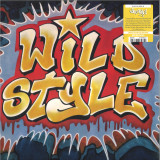
Animal Records – founded by Chris Stein of Blondie fame – only ever released one album in its brief early-80s history, but what an album that was. Wild Style remains the most seminal soundtrack in hip-hop history, a snapshot of the scene as it evolved from the streets to the recording studio. But it’s not just a vital document, it’s also a damn good listen.
The line-up is a who’s who of those who stood out from hip-hop’s nascent block party days. The Double Trouble pairing of Rodney Cee and KK Rockwell, The Chief Rocker himself, Busy Bee, the mighty line-ups of both The Cold Crush Brothers and The Fantastic Freaks. The music captures the free-form, roaming nature of the film – it’s rough at the edges, it’s occasionally amateurish, but it’s completely, utterly glorious.
The original Animal tracklisting, of which this is a reissue, is full of recurring sounds and motifs, all of them co-produced by Chris Stein and Fab Five Freddy, stepping away from breakbeats to produce a sound that reminds you of them, while being totally unique. The epic drums are courtesy of Lenny ‘Ferrari’ Ferraro, a Vietnam vet and punk drummer whose career spanned stints backing Aretha Franklin and Lou Reed.
Over time, those sounds – the Charlie Chase and Grand Wizard Theodore scratches, the indelible lyrics - have become hip-hop touchstones, endlessly sampled and referenced, the bedrock of so much music to follow. That’s because the soundtrack perfectly encapsulated the essence of the film, the scene and hip-hop’s emergence from The Bronx to the attention of the wider world. Presented in this reissue with the original artwork, it remains the blueprint.
The unique sounds of Ray Phiri's Stimela are showcased on this gem of a 12” EP from 1986. It was originally released only in South Africa on Gallo / CBS Records, although a 12" featuring the track 'I Hate Telling A Lie' was previously released on Plum Records in 1983. It has now become a sought-after item due to its addictive and original-sounding Balearic disco / cosmic boogie-esque nature.
Stimela were a popular and successful Mbaquanga / fusion outfit led by the guitarist, vocalist, songwriter, producer and arranger Ray Phiri; who was previously a member of the legendary band The Cannibals. The musicians would go on to gain global fame after featuring on Paul Simon's iconic 'Graceland' album and the mega tour that followed.
Kicking off the EP is a magical track that floored us from the first moment we heard it and one that has since become a Mr Bongo firm favourite. ‘I Hate Telling A Lie’ is a slow, infectious building groove that sits somewhere between lowdown jazz-funk, soul, reggae and gospel with shades of new wave pop and Balearic. It’s a truly stunning track that is hard to pigeonhole and all the better for it.
Another highlight from the EP is the monster instrumental, synth-boogie sound of 'I Love You'; championed by DJs such as Jeremy Spellacey (Crown Ruler). This hypnotic groove bubbles to perfection and is a slo-mo chugger extraordinaire.
We hope you dig it as much as we do.
Idrissa Soumaoro, L’Eclipse De L’I.J.A.’s sought-after album ‘Le Tioko-Tioko’ was originally released in the German Democratic Republic (GDR) in 1978 and has been a long-time favourite at Mr Bongo. Two tracks from the album were featured on our 2017 compilation ‘The Original Sound Of Mali’ (MRBLP135), and we subsequently released the track ‘Nissodia’ on its own 12” (MRB12053) in 2020, complete with a blistering dancefloor re-edit by Mike D of The Beastie Boys.
‘Le Tioko-Tioko' is one of the rarest vinyl albums from the already scarce Malian vinyl discography, partly as the album was never released commercially, only independently distributed via the Malian Association for the Blind in Bamako. Though recorded at Radio Mali under the aegis of master engineer Boubacar Traoré; the album was originally released in East Germany. The tapes had been taken by some Malian students to East Berlin as part of a student exchange program. It was then manufactured and released on the East German state-owned label Eterna with only a few boxes of records being shipped back to Bamako.
A true masterpiece, this legendary LP offers some devastating songs such as ‘Djama’ (society), ‘Nissodia’ (joy of optimism), and ‘Fama Allah’ (an ode to god). Hypnotic organ riffs and breakbeats convey an unknown funk quality in Malian music, it now stands as a loving tribute to an unsung Malian golden age. Sadly, like many of the other now desired and prized vinyl rarities, at the time of release, it almost immediately disappeared without a trace due to a lack of promotion, and distribution. So, it feels fitting to share this gem of a record again, and hopefully it will reach the wider audience it deserved over 45 years ago.
Many thanks to Florent Mazzoleni for contributing sections of these notes.
- 1: Pierre Sabine (Storm Over Europe) 03 38
- 2: Bowie (Not Quite For Strings) 05 1
- 3: Pyotr (Elegy) 0 5
- 4: F 600 (Effviersechshundert) 06 03
- 5: Pianoskizze (Incognito Recordings) 0 2
- 6: Atonales Schlaflied (Das) 01 43
- 7: Archie Waltz (Drums) 06 22
- 8: Dub Garden (Birds Why) 03 40
- 9: #2 (Improvisation For Two) 01 46
White Vinyl
The Duo met on a rainy day in Tilburg (NL) while working for a dance project — they came down from very different roads. Fhunyue, a stage director–performer–musician chameleon, works alone or collaborate with Annalena Fröhlich (Robinrobin, Just Another Woman In Space), Thom Luz, Unplush, Peeping Tom, Dorit Chrysler, Ko Murobushi, Damien Jalet, The Scottish Dance Theatre, Bern Ballett, for a most colourful variety of venues in Europe. She is a member of the music association Bongo Joe (Switzerland). Sven, an established musician living between Hamburg and Nairobi, who released several records on Honest Jons and Bureau B and collaborated with several artists like Shabaka Hutchings, Ogoya Nengo, Marc Ribot, John McEntire, Sofia Jernberg, Nils Frahm, Hauschka, F.S. Blumm and Stefan Schneider.
Their encounter quickly revealed that both their musical sensitivity and their instruments (Marimbas, Drums, Percussions, Electronics, Theremin, Buchla Synthesizer, Piano) matched stunningly, and that they had to play together. After a short while of rocky life adventures and theatre projects in which they collaborated, their off rehearsal sessions would become a lively necessity. The wish to give birth to a project entirely their own, grew so strong that they locked themselves in Sven’s studio at Jaffestrasse in Hamburg, and started working on the debut of their duet. They are happy to present and share with you their labour of love, in hope that it will be good to your heart.
- 1: Pierre Sabine (Storm Over Europe) 03 38
- 2: Bowie (Not Quite For Strings) 05 1
- 3: Pyotr (Elegy) 0 5
- 4: F 600 (Effviersechshundert) 06 03
- 5: Pianoskizze (Incognito Recordings) 0 2
- 6: Atonales Schlaflied (Das) 01 43
- 7: Archie Waltz (Drums) 06 22
- 8: Dub Garden (Birds Why) 03 40
- 9: #2 (Improvisation For Two) 01 46
The Duo met on a rainy day in Tilburg (NL) while working for a dance project — they came down from very different roads. Fhunyue, a stage director–performer–musician chameleon, works alone or collaborate with Annalena Fröhlich (Robinrobin, Just Another Woman In Space), Thom Luz, Unplush, Peeping Tom, Dorit Chrysler, Ko Murobushi, Damien Jalet, The Scottish Dance Theatre, Bern Ballett, for a most colourful variety of venues in Europe. She is a member of the music association Bongo Joe (Switzerland). Sven, an established musician living between Hamburg and Nairobi, who released several records on Honest Jons and Bureau B and collaborated with several artists like Shabaka Hutchings, Ogoya Nengo, Marc Ribot, John McEntire, Sofia Jernberg, Nils Frahm, Hauschka, F.S. Blumm and Stefan Schneider.
Their encounter quickly revealed that both their musical sensitivity and their instruments (Marimbas, Drums, Percussions, Electronics, Theremin, Buchla Synthesizer, Piano) matched stunningly, and that they had to play together. After a short while of rocky life adventures and theatre projects in which they collaborated, their off rehearsal sessions would become a lively necessity. The wish to give birth to a project entirely their own, grew so strong that they locked themselves in Sven’s studio at Jaffestrasse in Hamburg, and started working on the debut of their duet. They are happy to present and share with you their labour of love, in hope that it will be good to your heart.
"Chance" is the second album of Société Étrange, composed of 6 love
songs without words, with equivocal rhythms, glaucous turquoise
bass and melodies affectionately tinged with melancholy.
The album was recorded in July 2020 in Vaulx-en-Velin from a collection of materials and collective drift. Composed in studio, it is by the live that is shaped their pieces, several years to test them together so that these three musicians let us glimpse a possible civilization. Not fantasies that cannot beapprehended, but a future that we can hope to desire. Their hypnotic compositions, drunk with dub, iron harmonics and polymetric measures, play a music that is a bit shady, one of those that provoke the space for the dance to happen, without anesthesia. Société Étrange was formed in 2012 by Antoine Bellini (Electronics) and Romain Hervault (Bass), joined in 2015 by Jonathan Grandcollot (Percussions) after the release of their first album "Au revoir"
- A1: Luli Lucina E O Bando - Flor Lilas (Kenny Dope Remix)
- B1: Jayme Marques - Berimbao
- C1: Di Melo - Pernalonga (Kenny Dope Remix)
- D1: Toni Tornado - Sou Negro
- E1: Milton Banana Trio - Primitivo
- F1: Milton Banana Trio - Cidade Vazia
- G1: Papete - Procissao Dos Mortos
- H1: Papete - Domingo No Parque
- I1: Antonio Carlos & Jocafi - Quem Vem La (Kenny Dope Remix)
- J1: Miguel De Deus - Black Soul Brothers (Kenny Dope Edit)
This special Record Store Day 5 x 45s collection comes packaged in a limited-edition Brazil 45 clamshell collector’s box.
The long-running relationship between Masters At Work and Mr Bongo has been a fruitful affair. Beginning in the 90s, it has included releases such as their seminal 'Brazilian Beat' 12" featuring Liliana, their magnificent rework of Atmosphere’s ‘Dancing In Outer Space’, and their recent hit Surprise Chef remixes 12". The influences of Brazilian music is evident in their DJ sets and productions, take the poly-rhythms of the 'Nervous Track’ as a prime example. We couldn't think of anyone more fitting to curate the third volume in our "Brazil 45 Boxset Curated by" series than one half of the MAW duo, the mighty Kenny Dope.
For his volume of the series, Kenny selected 10 knockout tracks from the golden era of Brazilian music. As you would expect from such a legend, he surpassed the brief of simply compiling the tracks, as he re-edited and remixed a number of his favourites especially for this boxset. Amongst these exclusives is a blazing, heavy psych-funk remix of Antonio Carlos & Jocafi's 'Quem Vem Lá’, and a hip-hop breakbeat bounce woven into Luli Lucinha E O Bando's folky-MPB beauty 'Flor Lilás’. Di Melo and Miguel De Deus are also given the Dopeman remix and edit treatment.
Kenny's selections pull out some forgotten classics and recently overlooked gems, many of which were once top of the want-lists for collectors in the 90s. These include Milton Banana Trio and the irresistible version of 'Berimbao' by Jayme Marques. Along with the Brazilian funk and jazzy-bossa dancefloor-oriented tracks, Kenny has also chosen the leftfield, deeper, trippy psychedelic folk sounds of Papete.
As with previous volumes, the selections are very personal and represent the individual sound and taste of the selector digging from the rich tapestry of Brazilian music. Its unique palate and stamp are exactly what you would expect from a Master At Work.
As pieces of musical curation go, Kenny Dope’s reimagining and reediting of the Wild Style breakbeats is outstanding. While the music from the ‘Wild Style’ OST is truly seminal, the story behind it is even more fascinating.
Underneath the voices of important rappers from hip-hop’s first wave – Cold Crush Brothers, Double Trouble, Rammellzee, Busy Bee and more – were a selection of backing beats that have underpinned and influenced a whole lot of hip-hop ever since.
It would be easy to mistake them for genuine breakbeats dug out of crates, but they’re not. Overseen by hip-hop impresario Freddie Braithwaite – better known as Fab 5 Freddy – in collaboration with Blondie’s Chris Stein – the songs from the Wild Style soundtrack are all unique creations intended as a homage to the early breakbeats.
Drummer Lenny Ferrari – who had played for Aretha Franklin before emerging on the punk scene – and bassist David Harper played many of the iconic grooves, two somewhat forgotten participants in shaping a legendary sound. They – and Chris Stein – weren’t even in the same studio at the same time.
Kenny Dope, a long-time fan of the music, later acquired the original reel-to-reel tapes from Charlie Ahearn, the film’s director. Using the Wild Style breakbeats – many just a minute or so long – he transformed them into longer edits that give them more room to breathe. ‘Down by Law’ and ‘Subway Beat’ are two of the most famous, breakdance classics that summon up visions of graffiti’d trains speeding through the South Bronx.
In the third of the series, we move to 1973 Detroit, we have been so excited bringing this through to pressing and it has been a long but exciting and rewarding road and we hope you enjoy listening to this this 45 taken directly from the Universal master tapes and brought to you 48 years after its initial release on promo only format. Now available under licence and blessings from Universal Music Group on the Black Top series from us.
Is it good – oh yes – but don’t take our word for it, crank the volume up and hit play.
The A side – Young Train is a fabulous funkedged dancer with a message for us all even today, driven by the constant wah wah guitar and bongos. flip it over for a feelgood crossover dancer that has already been getting radio airtime on some of the UKs best soul stations.
Young Train by the Originals. This incredibly rare 45 is a poignant reminder that 48 years later the struggle continues today for equality and harmony for all.
The title “Young Train” is a brilliant collaboration of using Colemans surname and a hark back to the freedom songs enshrined in the blues and soul history of Black America, think Freedom Riders, Southbound train, Midnight train to Georgia to name but a tiny number. It captured the imagination of Detroit leading to the inauguration of the First Black Mayor of Detroit in 1974. Coleman Young captured the hearts and minds of the people of Detroit, some of his actions and associates led to questions around his fitness for office, but the moment in time lives forever in this exclusively rare 45 now brought to you with the blessings of Universal Music Group via MD Records.
On a final note, it is in many ways incredibly sad that this anthemic song still holds a valid call to action in its message in 2021. So, turn the volume up and get on board the “Young Train” for democracy and equality.
Big thanks go out to Karl “Chalky” White for material used in the sleeve.
All aboard for the third release in the Blacktop series from the MD Collective.
Endlessly sampled, covered, quoted and requoted, this may well be one of the most influential hip-hop singles ever released. But, in many ways, its importance goes beyond its sheer classic status as a single in its own right.
In retrospect, it shows the duo of Erick Sermon and Parrish Smith as pioneers in production, creating a funk-based sound that helped to provide a blueprint for artists on the other side of the country. In 1987/88, most West Coast rap still adhered to an East Coast audio blueprint. By 1989, they were leaning as heavily on Zapp and Roger Troutman samples as EPMD were on this single.
The foundations of the track are interesting, with a snatch of Juice’s much-plundered ‘Catch a Groove’ (which has popped up everywhere from The Beastie Boys to Kings of Pressure) overlaid with big chunks of Kool & The Gang’s ‘Jungle Boogie’ and Zapp’s irrepressible ‘More Bounce to the Ounce’. Vocodered funk was a rarity in New York hip-hop until this song, but it’s the West Coast G-Funk artists who really ran with it.
Its popularity spanned the country (and the globe, to be fair), with EPMD performing numerous shows in California on the basis of the sound, moving away from their James Brown-obsessed peers to display their own musical tastes. That said, the flipside – here presented on 7” and, indeed, on any single, for the first time – takes it back to that JB-era. ‘(It’s Not the Express), It’s the JB’s Monaurail by The JB’s is woven with Otis Redding and Beastie Boys to create a mid-tempo headnodder par excellence. It was always too good not to be a single.
By the time of their second album, 1989’s ‘Unfinished Business’, EPMD were firmly cemented in the rap stratosphere. With one certified classic album under their belts, they proved they were no one-hit wonders, with the sequel possibly even better. A concise 12 tracker once again produced by the artists themselves, it saw them adhering to the ‘if it ain’t broke, don’t fix it’ maxim, while going somewhat ‘bigger’.
In other words, guests started to appear – not just on the records, but in the videos – and marketing budgets were higher. None of which watered down their sound. In fact, this is the ultimate EPMD record: a beat that’s simple but perfect, and two top-of-their-game MC’s going back and forth. But the appearance of NWA in the video for ‘The Big Payback’ hints at their reputation at the time – and at the cordial relations between coasts before the deadly beef that was to come.
‘Payback’ takes both its title and core sample from James Brown’s ‘The Payback’ from 1973, and then weaves two more JB elements with it, including the addictive stabs from ‘Baby, Here I Come’. It’s a golden track from the golden age.
The B-side is another gem from the same album, and only released before on 7” in a very rare, limited pressing. ‘So Wat Cha Sayin’ was the album’s lead single, and shows EPMD’s wide sampling palette. There’s bits of BT Express, a whole lot of Funkadelic and, brilliantly, some drums lifted from Soul II Soul’s gem from just the year before, ‘Fairplay’. Lyrically, it’s just all about threats to sucker’s MC’s – what else do you want from EPMD?
• A certified Hip Hop classic.
• Samples James Brown’s ‘The Payback’ from 1973.
For number 92 in our Brazil45 series, we delve back to another all-time favourite track, 'Embalo Diferente' by Os Devaneios. This sublime funky Samba joint has always ignited the dancefloor for us. It featured on the band's 1978 album, 'O Conjunto Que Faz Você Vibrar’, which originally saw release on EMI. No crazy hype needed for this one, just a fantastic straight-up, no messing Samba Funk made for dancing.
We only know of four albums by Os Devaneios and for the A-side of this 45, we have selected one of our more recent discoveries with a track entitled 'A Beleza É Você Menina'. Taken from their 1979 album 'Raça Suor E Suingue’ (also originally released on EMI), it was recorded only a couple of years after 'Embalo Diferente’. Whilst it remains in that Samba mold, it has also taken on some of the vibe and characteristics of Soul, Brazilian Boogie and AOR from that late 70s and early 80s period. A feel-good and uplifting record, yet one which simultaneously has a hint of melancholy and is all the more beautiful for it. It's always good to discover a new song by an old favourite, and we hope you grow to love it too.
Deviation Records is pleased to present you their latest and exiting collaboration with the Mieruba Label Team.
The Super Biton has existed since the 60s, like Ségou, its orchestra, the Super Biton has always remained behind what was done in Bamako and in the big cities of Africa. The Ségou orchestra developed and incorporated amplified instruments that mingle with brass, in particular electric guitars, symbols of modernity at the time. It opens up to Cuban music, and congas and bongos complement the sound of the orchestra. The group drew a unique sound from it, a perfect balance between tradition and the modern. There are about fifteen artits on stage, singers, guitarists drummer and percussionists. The Super Biton has for years been the best known and most sought-after orchestra of Mali outsid the country's borders, the Super Biton transcends the only Bambara heritage with its repertoire. Ségou is crossroads between Bambara, Fulani, Mandingo and Somono cultures and Biton has drawn on all these traditions to creat a repertoire extremely rich in rhythms and words. Some musicians completed their training in Cuba. They play "bambara jazz", incorporating a lot of
brass instruments such as saxophone, trumpet, clarinet. The compositions are modern and sophisticated.
Mieruba Art Center is a place dedicated to the transmission and safeguarding of Malian musical heritage through musical exchange between the older and newer generation - Artist residences, music lessons, rehearsals, Workshops, Masterclasses - and so on. Just as happy former musicians of Mali, the members of Super Biton give lessons on site. It is also the office of the Mieruba-ML label in the same place where Deviation Records is collaboration for the second time on the album - After the « Lost Maestros Collection » - with the
support of La Manufacture de Vinyles. Phil of Deviation Records tells: "I am very enthusiastic at the idea of offering you these two volumes of the History of the Super Biton of Ségou, Clique of Super Heroes of sound,
a source of inspiration for generations of musicians, DJs and also griots and storytellers of great renown! This double LP compiles the first Chapter of the rich Afro-Jazz-Folk Collection whose tapes have been remastered by Monsieur Jonin and cut at the MB Mastering Studio in Aubervilliers .The gatefold artwork is conceived by
Ewwanuelle Collage and formatted by Bertrand Tondeur, Graphic designer of Les Mouches. All that’sleft to say is that i hope that you enjoy listening to the final result !"
An hour of finely crafted grooves where cosmic atmospheres meet late night bangers !
While on a break due to a certain pandemic, L’Eclair threw itself in the making of a new album. Until that point recording sessions were usually really short. Former albums were made in only a few days and recorded mostly live on tape. That changed as the band decided to do four recording sessions over nine months, hence allowing the group and its sound engineer/manager Benoit Erard to spend more time and energy on the production. With the ability to step back and reflect on the work in progress, L’Eclair had the occasion to take things a step above in terms of arrangements, compositions and structures. The result is an hour-long 12 tracks record, which is more diversified and concise than previous efforts.
Titled “Confusions”, the album shows L’Eclair’s obsession with groove in all its forms. It blends club vibes with psychedelic grooves, rhythmic trances and ambient comedowns while retaining a true coherence. Produced and organic, danceable and ethereal, spontaneous and cerebral, joyful and melancholic, “Confusions” is always on the fence between very different moods without ever wandering off. The band’s never fading influences are still there: you can hear hints of CAN, Piero Umiliani or Tangerine Dream here and there. But it’s melted with different universes, such as late 80s Madchester or Aphex Twin and Boards Of Canada’s textured worlds. There is also a strong Hip Hop feel with sampled-based tracks and non-binary beats that recall the likes of great producers like Madlib, MF DOOM, J Dilla or even Timbaland. The record also has its fair share of dub and house influences, which connect with the group’s attachment to the club vibe.
Within Melbourne’s burgeoning cinematic-soul scene, which includes
breakout acts Surprise Chef and Karate Boogaloo, mysteriously sit
The Pro-Teens.
Helmed by prolific drummer and percussionist Hudson Whitlock, who also
plays in both aforementioned bands, this breakaway studio project involves an
interchangeable collective of incognito, Melbourne-based, esteemed instrumentalists playing under outlandish pseudonyms such as “’Dead Honest’ Dean
Amazing” and “Libby Clique-Baite”.
Symbolically led by keyboardist “Snooch Dodd”, new album ‘I Flip My Life Every
Time I Fly’ is the latest musical concoction from Whitlock’s eccentric brain,
marrying the soul/funk roots of sample culture with the principles of boombap hip hop.
Incorporating the colourful comic book stylings of MF DOOM and Kool Keith,
or the dark and exotic flavours of Gravediggaz and The Wu-Tang Clan, The ProTeens also take cues from their composing heroes Galt MacDermot, Richard
Evans and Marc Moulin.
The Pro-Teens bop, zip, whip and fling on this phantasmagorical journey - an
unorthodox patchwork of cinematic soul, hip hop-guided funk breaks, vivid instrumental textures and film score-esque moods.
The Pro-Teens work on the same analogue recording model adopted by the
tight-knit College Of Knowledge label, self-recorded and produced with the ragtag crew of musicians putting tracks down live to tape in crammed attic studios
and sharehouse recording spaces.
The first limited pressing of ‘I Flip My Life Every Time I Fly’ was released on the
‘College Of Knowledge’ imprint in late 2020. It was one of the highlights of the
year at Mr Bongo HQ who loved the concept and felt this tripped out masterpiece from Melbourne needed to be heard well beyond those lucky enough to
have bagged those limited first copies.
For number 90 in the Brazil45 series, we share a couple of lesser-known discoveries that have become recent favourites here at Bongo HQ. First up we head to the north of Brazil with funky Forr / boogie hybrid monster, ‘Vendedor De Mangaios’ by Josan. Originally released in 1981 on the album ‘Rio De Renova es’ on Copacabana Records. This addictive dancefloor gem is still relatively under the radar, but it has become a firm favourite at Bristol’s Worm Disco Club parties and amongst the DJ’s and collectors of Brazil’s underground dance music scene. Taken from the illustrious singer Bart Galeno’s self-titled 1977 album on Tapecar Records, ‘Vou Tirar Voc Daqui’ is an unusual one. Not easily pigeon-holed, he song sits somewhere between MPB / funk and rock, yet isn’t really any of them. Backed with a big orchestrated sound and tripped-out synths, the track has a truly unique feel. We hope you dig these finds. Another testament to the diversity and depth of Brazil’s rich musical heritage.
- Next installment in BRAZIL45 Series.
- Two lesser-known discoveries
A first-time replica re-issue of a highly sought-after, rare Brazilian MPB / Funk nugget from 1974.
Brazilian 7" singles or compacts sometimes get a bit overlooked outside of the world of avid Brazilian collectors and DJs, but here are where some of the most exquisite jewels of Brazil's rich musical tapestry lie.
This release has been a long time in the works, but now finally we are thrilled to present a replica version of one of our favourite Brazilian 7”s - the outstanding 'Morro Do Barraco Sem Água' by Lemos E Debétio (aka Toninho Lemos & Paulo Debétio). Discovering tracks like 'Morro Do Barraco Sem Água' makes you want to go the extra mile. You spend that little bit more time than is rational examining and dusting off a stack of 7”s hunting for an elusive gem, or end up disappearing down an Internet wormhole eating into time you don’t have before you need to be up for work again in the morning. This is a calculated effort, as the reward of the revitalising musical vitamins that you've stumbled upon are the big pay off.
'Morro Do Barraco Sem Água’ was originally released on Odeon Records in 1974, and even though this was a major record label it remains extremely hard to find. From the first moment the needle hits the groove with its guitar and drum break intro you know the song is special. A feel-good addictive melody with fantastic swooping arrangements and a pulsating funk backbeat, which is over all too soon. We hope you enjoy this audio treasure as much as we do!!!