Cerca:the boo ya

Generi
Tutto
Various - Pure Wicked Tune: Rare Groove Blues Dances & House Parties, 1985-1992

Pure Wicked Tune is a mixtape-style collection of extracts & cut-ups, taken from DIY cassette recordings featuring rare groove and "soul blues" soundsystems playing at early morning house parties and blues dances - mostly in South & East London - between the mid 1980s & early 90s.

Sounds like Funkadelic, Touch of Class, Latest Edition, JB Crew, Manhattan, 5th Avenue (and the many more featured on this tape) originally began to form in the mid-1980s. With lovers rock dwindling, and the reggae scene becoming dominated by harder digital-style dancehall, these sounds provided a tight but loyal crowd with a potent alternative - playing a mixture of killer rare soul, funk and boogie records in an inimitably reggae soundsystem style, complete with toasting, sirens and effects aplenty.

They were most well-known for playing at house parties and blues dances, typically in small flats or warehouses, with timing of such events generally running from the early morning hours until late the next afternoon. Though the popularity of the sounds faded following the dance music explosion of the early 1990s, there has been continued demand for revival sessions ever since. Whilst the influence of key British reggae & dancehall soundsystems on subsequent UK sounds like hardcore & jungle is relatively well documented, a similar line can just as easily be drawn from these sounds and the aforementioned styles' tendency toward sampling popular rare groove cuts, particularly well evidenced in the work of Tom & Jerry, 4hero, Reinforced & LTJ Bukem among others.

This represents the first outing in a series of collections exploring the sounds of UK soundsystem culture, via extracts from archival DIY cassette recordings of blues parties, dances & clashes made between the late 70s and early 90s. Often duplicated and shared widely, these ruff and ready "sound tapes" provided keen ears with music that wasn't otherwise readily available on the airwaves or in the record shops, and would go on to leave a deeply-rooted but too often overlooked influence on the UK's musical landscape.

non in magazzino

Ordina ora e ordineremo l'articolo per te presso il nostro fornitore.

14,92

Last In: 6 months ago
Various - MIDNIGHT TO SIX...FIRST TIME FROM JAMAICA

2022 Repress

The legendary gig that Joe Strummer, singer from the Punk Rock band 'The Clash' attended and inspired his writing their classic 'White Man In Hammersmith Palais' took place on the 05th June 1977.
At the Hammersmith Palais venue on Shepherd's Bush Road W6, London during the height of Punk Mania. The full line up for the show were all Jamaican artists Dillinger, Leroy Smart, Delroy Wilson (all the first time from Jamaica) and Ken Boothe.
'Ken Boothe for UK pop reggae' who had already scored some hits with 'Everything I own' and 'Crying Over You' in 1974. Joe Strummer was expecting Roots, Rock, Reggae but the Sound System this evening 'Admiral Ken Sound' was playing 'Four Tops all night' as in soul and northern soul that were staple crowd pleasers at the time to warm up the audience, but in Joe's eyes the music should have reflected more Jamaican roots based music. The song also deals with bigger issues of black and white unity, but some people including the Punk Rockers.
'They're all too busy fighting, for a good place under the lighting'. Joe Strummer himself was looking for fun. 'I'm the Whiteman in the Palais....Just Looking for Fun'

The artwork supplied by Punk Artist MAL-ONE has used the two posters that were made for this gig, the reggae promoters 'Star Promotions' poster, that contained a picture of Ken Boothe and the venue's own poster that used text to announce it's line up for that evenings performance. Alongside these lost relics he has also combined the groups own poster for the 'White Man In Hammersmith Palais' single that incorporated the use of rifle target sights, perhaps enhancing the air of violence contained in the songs message.
MAL-ONE has collaged these together joining the two stories as indeed the song lyrics reflected. People often forget that the songs release was in fact as year after the actual gig, we have tied this release to the 40th anniversary of the song's release. Joe Strummer was one of the few voices from the Punk Era that used his lyrics as a weapon to tell the events that were happening around him and their relevance to those times.
The song itsel a Clash Classic and also a Punk Anthem, released on the 16th June 1978. We have compiled this album with songs by these artists, most of which you would have heard that night. As a post script to this story when the Hammersmith Palais sadly closed its doors for the last time after 82 years' service in 1999, the owners thought it fitting to present Joe Strummer with a sign from the venue's entrance. Mr Strummer's understated reply 'I guess I'll have to send a man with a van round to pick it up'.
Hope you Enjoy the set....

non in magazzino

Ordina ora e ordineremo l'articolo per te presso il nostro fornitore.

13,40

Last In: 3 years ago
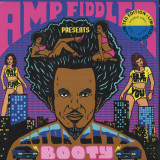
Amp Fiddler - Motor City Booty LP 2x12"

South Street delve into the The Sound Of Detroit from one of its unsung heroes, reissuing Amp Fiddler's 'Motor City Booty' LP on Yellow & Blue vinyl respectively. Coming straight off the D Funk assembly line, it's a full on dance floor affair from Motown to P-Funk, Techno and Neo Soul.

This 12 track album produced by Amp Fiddler & Yam Who? includes the massive 'Soul Fly' sounding like a Mark Ronson production had he been hanging out with George Clinton's Parlet followed by the bonafide P-Funk anthem 'Steppin' both featuring the stunning vocals by the Dames Brown girls.

Amp Fiddler is credited for taking both a young J Dilla and also Q-Tip under his wing teaching them his Akai MPC techniques, setting the path for some of Hip Hop's finest recordings which have defined the shape of things to come.

His musical collaborations & current duties include: Moodymann's musical maestro, keyboard wizard for Theo Parrish's live band, a longstanding Funkadelic member, co-writer for Sly & Robbie, Prince, Maxwell, Jamiroquai & Seal to name a few.

non in magazzino

Ordina ora e ordineremo l'articolo per te presso il nostro fornitore.

25,17

Last In: 4 months ago
The Yardbirds - Yardbirds (Roger The Engineer)
  • A1: Lost Women
  • A2: Over, Under, Sideways, Down
  • A3: The Nazz Are Blue
  • A4: I Can’t Make Your Way
  • A5: Rack My Mind
  • A6: Farewell
  • B1: Hot House Of Omagararshid
  • B2: Jeff’s Boogie
  • B3: He’s Always There
  • B4: Turn Into Earth
  • B5: What Do You Want
  • B6: Ever Since The World Began

First released in the summer of 1966, ‘Yardbirds’ (or ‘Roger The Engineer’ as it became known’) showcases the
Yardbirds at the peak of their powers. Featuring the classic line-up of Jeff Beck, Keith Relf, Jim McCarty, Chris Dreja,
and Paul Samwell-Smith, the group explored explosive new sonic territories, pushing their blues-rock sound into the
realms of the avant-garde, psychedelia and Indian music.
• This new edition has been expertly cut from the original stereo tapes using precision half-speed mastering by
Cicely Balston at AIR Mastering.
• Half-speed mastering is a vinyl cutting technique that improves groove accuracy and transient information creating
an incredibly detailed stereo image with a natural high frequency response.
• Pressed on 180g heavyweight vinyl, featuring an obi strip and housed in a poly-lined inner sleeve. Also includes a
4-page booklet with extensive liner notes by David French based on interviews with Jimmy Page, Paul SamwellSmith, Jim McCarty and Simon Napier-Bell.

pre-ordina ora07.10.2022

dovrebbe essere pubblicato su 07.10.2022

32,82
Various - Aquapelago: an Oceans Anthology

Anthology introducing the first of a series of albums based on the concept of Aquapelago.

‘’ Since the earliest days of the planet there has been a rhythm of tides that creates coastal interzones where humans have foraged and pursued various livelihoods. Developing boats to fish from and technologies that enabled them to immerse themselves deep underwater, the aquatic realm has been one explored, experienced and imagined in various ways. In an effort to express the vitality and richness of this environment I coined the term aquapelago in 2012. The wordplay was deliberate. The neologism was designed to distinguish the liquid inbetweenness of this space from the dry, scattered, lands of archipelagos.

The concept of the aquapelago coalesced around themes taken from various places. Epeli Hau’ofa’s idea of an Oceanic “sea of islands’” was formative but a number of songs were also inspirational. Torres Strait islander Seaman Dan captivated me with his experiences of pearl diving in the Darnley Deeps in his song ‘Forty Fathoms’ and Norfolk Islander singer Kath King imaged how sea-turtles might have experienced ecological change in her song ‘Tech me how fer lew’. Other reflections on watery realms also appealed. Debussy’s solo piano piece ‘La cathédrale engloutie’ soundtracked me as I researched myths of lost Lyonesse while Mike Cooper’s Kiribati, an ambient exoticist album about the imperilled archipelago (recently re-released on Discrepant), caused me to reflect on the social and cultural impact of sea level rise before that topic became a high-profile concern.

This compilation album takes the concept of the aquapelago into new depths and breaches it on fresh shores. The tracks are soaked with the aquatic. Bassy sonorities boom as if heard deep underwater. Bubbly textures breach the surface, water drips and seabirds soar high above waves. Sugai Kei samples fragments of text concerning the Ningen, a fantastic humanoid/whale that reflects the ‘aquapelagic imaginary’ of modern Japan and its preoccupation with industrial whaling. Andrew Pekler continues the orientation of his Phantom Islands project - a sonic atlas of imaginary places - with a soundscape as if heard by a swimmer just offshore, mixing sounds of the island and the sea together. Mike Cooper’s sonic reflection on Hong Kong’s Lamma Island is similar, combining the island’s ubiquitous barking dogs with the slurp of waves on rocky shores, conjuring a languorous time before Chinese crackdowns on the territory.

Taking another tack, the Dead Mauriacs gleefully water-ski through collage of tropical island exoticisms, replete with glitchy orientalism, while Babau combines skittering idiophone melodies with resonant glissandi. Vica Pacheco moves between dense and airy sounds, as if crossing between surf lines and the space above. Yannkick Dauby’s track is also imbued with in-betweenness, evoking ambient sounds heard through a ship’s hull. Sculpture’s ‘Froth Surfer’ realises its title, with bubbling sounds and rhythms that evoke Hawaiian surfing filtered through layers of time and distance. Reminding us of the shore necessary for aquapelagic spaces, Franceso Cavaliere and Tomoko Sauvage’s composition anchors the album, centred around shaken rhythms and resonant ringing tones and drones.

Taken together, the album sketches the contours of the aquapelago as it might be imagined and conjured in sound – an endless oceanic realm that laps on to beaches and crashes against cliffs. The performers navigate this space under alternately starry and cloudy skies, orientating themselves with sounds, textures and sonic samples of their terrestrial homes while we float with them. ‘’
Philip Hayward December 2021

non in magazzino

Ordina ora e ordineremo l'articolo per te presso il nostro fornitore.

15,92

Last In: 3 years ago
WILCO - YANKEE HOTEL FOXTROT (2022 REMASTER) 11x12

‘Complex and dangerously catchy, lyrically sophisticated and provocative, noisy and somehow serene… Yankee Hotel Foxtrot… is simply a masterpiece.’ – Pitchfork, 10/10, April 2002

‘The looped chaos and plangent melodies... effectively heralded the birth of a new band, as Jeff Tweedy overhauled his compositional modus operandi. So tender was the emotional core of songs like ‘Jesus, Etc.’ that the record became wrapped up in America’s post-9/11 cultural discourse... Yankee Hotel Foxtrot embedded Wilco’s great American songwriter status.’
– Mojo

‘It's as if the Flying Burrito Brothers suddenly decided to cover Pavement songs. There is a gentle, rootsy beauty here that Wilco has buried in a box of vulnerability and covered with a handful of dirt.’ – New York Times

‘Born out of turmoil, Wilco’s fourth album was a stone-cold classic.’ – Uncut

Nonesuch releases seven special editions of Wilco’s landmark 2002 album Yankee Hotel Foxtrot. The now-classic record has been remastered and will be available as part of each set. The Super Deluxe version comprises eleven vinyl LPs and one CD – including demos, drafts, and instrumentals, charting the making of Yankee Hotel Foxtrot – plus a live 2002 concert recording and a September 2001 radio performance and interview. That box set includes eighty-two previously unreleased music tracks as well as a new book featuring an interview with singer/songwriter/guitarist Jeff Tweedy, drummer Glenn Kotche, and Jim O’Rourke, who mixed the acclaimed 2002 album; an in-depth essay by journalist/author Bob Mehr; and previously unseen photos of the band making the album in their Chicago studio, The Loft. For the Yankee Hotel Foxtrot recording, Wilco was Jeff Tweedy, John Stirratt, Leroy Bach, Glenn Kotche, and Jay Bennett with Craig Christiansen, Ken Coomer, Jessy Greene, Fred Lonberg-Holm, and Jim O’Rourke.

A live version of ‘Reservations’ from a legendary concert contained on Snoozin’ at The Pageant – Live 7/23/02 at The Pageant, St. Louis, MO – a recording that is part of the Super Deluxe LP and CD sets as well as the Deluxe LP and digital sets – is now available. A limited-edition vinyl 7” with versions of ‘I’m the Man Who Loves You’ and ‘War on War’, from the Super Deluxe box set, is available now from wilcostore.

Wilco marked the anniversary of Yankee Hotel Foxtrot – which was released commercially on April 23, 2002, after a circuitous and storied gestation, including a period of streaming for free on the band’s website – with a performance of the album’s ‘Poor Places’ on April 18’s Late Show with Stephen Colbert, which may be seen here. The band is currently performing Yankee Hotel Foxtrot in its entirety (plus a mix of concert favourites and rarities) in two limited runs at New York City’s United Palace and Chicago’s Auditorium Theatre. The Chicago show on April 23 will be available as a live stream here.

Yankee Hotel Foxtrot was widely acclaimed as one of 2002’s best albums, appearing in year-end lists of Mojo, NME, Q, Rolling Stone, and Uncut, among many others. Yankee Hotel Foxtrot also was featured in multiple decade-end lists, with Rolling Stone naming it #3 Album of the 2000s, as well as many Greatest Albums of All Time lists, including in the NME.

Among Yankee’s inspirations was a recording Tweedy bought at Tower Records in the late 1990s, The Conet Project: Recordings of Shortwave Numbers Stations. As Bob Mehr points out in his new album note, the record got “deep under Tweedy’s skin.” Tweedy said in his 2017 memoir, Let’s Go (So We Can Get Back), “It was as fascinating to me as anything being made by actual musicians using actual instruments… I wanted to know why it was so hypnotic to me. Why could I listen to hours of this stuff, even though I had no clue what any of them were saying. That question became the foundation for Yankee Hotel Foxtrot… the way people communicated or ultimately failed to communicate.” The album takes its title from a haunting recording of a woman repeating those words that is included in The Conet Project; that recording is sampled in the penultimate song on Yankee Hotel Foxtrot, ‘Poor Places’.

“Conceptually, Tweedy had decided to focus on a big idea for the next album: the state of America. His lyrics – often distilled from scribbled pages of free verse or poetry – became a form of inquiry,” Mehr continues. Tweedy said, in 2004, “I wanted to write about the stuff right in front of my eyes, microscopically looking at America and asking questions about each little thing… How can there be all these good things and things that I love about America, alongside all of these things that I’m ashamed of? And that was an internal question, too; I think I felt that way about myself.”

Mehr says, “Exploring those questions, while weaving in strands of Eastern philosophy and bits of autobiography – Yankee lyrics would be loaded with the pained imagery of someone suffering from migraines and mental health issues – Tweedy would conjure a deep examination of both country and self.”

Describing the uncanny, strangely prescient feeling of the album, which Wilco began offering as a free stream on its website in 2001, Mehr notes: “In the wake of 9/11, Yankee Hotel Foxtrot would be burdened with unintended meaning. The disc had originally been scheduled for a September 11 release. Its cover – a Sam Jones-shot image of Chicago’s twin Marina Towers angled in looming fashion – bore an eerie resemblance to the felled World Trade Center towers. And the songs – with titles like ‘Ashes of American Flags’ and ‘War on War,’ and lyrics about how ‘tall buildings shake, sad voices escape’ – took on a terrible new resonance.”

Yankee Hotel Foxtrot was the first Wilco release on Nonesuch Records following the band’s infamous split with Reprise (both labels are part of Warner Music Group). It was also the first release featuring the line-up of drummer Glenn Kotche and multi-instrumentalist Leroy Bach joining founding members Jeff Tweedy and John Stirratt. The 2002 Sam Jones film I Am Trying to Break Your Heart documented the fraught recording and mixing process, personnel changes, and label issues.

The relationship with Nonesuch would last nearly a decade and include three more studio albums – the Grammy Award-winning A ghost is born, Sky Blue Sky, and Wilco (the album) – along with a live album and a live DVD, plus reissues of earlier records, before Wilco began its own label, dBpm. The band’s current lineup of Jeff Tweedy, John Stirratt, Glenn Kotche, Mikael Jorgensen, Patrick Sansone, and Nels Cline has been together for nearly twenty years.


DISC 5: HERE COMES EVERYBODY – BUILDING YANKEE HOTEL FOXTROT (PART 2)
Side I: (TRAIN)
1. Radio Cure (Here Comes Everybody Version) *
2. War on War (Here Comes Everybody Version) *
3. Venus Stopped the Train (Here Comes Everybody Version) * #
4. I'm the Man Who Loves You (Here Comes Everybody Version) *
5. The Good Part (Here Comes Everybody Version) * #
Side J: (KETTLE)
1. Pot Kettle Black (Here Comes Everybody Version) *
2. Ashes of American Flags (Here Comes Everybody Version) *
3. Poor Places (Here Comes Everybody Version) *
4. Shakin' Sugar (Here Comes Everybody Version) *
5. Reservations (Here Comes Everybody Version) *

DISC 6: HERE COMES EVERYBODY – BUILDING YANKEE HOTEL FOXTROT (PART 2) / THE UNIFIED THEORY OF EVERYTHING – BUILDING YANKEE HOTEL FOXTROT (PART 3)
Side K: (ESCAPE)
1. Cars Can't Escape (Here Comes Everybody Version) * #
2. A Magazine Called Sunset (The Unified Theory of Everything Version) ** #
3. Remember to Remember (Hummingbird) The Unified Theory of Everything Version ** #
4. I Am Trying to Break Your Heart (The Unified Theory of Everything Version) ** #
Side L: (WAR)
1. Kamera (The Unified Theory of Everything Version) ** #
2. Radio Cure (The Unified Theory of Everything Version) ** #
3. War on War (The Unified Theory of Everything Version) ** #
4. Jesus, Etc. (The Unified Theory of Everything Version) ** #

DISC 7: THE UNIFIED THEORY OF EVERYTHING – BUILDING YANKEE HOTEL FOXTROT (PART 3) / LONELY IN THE DEEP END – DEMOS, DRAFTS, ETC.
Side M: (DRUMMER)
1. Ashes of American Flags (Stravinsky Mix) ** #
2. Heavy Metal Drummer (The Unified Theory of Everything Version) ** #
3. I'm The Man Who Loves You (The Unified Theory of Everything Version) **
4. Pot Kettle Black (The Unified Theory of Everything Version) ** #
5. Poor Places (The Unified Theory of Everything Version) ** #
Side N: (RESERVATIONS)
1. Reservations (The Unified Theory of Everything Version) ** #
2. Love Will (Let You Down) [Lonely in the Deep End Version] *
3. Lost Poem Demo (Lonely in the Deep End Version) *
4. I’m The Only One Who Lets Her Down (Lonely in the Deep End Version) *
5. Has Anybody Seen My Pencil? (Lonely in the Deep End Version) *

DISC 8: LONELY IN THE DEEP END – DEMOS, DRAFTS, ETC.
Side O: (MAGAZINE)
1. The Good Part (Lonely in the Deep End Version) *
2. A Magazine Called Sunset (Lonely in the Deep End Version) *
3. A Magazine Called Sunset (Backing Track) [Lonely in the Deep End Version] *
4. Anniversary (Nothing Up My Sleeve) (Lonely in the Deep End Version) *
5. Kamera (Lonely in the Deep End Version) *
Side P: (DOOBY)
1. I'm The Man Who Loves You (Lonely in the Deep End Version) *
2. I Am Trying To Break Your Heart (Lonely in the Deep End Version) *
3. Jesus, Etc. (Lonely in the Deep End Version) *
4. Reservations (Backing Track) [Lonely in the Deep End Version] *
5. Let Me Come Home (Synth) [Lonely in the Deep End Version] *
6. Ooby Dooby (Lonely in the Deep End Version) *

DISC 9: SNOOZIN’ AT THE PAGEANT – 7/23/02 THE PAGEANT, ST. LOUIS, MO
Side Q: (SNOOZIN)
1. I Am Trying to Break Your Heart (Live at The Pageant, St. Louis, MO 7/23/02) **
2. I’m the Man Who Loves You (Live at The Pageant, St. Louis, MO 7/23/02) **
3. War on War (Live at The Pageant, St. Louis, MO 7/23/02) **
4. Kamera (Live at The Pageant, St. Louis, MO 7/23/02) **
Side R: (PAGEANT)
1. Radio Cure (Live at The Pageant, St. Louis, MO 7/23/02) **
2. A Shot in the Arm (Live at The Pageant, St. Louis, MO 7/23/02) **
3. She’s a Jar (Live at The Pageant, St. Louis, MO 7/23/02) **

DISC 10: SNOOZIN’ AT THE PAGEANT – 7/23/02 THE PAGEANT, ST. LOUIS, MO
Side S: (RUSTY)
1. I’m Always in Love (Live at The Pageant, St. Louis, MO 7/23/02) **
2. Sunken Treasure (Live at The Pageant, St. Louis, MO 7/23/02) **
3. Jesus, Etc. (Live at The Pageant, St. Louis, MO 7/23/02) **
4. Heavy Metal Drummer (Live at The Pageant, St. Louis, MO 7/23/02) **
Side T: (SWING)
1. Pot Kettle Black (Live at The Pageant, St. Louis, MO 7/23/02) **
2. Ashes of American Flags (Live at The Pageant, St. Louis, MO 7/23/02) **
3. Not for the Season (Laminated Cat) [Live at The Pageant, St. Louis, MO 7/23/02] **

DISC 11: SNOOZIN’ AT THE PAGEANT – 7/23/02 THE PAGEANT, ST. LOUIS, MO
Side U: (OUTTASITE)
1. Reservations (Live at The Pageant, St. Louis, MO 7/23/02) **
2. California Stars (Live at The Pageant, St. Louis, MO 7/23/02) **
3. Red-Eyed and Blue (Live at The Pageant, St. Louis, MO 7/23/02) **
4. I Got You (At the End of The Century) [Live at The Pageant, St. Louis, MO 7/23/02] **
Side V: (WHEEL)
1. Misunderstood (Live at The Pageant, St. Louis, MO 7/23/02) **
2. Far, Far Away (Live at The Pageant, St. Louis, MO 7/23/02) **
3. Outtasite (Outta Mind) [Live at The Pageant, St. Louis, MO 7/23/02] **
4. I’m a Wheel (Live at The Pageant, St. Louis, MO 7/23/02) **


BONUS CD: 9/18/01 SOUND OPINIONS WXRT-CHICAGO, IL WITH GREG KOT & JIM DEROGATIS
1. Interview, Pt. 1 **
2. War on War (Live in Studio) **
3. Interview, Pt. 2 **
4. Interview, Pt. 3 **
5. I'm the Man Who Loves You (Live in Studio) **
6. Interview, Pt. 4 **
7. Should've Been in Love (Live in Studio) **
8. Interview, Pt. 5 **
9. She's a Jar (Live in Studio) **
10. Interview, Pt. 6 **
11. Ashes of American Flags (Live in Studio) **


[l] E1. Anniversary (Nothing Up My Sleeve) [American Aquarium Version] *


[v] G2. Not for the Season (Laminated Cat) [American Aquarium Version] *


[y] H2. Not for the Season (Laminated Cat) [Here Comes Everybody Version] * #


[xe] K3. Remember to Remember (Hummingbird) [The Unified Theory of Everything Version] ** #


[xq] N2. Love Will (Let You Down) [Lonely in the Deep End Version] *

pre-ordina ora30.09.2022

dovrebbe essere pubblicato su 30.09.2022

218,45
WILCO - YANKEE HOTEL FOXTROT (2022 REMASTER) 7x12"
  • E1: Anniversary (Nothing Up My Sleeve)
  • G2: Not For The Season (Laminated Cat)
  • H2: Not For The Season (Laminated Cat)
  • K3: Remember To Remember (Hummingbird)
  • N2: Love Will (Let You Down)
  • A1: I Am Trying To Break Your Heart (2022 Remaster)
  • A2: Kamera (2022 Remaster)
  • A3: Radio Cure (2022 Remaster)
  • B1: War On War (2022 Remaster)
  • B2: Jesus, Etc. (2022 Remaster)
  • B3: Ashes Of American Flags (2022 Remaster)
  • C1: Heavy Metal Drummer (2022 Remaster) #
  • C2: I'm The Man Who Loves You (2022 Remaster) #
  • C3: Pot Kettle Black (2022 Remaster) #
  • D1: Poor Places (2022 Remaster) #
  • D2: Reservations (2022 Remaster) #
  • E2: Venus Stopped The Train (American Aquarium Version) *
  • E3: Poor Places (American Aquarium Version 1)
  • E4: I Am Trying To Break Your Heart (American Aquarium Version) *
  • F1: American Aquarium *
  • F2: Cars Can't Escape (American Aquarium Version) *
  • F3: Kamera (American Aquarium Version) *
  • F4: War On War (American Aquarium Version) *
  • F5: I'm The Man Who Loves You (American Aquarium Version) *
  • G1: Ashes Of American Flags (American Aquarium Version) *
  • G3: Shakin' Sugar (American Aquarium Version) * #
  • G4: Let Me Come Home (American Aquarium Version) *
  • H4: I Am Trying To Break Your Heart (Here Comes Everybody Version) *
  • H5: Kamera (Here Comes Everybody Version) *
  • K1: Cars Can't Escape (Here Comes Everybody Version) * #
  • K2: A Magazine Called Sunset (The Unified Theory Of Everything Version) ** #
  • K4: I Am Trying To Break Your Heart (The Unified Theory Of Everything Version)
  • L1: Kamera (The Unified Theory Of Everything Version) ** #
  • L2: Radio Cure (The Unified Theory Of Everything Version) ** #
  • L3: War On War (The Unified Theory Of Everything Version) ** #
  • L4: Jesus, Etc. (The Unified Theory Of Everything Version) ** #
  • M1: Ashes Of American Flags (Stravinsky Mix) ** #
  • M2: Heavy Metal Drummer (The Unified Theory Of Everything Version) ** #
  • M3: I'm The Man Who Loves You (The Unified Theory Of Everything Version) **
  • M4: Pot Kettle Black (The Unified Theory Of Everything Version) ** #
  • M5: Poor Places (The Unified Theory Of Everything Version) ** #
  • N1: Reservations (The Unified Theory Of Everything Version) ** #
  • N3: Lost Poem Demo (Lonely In The Deep End Version) *
  • N4: I’m The Only One Who Lets Her Down (Lonely In The Deep End Version) *
  • N5: Has Anybody Seen My Pencil? (Lonely In The Deep End Version) *
  • G5: Poor Places (American Aquarium Version 2) *
  • H3: Remember To Remember (Hummingbird) (Here Comes Everybody Version)
 
6
disponibile anche

Creamy White Vinyl[33,40 €]

Super Deluxe Edition[218,45 €]


‘Complex and dangerously catchy, lyrically sophisticated and provocative, noisy and somehow serene… Yankee Hotel Foxtrot… is simply a masterpiece.’ – Pitchfork, 10/10, April 2002

‘The looped chaos and plangent melodies... effectively heralded the birth of a new band, as Jeff Tweedy overhauled his compositional modus operandi. So tender was the emotional core of songs like ‘Jesus, Etc.’ that the record became wrapped up in America’s post-9/11 cultural discourse... Yankee Hotel Foxtrot embedded Wilco’s great American songwriter status.’
– Mojo

‘It's as if the Flying Burrito Brothers suddenly decided to cover Pavement songs. There is a gentle, rootsy beauty here that Wilco has buried in a box of vulnerability and covered with a handful of dirt.’ – New York Times

‘Born out of turmoil, Wilco’s fourth album was a stone-cold classic.’ – Uncut

Nonesuch releases seven special editions of Wilco’s landmark 2002 album Yankee Hotel Foxtrot. The now-classic record has been remastered and will be available as part of each set. The Super Deluxe version comprises eleven vinyl LPs and one CD – including demos, drafts, and instrumentals, charting the making of Yankee Hotel Foxtrot – plus a live 2002 concert recording and a September 2001 radio performance and interview. That box set includes eighty-two previously unreleased music tracks as well as a new book featuring an interview with singer/songwriter/guitarist Jeff Tweedy, drummer Glenn Kotche, and Jim O’Rourke, who mixed the acclaimed 2002 album; an in-depth essay by journalist/author Bob Mehr; and previously unseen photos of the band making the album in their Chicago studio, The Loft. For the Yankee Hotel Foxtrot recording, Wilco was Jeff Tweedy, John Stirratt, Leroy Bach, Glenn Kotche, and Jay Bennett with Craig Christiansen, Ken Coomer, Jessy Greene, Fred Lonberg-Holm, and Jim O’Rourke.

A live version of ‘Reservations’ from a legendary concert contained on Snoozin’ at The Pageant – Live 7/23/02 at The Pageant, St. Louis, MO – a recording that is part of the Super Deluxe LP and CD sets as well as the Deluxe LP and digital sets – is now available. A limited-edition vinyl 7” with versions of ‘I’m the Man Who Loves You’ and ‘War on War’, from the Super Deluxe box set, is available now from wilcostore.

Wilco marked the anniversary of Yankee Hotel Foxtrot – which was released commercially on April 23, 2002, after a circuitous and storied gestation, including a period of streaming for free on the band’s website – with a performance of the album’s ‘Poor Places’ on April 18’s Late Show with Stephen Colbert, which may be seen here. The band is currently performing Yankee Hotel Foxtrot in its entirety (plus a mix of concert favourites and rarities) in two limited runs at New York City’s United Palace and Chicago’s Auditorium Theatre. The Chicago show on April 23 will be available as a live stream here.

Yankee Hotel Foxtrot was widely acclaimed as one of 2002’s best albums, appearing in year-end lists of Mojo, NME, Q, Rolling Stone, and Uncut, among many others. Yankee Hotel Foxtrot also was featured in multiple decade-end lists, with Rolling Stone naming it #3 Album of the 2000s, as well as many Greatest Albums of All Time lists, including in the NME.

Among Yankee’s inspirations was a recording Tweedy bought at Tower Records in the late 1990s, The Conet Project: Recordings of Shortwave Numbers Stations. As Bob Mehr points out in his new album note, the record got “deep under Tweedy’s skin.” Tweedy said in his 2017 memoir, Let’s Go (So We Can Get Back), “It was as fascinating to me as anything being made by actual musicians using actual instruments… I wanted to know why it was so hypnotic to me. Why could I listen to hours of this stuff, even though I had no clue what any of them were saying. That question became the foundation for Yankee Hotel Foxtrot… the way people communicated or ultimately failed to communicate.” The album takes its title from a haunting recording of a woman repeating those words that is included in The Conet Project; that recording is sampled in the penultimate song on Yankee Hotel Foxtrot, ‘Poor Places’.

“Conceptually, Tweedy had decided to focus on a big idea for the next album: the state of America. His lyrics – often distilled from scribbled pages of free verse or poetry – became a form of inquiry,” Mehr continues. Tweedy said, in 2004, “I wanted to write about the stuff right in front of my eyes, microscopically looking at America and asking questions about each little thing… How can there be all these good things and things that I love about America, alongside all of these things that I’m ashamed of? And that was an internal question, too; I think I felt that way about myself.”

Mehr says, “Exploring those questions, while weaving in strands of Eastern philosophy and bits of autobiography – Yankee lyrics would be loaded with the pained imagery of someone suffering from migraines and mental health issues – Tweedy would conjure a deep examination of both country and self.”

Describing the uncanny, strangely prescient feeling of the album, which Wilco began offering as a free stream on its website in 2001, Mehr notes: “In the wake of 9/11, Yankee Hotel Foxtrot would be burdened with unintended meaning. The disc had originally been scheduled for a September 11 release. Its cover – a Sam Jones-shot image of Chicago’s twin Marina Towers angled in looming fashion – bore an eerie resemblance to the felled World Trade Center towers. And the songs – with titles like ‘Ashes of American Flags’ and ‘War on War,’ and lyrics about how ‘tall buildings shake, sad voices escape’ – took on a terrible new resonance.”

Yankee Hotel Foxtrot was the first Wilco release on Nonesuch Records following the band’s infamous split with Reprise (both labels are part of Warner Music Group). It was also the first release featuring the line-up of drummer Glenn Kotche and multi-instrumentalist Leroy Bach joining founding members Jeff Tweedy and John Stirratt. The 2002 Sam Jones film I Am Trying to Break Your Heart documented the fraught recording and mixing process, personnel changes, and label issues.

The relationship with Nonesuch would last nearly a decade and include three more studio albums – the Grammy Award-winning A ghost is born, Sky Blue Sky, and Wilco (the album) – along with a live album and a live DVD, plus reissues of earlier records, before Wilco began its own label, dBpm. The band’s current lineup of Jeff Tweedy, John Stirratt, Glenn Kotche, Mikael Jorgensen, Patrick Sansone, and Nels Cline has been together for nearly twenty years.


DISC 5: HERE COMES EVERYBODY – BUILDING YANKEE HOTEL FOXTROT (PART 2)
Side I: (TRAIN)
1. Radio Cure (Here Comes Everybody Version) *
2. War on War (Here Comes Everybody Version) *
3. Venus Stopped the Train (Here Comes Everybody Version) * #
4. I'm the Man Who Loves You (Here Comes Everybody Version) *
5. The Good Part (Here Comes Everybody Version) * #
Side J: (KETTLE)
1. Pot Kettle Black (Here Comes Everybody Version) *
2. Ashes of American Flags (Here Comes Everybody Version) *
3. Poor Places (Here Comes Everybody Version) *
4. Shakin' Sugar (Here Comes Everybody Version) *
5. Reservations (Here Comes Everybody Version) *

DISC 6: HERE COMES EVERYBODY – BUILDING YANKEE HOTEL FOXTROT (PART 2) / THE UNIFIED THEORY OF EVERYTHING – BUILDING YANKEE HOTEL FOXTROT (PART 3)
Side K: (ESCAPE)
1. Cars Can't Escape (Here Comes Everybody Version) * #
2. A Magazine Called Sunset (The Unified Theory of Everything Version) ** #
3. Remember to Remember (Hummingbird) The Unified Theory of Everything Version ** #
4. I Am Trying to Break Your Heart (The Unified Theory of Everything Version) ** #
Side L: (WAR)
1. Kamera (The Unified Theory of Everything Version) ** #
2. Radio Cure (The Unified Theory of Everything Version) ** #
3. War on War (The Unified Theory of Everything Version) ** #
4. Jesus, Etc. (The Unified Theory of Everything Version) ** #

DISC 7: THE UNIFIED THEORY OF EVERYTHING – BUILDING YANKEE HOTEL FOXTROT (PART 3) / LONELY IN THE DEEP END – DEMOS, DRAFTS, ETC.
Side M: (DRUMMER)
1. Ashes of American Flags (Stravinsky Mix) ** #
2. Heavy Metal Drummer (The Unified Theory of Everything Version) ** #
3. I'm The Man Who Loves You (The Unified Theory of Everything Version) **
4. Pot Kettle Black (The Unified Theory of Everything Version) ** #
5. Poor Places (The Unified Theory of Everything Version) ** #
Side N: (RESERVATIONS)
1. Reservations (The Unified Theory of Everything Version) ** #
2. Love Will (Let You Down) Lonely in the Deep End Version *
3. Lost Poem Demo (Lonely in the Deep End Version) *
4. I’m The Only One Who Lets Her Down (Lonely in the Deep End Version) *
5. Has Anybody Seen My Pencil? (Lonely in the Deep End Version) *


[l] E1. Anniversary (Nothing Up My Sleeve) [American Aquarium Version] *


[v] G2. Not for the Season (Laminated Cat) [American Aquarium Version] *


[y] H2. Not for the Season (Laminated Cat) [Here Comes Everybody Version] * #


[xe] K3. Remember to Remember (Hummingbird) [The Unified Theory of Everything Version] ** #


[xq] N2. Love Will (Let You Down) [Lonely in the Deep End Version] *

pre-ordina ora30.09.2022

dovrebbe essere pubblicato su 30.09.2022

31,05
WILCO - YANKEE HOTEL FOXTROT (2022 REMASTER) 2x12"

‘Complex and dangerously catchy, lyrically sophisticated and provocative, noisy and somehow serene… Yankee Hotel Foxtrot… is simply a masterpiece.’ – Pitchfork, 10/10, April 2002

‘The looped chaos and plangent melodies... effectively heralded the birth of a new band, as Jeff Tweedy overhauled his compositional modus operandi. So tender was the emotional core of songs like ‘Jesus, Etc.’ that the record became wrapped up in America’s post-9/11 cultural discourse... Yankee Hotel Foxtrot embedded Wilco’s great American songwriter status.’
– Mojo

‘It's as if the Flying Burrito Brothers suddenly decided to cover Pavement songs. There is a gentle, rootsy beauty here that Wilco has buried in a box of vulnerability and covered with a handful of dirt.’ – New York Times

‘Born out of turmoil, Wilco’s fourth album was a stone-cold classic.’ – Uncut

Nonesuch releases seven special editions of Wilco’s landmark 2002 album Yankee Hotel Foxtrot. The now-classic record has been remastered and will be available as part of each set. The Super Deluxe version comprises eleven vinyl LPs and one CD – including demos, drafts, and instrumentals, charting the making of Yankee Hotel Foxtrot – plus a live 2002 concert recording and a September 2001 radio performance and interview. That box set includes eighty-two previously unreleased music tracks as well as a new book featuring an interview with singer/songwriter/guitarist Jeff Tweedy, drummer Glenn Kotche, and Jim O’Rourke, who mixed the acclaimed 2002 album; an in-depth essay by journalist/author Bob Mehr; and previously unseen photos of the band making the album in their Chicago studio, The Loft. For the Yankee Hotel Foxtrot recording, Wilco was Jeff Tweedy, John Stirratt, Leroy Bach, Glenn Kotche, and Jay Bennett with Craig Christiansen, Ken Coomer, Jessy Greene, Fred Lonberg-Holm, and Jim O’Rourke.

A live version of ‘Reservations’ from a legendary concert contained on Snoozin’ at The Pageant – Live 7/23/02 at The Pageant, St. Louis, MO – a recording that is part of the Super Deluxe LP and CD sets as well as the Deluxe LP and digital sets – is now available. A limited-edition vinyl 7” with versions of ‘I’m the Man Who Loves You’ and ‘War on War’, from the Super Deluxe box set, is available now from wilcostore.

Wilco marked the anniversary of Yankee Hotel Foxtrot – which was released commercially on April 23, 2002, after a circuitous and storied gestation, including a period of streaming for free on the band’s website – with a performance of the album’s ‘Poor Places’ on April 18’s Late Show with Stephen Colbert, which may be seen here. The band is currently performing Yankee Hotel Foxtrot in its entirety (plus a mix of concert favourites and rarities) in two limited runs at New York City’s United Palace and Chicago’s Auditorium Theatre. The Chicago show on April 23 will be available as a live stream here.

Yankee Hotel Foxtrot was widely acclaimed as one of 2002’s best albums, appearing in year-end lists of Mojo, NME, Q, Rolling Stone, and Uncut, among many others. Yankee Hotel Foxtrot also was featured in multiple decade-end lists, with Rolling Stone naming it #3 Album of the 2000s, as well as many Greatest Albums of All Time lists, including in the NME.

Among Yankee’s inspirations was a recording Tweedy bought at Tower Records in the late 1990s, The Conet Project: Recordings of Shortwave Numbers Stations. As Bob Mehr points out in his new album note, the record got “deep under Tweedy’s skin.” Tweedy said in his 2017 memoir, Let’s Go (So We Can Get Back), “It was as fascinating to me as anything being made by actual musicians using actual instruments… I wanted to know why it was so hypnotic to me. Why could I listen to hours of this stuff, even though I had no clue what any of them were saying. That question became the foundation for Yankee Hotel Foxtrot… the way people communicated or ultimately failed to communicate.” The album takes its title from a haunting recording of a woman repeating those words that is included in The Conet Project; that recording is sampled in the penultimate song on Yankee Hotel Foxtrot, ‘Poor Places’.

“Conceptually, Tweedy had decided to focus on a big idea for the next album: the state of America. His lyrics – often distilled from scribbled pages of free verse or poetry – became a form of inquiry,” Mehr continues. Tweedy said, in 2004, “I wanted to write about the stuff right in front of my eyes, microscopically looking at America and asking questions about each little thing… How can there be all these good things and things that I love about America, alongside all of these things that I’m ashamed of? And that was an internal question, too; I think I felt that way about myself.”

Mehr says, “Exploring those questions, while weaving in strands of Eastern philosophy and bits of autobiography – Yankee lyrics would be loaded with the pained imagery of someone suffering from migraines and mental health issues – Tweedy would conjure a deep examination of both country and self.”

Describing the uncanny, strangely prescient feeling of the album, which Wilco began offering as a free stream on its website in 2001, Mehr notes: “In the wake of 9/11, Yankee Hotel Foxtrot would be burdened with unintended meaning. The disc had originally been scheduled for a September 11 release. Its cover – a Sam Jones-shot image of Chicago’s twin Marina Towers angled in looming fashion – bore an eerie resemblance to the felled World Trade Center towers. And the songs – with titles like ‘Ashes of American Flags’ and ‘War on War,’ and lyrics about how ‘tall buildings shake, sad voices escape’ – took on a terrible new resonance.”

Yankee Hotel Foxtrot was the first Wilco release on Nonesuch Records following the band’s infamous split with Reprise (both labels are part of Warner Music Group). It was also the first release featuring the line-up of drummer Glenn Kotche and multi-instrumentalist Leroy Bach joining founding members Jeff Tweedy and John Stirratt. The 2002 Sam Jones film I Am Trying to Break Your Heart documented the fraught recording and mixing process, personnel changes, and label issues.

The relationship with Nonesuch would last nearly a decade and include three more studio albums – the Grammy Award-winning A ghost is born, Sky Blue Sky, and Wilco (the album) – along with a live album and a live DVD, plus reissues of earlier records, before Wilco began its own label, dBpm. The band’s current lineup of Jeff Tweedy, John Stirratt, Glenn Kotche, Mikael Jorgensen, Patrick Sansone, and Nels Cline has been together for nearly twenty years.

pre-ordina ora30.09.2022

dovrebbe essere pubblicato su 30.09.2022

33,40
Los Cotopla Boyz - Mamarron Vol. 1 (Remastered)

Los Cotopla Boyz: Millennial Cumbia For The End Of The World. The newest psychedelic space ranger Cumbia band from Bogotá's infamous DIY scene have been sent to earth to save the party! Los Cotopla Boyz make the walls sweat, they set fire to your feet on the dance floor. It all started in Bogotá, which you might say is the tropicanibal venue par excellence, a place that has brought life to acts like Frente Cumbiero, Los Meridian Brothers, Romperayo, Chúpame el dedo, Dub de Gaita, Los Pirañas, Onda trópica and León Pardo, among other eccentricities that have taken the world and stand out not only for their virtuosity but also the connection that lives between that salvaging of traditional folklore and lysergic futurism that expands hypnotically around the world. From this musical hotbed that emerged in the second decade of the new millennium, there is now a new generation to continue the tropicanibal scene, with groups such as La Sonora Mazurén, La Tromba Bacalao, Los Yoryis, El Conjunto Media Luna and, of course, Los Cotopla Boyz, a five-piece that formed in Bogotá in 2018 but inhabit a post-pandemic dystopian multiverse where their mission is to save the party. So their live performances have that illusion of frantic Power Rangers singing about their adventures, as if these were epic chants, except instead of heroic feats they sing with humor about their everyday lives, like the drama “N’sync” about that chat where they leave you on read, or “Me Malviajé con las Ganlletas” about the hallucinogenic experimentation of ingesting cannabis and flipping out. These experiences also lead to songs like the clumsy love lost of “Dama tu Wasap,” the cathartic “Tren de Cotopla” and the ode to excess that is “Raspafiestas,” that moment in your life when the night seems eternal and you only want to go from one party to the next until the world ends. These songs, together with “Plankton (Abanico Sanyo)” and “El Peruanito” are part of Mamarron, Vol. 1, a compilation of seven millennial cannon shots inspired by Los Mirlos, Los Hechizeros Band, Anan, Wendy Sulca, La Sonora Cordobesa, Bad Bunny, Yandel and Los Corraleros de Majagual, tracks laid down on their debut record that saw the light in 2020 in the middle of the pandemic and will be re-released in 2022 by AYA records (ZZK Records imprint.) As well as being pressed on vinyl the album will include the bonus track “El Peruanito” remixed by Colombian producer Santiago Navas and taken from Mamarrón, Vol. 2, their album of remixes by figures such as Frente Cumbiero, Cerrero, Prendida, Sonido Confirmación, DJ Rata Piano and Felipe Orjuela, local producers and musicians with a global scope and vision who expand the raspafiesta universe to the limits of the world. Los Cotopla Boyz are a sweaty, schizophrenic cumbia experience that has been witnessed by emerging Bogotá clubs like Matik-Matik, Boogaloop, El Chamán, Tejo Turmequé, Videoclub and the festival Hermoso Ruido, providing nights of wild abandon to the beat of an outrageous big cumbia sound, a ritual of release giving those present a maximum catharsis that has no compare, not even the most animalistic moves of any metaller shaking his powerful mane. Los Cotopla make the walls sweat, they set fire to your feet on the dancefloor, drawing amorphous moves from their fans on exquisite nights. Tracks SIDE A: 1. Plankton (Abanico Sanyo) 2. El Peruanito 3. Dame tu Wasap 4. N’sync SIDE B: 1. Tren de Cotopla 2. Me Malviaje con Ganlletas 3. Raspafiestas 4. El Peruanito (Santiago Navas Remix)

pre-ordina ora29.09.2022

dovrebbe essere pubblicato su 29.09.2022

25,63
Camille and Julie Berthollet - Series

• Brings together themes from popular soundtracks and TV series
• Ramin Djawadi Game of Thrones, Max Richter The Leftovers, Downton Abbey main theme, Lalo Shiffrin Mission Impossible, Henri Mancini The Pink Panther, and many more

1. Ramin Djawadi
Game of Thrones Medley (Main Theme/The Night King/Light of the Seven)
arr. Matthieu Gonet; orch. Matthieu Gonet & Ronan Maillard

2. Lalo Schifrin
Mission: Impossible
arr. & orch. Matthieu Gonet

3. Justin Hurwitz
La La Land Medley (Mia and Sebastian theme/ Another Day of Sun)
arr. Matthieu Gonet

4. Trad. Scottish, late 19th century
The Skye Boat song (Outlander)
arr. Julie Berthollet, Camille Berthollet

5. Trad. Italian, late 19th century
Bella Ciao (La casa de papel)
arr. & orch. Matthieu Gonet

6. Boots Randolph & James Rich
Yakety Sax, (The Benny Hill Show)
arr. & orch. Matthieu Gonet

7. Max Richter
The Leftovers Suite
arr. Julie Berthollet, Camille Berthollet


8. John Barry
The Persuaders! (Amicalement vôtre)
arr. Matthieu Gonet; orch. Matthieu Gonet & Ronan Maillard


Side B:

1. Ludovico Einaudi
Fly (Intouchables)
arr. Julie Berthollet, Camille Berthollet

2. Julie Berthollet
Flashback
words and music by Julie Berthollet, arr. Camille Berthollet

3. John Lunn
Downton Abbey Main Theme
arr. & orch. Matthieu Gonet

4. Henri Mancini
The Pink Panther
arr. & orch. Matthieu Gonet

5. Lorne Balfe, Rupert Gregson-Williams and Hans Zimmer
The Crown Main Title
arr. Matthieu Gonet; orch. Matthieu Gonet & Ronan Maillard

6. David Arnold & Michael Price
The Game is on (Sherlock)
arr. Matthieu Gonet; orch. Matthieu Gonet & Ronan Maillard

7. Loik Dury & Christophe Mink
Dix pour Cent
arr. Matthieu Gonet; orch. Matthieu Gonet & Ronan Maillard

8. Mathieu Lamboley
Arsène (from the Netflix original series Lupin)

9. Kyle Dixon & Michael Stein
Stranger Things Main Theme
arr. Matthieu Gonet; orch. Matthieu Gonet & Ronan Maillard

10. Danny Elfman
The Simpsons Main Title
arr. Matthieu Gonet

11. Camille et Julie Berthollet
Générique
music by Julie Berthollet, arr. Camille Berthollet

pre-ordina ora29.09.2022

dovrebbe essere pubblicato su 29.09.2022

24,79
Lee Tracy & Isaac Manning - Is it What You Want LP

As the sun sets on a quaint East Nashville house, a young man bares a piece of his soul. Facing the camera, sporting a silky suit jacket/shirt/slacks/fingerless gloves ensemble that announces "singer" before he's even opened his mouth, Lee Tracy Johnson settles onto his stage, the front yard. He sways to the dirge-like drum machine pulse of a synth-soaked slow jam, extends his arms as if gaining his balance, and croons in affecting, fragile earnest, "I need your love… oh baby…"

Dogs in the yard next door begin barking. A mysterious cardboard robot figure, beamed in from galaxies unknown and affixed to a tree, is less vocal. Lee doesn't acknowledge either's presence. He's busy feeling it, arms and hands gesticulating. His voice rises in falsetto over the now-quiet dogs, over the ambient noise from the street that seeps into the handheld camcorder's microphone, over the recording of his own voice played back from a boombox off-camera. After six minutes the single, continuous shot ends. In this intimate creative universe there are no re-takes. There are many more music videos to shoot, and as Lee later puts it, "The first time you do it is actually the best. Because you can never get that again. You expressing yourself from within."

"I Need Your Love" dates from a lost heyday. From some time in the '80s or early '90s, when Lee Tracy (as he was known in performance) and his music partner/producer/manager Isaac Manning committed hours upon hours of their sonic and visual ideas to tape. Embracing drum machines and synthesizers – electronics that made their personal futurism palpable – they recorded exclusively at home, live in a room into a simple cassette deck. Soul, funk, electro and new wave informed their songs, yet Lee and Isaac eschewed the confinement of conventional categories and genres, preferring to let experimentation guide them.

"Anytime somebody put out a new record they had the same instruments or the same sound," explains Isaac. "So I basically wanted to find something that's really gonna stand out away from all of the rest of 'em." Their ethos meant that every idea they came up with was at least worth trying: echoed out half-rapped exhortations over frantic techno-style beats, gospel synth soul, modal electro-funk, oddball pop reinterpretations, emo AOR balladry, nods to Prince and the Fat Boys, or arrangements that might collapse mid-song into a mess of arcade game-ish blips before rallying to reach the finish line. All of it conjoined by consistent tape hiss, and most vitally, Lee's chameleonic voice, which managed to wildly shape shift and still evoke something sincere – whether toggling between falsetto and tenor exalting Jesus's return, or punctuating a melismatic romantic adlib with a succinct, "We all know how it feels to be alone."

"People think we went to a studio," says Isaac derisively. "We never went to no studio. We didn't have the money to go to no studio! We did this stuff at home. I shot videos in my front yard with whatever we could to get things together." Sometimes Isaac would just put on an instrumental record, be it "Planet Rock" or "Don't Cry For Me Argentina" (from Evita), press "record," and let Lee improvise over it, yielding peculiar love songs, would-be patriotic anthems, or Elvis Presley or Marilyn Monroe tributes. Technical limitations and a lack of professional polish never dissuaded them. They believed they were onto something.

"That struggle," Isaac says, "made that sound sound good to me."

In the parlance of modern music criticism Lee and Isaac's dizzying DIY efforts would inevitably be described as "outsider." But "outsider" carries the burden of untold additional layers of meaning if you're Black and from the South, creating on a budget, and trying to get someone, anyone within the country music capital of the world to take your vision seriously. "What category should we put it in?" Isaac asks rhetorically. "I don't know. All I know is feeling. I ain't gonna name it nothing. It's music. If it grabs your soul and touch your heart that's what it basically is supposed to do."

=

Born in 1963, the baby boy of nine siblings, Lee Tracy spent his earliest years living amidst the shotgun houses on Nashville's south side. "We was poor, man!" he says, recalling the outhouse his family used for a bathroom and the blocks of ice they kept in the kitchen to chill perishables. "But I actually don't think I really realized I was in poverty until I got grown and started thinking about it." Lee's mom worked at the Holiday Inn; his dad did whatever he had to do, from selling fruit from a horse drawn cart to bootlegging. "We didn't have much," Lee continues, "but my mother and my father got us the things we needed, the clothes on our back." By the end of the decade with the city's urban renewal programs razing entire neighborhoods to accommodate construction of the Interstate, the family moved to Edgehill Projects. Lee remembers music and art as a constant source of inspiration for he and his brothers and sisters – especially after seeing the Jackson 5 perform on Ed Sullivan. "As a small child I just knew that was what I wanted to do."

His older brother Don began musically mentoring him, introducing Lee to a variety of instruments and sounds. "He would never play one particular type of music, like R&B," says Lee. "I was surrounded by jazz, hard rock and roll, easy listening, gospel, reggae, country music; I mean I was a sponge absorbing all of that." Lee taught himself to play drums by beating on cardboard boxes, gaining a rep around the way for his timekeeping, and his singing voice. Emulating his favorites, Earth Wind & Fire and Cameo, he formed groups with other kids with era-evocative band names like Concept and TNT Connection, and emerged as the leader of disciplined rehearsals. "I made them practice," says Lee. "We practiced and practiced and practiced. Because I wanted that perfection." By high school the most accomplished of these bands would take top prize in a prominent local talent show. It was a big moment for Lee, and he felt ready to take things to the next level. But his band-mates had other ideas.

"I don't know what happened," he says, still miffed at the memory. "It must have blew they mind after we won and people started showing notice, because it's like everybody quit! I was like, where the hell did everybody go?" Lee had always made a point of interrogating prospective musicians about their intentions before joining his groups: were they really serious or just looking for a way to pick up girls? Now he understood even more the importance of finding a collaborator just as committed to the music as he was.

=

Isaac Manning had spent much of his life immersed in music and the arts – singing in the church choir with his family on Nashville's north side, writing, painting, dancing, and working various gigs within the entertainment industry. After serving in the armed forces, in the early '70s he ran The Teenage Place, a music and performance venue that catered to the local youth. But he was forced out of town when word of one of his recreational routines created a stir beyond the safe haven of his bohemian circles.

"I was growing marijuana," Isaac explains. "It wasn't no business, I was smoking it myself… I would put marijuana in scrambled eggs, cornbread and stuff." His weed use originated as a form of self-medication to combat severe tooth pain. But when he began sharing it with some of the other young people he hung out with, some of who just so happened to be the kids of Nashville politicians, the cops came calling. "When I got busted," he remembers, "they were talking about how they were gonna get rid of me because they didn't want me saying nothing about they children because of the politics and stuff. So I got my family, took two raggedy cars, and left Nashville and went to Vegas."

Out in the desert, Isaac happened to meet Chubby Checker of "The Twist" fame while the singer was gigging at The Flamingo. Impressed by Isaac's zeal, Checker invited him to go on the road with him as his tour manager/roadie/valet. The experience gave Isaac a window into a part of the entertainment world he'd never encountered – a glimpse of what a true pop act's audience looked like. "Chubby Checker, none of his shows were played for Black folks," he remembers. "All his gigs were done at high-class white people areas." Returning home after a few years with Chubby, Isaac was properly motivated to make it in Music City. He began writing songs and scouting around Nashville for local talent anywhere he could find it with an expressed goal: "Find someone who can deliver your songs the way you want 'em delivered and make people feel what you want them to feel."

One day while walking through Edgehill Projects Isaac heard someone playing the drums in a way that made him stop and take notice. "The music was so tight, just the drums made me feel like, oh I'm-a find this person," he recalls. "So I circled through the projects until I found who it was.

"That's how I met him – Lee Tracy. When I found him and he started singing and stuff, I said, ohhh, this is somebody different."

=

Theirs was a true complementary partnership: young Lee possessed the raw talent, the older Isaac the belief. "He's really the only one besides my brother and my family that really seen the potential in me," says Lee. "He made me see that I could do it."

Isaac long being a night owl, his house also made for a fertile collaborative environment – a space where there always seemed to be a new piece of his visual art on display: paintings, illustrations, and dolls and figures (including an enigmatic cardboard robot). Lee and Issac would hang out together and talk, listen to music, conjure ideas, and smoke the herb Isaac had resumed growing in his yard. "It got to where I could trust him, he could trust me," Isaac says of their bond. They also worked together for hours on drawings, spreading larges rolls of paper on the walls and sketching faces with abstract patterns and imagery: alien-like beings, tri-horned horse heads, inverted Janus-like characters where one visage blurred into the other.

Soon it became apparent that they didn't need other collaborators; self-sufficiency was the natural way forward. At Isaac's behest Lee, already fed up with dealing with band musicians, began playing around with a poly-sonic Yamaha keyboard at the local music store. "It had everything on it – trumpet, bass, drums, organ," remembers Lee. "And that's when I started recording my own stuff."

The technology afforded Lee the flexibility and independence he craved, setting him on a path other bedroom musicians and producers around the world were simultaneously following through the '80s into the early '90s. Saving up money from day jobs, he eventually supplemented the Yamaha Isaac had gotten him with Roland and Casio drum machines and a Moog. Lee was living in an apartment in Hillside at that point caring for his dad, who'd been partially paralyzed since early in life. In the evenings up in his second floor room, the music put him in a zone where he could tune out everything and lose himself in his ideas.

"Oh I loved it," he recalls. "I would really experiment with the instruments and use a lot of different sound effects. I was looking for something nobody else had. I wanted something totally different. And once I found the sound I was looking for, I would just smoke me a good joint and just let it go, hit the record button." More potent a creative stimulant than even Isaac's weed was the holistic flow and spontaneity of recording. Between sessions at Isaac's place and Lee's apartment, their volume of output quickly ballooned.

"We was always recording," says Lee. "That's why we have so much music. Even when I went to Isaac's and we start creating, I get home, my mind is racing, I gotta start creating, creating, creating. I remember there were times when I took a 90-minute tape from front to back and just filled it up."

"We never practiced," says Isaac. "See, that was just so odd about the whole thing. I could relate to him, and tell him about the songs I had ideas for and everything and stuff. And then he would bring it back or whatever, and we'd get together and put it down." Once the taskmaster hell bent on rehearsing, Lee had flipped a full 180. Perfection was no longer an aspiration, but the enemy of inspiration.

"I seen where practicing and practicing got me," says Lee. "A lot of musicians you get to playing and they gotta stop, they have to analyze the music. But while you analyzing you losing a lot of the greatness of what you creating. Stop analyzing what you play, just play! And it'll all take shape."

=

"I hope you understood the beginning of the record because this was invented from a dream I had today… (You tell me, I'll tell you, we'll figure it out together)" – Lee Tracy and Isaac Manning, "Hope You Understand"

Lee lets loose a maniacal cackle when he acknowledges that the material that he and Isaac recorded was by anyone's estimation pretty out there. It's the same laugh that commences "Hope You Understand" – a chaotic transmission that encapsulates the duality at the heart of their music: a stated desire to reach people and a compulsion to go as leftfield as they saw fit.

"We just did it," says Lee. "We cut the music on and cut loose. I don't sit around and write. I do it by listening, get a feeling, play the music, and the lyrics and stuff just come out of me."

The approach proved adaptable to interpreting other artists' material. While recording a cover of Whitney Houston's pop ballad "Saving All My Love For You," Lee played Whitney's version in his headphones as he laid down his own vocals – partially following the lyrics, partially using them as a departure point. The end result is barely recognizable compared with the original, Lee and Isaac having switched up the time signature and reinvented the melody along the way towards morphing a slick mainstream radio standard into something that sounds solely their own.

"I really used that song to get me started," says Lee. "Then I said, well I need something else, something is missing. Something just came over me. That's when I came up with 'Is It What You Want.'"

The song would become the centerpiece of Lee and Isaac's repertoire. Pushed along by a percolating metronomic Rhythm King style beat somewhere between a military march and a samba, "Is It What You Want" finds Lee pleading the sincerity of his commitment to a potential love interest embellished by vocal tics and hiccups subtlely reminiscent of his childhood hero MJ. Absent chord changes, only synth riffs gliding in and out like apparitions, the song achieves a lingering lo-fi power that leaves you feeling like it's still playing, somewhere, even after the fade out.

"I don't know, it's like a real spiritual song," Lee reflects. "But it's not just spiritual. To me the more I listen to it it's like about everything that you do in your everyday life, period. Is it what you want? Do you want a car or you don't want a car? Do you want Jesus or do you want the Devil? It's basically asking you the question. Can't nobody answer the question but you yourself."

In 1989 Lee won a lawsuit stemming from injuries sustained from a fight he'd gotten into. He took part of the settlement money and with Isaac pressed up "Saving All My Love For You" b/w "Is It What You Want" as a 45 single. Isaac christened the label One Chance Records. "Because that's all we wanted," he says with a laugh, "one chance."

Isaac sent the record out to radio stations and major labels, hoping for it to make enough noise to get picked up nationally. But the response he and Lee were hoping for never materialized. According to Isaac the closest the single got to getting played on the radio is when a disk jock from a local station made a highly unusual announcement on air: "The dude said on the radio, 107.5 – 'We are not gonna play 'Is It What You Want.' We cracked up! Wow, that's deep.

"It was a whole racist thing that was going on," he reflects. "So we just looked over and kept on going. That was it. That was about the way it goes… If you were Black and you were living in Nashville and stuff, that's the way you got treated." Isaac already knew as much from all the times he'd brought he and Lee's tapes (even their cache of country music tunes) over to Music Row to try to drum up interest to no avail.

"Isaac, he really worked his ass off," says Lee. "He probably been to every record place down on Music Row." Nashville's famed recording and music business corridor wasn't but a few blocks from where Lee grew up. Close enough, he remembers, for him to ride his bike along its back alleys and stumble upon the occasional random treasure, like a discarded box of harmonicas. Getting in through the front door, however, still felt a world away.

"I just don't think at the time our music fell into a category for them," he concedes. "It was before its time."

=

Lee stopped making music some time in the latter part of the '90s, around the time his mom passed away and life became increasingly tough to manage. "When my mother died I had a nervous breakdown," he says, "So I shut down for a long time. I was in such a sadness frame of mind. That's why nobody seen me. I had just disappeared off the map." He fell out of touch with Isaac, and in an indication of just how bad things had gotten for him, lost track of all the recordings they'd made together. Music became a distant memory.

Fortunately, Isaac kept the faith. In a self-published collection of his poetry – paeans to some of his favorite entertainment and public figures entitled Friends and Dick Clark – he'd written that he believed "music has a life of its own." But his prescience and presence of mind were truly manifested in the fact that he kept an archive of he and Lee's work. As perfectly imperfect as "Is It What You Want" now sounds in a post-Personal Space world, Lee and Isaac's lone official release was in fact just a taste. The bulk of the Is It What You Want album is culled from the pair's essentially unheard home recordings – complete songs, half-realized experiments, Isaac's blue monologues and pronouncements et al – compiled, mixed and programmed in the loose and impulsive creative spirit of their regular get-togethers from decades ago. The rest of us, it seems, may have finally caught up to them.

On the prospect of at long last reaching a wider audience, Isaac says simply, "I been trying for a long time, it feels good." Ever the survivor, he adds, "The only way I know how to make it to the top is to keep climbing. If one leg break on the ladder, hey, you gotta fix it and keep on going… That's where I be at. I'll kill death to make it out there."

For Lee it all feels akin to a personal resurrection: "It's like I was in a tomb and the tomb was opened and I'm back… Man, it feels so great. I feel like I'm gonna jump out of my skin." Success at this stage of his life, he realizes, probably means something different than what it did back when he was singing and dancing in Isaac's front yard. "What I really mean by 'making it,'" he explains isn't just the music being heard but, "the story being told."

Occasionally Lee will pull up "Is It What You Want" on YouTube on his phone, put on his headphones, and listen. He remembers the first time he heard his recorded voice. How surreal it was, how he thought to himself, "Is that really me?" What would he say to that younger version of himself now?

"I would probably tell myself, hang in there, don't give up. Keep striving for the goal. And everything will work out."

Despite what's printed on the record label, sometimes you do get more than one chance.

non in magazzino

Ordina ora e ordineremo l'articolo per te presso il nostro fornitore.

23,49

Last In: 3 years ago
Ihor Tsymbrovsky - Come, Angel LP 2x12"

"Kontakt Audio and Infinite Fog Productions proudly present the 25-th anniversary reissue of the one of most unique albums on avantgarde/neoclassic music – Ihor Tsymbrovsky – Come, Angel.

Recorded in 1995 in Ukraine and released in 1996 just as a small run on cassette on Polish label Koka Records, the album without any promotion little by little became legendary and madly wanted by many fans all around the world. And from the first seconds, you can hear why it is so. Pretty hard to explain what songs play Ihor, moreover that would be senseless. “Come, Angel” is one of those albums which are so unique that takes you in a vacuum of verbal forms in an attempt to describe the record. In a few words, this is definitely very intimate and deeply emotional music with an absolutely incredible voice. The first associations could forward you to Antony Hegarty from Antony And The Johnsons, Marc Almond, Arthur Russell, Baby Dee, Bjork. Experienced listener familiar with these great artist knows that all of them are inimitable and Ihor Tsymbrovsky is totally inimitable as well.

In 2016 well-known German label Offen Music published 3 tracks from the album “Come, Angel” which brought a lot of attention to Ihor’s music. This time we’re excited to announce the first full album reissue on CD, Double vinyl, and tapes. Beside the full version of the album, you’ll find an exclusive bonus song from the cult compilation “Music The World Does Not See” – Nefryt Records 2000.

~

“For me, music is a certain way of cultural survival. Here I do not set myself theoretical problems or experiments.
The connotations of life are important: rhythms, melodies, their connection with language, poetry, real life, virtual or imaginary space. It is very important to me how the recitation of work sounds, how consonant and vowel sounds dissolve in singing, how they combine musically. I understand sound space as a field of my interpretations, preferences, priorities, and I do not use direct imitation. If I hear a melody or a musical phrase, and it is fixed in my memory, later I extract it in my own interpretation, as already formed by this field. In art, the goal is in the work itself, not outside it. For me, the expression “To be is to create a new reality” is another winged reality.” – Ihor Tsymbrovsky

~~

“Tsymbrovsky – an architect, musician, a poet, an artist; one of the most underestimated musicians in Ukraine’s artistic world. Many critics pulled their hair out trying to get to the bottom of Tsymbrovsky’s music. It has been inspired by jazz, minimal, modern, ethnic, and meditation music. Tsymbrovsky is not a virtuoso, however, he creates whole worlds with his astonishing falsetto. Although Cymbrovsky’s music is simple it is made of many elements. Filled with magic and unusual sensitivity and warmth it can be therapeutic for the listener. This is that kind of music, which can be listened to many times – in a different way each time.” – Koka Records.

~~~

“Igor Tsymbrovsky’s only album “Come Angel” (1995) still remains perhaps the most bizarre phenomenon in Ukrainian music since independence. The story of its author is a vivid example of cultural amnesia. In the pre-Internet era, Tsymbrovsky was a prominent figure in the Ukrainian underground, performed on the “Red Route”, went on tour in Germany. However, he left a minimum of evidence of his activity and became a silent legend for a few. We talked to Igor to find out where he came from and where he was going.

The album “Come Angel” is eight compositions performed with a falsetto to the accompaniment of a piano. (Tsymbrovsky’s falsetto is a legacy of the Lviv Dudaryk choir, where he sang as a child.) It would seem that it could be easier. But, despite such ascetic tools, Tsymbrovsky managed to create a phenomenon unique to Ukrainian culture. Some people compare him to Benjamin Clementine and Anthony Hegarty, but no comparison will be exhaustive. The lyrics of the songs attract special attention: two of them were written by Tsymbrovsky himself, the others demonstrate his remarkable literary knowledge. Here and Guillaume Apollinaire, and Mikhaijl Semenko, and even less obvious poets, such as Mykola Vorobyov or Jozsef Attila.

The young performer’s first performance took place in 1987 in the club of the Forestry Institute. It is quite symbolic that this room used to be a Jesuit church because such a chamber environment suits his songs about angels much better than the noise of big festivals. However, there were also many festivals in Tsymbrovsky’s career: in 1989, Chorna Rada and Chervona Ruta, in 1991, Kharkiv’s Nova Scena and Ukrainian Nights in Gdansk, Alternativa in Lviv. Ihor calls his first performances musical performances and notes that they sounded completely different. Unfortunately, we will never know exactly how.” – Amnesia

~~~~

“The magicians at Dusseldorf’s Offen Music pluck a madly beguiling pearl of late-night songcraft by Ukraine’s Ihor Tsymbrovsky to follow their vital releases by Toresch and Rex Ilusivii. Come Angel was first recorded in Lviv, Ukraine, in 1995, and issued on cassette by Poland’s Koka Records in 1996. There appears to be no prior mention of the release or artist on the internet and quite how it came into of Offen Music possession is not disclosed, and that only ratchets the record’s enigma to astonishing degrees once you’ve heard the music. In a quivering, high register, androgynous trill, Ihor Tsymbrovsky beckons heavenly beings in the remarkable A-side Come, Angel against a swirling backdrop of phasing, subtly delayed organ. It was recorded in one take (this is the 2nd version), and, if we’re not mistaken, you can hear the keys being pressed rhythmically in the background, which seems to be the song’s only tangible connection to this mortal world as Ihor vaults octaves high and close-in-the-mix with the sort of alien, dreamlike vocal that requires pinching oneself to make sure you’re awake. Spellbinding is definitely the word. On the other side he (we’re assured it is a ‘he’ in the promo text) sets two poems by Mykola Vorobyov and Mykhal Semenko, respectively, to emphatic piano keys, this time more shy of FX save for some delay, placing that willowing, avian vocal at a dreamy arms reach in Roses for the Poet, and with a sort of liturgical dark jazz feel, sorta like Lewis repenting his sins as a castrato monk, in the spare atmosphere in By the Sea. This is gold-seal business, we tell ya. Clock the clips and clear some swooning room.” – Boomkat

credits:
Music By – Ihor Tsymbrovsky
Lyrics By: Ihor Tsymbrovsky (tracks: C2, D1)
Atilla Joszef (tracks: B1)
Mychajl Semenko (tracks: B2, C1,C3, D2)
Mykoła Worobjow (tracks: A1,A2)
Engineer – Edward Hryhorjew
Remastering – Ihor Tsymbrovsky"

non in magazzino

Ordina ora e ordineremo l'articolo per te presso il nostro fornitore.

36,93

Last In: 3 years ago
Ash Ra Tempel - Seven Up

Ash Ra Tempel

Seven Up

12inchMG.ART613
MG Art
09.09.2022

After the 2021 Re-Release of “Schwingungen” (MG.ART612) we proudly announce “Seven Up” as Part 2 of the authorised 50th Anniversary “A.R.T.” Re-Edition Series.
“Seven Up” is the third studio album by Ash Ra Tempel and their only album recorded in collaboration with American Ph.D. in psychology, Dr. Timothy Leary. The Coverart for “Seven Up” was designed by famous Swiss Artist Walter Wegmüller. Recorded in August 1972 at Sinus Studio in Berne, Switzerland, remixed September 1972 at Dierks Studios in Stommeln, Germany. First release in spring 1973 by OHR Musik - the first release on the new sub-label "Kosmische Kuriere", Kat-Nr. KK 58001.
We release “Seven Up” in a Re-Cut carefully overseen by Manuel Göttsching himself, on September 9th 2022, also being Manuel Göttsching´s 70th Birthday. Our Edition features the full original text for the “7 levels of consciousness” by Timothy Leary in English, i.e. “Instruction Manual for Pleasure Panel” plus a previously unreleased glimpse view of the original scripts incl. notes and mark ups as well as partly unreleased photos from the recording session. ->continued on page 2->continued on page 2 As for the music itself we again refer to Julian Cope´s review and remarks from his book "Krautrocksampler” (published by Head Heritage, 1st ed. 1995):
“When the Leary Mob met the Kaiser Gang, the sparks flew ever Up-wards... 7up is a stone classic in every way. Yes, it is unlikely to find Timothy Leary singing lead vocal in a cosmic group, but even weirder that he chose to sing a wild yelping freaked out blues !
Manuel Göttsching and Hartmut Enke had begun their careers in The Steeple Chase Blues Band back in the mid-'60ies, and they quickly felt their way through what Barritt and Leary were aiming for. They reconciled it all as a kind of West Coast chordless psychedelia, where blues riffs sparkle out of nowhere and the sheer weight of synthesizers renders everything with an unreal Pere Ubu/early Roxy Music quality.
The greatness of Ash Ra Tempel burned so brightly on 7Up that there is really nothing else like it. Hartmut Enke and Manuel Gottsching here returned to their riffy roots. It can hardly be called a retro act, though, as the context of music is everything. And with Dierks at the controls, even the New Kids on the Block would have sounded psychedelic.
7Up is like a late night radio show glimpsed through a shattered tuner where all but the most truly dangerous sounds have been allowed to stay, to drift and to dance around the performers.
The result is an extreme gem, a flash of hysterical white lightning, and a pre-punk Technicolour yawn in the grandest of traditions.
In typical Ash Ra Tempel style, the record is divided into two pieces, “Space” and "Time”. Within this, though,
Timothy Leary’s ideas are allowed to free-flow and the two sides are therefore divided into mini-songs all segued together. The highlight of Side 1 is “Power Drive”, a West Coast burn-up that transcends any W.
Coast music I ever did hear. Leary and Barritt present the greatest twin-vocal of all time, coming on like Jagger and Morrison but too caught up in their own maelstrom to be anything less than Heralds of the Punkfuture still five years away.
In chaos it was conceived and in chaos it was recorded. Yet Dieter Dierks, the great Aural Architect of the Cosmic Couriers, turned 7Up into a personal triumph and a Kosmische dream.”

Ash Ra Tempel – “Seven Up”
TIMOTHY LEARY - voice
BRIAN BARRITT - voice
MICKY DUWE - voice & flute
LIZ ELLIOTT - voice
BETTINA HOHLS - voice
PORTIA NKOMO - voice
HARTMUT "HAWK" ENKE - bass, guitar & electronics
MANUEL GÖTTSCHING - guitar & electronics
STEVE A. - organ & electronics
DIETMAR BURMEISTER - drums
TOMMY ENGEL - drums
DIETER DIERKS - synthesizer & Radio Downtown

pre-ordina ora09.09.2022

dovrebbe essere pubblicato su 09.09.2022

22,65
Various - Boogie Beats Vol. 3

Boogie Angst is proud to announce Boogie Beats Volume 3; the third installment in their critically acclaimed,club-orientatedcompilation series. Known for showcasing fresh new talent as well as industry titans, Boogie Beats has become a well-lovedshowcasefor both dance floors and home playlists alike.

Kraak & Smaak - Fittipaldi

Opening track Fittipaldi is the previously released Euro heater by label heads Kraak & Smaak. Magnificent Clavinet parts sway hand-in-hand against the diced wall of electronic goodness. Classic sounds brought into the present-day. Named after the famous Brazilian 70s F1 driver, Fittipaldi is a nostalgic, nu-disco groover ready to bridge the classic-to-modern gap in any club this summer.

Steven Kimber - I Wanna Be The One (Drop Out Orchestra Remix)

Next up is a Steven Kimber song, by way of a gorgeous Drop Out Orchestra remix. Drop Out Orchestra are the reigning edit kings of the soulful disco scene. Taking on the Birmingham-based vocalist and producer Steven Kimber's I Wanna Be The One,they managed to turn it into a brilliant yacht-house infused bouncer. Beach-proof from the get go, we wouldn't be surprised to hear this one tear up some island clubs this summer.

King Mutapa - Gimme That Funk

Third in line for Boogie Beats Volume 3 is South-African producer King Mutapa with the ever so shiny Gimme That Funk. Heavily influenced by 70s Disco, Funk and Boom Bap, King Mutapa expertly sprinkles funk chops over the shiniest groove we've heard in ages. Moving through several parts of the song, it's clear to hear that Mutapa's the King of bounce and will steadily continue this trajectory into his fresh career.

Pontchartrain - Cheap Plants

Detroit-based producer Pontchartrain (of Kolours LTD., Delusions of Grandeur, Whiskey Disco, Toy-Tonics and Razor-n-Tape fame a.o.) rain steps up to the plate with Cheap Plants; a bouncy and classy house number which could only have come out of the Motor City. Exuberating percussion parts sway ear-to-ear, whilst the mesmerizing piano stabs stay ever present, providing a steady backbone for the menagerie of lively synth swirls.

FUTVRST - The Feeling

New, mysterious Californian indie-vibed and post-disco duo FUTVRST light up the night with The Feeling. Swirling disco chops under laid with an infectious bassline, all dancing around an irresistible arpeggio sequence. FUTVRST takes us back to the blog house days with this one, and we can't wait to hear what's next for them.

The five songs are rounded off with the longer, original mix of Fittipaldi, plus an extended version of the I Wanna Be The One remix—all set to suit your DJ needs.

Listening through the featured tracks it's clear to hear that the compilations are always a brilliant indicator of the label's variety and broad scope in the electronic music scene, whilst always being undeniably funky and danceable. With exciting times ahead for the Netherlands-based label, the Boogie Beats series always feel like a little homecoming.

'Various Artists – Boogie Beats Vol. 3' is out via Boogie Angst on all digital platforms on April 8, with a limited edition vinyl 12" coming soon after.

non in magazzino

Ordina ora e ordineremo l'articolo per te presso il nostro fornitore.

10,63

Last In: 22 months ago
SABABA 5 - RALI LP

Sababa 5

RALI LP

12inchBTREP63
Batov Records
01.09.2022

Sababa 5 sharpens their euphoric Middle Eastern psych sound into an infectious four-track EP, featuring vocal revelation Shiran Tzfira, recorded here for the very first time. Together they reinterpret the traditional Yemenite songs of Shiran’s childhood into modern and irresistible blends of disco, funk, boogie, pop, and rock.

Tel Aviv based four-piece Sababa 5 is a supergroup of musicians from the local scene, steeped in psych rock, funk, the traditional Yemenite music that gave birth to popular Mizrahi Israeli music, and traditions from across the Mediterranean and the Middle East that have long blended into one another. Between them, they have played with everyone from the Hoodna Orchestra, Tigris, and Kutiman Orchestra to widely known vocalists such as Gili Yalo, Ester Rada, and Liraz Charhi.

Sababa 5’s catchy instrumentals and popular songs such as “Tokyo Midnight” have gained attention from the likes of BBC 6 Radio Music’s Gilles Peterson, Cerys Mathews, and Gideon Coe, Rashad “Ringo” Smith, and France’s leading purveyor of alternative sounds, Radio Nova.

Growing up in a traditional Yemenite Jewish household, Shiran Tzfira was heavily influenced by both the Jewish and Arabic traditional songs that play a major role in Yemenite culture. But her soulful, soft, yet powerful voice betrays a love of not only singers of Yemenite heritage, such as Ofra Haza and Balqees but also Western artists such as Stevie Wonder and Erykah Badu. Subsequently, Shiran has gained many fans in the Arab world, especially in Yemen, where she has been dubbed the Israeli Balqees”.

non in magazzino

Ordina ora e ordineremo l'articolo per te presso il nostro fornitore.

19,29

Last In: 15 months ago
NOVIDADE - VOARIA EP

Originally released in 1990 ‘Voaria’ was written by Benjamin Nhassavele and produced & arranged by the late Tata Sibeko, the revered South African producer and member of Kabasa. Taken from the LP of the same name ‘Voaria’ was released at a time when early house music was emerging as a key influence in the South African musical landscape, an evolement of the Bubblegum pop sound that had fused disco and boogie with township funk. Characterised by Roland kick drums, Yamaha DX7s and Juno Synthesisers the Kwaito sound is the musical heartbeat of ‘Voaria’.

As well as being in Novidade, Benjamin toured the world extensively as part of Alec Kaholi’s Umoja and ‘Voaria’ is a song about his desire to go back to Maputo, his hometown in Zimbabwe. Featuring Benjamin on lead vocals ‘Voaria’ comes in 2 versions, a main House mix on the A side and the Clubhouse mix on the flip which switches up the arrangement placing more emphasis on the magical groove. The 12” is housed in a full sleeve jacket by Bradley Pinkerton based on the original release design.

non in magazzino

Ordina ora e ordineremo l'articolo per te presso il nostro fornitore.

12,40

Last In: 2 years ago
SABABA 5 & YURIKA - CROSSROAD OF LOVE / BLUE UNIVERSE

Limited edition 300 copies. Sababa 5’s debut single features the talented Japanese singer and belly dancer Yurika. The two songs - Crossroad of Love (Ai no Kousaten) and Blue Universe (Aoi Sekai) – blend Yurika's dreamy vocals and texts with the band's 70's sensibility and Israeli soul music. As the band plays a mediterranean groove of both Israeli and Arabic origins, Yurika's Japanese lyrics float effortlessly on top. Sababa 5 and Yurika met in the summer of 2017, when Yurika was in Israel for an internship at the Orly Portal Dance Company. Yurika, performing at the time as a belly dancer with Boom Pam and Ouzo Bazooka, wrote lyrics in Japanese for two melodies composed by Sababa 5 guitarist Ilan Smilan. Both songs on the single are love songs, love that is both personal and universal. The combination of lyrics in Japanese, Yurika's gossamer vocals influenced by the Kayokyoku style and the Israeli sound of Sababa 5 creates a unique and interesting sound. Yurika (vocals), Ilan Smilan (guitar), Amir Sadot (bass) In the recording Lior Romano (keyboards) and Assan (drums).

ABOUT SABABA 5 Sababa 5 was formed in 2016 by Amir Sadot and Ilan Smilan, both members of TIGRIS band and the Hoodna Orchestra. The four members of Sababa 5 are already well known for their work with some of Tel Aviv's top artists/vocalists such as Gili Yalo, Liraz Cherchi, Sari and Reno, Ester Rada and Kutiman - to name but a few. With influences that range from Wrecking Crew and The Funk Brothers recordings from the 60's, to analog Middle Eastern music from the 70's, the sound of the band constantly evolves around different genres and rhythms. Yet, in its core, Sababa 5 remains very much a groove-centric band. The main source of inspiration for the band are "lehakot ketzev" (beat groups) from Israel that played innovative combinations of psychedelic rock mixed with Mediterranean Arab music during the 60’s and 70's. The fusion of East and West, along with the new spirit brought by the band members, creates a unique mix of styles that comes together into a new and original work. The band is currently working on a new instrumental album alongside the production of new songs for local singers. ABOUT YURIKA Born in the Chiba district on the eastern outskirts of Tokyo, Yurika began her journey towards belly dancing at the tender age of five, taking up lessons in jazz dance. After high-school, she applied for belly dancing lessons almost by chance - yet as she quickly fell in love with the music and the nature of the movements, Yurika knew this is what she was meant to do. Before long, Yurika began traveling around the Middle East, learning belly dancing in different cities and countries like Egypt, Morocco and Turkey. Whilst in Turkey, she met the famous Istanbul-New York based female darbuka player Raquy Danziger - who later invited her to perform in Israel. Once in Israel, Yurika began studying with Orly Portal, a master of contemporary folklore dance. After finishing her studies with Orly, Yurika remained in Tel Aviv and joined bands like Boom Pam and Ouzo Bazooka as a dancer. In her work with Sababa 5, Yurika is featured as a vocalist for the first time.

non in magazzino

Ordina ora e ordineremo l'articolo per te presso il nostro fornitore.

13,66

Last In: 3 years ago
KIKAGAKU MOYO - KUMOYO ISLAND LP

In many ways Kumoyo Island represents the culmination of a journey for Kikagaku Moyo. While their decade-long career can be summarized as a series of kaleidoscopic explorations through lands and dimensions far and near, there's a strong intention in each of their works to take the listener to a particular place, however real or abstract they may be. In that sense, the title and cover art for the band's fifth and final album draws you into a magical mass of land surrounded by water-but the couch suggests that Kumoyo Island may not be a fleeting stop, but rather a place of respite, where one could pause and take it all in. Reconvening at Tsubame Studios in Asakusabashi, Tokyo, where their earliest material had been recorded, the five members of Kikagaku Moyo found new inspiration in a familiar and comfortable environment. With their adopted homebase of Amsterdam under lockdown and their touring activities halted due to the pandemic, the band felt a renewed sense of freedom being back in shitamachi, or the old downtown area of their hometown. With unrestricted time in the studio, they began to build upon the demos and song fragments they'd amassed since their last tour. In the 1.5 months spent in Tokyo, everything started to come together. "Monaka", its name taken from a type of Japanese wafer sweets, takes melodic inspiration from traditional minyo folk styles, while "Yayoi Iyayoi" is a rare instance of the band singing in their native tongue, its evocative lyrics utilizing archaic words taken from old poetry and nature books found in one of the many secondhand bookstores of Tokyo. For "Meu Mar", an Erasmos Carlos cover, the original Portuguese lyrics were translated into English, then to Japanese. Strangely enough, the words seem to conjure an image of the protagonist floating among the clouds, looking down upon Tokyo Bay. In fact, it may be possible to draw a parallel between the topography of the band's home country-an island nation, surrounded by bodies of water-and the mysterious isle of Kumoyo. Are they one and the same? Has the band finally made it back home? It's up to the listener to decide.

non in magazzino

Ordina ora e ordineremo l'articolo per te presso il nostro fornitore.

46,35

Last In: 3 years ago
LOS COTOPLA BOYZ - MAMARRON VOL. 1

The newest psychedelic space ranger Cumbia band from Bogotá's infamous DIY scene have been sent to earth to save the party! Los Cotopla Boyz make the walls sweat, they set fire to your feet on the dance floor. It all started in Bogotá, which you might say is the tropicanibal venue par excellence, a place that has brought life to acts like Frente Cumbiero, Los Meridian Brothers, Romperayo, Chúpame el dedo, Dub de Gaita, Los Pirañas, Onda trópica and León Pardo, among other eccentricities that have taken the world and stand out not only for their virtuosity but also the connection that lives between that salvaging of traditional folklore and lysergic futurism that expands hypnotically around the world. From this musical hotbed that emerged in the second decade of the new millennium, there is now a new generation to continue the tropicanibal scene, with groups such as La Sonora Mazurén, La Tromba Bacalao, Los Yoryis, El Conjunto Media Luna and, of course, Los Cotopla Boyz, a five-piece that formed in Bogotá in 2018 but inhabit a post-pandemic dystopian multiverse where their mission is to save the party. So their live performances have that illusion of frantic Power Rangers singing about their adventures, as if these were epic chants, except instead of heroic feats they sing with humor about their everyday lives. Mamarron, Vol. 1 consists of seven millennial cannon shots inspired by Los Mirlos, Los Hechizeros Band, Anan, Wendy Sulca, La Sonora Cordobesa, Bad Bunny, Yandel and Los Corraleros de Majagual. The tracks were laid down on their debut record that saw the light in 2020 in the middle of the pandemic and are now re-released in 2022 by ZZK Records imprint AYA records and being pressed on vinyl. The vinyl album also will include the bonus track "El Peruanito" remixed by Colombian producer Santiago Navas. Los Cotopla Boyz are a sweaty, schizophrenic cumbia experience that has been witnessed by emerging Bogotá clubs like Matik-Matik, Boogaloop, El Chamán, Tejo Turmequé, Videoclub and the festival Hermoso Ruido, providing nights of wild abandon to the beat of an outrageous big cumbia sound, a ritual of release giving those present a maximum catharsis that has no compare, not even the most animalistic moves of any metaller shaking his powerful mane. Los Cotopla make the walls sweat, they set fire to your feet on the dancefloor, drawing amorphous moves from their fans on exquisite nights.

pre-ordina ora26.08.2022

dovrebbe essere pubblicato su 26.08.2022

22,48
Articoli per pagina:
N/ABPM
Vinyl