Repress 2026
DJ Support from Danny Howard, Annie Mac, Mistajam, Pete Tong, Charlie Hedges, Kraak & Smaak, Maxinne, Todd Terry, Alex Preston, Full Intention, GW Harrison, DJ Rae, Rudimental, Alaia & Gallo, Illyus & Barrientos, Johan S, David Penn, Sam Divine, Riva Starr, Claptone, Nice7, Dario D’Attis, Mousse T, S-Man, Huxley, KC Lights, Friend Within, Dombresky, Gorgon City, Chris Lake, Format:B, Pirupa, TCTS, Alan Fitzpatrick, Low Steppa, Mat.Joe, Raumakustik, Eskuche
The next of Toolroom’s 4 track vinyl sampler series kicks off with a bang(er!). Welcoming CHANEY back onto the label with possible his finest release to date in the shape of ‘I Choose You’. On Toolroom alone he has amassed over 40m streams across leading streaming stores in just 3 years and can add massive imprints like Defected, Insomniac and Perfect Havoc to his list of musical successes. Everything in this record is 100% original and written by CHANEY himself from the self-played bass line, lush rhodes chords and distinctive, poignant vocals.
Next up is Gene Farris who has been a mainstay on Toolroom in recent years and is a regular artist at our label events all over the World. ‘In My Heart’ lands as an exciting collab with the Basura Boyz, a duo also hailing from Gene’s hometown of Chicago and the chemistry between the 3 of them is evident from the first beat! A super cool, stripped back vocal tech house track that sits in that sweet spot of club and specialist radio.
Kicking off the B-side is Deeper Purpose who returns to Toolroom alongside Jalja & Lazy Joe, after his debut club weapon ‘Stutter’ dropped on the label last year. He has had success across all the scene’s leading imprints over the past 12 months including Fisher’s Catch n Release, Experts Only and Repopulate Mars and this record is an anthem in the making! Jalja is on vocal duties, the vocalist that shot to fame after her huge ‘Hanging Tree’ record alongside Michael Bibi. She adds her trademark ethereal vibe to the record and delivers a typically killer hook - This is a real EAR WORM!!
Wrapping things up on Sampler 14 is a very exciting collaboration from 2 of the scene’s brightest shining new stars; Tony Romera and Crusy. Having been die-hard Toolroom fans for many years, this record came about during a conversation about old Toolroom records, and how they collectively wanted to emulate that slightly progressive tech house but bring it right up to date. And they have certainly done that! A real peak-time dance floor moment here with insane production and a unique, intense build up that is already causing maximum mayhem!
Countless radio plays on Radio 1 from Danny Howard, Sarah Storie, Pete Tong
Other notable radio plays – Kiss FM, Toolroom Radio, Sirius XM, Data Transmission Radio, Radio 1 Dance Anthems, Radio 1 Party Anthems, Rinse FM, Select Radio, Tomorrowland Radio
quête:the city
Bosconi Records proudly introduces Neon Cyberwave, the first solo EP on the label by Italian electronic visionary Miguel Herrnandez, marking a milestone in the evolution of an artist who has consistently bridged Detroit-rooted aesthetics with the experimental pulse of the European underground.
Based in the Val d’Elsa region between Florence and Siena, Miguel has forged a unique sonic identity shaped by his devotion to vinyl, his deep connection to the techno capital the “Motor City”, and his passion for deeply rooted yet still futuristic electronic culture.
His productions and DJ sets—built on a seamless fusion of raw electro, deep house attitudes, new beat flavors, and timeless grooves—have appeared on respected labels such as Bosconi, Rawax, and Norm Talley’s Upstairs Asylum. With Neon Cyberwave, he now delivers his most complete and personal statement to date.
The EP opens with “Neon Cyberwave”, a powerful acid-driven stomper built around a rolling 303 bassline, warm melodies, and an emotional breakout moment that captures both the effectiveness and the sensitivity of Miguel’s approach. It flows naturally into “Italo FM”, a track infused with Italo disco spirit—choir-like harmonies, a punchy bassline, and a groovy, ecstatic progression that turns into a genuine dancefloor trigger.
The journey deepens on the flip, where “VHS Direct Drive” introduces a dystopian atmosphere characterized by constantly shifting, unusually toned bass movements—unpredictable yet catchy, fresh yet rooted in classic electro DNA. This is followed by “Electric Soul Stranger”, where Miguel navigates Drexciyan undercurrents and subtle Gigolo-era references, balancing between straight rhythmic propulsion and broken-beat twists to create a cold, mental, transportive electro experience.
The record closes with the epic “Punky Shift”, a dramatic and powerful finale echoing the spirit of artists like The Hacker. Dramatic strings, an intense acid bassline, and a massive groove come together to shape a timeless closing track—one designed for peak emotional moments, sunrise sets, and long-lasting memories.
With Neon Cyberwave, Miguel Herrnandez has crafted a work that feels fresh yet nostalgic, classic yet forward-facing, and deeply personal. It stands as a versatile DJ weapon, a tribute to electro’s past and future, and a defining chapter in the artistic evolution of one of Tuscany’s most intriguing electronic voices.
An’archives presents 'sensitive', a new album, and the first solo vinyl release, by Japanese keyboardist and synth player, Mitsuhisa Sakaguchi. A deftly assembled suite of glistening electronic tonalities, 'sensitive' is the latest in a lengthy run of excellent, idiosyncratic albums by Sakaguchi. A low-key yet productive artist, Sakaguchi has released banks of solo titles via his own Bandcamp page, and is also an in-demand improvisor for electronics: see, for example, recent collaborations with Yoshiki Ichihara ('TO(R)RI INFRANTA', 'Ftarri', 2025), Tatsuhisa Yamamoto ('non equal mad', self-released, 2020), and the - trio with Yamamoto and Uchihashi Kazuhisa ('self-titled', Modern Obscure, 2023).
'sensitive' is a startling album for many reasons, not least its rich attention to detail. Sakaguchi’s ear is sensitized to the complexity of electronic sonority, something he’s developed through decades of performance and improvisation, though he’s not limited to that language. “I mainly use multiple synthesizers and process the sounds with effects,” he clarifies, detailing his approach to his music. “I also use a lot of acoustic sounds such as field recordings and percussion; sometimes I also use sounds such as prepared piano.”
Indeed, you can hear this see-sawing balance between the electronic and acoustic written across 'sensitive' – see the activated cymbals that twist and stutter through the first half of “metatoxic”, which are soon replaced by a similar stream of burbling synth-flow. The opening “sensitive rot” folds field recordings into Sakaguchi’s electronic kit to such a degree that the differing forms dissolve into each other; on “green shrine”, the field recordings are more present, yet still poetically framed, taken as they are “from the mountains of my hometown, Yawata City, Kyoto,” Sakaguchi explains.
The tender balance achieved by Sakaguchi as he moves between practices, tonalities and temporalities helps manifest the guiding conceptual force behind 'sensitive', where Sakaguchi explores a cleansing reverie. “What I wanted to portray with this album was to create an album of sounds that shattered and reassembled my current ‘sense’ and ‘toxins’,” he nods, “along with the ‘nature’ around me. Electronic sounds, our bodies, the environment around us, and nature all blend.”
From there, Sakaguchi attempts a transformation, or transmutation – an alchemical process of exchange. “I am attempting to explore whether it might be possible for the sounds to come closer to each other,” he concludes, “or perhaps even to interchange places.” On the five pieces that comprise 'sensitive', you can hear this fusing and exchange. Inhabiting similar spaces as the music of Nuno Canavarro, Asmus Tietchens, Omit, and other like-minded visionaries, 'sensitive' traverses curious, quixotic terrain between electronic composition, electro-acoustics, and improvisation.
- 01: Nhá Zefa &Amp; Nhô Pai - We&Apos;Ll Never Forget
- 02: Leôncio &Amp; Leonel - Envious Affair
- 03: Grupo Sertanejo Do Lenço Preto - Oh I Cry
- 04: Mandi &Amp; Sorocabinha - Bad Weather
- 05: Jeca Mineiro &Amp; Bambuí - River Of Revenge
- 06: Zé Mané &Amp; Zé Pagão - White Rose
- 07: Zico Dias &Amp; Ferrinho - I Went For A Walk In The City
- 08: Mariano &Amp; Caçula - Shaved Moustache
- 09: Tonico &Amp; Tinoco - Example Of Faith
- 10: Sulino &Amp; Marrueiro - Return Of The Cowboy
- 11: Moreno &Amp; Moreninho - City Of Roses
- 12: Valdomiro &Amp; Valdemar - Old Saying
- 13: Serrinha &Amp; Caboclinho - The Crimes And Death Of Dioguinho
- 14: Raul Torres &Amp; Serrinha - Friday The 13Th
- 15: Canário &Amp; Passarinho - Goodbye
- 16: Mandi &Amp; Sorocabinha - I Dreamt I Had Died
Death Is Not The End present the first volume in a survey of a form of Brazilian country music known as música caipira ("hillbilly music") - a stripped-back forerunner to música sertaneja, the Brazilian equivalent to US country & western which in it's contemporary form has come to dominate the domestic music industry in recent decades. This collection covers some of the earliest recordings made by the pioneering folklorist Cornélio Pires at the end of the 1920s, through to records from the 30s, 40s & 50s and the beginning of the 60s.
Somewhat rooted in Portuguese troubadour folk traditions, música caipira is typically performed by a duo singing in parallel thirds and sixths, drawing upon a Portuguese-Brazilian style known as moda de viola - with the viola being the viola caipira, a Brazilian-style ten-string guitar that is the core instrument of the music. Born out of the "outback"-style region in north-eastern Brazil, these songs tell stories of pain, love, loss & betrayal - often backed by homemade guitars using invented tunings. Away from the polished pop country & western-stylings of the sertaneja, these recordings could be viewed as the Brazilian equivalent to the roots music of the American dustbowl or Appalachia.
• Jackie Dee’s ‘Who’ was one of many great tape finds from Detroit producer Dave Hamilton’s vault in the 90s and first came out on CD in 1999. In 2015 Ace licensed that version to Colemine Records in the USA who issued it on their First Light subsidiary. That disc is now deleted and fetching a high price.
• In recent years we have found the multi-track tape with an extended version of the recording and an instrumental take on it that features Dave Hamilton’s vibes-playing. The vocal side is a full one minute and forty seconds longer than the original release.
- A1: Abay
- A2: Tew Ante Sew
- B1: Mengedegna
- B2: Kahn
- C1: Sew Argen
- C2: Nafekeñ
- D1: Abet Wubet
- D2: Guramayle
- D3: Gud Fella
- D4: Guramayle (Slight Return)
180g Heavy double vinyl LP with liner notes by Tyran Grillo. Limited Japanese Obi for the first pressing. Original artwork by Russell Mills and photography by Jean-Baptiste Mondino.
The third Time Capsule is a body of dub reinterpretations by celebrated producer Bill Laswell of Ethiopian singer Gigi. Curated by Tokyo record collector, music researcher and seasoned reissue supervisor Ken Hidaka, it is the first time Illuminated Audio is pressed to vinyl after its CD release in 2003.
Ejigayehu Shibabaw was born in 1974 in Chagni, northwestern Ethiopia and by pursuing a career as a singer, went against her father’s strict, traditional gender roles. As Gigi, she embraced the same musical freedom she had strived for in her personal life, incorporating the Ethiopian church, funk, hip-hop, West and South African music into her work. She first settled in Nairobi, then Addis Ababa, where she quickly established herself as one of the city’s leading singers. A move to San Francisco in 1998 led to a long and fruitful creative partnership with bassist and producer Bill Laswell.
Around the same time, Chris Blackwell had stepped away from Island Records to start the art house film company and label Palm Pictures. He took an interest in Gigi and together with Laswell, pulled together an all-star cast of musicians for her self-titled US debut album, including Herbie Hancock, Pharoah Sanders and Wayne Shorter. It won international critical acclaim, not just for its musicianship but for making Gigi a “defining voice for the Ethiopian expatriate community”, as journalist Tyran Grillo praises in his Time Capsule liner notes. From the nation-defining 1896 victory over Italian invaders to the quiet revolutionaries who wear simple shemma garments, Grillo believes the themes in Gigi make it “a shower of sunlight on her homeland for those ignorant of its struggles.”
After its success, Blackwell encouraged them to go back into the studio to rethink the album and Illuminated Audio was born. “Anyone can make a voice sound worldly”, Grillo remarks, “but rare are those who can make one sound inner-worldly.” Gigi was clear with Laswell to give her vocals a minor role “because it’s already been done.” Instead her Amharic verse is fleeting, exhaling through the textures like ghostly fragments; soaring yet muted. Yet the album is still titled under her name, an assertion by Laswell of her central role in the album’s creation. Not only was it a fully endorsed project by Gigi, but she would be present throughout its development, giving feedback on half-finished ideas as Laswell played them back in the studio. “It works perfectly”, she reflected after the album’s release. “We wanted to capture the whole spirit of each track, and Bill’s remixes create a different music language that really puts you in a pleasant place”.
This new vocabulary takes its lead from a technical approach that Laswell had been perfecting during a furtive creative period at the turn of the millennium. Much like his ambient interpretations of Miles Davis (Panthalassa, 1998), Bob Marley (Dreams of Freedom, 1997), and Carlos Santana (Divine Light, 2001), Laswell approached Illuminated Audio by returning to the original multitrack masters. Gigi wasn’t just reworked, but recomposed into an expansive lattice of instruments, submerged in a watery ambience of dub and trance undercurrents.
Sonically, this new language that Gigi refers to, is manifested by the original album’s more understated parts being pushed to the fore. Explaining his contrasting methods, Laswell saw Gigi as being “put together in a way that fits”. Contrastingly, in Illuminated Audio, “a lot of things that I featured in the remix weren’t as audible in the original.” Instrumentation laying near-dormant, deep in the mix, are brought to the fore: the acid rock guitar and Wayne Shorter’s saxophone on ‘Tew Ante Sew’, Graham Haynes’ flugelhorn on ‘Nafekeñ’, Laswell’s bass on ‘Kahn’, the melodica in Mengedegna or the floating synths and talking drums in ‘Gud Fella’.
Brought to his attention by mentor DJ Nori, Hidaka describes Illuminated Audio as a “masterful sonic exploration into ethereal ambience and dub” and made sure this reissue also contained a full remaster to give its “deep musicality” much better dynamics and density in the overall sound. Hidaka admits that Laswell's music “is sometimes so out-there, it is often misunderstood” and, indeed, to dub album non-believers this might seem like a prolific producer imposing himself on another artist’s work; eternally developing rearrangements that never quite get to its destination. But that’s missing its true power and triumph. This is more than the reissue of a remix, but “a wholly unique musical entity”, as Hidaka describes. Illuminated Audio refers to the illuminated manuscripts that comprise the major part of Ethiopian art and its new compositions stand in proud solitude as a rare body of reworks that both informs and enhances their originals.
- 1: Gravity
- 2: What Was I Made For?
- 3: One Bright Star
- 4: That Pleasure
- 5: From The Floorboards Up
- 6: Woo Sé Mama
- 1: Pieces Of A Dream
- 2: Time Of The Season
- 3: That Dangerous Age
- 4: Start!
- 5: Shout To The Top
- 6: Going My Way
- 1: Rise Up Singing
- 2: No Tears To Cry
- 3: Flying Fish
- 4: Wake Up The Nation
- 5: Village
- 6: The Cranes Are Back
- 1: Fat Pop
- 2: Dragonfly
- 3: Around The Lake
- 4: Foot Of The Mountain
- 5: Have You Made Up Your Mind
- 6: The Attic
- 3: Sea Spray
- 4: Days
- 5: Say You Don’t Mind
- 1: I Woke Up
- 2: Burn Out
- 3: Long Time
- 4: These City Streets
- 5: Wild Wood
- 1: Rip The Pages Up
- 2: Cosmic Fringes
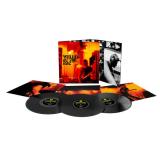
Paul Weller releases Weller At The BBC (Vol.2) on Friday 24th April.
This second BBC outing gathers live session and live in concert performances, including intimate stripped back acoustic versions and re-workings of tracks across The Jam, The Style Council and Paul’s extensive solo career.
From timeless classics such as Start!, Shout To The Top and Wild Wood, to deep cuts and covers, like The Zombies’ Time Of The Season and Billie Eilish’s What Was I Made For?
The album also features some beautifully orchestrated tracks with the London Metropolitan Orchestra, arranged and conducted by Hannah Peel, including Aspects, Boy About Town and Have You Ever Had It Blue.
- 1: Going Out
- 2: Confession
- 3: Drip Drop
- 4: Under The Covers
- 5: Nighttime
- 6: On The Ward
- 7: Blue Skies
- 8: I Go Back
- 9: Off The Beaten Track
- 10: Alone With You
- 11: Gave You Up
- 12: Staying In
‘Confession' is an album of quiet upheaval. An album about closeness that arrives late and unexpectedly. About stability rubbing up against desire. About the way friendship can suddenly tilt into something charged — and how that charge unsettles everything around it. Where earlier work often observed from a distance, Confession turns inward. The voice is closer, warmer, less shielded. “This wasn’t the album I intended to make,” says Carla dal Forno. “I originally wanted something veiled and abstract, but I realised I couldn’t hide behind abstraction — the songs only worked when I leaned into emotional truth.”
This is dal Forno’s fourth LP, written and recorded over several years in a small country town, in a studio housed inside a partially abandoned hospital. Long corridors, humming lights, emptied rooms — a place built for care and waiting, now quiet enough for thoughts to echo. That stillness shapes the record: intimate, watchful, unadorned. “I live in a small country town that offers a stillness my life didn’t previously have,” she explains. “In that quiet, feelings I might’ve ignored in a busy city grew loud.” Dal Forno sings plainly and conversationally, with an emotional precision that sharpens the everyday into something quietly unsettling.
The album moves through paired states: going out and staying in, wanting and withholding, devotion and distraction. Domestic calm set against private unrest. A long-held relationship offers safety and routine, while a newer connection opens emotional fault lines — longing, jealousy, fantasy, self-exposure. “At the heart of the album is a friendship that became emotionally charged in an unexpected way,” dal Forno says. “That shift brought daydreaming, jealousy, tenderness, confusion, self-awareness — and eventually acceptance.”
The drama here is internal, incremental, lived. Musically, Confession feels lighter on its feet than its subject matter suggests. Melodic basslines anchor the songs while guitars, harmonies, and gently off-kilter rhythms move around them. There’s a looseness, even a playfulness — “like the sensation of tension lifting once you finally admit something to yourself,” as dal Forno puts it. The album traces a subtle arc: attraction blooming where it shouldn’t; obsession quietly taking hold; fantasy overtaking reality; clarity arriving slowly, sometimes painfully. Visually and emotionally, Confession returns to modest spaces: backyards, beds, night streets, overgrown paths. “The record exists in that contrast,” dal Forno reflects. “Peaceful surroundings, unsettled interior.”
Like all of dal Forno’s work, Confession resists clean conclusions. It doesn’t moralise desire or romanticise restraint. Instead, it lingers in the in-between — where love is stable but not total, where yearning teaches as much as it hurts, where solitude becomes a form of care. Plain-spoken but emotionally complex. Rooted and restless. Held together by bass, breath, routine, weather. An album about admitting what you feel —and living with what that admission changes.
- 1: Come Away
- 2: Dance
- 3: You Make No Sense
- 4: Parking Lot Blues
- 5: Chistelle
- 6: About You
- 7: It’s Alright
- 8: Moody (Spaced Out)
- 9: Tiny Sticks
- 10: The Beat
- 11: My Love For You
Repressed LP on Neon Orange Vinyl. Come Away With ESG - 35-year anniversary release of the classic genre-busting debut album by the Bronx sisters ESG. The sample-friendly opus that’s the inspiration for hip-hop, house and post punk. Music that falls outside of the no wave, new wave and post punk library, it’s for the dance floor but it’s not funk, there’s no horns, no driving organ; it’s the opposite of Sly And The Family Stone but no less cool and no less groovy. “A lasting document of their unique brand of minimal funk that would influence subsequent post-punk, hip-hop, and dance music acts. Stripped down to the most basic of drumbeats and rudimentary bass lines, ‘Come Away’ confirms the notion that the real rhythm is what happens between the beats. AllMusic // “This is dub disco with a punk edge.” Paste // “Uncut punk-funk straight off the streets of the South Bronx.” Record Collector // “ESG are that rare thing” Guardian // “Come Away with ESG sounds so shockingly current.” Paste // “A musical snapshot of New York City at the beginning of the '80s.” Allmusic
Follow up to Goodge's 2023 album Echoes Of Yesterday. Previous releases found on Hip Dozer and Cascade Records. Tracks found on the popular Spotify Mellow Beats playlist. 11th in 'Jet Set' Cold Busted series. Designed and manufactured similar to the vintage 60's style rice paper sleeves. In his latest EP, Sunday Soul, Goodge takes listeners on a four-track journey through the heart of funk, masterfully blending elements of R&B, jazz, and chilled lo-fi. Released as part of Cold Busted's Jet Set series, this four-song offering follows Goodge's 2023 album Echoes Of Yesterday and showcases his dedication to crafting timeless music. "Lights Out" kicks off the EP with heavy funk and stirring breakbeats, accompanied by a scratchy guitar that summons the revolutionary spirit of the '70s. Horns serve as a call to action, while a rollicking bass line and chunky electric piano might inspire listeners to go out and fight crime. "Promised Land" follows, featuring a formidable funk bass guitar and lead guitar chords that rhythmically play off the delightfully busy drums, creating an atmosphere reminiscent of the city's bustle. The title track, "Sunday Soul," is a rowdy affair with a speech-over-beats leading to crispy snare rolls and chiming electric piano. Shaker magic, staccato horn bleats, and spiral flute bits combine to create a swirling vintage-hued photograph of sound. The EP concludes with "Within Myself," a spacier sonic experience that could serve as the soundtrack for chasing someone across rooftops. It's funk spelled with a capital K. Sunday Soul is a must-listen for fans of of the heavier side of funk, solidifying Goodge's position as a master of his craft, creating a nostalgic yet fresh soundscape that keeps listeners grooving back for more.
2026 Repress
35th Anniversary Edition of Peacefrog - 2LP Smokey Vinyl
Born and raised in the birthplace of House Music, Paul Johnson was known for his raw, soulful, and infectious sound, that helped shape Chicago's house scene and inspired generations of DJs worldwide in particular he was a massive inspiration to Daft Punk and the 'French Touch' scene. Releasing a vast amount of music throughout the 1990s for some of the most consistently underground dance labels including legendary Chicago imprints Cajual, Relief and Dance Mania he finally gained global fame with his 1999 hit “Get Get Down,” a dancefloor anthem that topped charts across Europe. Despite facing physical challenges, including losing both legs in accidents, he remained an unstoppable force in music—touring, producing, and uplifting others with his resilient spirit and signature groove.
Originally released in 1996 Feel The Music was Paul's second album for Peacefrog Records. Containing some of the classiest house music to hail from the Windy City. Classics such A Little Suntin Suntin , Summer Heat and I Wonder Why will have you smiling while you’re jackin’ and the irresistible and infectious Hear The Music was fthe opening track for Daft Punks legendary Radio 1 Essential Mix.
- 1: Wisco (5:09)
- 2: Bborn Again (6:44)
- 3: Pez (4:4)
- 4: Coni (5:7)
- 5: Plz (6:21)
PPP: a whirlwind new link-up between contemporary club heartthrobs Piezo, DJ Plead and DJ Python. A trio of the best in the game come together for a new collaborative project on Facta and K-LONE’s Wisdom Teeth imprint.
The project was recorded gradually over a two year period at Piezo’s studio in Milan. Initial sketches were written when Python came to stay for a few days in late 2023. Later, when Plead travelled through the city, he stopped by to add his own contributions - and the record grew incrementally and organically from there across multiple visits.
The initial MO was to workshop a warped take on early 00s minimal and tech house - but at a certain point the record took on a life and soul of its own, spreading out in a number of disparate yet interconnected creative directions: from the peak-time euphoria/melancholia of ‘Wisco’ through to the shoegazed minimal of ‘Plz’, via proggy psychedelia (‘Bborn Again’), glitched Perlon reconstructions (‘Pez’) and downbeat downtempo (‘Coni’).
At points you can clearly hear their individual voices break through: be it Python’s whale-song melodies on ‘Coni’, Plead’s frenetic hand drums on ‘Wisco’, or Piezo’s sound-design freakouts on ‘Pez’. At other points the joins are harder to find as the record takes on a unique voice far beyond the sum of its parts.
- A1: Frankie Knuckles Feat Jamie Principle - Your Love (Original 12” Version)
- A2: Steve "Silk" Hurley - Jack Your Body (Original Club Mix)
- A3: Marshall Jefferson - Move Your Body (The House Music Anthem)
- A4: Farley “Jackmaster Funk & Jesse Saunders Feat Darryl Pandy - Love Can’t Turn Around
- B1: Jesse Saunders - On And On
- B2: Ron Hardy - Sensation (Long Version)
- B3: The House Master Boyz& The Rude Boy Of House - House Nation
- C1: Ralphi Rosario Feat Xavier Gold - You Used To Hold Me
- C2: Ten City - That’s The Way Love Is (Underground Mix)
- C3: Joe Smooth - Promised Land
- C4: Raze - Break 4 Love
- D1: Maurice Joshua With Hot Hands Hula - This Is Acid
- D2: 808 State - Pacific State
- D3: Orbital - Chime
- D4: Phuture - Acid Tracks
Back in stock !
First three releases in Ministry Of Sound's new 'Origins Of' series of vinyl releases. Taking it right back to where it all began, Ministry of Sound’s Origins series charts a selection of pioneering records responsible for shaping the sound of modern day dance music. It’s hard to imagine a world without House; this 2x LP release explores the origins of the genre from its early beginnings in 1980s Chicago presenting some of the key building blocks of a sound that went on to change the world. Featuring, Frankie Knuckles&Jamie Principle, “Steve” Silk Hurley, Marshall Jefferson, Farley “Jackmaster” Funk, Ron Hardy, RalphiRosardo, Joe Smooth and many more.
- 1: Scimitarium I
- 2: Aconitum
- 3: Red Ruins
- 4: Hungry Hallucinations
- 5: Fever Dance
- 6:
- 7: Ophidia
Crypt of the Wizard is proud to present Scimitar – Scimitarium I on vinyl and digital formats. Formed in 2024 by veterans of Copenhagen’s underground music scene—including members of Slaegt, Endless Glory, and Shaam Larein—Scimitar arrives as a fully formed force of nature. In their raucous wake lies Scimitarium I, a frenzied, whirling dervish of black occult rock. For those familiar with the members' previous efforts, this should come as no surprise. This piece of musical alchemy is a perfect knife-edge dance, seamlessly blending elements of black metal, post-punk, and occult rock. Dark and serpentine, onyx black, scaled and sacred, Scimitarium I unfurls itself like an endless snake wrapped tight around the world. With a dark heart and a head full of fever dreams, this is an album of breathless intensity. Shaam A.’s constant presence provides an abundance of rich, overflowing lyrics, delivered in her distinctive and haunting voice—written as if hurriedly scrawled in feverish reverie—and reinforced by winding, twisted narratives played out on violent yet harmonic duelling guitars, alongside a rhythm section of unyielding intensity. Scimitar has quickly become an indelible part of the city's fertile and ever-evolving metal scene—a place where stalwarts continue to push boundaries and break moulds with seemingly effortless zeal. This is an album of forged perfection, honed and sharpened like a curved blade—shimmering with lethal precision—driven straight into the heart of all matters
"Every day, the skies of New York City fill up with unseen clouds of radio signals spreading over immigrant neighborhoods. These culturally charged clouds of radio energy burst with a flow of content that continually shifts and transforms, following the lifecycle and rhythm of the streets.
Dez Andrés, Detroit’s underground legend and genre-blurring maestro is back with another batch of reworked old skool bangers.
Since the late '90s, Dez has built a respectable catalog that blurs the boundaries between genres. One of motor city’s most prolific artists, his music can be summed up in one word: quality. Now he returns to DFM with a two-sided heater.
Dez flips Odyssey’s classic Native New Yorker into a gritty dembow style club weapon. With iconic vocal lines and signature piano riff, Dez injects his signature bounce and percussive punch, turning this disco anthem into a raw dancefloor destroyer.
Diving deeper, Dez revives Dr. Buzzard's Original Savannah Band’s classic Sun Showers, transforming it into a rhythmic, power groove tailor-made for sweaty basements, rooftop sets and smoke filled dance floors on red-lit nights that refuse to end.
2024 Reissue
Transparent grünes Vinyl! Wieder lieferbar! Zum ersten Mal überhaupt seit der digital-only Veröffentlichung 2011 erscheint nun der erste "Minecraft"-Soundtrack in physischer Form. Die Vinylversion enthält zwölf Tracks! "Minecraft - Volume Alpha" ist das Werk des deutschen Komponisten und Musikers Daniel Rosenfeld. Unter seinem Künstlernamen C418 erschuf Rosenfeld den weitreichenden Soundtrack und das lebendige Sounddesign, das das auf Voxel aufgebaute Universum von "Minecraft" zum Leben erweckte. Fans und Kritiker waren durch die Bank weg begeistert von seinen beatlosen, ausgewogenen Electro-Stücken. Die bekannte Gaming Seite "Kotaku" führte den Soundtrack unter der "Best Game Music" 2011 und nannte die Musik "beeindruckend beruhigend", während The Guardian die zerbrechlichen Stücke Rosenfelds aus Klavier und minimalistischem Ambient mit den legendären Künstlern ERIK SATIE und BRIAN ENO. In einem Interview destillierte Polygon "Volume Alpha" auf seine Essenz hinuntern: "Der Soundtrack ist nicht gebunden an die Retro-Ästhetik der Minecraft Graphik. Der Soundtrack setzt sich über sie hinweg. Das Album ist ein Versuch, die kombinierte Game/Music Erfahrung in etwas Himmlisches zu übersetzen."
Following recent releases on Over/Shadow, Future Retro, Loop Progression and Bukva Sound, Peeb makes his debut on Wilderness with the Endless Skies EP, showcasing a deep, blissed out and atmospheric angle to his sound across 4 tracks that capture a sense of wonder, flowing from track to track to take you on another journey.
Double 12" release
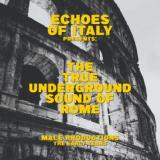
The Story — From the Streets of Rome to the Male Productions Label
In the early 1990s, Rome lived in a kind of suspended moment. The city was still tied to its historic clubs, yet in the outskirts—inside abandoned warehouses, quarries along the coastline, and the wooded parks north of the capital—something new was beginning to stir. A nocturnal, constantly shifting movement fuelled by a hunger for freedom and a sonic curiosity that reached far beyond the mainstream.
Moving through this ferment was Francesco “Chicco” Furlotti. First an organizer of unconventional parties and underground nights, he soon became one of the driving forces behind Rome’s itinerant rave scene. Furlotti sensed that a wave of change was about to sweep across the city. It wasn’t just about parties: it was the rise of a culture, a new way of thinking about music, community, and belonging.
It was within those nights—later held with official permits, properly built sound systems, and an ever-growing crowd—that Furlotti recognized the existence of a distinctly Roman sound, and the need to capture it, preserve it, and give it tangible form.
So, in 1991, he decided to take a bolder step: to found an independent record label—small, determined, and far removed from the commercial logic that dominated at the time.
That was the birth of Male Productions.
Male was not a label like any other: it was a workshop, a gathering point, a creative hub where DJs, producers, friends, and wanderers converged. Within that environment, an artistic core took shape—Stefano Di Carlo, Leo Young, and Mauro Tannino, along with other collaborators orbiting around Furlotti. From their synergy emerged a project whose very name declared its mission:
The True Underground Sound of Rome.
The collective did not simply aim to release music; it sought to tell a story of Rome through sounds that defied categorization: house, techno, ambient, electronic mysticism, psychedelic visions… a unique blend, instantly recognizable, emotional, and experimental. The sessions unfolded using essential yet razor-sharp gear: Roland drum machines, analogue synthesizers, Akai samplers, stripped-down mixers. Few tools, endless imagination.
The first result of this work was the 12” Secret Doctrine, released in 1991 in an extremely limited run—around 500 promotional copies, according to accounts. The record captured something that until then had floated only in the air of Roman raves: enveloping atmospheres, deep rhythms, melodies built to make the mind travel far beyond the dancefloor. A sound that did not imitate what was happening in Detroit, London, or Berlin, but absorbed those influences and re-sculpted them with a distinctly Roman sensibility.
Yet, precisely because it was independent and detached from commercial circuits, Male’s output remained sparse: few EPs, few copies, irregular distribution. Over time, those records became rare artifacts—almost mythical objects within the Italian electronic scene. The legacy of Male Productions seemed destined to survive only in the memories of those early years, in the stories told after raves, and in the private archives of a handful of collectors.
Many years later, thanks to the almost accidental rediscovery of a few original copies of the first two releases issued by Male Productions, it became possible to undertake a meticulous process of recovery and restoration of the audio etched into those grooves, with the aim of preserving as fully as possible the quality and character of that unrepeatable sound.
We are therefore able today to present — at last in a complete and faithful form — the first two mixes created for Male Productions, now released on a double vinyl that brings back into the present the exact moment when it all began: the nomadic nights of the raves, Furlotti’s vision, the creativity of Di Carlo, Young and Tannino, and the sonic identity of a Rome in the midst of transformation.
This is not merely a reissue.
It is a historical document.
A fragment of a culture that changed the city.
The authentic sound of the Roman underground, finally returned to the world.
Dark, futuristic, fearless and built for those who understand that techno is not just style, but vision. Detroit Techno Records welcomes one of the true architects of Detroit electronic music: Suburban Knight. Known off-record as James Pennington, he is widely recognized as a foundational figure in the city?s history, an artist whose recordings helped define the darker, moodier and more cerebral edge of Detroit techno. His classic works such as ?The Groove? and ?The Art Of Stalking? remain touchstones of the form, while later activity with Underground Resistance further cemented his role in shaping the deeper mythology of the Detroit sound. Coming straight from Detroit, USA, DTRV011 is more than another catalogue entry. It is a new chapter from a genuine legend, an artist whose contribution to Detroit techno was never peripheral, but central. Suburban Knight remains one of the rare names whose music still carries the original weight of the city: dark, futuristic, fearless and built for those who understand that techno is not just style, but vision.