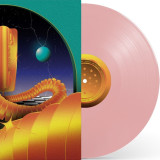
Purple Color Vinyl
We are really proud to introduce a new release on Mawimbi Records: "Mawimbi, Vol. 2”. Its title is a nod to “Mawimbi, Vol. 1”, which was the inaugural release of our record label back in 2015. A new compilation, at last, after a decade of music activism and a handful of EPs and albums which have helped unearth some of today’s talents from the new global music scene (Onipa, Loya, Afriquoi, Raz & Afla). It stays true to the driving principles of our artistic direction: support upcoming artists, e ncourage the breaking down of musical frontiers, help make happen new encounters between electronic music and so-called “afro” music. While these encounters can now be witnessed anywhere in pop music’s current zeitgeist, from Beyoncé to South African’s vibrant amapiano scene, we think there’s still plenty to explore.
“Mawimbi, Vol. 2” truly feels like the culmination of a long path for our record label. Because it includes artists who have been actively contributing to the Mawimbi adventure over the years, and also because it’s another convincing testimony of the fruitfulness of this musical intuition we have so heartily been defending for the last decade. Indeed, the 8 tracks of “Mawimbi, Vol. 2” resist all the usual labels. They sound like they stem more from human encounters and artistic dialogues launched in the moment than attempts to be associated with any music scene in particular. Each of the 8 pieces of this compilation presents in a unique way the search for this cross-pollinating sound.
The compilation opens with a really engaging rework of James Stewart’s classic track “Cotonou” by Lyon-based tropical music enthusiasts Voilaaa, who took Peter Solo’s voodoo soul lines on a trip across the Black Atlantic beginning with a horn-heavy cuban cha-cha-cha before falling into a savory triple time dance. As tireless sonic adventurers, Amsterdam-based duo Umoja have brought back a handful of hits from their numerous trips to Kenya meeting with local benga musicians. “Avana Va” is one of their compelling tunes, featuring Kenyan musician and producer Sidney Simila. This urge to collaborate with musicians from across the African continent is also to be found in Village Cuts’ ever expanding discography. On “Sentima”, they showcase their trademark London funky sound, introducing us to the talents of Congolese guitarist and singer Kissangwa.
Afriquoi’s 2020 hit “Ndeko Solo” is presented in a brand new shape, sprinkled with some French Touch flavours. “Djansa”, by Toulouse-based producers Mr. Boom, rides a distinct South African-inspired groove, while inviting us to a nighttime dance by the Balearic sea. On “Silent Runner”, French producer and musician Ozferti moulds his own musical galaxy where East African scales meet cutting edge global club beats. With “Nabi Kumi”, Anglo-Ghanaian duo Raz & Afla delivers their deepest piece, once again inducing a state of trance with a triple-time beat and an hypnotic kora loop. Closing the compilation, “It's Holy” is a unique collaboration between Tom Excell (Onipa, Nubiyan Twist, David Walters) and Dizraeli, one of the most interesting voices in British rap, which by making connections between broken beat, jazz and african music, illustrates the precious mixture of musical aesthetics that make up the current UK musical landscape.
Search:the connection
Alpi are a duo from deep in the mountains of northern Italy. Their debut EP on Trule is a clear eyed, psychedelic exploration of the natural environment of their home in the Dolomites, and the connections between the “symphony” of nature and the profound emotional vibration/resonance experienced by humans. 'Flora Resonantia' serves as a reminder of the intimate relation that exists between humanity and the natural environment.
A deep, minimal and organic textural dancefloor journey.
LVE1 is the highly anticipated debut EP from East London’s Liv East – a 5-track collection of neo-soul & R&B infused cuts that follows a string of prolific R&B influenced releases, including her much loved collab with in-demand French funk aficionado Folamour & ‘You’re My’ on Defected’s well known disco label Glitterbox.
‘FREAK’ & ‘LVE UNLIMITED’ nod to Liv’s connection with the dancefloor, her silky soul vocals sewn through beatdown edits that would suit the slower moments on the dancefloor. While ‘You Got Me’ swings to a 2-steppin back-beat of funk grooves & popping basslines. Alongside these brand new originals are two hypnotic bonus tracks ‘So Badly’ and ’So Badly (Kid Fonque Remix), available for the first time on vinyl.
Pink Vinyl. The title of the most recent Atmosphere album, May 2023's So Many Other Realities Exist Simultaneously, evokes the multiversal storytelling that's recently vaulted into the mainstream consciousness. With their latest effort, the irrepressible Talk Talk EP, the Minneapolis legends dart across threads of space-time to grab hold of the one where Slug and Ant became titans of the electro-rap that was foundational to their youths. By evoking acts like Kraftwerk and Egyptian Lover, Atmosphere makes visions of the future from four decades ago seem new once again, the relentless forward churn of technological optimism reimagined as an endless loop with irresistible drums. The genesis of the Talk Talk EP was the session for a song of the same name that appeared on So Many Other Realities Exist Simultaneously. A collaboration with Lifter Puller alum Bat Flower, the song "Talk Talk" exists alongside electro classics in an uncanny valley that's been warped into a sweaty nightclub, at once vaguely alien and deeply human. Enamored with the song's outcome, Slug and Ant returned for a longer exploration of the sound, to mesmeric results. The pulsing "Rotary Telephone," where the TV antennas seem tuned to a world just slightly askew from ours, thrives on the tension between Slug's careening vocals and the song's taught structure_form matched perfectly with content. And on "Hear Hear," the struggle to make human connections is revealed as a beautiful one. For all its well-documented roots in disco and R&B, rap's connection to the electronic music of the 1970s and `80s is a core part of its DNA. The Talk Talk EP is one of the clearest articulations of this truth to emerge in many years, a testament to the communal power of programmed sound. For proof, look no further than "Traveling Forever," the haunting missive that closes out the record. Images flash: of police knees on necks, of prying cameraphones, another empty hotel room indistinguishable from the last. "I never got to learn how to dance for you," Slug raps, pointedly. "I don't know whether or not that's an attribute." A chill runs down your spine but the skull at its top keeps nodding.
2023 REPRESS - Rare Brazilian Bossa Nova - Latin album - Comes with insert/liner notes & packaged in a gatefold jacket - 180g TANGERINE COLORED vinyl limited to 500 copies w/obi strip // Marcos Valle needs little introduction, born in Rio de Janeiro in 1943, Mr. Valle is an award-winning/chart-hitting Brazilian singer, songwriter and record producer. He was raised on a staple diet of classical, Brazilian popular music and North American jazz. Marcos Valle grew up to be one of the most influential & innovating musicians of the Bossa nova period and is regarded as one of the greatest Brazilian artists of all time. He has recorded albums for North American labels such as EMI, Warner Brothers & Verve_cementing his career with a series of tight musical workouts moving seamlessly between funk, samba, soundtracks, soul, jazz, dance and rock. Valle contributed to some of the most important recordings by artists including Sarah Vaughan, Frank Sinatra, Sergio Mendes, Leon Ware, Chicago and Airto Moreira. Mr. Valle's work has been sampled/remixed by major artists from the likes of Jay-Z, Kanye West & Madlib.One of Valle's favorite bands to frequently collaborate with was no doubt Azymuth, who took their name from a Valle song!Azymuth (Bertrami-Malheiros-Conti) started their individual careers in the 1960s in the emergent Bossa nova and jazz scene of Rio, living in the same bohemian block in Copacabana and playing in small bars as session musicians under various other names.It was the early 1970s when Azymuth really began to cause a stir and Marcos Valle invited them to record on a soundtrack LP he was doing. The unique Azymuth sound was now born: a mix of electronic music, samba, funk and jazz that they defined as MPB-jazz (MPB stands for Musica Popular Brasileira). Over the decades Azymuth released extremely successful albums (selling millions of copies) on labels such as Polydor, Som Livre and Atlantic. Hitting the charts on multiple occasions, Azymuth played at the Monterrey and Montreux jazz festivals and at venues around the globe.The band has worked with legendary musicians from Joe Henderson to Stevie Wonder and they've also been remixed/sampled by artists such as Flying Lotus, will.i.am, MF DOOM and Peanut Butter Wolf. Their unique brand of fusion-music has influenced three generations of musicians, DJs, and producers. Music journalists across the spectrum from mainstream to underground, celebrated these raw yet wildly imaginative and musically accomplished tracks that were a revelation of jazz, funk and disco, with some even stating that the roots of EDM were on display in their early recordings.On the album we are presenting you (Brazil by Music - Fly Cruzeiro) the listener is getting yet another fantastic early Valle/Azymuth collaboration. Released in 1972, this rare album was pressed and gifted to customers of the `Cruzeiro' airline company. This promotional record came as no surprise because the connection between Cruzeiro Airlines and Valle was very tight (Valle's father was the manager and his brother was a co-pilot there).Next to the Valle/Azymuth material present, other songs include some of the all-time best Brazilian standards originally written by renowned artists such as Jorge Ben & Antonio Carlos Jobim. Take a flight with us through this fantastic album and into some of the best Jazz, Funk & Bossa Nova the Brazilian musical landscape has to offer.Tidal Waves Music now proudly presents the first ever vinyl reissue of `Fly Cruzeiro' since its release in 1972 (only 500 copies were pressed upon its original release in 1972).
"After releasing EPs like 2018’s Stereo and 2019’s Friends, as well as the full-length Ivory album, fans have been keeping track of Omar Apollo’s growth as a person and musician over the years. On December 1st, 2023, the Grammy-nominated singer released his latest body of work, a new EP titled Live For Me. Altogether, Live For Me has been transcribed as a “transitional” era for Apollo’s music. The EP features four tracks: “Ice Slippin,” “Live For Me,” “Angel,” and “Pilot.”
For Omar Apollo, longing is an art form—and he’s mastered it. The young singer/songwriter’s aching, visceral musings on love and heartbreak have earned him connection with a devoted fanbase as well as industry-wide recognition, including a GRAMMY nomination for Best New Artist, two Latin GRAMMY nominations for Record of the Year and Best Alternative Song (“Te Olvidaste,” with C. Tangana), Variety’s Future Icon award, and most recently his first RIAA-certified platinum record for viral hit “Evergreen (You Didn’t Deserve Me at All)”—which was also his Billboard Hot 100 debut. He ushers in his next chapter with a new EP, Live for Me, with some of his most personal writing to date, expressing themes he hasn’t previously spoke about. Born in Hobart, Indiana, to parents who immigrated from Mexico, he often felt isolated as a minority in his hometown. As he draws on another year of life, love, and longing for his latest chapter, Apollo’s promise is limitless."
Meteora - a chain of Greek-Byzantine monasteries was built around the 14th century on top of sandstone rock formations in the fading range of the Pindus Mountains, in the Thessalian lowlands of Greece At an over 600 meters high, some of them were only accessible by rope ladders or winches for hundreds of years. Makiko Hirabayashi learned of this place during a concert tour to Athens and was immediately captivated by its symbolic power: the isolated units which nevertheless exist in a larger context; fragile and floating, but at the same time firmly grounded. The opening title of the new, fifth album of her trio seems to have been perfectly chosen; "Warp", relating to the space above the early monasteries on the rock formations, as well as connecting the album to her previous release Weavers, in which much was woven with warp threads. A high-pitched bass, the subtle use of electronics, like everything else that follows, seem to emerge somehow from outer space. These are seemingly simple structures that only reveal themselves as complex architecture upon repeated listening - meditative and fleeting, but at the same time permanently carved into the rock. Minimalistic piano figures from which melodic fragments emerge, in their very clarity offer ample material for improvisation. With onomatopoeic percussion, an impressionistic and scenic painting is sketched in "Birds Ascending", whereas enthralling rhythms lead the way in "Chestnut Alley" or the sky-racing "Meteor". In between those, you find the improvised miniatures like "The Door" or "Slip", aspherical connections between worlds: imaginary doors, rope ladders or hinges. After the lockdown album Weavers, Makiko Hirabayashi is back in the piano trio setting with Klavs Hovman on bass and the legendary percussionist/ drummer Marilyn Mazur, reclaiming her space and time. Some of the material produced here has been part of their live repertoire for some years and gone through a maturing process, becoming an integral part of the whole album put together in the spirit of Meteora.
Repress!
Jason Williamson – “Discourse chapters that dark silence in the vaults of the unskilled worker. The acceptance of all that is horrible and endured. Moments of connection between living vessels are rare but sometimes they they do pass through the wire and lives are understood for a flicker of a second.”
“Eton Alive chronicles the scenes outside, mostly sleeping bags. Dulled reds, greens and cardboard head boards. Paper cups, bitten around the edges, full of copper."
Michael Chapman (1941-2021) released his debut album Rainmaker in 1969 on Harvest. He went on to release over fifty albums and influence many with his evocative songwriting and guitar prowess. From heady jams to expressive ballads to experimental noise, Chapman’s work continues to inspire. Tompkins Square recruited Henry Parker to curate a collection of covers by working musicians from Chapman’s home turf in Northern England. With stunning artwork by local artist Bunty Marshall mapping the important places in Michael’s life, this 12th volume of Tompkins Square’s Imaginational Anthem series is the ultimate tribute to a very dearly missed artist. Notes from Henry Parker: Tompkins Square approached me in Autumn 2022 about putting together a tribute album to Michael Chapman who had passed away one year ago, on my birthday, in 2021. I remember it well; Michael Chapman had always been a huge inspiration to me since starting out on the acoustic guitar and was the first artist I had heard who played the instrument with that heavy thumb, drop tuned sound. I first got the chance to see him live at the Bradford experimental music festival Threadfest in 2015 and then went on to watch him play many more times, in the northern towns of Halifax, Hebden Bridge and Preston, also getting the chance to support him on a couple of his Yorkshire dates in 2018, in Saltaire and his hometown of Leeds. With both Michael Chapman and myself proudly coming from the county of Yorkshire in northern England, Tomkins Square and I decided to make this compilation decidedly Yorkshire focused, bringing together seven other artists from the county who have drawn influence from the profound music of this man.For those who don’t know, Yorkshire is an area that spans much of northern England, with its people taking great pride in the county, never too seriously, and poking fun at the “soft south” or it’s near neighbour Lancashire. Michael’s sound always spanned from introspective folk songwriting to more experimental forms and naturally so does this album, created for Tompkins Square. When it came to choosing musicians to contribute to the record, I was grateful for the Yorkshire limitation on who I could draw from, as the resulting album is comprised of eight artists, who have all shared stages with each other across the folk and experimental scenes in the area. The lack of “bigger” names on the record feels natural, there’s no ego about this project as there never was with Michael, who always seemed content touring the smaller clubs and making records for anyone who was interested. The artwork for the project came together organically, and firmly within the Yorkshire cottage industry. Two months before I was asked to put this album together, I had played a show in Leeds for the launch of a new zine, centred on folklore and mythology. The artist and founder of the zine Bunty has an exceptional eye for detail and a profound love of Yorkshire landscape and culture. Her intricate maps and illustrations created for ‘Hwaet’ zine were the perfect starting point the for this record, and the cover art and inner sleeve is an ocean of detail for Michael Chapman’s incredible life, music and his connection to Yorkshire
‘Demos/sketches/interludes from the hinterland between records. Drum machines and single take vocal sketches tied together with downtime synth experiments and recordings of local disappearing areas.’ True as it is, Jabu’s strap-line is a somewhat understated take on what also proved to be a transformative experience for them. The follow-up record to their 2020 sophomore LP ‘Sweet Company’ (and the ensuing ‘Versions’), ‘Boiling Wells’ weaves a smudged, group -mind spell. Originally released earlier this year without fanfare as a digital-only release, it now receives the proper release attention it deserves, issued in a neatly packaged vinyl edition of 300 copies. Dreamlike, woozy, raw and in dub, the album documents a blossoming process, and encapsulates a fragment in time - holed up in the country, soaking up the atmosphere in collective isolation, creatively embracing the limitations of a small recording set-up, and finding a new way to work as a band. “My mum had gone away so we’d decided to take the mixing desk and a couple of drum machines out to her house and set it up in the front room. We did it a couple of times to get the bulk of the tunes on 'Boiling Wells' done, one in summer and one boozy one around Christmas. I think we all immediately enjoyed working that way, sat around all together, more of an immediate thing. Jas started to play a lot more guitar, her and Al would write lyrics on the fly or be programming a drum beat in or something. We were all switching around and getting ideas down really quickly, not worrying too much if they were good or not. The music was limited by the stuff we had there, I didn’t bring a big desk so we only had six channels or so, and everything was basically just recorded in as a stereo take so we were more or less stuck with it after we’d laid it down - which was nice too. I don’t think we would’ve changed them anyway; it was the sound of the room and of us doing it together in the moment that was really important.” There has always been a collaborative heart to Jabu, though its nature has shifted and morphed over time. In their earliest incarnation, in after-school jams, Alex Rendall would rap over Amos Childs’ beats, but by the time they began releasing music in 2012, Al had found his singing voice – a sweet, soulful counterpoint to Amos’ increasingly dub-wise, experimental backing. Both are founder members of Bristol’s Young Echo, a collective of friends and musicians first operating loosely together on radio shows, artistic collaborations and events, and later on, running a record label. As expansive as their original remit was, Young Echo has steadily evolved since featuring in The Wire’s 2013 cover feature on Bristol’s new school of post-dubstep bass music. Of late, Seb (aka Vessel) has been working with violinist Rakhi Singh on string arrangements for Jabu, and the upcoming residency at Bermondsey’s MOT will showcase relative newcomers Birthmark and Intel Mercenary alongside the regular crew. Jabu’s debut album proper, ‘Sleep Heavy’, arrived in 2017 courtesy of Blackest Ever Black. A sublime, focused meditation on grief and loss written largely by Amos and Al, it marked the debut of Jasmine Butt (aka Guest), adding a further layer of vocal texture to their palette. ‘Sweet Company’, their first album written as a trio (released via their own do you have peace? label), drifted into lighter, more ethereal introspection. Featuring guest appearances by Sunun and Daniela Dyson, remixes by Equiknoxx’s Time Cow and Young Echo ‘s Ossia teased out the inherent pop and dub sensibilities respectively. Recent times have also seen remixes by kindred spirits Seekers International and Jay Glass Dubs, and a collaboration with the renowned T.S. Eliot Prize-winning dub Poet and musician Roger Robinson on a pair of plaintive, aching 7” singles. Jabu’s broad raft of inspirations can be experienced first -hand on their monthly NTS Radio show ‘Music 4 Lovers’, co -hosted by long-time friend and soul afficionado Andy Payback. A celebration of the endless tapestry of interrelated musical connections, it runs parallel to Jabu’s own reinterpretation of their influences. For ‘Boiling Wells’, Amos remembers a diet of “A.R. Kane, Cocteau Twins, DJ Screw, Southern/Memphis rap mixtapes, early 90’s jungle, Karen Dalton, Sybille Baier, Vashti Bunyan, Svitlana Nianio, a lot of soul, Armand Hammer & Alchemist, Grouper, Bobby Caldwell. Jazz was a constant, Japanese, Polish, Latin, American…”. And from those diverse strands, something new and singular has formed, to line up alongside them. ‘Boiling Wells (Demos ‘19-’22)’ is released by UK newcomer Six of Swords in a limited vinyl edition of 300 copies, pressed on black vinyl housed in full colour 270 gsm matt varnish sleeve and black paper inner, with full download coupon
Vocal Shades And Tones is a miraculous leftfield library classic from the genius mind of celebrated UK composer/singer/vocal arranger Barbara Moore. It's a heavenly groove-based blend of jazz, Latin, soft-psych, folk-funk and gospel soul. Recorded for the legendary Music De Wolfe in 1972, it's an audacious start-to-finish listen, as dizzying as it is dazzling. It's a perfect snapshot of a musical era, supported by Moore's glorious vocal arrangements. Widely regarded among collectors, DJs, and lounge/easy-listening acolytes as an absolute essential it is viewed as the holy grail by many production music heads, rarely appearing for sale and disappearing in a flash when it does. Indeed, originals now go for over £300 and it's easy to see why. Just one of the reasons why this fresh Be With reissue, part of a wider De Wolfe reissue campaign, is so utterly crucial.
Racing out the gate, the driving "Hot Heels" is a bright, sophisticated scat groove which sounds Brazilian, richly produced as if coming by the hand of Arthur Verocai. Yes, *that* good. It's followed by "It's Gospel" which is, er, a wonderfully slow and deeply soulful gospel treasure. The appropriately monikered "Steam Heat" is a darker, breathy gem, one for salacious crates and one of the record's most infamous tracks. "Fly Away" is pastoral West Coast soft rock, very much in conversation with John Cameron and Keith Mansfield's epochal KPM recording, Voices In Harmony. "His Name Was" is a stop-you-dead-in-your-tracks Beach Boys accapella church-organ stunner, whilst "Swing Over" is another carefree, richly produced sun-dappled smasher. The gentle Bossa and sunshine soul of the aptly-titled "Touch Of Warmth" closes out a virtually perfect A-Side.
The B-Side opens with the easy grace and dramatic build of "Voice Force Nine". The jaunty "Very Fine Fellow" may be the only track to slightly grate so we advise heading to the slower, moody "Shades-Tones", eminently more compelling with sparkling, hypnotic piano throughout, underpinning the gorgeous wordless vocals. Just beautiful. It was sampled by Redman for his Method Man-featuring "Do What Ya Feel" on the great Muddy Waters. We're back in Brazilian territory with the cool, uptempo "I'm Feather" before swooning to the warm, relaxed "Drifting", another total highlight which was famously sampled by Koushik on his legendary remix of Madvillain's "America's Most Blunted (Doom's Verse)". The penultimate track, "Take Off" is a bright, organ lounge groove before this remarkable set is rounded out by the beaty "Fly Paradise". It's so so good, it sounds like Rotary Connection fronted by The Mamas & the Papas. As noted in a recent Guardian article on Moore's life, "there is a plushness and electricity in the tight vocal harmonies that spring out, sung with the precision of cathedral choristers decades before Auto-Tune." Amen.
In the 1960s, Barbara Moore was a member of Top of the Pops’ resident vocal-harmony group, The Ladybirds and sang backing vocals for Dusty Springfield’s TV show. Her own outfit, the Barbara Moore Singers, were regulars on TOTP, singing with Jimi Hendrix when he performed "Hey Joe" live in Lime Grove Studios. An important detail for Moore was the shepherd’s pie she bought Hendrix when she found him alone, looking emaciated, near the BBC canteen. By 1970, she was working as a session singer for De Wolfe and, by 1972, was composing her own tracks for De Wolfe and working within their tight creative strictures. Each short track had to evoke an obvious mood and theme, with no significant key or tempo changes. Her response, this very album, managed to stay between the lines while cohering as an overarching artistic masterpiece.
The audio for Vocal Shades And Tones has been carefully remastered by Be With regular Simon Francis, ensuring this release sounds better than ever. Cicely Balston's expert skills have made sure nothing is lost in the cut whilst the records have been pressed to the highest possible standard at Record Industry in Holland. The original, iconic sleeve has been restored here at Be With HQ as the finishing touch to this long overdue re-issue.
The studio at 122 West Loveland Avenue was not an unfamiliar space for Steve Okonski, the leader of his eponymous trio Okonski. Ever since the Colemine label set up shop in Loveland, Ohio it has been a host to a number of groups passing through town, including Durand Jones and the Indications who all of this trio's members have connections to. After setting aside some time in winter of 2020, Okonski, trained initially as a classical pianist, invited Michael Isvara "Ish" Montgomery and Aaron Frazer to work on an album that was initially planned to be beat driven and fully composed trio instrumentals. After finishing this first session with some improvisations, a second week was booked in the summer of 2021 to try and capture some more of that spontaneous energy. During this session, the tracks were all improvised and recorded live to a Tascam 388 during several late nights at the Colemine HQ. They were structured to allow the group's collective intuition to fully shape the melodies and arcs of the music. The album opens with Runner Up, where a triumphant yet melancholic melody in the piano leads to a more reserved B-section driven by the drums and bass of Frazer and Montgomery. As you journey through the remainder of the album you are met with a plethora of evoked and explored emotions. The calmness one has walking down a moonlit street after midnight, the connection one has for a person who comes into their world for just a moment or a lifetime, and the nerves and catharsis one feels when starting upon a new, unknown journey. Magnolia closes with Sunday, a track that was recorded late into the night at the close of their first recording session. Without the spontaneity of Sunday, the remainder of Magnolia would likely have never come to fruition. Magnolia was composed from the heart and from the spirit of those in the studio those late nights in Loveland. It is the culmination of an emotional and artistic release that was not afforded or recognized before the band sat at their instruments, and because of that it is introspective, meditative, spiritual, and new.
Having gathered up praise from Mary Anne Hobbs, Cerys Matthews, Jamie Cullum, Gilles Peterson, Huey Morgan, The Guardian, Jazzwise and more, for his lauded ‘Crisis & Opportunity’, drummer and composer Myele Manzanza returns with the fourth instalment of his series, titled ‘Meditations’.
On ‘Meditations’, we see Myele revert to a purely acoustic line-up, channeling a focused and razor-sharp return to his Jazz roots. Showcasing an incredible level of musicianship between three musicians at the top of their game - including Matthew Sheens (Ross McHenry, John Patitucci) on piano and Matt Penman (Joshua Redman, SFJAZZ Collective) on double bass - the trio exchange motifs over the length of 7 tracks.
Opening proceedings with frenetic rhythmic improvisation, complimented by melancholic and cinematic layers of sound, ‘Crayford’s Room’ is a tribute to Myele’s musical mentor back in New Zealand. Remembering his time as a student in Wellington, Myele shows his deep connection to his origins, manifesting itself as lament on ‘Winter’ and ‘Homesick’. Introducing hypnotic, contemplative melodies take centre stage on ‘Something Old Something New’ (the first single to be released from the project)’ It maintains a sense of tension and intrigue throughout, and intensity rises to a crescendo sending sonic particles sprawling into space.
Intuitive, darker and deeply contemplative, Myele shares his innermost thoughts on ‘Crisis and Opportunities Vol.4 - Meditations’. He divulges:
‘The personal angst and existential frustration I was going through across 2020 - 2022 I believe is well reflected here. The album is deeply informed by the musicianship and sound of my trio, Matthew Sheens on piano and Matt Penman on double bass. Knowing that musicians of their calibre were going to be involved gave me licence to go further in my writing, deploying odd time signatures, sharing the melody roles across the piano and the bass, and delving deeper into the nuances of what the acoustic piano / bass / drums trio can do. The compositions present a challenge even to the best musicians, and I knew that it was essential to have a team on this level to really move the music beyond an academic exercise and draw out the emotion and colour from the material.’
- You Were Right On Time
- Be My Friend
- I Don't Know What It Is, But It Sure Is Funky
- I'll Be Right There Trying
- Get Off
- See The Light In The Window
- A Funky Song
- Willie, Pass The Water
- Dance, Lady Dance
- Ripplin
Seminal rare groove funk and deep soul album originally released in 1973 on GRC Records now released 50 years later on Soul Jazz Records in this fully remastered edition of this CLASSIC album. The album "Ripple" contains the all-time classic "I Don"t know What It Is, But It Sure Is Funky", one of the most memorable funk tunes of all time and sampled many times over. Ripple"s unique blend of funk, soul, rock, proto-disco and more stood them alongside groups like Funkadelic, Brass Construction, Mandrill, Pleasure, Kool and the Gang and The Blackbyrds, who were all blending these styles while remaining firmly focussed on the dancefloor. Like the group Funkadelic, Ripple hailed from Michigan and in 1976 opened for the group on their Parliament/Funkadelic Mothership Connection tour. This classic album has been out of print for nearly 30 years on vinyl and is now fully remastered and presented here in its original artwork.
- A1: Star (Ricardo Villalobos Master)
- A2: Custard Last Stand / Amo1 Ambient Version (Ricardo Villalobos Master)
- B1: Make My Love Grow (Ricardo Villalobos Mix Down)
- B2: Black Apple Pink Apple (Ricardo Villalobos Remix)
- C1: Make My Love Grow (Ricardo Villalobos Make My Love Groove Remix)
- C2: Softlanding (Ricardo Villalobos Remix)
- D1: Dealer (Ricardo Villalobos Remix)
tom Ravenscroft at 6music amongst others. And now, in true AMO1 creative fashion they are presenting an off-shoot release of that album, one completely reimagined by the man, the myth: Ricardo Villalobos.
Much has been written and talked about when it comes to producer/DJ Ricardo Villalobos over the years.
The mercurial Chilean-German artist has consistently redefined the boundaries of techno and electronica over the past 30-years as a producer, whilst also traversing the world and expanding minds as a DJ who can equally delight as he does challenge.Like a great jazz drummer (he was a percussionist before discovering mixing records), Villalobos has not so much as broken “the rules” of structure as just created his own unique approach. One that is often surprising, ever open-minded, and clearly lead by whatever happens to be inspiring him at any given moment. Watching him work or hearing him play music always feels live and free. He’s an artist. And that is exactly how this (perhaps unlikely) collaborative album has come to light – but then this is Ricardo, so maybe we should all know by now that anything is possible.
Villalobos explains, “In my scientific search for some electroacoustic musical landscapes, the offer of remixing ‘Black Apple Pink Apple’ was just perfect for me… In general, the song writing is so very good and particular, with all the instruments played into a sequencer, so it was very inspiring to strip down these pop songs into my dubby extensions, taking only the drums, bass, and vocals of the song.” Expanding further, “After delivering the first remix, Mo and myself came up with the idea of reimagining the whole album in a new way, mixed simple with other ears and my inspirations, with a new and different point of view of what instruments are important to hold the song to bare itself.”
It says a lot, and somehow captures the essence of Ricardo’s approach to music (and life), that one remix soon evolved into a whole plethora of reimagined works, driven by a creative slipstream and a clear connection to the songs created by A Mountain of One.
Mo Morris provides more insight into his own connection with Villalobos, “I lived in Berlin back in 2002-04 and used to religiously go to dance to Rici at the after (after) hours parties: little, tiny events. And he just used to blow my mind, I hadn’t heard anything like it before (or since). Ultra-modern and forward thinking.”
Mo continues, “A good friend connected to Ibiza happenings introduced me to Ricardo as it transpired that he was a fan of our early material, so I sent him some demo’s when we were in the studio creating ‘Stars Planets Dust Me’ and he loved ‘Black Apple Pink Apple’. The relationship and collaboration grew from there really, and I hope that this release is still at the start of what we can all create together.”
Focussing in on the album at hand – ‘Ricardo Villalobos reimagines: Stars Planets Dust Me’ – we are treated to a concept listen that guides us from dreamy daytime Balearic pop – staying very true to the original songs – all the way through to completely original deep dubby techno excursions. And to Villalobos fans, it will perhaps surprise (and hopefully delight) how light a touch he has provided to the opening tracks, focussing more on enhancing the sonics, and allowing the originals to shine brighter through remastering and mixing down. It’s in these moments that we see Ricardo as a pure music fan, needing not overly change or alter what’s already been created, but simply doing what he can to maximise what’s already there.
What will certainly delight Ricardo fans are the four full ‘klub’ remixes provided of ‘Black Apple Pink Apple’, ‘Make My Love Grow’, ‘Softlanding’ and ‘Dealer’ that each boldly explore the outer regions of the dancefloor in a way that only Villalobos can.
Mo rounds off, “From an electronic and sonics standpoint he’s kind of out there on his own. It’s such a unique sound. Weatherall also had this, and Harvey has that unique flavour, and also people like Nils Frahm and Max Richter have this gift. It’s not an easy thing to produce. Ricardo has his own personal cosmic trademark.”
Indeed he does. Take a trip with him around the stars and planets and see for yourself.
- Unifactor - Dump
- Suspension Of Disbelief - Maxine Funke
- Spinnaker - A Happy Return
- Nei No Su - How To Count Planets
- Bad Luck Might Come - My Two Toms
- Mugwamp - Oro Swimming Hour
- Tail Grows - Jam Money
- Faunt - A Happy Return
- Chancelroy - Michael Tanner
- Torches - Jam Money
- Untitled 2 - Mouth Harp Ensemble
- A Lion - New North Wales
- Silfr Pocket - Jam Money
- Nriho - Tenniscoats
- Fuyu - Andersens
- Silly Season - The Gentlist
- Look At The East, Look At The West, Look At Where Your Mum Cooks - My Two Toms
- I Love You So - Benoît Pioulard
- An Arm For A Pillow - Matthew De Gennaro
Music compilation and art book. We open the GLITZERBOX again and look into a glittering kaleidoscope of music and illustration. Crossing genres, in handmade editions and with great attention to detail, Jimmy Draht fuses artistic ideas into a new whole.
The vinyl contains beautiful folk songs, experimental collages, field recordings and lo-fi pop. All tracks are exclusive or have never been released on vinyl before.
Featuring music by: Maxine Funke, Tenniscoats, Mouth Harp Ensemble, How to count planets, A Happy Return, Benoit Pioulard, New North Wales, Dump, My Two Toms, Oro Swimming Hour, Matthew de Gennaro, The Gentlist, Andersens, Jam Money, Michael Tanner.
The artists, whether they paint, draw, scribble or cut, whether analogue or digital, whether they are graphic artists, illustrators or visual artists: they combine image and sound, discover connections and show that music can create images and vice versa.
Art by Petra Péterffy, Laurent Impeduglia, Nadine Spengler, Michael Dumontier, Tomoko Mori and Nicholas Stevenson.
A limited and numbered edition of 300, with hand-printed 3 color silkscreen book. Compiled by Markus Acher (The Notwist) and Jimmy Draht.
Since the late 90s JIMMY DRAHT publishes elaborately designed music-graphic-comic-text hybrids, most of them handmade and screenprinted. Initiated by Marion Epp, often in cooperation with a music label, artists from various genres are invited to participate. Each release is accompanied by exhibitions and music events.
Bands such as Calexico, The Notwist, Lali Puna, Neoangin, Pram, Otomo Yoshihide, A Million Mercies, Ted Milton, MS John Soda, Schwermut Forrest, Tied & Tickled Trio have participated (to name a few).
In terms of design we were lucky to showcase the works of ATAK, Anna Sommer, Knust, CX Huth, Katz & Goldt, Judith Zaugg, Thomas Ott, Jochen Gerner, Martin tom Dieck, Jim Avignon, Le Denier Cri, Elvisstudio and many more.
ALIEN TRANSISTOR was founded in 2003 by Markus & Micha Acher of The Notwist. The concept of the label is to produce music that has a musical or personal reference to the Notwist microcosm: From electronic soundscapes to abstract hip-hop to laptop-treated contemporary, from processed oriental music to Nick Drake-inspired songwriting. Alien Transistor respects no musical boundaries.
Brueder Selke, a polyinstrumental composer duo originally from East Berlin, consistently enriches the repertoire of their two primary instruments: cello and piano. Their independent curator role shines through as they frequently host boutique concerts and happenings, featuring both established and emerging artists during their yearly Q3Ambientfest.
'Go East' marks a significant milestone in the long-term collaboration of Brueder Selke, two brothers who grew up on the socialist side of the Berlin Wall. The tracks are driven by the essential components of a restored Piano-Strings machine, along with two electronic organs named Sandy and the ET6-1, and a E-Piano, all manufactured by Vermona in the late 1970s and early 1980s.
Their innate sense of interplay, developed during their upbringing in GDR times, stems from a deep-rooted longing for connection and exchange with like-minded musicians and individuals. Through their music, they convey ideas that embrace a universal duality, showcasing how diverse elements harmoniously complement each other. The album encompasses a wide range of atmospheric moods, from intimate classical chamber music to expansive textural landscapes created by these now rarely intact socialist synthesizers, with their parameters mimicking strings and keyboard instruments. In this ironic and thoughtful manner, Sebastian and Daniel once again skilfully let their main instruments, cello and piano, merge into one another.
'Go East' aptly reflects the artist's profoundly experimental yet accessible approach, making it their 8th duo album. The 2x2 recordings were produced in their Klingenthal Studio in Potsdam in February 2022.
The earth rotates, seasons change_there is but one long day_ Time is a beguiling, indistinct entity_sometimes standing still, sometimes bending back upon itself with premonitions or memories of the future. Growing out of a pen pal style correspondence that took place over the course of a year, separated by the Atlantic Ocean, Gloria de Oliveira and Dean Hurley passed thoughts and music back and forth that would eventually form their collaborative album, Oceans of Time. The result is an aural tapestry of that exchange: woven from conceptual threads of the celestial within, mortality and the realm beyond stars. The duo's partnership is an effortless merge, yet it's the steady presence of de Oliveira's vocals that endows the record with its sense of potency. Throughout the album, there is an innate understanding of how a lyric across a chordal color can sharpen an emotional truth. Much like a sunbeam that pierces a spiderweb to reveal its intricacy, her lyric and melody are purposely aimed in order to illuminate the truths deep within oneself_a process that ties us all to the universal. The Danish philosopher Soren Kierkegaard, a professed influence, wrote about the truth as something that was inherently subjective, less about the concrete reality of what is believed and more about how it is experienced by the believer. Frequent David Lynch collaborator Dean Hurley sets the tonal and sonic landscape of each track on the album, lending a layered ether that envelops, frames and holds de Oliveira's vocals. With its impressionistic synths, shimmering guitars, and ethereal sonics, Oceans of Time at moments recalls the foundational dreampop of 4AD acts like Cocteau Twins and Lush. The album feels especially attuned to the connections between the physical and transcendental realms, and the best dreampop has a way of making the veil between two worlds feel just a little bit thinner. Oceans of Time is a key that has the power to release its listener from the handcuffs of reality, however briefly_
“A piece of music never truly comes to An end. Revisiting a theme illustrates this idea that life goes on.” These are the words of Wayne Shorter, uttered in 2018 upon the release of Emanon, his final opus. On this record, the octogenarian uses dusky hues to shade in the passions of his youth - drawing and science-fiction, as well as the causes he has defended all his life - the fight against ecological upheaval and structural racism. This sentiment did not fail to resonate with Julien Lourau, who has reached a stage in life where he has begun to look back over certain pages written by the man he has always considered one of the masters of his trade. Five years later, this Parisian native has also chosen to revisit his glory days, offering reworked versions of specific tracks composed by his titular elder throughout the 80s. “When I play this music, I find myself back in my teenage bedroom. These are my standards, and they remind me of autumn in Rambouillet.” At that time, after practising his scales, Julien would also play Dungeons & dragons, and immerse himself in SF as well as heroic fantasy - epic influences which are not without a certain connection to the dreamworlds Shorter conjured up, as another fan of landscapes beyond the grasp of reality.
This album features four themes taken from Atlantis, which came out in 1985, and two from Joy Ryder, released three years later. To these, he has added a composition penned at around the same time for Sportin’ Life, the penultimate LP by Weather Report. This is rounded off by a tune taken
from Native Dancer, the record which, ten years earlier, in 1975, brought together this saxophonist who learnt his trade alongside Art Blakey, before joining Miles’ second quintet, and Brazilian Milton Nascimento.
“Between Native Dancer and Atlantis, Shorter did not release anything under his own name, but he took the time and care to really perfect his writing. Upon his return, he injected a very Brazilian form of subtlety into his compositions, especially rhythmically. And from a harmonic point of view, these themes are extremely sophisticated, and reveal truly singular colours. In fact, he decided to display the score as if it constituted the liner notes of Atlantis.”
Julien Lourau is a fan of every Wayne Shorter era, from his Blue Note days, where Mr Gone defined the bases of a truly unique repertoire, all the way to his final quartet - a reference like no other. He decided to focus on this “highly electric” period, which is not necessarily Shorter’s best known, nor his most widely appreciated - despite being a unanimous reference, Shorter has nonetheless never had a direct descendent. In Lourau’s line of sight there lies a desire to focus on typically South American tonic accents which characterise this repertoire, twinned with the ambition to switch up their actual sound “by attempting to open up onto a production highly influenced by eighties fusion". However, he admits that modifying the structures of these most unique of worlds constituted a fresh challenge. “There’s this labyrinthine harmonic system where you’ve no idea how it holds together, but where it’s actually impossible to touch the slightest element without the whole edifice wavering. It is in fact a very difficult thing to achieve!”
In order to successfully transcribe all this creativity free of obstacles, Julien Lourau once again called upon the help of Mathieu Debordes. From January 2023 onwards, Mathieu endeavoured to break down all the musical elements, on paper, before creating any actual music. The record was therefore constructed on the faith of these scores, without necessarily transiting through a creative residency - just two live gigs, to make sure the setup worked. Besides Mathieu Debordes and his synthesisers, Julien Lourau has assembled an ad hoc team by his side. On the bass, according to the track, we can hear erstwhile companion Sylvain Daniel or a new acolyte on the fretless bass, Joan Eche Puig.
Stéphane Edouard, on percussion, even dives headfirst into an unlikely proto-rap of sorts, on Pearl On The Half Shell (where, on the original version, Bobby McFerrin adjusted his interventions in a rather madcap style). Aesthete and drummer Jim Hart as well as pianist Leo Jassef also figure on this release - both were present on previous project devoted to label
CTI. “At sixteen, I wanted to sound like Michael Brecker rather than Ben Webster - that was equated with modernity in those days”, adds Julien with a smile, as for him, all this rings out a little like a logical next step, a joyful immersion into the fountain of youth. And if, for this record, he plays the soprano more than ever, the saxophone Shorter set in his sights on, he never tries to replicate an unattainable ideal note by note. What would be the point?
“Wayne Shorter is not just a saxophonist’s saxophonist. In fact, I don’t know a single person who has risen to challenge of his solos. I have not done it myself either, but on the other hand, I have retained a lot of his phraseology. His way of approaching the instrument reveals a more evanescent language, a work on colour and shape. Keeping this in mind has allowed me to gravitate towards certain elements, that in hindsight, I find echoes of in my work, even in Groove Gang.” Shorter etches out these phrases, creating a groove within which Lourau had traced subtle punctuation, managing, from a highly written base, to create fresh apertures, promises of a great escape. Emblematic of this standpoint, his regal version of Ponte de Areia, originally a wonderful dialogue between Milton Nascimento and Wayne Shorter. Here, the Frenchman takes liberties with the original melodies, without ever growing distant from the original spirit, extending one section with delicacy, offering a rubato development and then a groove “like a little suite”. Julien Lourau also renews with an accomplice from last century, Magic Malik, who lends his high-pitched vocals to the track. Though they had not recorded together for more than twenty years, the two of them got on as if they had only ceased collaborating yesterday, everything flowed naturally. The track was wrapped up in just one take, much like other themes, such as opener Who Goes There where the flautist deploys smooth, enchanted and smoky wisps.
Fundamentally, reflecting of the sleeve which features a child playing with a ball, image that could symbolise the sun just as much as the moon, Julien Lourau manages to translate the ambiguous candour which characterizes Shorter’s work - solar and crepuscular at the same time, that of a visionary and poet definitively situated outside of all chronology, but with whom Julien shares surprising and ‘timely’ coincidences. Shorter was born August 25, 1933, the same day as Julien’s father, “if we take time zones into account”, and who died on Lourau’s birthday, March 2, 2023. Should we take this as a random fact? Or could we not see here the sign of a destiny connecting the agnostic Frenchman to the man who, as a fervent Buddhist, believed in the transmission of his spiritual flow ?