"For the first time since 2021, Pipe-eye, the moniker for Australian musician, singer and songwriter Cook Craig, is set to release a brand new LP. Titled Pipe-defy, the album is slated for release on October 18th, with the lead single, ""Lords Of Lithium,"" giving a first taste of what's to come.
With nods to the venerable influences of funk and 70s/80s synth dance classics, Pipe-defy is a stylistic departure from his previous albums. For this project, Craig explains wearing his influences on his sleeve; “At around the time that I was starting to write songs for the album, my mum gave me a bunch of old CDs from my early teens that I hadn’t listened to in ages. "
Поиск:the cook
Все
- A1: Cookin’ Gumbo Feat. Juli Giuliani & Dj Swet
- A2: Krewe
- A3: The Struggle
- A4: Do It! (Skit)
- A5: Lagniappe
- A6: Lifetime Stories
- A7: Quimbombó Feat. Tumbakin
- B1: Boss Says No! Feat. Samuel Marthe
- B2: Praia De Moreré
- B3: Old School, No? (Skit)
- B4: Dave’s Groove Feat. Escandaloso Expósito
- B5: Vitamina Feat. Cecé
- B6: Thank You 02 37
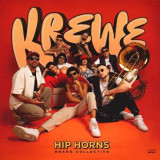
Rooted in the New Orleans tradition and the essence of hip hop, Hip Horns Brass Collective unleashes its powerful sound in KREWE, their debut album. KREWE takes the brass band genre beyond its boundaries, diving into the underground with danceable rhythms like boombap and bounce, full of influences such as afrobeat, gospel and funk. The lyrics, filled with references to hip hop culture, flow in an explosive mix of English, Spanish, and Catalan, sharing their love for the tradition of rap and African American music. KREWE is a manifesto of the positive side of hip hop, a tribute to the unstoppable strength of the collective that a brass band represents in contrast to the solitude of the individual, and a homage to the legacy of hip hop and the vibrant tradition of New Orleans
- Where Hides Sleep (Key Version)
- All Cried Out (Key Version) 03. Such Small Ale
- All Signs Of Life (Key Version)
- Can't Say It Like I Mean It (Key Version)
- Fire (Key Version)
- Filigree (Key Version)
- The Impervious Me
- More (Key Version)
- Is This Love? (Key Version)
- Tongue Tied (Key Version)
- My Right A.r.m. (Key Version)
- So Am I (Key Version)
- My Best Day (Key Version)
- World Without End (Key Version)
- This House (Key Version)
- Love Resurrection (Key Version)
- You Don't Have To Go (Key Version)
white 2x12"[25,17 €]
To celebrate 40 years as a solo artist, Alison Moyet releases Key, a collection of 16 reworked singles and deep cuts, alongside two brand new tracks. Key is a blazing showcase of the depth and breadth of Moyet"s song writing ability that unlocks who she is as a creative artist. With nine studio solo albums to choose from to celebrate her fortieth year as a solo artist, Moyet wanted "to look at the trajectory of those decades and explore songs that, in their original form, were never fully realised or have had their relevance to me altered by time." The album distils 40 years of music making, presenting a cohesive overview of a long and dazzling journey.
- Where Hides Sleep (Key Version)
- All Cried Out (Key Version) 03. Such Small Ale
- All Signs Of Life (Key Version)
- Can't Say It Like I Mean It (Key Version)
- Fire (Key Version)
- Filigree (Key Version)
- The Impervious Me
- More (Key Version)
- Is This Love? (Key Version)
- Tongue Tied (Key Version)
- My Right A.r.m. (Key Version)
- So Am I (Key Version)
- My Best Day (Key Version)
- World Without End (Key Version)
- This House (Key Version)
- Love Resurrection (Key Version)
- You Don't Have To Go (Key Version)
splattered 2x12"[30,67 €]
To celebrate 40 years as a solo artist, Alison Moyet releases Key, a collection of 16 reworked singles and deep cuts, alongside two brand new tracks. Key is a blazing showcase of the depth and breadth of Moyet"s song writing ability that unlocks who she is as a creative artist. With nine studio solo albums to choose from to celebrate her fortieth year as a solo artist, Moyet wanted "to look at the trajectory of those decades and explore songs that, in their original form, were never fully realised or have had their relevance to me altered by time." The album distils 40 years of music making, presenting a cohesive overview of a long and dazzling journey.
Danny Tenaglia’s new EP on Nervous Records features “Tonight” and “Out From Obscurity” and a remix of his prior Nervous Records release “Move That Body.”
With ”Tonight,” Danny kicks things off with the title track - treating us to both ‘No Beats Intro’ and ‘Beats Intro’ versions. And in doing so - manages to deliver, hands-down, one of the most tantalising and majestically rousing opening gambits we’ve heard in some time.
And when ‘Tonight’ finally bursts its aural banks, circa 1 minute 30 seconds - with the most seamless of transitions, we suddenly find ourselves surfing a decadent wave of hazy Rhodes, staccato bass and mesmeric vocal work - ebbing and flowing right up to it’s opulent and wonderfully soporific conclusion.
Next up we have DT’s re-rub of George Vidal’s ‘Out From Obscurity’; a veritable pressure-cooker of a track, that spins and weaves a sense of poise, tension and drama which escalates stealthily throughout. A stripped-back, rolling synth-driven’, made-to-measure for the 2024 club floor.
Finally - closing this souped-up invigorator of a release - we have ANTRANIG’s remix of Danny and Cevin Fisher’s ‘Move That Body’… a fully tribalized, menagerie-wrapped groove; which wears the sweat, the writhe and all that heat - very much on it’s visceral, live-and-direct sleeve.“
It is summer dawn . . . and you are alone. Here is music for your strange mood. The piano starts the first track, slow tempo beat, a strict beat, a swinging beat. Lillemor—here minor harmonies give the tune a rural, romantic feeling of some place in Spain or France. The tempo changes to medium fast—the flute solos. Light phrasing contrasts beautifully to the earthy, swinging beat of the rhythm section and the repeating piano figures. The trombone adds a new color, a counterpoint of sound and phrasing, backed by the pulsating beat of this wonderful rhythm and the driving piano. Summer dawn . . . This music has more to offer, because it shows the personality of Sahib Shihab at its best. Sahib is a universal musician who reflects musical experiences in jazz since the end of the thirties. He lived through the important periods of modern jazz with his heart and mind wide open toward everything that was good music, regardless of being termed "Mainstream", "Bop", "Cool", "Westcoast", "Eastcoast", "Hard Bop'', et cetera. When you listen closely to his music, you will find traces of all these, but they are immersed in his deep musicianship and his true jazz personality. Sahib Shihab's background reads like the record of a master of advanced studies. Furthermore he played and collaborated with the coolest jazz musician of that period. Above all let's name Budd Johnson, Theolonius Monk, Tadd Dameron, Milt Jackson, Dizzy Gillespie, Illinois Jaquet, Elmer Snowden, Luther Henderson, Larry Noble, Fletcher Henderson, Roy Eldridge. In his early professional years, Sahib was heard mostly on alto sax; later, more often on baritone sax and flute. Today, his name is inseparably connected with these two instruments. The unity of his jazz performances is not alone bound up with the com¬positions and the arrangements of Sahib Shihab, though in their understated simplicity they have a melodic beauty that is seldom found in jazz of today. The rhythmical subtleties add to the overall qualities of being relaxed vehicles for free-blowing, but there is an immediacy that you hear and feel every moment when listening which defies analysis. The playing of the rhythm section helps greatly to promote the sense of flux and contrasting constant renewal that makes listening to this record so invigorating an experience. Well, this is no surprise, with Kenny Clarke as the nucleus of the rhythm group. Kenny 'Klook' Clarke is a major figure and contributor in jazz, one of the founders of modern jazz, and is ranked as one of the all-time great drummers. He influenced a whole generation of musicians with his playing, though living in Paris since the middle of the fifties somewhat dimmed his name to the general American public. Nevertheless, his name alone will assure a connoisseur to expect top class musical experiences. Talking of the rhythm section we have to name Jimmy Woode's bass, which together with Kenny's drumming, is the driving force for the group and the reliable harmonic anchor for the improvisors. By the way, Jimmy has been with the Duke quite a while, and this alone is an award for extraordinary craftsmanship and artistry. The good sounding rhythm with its full-bodied color is also a result of the added bongos of Joe Harris, who manages to stay out of the way of the players—a quality not often found with drummers—but his playing is felt through the set. There are two members of the group not yet mentioned. Two Europeans, pianist-composer-arranger Francy Boland from Belgium, and trombonist Ake Persson from Sweden. Francy Boland this time is a sideman, though normally he is a leader of recording sessions, both as composer-arranger and as musical director of the band. In the fifties he was in the States writing arrangements for different name-bands, such as Basie and Goodman. In Europe, he is famous for his swinging modern big band arrangements; and his inventiveness as a writer is reflected in his piano playing. He has the talent of using the right dynamic approach every moment, thus making his playing helpful to soloists and interesting for listeners as well. Ake Persson has been Scandinavia's out-standing trombone player for about ten years. There are only a few trombonists in Europe who might match his talents at times, but they lack the consistency of his playing. He is impressive, whether playing in a big band, or whether main soloist in his own small groups. American musicians love the sound of his slide trombone and his easily flowing romantic improvisations, so he often joins American name-bands as they travel in Europe. The music speaks alone . . . , we said it before. You have your soul to feel the beauty, to follow lines and structure, and to enjoy the spiritual excitement. Whether you enjoy the flowing, easy sounding theme of "Please Don't Leave Me", or the climaxing piano solo in the same piece—the bass solo in "Waltz For Seth" or the swinging baritone sax—listen to the first bars of this solo and pay attention to Kenny. Whether you listen to "Campi's Idea", (named after Gigi Campi, the well known Cologne jazz enthusiast who organized this recording) with the romantic flute solo of Sahib, the interesting tempo changes, the piano comping, the moving trombone solo; or to the up-tempo "Herr Fixit", with the cooking Kenny and humorous, driving flute solo, you know that these six musicians where in the right mood, in the right stimulating surroundings to feel what we all feel when it's: SUMMER DAWN.

The Congos were formed by Cedric Myton (born 1947 St Catherine, Jamaica) and Roydel ‘Roy’ Johnson (born 1943 Hanover, Jamaica), around the mid-seventies, a time when the Rasta message coming out of Kingston and other pockets of the Jamaican Island was at its most prominent. Cedric Myton’s singing career began back in the rocksteady era in Reggae’s musical story.
He formed the ‘Tartans’ group taking lead vocal duties alongside Devon Russell, Prince Lincoln Thompson and Lindbergh Lewis. They cut ‘Dance All Night’ (1967) and ‘Coming On Strong’ (1968). The line-up reduced to a two piece, Cedric and Devon Russell, when tracks like ‘What a Sin Thing’ and ‘Short Up Dress’ were cut. This line-up became the Royal Rasses, Cedric formed The Congos, on meeting Roydel Johnson. Roydel previously sang as a member of Ras Michael and the Sons of Negas, cutting such tracks as ’Go To Zion’ (1973). As we can see Cedric’s and Roydel’s Rasta roots were firmly in place by the time they had formed The Congos sometimes called ‘The Congoes’.
The Congos possess what all bands look for,that unique sound that draws the listener to them.Lead singer Cedric Myton’s style and phasing, with his distinctive Falsetto voice makes this just the case.Built on a foundation of classic rhythms and with the aid of then Producer, Lee Perry, the groups statement of intent was laid down with one succinct message. The Congos mighty 1977 ‘Heart of the Congos’ album, is quite simply one of the best reggae albums ever recorded.
Producer Lee Perry had wanted to record a classic Jamaican vocal group in his newly built Black Ark Studio. The voice of Watty Burnett was added at the time to cover baritone vocal duties. The studio after various changes in equipment etc. was finally finding its way. A sound built in Lee Perry’s back yard in Cardiff Crescent, Washington Gardens, Kingston, but existing until then in Mr Lee Perry’s mind. The album they cut would be the defining group release to come out of The Black Ark studios, when the vital elements, vibes, musicians, songs and singing would gel to form ‘Heart Of The Congos’. Come the time of it’s release 1977, Lee Perry was in dispute with Island Records and opted to release the record on his own ‘Black Art’ label. Without the high-profile push of a major label, the record undersold and caused a split between producer and band. Under different circumstances maybe this album would be sitting in thousands of homes alongside the Bob Marley, Culture, Burning Spear releases. Cedric Myton went on to release albums with the French arm of the CBS label and Roy Johnson records and tours as Congo Ashanti Roy.
Cedric Myton the central force carries on the mantle of the Congos and we at Kingston Sounds are proud to pick up the story with another set of vocal statements, which sees Cedric cut some of his finest tunes. Helped along by another reggae legend Brent Dowe, lead singer of the Melodians (Rivers of Babylon), over some classic 1970’s rhythms. Yet again we find that magic formula of strong statements working alongside classic rhythms making the balance work. The Rasta message is still strong on modern classics like ‘King Rastafari Is His Name’, ‘Rasta Congo Man’ and the injustices of the world dissected in tunes ‘Some A Thief’, ‘Watch & Pray’ and the prophetical, ‘Citizen Of The World’.
Once touched by magic it does not fade away, but resurfaces as it has with what we believe to be some of the Congos most heartfelt and meaningful set of songs ...... Let the feast begin.
Roaring 20s is the second and final studio album by the iconic Black British duo Rizzle Kicks. The album was released in the United Kingdom on 2nd September 2013. With Black Story honouring it’s 11th anniversary (and Black History Month), we are pressing this rare album onto coloured vinyl that features collaborators Ant Whiting and Norman Cook, aka Fatboy Slim and Jamie Cullum.
Taylor Hollingsworth, the fingerpicking songwriter hailing from the vibrant city of Birmingham, AL, is back with an electrifying, foot stomper of an album titled "Yahola." With his unique blend of folk, rock, and blues, Taylor has carved out a distinct musical niche that he calls "folk n' roll" or electric folk. In a world full of manufactured pop sensations and cookie-cutter artists, Taylor Hollingsworth stands apart as a true maverick of original music.Taylor's dedication to his craft has earned him accolades and recognition both within and outside the local music scene. His immense talent on the guitar, coupled with his remarkable songwriting abilities, has earned him a rightful place among music connoisseurs. Notable achievements in Taylor's musical journey include having his works featured in popular TV shows, podcasts, and movies, showcasing his ability to strike an emotional chord with listeners. Esteemed artists such as Conor Oberst and Phoebe Bridgers have recognized Taylor's songwriting prowess by covering one of his songs.
Clive From Accounts is finally back on Dirt Crew Recordings! After some excellent contributions and remixes for the highly acclaimed New York based “Razor-N-Tape” imprint, he graced us again with three new gems that show the great diversity in his productions. Since his first “Cooking the Books EP” in 2021 and the follow up “Pearls EP” in 2022 he has continued to build a strong following of fans, so we know for sure a lot of you have been waiting on new tracks by him.
- Aretha Franklin - Try A Little Tenderness
- Sam Cooke - (What A) Wonderful World
- Marvin Gaye & The Vandellas - Stubborn Kind Of Fellow
- Otis Redding - These Arms Of Mine
- Ann Peebles - I Can’t Stand The Rain
- Aaron Neville - Hercules
- Al Green - Let's Stay Together
- Ben E. King - Stand By Me
- Etta James - I Just Want To Make Love To You
- Bob & Earl - Harlem Shuffle
- Gwen Mccrae - 90% Of Me Is You
- Syl Johnson - I Hate I Walked Away
- Barry White - Ghetto Letto
- Stevie Wonder - Contract On Love
- Ray Charles - Unchain My Heart
- James Brown & The Famous Flames - Please, Please, Please
- Dionne Warwick - Don’t Make Me Over
- Timmy Thomas - Why Can’t We Live Together
- George Mccrae - Rock Your Baby
- Curtis Mayfield - She Don’t Let Nobody (But Me)
- Aloe Blacc & King Most - With My Friends
- Greyboy & Quantic Feat. Sharon Jones - Got To Be A Love
- Nostalgia 77 Feat. Alice Russell - Seven Nation Army
- Ibeyi - River
- Terry Callier & Paul Weller - Brother To Brother
- Al Jarreau - Ain’t No Sunshine
Sasu Ripatti presents the fourth volume in his "Dancefloor Classics" series with five 10" releases coming throughout 2023. Music for imaginary dancefloors, released on Ripatti's own label "Rajaton".
”Look up, into the light” she said, while the camera shutter clicked. ”Like this? Does it look holy?” His neck felt stiff. Her reply: ”Yes, just like that. What do you mean holy? Like religious? ”No, more like trying to look very far, somewhere beyond what we can see.” ”Okay, stand still, I’m going to come close to you now. The light hits your face great.” click, click, click.
He noticed her fingernails. They were not polished. Natural. Even somewhat rugged, as if something wore out the fingers slightly. What had these hands held besides the camera? What made the edges of her fingernails drift off?
He thought it’s weird to look straight into the camera. The photographer had closed her left eye, the one not looking into the lens. Then it opened, she looked up, perusing the surroundings, then she closed her eye again, then looked up, closed, looking up, very quickly. It all seemed very professional. Maybe she calculated the light, making sure it’s close to perfect. ”What will these photos look like?” – the thought popped into his head briefly. It was liberating to think it wouldn’t matter.
”What’s that song playing?” he asked. ”Wait a sec, Ol’ Dirty Bastard?” she replied. ”Oh yeah, right. But the sample?” ”Hey, could you look up again, like that. No, lower.”
New directions: ”Look out from the window, turn left.” ”My left or yours?” ”Yours, I always try to think from the direction of my model.” How professional! This is a good shoot, so natural. Should I worry about how the photos look like? No, I don’t want to. His thoughts bounced around. What would the story be like? It’s a big newspaper, everyone will read it. Maybe someone drinks coffee and eats a stroopwafel while they do it. Will they place the waffle on top of the mug for a brief while, so that it gets hot and the syrup melts a little? Then it feels wet, and you can bend the cookie.
She broke his train of thought off midway through: ”Now turn right, but look left, and slightly up, but don’t turn your face right.” ”Umm, like this? Sounds like a set of pilates instructions.” she laughed ”You do pilates?” ”Yeah, it’s hard sometimes. Have you tried?” ”No”, she said. ”I’m not good for sports that are done in groups.” ”Yeah, but in pilates you can just be inside your mind, drowning in your private thoughts.”
”What are you thinking in pilates?” she asked, taking more photos. ”Well, mostly just which way is right. And which left.” click, click.
Q&A with Sasu Ripatti:
1) Tell us something about the EP series ”Dancefloor Classics”, what’s the idea and what can we expect?
I’ve been slowly writing these sort of dance music pieces and finally curated them together for a conceptual release. I like to create music for a dancefloor that exists only in my imagination and doesn’t try to suck up to the standardized reality.
2) Your vinyl format is 10” which is quite special (as opposed to LP / 12”). Why did you choose it?
It’s my favourite format, absolutely. The size is perfect, and you can make it sound really good @ 45 rpm. And you still can make great artwork.
3) You seem interested in sampling/repurposing, what does it mean to you as an artist to approach something already existing from a new angle? How does the source material inform you about the approach to take?
I guess i could flip it around and just say I’ve outgrown synths or electronic sounds to a great extend, and having gotten rid off all my synths already good while ago I’ve used samples as my main source material a lot. It’s obvious on this series that i’ve sampled existing music, but I also sample instruments and things in the studio and resample my own library that I have built over the years, it’s quite large. To me the end result matters, not so much how I get there. Once I have something on my keyboard and play around, it’s all an instrument, though with sampling other music it becomes a really interesting and complex one as you’re possibly playing rhythm, but also harmonic content and maybe hooks or whatever, all at once.
I never sample premeditadedly, like listening to records and looking for that mindblowing 3 sec part. I just throw the cards in the air and see what lands where, just full intuition and hopefully zero mind involved, playing tons of stuff, trying things, just recording hours of stuff. Then comes the interesting part to listen to hours of mostly crazy stuff and finding that mindblowing 3 sec part.
4) What is your relationship with the dancefloor (conceptually and/or in experiences / as a performer)?
Very complicated. I have never really felt comfortable on a dancefloor but have always wanted to. There’s something in club music, in theory, that really speaks to me. It has never really materialized for me – speaking mainly from a performer’s point of view who goes to check on a dancefloor for a moment after a concert. I never have DJ’d or felt much interest towards it. But again, I love the idea and concept of DJing. As well as producing music for imaginary DJs. Lately, as in the past 10+ years, I haven’t even performed in any sort of club spaces. So my relationship to the dancefloor is quite removed and reduced, but there’s quite a bit of passion and interest left.
All tracks composed and produced by Sasu Ripatti.
Artwork & photography by Marc Hohmann.
Mastering by Stephan Mathieu for Schwebung Mastering.
Vinyl cut by SST Brueggemann.
Publishing by WARP Music Ltd.
Sasu Ripatti presents the fifth and last volume in his "Dancefloor Classics" series. Music for imaginary dancefloors, released on Ripatti's own label "Rajaton".
--
”Look up, into the light” she said, while the camera shutter clicked. ”Like this? Does it look holy?” His neck felt stiff. Her reply: ”Yes, just like that. What do you mean holy? Like religious? ”No, more like trying to look very far, somewhere beyond what we can see.” ”Okay, stand still, I’m going to come close to you now. The light hits your face great.” click, click, click.
He noticed her fingernails. They were not polished. Natural. Even somewhat rugged, as if something wore out the fingers slightly. What had these hands held besides the camera? What made the edges of her fingernails drift off?
He thought it’s weird to look straight into the camera. The photographer had closed her left eye, the one not looking into the lens. Then it opened, she looked up, perusing the surroundings, then she closed her eye again, then looked up, closed, looking up, very quickly. It all seemed very professional. Maybe she calculated the light, making sure it’s close to perfect. ”What will these photos look like?” – the thought popped into his head briefly. It was liberating to think it wouldn’t matter.
”What’s that song playing?” he asked. ”Wait a sec, Ol’ Dirty Bastard?” she replied. ”Oh yeah, right. But the sample?” ”Hey, could you look up again, like that. No, lower.”
New directions: ”Look out from the window, turn left.” ”My left or yours?” ”Yours, I always try to think from the direction of my model.” How professional! This is a good shoot, so natural. Should I worry about how the photos look like? No, I don’t want to. His thoughts bounced around. What would the story be like? It’s a big newspaper, everyone will read it. Maybe someone drinks coffee and eats a stroopwafel while they do it. Will they place the waffle on top of the mug for a brief while, so that it gets hot and the syrup melts a little? Then it feels wet, and you can bend the cookie.
She broke his train of thought off midway through: ”Now turn right, but look left, and slightly up, but don’t turn your face right.” ”Umm, like this? Sounds like a set of pilates instructions.” she laughed ”You do pilates?” ”Yeah, it’s hard sometimes. Have you tried?” ”No”, she said. ”I’m not good for sports that are done in groups.” ”Yeah, but in pilates you can just be inside your mind, drowning in your private thoughts.”
”What are you thinking in pilates?” she asked, taking more photos. ”Well, mostly just which way is right. And which left.” click, click.
Skinshape (aka Will Dorey) releases his ninth studio album titled Another Side Of Skinshape on 27th September via Lewis Recordings. As the album title suggests, Dorey’s latest body of work is somewhat unlike anything in his prior discography. However, there is always a consistent Skinshape thread which pulsates throughout all of his music - a kind of sonic dreamscape which echoes a mystical nostalgia for a sun dappled afternoon.
Taking inspiration from childhood memories, Ethiopian rhythms, and even calls to prayer, Another Side Of Skinshape gained access to the most esoteric corners of Dorey’s mind. Whilst ‘It’s About Time’ and ‘Ananda’ display a slightly more synthesised palette than we typically hear of a Skinshape tune, singles ‘Stornoway’ and ‘Lady Sun’ (which features the hazy soul vocals of West London’s Hollie Cook) replicate the same lifeblood heard on albums Nostalgia, or Craterellus Tubaeformis.
Speaking on the album, Dorey says “Some songs pay homage to the 90s whilst others the 60s and 70s. Yet you may not perceive all of these in the form that they are presented. In any case I hope that the album is enjoyable and will fit casually into the flow of your day.”
Whilst making this album, Dorey experimented with various keyboards and drum machines, which are at times layered over the excellent drumming of Thomas Blunt, who played live onto tape. Blunt is well versed in the Skinshape vernacular, also being part of Dorey’s live band. Indeed, Another Side Of Skinshape is due for release just before a run of UK and US live dates, which will be the first time the band has ever hit the open road.
Dorey is a former member of the band Palace, has played Glastonbury, BBC Maida Vale and Shepherd’s Bush Empire to name a few. Skinshape’s ‘I Didn’t Know’ has streamed over 50 million times. He is proudly from Swanage, Dorest.
Ruby Wine Vinyl. Manchester UK's Space Afrika make music of what they term "overlapping moments" - oblique mosaics of dialogue, rhythm, texture, and shadow, half-heard through a bus window on a rainy night. Honest Labour, the group's first full-length since 2020's landmark hybtwibt? (have you been through what i've been through?) mixtape, expands the project's palette with classical strings, shimmering guitar, and visionary vocal cameos, leaning further into their enigmatic fusion of ambient unrest and cosmic downtempo. It's a sound both fogged and fragmented, at the axis of song craft and sound design, born from and for the yearning solitudes of life under lockdown.The album title is tiered, alluding to a legendary patriarch from co-founder Joshua Inyang's Nigerian family tree (who was lovingly called "Honest Labour" for his loyalty and resilience) as well as the nature of self-designated work, such as Space Afrika's music - a "labor of love" in its truest sense. With fellow co-founder Joshua Reid recently relocated to Berlin, the pair began sharing files last fall, piecing together poetic vignettes of looping haze and found sound, inspired by the notion of "records that leave an impression, and help the listener deal with their life." As the isolation of Covid compounded with the worsening winter, the songs skewed increasingly introspective and emotive, reflecting a mood of dissipating futures and the infinite nocturnal unknown.The artists cite two core motivations for Honest Labour: to transcend the sum of their influences, and "to show what we're capable of." Both ambitions are entirely realized. The collection's 19 tracks flow with a synergy and sophistication as rare as they are radical, untethered to the dusty dub-techno templates of Space Afrika's early years. These are interstitial anthems, expressionistic and open-ended, delirious but deliberate, attuned to the drift and dreamstate of the present moment: "Ultimately this is an homage to U.K. energy, and an album about love and loss."
- Getting Better (Liquid Gold Version)
- Speakeasy (Liquid Gold Version)
- Devil In Your Shoes (Liquid Gold Version)
- On Standby (Liquid Gold Version)
- Going For Gold (Liquid Gold Version)
- Waiting For The Catch (Ft. Issy Ferris) (Liquid Gold Ve
- Better Days (Liquid Gold Version)
- Parallel Lines (Liquid Gold Version)
- Disco Down (Liquid Gold Version)
- Ocean Pie (Liquid Gold Version)
- All Roads Lead To You
- Chasing Rainbows (Liquid Gold Version)
Introducing Shed Seven"s latest offering for 2024: Liquid Gold. A loving tribute to their 30-year journey as recording artists. This special album revisits iconic tracks from their past, reimagined with the addition of an orchestra, promising a nostalgic yet fresh sonic experience. Liquid Gold is completed by a brand new song which was written specifically for this project in the shape of "All Roads Lead To You", adding to the band"s storied discography.
"Flood" ist eine Platte und eine Wiedergeburt, für die die Band aus Minnesota fünf Jahre Arbeit aufgegeben hat, um schließlich 13 Tracks in nur 10 Tagen an der texanischen Grenze aufzunehmen. Während die aufschlussreichen Sessions im letzten Jahr auf der Sonic Ranch mit den langjährigen Produzenten Caleb Wright (Charly Bliss, Samia) und Brad Cook (Bon Iver, Waxahatchee) stattfanden, begann der Entstehungsprozess des Albums vor gefühlt einer Ewigkeit. In derselben Nacht, in der Hippo Campus ihre letzte Platte "LP3" feierten, erfuhren sie, dass jemand, den sie liebten, unerwartet verstorben war. Die Peitschenhiebe des Erwachsenwerdens wurden durch die Auswirkungen von Tod, Niedergeschlagenheit, Sucht und Angst noch verstärkt, so dass sie sich dem überwältigenden Ziel verschrieben, etwas Tiefgreifendes und Lebensveränderndes zu schaffen. Sie wurden gemeinsam nüchtern, nahmen regelmäßig an Gruppentherapien teil, schrieben mehr als 100 Songs, traten einen Schritt zurück und stellten plötzlich fest, dass ihnen das, was sie machten, eigentlich keinen Spaß brachte. Für eine Band, die eine Milliarde Streams überschritten hat, historische Veranstaltungsorte wie Red Rocks ausverkauft hat, auf Festivalbühnen auf der ganzen Welt aufgetreten ist - und das alles dank des unwiderstehlichen, frühlingshaften Songwritings, das ihre Reihe von experimentellen Pop- und emphatischen Rockalben füllt - wussten sie, dass das, was sie dieses Mal machten, einfach nicht gut genug war. Gemeinsam mit Wright und Cook räumten sie auf und warfen alle Vorurteile darüber über Bord, wie sie zu klingen gedachten. Sie versuchten nicht mehr, ein sogenanntes Meisterwerk zu erzwingen, und verpflichteten sich gegenseitig, das zu schneiden, was ihnen am besten gefiel: kein Hinterfragen oder Zurückhören, nur ein Mantra des Vorwärtsdrangs. Weniger als zwei Wochen später hatten Sänger Jake Luppen, Gitarrist Nathan Stocker, Schlagzeuger Whistler Allen und Bassist Zach Sutton "Flood" fertig. Auf "Flood" liefern Hippo Campus dicht gedrängte Thesen über Selbstkritik und Selbstvergebung, Ermächtigung und das Zurückbleiben hinter den Erwartungen, gescheiterte Beziehungen und das Finden eines Weges nach vorne. Die Gefühle sind roh, echt und ungeschützt, unterstützt von subtilen Tonartwechseln und Tempowechseln und der angeborenen Raffinesse, die sie so mühelos präsentieren können.