Grupo Rebolu has been a mainstay in the extensive Colombian community of New York City for well over a decade, bringing the quintessential sounds of their home country to countless live shows and events throughout the five boroughs. Musically steeped in the folkloric traditions of the Afro-Caribbean discourse, the band has consistently combined first class musicianship with the echoes of their upbringing. Throughout their four self-produced albums, they have incorporated some of Colombia's most cherished traditions —gaita,cumbia, andbullerenguebeing just a few of the disciplines that Rebolu has infused with the modern songwriting and compositions of band leader Ronald Polo. As a natural step in the band's continued musical evolution, Rebolu has connected with Names You Can Trust for a one-off recording to deliver two original songs and productions that seamlessly fit the preferred format and the label's catalog, while further incorporating the group's sound into the wider NY musical spectrum. Whether it's champeta gone disco, or bullerengue gone reggae, this handy double-sided single packs a fresh take on the roots and traditions of Rebolu's musical lineage.
quête:the count
- A1: The Mechanical Man - The Magic Number 5 32
- A2: Minimono - Grit Wave 5 14
- A3: Lucretio - Gradius 4 14
- B1: Queen Of Coins - Genesis 5 43
- B2: Miguel Herrnandez - Bad Renaissance 5 29
- B3: Twovi - Galassia Cosmica 4 57
- C1: Data Memory Access - Controller 6 14
- C2: Passarani - Bungy Bungy Bungy 4 52
- C3: Dj Rou - Milky Way 4 43
- D1: Lapucci - One 1St 5 18
- D2: Alexander Robotnick - It's So Easy 5 00
- D3: Feel Fly - Peach 5 36
The Stallions compilations have become a benchmark of Bosconi's position as one of the leading house and techno labels operating out of Italy. This third instalment marks a shift in sound which also comes full circle to the music that first inspired founder Fabio Della Torre as a DJ and producer around the turn of the millennium, when punchy electro production was driving European house and techno into new zones.
All the artists featured on Vol. III are Italian, holding true to Bosconi's commitment to supporting local talent from Florence and across the country. Amongst the familiar faces is Della Torre's own Minimono collaboration with Ennio Colaci, which indulges a proudly manic palette of tweaked bleeps and dirty low-end. Elsewhere, recent additions to the Bosconi fold include veritable legends Alexander Robotnick and Marco Passarani, who infuse their unpredictable approaches to electro-techno and italo disco with ear-snagging synth-pop and driving analogue box jams respectively to create vibrant, impassioned dancefloor monsters.
The Mechanical Man is an alias from Nicola Altieri, who leans in on a classic Italo arpeggio to create a seductive club sound which builds on his recent Bosconi EXV EP, while Cixxx J switches from the mood of his own Bosconi appearance for a new alias Queen Of Coins and a pivot towards heads-down electro-techno-trance with a whiff of International Deejay Gigolos. Lapucci builds on the promise of his 2021 Bosconi 12" with a sentimental fusion track which lands somewhere between old school Italo house, the snappy pulse of EBM and crisp 00s-era electro house. Meanwhile modern day Italian techno legend Lucretio of The Analogue Cops makes his first appearance on Bosconi with the playful video game stylings of 'Gradius'.
A great deal of space on Vol. III is given over to emergent talent, ranging from Miguel Herr's twitchy detroitian synth-pop braindance and Twovi's vocoder-charged electro funk to DJ Rou's jacking ghetto house flavour. Giammarco Orsini and Jacopo Latini appear as Data Memory Access and deliver an emotive, punchy strain of machine soul. Feel Fly rounds the compilation off in bombastic style with an epic, cinematic workout which draws on Moroder-inspired drama without losing the forthright peak-time focus which binds the whole collection together.
Even the artwork on Vol. III serves as an opportunity to celebrate Italian creativity, as pioneering crypto artist Niro Perrone builds on his accomplished work in the field of NFTs and a background in music production to respond intuitively to the vibrant, synthetic sound of the compilation. For all the futurism in the music though, there remains a strong sense of human feeling which has marked Bosconi out since the beginning. The label remains as inspired and inspiring as ever, celebrating the fertile crossover when people manipulate technology to express themselves in an honest, playful way. Independent of wider trends or fashions, Bosconi remains true to its own idiosyncratic passions, and so Bosconi Stallions Vol. III stands proud as a compilation like no other.
Memento Records’ boss Idriss D goes back to his more experimental side on this release, pushing the boundaries like he did on his first Lunatic EP, coming up once again with another Jungle-infused mesmerizing piece of Electronica that mixes breakbeat influences with melodic soulful vibes.
A very welcome follow up, aptly titled “Lunatic 2”, this tune is fiercely uptempo and energetic: the psychedelic melody swirls inside, outside and around your mind, while the fluid bass line counterparts the schizophrenic rhythm. On top of this, powerful emotional vocals take you into another dimension.
The prestigious remix comes courtesy of Gilb’R, founder of Versatile Records and one half of Chateau Flight: a slower downtempo piece with an infectious, almost improvisational synth melody, with vocals taking center stage here, full of atmospheric sounds all over that land into a deep dreamy break.
- A1: David Holmes & Raven Violet - It’s Over If We Run Out Of Love (Hardway Bros Live At The Ssl Dub)
- A2: Unloved - Mother’s Been A Bad Girl (Horse Meat Disco Remix)
- A3: Pip Blom - Keep It Together (Ludwig A F. Under Pressure Mix)
- B1: Confidence Man - Holiday (Erol Alkan Ooo Remix)
- B2: Toy - You Won’t Be The Same (Dan Carey Dub)
- C1: Audiobooks - The Doll (Bruise Remix)
- C2: The Orielles - The Room (Shy One Remix)
- C3: Eyes Of Others - Once Twice Thrice (The Orielles Remix)
- D1: Fever The Ghost - Source (Leo Zero Dub)
- D2: Working Men’s Club - The Last One (Forgemasters Remix)
Heavenly Recordings release the next two volumes in their series of remixed classics and unreleased versions. ‘Heavenly Remixes 7 & 8’ sees the label going back into the archive, as well as picking off some more recent remixes, and both albums primarily feature either previously unreleased versions or re-workings available for the first time on vinyl and CD.
Heavenly have always seen immense value in the remix, a value way beyond what it might bring commercially. Since their first release in 1990 (where Andrew Weatherall overhauled a one-off single by club kids Sly and Lovechild) Heavenly remixes have been carefully curated and treated as a key part of the A&R process. It’s an opportunity to view an artist through a different prism, to play out a musical ‘what if’ scenario. It’s the kind of exploration that’s happened consistently through the thirty plus years the label has released music.
The ‘Heavenly remixes’ series continues to showcase the very best remixes, versions, meditations, re-rubs and dubs from all around the world of artists right across the roster of the country’s most exciting record label. In most cases, the albums offer the first physical release for a remix, elevating them from streaming playlists to their rightful, spiritual home on super heavy vinyl (or shiny, super-packed compact disc).
‘Heavenly remixes 7’ heads to Belfast, where David Holmes - a producer who first appeared on Heavenly in 1994 amping up the acid on Saint Etienne’s ‘Like A Motorway’ - appears as solo artist and as one third of Unloved, who get a lift right to the heart of a Vauxhall sweatbox by Horse Meat Disco. It draws a line between Amsterdam and Frankfurt as Ludwig A.F. amps up the electronics on Pip Blom’s ‘Keep It Together’. It stops off in a south London studio where super producer Dan Carey plays the desk with Toy, then relocates LA psych rock band Fever The Ghost to an Ibizan shoreline as the sun sets on the horizon. It cements Sheffield’s reputation as the home of modern British techno with the return of true originators Forgemasters. And it pitches up in front of a renegade soundsystem late night at Glastonbury as Erol Alkan’s mighty rework of Con Man gets its third rewind of the night.
‘Heavenly remixes 8’ opens with Space Afrika’s lush, ambient reimagining of the Orielles’ ‘BEAM/S’ before Justin Robertson stretches Amber Arcades’ ‘Turning Light’ into eight minutes of electronic dub. Elsewhere, Baxter Dury’s peerless ‘Miami’ becomes a string-laden electro skank in the hands of French producer Pilooski; Edinburgh’s bedroom techno genius Eyes of Others’ ‘Safehouse’ turns into an East End bathhouse courtesy of disco deviants Decius; Ashley Beedle’s Black Science Orchestra turns Unloved’s heartworn torch song into seven minutes of glimmering dreamlike percussive house and Katy J. Pearson’s freak flag is flown high thanks to The Umlauts’ throbbing filtered electro mix. It ends similarly to how it began as TONE takes
Fran Lobo’s ‘All I Want’ on a gorgeous slow motion spacewalk.
- A1: Posjet Iz Svemira (A Visit From Space) (1964)
- A2: Cudna Ptica (Strange Bird) (1969)
- A3: Astromati I (Astromutts I) (1963)
- A4: Astromati Ii (Astromutts Ii) (1963)
- A5: Surogat (Ersatz - The Substitute) (1961)
- A61: Klizi-Puzi (Twidle-Twidle) (1969)
- B1: Zacarani Princ (The Enchanted Prince) (1978)
- B2: Medvjedja Romansa (Grin And Bear It) (1978)
- B3: Zid (The Wall) (1965)
- B4: Dnevnik (Diary) (1974)
- B5: Gubecziana (The Serfs Uprising) (1974)
- C1: Plemeniti Soj (The Noble Strain) (1971)
- C2: Homo Augens (1972)
- C3: Idu Dani (Passing Days) (1969)
- C4: Opera Cordis (1968)
- D1: San (The Dream) (1982)
- D2: Kugina Kuca (The House Of The Plague) (1980)
- D3: Utopia (1973)
- D4: Dan Kad Sam Prestao Pusiti (The Day I Stopped Smoking) (1982)
A collection of unreleased themes and scores from 18 short animated films from the world famous Zagreb School Of Animated Film. Includes Oscar winning short cartoon Ersatz / Surogat by Dusan Vukotic (1961) and many other jazz, electronica and experimental scores by composer Tomislav Simovic. Coined by the famed film theorist Georges Sadoul at the 1959 Cannes Festival, The Zagreb School of Animated Film(s) or The Zagreb School of Animation, was defined as an artistic and philosophical world-view that set its mark on the history of animation in the 60's and 70's. The key feature of the Zagreb School (not educational facility in any kind), was commitment to stylization in contrast with the Disney-style canon of realistic animation. Among many composers that worked in Zagreb Film productions, the name of Tomislav Simovic (1931 - 2014) stands out. In his oeuvre of 300+ film scores (not counting compositions and arrangements for pop singers and jazz orchestras), many were made exclusively for Zagreb film documentaries, fiction shorts, features and animation. Simovic was particularly adept at writing music for cartoons. He skillfully synchronized movement and sound and mixed different musical genres, although, like his peers at the time, he leaned towards jazz. 'The Zagreb School of Animated Film (Original Soundtracks 1961-1982)' is compiled by Leri Ahel (Mutant Disco Radio Show) and Zeljko Luketic (Electronic Jugoton, Ex-Yu Electronica III). Master tapes were considered lost, now found and restored for this epic 2 x LP release celebrating Yugoslavia's animated art shorts. Double vinyl gatefold with extensive liner notes, photographs from the films and exclusive cover artwork by Dejan Krsic (NEP / Nova Evropa).
With one foot planted in jazz and the other in the township groove of Mbaqanga, saxophonist Sello Mmutung was a powerful crossover figure in the history of popular music in South Africa. Using the stage name Bra Sello, meaning “brother” and used as a term of affection and respect in the jazz community, he came up in the era of shellac 78s as an exponent of the 1960s sax jive sound that brought the swinging rhythm of kwela into the domain of South African jazz. Despite the injection of American rhythm and blues into South African pop in the late-1960s, Bra Sello’s first releases on vinyl on the CBS label saw him backed by the group Abafana Bentuthuko and holding down an unapologetic township sound.
Joining the independent Soweto label under producer Cambridge Matiwane in the mid-1970s, Bra Sello recorded two records in the hit-making bump jive style popularised by serious jazz musician Dollar Brand on the one hand and prolific studio group the Movers, operating in funk and soul territory, on the other. Blending modern American and traditional African elements into joyful hip-swinging rhythms, Butterfly (1975) and The Battle of Disco (1977) reflect the vivacity of urban life in South Africa and document an era when dance music was performed by bands as extended jams laced with jaw-dropping solos. With music trends shifting dramatically in the late-1970s, the title of The Battle of Disco was an ironic call to arms in response to the territory that group musicians were beginning to cede to synthesisers and DJs.
For enthusiasts of African music from the 1970s, a full appreciation of the continent’s output is incomplete without South Africa’s pop-jazz sound providing a regional counterpoint to the funk experimentation of West Africa. Reissued for the very first time, Bra Sello returns in 2023 with limited replica editions from Afrodelic using master tape sources from the As-Shams/The Sun collection. Afrodelic’s unique edition of Butterfly features a previously unreleased track on Side B.
With one foot planted in jazz and the other in the township groove of Mbaqanga, saxophonist Sello Mmutung was a powerful crossover figure in the history of popular music in South Africa. Using the stage name Bra Sello, meaning “brother” and used as a term of affection and respect in the jazz community, he came up in the era of shellac 78s as an exponent of the 1960s sax jive sound that brought the swinging rhythm of kwela into the domain of South African jazz. Despite the injection of American rhythm and blues into South African pop in the late-1960s, Bra Sello’s first releases on vinyl on the CBS label saw him backed by the group Abafana Bentuthuko and holding down an unapologetic township sound.
Joining the independent Soweto label under producer Cambridge Matiwane in the mid-1970s, Bra Sello recorded two records in the hit-making bump jive style popularised by serious jazz musician Dollar Brand on the one hand and prolific studio group the Movers, operating in funk and soul territory, on the other. Blending modern American and traditional African elements into joyful hip-swinging rhythms, Butterfly (1975) and The Battle of Disco (1977) reflect the vivacity of urban life in South Africa and document an era when dance music was performed by bands as extended jams laced with jaw-dropping solos. With music trends shifting dramatically in the late-1970s, the title of The Battle of Disco was an ironic call to arms in response to the territory that group musicians were beginning to cede to synthesisers and DJs.
For enthusiasts of African music from the 1970s, a full appreciation of the continent’s output is incomplete without South Africa’s pop-jazz sound providing a regional counterpoint to the funk experimentation of West Africa. Reissued for the very first time, Bra Sello returns in 2023 with limited replica editions from Afrodelic using master tape sources from the As-Shams/The Sun collection. Afrodelic’s unique edition of Butterfly features a previously unreleased track on Side B.
You never have to guess what Tink’s thinking. The Chicago-born songstress and rapper says it all in her music. She spits, speaks, and sings straight from the heart without filter or apology. At the same time, she breaks boundaries, dropping off bars with uncontainable charisma and belting out hooks with show-stopping range. She can be romantic in one crescendo before getting raw in a bout of wild wordplay. This versatility consistently affirms her as a force in her own lane. Following her 2011 debut mixtape, “Winter’s Diary,” she dropped projects at a prolific pace, including “Alter Ego,” ‘Blunts & Ballads,” and “Boss Up.” 2014 saw “Winter’s Diary 2: Forever Yours” arrive to widespread critical acclaim, landing on year-end R&B album lists from Billboard and Rolling Stone. It also yielded “Treat Me Like Somebody,” which gathered 64 million Spotify streams and counting. A year later, XXL touted her among its coveted “Freshman Class.” Following a stint in the major label system, she embraced independence again with “Winter’s Diary 4” 2016, “Voicemails” 2019, “Hopeless Romantic” 2020, “A Gift And A Curse” 2020, and “Pillow Talk” (2023).
Oliver Rosemann is a DJ and producer from Leipzig, who has been active since the 90’s. During this time, he has made his experience with timeless techno exactly in the time of its creation, which can be seen later in his productions and DJ Sets.
In the Leipzig scene he played numerous live sets in the early 2000s, including at the 1040, one of the legendary clubs of the time. Increasingly, he began to show himself in public not only as a pure live act but also as a track producer. With the collaboration with MasCon called "dualit" he had first big releases on labels like Earwiggle, CLR or Fith Wall Records and also international gigs e.g. in Antwerp.
To date, there are close to 180 tracks and remixes, including 3 LPs, released on labels such as MindTrip, MORD Records, Warm Up Recordings, Pole Group, Stockholm LTD and many more. Pfirter and Oliver started producing together in 2019 and presented their first joint 4 tracker “Alpha EP” in 2020 on MindTrip Music.
Whether as a live act or as a DJ, he knows how to create a dark, driving, ecstatic atmosphere on dance floors. He has already proven this in clubs like Tresor Berlin, Distillery, Institut für Zukunft, About Blanc and also in other countries in Europe. Numerous podcasts recorded by him or live cuts from parties, which were released over the years by renowned crews such as "Reclaim Your City" or "Staub", show this.
And now follows Oliver’s next release on NEXT DOOR with the ND006. The a side is Olivers side with A1-Surface- a track with deep impact and to dance. A2-your highscore- is Olivers remix, grandiosely interpreted to immerse yourself in the universe of patterns. The B side belongs to TC/CM or written out- the computer controlled minds. B1-your highscore- comes in the original danceable and playful at the same time from the turntable. B2-Surface- remix by TC/CM hammers through the PA straight onto the floor.
Boss Priester makes his LOCUS debut with his bustling four-track ‘Hotel Dijon’ EP.
Working hard in the studio to develop his own take on minimal-leaning house and techno, The Hague-based DJ/ producer Boss Priester is starting to reap the rewards and emerge as another hotshot from the country’s hotbed of electronic talent. Racking up support from the likes of Dungeon Meat, East End Dubs, Michel de Hey, Dr. Banana and Alec Falconer, his releases on What NxT and Dark Side Of The Sun have accompanied appearances at the likes of Thuishaven, Colorado Charlie and Lovelee. Another fan of the young Dutchman is FUSE and LOCUS boss Enzo Siragusa, and late September brings a first appearance on the latter imprint as he makes his label debut with his four-track ‘Hotel Dijon’ EP.
Title track ‘Hotel Dijon’ comes loaded with raw drum licks, cosmic synths and menacing, swirling low-ends for a heavy-hitting opener set to cause serious dance floor damage, while the slinking ‘ROF66’ mixes eerie stabs with shuffling drums and bouncy baselines for another heavyweight anthem. Next, ‘SUP01’ keeps things ticking nicely on a similar tip with yet more punchy percussion arrangements linking with playful sound design peppered with zippy FX, before closing the show with the hopped-up, bass-driven sonics of final effort ‘Wek’.
Boss Priester ‘Hotel Dijon’ EP drops via LOCUS on 22nd September 2023.
More than a decade after the release of ´Land Lines', the mythical Humboldt County, California based duo of Brian Pyle and Merrick McKinlay reappears seemingly out of nowhere with 'Atheistsaregods'. With past releases on such cult-like labels as Root Strata, Weird Forest, Blackest Rainbow or Digitalis, Starving Weirdos were an indelible part of a sprawling and loose network of artists in Northern America whose DIY work ethic and extreme activity revolved around shoestring-budget constant touring, numerous limited editions on CDR, tape and vinyl and a relentless drive to push the boundaries of genre.
Out of that cauldron, Starving Weirdos stood out as one of the most persistent and visionary acts, developing a mind altering body of work that went from warm soundscapes through droney digressions, freeform improvisation and raucous noise summoned from a myriad of instrumentation and low budget processing - vocals, keyboards, violin, flute, percussion and an assortment of less identifiable sound sources. 10 years on their legacy remains a timeless and wildly under-appreciated one, but hopefully this new album will shine a light on their idiosyncratic approach. As time itself was never a constraint. This is music suspended outside of it.
Right from the start with the echoing percussion, dissonant keys and processed vocals of 'Haiku Nagasaki', 'Atheistsaregods' draws a continuous flux of psychedelic elevation that goes from the gloomy electronic motifs not unlike the early Cluster vibes of 'Invocation' into the dank percussive maze of the appropriately titled 'Barulho do Samba'. The self titled track induces a sense of post-apocalyptic vertigo via hallucinatory scraps of voice, suspended synth tones and reverberating field recordings, connecting into the droney mystics of 'Dudukahar (Reed Prayer)'. Coming full circle, 'For Vinny' brings back the echoing percussion amidst hypnotic cello lines until it drifts off into the unknown. With the same palpable sense of urgency, Starving Weirdos feel as vital as ever. And even if we didn't realize it we were in need of them. Welcome back.
The album opener, “Fainted Fog,” reintroduces this fuller, panoramic version of Helios. Woozy synths give way to a propulsive drum pattern as the track’s characteristics populate in the haze. A piano plays between the beat, and another synth solos overtop, ascending towards the peak with an exhale of live kicks and looping guitar. For every bold moment on Espera, there are more muted, counter-balancing stretches; “Intertwine” offers one of the most meditative. Strums mingle with keys in the front half before the beat returns to deliver a hypnotic nod.
Kenniff sees each song as integral to the whole — “if you took one out, it would be like tearing a page from a book,” he says — but still functional independently, like a series of self-contained epics. “All The While” best represents this intention; a song in three equal parts constructed on a resonant drum sequence. Shimmering synth notes surface first, then pastoral guitar and piano flutters, converging at the end to evaporate into the ether.
- A1: Here Lies Love Feat. Florence Welch (Florence & The Machine)
- A2: Every Drop Of Rain Feat. Candie Payne & St. Vincent
- A3: You'll Be Taken Care Of Feat. Tori Amos
- A4: The Rose Of Tacloban Eat. Martha Wainwright
- A5: A Perfect Hand Feat. Steve Earle
- B1: Eleven Days Feat Cyndi Lauper
- B2: When She Passed By Feat. Allison Moorer
- B3: Walk Like A Woman Feat. Charmaine Clamor
- B4: Don't You Agree? Feat. Róisín Murphy
- B5: Pretty Face Feat. Camille
- B6: Ladies In Blue Feat. Theresa Andersson
- C1: Dancing Together Feat Sharon Jones
- C2: How Are You? Feat. Nellie Mckay
- C3: Men Will Do Anything Feat. Alice Russell
- C4: The Whole Man Feat. Kate Pierson
- C5: Never So Big Feat. Sia
- C6: Please Don't Feat. Santi White
- D1: American Troglodyte
- D2: Solano Avenue Feat. Nicole Atkins
- D3: Order 1081 Feat. Natalie Merchant
- D4: Seven Years Feat. Shara Worden (My Brightest Diamond)
- D5: Why Don't You Love Me? Feat. Tori Amos & Cyndi Lauper
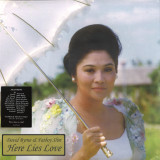
David Byrne & Fatboy Slim’s acclaimed 2010 album Here Lies Love receives its first-ever vinyl release to coincide with a new production opening on Broadway this summer. Here Lies Love is a double-disc song cycle – improbably poignant, decidedly surreal, surprisingly thought provoking – about the rise and fall of the Philippines' notorious Imelda Marcos. It was conceived by David Byrne; composed by Byrne and DJ/recording artist Fatboy Slim, AKA Norman Cook; and performed by a dream cast drawn from the worlds of indie rock, alt country, R&B and pop. Byrne's taste in collaborators is as imaginative as it is impeccable, including Cyndi Lauper (who recounts, to lighthearted disco beats, Imelda's courtship with Ferdinand Marcos), Steve Earle (as the power-hungry Ferdinand), Dap-Kings vocalist Sharon Jones (recalling Imelda's introduction into New York society) and Natalie Merchant (as spurned Imelda confidante Estrella, anticipating the onset of martial law). Along with vocals turns from such stars as Tori Amos and the B-52's Kate Pierson, Byrne works with rising indie rockers St. Vincent and My Brightest Diamond; New York chanteuses Nellie McKay and Martha Wainwright; and dance-music divas Róisín Murphy and Santigold. Byrne himself appears as the voice of imperialistic America on ‘American Troglodyte’, a send-up that wouldn't have seemed out of places in Talking Heads' True Stories.
Byrne originally envisioned this as a musical theatre piece, to be mounted in disco and nightclub settings, reflecting the globe-trotting Marcos' taste for such velvet-roped spots as Studio 54 and Regine's. In 2006, he performed work-in-progress versions to enthusiastic audiences at New York City's Carnegie Hall and the Adelaide Festival in Australia. While plans for a US theatrical production continued to evolve, he delivered this unique recording. The award-winning theatrical production eventually premiered at The Public Theater in New York in 2013, travelled to London’s National Theater for a sold-out run (2014–15), and was remounted at the Seattle Repertory Theater (2017).
Here Lies Love has an effervescent disco feel, redolent of Fatboy Slim's own dance-floor anthems, with warm undercurrents of the Latin rhythms that have percolated through Byrne's recent solo work. The sunny arrangements act in counterpoint to the reality of the Marcos' increasingly repressive regime, reflecting the imagined inner life of the glamour-obsessed Imelda. Explains Byrne, "For me, the darker side of the excesses are, for the most part, a matter of record. A lot of the audience is going to come with that knowledge already. What's more of a challenge is to get inside the head of the person who was behind all of that, and understand what made them tick." Byrne offers no judgment and avoids the obvious – there is no mention of Imelda's infamous shoe collection.
Many of Byrne's lyrics are, astonishingly enough, constructed from actual Imelda quotes, including the project's title, the words that Imelda, now returned to the Philippines from US-assisted exile in Hawaii, would like to have inscribed on her gravestone. In addition to his new liner note, Byrne illustrates the story with archival photos. In a detailed preface, he reveals what drew him to this subject and the bumpy route he took to launch the project and, ultimately, record this album. The booklet is indeed a page-turner, just as Here Lies Love is a wonderfully old-school album that rewards start-to-finish listening. Once again, Byrne – beloved as musician, thinker and bicyclist-about-town – reveals the breadth and singularity of his vision.
The new production of Here Lies Love will premiere at the Broadway Theatre in New York City. Performances begin June 17, ahead of an official opening night on July 20. Tony Award winner Alex Timbers (direction) and Olivier Award nominee Annie-B Parson (choreography) reunite with Byrne (concept, music, and lyrics) and Fatboy Slim (music) to bring Here Lies Love to Broadway, continuing a ten-plus year collaboration on the project. Tom Gandey and J Pardo contribute additional music. Here Lies Love is produced on Broadway by Hal Luftig, Patrick Catullo, Diana DiMenna for Plate Spinner Productions, Clint Ramos, and Jose Antonio Vargas. The staging at the Broadway Theatre will transform the venue’s traditional proscenium floor space into a dance club environment, where audiences will stand and move with the actors. A wide variety of standing and seating options will be available throughout the theatre’s reconstructed space. The producers of Here Lies Love said, “As a team of binational American producers – Filipinos among us – we are thrilled to bring Here Lies Love to Broadway! We welcome everyone to experience this singularly exuberant piece of theatre. The history of the Philippines is inseparable from the history of the United States, and as both evolve, we cannot think of a more appropriate time to stage this show. See you on the dance floor!”
David Byrne’s recent works include the launch of Reasons to be Cheerful, an online magazine focused on solutions-oriented stories about problems being solved all over the world (2019); Joan of Arc: Into the Fire, a theatrical exploration of the historical heroine that premiered at the Public Theater in New York (2017); The Institute Presents: NEUROSOCIETY, a series of interactive environments created in conjunction with PACE Arts + Technology that question human perception and bias (2016); Contemporary Color, an event inspired by the American folk tradition of color guard and performed at Brooklyn’s Barclays Center and Toronto’s Air Canada Centre (2015); Here Lies Love; Love This Giant, a studio album and worldwide tour created with St. Vincent (2012); and How Music Works, a book about the history, experience, and social aspects of music (2012).
Byrne curated Southbank Centre’s annual Meltdown festival in London in 2015. A co-founder of the group Talking Heads (1976–88), he has released eight studio albums as a solo artist and worked on multiple other projects, including collaborations with Brian Eno, Twyla Tharp, Robert Wilson, and Jonathan Demme, among others. He also founded the highly respected record label Luaka Bop. Recognition of Byrne’s various works include Obies, Drama Desk, Lortel, and Evening Standard awards for Here Lies Love; an Oscar, Grammy, and Golden Globe for the soundtrack to Bernardo Bertolucci’s The Last Emperor; and induction into the Rock and Roll Hall of Fame with Talking Heads. Byrne’s work as a visual artist has been published and exhibited since his college days, including photography, filmmaking, and writing. He lives in New York City. In addition to 2019’s cast album for American Utopia on Broadway, Nonesuch has released eight other David Byrne records since 2003, including 2018’s American Utopia studio album and two versions of his musical Here Lies Love.
q C6. Please Don't feat. Santi White Santigold
Water Machine is an office romance between Hando Morice (they/them), Flore de Hoog (she/her), Jimmy Gage (he/him) and Goda Ilgauskaitė (she/her). An unassuming supergroup formed out of Glasgow institutions including Goth GF, Passion Pusher, Brenda and Soursob, their sound careens between punk, country and alt-rock underpinned by the unique quality they call “Raw Liquid Power”.
Following last year’s self-titled demo tape on Gold Mold Records, and fresh off of shows with the likes of Holiday Ghosts, The Cool Greenhouse and The Orielles, as well as a rollicking Viagra Boys afterparty, the four-piece will release their highly-anticipated first studio effort ‘Raw Liquid Power’ on Upset The Rhythm on August 4th.
The EP opens with a menacing, modulating synth melody. Gage’s guitar enters with a mighty bend before breaking into the chugging rhythm of ‘Water Machine Pt. 2’. This timely reminder to refill your water bottle - “don’t be late, hydrate!” less a wellness mantra than a threat - builds to a spacey outro with flashes of the art-punk weirdness of Suburban Lawns. ‘Stilettos’ marches on indignantly with a spiky riff punctuated by Ilgauskaitė’s cowbells. Staccato talk-singing tells a playful tale of stray cats following you home, but belies a darker subtext as the breakdown gives way to paranoid duelling guitars evoking The Fire Engines.
The anti-anthem ‘At the Drive In’ skewers joyless DIY crowds, reminiscent of much-missed Glasgow punks Breakfast Muff. Water Machine’s irrepressible sincerity can’t help but shine through in the final moments though, as jibes about “late night trade potential” give way to plaintive vocal harmonies. Morice tears public transport a new one on closer ‘Bussy’, a First Bus diss track bemoaning precarious employment amidst crumbling infrastructure. “That’s why I’m not on time!” they roar over de Hoog’s frantic, pounding bass, bringing the record to a skidding, screeching halt.
- A1: Island Band – Idle Hours 4 55
- A2: Chaz Jankel – Manon Manon 4 56
- A3: Gilbert O’sullivan – So What (Nail Edit) 8 44*
- B1: Rheinzand – Kills And Kisses (Scorpio Twins Remix) 8 10*
- B2: Canada High – Le Chiffre 5 02*
- B3: Lanowa – Burning Up 6 38*
- C1: Khruangbin – So We Won’t Forget (Mang Dynasty Irreverent Dub) 7 16*
- C2: Fernando – 1998 7 00*
- C3: Debbe& The Code – Code Of Love 6 02
- D1: Jana Koubková - Nijána 6 15
- D2: Ipg V Hot Toddy – Open Space 7 32*
- D3: Smashed Atoms & Backdoor Man – Hey Dreamer 6 50*
This July the esteemed scribe, proper DJ, and discreetly deft twiddler Bill Brewster, drops the latest instalment in his ‘After Dark’ series, for Late Night Tales.
A throbbing, louche and leisurely affair, groove is very much at the heart of this freestyle selection, a vibe which Bill de- scribes as “a basement, a red light and a sound system. Or, as the Beastie’s once rapped, slow and low, that is the tempo”.
There’s Hawaiian drum machine bossa balearica from Island Band, percussive afro post punk from Czech jazz singer Jana Koubkova, and breathy-bubbling-dubwise-slap-bass-soul from Debbe& The Code.
There’s also sultry deep house mood music from Lanowa, infectious bouncy jazz funk breaks from Canada High, and Nail’s life affirming re-edit of singer songwriter Gilbert O Sullivan’s electro pop gem ‘So What’.
Bill’s own studio skills are present and correct too, featuring an undulating bassy version of country troubadour Jeb Loy Nichols, reworked along Alex Tepper under their Hotel Motel moniker, and a chugged-up squelchy disco take on Khruang- bin, this time paired with Raj Gupta, as Mang Dynasty.
Chock full of exclusives, tracks are either completely brand new, or available digitally for the first time, whilst others are wallet-rinsing rarities if purchased elsewhere. Whichever way you slice it though, every tune is a highlight, working equally well as standalone nuggets, or within Bill’s fluidly cohesive mix.
Whether he’s taking the roof off a club with his unique selec- tion of deep and tough house music, enchanting a backroom with a genre-bending set of disco, Balearic, rock and hip hop or playing chillout music in a bay in Croatia, Bill Brewster is the man for all occasions.
In a former life, Bill was a punk rocker, a chef and also the co-editor of football magazine When Saturday Comes but has been a record nerd all of his life. He began DJing in the 1980s, but came into his own in the early 1990s, particularly during a two-year stint in New York running DMC’s office, where nights at the Sound Factory and hanging out with Danny Tenaglia gave him the musical grounding you can still hear in his music today.
Bill was also one of the founding residents at Fabric in London, a position he held for five years. There are few still playing regularly today that have his dedication, eclecticism and encyclopedic knowledge of music.
His parallel life is as a writer, and with his long-term part- ner-in-crime Frank Broughton, they have written four books together, including the acclaimed ‘Last Night A DJ Saved My Life’ (latest edition published last July), ‘How To DJ (Prop- erly)’ and ‘The Record Players’.
He has been working in the industry’s fringes for over 40 years including the running of various labels from Twisted UK and Forensic in the ’90s to Disco Sucks and Anorak in the noughties.
He is one of NTS radio’s new residents for 2023 and his ‘Low Life Loves You’ show is available on the first Tuesday of every month.
Part 2[12,19 €]
Last summer saw youANDmedelivered his “Diva 2022” mix of "PPPPP" a track that would ignite dancefloors across Ibiza and become one of the smashes of the summer in the process. The label was always certain the record was a hit and the response that followed justified their faith.
The track went on to be championed across the globe by the likes of Ame, Dixon, Matthias Tanzman and Pete Tong (Radio 1) leaving a succession of dancefloors demolished in its wake. Fast forward to 2023 and the Cult brings in a smorgasbord of house music’sfinest to breathe fresh verve into what is rapidly becoming a future house classic.First, comes the unmistakable dancefloor call of the “Diva” mix, with its fierce retro vocal and contagiously looping house sound. Its raw undeniable groove shook dancefloors for a reason the first time around and here it is to do the damage all over again. Next, house music legend Ian Pooley hops on board to serve up a delicious slab of fat analogue deepness.
A rework for the real house heads, it drenches the original vocals in reverb and creates a tough sub-laden groove bound to work deeper floors. House music’s producer of the moment Cinthie delivers a red-hot reinterpretation that ups the bpm count and zones in on the drums. The Berlin-based producer creates a colossal house-breaks crossover that is bound to tear apart dancefloors. Reese subs fill out the lows while organs deliver the original rave flavour and take the track into orbit.
Finally, Tel Aviv’s Yotam Avni turns out a remix that delivers shades of the pure old-school house with piano stabs sitting alongside deep chords before he puts his tougher-edged modern techno stamp onto it. Rhythm Cult is on a roll now returning with one of the most hyped tracks of 2022. This package delivers the goods with fresh remixes for 2023 from some of the best in the industry who are now added to the label's impressive roster.
Two mavericks, out on the weekend, trying to make it pay...
"Maverick was the word that came to mind when I listened to this music. A slightly wayward independence of spirit and outlook. The word originally referred to an unbranded male calf that had become separated from the herd (because Texan rancher Sam Maverick was so negligent in his branding - ‘if it ain’t branded, it’s a Maverick’). But Sam’s grandson Maury Maverick gave it a different twist in his short but stormy Congressional career as the only liberal member of the Southern Democratic caucus. Maury was so out of step with his own folks that he not only voted in 1937 to make lynching a federal crime, he even addressed the House to condemn the practice as barbaric. His attempt to ban racist mob murder sadly failed, but it’s that refusal to march in step which distinguishes the two ‘mavericks’ who made this record.
Who would attempt to combine cunning ethnological forgery, Scottish folk songs, claw-hammer guitar, untutored horn-tootling, elastically relaxed drumming and garage electronic fuckery? Only Greg and Stefan, high on sea, sunshine and mis-judged micro-dosing – that’s who. ‘Don’t drown’ was offered as practical advice during the self-described ‘Yellow Submarine’ phase of making this record. And while they managed to avoid literally doing so (phew), they sound here like they got pretty ‘deep in’ to an Octopus’s sound world all their own. This surprisingly clear analogue recording has just enough Bikini Bottom grit to ensure traction. The tunes are inviting, and the sonic disruptions are too good-natured and goofy to upset even the most delicate digestion.
The sessions have had a couple of years to marinate, courtesy of some pandemic, and are here offered in that most Archducal of vinyl formats, the double ten inch. What are you waiting for, a side of Crabby Patties? Get your water-wings and dive in (unless you’re tripping)!" - Bruce Russell (The Dead C)
Pumice is the long-running, endlessly inventive project of New Zealand native Stefan Neville (1974), whose shambolic music is equally reminiscent of Kiwi pop groups such as The Clean and Tall Dwarfs as well as the country's experimental noise-rock bands like the Dead C. Largely recorded solo by himself on junky equipment, his songs typically feature blown-out guitars, wheezing chord organs, and vocals disguised by tape hiss and static.
Greg Malcolm (1965) is a guitarist from New Zealand who has played everywhere on the globe and with all most everyone, including Rosy Parlane, Toshimaru Nakamura, Tetuzi Akiyama and Bruce Russell, as well as solo releases on his own label, Corpus Hermeticum, Kraak and Celebrate Psi Phenomenon.
Bobby's 2019 tour ended in New York City and he had two days off before flying home to Finland. Leon invited him to the Diamond Mine to record some music. Bobby had been talking about wanting to stretch out lyrically and write about more esoteric subject matter, Leon was game. They recorded "Reasons" in one session which put the chemistry between the two on the world stage and sparked the idea of doing a full length album together. More than halfway through the recording process, they have decided to treat us to another two-sider of the new material. On the A side, "Whatcha Know" Bobby explores death and the human experience, putting his philosophical ponderings into his music. Michels' production and overall ethos is the perfect compliment to Bobby's desire to stretch out his sound. EMA provides a gorgeous backing track that compliments Bobby's style and simultaneously broadens its scope. The B side "Losing It" is a dramatic and moving number that Bobby sings in Spanish and English. A gorgeous guitar riff is countered with eerie sound effects that crescendo when the drums come in. Bobby professes he's "Losing It" over a love too strong and El Michels Affair's production turns the whole affair into a saga that thunders through speakers.
- A1: 특급열차 (속에서) (Express Train (In The))
- A2: 아무에게도 말할 수 없소 (Can’t Tell Anyone)
- A3: 풋내기들의 합창 (A Chorus Of Fledglings)
- A4: 가을에 오시나요 (Will You Come In Autumn?)
- A5: 거인의 숲 (Giant’s Forest)
- A6: 그리움 (Longing)
- A7: 유리 인형 (Glass Doll)
- B1: 우리 강산 (Our Country)
- B2: 여운 (Afterglow)
- B3: 카멜레온 (Chameleon)
- B4: 어디로 갈까 (Where Shall I Go?)
- B5: 내일 또 내일 (Tomorrow And Tomorrow Again)
- B6: 바람 부는 강 언덕 (The Windy Hill By The River)
Original release date: April 15, 1979
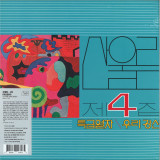
Sanullim's 4th album consists of background music and insert songs for TV and radio dramas and plays, including Korean Film director Im Kwon-taek's movie "Tomorrow And Tomorrow Again". It is a noteworthy collection of works that has not faded with the unique scent of Sanullim, and contains several songs that still shine with charming emotions and whimsical or vague sensibilities.
Express Train (Inside), a mountain sound-style hard rock with dynamic rhythm, fuzz guitar, and Kim Chang-hoon's wild shouting, Kim Chang-wan's soft vocal and brilliant keyboard sound, Can't Tell Anyone, Love It includes the elegant performance songs Glass Doll and The Windy Hill By The River, and the beautiful song Afterglow that achieves the climax of romance and lyricism.
Kinn turns the Post-Rock continuum inside out with his sophomore album, Dogtooth.
Shifting focus between his present self and his misled teenage years, 'Dogtooth' sees London born and raised sound art graduate Fred Lomas contemplate the vulnerability of youth, addiction and suicide as Kinn. Unabashed in their creative ambition, Kinn's tongue-in-cheek 'dread-voyeurism' is underpinned by a palpably sincere vulnerability that seeps through their dynamic and rewardingly dense records.
An insight into Fred's formative years can be unraveled from his nickname "Dread", originally given to him by his parents. Growing up in North London as a 'constantly out of the house' youth, Fred only had eyes on any counterculture he could find to defy the city's notorious empty capitalist centric mainstream culture, skateboarding, graffiti, and terrible punk bands which would only last 1-3 rehearsals (max). As a teenager he experienced the notorious 2011 Tottenham riots, which is often referenced in the artist's output and greatly informed their sensibilities. Barely an adult, he was confronted first hand with concepts of constant hostility and corruption which were seemingly welded to his surroundings, corruption formed by high rises and international political scandals taking place only a short journey away.
Even today, Dogtooth reflects on this contrast of community and anger and surmises it to be part and parcel of modern metropolitan life, looking to peel away the bad looking for meaning, comfort and ways of goofing off amidst oppressive forces, sirens and snake oil salesmen everywhere.