repress
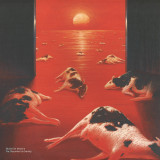
Levon Vincent returns with his fourth full-length studio album Silent Cities a striking departure from his previous records. This, his first release experimenting with the cassette format, Silent Cities is a kind of mixtape through more private moods and personal pitches (literally given Levon’s non-standard tunings).
While Levon has always pro
duced dance floor jams with the intention of raising people’s heart rates, Silent Cities began with 72 bpm: his average resting heart rate, and the concept of tuning the music he was making to his own body rather than increasing anything. This brought the tempos down to 72 bpm or even half of that, at 36bpm. Programming the record during the empty cityscape of Berlin lockdowns, this is the first time Levon’s created an album for the home stereo or for headphone listening whilst navigating through a city. A mixtape specialist in his youth; he was always wanted to play with the cassette format. The results are sure to delight any listener, with the ever-present ambient, krautrock, shoegaze, hip-hop and electro influences coming to the foreground on this work.
“I was expanding further along the lines of a surprise favourite from my previous LP, a song called She Likes To Wave To Passing Boats which was not a 4 on-the-floor piece to play in clubs but a more impressionistic piece of music that I wrote to expound some emotions one day” says Levon. “It was a song written using just intonation. I really love how warm the pure 4ths sound, so when working on the new LP Silent Cities I decided to use my own tunings”.
Historically, the use of just intonation has meant that such instruments could sound "in tune" in one key but at the expense of more dissonance in the other keys. None of the songs on Silent Cities use standard Western equal temperament, Levon created his own scale designs coupled with the ancient ratios found in just intonation.
Born in Houston in 1975, Levon’s life changed dramatically when his parents moved their family to New York in 1981, uprooted from what he knew, the shock, the change from Houston to New York at 6 years old, is referred to constantly in Levon’s Musical output over the years. Levon's family moved houses in and around NYC from 1981 -2010, never more than a mile or two from the WTC. He lived on the Lower East Side during his teenage years and early 20s. This time period and this locale are also a big theme recurrent in his music as he tries to convey how the "downtown" lifestyle and culture-melding affected him so much at a tender age. He cut his teeth working in record shops around lower Manhattan, and while working at the Halcyon Record shop in Brooklyn he (alongside DJ Jus-Ed) was instrumental in creating the wave that came to be known as the "NYC House Renaissance" circa 2010. During the Y2K years he studied 20th C post-minimalism at Purchase college of New York under James McElwaine (who tangentially produced Man Parrish’s Self-Titled proto-hip-hop debt LP). Levon was fortunate to study theory with avant-garde composer Dary John Mizelle and orchestration under conductor Joel Thome. He undertook masterclasses with Philip Glass and also served as intern for John Kilgore, engineer for Steve Reich, where he was present for notable mix sessions such as “Violin Phase.”
Post-minimalism clearly remains an influence not to mention the early sampler stars of 80s freestyle and synth pop. Mixing such far-reaching influences is something Levon executes tremendously well. The first track Everlasting Joy moves at a head nodding 96 BPM tempo, reflecting formative influences like Paul Hardcastle’s Rainforest or Art Of Noise’s Moments in Love. “Those types of songs were a big eye opener for me as a youth, because it was where I realised songs in popular culture didn’t have to be kept to just 3 minutes, and they didn’t require vocals either. So, Everlasting Joy is a song with that intention, one that might be radio-friendly, despite the long arrangement and without vocals. You could say it was inspired by 107.5 in NY because that was a station I listened to a lot in the 1980’s.”
The majority of demos on Silent Cities were recorded before Covid-19 hit the world - when Levon had found a studio space outside of home in his adopted city of Berlin. It was a career first - working on music outside the bedroom. This riding the train or bicycling ‘going to work’ in Berlin opened up a new mood in his music, using the time back and forth to be inspired - commuting as an NYC transplant who still feels as a tourist in Berlin, with a pair of headphones, looking out the window on the train, or stopping on bridges and parking his bike to enjoy Berlin's skyline and horizon. Then, the pandemic struck and “work” came to a halt. Levon had recorded so much material during that year in the studio out of house it seemed like an inflection point for him to lighten the burden of the possessions he was carrying.
“People close to me have watched me give away synths and hardware regularly and I have given away my record collection every few years for my whole life. As a struggling artist in my 20s who had worked in record stores that whole time, I learned that moving constantly with 12k records just wasn't the way to live. So, in light of the pandemic, I set up a shop online, and sold all my music equipment. I also created a separate shop for all my sneakers and clothes. Easy come, Easy go. This provided me with a slow drip type of income that carried me quite well through the pandemic and it allowed me to focus on my own art and music. Getting rid of all my possessions felt like a weight being lifted from my shoulders and I was able to stay the course and remain committed to the music. I needed a further 2 years to mix and arrange the LP. If it weren’t for the pandemic, I would not been able to make this type of LP, so in light of everything, I was able to turn a depressing time in to something lasting and musically very positive.”
You can hear how his approach to a cassette release retains the "Medium is the Message." ethos. Silent Cities is a spooling, warm piece about life memories and embodiment.
quête:the dance inc
Emotional Rescue reaches its 100th reissue in its 10th year with a landmark, a collection of previously unreleased songs from Brenda Ray. Encouraged and cajoled since the label's inception, Brenda Ray's (Kenny) music has gone from cult curio to cult status in that time, as her mix of DIY/post punk, dub reggae, jazz and pop transcends reached admiring audiences.
Following the completion of Naafi Sandwich in 1985 and the subsequent recordings as Brenda And The Beach Balls - the sought after Volume 1 LP in 1986 and three singles on Siren/Virgin in 1987/88 - her releases might of stopped for almost two decades but she never stopped recording.
The 10 songs show not only continuous activity in her North-West home studio, but to be consistently creative, moving forward and relevant. Hip-Hop, Street Soul and House all feature alongside Brenda's unmistakeable Be-Pop-Dub-Pop song writing. Working as always with partner Gerry Kenny aka Sir Freddie Viadukt, plus a cohort of friends joining across the sphere.
Starting with 'Universal Purpose', poet and friend Eugene Lange delivers a lanquid breakbeat-dub sermon on struggle and love, as Brenda's vocals accompany. 'Spirit's So High' captures House music's dawning optimism to perfection, a swirling, uplifting 4.30 minutes as you'll ever hear. The doo-wop shuffle of 'MMMMoon Warp' experiments with Coldcut-lite sampledlica cut ups, alongside Brenda's unmistakable breathing-singing delivery, before 'Love's The Most' and 'Hope' are classic Ray love sentimental paeans, backed with latter day Balearic musicality.
Eugene Lange returns with the rap attack of 'Dancehall Exocet'. A conscious poetic stream over "Minister of Noise" industrial beats with backing and counter from Brenda, shows the breadth she was exploring at this time. Crude synth bass and chiming 4/4 percussion follow on 'This Was No Dream' with soft, humming vocals encapsulating some proto-house romantic escapism, before Eastern influences mix with flute, strings, bells and a doo-wop skiffle on the aptly named 'Tequila Sam'.
The album closes with a nod to what's gone before, in 'Return Of The Theme From A Tall Dark Stranger', an update on her "Volume 1" classic, all is replayed, overlayed and "mad"-mixed, Brenda's studio mastery shining through. An acoustic return of 'Love's The Most' bring the album to completion, but this is by no means the end but hopefully, the start of more undiscovered and discovered mini-masterpieces from Brenda Ray and friends to see the light of day.
CHIARA CIVELLO'S NEW SINGLE ADDS NEAPOLITAN VIBES TO BRAZILIAN FUNK TO CELEBRATE DIVERSITY AND INCLUSION
Four Flies is proud to present a new, exciting single by internationally acclaimed Italian singer, multi-instrumentalist and songwriter Chiara Civello. Co-produced with Neapolitan pianist, beatmaker and producer Dario Bassolino and with lyrics by Civello and Sicilian artist Kaballà, "Sono Come Sono" is the first Italian adaptation of the Brazilian song "Olhos Coloridos", a celebration of diversity, mixed roots and inclusion written by Macau and made famous by singer Sandra de Sa. To respect the spirit of the original and its soul-funk sound, Civello decided to produce the song in Naples, a city with many similarities to Rio de Janeiro, including its multicultural history. The result is an irresistible eighties-inspired boogie-funk track brimming with positivity and joy.
"Sono Come Sono" comes out on 21 October 2022 as a 12" VINYL MAXI SINGLE containing the song plus three fantastic remixes by eclectic Neapolitan DJ/producer Whodamanny that add groovy and tribal influences to the mix and further enhance its dancefloor potential.
Civello's adaptation has been praised by the writer and singer of the original, as well as by another great name in Brasilian popular music:
"Cada Qual com seu Cada Qual, e muito Respeito pra Liberar Geral…" Chiara has expressed this idea truthfully, beautifully and with dignity. I'm very excited, proud and happy! This is a fantastic version of "Olhos Coloridos". "Limitar…, é humilhar o Infinito…" Thank you, sister" – Sandra de Sá
"Chiara, I couldn't contain my emotion when I listened to your Italian version of "Olhos Coloridos". Beautiful vocals… a beautiful brass arrangement… pure black-Rio! You put colors into my eyes and light into my soul with your magical performance, I have no words. I must really thank you for the joy you gave me. "somos o que somos", Olhos Coloridos, Sarará Crioulo"" – Macau
"Another smooth and super groovy creation by Chiara Civello, this is a perfect Italian version of the classic Rio de Janeiro soul-funk song, "Olhos Coloridos", made famous by Sandra de Sá. It respects the spirit of Black pride contained in the original lyrics but adds to it new sounds and meanings. Well done, Chiara!" – Nelson Motta
Collapso Calypso is the long-awaited third album from dreampop artist Chorusgirl. Initially planned for release in 2020, but the pandemic and a nervous breakdown brought everything to a screeching halt. It took Silvi Wersing - aka Chorusgirl - the rest of 2020 and 2021 to rebuild her life and reconsider everything, including her music and the band. She decided to relocate from London to her small hometown in Germany, to become a carer for her increasingly ill father and to take Chorusgirl back to its roots as a solo project, just like in 2014. She revisited old demos and wrote a few more songs, and steadily worked to complete the album as an anchor at a time of turmoil. With the album charting her progress back to health, she decided to call it Collapso Calypso, a riff on taking her despair for a dance. The album includes a multitude of references from music and film and features Silvi's trademark self-reflective lyrics on the themes of coming through a crisis, grief, resilience, and ultimately letting go, or the inability thereof, all set to the sounds of 60s girl groups and her favourite bands from the 80s. The release follows on from 2018 album Shimmer and Spin (Reckless Yes) and the self-titled 2015 debut (Fortuna Pop). “Chorusgirl pertain to a certain kind of cold, detached dreaminess you’d associate with a label like 4AD in its prime: their overall sound being seemingly informed by Lush’s successful hybrid of classic pop, fiery punk and shimmering soundscapes. … Yet, rather than reliving a sound there’s a sense here that Chorusgirl are more intent on reinventing it. Look no further than their debut self-titled LP for conviction.” (8/10) Line of Best Fit “Chorusgirl’s sound is distinctly London (although, more the London of the 80s than of now) but it’s also the sound of escaping London. (…) It’s the feeling of sleeping with the bedroom window open for the first time in months and waking up with a fresh wafting across your face.” Noisey “Chorusgirl explore universal themes with the catchiest of tunes, thundering rhythms, a wry sense of self and fascinating multi-meaning lyrics.” (8/10) Louder Than War “There’s no slack on the album – from the starting gate to the finish line, Chorusgirl bristle with static and nerves.” … Chorusgirl are simple, until they’re not. You might recognise the distant spirits, the razor chords, the surfy snarls. But where other bands coast on borrowed sound, Wersing bends it to her own life, creating a space that resonates with insight and empathy. Ever felt separate from the human race? Be comforted, for here is your kind.” (7/10) Drowned In Sound This is a record with teeth… one of the most impressive first albums of a year rich in strong debuts.” (5/5) NARC Magazine “Sparkling with bright rhythms and jangling pop…with hints of something shadier, bittersweet and more potent.” London In Stereo “Lovingly smudged guitars” (7/10) Loud & Quiet
While she might be best known as an improviser (most notably in the Spontaneous Music Ensemble, the Feminist Improvising Group and more recently with the likes of Les Diaboliques), Maggie Nicols’ talents stretch into song, dance, poetry, performance and composition. When Cafe OTO was shut over lockdown we invited her to follow up the wonderful solo ‘Creative Contradiction’ with some time spent singing alone at the piano. ‘Are You Ready?’ comprises an LP of songs and a 2CD edition which includes a companion disk of freely improvised meditations entitled, ‘Whatever Arises.’ Songs - seemingly contradictory to the practices of free improvisation - have been a vital part in Nicols’ relationship to music. It was singing bebop with pianist Dennis Rose which nurtured and challenged Nicols, allowing her to develop her own skills and sound amongst a repertoire of standards sung in clubs and pubs. Singing alongside Julie Tippetts in Centipede showed her how heady experimentation could be woven into composition, and a more recent gig with pianist Steve Lodder played out ‘The Maggie Nicols Songbook.’ Are You Ready? recalls Nicols’ own compositions from memory, working out tunes and turning them over. New routes down old paths form in moments of improvisation and all wrong turns are played out with joyous discovery. What John Stevens dubbed Maggie's “ability to find the ‘rhythmelodic’” meets a willingness to be understood and to understand. Solo at the piano, Nicols is still firmly rooted in the collective however - “Sans Papiers” sets the words of poet Vicky Scrivener to tune; a story of migration and struggle which is as important to Nicols as the songs her mother wrote. Such an intimate recording of her own compositions came with a certain amount of reflection and anxiety - best confronted with time spent freely improvising. ‘Whatever Arises’ - a companion disk to the ‘Songs’ - is a meditation of sorts, a process of ‘following the energy’ which has its roots in John Stevens’ work. “Improvisation gives the confidence to compose,” Nicols told us in an interview about some of her archival tapes, and here the two are as important as each other. Beginning with breath and repetition, ‘Whatever Arises’ allows Nicols’ to find new voices, accompanied by the piano and over dubbings of her tap shoes on the concrete floor. Brilliantly she is able to share her moments of discovery with the listener, finding comfort in vulnerability. Whilst rooted in Stevens’ work, Nicols’ improvisational techniques also remind us of Pauline Oliveros’ Sonic Meditations. They are what has allowed Nicols to find her own sound, to ‘teach herself to fly.’ They have allowed Nicols to grow and share and to be able to keep close the songs that mean so much to her, now shared with us. Recorded at Cafe OTO on July 15th, 16th and 17th 2021 by Shaun Crook. Mixed by Shaun Crook. Mastered by Sean McCann. Artwork by Annalisa Colombara. Lettering by Rosella Garavaglia. Layout by Maja Larrson. ‘Slow Within The Urgency’ inspired by mindfulness teacher Jeff Warren. Original poem ‘Sans Papiers’ by Vicky Scrivener. Original poem ‘You Darkness’ by Rainer Maria Rilke. Music and lyrics to ‘Music Is The Healing Force of The Universe’ by Mary Maria Parks.
Today, internationally acclaimed interdisciplinary artist Hyd, nee Hayden Dunham, announces her first solo musical project, along with the announcement of her self-titled EP that arrives November 5th via PC Music. More disclosure than debut, Hyd’s four-track offering lets us feel the heat that’s been building underneath, calling us back down to earth. Written on an island formed from underground volcanic eruptions 15 million years ago, the EP is produced by A. G. Cook, Caroline Polachek & umru. The EP follows Hyd’s robust career as a sculptor and conceptual artist. Deeply enmeshed in the art world and music communities, she has dedicated her practice to reinventing systems - systems of communicating, systems of sexuality, systems of interacting with our environments. Her large-scale sculptural practice, where she creates fluid, transformative art installations, has been exhibited in museums and galleries across America, Asia and Europe. Past works include GEL, a vapor that travelled through the air vents of Andrea Rosen Gallery in NYC, and 7 Sisters, a seven-act performance at MoMA PS1 that incorporated dance, music, poetry, video and scents, with additional exhibitions and performances at Fondation Louis Vuitton, Paris, the Irish Museum of Modern Art, Dublin, etc. Apart from appearances on A. G. Cook's recent Apple LP, "No Shadow" marks the first time we've seen Hayden step out musically since Hey QT, the enigmatic and controversial project she created in collaboration with A. G. Cook and SOPHIE. The EP cover and singles’ artworks were photographed by renowned artist, Torbjørn Rødland, whose images are saturated with symbolism, lyricism and eroticism. The graphic design identity is by Bureau Borsche, celebrated for their work with clients including Balenciaga, Supreme and The Face, among others. Creative direction by Hyd and Jordan Richman.
Sasu Ripatti, now sporting the new "Ripatti Deluxe" moniker, presents his very own abstract take on early rave and happy hardcore. "Speed Demon" marks the first release on Ripatti's newly launched label "Rajaton".
The Finnish word ”raja” has multiple meanings. It could refer to a ”border”, ”limit”, ”boundary”, or even ”capacity” if understood broadly. It feels that ”border” is the first interpretation that comes to mind when the word is met in isolation of additional context. It often includes political energy of some sort. Or perhaps it’s just this particular point in time that leads the mind into such field of thought.
As the Dutch author Rutger Bregman notes in his book Human Kind – A Hopeful History, the real trouble with people began when the first person had the idea of drawing a line on sand and claiming ownership of the area on their side. The concept of physical borders was born.
Naturally, there are mental borders, as well. Think about all the things you shut out because they’re ”not for you”. They are numerous and we do it all the time. The issue is not to stop that, but to recognize when to let new things in, even if they’re not commonplace. Mental borders might often be easier to rewrite than physical ones, but the challenge remains a real one.
That’s where the derivative form ”rajaton” comes to play. By simply adding the ”-ton”, all borders, limits, boundaries and capacities are lifted in an instant. We have something ”borderless” instead, and are thus free to expand our thinking.
One could argue that the word ”rajaton” implies not the removal of borders but instead their very non-existence at large. How will our mind work when the concept of borders doesn’t even enter the conscious thought?
Mental borderlessness is a truly fascinating concept. A maximalist array of opportunities and potential ideas enters the picture – one which is also limitless, unlimited, sans boundaries, and also without a danger of being depleted. It’s an all-existence of multitudes where hierarchy also starts to deteriorate, giving way to a new form of full understanding without judgement.
Music is one fine place for such thinking, especially when thinking about the role of the listener. Occupying a much more active position than is generally recognized, the listener can greatly benefit from borderless thinking, and thus help to enhance the collective perceived significance of any given body of work. When there are no boundaries, the interpretation remains unchained and honest.
Basically it was all already said by the late revolutionary jazz pianist Burton Greene: ”Borders are boring!”
Sasu Ripatti, now sporting the new "Ripatti Deluxe" moniker, presents his very own abstract take on early rave and happy hardcore. "Speed Demon" marks the first release on Ripatti's newly launched label "Rajaton".
The Finnish word ”raja” has multiple meanings. It could refer to a ”border”, ”limit”, ”boundary”, or even ”capacity” if understood broadly. It feels that ”border” is the first interpretation that comes to mind when the word is met in isolation of additional context. It often includes political energy of some sort. Or perhaps it’s just this particular point in time that leads the mind into such field of thought.
As the Dutch author Rutger Bregman notes in his book Human Kind – A Hopeful History, the real trouble with people began when the first person had the idea of drawing a line on sand and claiming ownership of the area on their side. The concept of physical borders was born.
Naturally, there are mental borders, as well. Think about all the things you shut out because they’re ”not for you”. They are numerous and we do it all the time. The issue is not to stop that, but to recognize when to let new things in, even if they’re not commonplace. Mental borders might often be easier to rewrite than physical ones, but the challenge remains a real one.
That’s where the derivative form ”rajaton” comes to play. By simply adding the ”-ton”, all borders, limits, boundaries and capacities are lifted in an instant. We have something ”borderless” instead, and are thus free to expand our thinking.
One could argue that the word ”rajaton” implies not the removal of borders but instead their very non-existence at large. How will our mind work when the concept of borders doesn’t even enter the conscious thought?
Mental borderlessness is a truly fascinating concept. A maximalist array of opportunities and potential ideas enters the picture – one which is also limitless, unlimited, sans boundaries, and also without a danger of being depleted. It’s an all-existence of multitudes where hierarchy also starts to deteriorate, giving way to a new form of full understanding without judgement.
Music is one fine place for such thinking, especially when thinking about the role of the listener. Occupying a much more active position than is generally recognized, the listener can greatly benefit from borderless thinking, and thus help to enhance the collective perceived significance of any given body of work. When there are no boundaries, the interpretation remains unchained and honest.
Basically it was all already said by the late revolutionary jazz pianist Burton Greene: ”Borders are boring!”
- 1: Long As I Got My Baby - Jackie Day
- 2: Down In The City - The Marvellos
- 3: I Got Love - The Other Brothers
- 4: I’ve Got To Win Your Love (For Me)
- The Simms Twins
- 5: My Love She’s Gone - The Intentions
- 6: This Couldn’t Be Me - The Sweethearts
- 7: The Sun Don’t Shine (Everyday) - The Saints
- 1: Tobacco Road North - Tommy Youngblood
- 2: Stand Up Straight And Tall - Jackie Shane
- 3: Walk The Chalk Line
- Aaron Collins & The Teen Queens
- 4: I’m Tired Aka Love Line - Billy Watkins
- 5: Tired Of Walkin’ - Little Joe Hinton
- 6: That’s It - Z.z. Hill
- 7: I Was Born To Love You - Johnny Copeland
• Celebrating 40 years since the game-changing “For Dancers Only” LP, KENT 001, “For Dancers Forty” revisits the Los Angeles labels that have given us so much.
• Like KENT 001, the collection represents the broad church of the Biharis’ recordings and features soul stompers, rhythm & blues busters, girly grooves and heavenly harmony.
• Most tracks are new to Kent LPs and there’s a brand new 1966 soul recording from 50s Modern R&B artists Aaron Collins & the Teen Queens. Long-time Kent favourites Jackie Day, Z.Z. Hill and Johnny Copeland are included with some of their underplayed tracks – for Copeland it’s the first vinyl outing for his dancer ‘I Was Born To Love You’. As ever on our rare soul scene, it’s the lesser-known artists who we revel in and there are stunning tracks from the Simms Twins, the Marvellos, the Intentions and the in-demand (due to the Kent 45 being deleted) ‘I Got Love’ by the Other Brothers.
• Tommy Youngblood’s LP track ‘Tobacco Road North’ has been a sleeper, eventually being picked up by hip hop samplers for its atmospheric musical qualities – and we at last give its proper accreditation after decades of misinformation. Little Joe Hinton’s ‘Tired Of Walkin’’ is now looked on as an R&B dance classic, despite its poor sales on release.
• The Sweethearts adorn our cover with a recently discovered colour photo from the archives of Modern’s head engineer Bill Lazerus. Apart from their bouncy ‘This Couldn’t Be Me’, they provided backing for many of the stable’s 60s recordings.
• You Have “Only”, “Also” and “Forever” – make space for “Forty”
We return with the second Glenn Davis” 12”, a year on from his last Yore twelve-inch “Soul On My Side”, Dublin-based DJ and producer Glenn Davis returns with its sequel, the as-stellar Better Daze. The EP's melodic, soulful sound. The dynamic title cut locks in instantly with a pumping kick drum and builds layer by layer thereafter. Percussion, hi-hats, electric piano chords, and synthesizers add to the thrust of the production as it grows ever more urgent. As the track advances, Davis drapes a jazzy keyboard solo across the booming base as the swing swells to a near-ecstatic level. “Your Time” rounds out the A-side with a cut that suggests pure energy at its outset before quickly morphing into a sleek house strut. With percussion included and late-night synth atmospherics folded in, the breezy tune starts to sound like something you'd hear banging out on the Dancefloor thats surrounding you.
On the flip, Davis brings the skipping house groove of "Inner Monologue” to a fever while. Moody chords, hand drums, and a snappy groove set the scene. The female vocalist's soulful delivery and vibes-like earworm that make the tune the standout it is. Think of a dark Room and a red light bulb & House Music forever and a day.
- A1: Waiting To Go (Feat Duskee & Disrupta)
- A2: Want You Back (Feat Mindstate & Emilie Rachel)
- A3: Comme Ci (Feat T95)
- B1: Can't Explain (Feat Document One)
- B2: Summer (Feat Tyler Daley & Dogger)
- B3: Shush (Feat Dub Phizix)
- C1: Embers Reign (Feat Calibre)
- C2: They Ain't Listening (Feat T95)
- C3: Kiss & Tell (Feat Monrroe)
- D1: Heaven's Not Cheap (Feat Drumantle)
- D2: Sweet Love (Feat Lsb)
- D3: Wake You Up (Feat Dogger & Mindstate)
The purest reflection of DRS as a musician to date, his self-titled 'Del-Rok-Ski' album sees one of the most heavyweight lyricists in the game delve deep into the intricacies of himself to deliver an honest, inward, and characteristically beautiful work of art. His fifth album in the space of three transformative years, the Manchester-based artist has found a home for his latest album on Shogun Audio, traversing an eclectic and beguiling selection of sonic soundscapes across twelve of the purest tracks that you'll hear this year.
Whilst incorporating the powerful messaging and undeniable lyrical expertise that DRS has demonstrated for over a decade, 'Del-Rok-Ski' offers something that none of the previous albums has been able to. Marking two years sober, this latest offering investigates previously unexplored territories for DRS. "I feel like music has never been me", says the vocalist, who truly feels that this album, which evolves from moods of darkness and loss to those of lightness and hope, is an unadulterated reflection of himself to its core.
Teaming up with a selection of hugely talented collaborators, including the likes of Calibre, LSB, Dub Phizix, Duskee, Disrupta, Monrroe, and many more, 'Del-Rok-Ski' sees DRS serve up a heartfelt, intimate, and personal lyrical journey that is arguably his best work to date.
Through the heartwrenching, high-energy feels of 'Can't Explain (Faded) ft. Document One', summer anthems such as 'Waiting To Go ft. Disrupta & Duskee' and 'Heavens Not Cheap ft. Drumantle', certified dancefloor destroyers like 'Comme Ci' and 'They Ain't Listening', which are both produced by T95, and many other gems embedded in this album, DRS further cements his reputation as one of the most unique, talented, and iconic lyricists to ever grace the drum and bass scene.
"I feel like I've never been so cleared-headed during my whole career of making music. 'Del-Rok-Ski' is me.
DRS
To celebrate the forthcoming release of 'Del-Rok-Ski', DRS is now embarking on 'The Man Who Fell To Earth Tour', which sees him tour the U.K and work with 8 Gold Rings, Dom Lawson, and Dogger to curate a deeply personal Live Show that'll see appearances from numerous special guests up and down the country.
Overview:
With a career spanning over fifteen years, Dragonette, who is Martina Sorbara, has scored numerous global hits including "Pick Up the Phone," "Let it Go," "Tokyo Nights" with Digital Farm Animals and Shaun Frank, “Outlines" with Mike Mago, “Slow Song” with The Knocks, and the chart-topping “Hello" with Martin Solveig, which garnered a JUNO Award win for 'Dance Recording of the Year’ and returned to the Billboard Dance Charts just last year.
With Twennies being released on 28 October, Dragonette moves into the newest chapter of her illustrious career, looking forward with more wisdom, experience and confidence than ever before, creating her best work to date. Twennies marks a full-circle moment for Dragonette. “It’s a true hybrid of my original influences as a child and what I’ve learned along the way. It feels so representative of my musical journey.” She adds, “It’s my favorite thing I’ve ever done. I’m so proud of it.”
As a songwriter her credits include Keith Urban, Cyndi Lauper, Pretty Sister, and Carly Rae Jepsen, among others. Collaborating with the world’s biggest DJs including Martin Garrix, Basement Jaxx, Kaskade, Galantis, and more, Dragonette’s musical diversity knows no bounds.
Far over on the west coast of the USA we find a room full of drum
machines, samplers and keyboards. Hard at work is Israel ‘Iz’ Gravning aka Tone Scientist, who’s been using this Seattle studio to produce genre-defying future music for more than 25 years.
An avid student of jazz fusion, hip hop, house, techno and others, he
was galvanised to build his own studio after hearing jungle and drum & bass on a trip to London in 1995. His musical course thus intersected with the collectives then pushing new dancefloor sonics rooted in the rich tradition of Black music – like Nuyorican Soul over on the east coast, and the new broken beats of IG Culture, Dego and Bugz In The Attic in London. Then, in the early 2000s, Iz put out a handful of EPs under different aliases, including ‘Lion Dub’ on the Guidance sublabel Subtitled, but soon stepped back from the public stage. That’s not to say he stopped making or playing music, though. Far from it. Fast forward two decades and our very own Walrus, chilly but happy in the depths of a Toronto winter, happened across ‘Lion Dub’ in the legendary Play The Record store. Intrigued, he tracked Iz down and discovered he had been active all this time. A short email exchange later and this 2xLP of archive material was born.
These six tracks explain fully why Iz calls his studio the ‘Time Machine’: vintage equipment and instruments converse with up-to-date software; classic sounds and textures twist into fresh configurations; and Iz’s own creativity and musicality sings to us from a location beyond the trappings of time or genre.
All music written, produced and mixed by Israel Gravning aka Tone
Scientist in Seattle/Washington between 2005 - 2008 except for “Things
• Finding a new Eddie Hill recording from 1969 was quite a thrill and on hearing the beautiful mid-tempo groove, we included it on both our “Westbound Northern Soul” and “Masterpieces Of Modern Soul Vol 3” CDs in 2010. Since then, demand for ‘I Am So Thankful’ has risen and we can now issue it as a single. It was originally scheduled to be Westbound 151 in the USA but that spot was claimed by Emanuel Lasky’s ‘Never My Love’. Eddie now has a Kent release to go with his Detroit waxings on Thelma, Ge-Ge and M-S.
• ‘Long Live The King’ was an LP track from the Detroit Emeralds’ acclaimed debut album “Do Me Right”. It didn’t get a US 45 release but did sneak out on a Various Artists UK DJ-promo EP in 1973 for then-current Phonogram releases. This is the first time this superb and popular dance track it has been commercially available as a single.
Vol. 17 - Special Remix EP[14,24 €]
Vol. 18[12,56 €]
Vol. 20[13,40 €]
Vol. 22[14,50 €]
Vol. 24[17,61 €]
The 21st Attack The Dancefloor is brimming with Class-A disco boogie action.
Heading things up is the brand new Jimpster remix of Mistura featuring a tongue in cheek monologue from Canadian poet Jemini. Jimpster’s Jazz'd Up mix starts off stripped right back, based around a 303 bassline, it builds and builds and builds ending with a deep powerful version that satisfies both the soul and dance floor.
Backing this side up is Birdee’s euphoric, piano stomping, hands in the air remix of the ZR classic ‘Do What You Feel’ from 1991.
On the flip is Lakeshore Commission's latest floor burner ‘In 2 The Light’ featuring Bluey from Incognito. Shuffling Philly drums, soaring strings and a phunked out bass guitar make for a late night dancefloor heater.
Finishing off the 12” is the appearance of Destiny II’s ‘Play 2 Win’ on wax for the first time. It’s a serious menagerie of driving live bass, Prelude style boogie synths & the occasional vocoder. Add in anthemic vocals courtesy of Angela Johnson and you have one of the years most played new disco songs.
Yellow Vinyl
"Onyeabor 80" draws equal influence from War, William Onyeabor, and Isaac Hayes. This steady groover is sure to keep the dance-floor moving! On the flip side we have "Bongo Grove", an Incredible Bongo Band influenced, upbeat horn-driven anthem. This one features Mitchum Yacoub on Bongos. Members of The Sure Fire Soul Ensemble, Mestizo Beat, and Mitchum Yacoub exploring new tones and directions!
- A1: Fragments Of Yesterday
- A2: Wendys Hollow Path
- A3: Less Real Than You
- A4: In Sosteso
- B1: L'ennui Hâté
- B2: Moving Tiles
- B3: Melee
- C1: The Place Is What Emerges
- C2: Setting Things Apart
- C3: Perhaps Significant
- D1: Non C'é
- D2: Indefinable Basement
- D3: Dance Of The Forgotten
- D4: Shaping The Experience
- D5: L'anticipazione Del Futuro
"While focusing on the current conditions we find ourselves in and bracing for what seems like the collapse of humanity, I made this collection of music in an attempt to ignite the essential remnants of my inner euphoria, and perhaps yours too" - Feldermelder
Euphoric Attempts is a finespun, voluminous manifestation of euphoria, a testimony to creativity, produced at a time when the outside world seems to be slowly disintegrating. The musical language is pure, vast, resilient, and vulnerable. The compositions of Feldermelder have a tonality both strange and familiar, intensified and influenced by classical music, yet distinguished by the coalescence of contrasting styles.
Euphoric Attempts relates to the state of our external surroundings but also refers to our inner life: it passes through our memories — through our organism — through our stories, and intends to elude the cold grip of analytical listening, instead retrieving intrinsic truths. The track titles signify a form of homage to our inner individuality, existing in parallel with the severities of the tangible, the external.
For this album, Feldermelder draws together compositions from his extensive archives, focussing on material that reflects the simple joy of making music. As a counterpoint to the abstract complexities and intricate rhythms of his live performances, here Feldermelder creates candid compositions of purity and minimalism, finding a sense of elegance in the details. Euphoric Attempts discovers the prospect of liberation and vitality in concealed intimacies, capturing their resemblance in gentle, elaborate, and prodigious movements of sound.
Feldermelder is a Swiss musician, sound designer, producer, and installation artist. He is co-founder of -OUS and part of the audio-visual collective Encor.studio. He has previously released several releases on -OUS, both as a solo artist, and in collaboration with Sara Oswald and Julian Sartorius. Feldermelder's influences range from pioneering early electronic music to contemporary analogue electronics to classic jazz and beyond. The diversity of the music that inspires him is mirrored in his own work, which illustrates an ever-evolving sound, and indicates that influence is seen as both map and compass, guiding divergent inclinations.
The Discomfort Of Evening is the incredible and original soundtrack by prolific Belgian composer Michiel de Malsche to 2020 International Booker Prize winner The Discomfort of Evening by Marieke Lucas Rijneveld. Visceral and virtuosic, Rijneveld's novel follows Jas, a girl growing up in a devout Christian family that runs a Dutch dairy farm, whose brother dies in an accident after she wishes he would die instead of her rabbit. Lost in grief, her family falls apart as she becomes consumed by increasingly dangerous fantasies.
Michiel de Malsche has captured the atmosphere and spirit of Rijneveld's book perfectly, moving through moments of confrontation and introspection, sinking into spirals of despair, stasis and subtle hope and change. Brooding ambient basslines, driven by droning murmurs, are offset with melismatic electro-acoustic pieces that embody the novel's haunting and dissonant world, whilst also incorporating manipulated field recordings such as animal sounds and a church service, allowing for a full manifestation of Jas’s world in a completely new way.
De Malsche achieves this by rallying an unusual combination of acoustic instruments (16 in total) played by top-of-their-field musicians, creating a truly unique sound world and tonal palette, including an Ondes Martenot, a 7-stringed Chinese instrument called a guqin, a marimba, a string 6-tet, a toy piano and a bass flute.
De Malsche always confronts all emotional levels of his source material head-on, making his soundtrack into much more than just a fever dream. It is a precise description of, and accompaniment to, a devastatingly impactful book.
Michiel De Malsche is a Belgian composer, multi-instrumentalist and sound designer. He studied classical composition at the conservatories of Rotterdam and Ghent. His music has been performed all over the world and he has composed and produced dozens of soundtracks for contemporary dance, theatre, movies and documentaries.
Besides his work as a contemporary classical composer, he is active as a studio musician and producer in the world of electronic music.
- A1: Spotlight
- A10: Mirage (Don't Stop) (Don't Stop)
- A11: The Kill
- A12: Remember Where You Are
- A2: What's Your Pleasure?
- A3: Ooh La La
- A4: Soul Control
- A5: Save A Kiss
- A6: Adore You
- A7: In Your Eyes
- A8: Step Into My Life
- A9: Read My Lips
- B1: Please
- B2: Impossible
- B3: Eyes Closed
- B4: Overtime
- B5: Hot N Heavy
- B6: Pale Blue Light
- B7: 0208 (Feat Kindness)
- B8: Adore You (Endless Remix)
2021 has been an incredible year so far for Jessie Ware. ‘What’s Your Pleasure?’ re-entered the Top 10 following a brilliant Graham Norton performance of ‘Remember Where You Are’ which has proved itself to be one of Jessie’s most connective singles to date. In addition, Jessie has two BRITs nominations, one for Female Solo artist and one for Album Of The Year – the category with a historic four women up for the award. On 28th April Jessie returns with a brand new single ‘Please’ taken from the upcoming deluxe release of ‘What’s Your Pleasure?’ officially titled as ‘What’s Your Pleasure? The Platinum Pleasure Edition’. Released on 11th June, the album features 6 brand new songs and more.
Her newest track, ‘Please’ sees Jessie continue the energy of ‘What’s Your Pleasure’ in the form of a throwback to 70s and 80s dance music, and pulls it together in a wonderfully anachronistic style, all packaged with Ware’s outstanding vocals. The track fits perfectly into ‘What’s Your Pleasure - The Platinum Pleasure Edition’, Ware’s deluxe offering of her sensational 2020 record. This edition still bears the cohesive, complementary songwriting, the killer grooves and flawless production of the original version. The Platinum Pleasure Edition only serves to heighten the rich and powerful soul of last year’s release with tracks like Please, 0208 featuring synthpop visionary Kindness, the Endless Remix of ‘Adore You’ and a whole host more.
Talking about the upcoming deluxe and new single Jessie said: ”I had such an amazing response to the ‘What’s Your Pleasure?’ record that I didn’t want the lights to go up and the party to be over just yet! ‘Please’ is full of optimism and ready to be played in a place where we can all be together and flirt, dance, touch and kiss. A wonderful excuse not to stop the party from ending.”
It’s safe to say that the last twelve months have been pretty stellar for Jessie Ware. June 2020 saw Jessie release ‘What’s Your Pleasure?’ and gain not only her fourth UK Top 10 album of her career, but also her highest charting record when it entered straight into the UK Official Album Charts at No.3. As if this wasn’t amazing enough, she went on to release her first cookbook and continued her immensely popular podcast Table Manners and recently hit a massive milestone of 21 million individual listens, oftentimes featuring household names such as Dua Lipa, Kylie Minogue, Yungblud, Robbie Williams, Alanis Morissette., Dawn French and Dolly Parton to name a few.
Last year saw the album continue to receive widespread critical acclaim, with ‘What’s Your Pleasure?’ featuring heavily amongst ‘album of the year’ lists including for music critic Anthony Fantano, also known as The Needle Drop, who gave What’s Your Pleasure?’ the coveted no. 1 spot on his ‘Best Albums of 2020’ list, declaring it to be “a religious experience”. The record garnered praise from The Guardian who say it’s“Ware’s finest record yet"; Rolling Stone laude it as a “fantastic dance-pop record”; Pitchfork say “Jessie reminds us why we listen to dance music in the first place.”, GQ proclaim it as “the perfect album” and NME stated it was“pure escapism.”
What Are People For? make the perfect kind of dystopic dance music for our times. Born from a collaboration between artist Anna McCarthy and musician/producer Manuela Rzytki, the band could be the illicit lovechild of Tom Tom Club and Throbbing Gristle, displaying the ideal balance of hip shaking vibes and dark provocative content.
On their collaborative debut, McCarthy and Rzytki share songwriting duties. The album was produced by Rzytki herself. They are joined by Paulina Nolte on backing vocals and Tom Wu on drums, while Keith Tenniswood mastered the record.
The whole project stems from a publication and exhibition by McCarthy laying the foundations for the content and lyrics of the album, which is humorous, poetic and political. As a lyricist, McCarthy uses her storytelling ability to explore anxieties and desires, digging into free surreal word associations reminiscent of Su Tissues’ tongue in cheek experiments with Suburban Lawns, but also explosive and gripping like a Kae Tempest rap.
Rzytki’s precise sonic palette and talent at penning structured bangers perfectly complement McCarthy’s playful and subversive language manipulations. Rzytki's beats are rooted in old school Hiphop loop principles and an authentic love for the analog. Her use of an array of synthesizers and other "real" instruments adds to WAPF's depth, soul and sincerity.
The album opens with a joyful anthem, full of energy and melodic hooks. The audience is confronted with the quintessential titular question What Are People For? and told that they are just a mere disposable commodity. Throughout the album, lyrical themes revolve around underground aspects of society, violence, political ideologies, sexuality and mysticism. The content is deep but the album is as danceable as it is biting.
73, with its drum machine hysteria and hypnotic synth basses is a a text collage written on the 73 bus through London, consisting of situations and conversation snippets encountered along the way. Drones indulges in the narrator’s paranoia as they feel they are being watched by cigarette machines, whilst the haunting choir is half spoken, half sung, ending on the orgasmic chanting of the word “mummy”. Nursery Rhyme brings more soothing incantations. There is definitely an affinity for fairytales, albeit adult ones and especially the anarchistic ones such as The Moomins, who were a consistent influence on the band. The artwork for the record, created by McCarthy, is a beautiful children's book-style painting of the group in a forest, seemingly about to engage in a magical encounter to which we are invited.
WAPF? have absorbed and digested a variety of influences. Trip hop, Punk and Techno are rubbing shoulders on Party Time. 1977 was coined “Summer of Hate” in the UK and unsurprisingly in WAPF?’s Summer of War, ethereal singing alternates with a powerful marching Garage/Grime chorus reminiscent of street protests and UK culture.
Mz. Lazy starts like an invitation to meditation and references Gertrude Stein’s book Ida in which she develops the idea that publicity is a new religion and people are now famous for being famous. Repressed anger explodes into violence and freedom at the end of the song as our heroine eventually grabs an axe to destroy her oppressors.
Fantasize, on its part, is raw, sexual and liberating while the closing track Bring Back the Dirt is a welcome hymn into a world that is becoming more and more sanitised.
While exploring deep subject matters throughout their album, WAPF? manage to remain satirical, exciting and funny. Each and everyone of their songs have a cathartic quality.
The visual identity of the band is intrinsic to their appeal. Live, they are eccentric, wild and unapologetic, wearing see-through costumes, bright miniskirts and intricate headpieces while delivering their songs with sharp intensity. Their performances radiate queer sexiness and transcend B52's thrift store aesthetics, creating a space for collective dreaming.
WAPF? is a rare combination of contemporary punk energy, irresistible groove, absurdist dry humour and astounding depth of field. They have the mighty power to create a party with their music and soon you will find yourself lifting your arms as if controlled by an external force, to chant: WAPF? WAPF? WAPF?
– Marie Merlet (Malphino, Little Trouble Girls, London)