V.I.V.E.K announces his second release on the self-named VIVEK label. Known for his cult label, SYSTEM MUSIC, this label focuses more on eclectic 140 bpm outside the realm of the dance floor.
The 4 track EP explores broken beat, ambience, melody and rhythm at 140, something that has been missing over the last few years within the genre. Colours is not only the EP title, but a reflection of the diversity of the tracks. Musicality sits at the heart of this with a nod to easy listening.
“The main focus of this release was to take me out of my musical comfort zone. I wanted to work with other musicians as well as push myself to inhabit new creative ideas.” - V.I.V.E.K
Whether it’s as an artist, label owner, a deep-drawing world-touring selector or system-building soundman behind some of London’s most important dances, V.I.V.E.K has an inherent drive to push things forward and contribute to the craft of music with serious attention to detail. A life-long frequency student dedicated to soundsystem culture, he has total respect for the heritage, value and rich variety of true music, an ability to totally arrest your full attention and imagination with his music... And has done so since he emerged in the early 2000s.
Musically pressed and blessed on key imprints such as his own System Music, Deep Medi, Tectonic and iconic reggae imprint Greensleeves, V.I.V.E.K’s creations are a crucial brew of bass styles encompassing everything from heavyweight bass hypnosis to flighty, steppy garage hybrids via sweet dub soul and all-out low-end pressure. His self-built custom soundsystem, SYSTEM, meanwhile, is a unique force of nature in UK bass music culture; the most prominent modern system to be established this decade, it’s a whole new chapter in the UK’s longstanding and illustrious history of barrier-breaking soundsystem communities. As such, it attracts committed fans from around the globe and selectors from across the system spectrum.
His label System Music has the same treasured, trusted status; not only as a source of legit never-to-be-repressed artefacts that prize the real value of music, but also as a key platform for encouraging forward-thinking, powerful system music from across the OG – freshmen continuum. Karma to Kromestar, Sleeper to SP:MC, LAS to Egoless: System Music’s celebration of bass music’s sonic scope and nurturing of talent and craft ensures its consistent buy-on-sight ranking.
Most importantly it’s as a selector that V.I.V.E.K’s position is the most vital. The selective tailor of rich, immersive and eclectic sessions, few DJs dig as deep, join the dots or draw for dubs quite like this West London operator. Accentuating his influence as a producer, engineer, dubsmith, label curator and system builder; his creative excursions as a DJ, both on the dancefloor and the airwaves as a broadcaster on the likes of Rinse FM, galvanise his status as one of the most respected, influential and singular artists who is driven by nothing but craftsmanship, unity and the sense of culture that UK bass music needs to thrive and inspire.
Поиск:the dig
Все
Die Sängerin und Songwriterin aus Grantham veröffentlichte erstmals am 24.10.2022 ihre Doppel-EP „Can You Afford To Lose Me?‘‘ digital.
Auf der EP vereint sie vergangene Projekte aus „Falling Asleep At The Wheel’’ (2020) und „The Walls Are Way Too Thin’’ (2021), die die Entwicklung und den Status Quo ihrer Kunst repräsentieren.
Die Musikerin zeigt auf Albumlänge mit ihrer Stimmenbeherrschung und gekonnten Mix aus Pop, Synth-Pop, Indie Rock, Alternative und Pop-Rock einmal mehr zutiefst ehrliche Einblicke in ihre gescheiterten Beziehungen, emotionalen Kämpfe und Sorgen der Seele, die sie beschäftigen.
Diese Selbstexpression in Form von Musik brachte ihr nicht zuletzt vor Artists wie Central Cee, PinkPantheress, BERWYN und FKA twigs den „BandLab NME Award 2022‘‘ für das beste Mixtape 2022 ein.
Fans dürfen sich freuen:
Am 24.02. erscheint die Doppel-EP auf Vinyl!
Yung Bae had already proven his capabilities over the past two years, but his album Ba3 really shows off his mastery in making Grade-A funk.
The intro “Back to the Classics” starts off with a vinyl crackle and a groove that acts as a warm-up to the rest of the album. We then get kick-started into the thick funk of “I Want Cha Back” with a burst of horns and bass that’s going to get any party up and dancing.
The undeniably groovy beats continue throughout the album, the only break coming in with the fittingly titled “Mellow (Interlude)” which gives some respite before kicking off into the album’s finale. The album’s closer “Pillow Talk” provides the perfect laid-back jam to serve as the comedown from the high the entire album provides.
This album is a must-listen for anyone who appreciates good funk!
After stellar releases on Ilian Tape and Nostro Hood Soundsystem among others, ,,Mutualism” represents the much-awaited return of Atrice on their own label Miras. The follow-up EP reflects the culmination of a year-long exploration of compositional techniques and sound design, and acts as a first step towards a debut album. The result is a complete work, divided into eight chapters, that applies previous artistic research on textures, harmonics and rhythms in a rigorous yet playful manner. Whilst continuing to touch upon a broad spectrum of uptempo reference points, ,,Mutualism” offers a first glimpse into the pairs underlying pliancy next to the ever-present intricate complexities in their output.
That's all, hasta abajo!
- A1: The Dna Lounge - Lost In Translation
- A2: Height/Dismay – Girl From Ipanema
- A3: Will Kuiper – Diffusion
- A4: Drone – Music For Guitar + Piano
- B1: Tim Gruchy – Jungles
- B2: Tch – Moholy Nagy Takes A Holiday
- B3: Cameron Allan –Tango Bw
- B4: Electric Hand – Daintree
- C1: Buchanan Holbrook – Hunger
- C2: Colin Offord – Absolutely Wired
- C3: Roger Frampton's Intersection – Open, As The Sky
- C4: David Watson – The Key To A Code
- D1: Jane Stevenson – Soloaloha
- D2: Lime – Farmarimba Solo
- D3: Kiri Uu – Mis Sa Kavva Kodun Teid?
- D4: Clout – Two Can Too
- D5: Back To Back Zithers – Cicadas
Antipodean Anomalies 2 is Left Ear Records' most ambitious project to date, a compilation that took over 4 years to license and includes 17 artists across a double LP. AA2 picks up where the first iteration left off, with co-compilers Chris Bonato and& Bridget Small continuing to dig through the music of the geographically isolating and maverick landscapes of Australia and& New Zealand.
As with the first iteration, Left Ear continues its to excavation ofe the music from these vast micro-scenes that evolved out of a number of small community-focused domains, creating their own unique reinterpretation of musical influences from near and far, spanning the years 1980 – 1992.
The compilation scopes an overlooked epoch from Adelaide, presenting acts such as the DNA Lounge, TCH & Will Kuiper. A close-knit community of like-minded mates that made distinctive electronic music together throughout the 80’s, all of which remained unreleased until now. Holbrook Buchanan capture the ambiance of Perth’s heat prodded afternoon’s perfectly with their track Hunger, a breezy 9-minute minimal-jazz jam that includes kalimba, water samples & conga. Furthermore, artists like David Watson & Colin Offord use samplers and handmade instruments to offer a more abrasive and experimental aesthetic.
To round out the compilation, artists such as Jane Stevenson, discovered a 7” at an op-shop and found the needle stuck on the word, ‘Aloha’. Using tape loops, she chose to highlight imperfections rather than hide them and in unison managed to cross boundaries of time; the 60s (album voice) and the 80s (my voice), of location; Hawaii and Australia, and of language; “Aloha and Hi”. This ethos echoes the compilation's vision, to champion artists that implement impromptu creativity, and who have a desire to create regardless of their surroundings and resources. AA2 signs off with the Back to Back Zithers, drawing inspiration from the haiku poems of Basho. To illustrate this, Kari set a Kacapi improvisation to the backdrop of the cicada chorus of summertime in outer Melbourne.
- A1: Abran Paso-Ahoa (Enrolle) (Enrolle)
- A2: Ay, Mulata Mia
- A3: Mama High, Mama Way
- A4: Jibaro (Aperitivo) (Aperitivo)
- B1: Simon
- B2: Cuando Llegare
- B3: Anacaona
- B4: Tema De Amor
- C1: El Maniqui
- C2: Ain't No Sunshine
- C3: Rosa Rosa
- C4: Marcha Final
- D1: Jibaro (Enrolle) (Enrolle)
- D2: Abran Paso (Aperitivo) (Aperitivo)
- D3: Tumbalo
- D4: Los Invitados
Clear Vinyl Repress
A true Balearic / Cosmic classic LP - Columbian brothers Elkin & Nelson's 1974 debut double album 'Angeles Y Demonios' is the perfect blend of traditional latin music, psychedelia, fuzz, glam, ethnic rhythms, progressive rock leanings and everything else in-between! The album had been received quite well on it's release, enabling the brothers to move to Spain and explore their ideas and melodies full-time, but it wasn't until the late 1980's Balearic explosion that the brothers unique musical vision struck a chord with those outside of Spain whose interests were rooted in the more esoteric corners of the record shop racks. Possibly the most well-known track from this LP was 'Jibaro (Enrolle)' that featured on the closing side of the set. This track was picked up and subsequently covered by Paul Oakenfold and the burgeoning wave of UK DJ's who had become enamoured with the white isle and her many sounds, thus birthing the term 'Balearic Beat'. 'Jibaro (Enrolle)' is perhaps one of the benchmarks of that particular microcosmic scene and sound but that doesn't mean the rest of this amazing LP should be ignored. A truly wondrous trip through the rock underground, not traditional by any means, if you dig the Balearic sound, psych-rock, funk and all of it's orbiting planets then this will certainly flip all the right switches for you. A very original set. This classic has been legally reissued by Above Board distribution in conjunction with the legal rights holders - Sony Music Entertainment. This high quality 2 x LP repress features original 1974 gatefold sleeve and label artwork and has been remastered from Sony's original sources by Optimum Mastering, Bristol UK.
- A1: Ringa Ringa (The Old Pandemic Folk Song) (Feat. The Mediaeval Baebes)
- A2: Day One (Feat. Dina Ipavic)
- A3: Are You Alive? (Feat. Penelope Isles)
- B1: You Are The Frequency (Feat. The Little Pest)
- B2: The New Abnormal
- C1: Home (Feat. Anna B Savage)
- C2: Dirty Rat
- C3: Requiem For The Pre-Apocalypse
- D1: What A Surprise (Feat. The Little Pest)
- D2: Moon Princess (Feat. Coppe)
White Vinyl[33,24 €]
DOUBLE BLACK LP : 2 x 140 G Black Vinyl , Sleeve & 2 x Heavy Weight Printed Inner with UV Gloss Finish
Legendary electronic music duo Orbital return Early 2023 with new album “Optical Delusion”, the Hartnoll brothers first studio album since 2018’s Monster’s Exist. Recorded in Orbital’s Brighton studio, “Optical Delusion” includes contributions from Sleaford Mods, Penelope Isles, Anna B Savage, The Little Pest, Dina Ipavic, Coppe, and perhaps most surprisingly, The Medieval Baebes.
Earlier this year, Orbital celebrated their storied history with “30 Something” which, unlike other Best Of’s, contains reworks, remakes, remixes and re-imaginings of landmark Orbital tracks including “Chime”, “Belfast”, “Halcyon”, “Satan”, and “The Box”
SHORT BIOG:
“A human being experiences himself, his thoughts and feelings as something separate from the rest of humanity – a kind of optical delusion of his consciousness. This delusion is a kind of prison for us, restricting us to our personal desires and to affection for a few persons nearest to us. Our task must be to free ourselves from this prison…”
You many have seen this quote attributed to Albert Einstein on social media, the archetypal Smartest Guy Ever apparently having an out-of-character religious epiphany. It certainly leapt out at Paul Hartnoll of Orbital who spotted it in Michael Pollan’s 2018 book How to Change Your Mind: What the New Science of Psychedelics Teaches Us About Consciousness, Dying, Addiction, Depression and Transcendence.
“As soon as I saw ‘optical delusion’ I thought Oh hey, that’s the album title,” says Paul. “It just seemed to say so much about how people construct their own realities, how we see patterns that aren’t there, how we see what we want to see.
“But it’s actually a misquote. He never quite said that. In the German original what he’s really saying is that human experience is as relative as physics. Wouldn’t it be good if we could accept that, and find a kind of universal theory of everything for the human race? Then you look at everything from history to art to your Twitter feed and you think yeah, that’s what we’re all trying to do all of the time…”
Hence ‘Optical Delusion’, the tenth original Orbital album and the latest in a burst of renewed post-pandemic creativity for two brothers who’ve stayed at the top of their game longer than anyone from the post-1988 Class of Acid House.
Now with ‘Optical Delusion’ the Hartnolls dig deeper into the unquiet psyche of our increasingly surreal and disordered world. Sketched out partly during lockdown but fully recorded in the uncertain After Times, the album summons up conflicting emotions and sometimes beguiling images from years when the science fiction doomsdays that the Hartnolls watched on TV as kids finally came true. There are mesmeric tracks with names like ‘The New Abnormal’ and ‘Requiem For The Pre-Apocalypse’ and ‘Day One’. But there are also straight-up bangers and ethereal cosmic dreams, abstract sound wars and deeply human songs of separation and loss.
And it all starts with a bang. Lead single ‘Dirty Rat’, an outright Fall-meets-Front-242 class rant with vocals by Sleaford Mods mob orator Jason Williamson, harks right back to the Hartnolls’ days of politicised anarcho-squatpunk. It began as a remix swap (Orbital did the Sleafords’ ‘I Don’t Rate You’) and morphed into a comic, brutal, bass-driven harangue not so much against our rulers but at the petty, mean-spirited, frightened, Mail-reading voters who put them there: the people who are “blaming everyone in hospital/blaming everyone at the bottom of the English Channel/blaming everyone who doesn’t look like a fried animal.”
Also key to the album is opening track ‘Ringa Ringa (The Old Pandemic Folk Song)’ which returns to an Orbital truism, that time always becomes a loop. This chugging, cyclical Orbital groove gives way to an unnerving past-meets-present timeslip fit for ‘Sapphire And Steel’ as goth maenads The Mediaeval Baebes materialise to sing ‘Ring O’Roses’ – the innocent nursery rhyme whose roots are in the Black Death.
“I’ve always liked folk music and mediaeval sounds,” says Paul, himself an occasional Morris dancer. “I had the basis of that track and I wanted to spin it off somehow.” Trawling his archives he stumbled on The Mediaeval Baebes’ version of ‘Ring O’Roses’ “and my hackles just went up. I was like, my God, this is the original pandemic folk song.”
?his being Orbital, there are collaborations galore on the album, the roles once played by Alison Goldfrapp, Lady Leshurr or David Gray now filled by new talents. London singer-songwriter Anna B Savage contributes a compellingly fragile, Anohni-like vocal to ‘Home’, in which nature reclaims the scorched and vacant mega-cities. ‘Day One’ is a pulsing techno track featuring the singer Dina Ipavic. Paul got in touch with her after working on a score for a sculpture show of giant robotic installations by his friend Giles Walker during the pandemic. First Paul cut up his own score and Ipavic’s vocals on the track The Crane, which appears on the deluxe version of the album. Then he thought, Why not work with her for real? The result is school of ‘Belfast’, a bassy dreamscape with vocalised clouds billowing above.
The pensive ‘Are You ?live?’ adds to the Orbital product range of existential questions (‘Are We Here?’, ‘Where Is It Going?’) in collaboration Bella Union signings Penelope Isles, AKA brother and sister act Lily and Jack Wolter. “They’re our studio mates, they work upstairs!” says Paul happily. “And they’ve both got amazing voices.”
But Orbital are Orbital and never far from the dancefloor. “Eventually the more abrasive bits came back into the fold…” ‘You Are The Frequency’, first of two tracks to feature mysterious vocalist The Little Pest, surrounds the listener with warped voices ordering you to the dancefloor (Phil: “we wanted the idea that the music is kind of absorbing you”). And the second, the sinister ‘What A Surprise’, traps you in a paranoid electronic hall of mirrors.
In another nod to Orbital’s resurgent past the cover artwork once again comes from fine art painter John Greenwood, creator of fantastical grotesques for the covers of ‘Snivilisation’, ‘In Sides’ and Orbital’s most recent album, 2018’s ‘Monsters Exist’. Orbital had just had a slick Mark Farrow cover for ‘30 Something’ – this is a return to the overripe and bulbous techno-organic constructions that somehow express Orbital’s own uncontrollably fertile sound.
There are gaps in the future that Orbital are desperate to fill too; there will be tours and festivals and rooms and fields full of people. Those long paralysed months when we had little to look forward to but a Zoom DJ set made Paul and Phil appreciate the things that make life worth living.
- A1: Ringa Ringa (The Old Pandemic Folk Song) (Feat. The Mediaeval Baebes)
- A2: Day One (Feat. Dina Ipavic)
- A3: Are You Alive? (Feat. Penelope Isles)
- B1: You Are The Frequency (Feat. The Little Pest)
- B2: The New Abnormal
- C1: Home (Feat. Anna B Savage)
- C2: Dirty Rat
- C3: Requiem For The Pre-Apocalypse
- D1: What A Surprise (Feat. The Little Pest)
- D2: Moon Princess (Feat. Coppe)
Black Vinyl[31,05 €]
2 x Solid White LP, 5mm spine Sleeve UV Gloss Finish, 2x Heavy Weight Printed Inner Sleeve UV Gloss finish, marketing sticker.
Legendary electronic music duo Orbital return Early 2023 with new album “Optical Delusion”, the Hartnoll brothers first studio album since 2018’s Monster’s Exist. Recorded in Orbital’s Brighton studio, “Optical Delusion” includes contributions from Sleaford Mods, Penelope Isles, Anna B Savage, The Little Pest, Dina Ipavic, Coppe, and perhaps most surprisingly, The Medieval Baebes.
Earlier this year, Orbital celebrated their storied history with “30 Something” which, unlike other Best Of’s, contains reworks, remakes, remixes and re-imaginings of landmark Orbital tracks including “Chime”, “Belfast”, “Halcyon”, “Satan”, and “The Box”
SHORT BIOG:
“A human being experiences himself, his thoughts and feelings as something separate from the rest of humanity – a kind of optical delusion of his consciousness. This delusion is a kind of prison for us, restricting us to our personal desires and to affection for a few persons nearest to us. Our task must be to free ourselves from this prison…”
You many have seen this quote attributed to Albert Einstein on social media, the archetypal Smartest Guy Ever apparently having an out-of-character religious epiphany. It certainly leapt out at Paul Hartnoll of Orbital who spotted it in Michael Pollan’s 2018 book How to Change Your Mind: What the New Science of Psychedelics Teaches Us About Consciousness, Dying, Addiction, Depression and Transcendence.
“As soon as I saw ‘optical delusion’ I thought Oh hey, that’s the album title,” says Paul. “It just seemed to say so much about how people construct their own realities, how we see patterns that aren’t there, how we see what we want to see.
“But it’s actually a misquote. He never quite said that. In the German original what he’s really saying is that human experience is as relative as physics. Wouldn’t it be good if we could accept that, and find a kind of universal theory of everything for the human race? Then you look at everything from history to art to your Twitter feed and you think yeah, that’s what we’re all trying to do all of the time…”
Hence ‘Optical Delusion’, the tenth original Orbital album and the latest in a burst of renewed post-pandemic creativity for two brothers who’ve stayed at the top of their game longer than anyone from the post-1988 Class of Acid House.
Now with ‘Optical Delusion’ the Hartnolls dig deeper into the unquiet psyche of our increasingly surreal and disordered world. Sketched out partly during lockdown but fully recorded in the uncertain After Times, the album summons up conflicting emotions and sometimes beguiling images from years when the science fiction doomsdays that the Hartnolls watched on TV as kids finally came true. There are mesmeric tracks with names like ‘The New Abnormal’ and ‘Requiem For The Pre-Apocalypse’ and ‘Day One’. But there are also straight-up bangers and ethereal cosmic dreams, abstract sound wars and deeply human songs of separation and loss.
And it all starts with a bang. Lead single ‘Dirty Rat’, an outright Fall-meets-Front-242 class rant with vocals by Sleaford Mods mob orator Jason Williamson, harks right back to the Hartnolls’ days of politicised anarcho-squatpunk. It began as a remix swap (Orbital did the Sleafords’ ‘I Don’t Rate You’) and morphed into a comic, brutal, bass-driven harangue not so much against our rulers but at the petty, mean-spirited, frightened, Mail-reading voters who put them there: the people who are “blaming everyone in hospital/blaming everyone at the bottom of the English Channel/blaming everyone who doesn’t look like a fried animal.”
Also key to the album is opening track ‘Ringa Ringa (The Old Pandemic Folk Song)’ which returns to an Orbital truism, that time always becomes a loop. This chugging, cyclical Orbital groove gives way to an unnerving past-meets-present timeslip fit for ‘Sapphire And Steel’ as goth maenads The Mediaeval Baebes materialise to sing ‘Ring O’Roses’ – the innocent nursery rhyme whose roots are in the Black Death.
“I’ve always liked folk music and mediaeval sounds,” says Paul, himself an occasional Morris dancer. “I had the basis of that track and I wanted to spin it off somehow.” Trawling his archives he stumbled on The Mediaeval Baebes’ version of ‘Ring O’Roses’ “and my hackles just went up. I was like, my God, this is the original pandemic folk song.”
?his being Orbital, there are collaborations galore on the album, the roles once played by Alison Goldfrapp, Lady Leshurr or David Gray now filled by new talents. London singer-songwriter Anna B Savage contributes a compellingly fragile, Anohni-like vocal to ‘Home’, in which nature reclaims the scorched and vacant mega-cities. ‘Day One’ is a pulsing techno track featuring the singer Dina Ipavic. Paul got in touch with her after working on a score for a sculpture show of giant robotic installations by his friend Giles Walker during the pandemic. First Paul cut up his own score and Ipavic’s vocals on the track The Crane, which appears on the deluxe version of the album. Then he thought, Why not work with her for real? The result is school of ‘Belfast’, a bassy dreamscape with vocalised clouds billowing above.
The pensive ‘Are You ?live?’ adds to the Orbital product range of existential questions (‘Are We Here?’, ‘Where Is It Going?’) in collaboration Bella Union signings Penelope Isles, AKA brother and sister act Lily and Jack Wolter. “They’re our studio mates, they work upstairs!” says Paul happily. “And they’ve both got amazing voices.”
But Orbital are Orbital and never far from the dancefloor. “Eventually the more abrasive bits came back into the fold…” ‘You Are The Frequency’, first of two tracks to feature mysterious vocalist The Little Pest, surrounds the listener with warped voices ordering you to the dancefloor (Phil: “we wanted the idea that the music is kind of absorbing you”). And the second, the sinister ‘What A Surprise’, traps you in a paranoid electronic hall of mirrors.
In another nod to Orbital’s resurgent past the cover artwork once again comes from fine art painter John Greenwood, creator of fantastical grotesques for the covers of ‘Snivilisation’, ‘In Sides’ and Orbital’s most recent album, 2018’s ‘Monsters Exist’. Orbital had just had a slick Mark Farrow cover for ‘30 Something’ – this is a return to the overripe and bulbous techno-organic constructions that somehow express Orbital’s own uncontrollably fertile sound.
There are gaps in the future that Orbital are desperate to fill too; there will be tours and festivals and rooms and fields full of people. Those long paralysed months when we had little to look forward to but a Zoom DJ set made Paul and Phil appreciate the things that make life worth living.
Pink Vinyl
Canadian producer Dylan Khotin-Foote has kept his Khotin alias going for the better part of a decade; the impressionistic electronic project shifts with the movements in his life. Sometimes it leads, like when the club-friendly grooves of 2014's Hello World immersed him in the heart of Vancouver's underground dance scene, and sometimes it follows, like 2018's Beautiful You, a downtempo salve for DJ fatigue His melodic sensibility and playful ear for atmosphere remain the rippling core of the project's fingerprint; whether beat-driven or ambient, a foggy smear or a dusted and pristine print, a Khotin track has a distinct and instantly recognizable swirl. During and after the 2020 release of Finds You Well, his second LP on Ghostly International, Khotin-Foote settled back into a slower vibe in his hometown of Ed- monton. Even before the pandemic, his pivots to softer production, and away from DJing, left him with fewer opportunities in Vancouver and club bookings overall, and as a self-identifying introvert, he was fine with that. But the change of pace did open space for Khotin-Foote to grapple with concepts of adulthood and career. At his lowest, he almost walked off this musical path altogether; instead, he doubled down on the craft _ the tone, pacing, and dynamism of new material _ arriving at a definitive full-length. With Release Spirit, Khotin releases himself from the pressure of expectation, fusing and refining everything we know about his music. The warmth and familiarity of Khotin's dreamy, dulcet style meet new ideas and frameworks, a natural progression, a modest revelation; Khotin confirms it is okay to move slowly and he's never sounded better doing it. The album title borrows from the "release spirit" mechanic in the video game World of Warcraft. When players die, they are prompted to release their spirit and return as ghosts to find their corpses and come back to life. Khotin sees it as a worthy metaphor for the impending change his return home presented and the resulting process of purging artistic expectations to find his creative self again. On this go- around, he is freer, more playful, and more intentional within his palette of warped synth, breakbeats, and piano sounds _ including the classic Casio SK-1 presets he's used since the start _ mingling with wistful samples, field recordings, and other abstract snippets. For the first time, he enlisted Nik Kozub to do the mix and assist with sequencing. Khotin-Foote has long worked with the Edmonton-based musician and engineer in the mastering phase, as well as their days co-running the label Normals Welcome, and this time was able to involve his ears earlier given their newfound proximity. "I think it's my best sounding record to date." We begin on "HV Road" or Happy Valley Road, where Khotin-Foote spent time during a family vacation in British Columbia's Okanagan Lake. His plans to record crickets at night are quickly foiled by his younger siblings; the cute exchange orients the listener to a core memory of sorts, setting the tone of universally understood warmth and wonder that has defined some of Khotin's most transportive tracks. Hazy percussion takes hold, and we are swept further into the wisp of "Lovely," a grooving, melodic standout built on the interplay between the beat and human voice-like hums. Khotin knows this zone well; equally suited for a reverie or a club warm-up. The bubbling atmosphere and absurdity of "3 pz" offer a cosmic/comic interlude and also speak to reflections on his family's move to Canada two generations ago, and the audio tutorials they used to learn English. "I can only imagine my grandpar- ents repeating some of the bizarre phrases." "Fountain, Growth" finds Khotin in collaboration with Montreal's Tess Roby (Dawn to Dawn) for the project's first-ever vocal track. Roby's soft cadence echoes atop spiraling air pockets of rhythmic production, lending a breezy, almost shoegaze pop feel. Throughout the single and the album, wind gusts between the compositional layers, akin to the roaming spirits of its namesake, curving around the birdsong of "Life Mask" and seamlessly reaching "Unlimited <3." The latter bumps in slow motion; disembodied whirrs from his Casio collide with 808 drums and sub-bass for a vibe that teeters on trap and instrumental hip-hop. Release Spirit rests in a dream sequence. Oscillating synth lines dance around the heartbeat of "Techno Creep," a hyperactive REM state before the digitized ambient sprawl of "My Same Size." In the final pass, Khotin imagines transcontinental travel from the glow of his screen. He recorded "Sound Gathering Trip" to soundtrack a genre of YouTube videos he's taken to that follows train routes through Europe and Japan. The scene is serene and moving; piano keys warble as static-filled sound design shimmers off the rails, from cityscapes to the countryside, an introspective ride through a world beyond his bedroom. It doubles as an apt parting image for Khotin's project as a whole: dreaming big but happiest when riffing on the details, shaping environments from the inside out. Over the last decade, he has stretched from his core in Edmonton, leaving a trace in Vancouver and beyond; but when all signs point home, he loops back to see it all from a different vantage, revitalized, refined, and free.
Canadian producer Dylan Khotin-Foote has kept his Khotin alias going for the better part of a decade; the impressionistic electronic project shifts with the movements in his life. Sometimes it leads, like when the club-friendly grooves of 2014's Hello World immersed him in the heart of Vancouver's underground dance scene, and sometimes it follows, like 2018's Beautiful You, a downtempo salve for DJ fatigue. His melodic sensibility and playful ear for atmosphere remain the rippling core of the project's fingerprint; whether beat-driven or ambient, a foggy smear or a dusted and pristine print, a Khotin track has a distinct and instantly recognizable swirl. During and after the 2020 release of Finds You Well, his second LP on Ghostly International, Khotin-Foote settled back into a slower vibe in his hometown of Ed- monton. Even before the pandemic, his pivots to softer production, and away from DJing, left him with fewer opportunities in Vancouver and club bookings overall, and as a self-identifying introvert, he was fine with that. But the change of pace did open space for Khotin-Foote to grapple with concepts of adulthood and career. At his lowest, he almost walked off this musical path altogether; instead, he doubled down on the craft _ the tone, pacing, and dynamism of new material _ arriving at a definitive full-length. With Release Spirit, Khotin releases himself from the pressure of expectation, fusing and refining everything we know about his music. The warmth and familiarity of Khotin's dreamy, dulcet style meet new ideas and frameworks, a natural progression, a modest revelation; Khotin confirms it is okay to move slowly and he's never sounded better doing it. The album title borrows from the "release spirit" mechanic in the video game World of Warcraft. When players die, they are prompted to release their spirit and return as ghosts to find their corpses and come back to life. Khotin sees it as a worthy metaphor for the impending change his return home presented and the resulting process of purging artistic expectations to find his creative self again. On this go- around, he is freer, more playful, and more intentional within his palette of warped synth, breakbeats, and piano sounds _ including the classic Casio SK-1 presets he's used since the start _ mingling with wistful samples, field recordings, and other abstract snippets. For the first time, he enlisted Nik Kozub to do the mix and assist with sequencing. Khotin-Foote has long worked with the Edmonton-based musician and engineer in the mastering phase, as well as their days co-running the label Normals Welcome, and this time was able to involve his ears earlier given their newfound proximity. "I think it's my best sounding record to date." We begin on "HV Road" or Happy Valley Road, where Khotin-Foote spent time during a family vacation in British Columbia's Okanagan Lake. His plans to record crickets at night are quickly foiled by his younger siblings; the cute exchange orients the listener to a core memory of sorts, setting the tone of universally understood warmth and wonder that has defined some of Khotin's most transportive tracks. Hazy percussion takes hold, and we are swept further into the wisp of "Lovely," a grooving, melodic standout built on the interplay between the beat and human voice-like hums. Khotin knows this zone well; equally suited for a reverie or a club warm-up. The bubbling atmosphere and absurdity of "3 pz" offer a cosmic/comic interlude and also speak to reflections on his family's move to Canada two generations ago, and the audio tutorials they used to learn English. "I can only imagine my grandpar- ents repeating some of the bizarre phrases." "Fountain, Growth" finds Khotin in collaboration with Montreal's Tess Roby (Dawn to Dawn) for the project's first-ever vocal track. Roby's soft cadence echoes atop spiraling air pockets of rhythmic production, lending a breezy, almost shoegaze pop feel. Throughout the single and the album, wind gusts between the compositional layers, akin to the roaming spirits of its namesake, curving around the birdsong of "Life Mask" and seamlessly reaching "Unlimited <3." The latter bumps in slow motion; disembodied whirrs from his Casio collide with 808 drums and sub-bass for a vibe that teeters on trap and instrumental hip-hop. Release Spirit rests in a dream sequence. Oscillating synth lines dance around the heartbeat of "Techno Creep," a hyperactive REM state before the digitized ambient sprawl of "My Same Size." In the final pass, Khotin imagines transcontinental travel from the glow of his screen. He recorded "Sound Gathering Trip" to soundtrack a genre of YouTube videos he's taken to that follows train routes through Europe and Japan. The scene is serene and moving; piano keys warble as static-filled sound design shimmers off the rails, from cityscapes to the countryside, an introspective ride through a world beyond his bedroom. It doubles as an apt parting image for Khotin's project as a whole: dreaming big but happiest when riffing on the details, shaping environments from the inside out. Over the last decade, he has stretched from his core in Edmonton, leaving a trace in Vancouver and beyond; but when all signs point home, he loops back to see it all from a different vantage, revitalized, refined, and free.
Ugly Mac Beer, a key figure in the French breakbeat scene, founder of Beatsqueeze Records and author of the critically acclaimed albums Modonut 1 & 2 alongside Mister Modo, is back with a new solo album “The Valley of the Kings”, between lofi hip-hop, abstract hip-hop or even broken beat, which will be released on January 27, 2023.
A digger/beatmaker effort par excellence, very inspired by the 90s productions of masters of the genre such as Madlib, DJ Shadow or RZA, the concept of this instrumental album with oriental sounds is based on the search for the sample of “THE” ultimate and perfectly heady loop, which can be listen to over and over again.
The eponymous title track which opens the album sets the tone with its powerful lofi hip-hop drum on a big cinematic and orchestral sound which evokes an Egyptian peplum of the 60s taking place in the heart of the mythical valley of the kings! Another highlight of the album, the track “Les chœurs perdus” resonates like a children’s tale, with its bewitching voices and magical songs set to a catchy beat that evokes the Egyptian goddesses and the mystery of the pyramids. To compose the powerful and rather dark beat of “The New Flame”, another essential piece of the album, the beatmaker drew his inspiration from New York hip-hop from the 90s but also from “crime film” soundtracks from the 70s. The sublime interludes “Fortune & Gloire”, “Years of Despare” and “Ambitious Dream” take us from one track to another, each one more powerful than the other.
In a very cinematographic mood, Ugly Mac Beer succeeds in developing its “old film about Egypt” album concept from start to finish and thus manages to tell a real story that takes us on a journey back in pyramids time.
Ugly Mac Beer, a key figure in the French breakbeat scene, founder of Beatsqueeze Records and author of the critically acclaimed albums Modonut 1 & 2 alongside Mister Modo, is back with a new solo album “The Valley of the Kings”, between lofi hip-hop, abstract hip-hop or even broken beat, which will be released on January 27, 2023.
A digger/beatmaker effort par excellence, very inspired by the 90s productions of masters of the genre such as Madlib, DJ Shadow or RZA, the concept of this instrumental album with oriental sounds is based on the search for the sample of “THE” ultimate and perfectly heady loop, which can be listen to over and over again.
The eponymous title track which opens the album sets the tone with its powerful lofi hip-hop drum on a big cinematic and orchestral sound which evokes an Egyptian peplum of the 60s taking place in the heart of the mythical valley of the kings! Another highlight of the album, the track “Les chœurs perdus” resonates like a children’s tale, with its bewitching voices and magical songs set to a catchy beat that evokes the Egyptian goddesses and the mystery of the pyramids. To compose the powerful and rather dark beat of “The New Flame”, another essential piece of the album, the beatmaker drew his inspiration from New York hip-hop from the 90s but also from “crime film” soundtracks from the 70s. The sublime interludes “Fortune & Gloire”, “Years of Despare” and “Ambitious Dream” take us from one track to another, each one more powerful than the other.
In a very cinematographic mood, Ugly Mac Beer succeeds in developing its “old film about Egypt” album concept from start to finish and thus manages to tell a real story that takes us on a journey back in pyramids time.
160-gram heavyweight Vinyl LP with gatefold jacket displaying the painting series that inspired the music, and the story of Newtok. Newtok is a remote Alaska Native village situated on the Ningliq River, near the west coast of Alaska. Although a very remote and quiet place, Newtok has come face-to-face with climate change. Due to a combination of thawing permafrost, low levels of sea ice, and strong storms, the coastal land of Newtok is eroding dramatically. In 2016, Chicago visual artist Jennifer Cronin embarked on a trip to Newtok to document this changing environment. Upon returning, she spent the next several years developing a series of paintings and screen prints titled Seen and Unseen that captured this eroding landscape. In 2019, Cronin and musical Artist Patrick Mitchell (a/k/a Dusty Patches) began discussing the project after Cronin asked him to perform at the Gallery opening for the series. As a result, Mitchell created this album, Newtok - inspired by Cronin's Seen and Unseen series and the story of Newtok, Alaska. Mitchell is a multi-instrumentalist songwriter and producer from Chicago who has led numerous past projects in the Chicago DIY community including De Triomphe, New Color, and Whiskey Wise. He dove headfirst into synths in 2017 and adopted the electronic alias Dusty Patches. Dusty Patches released his debut project Filthy Four Track Machine: Volumes I & II (2018, Sooper Records), largely made with the Teenage Engineering Pocket Operators and OP-1. In 2020, he released Nocturnal Emissions from the Dablatory, his first project fully realized with modular synthesis. In approaching Newtok, Mitchell composed all of the constituent musical elements of the work and then recorded and live mixed the album during a single live performance on modular synthesizer. The album draws heavily on sprawling ambient synths, electric and acoustic post-punk guitar motifs, cryptic vocal sampling, vintage drum machines, and modular patches that often sound like birds or the sea. The subject matter of the album, the complexity of its arrangement, and its execution as a single live recorded performance makes Newtok a unique musical experience. About Newtok, Mitchell says: This record was an exploration of themes. When faced with the immense canvases Jen Cronin produced upon her return from the village of Newtok, one can't help but feel awe. With the sheer size of the works towering above you, you are compelled. There is overwhelming beauty, desolation, a sense of urgency, and a sense that it is, in fact, far too late. These visual themes, and the emotions they evoke, were connected to the sounds and compositions of this record. There is a coldness to the digital soundscape, but organic sounds of nature and humans tether and steer the album through a journey of musical storytelling. Newtok is a journey of musical storytelling about the tragedy of the Anthropocene in the age of climate change. FOR FANS OF: Mother Earth's Plantasia, Black Moth Super Rainbow, Boards of Canada, Bibio
- A1: Andrzej Marko - Dhamma (3:33)
- A2: Andre Mikola - Circulation (3:30)
- A3: Andrzej Marko - Magic Scenery (5:12)
- A4: Andre Mikola - Longing For Tomorrow (3:35)
- A5: Andre Mikola - Nocturnal Flowers (3:39)
- B1: Andre Mikola - Fly Me To The Sun (3:46)
- B2: Andre Mikola - Birth Of A Butterfly (3:44)
- B3: Andre Mikola - Riding On A Sunbeam (3:52)
- B4: Andre Mikola - Osmosis (4:33)
- B5: Andre Mikola - Solar Heating (3:36)
Fly Me To The Sun is a breathtaking German library gem from the hallowed Coloursound label. Originally out in 1983 it features two Polish composers, Andrzej Marko and André Mikola. If outré synth-funk is your thing, you need this record.
Almost blindingly luminous with positive vibes and radiant optimism, Fly Me to the Sun is a collection of funky, sun-dappled compositions for synthesizer and live instruments like drums, bass and guitar. A dope blend of beatbox driven future jazz and electro pop.
The wonderfully sleaze-adjacent opener "Dhamma" includes some grandiose piano chords amid floating ambient sounds a la Steve Hillage with slick drums entering the fray at a languid pace. "Circulation" sounds like Bowie ran into Chaz Jankel during an extended stay in Los Angeles, the Thin White Duke emerging out of a studio at 6am, bleary-eyed and clutching this filthy, bleepy instrumental of sonic smut. "Magic Scenery" is as delicate and astounding as the title suggests, a deep ambient movement conjuring halcyon images of rolling fields with abundant fauna and flora; acid-tinged visions of intense colour and natural beauty. Cool, slo-mo breaks adorn the strutting melancholy of “Longing for Tomorrow” and “Nocturnal Flowers” to close out Side A.
Skip the title track, which opens up Side B, and head straight to “Birth of a Butterfly” for a slice of creeping digi-dub-soul niceness. This should've been front and centre of that Personal Space compilation a decade ago. Raising both the tempo and the temperature, “Riding on a Sunbeam” continues in the mesmerising cosmic funk style before "Osmosis", one of the clear stand-outs, presents a fine vintage synth solo over a mellow funky rubberband beat. The closing track, "Solar Heating", warms things up with slapped bass and bold drum machine beats and the synth lends Sci-Fi vibes to the dark dub-funk-reggae rhythm.
As David Hollander, in Unusual Sounds: The Hidden History of Library Music, states, Coloursound was "founded in 1979 by composer, music lawyer, and vibraphonist Gunter Greffenius. A Munich-based library with a reputation for releasing innovative and ambitious music, it catered largely to the market for experimental sounds, its first release was 1980’s Biomechanoid, an abstract synthesizer excursion by Joel Vandroogenbroeck, of the pioneering kosmische band Brainticket. The record — complete with imposing, anonymous title and unearthly H.R. Giger cover art — set the tone for the label’s progressive leanings. The label’s catalogue stands as a tribute to the unfettered creative license that libraries were able to provide to forward-thinking musicians who, frustrated by the whims and constraints of the commercial scene, found complete freedom in the world of production music."
As with all our library music re-issues, the audio for Fly Me To The Sun comes from the original analogue tapes and has been remastered for vinyl by Be With regular Simon Francis. Richard Robinson has brought the original Coloursound sleeve back to life in all its metallic silver glory.
- A1: Atomic Plant 1 (3:13)
- A2: Atomic Plant 2 (3:16)
- A3: Atomic Plant 3 (1:02)
- A4: Fusion Point 1 (2:45)
- A5: Fusion Point 2 (1:34)
- A6: Fusion Point 3 (1:00)
- A7: Nuclear Radiation 1 (2:46)
- A8: Nuclear Radiation 2 (2:30)
- A9: Nuclear Radiation 3 (1:06)
- B1: Regulators 1 (3:30)
- B2: Regulators 2 (1:54)
- B3: Data Load (2:11)
- B4: Modem (1:07)
- B5: Robot Masters (4:26)
- B6: Digiheart 1 (3:21)
- B7: Digiheart 2 (2:01)
Heads have been after Otakar Olšaník and Jan Martiš's Advanced Process for a long time. That's because "coincidentally-cosmic disco" packed with spaced-out, smacky-synth dynamite tends to become sought-after. Originally slipping out on the mighty Coloursound in 1986, the label described the sound as "contemporary synthesizer underscores played by computers; depicting future technologies in today's process." If they'd just added "acid-drenched", they'd have been closer to nailing it.
The A-Side is totally beatless. It's also totally perfect. "Atomic Plant 1" is a pulsing synth epic and could've easily soundtracked a stylish 80s thriller such as Thief or To Live And Die In LA. It's a narcotically enhanced meeting between John Carpenter and Steve "Lovelock" Moore. "Atomic Plant 2" adds extra squelch and proper early computer synth squiggles. This stuff is addictive and truly ace. The 3 part "Fusion Point" showcases a dramatic and insistent industrial mood via a gripping sequencer pattern mixed with effects and accents. Menacing and magnificent. The trio of "Nuclear Radiation" tracks veer majestically from a hypnotic sequencer pattern with a heavy dramatic tune to hectic patterns without much of a tune, managing nevertheless to maintain a hold on the listener.
The drums enter proceedings on Side B and they're absolutely outstanding. Coming on like a slicker, heavier Johnny Jewel production, 20 years before Italians Do It Better, "Regulators 1" marries the smoothest head-nod beat you can wish for, with a murky mechanical rhythm and phasing effects. After the stunning beatless version ("Regulators 2") the suuuupppper slo-mo "Data Load" sounds like its wading through the heaviest K-Hole and is all the more thrilling for it. "Modem" is a brief and breezy funky bass and synth squiggle wonder, of the beatless variety. "Robot Masters", would you believe, actually sounds like something those Daft Parisians would've sampled on Discovery, over 15 years later. An uptempo, optimistic track with a real strut; propulsive rhythms with dramatic synths, what can only be described as "very-80s sounds" and digi-handclaps. The breathless "Digiheart" double bill rounds things out, one with a dynamic driving rhythm and more slick-as-hell beats and the other without drums. Mental, brilliant and completely essential.
As David Hollander, in Unusual Sounds: The Hidden History of Library Music, states, Coloursound was "founded in 1979 by composer, music lawyer, and vibraphonist Gunter Greffenius. A Munich-based library with a reputation for releasing innovative and ambitious music, it catered largely to the market for experimental sounds, its first release was 1980’s Biomechanoid, an abstract synthesizer excursion by Joel Vandroogenbroeck, of the pioneering kosmische band Brainticket. The record — complete with imposing, anonymous title and unearthly H.R. Giger cover art — set the tone for the label’s progressive leanings. The label’s catalogue stands as a tribute to the unfettered creative license that libraries were able to provide to forward-thinking musicians who, frustrated by the whims and constraints of the commercial scene, found complete freedom in the world of production music."
As with all our library music re-issues, the audio for Advanced Process comes from the original analogue tapes and has been remastered for vinyl by Be With regular Simon Francis. Richard Robinson has brought the original Coloursound sleeve back to life in all its metallic silver glory.
On Origins Chris Bartels takes on the role of singer-songwriter for the first time under his Elskavon moniker, unveiling a voice that wouldn't sound out of place next to vocal-forward artists like Justin Vernon, Jónsi, or Baths, who master the balance between conventional songcraft and bold, idiosyncratic experimentation. Origins is vast yet intimate, fluttering yet cohesive, tattered yet clean, a little like rainfall during sunlight. Shedding the ambient-classical confines of his previous output, the album's opener and title track, offers a swirling mosaic of acoustic textures that recall the beloved duo The Books, laced with warped vocal utterances flitting in and out of a club-friendly beat. "Origins" is followed by the equally danceable "Coastline," which drives home the smiling melodies and intricate sound-design that form the spine of Origins, keeping Bartels' voice in a largely decorative and impressionistic role up to this point. "Blossom and the Void" dissolves the introductory tension as Bartels comes out lyrically swinging, his digitized voice chanting widely over the mutated New Wave-esque anthem. Here, Bartels shows his instinct for dynamics by rising to bombast and quickly dispelling it, making steep yet grace- ful descents into skillfully delicate sound-design. Throughout Origins, the patient glacial aesthetic of his previous work is still discernible-- there are wordless, expansive panoramas that stretch out patiently for minutes at a time and smartly resist the impulse to pack each moment with a persona made even more impactful when Bartels chooses to wield it. At other times, his spokesmanship is woven discreetly into a larger tapestry, like on "See Out Loud" (and its ambient reprise) where Bartels' voice shimmers from a distance, covering the scene in diffuse splendor. "There is so much warping, mangling, re-sampling, reversing and pitching," Bartels says of his intricate vocal manipulations. "I printed a lot of the vocal recordings onto a tape machine from the `60s, first at one speed, and then I'd halve, or double the speed going back into my comput- er," he elaborates, illustrating how this kind of analog processing freed him from his habits. "Sometimes I'd do this multiple times on one recording or layer-- it gave me such a unique and unexpected sound. At this point, I threw away any inhibition on what type of vocals to have, or not have, on the album." This newfound freedom is palpable in the peaks of soaring grandeur that dot the emotional landscape of Origins. "All These Years" cathartically reaches one such summit in its second half after laying a path of gently plodding indie-IDM in its first. The cinematic vignette "Dreymur Aftur" provides pause for reflection amid its brisk procession of string plucks and rhythmic synthesizer while marching wordlessly into album-closer "This Won't Last Forever." Here at the end, Bartels' guitar playing is laid bare in the mix, skeletally framing a single ribbon of his voice as it unfurls into the atmosphere. Though the track isn't expressly lyrical, its starkness still exemplifies the new leaf of vulnerability Bartels has turned over on Origins, an album that documents his hard-won evolution from musician, to producer, to composer_ and finally_ his confident arrival in the role of songwriter.
This 40 year anniversary collection traces Brother Culture's career and includes some of his biggest hits, with remastered versions of these classics. The album includes his hits Jump Up Pon It (25 million streams), Supanova (15 million streams), My Selecta (2 million streams), and some of his most listened-to tracks ever released on vinyl.
A composition simply means things being put together. In music, we usually think of composition as a classical idea. But in recent years, the possibilities of what ‘composing’ can be, have dramatically increased. Based in Oslo, Norway, Deathprod (aka Helge Sten) has been making his own forms of music with no compromise since the early 90s. His specialty is a deeply atmospheric, grainy minimalism that slows time down and explores the very particles of sound itself. This music can sound forbidding and alien at first, but compared to his more brutal output, it’s an extraordinarily close and intimate experience. The first new Deathprod studio project since 2019’s OCCULTING DISK, Compositions is the result of an intense period at his legendary Audio Virus Lab studio in central Oslo. All tracks are released in chronological order – in other words, the order in which they were recorded. Helge used a personal, unique combination of obsolete digital audio processors and sound generators, combined with his own secret-sauce tuning system. Like gazing at the wonders revealed by an electron microscope with Helge compositional control directs your attention to a succession of ever more spellbinding details and textures. Helge adopted the Deathprod alias in 1991. A complex array of homemade electronics, samplers, sound processing and analogue effects – cumulatively known as the ‘Audio Virus’ – combined with obsolete samplers and playback devices, to distort and transform sounds into unrecognizable relatives of their former selves. On the new album Compositions, the virus has evolved into even more fascinating and kaleidoscopic new strains. Electronically generated sounds vibrate and tremble like undiscovered metals ringing and resonating together. Sonic forms attract or repel each other as if under the influence of a strange magnetism. None of the tracks are over four minutes, but no way are these ‘miniatures’. Each one contains its own fully-formed galaxy of tones and clusters, while all tracks audibly belong in the same universe. These are 17 compositions in search of a sonic ideal. His off-grid audio control centre created a parallel acoustic universe which he filled with mutated samples and electronic textures. Even the gaps between the tracks are part of that universe. Helge left the almost silent, twitching crackles of his snoozing analogue gear intact, ensuring a smoother transition between them. Helge is continually striving to find new parameters and possibilities for what music can be – what you can affect with the medium of sound. From the intricate homemade miniatures of Treetop Drive to the bonecrushing electronic barrage of Morals and Dogma and OCCULTING DISK, the different sides of Deathprod are all products of the same obsessive focus and self-discipline in pursuit of sonic exploration. His Compositions are private rather than public music: like introspective chamber or solo compositions instead of the more strident, outward-looking tones of a symphony. Helge is a founder of Norwegian improvising group Supersilent and has produced records by Motorpsycho, Susanna, Jenny Hval, Arve Henriksen and others. He recently composed music for Harry Partch’s legendary instruments, which can be heard on Sow Your Gold in the White Foliated Earth, released in 2022 on Smalltown Supersound.
- A1: Olga Gutierrez - A Veces He Pensado
- A2: Hermanas Mendoza Suasti - Alas De Sombra
- A3: Benitez Y Valencia - Amor En Tus Ojos
- A4: Caspi Shungo - Mal Pago
- A5: Gladys Viera - Palomita Cuculi
- A6: Orquesta Nacional - Ponchito Al Hombro
- B1: Lida Uquillas - Tengo Un Amor
- B2: Los Inaquingas - Blanco Lirio
- B3: Segundo Bautista - La Naranja
- B4: Benitez Y Valencia - Lindos Ojos
- B5: Los Barrieros - Siendo Triste Vivo Alegre
- B6: Segundo Bautista - Soledad
- C1: Raul Emiliani Y Hector Bonilla - Imploracion Indigena
- C2: Caspi Shungo - Indio Soy
- C3: Duo Aguayo Huayamabe - Mi Ultima Ilusion
- C4: Conjunto Caife - Huasipichay
- C5: Hermanas Mendoza Suasti - Para Ti
- C6: Olga Gutierrez - Despedida
- C7: Lucho Munoz - Lamparilla
- D1: Hermanos Valencia - Destrozado Corazon
- D2: Luis Alberto Valencia - Toro Barroso
- D3: Los Barrieros - Ashcu De Primo
- D4: Duo Aguayo Huayamabe - Panuelo De Penas
- D5: Hermanas Mendoza Suasti - Alma Enamorada
- D6: Benitez Y Valencia - Lamparilla
- D7: Orquesta Nacional - Atahualpa
Impatiently returning to the golden age of Ecuadorian musica national, this second round of retrievals is more of a selectors’ affair: less reverent, more free-flowing, with more twists and turns. There is no let-up in musical quality, maintaining the same judicious, heart-piercing balance between emotional desolation and dignified endurance, the same bitter-sweet play between affective excess and musical sublimity.
This time around, the woman steal the show. Laura and Mercedes Suasti were child stars, with an exclusive Radio Quito contract. Unlike nearly all the men here, they lived long and prospered: Mercedes died last year, at the age of 93. Gladys Viera and Olga Gutierrez both came to Ecuador from Argentina. To start, Gladys plugged the scandalous new Monokini swimwear; Olga performed for visiting British royalty in 1962. Olga was glamorous but tough. She would make little of the amputation of one of her legs: ‘I don’t sing with my leg.’ She is accompanied on our opener by quintessentially reeling, sultry musica national: haunted-house organ, twinkling xylophone, Guillermo Rodriguez’ heart-plucking guitar-playing, and lilting, dance-to-keep-from-crying double-bass. ‘Sometimes I think that you will leave me with no memories,’ she sings, ‘that you hold only disappointments in store for me… In the future your love will search me out, full of regret. By then it will be too late, there will be no consolation, only disappointment awaiting you.’
Other highlights include the two contributions of Orquesta Nacional: Ponchito Al Hombro, like an off-the-wall forerunner of the Love Unlimited Orchestra, beamed into the tropics from an unknowable time and space; and the tone poem Atahualpa, a mystical yumbo invoking Quito’s most ancient inhabitants, the Kichwa. Also the tremulous, gypsy-flavoured violin-playing of Raul Emiliani, who arrived in Quito from Italy, suffering PTSD from the Second World War; the inscrutable, sardonic experimentalism of organist Lucho Munoz; and the mooing and whistling of Toro Barroso — school of Lee Perry — in which a muddy bull dashes home to his darling chola, fearless, full of desire.
Lavishly presented, with a full-size, full-colour booklet, with transporting art-work and expert notes. Luminous sound, by way of Abbey Road, D&M and Pallas.
- A1: Follow Your Dreams (Feat Chilani)
- A2: Stimulation Dub (Feat Paul Powell)
- A3: Piel A Piel (Feat Jacob Gurevitsch & Charlotte C)
- B1: Bridge To Oran (Feat Reinhard Vanbergen)
- B2: Twilight (Feat Clarita De Quiroz)
- B3: Suenos (Padilla's Tribute)
- C1: Art Of Sax (Feat Bruno Soares)
- C2: Jaleo (Feat Rodrigo Sha)
- C3: Space Cruiser (Feat Roberto Lodola)
- D1: Mudo (Feat Rodrigo Sha)
- D2: Turn The Tide (Into Love) (Into Love)
- D3: Volver (Feat Paco Fernandez)
Music For Dreams signal the summer with the debut LP from Ibizan royalty DJ Pippi & Willie Graff, released digitally on May 27th with the physical version following on the 8th July. The latest bounty from the Danish label’s long and fruitful relationship with the White Isle, Follow Your Dreams is a twelve plate tapas packed with the assorted styles and flavours of the Balearic sound - a complex blend delivered with a warmth, feeling and tone which bring it all together as a whole.
Collaborating on and off over the past fifteen years, with resulting singles gracing the likes of Compost, Leng and Archipelago, DJ Pippi and Willie Graff posses a unique combination of Balearic heritage; one an Italian export who helped originate the sound and style of the genre through his legendary DJ sets at the likes of Pacha and KU in the eighties, the other a trailblazing talent born on the island, who started his residency at Pacha in summer 2000 at the tender age of 17. Their intergenerational entente speaks to Pippi’s unyielding passion for sonic progression and the musical maturity of Graff, as well as a shared love of the soulful side.
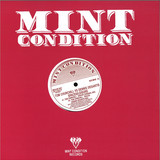
Mint Condition - A record label focused on excavating the outer fringes of classic House and Techno. Unreleased mixes, classics and overlooked gems mined from the last 20+ of contemporary dance music are the order of the day. From Chicago, Detroit and New York to London and beyond, Mint Condition have got their expert digging hats on to bring you exclusive heat and those rarer than rare jams that have been on your wants list for years! Dig in....
Back to 2002, the beginning of the new millennium. Tom Churchill's Headspace Recordings label had already been making an impact on the deeper strains of techno emanating from within the UK. With releases from detroit's Sean Deason, CiM, Hanna, Vince Watson and many more, Headspace was already a 'must check' label within record buying and DJ circles. This stellar split EP with NYC's Dennis DeSantis saw the pair remix each others tracks, both turning in very different, but equally complimentary sonic excursions. Churchill's 'Spaces' is surefire deep-space techno boogie of the highest order, swinging and funky and melodic in equal measure. The DeSantis remix of 'Spaces' is also a total winner, a stripped back exercise in expert minimalism, full of feeling and a perfect partner to the original mix. On the flip is Dennis DeSantis' 'Leisure', a sprawling and laconic broken house jam. Brilliant and teasing melodic synth motifs sit atop nagging acidic basslines and space. Again, the remix follows the original and Tom Churchill dials the track down into chasm deep shuffling drums and basslines and dubbed out FX. It's hard to think of an EP where two artists can remix each others music in such a compelling way, and for it to work so well. This is truly an excellent release and it's a real pleasure to see these tracks back on the streets. Sublime, and essential.
'Spaces / Leisure' has been legitimately re-released with the full involvement of Headspace Recordings for 2020 and remastered by London's Curve Pusher from the original sources especially for Mint Condition. 100% legit, licensed and released. Dug, remastered, repackaged and brought to you by the caring folks at your favourite reissue label - Mint Condition!