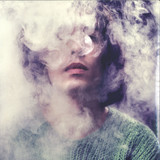
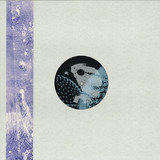
Dream Violence, Michael Beach’s fourth full-length, is an epic album that explores the duality of the human condition. Or, as Beach himself puts it, the album is about “human futility, passion, desire, anger, frustration, and the struggle to maintain hope in a somewhat hopeless time.” Dream Violence, then, addresses the existential crisis of being an artist in 2020.
Known for his work touring with the Australian guitar pop band Thigh Master and the late, brilliantly eccentric Israeli guitarist Charlie Megira, currently the focus of a number of reissues by the Numero Group, Beach is the architect of a sound that is both well-built and ramshackle, straightforward and indeterminably complex, out of the norm yet familiar in all the best ways.
Dream Violence unfolds like a revelation, filled with sonic tumbleweeds that reference Neil Young’s On the Beach, Bruce Springsteen’s Nebraska, the Velvet Underground’s Loaded, and the Go Betweens’ Before Hollywood. Influences ranging from the enigmatic outlier Megira to Glenn Branca to the Oblivians are combined to create a new, exhilarating sound, part of the path that Beach has been on since 2008’s Blood Courses. A veteran of year-end indie rock round ups beginning with Golden Theft in 2013 and continuing with Gravity/Repulsion, released in 2017, Beach distills the best of those early albums and adds sharpened intent.
Dream Violence works beautifully as a start-to-finish album. There are magnificent stand-alone moments: “Spring,” a raggedly building ballad that perfectly captures the ennui attached to new beginnings; “De Facto Blues,” a born-to-lose anthem that, says Beach, “is the sound of people totally at their wits end;” “Curtain of Night,” a simultaneously derelict and bright tribute to the late Megira, which sounds like it could’ve been cut at Muscle Shoals Sound Studio after the Rolling Stones wrapped up sessions for Sticky Fingers; and the delicately vulnerable “You Found Me Out,” which evokes equal parts Lou Reed and Joni Mitchell. On the latter, the lyrics “You found me out, on a ship at sea, you pulled me in, made a wreck of me,” encapsulate “the aimless of a modern world view in a future without hope and the draw/dependence of love in those times,” Beach explains.
Through music, Beach strives to convey both passion and compassion, energy and action. “My hope is that something gets communicated that makes people think outside of themselves or their surroundings,” he says. “To ask questions, and consider the effects of their decisions. To communicate some essential part of the human spirit that understands intuitively how to feel connected to each other rather than divide, exploit, separate, ignore, and all the other heinous shit we have the ability to do with each other.”
Recorded on two continents, Dream Violence documents Beach’s move from Oakland, California to Melbourne, Australia as he navigated a new music scene, plenty of bureaucratic red tape, and, ultimately, citizenship. Parts of the album were recorded and mixed at Tiny Telephone Recording in Oakland, at the end of a 2019 tour with Kelley Stoltz producing. Other tracks were recorded at Beach’s new home in Melbourne, where he could be “relaxed and sloppy in all the right ways,” and partially remixed at Phaedra Studios.
At the Memphis-based Goner label, Beach joins an increasingly unique roster of international musicians that reaches far beyond garage or indie rock to encompass artists like gospel singer Rev. John Wilkins, Kentucky rockers Archaeas, New Orleans iconoclasts Quintron and Miss Pussycat, and no-wavers Optic Sink.
Suche:the divide
Classic black vinyl, including DLC with estra track. "Here lies our ancient future, Deep England: our hope and compassion in the chokehold of power and glory.Hand in hand, here we cry our rage: summoning a lament into the ether, a divine androgynous force, a transcendental purge of the dizzying chaos of post-truth Britain." - Gazelle Twin & NYX. Gazelle Twin & NYX: electronic drone choir have announced details of their debut release, Deep England, an 8-track album out on vinyl, CD and digitally on 19 March 2021 via NYX Collective Records.Rooted in English pagan and sacred music, Deep England is an electronic-choral expansion of Gazelle Twin's 2018 album Pastoral (Anti-Ghost Moon Ray). Here, tracks from Pastoral, an album whose political themes have only intensified since its original release, are radically reworked and presented alongside original compositions by NYX, Paul Giovanni and William Blake.Gazelle Twin (aka Elizabeth Bernholz) and NYX, the electronic drone choir reshaping the role of the traditional female choir, originally created Deep England for live performance with Movement Director Imogen Knight, Sound Associate Peter Rice and Designer Chloe Lamford. The performance, described by The Times in their 4* review as a "spellbinding febrile techno-pagan pageant", premiered at the Queen Elizabeth Hall in November 2019. Deep England was transferred to the studio soon after, and the resulting album shows a powerful and often dreamlike Jarman-esque depiction of a country divided by its many selves. The performers are Adélaïde Pratoussy, Cecilia Forssberg, Elizabeth Bernholz, Natalie Sharp, Ruth Corey, Shireen Qureshi and Sian O'Gorman. The album was co-produced by Marta Salogni, Sian O'Gorman (NYX) and Elizabeth Bernholz (Gazelle Twin) with mix and additional programming by Marta Salogni, and mastering by Heba Kadry.
- A1: Darker Times
- A2: Monoculture
- A3: Le Grand Guignol
- A4: The Night
- B1: Last Chance
- B2: Together Alone
- B3: Desperate
- B4: Whatever It Takes
- C1: All Out Of Love
- C2: Sensation Nation
- C3: Caligula Syndrome
- C4: On An Up
- D1: Divided Soul
- D2: God Shaped Hole
- D3: Somebody, Somewhere, Sometime
- D4: Dancing Alone
- D5: Perversity
Soft Cell’s 2002 reunion album ‘Cruelty Without Beauty’ is set for reissue in new expanded and remastered 2CD format, as well as being released on vinyl for the very first time.
Long regarded by many fans as an overlooked masterpiece, the album features a lyrical outlook that was as true to Soft Cell’s maturity and perspective back in 2002 as it is relevant and accurate to the world situation in 2020. Harshly honest, fatalistic and bleakly humorous, Cruelty Without Beauty also preserves the band’s highly distinctive and edgy sound, and stands alongside their greatest work.
The new 2020 version includes tracks originally destined for the album, but for various reasons not on the final cut. It also includes brand new 2020 versions of album highlights Monoculture, Together Alone, Darker Times and Last Chance, updated this year by Dave Ball. Also included are a number of unreleased live versions of album tracks, plus rare remixes.
Cruelty WithoutBeauty, Soft Cell’s fourth studio album, and the first since their original split in 1984, happened after Marc Almond and Dave Ball reunited in the studio after Dave’s ‘other’ band The Grid (with Richard Norris). They worked with Marc on some tracks from his 1991 Tenement Symphony album, which eventually opened the door for some live Soft Cell dates and areunion in 2001. As well as this album release in 2002, the band toured thealbum extensively in the UK, and across Europe and the US, including many festival appearances throughout 2002 and 2003.
The album includes the singles Monoculture and a cover of Frankie Valli & The Four Season’s classic The Night, which became the band’s first Top 40 hit since since 1984.
Most recently in 2018, Soft Cell sold out London’s O2 Arena and were the subject of a career retrospective BBC documentary. They have recently signed to BMG and are currently recording a brand-new album, set for release in 2021. Before then, all of their classic Phonogram-era albums will be reissued in new expanded editions via Universal Music.
Marc Almond commented at the time of the album release ‘I always felt it was an unfinished story, and I’m glad we’re able to write another chapter’.
Dave Ball also commented ‘As soon as we work together, we become Soft Cell, you know’. I don’t know what the magic element is, but it just seems to be there’.
Multidimensional duo Divide and Dissolve release their third full length studio album ‘Gas Lit’ on Invada Records, produced by Ruban Neilson of Unknown Mortal Orchestra.
Divide and Dissolve members Takiaya Reed (saxophone, guitar, live effects) and Sylvie Nehill (drums, live effects) create instrumental music that is both heavy and beautiful, classically influenced yet thrillingly contemporary and powerfully expressive and communicative. Their music has the ability to speak without words and utilises frequencies to interact with the naturally occurring resonance.
The CD is presented as a digipack.
The vinyl is pressed on 180g Transparent Red vinyl and comes housed in a heavyweight spined sleeve with printed insert and digital download card.
‘We Are Really Worried About You’ presents a formidable saxophone sound giving way to a surge of crushing percussion and heavy guitar riffs. ‘Denial’ is a potent blend of Takiaya’s ominous and unsettling sax that blows wide open into riff city for almost eight glorious minutes. Both tracks encapsulate the message behind the music: to undermine and destroy the white supremacist colonial frameworks and to fight for indigenous sovereignty, black and indigenous liberation, water, earth and indigenous land given back.
For fans of James Baldwin, Osa Atoe, Adrienne Davies, the ocean and freshwater, breath/breathing, Toni Morrison, Octavia Butler, Afro futurism, indigenous futurism, indigenous sovereignty, slavery abolition, resistance, the forest, bodies of water, being submerged, the railroad and Ai Ogawa.
What is the utility of pain? Can it do anything but fester? In Ferneaux explores pain in motion, building audio-spatial chambers of experience and memory. Using an archive of field recordings from a decade of global travels, isolation gave Blanck Mass an opportunity to make connections in a moment when being together is impossible. The record is divided into two long-form journeys that gather the memories of being with now-distant others through the composition of a nostalgic travelogue. The journeys are haunted with the vestiges of voices, places, and sensations. These scenes alternate with the building up and releasing of great aural tension, intensities that emerge from the trauma of a personal grieving process which has perhaps embraced its rage moment. An encounter with a prophetic figure on the streets of San Francisco presented the question of "how to handle the misery on the way to the blessing." This is the quandary of the impasse we now all find ourselves in, trapped in our little caves, grappling with the unease of the self at rest - without movement, without the consumerist agenda of "new experiences." The possibility of growth, always defined by our connections with others, held in limbo. Sartre said that "Hell is other people," but perhaps this is the Inferno of the present: the space of sitting with the self. A blessing is often thought of as a future reward, above and beyond the material plane. With In Ferneaux, Blanck Mass wrangles the immanent materials of the here-and-now to build a sense of transcendence. Here, the uncanny angelic hymn sits comfortably beside the dirge. The misery and blessing are one.
- A1: So That The City Can Begin To Exist
- A2: The Celestial City
- A3: The Dead Outnumber The Living
- A4: Every Solstice & Equinox
- A5: Nothing Of The City Touches The Earth
- A6: Thirteenth Century Travelogue
- B1: The Divided City
- B2: Only Strings & Their Supports Remain
- B3: There Is One Of Which You Never Speak
- B4: Despair Dialogue
- B5: The Merchants Of Seven Nations
- B6: Desires Are Already Memories
- B7: Total Perspective Vortex
-LTD. MAGENTA VINYL-
What is the utility of pain? Can it do anything but fester? In Ferneaux explores pain in motion, building audio-spatial chambers of experience and memory. Using an archive of field recordings from a decade of global travels, isolation gave Blanck Mass an opportunity to make connections in a moment when being together is impossible. The record is divided into two long-form journeys that gather the memories of being with now-distant others through the composition of a nostalgic travelogue. The journeys are haunted with the vestiges of voices, places, and sensations. These scenes alternate with the building up and releasing of great aural tension, intensities that emerge from the trauma of a personal grieving process which has perhaps embraced its rage moment. An encounter with a prophetic figure on the streets of San Francisco presented the question of "how to handle the misery on the way to the blessing." This is the quandary of the impasse we now all find ourselves in, trapped in our little caves, grappling with the unease of the self at rest - without movement, without the consumerist agenda of "new experiences." The possibility of growth, always defined by our connections with others, held in limbo. Sartre said that "Hell is other people," but perhaps this is the Inferno of the present: the space of sitting with the self. A blessing is often thought of as a future reward, above and beyond the material plane. With In Ferneaux, Blanck Mass wrangles the immanent materials of the here-and-now to build a sense of transcendence. Here, the uncanny angelic hymn sits comfortably beside the dirge. The misery and blessing are one.
An album of our times, Newcastle band Maximo Park return with
their seventh full length, ‘Nature Always Wins’.
The album arrives as something of an examination, zeroing in on the
notion of the self, identity as a band and that of humanity as a
whole. The album’s title nods to the famous Nature vs Nurture
debate. Discussing whether change is capable under the influence of
time, perspective, environment or if we are destined to be bound by
our own genetics, it asks, “who are we, and who do we want to be,
and do we have any control over it?”
“I’m so happy we were able to make this album during lockdown, as
it’s been a challenging time for everyone. After almost 4 years since
‘Risk To Exist’, we wanted to explore new musical territory (for us)
without sacrificing our trademark melodic twists and heartfelt lyrics.
As always, the passing of time looms large, although the songs
contain more affection for the past than before, and there are
occasional hints of the fractious, divided time that we live in.” -
frontman Paul Smith
Produced by Atlanta-based Grammy-winning producer Ben Allen
(Animal Collective, Deerhunter), who afforded the band freedom to
play and create. What wasn’t anticipated was how that freedom
would be soon be stripped, as lockdown restrictions left the band
recording remotely across Newcastle, Liverpool and Atlanta with
audio files bounced back and forth, 4000 miles across the world.
An album of our times, Newcastle band Maximo Park return with
their seventh full length, ‘Nature Always Wins’.
The album arrives as something of an examination, zeroing in on the
notion of the self, identity as a band and that of humanity as a
whole. The album’s title nods to the famous Nature vs Nurture
debate. Discussing whether change is capable under the influence of
time, perspective, environment or if we are destined to be bound by
our own genetics, it asks, “who are we, and who do we want to be,
and do we have any control over it?”
“I’m so happy we were able to make this album during lockdown, as
it’s been a challenging time for everyone. After almost 4 years since
‘Risk To Exist’, we wanted to explore new musical territory (for us)
without sacrificing our trademark melodic twists and heartfelt lyrics.
As always, the passing of time looms large, although the songs
contain more affection for the past than before, and there are
occasional hints of the fractious, divided time that we live in.” -
frontman Paul Smith
Produced by Atlanta-based Grammy-winning producer Ben Allen
(Animal Collective, Deerhunter), who afforded the band freedom to
play and create. What wasn’t anticipated was how that freedom
would be soon be stripped, as lockdown restrictions left the band
recording remotely across Newcastle, Liverpool and Atlanta with
audio files bounced back and forth, 4000 miles across the world.
Houston’s reputation for developing first-class jazz acts is well-established, as a stream of young players have been distinguishing themselves for decades…among those musicians and mentors who stood tallest, Bubbha Thomas was no exception (and a major key-player) in this long tradition of talent.
Before becoming an artist and educator, Bubbha Thomas (born 1937) was a Fourth Ward kid who grew up in a music-filled household. In High School he divided his time between music & basketball (he excelled at both) and studied with jazz legend Conrad “Prof” Johnson. “Prof” would later bring jazz glory to Texas with the Kashmere Stage Band, the group of teenagers who would win the “Best High School Stage Band In The Nation” prize in Mobile, Alabama in 1972 and who were anthologized in 2006 on Now-Again’s ‘Thunder Soul’ (which led to the 2010 Jamie Foxx documentary of the same name).
After finishing college, Bubbha got drafted in the service (he was a Korean War veteran) and would return to Houston in the early 1960s where he found work as a session drummer for the Duke and Peacock labels. Thomas drummed on recordings by O.V. Wright, Buddy Ace and the Mighty Clouds of Joy. He was playing his own stuff and backing luminaries such as R&B singer Chuck Jackson and homegrown legends like Lightnin’ Hopkins. Bubbha Thomas also teamed up with some of his equally legendary peers (like guitarist Melvin Sparks & organist Leon Spencer) and eventually established his own group, the Jazz Merchants.
Bubbha learned every style that was thrown at him and he played straight-ahead jazz with renowned artists before the political and social upheaval of the late 1960s led him to a path first charted by Coltrane and Sun Ra…the result of these new found influences was the incredible spiritual jazz ensemble ‘The Lightmen’, who released four incredible recordings in the 1970s. Their first album ‘Free As You wanna be’ predates the deep-set, maverick jazz issued by the likes of Tribe and Strata East and is a harbinger of some of the best in the 1970s jazz underground. The Lightmen albums eventually fell out of print until 2017 when the Now-Again record label brought them back into circulation and generated new interest in Bubbha Thomas’ work.
Thomas had a storied career as a drummer and bandleader, but perhaps his most enduring work is that as founder of Houston’s Summer Jazz Workshop, a remarkable program that nurtured upcoming talent for generations...we can’t begin to count the number of young people who benefitted from the exposure to music-arts because of Bubbha Thomas and what he meant to the Houston music community. In his career he earned five Grammy nominations and authored a pair of books. Next to this he was also a writer/editor for several local newspapers, ran one of the first Houston African American Television shows and he hosted a radio program on KYOK. Impressive to say the least!
Bubbha Thomas passed away in March 2020 at the age of 82. It was obvious he was a principled, fiery & wise person…and any anger he felt at America’s (and the world’s) injustices he met with music, intellect, activism and unity!
Next to his work with ‘’The Lightmen’’, Bubbha also released the fantastic (solo) album ‘Life & Times’ in 1985. ‘Life & Times’ (which we are proudly presenting you today) is particularly interesting to boogie-enthusiasts because of its high doses of funky twerks, solid grooves, crazy synth work, soulful vocals and excellent drum-beats courtesy of Mr. Thomas himself. You’ll quickly find yourself shaking hips the moment the needle hits the first track! The whole album is backed by a fantastic cast of all-star players and includes Howard Harris (Ruth Copeland), Dwight Sills (Bobby Lyle - TLC), Jerry McPherson (Donna Summer), Leo Polk (Kashmere Stage Band), John Gordon (Strata East) and Jackie Simley (Queen Latifah - Lionel Richie). All of the above makes this LP an essential purchase for any self-respecting fan and collector.
Tidal Waves Music now proudly presents the FIRST ever vinyl reissue of this fantastic album (originally released in 1985 on Lightin’ Records). This rare record (original copies tend to go for large amounts on the secondary market) is now finally back available as a limited 180g vinyl edition (500 copies) complete with the original artwork.
In 1976 Rolling Stone called prog-rock pioneers Crack The Sky ‘one of year’s most impressive debuts.’ Today, 40+ years later, the band releases a new studio album entitled Tribes, due out in January 2021.
The title track speaks volumes about modern society’s perpetual cultural divide, wherein each side believes its inalienable right to champion the only opinion that matters.
Side 4 of the album includes bonus tracks from Crack The Sky’s catalog, not available on the digital or CD versions.
Tappa Zukie (David Sinclair) born 1955 Kingston,Jamaica actually cut his first record in England,after being sent there aged 17.
He was breaking from his troublesome past that found him running with the rough crowd on the streets of Kingston. On his arrival in sunny Ladbroke Grove London, producer Bunny Lee called him up on stage at a local dance to sing a tune. Impressed with the results fellow producer Larry Lawrence got the young Tappa in the studio the very next day and cyt 'Jump and Twist'.
This led to cutting his 'Man I Warrior' album,but somewhat disillusioned and homesick he returned to Jmaica shortly afterwards.
But this venture in the Uk was to pay dividends,seeing his 'I Man Warrior' album receive great reviews on its release.
We have collected together some great lost treasures and some alternative cuts to some of Tappa'sbetter known releases.
Mr Zukie, DJ/Toaster/Producer Roll the tape one more time if you please.......
Another Killer Ep by the duo behind Suburban Avenue label is coming. Liquid Love is the first part of a collection of works divided in two releases.
Acid, Raw, 90’s inspired Techno missiles,with a modern touch and high-pressure explosiveness. Times are hard, but the team is solid: It’s now time to Resist, once again.
- A1: Endangered Species
- A2: Living Dead
- A3: Countdown
- A4: Ambition
- B01: Fear Of Girls
- B02: Lie Down And Die
- B03: Down On The Farm
- B04: Sensitive Boys
- B05: Divide By 8 X 5
- C01: Ice Age
- C02: I Robot
- C03: Flesh Wound
- C04: Plan Of Action
- C05: I Don't Need Your Love (Charlie)
- D01: Countdown (Demo)
- D02: Ambition (Demo)
- D03: Divide 8 X 5 (Demo)
- D04: Sensitive Boys (Demo)
- D05: I Don't Need Your Love (Alvin)
Demon’s double 10” vinyl reissue series of the U.K. Subs early albums continues with the bands fifth LP “Endangered Species”.
Originally released in 1982, and available for the first time as a double 10” including 7 non LP bonus tracks. Includes the single “Countdown”, and “Down On The Farm” as covered by Guns N Roses
In the opinion of vocalist Charlie Harper, this is the best record the band ever recorded. Each member has provided personal notes on their memories of the album in the gatefold sleeve. The inner bags contain lyrics to all the songs and previously unpublished photos by Andy Phillips
Having studied the complicated art of dreaming on Live At The Robert Johnson earlier this year, DC Salas returns with another remarkable clutch of cosmic excursions. Linking up with long-standing Parisian chic beat connaisseurs Slowciety, it's time for Salas to show us a little 'Exquisite Chaos'…
Presentation (long version)
The clue is in the title; 'Exquisite Chaos' is smooth, classy, hi-definition piece of intergalactic drama. Sweeping synths, rocket-fuelled kicks and a bassline that could circumnavigate the universe many times over without needing to refuel, it's a classic DC Salas trip, the likes of which we've soaked up on labels such as Correspondant, Nein, BPitch and beyond.
It's backed up by the poignantly titled 'Undivided'. A call for unity, it's rattled with acid and sinewy synth lines all thrusting upwards with the positivity we missed for so long this year. Finally 'Forgotten Memories' if a full-on march into a neon unknown. Complete with flying flurries of breakbeats and rasping acid missives, it wraps up Salas's chaos theory exquisitely…. And it's backed by a remix from Roman Flügel.
Ensuring the EP climaxes with a fitting bang Flügel divides 'Undivided' into three movements, each one more bulldozing than the last. Supercharged with venomous acid and neck-snap breakbeats, it's Flügel at his most chaotic. And Slowciety at their most exquisite. We wouldn't expect anything less from DC Salas.
- A1: Intro
- A2: Say The Name
- A3: 96 Neve Campbell (Feat Cam & China)
- A4: Something Underneath
- B1: Make Them Dead
- B2: She Bad
- B3: Pain Everyday (With Michael Esposito)
- C1: Check The Lock
- C2: Looking Like Meat (Feat Ho99O9)
- C3: Eaten Alive (With Jeff Parker & Ted Byrnes)
- D1: Body For The Pile (With Sickness)
- D2: Enlacing
- D3: Secret Piece (Composed By Yoko Ono)
In the horror genre, sequels are perfunctory. As the insufferable film bro Randy explains in Scream 2, "There are certain rules that one must abide by in order to create a successful sequel. Number one: the body count is always bigger. Number two: the death scenes are always much more elaborate-more blood, more gore. Carnage candy. And number three: never, ever, under any circumstances, assume the killer is dead." Last Halloween, Los Angeles experimental rap mainstays Clipping ended their three-year silence with the horrorcore-inspired album There Existed an Addiction to Blood. This October, rapper Daveed Diggs, and producers Jonathan Snipes and William Hutson return with an even higher body count, more elaborate kills, and monsters that just won't stay dead. Visions of Bodies Being Burned is less a sequel than it is the second half of a planned diptych. It turns out, Clipping took to the thematic material of horrorcore like vampires to grave soil. Before the release of There Existed an Addiction to Blood, Clipping and Sub Pop Records divided the material up into two albums, designed to be released only months apart. However, a global pandemic and multiple cancelled tours pushed the release of the project's "part two" until the following Halloween season. Visions of Bodies Being Burned contains sixteen more scary stories disguised as rap songs, incorporating as much influence from Ernest Dickerson, Clive Barker, and Shirley Jackson as it does from Three 6 Mafia, Bone Thugs-N-Harmony, and Brotha Lynch Hung. Clipping's angular, shattered interpretations of existing musical styles are always deferential, driven by fandom for the object of study rather than disdain for it. Clipping reimagine horrorcore-the purposely absurdist hip-hop subgenre that flourished in the 1990s-the way Jordan Peele does horror cinema: by twisting beloved tropes to make explicit their own radical politics of monstrosity, fear, and the uncanny. The album features a host of collaborators: Inglewood's Cam & China, fellow noise-rap pioneers Ho99o9, Tortoise guitar genius Jeff Parker, and experimental LA drummer Ted Byrnes. The final track, "Secret Piece," is a performance of a Yoko Ono text score from 1953 that instructs the players to "Decide on one note that you want to play/Play it with the following accompaniment: the woods from 5am to 8am in summer," and features nearly all of the musicians who appeared on both albums. Since their last album, Daveed Diggs-the group's Tony and Grammy Award-winning rapper-has starred in the TNT science fiction series, Snowpiercer, voiced a character in Pixar's Soul, and portrayed Frederick Douglass in Showtime's The Good Lord Bird. Writer Rivers Solomon's novella based on Clipping's Hugo-nominated song "The Deep" has been nominated for the Nebula, Hugo, and Locus Awards, and won the Lambda Literary Award for best LGBTQ SF/Fantasy/Horror novel. Clipping's song "Chapter 319"-a tribute to George Floyd (AKA Big Floyd) the former DJ-Screw affiliated rapper who was murdered by police officers in May of 2020-was released on Bandcamp on June 19th and raised over $20,000 for racial justice charities. A clip of the song also became a popular meme on TikTok, generating over 50,000 videos in which teenagers rapped the song's lyrics ("Donald Trump is a white supremacist, full stop_") directly into the frowning faces of their conservative parents. The band also contributed a Skinny Puppy-esque rework of J-Kwon's "Tipsy" to Save Stereogum: An '00s Covers Comp.
- A1: Intro
- A2: Say The Name
- A3: 96 Neve Campbell (Feat. Cam & China)
- A4: Something Underneath
- A5: Make Them Dead
- A6: She Bad
- A7: Pain Everyday (With Michael Esposito)
- B1: Check The Lock
- B2: Looking Like Meat (Feat. Ho99O9)
- B3: Eaten Alive (With Jeff Parker & Ted Byrnes)
- B4: Body For The Pile (With Sickness)
- B5: Enlacing
- B6: Secret Piece
In the horror genre, sequels are perfunctory. As the insufferable film bro Randy explains in Scream 2, "There are certain rules that one must abide by in order to create a successful sequel. Number one: the body count is always bigger. Number two: the death scenes are always much more elaborate-more blood, more gore. Carnage candy. And number three: never, ever, under any circumstances, assume the killer is dead." Last Halloween, Los Angeles experimental rap mainstays Clipping ended their three-year silence with the horrorcore-inspired album There Existed an Addiction to Blood. This October, rapper Daveed Diggs, and producers Jonathan Snipes and William Hutson return with an even higher body count, more elaborate kills, and monsters that just won't stay dead. Visions of Bodies Being Burned is less a sequel than it is the second half of a planned diptych. It turns out, Clipping took to the thematic material of horrorcore like vampires to grave soil. Before the release of There Existed an Addiction to Blood, Clipping and Sub Pop Records divided the material up into two albums, designed to be released only months apart. However, a global pandemic and multiple cancelled tours pushed the release of the project's "part two" until the following Halloween season. Visions of Bodies Being Burned contains sixteen more scary stories disguised as rap songs, incorporating as much influence from Ernest Dickerson, Clive Barker, and Shirley Jackson as it does from Three 6 Mafia, Bone Thugs-N-Harmony, and Brotha Lynch Hung. Clipping's angular, shattered interpretations of existing musical styles are always deferential, driven by fandom for the object of study rather than disdain for it. Clipping reimagine horrorcore-the purposely absurdist hip-hop subgenre that flourished in the 1990s-the way Jordan Peele does horror cinema: by twisting beloved tropes to make explicit their own radical politics of monstrosity, fear, and the uncanny. The album features a host of collaborators: Inglewood's Cam & China, fellow noise-rap pioneers Ho99o9, Tortoise guitar genius Jeff Parker, and experimental LA drummer Ted Byrnes. The final track, "Secret Piece," is a performance of a Yoko Ono text score from 1953 that instructs the players to "Decide on one note that you want to play/Play it with the following accompaniment: the woods from 5am to 8am in summer," and features nearly all of the musicians who appeared on both albums. Since their last album, Daveed Diggs-the group's Tony and Grammy Award-winning rapper-has starred in the TNT science fiction series, Snowpiercer, voiced a character in Pixar's Soul, and portrayed Frederick Douglass in Showtime's The Good Lord Bird. Writer Rivers Solomon's novella based on Clipping's Hugo-nominated song "The Deep" has been nominated for the Nebula, Hugo, and Locus Awards, and won the Lambda Literary Award for best LGBTQ SF/Fantasy/Horror novel. Clipping's song "Chapter 319"-a tribute to George Floyd (AKA Big Floyd) the former DJ-Screw affiliated rapper who was murdered by police officers in May of 2020-was released on Bandcamp on June 19th and raised over $20,000 for racial justice charities. A clip of the song also became a popular meme on TikTok, generating over 50,000 videos in which teenagers rapped the song's lyrics ("Donald Trump is a white supremacist, full stop_") directly into the frowning faces of their conservative parents. The band also contributed a Skinny Puppy-esque rework of J-Kwon's "Tipsy" to Save Stereogum: An '00s Covers Comp.
After their 2016 dancefloor burner "Jump," Poirier and Red Fox are pairing up once again for "Pull Up Dat" taken from Poirier's new album "Soft Power." Rooted in a dancehall style, "Pull Up Dat" is full of good vibes with Red Fox confidently leading the dance. Poirier brings a modern touch that relates to the 90's dancehall scene. On the B-side, Patexx is all about delivering an uplifting message with the collaboration "Unity & Strength." As Patexx says at the beginning of the song: "United we stand, divided we fall." Then on the remix tip, young and upcoming producer SIM from Montréal flexes to new heights, turning "Pull Up Dat" into a set-ready banger.
With his first album dating back to 2001, Poirier is a prolific, creative and eclectic Canadian producer / musician with a 20 year journey of creating music. Constant in his albums and DJ performances is a desire to build bridges between different languages, communities, and cultures. His open, uninhibited musical mind means that his works bend boundaries, resulting in compositions that mix several styles and eras. He has now produced a total of 11 albums and many EPs with labels such as Ninja Tune, Nice Up Records and, more recently, Wonderwheel Recordings. Active in Montreal, his successful monthly dance party Qualité de Luxe is dedicated to African and Caribbean music, attracting crowds for over six years. Poirier is also the man behind Bounce le Gros and Karnival, parties with legendary status in Montreal nightlife history.
"Pull Up Dat" is available digitally as a single pack and as a limited edition 7" vinyl record on September 25th, 2020.
Following the first episode, Drivecom presents the second part of the Generative Operations series. It continues with the dark,
technical and minimal concept of music mixed toguether with contemporary, cinematic elements and experimental sounds and textures.
The vision and workflow keeps up the same vibe as with the first ep and you will find more synth lines involved into a generative structure from complex and massive modular patches. The sequencing is always different each time every track is being played back giving us a unique listening.
About the sound design all the tracks have a cinematic vibe as in the first 12”. Always looking for a situation where cinema meets electronic music as being planned as a film sound track. Also constructed from the point of view of a minimalistic vision, you’ll find long progressions and small details focused in electro rhythms as a basic and main structure.
In the other hand all the tracks have a common target: a cinematic vibe. As if they were composed thinking about to fit in any sci-fi thriller movie. Again we can hear massive granular sythesis pads, background noises, experimental compression routines that help to fullfill the Generative Operation series.
The limited edition vinyl has been pressed in 180gr. keeping up the analog character sound in this format, meanwhile the digital version will be a clearer and clinical one.
The wind of change is blowing strong again in late 2020. Wich statement fits such worldwide transformation? We don ́t know, but we keep blending & interacting different cultures. One 7“ vinyl, two sides of the story. El Mago from Greece is hooking up with south american native ceremonials. The Berlin/Thessaloniki based ritual master (down)beats all strains of cultural appropriation with smart style and groove straight outta subcultistan. Followed by Mettabbana from the divided states of America, editing sahrawi classic on liberation, hope & vision. Seductive repetitions, subtle as the saharan sands, riding on trance- inducing guitar loops, arabic percussion & harmonies. This vinyl will last longer & will survive our thoughts and needs. For any queries: the answer, my friend, is blowing in the wind.
Following the Turner Street Sound collaboration with Rings around Saturn, Melbourne producer and DJ Midnight Tenderness presents his second offering to Butter Sessions, Digi Modes. Throughout, Midnight Tenderness maintains his fixation with dub-wise rhythms and heavenly melody, delivered with his signature silky smooth production.
Digi Modes begins with the complementary pairing of tracks Crosswinds and Dub Dreams which feature on the limited yellow 7". Crosswinds is a bright medley of garage breaks against hazy synth-work that gently inhales and exhales. Dub Dreams, as its title affirms, is a mirage of sweeping synth loops and chattering rhythms. Elastic Dub is a more traditional homage to early dub works of the 1980s, marked by persistent echoes and rumbling bass that divides and conquers. Reflexitones, and the EP's endnote Regent St Dub, both add a sprinkle of house and electro, primed for a discerning dance floor or perhaps for now, a dance at home. As a whole, Didi Modes is an affirmation of Midnight Tenderness' mastery to adopt and adapt acquainted sounds in a unique way.
- A1: East Man & Streema - Know Like Dat
- A2: East Man & Mic Ty - Everybody Knows
- A3: East Man & Fernando Kep - Ouroboros
- A4: East Man & Lyrical Strally - Ten Ton Riddim
- A5: East Man & Ny Ny - Boys
- A6: East Man & Whack Eye - Who Am I?
- B1: East Man & Eklipse - East Man Theme (Reprise)
- B2: East Man & Darkos Strife - Wow How?
- B3: Ease Up
- B4: Look & Listen (Part 2)
- B5: Machine Gun
- B6: Hi Tek Theme
'Prole Art Threat' is producer Anthoney Hart's second LP for Planet Mu under his East Man alias, after 2018's well received debut 'Red White & Zero'. It brings together a set of MCs from all over London, Darkos and Eklipse from East London and Lyrical Strally from near Feltham who were on the first album, Ny Ny and Mic Ty also from East London, Streema and 'Vision Crew' member Whack Eye from Lewisham plus Fernando Kep, an MC from the burgeoning Brazil grime scene. They work across a cohesive set of tight riddims forged from thoughtful amalgams of grime, dancehall and drum & bass. The album takes its name from a Fall song/mission statement of the same title, the band being self-consciously working class and led by a brilliant autodidact in Mark E Smith. East Man relates that the title is to be taken as “a reflection of working-class creativity and how the establishment marginalise us and (perhaps on a subconscious level) see us as a threat.” Les Back, author of 'The Art of Listening' and 'Out of Whiteness: Color, Politics and Culture (with Vron Ware)' contributes liner notes to the record: East Man understands the force and the democracy of the mic. Listening to Prole Art Threat is like being at a dance. As the mic is passed between each of the MCs, a different tale is ‘elevated... off the map’ as Ny Ny puts it. We hear instalmentsfrom Forest Gate, Lee, Lewisham and Manor Park as these ‘lyrical gaffers’ and ’top boys and girls’ tell tough stories of life under the scrutiny of the ‘Feds’ in a brutal and divided city. The bars and rhymes document what it means to live here; from the double standards applied to the sexuality of young girls and boys to the corrosive violence of everyday life. All this is dissected without compromise. This is not just aLondon story though, the inclusion of Fernando Kep from the burgeoning Grime scene in Brazil is evidence of the outernational reach of the music. The tracks on East Man’s album explode the wilful ignorance of those who see ‘the working class’ in contemporary London as code for whiteness. This is the sound of a proletarian urban multiculture, made from Caribbean and African influences, sound system culture, pirate radio and the inexorable rhythms of Grime, Drum & Bass, Techno and Dancehall. It is the stirring of the "white" & "black" working classes who are living together and coming together on their own terms in sound. ‘Making music because you love it... what the fuck else could you do?’ as East Man says. The tracks and voices you are holding in your hands are, as a result urgent, vital, as hard nails and twice as sharp.
Artist previously known for his work as “Mirage Man” returns as “Kaltstam” presenting a three tracker of techno and electro jams.
The streamlined yet gloomy opening track “Reach 4 the heat only if you’re bustin’” sets an energetic tone for the release to start with. This should cater your needs easily if you’re into dancing in the more aggressive manner.
“The Divide” interprets nordic melancholy in the form of trancey pads, echoed stabs and a distorted bass drum. An observant listener might pick up some classic breakbeat vibes from the drum section as well.
“Cattle prod” is the oddball of the trio. Is it nu school breaks? Is it electro? Does it bang? ... Find out by listening to the title track of the record. - Play it fast or slow, it’s your call.
What is Randolph & Mortimer? A folk duo, a pair of accountants, a techno act…a law firm? What started off as an ‘art project’, influenced by 80s Industrial, 90s rave music and inspired by the documentaries of Adam Curtis, has morphed into a full on New Beat / Body Music dance-floor moving machine. Their studio releases have gained support from some of the biggest underground DJ’s in the world like Ancient Methods and gone on to top various genre sales charts on Bandcamp. Whilst the R&M live shows have seen them share bills with Godflesh, Youth Code, PIG and 3Teeth.
In 2019 it was time for R&M to throw a marker down and so came “Manifesto For A Modern World”, the debut album comprised of tracks from the “$ocial £utures”, “Hope Tragedy Myths” and “Citizens” EP’s plus some additional songs. This album is basically a greatest hits of Randolph & Mortimer. A statement of intent. All killer and no filler. The original limited edition CDs and tapes sold out and it had some incredible reviews. A Model Of Control called it “An absolutely outstanding release” and super cool New York DJ Andi Harriman (Synthicide) made it one her of top 10 albums of 2019 on Post-Punk
So here we are in 2020 and the Randolph & Mortimer story has seriously stepped up a gear with this double vinyl version of the album featuring all Manifesto tracks plus the acid styled dance-floor favourite “Apply Yourself” and four brand new tracks (“Crystal Peaks”, “Stateless”, “What Are You?”, “Fantasy Land”) which make up a whole new EP.
Limited edition of 400 copies with folded poster/insert and sticker.
Various Artists: Lisene, Hartta, Sourpuss & Interplanetary Criminal
"Banoffee Pies Records" drop the 13th release in the original series. This VA aptly entitled "Common Ground" is a crossover of influences from 4 artists with a selection of tracks all above 150 bpm from producers of a similar generation giving a nod to their youth and early musical journeys, largely inspired by Drum & Bass and Jungle raves across the UK.
The release divided in two with a Dark A side and Light B side offering parallel moods of depth and liquidity. The opening track "Class Of '92" from Lisene, one half of the Space Cadets duo, with previous releases on Seven Hill Records and an EP lined up with Planet Euphorique later this year, pushes complex drum patterns and pulsing synths evolving in energy levels throughout. The A2 from Bristol based Hartta offers a more spooked out bass heavy cut with "Hauntology", ready for powerful system rumbling.
The B side begins with title track "Common Ground", an ode to dusted jungle and liquid drum & bass from Leeds based Sourpuss, known for running the Stretchy Dance Supply parties, - this track serving hedonistic eye rolling gurner euphoria, sounding more like an og 90's prodcution. The last track on the disc "Vapour" comes from Manchester's Interplanetary Criminal. With his UKG EP "Move Tools" on BP010 landing on the label and many dance floors at the end of 2019, this nostalgic drum scattered jungle cut stylishly closes off the compilation. Ltd. Press. BP x
Mastered: Optimum, Pressed: MPO & Distributed by KUDOS.
new quartet by Samuel Rohrer, Max Loderbauer, Stian Westerhus & Tobias Freund In the present era of media saturation, the artist's dilemma has shifted away from the question whether to fuse disparate stylistic elements, towards the decision of which energies to draw upon: a situation most rewarding for those who listen to musicians navigating this limitless terrain. One such journey, the captivating full-length release from Samuel Rohrer's new Kave quartet coming out this May, is bringing together players who are equally well-versed in the quick-thinking mechanics of free group improvisation and the compositional strategies of contemplative / ‘ambient’ electronic music. With Rohrer acting as creative director and most of the quartet sharing synthesizer duties, there’s a strong sense of unified purpose to this set, and a narrative flow that never causes the listener to focus on one constituent part at the expense of the whole. At the same time, the players know all well that cohesion counts for little without those constituent parts being compelling in their own right. Rohrer and Loderbauer, for example, have previously crafted a unique techno-organic approach with the Ambiq trio, and the lessons learned from that partnership are put to inspired use within this new configuration. Stian Westerhus’ contributions on guitar and vocals, along with Tobias Freund’s electronic reinforcements - Freund also has worked since many years with Max Loderbauer as NSI - all conspire to make something that Rohrer aptly compares as “forest”-like. It’s a descriptor that will have vastly different meanings for each listener. For Rohrer, it refers to music that is confident in the “deep-rootedness” of its foundations and defined by a density and mystery easily confused with darkness, while nevertheless proving its bright vitRight away, on the introductory odyssey 'Cambium' the quartet sets out to make good on this metaphor, creating a hypnotic foundation for what is about to unfold during the next 42 minutes, with brooding, slow, 'searchlight in a fog,' synth washes and percussive stridulation. The twin 'Hibernation' tracks show all the unique elements beginning to coalesce: the emotional tenor is one of vulnerability that melts into the determination of 'staring into the void', a temperamental state challenging to represent authentically in music. The atmosphere of psychic challenge effort lessly gives way to the faintly nostalgic glimmers of 'Giant Peach' - a literary reference to the macabre whimsy of Roald Dahl. The ultimate dissolution of barriers between organicism and synthesis is accomplished on the majestic 'Divided We Fall', a title referring to Westerhus’ smoky vocalization that winds into a double helix formed from electronic surges. Again, the ease with which it all comes together is mesmerizing, and while there’s an aura of risk accompanying this walk through the woods, there’s a much more enduring impression of carefully orchestrated growth and change.
It goes without saying that the global metal scene would not be the same without Sepultura. For 35 years now, the Brazilian icons are not only a band revered worldwide; they have been, are and forever will be at the very forefront of Thrash Metal, trailblazing ever since they released their long-since legendary debut album “Morbid Visions” in 1986.
While quickly establishing themselves as leaders of the second wave of Thrash already in the late eighties, to this day they never came even close to stagnation. “Quadra”, their mighty new undertaking, is proof of a will unbroken, a thirst unquenched and a quality so staggeringly high it’s a wonder this band doesn’t implode. Now three albums deep into what may very well be their strongest incarnation yet – uniting the talents of old-school members Andreas Kisser (guitars, vocals) and Paulo Xisto Pinto Jr. (bass), vocal force of nature Derrick Leon Green (vocals) and drummer Eloy Casagrande – Sepultura are an unleashed power to be reckoned with, uniting bucketloads of experience and youthful vigour in a totally revived way.
“On ‘Quadra’, we felt the urge to revisit that old thrash feeling of ‘Beneath the Remains’ or ‘Arise“,’ only seen through the eyes of today,” Andreas Kisser utters the magic words. “Add to that the tribal percussion, the orchestral elements, the choirs, the melodies and the clean vocals and you get a thorough run-through of our entire career, backed by a very contemporary approach.” Fuelled by an energy almost uncanny for a band that has been active for so long, Sepultura storm through a contemporary thrash monument, backed by sublime melodies, a very eerie atmosphere and a fiendishly high level of technicality. Kisser is appreciating these compliments, still maintaining his very down to earth approach. “We don’t heed the past and we don’t try to be preoccupied by the future too much,” he shrugs. “We’re in the now, trying every day to make Sepultura a little bit better. That’s what keeping us strong.”
And that’s what they have been doing for the last 30+ years. Album after album, tour after tour, no gap in between records longer than three years. “Music is all we do,” Kisser states matter-of-factly. “If it wouldn’t be for Sepultura,” he laughs, “I would be a sad and lonely guy. Sepultura is what we are.” And “Quadra” is living testimony to that. The old Sepultura echo through the very fibre of the songs in all its raw and morbid splendour, but yet it’s the present, the experienced and refined beast that is Sepultura in 2020 that’s blasting out thrash metal anthems for a fucked-up age.
With now 15 albums under their belts, Sepultura are the work horses of the metal world, always ready to attack. In many ways, “Quadra” broadens the vision the Brazilian thrash troopers had on “Machine Messiah” (2017), again relying on the impeccable talent of Swedish producing giant Jens Bogren and his Fascination Street Studios. “He is so full of passion, it’s unbelievable, man,” Kisser raves. “He’s really there, he really cares about the projects he’s doing. For Sepultura, he’s like the fifth member of the band. The chemistry was so amazing, 99 percent of what we were trying do to actually worked. That was insane!” Even after more than 30 years at the forefront of international thrash, guitarist Kisser sounds positively baffled by working with Bogren. “We felt like we were in our rehearsal room.”
Bringing together a monumental grandeur and a wild, untamed ferocity, Sepultura stepped up their game musically – and conceptually as well. “We were possessed by the number four, by the numerology of it”, Kisser starts to explain. “I divided the album into four parts as if we were doing a double vinyl. Side one is the pure and raw thrash side. Side two brings in the rhythms and percussion from our ‘Roots’ era. Three is getting a bit experimental and four brings forth the melodies and the acoustic guitars.” With John North’s book “Quadrivium” as a further source of inspiration, Sepultura dive deep into a mystical world full of hidden meanings. “You have four seasons and twelve month in a year just to pick one example. A lot of stuff in our culture is divided like that.”
Plus, Quadra also is the Portuguese word for ‘sport court’ that by definition is a limited area of land, with regulatory demarcations, where according to a set of rules the game takes place,” he adds. “We all come from different Quadras. The countries, all nations with their borders and traditions; culture, religions, laws, education and a set of rules where life takes place.” In the Quadra of thrash, however, we all are the same. And we bow our heads in unison to the mighty leader that is Sepultura.
On his new record "Companionship", London-based Soft-Rock, Soul and Disco artist Joel Sarakula keeps the mood easy and the grooves deep. Ten new songs see Sarakula develop a deeper, more introspective lyrical style from his previous works as he celebrates and laments friendships, love and loneliness. Interspersed with a few standout up-tempo tracks to keep the ship sailing, "Companionship" is a chill-out album and listening experience of the highest order.
"Companionship" opens with "Midnight Driver", a driving soft-rock fantasy where the narrator laments his partner's nocturnal habits: 'When she's coming up, it gets me down'. The Californian sun-kissed guitars, vocal stylings and percussion all help to set a cinematic mood which unsurprisingly also makes it a great driving song. On the introspective "King Of Clowns", Sarakula creates a pop song that calls to mind the craftmanship of Hall & Oates and Elvis Costello. Both an admission of guilt and an unapologetic statement of intent, his low vocal careens in the dangerous divide between self-pity and self-parody: "My bad decisions worked out for a while, I'd do my dance tried to make you smile, I'll never wise up it's just the way I am". These confessions all occur over a down-tempo funk groove complete with some vintage synthesizer musings that makes the track ready to be sampled for a hip-hop record.
"Sunshine Makes Me" steps straight out of its mid-1970s swimming pool, heavily dripping in jazz fusion to dry off in the cold light of today's sunshine. The chorus is a mantra of desire, needs and reality that sees Sarakula sing 'Sunshine makes me lose my mind, thirty degrees and my eyes get so wide. Dreaming big and living slow, don't you know that time is on our side". On "Companionship", Joel Sarakula, prolific writer, producer, performer and multi-instrumentalist finally unleashes his chill-out pretensions. In this follow up to the critically acclaimed "Love Club" (2018) he develops a deeper and more mature compositions and production style. His love of all things vintage extends to a devotion to analog synthesizers and on "Companionship" you can hear a genuine love of synthesis that at moments is reminiscent of 70s synth production pioneers Todd Rundgren and George Duke.
Joel Sarakula will tour "Companionship" through Europe and the UK this Spring and Summer 2020 with his musical companions. Born in Sydney, based in London and a true internationalist, Sarakula tours with pickup bands sourced from each territory he plays in: a Barcelona band for Spain, a Berlin band for Germany and so forth. This cross-cultural exchange is a sly nod to the golden era of the 1960s and 1970s when travelling US pop, soul and blues artists would do the same.
"Small Worlds" (2004) a is 42-minute composition for improvising sextet by Austrian double bassist, composer and improviser Werner Dafeldecker. The score is written for any instrument and divides the players into two virtual trios whose constellations change every 3 minutes. No restrictions are made regarding material or playing techniques, the only specification is that in each 3-minute trio, one player has the role of the "dynamic leader" which means that no other player within the trio should play louder than the one on that leading position. Apart from that, the only other restriction concerns how pauses are to be made when two players interchange their positions within the trios.
According to Dafeldecker, the object of the piece is to provide a structure that doesn't curtail the qualities of the musicians, yet forces them to listen very closely to each other and make focused decisions about parameters that are often overlooked in completely free improvisation. Especially, the given structure avoids the emergence of certain clichés that are often present in Free Improvisation, while retaining a very high level of openness with regard to how the piece is performed.
The first published recording of "Small Worlds", by Australian ensemble Quiver, was released in 2017 on CDr by Tone List. This LP contains a recording made in 2004 at Taktlos Festival in Basel, Switzerland, that features the line-up that Dafeldecker originally had in mind when he wrote the piece: Burkhard Beins (percussion), Martin Brandlmayr (percussion), Werner Dafeldecker (double bass), Klaus Lang (organ), Michael Moser (cello), and John Tilbury (piano). Partly, this constellation later also played together in the long-running avant-garde group Polwechsel.
Edition of 300 in regular sleeve with three inserts: two featuring an extensive conversation between Werner Dafeldecker and Matthias Haenisch discussing "Small Worlds", Polwechsel and Free Improvisation in general (German and English), the third reproducing the score of the piece.
Sei tracce in nero’ is the perfect title to describe the second release of 30D Record’s sub-label Eyes Have It. Produced by Reeko and Group, two renowned artists, with a long trajectory and larger discography, this 6-track EP it’s a record both dark, intriguing, and equally captivating.
The EP is divided into 2 parts, clearly defined but with a common denominator: both Reeko and Group are the perfect example of artists who, even not considered to belong to the dark industrial scene, posses an entrancing ability to craft tracks which sound way more unsettling and contemporary than most of the artists in that scene, not and easy achievement!
On Side A, Reeko brings three cuts based in clanging, minimal and repetitive beats, asphyxiating atmospheres and heavy on distortion. Can’t be beat! Group, on side B, follows his characteristic and recognizable sound, a mix of primal and exotic electronics, mantras and a clear lo-fi discourse. Unique!
‘Reeko & Group – Sei tracce in nero EP’, is without any doubt, an exceptional new release for Eyes Have It!
'Moira', the new album by Monolithe Noir opens it's doors to the voices of a few fellow artists who can easily be described as "peers" - 'ROZI PLAIN' on the spellbinding 'Blinded Folded'.
'PETER BRODERICK' on the intimate 'By Twos' and Belgian Elsie dx on the haunting 'Valslava' - who are fuelled by the same drive not to settle for a single colour or tone.
Unpredictable by nature, surprising by choice, Monolithe Noir's music escapes all the over-used adjectives that divide our record collections but cheerfully digs into clearly distinct repertoires: from prog to ambient segueing into electronica and folk with a dip into the hidden gems of the Italian music library.
... It never hides behind a screen of fake complexity, clearly it speaks straight to us! Hope, you enjoy.
Wah Wah 45's are proud to present "Cages", the third album from southern soul boys The Milk. Having released "Favourite Worry", their critically acclaimed sophomore album and first for independent label Wah Wah 45's, in 2015, the band are able to trace the seeds of the latest LP back to their recording sessions with producer Paul Butler (Andrew Bird, Michael Kiwanuka, Nick Waterhouse) almost five years ago, blending elements of soul, funk and rock together to create their own unique sound, inspired by some of their favourite artists such as Bill Withers, Traffic and the Isley Brothers.
"I can't wait to hear you write songs that look outward" - these words from Paul subconsciously had a lasting impression on the band. To atone for more inward-looking sentiments on "Favourite Worry", there had to be a shift in perspective. During the formative stages of the new album The Milk started pursuing a Nichiren Buddhist practice. The values and principles they discovered during this have informed every aspect of the record.
"We wanted to write an album that looked outside of the walls, to people, society and the environment - embracing real freedom in musical expression by utilising more complex rhythmic structures, extended harmony and dissonance to paint an original and authentic-sounding record" explains If their debut, "Tales from the Thames Delta", was inspired by hedonism and "Favourite Worry" by introspection, "Cages" is an impassioned conversation with the world. Racism and division are all on the rise. British society is being pulled apart by forces that seek to divide us and rip the compassion and empathy from our minds and hearts. We have become distracted from the more urgent challenges of boundless consumerism, climate change, and the mental health emergency reeking havoc on our streets.
We are the birds in the cage, tied by cheap thrills and fake news to a limited world vision that is no longer fit for purpose. The good news? We can all choose to challenge this view. "Cages" is equal parts the dark black shadow of how far we've fallen and the blazing sunlight whose rays of hope can still change the world. Four life-long friends, Ricky Nunn (vocals), Mitch Ayling (drums) Luke Ayling (bass) and Dan Le Gresley (guitar) formed their first band when they were still at school in Essex, playing countless working men's clubs, and finally became The Milk.
The band have built up a following of dedicated fans around the UK, which has resulted in them selling out venues such as Scala, Koko and Shepherds Bush Empire. Keen to get back on the road where they feel most at home and where the guys really shine, the band offer up a compelling set of diverse styles, matched with an ability to effortlessly intertwine songs together, gives their music a continuous feel to it. Since signing to Wah Wah 45's, the band released their second album "Favourite Worry", which became one of BBC 6 Music's albums of the year, sold out London's Union Chapel, toured with the Fun Lovin' Criminals and completed a sell-out UK tour climaxing at London's KOKO in Camden town. ... More live dates coming very soon!
- A1: Heartbeats
- A2: Sleep Chamber
- A3: Black Marble
- A4: Garden Of Hera
- A5: Zenith
- B1: Chess Pieces
- B2: Echoes Of The Past
- B3: Of Hades
- B4: The Eye Of The Needle
- B5: Flashback
- B6: Heartbeats (Reprise)
- C1: Death
- C2: Moonrise
- C3: Vapor
- C4: The Taste Of Skin
- C5: Andromeda
- C6: Twilight
- D1: Run
- D2: Nightfall
- D3: Opening Flower
- D4: Heartbeats (Lullaby) (Lullaby)
“…Voices Heard From The Year Of Thirteen Moons…”
Beyond the decay of ruins hums the subtle sound of Vapor, a suite of dystopian instrumentals by Italians Do It Better visionary Johnny Jewel. His trademark analog synthesizers have never sounded more crystalline, their landscape never more evocatively barren. Chiming bells slowly twirl like the rusted music box of a child’s nightmare, a pitch-black bleak that is utterly frightful — Jewel channels the beauty & horror of a world that long ago abandoned its own destiny. This is a fever dream flashback. The kind that strikes you in the blur of night & refuses to weaken its grip until the sheets are drenched in sweat. This soundtrack is as elegant as it is violent, conjured in the deepest blacks & most vivid reds. These 21 celestial tracks clock in at just over an hour. Warping wind from a spiraling pinwheel…The sound of dust in the Garden of Hera, walking the tightrope between Life & Hades. The thin line that divides the Heavens from the Earth. Breathe Deep.
Produced & Mixed By Johnny Jewel
Mastered By Mike Bozzi At Bernie Grundman Mastering
Cut By Bernie Grundman In Hollywood
Artwork By Johnny Jewel
Philippe Cam is the Thomas Pynchon of the electronic music world. Little is known about him and only a couple of pictures have been put online since he emerged on this planet to write his first and only album18 years ago. We know he worked as a sailor and that’s it. If you dig deeper you might find out that he worked as a DJ in the beginning of the 90ies in Brussels and began to study electronic music there and also began to write music for theaters and ballets.
The American distributor Forced Exposure once wrote that about him: „Philipe Cam is a star in his own field. He is among the few people who have succeeded to write hypnotic dance music without a conventional beat still conveying a thrilling, dramatic feel. Cam has developed an accurate, intense and complex formula of modulation-techno. Starting with music similar to Pan Sonic in 1996, his music turned towards a more elegant form of minimal music. Abstract soundtracks lead to an organic form of music, which was equally influenced by modern techno as Wolfgang Voigt's Studio 1/Gas or Basic Channel/Maurizio. Cam's music corresponds heavily to the Cologne scene, where his music is appreciated and played throughout the clubs by the likes of Michael Mayer, Tobias Thomas and various other DJs as well as experimental djs from the A-musik corner.“
So what’s new with his music? Basically the art of filtering is still his passion. Maybe he can be less associated with techno and the themes of his new tracks emerge in a more distinctive pattern? Well that’s hard to say, we would comment the energy of his early techno days in Brussels have returned here in a fierce way with some oft he tracks. The rhythmic movements are classy and stick with you. Whereas other tracks look for a distinctive relaxation of some kind.
We are releasing the album as a double clear vinyl with cover art by Yvette Klein who also designed the cover for his Philippe Cam’s album 18 years ago. Graphics for "Rotterdam" come from Cologne designer Daniela Thiel. We also would like to thank the cultural department of Cologne for supporting us to finance the album and to see the artistic value in this piece of minimalism.
The album kicks off with the mellow and soothing "Cocoa Beach". A Gentle beat that moves like bodies swaying in the hot summer sun. The clock moves a step forward and then a step backward as evolution takes a rest.
"Manga" feels like an acceleration to the moon, the contemplative moments come in spurts and hide in the intervals of the chords which are on the loose. Philippe Cam is the most energetic person in the world when it comes to core activity, this is head banging stuff for the ambient lounge.
"Short Summer" is a heavy and violent recognition. As intensive as it is it knows when to stop and disappear. In the ear and brain of the listeners it leaves an indisputable echo which lingers on for minutes. We suggest not to make a pause but jump directly into "Vermillions Sands".
What can be said about into "Vermillions Sands"? Be prepared some Terry Riley might lure around the corner to offer you some oranges on a silver plate, but don’t eat them. This is luring and beautiful at the same time. Maybe the best ambient track ever written and yet who can ever venture to say that without making a fool of himself. "Vermillions Sands" comes in waves and they could be longer we think.
"Rotterdam" the home of Philippe Cam for a long time but not anymore. He moved away. So that changes the perspective. But when was the track written? "Rotterdam" seems mechanical and rusty and spooky and divided. This arrangement is very different to all the other tracks so far and is almost dub in style but way more fractured. A steady stop and go emerges. But the longer it runs the better it gets. At minute 6 the brain resets itself and tries to grasp what has happened so far, reconstruction as a result of its own phantasmic imagination and hardly true at all, wonderful. Applause included!
Here comes "Bis", a short episode of a track and before we can comment on it, it is already over.
"The Game" is a mule of a track. It has a quiet stubborn sequence that bites and kicks you in the back without any change in near sight. We can hear a voice whispering, which sounds like a miniature vocoder featuring the voice of a child calling out - never stopping. This is treadmill to some extend but starts to breathe towards the middle of the track and slowly changes perspective. In fact there are some changes taking place here which go beyond a sound design that works heavily on the stereo image. Stick with it and the experience will be a great one.
"Ultimate Fly For Halloway" somehow orchestrates how you might feel after you climbed a 8000 meter high mountain and reached the top. A rejoicing off a special kind. Lava for the ears. No cheerleader murder plot sorry.
"Last Track" is a perfect example of a true minimalistic pice of music that manages to make contact with other genres and does this with elegance, determination and a lot of soul.
key selling points: The key selling point is the fact that Philippe Cam once was referred to as one of the main protagonists of the minimal music scene along with Wolfgang Voigt's Studio 1/Gas and Basic Channel/Maurizio. A true artist with a vision which is very rare.
Philippe Cam has picked up the sound he was famous for but has developed it further without selling out to any genre and expectation that rules our daily business.
Exactly this is the strength of the album to create a vivid world of impressions by using instruments in a whole different way than all software developers would suggest.
"Rotterdam" is a piece of art that can set off a firework when you listen to it and it owes nothing to anyone.
Repress
Berlin's Monnom Black is back again with the King of The Sewers EP; four cuts of pulsating techno from two of electronic music's most uncompromising young figures, DAX J & UVB. Already well-known for its more fundamentally rugged take on modern electronics, the label's 19th release is another intense transmission deep from the underworld.
The menacing tone of the EP hides the friendship that's developed between these adopted Berliners, two young men who met in the city and discovered a shared passion for raw analogue audio and electronic sounds that marry starkness with depth. Although they began DJing at the same warehouses since 2014, the duo have waited until the right moment to bring together their mutual love of unique mechanised noisescapes and the high-end production values they ve developed over years of experience and experimentation. The King of The Sewers is that record, a gritty soundtrack inspired by forgotten lives beneath eastern-bloc cities.
For Monnom Black this latest release continues a run of unmistakable techno records that challenge the mainstream with a non-conformist philosophy. The label's ethos is to push boundary-testing music by artists who are unafraid to explore a chaotic, divided world in the belief that distinctive music can still create moments of grace and community. This is music for the deepest, darkest parts of the night, breaking beyond the dancefloor and into the liminal spaces where analogue and digital, body and mind meet. The King of The Sewers EP represents another step forward in the development of a record label pressing at the borders of what contemporary techno can be.
Terra di nessuno is ispired by Tufara Valle, birthplace of Alessandro. It is a small country of south Italy, divided between East and West, across five countries and two provinces. for this reason, since sixties, it has nicknamed ‘ The Berlin of South. The author dedicated an entire album to his unknown place, his streach of road, together with three musicians coming from different musical cultures. Techno, Jazz, House, ambient and improvisation are fused together in homage to a no-man’s-land.
Black Truffle is honoured to announce the first ever vinyl reissue of David Rosenboom’s legendary Brainwave Music, originally released on A.R.C. Records in 1975 and here expanded to a double LP with the addition of over 40 minutes of contemporaneous material. Pioneer of live electronics, innovator in music education, collaborator with artists as diverse as Jon Hassell, Jacqueline Humbert, Terry Riley and Anthony Braxton, Rosenboom is renowned for his ground-breaking experiments with the use of brain biofeedback to control live electronic systems.
Each of the three pieces that make up the original Brainwave Music LP integrates biofeedback with musical technology in different ways. In the side-long opening piece “Portable Gold and Philosophers’ Stones”, four performers have electrodes and monitoring devices attached to their bodies to receive information about brainwaves, temperature, and galvanic skin response. This information is analysed and fed into a complex set of frequency dividers and filters, manned by Rosenboom, but essentially played by each of the performers through their psychophysiological responses to the situation. The result is a slowly unfolding web of filtered electronic tones over a tanpura-esque fundamental, possessing the unhurried, stately grandeur of an electronic raga. In “Chilean Drought”, three different variations of a text about a drought in Chile, each read by a different voice in a different style, are associated with the Beta, Alpha, and Theta brainwave bands. Alongside an insistent piano accompaniment, we hear a constantly shifting combination of the three vocal recordings controlled by the relative preponderance of each of the brainwave bands in the soloist whose brainwaves are being monitored. “Piano Etude I (Alpha)”, the earliest piece included here, is based on research into the link between Alpha brain wave production and the execution of repetitive motor tasks. As Rosenboom plays a very rapid, incessantly repeated pattern in both hands – deliberately designed to be difficult to execute without being in an alert, non-thinking state similar to that associated with strong Alpha brainwave production – two filters controlled by monitoring his brainwaves process the piano sound, moving gradually higher in frequency as the average Alpha amplitude increases, resulting in a hypnotic, constantly shifting blur of repeated notes reflected through the shimmering, watery lights of the filters. For this reissue, the original LP is supplemented with an additional LP containing an unreleased 1977 live recording of Rosenboom’s “On Being Invisible”, in which the composer himself performs on an array of electronics that are fed information from his brainwaves. Stretching out over 40 minutes, the piece begins in similar territory to “Portable Gold and Philosophers’ Stones” but eventually becomes far wilder, building up to pointillistic bleeps and dense layers of electronic fizz that unexpectedly cut to near-silence. As Rosenboom explains, the piece creates a situation in which the ‘performer’s active imaginative listening became one of the ways to play their instrument, as well as an active agent in how self-organizing musical forms might emerge.’ Enriched with archival images and new notes from the composer, this expanded reissue of Brainwave Music is essential listening for anyone interested in the history of live electronic music and alive to the possibilities it might still contain.
Kareem’ first extensive release in 5 years completes the eclectic approaches of its predecessors NOCTOCROMAS (Zhark Recordings) and PORTO RONCO (The Death of Rave).
The piece (Side A and Side B) is divided into 10 motives and embracing several moods: (Sub)Genres, methods and sound sources are consistently intermingled in order to create a richer more complete music experience – in avoidance of formalism and standarization.
Limited White Vinyl.
The fourth AF Trax release is a three-track EP from our long time ally The Fantastic Twins, who has the following to say about her EP:
This EP is a small collection of works I crafted over the past couple of years in the process of working on my live show. I have been performing versions of these tracks countless times and yet never played them twice the same way. To me, they have been material in constant motion, so shaping them into a 'finished' form was a risky challenge. Something I was also wary of - would it mean they would become set in stone Would it mean I'd have to somehow 'rationalise" the music - via the mind - as opposed to letting it run into the wildness of its physical live experiences
Whilst editing these tracks into a format that could be released, I realised that instead of shaping them into the mould my mind first intended to give them, I could in fact use the power they revealed each time I performed them to an audience and inject some of that energy - as much as it is possible to capture and recreate it in the studio - back into this EP. Then of course, it meant letting go on things I usually like to control more, and better.
But isn't it the power of music to let it take you where you didn't plan to go And how incomplete would the music be if our inspiration didn't feed off the collective experience of dancing to music together I've lost myself (and my twins) many times throughout the process - not only on German soil - I have sometimes landed in the wrong place, but I may have found one answer yet in the form of another question. Why are we here if we can't dance
That reminds me of the words of Pina Bausch 'Dance, dance or we are lost'. Lost in our internal struggles as individuals (or imaginary twins). Lost in a society where our relation to the other is often marked by fear, power or violence. We feel the need to resist. Yet nowadays, taking a political stance as an artist is too often being instrumentalised as another tactics or accessory to gather more popularity, reducing the political message to nothing else but a branding attempt. Isn't it anyway the power of capitalism to assimilate everything, even contradictory or once-upon-a-time subversive voices All to end up on a 'Rave' or 'Feminist' H&M t-shirt. Slogans that have been emptied of their initial force and substance, now replaced by their commercial value. I strongly doubt that more empty words poured in vain on social media will help us much. But, like Pina Bausch, like JD Twitch, I have always firmly believed in dancing as a physical, social and fundamental act that leads us to share a common space with others and embrace otherness. Standing together, dancing together when everything else forces us to divide.
Combo Lulo returns to Names You Can Trust for their sophomore single, digging deeper into the diversified sounds of the Caribbean that helped define their debut. While the first single took a Jamaican foundation south into the neighboring continent, fusing the sensibilities of rock steady with those of classic Afro-Latin orchestras, this single goes far east. Inspired by the heady and sublime sounds of foundational ska mixed with East African influences, (think Buster's Islam, Don D's Addis Ababa or Further East), The Sieve & The Sand is a brand new composition within this natural order, albeit with the fortune of different reggae eras and studio styles to draw from. Divided into two parts (but also available seamlessly as it was played in the studio), Combo Lulo's talented players move effortlessly from the galloping shuffle of ska into a deep and dark, Roots Radics-styled instrumental. It's a lovely ode to the original styles of reggae, but also another impressive accomplishment that will surely leave listeners and new fans in anticipation of the shape of things to come for Combo Lulo.
Over the past few months, Bajram Bili has been a revelation at Lumière Noire. On the labels compilation From Above, the French producer drew praise from listeners, DJs and critics alike with the eight housey, cerebral minutes of his contribution, Restart.
Bajram Bili is far from being a newcomer: Adrien Gachet has been making music under the exotic moniker for several years, combining krautrock and IDM influences into a rather convoluted genre. On his previous album, 2017s Remembered Waves, he had opted for a metamorphosis, bringing a new sense of freedom to club music, and this debut Lumière Noire EP is bound to elicit further interest in the artist.
Stretching over nine minutes, the playful No Fugue is complemented by a vocal track that seems to encourage the listener to visit the euphoric spaces in between. The Dantean, techno-accented Fluttering maintains this unsettling pace and amplifies, building up anticipation by bouncing from hot to cold and culminating in an epic journey. The beatless Mother presents a complete change of scenery, with Gachet offering up a contemplative composition haunted by tinges of Vangelis and Carpenter. With its acid accents, red-hot closing track Divided Flash completes the EPs musical register, closing the ambitious four-track arc and leaving the listener hoping for more and soon..
Günter Schickert, four decades of multi-instrumental cosmic explorations, under Berlin's sky, above genres, and compromises.
It was memorable the time when I firstly listened to his debut LP of 1974, the monumental Samtvogel. It overwhelmed me with layers of echoing guitars roaring into space, causing a powerful release of dopamine spreading through my skin, in the way an Interstellar Overdrive', or a Richard D James Album would do. It was a proof of the divine to discover Günter Schickert, it is a profound honour today to present on Marmo his seventh album to date, Labyrinth, the first to be released on vinyl format since 1983`s Kinder In Der Wildnis.
Schickert's Samtvogel, self-published first, then licensed to Brain, equaled the imaginative leap and sonic power of the early Pink Floyd, Manuel Gottsching's Inventions For Electric Guitar or A.R. & Machines's Die Grüne Reise. What followed, from his second LP Überfällig on Sky Records to his collaborations with Klaus Schulze, Jochen Arbeit and Schneider TM, even if little acclaimed, spans a large spectrum of music styles, always through a distinctive and personal aesthetic, that is deeply linked to the one he firstly crafted back in '74, when Schickert pioneered the use of echo effects applied to guitar playing.
And now Labyrinth, a record that stands for versatility, where genres do not matter, soundscapes or life situations take over, song-writing emotions pop out, handing out a spectrum of surprises to the listener. You may find yourself flying low along steep cliffs and with a blink of eye you are thrown into a Middle Eastern scenery.
The album is divided into two parts, two different production bulks and periods of Günther Schickert's life. Side A features a selection of tracks recorded in 1996, appearing on the 2012 album HaHeHiHo, released via Pittsburgh based VCO Recordings, on a limited press of 100 units, tape format only. I felt that the visionary and emotional richness of these pieces deserved the vinyl format and a chance to reach to a wider audience.
The Raga-inspired Morning' opens Labyrinth with exotic charm and bitter-sweet nostalgia. Sieben' kicks off with the same guitar scales of the previous theme, before the motorised progressions of a Korg MS-20 synth surprisingly storm in, carrying along an intersecting multitude of filters and sharp guitar effects, flowing into an epic, paradisiac ending. Ninja Schwert' remains on astral dimensions, it is a struggle of cosmic forces, where the steady ride of a pounding beat gets embraced by different guitar layers and analogue electronic filtering. The side closes up with HaHeHiHo', a slow ballad featuring Mr. Schickert on vocals, guitar, bass guitar and drum machine - an example of simple, stripped down yet gifted songwriting that is capable to reach the heart of the listener.
Side B contains material produced between 2007 and today. The intricate, bewildering Tsunami' shows the multi-instrumental and recording abilities of Günter Schickert: a field-recorded storm with mesmerising powers, a peculiar progressive approach to guitar playing. Mysterious sinister spirits and sounds are emerging and the feeling of being lost in a pleasant trance arises. In contrast, Oase' muffles the intensity and jumps into a completely different soundscape, where in liaison with the sounds of a rolling drum tom and a desert-like trumpet, the microphone carefully captures the found sound tones of everyday-life objects and actions. Like HaHeHiHo on side A, Checking' represents the vocal gem of the B side, in a raw and direct way of songwriting like if Syd Barrett was his invisible helper. Palaver' (which means unnecessarily talk' in German) assembles different vocal recordings of Schickert into a bizarre free-style conversation through a mysterious language, where he attempts to emulate illiterate children conversating. The final track, Morning (Slide)', reprises the opening theme, this time solely performed through the caressing dilated sounds of Günter's slide guitar.
Authors of the 4th release of the Mosaique label are the project Savage Ground, known for its works on Lux Rec, Pinkman Broken Dreams and Enfant Terrible. The project hides two people - Daniele Cosmo (owner of Lux Rec) and CCO (who's already participated in the first V/A ""Universe""). ""In not"" is a mixture of synth wave, analog distortion, experimental dance electronic music and vocals. The EP contains 4 tracks that divided the two sides of the plate into two different moods. This is a vinyl release without digital sales and repress.
Limited edition, vinyl only, A&B Sides - 33RPM.
Sofa Talk debuts on Omena with the 'Scissors & Shapes EP' that includes a remix by Australia's best kept secret Prequel.
Equal portions of house, jazz, broken beat and funk are divided on the four track included on EP, fans of Herbie Hancock, Kaidi Tatham and Byron The Aquarius take notice.
Nick Klein is an artist making electronic music born in southern Florida and based in Brooklyn, New York since 2012. Upon moving to New York the concentration of his works output has been to mine and investigate the troped qualities in various forms of electronic music, and then to realize singular directions in how to communicate these ideas himself. Alongside Miguel Alvarin~o he runs the music imprint Primitive Languages.
His latest offering since the January 2018 EP "Lowered Flaming Coffin" (Alter) is a continuation of his burnt dance music explorations with "The Bathroom Wall" on Bank Records. As a totem to reflect onto with text, to rest ones eyes in blur, or to physically hold ones self up in the throes of intoxication, the bathroom wall takes and gives numerous gestures of use. Klein uses the symbology of the bathroom wall to construct five disparate wall scrawlings and hazed meditations into the compositional grounds for four meaner mid-tempo, rhythmic purges. Tracks "The Worst Band In The World" and "American Gut" take on the pulsing build of an intoxicated night out. The record divides in on and itself in tone with "Rather Be Your Enemy", an homage in title to the legendary Lee Hazelwood song, wherein the synthesizer convulses slowly conjuring the bleaker qualities of tinnitus taking the lead over your senses. Side B of the record throbs quickly with the blown bass drums and hissing rhythms of "Pushing Your Luck" and comes to a drawn conclusion with the ten minute come-down at sun rise burner of "Poor Me Another".
The record was recorded using a modular synthesizer to tape by Nick Klein and mastered by Josh Bonati. Design work taken on by visual provocateur Chris Norris (Steak Mountain).
Spectral Empire are George Thompson (aka Black Merlin / Karamika) and Kyle Martin (Vactrol Park / Land of Light). With the release of Iron Muscle they are celebrating 10 years since their debut ep Innerfearence saw the light of day in 2008 on the now defunct THISISNOTANEXIT record label. Legend tells all track were made around the same time (2008-2009), at what was back then Kyle's studio in Archway, London, however opinions remain divided over the validity of this info. What is remembered for a fact is that they'v used practically every home appliance and improvised noise they could find, record and harness, in order to create the feeling of what they describe as a ' Robot walking' for the title track Iron Muscle. Anything from kitchen drawers to DVD's and cutlery was sampled and then drenched in effects and manipulated in order to create what came out as a cinematic futuristic piece to dive into again and again, a soundtrack for an unwritten sci-fi movie, or just a dramatic soundtrack for your everyday lives.. With See the invisible, rules do not apply. An arpeggiated groove sitting on a steady half time 60bpm beat, its like the perfect soundtrack to the perfect car chase. Mediterranean riverbed guitars- not-guitars, sirens, and a heavy (dreamy) atmosphere fill the voids and keeps the track pushing forward throughout... The 4th track on the record is a never before seen the light of day epic remix by Die Wilde Jagd, that back then still included Ralf Beck (Unit 4) as an active member of the band (back when they were still known as Der Rau¨ber und Der Prinz). The release will be a vinyl only release, and is already getting massive support from the likes of Vladimir Ivkovic, Michael Mayer, John Talabot, Red Axes, Manfredas, Trevor Jackson, Lena Wilikkens, Man Power and many more...
'Shlom Hatzibur' - 'Yanshuf al Anaf Gavoha' a repress of a long lost new wave single along with edits by 'The Models' and 'Mule Driver'.
'Shlom Hatzibur', a band formed by Yuval Banay and Oren Elazary, was active between 1984-1985. This was the year in which the band 'Mashina' paused their activity. ('Mashina' was established in 1983 - and is considered by many ones of the most influential rock bands in Israel). In 1984, they independently published two singles, one of which was 'Yanshuf al Anaf Gavoha'.'Yanshuf al Anaf Gavoha' (Owl on a High Branch) represents a rare moment in Israeli musical history and culture: a moment of disillusionment and expression of personal voice, contemporary sound, and rhythm which stood out during a turbulent political period.
During the First Lebanon War, in the 80s, a generation of young people traveled on the weekends from the battlefields of southern Lebanon and flocked to the rising nightclubs in Tel Aviv. From army discipline to individual freedom, from the threat of death to the city's vibrancy. It is a song of adolescence in a divided and alienated society, and its reissue is more relevant than ever.
The song mixes industrial rhythm with Post-Punk, Rock and Ska. The unusual musical production and the use of a drum machine were influenced prominently by the musical soundtrack played in Tel Aviv's record shops and alternative nightclubs (eg, 'Fuzz', 'Penguin').
It was like a bird of rarest-spun heaven metal or like silvery wine flowing in a spaceship, gravity all nonsense now - Anthony Burgess, A Clockwork Orange
After their LPs 'Ike Yard' (also known as 'A Fact A Second' Factory America, 1982) and Nord (Phisteria and Desire, 2010) Ike Yard delivers their last album 'Rejoy' on Noiztank, 2018 as the culmination of their recent years reinvented sound. As the perpetual flag bearers of the cutting-edge post-punk spirit, the NYC- based band shows muscle in a LP fully loaded with abrasive synth pads, scrap metal percussions, and whispered vocals. Following the previous criteria of 'Sacred Machine' 2017, it is worth to remark the inclusion of external vocals in the pieces 'Sister M' and 'Beyondersay', which feature Yuki Osaki and MAYa. The nine tracks move through different atmospheres, tensions and moods that would perfectly represent a new contemporary soundtrack of the S. Kubrick film 'A Clockwork Orange', a major influence and source of inspiration for the group this time around.
One afternoon in 1975, friend and fellow music traveler, Harold Schroeder, showed up at Poo-Bah Record Shop where Tom Recchion worked selling records and experimental music to people, forcing them to buy albums that he swore would change their lives. Harold asked if Tom wanted to share in a studio space close to the shop. After seeing it Tom immediately said "YES!". They moved in and divided the space in half. On Tom's half he made drawings, paintings, performances, video, sculptures, installations, and music. Harold had his all set up for music with his newly acquired Steiner-Parker synth and guitars and things. At the beginning they played under the name The Two Who Do Duets. Soon the late-night jam sessions that took place in the back of Poo-Bah moved over to the fourth floor of 35 South Raymond. It was pretty beat up and derelict, the way one imagines an artist's studio to look. They could make all the noise they wanted. No one else was on their floor. The music heard on this LP has remained unheard since it was recorded and was created just before and right after the inaugural concert by the Los Angeles Free Music Society (LAFMS) groups Le Forte Four, Doo-Doettes, and Ace & Duce. That concert took place in late January 1976. The sessions on this release feature members of the newly formed and expanded Doo-Doettes, which now included Dennis Duck, Juan Gomez, Harold Schroeder, and Tom Recchion, as well as Ju Suk Reet Meate from Smegma and Ace, of Ace & Duce. 35 S. Raymond eventually became a sort of LAFMS headquarters, with Chip Chapman of Le Forte Four, artist and future Extended Organ vocalist/guitarist Paul McCarthy, and soon to become singer for Nervous Gender, punk/folk artist Phranc, who along with many other artists and musicians, moved into the building. 35 S. Raymond allowed for free expression and explorations of all sorts. Some wild parties ensued, not to mention the luxury of endless hours of experimentation. Parking was free and so was the art and music. Ace found the tapes for side one ("Tom's Studio") in his archive and Ju Suk Reet Meate found the tapes for side two ("50 Of Every American Are Machines") and edited them both for this release. No overdubs or remixing was emplo
Steve Reich's Drumming is regarded as one of the most important musical works of the last century. Distilled through his studies of African percussion in Ghana during 1970 and Balinese gamelan music, Reich revolutionized our understanding of polyrhythms, sculpting a new sonic territory to illuminate the radical potential of Minimalism.Divided into four sections, performed without pause, Drumming is written for eight small tuned drums, three marimbas, three glockenspiels, piccolo and voice. The singers recite melodic patterns that mimic the sounds of the instruments, gradually rising to the surface and then fading out. The overall effect can be transfixing - pulling listeners into the rhythm and possessing a raw immediacy, directness and energy.The premier performances of Drumming took place in December 1971 in New York City - first at The Museum of Modern Art, then at Brooklyn Academy of Music and finally at Town Hall where this recording was made - and featured the composer along with a cast of longtime collaborators including Art Murphy, Steve Chambers, Russ Hartenberger, James Preiss, Jon Gibson, Joan La Barbara, Judy Sherman, Jay Clayton, Ben Harms, Gary Burke, Frank Maefsky and James Ogden.Originally released in 1972 by gallerist John Gibson in a small private edition, Drumming represents the culmination of Reich's investigation into rhythmic phase relationships and its early realization captures a remarkably organic feel, especially compared to the more widely known version on Deutsche Grammophon from 1974.This first-time vinyl reissue and first-time CD release has been carefully remastered from the original master tapes.
"Resist the categories that define and divide"
Uncanny Valley EP sonically explores the uneasy, obscure but familiar relationships between human and machine in contemporary life. This is the debut release on RESIST, the record label launched by experimental club/art hybrid event from Belfast, Northern Ireland. This debut release is by RESIST event and label founder, Koichi. Remix comes from electronic music innovator and Eotrax label owner, Eomac in an anxiety driven, frenzied remix of the title track.
Jagged and angular sonics, and warm organic artefacts are the defining sound of this release, which imitates the theme behind the music. Machines are being engineered to have a place in intimate and personal areas of human life. What does it mean to be human in this increasingly digital world Are we anything more than complicated robots made of flesh Where does humanity stop and the uncanny begin
Koichi returns with a new sound, signalling a departure away from his previous aesthetic and into a new direction breaking free from the boundaries and categories of restrictive genre definitions. His music continues to contain a heavy techno aspect, and also draws on raw industrial and experimental influences.
Koichi is an electronic musician, music researcher, and event curator who explores resisting exclusionary identities and disrupting discourses of power and prejudice through music and live digital art.
- A1: A Min We Vo Nou We - Les Sympathics De Porto Novo
- A2: Asaw Fofor - Ignace De Souza & The Melody Aces
- A3: Dja Dja Dja - Stanislas Tohon
- B1: L´enfance - Elias Akadiri & Sunny Black´s Band
- B2: Mé Adomina - Picoby Band D´abomey
- B3: Nounignon Ma Klon Midji - Antoine Dougbé
- B4: Moulon Devia - Orch. Poly-Rythmo De Cotonou
- C1: Paulina - Black Santiago
- C2: Glenon Ho Akue - Lokonon André Et Les Volcans
- C3: Sadé - Sebastien Pynasco And L´orchestre Black Santiago
- C4: Baba L´oke Ba´wagbe - Super Borgou De Parakou
- D1: Gangnidodo - Cornaire Salifou Michel Et L´orchestre El Rego & Ses Commandos
- D2: How Much Love Naturally Cost - Gnonnas Pedro And His Dadjes Band
- D3: Idavi - Orchestre Poly-Rythmo De Cotonou
African Scream Contest 2
A great compilation can open the gate to another world. Who knew that some of the most exciting Afro-funk records of all time were actually made in the small West African country of Benin Once Analog Africa released the first African Scream Contest in 2008, the proof was there for all to hear, gut-busting yelps, lethally well- drilled horn sections and irresistibly insistent rhythms added up to a record that took you into its own space with the same electrifying sureness as any favourite blues or soul or funk or punk sampler you might care to mention.
Ten years on, intrepid crate-digger Samy Ben Redjeb unveils a new treasure- trove of Vodoun-inspired Afrobeat heavy funk crossover greatness. Right from the laceratingly raw guitar fanfare which kicks o Les Sympathics' pile-driving opener, it's clear that African Scream Contest II is going to be every bit as joyous a voyage of discovery as its predecessor. And just as you're trying to get o the canvas after this one-punch knock out, an irresistible Afro-ska romp with a more than subliminal echo of the Batman theme puts you right back there. Ignace De Souza and the Melody Aces' Asaw Fofor" would've been a killer instrumental but once you've factored in the improbably-rich-to-the-point-of-being-Nat-King-Cole-influenced lead vocal, it's a total revelation.
The screaming does not stop there, in fact it's only just beginning. But the
strange thing about African Scream Contest II's celebration of unfettered Beninese creativity is that it would not have been possible without the assistance of a musician who had been trained by the Russian secret services to "search and destroy" enemies of the country's (then) Marxist-Leninist president Mathieu Kerekou.
Already familiar to fans of the first African Scream Contest as a mainstay of ruthlessly disciplined military band Les Volcans de la Capitale, Lokonon André vanished in a cloud of dust at Ben Redjeb's behest with a list of names and some petrol money, only to return a few days later having miraculously tracked down every single name he'd been given. The source of this Afrobeat bounty-hunter's impressive people-finding skills - his training with the KGB - highlights the tension between encroaching authoritarian politics and fearless expressions of personal creative freedom which is the back-story of so much great African music of the 60s and 70s. Happily, in this instance, Lokonon was tracking the artists down to oer them licensing deals, rather than to arrest them.
Where some purveyors of vintage African sounds seem to be strip-mining the
continent's musical heritage with no less rapacious intent than the mining companies and colonial authorities who previously extracted its mineral wealth, Samy Ben Redjeb's determination to track this amazing music to its human sources pays huge karmic dividends.
Like every other Analog Africa release, African Scream Contest II is illuminated by meticulously researched text and eortlessly fashion-forward photography supplied by the artists themselves. Looming large - alongside Lokonon André - in the cast of biopic-worthy characters to emerge from this seductive tropical miasma is visionary space-nerd Bernard Dohounso, who laid the foundations for Benin's vinyl predominance by importing and assembling the turntables that would play the products of his Bond villain-acronymed pressing plant SATEL, a factory that would revolutionise the music industry in the whole region.
The scene documented here couldn't have been born anywhere else but in the Benin Republic , and the prime reason for that is Vodoun. It's one of the world's most complex religions, involving the worship of some 250 divinities, where each divinity has its own specific set of rhythms, and the bands introduced on the African Scream Contest series and other compilations from that country were no less diverse than that army of dierent Gods. At once restless pioneers and masters of the art of modernising their own folklore, the mystic sound of Vodoun was their prime source of inspiration.
One especially irascible Vodoun-adept was Antoine Dougbe, who styled himself The devil's prime minister' while turning ancestral rhythms into satanically alluring modern beats. As Orchestre Poly-Rythmo songwriter Pynasco has observed sagely, Evil is not elsewhere, evil extends into the house'. And African Scream Contest II is a gloriously cinematic road-trip through an undiscovered realm of music lore whose familiarity is every bit as thrilling as its otherness.
Written by Ben Thomson, March 2018
"It was the most beautiful summer of my life."
Memories — places, vacancies, allusions — are fundamental characters in Mary Lattimore's evocative craft. Inside her music, wordless narratives, indenite travelogues, and braided events skew into something enchantingly new. The Los Angeles-based harpist recorded her breakout 2016 album, At The Dam, during stops along a road trip across America, letting the serene landscapes of Joshua Tree and Marfa, Texas color her compositions. In 2017, she presented Collected Pieces, a tape compiling sounds from her past life in Philadelphia: odes to the east coast, burning motels, and beach town convenience stores. In 2018, from a restorative station — a redwood barn, nestled in the hills above San Francisco's Golden Gate Bridge — emanates Hundreds of Days, her second full-length LP with Ghostly International. The record sojourns between silences and speech, between microcosmic daily scenes and macrocosmic universal understandings, between being alien in promising new places and feeling torn from old native havens. It's an expansive new chapter in Lattimore's story, and an expression of mystied gratitude. A study in how ordinary components helix together to create an extraordinary world.
Awarded a residency at the Headlands Center for the Arts, Lattimore spent two summer months living with 15 fellow artists — writers, playwrights, musicians, poets, painters, activists, curators — in a cluster of old Victorian military buildings on the Northern Pacic Coast. Days offered solitude, Lattimore set up in a spacious barn, able to arrange her instruments at will. Nights welcomed new perspectives. "Hanging out with a lot of accomplished artists with poetic ways of looking at the world was really inspiring. My heart was in a bit of a tangle after leaving Philadelphia. I was holding onto things instead of moving forward. My time there was a nostalgia detox, a way to press reset in a healthy way. Also breathing in the freshest air in America, straight off of the ocean, felt good."
Throughout the shifting locales there is one consistent companion Lattimore engages: a 47-string Lyon and Healy harp. The instrument wires directly into her psyche. Pitchfork's Marc Masters posits, "she can practically talk through it at this point, she's created a language." The space and stillness of the Headlands afforded Lattimore freedom to her expand her vocabulary, to stretch out and experiment with layers of keyboard, guitar, theremin, and grand piano. Lattimore's voice sweeps beneath the plucks and washes of opener It Feels Like Floating,' enraptured by the winding current, and reappearing in the second minute of the immense "Never Saw Him Again." The track elevates towards a shimmering apex of static and percussion before organ drone yields to signature halcyon utters. As with much of Lattimore's work, the track titles are telling, "Baltic Birch" is a somber windswept march that sways gracefully out of step, a remembrance of a recent trip to Latvia where she was struck by the abandoned resort towns along the Baltic Sea. Hello From The Edge of The Earth' is an earnest reection of Lattimore's love of the natural world, recognizing the thresholds of varying terrains.
The album's fth track borrows its name from Lattimore's favorite line in Denis Johnson's short story Emergency' from Jesus' Son. A character, lost in a blizzard, reassesses a disjointed universe, a clash between curtains of snow and angels descending out of a brilliant blue summer: it isn't an apocalypse, it is a drive-in movie, with stars hovering above the lot, off the screen, in the throes of the Midwestern storm. This mix-up is disorienting and existentially tragic, Lattimore's darkly strummed piece is a melancholic parallel, mimicking Johnson's elegant suture attaching two remarkably discontinuous spaces.
Micro-revelations, not quite as bright as torn skies but nonetheless enlightening, were everyday occurrences during Lattimore's residency. Living small days with small tasks — feeling little dramas within the arcadian universe of a national park — rendered her the sense that disjointed spaces can be interconnected no matter the enormity that divides them. It's in this elastic scale of perception that something as simultaneously simple and intricate as Hundreds of Days can ourish.
- Second solo album for Ghostly, past releases on Thrill Jockey
- Recently toured w/ Sharon Van Etten, Jarvis Cocker, Kurt Vile, Steve Gunn, Julia Holter, Iceage
- Mary Lattimore has been featured on Pitchfork, NPR, The Wire Magazine, and more
The new release features 6 tracks and follows Julien's critically acclaimed debut album, Fallen. Released in 2016, the autobiographical LP was a bold new direction for Julien, and the first release under his birth name. Over the years, the Apron Records boss' bold, experimental electronics, jagged club cuts and outside-the-box collaborations have seen him carve out a lane all of his own making. His debut LP was divided into two musically contrasting sides, and told the tale of a fallen angel though jazz-fusion, chiming soundscapes and dark acid-tinged techno.
Since his album release, Julien has continued his creative streak by playing across the globe, from Tokyo, Seoul and Shanghai to Montreal and Melbourne, and further developing his label, which released a string of underground 12's in 2017 from the likes of Max Graef, Hanna, Molinaro and more.
On 'Bloodline', Steven continues the soundtrack style mood of 'Fallen' - channeling ominous analog techno, drifting synth-house masterpieces, warm soul and hints of new age. Both the title and artwork is a nod to the influence of Julien's family on his rich musical world and distinct nonconformist style, explaining how: 'the influence my family has given me growing up and my ancestors from Africa to native Indians from the Caribbean, has all played a big part in the music I create.'
Recorded in Apron Studios based in East London, each track on 'Bloodline' also features a tr808 or a piece of a 808, as a dedication to the iconic Japanese engineer Ikutaro Kakehashi, who passed away April 2017. The much-loved Roland founder and TR-808 creator revolutionised electronic music in the 1980s and 90s.
The optimum effect of Music of the Five Elements will be achieved if each side of this recording is played through, from beginning to end without interruption. Music of the Five Elements, when used as a meditational or body work tool, rather than entertainment, will increase in effect over time. Overplaying or improper use, however, may eventually diminish its designed effect'
.
Music is the healing force of the universe. It's an ancient idea bandied about by Pythagoras and Plato. In the last century, music as medication has been explored by musicians as diverse as Albert Ayler, Spacemen 3 and Pauline Oliveros. Nowhere did this concept gain more traction than in the so-called realm of New Age Music, an entire movement of synth droners and echoey flautists recording home-baked healing mantras on 4-track. In recent years, thanks to cassette collecting devotees and open-minded music journalists, New Age has shed its flowing robes and is being mined for the truly incredible music that swells under its pastel surface. Musician/acupressurist Sam McClellan's 1982 Music of the Five Elements is one of those revelatory discoveries, an unrivalled work of intense research and focus, simultaneously a near perfect work of art and a scientifically sound elixir for body and mind.
After studying electronic composition at Hampshire College with Randall McClellan (no relation), Sam McClellan became intrigued with the possibilities of healing through music. He explored this idea by applying the ancient Chinese philosophy of medicine to the principles of musical composition. Using the pentatonic scale (the traditional scale of Chinese music), McClellan related each of the notes to one of the five elements (Wood, Fire, Earth, Metal Water), and created five variations for each. He experimented with tempo, beat, pitch, duration, and sound quality, studying the effect on people's energy levels. Using the results of his tests he developed a comprehensive theory of sonic healing and spent the next year composing an album designed to help people achieve inner balance, reducing anxiety and energy depletion.
Music of the Five Elements is not only the acoustic massage' that McClellan set out to make, but is a fully realized and peerless piece of music. Taking cues from Minimalism, American Primitive guitar (Fahey & Basho) and even psychedelia, the album is a continuous sound voyage for voice, synthesizer, guitar, bowed bass, piano, effects and ciao (Chinese flute) all played by McClellan himself. Although divided into sections, the journey is best undertaken as a whole, without distraction.
The early 2000s were a time of upheaval for hip-hop. The underground and mainstream divide that had dened so much of the previous decade was showing the rst signs of irrelevance. Timbaland and The Neptunes made radio rappers sound futuristic while independent artists struggled in a quagmire of backpacks and misguided claims to keep it real. Away from this, in a misunderstood middle ground between hip-hop and electronic music, a new generation of artists were busy imagining a new sound for hip-hop.
One such artist was Scott Prefuse 73' Herren, whose perpendicular MPC chops on his 2001 debut for Warp Records set curious minds racing with possibilities. That same year Tadd Mullinix released his debut as Dabrye on Ghostly International, a sonic wildstyle that appealed to both hip-hop heads and IDM nerds. Sometime that same year Herren and Mullinix met after sharing a bill in Detroit. CD-Rs were exchanged and a year later Eastern Development, Herren's newly launched label, released Dabrye's Instrmntl, a short album with a big impact. On its fteenth anniversary Ghostly International is reissuing Instrmtl on vinyl and making it available digitally for the rst time.
Instrmntl is a continuation of the beat experiments Dabrye began with One/Three and a bridge to the diverse textures that would dene Two/Three four years later. About half of its nine tracks (ten if you lived in Japan) were created at the same time as One/Three while the rest were newer or made specically for the album. Once again Mullinix looked outside of hip-hop to techno, house, and drum & bass for stylistic and technical ideas while embracing the blissful minimalism of a good hip-hop instrumental and the rhythmic nuance of Detroit.
Despite the similarities between Dabrye's debut and this follow up, Mullinix didn't simply replicate what had made One/Three so arresting. He pushed and pulled further between the two cornerstones of his approach to reveal more potentials. Instrmntl takes you deeper into electronic depths — the rugged synth stutter of 'Won', the tumbling, wobbling bass in 'No Child Of God', the electro get down of 'Prospects (Marshall Law)' — while also treading more organic grounds by letting samples breathe and moods unfurl at a gentler pace ('Take Me Home', 'Evelyn', and 'You Know The Formula Right'). And then there are the moments where this push and pull nds balance and the result becomes more, as it does on the mournful march of 'D-Town Tabernacle Choir' and the twinkling daydream of 'This Is Where I Came In'.
At just over 30 minutes, Instrmntl offers a snapshot of a time when potentials seemed innite, when lines could be drawn between jazz, ragga jungle, techno, and hip-hop and the resulting shape divined an exciting future.
- Reissue of the out of print 2002 album, available for the rst time on Ghostly.
- Includes previously Japanese-only bonus track, Gimme Lowlands'
- Standard weight blue vinyl is housed in a matte jacket.
- Dabrye's beats are like Jay Dee getting crunked up with Autechre.' — Prefuse 73
At the beginning of the 70s, in Italy, the revolutionary surge of 1968 was beginning to turn into something grimmer (and definitely not linked to left-wing ideology) but the concept of factory' still had a key role in the economic and social life of the country. It was not just an alienating workplace, where you often spent your whole life, but also - and overall - the place where demands were made and political struggles took place. Therefore, a feasible imaginary soundtrack for the factory was the daily noise of machines, tools, hammers: an idea that, years later, would be embraced by dozens of industrial bands all over the world. But, in 1972, that reality was documented by Gerardo Iacoucci: We went into factories and workshops and recorded the noise of the machines, then we put on it special musical effects and did an accurate mix', he tells in the liner notes. Industria N.1, divided in Fabbrica on the A side and Impianti meccanici on the other side, is an amazing work mixing field recordings and experimental music, proving how you can combine political commitment, art, avant-garde and pioneering noise music in a brave record.
Filled with unique nuances and creative vocal sampling, knee rattling base and a sprinkle of synthesisers which hum and snap, enter Requite the latest offering from Tape Throb puppeteer and master of distortion The Cyclist. Progress through tracks which dip their rhythmic toes into techno, no wave and psychedelia, bridged across the divide by the artistic tropes of a musician who knows both his stamp and his reach. Dissimilar and yet united, material and yet transient, Requite is a favour returned from an adherence to the Andrew Morrison project, a response for the love which bent brass and set bones in motion. A flourish; now for the attentive Requite.
KUF create emotion-laden dialogues across layers of time and dimensions of sound. Voices recorded in private are chopped up and brought out center-stage to sing with beats hammered out right here and now. Glowing synths push forward. Basslines rise to grab the melodic role of a track while a vowel is truncated and locked into a grid, driving the rhythm. Voices move within the frame of a sample, performed by hands pushing keys, guided by the ear, immersed in a trio session's deep flow... A vortex of quirky hands, responsive ears and glowing circuits. Since Thomas A. Edison first recorded the human voice in 1877, the recording arts have changed music forever. Musicians have explored the endless possibilities of bouncing their input onto layers of tape, off the walls of an echo chamber or the circuitry of electronic helpers - technology that modulates, spatializes, shifts, divides or multiplies the work of human hands and mouths. An era of sampling offered a cubistic analysis of the recorded past and DJs took dancers onto intricately fractured time travels. This is the historic foundation that KUF keep probing. Just like the sampler and the DJ before them, they found new ways to re-allocate where machine and man stand when making music together. Most importantly, they turn the resulting friction into sparkling bursts of energy. 'Universe' digs deeper into the android vocal chords. The album offers sweeping melodies, different beats and persistent bass. Immerse in the intimacy of the voices, probably recorded in trains, backstage areas and at late night private parties during Berlin Lichtenberg warehouse rehearsals. By striking the keys, KUF squeeze out and serve up all
SAPIENS TALKS - JACQUES Jacques is like no other. A cult artist already. Loved or hated. Jacques divides. Who better to follow the exciting and passionate Emmanuelle Duez for this new volume of the Sapiens Talks This initiative of a label usually familiar to dancefloors who promised to break the carcans of the traditional music label. Asking questions about the world around us. Give a voice to actors in civil and cultural life. Speak to another audience. A slowdown in the frenzy of everyday life, which favours thoughts, the Talks Sapiens are rare moments. Available on vinyl in a limited edition of 500ex. Discover Jacques an odd personnality. Spontaneity, inspiration, sharpness, equanimity and digressions are all part of the Sapiens Talks 2!
2022 Repress
HQ Gatefold, 3x12 140g Vinyl, black innersleeve, download code
EXTRAWELT are back! Although in fairness, they were never gone. On the contrary, since their first release on James Holden's Border Community Label dropped in 2005, Arne Schaffhausen and Wayan Raabe have been responsible for a plethora of classics including "Schöne Neue Extrawelt" and "In Aufruhr", their two seminal albums on Cocoon Recordings. The duo are one of the most booked live acts worldwide, commanding a huge fan base. Their performances are the stuff of legend, making them the absolute highlight at every club and festival they play. So it's with great pride and respect, that we can announce the release of Extrawelt's third album for Cocoon Recordings. "Fear Of An Extra Planet" completes the Cocoon trilogy and the excitement growing among their fans represents a new high in the history of EXTRAWELT!
Musically, of course, there's enormous pressure on EXTRAWELT to deliver, but this is dismissed with a playful disregard and they are clearly focused on the job in hand. The album title "Fear Of An Extra Planet" sounds cinematic, like some art-house science fiction film, without giving too much away.
However, from the first seconds of the opening track "Superposition", the album title makes 100% sense and sets the scene for the rest of the trip. We are immersed in wide open spaces and invited to explore dark and dusky worlds that transport us back to their Border Community years. Timeless and elegant, "Superposition" perfectly captures the epic, dream like quality that made James Holden's label so influential.
New Release Information Second up, "Gott ist Schrott" takes a much more minimalist approach with its retro 80s drum programming, monster bass lurking in the breaks and playful Rhodes/synth riffs that span the divide between early German techno and deep Detroit electro with a distinctive film soundtrack aesthetic. "Oddification" continues this theme, adding extra spice reminiscent of the techno-synth vibe of Detroit with a punchy, almost Prodigy-style breakbeat complete with shredded vocal samples that gives us a taste of what's in store. "Gentle Venom" then takes the breakbeat motif to the next stage. The main focus here is the classy sprinter of a bassline, peppered with a flurry of intricate and subtle effects and modulations, that immediately trigger an intense, movie-like 'in pursuit' feeling.
With - Das Grosse Flimmern" we cautiously approach the album's high point. It's still in keeping with the soundtrack aesthetics, but faster and with more urgency. Almost hypnotically, Extrawelt invade us with an energy and impetus that always radiates from their music. Next in line is "Silly Idol" and here Arne Schaffhausen and Wayan Raabe opt again for a more minimal tack, focusing even more intensely on the dance floor to reveal a pulsing, twisted heart to the album.
"Punch The Dragon" is the hidden gem of the collection, utilising and melting together the most bombastic and playful elements. This one is totally off the hook, a sensory overload in an acoustic widescreen format! Then we have the title track "Fear Of An Extra Planet" which perfectly sums up the album concept. It opens up like a film score, with minimal passages following dark sequences that morph into dreamy melodies, all grounded by cool, constantly alternating analogue drum patterns. If you're not listening closely, you might get the impression that three or four different titles are mixed together; such is the effortless flow of the album.
As we near our destination, "The Friendly Coroner" really does honour its name. The morbid charm of the title is captured by a fluid bassline and melodic arrangements that border on the absurd, until the funky drum beat finally drops. In our mind's eye we see a cheerful medical doctor removing his bloody gloves, hanging his smock in the closet and vibing out in his neon drenched workspace. And there we sit, glued to our cinema seat, submerged in the different textures EXTRAWELT have conjured up on "Fear Of An Extra Planet". Over the course of the last title, the strings usher in the final acknowledgments as the credits roll. The dramatic end of "2084" leaves us transfixed in front of a black screen in a large, dark room safe in the knowledge that we've just witnessed a science fiction epic.
Somne debuts on Just This.
The Italian producer, whose real name is Federico Maccherone, presents his first release of 2017 - a solo EP marrying the same ethereal, wide-angle synthesis and intricate drum programming that appears on standout work for Boddika's Nonplus imprint and the Afterlife label. More than ever, Maccherone shows his range - rolling, meditative recordings sit comfortably alongside some more overtly dance floor material, with both approaches bound by the same high-end production values listeners and DJ's alike have come to expect from the Somne project.
In various ways, the EP offers a certain degree of insight into Maccherone's dual identity as a producer of both clinical, dance-floor fare as well as a cerebral, leftfield work - and in turn, how the artist draws together these two strands of creative endeavour to craft unique and profoundly emotive electronic music. Nods to classic IDM and Ambient sit at the periphery of the recordings, although the main focus is on the propulsive, contemporary Techno derivatives - from warping, half-time opener Divided Love, with its crisp, white noise washes and clinical use of distortion - through to Endgame's exacting, peak-time drive. And whilst the form shifts across the EP from half-time, polyrhythmic work to more direct 4x4 compositions - everything remains bound by the same exquisite, otherworldly atmosphere that touches on the grandiose whilst maintaining a gloriously introspective bent.
Balance comes across as a principle theme on the record, both in terms of production aesthetic and track sequencing, but there is a wonderful contrast between the elements - with the sounds ringing strong and true. The two versions of lead Metropolis that perhaps appear to illustrate in the best way the powerful dichotomy within Maccherone's work, with the A side version conjuring up a distinctly brooding sentiment - a quintessential example of rolling, contemporary Electronica, whilst the Alternate Mix of the B side offers a more direct, cathartic interpretation - expertly executed for maximum dance-floor effectiveness.
Mature and accomplished, Metropolis is a fine addition to the growing Somne discography. The record paints a picture of a producer in full control of his art, definitely working to create a powerful three-dimensional space of his own within the genre.
It was the 23rd century, mankind's darkest hour. The war had been raging for almost a hundred years. We had been fighting for so long, no one could even remember the reason why it all started in the first place. For decades millions died for the same piece of rock. Again and again and again.
The hope was to start over, free from the prejudices that had divided us for so long. That was 800 years ago. When we came here to rebuild our lives.
We've come a long way since then, we have grown, we have prospered, we have flourished, but we will never forget.
About the label:
under the cold stars we dwell
nothing but emptyness in our hearts
divided and alone
while drifting towards an inevitable void
we are dancing
we are dancing as if this void does not exist
and our nakedness is just another protecting shield
About Meer:
Meer is the experimental and ambient project of the techno rave producer Ambre. In between industrial sonorities, occult rhythms, arabic references and electric guitar improvisations, Meer aims to combine the occidental and oriental cultures. Through dark atmospheres inspired by his North African roots,
he composes his first EP on Voidance Recordings, 'Yawm Alhissab, Rabbok Sayakouno Aadowok ».
About the EP:
A1: Rouhk Hia Sada Al Aadam is starting the EP in a frenzy. Drones and blasts of noise are echoing the nothingness buried deep within our souls while constantly pushing hard against battering percussion as if trying to a way out of this agony.
A2: Al Nasr Wa Al Hazima in contrast is an ambient tune, with field recordings and arabic references resembling some kind of solace at first, before turning into a more discomforting mood with a slow and steady beat kicking in after the first third of the track.
B1 Aindama Yahino Al Nar, Kolo Chayin Sawfa Yahtark is raising the tension again, machinegun-like percussion is pushing the track forward, while deep drones are opposing a contemplative mood, thus evoking the feeling of a disaster lurking just around the corner.
B2 The Nastika Remix of Aindama Yahino Al Nar, Kolo Chayin Sawfa Yahtark is turning the original track inside out. The mysterious producer(s) emphasize the more occult parts while piling up layers of layers of sound and in doing so create an even darker mood.
Philippe Hallais returns to Modern Love with a new album, the first under his own name following his label debut as Low Jack with Lighthouse Stories in early 2016.
It's by some distance his most important work to date, setting aside the squashed dancefloor productions of his Low Jack Alias for an album of emotive, indefinable ambient pieces.
After working through different subcultural musical languages as Low Jack, this time Philippe takes inspiration from the TV biopics of high-performance athletes for an album of exceptional
emotive impact; somewhere between pastiche, tragedy and electronic futurism.
Fascinated by the sports documentaries mass-produced by the US TV channel ESPN, Hallais transcribed and amplified its dramatic recipes. These form the material of tearful soap operas
which develop the same narrative ad nauseam; the rise to the top, the betrayal, decline, salvation, comeback and, ultimately, nostalgia and regret. The TV formatting reduces the life of these high level athletes to a generic tale, transforming them into impersonators of their own lives through extreme use of editing, slow motion and musical themes.
Divided into four sides (and eleven tracks) acting as parts in a greek tragedy, the album delves into the dislocations of the mythology of sports and its achievement in mass entertainment; whereby the hero becomes a dispensable and mimetic body. Hallais delves into this unusual portrayal of triviality and disaster, naivety and cynicism that make the real life and ordeals of the hero indistinguishable from their scripted form on TV.
This obsession with storytelling and the creation of bigger than life characters forms the narrative of 'An American Hero', a parable for our times.
Welcome to Poland: Another country in the midst of fearful flux; where a huge proportion of the country feel their voice is no longer represented by the government; where raw emotions are being exploited cheaply by media to distract, divert and crudely divide; where there is more of a need than ever for like-minded positive souls to unite without prejudice and work together for a better future. The headlines sound too familiar for many of us in the world. But just as Trump does not represent most people in America and Brexit doesn't define everyone in Britain, Poland's right wing government does not exemplify the majority of Polish people. Like all world citizens, our generation and younger are good-minded, thoughtful people who do want to bring down barriers and work together. Their vision is one of inclusion and one of a proud future and how we can improve the lives of our children and grandchildren... Not become entangled in embittered roots of the past. It's evident in Poland's thriving creative cultures from the provocative art of Katarzyna Kozyra to the literature and poetry and films of Wojciech Kuczok. It's evident in the stark optimist architecture of Daniel Libeskind. It's evident in Krakow's thriving club scene and the country's bubbling pools of electronic music talent. It's everything Catz N Dogz do: their attitude, their music, their labels, their WOODED festival and, perhaps most importantly, their friends. Not just there to carry you home; friends carry you everywhere. And right here on 'Friends Of Pets' Catz N Dogz are carrying their companions' creativity with the same esteem and pride they host their Polish festival. A cultural statement and powerful showcase of their country's great thinkers, creators, collaborators and disrupters in electronic music, across 16 tracks
Maurizio Martinucci (aka TeZ) is being warmly welcomed back into the Frigio fold. Following his work with Most Significant Beat, a partnership with Saverio Evangelista of Esplendor Geometrico, this Italian artist, and member of Clock DVA since 2010, is flying solo on new wings: Pragma.Martinucci examines, scrutinises and magnifies mechanics. And under such inspection all things change. Drums blossom into serrating melodies. Snares, hi hats, toms blur into one as they are distilled into a heady brew. At times this reduction is sour and sharp, as in the cruel cud of 'Ospel', at others its strangely smooth like in 'Dusk.' The lines that divide electronics and techno all but disappear, dissolved into insignificance under Pragma ´s barren palette. 'Espex' is stripped. Percussion is dipped in distortion, bass bleached by hiss as the reductionist manifesto is applied. An artist cut from the same caustic clothe closes.Arturo Lanz of Esplendor Geometrico amplifies the fuzz and static of 'Espex', shaving away all decoration to leave all but a harrowing husk of cables, wires and pain.
2x12"
Ruin possessed a fierce insistence on being present in the moment. They were intent not on simply beating themselves against the membranes that contain them but on breaking the fuck through.
Originally active from 1982 to 1986, this five-piece unit was sometimes mistakenly described to the unaware as a 'Buddhist hardcore band.'
Along with a few singles and compilations, they released two albums: the definitive blast of 1984's He-Ho and the somewhat more polished Fiat Lux in 1986.
This archival collection contains these 2 full-length, remastered albums plus several bonus tracks*, an 8 page 12'x12' booklet, which contains extensive liner notes, lyrics and previously unpublished photos. May you be Ruined...
He-Ho Tracklist:
A1 Alter 3:23 A2 Dionysian 1:55 A3 Freedom Has No Bounds 3:01A4 Baby Doll 3:12 A5 He-Ho / Laudium 4:07 A6 Alarm 0:45 A8 Phenomenal Expression 0:50 A7 Love Dog 1:30
B1Master Song 2:20 B2Where Fortune 1:34 B3 Play With Fire 3:44 B4 Twilight 2:47
B5 Proof 1:54 B6 Rule Worshipper 1:15 B7 Mouse 4:48
Fiat Lux Tracklist
A1 You 1.04 A2 Make Believe 1.50 A3 Hero 2.34 A4 Famous Blue Raincoat 3.41 A5 Life After Life 3.47 A6 Proof 3.12 A7 By the By 2:45 B1 China 2.50 B2 Taster 2.38 B3 White Rabbit 4.44 B4 Ruin 1.10 B5 Great Divide 4.14 B8 Real Good Time 2.38
Cocytus, meaning "the river of wailing , is a river in the underworld in Greek mythology. It flows into the river Acheron, across which is the underworld, the mythological abode of the dead. Dante describes Cocytus in Inferno as being the home of traitors and those who committed acts of complex fraud. The river of wailing is divided into four arms:
Antenora, after Antenor from the Iliad, traitors to country.
Judecca, after Judas Iscariot, traitors to masters and benefactors.
Caina, after the Biblical Cain, traitors to blood relatives.
Ptolomea, after Ptolemy, governor of Jericho, who murdered his guests (1 Maccabees), traitors to guests.
Based on these assumptions COT labelhead HOURS crafted three pensive tracks, one of which was reinterpreted by Brian Sanhaji.
Vakant comes back with a very special release from an unknown group of creative entities. Three cuts of tribal space techno weaponry aimed at the dancefloor. We have received a message from entities lost in between the stars in the vacuum of interstellar space. The transmission was encrypted in an ancient code we were able to translated into frequencies understandable to earthlings. A psychic telegram has been sent to us, activating the body and the mind, divided into aggregations of codes that form three tracks of straight in your face, high-octane fueled, acidic tribal techno, riding on solid bass lines, trippy synths, shiny percussions and abstract ambiences.
Non Series celebrates five years with three-part compilation series. Psyk, ROD, Architectural and Yotam Avni feature on NON Series's vinyl part I/III.
________________________________________________
In December 2016, Psyk's imprint Non Series will reach its fifth anniversary and to celebrate the Spanish label will be releasing a compilation series. FIVE comes up as a birthday countdown divided into three parts that will be released September 30th, October 28th and November 25th respectively.
FIVE will bring together artists from the label family as well as some new faces to deliver 3 various artists EPs according to the Non Series sound. Expect to hear beats from regulars like Mark Broom, Chevel, Henning Baer, Savas Pascalidis, Architectural, Tadeo, Eduardo De La Calle, Aiken and the label boss Psyk, while ROD, Dimi Angelis and Yotam Avni will join the crew for the occasion.
The first EP will feature the bleep-like groove of the label head Psyk, the textured sound of Architectural, ROD's representative funky rhythms and a mesmerizing cut from Yotam Avni.
James K is a stranger to obviousness. Over the past few years the New York native has quietly honed her sound and peculiar aesthetic. Equally organic and electronic, her sound is a combination of odd dreams, industrial beats and vocals, both incomprehensible and appealing, with a thick layer of glitter on top of it. James K is a concentrated dose of emotion mixed with sorrowful iciness, which in turn ties together ripped, broken, morphed and enchanted samples. James K stands for a fusion of visual and sonic elements, deeply rooted in conscious art practice and downright freak-out. James K creates a mythology of her own.
'PET,' her first LP due out in early 2016, will be a co-release with Dial and her own label, She Rocks! A special edition of the album with added bonus tracks and interludes with be released on cassette through Canadian label 1080p.
In James K's words: 'The underlying desire of 'PET' divides into two parts: an escape into ethereality and a mischievous denial of my own experience. It narrates my search for honest expression by means of the premature denial- a childish excursion into a world of monstrosity and innocence.
PET reflects my mental state during its production - as a person, I was owned, objectified and hurt by other, and that wound I then unwillingly internalized. I turned to my music as a way to dissect these thoughts. The product became my possession, or 'pet.' In retrospective, this process gives me strength over myself; love—knowledge and wisdom enacted. The arrangement of the music and the PET itself relates to my endless struggle, namely, my attempts to reclaim myself.'
Her 'Sokit' 7' is a double track single for her album, which she released last Spring. James K is featured on the recent compilation released by Dial Records for their 15-year anniversary, and a mini LP of her noise pop project SETH (along with producer Gobby), was also recently released by label 1080p in June, in cassette and digital form. She rocks.
Completing a quick fire trio of new EPs, Constant Sound hits release number six with a pair of new tracks from VRSION that come with a dance floor friendly remix from Persuader. VRSION is a German producer who has already made a big impact with his release on Craig Richards' excellent The Nothing Special label. Following up that in fine style is the opener here, 'Torn', which is a hurried and urgent track that sits on the divide between house and techno. It is driven and slick, rubbery and hypnotic but has plenty of nuance and funk in its well programmed drums. Some occult sounds and wordless vocals embellished the whole thing and it really is the sort of track that blows dance floors apart and will stand out in any set. 'Capricorn Meet Leo' then toys with kinked drum patterns, rattling percussion and fathom deep bass that sucks you right into VRSION's world. It's a restless place where harmonies ride up and down the scale, cause claps come at you from odd angles and dark vocals add a sense of paranoia. Remixing this one is Persuader, who does so with a stripped back sense of restrain. he retains the original's weirdness, but layers in serene pads and tripped out atmospherics that really make it ripe for playing at 4am. This is the most adventurous release yet for Constant Sound, and is sure to prove one of its bets as a result.
REPRESSED !!
Contort Yourself has once again gathered the best and boldest from past and present for its fourth EP. To begin with we have the grimacing visage of Volition Immanent, an intense live act made up of Parrish Smith and Mark Van de Maat (Knekelhuis). Behind rawkish distortion, splintered beats and acrid bars screams a boiled anger; a track spitting on the divides of punk and electronics. Nastiness is taken up a notch as noise ne'er-do-wells Zombies Under Stress take over. Static is bent and doubled across thick chords and collapsed clap in the 1986 "Maan Zal Zijn" before the raw and raging battery of "In Onze Tijd." L.I.E.S. regular Svengalisghost grapples with "Maan Zal Zijn, channelling the original's rage into a mechanical monster. The 12" is bookended with bite as Mark Forshaw (Tabernacle/Berceuse Heroique) closes with the tortured and torrential thump of "Submission." A callous, caustic and fervently cruel EP.
* This is the first of two 10" EP''s from the legendary G. T. Moore comprising of the album `Ganja Flower', recorded for the Jah Works label, which came on a limited edition CD in the 90's
* The title track was played on dubplate by Jah Shaka throughout the mid/late 90's.
* On this EP there are three vocals, `Ganja Flower', `Divided City' and `New Day' plus three dubs.
* Produced at Channel One UK studio by G.T. Moore and Rej Forte.
* The remaining tracks from the original album will feature on `Ganja Flower EP 2' (PRTL10009).
* Limited press 500 only.
When commissioning remixes, the best labels think outside the box. That's exactly what Firecracker's Lindsay Todd did when seeking out producers to rework tracks from Linkwood's excellent Expressions album. On this second 12" in an ongoing series, that faith has paid dividends. Whereas the original version of "Ignorance Is Bliss" was a warm, woozy, sun-kissed deep house affair, Healing Force Project has reinvented it as a stargazing chunk of 21st century space jazz, complete with twinkling chords, low-slung double bass and reverb-laden drum solos. The Musephased interpretation of "Love Lost" by Kimochi label head Area sticks closer to the ultra-deep, melancholic vibe of Linkwood's original, but adds a frisson of excitement via bubbling, Detroit-influenced electronics and hypnotic rhythms.
Pere Ubu's 18th album over a 40 year career has seen them break rules, confuse and continue to divide music critics globally. It was conceived in the midst of a gruelling tour schedule that accompanied the release of Lady from Shanghai.
Adult dance combo Velour return with this erotically charged single. Influenced by the hedonistic golden age of 1970s swing culture but with a flirtatious hint of 90s French house. The release provides a window into a world where decadence and romance are divided by a thin velvet curtain.
REPRESSED !!
Detroit veteran Len Bartush (Mutate) returns to advance the series that began with the now classic Circle 1. A full round kick and jack style upbeats are all that's necessary to support the deep, modulated synth lines that travel through lush plates of reverb. Alberto Pascual hits a homerun with his remix that will move any club, festival, or warehouse party. Project 313's remix supplies moving synth lines are stripped down and replaced with driving rhythms and pulsating bass making this a superb techno offering. The Plankton remix turns up the tension with warehouse style percussion and intertwining rhythms complimented by science- fictionesque stabs and pounding bass.
The 'Circle 2' EP is an essential piece of Detroit minimalism. Detroit veteran Len Bartush (Mutate) returns to advance the series that began with the now classic 'Circle 1'.
The EP starts off with Mutate's 'Circle 2' (Machined) original. A full round kick and jack style upbeats are all that are necessary to support the deep, modulated synth lines
that travel through lush plates of reverb, creating an atmosphere perfect for any techno desire from dance floor, to living room, to headphones.
Alberto Pascual hits a homerun with a remix that will move any club, festival, or warehouse party. Big room percussion, moving sub bass, and funky rim shots compliment the dark synths from the original.
Project 313's remix delivers with an interpretation that celebrates the true spirit of the original. Moving synth lines are stripped down and replaced with driving rhythms and pulsating bass, making this a superb techno offering.
The Plankton remix turns up the tension with warehouse style percussion and intertwining rhythms, complimented by science-fictionesque stabs and pounding bass.
DJ's Supporting release:
A.Trebor, Alberto Pascual, Altstadt Echo, Angel Alanis, Anthony Jimenez, Audio Injection , Brendon Moeller, Bruno Ledesma, Chris Liebing, Claude Young, Dadub, Daegon, DCibel, Developer, Drumcell, DVS1, Erphun, Exium - Hector, Exium - Valentin, Felix Lorusso, Hyperactive, Jeff Derringer, Joachim Spieth, Joel Morgan, Justin James, MADA Cedric, Mas Teeveh, Material Object, Measure Divide, Memnok , Monocraft, Morgan Thomas, Octave, Onoffon, Project 313, Rene Walther, Ricardo Garduno, Sigha, Sone, Submerge, Tommy Four Seven, Tony Kasper
1.01 Zonk!
1.02 Let It Go
1.03 Divide By Squid
1.04 The Night
1.05 Dugong Rollout
1.06 Bunyip
1.07 Crab Station
1.08 Got Sharks
1.09 Reef Teeth
1.10 Sea Creature
1.11 Sky Monkey
1.12 Junk Trunk
1.13 Eyes Turn White
1.14 Blue Screen Scream
1.15 Torn 2 feat. Mastermynd
1.16 Reptile Dance feat. NME Click
2.01 Vacuum Tube
2.02 Arrival
2.03 The Barramundi Experiment
2.04 Survive
2.05 Halftime
2.06 Deluge
2.07 Monkey Eating Monkey
2.08 Out Of Luck
2.09 Epoch
2.10 Out Transmission
2.11 Snap It Off
2.12 White Cat
2.13 Business WeeklyW
2.14 Daryl